
Gray bedding is a workhorse: it suits almost any room and never fights the rest of your decor. These 25 setups show how one neutral shade can shift from cozy cabin to crisp modern with just a change in texture and layering. Each section focuses on a single bedding look, keeping the space around it simple so the gray stays the star.
You will see plush comforters, linen duvets, quilted sets, and striped covers, all in different shades of gray. The goal is to give you clear, real-world ideas for your own bedroom without the usual fluff.
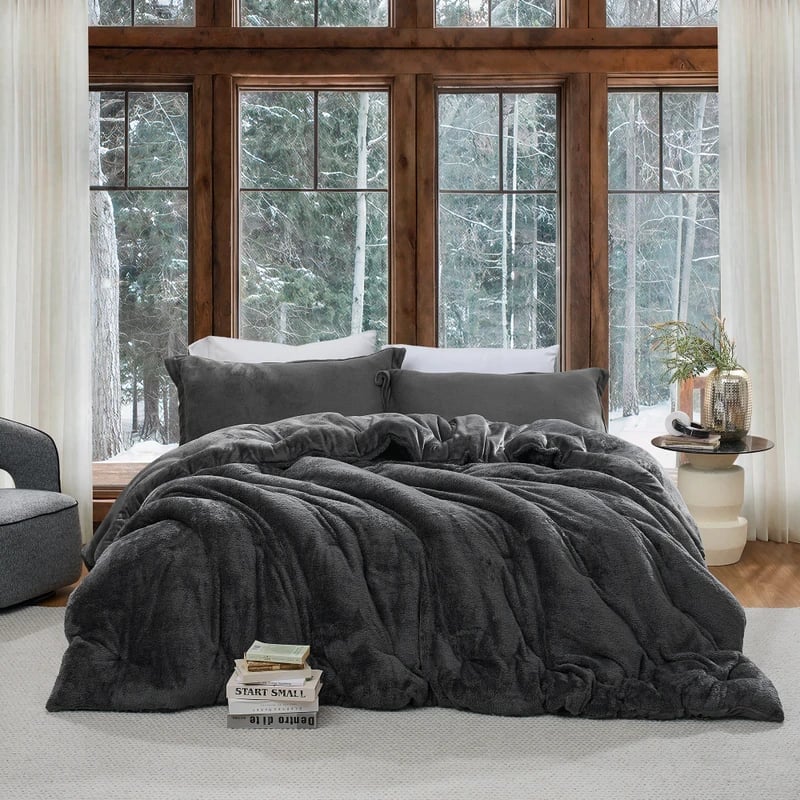
Deep Gray Plush Bedding in a Cozy Cabin Bedroom
A deep gray plush bedding set anchors this cabin bedroom with a weight that feels both grounded and soft. The dark gray palette absorbs the natural daylight filtering through the windows, while the wood tones from the side table and armchair keep the room from leaning too cool. The plush fabric adds a tactile contrast to the smooth glass and wood surfaces. A practical layout principle here is to let the bed hold the center of the room, with furniture placed to support rather than crowd that focus.
Layered Gray Bedding with Knit Throw in a Modern Minimalist Room
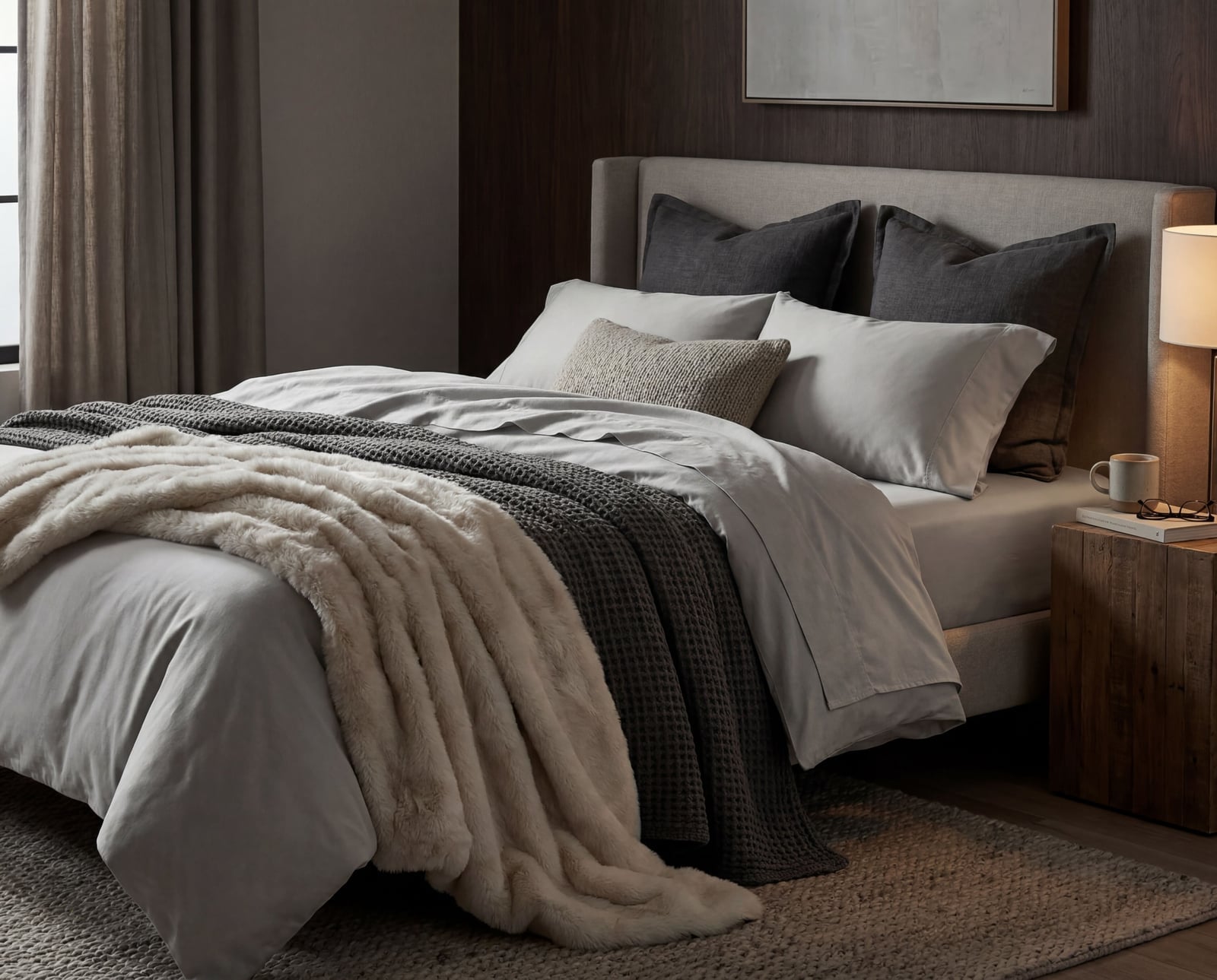
This modern minimalist bedroom proves gray bedding can hold warmth without leaning on color. The palette stays restrained: gray, beige, and charcoal, with a textured knit throw draped across the linen duvet to break up the flat surfaces. The knit throw introduces a handmade feel that softens the clean lines of the bed and side table. A useful palette principle is to keep the base neutral and add one textured layer in a slightly deeper or lighter shade to create visual depth without introducing a new color family.
Charcoal Gray Linen Bedding with Clean Lines
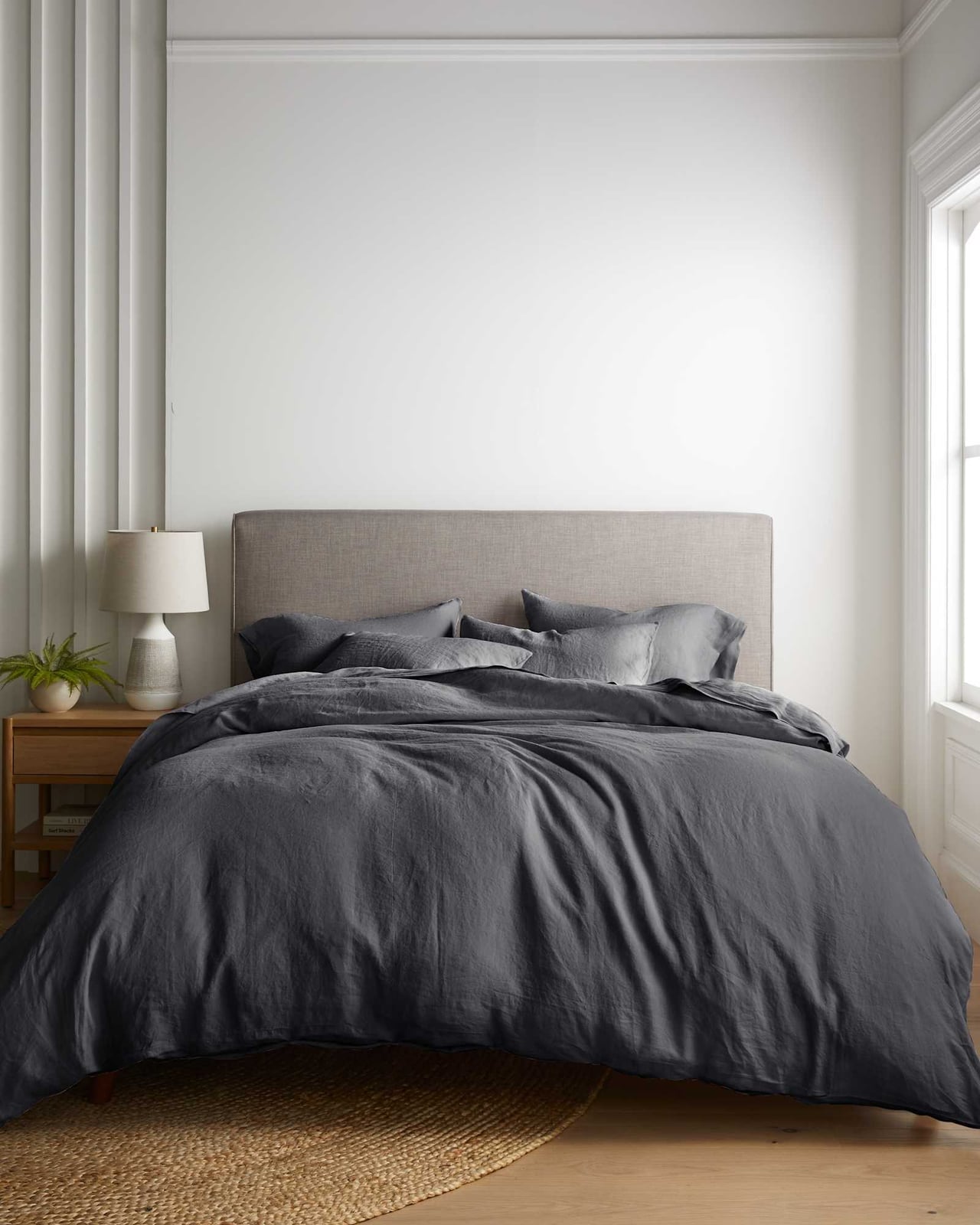
Can charcoal linen bedding feel crisp without reading as severe? In this modern bedroom, it does, thanks to the pairing with white pillows and a wood nightstand. The charcoal gray duvet cover sits neatly against the white backdrop, while the linen fabric offers a slight texture that catches the natural light without competing with the clean lines of the room.
A materials principle worth noting is that linen’s natural wrinkle and drape prevent dark tones from looking too flat or formal. The wood elements warm the charcoal and keep the overall look grounded rather than stark.
Layered Gray and White Pillows on Modern Farmhouse Bed
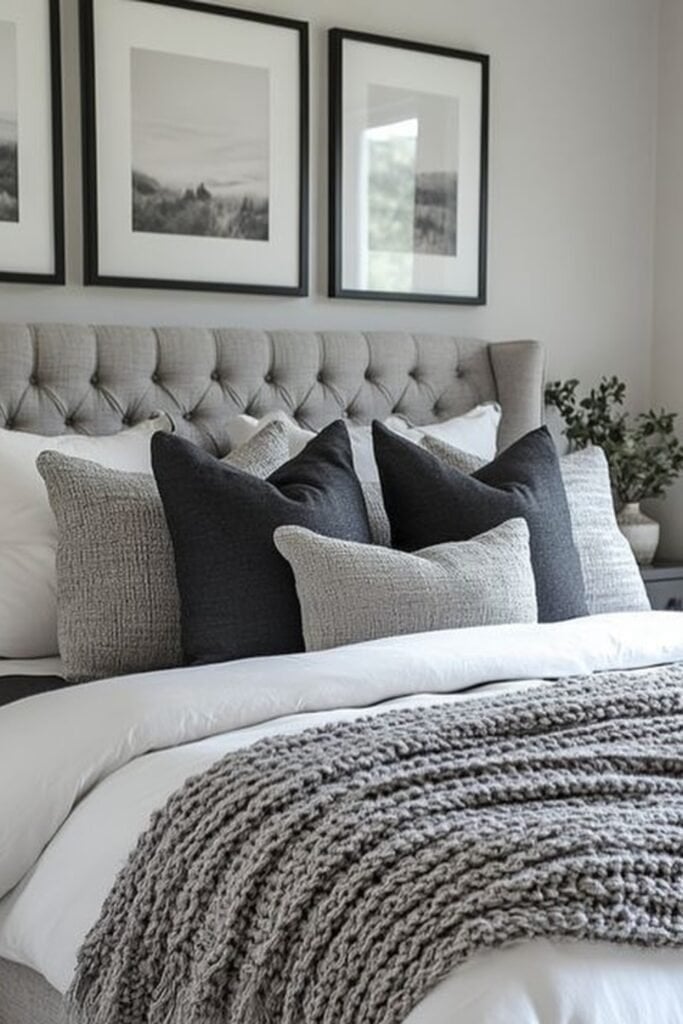
Layering gray and white pillows creates a soft, collected look on this modern farmhouse bed. The gray pillows sit against a white headboard, with black accents in the artwork above providing contrast. The pillow stack is evenly lit, making the gray tones read as cool and calm. A styling variation to try is to vary the pillow sizes and shapes so the layering feels intentional. The metal and wood in the room keep the farmhouse look from becoming too sweet.
Puffy Gray Comforter in a Modern Minimalist Setting
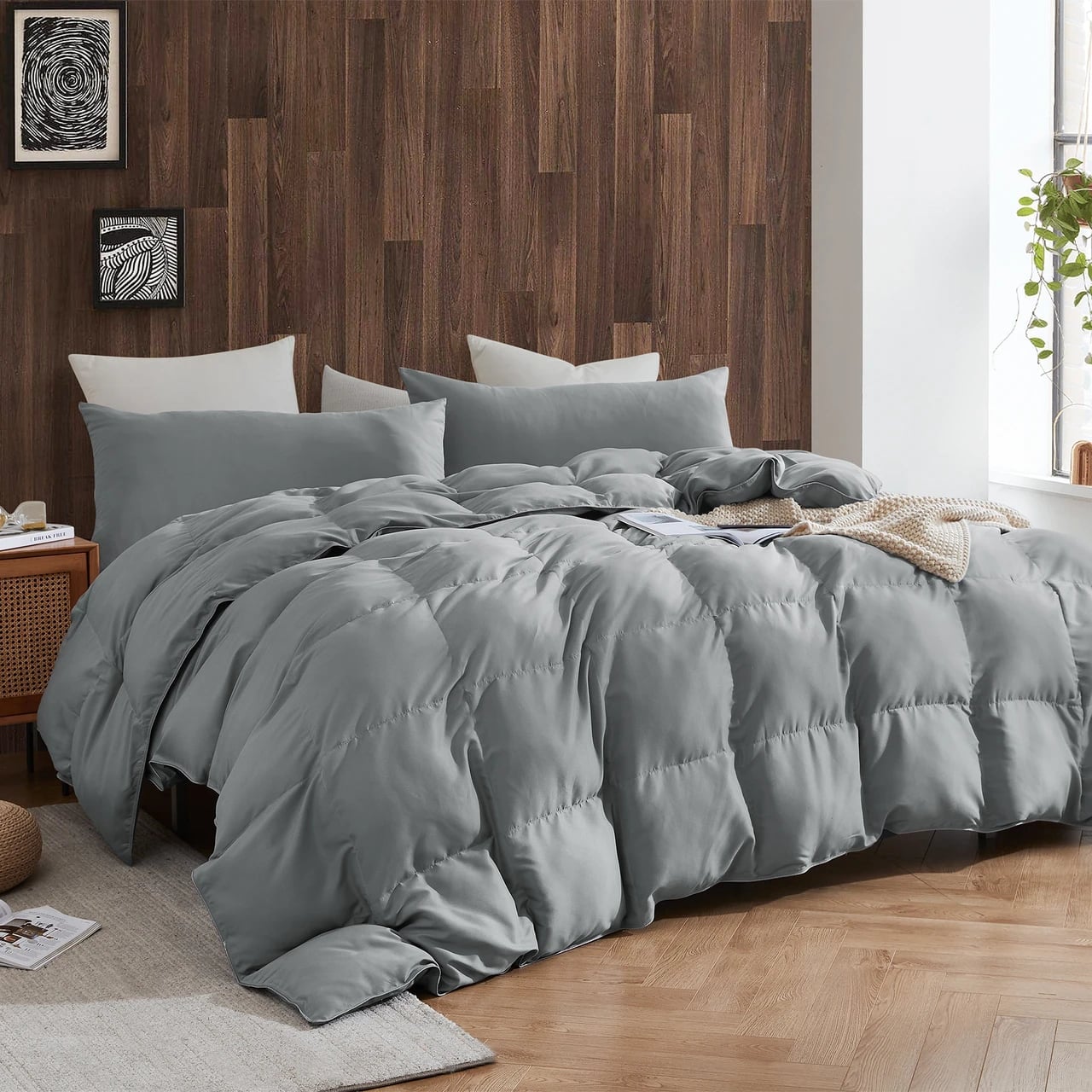
A puffy gray comforter stands out in a modern minimalist bedroom. The bed frame, nightstand, and rug all use neutral tones, so the bedding takes focus. To keep the bed uncluttered, store spare blankets in a nearby basket or ottoman. Rattan accents add natural texture that balances the comforter’s volume. The window provides enough light to keep the gray from feeling heavy.
Light Gray Linen Bedding with Honeycomb Texture
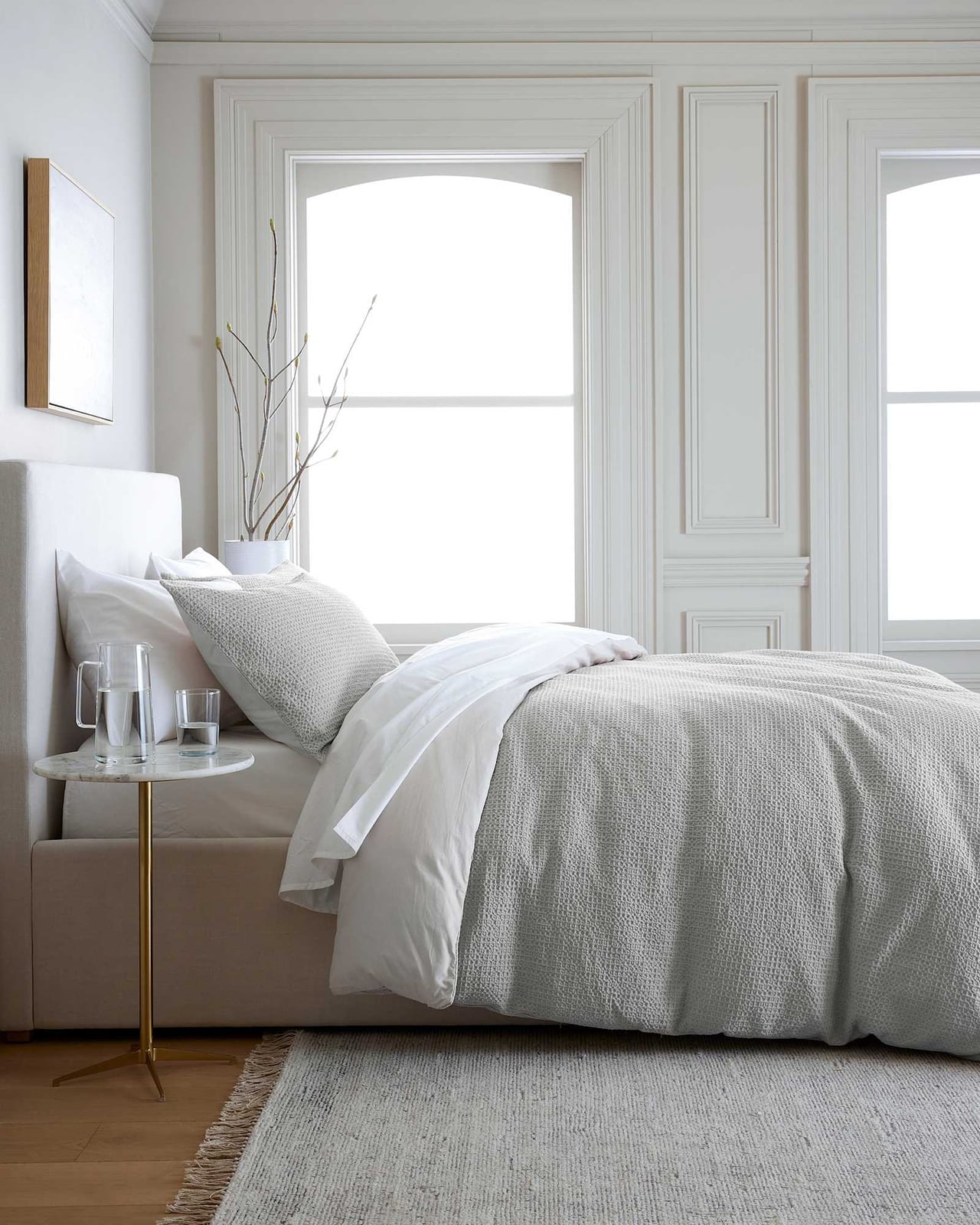
For anyone who likes the look of classic white hotel bedding but wants something that stays cleaner longer, light gray linen is a practical swap. The honeycomb weave on this duvet cover adds a subtle dimensional pattern that reads as texture rather than print. Linen naturally softens with washing, so the fabric gets more comfortable over time without losing its relaxed drape. The light gray palette keeps the bed feeling airy, while the woven texture gives visual weight that keeps it from reading as flat. Paired with white pillows and a wood bed frame, the mix of matte linen and smooth cotton creates enough contrast to feel intentional.
Textured Light Gray Linen Duvet Cover in Scandi-Boho Style
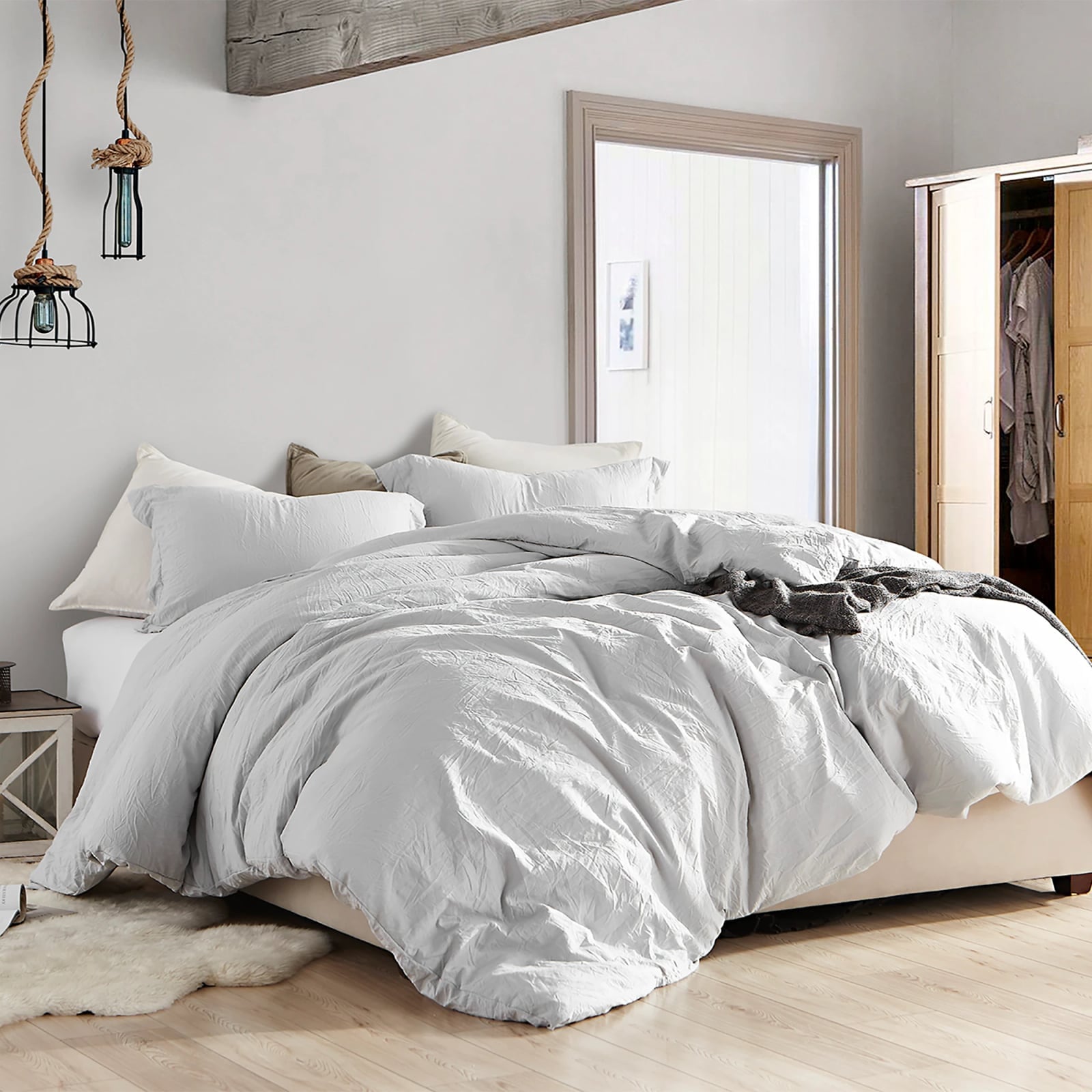
The light gray linen duvet cover sits at the center of this bedroom, but what makes it work is how the texture carries through the rest of the room. A sheepskin throw on the bed and a flatweave rug on the floor both echo the linen’s nubby surface without matching it exactly. The wood bed frame and side table add warmth, and the pendant lights keep the look from feeling too rustic. For renters, swapping a duvet cover is a low-commitment way to shift the room’s style without touching walls or floors.
Gray Quilted Bedding with Sage Green Accents
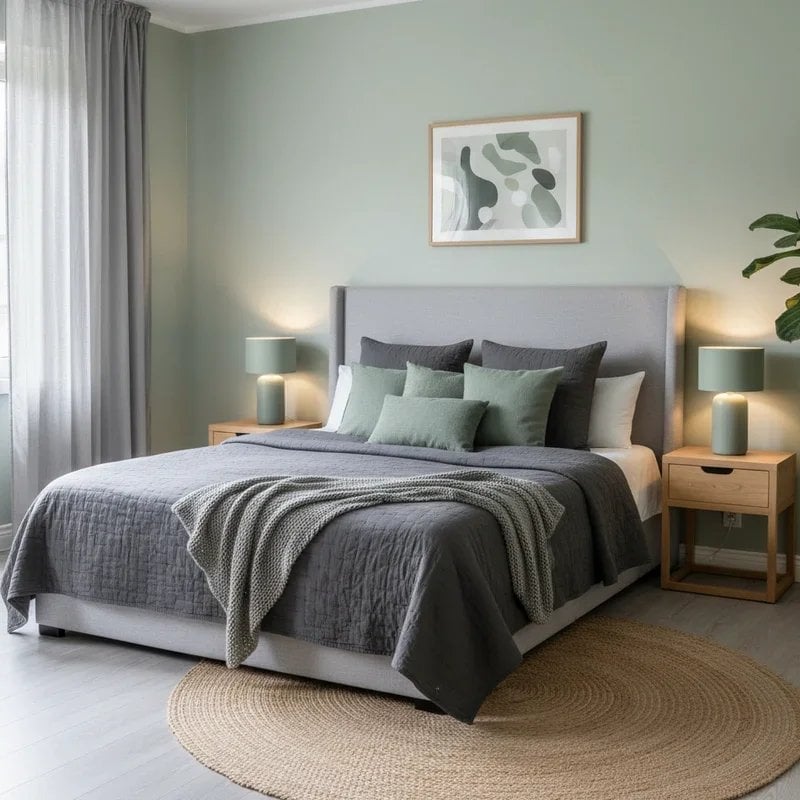
Gray and sage green is a palette that works because it stays calm without going beige. The quilted bedding provides a structured base, while knit throw pillows and a jute rug add the soft, organic textures that keep scandi-boho from reading as stiff. The two sage green accent pillows break up the gray in a way that feels deliberate rather than random. A pair of table lamps with warm shades balances the cool tones, so the room stays inviting even in the afternoon.
Light Gray Comforter Set on a Gray Fabric Bed Frame
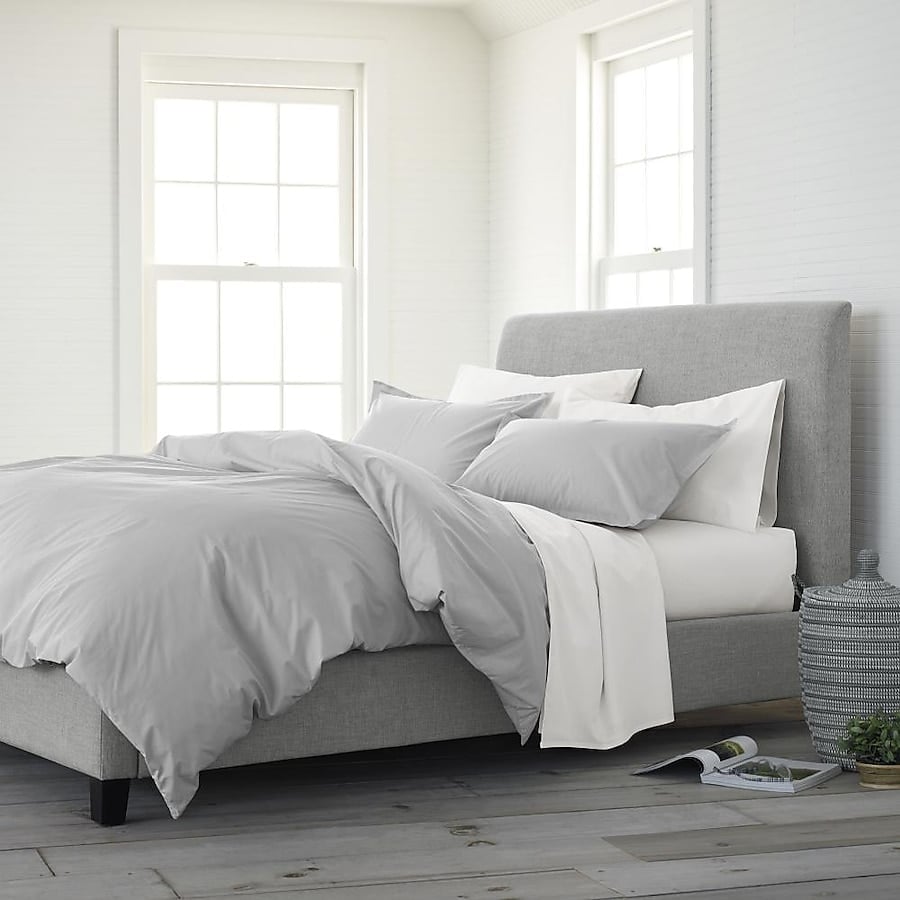
Does a light gray comforter on a gray fabric bed frame create a look that is too flat? Not if the finishes differ. Here the bed frame has a nubby texture, while the comforter reads smooth and plush. The white pillows and a wood bedside table break up the gray enough to keep the bed from blending into the frame. A woven basket adds a natural material that prevents the room from becoming a single color block. The bed stays centered with clean lines, which makes the room feel larger than it is. This setup works best in a bedroom where the goal is restful and uncluttered.
Deep Charcoal Gray Linen Bedding for Serene Modern Bedrooms
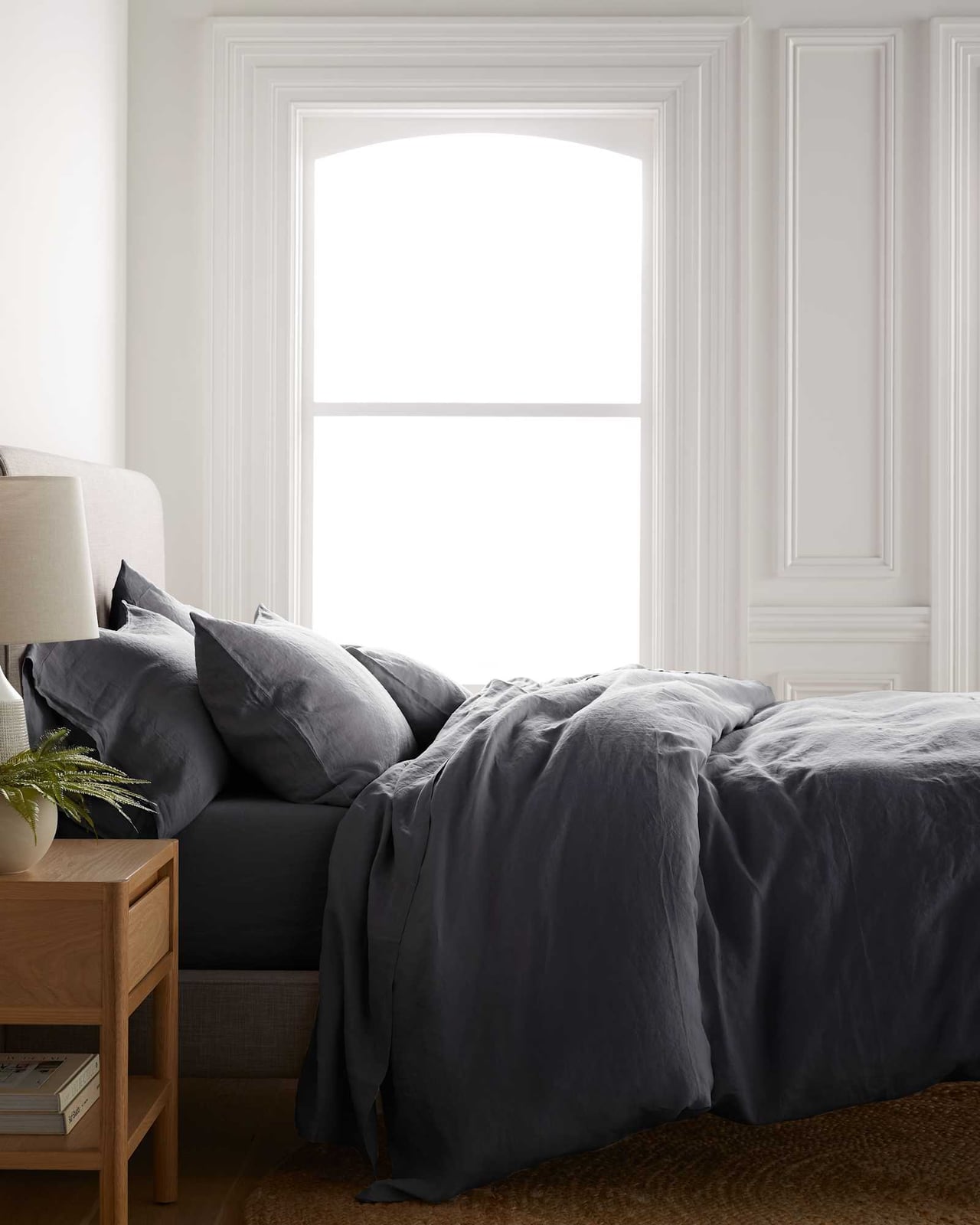
Deep charcoal linen bedding adds visual weight to a modern bedroom without making the space feel smaller. The dark hue feels grounded, especially when paired with white pillows and a light wood nightstand. Linen’s natural wrinkles keep the look from feeling too formal, which is key for a serene bedroom. The palette stays in charcoal and white, with the wood adding just enough warmth.
Gray and White Striped Bedding for a Classic Look
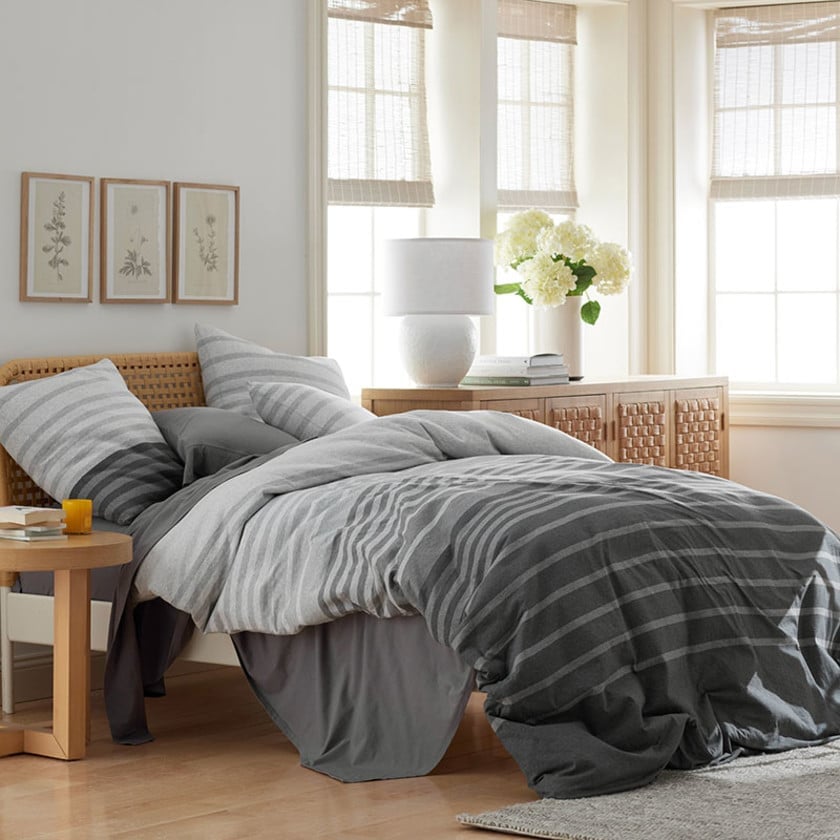
A striped duvet is one of those rare patterns that anchors a room without demanding attention. The gray and white stripes here run horizontally across the bed, and the clean repetition creates a calm visual rhythm that works with almost any headboard or nightstand. Keeping the supporting pieces simple, a solid pillow or two, a wooden bedside table, and basic blinds, lets the bedding do the work. In a modern bedroom, the contrast between the soft gray stripe and the white background keeps the palette from feeling heavy. The bed sits centered in the room, and the natural daylight hitting the fabric is enough to make the space feel open. For a classic look that does not fight with the rest of the room, let the duvet be the main event.
Ultra-Plush Gray Comforter with Textured Throw
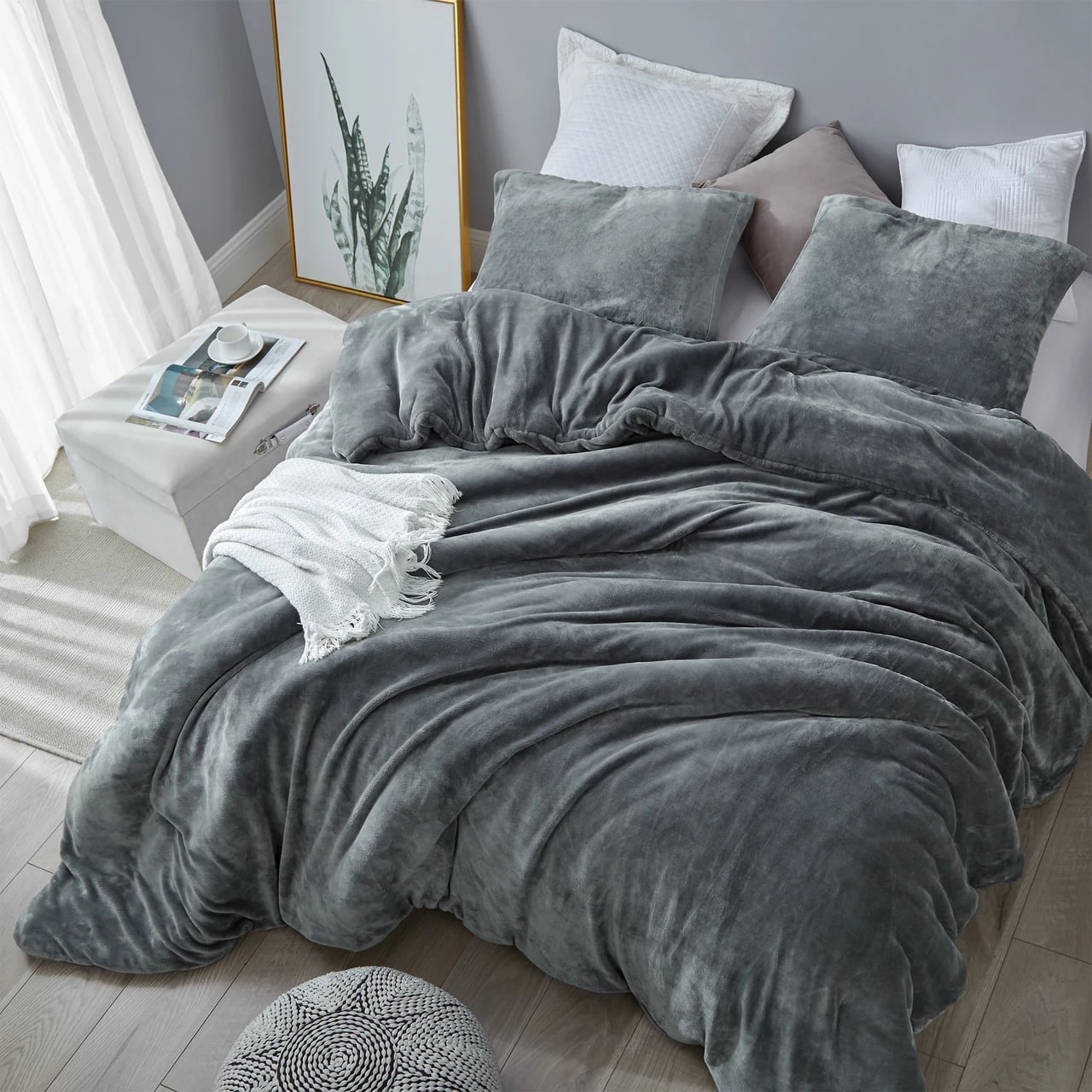
An ultra-plush comforter can look like a marshmallow or a cloud, depending on what you pair with it. Here, the thick gray comforter sits on a centered bed with an ottoman and a floor cushion in the foreground, and the room keeps a clean modern layout. The palette uses gray and white, and the woven throw draped across the foot of the bed adds a contrasting texture without introducing a new color.
The plush fabric is the standout element, so the room stays quiet. The wooden floor and simple walls do not compete with the volume of the comforter. From an angled overhead view, the layering of the throw over the smooth comforter creates depth. For a bed that feels soft to look at, let the comforter carry the weight and keep everything else minimal.
Minimalist Gray Comforter with Circular Stitching
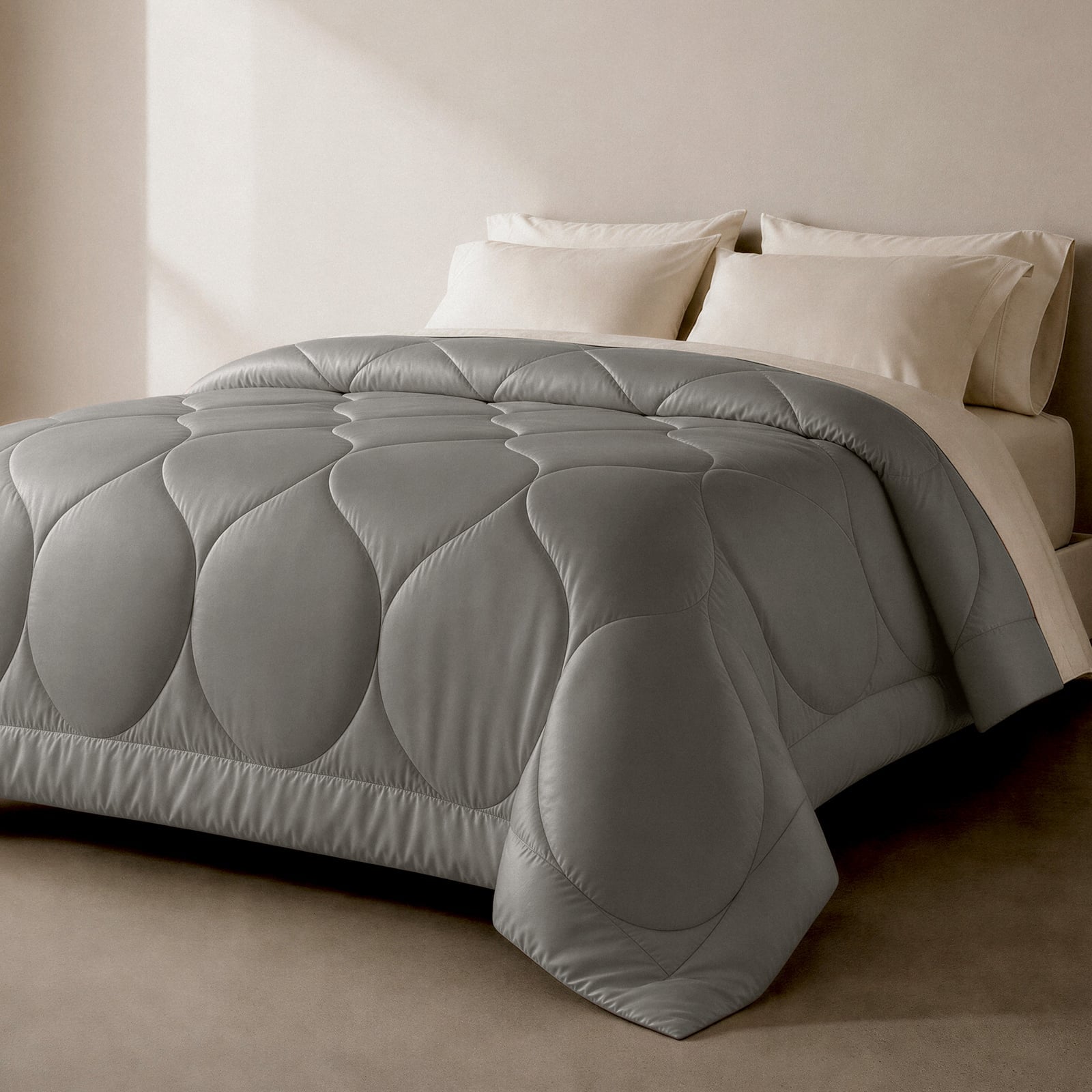
The large circular stitching on this gray comforter is the kind of detail you notice only when you look closely. The pattern repeats across the fabric in wide rings, and the stitching adds a subtle texture to an otherwise smooth surface. The palette is gray and beige, with the comforter centered on the bed and the pillows kept plain. In a minimalist bedroom, the circular stitching gives the bed a focal point without needing a pattern or an extra layer. The soft diffused light keeps the surface even, so the stitching appears as gentle dimension. For a bed that feels quiet but not flat, a stitched comforter is a smart swap.
Gray Velvet Bedding with Geometric Basketweave Texture
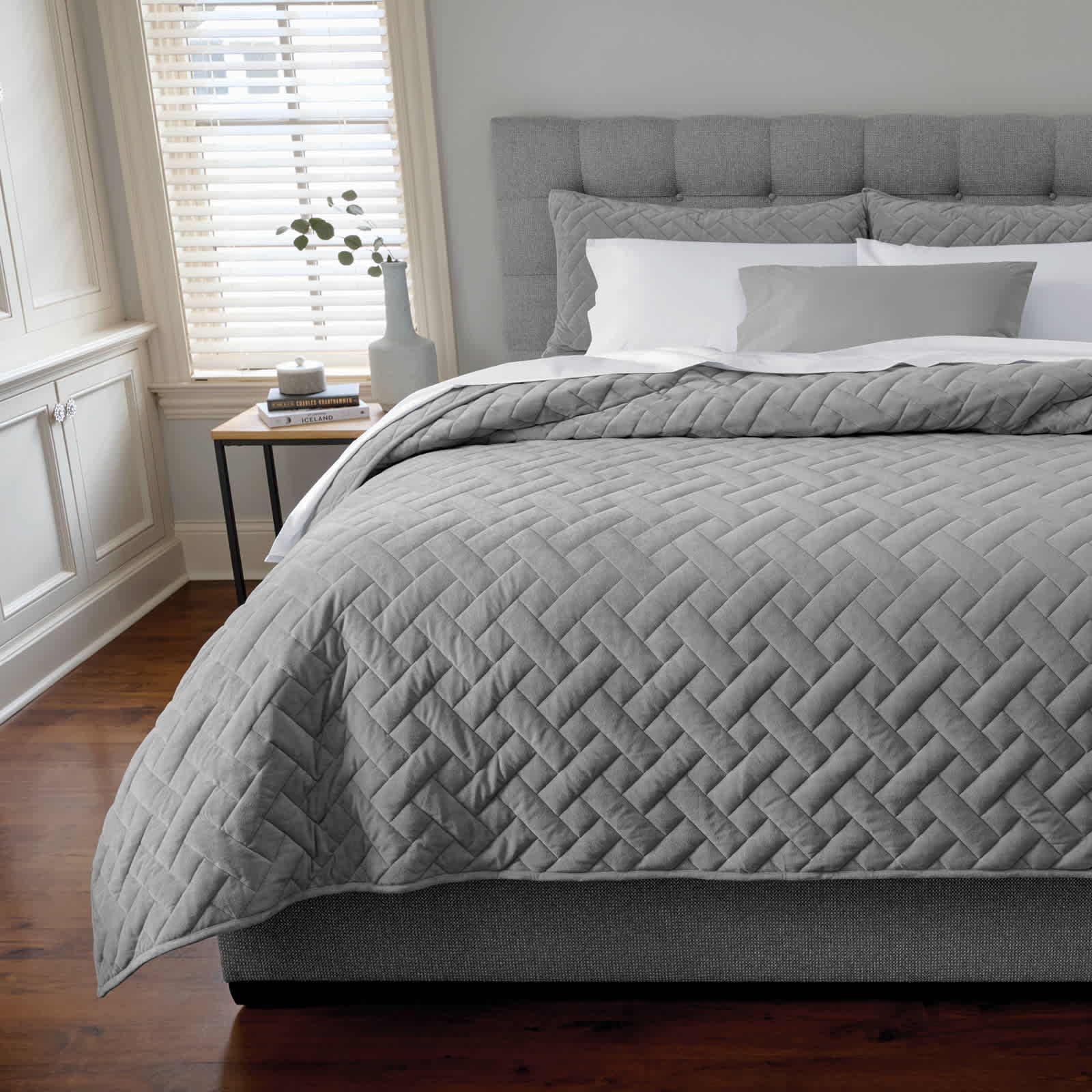
Velvet bedding with a geometric basketweave texture is a good choice when you want a room that feels dressed without being fussy. The gray velvet has a low sheen, and the woven pattern across the surface keeps it from looking too smooth or formal. The bed sits centered in a modern bedroom with a white headboard and simple pillows, and the natural light hits the fabric evenly. The basketweave texture adds enough visual interest that the room does not need extra pillows or a throw. In a wide shot, the bedding reads as one solid piece, but up close the weave gives it depth. If you want a bed that looks polished without layers, choose a textured velvet.
Textured Gray Faux Fur Comforter Set
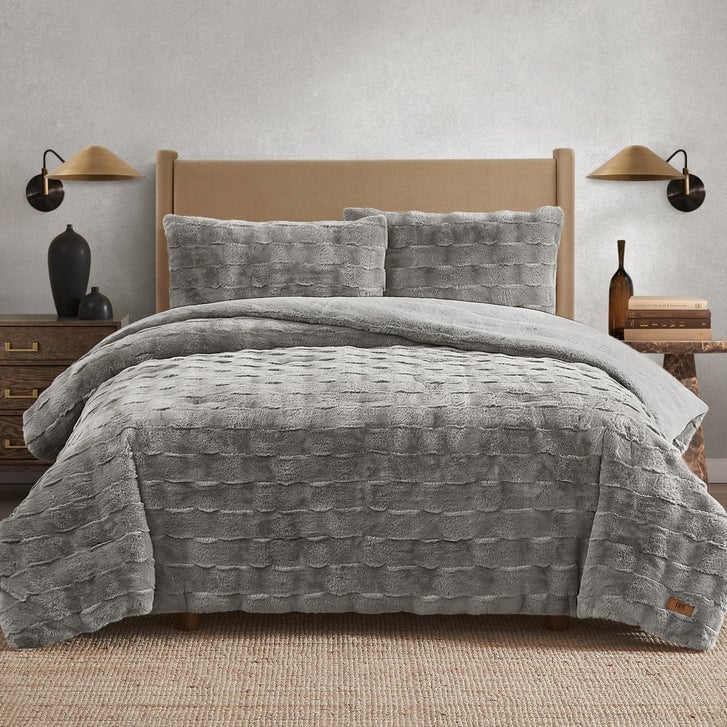
A faux fur comforter set asks for a practical rule: keep the room low on texture so the bed does not feel overwhelming. Here, the gray faux fur comforter sits on a centered bed with a wooden headboard, and the palette stays in gray, beige, and wood tones. The wall sconces add warm light, and the jute or woven accents on the floor or furniture give the room a natural base.
Faux fur has a longer pile than most bedding, so it catches light differently depending on how you fluff it. The pillows in the set stay simple, and the headboard is smooth wood. That contrast between the soft, shaggy bed and the clean headboard is what makes the look work. If you swap in a faux fur comforter, consider storing extra blankets or a second duvet elsewhere. The texture is enough on its own, and the bed does not need more layers.
Overhead View of Gray Bedding with Beige Throw
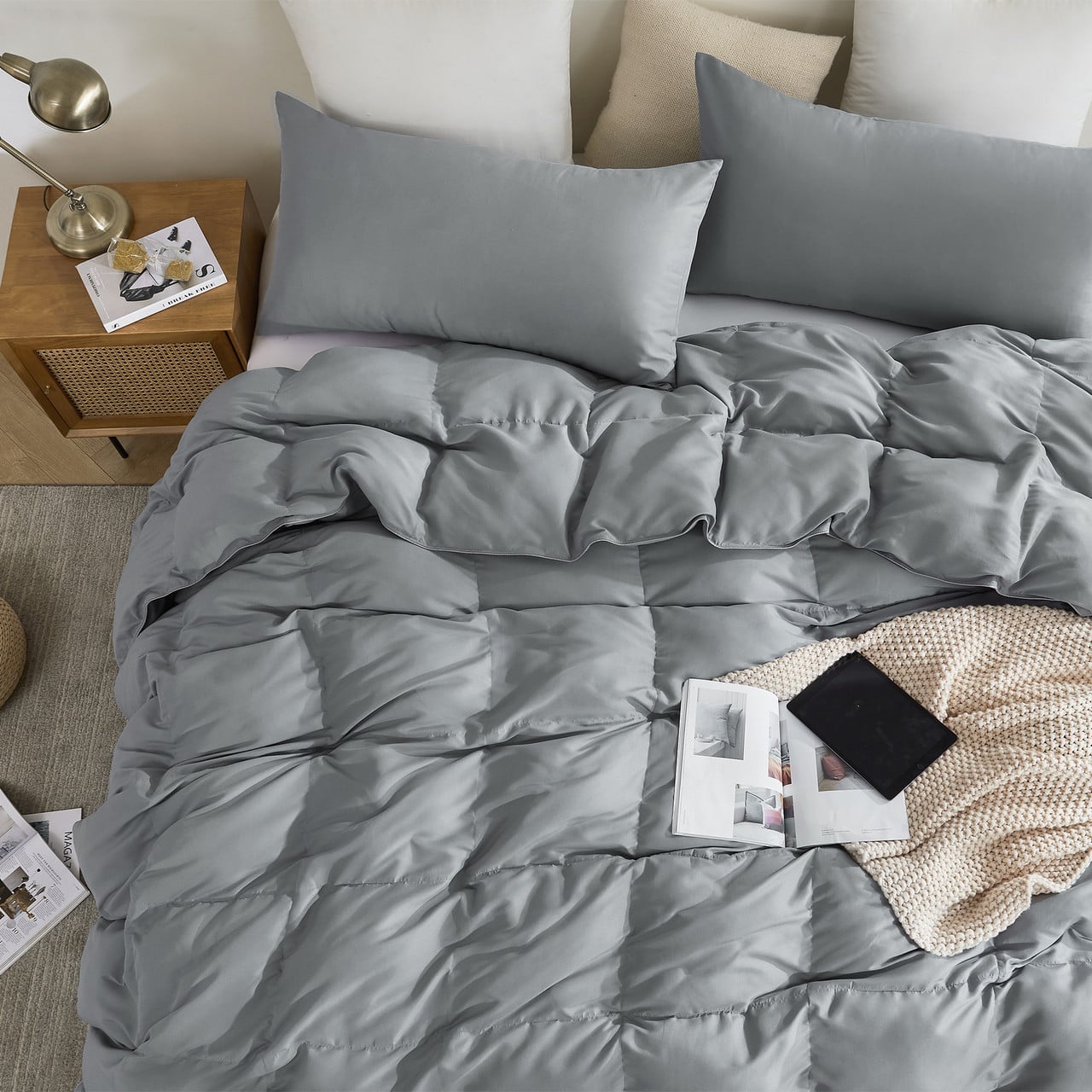
A textured gray comforter anchors the center of the bed, with a beige throw folded across the foot. White pillows stack neatly behind it, keeping the look clean. A rattan side table and a lamp with a simple shade sit to the left, adding warmth without clutter. The layout works because the bed remains the clear focus, and the surrounding pieces stay low and minimal. An overhead view like this makes it easier to judge whether the proportions of your bedding match the scale of the room.
Smooth Gray Sheets for a Calm, Modern Bedroom
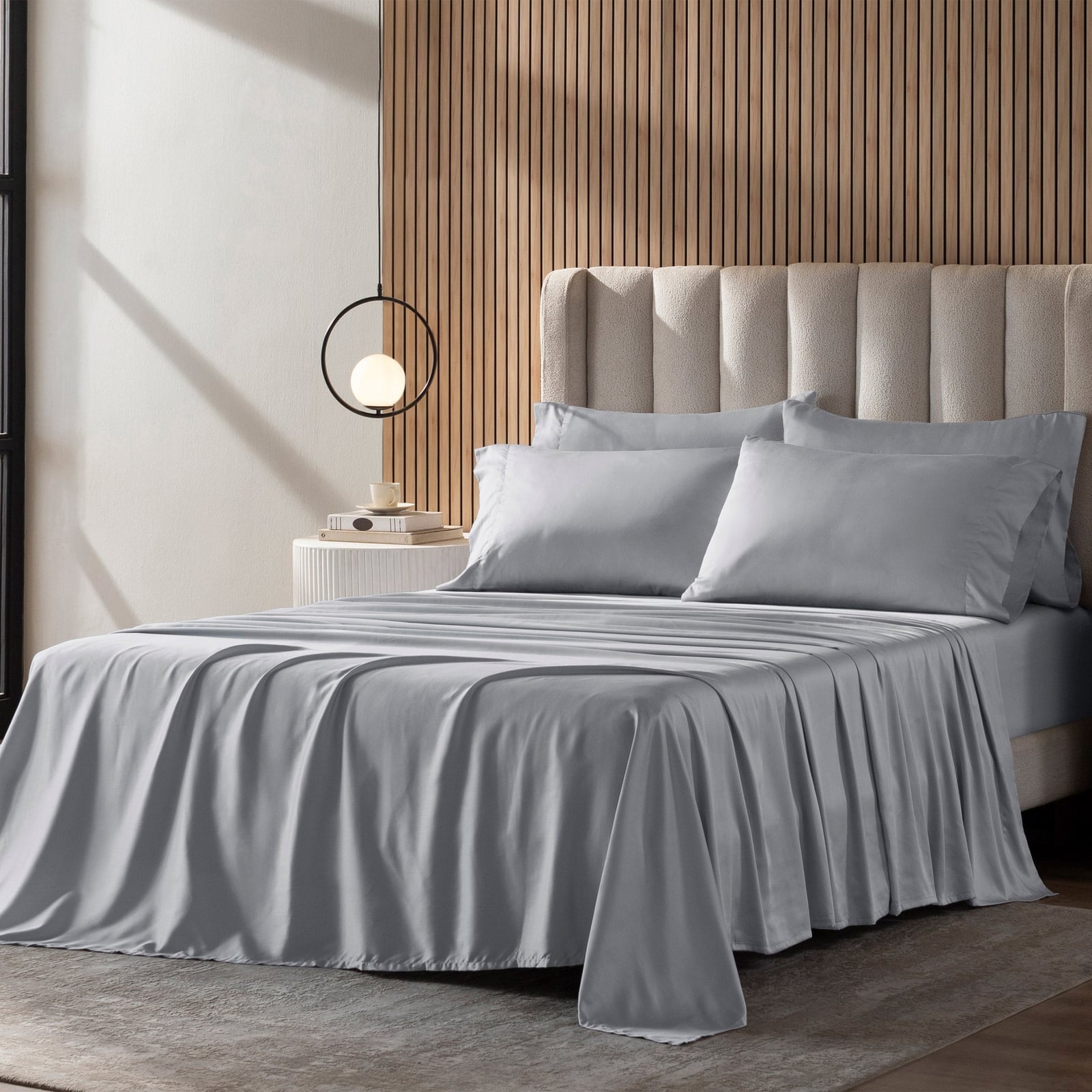
Smooth gray sheets set the tone for a calm, modern bedroom. The fabric finish determines how the bed reads in low light. Here, the smooth, draped gray sheets pair with a beige headboard and matching pillows, creating a cohesive palette that feels calm and balanced. Soft artificial light from a nearby source keeps the space warm. For renters, swapping out the bedding is one of the fastest ways to reset the mood of a bedroom without touching the walls or fixtures. The smooth surface also reflects light gently, which helps a smaller space feel more open.
Gray Linen Bedding with Warm Wood Accents
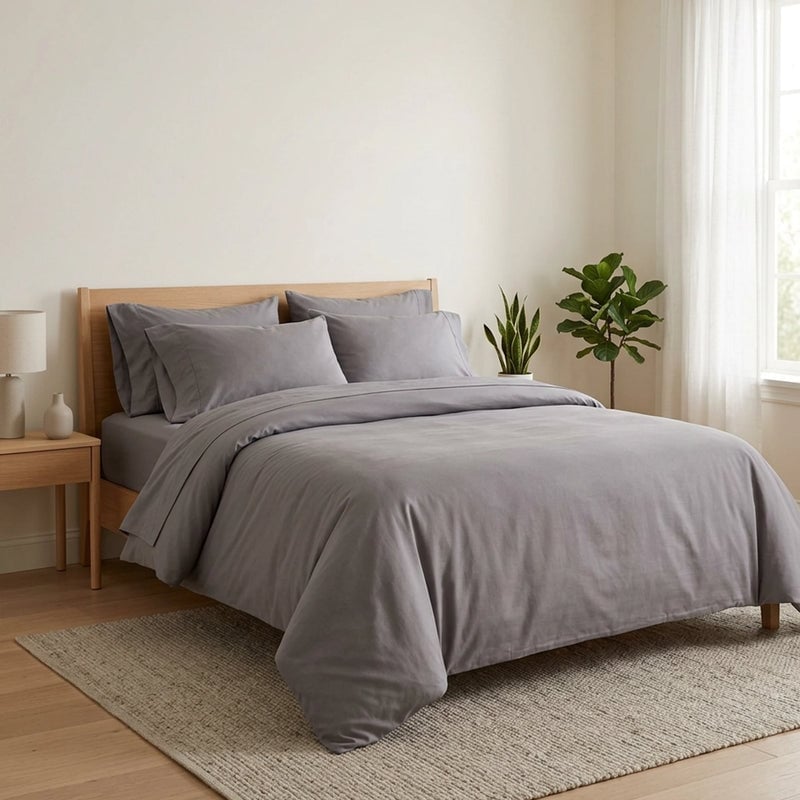
Gray linen bedding can lean cool if the room lacks warmth, so pairing it with wood accents is a direct fix. A wood nightstand and a plant in a natural planter bring in earthy tones that balance the gray without competing with it. The palette stays simple: gray, wood tones, and a touch of green from the plant.
Gray Bedding Against Dark Green Board and Batten Wall
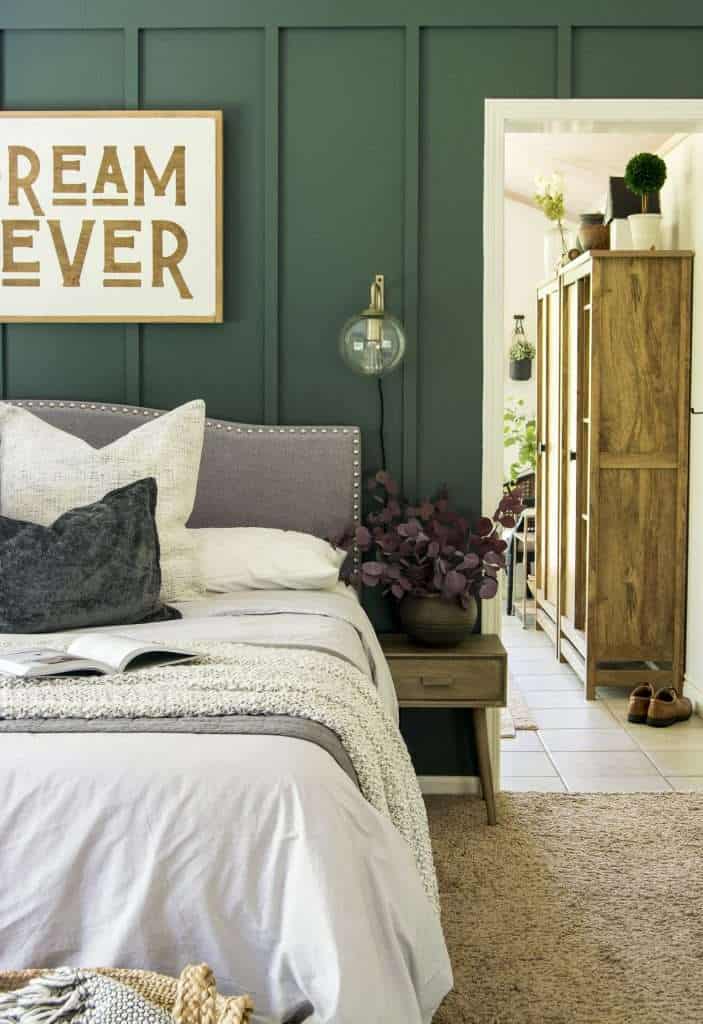
The gray bedding sits against a dark green board and batten wall, which gives the room a clear focal point beyond the bed itself. The contrast between the soft gray fabric and the deep green paneling keeps the space from feeling too heavy. Ambient wall light adds a soft glow that softens the transition between the two colors. This kind of setup works well when you want the wall treatment to do the talking and the bedding to play a supporting role.
Striped Linen Duvet Cover with Beige Headboard
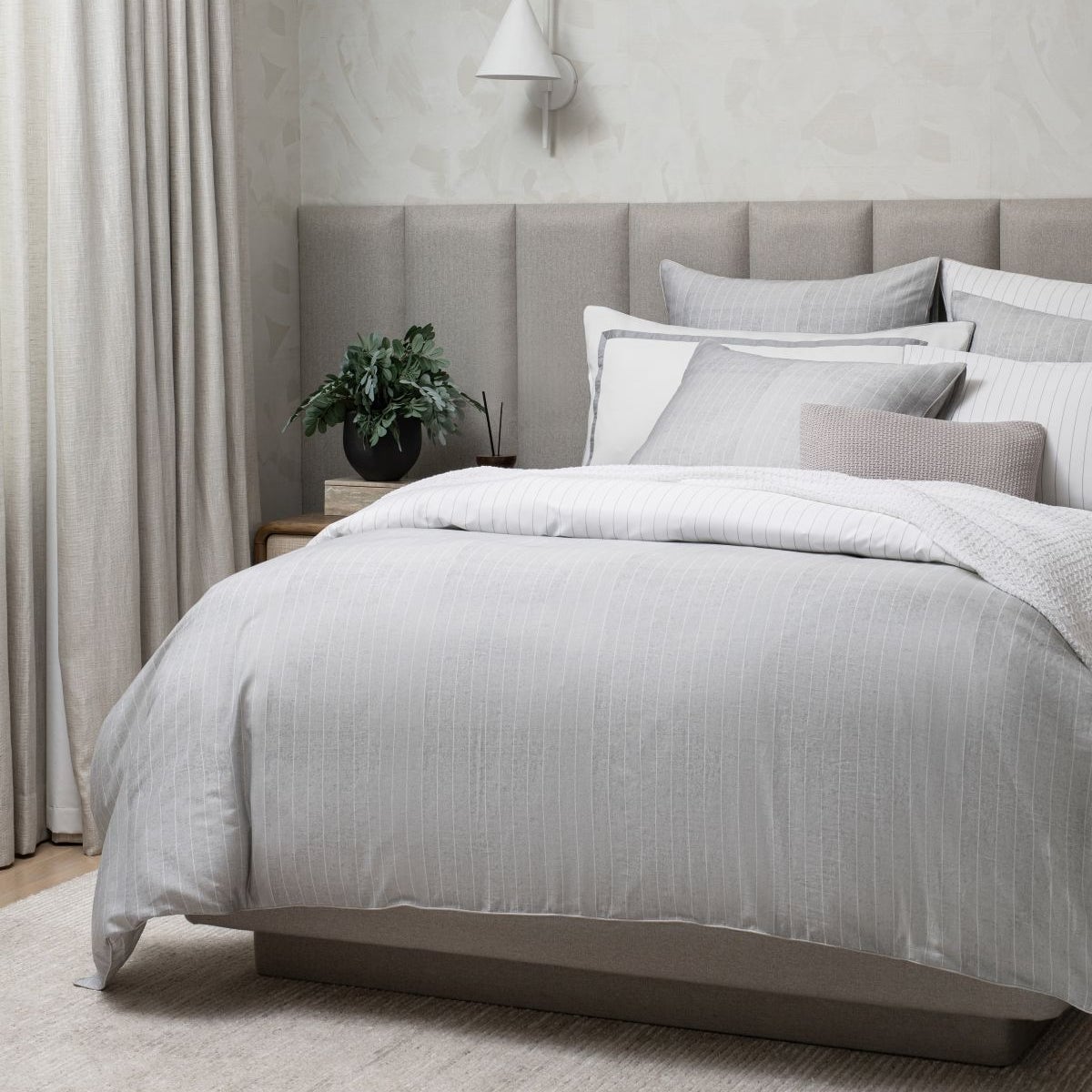
A striped linen duvet cover brings pattern into a minimalist bedroom without overwhelming the space. The beige headboard and white pillows keep the palette grounded, while the vertical stripes add a subtle sense of height to the bed. A small bedside table and a plant on the side introduce a natural element that softens the clean lines. The key is that the stripes are narrow and the colors stay muted, so the pattern reads as texture rather than a bold statement.
Eclectic Gray Bedding with Teal and Yellow Accents
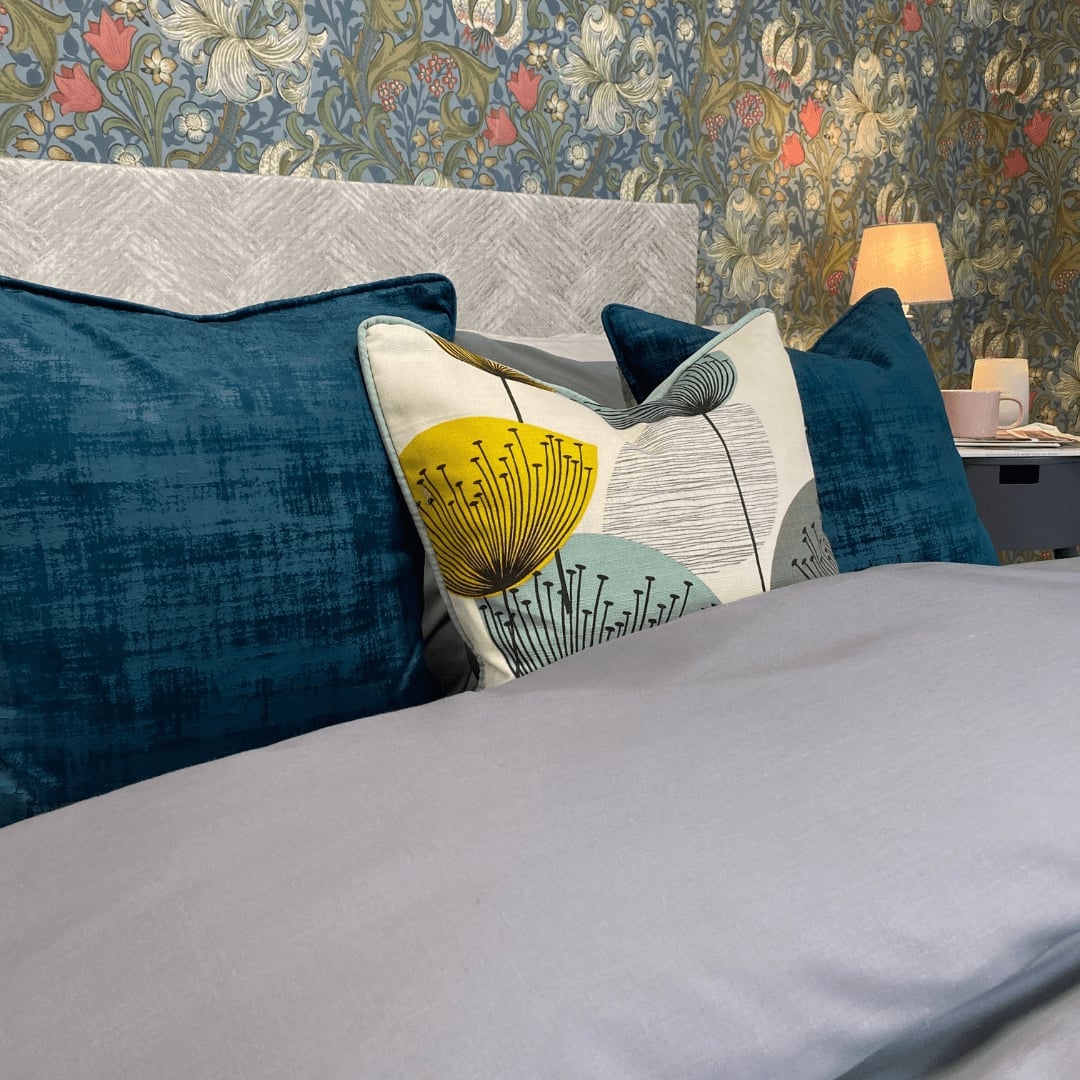
A palette that mixes cool and warm tones needs a steadying neutral to keep it from feeling scattered. Gray bedding does that job here, letting teal and yellow accents pop without fighting each other. The bed itself stays simple with gray velvet and linen-look layers, while a floral accent pillow brings in the color. A lamp on the bedside table casts warm light that softens the gray, so the room feels balanced. The ratio of neutral to color sits roughly three to one, which keeps the palette cohesive. Gray holds the center, and the brighter shades stay as smaller hits.
Plush Gray Comforter Set in a Cozy Modern Room
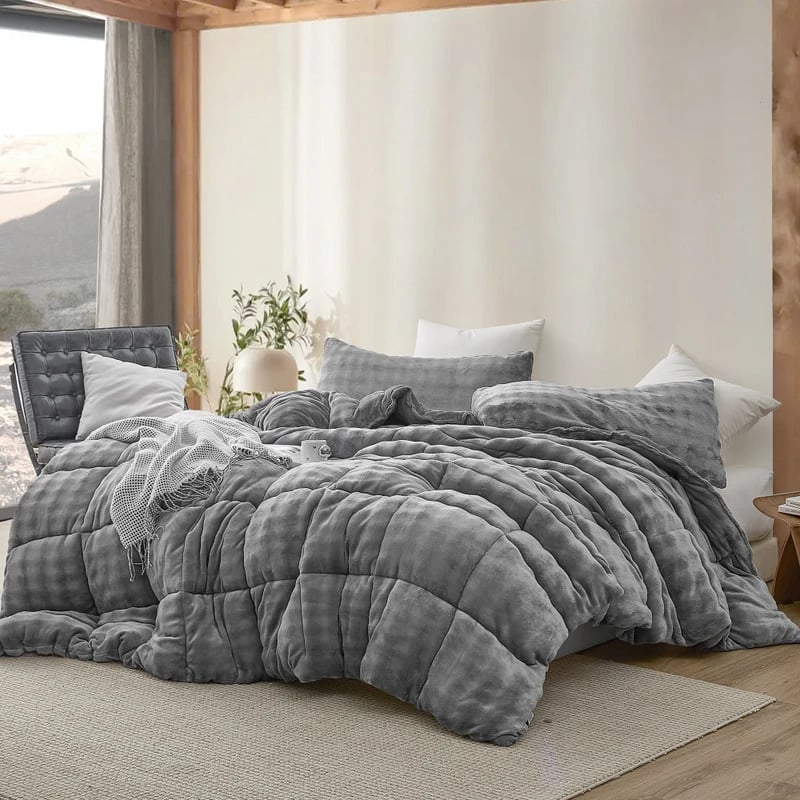
The plush gray comforter is the first thing you notice, with its thick faux fur surface that asks to be touched. It sits on a bed piled with pillows and a throw, all in cream and wood tones that keep the look warm without going heavy. A nearby lamp and natural light give the gray depth so it does not read as flat. An armchair off to the side anchors the layout, but the bedding stays the clear focal point. The palette of gray, cream, and wood tones makes the room feel pulled together.
Crisp Gray Cotton Bedding with Gray Wooden Headboard
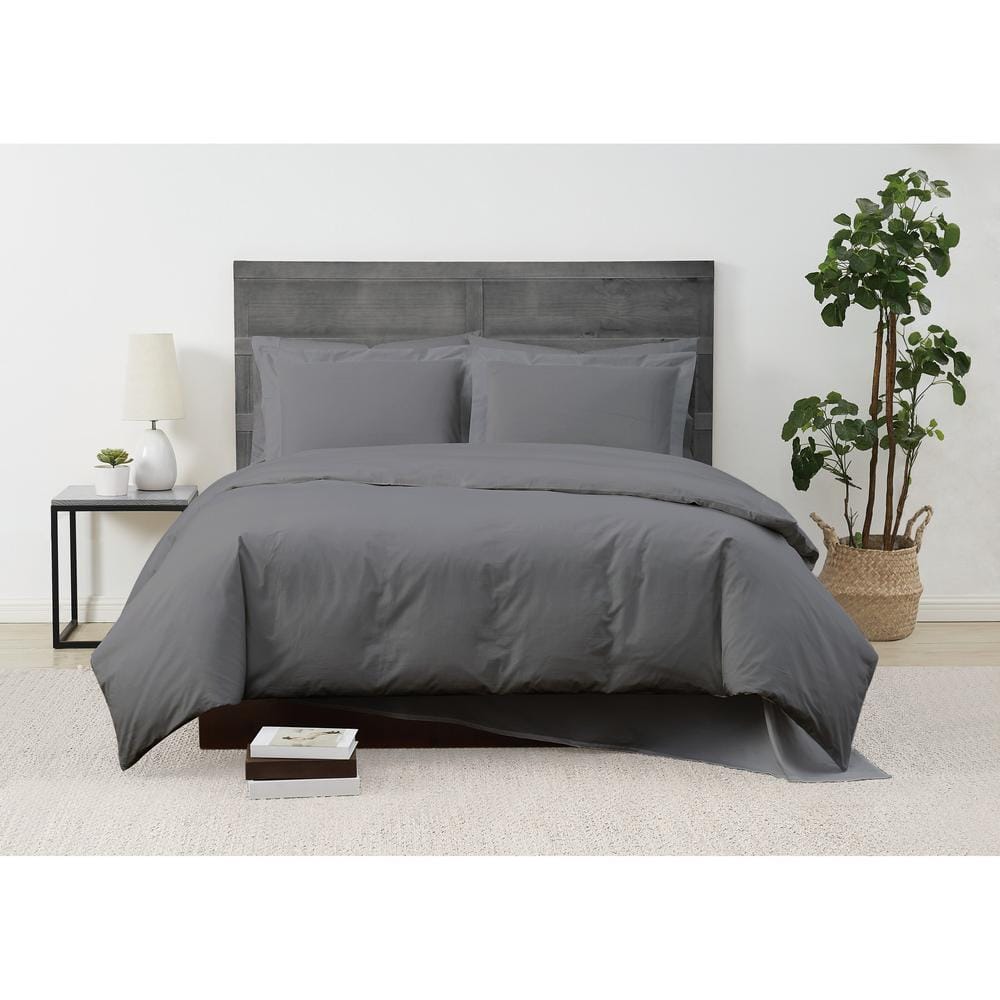
To mix materials successfully, keep the finish consistent. Here, the gray cotton duvet cover and the gray wooden headboard share a similar matte surface, so the wood and fabric feel related. A plant with broad green leaves on the nightstand adds a natural contrast without distracting from the gray. The palette stays in gray and wood tones, and the crisp cotton looks fresh against the solid headboard. The whole setup relies on texture and finish, not pattern, to create interest.
Plush Gray Bedding Inviting Touch in a Modern Space
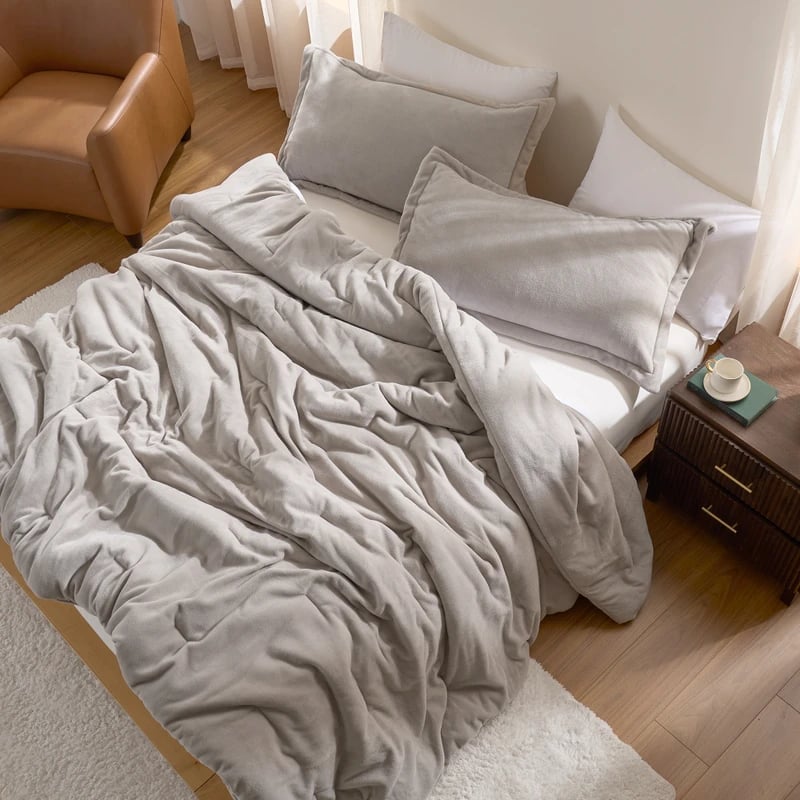
A plush gray comforter can lean cozy, but this one stays modern because of what surrounds it. The room uses light gray and cream on the bed, a wooden armchair, a nightstand, and a rug, all in a clean layout that centers the bedding. Natural daylight fills the space, so the plush fabric appears soft without feeling heavy. The bed is the clear focal point, and the other pieces support it without adding clutter. The palette is narrow, which lets the texture of the comforter do the work.
Textured Gray Gauze Comforter Set on Gray Headboard
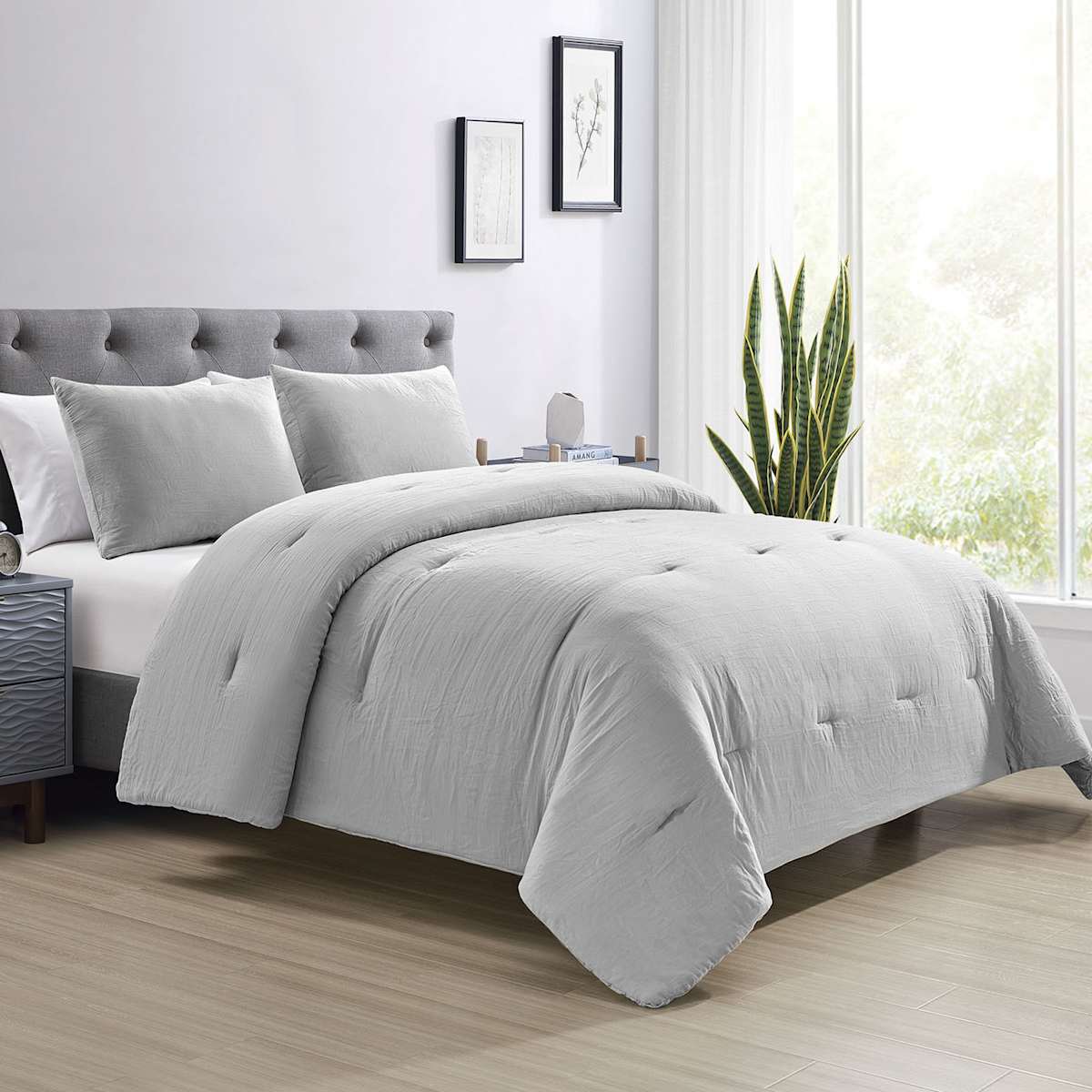
The gauze comforter has a visible open weave that makes it look lighter than a solid fabric. It sits against a gray headboard and white pillows, with a plant adding a touch of green nearby. Natural daylight shows off the texture, which gives the bed a layered feel without adding bulk. The palette stays simple: gray and white. The gauze material keeps the bedding from reading as too dense, which is useful for a modern room where you want softness without weight.
Final Thoughts
Gray bedding earns its place because it adapts. Across these 25 setups, the common thread is restraint: letting texture and tone do the talking instead of pattern or color. To keep the look fresh, rotate a knit throw or extra pillows by season, and wash linen and cotton sets on a gentle cycle to preserve their softness. When the bed is the hero, keep the nightstands and walls simple so the gray can settle in. The final takeaway is this: pick one gray that suits your light, add one contrasting accent, and let the rest of the room stay out of the way. That is the whole trick.