
For a bedroom that feels like a calm escape, Japandi’s blend of Japanese minimalism and Scandinavian warmth is hard to beat. You get the clean lines and uncluttered surfaces of one tradition with the cozy textures and natural materials of the other. It’s a style that prioritizes rest, not show.
This article walks through 33 Japandi bedroom ideas that prove you don’t need a lot of stuff to make a space feel intentional and comfortable. From low platform beds to woven accents and soft neutral palettes, each look focuses on what matters: a room that helps you breathe easier and sleep better. Whether your space is small or generous, these ideas adapt to fit.
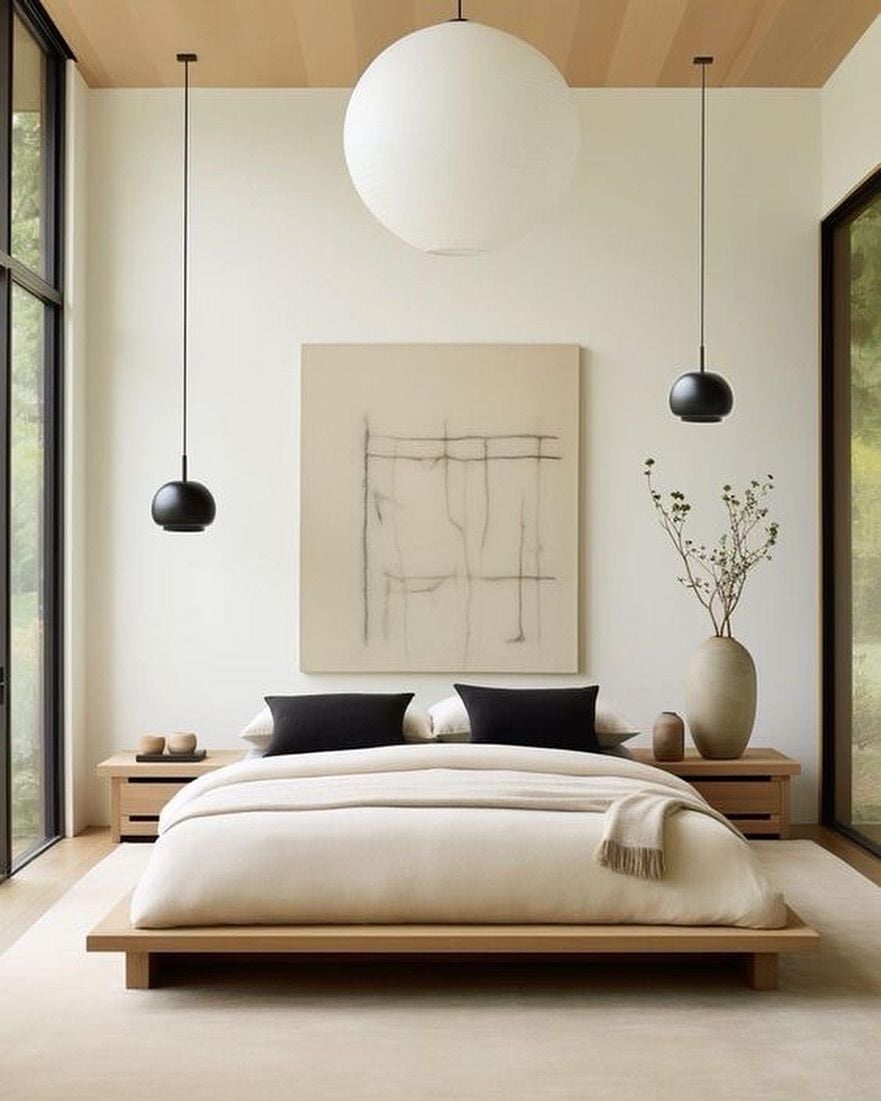
Japandi Bedroom with Low Platform Bed and Oversized, Close-Up Take
A low platform bed centers the room without competing with the ceiling height, and the oversized pendant light above it pulls the eye upward instead of letting the room feel flat. The wooden nightstands on either side stay minimal so the bed and the light fixture share the focus. Natural light from an unseen source balances the pendant’s downward glow during the day, which means the room does not need a second light source for most hours. The concrete or plaster wall behind the bed adds a cool texture that keeps the wood tones from reading as too warm. For a similar sense of balance, keep the bed low and let one statement light define the vertical space.
Serene Japandi Bedroom with Biophilic Cherry Blossom, Close-Up Take
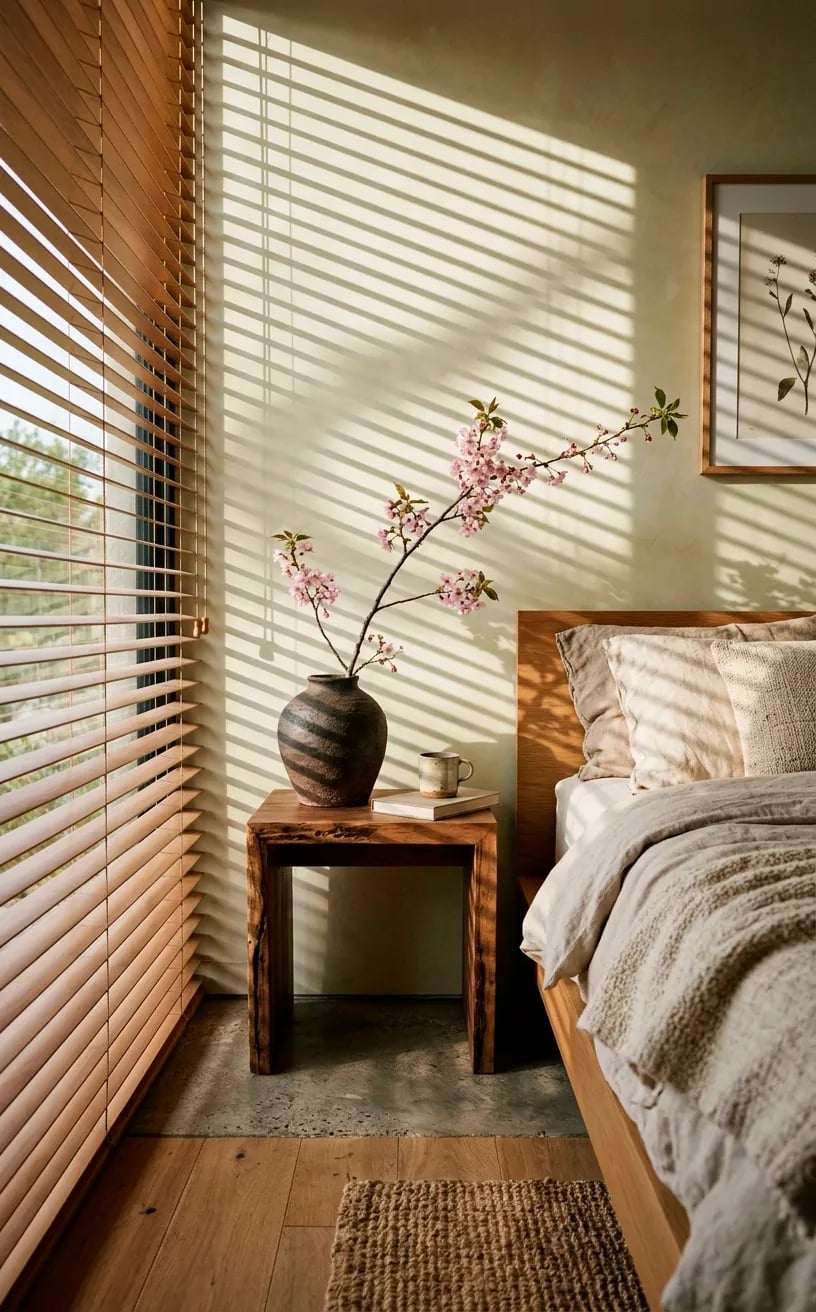
A single cherry blossom branch in a ceramic vase brings a seasonal note to a Japandi bedroom without demanding care or space. The pale green and cream palette stays calm, and the strong directional light hits the branch to cast soft shadows across the wall. The wooden bed frame and side table keep the layout simple, so the branch reads as an intentional focal point. This palette works because the muted green in the branch and the wood tones share the same soft saturation. If you want a biophilic touch but do not have steady sun, check your USDA zone for dried branches that hold their color indoors.
Sun-Drenched Japandi Bedroom with Woven Textures and Low Bed
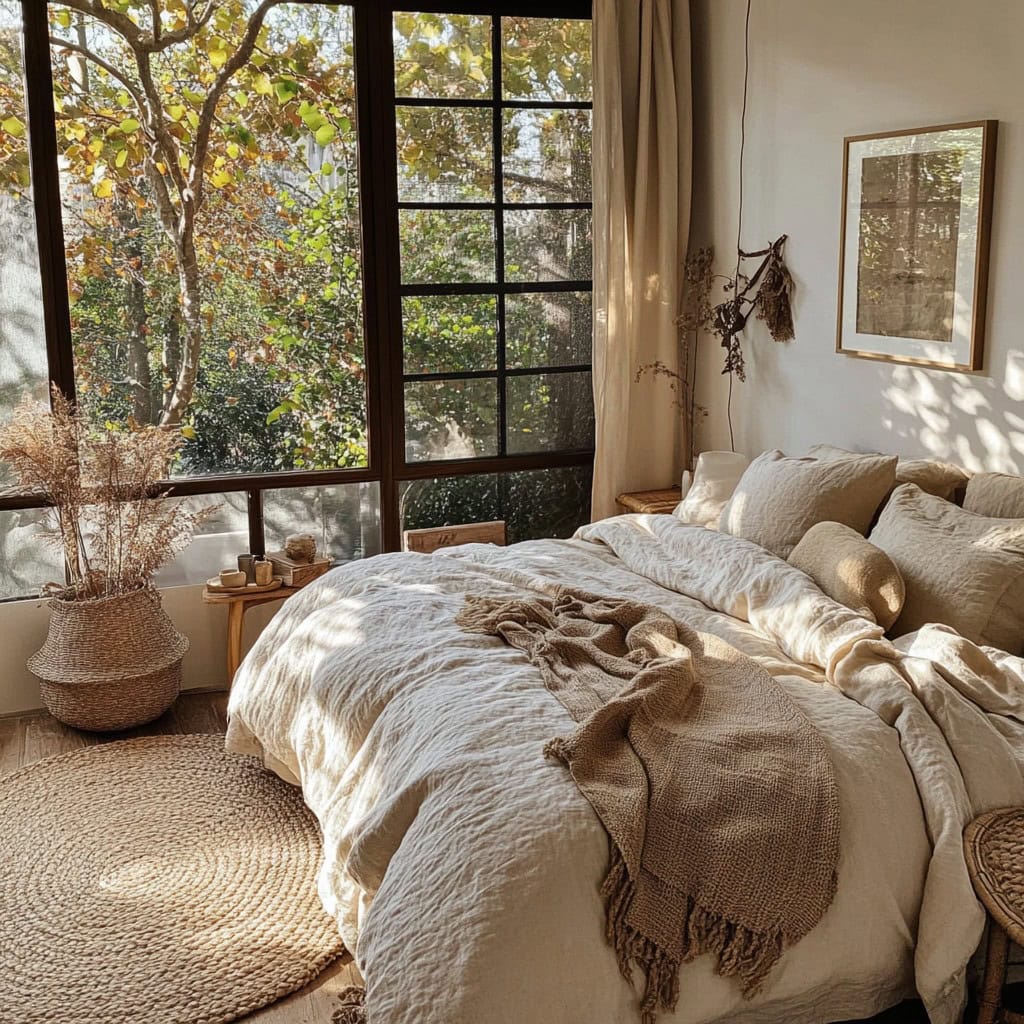
How do you stop a room with abundant natural light from feeling washed out? The answer is in the materials. The low bed sits centered over a woven rug, and the linen bedding absorbs and reflects the sunlight differently than cotton would, creating a softer glow. The wood frame and a few woven accents add enough texture to interact with the window view.
Let the materials do the work. Linen wrinkles naturally, which adds a quiet texture that a perfectly smooth fabric cannot match. The woven rug underfoot provides a tactile contrast to the smooth floor, and the beige and cream palette stays unified because every piece shares a similar matte finish. For renters, a large woven rug and linen bedding are easy swaps that change how the light behaves in the room.
Airy Japandi Bedroom with Jute Rug and Sheer Curtains, Close-Up Take

Natural light from a window lands on the jute rug first, then spreads across the linen bedding and the low wood bed frame without glare or harsh shadows. The sheer curtains soften that light further, so the room stays bright but never feels exposed. The beige and cream palette lets the texture of the jute and linen do the work of adding depth. A room this airy depends on keeping the layout simple: the bed centered, the rug under it, and nothing competing with the window’s role as the main light source. For anyone who finds Japandi too spare, this version proves that soft light and layered natural materials can fill a room without filling it with stuff.
Minimalist Japandi Bedroom with Low Platform Bed, Everyday Version
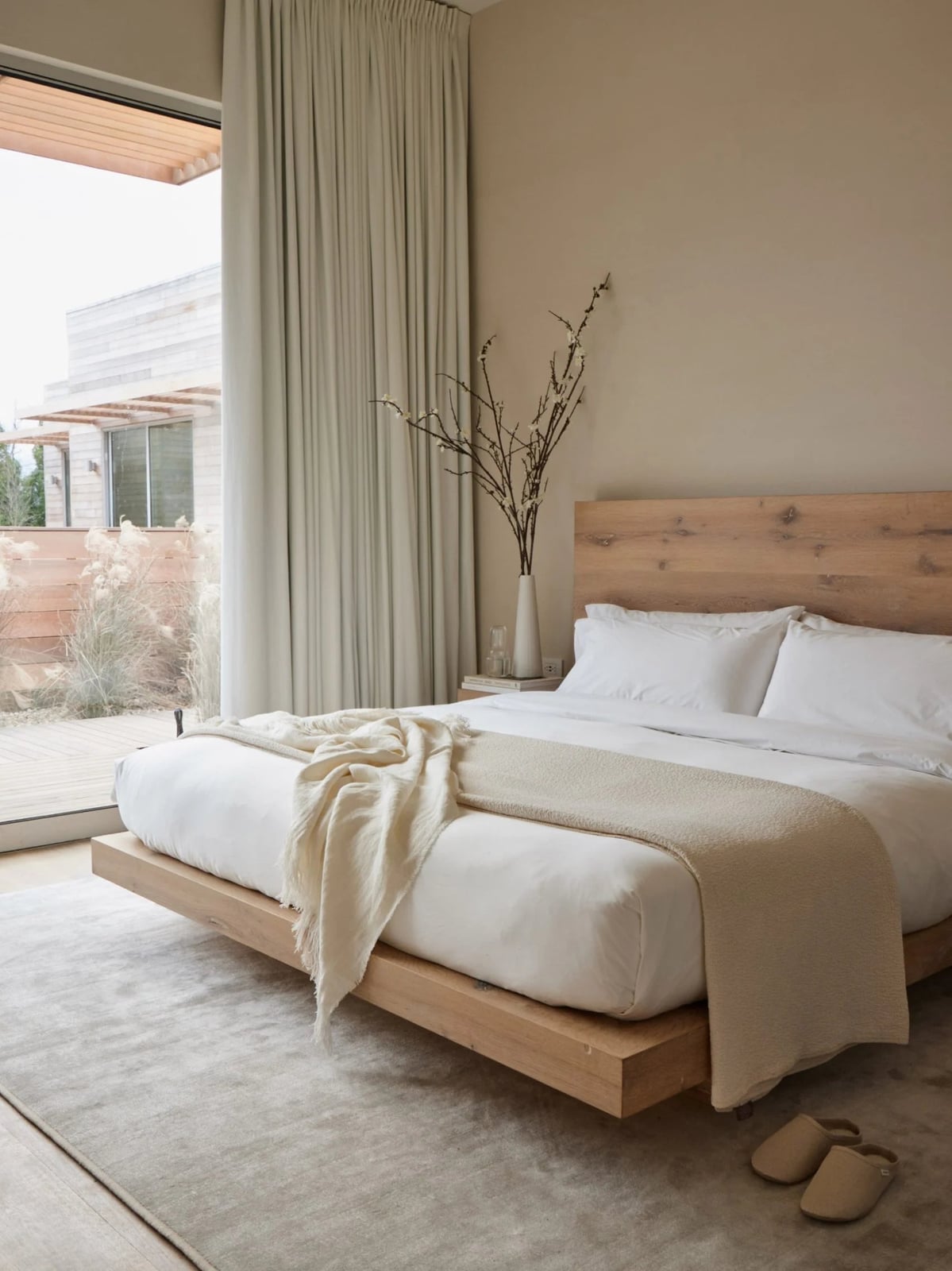
A practical rule for scale in a minimalist Japandi bedroom is that the bed should anchor the room without dominating it. The low platform bed sits centered with enough open floor around it to let the room breathe, and the textured rug defines the sleeping zone without cutting the space in half. The neutral palette of cream and wood tones keeps the eye moving across the room rather than stopping at any one piece. For a roomy layout, the low bed frame works because it leaves the upper half of the room open, which makes the ceiling feel higher. The textured rug adds enough visual weight to ground the bed, so the whole setup stays balanced without extra furniture. This layout suits anyone who wants a bedroom that feels spacious but not empty.
Japandi Bedroom with Textured Neutral Bedding and Ceramic Lamp
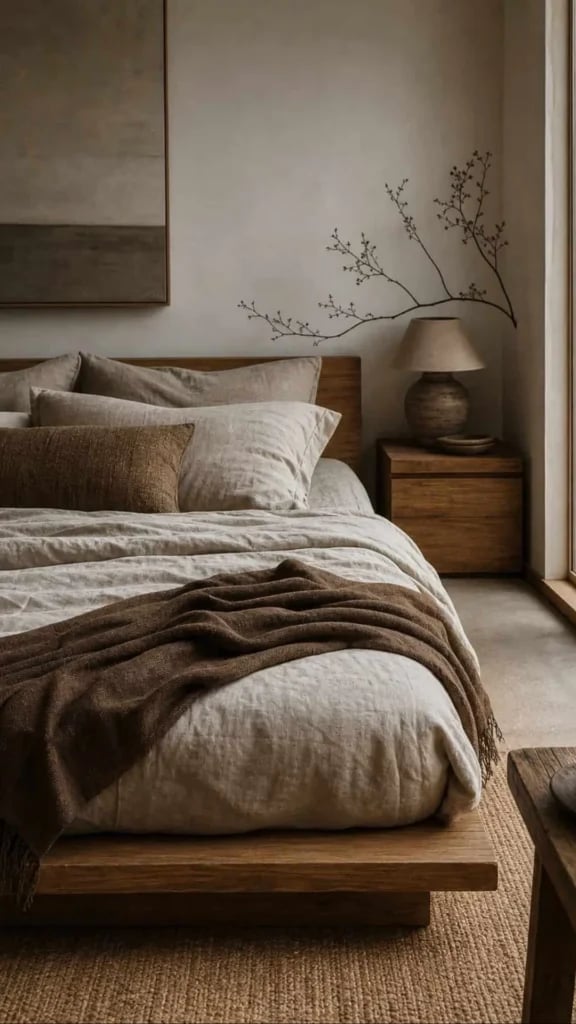
A room with a centered platform bed and a single bedside table can feel like two different rooms depending on the bedding. The neutral palette here uses linen for the duvet and a textured throw, with a ceramic lamp on the nightstand adding a warm earth tone. The jute rug underfoot keeps the material story consistent. What defines the look is the ratio of smooth to textured surfaces: the linen and jute carry the texture while the lamp and wood platform stay clean. A ceramic lamp in a matte finish breaks the softness without adding pattern. Ask your designer for: a ceramic lamp in a matte earth tone to anchor a neutral bedding scheme.
Japandi Bedroom with Floating Shelves and Plants
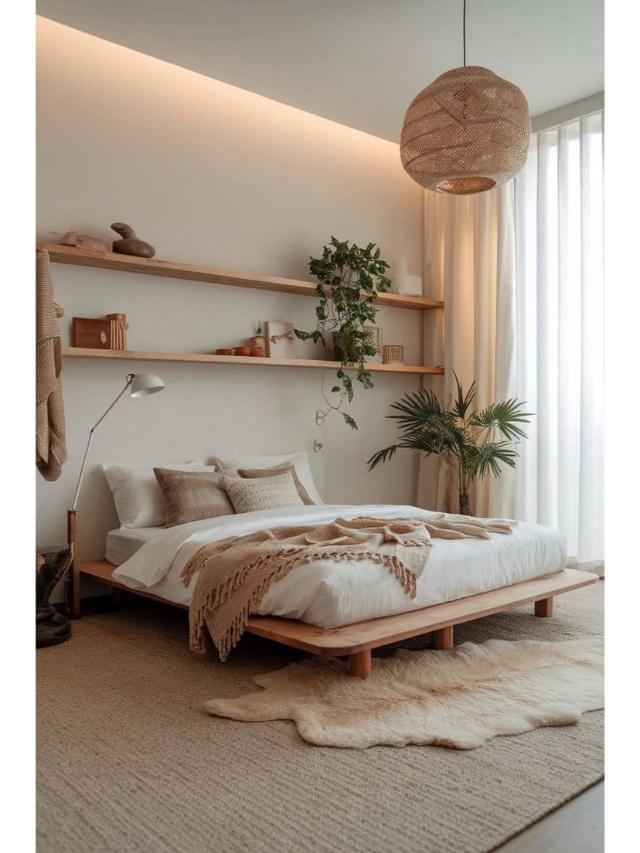
Floating shelves above a low platform bed use vertical space that otherwise stays empty, which matters in a room where the bed is centered and the floor is open. The shelves hold plants and a few small objects, and the cream-and-beige palette keeps them from competing with the linen bedding or the sheepskin throw on the bed. A floor lamp in the corner adds a second light source. For a renter, floating shelves are a reversible swap: they mount into studs or use removable adhesive strips rated for the weight, and they leave no trace when patched and painted before move-out.
Compact Japandi Bedroom with Bamboo Bed and Jute Rug
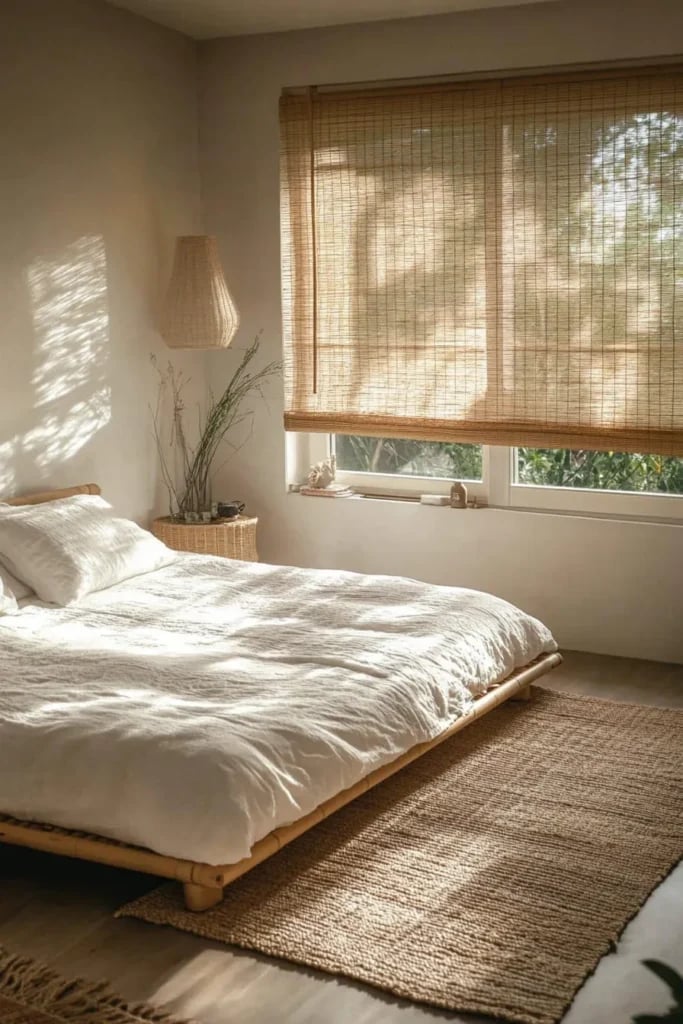
This is a compact room that does not feel small. The low bamboo bed frame sits centered with a jute rug underneath, and the white linen bedding keeps the visual weight light. A pendant light hangs above the bed, and a single plant on the floor near the bedside adds height without crowding the narrow footprint. The natural wood tones in the bamboo and the jute are the same family, so the room reads as one continuous material rather than a collection of separate pieces. In a compact space, keeping the bed low and the palette neutral stops the room from feeling like it is shrinking around the furniture.
Cozy Japandi Bedroom with Warm Wood and Textured Pillows
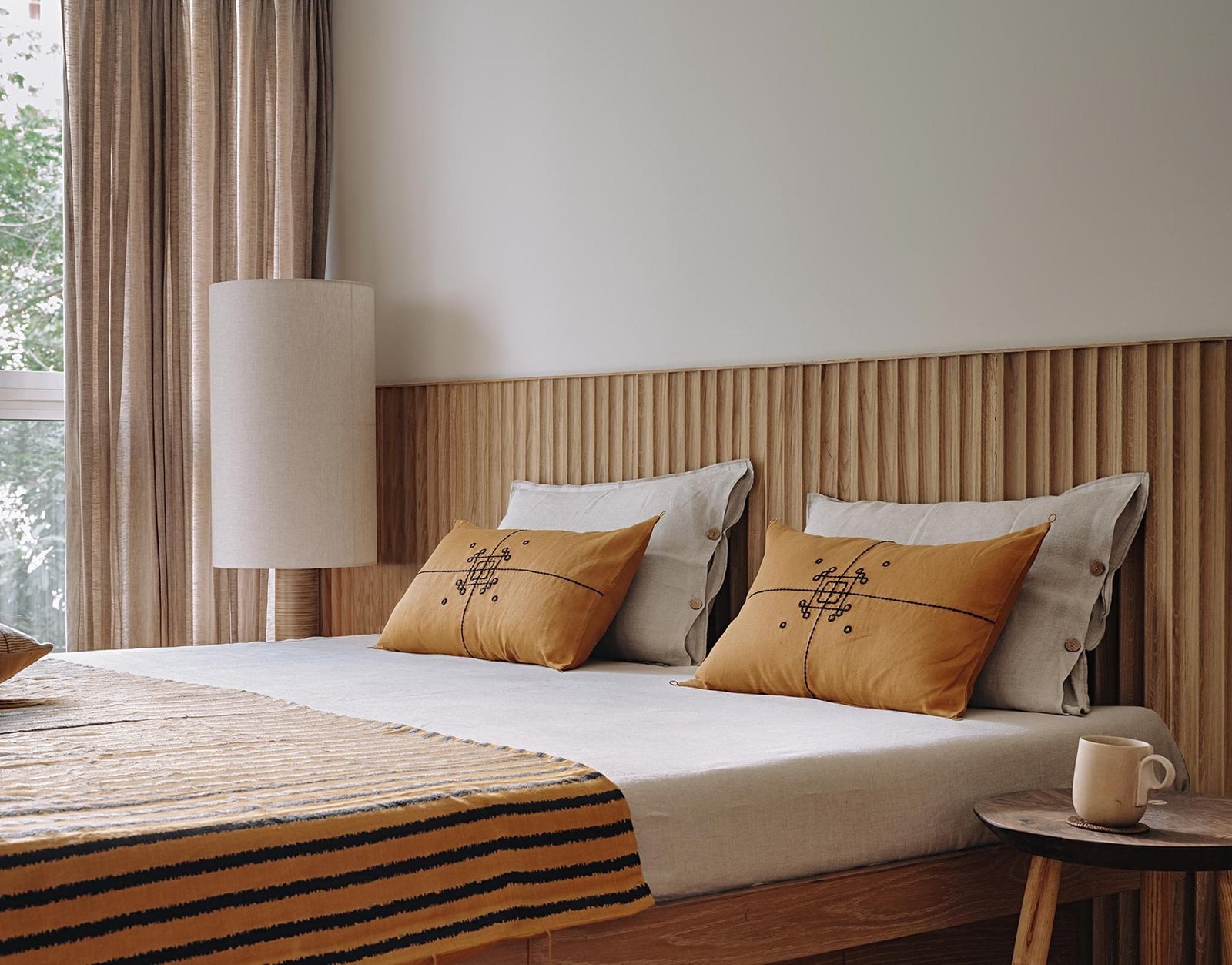
How do you add warmth to a neutral room without changing the paint or the floor? The answer is in the bedding. The low bed uses linen in a neutral base, with pillows that carry mustard and black accents through embroidery and woven texture. A floor lamp near the side table adds a warm glow in the evening. The palette is neutral overall, but the mustard tones introduce a subtle earthiness. What breaks the strict neutral is the embroidered pillows: they add pattern and a darker contrast without shifting the room out of the Japandi range. The wood side table and the wood floor keep the material story grounded.
Functional Japandi Bedroom with Slatted Wood Screen Divider
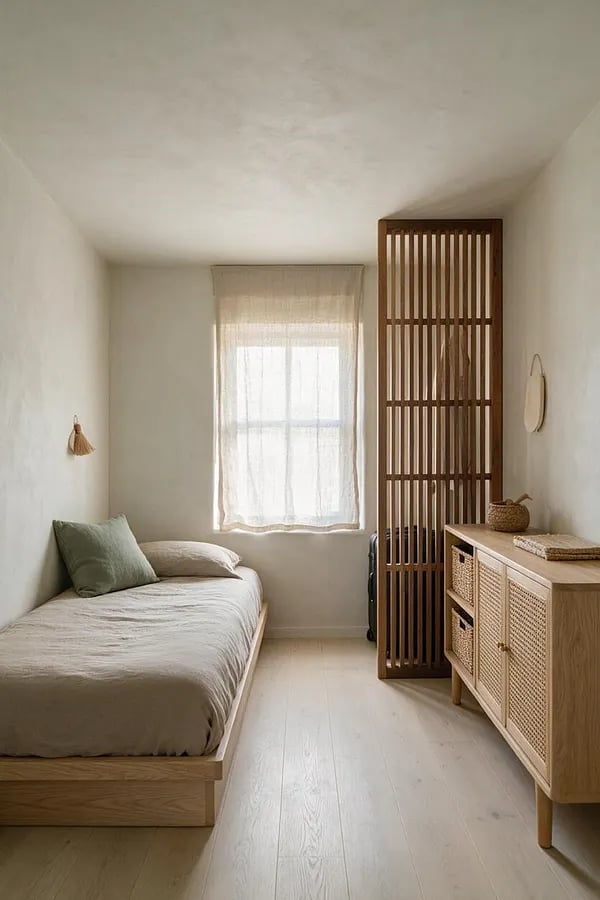
A slatted wood screen divides the bed from the room without blocking light. The single bed sits against the wall, and the screen stands beside it, creating a visual boundary between the sleeping area and a rattan cabinet on the opposite side. The window light hits the slats and casts a soft shadow pattern across the floor. In a compact room, a screen like this lets you define zones without building a wall. The layout works because the screen is open enough to see through but solid enough to separate the functions.
Japandi Bedroom with Light Wood Headboard and Wall Art
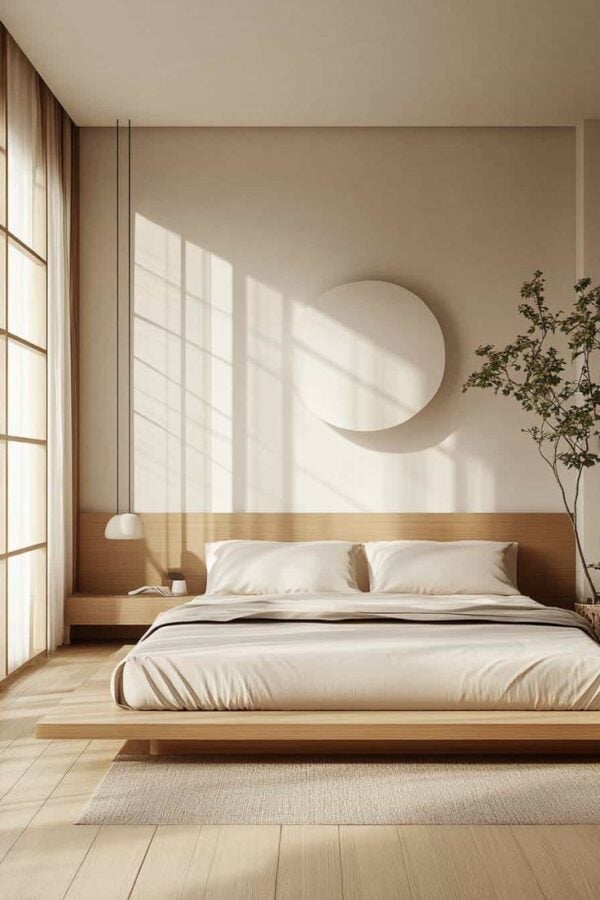
A low platform bed with a light wood headboard that doubles as a shelf gives you a spot for a book or a small object without needing a separate nightstand. The headboard and the geometric wall art above it break up the plaster wall in a balanced, uncluttered way. Neutral linen bedding and beige tones keep the palette calm so the wood and the art can stand out. Two pendant lights flank the bed, offering task-level reading light that works with the daylight. When the room feels spacious already, letting the headboard pull double duty is a smart way to keep the floor plan open.
Japandi Bedroom with Textured Upholstered Headboard and Bench
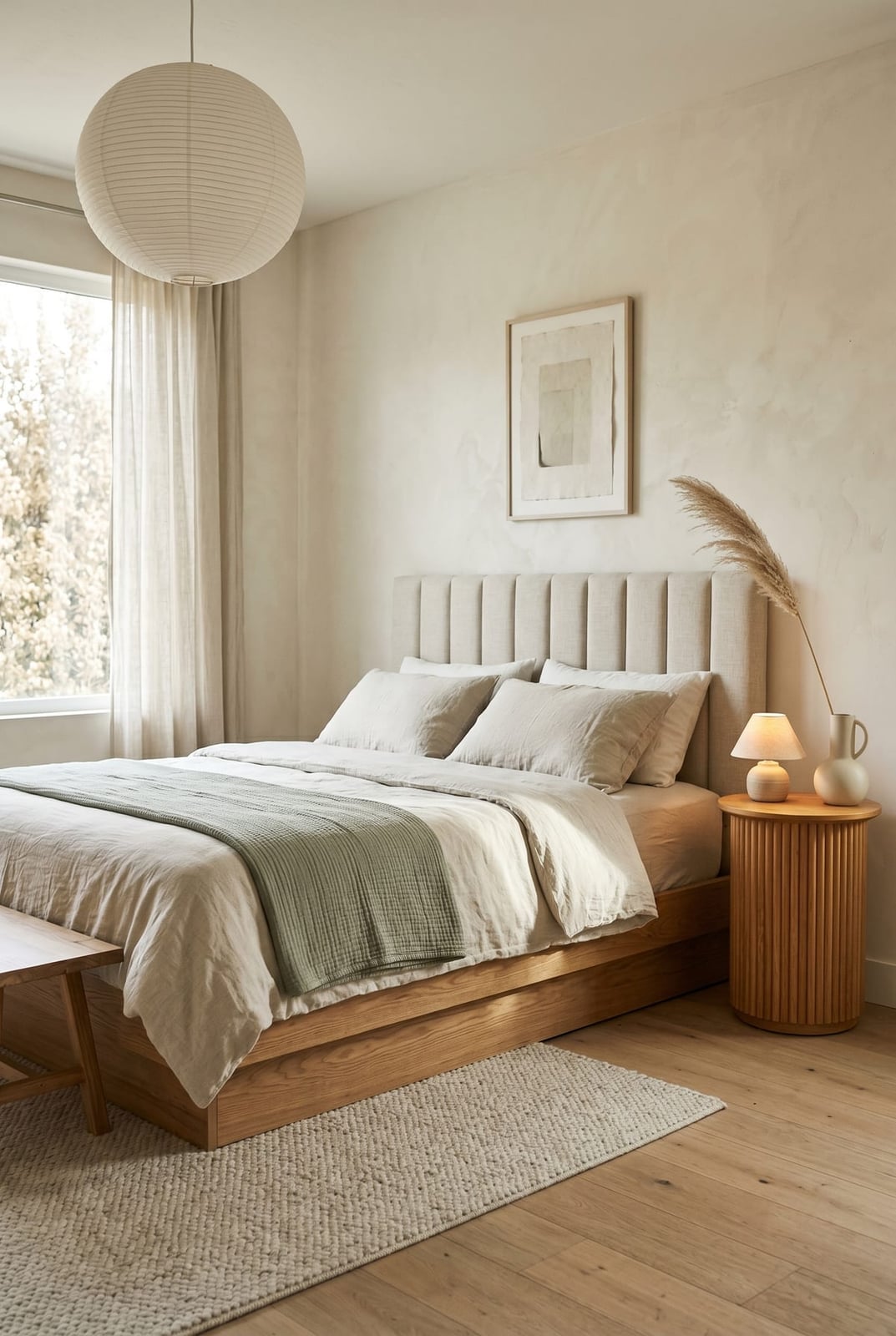
Japandi usually leans on bare wood, so a textured upholstered headboard reads as a softer, more tactile version of the same idea. The fabric here is a light green that picks up the muted tones in the jute rug and the linen bedding, so it does not feel like an upholstered piece dropped into a wood-only room. A low wooden bench at the foot of the bed gives you a surface for laying out tomorrow’s clothes or setting down a tray, and it keeps the centered bed from floating in the middle of the room.
A small bedside lamp on the table adds warm light that balances the cooler natural light from the window. The palette stays limited to beige, light green, and wood tones, which means the headboard’s texture becomes the main event. If a plain wood headboard feels too spare, this swap adds comfort without changing the room’s calm character.
Japandi Bedroom with Extensive Wood Paneling and Shoji Screen
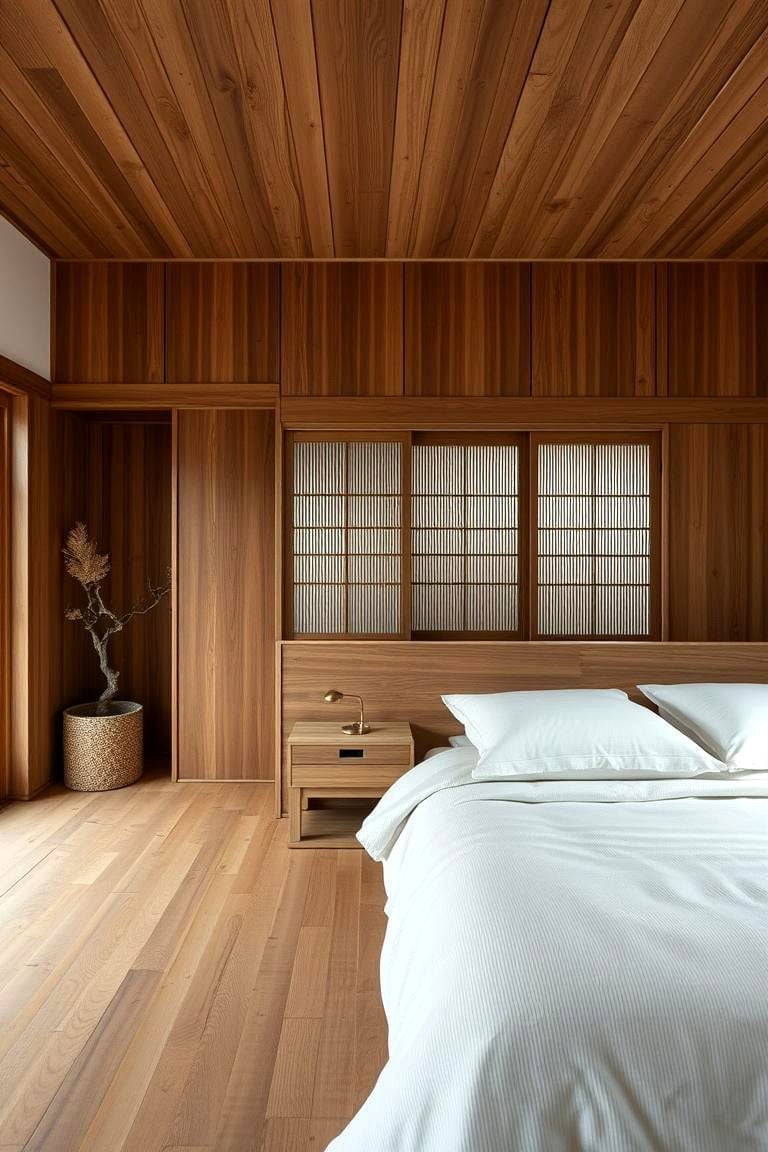
Floor-to-ceiling wood paneling turns an entire wall into a warm backdrop, and the shoji screen window lets in bright natural light that keeps the wood from feeling heavy. The wooden platform bed and bedside table stay low and simple so the paneling stays the focus. White linen bedding adds a clean contrast that stops the room from reading as all wood. The subtle ceiling light is barely noticeable, which is the point: the paneling and the natural light do the work.
Warm Minimalist Japandi Bedroom with Natural Wood Tones
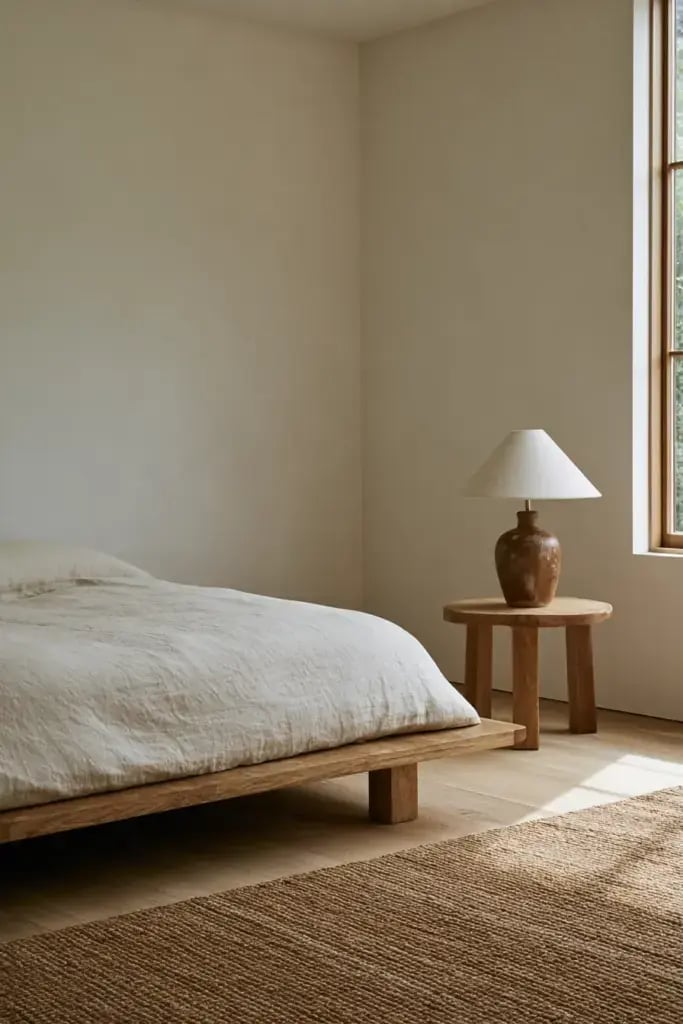
This room gets the warm minimalist balance right: the wood tones in the bed frame and nightstand are the main color, and the beige linen and plaster walls stay in the background. A bedside lamp with a soft shade adds a warm glow that reinforces the wood’s natural warmth after sundown. The layout is straightforward a centered bed, a single rug, one nightstand which keeps the room feeling spacious. The serene atmosphere comes from letting the wood tones lead and keeping everything else simple.
Japandi Bedroom with Slatted Wood Accent Wall
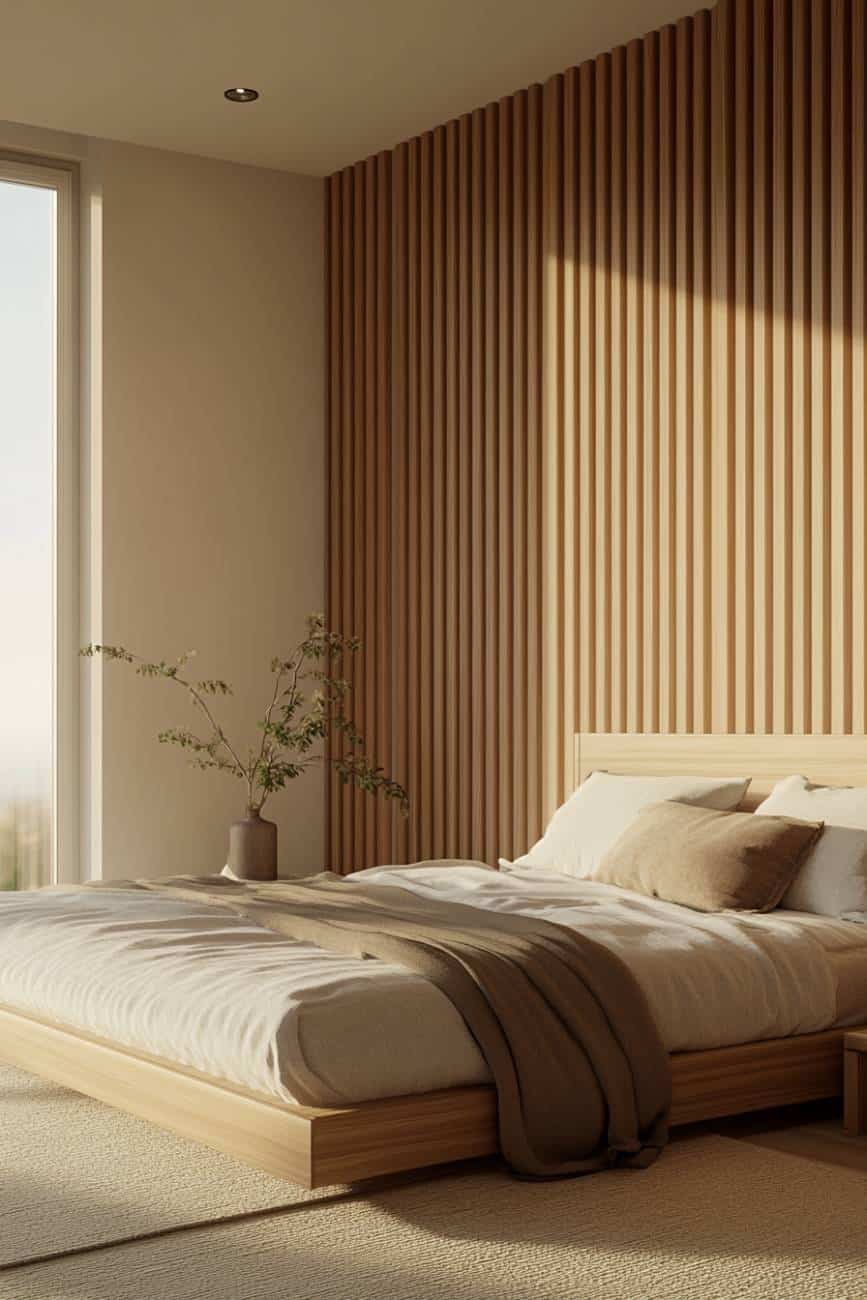
A slatted wood accent wall works best as the only wall treatment in the room. Here the slatted wall sits behind the bed, and the other walls stay plain so the texture has room to work. The natural daylight hits the vertical lines and creates soft shadows that change through the day, which gives the room movement without adding anything physical.
A cream linen duvet and a simple wooden bed frame keep the focus on the wall. The slats add visual depth in a way that paint or wallpaper cannot, and they also help with acoustics in a bedroom. If you are renting, a slatted panel that leans against the wall instead of attaching to it can give a similar effect without drilling into the plaster.
Japandi Vignette with Low Wooden Table and Ceramic Accents
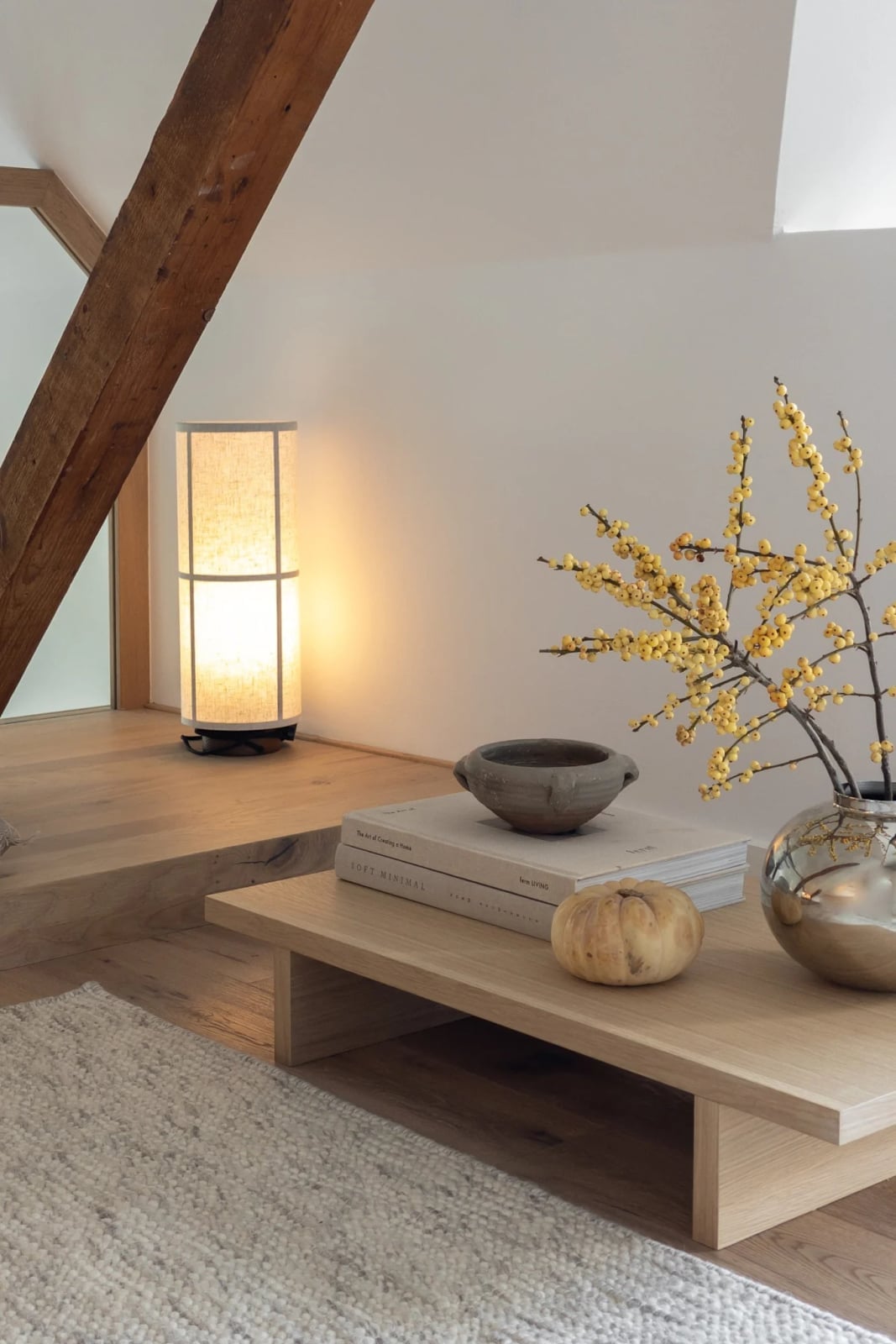
A low wooden table acts as a landing spot for a fabric table lamp, a ceramic bowl, and a stack of books topped with yellow flowers. The lamp casts warm light that softens the grey and cream palette, while natural light from the window keeps the vignette from feeling closed in. This is a practical swap for a bulky nightstand: a low table opens up visual space and costs less time to style. The ceramic bowl holds small items like keys or jewelry, giving the surface a job beyond decoration.
Japandi Bedroom with Extensive Built-in Wooden Shelving
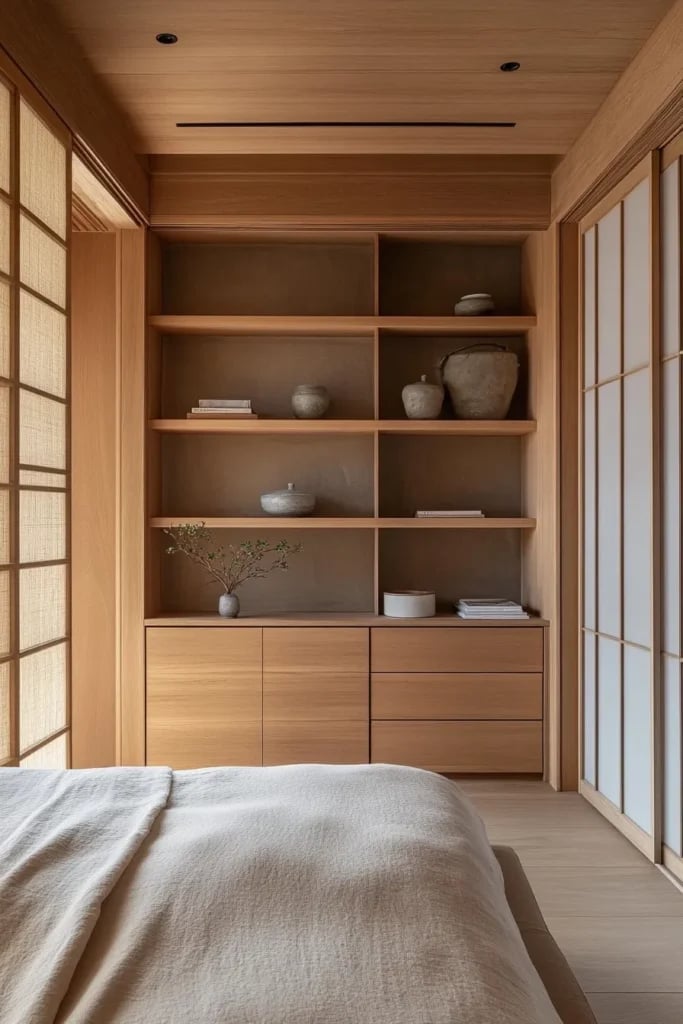
A practical rule for built-in shelving is that it should feel like part of the wall, not an add-on. Here, a full wall of wooden shelves with woven screen doors and wooden drawers keeps the bedroom tidy without extra furniture. The neutral palette lets the wood grain stand out, and the clean lines mean the storage unit doubles as visual structure. For renters, a similar look works with freestanding modular shelves and sliding fabric panels attached to a tension rod. The key is keeping the front clear and the color consistent with the room’s wood tones.
Japandi Bedroom with Low Bed, Woven Bench, and Minimalist Art
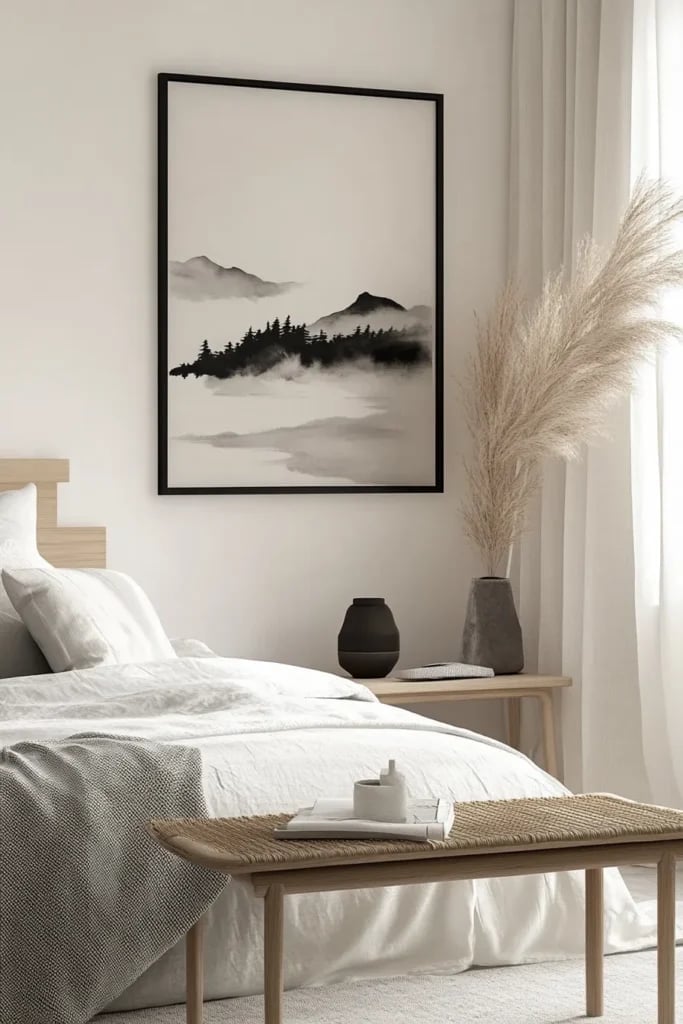
Where a standard bedroom might place a bench at the foot of the bed for extra seating, this setup uses it to anchor the layout without adding clutter. The low bed frame keeps the eye moving across the room, and the woven bench sits in line with the bed’s edge, creating a clean horizontal line. A floor lamp on one side and natural light give the room balanced brightness. The minimalist artwork on the wall breaks up the neutral palette.
Woven textures soften the room, while the bench offers a spot to sit or set down a tray. This layout works well in a roomy space because the low furniture keeps the ceiling feeling higher. For a tighter footprint, skip the bench and use a pair of floor cushions instead.
Calming Japandi Bedroom with Shoji Screen and Layered Bedding
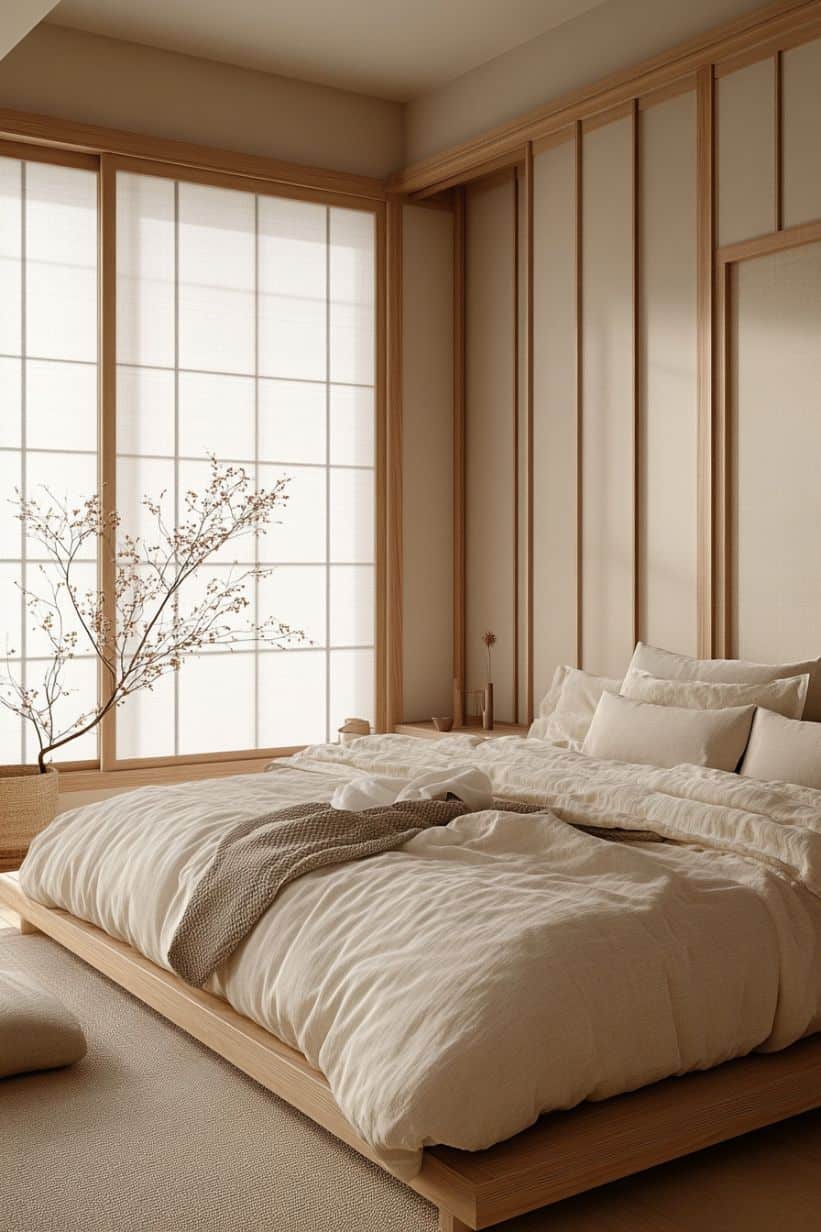
The shoji screen window diffuses incoming light, turning a bright window into a soft glow across the room. This diffused light works with the layered bedding, a linen duvet, a throw blanket, and a few pillows, to create a bed that looks comfortable without being fussy. The neutral cream and beige palette stays calm, and the platform bed keeps the silhouette low. For a similar effect in a room without shoji screens, hang a rice paper blind or a linen curtain that filters light rather than blocking it.
Japandi Bedroom with Rattan Headboard and Soft Color Palette
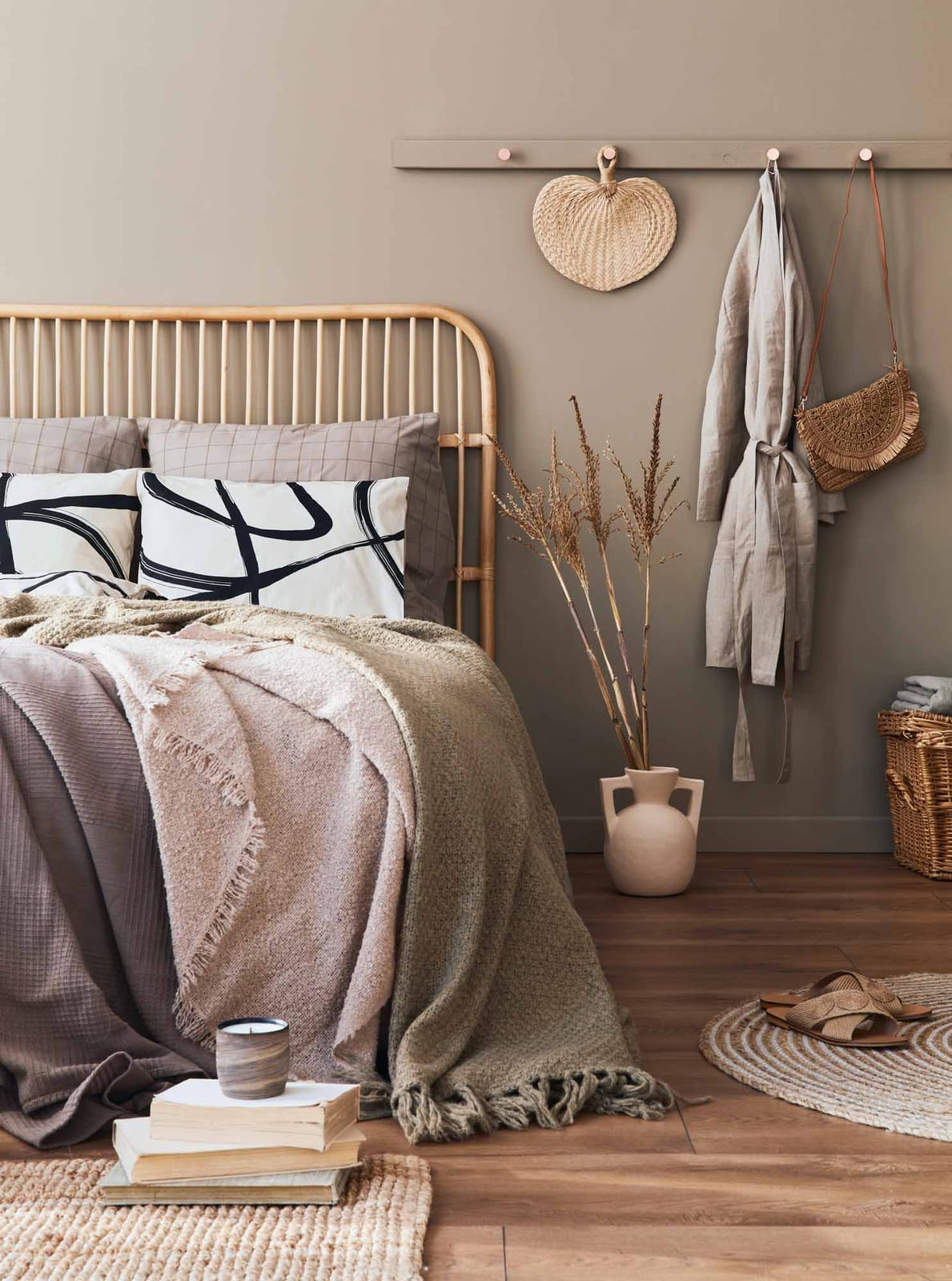
This bedroom makes a clear case for a rattan headboard as the hero piece. The woven texture adds warmth to a palette of blush pink, sage green, and beige, and the headboard’s height balances the wall space without overwhelming the room. Layered throws and decorative pillows bring in linen and more woven textures, while a vase of dried grass and a woven wall hanging repeat the natural theme. Soft ambient light keeps the room feeling quiet, and the headboard stays central in the layout. The soft palette breaks the all-neutral look just enough to add interest without losing the calm Japandi feel.
Tranquil Japandi Bedroom with Low Wooden Bed and Rattan Accents
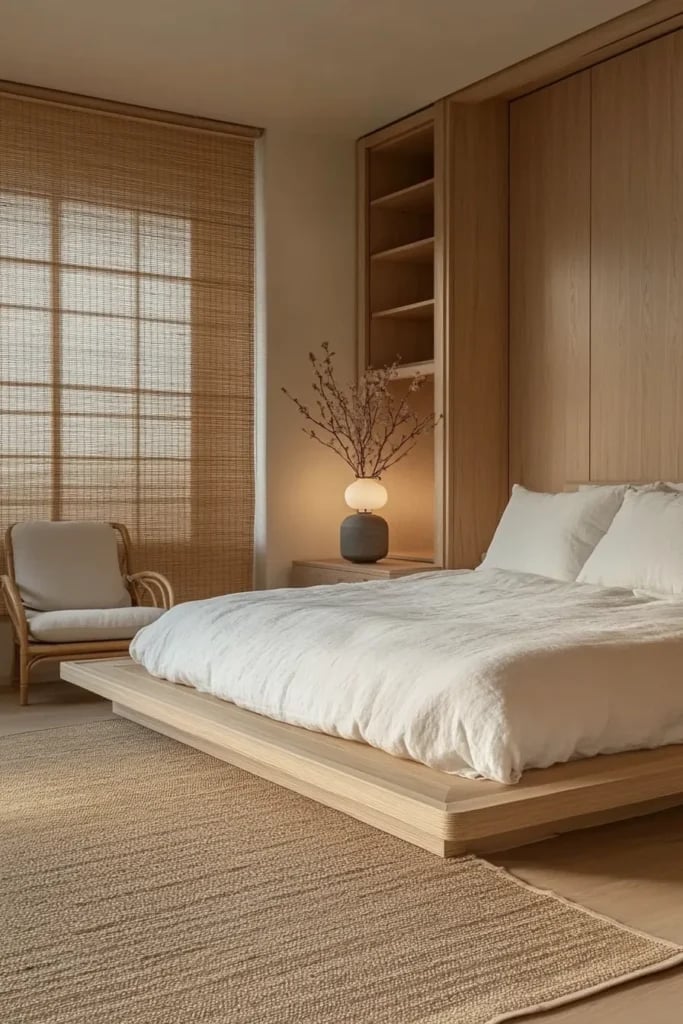
A low wooden platform bed does more than sit closer to the floor; it shifts the visual weight of the whole room downward, which makes the ceiling feel higher and the space breathe. The neutral palette here, beige walls, white linen, and warm rattan, keeps the eye moving across textures rather than colors. A woven blind at the window and a simple chair in the corner support the calm without claiming attention. The ambient lamp adds a soft glow that rounds out the natural light, so the room feels settled at any hour.
Japandi Bedroom with Quilted Bedding and Paper Lanterns
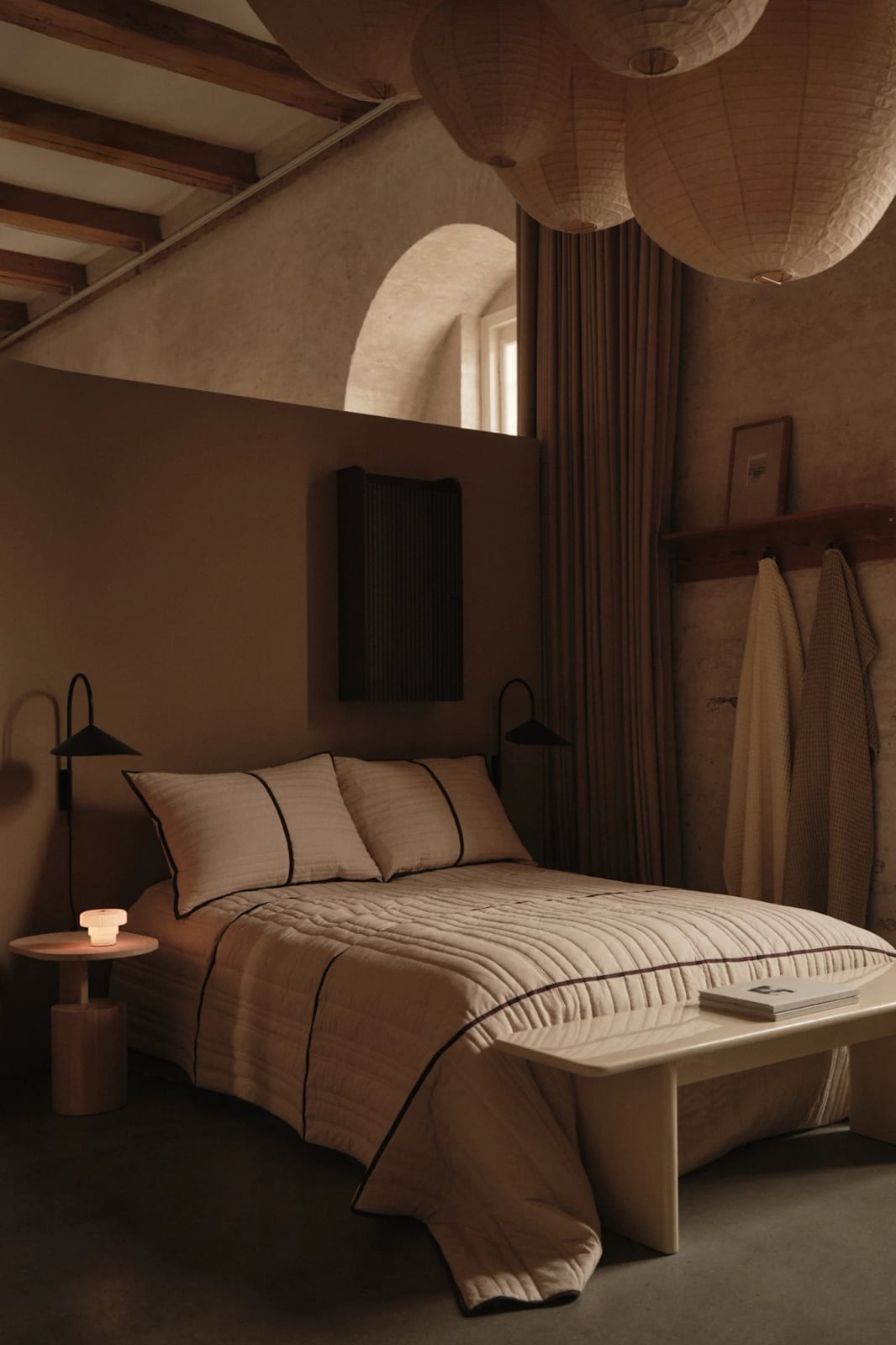
The paper lanterns hang like soft clouds, diffusing light into a warm, even hum that a hard lampshade just cannot match. Quilted bedding adds a quiet texture against the smooth plaster walls, while the black accents in the sconces and bench frame the neutral beige and cream palette without shouting. Natural light from the window joins the soft artificial glow, making the room feel generous and unhurried.
Airy Japandi Bedroom with Raised Platform Bed and Rattan Pendant
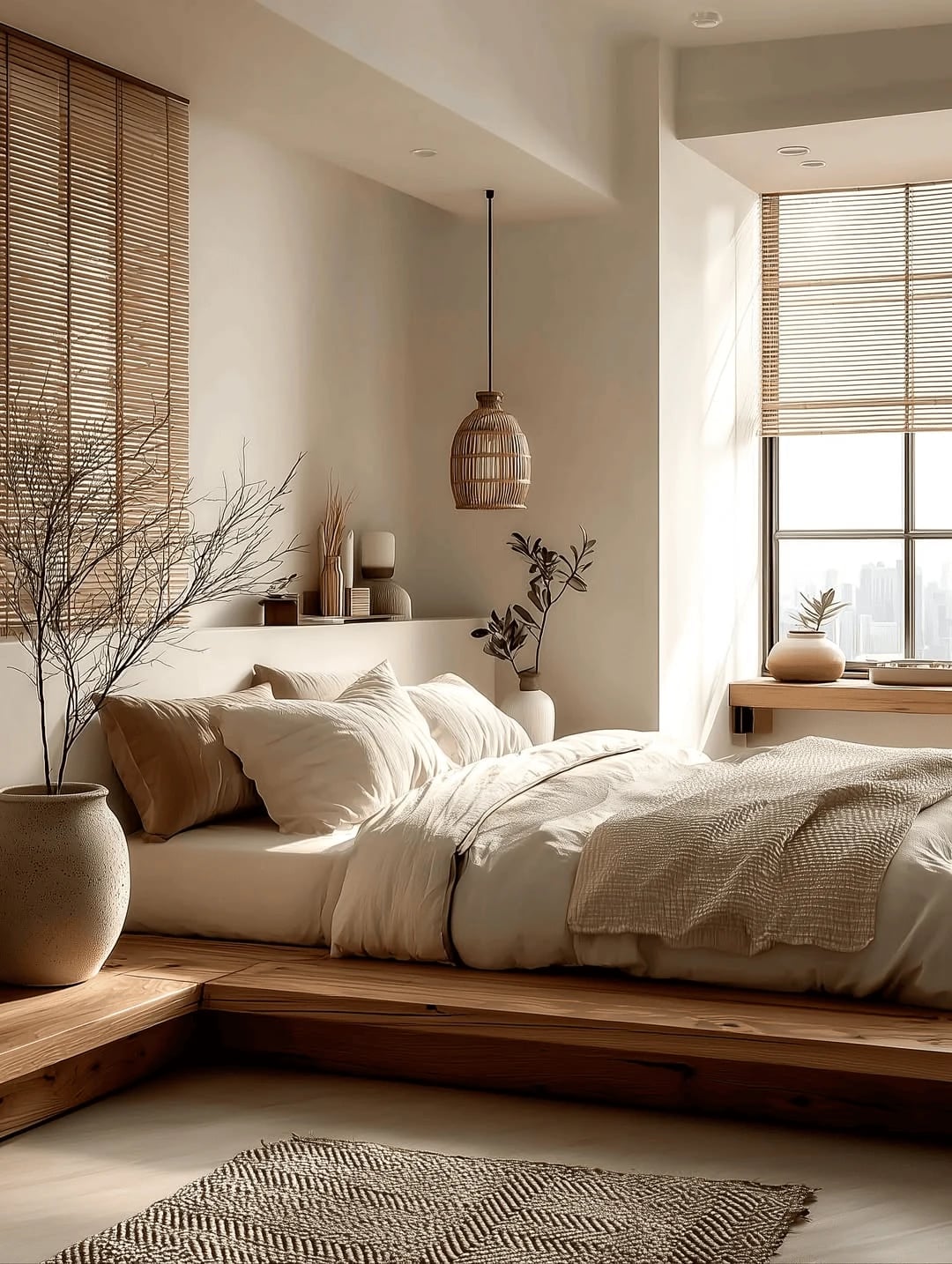
A raised platform bed creates a clear zone for sleep without walls or curtains. The step-up defines the sleeping area, while the woven rug in front softens the transition from floor to platform. A rattan pendant hangs overhead, casting a warm downward light that matches the natural daylight from the windows. Open shelving keeps the walls light and the room feeling expansive, letting the wood tones and cream linen do the work.
Japandi Bedside Table Vignette with Textured Ceramic Lamp
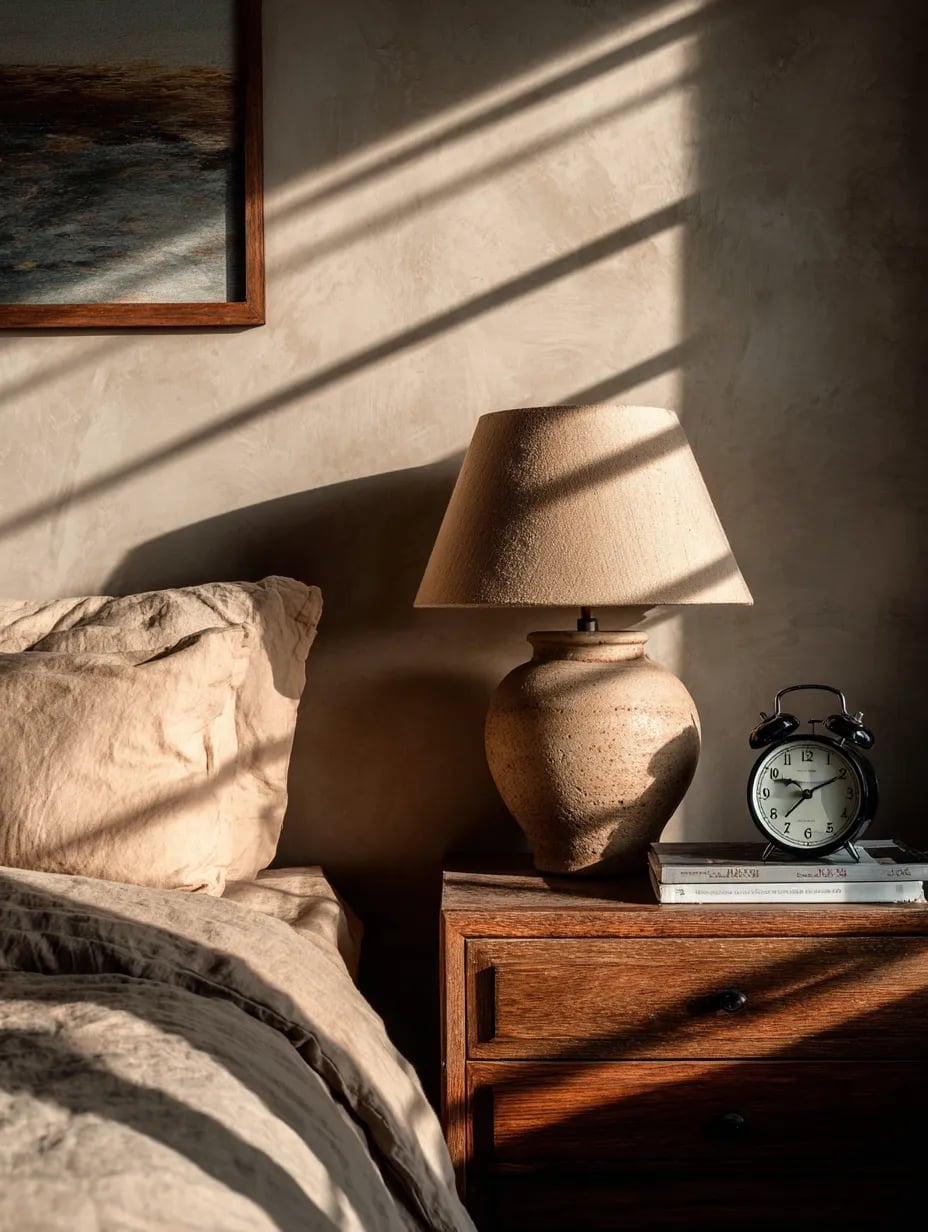
A bedside table vignette can easily become a catch-all, but this one keeps its composure by limiting the pieces to three: a textured ceramic lamp, a small alarm clock, and the edge of the bed frame. The dappled light on the wall adds a layer of interest without a single object. That light, shifting through the day, changes the mood of the corner naturally, so you get movement without clutter. The neutral beige and brown palette lets the wood and ceramic textures stand out, and the metal lamp base adds a subtle contrast that keeps the arrangement from feeling too soft.
Japandi Bedroom with Sage Green Bedding and Dried Branches
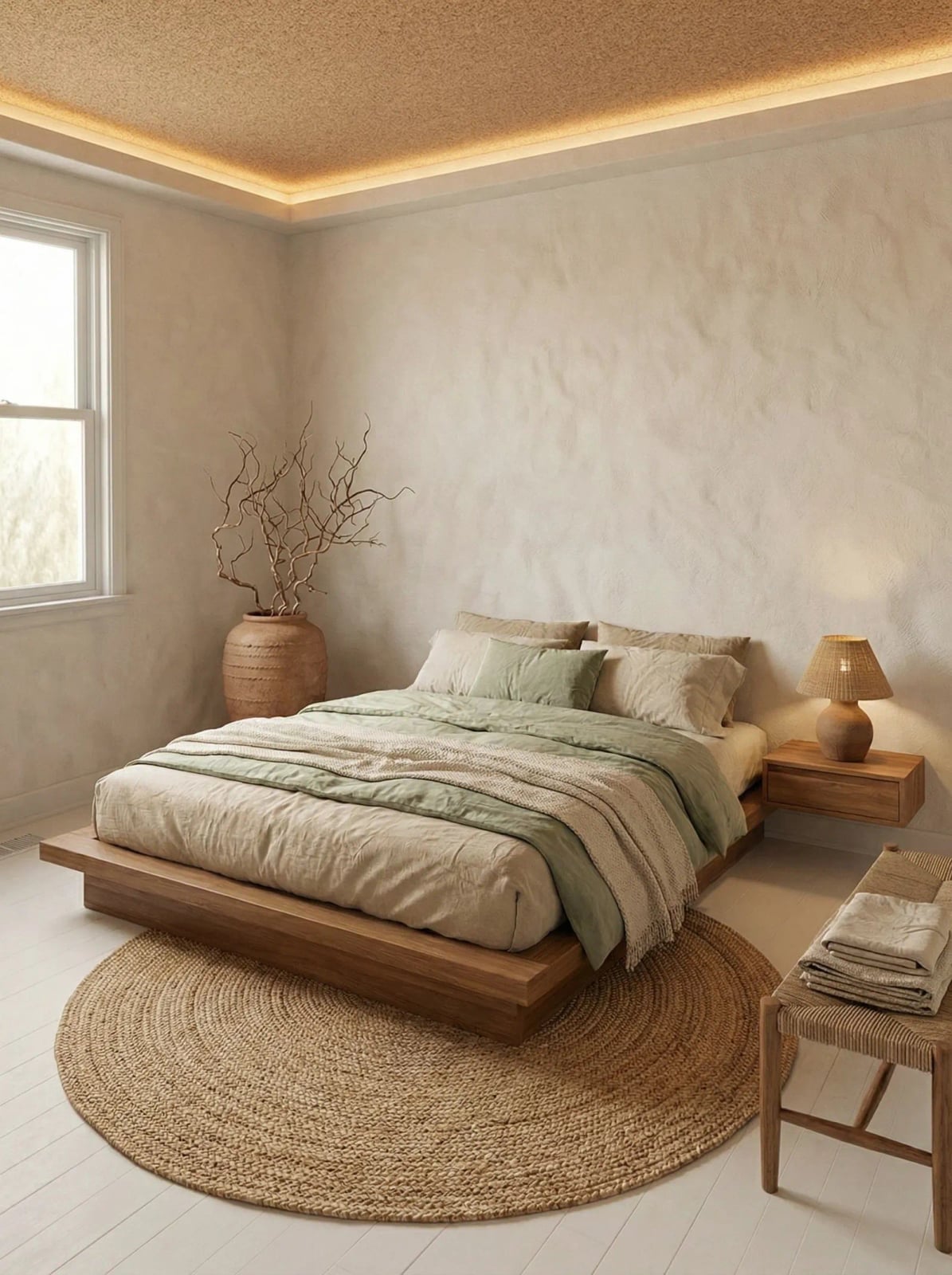
Sage green bedding introduces a muted color that stays calm but breaks the all-neutral streak. The dried branches in a simple vase add height and a sculptural line without needing water or sunlight. A round jute rug under the low platform bed anchors the layout, while the warm accent light on the ceiling and the soft natural light from the window keep the room from feeling flat. The wooden bedside table and woven textures in the linen bedding complete the palette without adding fuss.
Minimalist Japandi Bedroom with Large Wood Panel Door
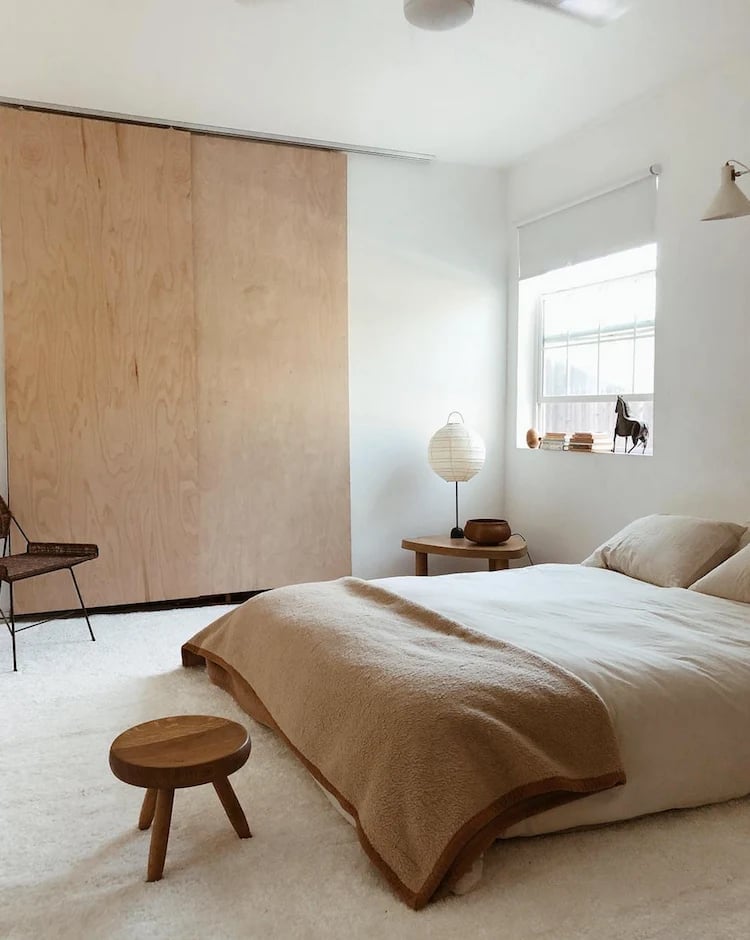
A Japandi bedroom with a large wood panel sliding door is a room where the door does more than close. The low bed sits against the wall under natural light from a window, with a wooden side table and a woven chair as the only other furniture. Plaster walls and textured fabric on the bed keep the palette neutral with wood tones. The room feels roomy because the layout is spare. For a renter, a sliding door like this is not a swap, but a freestanding room divider in a similar wood finish comes close to the same effect without structural work.
Organic Japandi Bedroom with Textured Plaster Walls and Plants
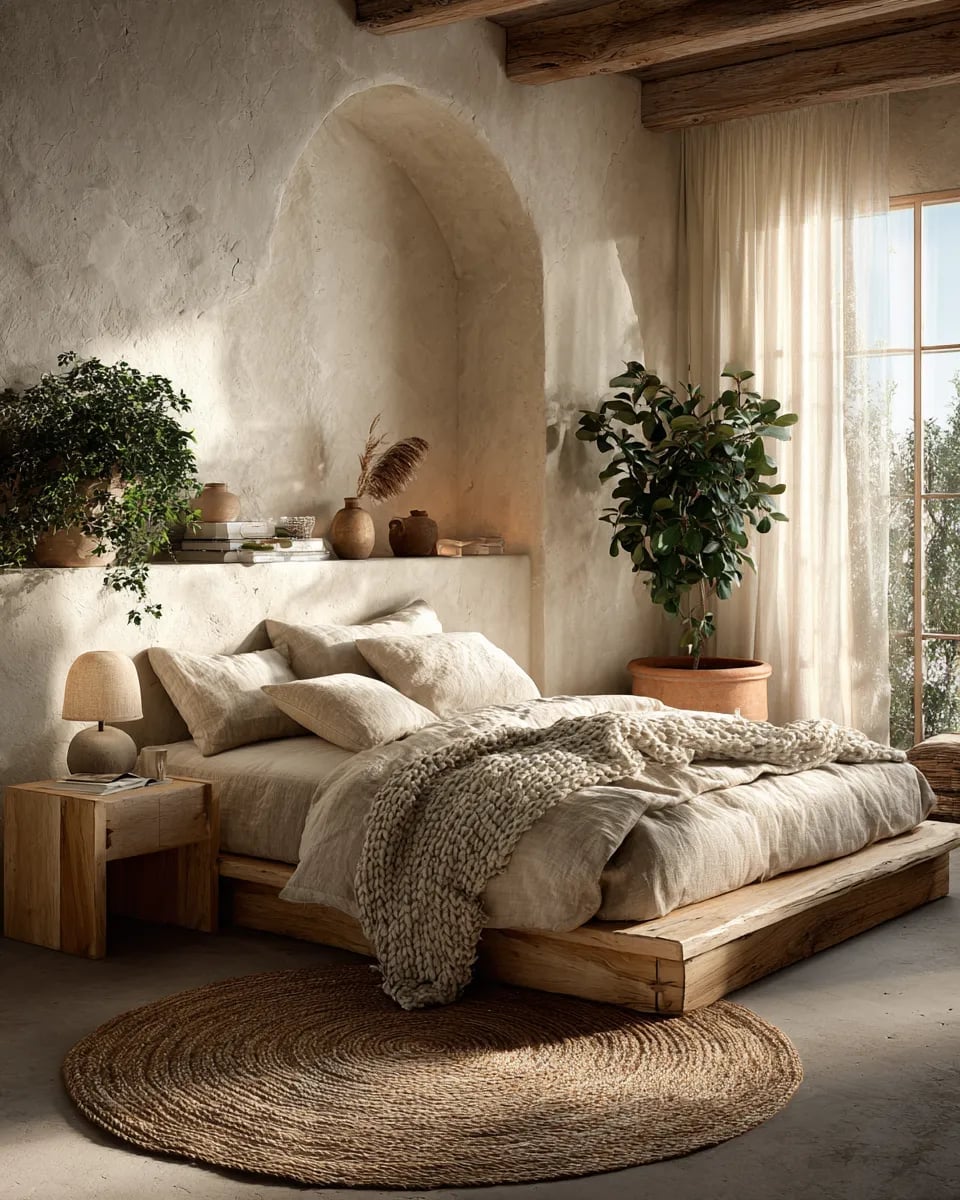
A practical rule for organic Japandi is that texture replaces color. In this bedroom, the textured plaster wall is the main event, and it does not need a pattern or a bright shade to hold attention. The platform bed sits centered with a round jute rug underfoot, a linen throw on the bed, and a plant on the bedside table.
Natural light and soft ambient lighting land on the plaster surface, which reads as matte and slightly uneven. Cream, beige, and earthy tones keep the palette quiet. For a renter who cannot texture a wall, a large woven wall hanging in a neutral fiber gives a similar tactile surface without the plaster commitment.
Japandi Bedroom Corner with Olive Branch and Terracotta Bedding
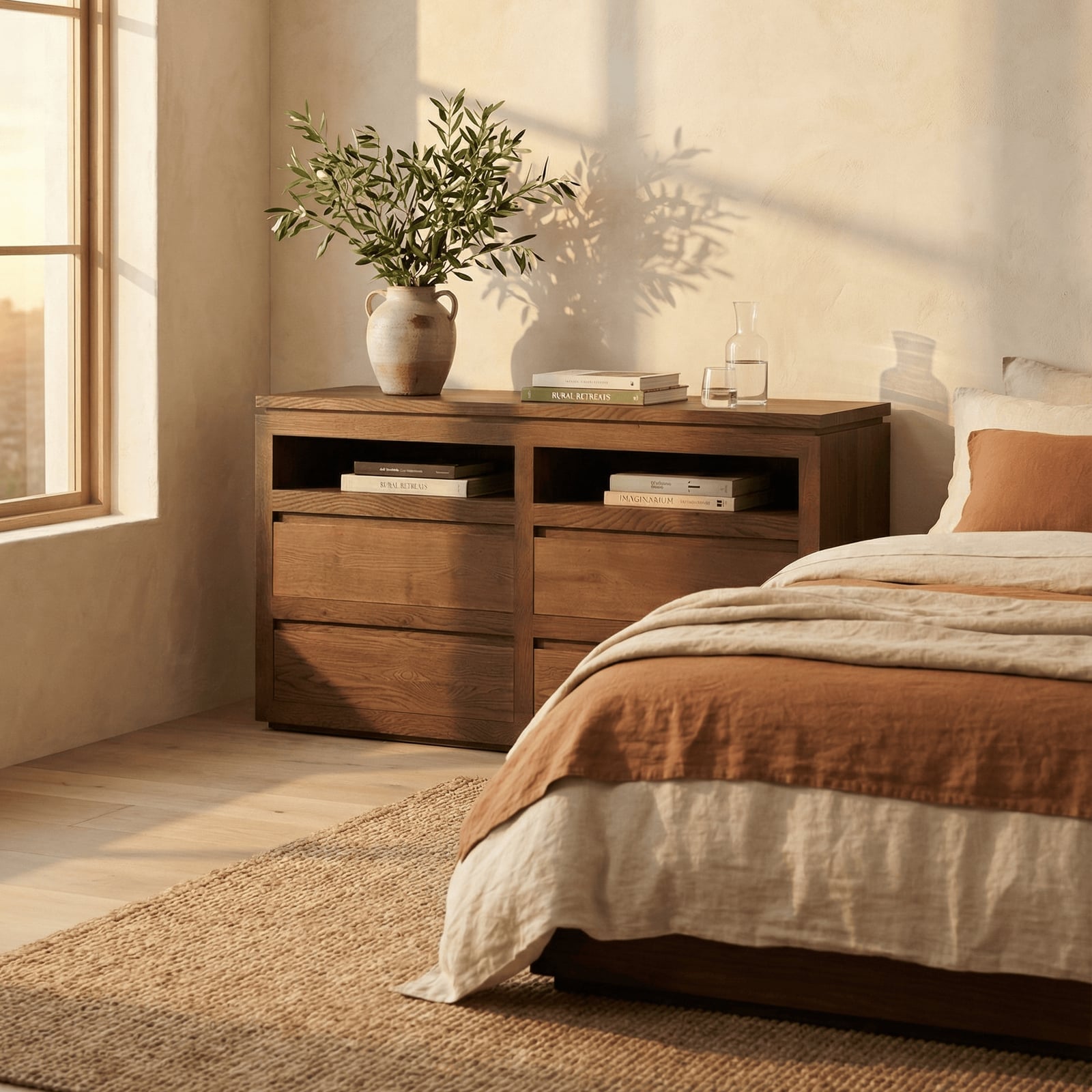
An olive branch in a glass vase on a wooden bedside cabinet brings a sliver of green into a Japandi bedroom corner. The bedding layers cream and terracotta linen, with warm natural light hitting the ceramic vase and a stack of books on the cabinet. The palette stays warm wood, cream, terracotta, and white. This type of detail does not require a full room redo. A single branch and a shift in bedding color are enough to shift the mood.
Japandi Bedroom with Integrated LED Lighting and Wood Accents
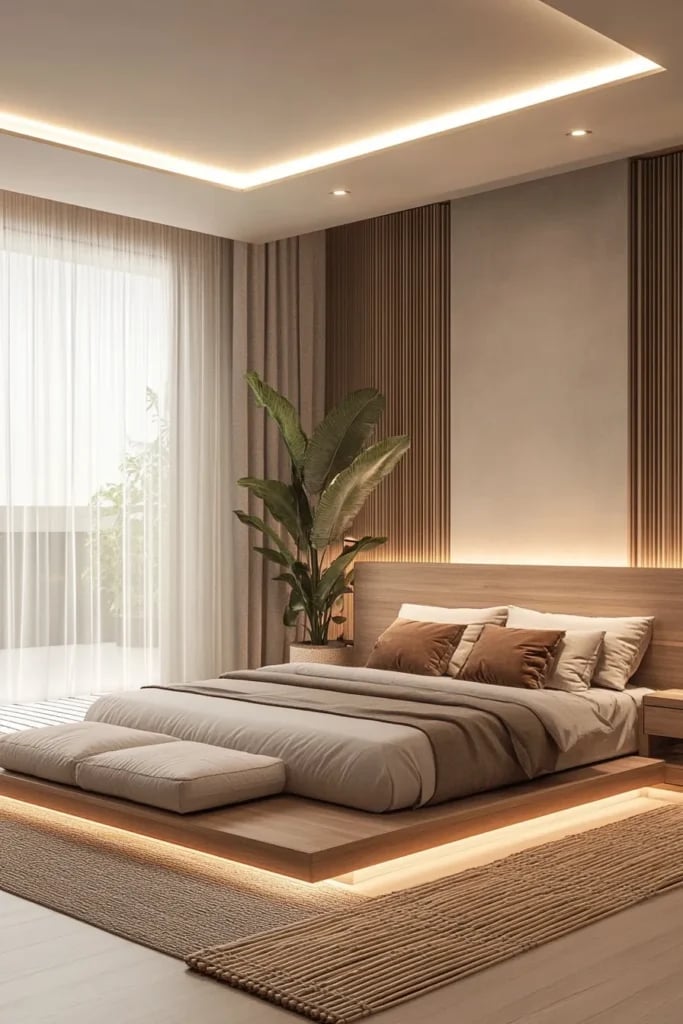
Integrated LED lighting changes how a Japandi bedroom reads at night. The low platform bed sits against an accent wall of wooden panels, with a large plant in the corner and soft ambient light from the LEDs running along the wall or ceiling. The palette stays neutral with brown and beige, and the materials are wood, textile, and metal. The room feels roomy because the light is not coming from a single lamp on a nightstand. Integrated lighting evens out the shadows, which makes the space feel larger than it is. A plug-in LED strip behind a headboard gives a similar effect for anyone who cannot wire into the wall.
Japandi Bedroom with Live-Edge Bed Frame and Bonsai Tree
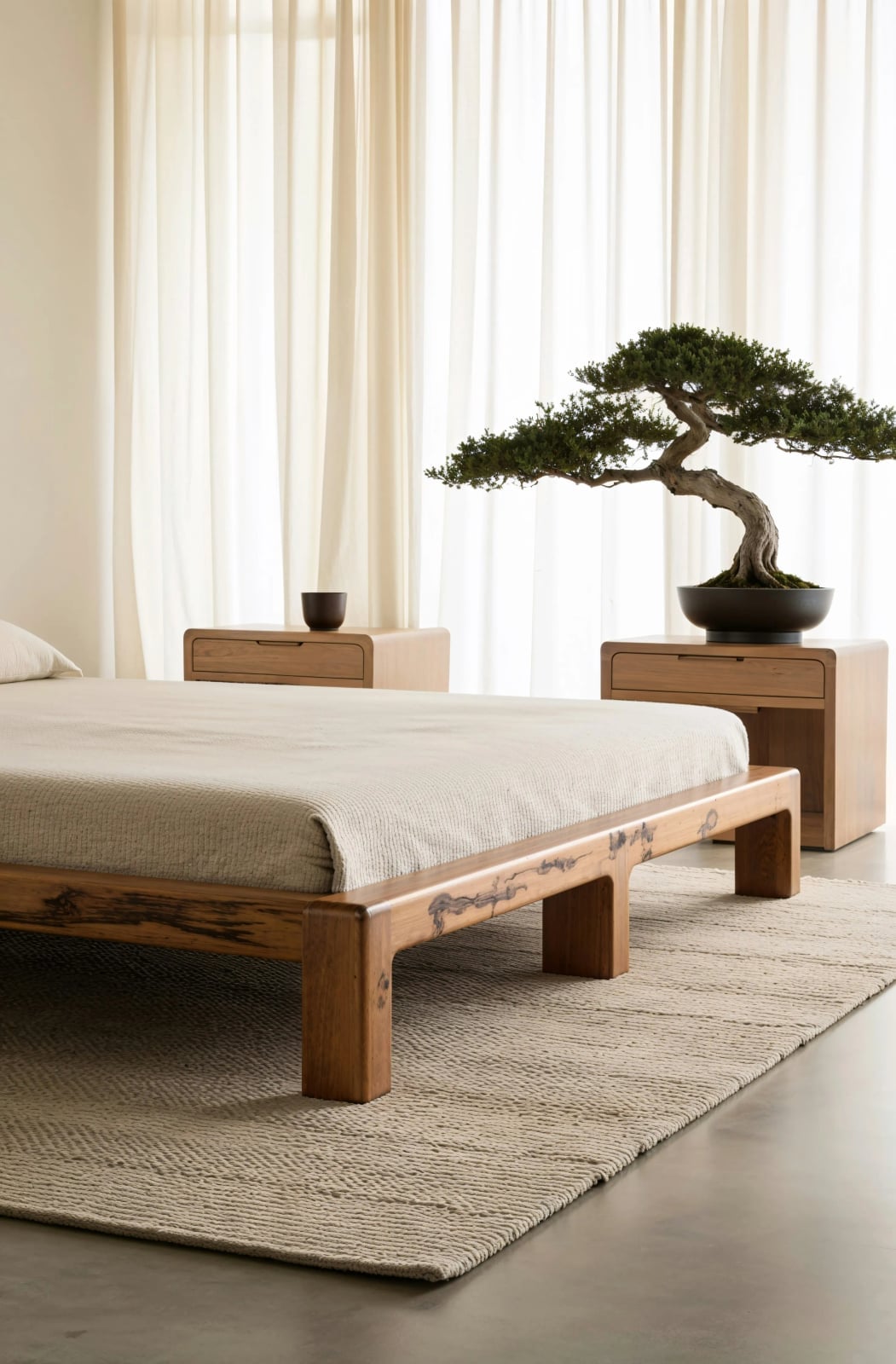
Compared to a standard platform bed, a live-edge bed frame brings a more rugged, organic feel to Japandi. The low wooden frame sits centered in the room with symmetrical bedside tables, a textured woven rug underfoot, and a bonsai tree on one table. Soft natural light comes through sheer curtains, landing on the linen bedding and the ceramic planter.
The live edge keeps the palette natural wood, cream, beige, and green. The bonsai is small in scale, so it does not fight the bed for attention. Symmetry on the nightstands keeps the layout calm, which matters when the bed frame itself is the most textured piece in the room.
Serene Japandi Bedroom with Textured Fabric Bed and Bench
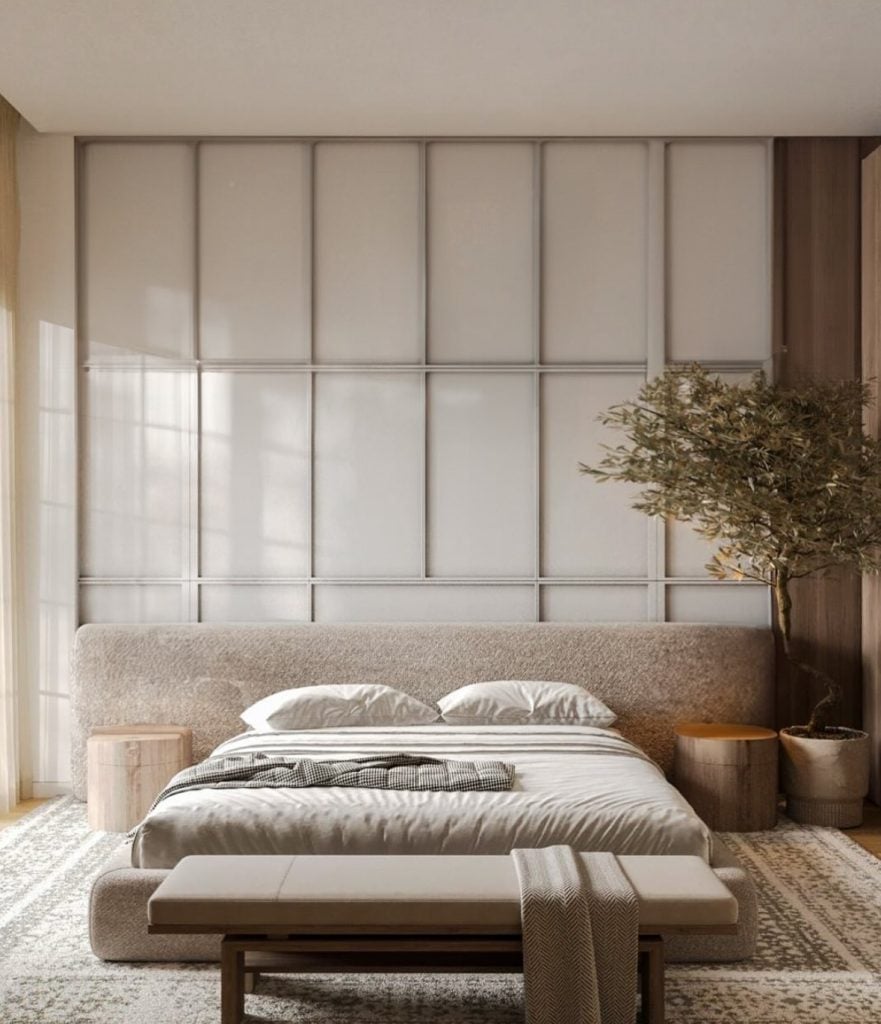
A roomy layout with a low platform bed centered against a wall and a bench placed at the foot gives this bedroom a clear sense of order. The textured fabric on the bed frame adds visual weight without making the space feel busy. Neutral cream and grey tones keep the palette calm, while the wood of the bench and side tables introduces a natural contrast. Soft natural light keeps the materials looking soft and inviting. Choose a bed frame with a tactile finish and keep the surrounding surfaces simple so the texture stands out.
Japandi Bedroom with Slatted Wood Headboard and Cane Chair
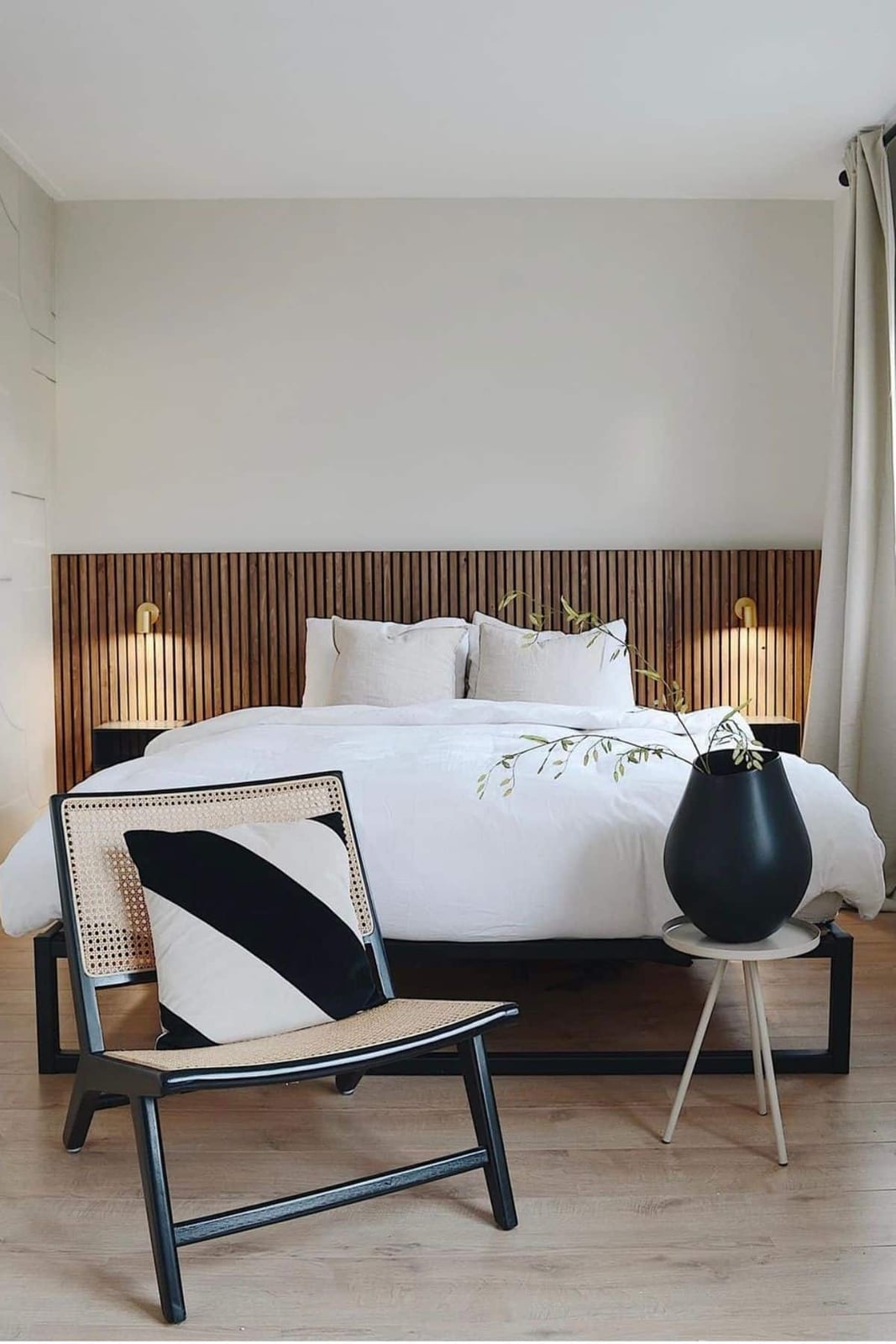
This room balances a large slatted wood headboard against a cane chair placed in the foreground, and the contrast in scale makes both pieces feel considered. The slatted headboard draws the eye upward and adds vertical rhythm, while the lower, lighter chair anchors the foreground without competing. Black and white accents join the wood tones and neutral palette, with wall sconces providing ambient light. A black vase on a surface adds a small focal point. The trick is to pair a dominant headboard with a piece of furniture that has a lighter visual weight so the room stays balanced.
Minimalist Japandi Bedroom with Woven Pouf and Symmetrical Setup
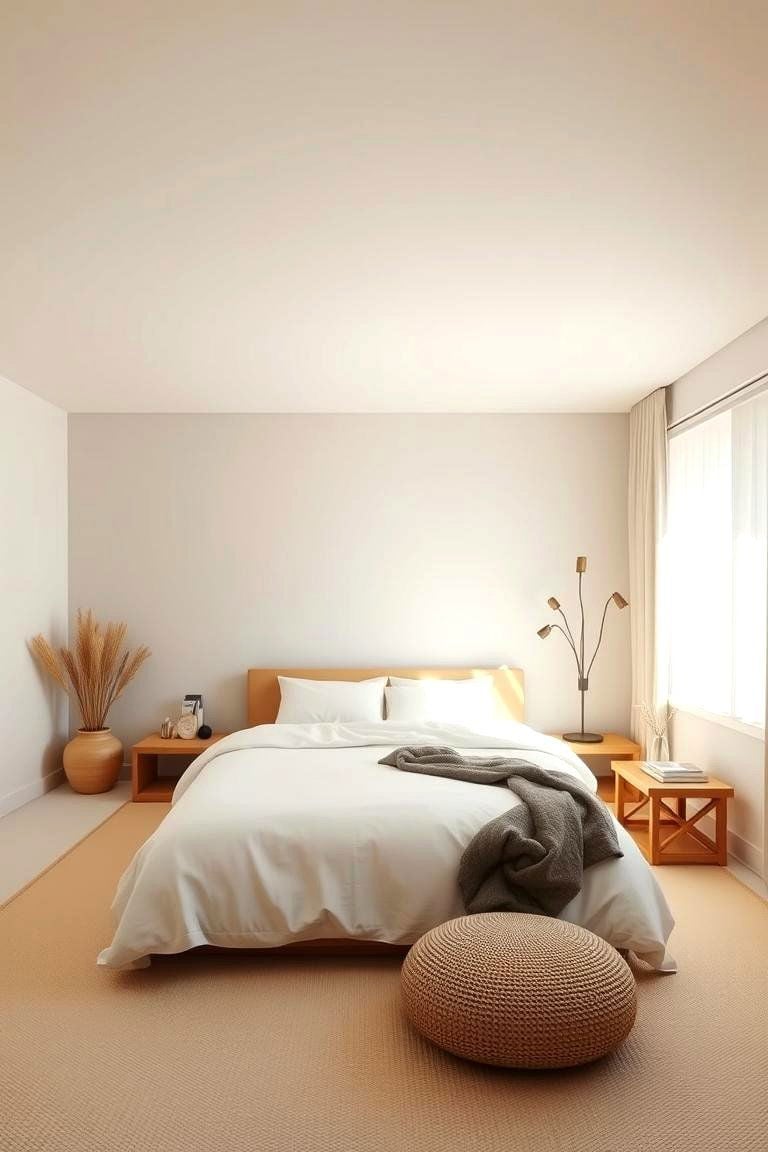
Where some Japandi bedrooms lean heavily on wood grain or dark accents, this version stays close to white, beige, and grey for a softer feel. The low bed frame sits centered between matching bedside tables, and a woven pouf replaces the usual bench or chair at the foot. A floor lamp in one corner adds ambient light without breaking the symmetry. The pouf introduces a handmade, organic note that prevents the room from feeling too rigid.
The symmetrical layout works because the materials vary just enough. The wood of the bed frame and tables has a smooth finish, while the pouf brings in a rougher woven texture. Natural light keeps the palette from going flat. This setup suits anyone who wants a calm, ordered room but still wants a single unexpected piece to add character.
Final Thoughts
Getting a Japandi bedroom right is less about rules and more about restraint. Stick to a few natural materials, keep the color palette muted, and let each piece earn its place. A low bed, a woven rug, and a ceramic lamp can do more than a room full of clutter. The goal is a space that stays quiet and functional, season after season. For upkeep, vacuum jute rugs weekly to prevent dust buildup, and dust wood surfaces with a dry cloth to keep the grain visible. Check your climate before adding plants, and rotate bedding to even out wear.