
A Japanese garden brings calm to any outdoor space with its careful arrangement of stone, water, and greenery. These 35 ideas show how to create that sense of peace, whether you have a full yard or a small corner to work with. From raked gravel patterns to mossy paths and still ponds, each approach focuses on balance and natural materials.
The key is simplicity rather than clutter. You will see how a few well-placed elements like a stone lantern, a bamboo fence, or a sculpted pine can define the whole garden. The goal is a space that feels settled and quiet, not fussy or overdone.
Zen Garden Serenity with Raked Gravel and Moss
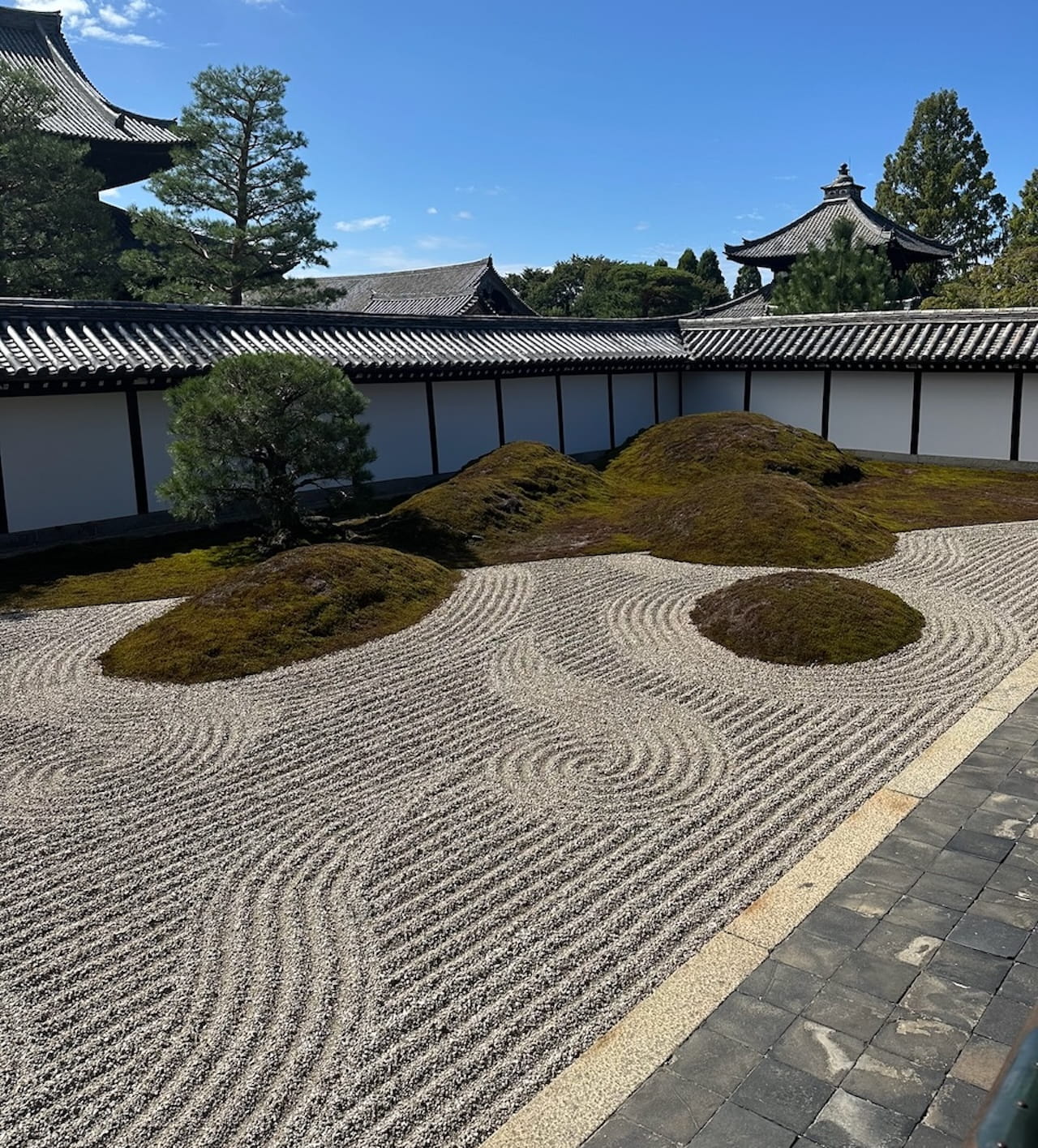
A minimalist zen garden raked gravel design centers the garden on the pattern itself, not on ornament. Swirling lines in the pale gravel draw attention across the open space, while moss mounds and dark rocks break the flow just enough to keep it from feeling empty. The layout is the whole point: a wide, uncluttered plane of raked gravel that lets the eye rest. Keep the surrounding plantings low and simple so the gravel pattern stays the main focus.
Winding White Gravel Paths Through Lush Foliage
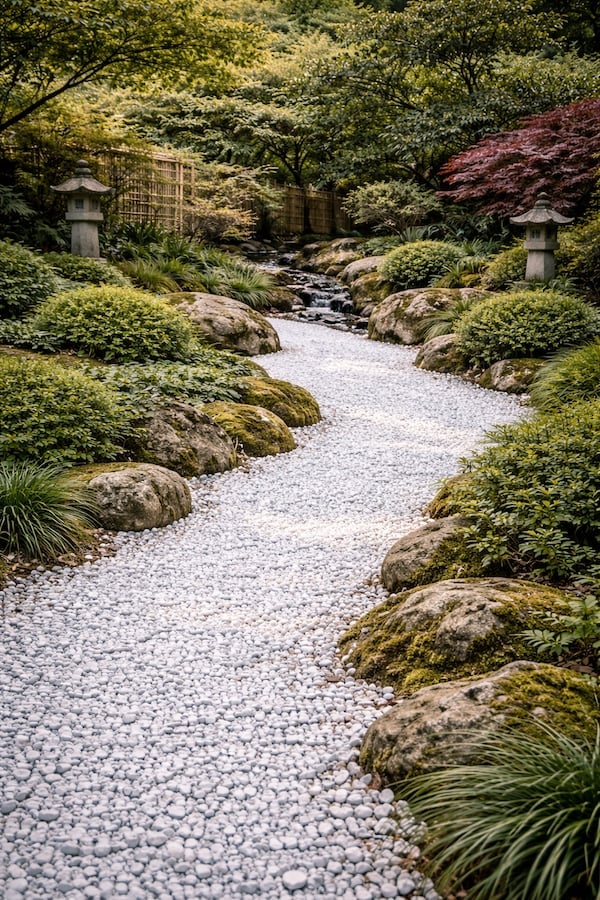
A white gravel path is one of the quickest ways to give a garden direction. Here the pale ribbon of stone winds through deep green moss, past a bamboo fence and stone lanterns, creating a natural journey. The palette is a straightforward swap of grey gravel for white gravel, which reads as brighter against the dark foliage. For a similar effect, replace a straight concrete walkway with a curving white gravel path edged with moss or low ground cover. It softens the whole garden without adding a single plant.
Tranquil Zen Garden with Raked Sand and Lantern Light
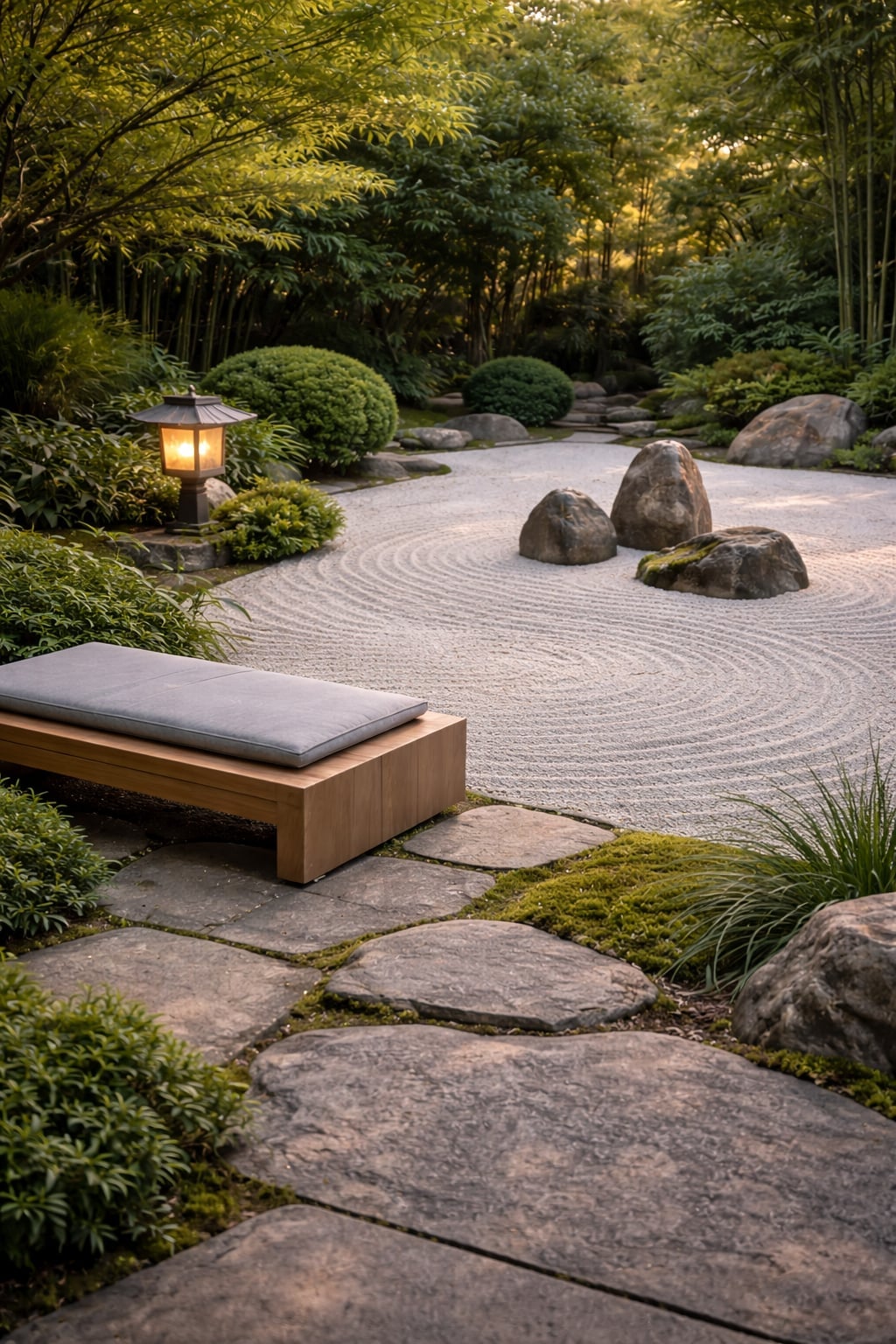
How do you make a garden feel like a room after dark? Warm lantern light transforms a zen garden into an evening destination. Raked sand patterns that read as calm in daylight take on a sculptural quality when lit from below by a stone lantern. A wooden bench placed at the edge of the raked area gives you a place to sit and look, not just pass through. The evening light also softens the contrast between the grey sand, green moss, and dark rocks, pulling the whole space together. A single lantern positioned near the seating area is enough to create the effect.
Moss-Covered Stone Lantern by a Tranquil Pond
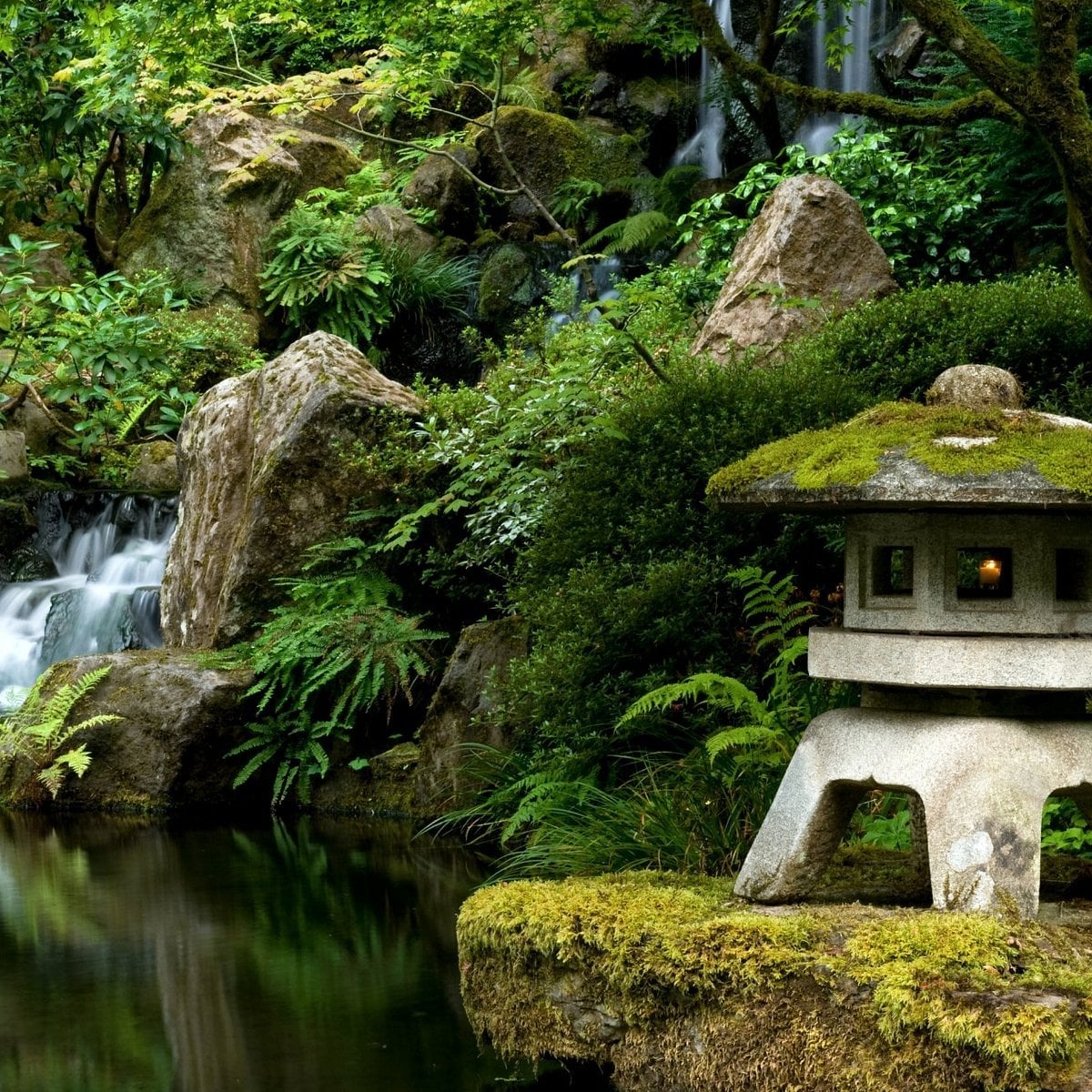
A stone lantern that has aged into its surroundings does more for a garden than a new one ever could. The moss creeping over the lantern connects it to the pond and the ferns around it, making the whole scene feel like it has been there for decades. Overcast, soft natural light helps this look by eliminating harsh shadows, so the greens and greys blend into one calm composition. If your lantern is still clean, set it near a water feature and let the damp air and shade encourage moss to grow.
Modern Japanese Courtyard with Fire Pit and Bonsai
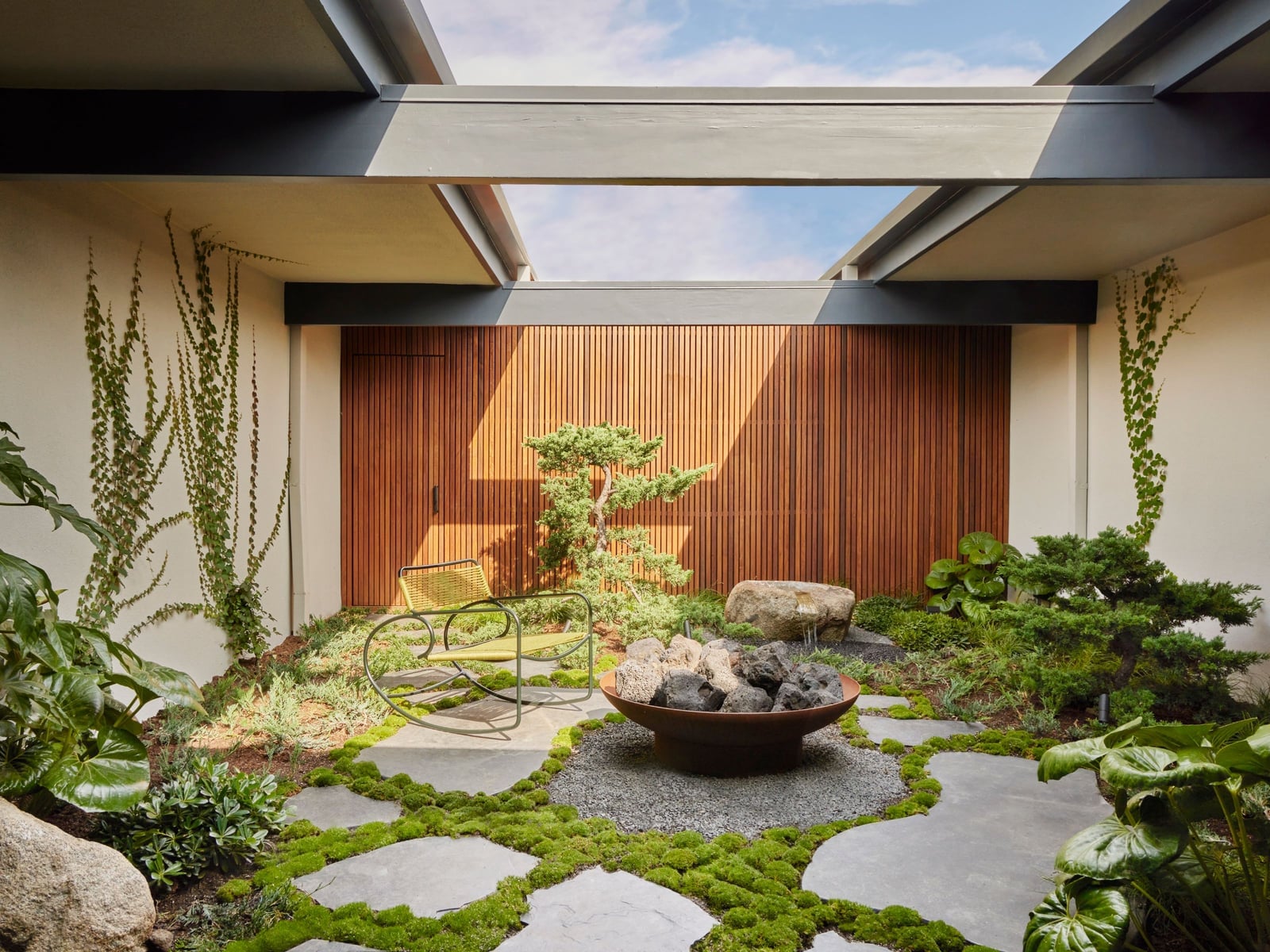
A practical rule for a compact courtyard is to give every surface a job. Here a central fire pit anchors the space, with geometric stone paths leading to it and a single minimalist chair and bonsai providing the only ornament. The style breaks from tradition with the metal fire pit and wood slat accents, but the moss, gravel, and stone keep it grounded in Japanese garden principles. The dappled light from a skylight above prevents the courtyard from feeling like a cave. For renters, a portable fire bowl on gravel works the same way without permanent installation.
Naturalistic Garden Pond Reflecting Surrounding Trees
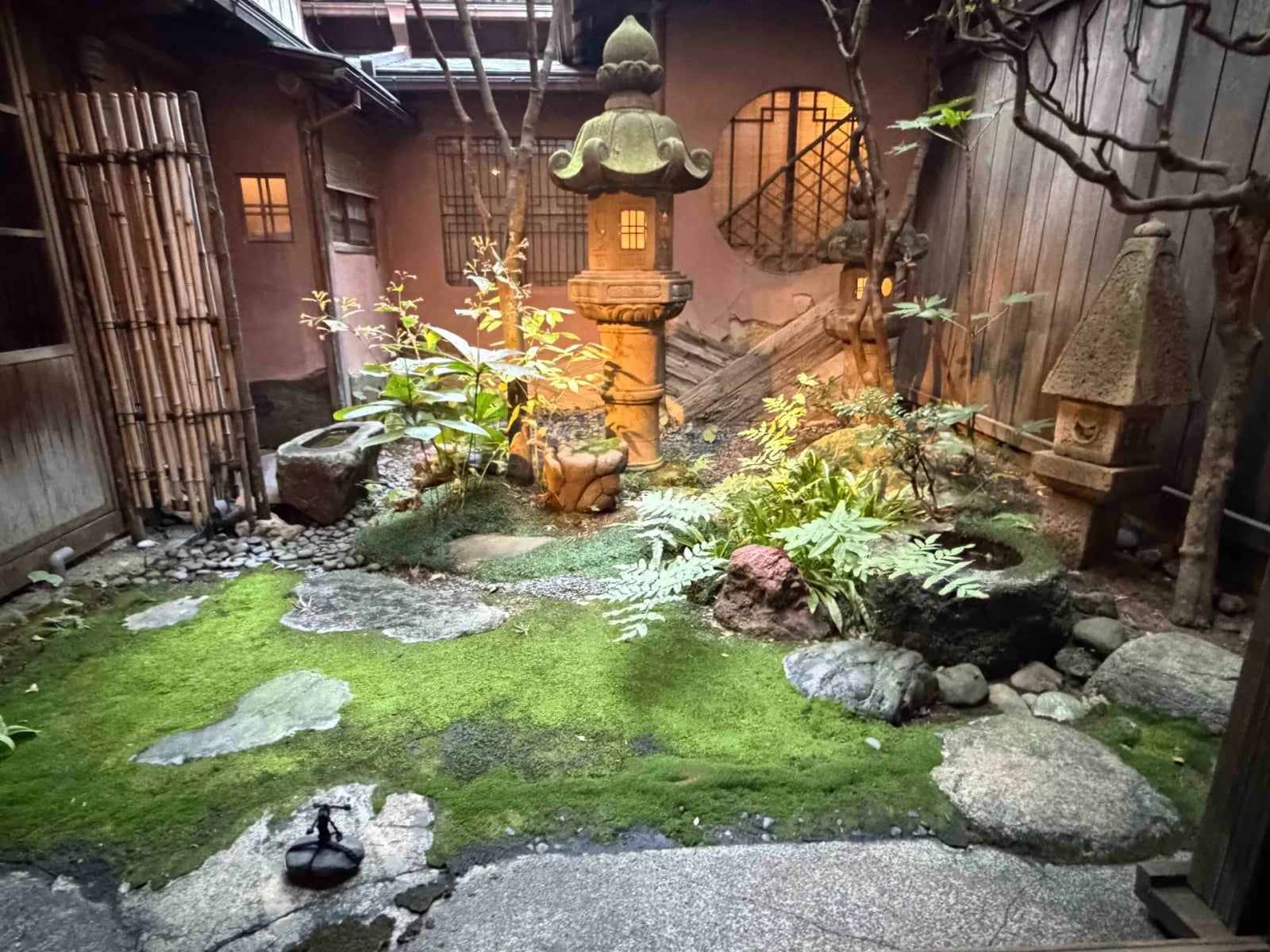
A naturalistic pond is a different creature from a formal koi pond. Instead of a rigid liner and clipped edges, this layout lets the water feel like it belongs there. Rocks and lush greenery crowd the banks so the pond reads as an extension of the garden rather than an installation. The trees overhead reflect in the water, which doubles the visual depth without adding square footage.
When placing rocks around a pond, vary their sizes and angles. A mix of flat and upright stones stops the edge from looking like a collar. Leave gaps between them for moss or low groundcovers to soften the transition. The goal is a shoreline that looks like it formed over time, not one that was delivered on a truck.
Compact Zen Garden with Sculpted Bushes and Raked Gravel
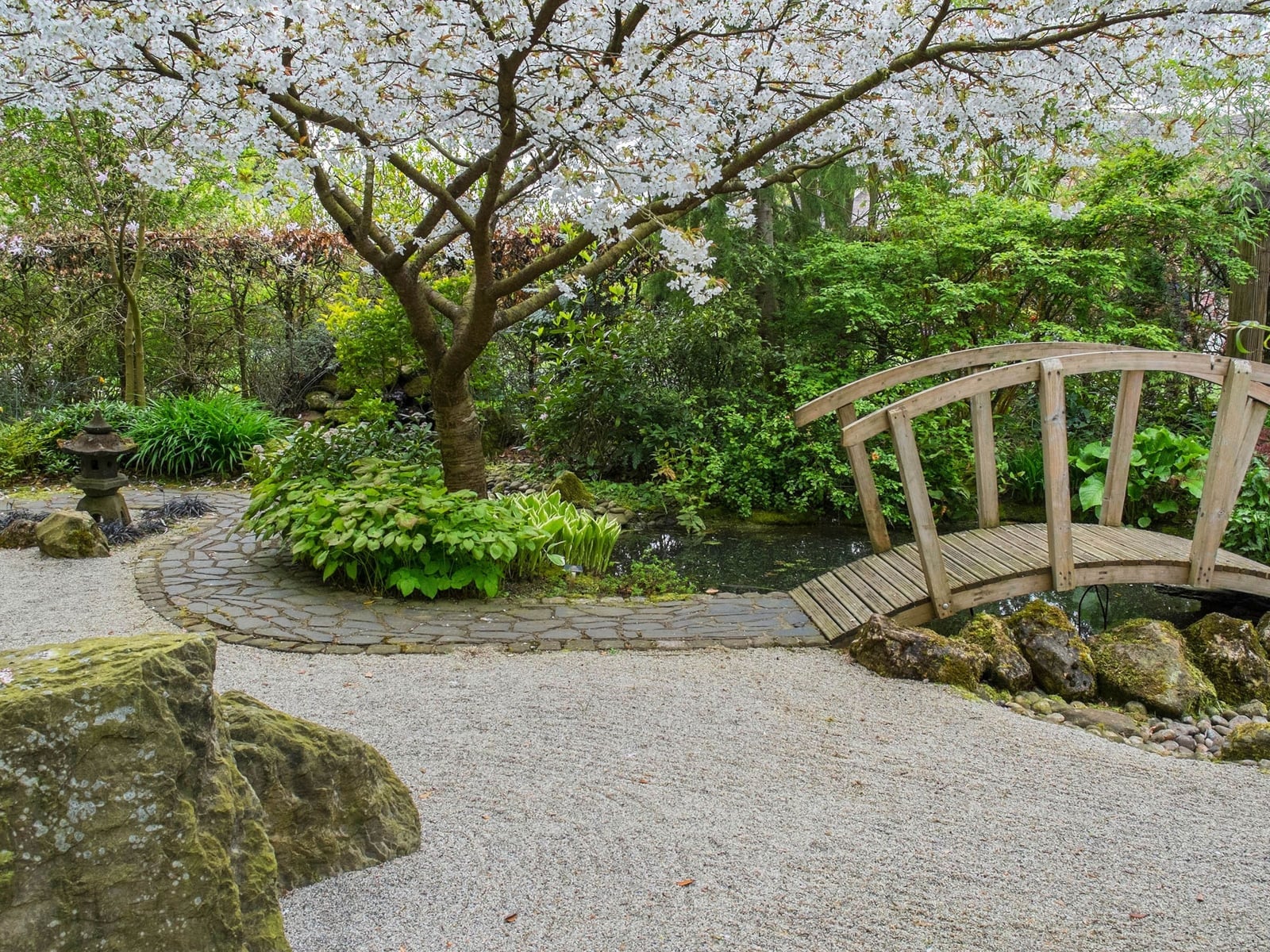
Raked gravel usually steals the show, but in this compact garden the sculpted bushes hold their own. The rounded forms echo the curves of the gravel patterns, so nothing fights for attention. A stone lantern and mossy rocks anchor the edges, keeping the eye inside the frame. The scale works because each element stays proportional to the gravel bed, oversized boulders would swamp the space, and tiny pebbles would disappear. For a rental, lay gravel over landscape fabric so you can pull it out when you move.
Minimalist Japanese Garden with Raked White Gravel and Bamboo
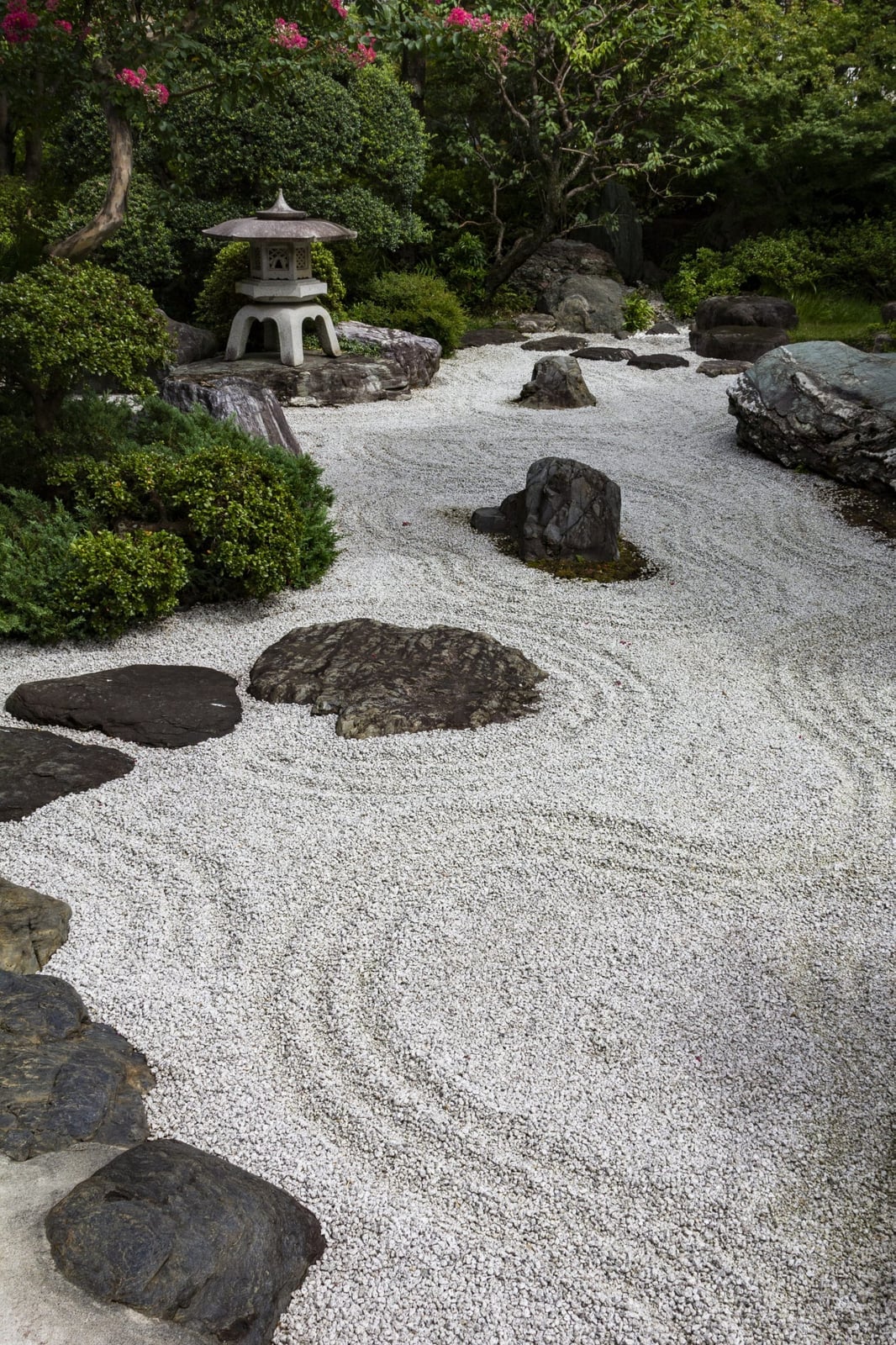
White gravel creates brightness that contrasts with dark rocks and green moss, keeping the garden clean and deliberate rather than busy. Bamboo adds vertical lines without blocking light, and the stone lantern provides a focal point. Raked patterns are the main event, but they only work because surrounding materials stay quiet. If you use white gravel, expect to rake it more often than darker stone. It shows debris and leaf litter faster, so a quick pass with a leaf blower keeps it looking crisp.
Naturalistic Pond Surrounded by Rocks and Flowering Trees
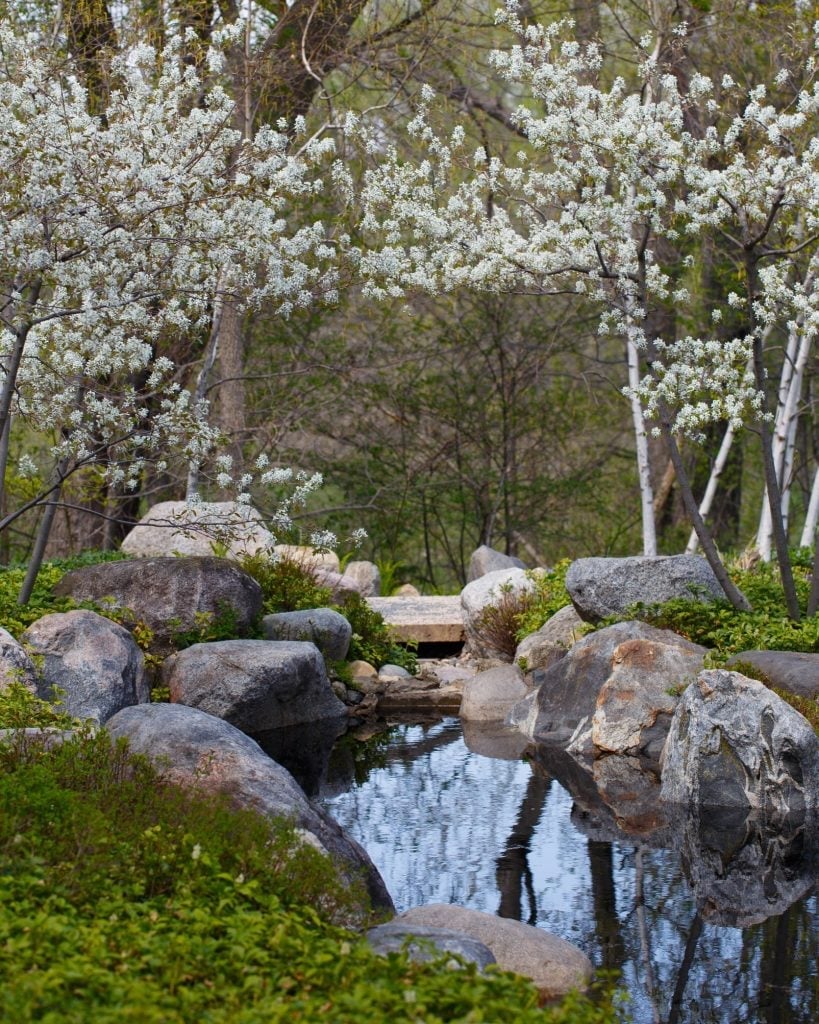
Can a pond feel like it has always been there without looking wild? This one does. Large rocks anchor the edges while flowering trees and birch trunks add height and seasonal interest. A stone bridge crosses the narrowest point, which breaks up the water surface and gives the garden a sense of journey.
The trick to a naturalistic pond is layering. Place the tallest plants and trees at the back, mid-height shrubs around the middle, and low rocks or moss at the water’s edge. That tiered approach hides the liner and makes the pond feel like a natural depression in the landscape. Dappled light from overhead branches keeps the water from reading as a single bright glare.
Stone Pagoda and Lantern Amidst Sculpted Greenery
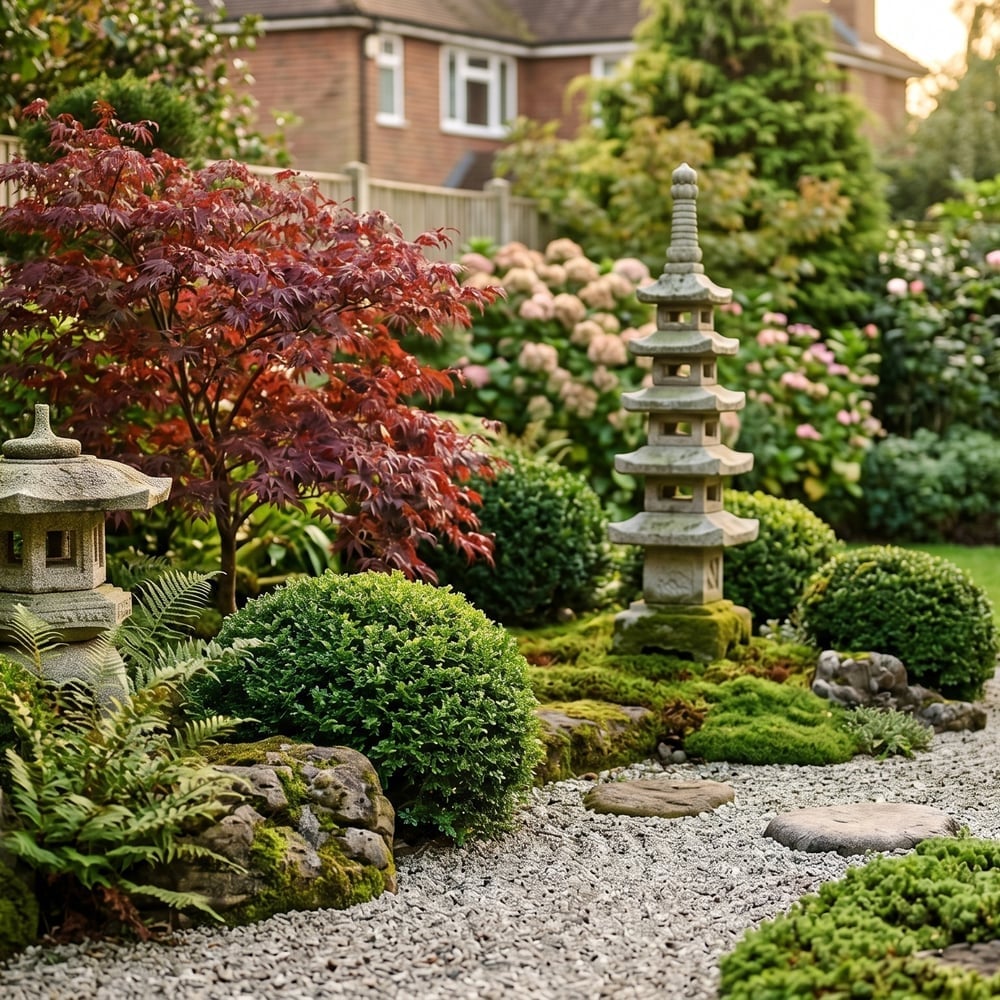
A stone pagoda and lantern set the vertical rhythm in this garden. They rise above the sculpted bushes and a maple tree, so the eye moves up through the greenery instead of stopping at ground level. The pathway between them is subtle, just enough gravel to define a route without competing with the stones. Moss softens the base of the pagoda, which keeps the stone from feeling too heavy. When placing a lantern or pagoda, set it slightly off-center from the path. A dead-center placement reads as a target, not a destination.
Expansive Garden with Sculpted Pine Trees and Central Pond
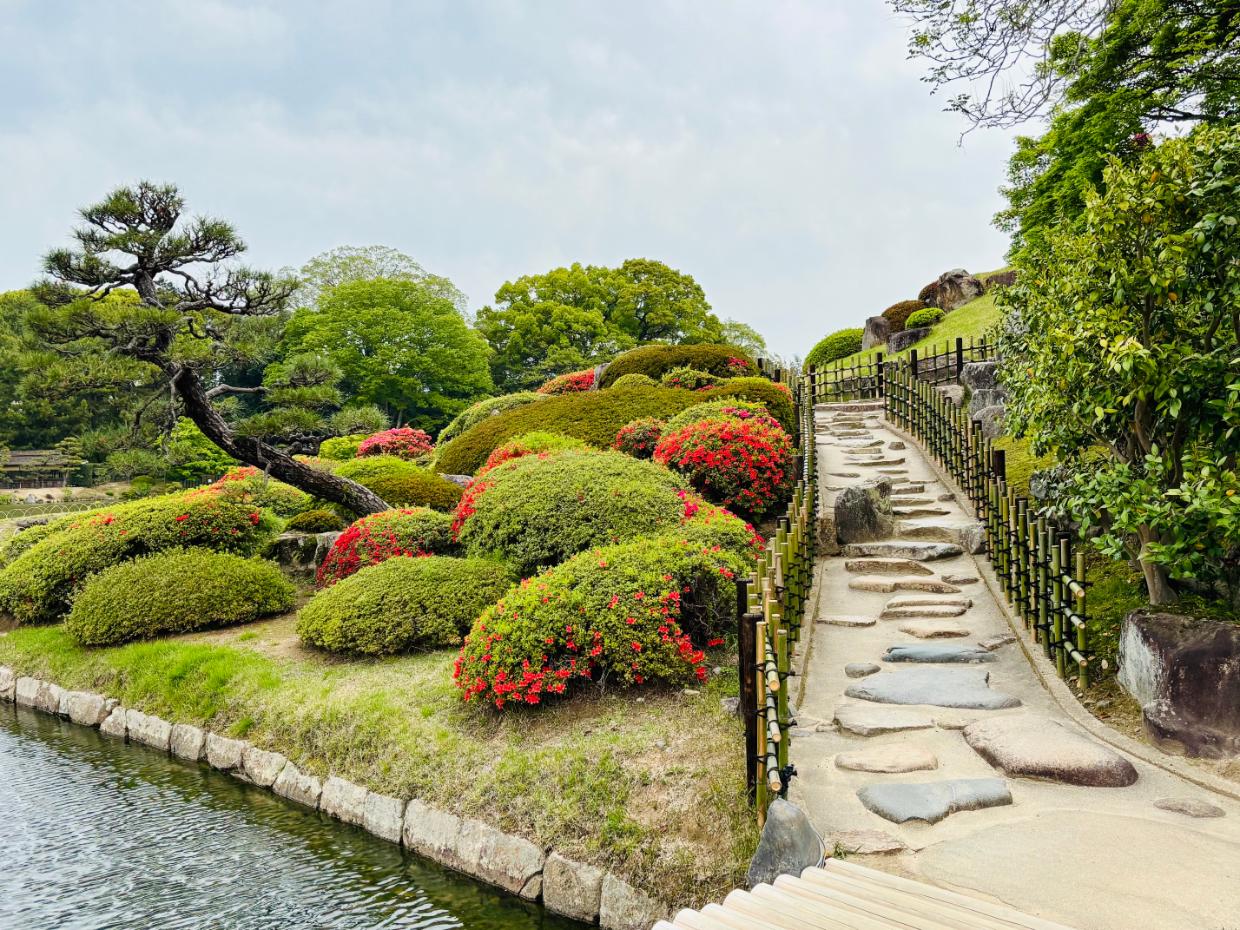
A garden with this much room asks for a clear visual anchor, and sculpted pine trees deliver exactly that. The pond sits at the center, with small islands breaking up the water and manicured planting framing the whole scene. Greens, browns, and blue dominate, with the trees trained into forms that feel deliberate without looking stiff. Rocks and sand add texture around the edges, so the layout feels balanced without feeling crowded. The scale here is generous, but the approach works on any size plot: let one element, like a pond or a specimen tree, set the pace, and keep everything else as a supporting player.
Raked Sand Garden with Intricate Patterns and Sculpted Bushes
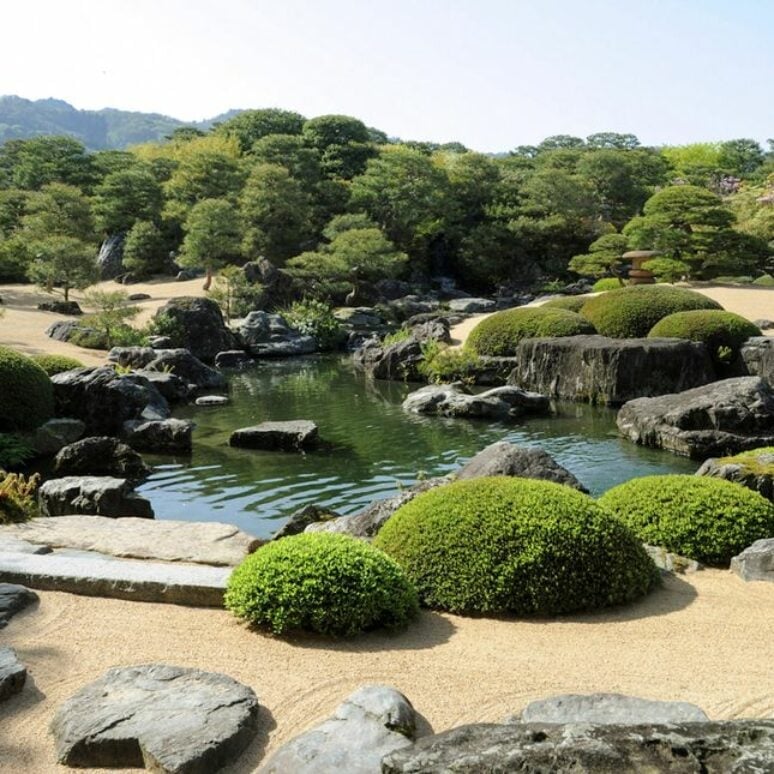
A raked sand garden might seem like a lot of upkeep for a small payoff, but the patterns actually do the work of tying the whole layout together. The sand sits in a wide open area, with sculpted bushes and rocks placed as islands within it. A small pond adds a cool blue note, and the beige and grey sand keeps the palette neutral. The patterns in the sand create lines that lead the eye from one mound to the next. The roomy feel comes from leaving enough negative space between the planted areas. Keep the pattern simple near the edges and let it get more intricate near the center, so the garden feels cohesive without feeling fussy.
Traditional Wooden Pavilion Overlooking a Serene Pond
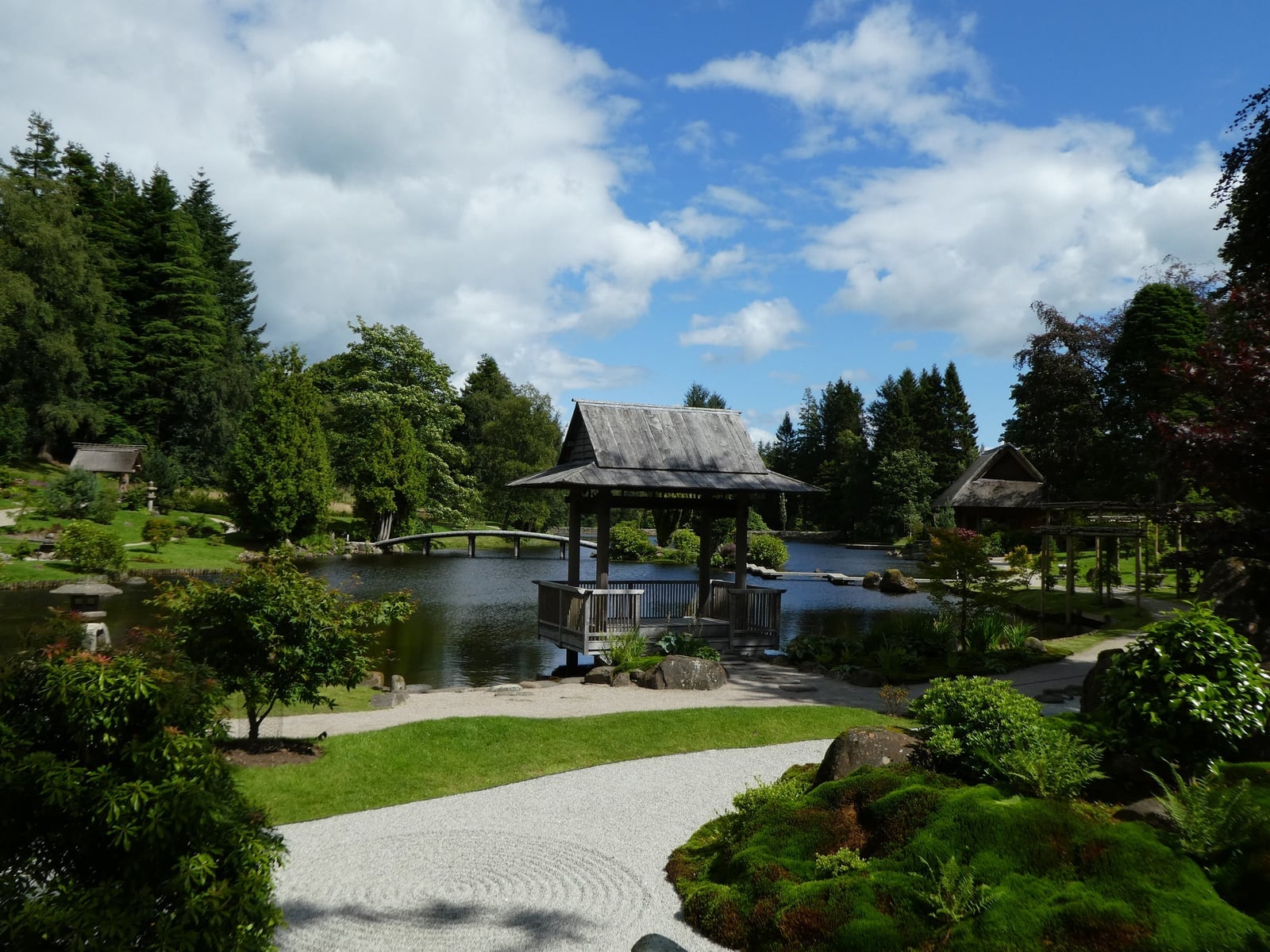
The pavilion sits right at the edge of the pond, with a bridge nearby that connects the two sides of the garden. The wood tones are warm against the grey stone and blue water, and the roof has a clean traditional shape that pulls the eye across the scene. Daylight with clouds softens the contrast, so the structure blends rather than dominates. A garden like this works because the pavilion is placed to give a view of the water, not just to fill a corner.
Japanese Garden Pond with Stone Lanterns and Reflections
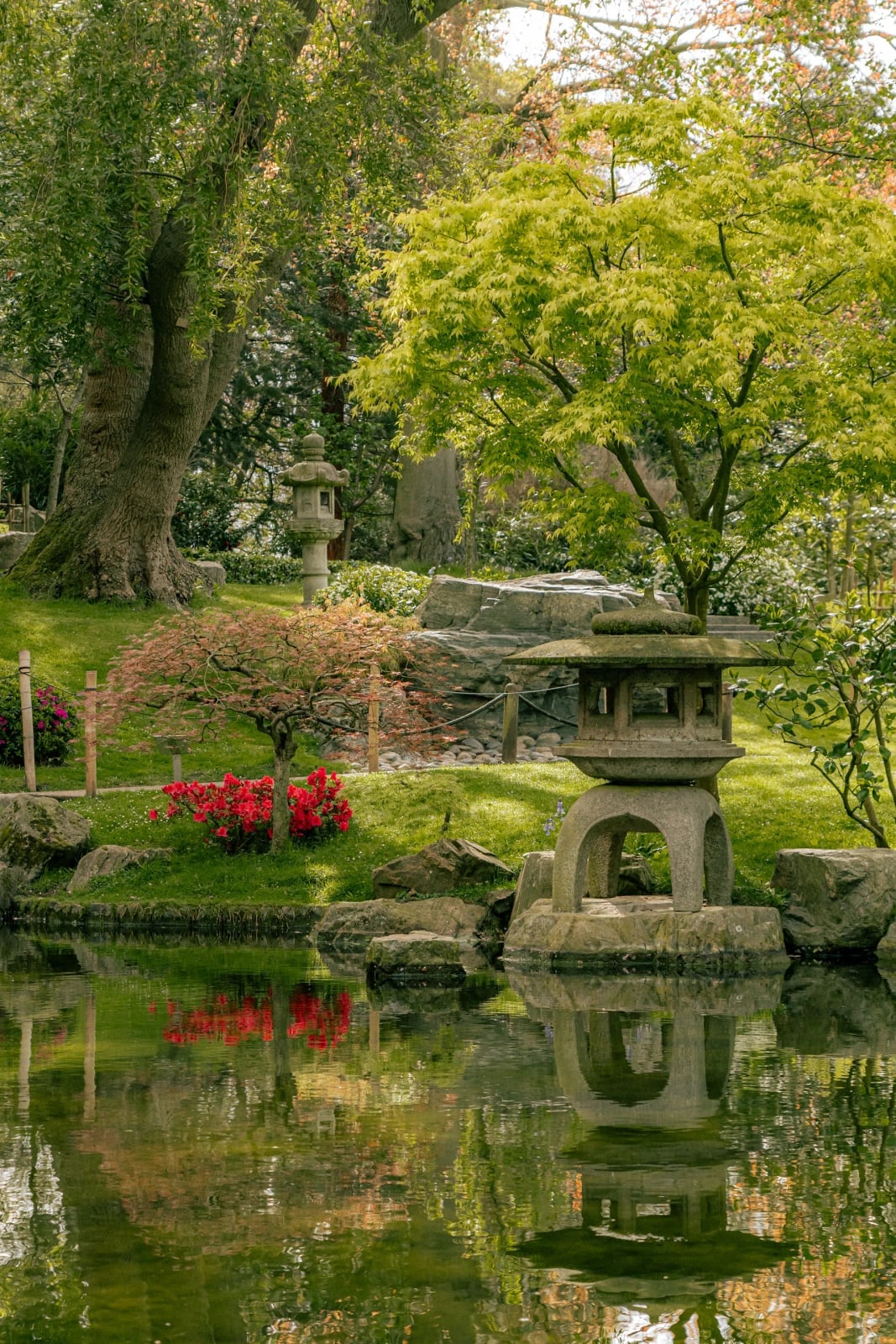
This pond does exactly what a water feature should do: it reflects the surrounding greenery and opens up the space. A stone lantern sits near the edge, with a second one further back, and the whole scene feels natural rather than staged. The reflections double the visual depth, which is especially useful in a garden that feels snug. The lighting is bright daylight, so the water reads as a clear sheet rather than a dark hole. The takeaway is straightforward: position a lantern where it catches a reflection, and the garden instantly feels larger and more layered.
Natural Bamboo Fence with Winding Gravel Path
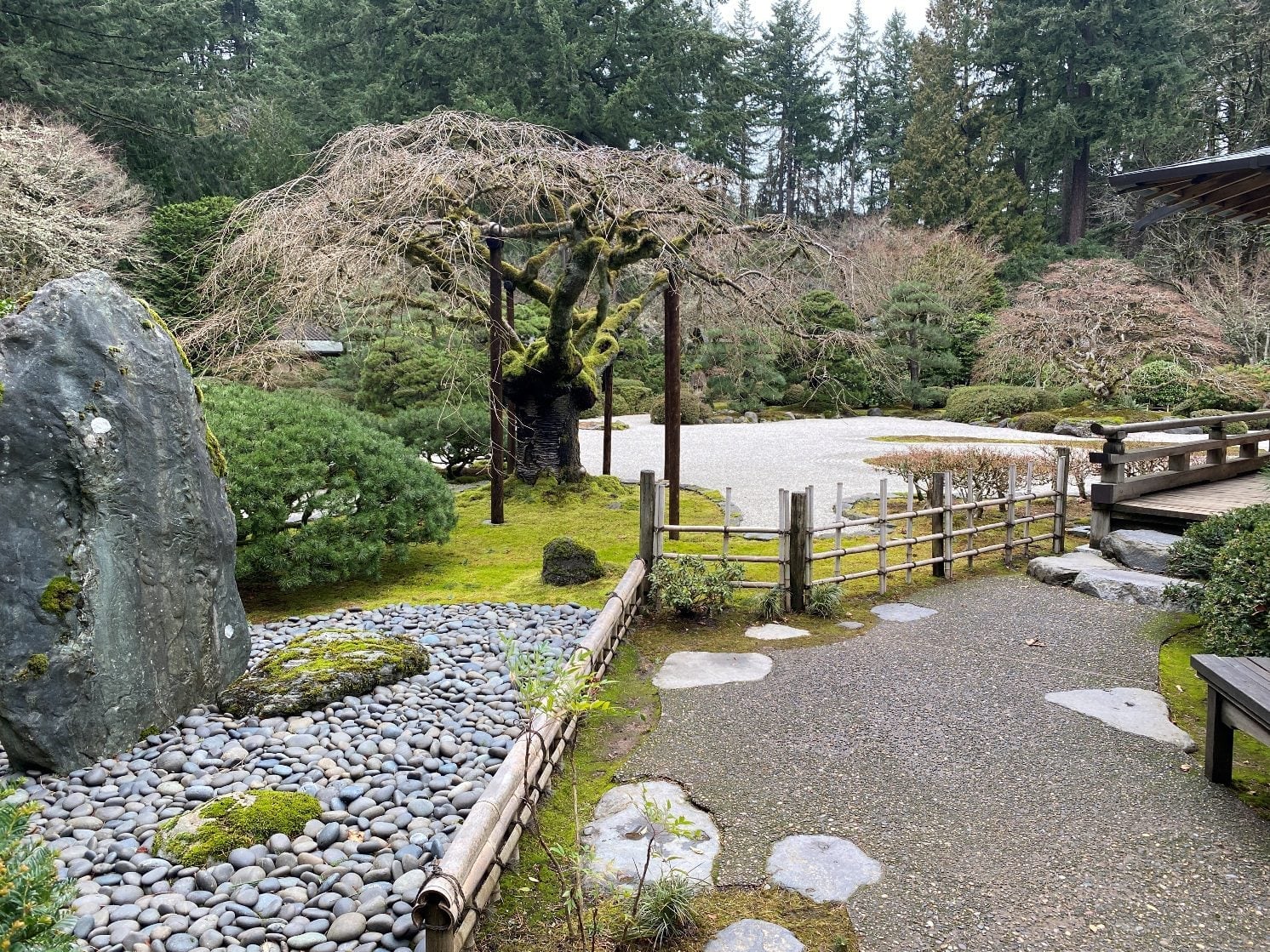
A bamboo fence does double duty as a boundary and a backdrop, and here it sets the tone for the whole walkway. The gravel path winds past a large rock and a cluster of trees, with the fence running alongside to keep the eye moving forward. The palette is green, grey, brown, and beige, with the bamboo adding vertical lines that break up the horizontal sweep of the gravel. Overcast daylight softens the contrast, so the textures stand out more than the colors. The practical rule is that a fence this permeable works best when the planting on the other side is tidy, because there is no solid wall to hide behind. A bamboo screen is a solid renter-safe swap for a permanent fence, since it can be installed without digging or permanent hardware.
Stone Lanterns Guarding a Path to a Water Basin
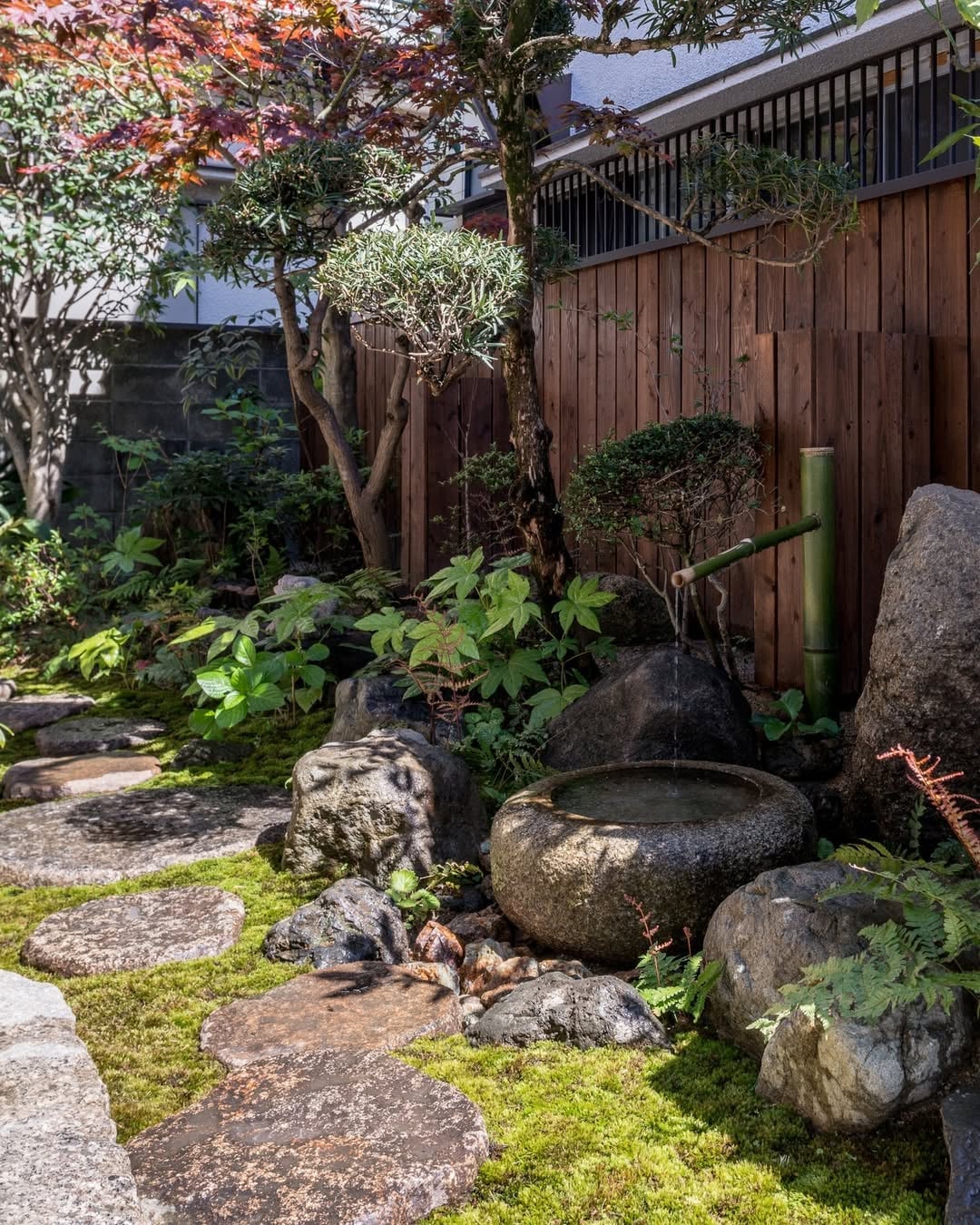
A pair of stone lanterns flanks a gravel path that leads to a water basin with a bamboo spout. The lanterns, weathered grey, anchor the walkway without blocking the view of the mossy rocks and bamboo beyond. Soft daylight falls across the scene, keeping the palette of green, grey, and brown calm and cohesive. For a similar layout in a smaller yard, a single lantern placed beside a low basin can create the same sense of arrival without needing the full path.
Traditional Japanese House Exterior with Garden Path
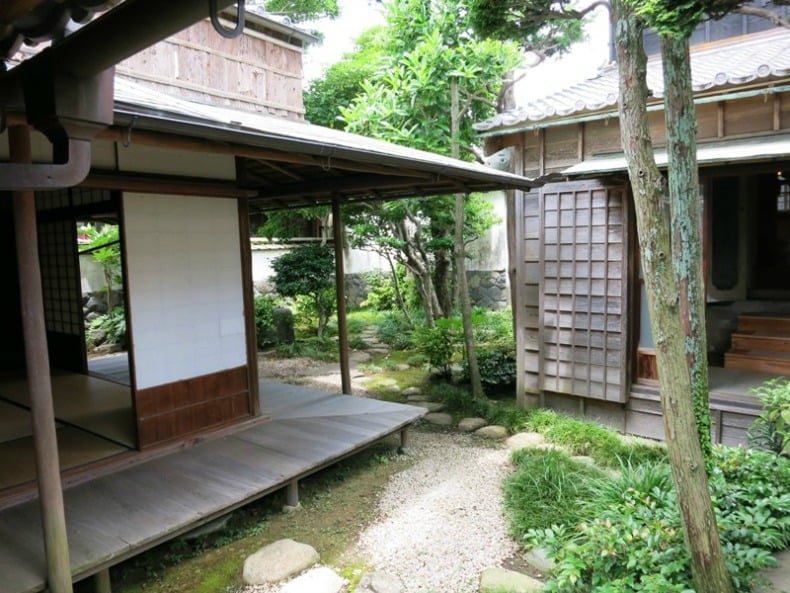
A practical rule for garden design is that the path should guide the eye toward the entrance, not fight it. Here, a covered wooden walkway connects a traditional house with sliding doors and a tiled roof to a gravel path that winds through trimmed greenery. Overcast daylight softens the wood tones and grey stone, making the architecture feel grounded rather than imposing. Renters can echo this look by defining a walkway with large stepping stones on gravel, leaving no permanent changes to the ground beneath.
Serene Stone Path Through Mossy Mounds and Red Maple
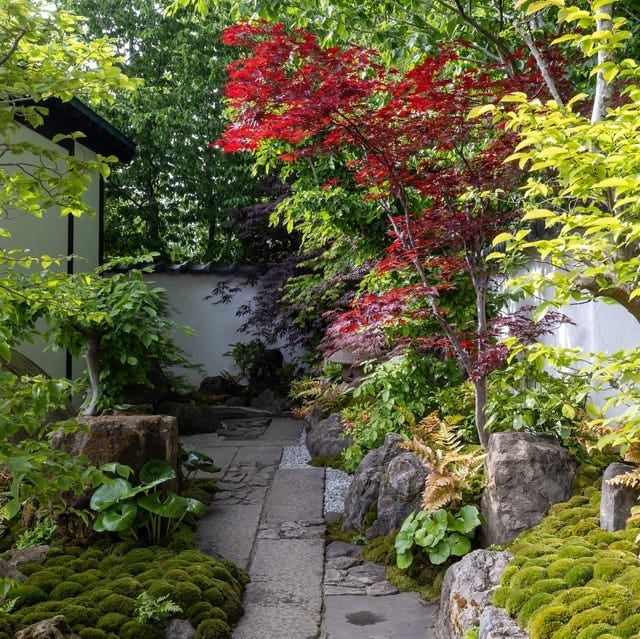
A winding stone path through mossy mounds creates a natural invitation, especially when a red maple provides a seasonal pop of color. The palette here stays mainly green and grey, with the maple’s red acting as an accent. The path curves gently, so each step reveals a new angle of the moss and rocks. Choose a path material that contrasts with the surrounding ground, light stone against dark moss or vice versa, so the route stays legible even in soft daylight. The moss softens the edges of the stone, making the whole layout feel older than it is.
Moss-Covered Wooden Bridge Over a Gentle Stream
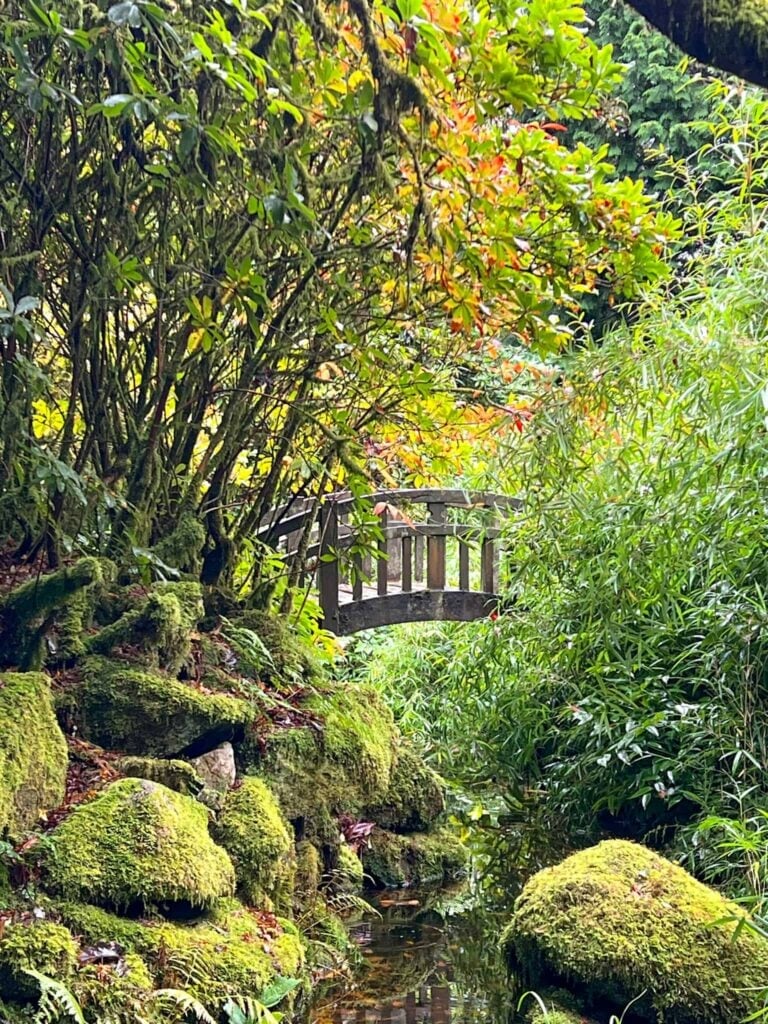
A wooden bridge with moss creeping along its edges crosses a shallow stream bordered by mossy rocks. The bridge is the hero element here, but its weathered finish keeps it from competing with the surrounding greenery. Overcast daylight flattens shadows, so the texture of the wood and moss becomes the visual interest. A bridge this size works best when the stream is narrow and the banks are low, so the crossing feels like a natural part of the path rather than a detour.
Tranquil Pond Reflecting Thatched Roof Building and Trees
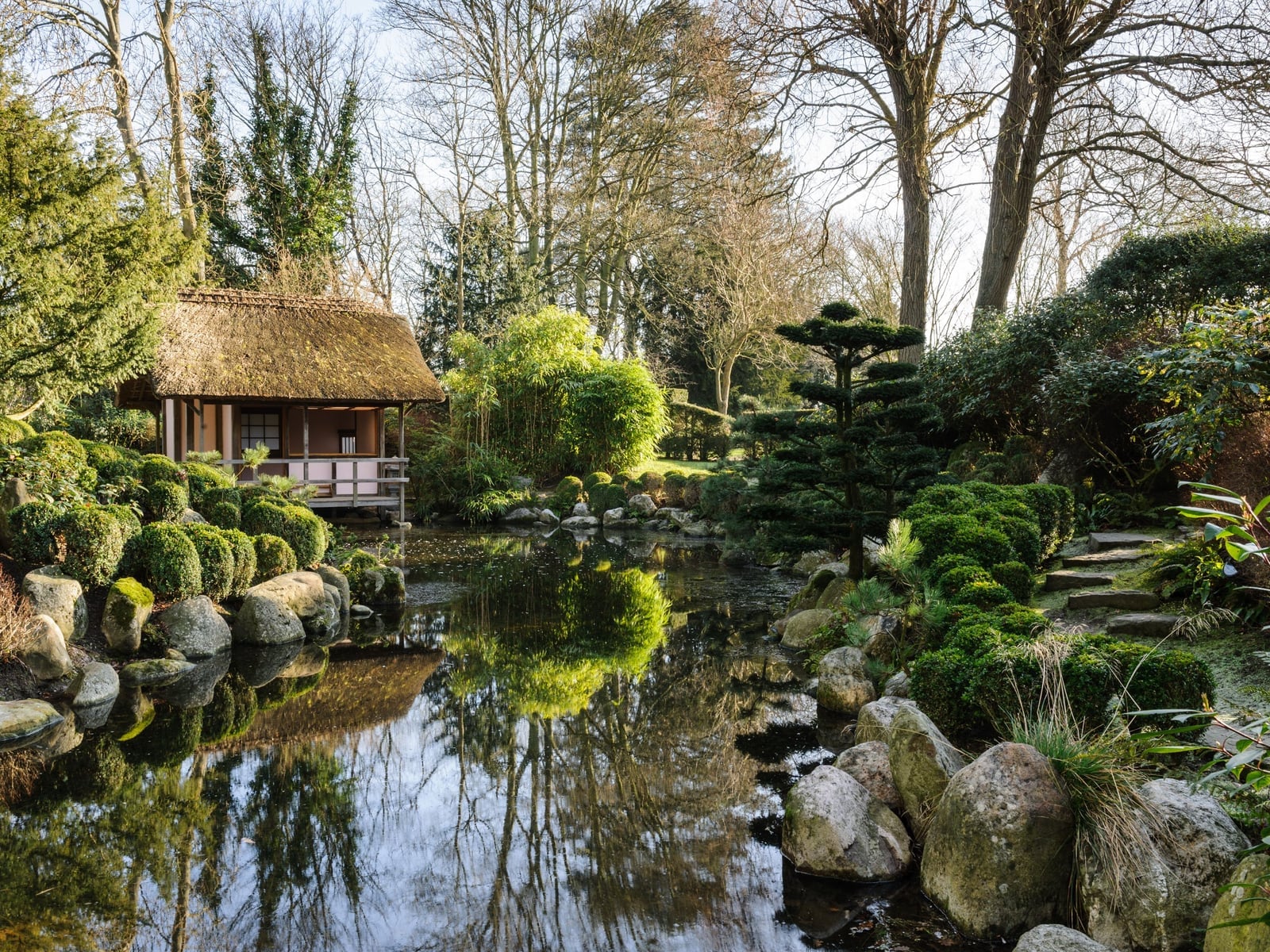
A thatched roof building set back from the water creates a clear focal point without dominating the garden. The pond mirrors the structure and surrounding sculpted trees, doubling the visual calm without adding more elements. Soft natural daylight keeps the reflections sharp, and the palette of green, brown, grey, and beige stays within a restrained range. For the layout to work, the building should sit at least a few feet from the water’s edge, letting the pond act as a foreground rather than a moat. This balance of architecture and water is worth planning for any garden with room for both.
Winding Stream with Maple Tree and White Hydrangeas
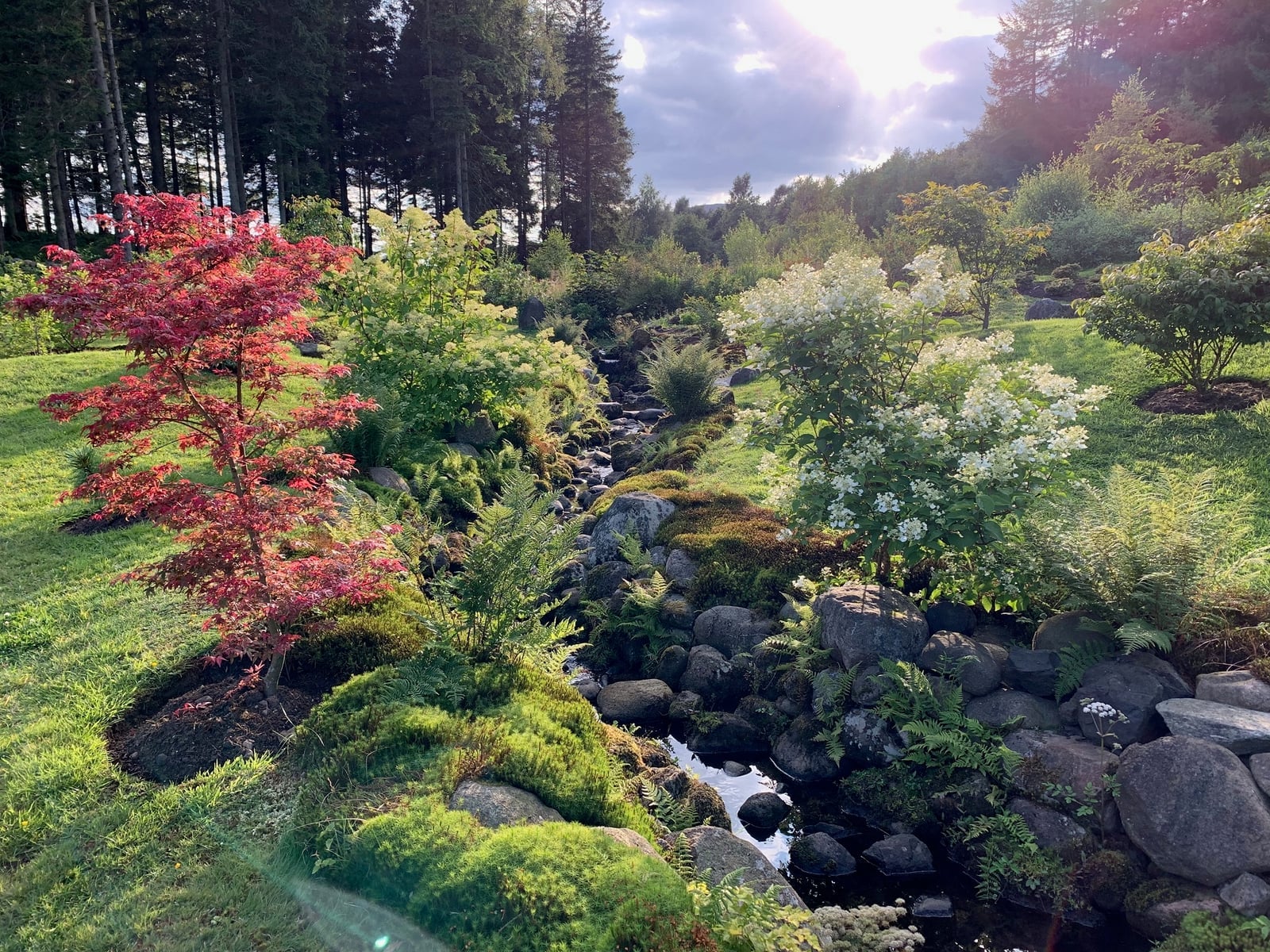
In a garden, a winding stream does more than carry water. It pulls the eye along a route, making a long, narrow yard feel like a journey rather than a hallway. The palette here leans on the contrast between a vibrant red maple and white hydrangeas, with ferns adding a middle layer of soft green. Grey stone and dark wood keep the stream bank grounded. The natural, dappled sunlight hits the red leaves hardest, which makes them the anchor. A practical rule for this layout: place the most saturated color at a curve in the stream, so the path bends toward it rather than running straight past.
Lush Japanese Garden with Waterfall and Irises
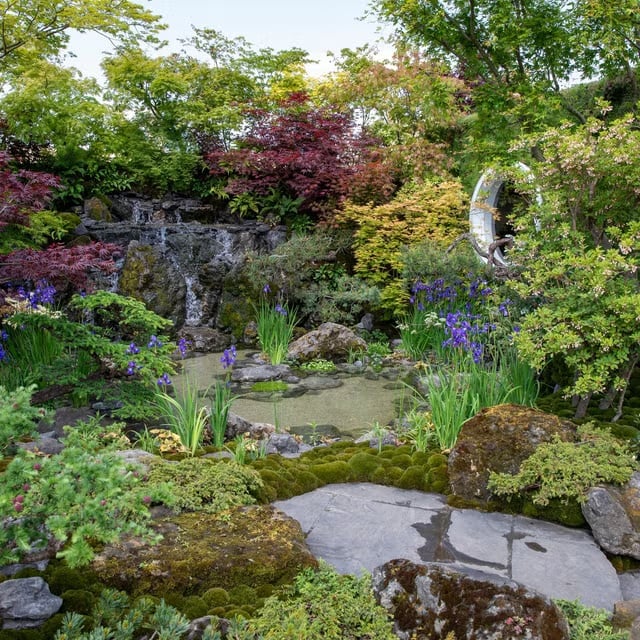
A small waterfall drops into a pond surrounded by rocks, moss, and a mix of purple irises and red-leafed trees. The layout puts the water feature at the visual center, with taller plants framing it on both sides. This arrangement works for any size garden because the vertical layers of moss, irises, and tree canopy stack depth without needing extra square footage. The natural daylight keeps the purple and red tones crisp rather than muddy, so the whole scene reads as lush without being crowded.
Expansive Garden Pond with Sculpted Trees and Stone Wall
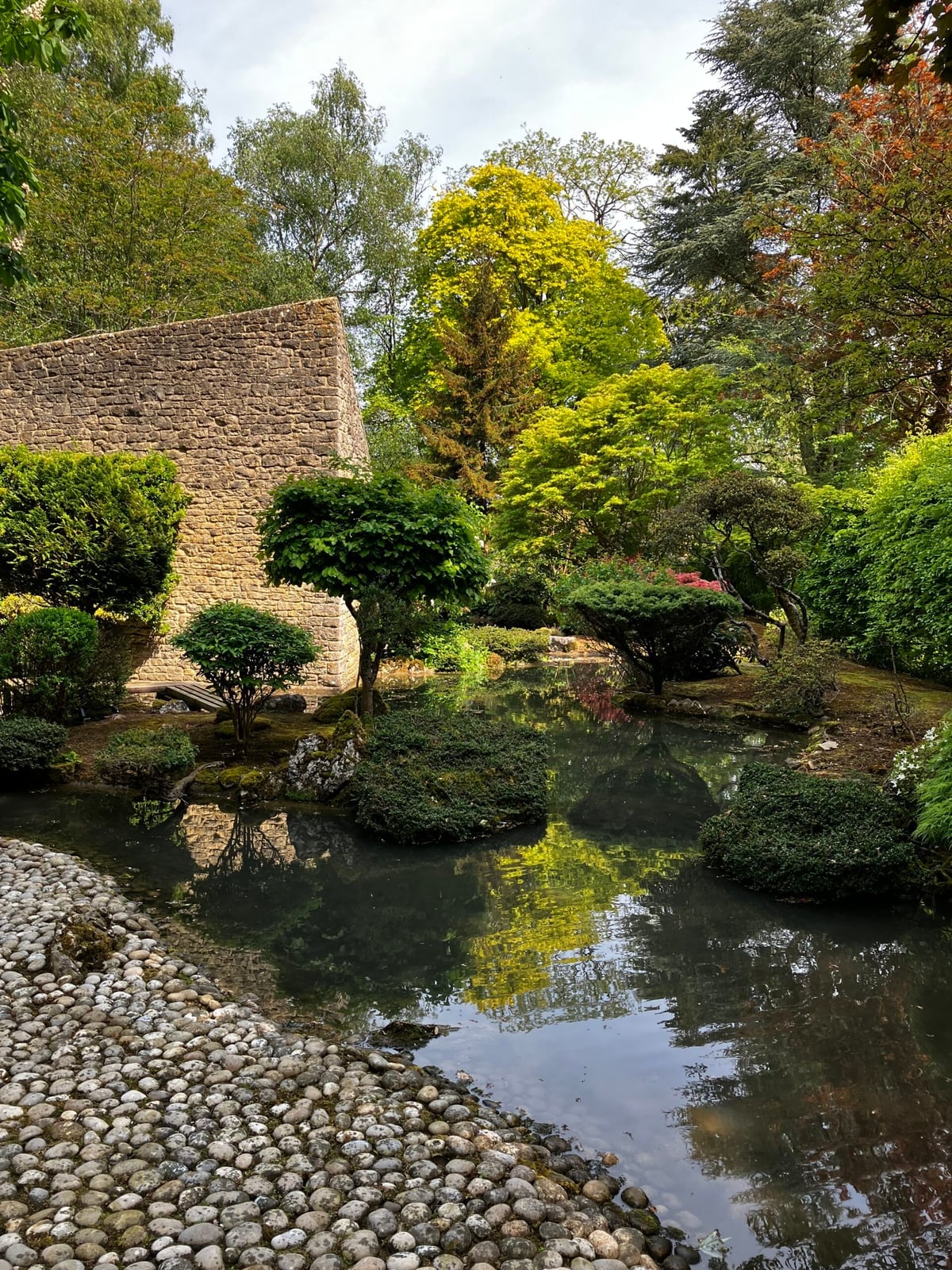
Break the water surface of a large pond with islands of greenery so the eye has places to rest. This garden uses sculpted trees and a low stone wall to frame the pond without enclosing it. The soft daylight softens the reflection, which makes the water feel deeper than it is. The grey stone and brown wood keep the palette quiet so the green stands out. For a rented space, a stock tank or half-barrel can mimic this scale and proportion without digging.
Zen Garden with Raked White Gravel and Stone Lantern
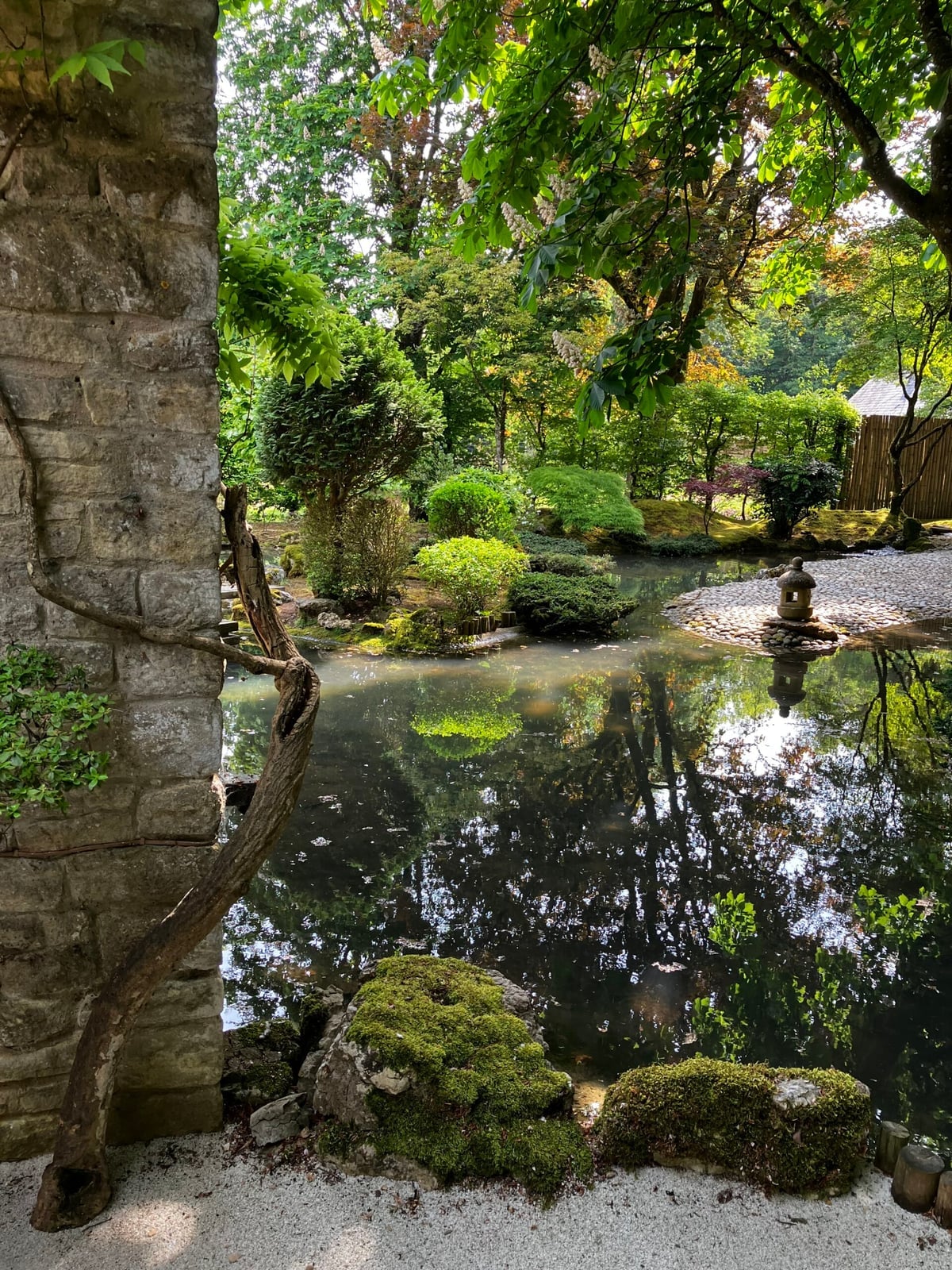
A raked gravel garden can feel like a maintenance burden, but the work is the point. The act of raking keeps the patterns sharp and the mind quiet. This version uses white gravel raked into concentric curves around a few dark rocks, with a stone lantern and moss adding weight to the composition. Dappled daylight softens the hard edges of the stone, so the bright gravel and dark rock appear calm. Bamboo fencing along the back provides a vertical boundary without closing the space in.
Modern Zen Garden with Raked Gravel and Wooden Deck
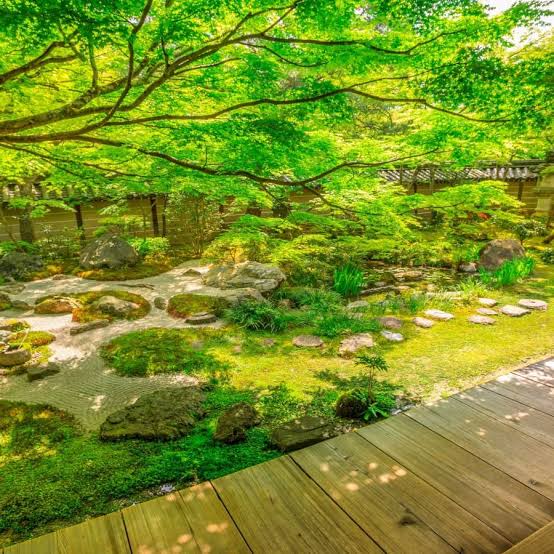
A wooden deck extends the living space into the garden without disturbing the raked gravel. The bright natural daylight shows off the contrast between the warm wood tone and the cool grey stone. Meticulously raked gravel surrounds a few mossy rocks, while manicured trees stand at the edges. The style here is modern Japanese, which means the gravel pattern is simpler than a traditional zen garden, and the deck replaces the usual covered walkway. What breaks the style is the deck: it adds a horizontal plane that traditional gardens avoid, but it makes the space usable for sitting.
Weathered Wooden Bridge Over a Calm Pond
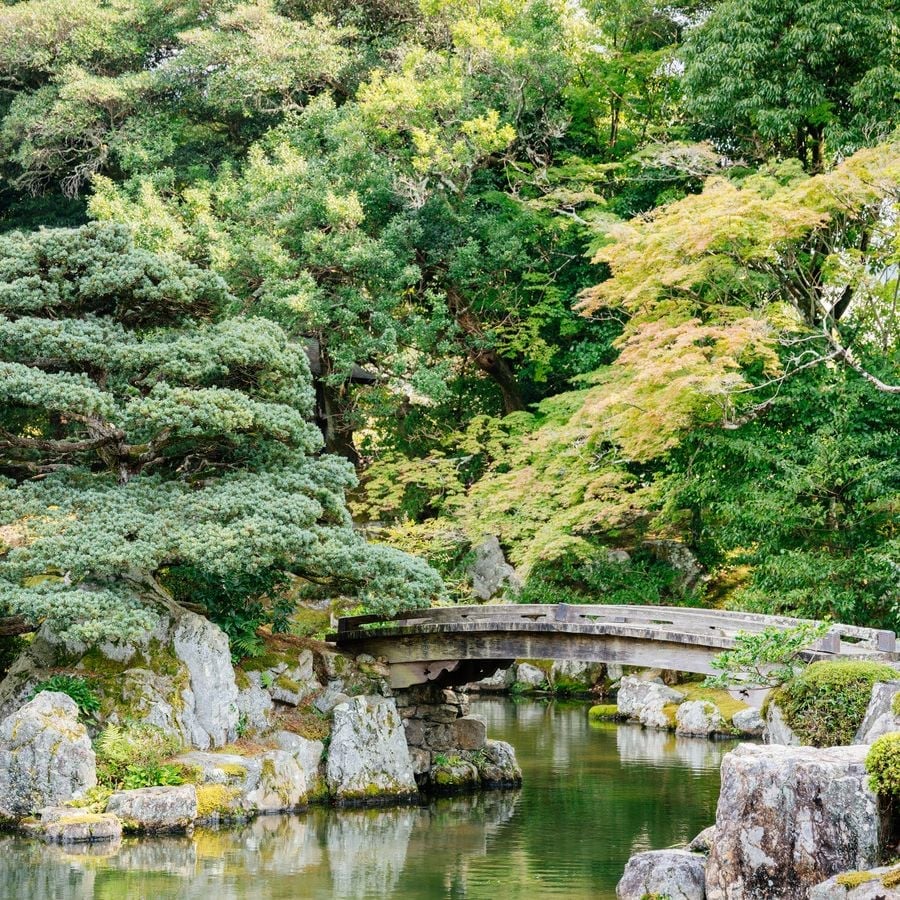
A weathered wooden bridge is the kind of feature that makes a garden feel settled, as if it has been crossing that pond for decades. The arched shape rises gently over the water, with a large pine tree and rocks framing either side. The palette stays in greens, grey and brown, so nothing fights for attention. A roomy layout like this one lets the bridge act as a natural focal point without the planting around it feeling crowded.
Geometric Wooden Walkways and Bridges Over Ponds
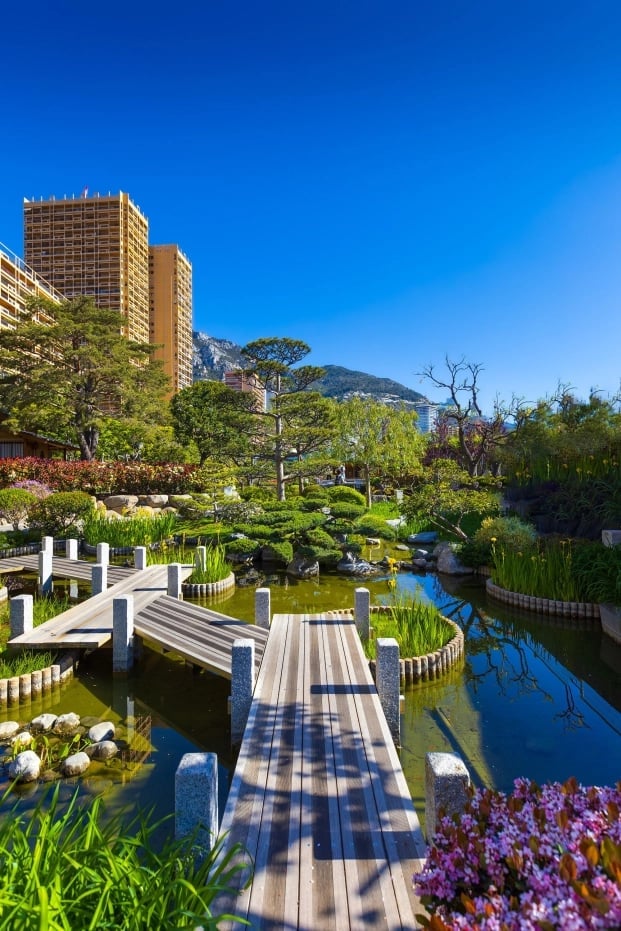
A practical rule for any garden with multiple paths is to keep the geometry consistent so the eye travels easily from one area to the next. Here, the wooden walkways and bridges share a clean, angled design that connects the winding paths and water features. The palette of greens, blues, beige and grey stays calm, and the bright daylight makes the wood grain visible without glare.
For a renter-friendly version, lay interlocking deck tiles over a flat patch of yard to create a similar geometric path. Surround them with potted shrubs and a small water bowl to echo the pond without digging. The bridges themselves may be out of reach, but the layout idea of clear, repeating lines works just as well on a patio.
Graceful Wooden Bridge Over a Pond with Autumn Foliage
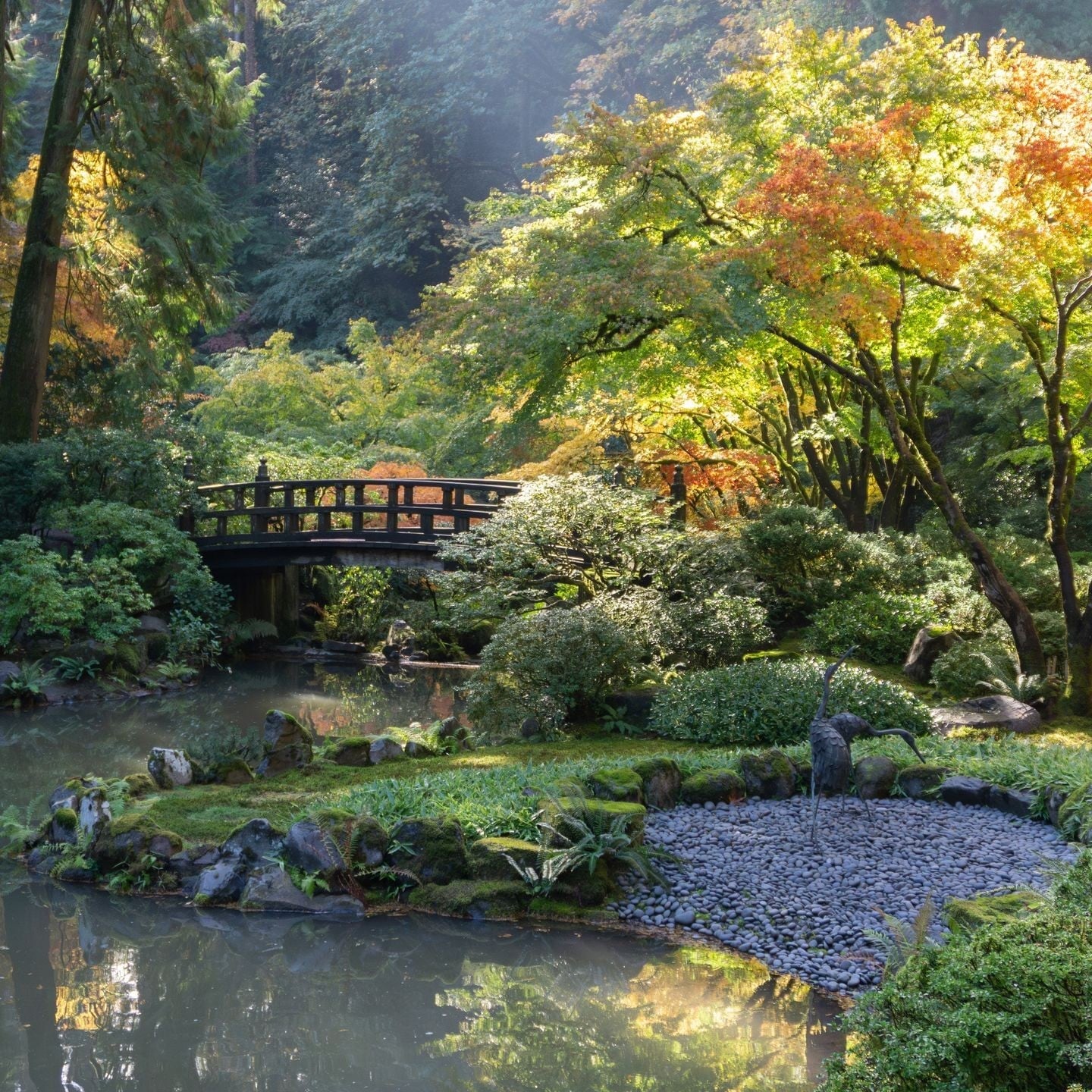
The wooden bridge curves gracefully over the pond toward a small island, with autumn colors warming the trees on either side. Soft morning light and dappled sun filter through the leaves, so the palette of greens, browns and seasonal reds and oranges appears soft. The moss on the stone edges and the still water keep the whole scene balanced.
Bamboo Gazebo Amidst Rhododendrons and Greenery
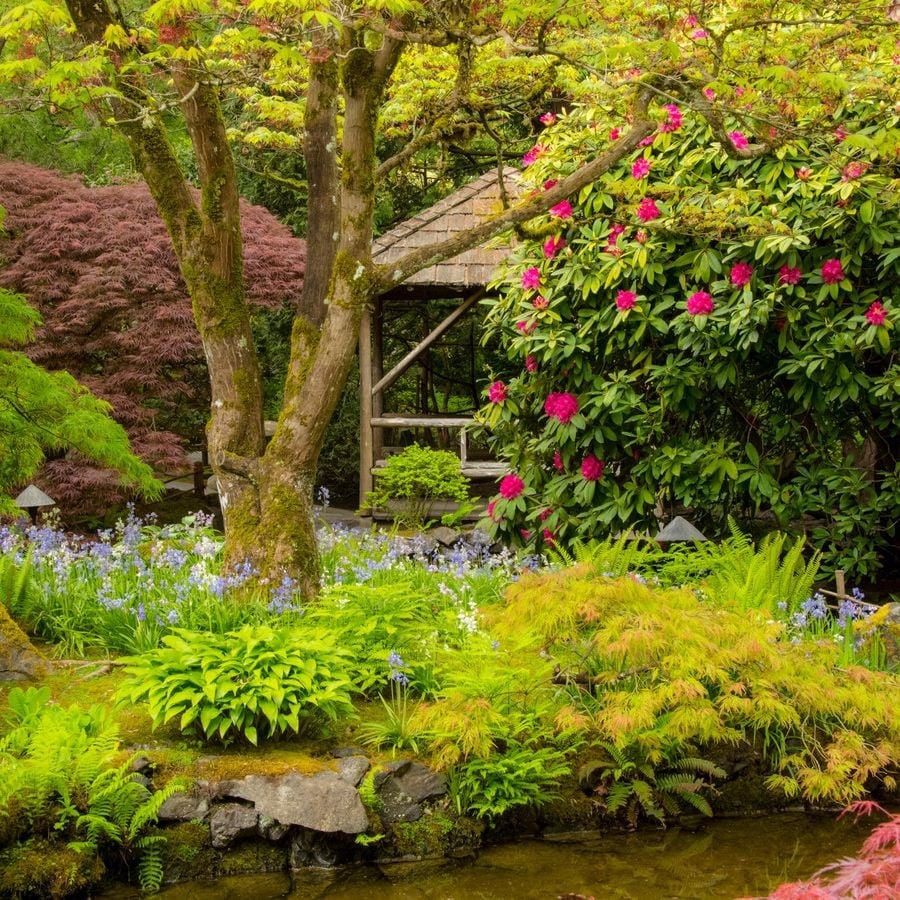
A bamboo gazebo set among vibrant pink rhododendrons and maple trees creates a strong visual anchor in this roomy garden. The overcast daylight softens the brown wood, the green ferns and the pink blooms, so no single color dominates. The pond in front of the gazebo reflects the planting, which makes the gazebo feel grounded. In a smaller yard, place a single bamboo bench near a cluster of rhododendrons and let the plants do the framing.
Stone Pagoda and Bonsai Trees with Stepping Stone Path
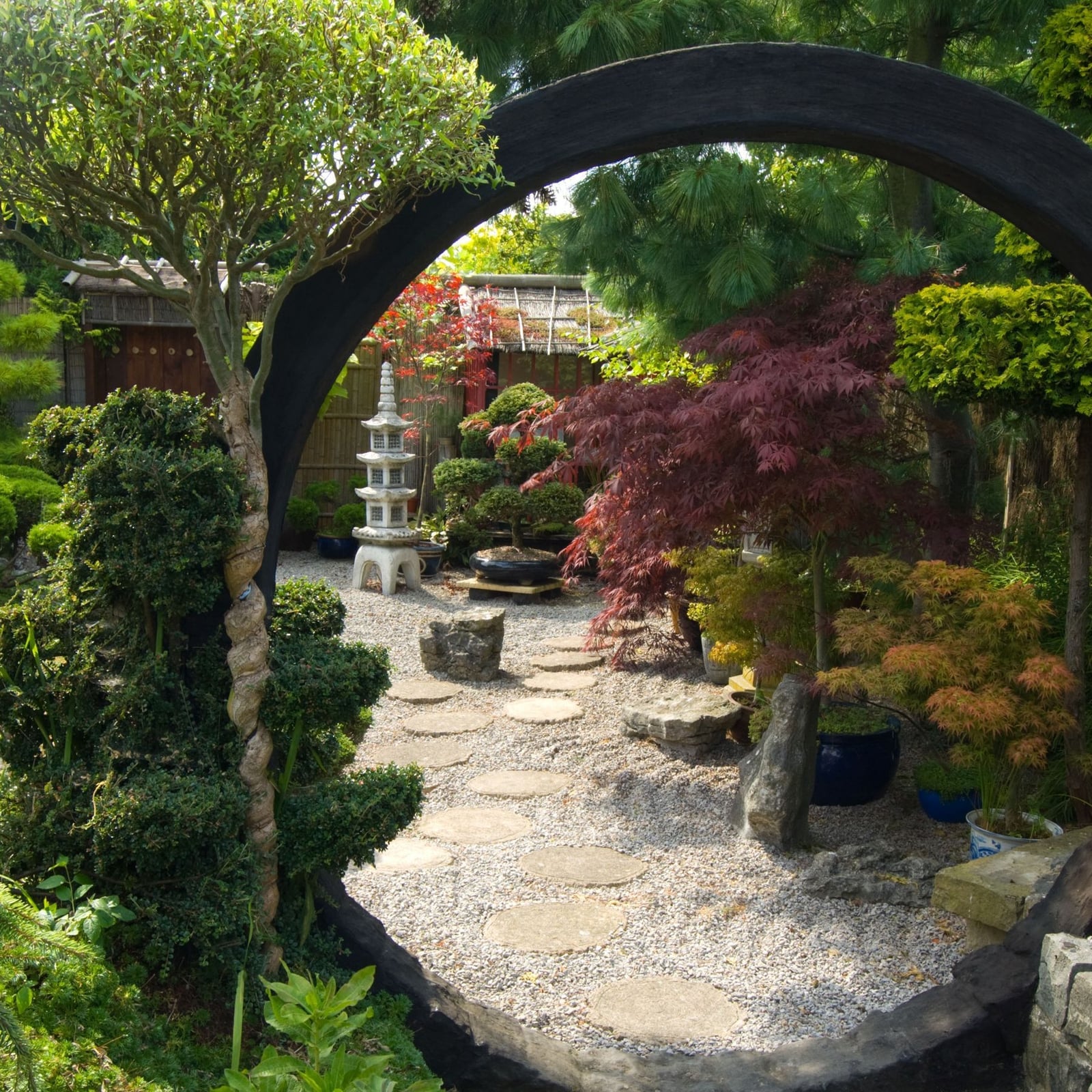
A stone pagoda can feel imposing in a small garden, but here it sits comfortably because the bonsai trees and low stepping stones keep the scale grounded. The gravel garden spreads around the pagoda, and an arched gateway behind it gives the eye a place to stop. The palette of green, grey and brown stays restrained, so the pagoda reads as a landmark rather than a decoration.
For a close alternative, swap the pagoda for a single upright stone or a tall ceramic planter with a sculpted shrub. The stepping stones and gravel are easy to lay on level ground, and the bonsai trees can stay in pots to keep the arrangement flexible. The key is to leave enough open gravel around each element so the garden breathes.
Aerial View of Zen Rock Garden and Moss Landscaping
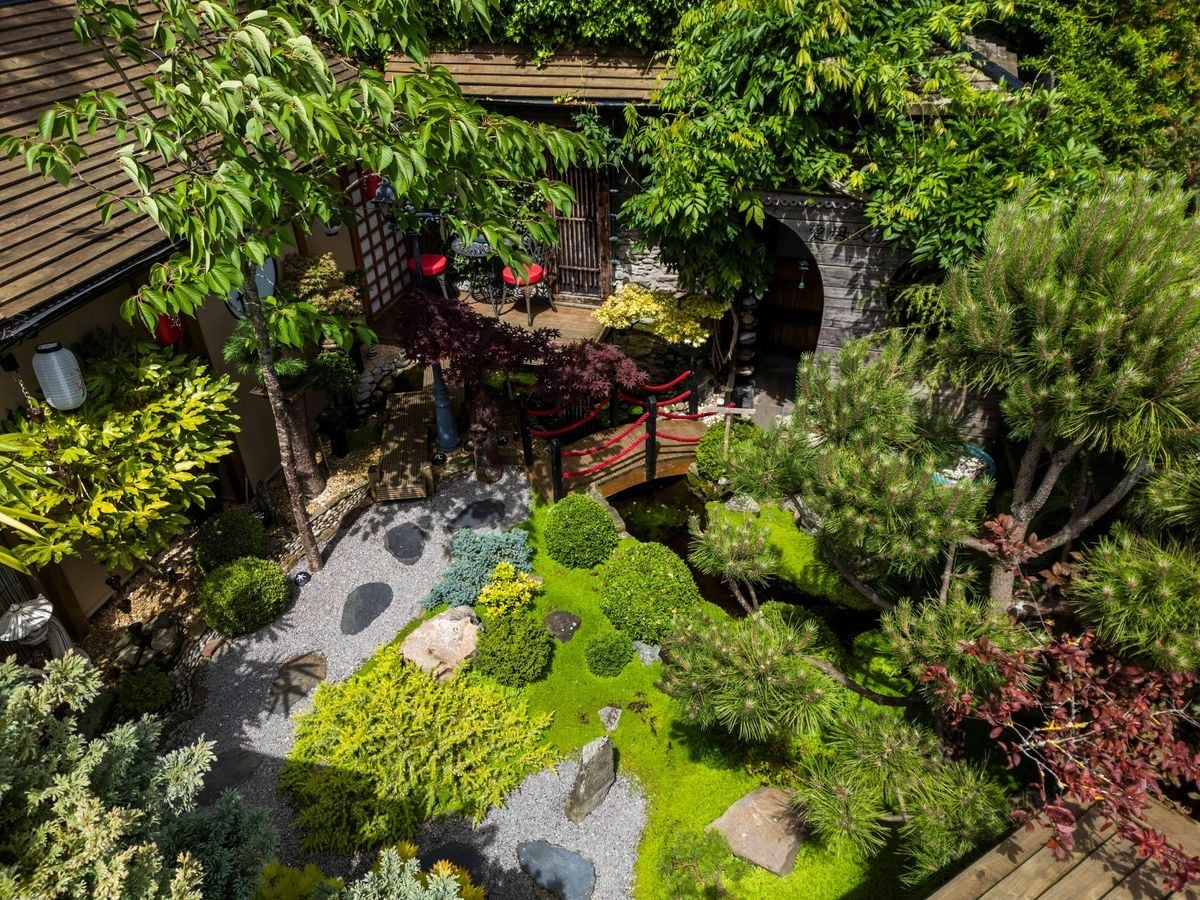
From above, this garden’s layout creates a series of visual pauses. The bright sunny day sharpens the contrast between grey gravel, brown wood, and vibrant green moss that carpets the ground in soft mounds. A wooden deck anchors one edge, while sculpted pine trees add vertical punctuation. The aerial view makes the spacing between elements feel planned: each rock and mossy hill has room to breathe, so the eye moves slowly from one focal point to the next. Negative space is not empty; it gives every element its own visual weight.
Inviting Stone and Gravel Pathway Through Lush Greenery
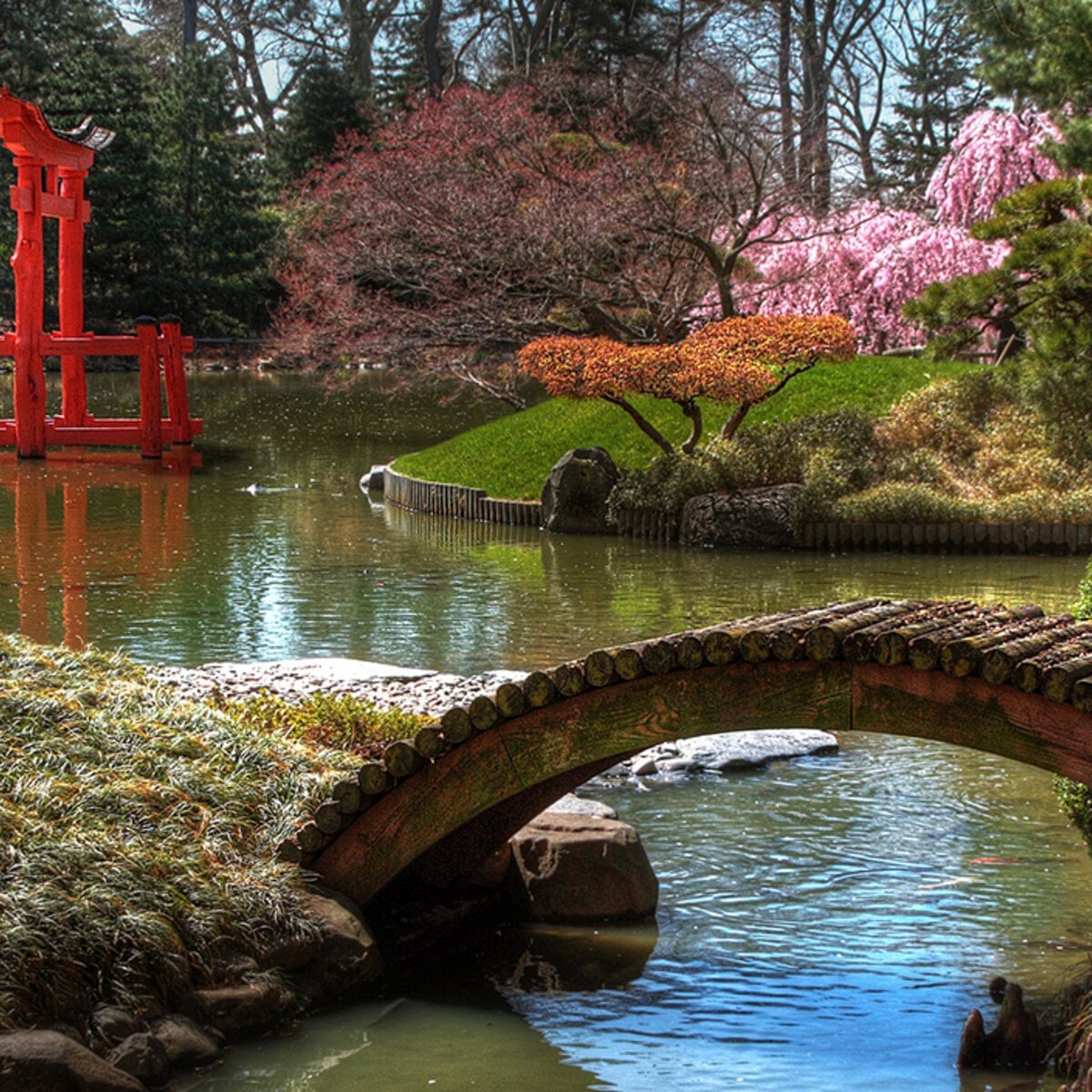
This pathway proves that a garden path can do more than get you from one spot to another. The palette stays grounded in greens and browns, with the soft, diffused daylight keeping everything calm rather than stark. Flat stones are set into pale gravel, winding past mature trees and dense planting toward a wooden bridge barely visible ahead. The water feature is only implied by the bridge’s presence, which invites curiosity without giving everything away at once. The principle is that a winding path slows the pace; it turns a walk into a series of small reveals rather than a straight line to a destination.
Compact Zen Garden with Koi Pond and Lucky Cat Statue
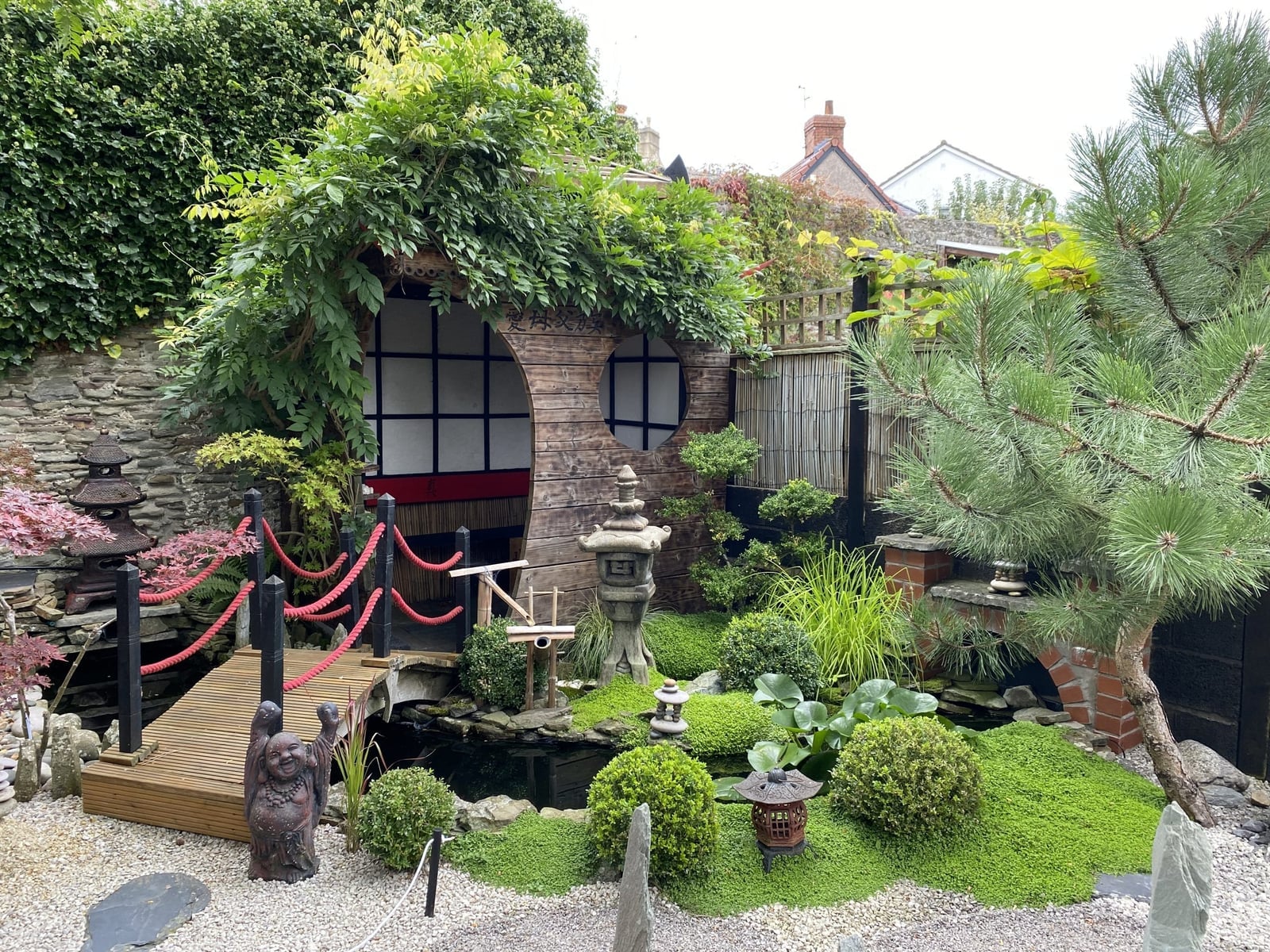
It is easy to assume a small garden means fewer features, but this compact space packs in a zen structure with bamboo, a wooden bridge over a koi pond, stone lanterns, and even a lucky cat statue without feeling cluttered. The bright daylight helps each piece stand out against the green and brown backdrop, while the red accents from the statue add a pop that draws the eye.
The trick is scale: the bridge is narrow, the pond is modest, and the planting stays dense but low. Nothing competes for dominance because each item claims its own zone. A wooden bridge arcs over the water, the zen structure sits slightly elevated, and the lanterns mark the pathway edges. In a compact layout, giving each feature its own distinct zone prevents the space from feeling overcrowded.
Sunlit Garden Path Leading to a Charming Wooden Bridge
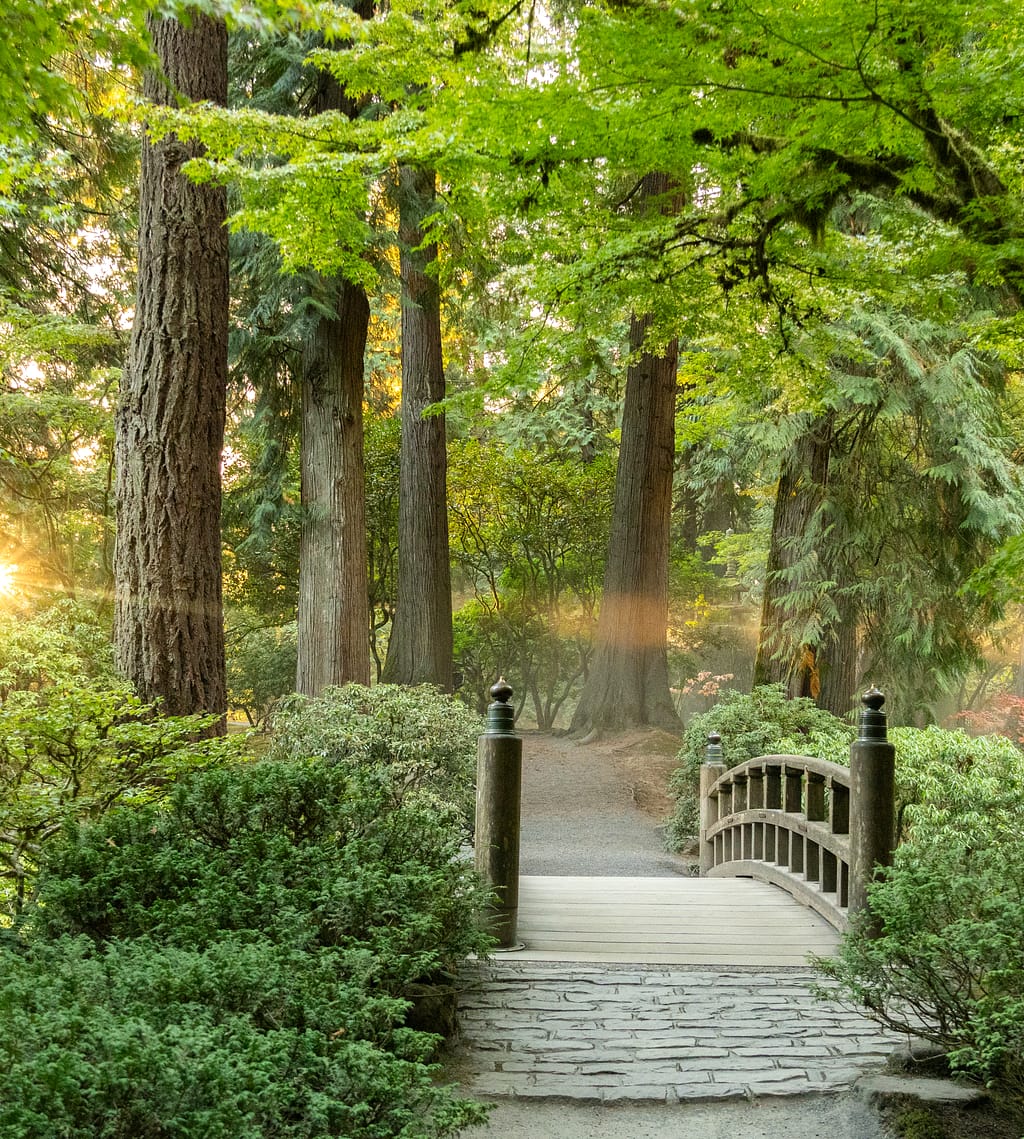
Golden hour sunlight turns this garden path into a study in contrast. The soft glow filters through tall trees, casting long shadows across the stone path and lighting up the wooden bridge at the end of the view. The bridge is the natural destination, but the real draw is how the light sculpts the dense planting on either side, making the greens shift from deep to bright as you scan the scene. The principle is that lighting can act as a guide; a well-placed beam of sun can direct the eye exactly where the designer intended, even without a sign.
Mossy Stepping Stones Through Lush Greenery and Gravel
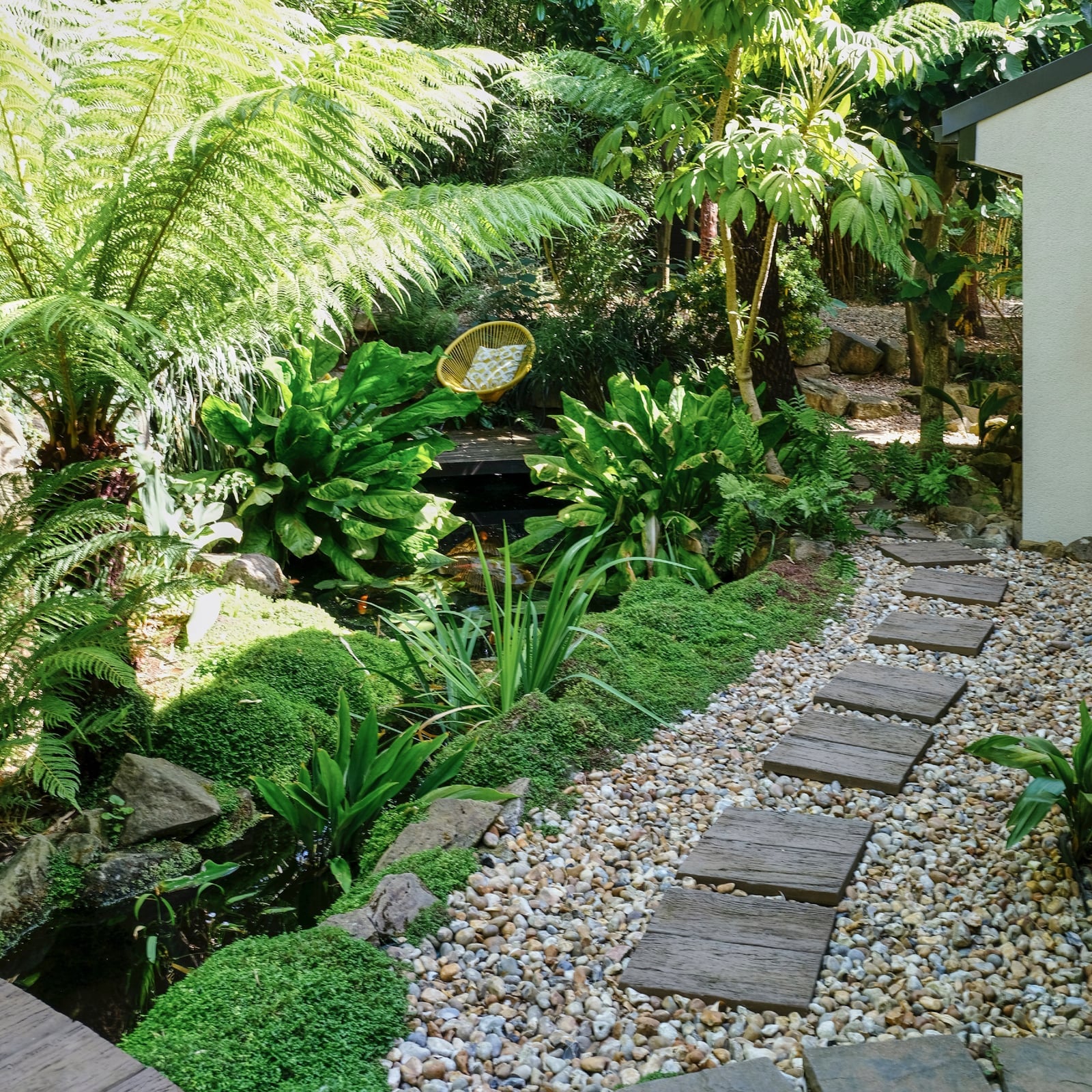
A mossy stepping stone path adds character as the stones are set into gravel, winding past a pond and lush greenery toward a wooden bridge. The dappled daylight keeps the scene from feeling flat, and the moss softens the edges of the stone, making the path feel like it grew there. The material of your path affects the mood; smooth, clean stone feels formal, while mossy, irregular stone feels like it belongs to the landscape.
Final Thoughts
A Japanese garden rewards patience. The gravel needs raking, the moss asks for shade, and the pond requires a pump and filter to stay clear. Start with one element a path or a lantern and build from there. Check your USDA zone before choosing plants, and remember that water features need a licensed electrician for any outdoor wiring. The result is a garden that feels older than it is, a small retreat that asks for nothing but your time.