
Kitchen cabinets do more than hold dishes. They set the room’s character, from sleek fluted wood to painted farmhouse styles. In 2027, the trends lean toward color, texture, and thoughtful storage that works for how you actually cook and live.
Here are 27 kitchen cabinet looks that put storage front and center. Each one keeps the cabinets as the main event, while the rest of the kitchen stays simple and supporting. Expect ideas for green, blue, gray, white, and two-tone setups, with practical notes on layout, hardware, and upkeep.
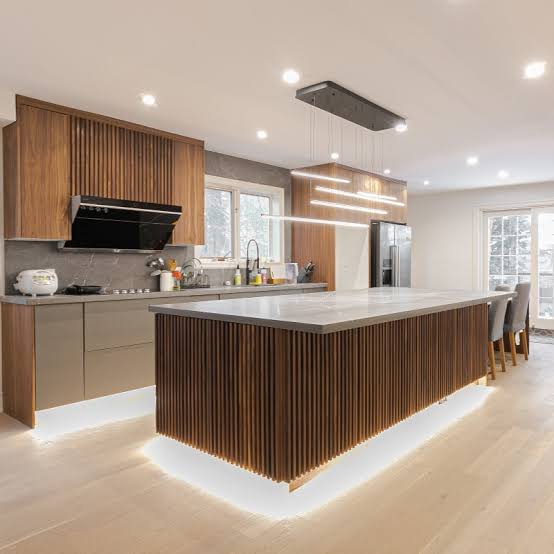
Modern Kitchen with Fluted Wood Cabinetry and Island
The fluted wood cabinetry here does not just cover storage; it adds a vertical rhythm that draws the eye up and makes the ceiling feel higher. This modern kitchen keeps the palette restrained with gray stone countertops and a white backsplash, so the wood grain stays the main event. A linear pendant light hangs over the large island, while integrated under-cabinet lighting ensures the fluted texture reads clearly even at night. The material mix of wood, stone, and metal gives the room a balanced, grounded feel. If you want that textured look without committing to a full renovation, consider a fluted panel on just one section of cabinetry or the island base.
Light Wood Veneer Cabinets with Integrated LED Lighting
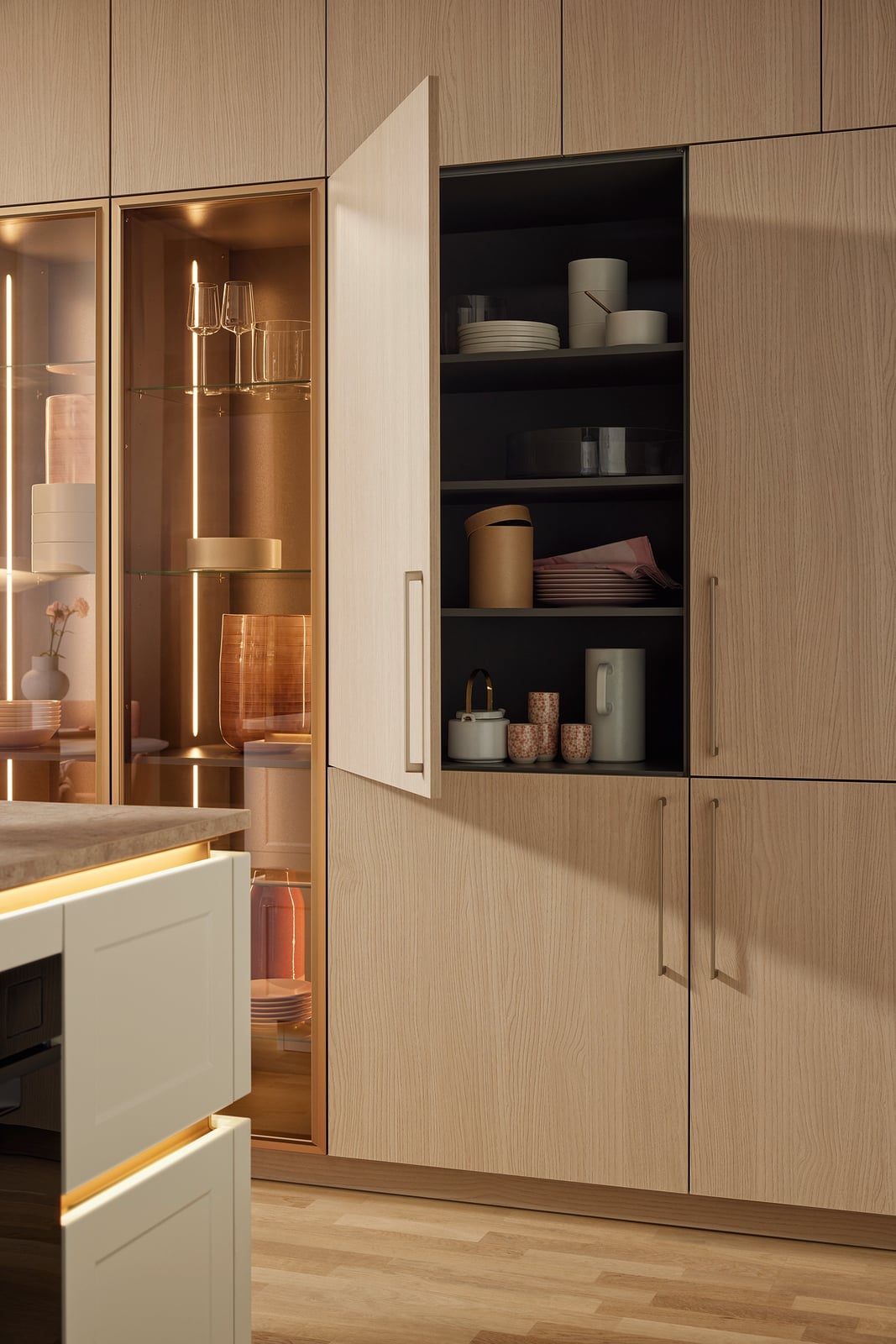
The integrated LED lighting in this kitchen does more than illuminate the countertop; it makes the light wood veneer cabinets glow from within. The pale wood and gray palette keeps the room open and airy, while the glass-front upper cabinets add a sense of depth. Accent lighting inside those glass cabinets turns everyday dishware into a display. A modular layout with built-in drawers and cabinets keeps the look streamlined. For a renter-safe swap, battery-operated LED strip lights under the upper cabinets can mimic this effect without any wiring. The key is choosing a warm light temperature to complement the wood tones rather than wash them out.
Farmhouse Kitchen with Sage Green Painted Cabinets and Island
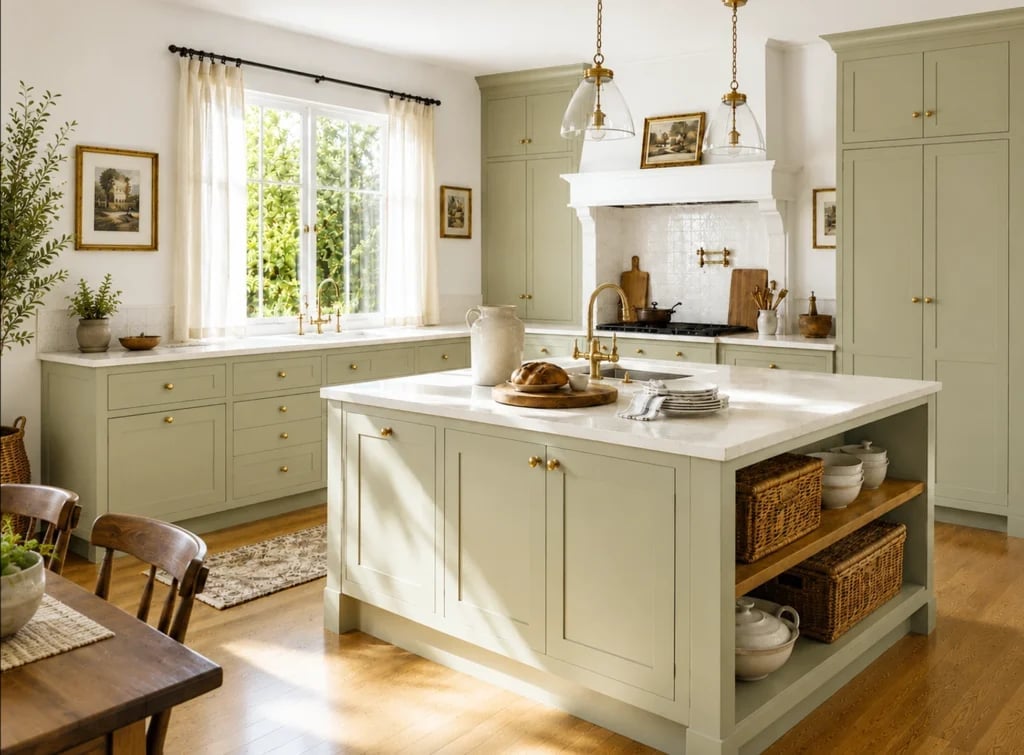
Can a sage green kitchen feel both cozy and open? This farmhouse design proves it can. The sage green painted cabinets and island pair with a white countertop and backsplash to keep the space bright. Brass hardware adds a warm accent against the green paint. A large island includes open shelving on one side, which breaks up the cabinetry and offers a spot for cookbooks or baskets. Two pendant lights over the island keep the space bright. The palette mixes sage green, white, and wood tones from the floor and open shelving. For a similar look on a budget, paint existing cabinets in a sage hue and swap the hardware to brass.
Modern Rustic Two-Tone Cabinets and Large Marble Island
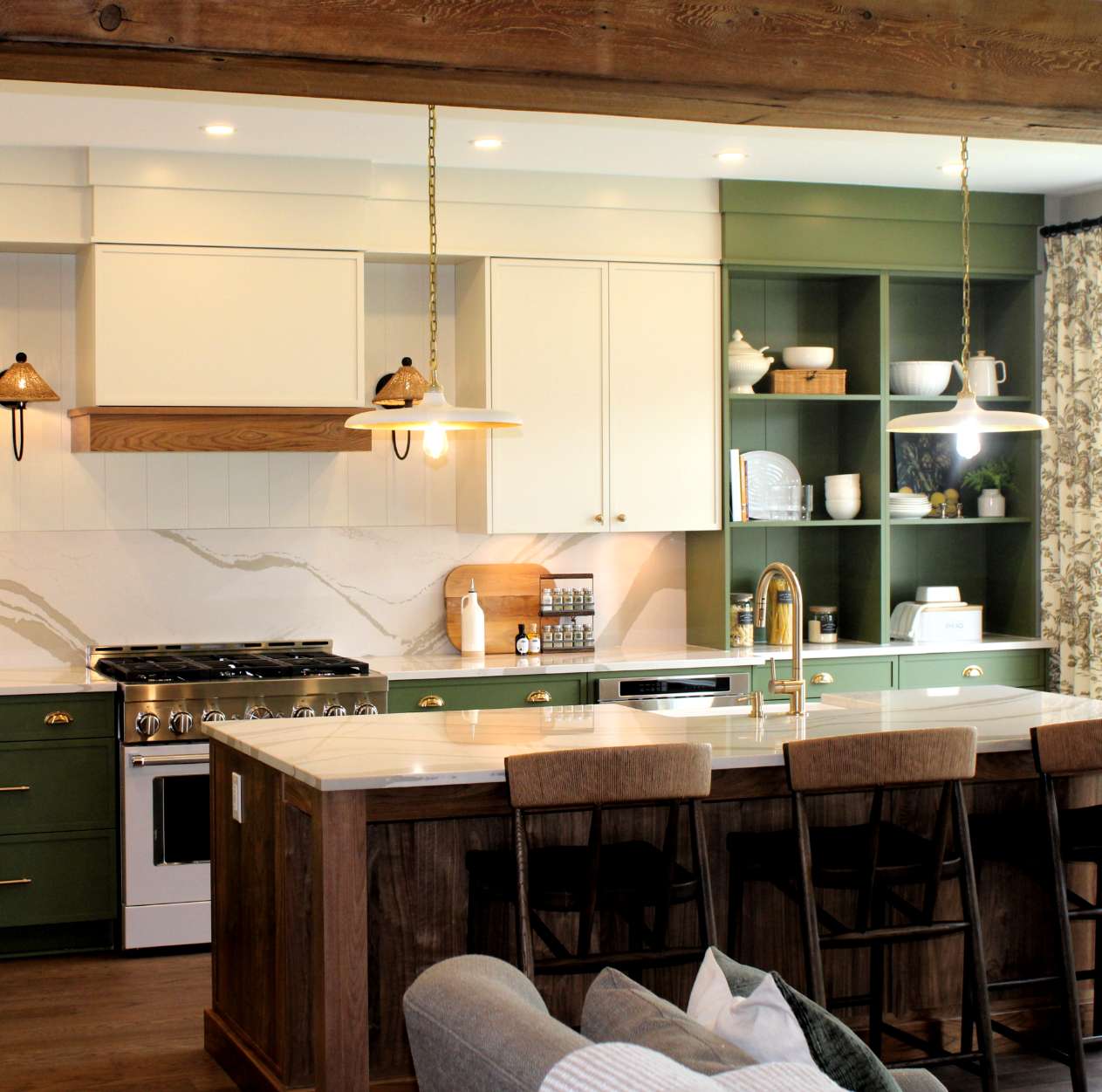
The two-tone approach here puts green on the base cabinets and cream on the uppers, which anchors the room without making it feel top-heavy. A large marble island sits at the center, offering a smooth contrast to the wood and tile textures around it. Brass hardware on both cabinet colors ties the look together. The palette of green, cream, and wood tones creates a modern rustic feel that is more refined than rugged. If you are trying this at home, keep the darker shade on the bottom cabinets so the room feels grounded, and use the lighter shade above to maintain an open, airy feel near the ceiling.
Traditional Kitchen with Vibrant Green Cabinets and Wood Island
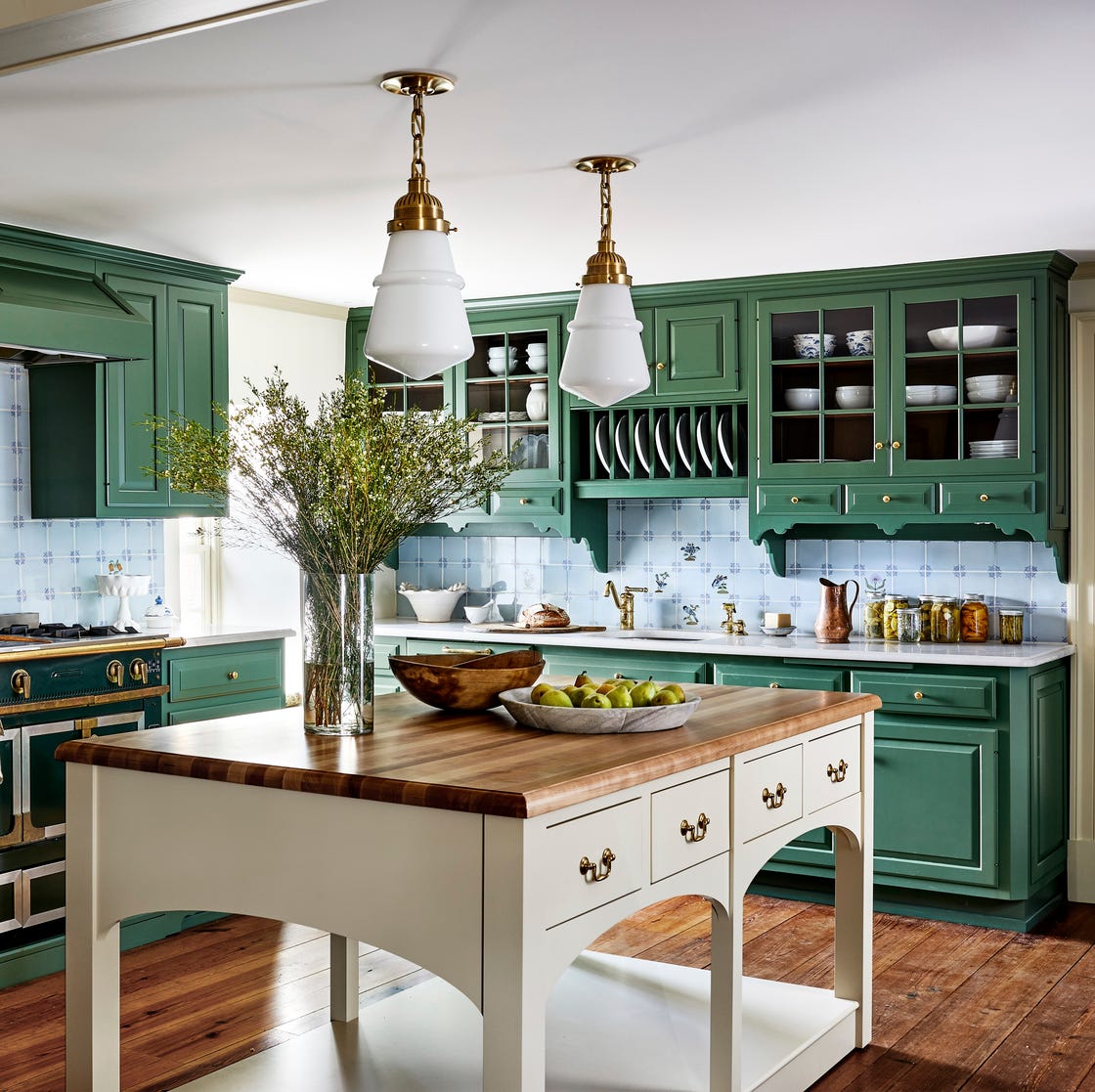
Bold cabinet colors are balanced with natural materials and plenty of light. This traditional kitchen uses vibrant green cabinets on the perimeter and a warm wood island at the center. The green and blue palette feels rich against the wood tones of the island and the marble countertop. Pendant lights and natural light keep the bold color from overwhelming the room. The open plan layout with a large island gives the space a relaxed flow. For renters, a temporary peel-and-stick backsplash in a neutral tone can help a bold cabinet color feel grounded.
Modern Kitchen with Olive Green Cabinets and Marble Island
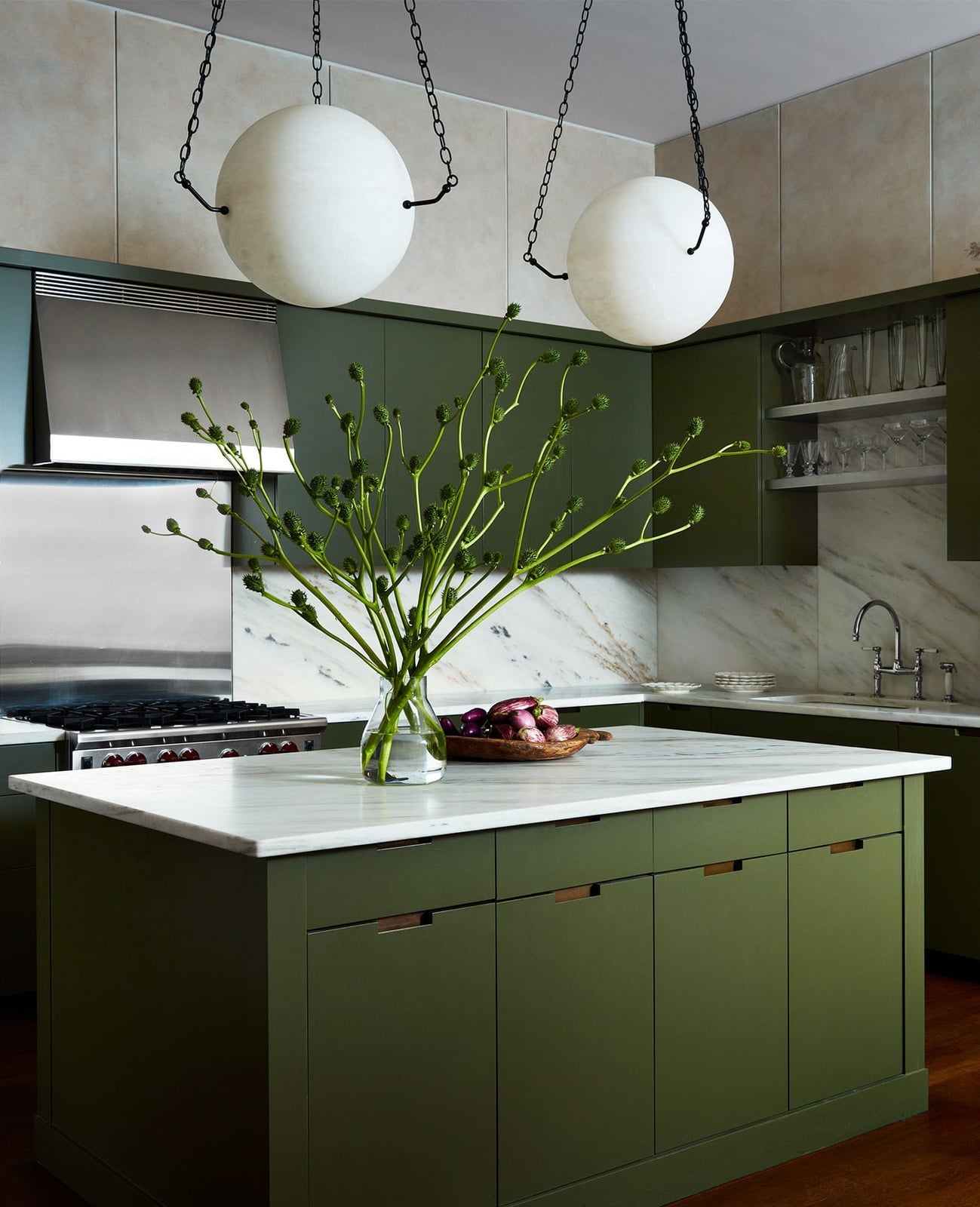
Olive green can read as a neutral if you keep the room light and the materials natural. The cabinets here are painted wood with a matte finish, so the color stays grounded. A marble island with white veining sits across from an L-shaped counter, and the stone repeats in the backsplash. Using the same material on the island and the wall keeps the palette from splitting into two different rooms. Pendant lights with metal shades add a cool note against the warm olive tone. If you want a kitchen that feels pulled together without matching everything, this ratio of two-thirds olive to one-third white marble is a good place to start. The olive is the anchor; the marble keeps it from feeling heavy.
Sage Green Shaker Cabinets with Brass Hardware and Island
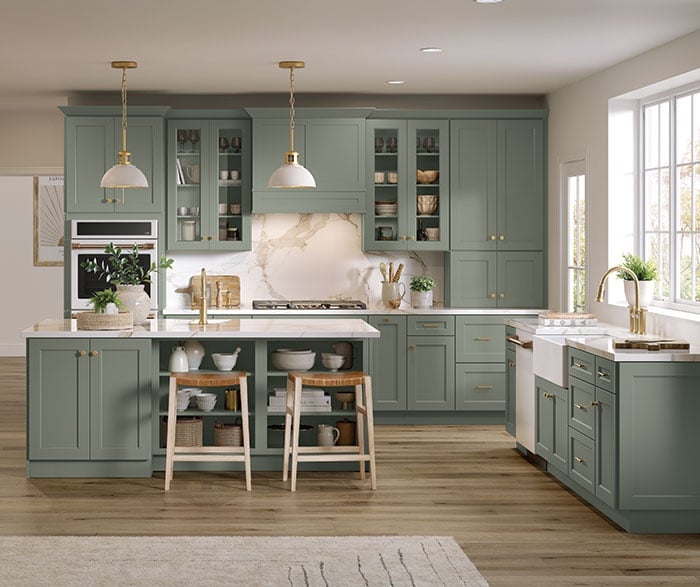
Sage green Shaker cabinets lean warm rather than cool, so the brass hardware reads as a natural companion rather than a contrast. The island repeats the same cabinet color and hardware, which makes the room feel intentional without needing extra trim. A marble countertop with subtle veining sits on the island, and open glass shelves above the counter break up the wall of solid cabinetry. For a renter, this is the kind of look you can borrow with peel-and-stick cabinet wraps and stick-on brass pulls. The key is keeping the undertone warm, cool brass on cool sage reads as a mismatch.
Galley Kitchen with Teal Cabinets and Open Shelving
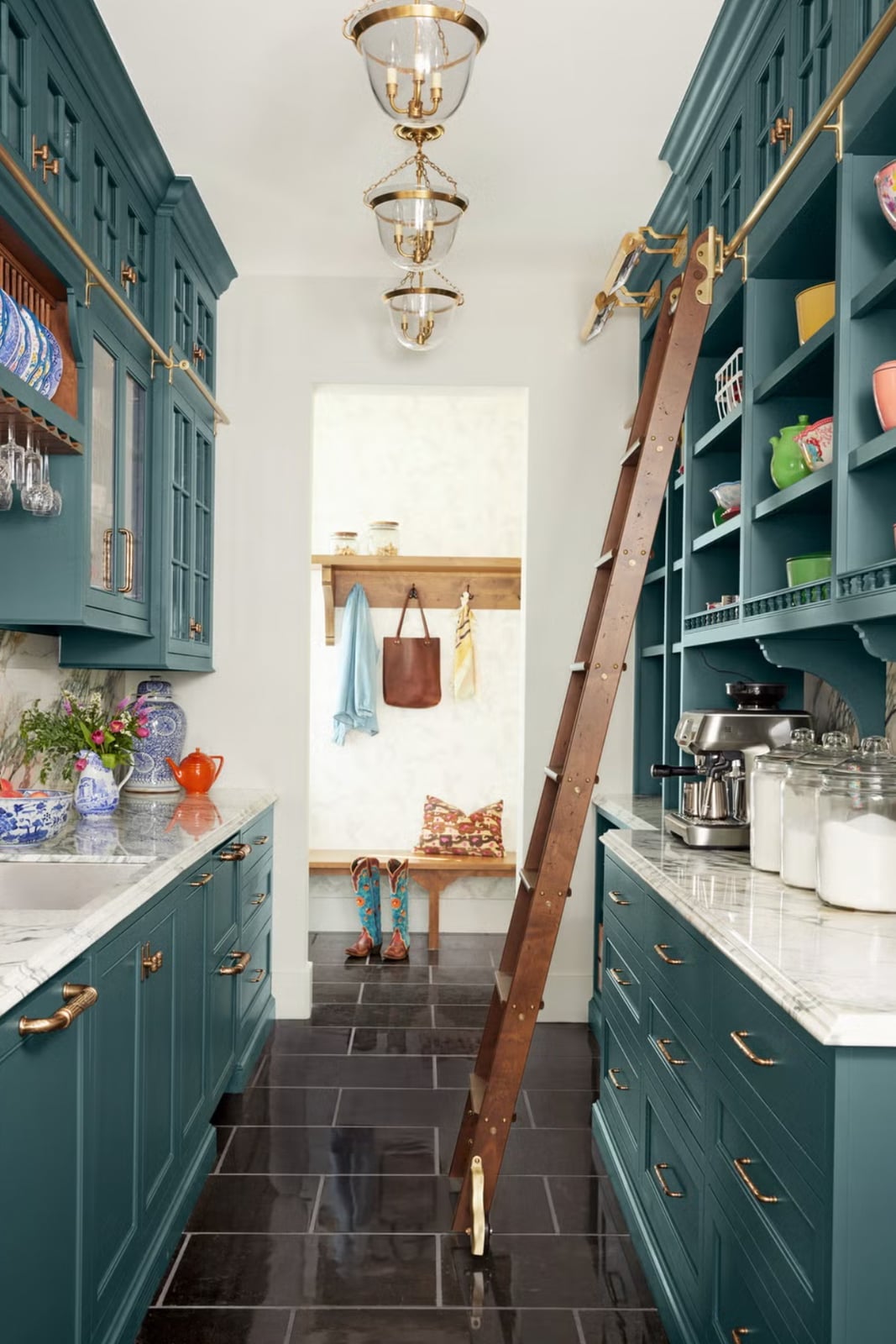
A galley kitchen works best when the layout keeps traffic moving and the storage works vertically. Here, teal painted cabinets run along one wall with open shelving above, and a rolling ladder on a rail lets you reach the upper shelves without blocking the walkway. The marble countertop adds a polished surface that contrasts with the matte teal. This layout solves the narrow footprint problem by putting rarely-used items up high and keeping daily dishes at counter level. The ladder is the functional piece that makes the height practical, not just decorative. If your galley kitchen feels tight, adding a rail and a ladder can turn dead wall space into usable storage.
Traditional White Shaker Cabinets with Checkered Floor
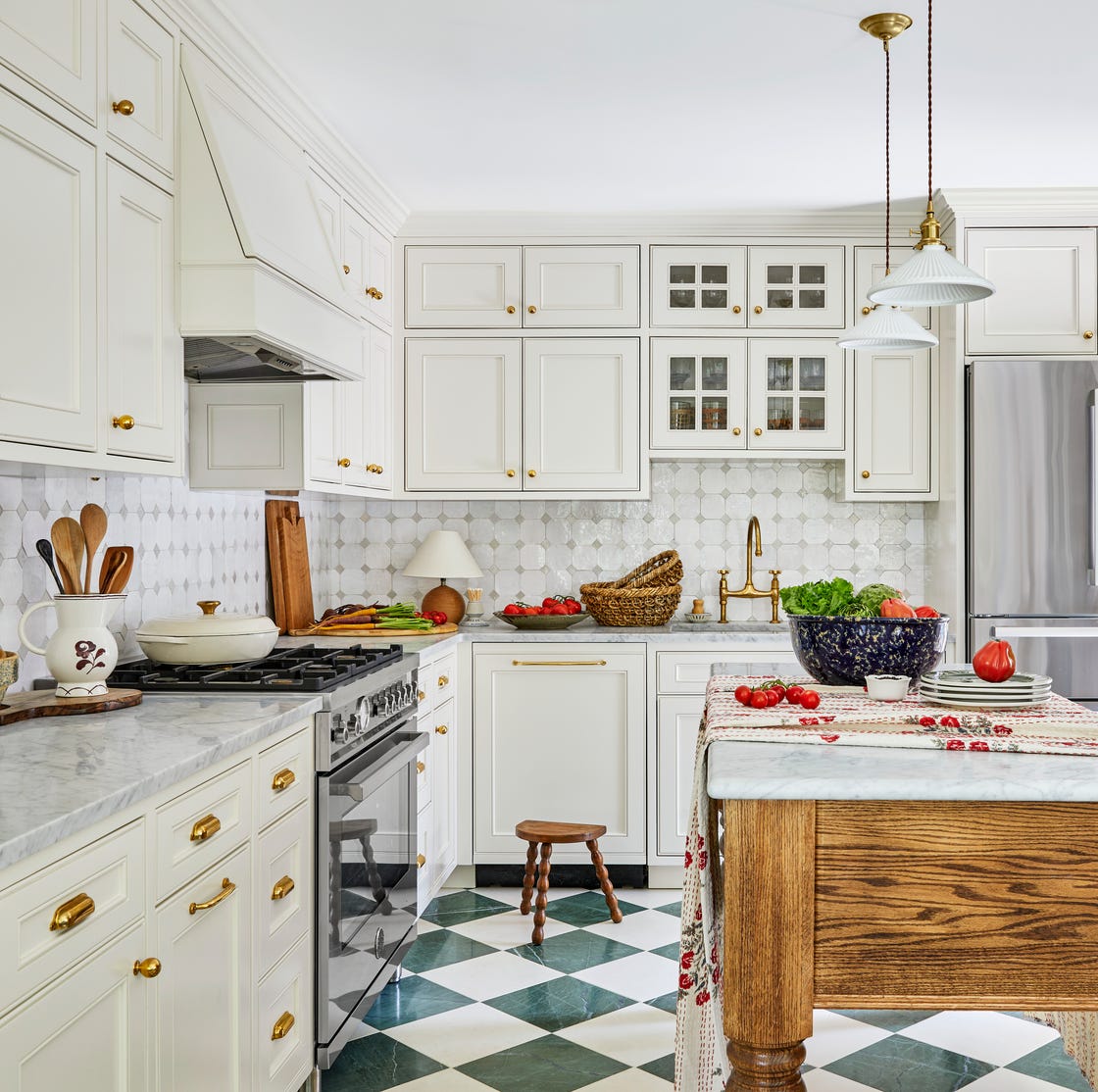
Can white cabinets feel fresh without feeling cold? They can when the room adds a warm floor and a green accent. White Shaker cabinets with brass pulls run along the perimeter, and a green and white checkered tile floor covers the ground. The checkered pattern gives the room a traditional backbone without making it feel dated. A central island painted in a soft green pulls the floor color upward, and brass pendant lights echo the cabinet hardware. The palette here is white, green, and brass, with the floor doing most of the pattern work. If you are worried that a checkered floor will make a room feel busy, keep the cabinets simple and let the floor be the one pattern.
Farmhouse Kitchen with Blue Lower Cabinets and White Uppers
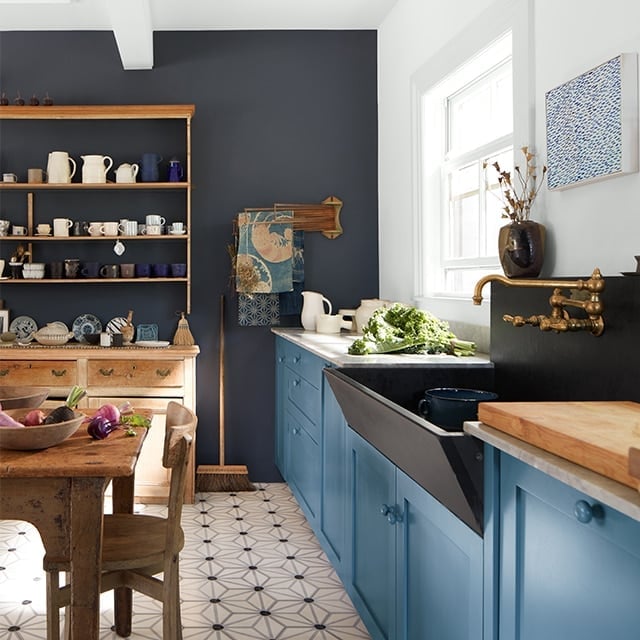
Blue lower cabinets with white uppers create a natural visual break that makes a compact kitchen feel taller. The dark blue anchors the room at eye level, while the white upper cabinets reflect light from the window and wall sconces. A dark farmhouse sink sits in the counter, and open shelving above the sink keeps dishware within reach. The open shelving and countertop add warmth. For a small farmhouse kitchen, this color split gives you the character of a darker cabinet without making the whole room feel closed in. The white uppers pull the eye up, and the blue lowers ground the space.
Modern Gray Cabinets with Hexagonal Floor Tiles
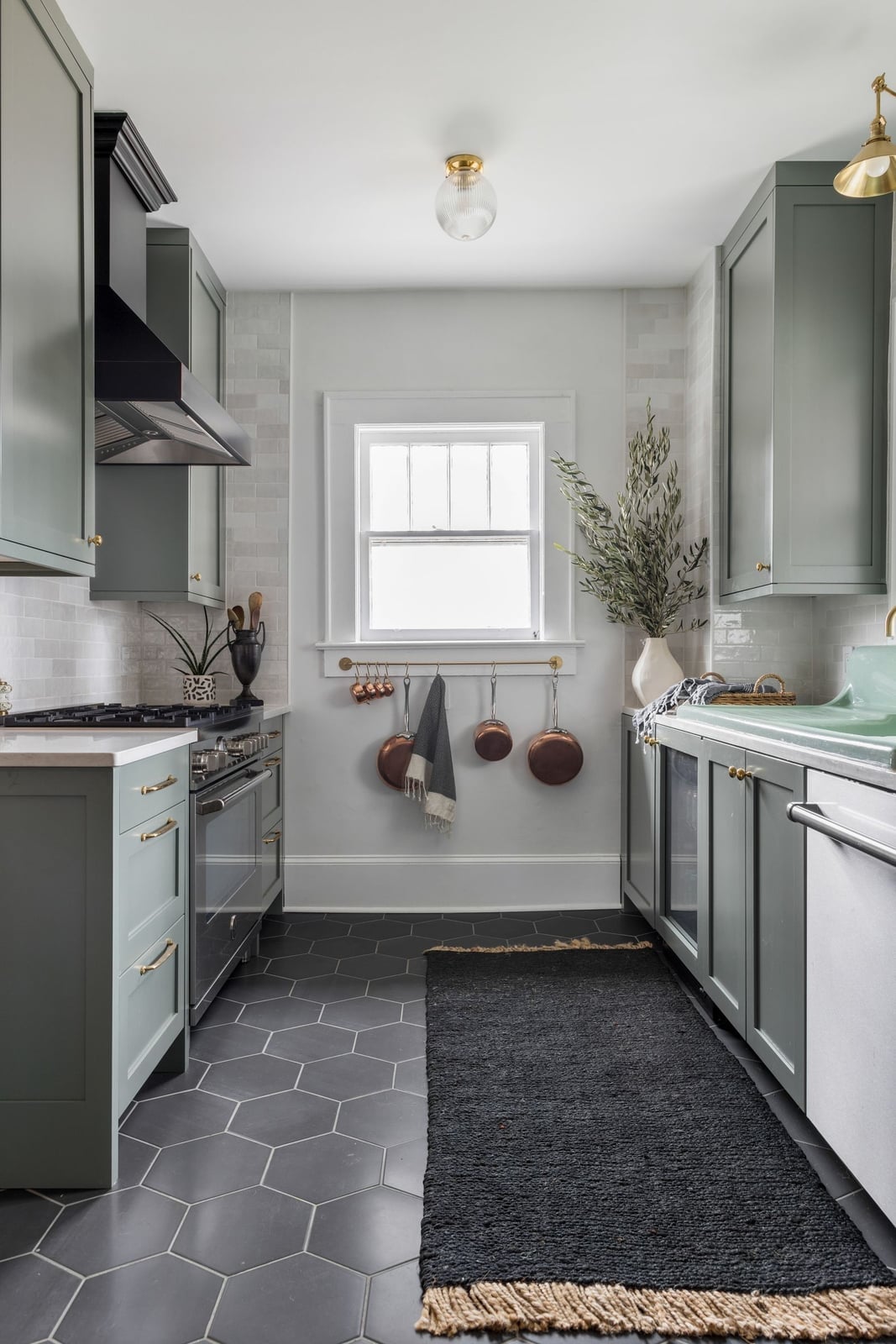
A galley kitchen gains character when the floor does more than sit there. The gray cabinets and white subway tile backsplash keep the main surfaces quiet, so the hexagonal floor tiles provide the pattern without competing. Black hardware and a black range hood anchor the look with contrast. For a compact layout, the rule is simple: let one surface break the pattern and keep everything else plain. The hexagonal tile brings visual texture, but the simple gray cabinets make sure the room stays grounded rather than busy.
Deep Green Shaker Cabinets in a Modern Farmhouse Kitchen
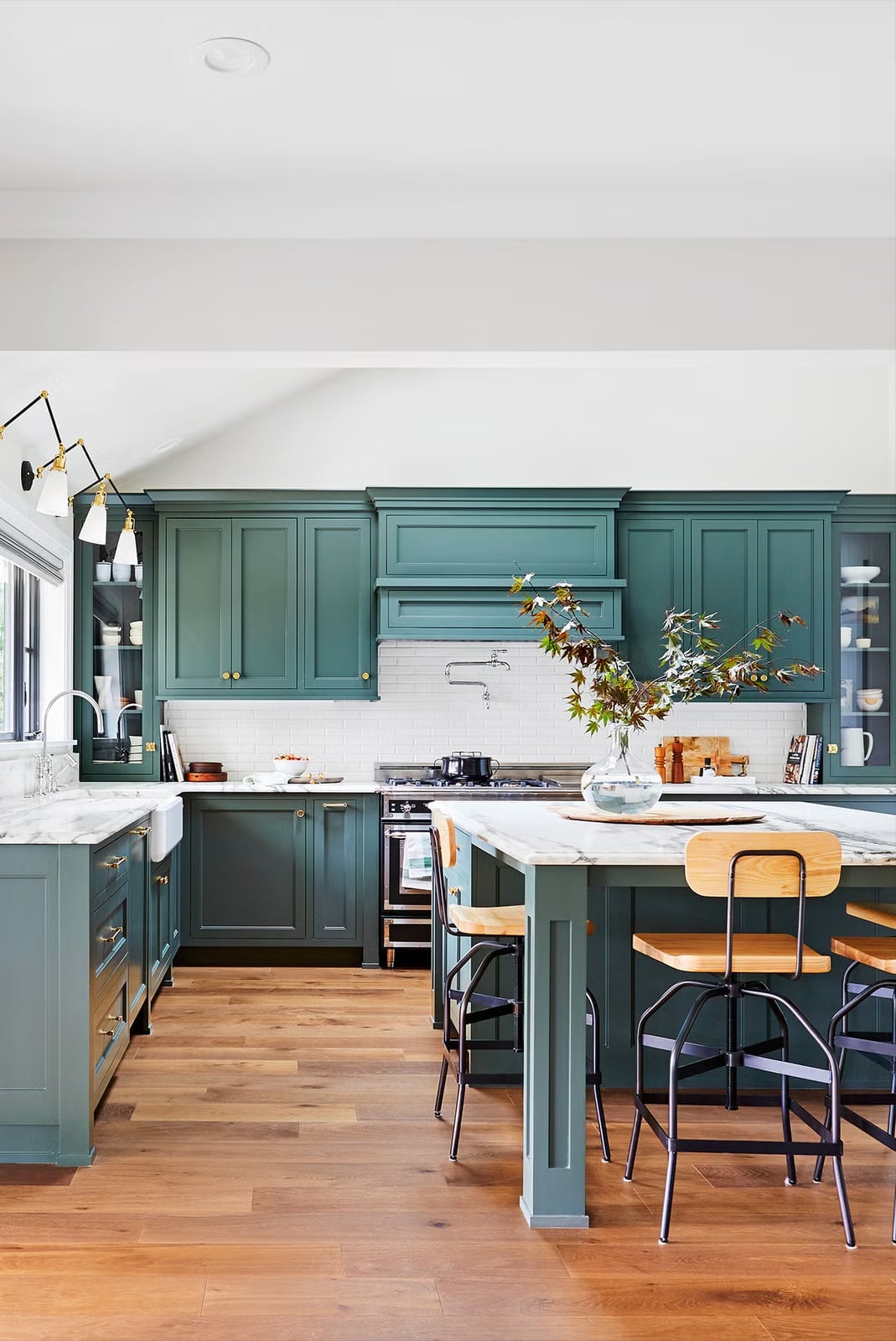
Deep green can appear moody or cozy depending on its surroundings. Here, the shaker cabinets fit a modern farmhouse style, paired with a lighter wood island and white marble countertops that keep the space from feeling too heavy. Brass pendant lights and hardware add warmth without going rustic.
The palette centers on green, with wood tones and white as supporting players. The ratio leans heavily on the green, but the lighter island and countertops break it just enough to keep the space open. For anyone drawn to dark cabinetry, the takeaway is to balance it with a pale countertop and warm metals so the room still feels inviting.
Eclectic Kitchen with Peach and Coral Cabinets
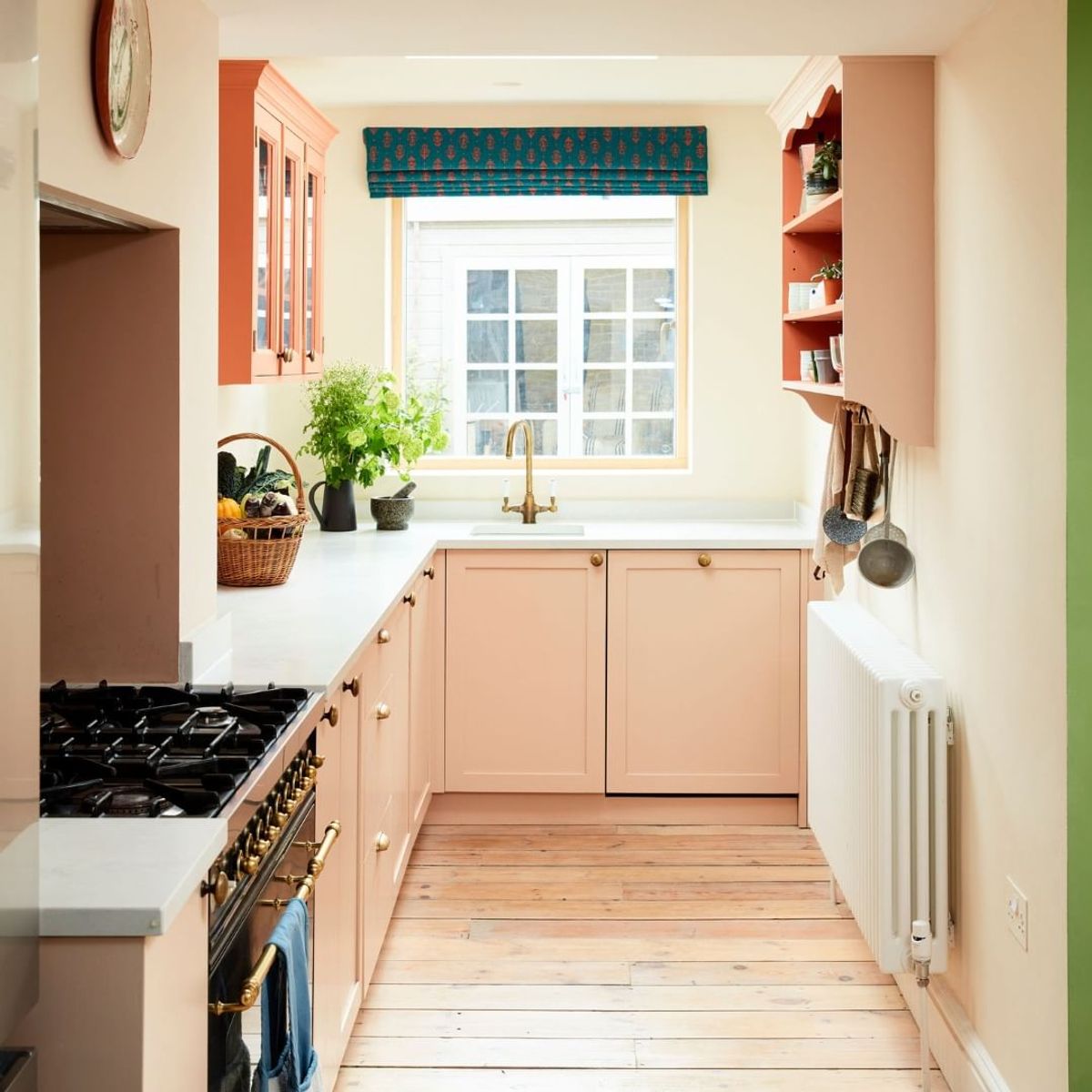
The two cabinet colors sit next to each other without blending, which is the trick to making an eclectic palette work. Peach upper cabinets and coral base cabinets create a deliberate contrast, and the cream backsplash and green range cooker keep the colors from feeling random. A skylight floods the compact galley with natural light, which matters when you choose bold hues. The principle here is contrast with a clear boundary: each color gets its own territory, and the neutral elements in between let the eye rest.
Modern Dark Gray Cabinets with Brass Hardware
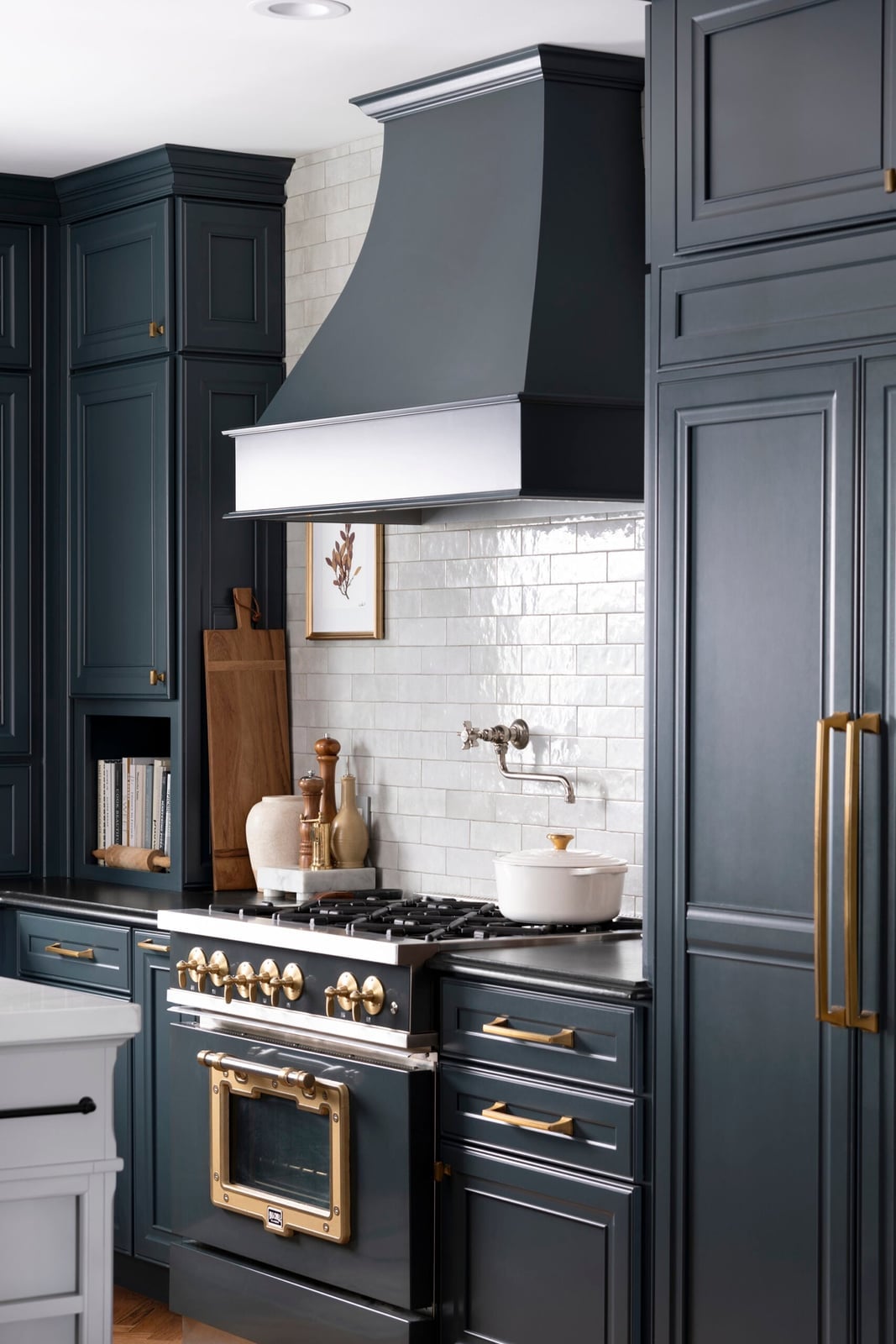
Dark gray cabinetry needs the right metal to feel finished. Brass hardware pulls warmth into the room, and a white countertop and backsplash keep the overall look crisp. The layout is a galley with integrated appliances, so the dark cabinets form a continuous surface. For materials, the key is pairing a matte painted cabinet with a polished metal accent. The brass reflects overhead and accent lighting, which stops the dark gray from absorbing all the light in the room.
Transitional Light Gray Cabinets with Herringbone Backsplash
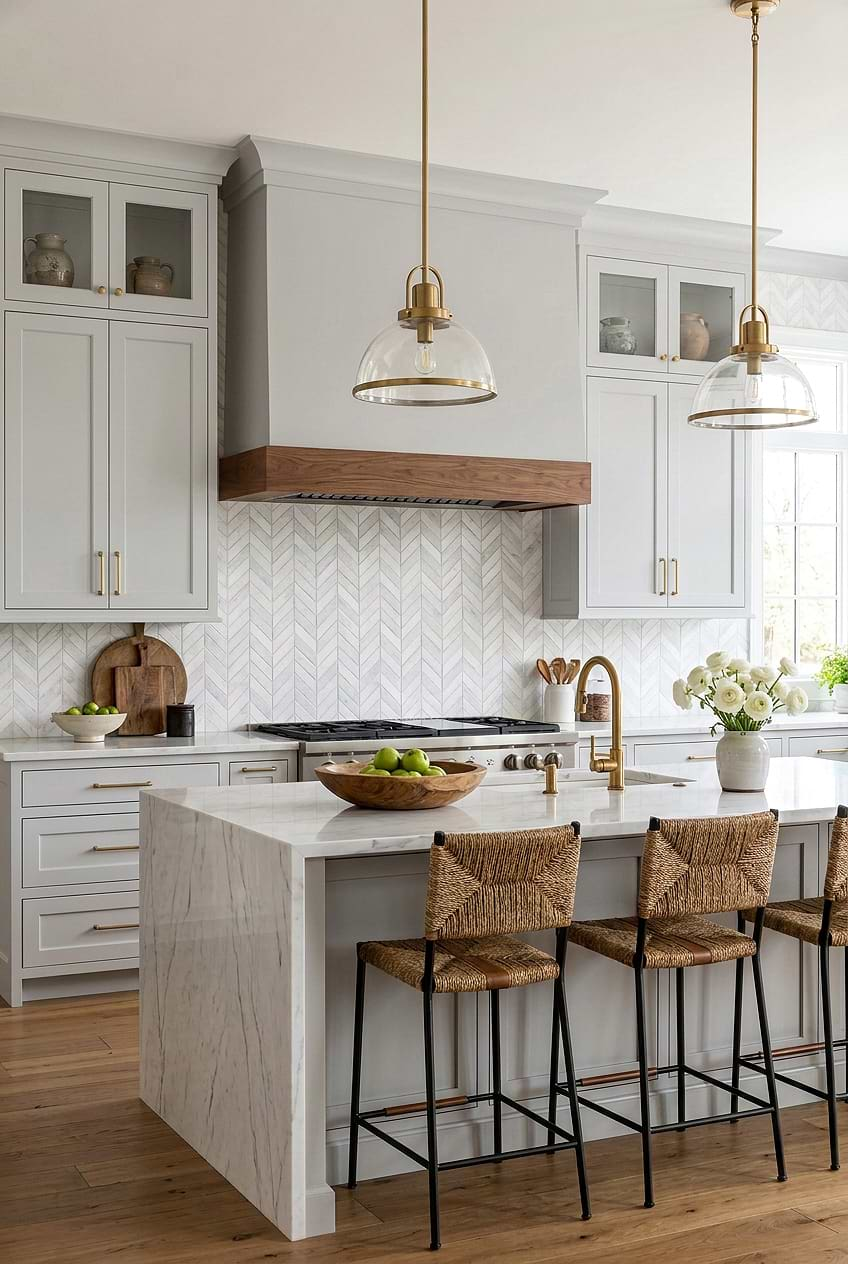
A roomy kitchen with an island needs a backsplash that adds interest without stealing the show. The herringbone marble backsplash does that here, set against light gray cabinetry and a white marble island. Rattan stools and brass pendants bring in natural texture and warmth, which keeps the gray from feeling too cool.
The transitional style sits between traditional and modern, and the materials reflect that. Painted wood cabinets offer a clean look, while the marble and brass add a more classic feel. For storage, the island provides seating and extra surface space, and the wall cabinets keep the counters clear. The herringbone pattern is the visual anchor, but it works because the rest of the palette stays restrained.
Traditional Kitchen with Large Wood Island and Pot Rack
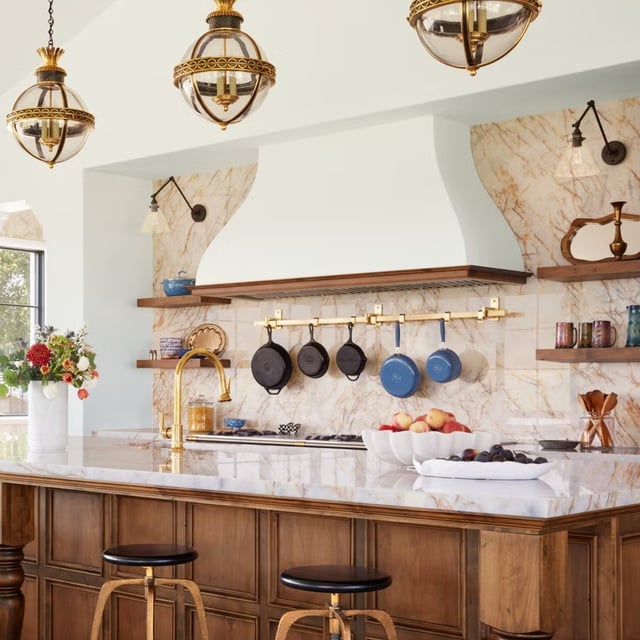
An ornate range hood draws the eye in this roomy traditional kitchen, but the cabinets do the quiet work of balancing the look. The wood tones of the island and the pot rack hanging above it are echoed in the cabinet frames, while the doors themselves stay a lighter shade. Marble countertops and brass hardware add a classic finish. The element mode here keeps the cabinets central. They ground the space without competing with the island’s scale. If your own kitchen leans heavily on one oversized piece, let the surrounding cabinetry stay simple in tone and profile to keep the layout from feeling top-heavy.
Coastal Kitchen with Off-White and Gray Cabinets
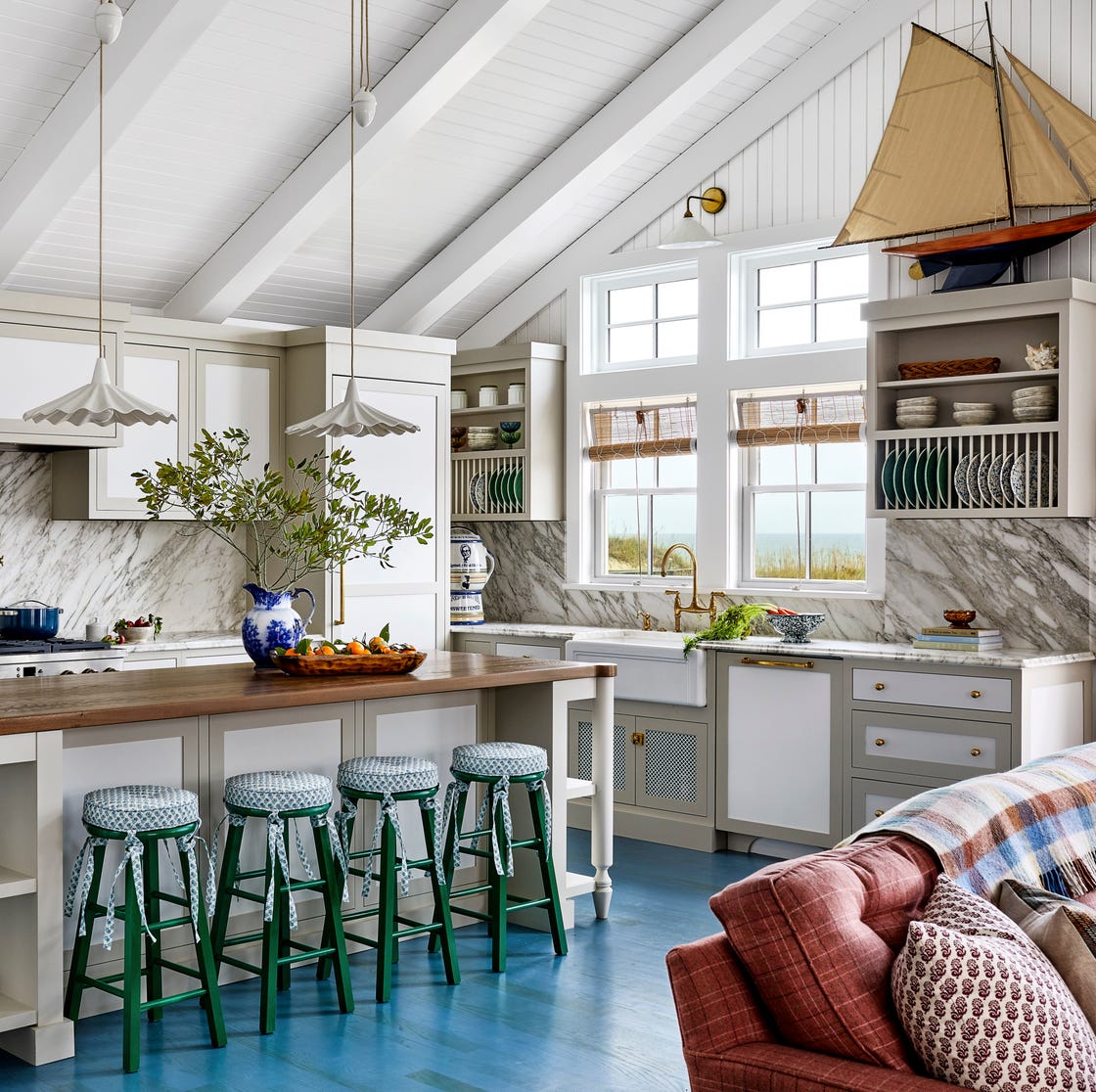
A roomy kitchen with a view of the ocean calls for a palette that feels like an extension of the shoreline. Off-white upper cabinets keep the space bright, while gray lowers add weight without darkening the room. Blue accents in the decor and natural wood tones in the island stop the scheme from reading as flat. The coastal style here is defined by this ratio: about sixty percent light, thirty percent neutral, and ten percent accent color. What breaks it from being just another gray kitchen is the sailboat decor and the linen textures that introduce a lived-in softness. For renters, swapping cabinet hardware to a matte nickel or brushed brass pull is a low-commitment way to shift the look toward coastal without changing the paint.
Modern Kitchen with Fluted Glass Cabinet Doors
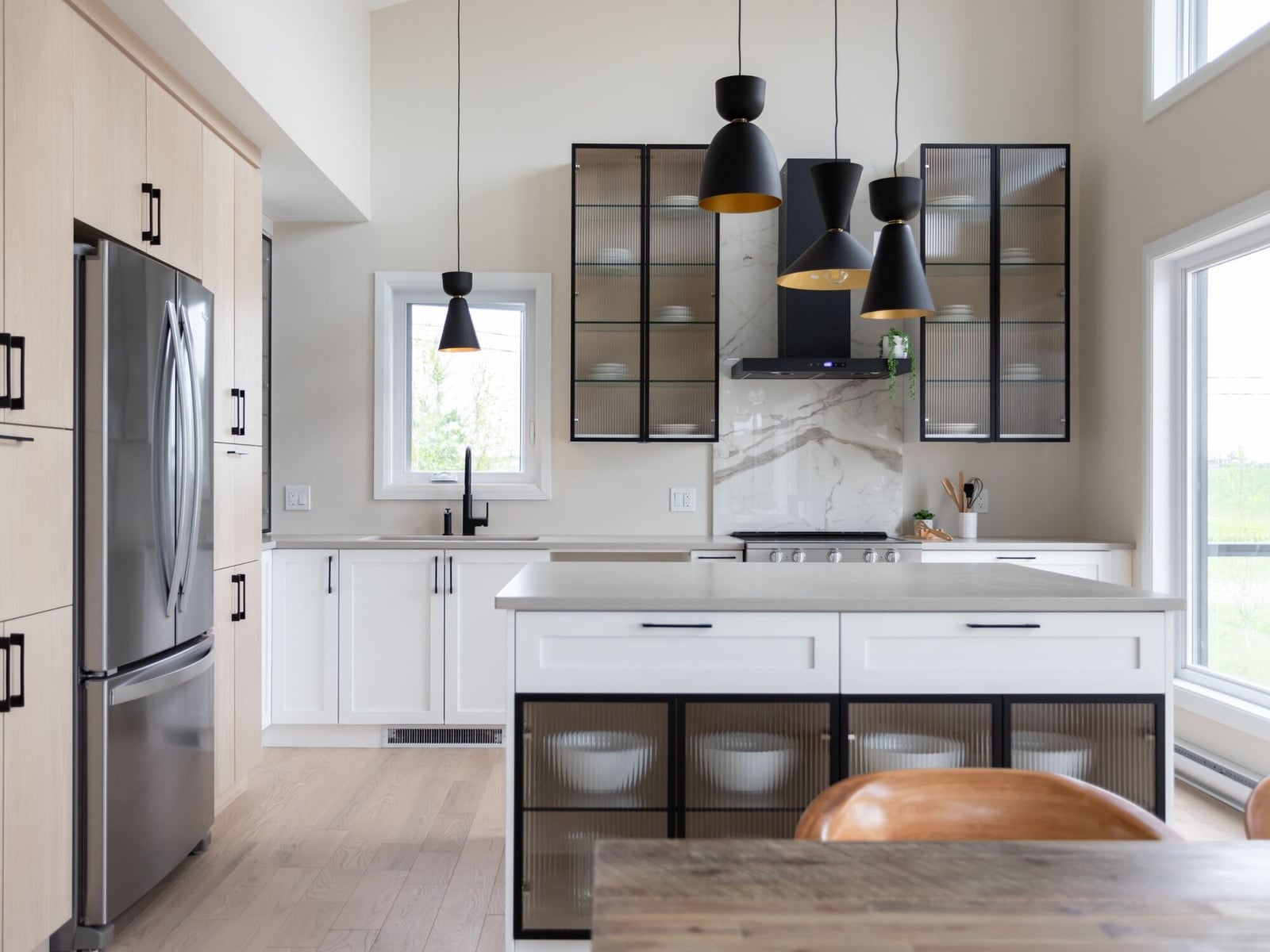
Fluted glass cabinet doors sit somewhere between a solid door and open shelving. They hide the contents while adding texture. In this roomy open-plan kitchen, the fluted glass appears on upper cabinets, with light wood frames and a white marble island anchoring the center. The material choice works because the glass catches natural light from nearby windows, and the vertical ridges break up the long run of cabinetry.
Consider applying a self-adhesive fluted film to existing glass fronts for a similar look without replacing doors. It gives the same linear pattern and diffused view of what is inside. The modern style holds because the kitchen stays minimal: black hardware on the range and refrigerator, and no extra trim or molding on the cabinet faces. The fluted detail is the only decorative element, so it stands out without overwhelming the space.
Traditional White Cabinets with Granite Countertops and Red Rug
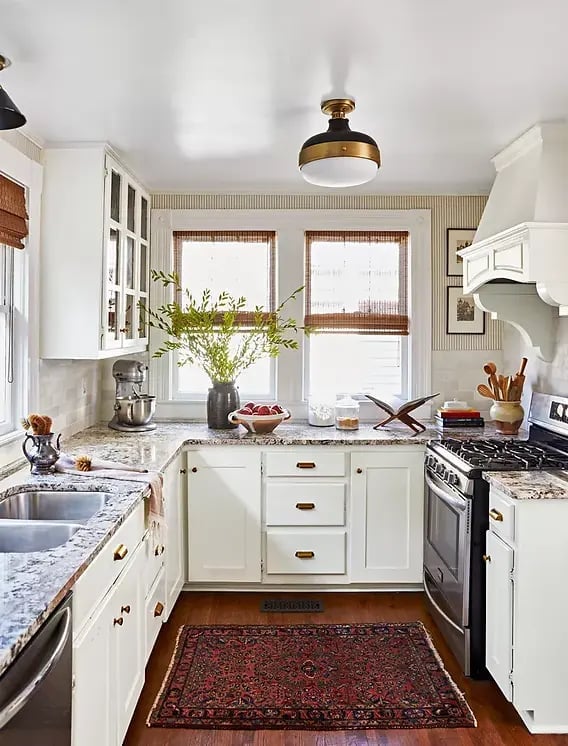
White cabinets in a compact U-shaped kitchen keep the room feeling open, even with a full range and sink setup. The granite countertops add a dark, speckled contrast that anchors the white, while the red rug introduces a warm accent that pulls the eye across the floor. The palette rule here is simple: one neutral base, one dark counterweight, one color pop. The white cabinets do not compete with the rug or the wood tones in the room, so each element reads clearly. In a smaller layout, sticking to this three-part palette keeps the space from feeling fragmented.
Farmhouse Kitchen with Blue Glass-Front Cabinets
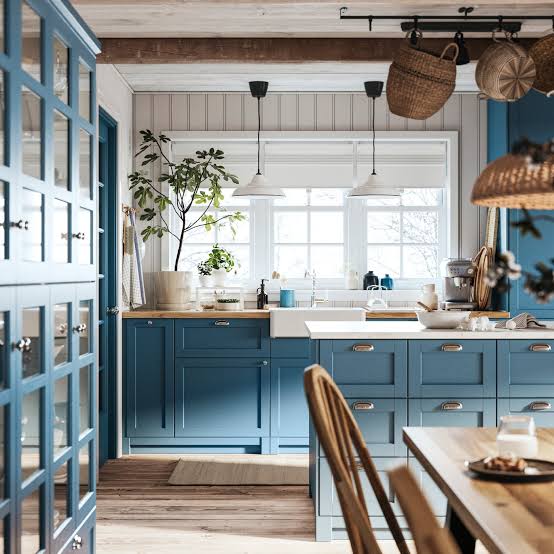
Blue glass-front cabinets are the standout in this roomy farmhouse kitchen, and they work because of how they relate to the space. The blue is saturated but not dark, so it feels like a feature. The glass fronts sit on the upper cabinets, which means the eye goes to the dishes and glassware inside, while the lower cabinets stay solid for bulk storage. The linear layout with an island means the blue cabinets face natural light from windows, which keeps the color from feeling heavy. If you are considering glass-front cabinets, place them where you will regularly see what is inside. Upper cabinets near a sink or prep zone make the most of the display without adding visual clutter at counter height.
Modern Coastal Kitchen with Navy Island
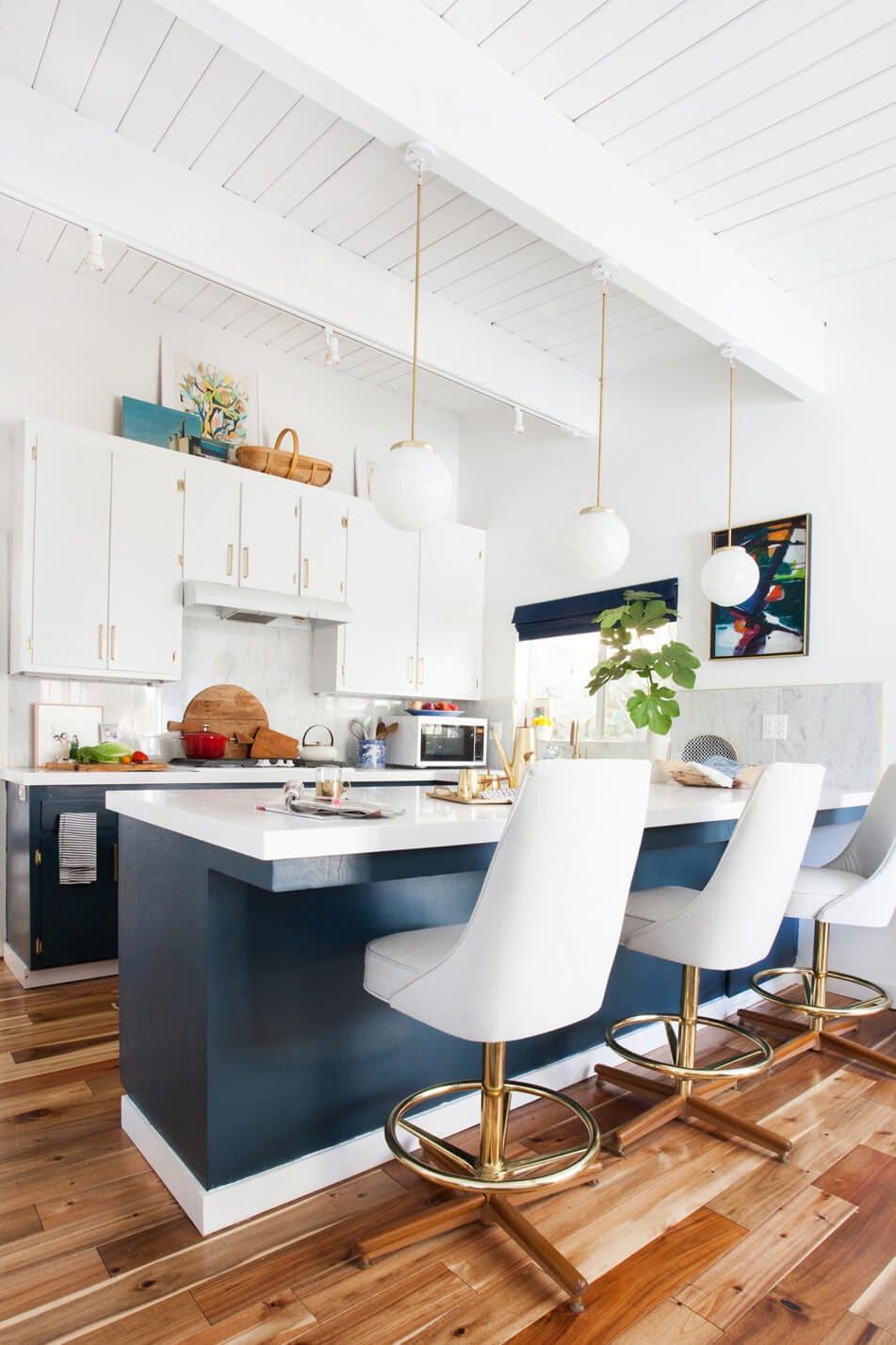
In a two-tone kitchen, white upper cabinets keep the room open and airy, while a navy island anchors the space without crowding it. The wood flooring and marble countertop bridge the blue and white, so the palette looks cohesive. Pendant lights and track lighting keep the work surfaces bright, and the open plan layout means the island doubles as a gathering spot. This setup adds color without committing to a full room of dark cabinetry.
Traditional White Glass-Front Cabinets with Patterned Wallpaper
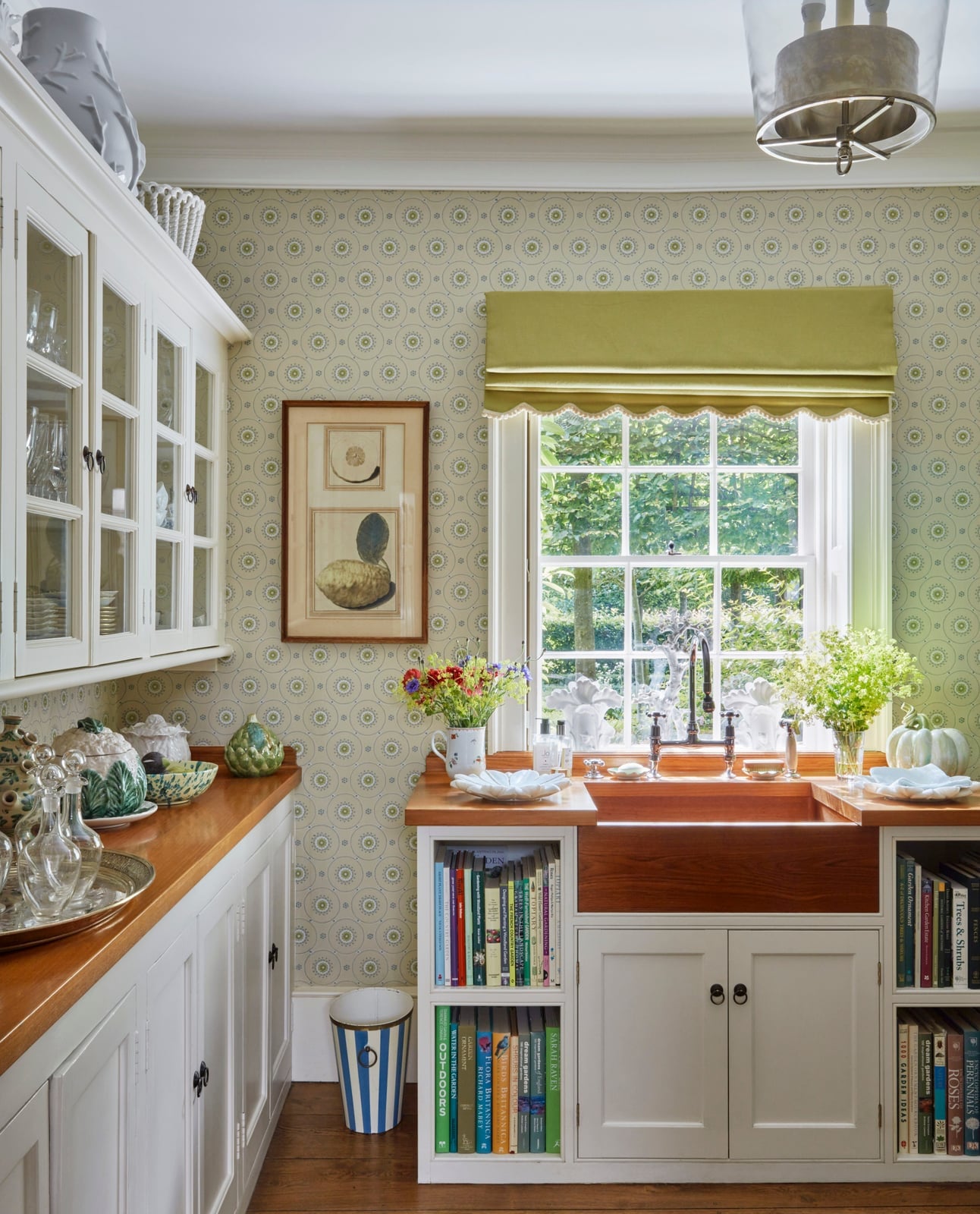
White glass-front cabinets let you display dishware without dust settling on it, and the patterned wallpaper behind them adds depth without needing a full backsplash. The wooden countertop and farmhouse sink keep the look grounded, while the compact corner layout makes every inch count. Natural light from the window bounces off the glass, so the cabinets feel lighter than solid wood doors.
Corner Kitchen with Gray Cabinets and Copper Accents
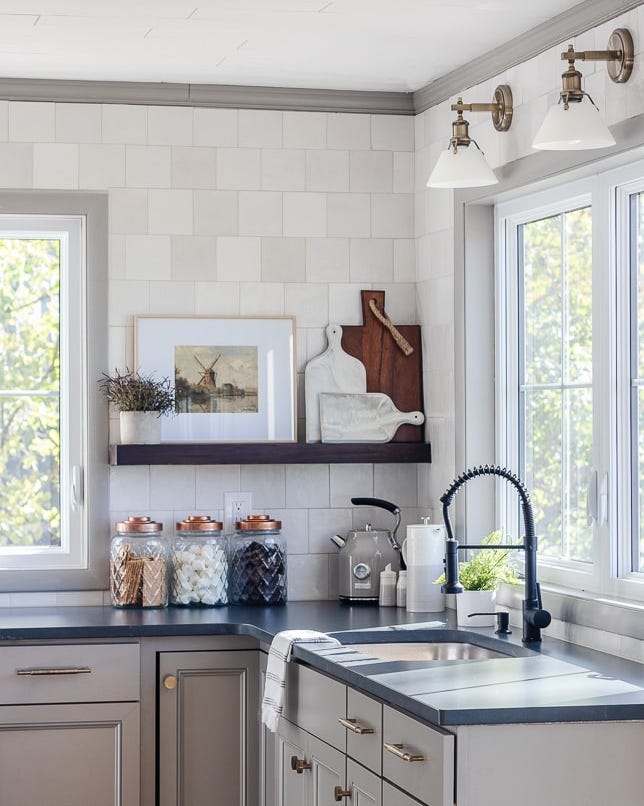
Warm metal accents keep a gray kitchen from feeling cold. Here, copper canisters on the countertop and a copper-toned faucet add a soft glow against the gray cabinets and stone countertop. The compact corner layout with a sink in the corner makes the most of a small footprint. Stick to one metal finish throughout the room, and let the gray act as a neutral backdrop that lets the copper stand out without competing.
Compact Kitchen with Bright Blue Cabinets and Open Shelving
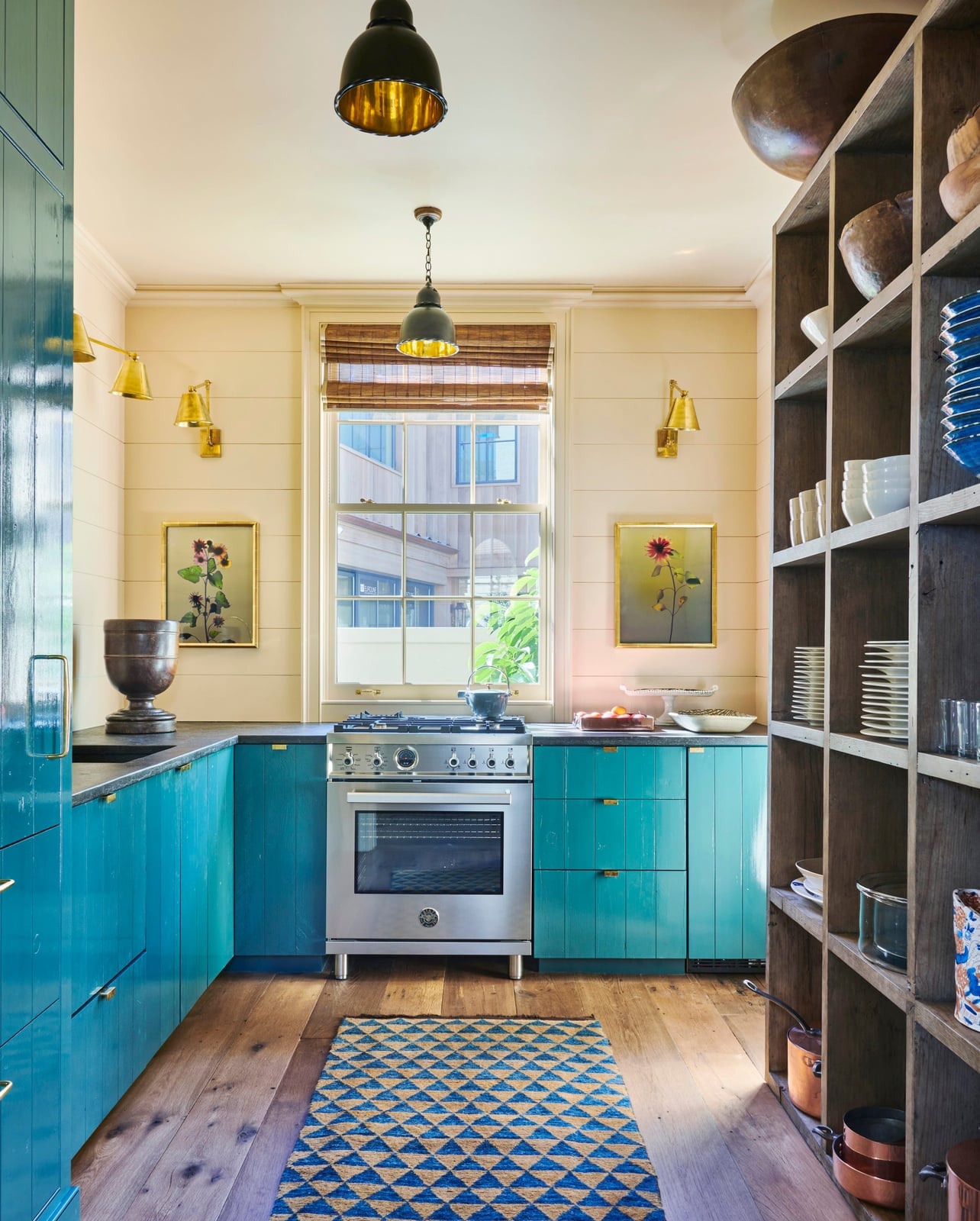
Bright blue cabinetry might sound like a risk in a small kitchen, but against cream walls and warm wood shelving it appears cheerful and not overwhelming. The L-shape layout with open shelving above the stove keeps essentials within reach while the wall sconces and pendant light add task lighting exactly where you need it. The window provides daylight that keeps the blue from going flat. The wood and cream tones balance the blue so it stays the accent and not the whole story.
Modern Kitchen with White Cabinets and Marble Waterfall Island
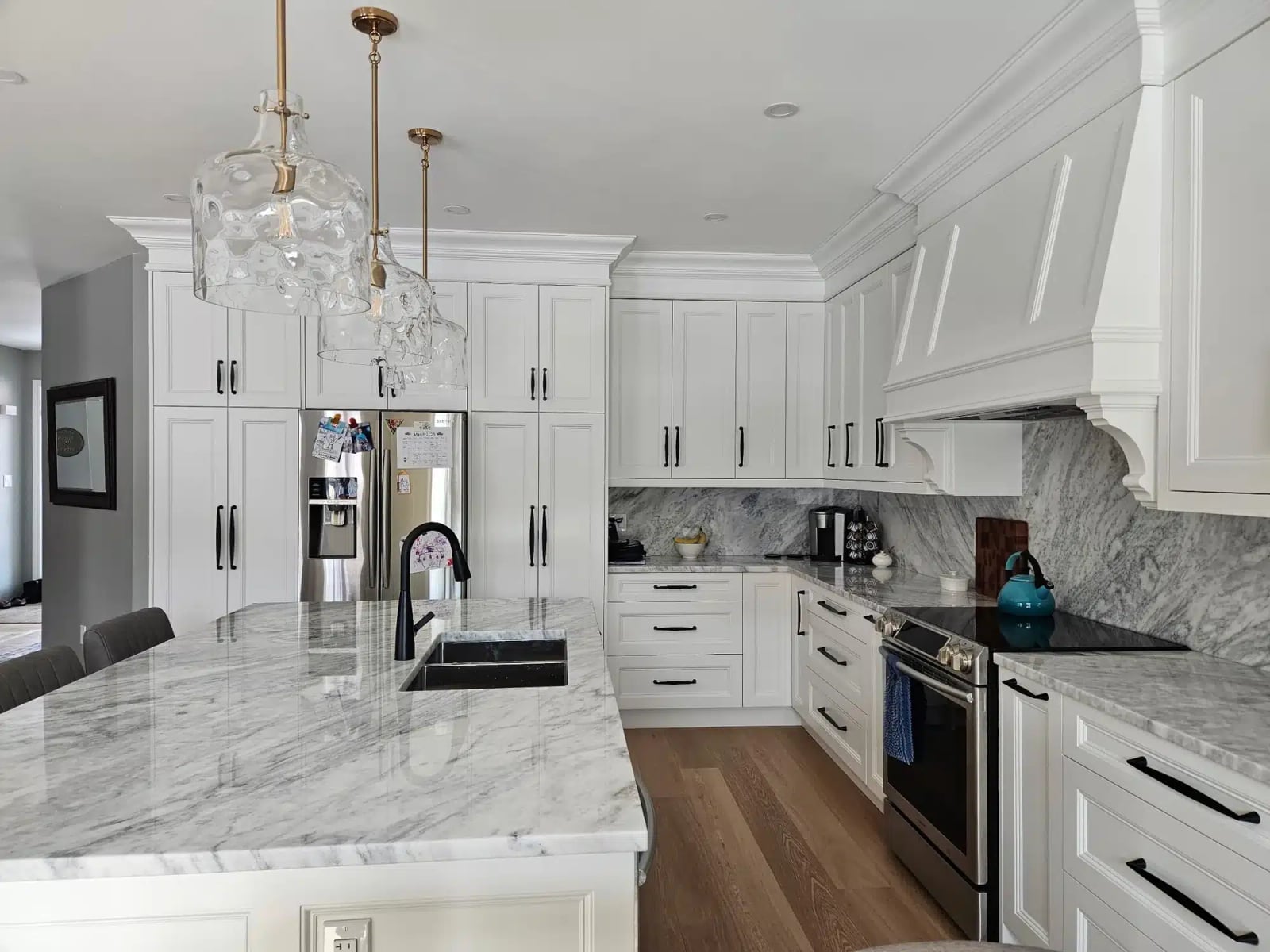
A marble waterfall island reads as one continuous surface because the stone wraps down the sides with no seam at the corner. The white cabinetry keeps the focus on the marble, while the wood floor adds warmth underfoot. Pendant lights above the island provide direct light for prep work, and the open floor plan lets the island act as the central workhorse without blocking sightlines.
Maximalist Teal Cabinets with Patterned Ceiling and Island
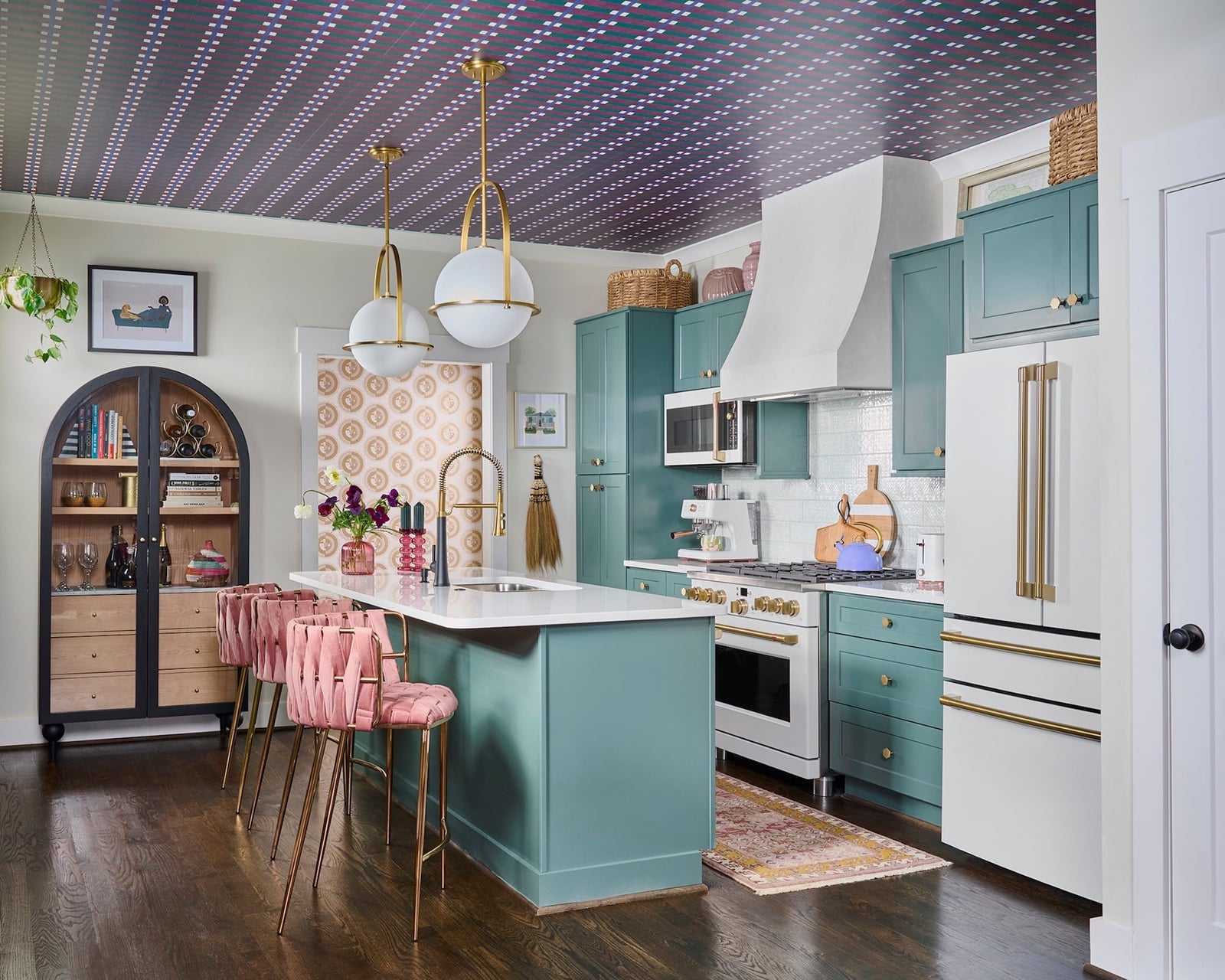
This kitchen knows what it wants to be. Teal cabinets anchor the room, while pink velvet bar stools, gold metal accents, and a patterned ceiling add personality. The palette is a tight range of teal, pink, white, and gold, so nothing feels random. A white tile backsplash and pale countertops provide visual contrast. For a renter safe version, swap the bar stools and a ceiling decal for the paint job, and keep the cabinet color as the starting point for everything else.
Modern Two-Tone Cabinets with Dark Gray Island
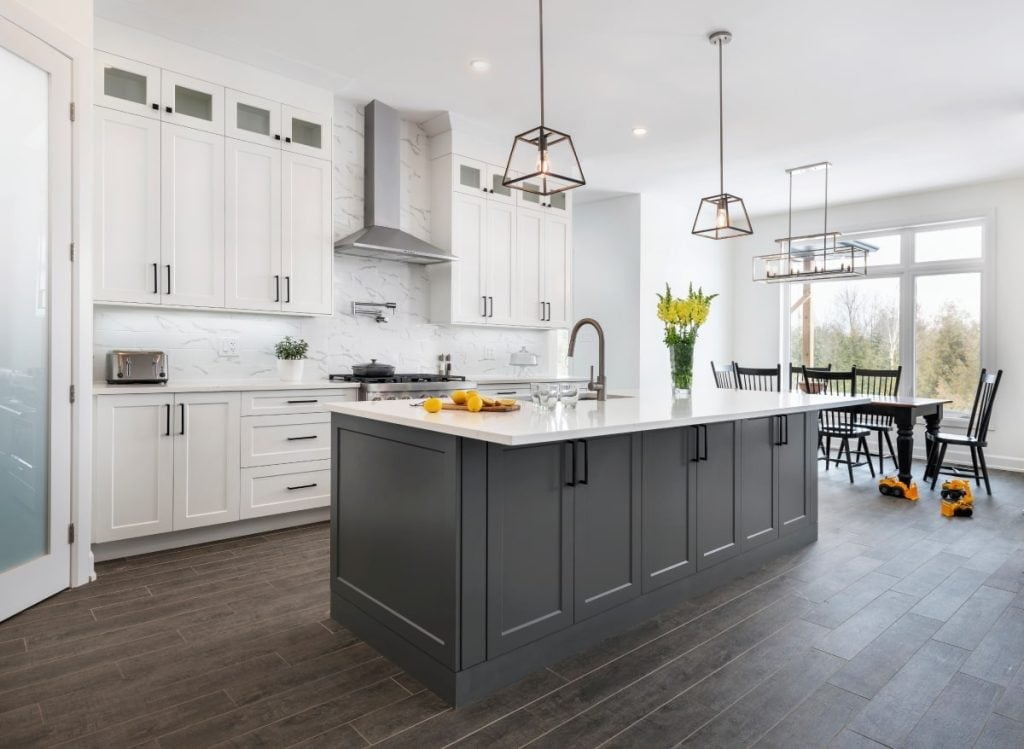
White upper cabinets with a dark gray island is a classic two-tone move, but it avoids a predictable look when the gray goes deep enough to read almost black. The contrast makes the island feel like a separate piece of furniture, not just an extension of the perimeter. A galley layout with a dining area benefits from this trick: the dark mass anchors one end, while the white upper cabinets keep the room feeling open and airy.
Natural light and pendant lights handle the shift in value. On a renter-friendly note, the two-tone idea works without permanent changes. If the cabinets are white and the island is a different color, or if the island is a standalone piece in a darker finish, the same visual separation happens. It is a palette shortcut that creates a deliberate look without a full renovation.
Final Thoughts
Kitchen cabinets are the backbone of the room, so picking a style that suits your space and habits matters more than chasing a trend. Across these 27 looks, the common thread is making storage the hero while keeping counters and backsplashes quieter. That approach lets the cabinets do the work without visual clutter.
For upkeep, painted cabinets need occasional touch-ups, especially near handles. Wood veneer and glass fronts ask for gentle cleaning to avoid scratches and smudges. Hardware like brass or copper will patina over time, which adds character but may not suit every taste. Check your local climate before choosing light wood veneers in humid kitchens, and always test paint samples on a cabinet door before committing. The best cabinet choice is one that balances daily function with a look you still enjoy years later.