
Painting kitchen cabinets is one of the quickest ways to change the whole feel of the room, and this roundup gathers 33 painted cabinet ideas that actually work. From soft sage to deep navy and even a bold purple, each look centers on the storage itself.
You will see how color, hardware, and layout come together to make cabinets the main event, with the surrounding kitchen kept simple and supportive. Whether you are planning a full refresh or just gathering inspiration, these kitchens show what a fresh coat of paint can do.
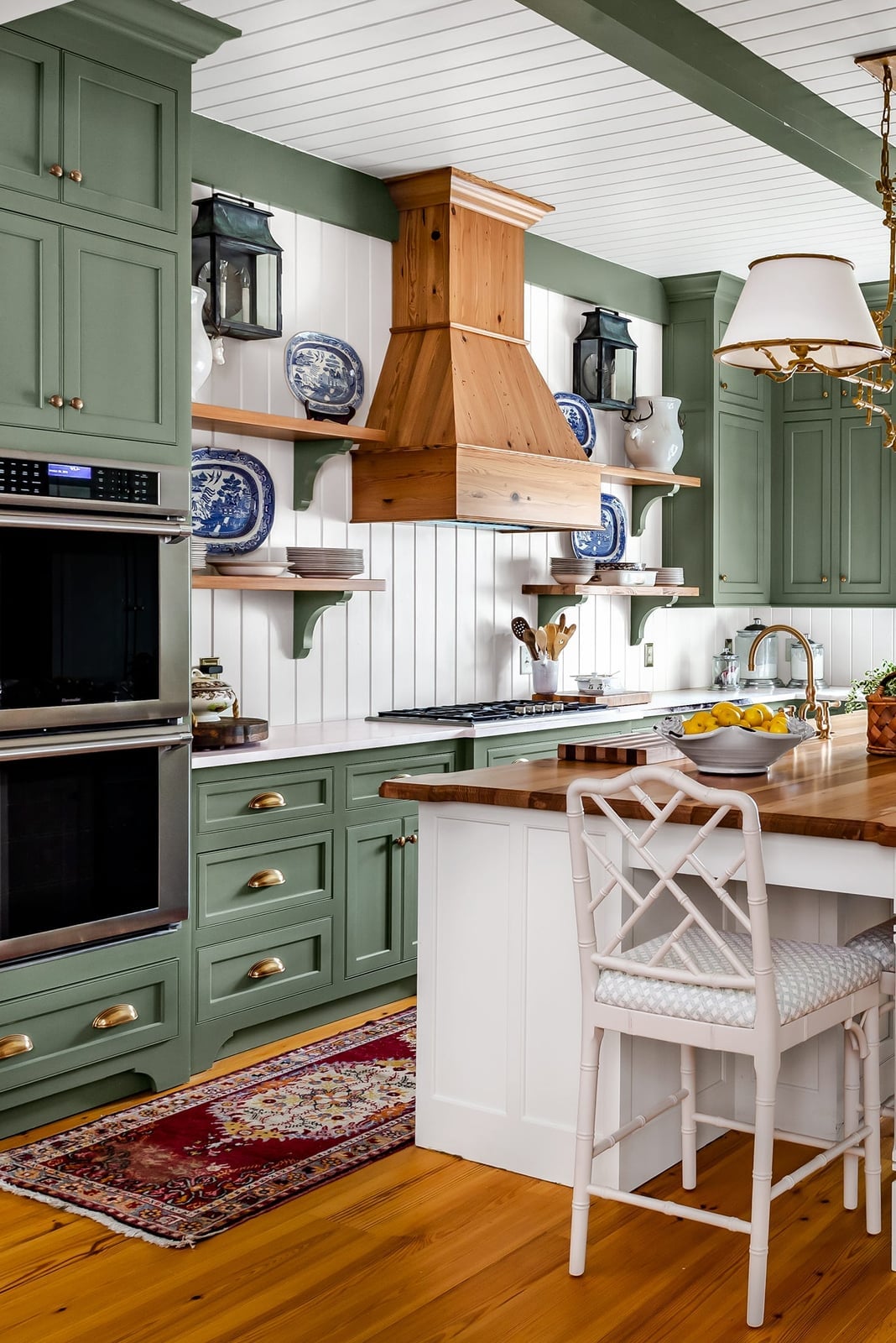
Sage Green Farmhouse Kitchen Cabinets with Beadboard Walls
Sage green cabinets anchor this farmhouse kitchen without making the room feel dark. The soft green reads as neutral next to white beadboard walls and a wood island, so the eye moves across the space rather than stopping at one color. Pendant lights above the island add warmth. The L-shaped layout keeps the work triangle compact, and the island offers extra counter space without blocking the flow.
Vibrant Green Painted Cabinets with a Wood Island
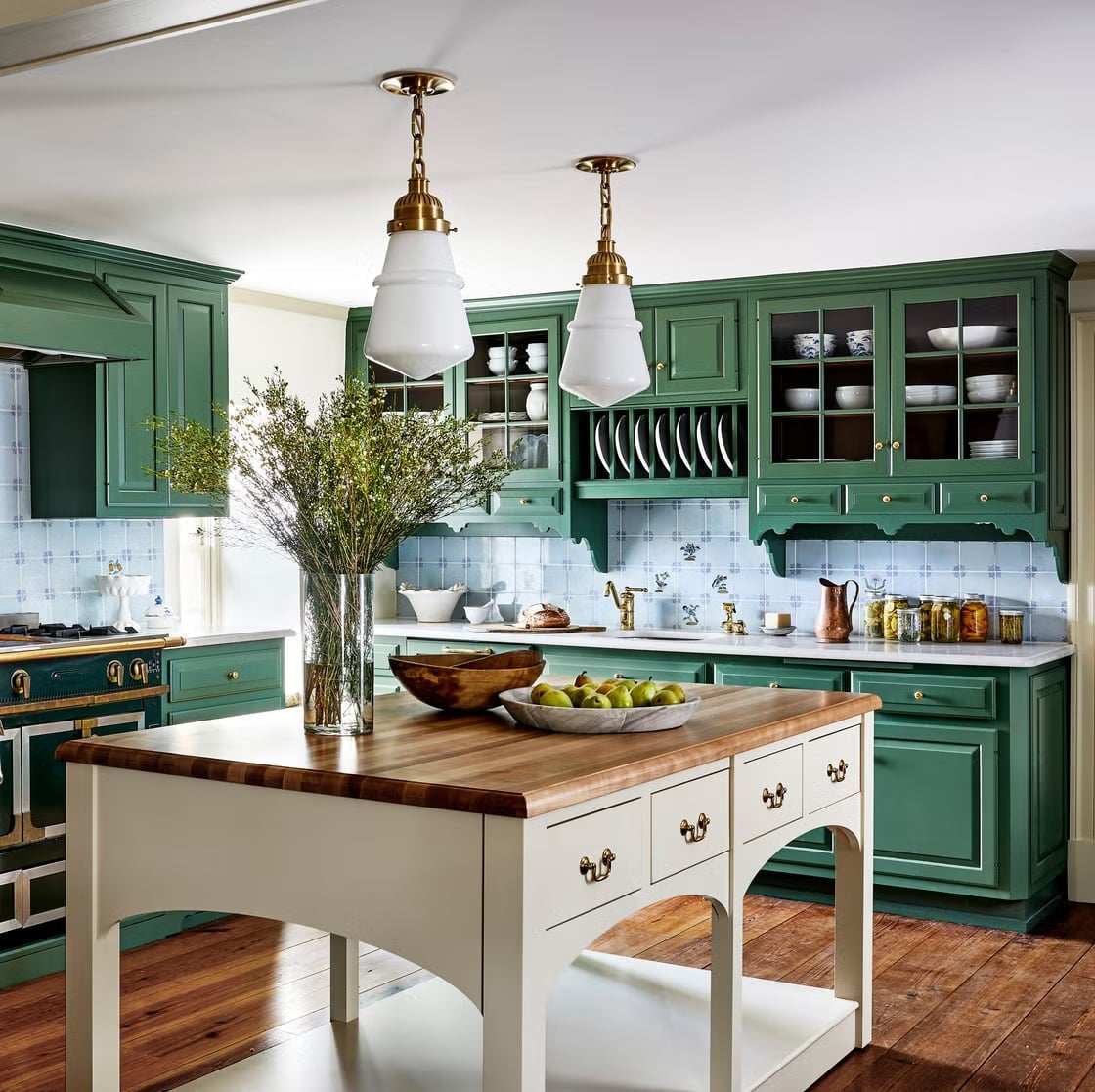
This kitchen proves that a bold green can feel grounded rather than overwhelming. The vibrant green cabinets get balance from a wood island with a natural grain that softens the intensity, while white countertops and a tile backsplash keep the palette from feeling heavy. Pendant lights hung at varying heights add visual rhythm and direct light where it matters most. The palette works because the green is the only saturated color in the room; anything more would compete.
Deep Blue Kitchen Cabinets Paired with Patterned Wallpaper
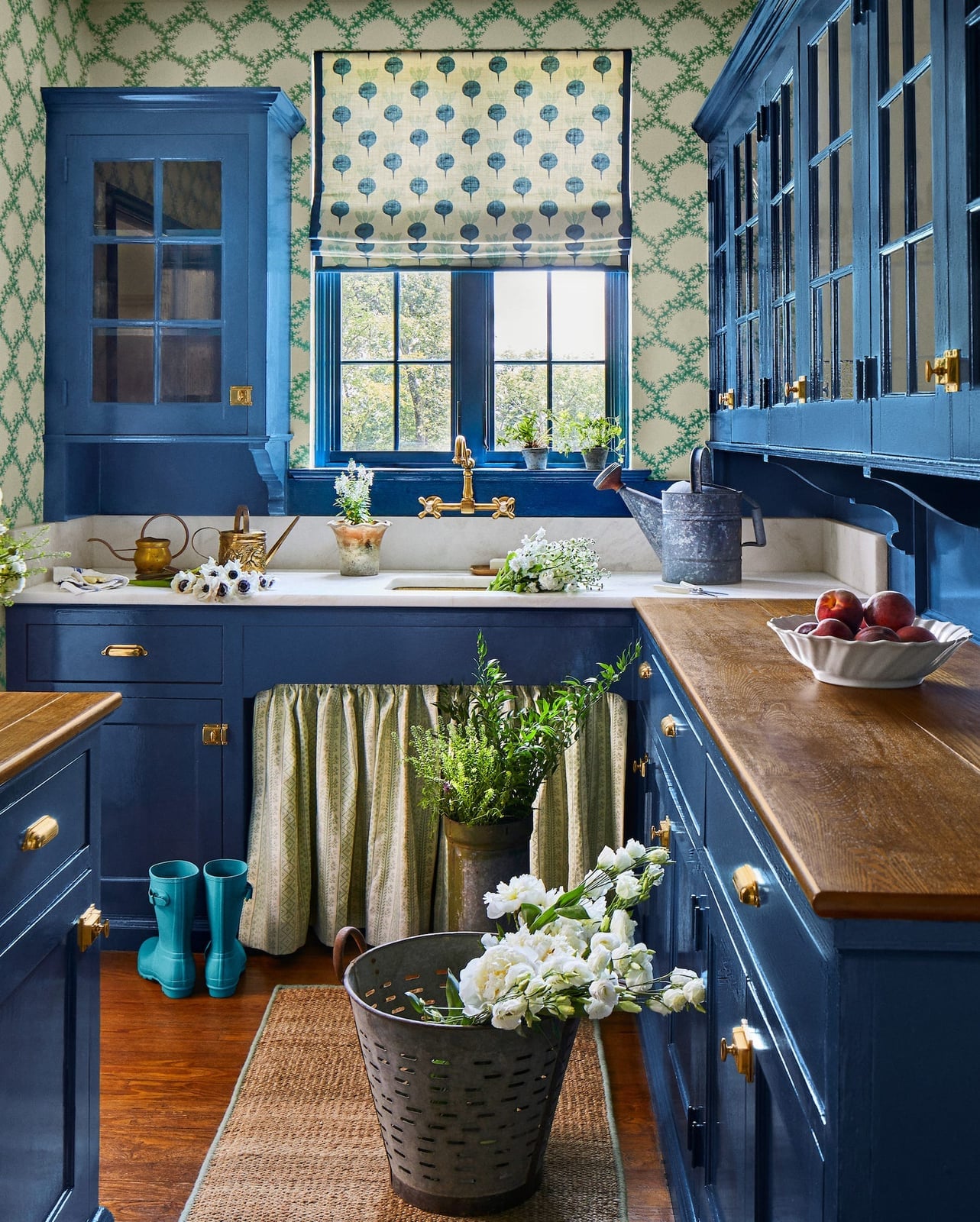
Can deep blue cabinets work with a patterned wall without looking busy? Yes, if the wallpaper shares a tone from the cabinet color. Here the wallpaper includes cream and green accents that echo the countertop and window trim, so the pattern feels connected. A metal watering can on the counter adds a practical touch that fits the traditional style.
Daylight keeps the deep blue from closing in the room. For a renter-safe swap, use peel-and-stick wallpaper on one wall and paint only the lower cabinets, leaving the uppers white or cream.
Teal Galley Kitchen Cabinets with Brass Hardware and Ladder
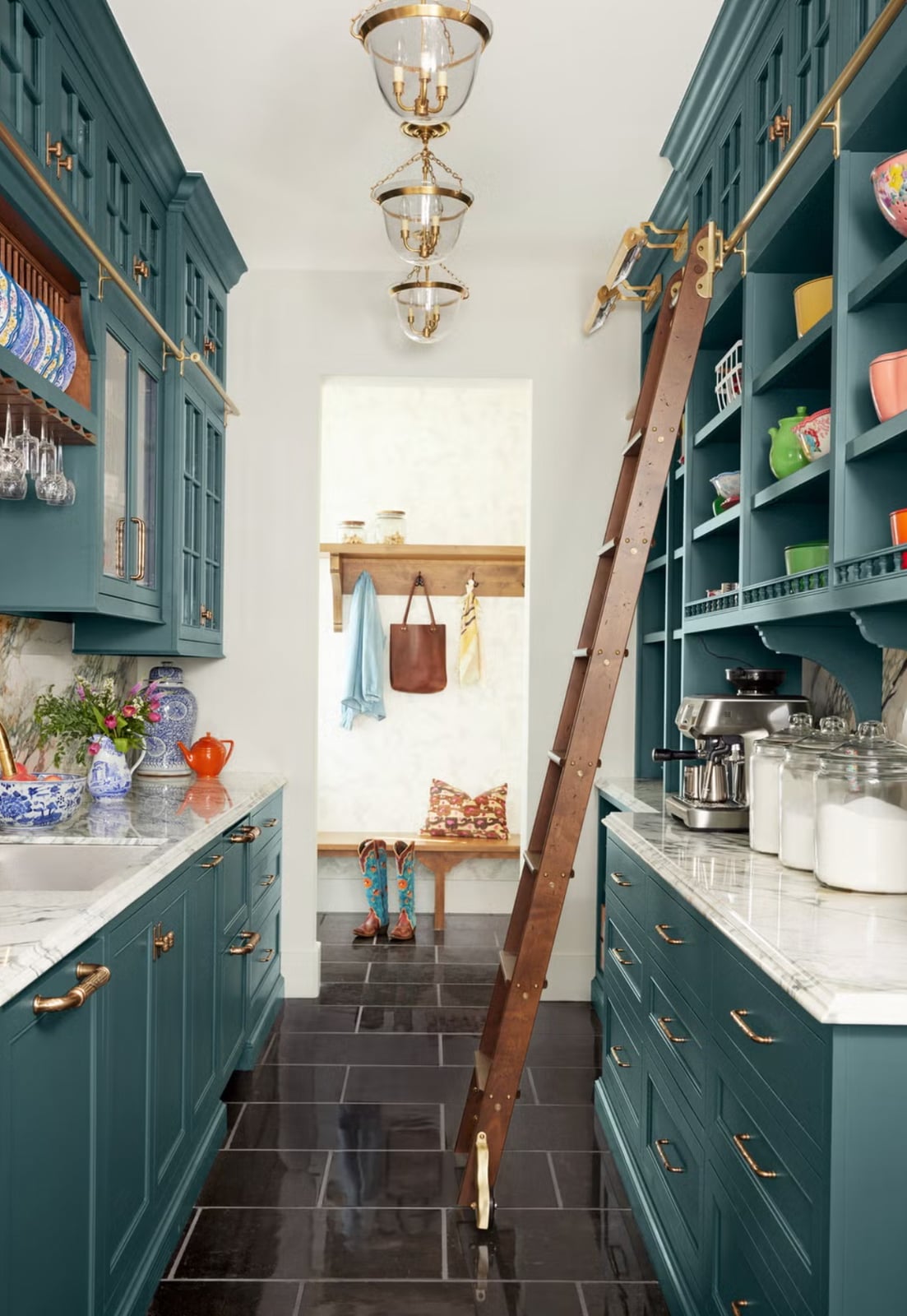
A rolling ladder turns upper cabinets in a galley kitchen into usable storage without requiring a step stool. The teal cabinets paired with brass hardware and marble countertops create a traditional look that still feels fresh. Pendant lights run the length of the galley, providing even light for food prep and making the narrow space feel wider by drawing the eye upward.
Deep Blue Painted Cabinets with Ladder Access
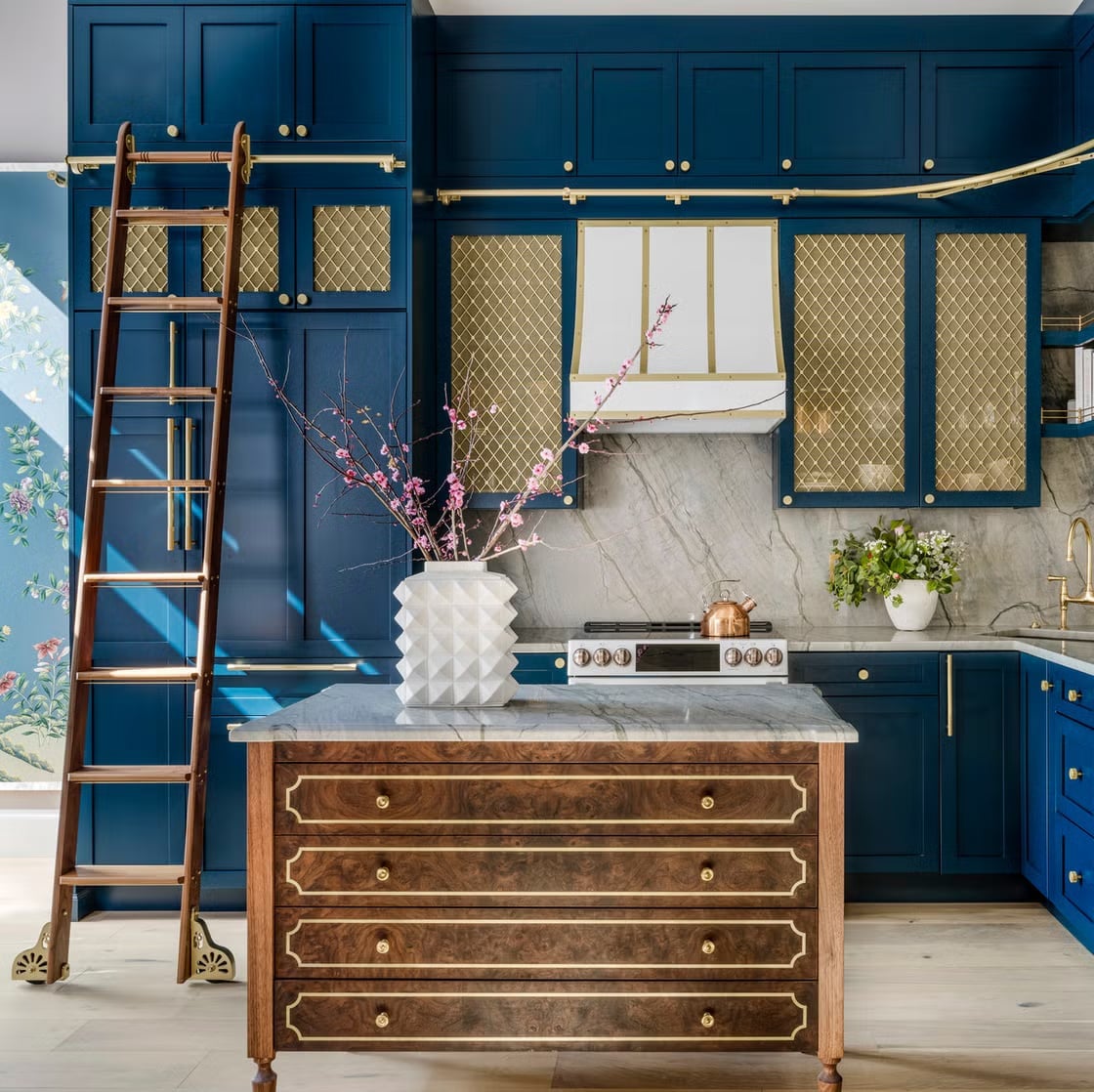
A practical rule for tall cabinets in a kitchen: if you cannot reach the top shelf without a step stool, a rolling ladder solves the problem and adds character. Here the deep blue painted cabinets extend to the ceiling, with gold hardware that catches the natural light from nearby windows. The central island offers prep space below task lighting, while the ladder tucks against the cabinets when not in use. Marble countertops and a wood floor keep the deep blue from feeling too dark.
Blue Painted Cabinets with Farmhouse Sink in a Galley Layout
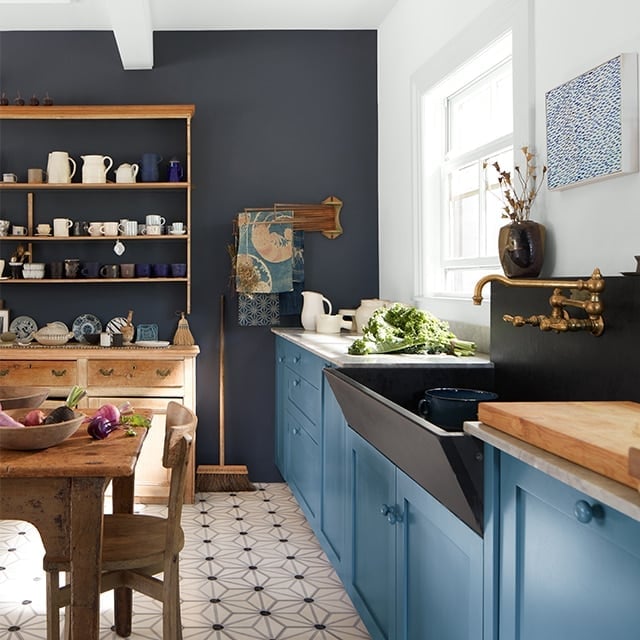
When you picture a blue painted cabinets farmhouse sink galley kitchen, the usual version runs one long run of cabinets with a sink in the middle and not much room to move. This one flips that by adding an island in the center, which makes the galley feel wider than it is. The painted blue cabinets carry the color, while the white farmhouse sink and the wooden table keep the look from going cold.
Keeping the cabinets as the hero means the surrounding surfaces stay quiet: tile and stone in neutral tones, open shelving instead of more upper doors. A galley with an island works when the aisle stays clear, so choose a slim island or a cart on wheels if the space is tight.
Navy Lower Cabinets with White Glass-Front Upper Cabinets
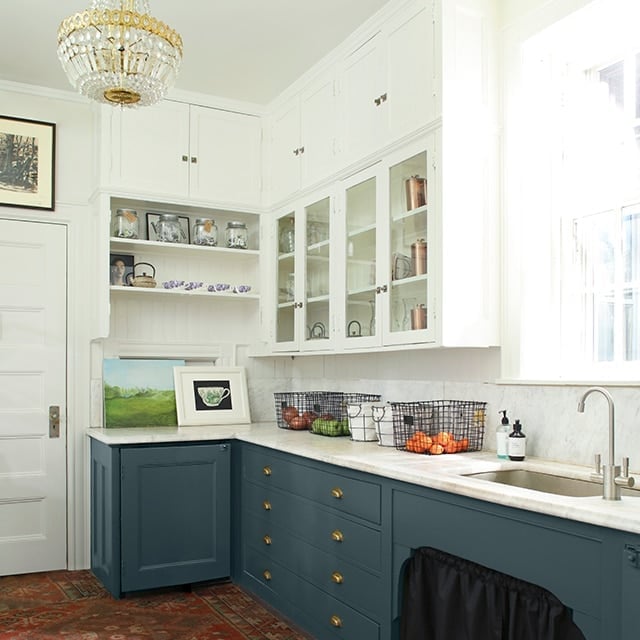
The navy and white kitchen cabinets pairing works because the dark lower half anchors the room while the white glass-front uppers keep it light. In a corner layout with ample storage, the contrast gives the eye a clear place to rest. If you rent, you can get a similar effect with peel-and-stick film on the lower cabinets and by swapping in glass-front doors that you can remove later, no paint required.
Blue-Gray Farmhouse Cabinets in a Compact Kitchen Corner
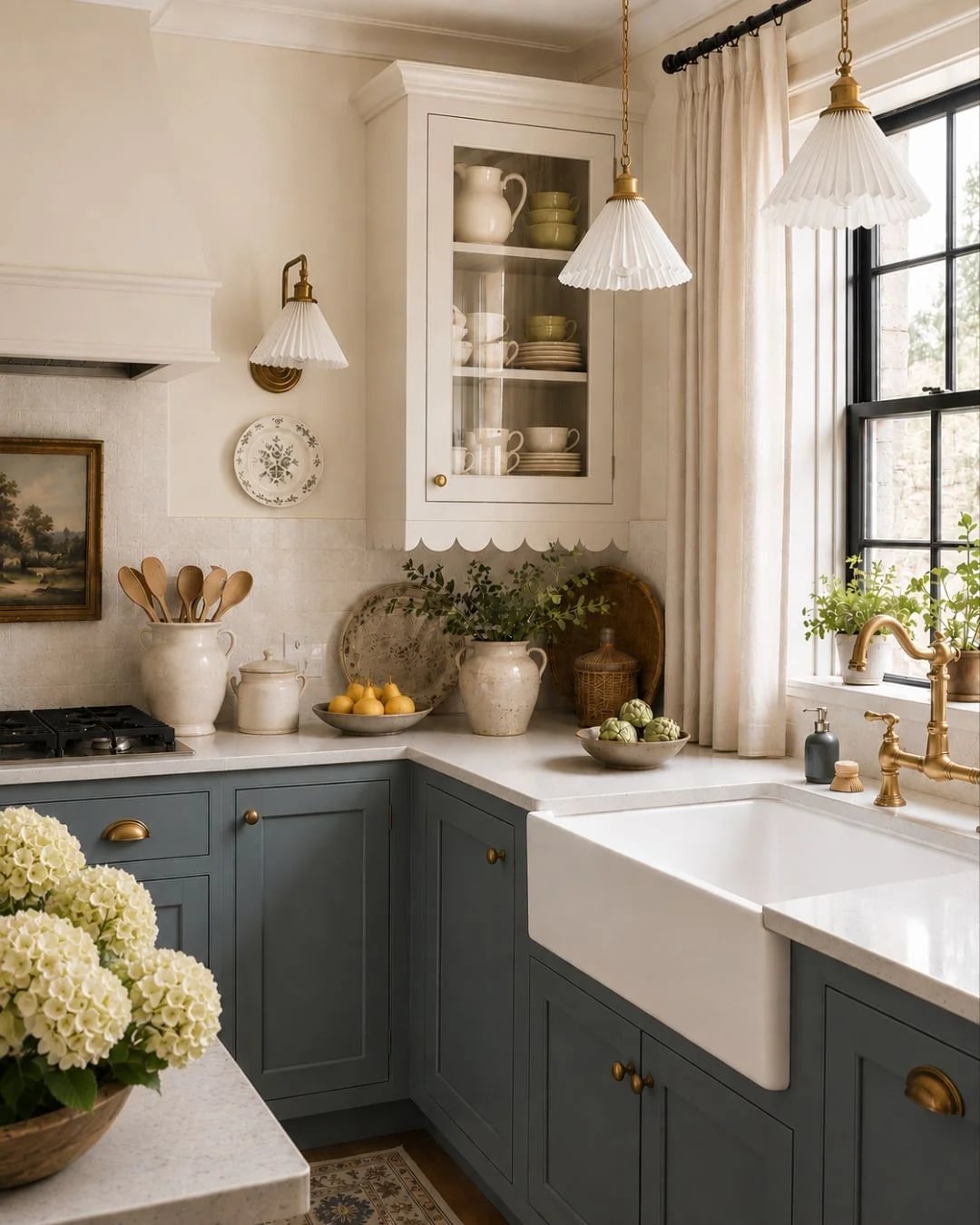
Blue-gray farmhouse kitchen cabinets bring the calm of a coastal palette into a corner that could easily feel cramped. The compact layout keeps the sink and cabinets close, while white marble countertops and brass hardware add a polished contrast. In a small corner, the blue-gray tone reads as a soft neutral, so the room stays airy. Wall sconces near the sink provide task light without taking up counter space, and the window adds daylight to brighten the work area.
Vibrant Purple Kitchen Cabinets with Brass Hardware
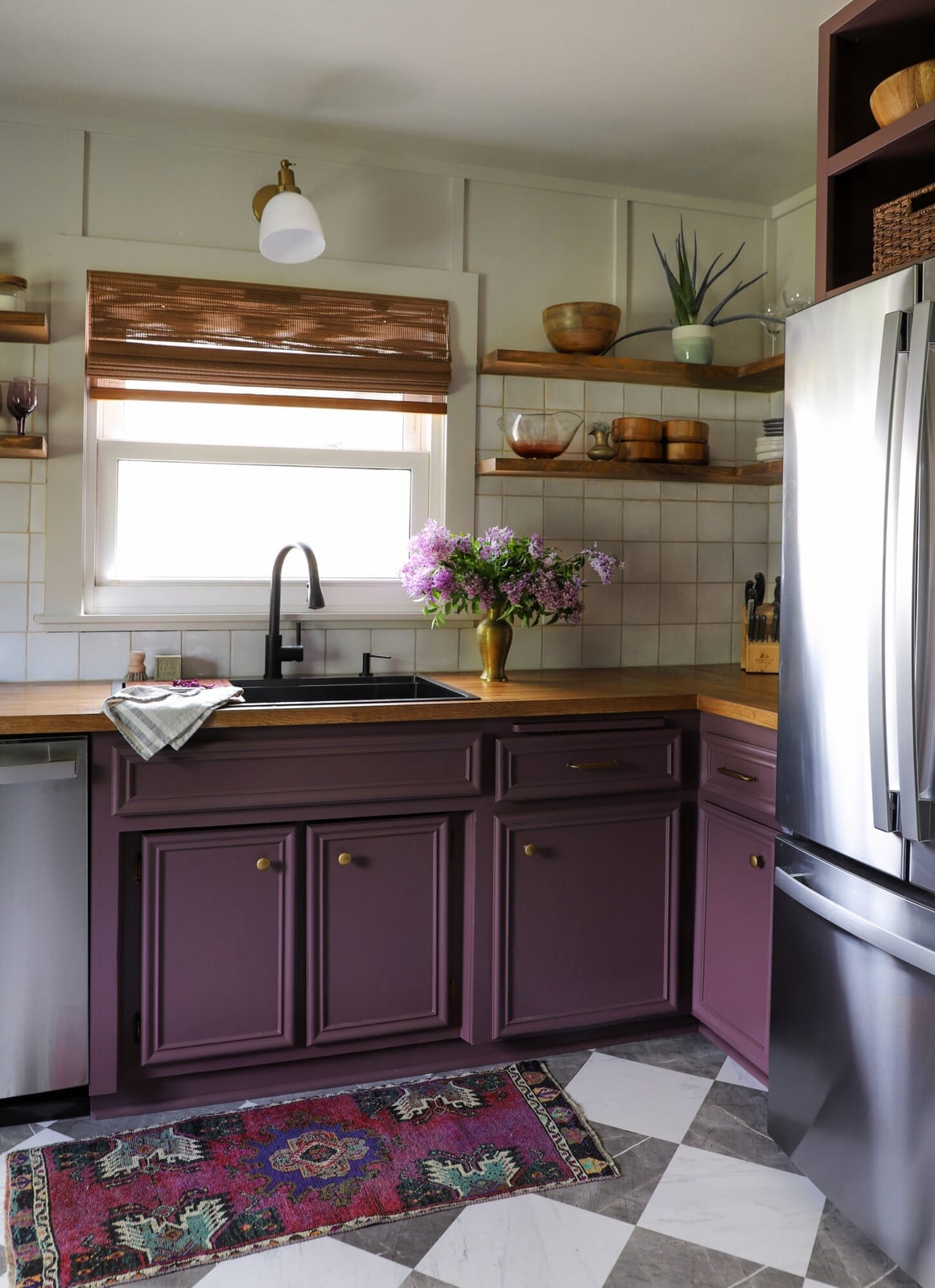
Can a kitchen handle a wall of vibrant purple cabinets without feeling like a set piece? Yes, when the purple sits on the lower cabinets only and the white and wood finishes balance it. The brass hardware adds a warm metal note that keeps the purple from going too cool.
Purple painted kitchen cabinets with brass hardware is a bold palette choice, so the trick is to let the cabinets be the only saturated element. White countertops and a simple rug break up the color, and natural light plus a wall sconce keep the space bright. If you are not ready to commit to purple everywhere, try it on a single wall or an island first.
White Painted Cabinets with a Green and White Checkered Floor
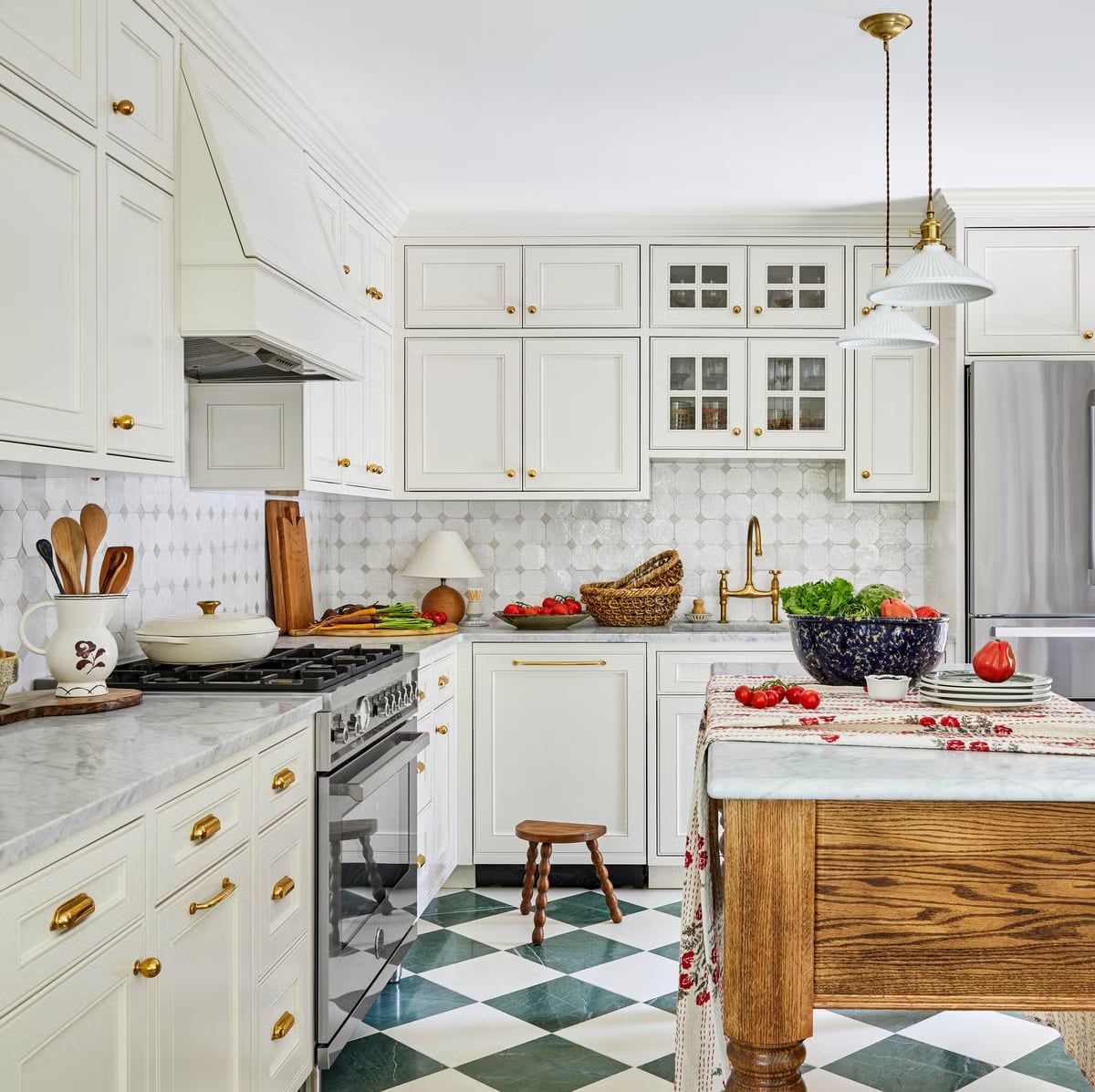
White painted cabinets with a green and white checkered floor set up a classic contrast that makes the room feel taller. The white cabinets and marble countertops keep the upper half clean, while the checkered tile anchors the space with pattern. In an L-shaped layout with an island, the floor becomes the visual weight that balances all that white. Brass hardware ties the green and gold tones together, and pendant lights above the island echo the same warm metal.
Cream Painted Cabinets with Dark Marble Countertops and Island
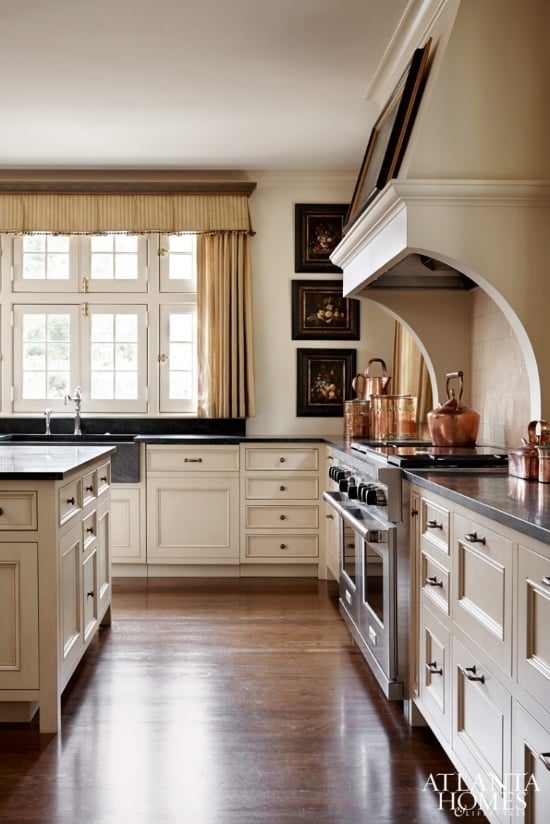
A practical rule for pairing painted cabinets with stone is to let the finish on the cabinets stay matte so the marble reads as the textured surface. Cream painted cabinets in a traditional kitchen set a soft base against dark gray marble countertops and a matching island. The cream tone keeps the room light while the dark marble adds weight without making the space feel heavy. Copper pots hanging above reinforce the warmth in the palette. Gold metal accents on the cabinets pick up the same metallic note as the cookware, creating a loop of warm highlights across the room. Natural light and ambient fixtures keep the cream from reading as flat or chalky.
Sage Green Cabinets with a Warm Wood Island in a Transitional Kitchen
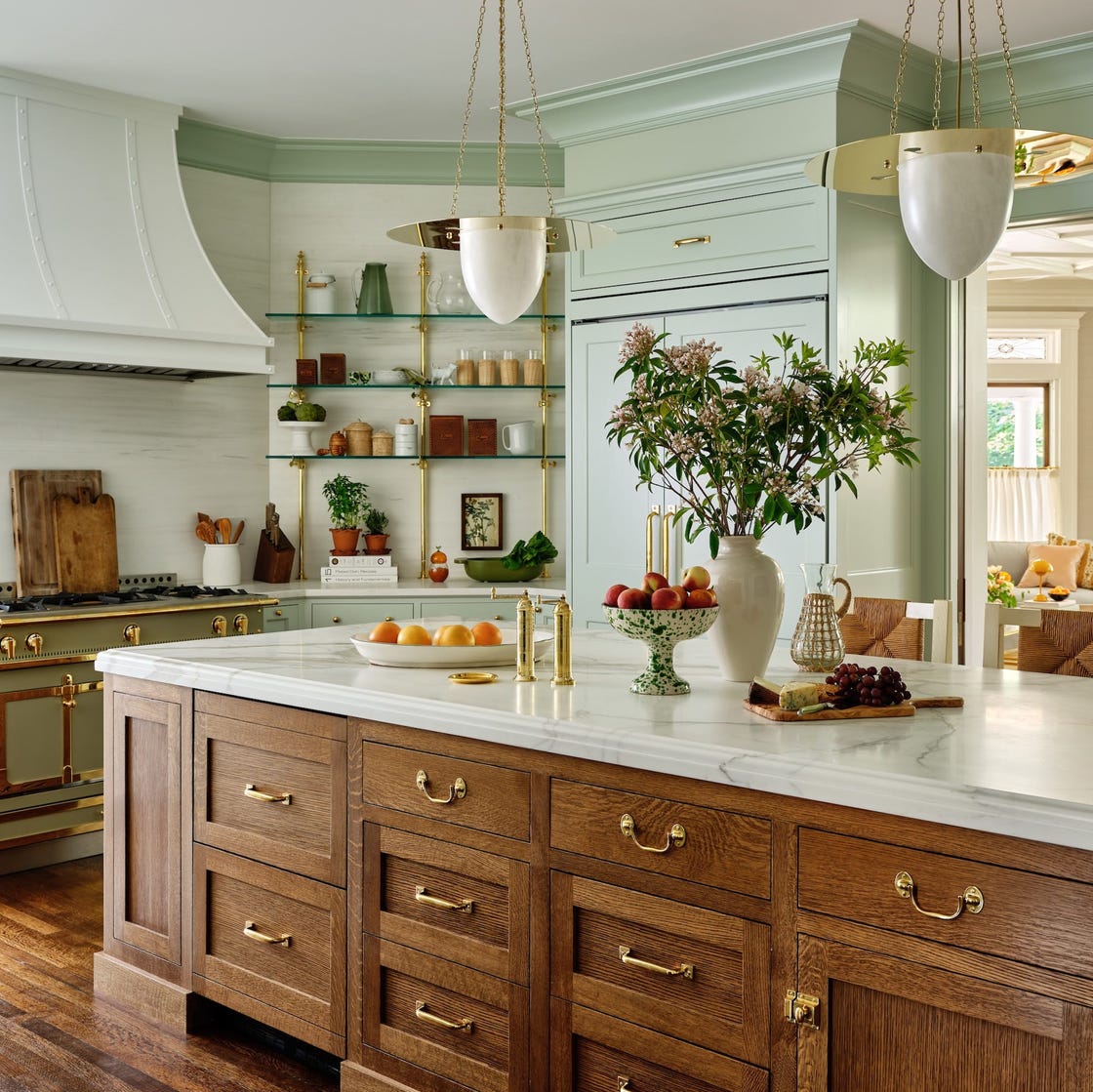
Sage green cabinets risk feeling too cool if the room lacks a warm anchor. A large island with a wood base solves that by introducing a natural brown tone that sits between the sage and the cream countertops. The wood reads as the middle note in a three-part palette.
Brass accents on the cabinet pulls and the hanging pendant lights carry the warm metal line through the space. The room is open plan with plenty of natural light, so the sage stays fresh rather than muddy. The cream marble on the island and perimeter counters keeps the overall look light. What breaks the scheme is adding a second cool color like gray or blue, which would pull the room back toward the cool side the wood island is meant to balance.
Mint Green Vintage Cabinets with Glass Fronts and Checkered Floor
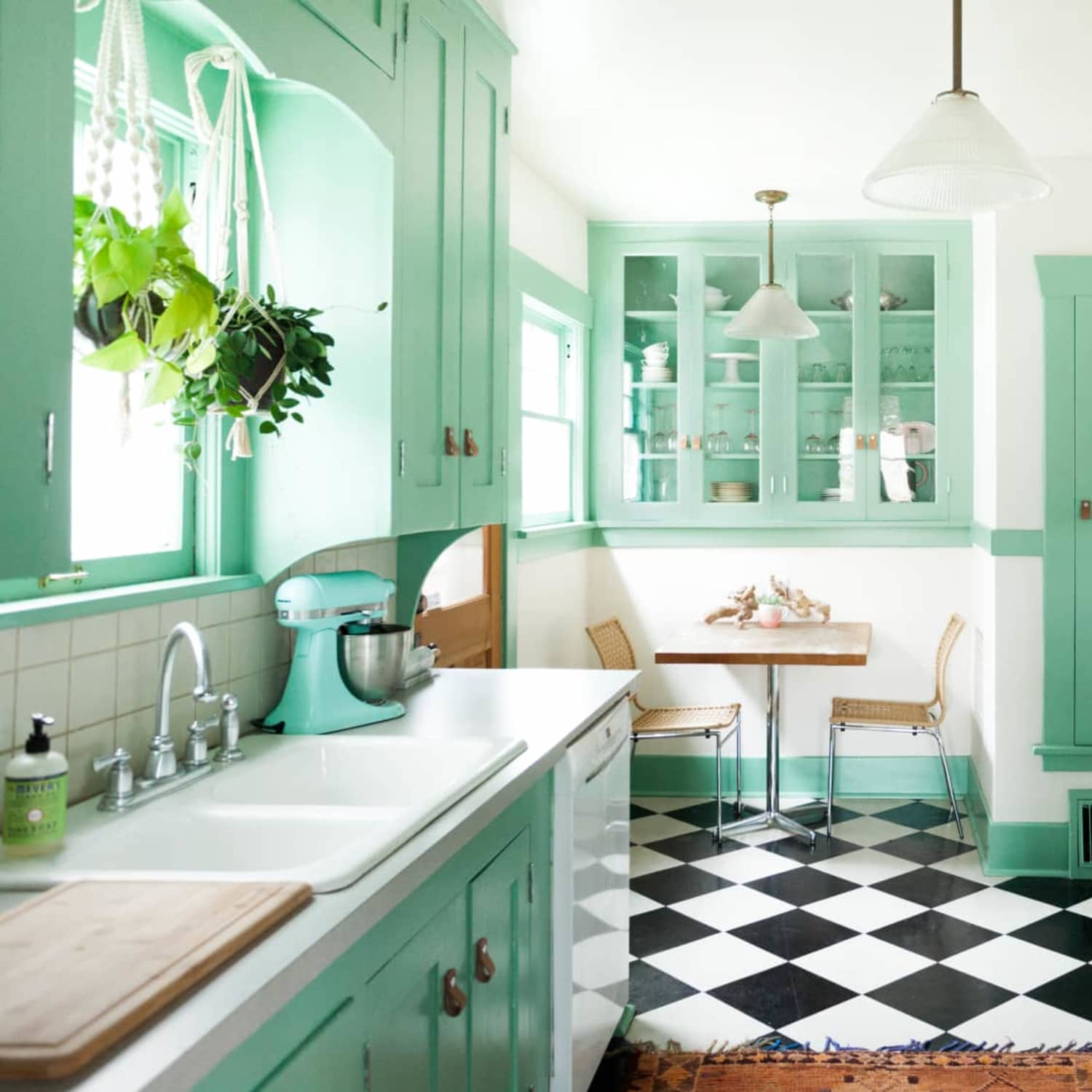
Mint green cabinets in a galley kitchen with a small dining area lean on two elements to sell the vintage look: glass-front upper doors and a black and white checkered floor. The glass fronts break up the mint so it does not dominate the small space, and the checkered floor adds the graphic contrast that a solid wood floor would not provide. A single pendant light over the dining area and natural window light keep the mint from reading as pastel or sugary. The style works because the floor pattern is bold enough to match the cabinet color without competing with it.
Teal and Yellow Cabinets in a Mid-Century Modern Kitchen
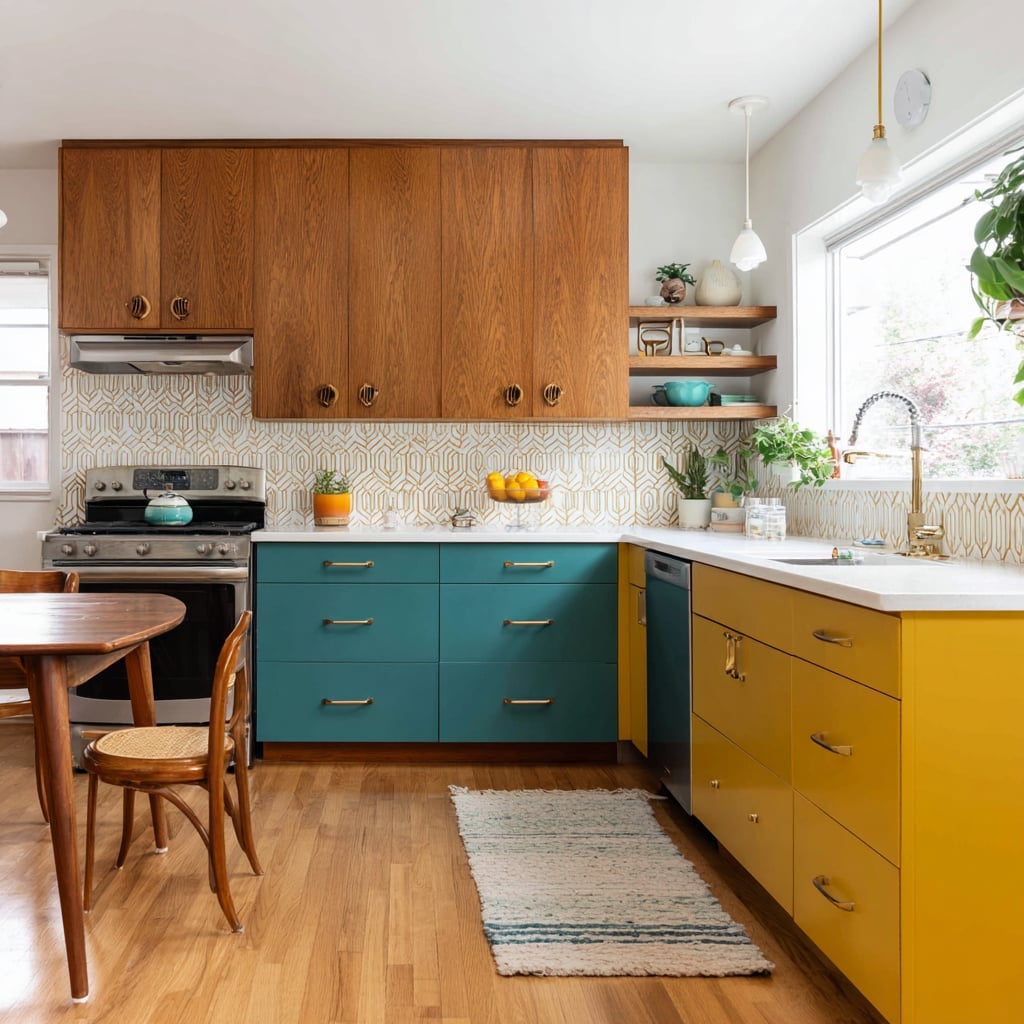
This kitchen commits to a two-tone cabinet scheme that defines mid-century modern: teal lowers and yellow uppers. The ratio is roughly half and half, which works because the wood tones in the table and the warm natural light keep the two colors from clashing. Pendant lights above the open plan space cast even light across both cabinet colors, preventing either from looking flat or shadowed. The teal reads as the grounding color and the yellow as the accent. What would break the balance is adding a third bright color, which would turn the scheme from intentional to chaotic. The palette stays clean because the room sticks to two main hues and lets the wood furniture act as the neutral.
Dark Blue Modern Kitchen Cabinets with Gold Hardware
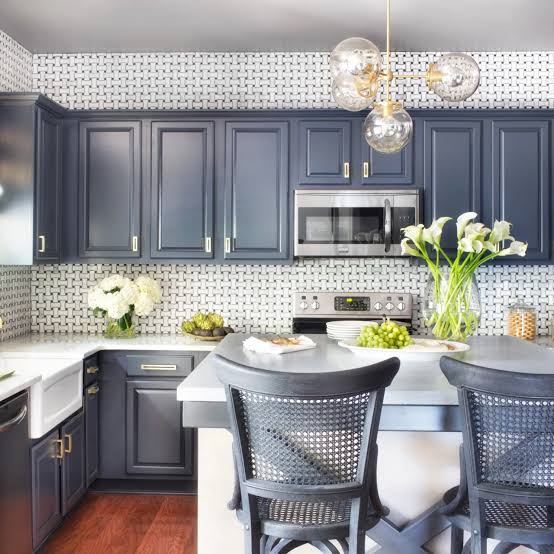
For dark painted cabinets in a compact corner kitchen, keep the wall color and backsplash light so the cabinets do not shrink the room. Here, dark blue cabinets sit against a white subway tile backsplash, which reflects natural light and the pendant lights above. The gold hardware on the doors and drawers adds a warm metallic contrast that prevents the blue from reading as flat or heavy.
The kitchen includes a small island, which extends the work surface without blocking the corner layout. The white countertop continues the light perimeter established by the subway tile. The dark blue works in this compact space because the light elements surround it on three sides. Adding a dark countertop or dark wall would close the room in. The gold hardware is the detail that makes the scheme feel finished.
Sage Green Modern Farmhouse Cabinets with Large Island
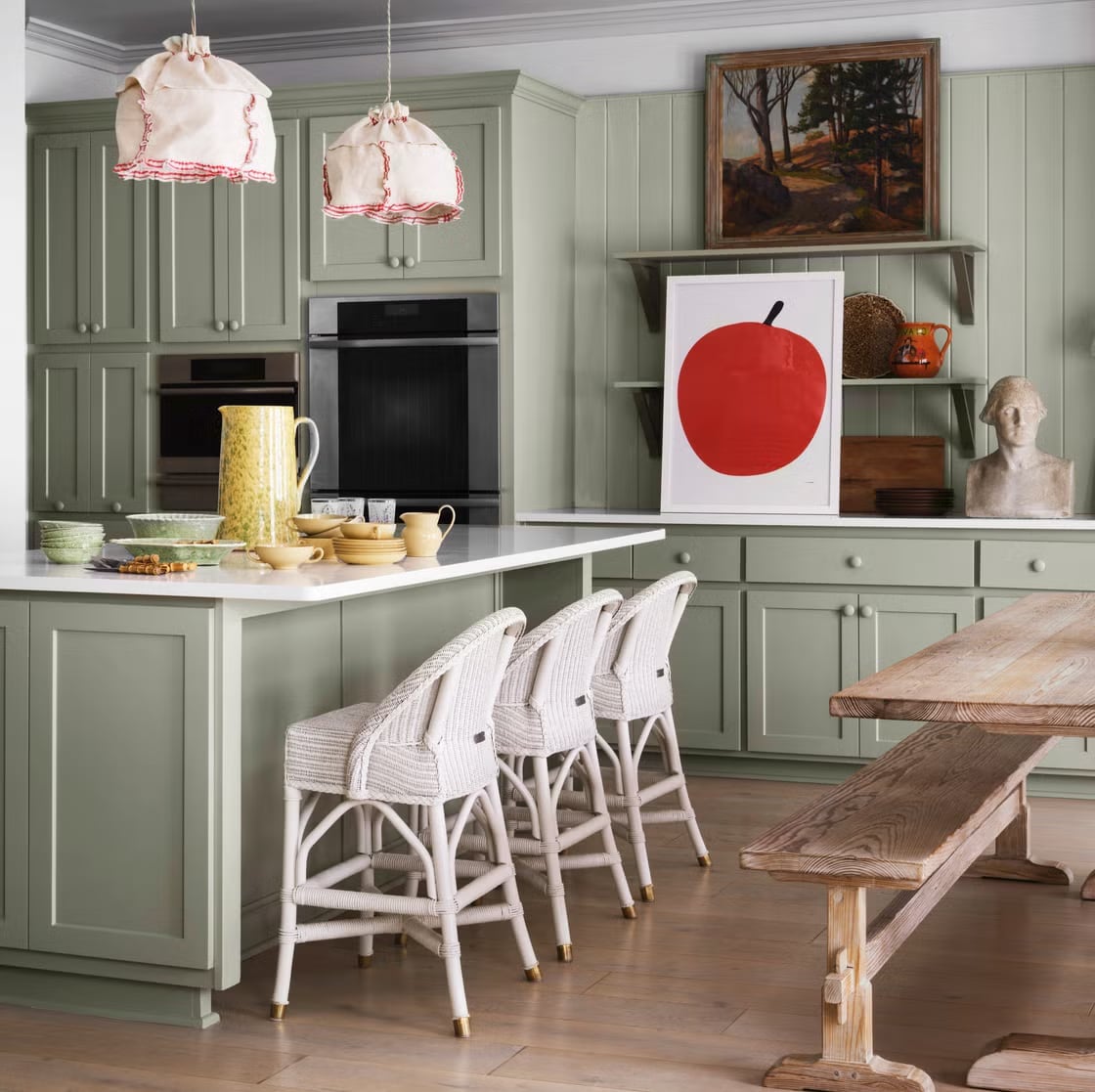
Sage green painted cabinets set the tone in a modern farmhouse kitchen that keeps the island as the central workhorse. The wood-topped island with bar stools anchors the room, while an adjacent dining area with a bench extends the seating without crowding the cook space. Natural daylight and overhead pendants keep the sage from reading too cool, and wicker accents add a textural break from all the painted wood. The trick is letting one element carry the color and keeping everything else in wood tones and white.
Green Painted Cabinets with Rolling Island in a Transitional Kitchen
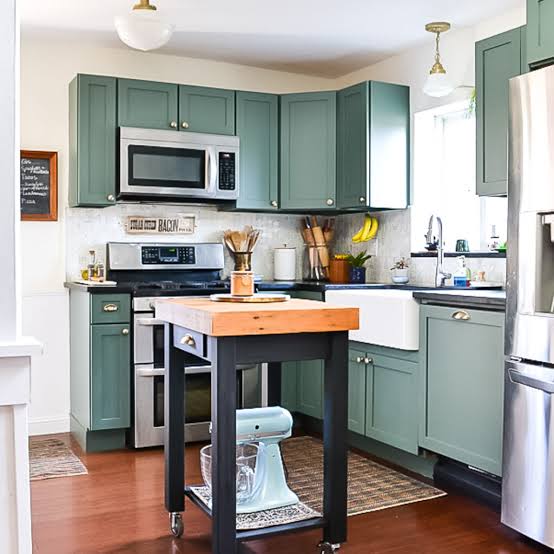
A rolling island solves the layout problem in a compact corner kitchen with green painted cabinets and a farmhouse sink. The mobile cart adds prep space and can tuck out of the way when you need floor clearance, which matters in a galley-style footprint. Stainless steel appliances and white tile keep the look clean, while natural light from a window and pendant fixtures balance the green. For renters, swapping a fixed peninsula for a wheeled cart gives you the island function without altering the floor plan. The kitchen feels finished but nothing is permanent.
Mint Green Eclectic Cabinets with Stone Backsplash
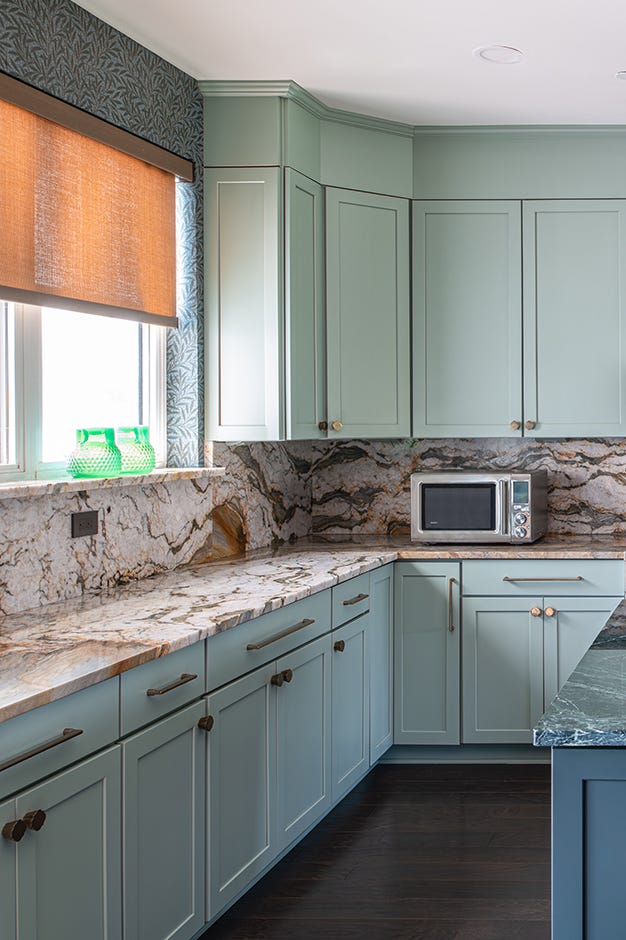
Mint green cabinets often lean vintage or cottage, but here they take an eclectic turn with a stone backsplash and patterned wallpaper. The stone introduces a raw, earthy texture that keeps the mint from feeling too sweet, while brass hardware adds a warm metallic thread. The palette stays in the brown, beige and green family, so nothing competes with the cabinet color.
A corner layout with an overhead fixture and natural window light works well for this scheme because the mint reads best in balanced, not harsh, light. If you are deciding between a uniform stone slab and a tile pattern, the stone backsplash here supports the eclectic angle without overpowering the cabinet color. The wallpaper ties it together without needing a third major color.
Blue and Brown Two-Tone Cabinets in a Traditional Kitchen
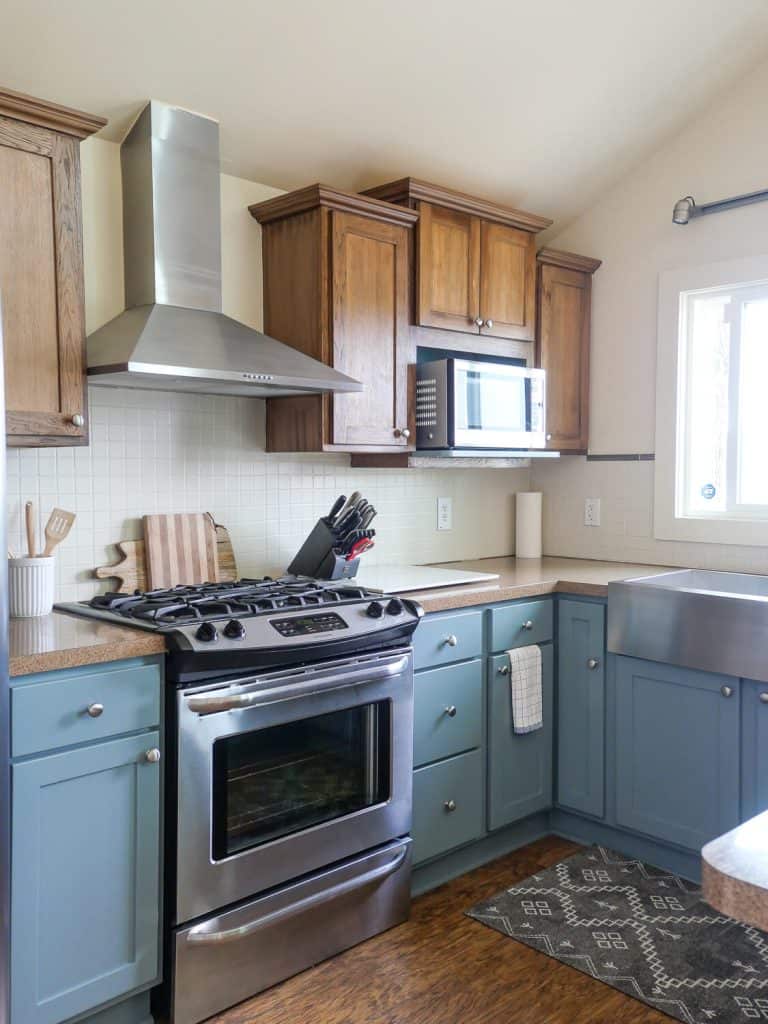
Blue upper cabinets paired with brown lower cabinets create a two-tone look that defines the traditional kitchen palette. The blue sits above the counter, drawing the eye up, while the brown base grounds the room and hides daily scuffs better than a light finish. Natural window light hits both colors evenly, so the contrast stays intentional rather than accidental. White countertops and tile act as the neutral buffer between the two tones. The ratio matters here: keep the darker color on the bottom so the room does not feel top-heavy.
Off-White Modern Farmhouse Cabinets with Wood Accents
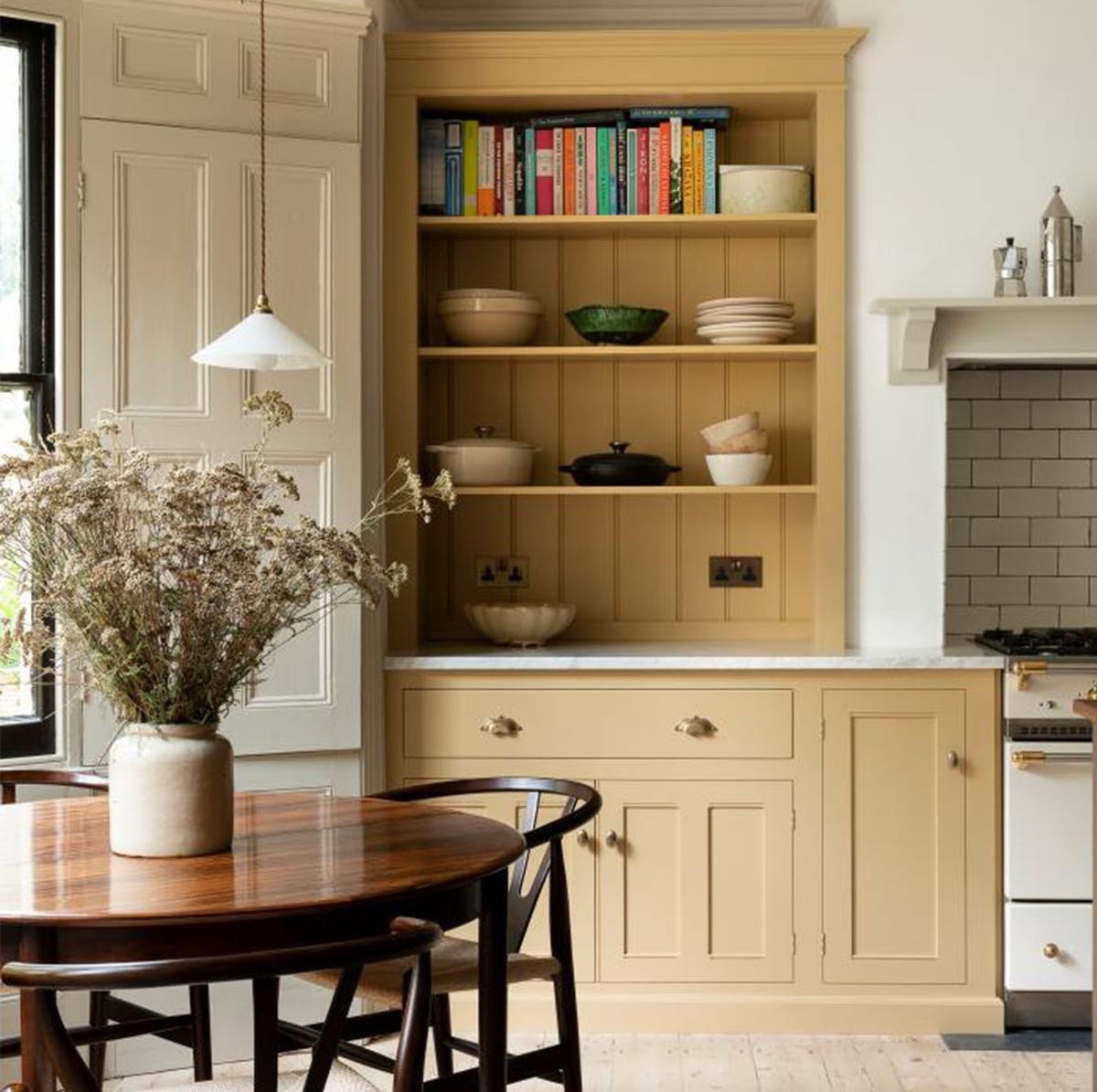
Off-white painted cabinets in a galley layout are classic modern farmhouse, but the wood accents keep it from looking sterile. A wood island and range hood insert warmth, while marble countertops and tile backsplash add a subtle pattern without competing with the cabinet color. Pendant lights over the island and natural light keep the off-white from going flat. The scale works because the galley footprint concentrates the wood accents in the center island and hood, not scattered across every surface. One warm material repeated in two places is enough.
Green Upper Cabinets with Wood Base Cabinets and Patterned Floor
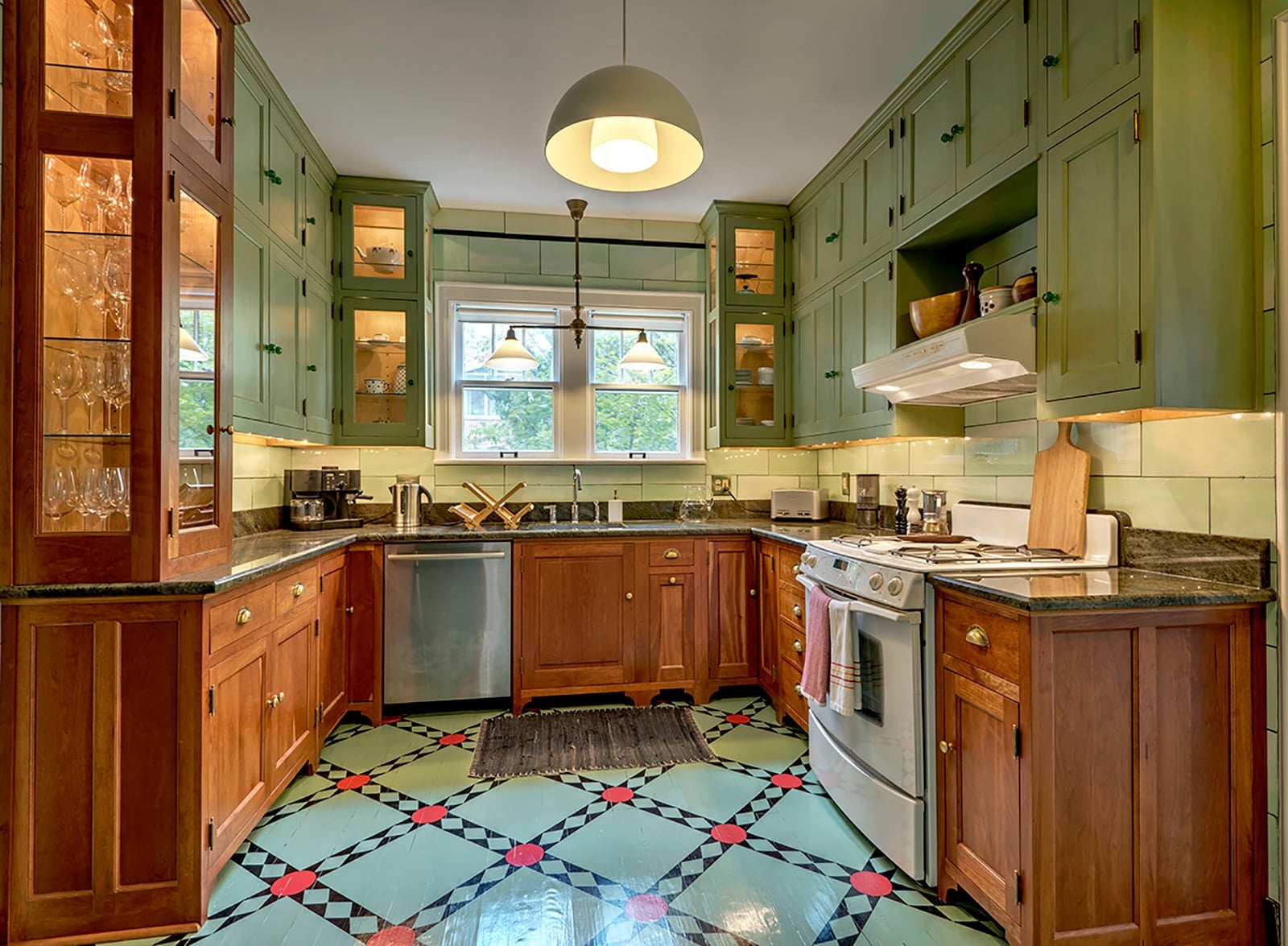
A patterned floor can anchor a kitchen that mixes two cabinet colors. The green uppers sit above natural wood base cabinets, and the red and black floor tiles pull the green and wood tones together without either one competing. An overhead pendant and under-cabinet lights keep the work surfaces bright, which matters when the upper cabinets are a darker shade. The eclectic style works because the floor pattern repeats at a scale that reads as a neutral from a few feet away. If you try this, let the floor be the busiest surface and keep the countertops and backsplash simple.
Sage Green Modern Cabinets with Geometric Tile Backsplash
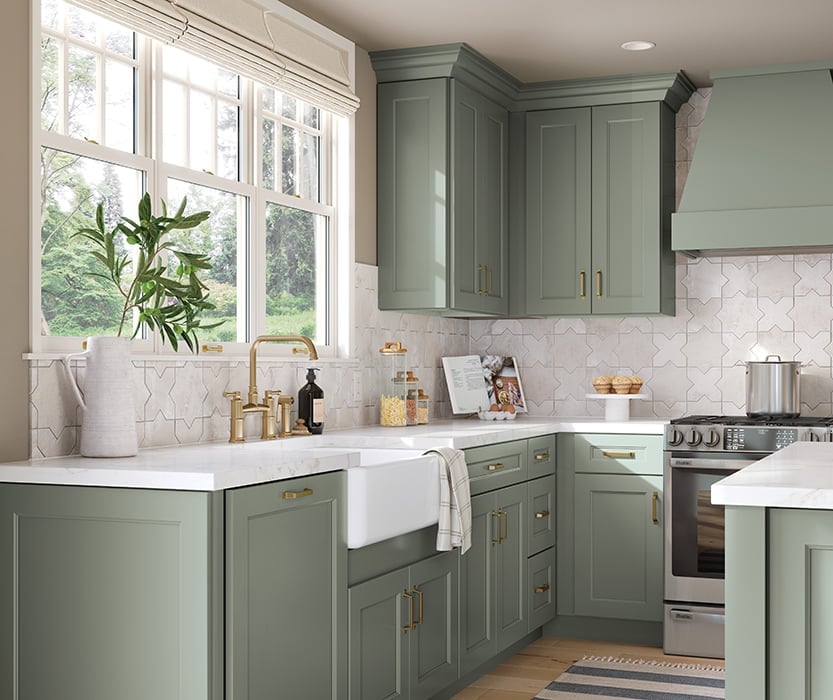
Sage green cabinets paired with a geometric tile backsplash create a modern kitchen that feels calm without being boring. The brass faucet at the farmhouse sink adds a warm metallic note that echoes the gold tones in the tile. Recessed ceiling lights and natural window light keep the sage color looking fresh, not flat. The layout places the sink in a corner with an island nearby, making the roomy space work for both prep and cleanup.
Dark Green Kitchen Cabinets with Brass Knobs and White Tile
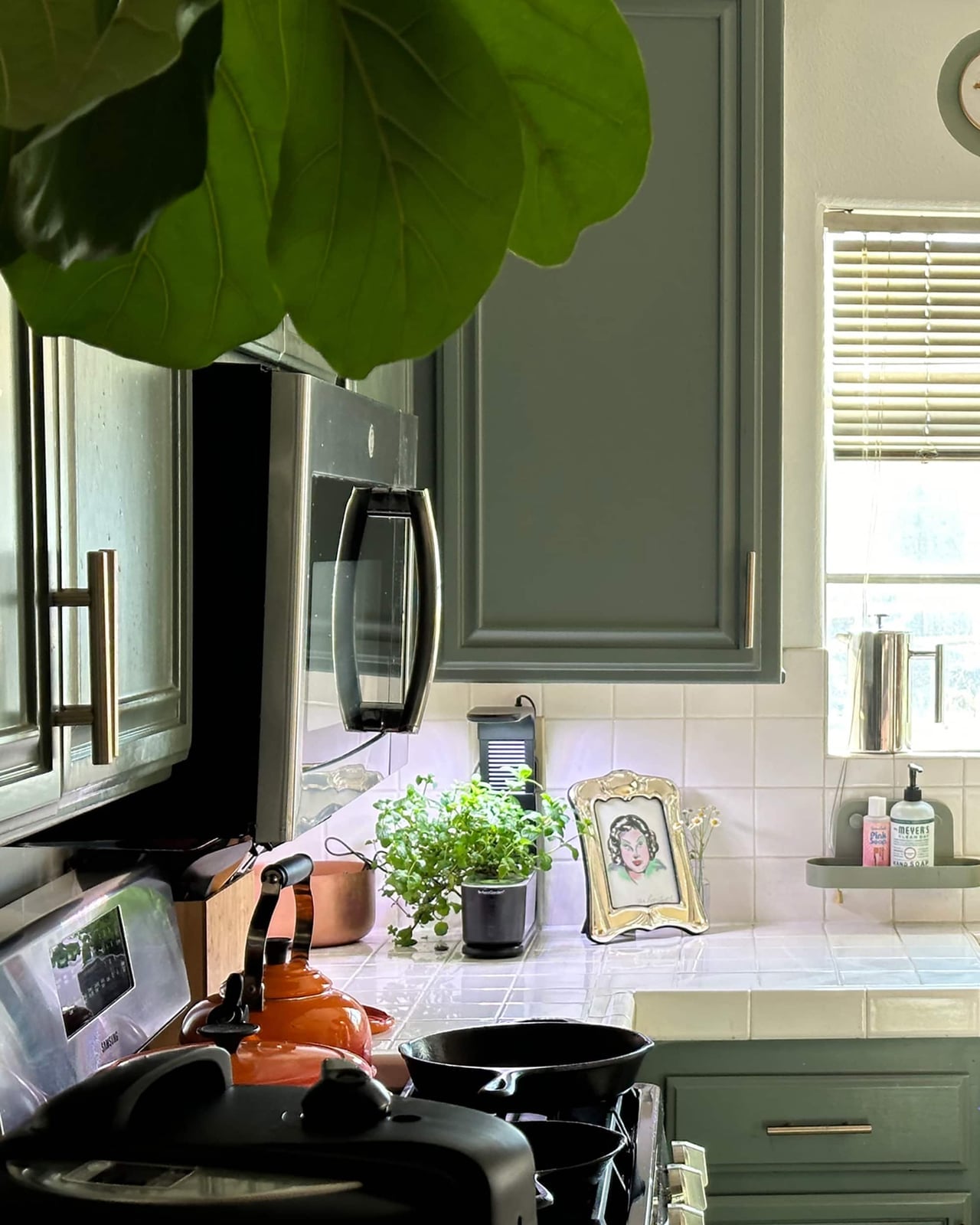
A dark cabinet color needs a light backdrop to keep the room from feeling closed in. The white tile backsplash and countertop provide that contrast, letting the dark green cabinets and brass knobs stand out. The compact kitchen benefits from this high-contrast palette because it defines the cabinets clearly without needing extra visual clutter. Natural and overhead light bounce off the white surfaces and soften the dark green, so the room stays warm rather than heavy.
Black Upper Cabinets with Natural Wood Lower Cabinets and Orange Range
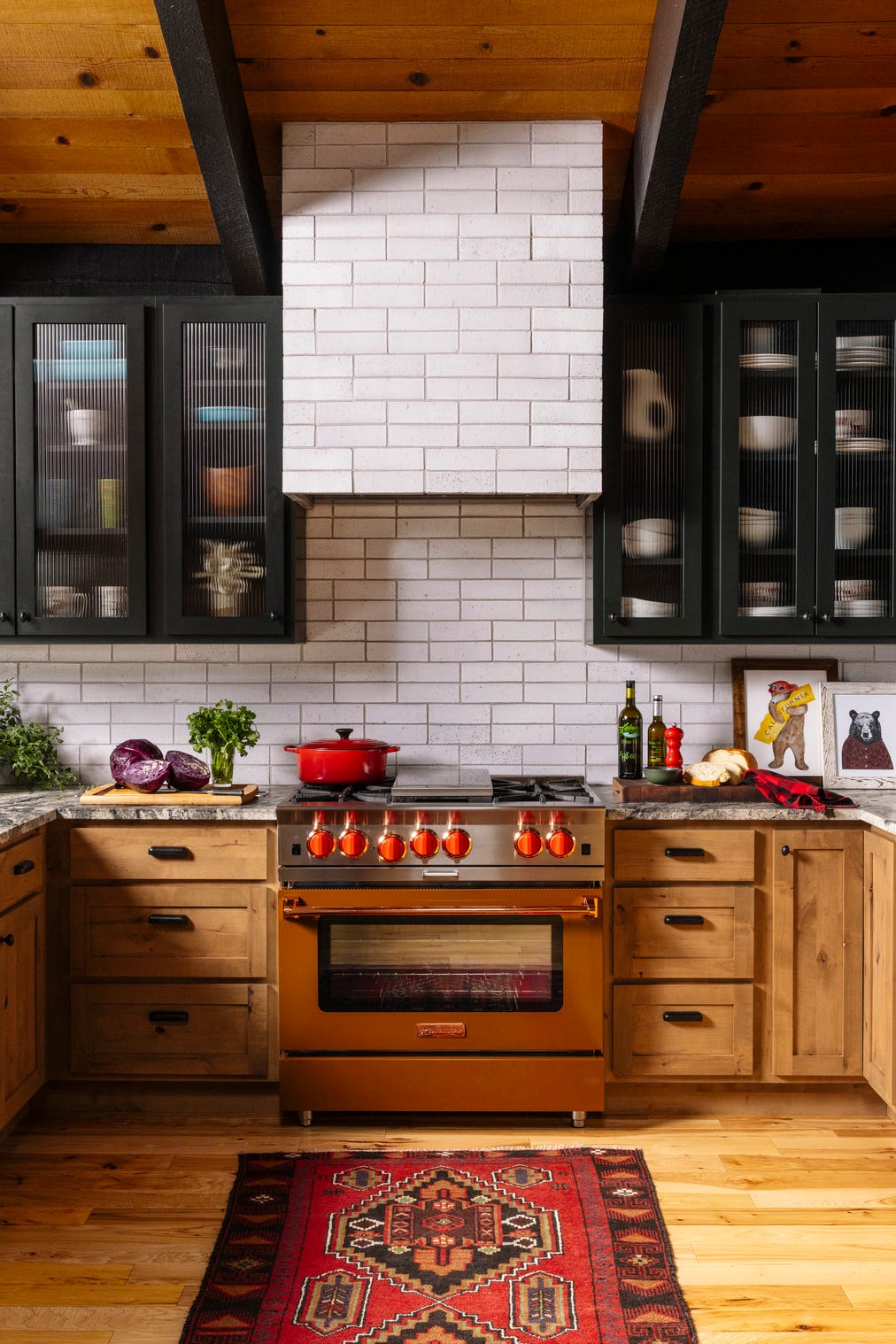
Black uppers and wood lowers might sound like a risk, but the orange range changes the math. That pop of red-orange keeps the dark upper cabinets from feeling heavy and gives the natural wood base cabinets a reason to be there. The galley layout means the range becomes the focal point at one end, with the rug adding another layer of warmth underfoot. Overhead pendant lights and window light keep the black cabinets from swallowing the light. The trick is letting the range be the loudest element so the two-tone cabinets act as a backdrop instead of a debate.
Gray Painted Island with White Perimeter Cabinets
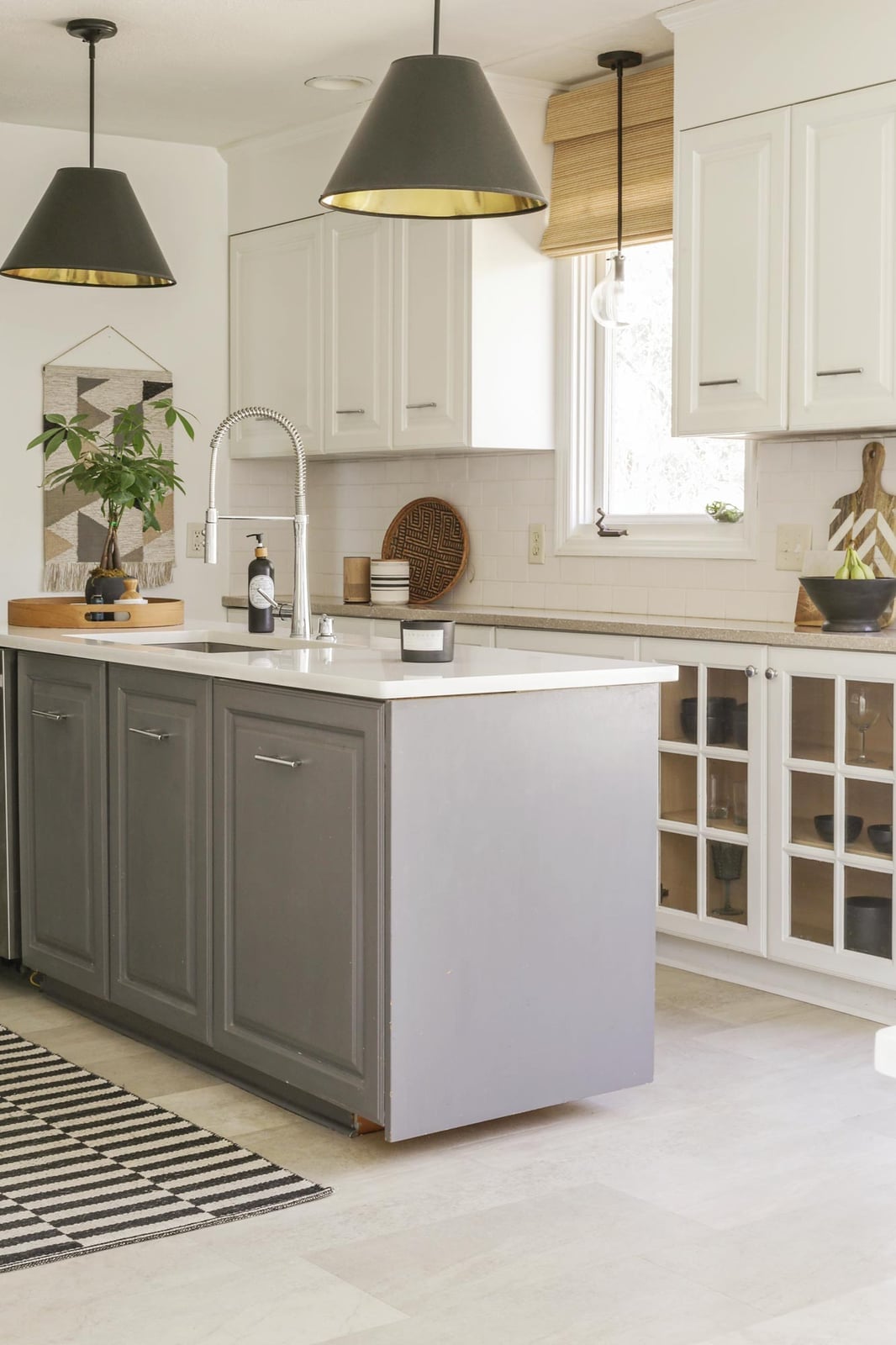
A gray painted island breaks up the white perimeter cabinets without adding a third color. The wood tones from the floor and the warm light from the pendant fixtures keep the gray from reading as cold. The island becomes the visual anchor in the center of the room, while the white cabinets around the edges recede and make the space feel larger. Two-tone cabinets like this work best when one color clearly dominates and the other provides the accent.
Cream Modern Farmhouse Cabinets with a Stone Accent Wall
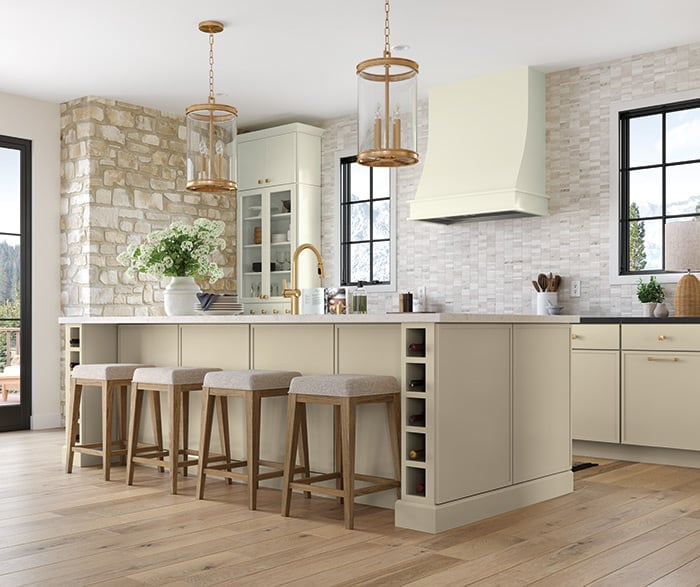
This kitchen uses a stone accent wall to give the cream cabinets a natural anchor. The wood island adds warmth without competing with the painted finish, while metal pendant lights and window light keep the space bright. The materials here work together because the stone serves as the heavy element and the cream cabinetry stays light. If you want a similar look, focus on one textured wall and keep other surfaces simple so the painted cabinets remain the focal point.
White Painted Cabinets with Granite Countertop and Subway Tile
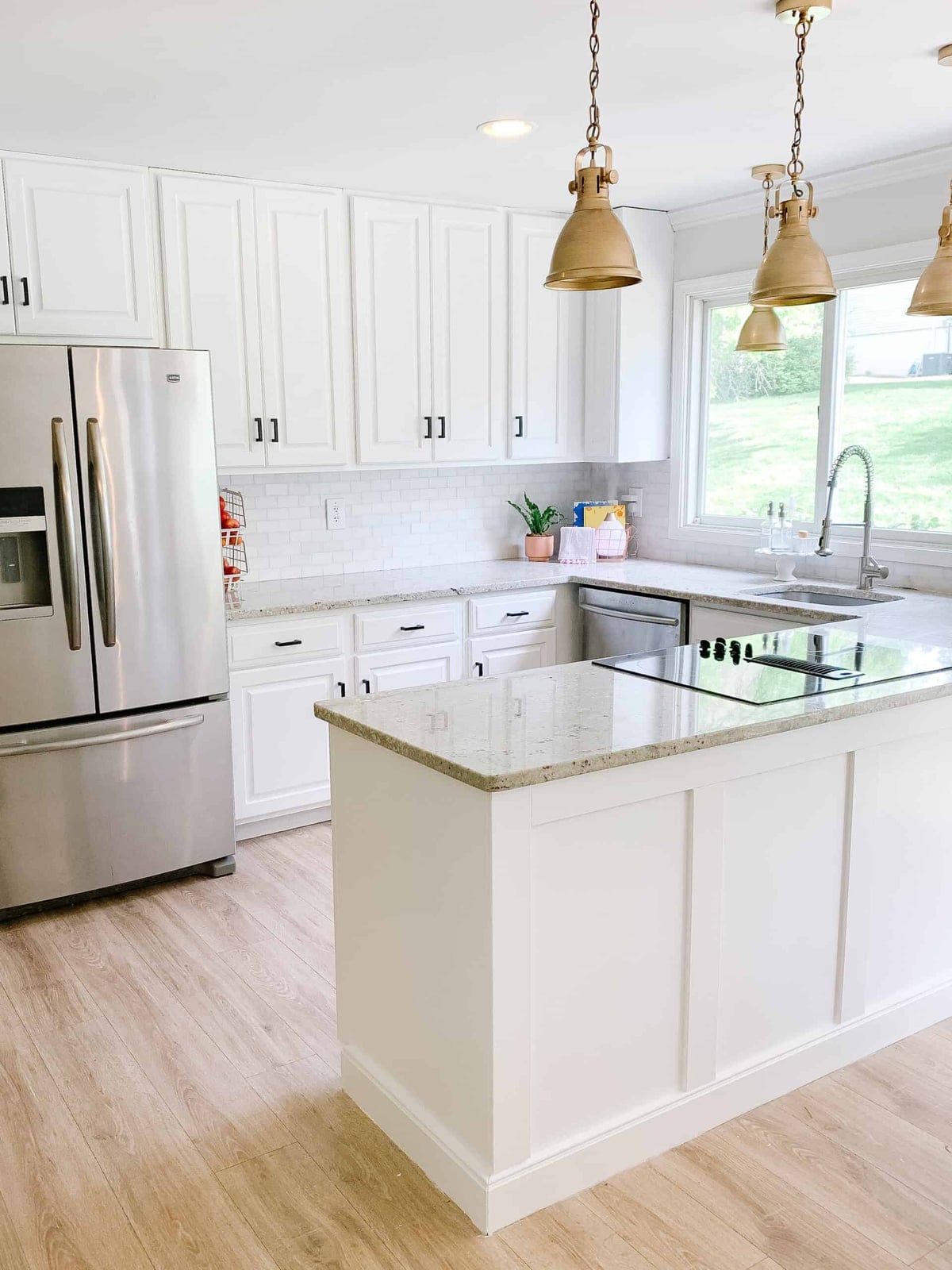
A practical rule for white painted cabinets is to pair them with materials that add texture without stealing focus. This kitchen does that with a granite countertop and subway tile backsplash, both of which bring visual interest without overwhelming the white finish. The island and stainless steel appliances keep the layout feeling current. For a renter-friendly version, try peel-and-stick subway tile on the backsplash and a stick-on granite pattern on the counter. The white cabinets stay neutral, so you can change the accent pieces without repainting.
Sage Green Cottage Cabinets with Wooden Island and Ceramic Display
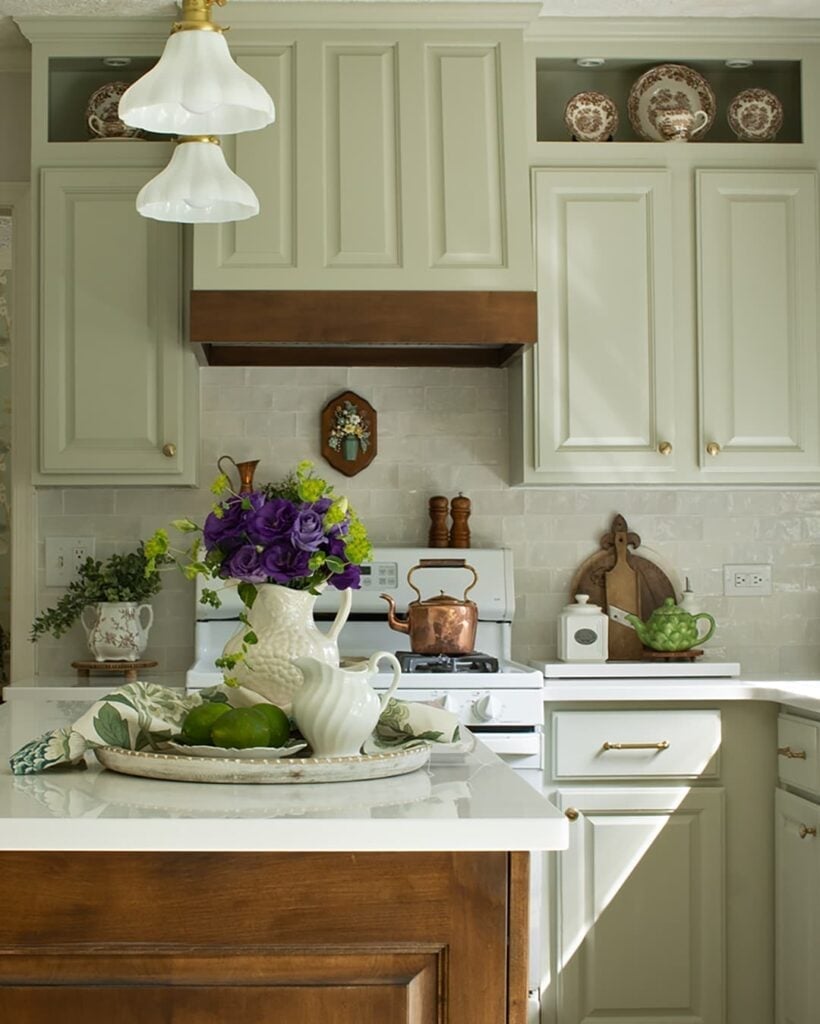
The sage green cabinets here sit against a wooden island and open shelving with ceramic dishes, which gives the kitchen a collected feel. The palette stays in soft greens, wood tones, and white, so nothing feels busy. What defines this cottage look is the ratio: about two-thirds painted cabinet to one-third wood surface. What breaks it is adding a third strong color. If you want this style, keep the ceramic pieces in white or cream to let the green stay front and center.
Cream Farmhouse Cabinets with Glass Fronts and Wooden Range Hood
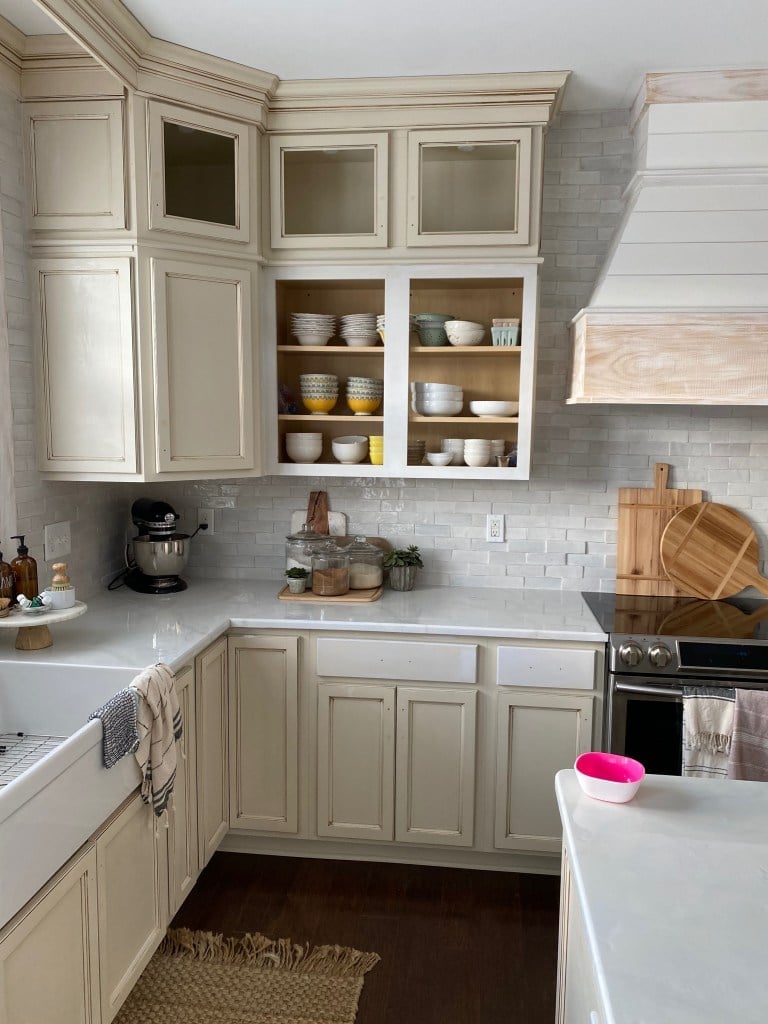
A precise observation about this kitchen is that the glass-front upper cabinets and wooden range hood create a natural storage hierarchy. The glass fronts make you curate what goes inside, while the solid lower cabinets hide daily clutter. The marble counter and tile backsplash add surface variety without pulling attention from the cream finish. For a similar approach, use glass inserts on just a few upper doors and keep the rest solid. That way you get display space without the upkeep of cleaning every single pane.
Light Blue Traditional Cabinets with Subway Tile and Island
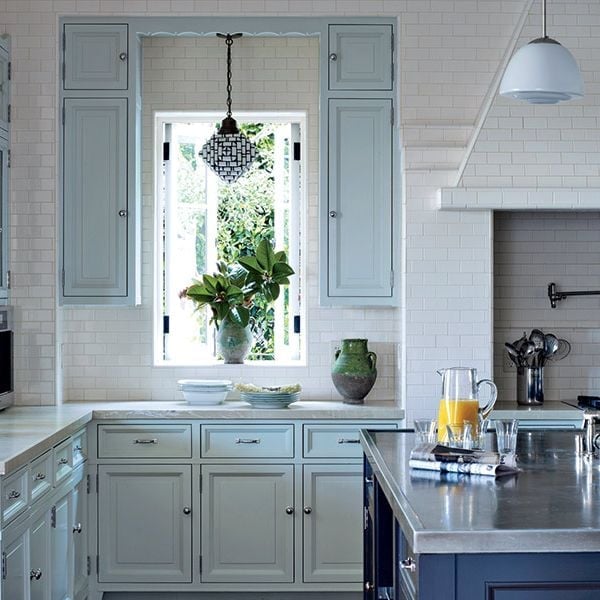
Where a darker blue cabinet can feel heavy, this light blue version keeps the traditional kitchen airy. The subway tile backsplash and white countertops keep the palette clean, while the island adds prep space without blocking the corner layout. Natural light and the pendant fixture above the island give the room balanced illumination. The palette stays in cool tones, so the wood floor or any warm accents become the contrast. If you want a lighter alternative to navy, this shade works without dimming the room.
Deep Green Arched Cabinets with Brass Knobs in Modern Organic Style
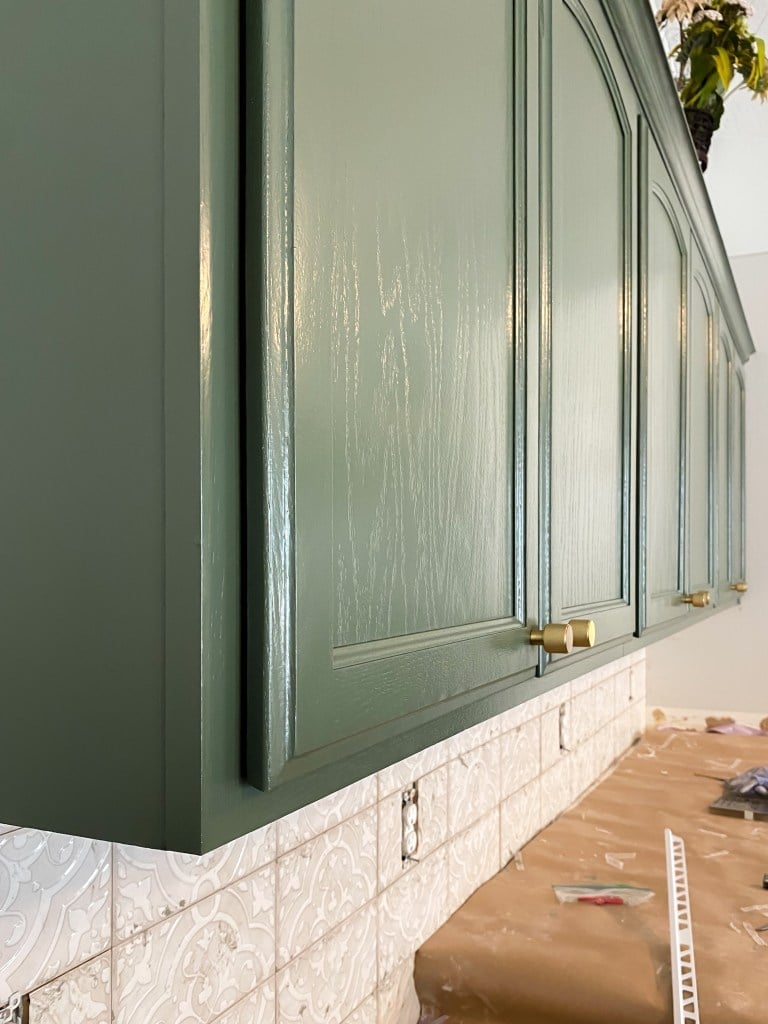
The arched doors on these deep green cabinets soften the line between cabinetry and furniture, which is the whole point of the modern organic look. Brass knobs catch the eye without fighting the green, and the tile backsplash keeps the background quiet. One useful idea: when your cabinets are the hero piece, let the counter and backsplash recede in color and pattern. A pale stone or simple subway tile means the arched doors stay central, not crowded.
Vibrant Purple Cabinets with Stainless Steel Range in a Corner Kitchen
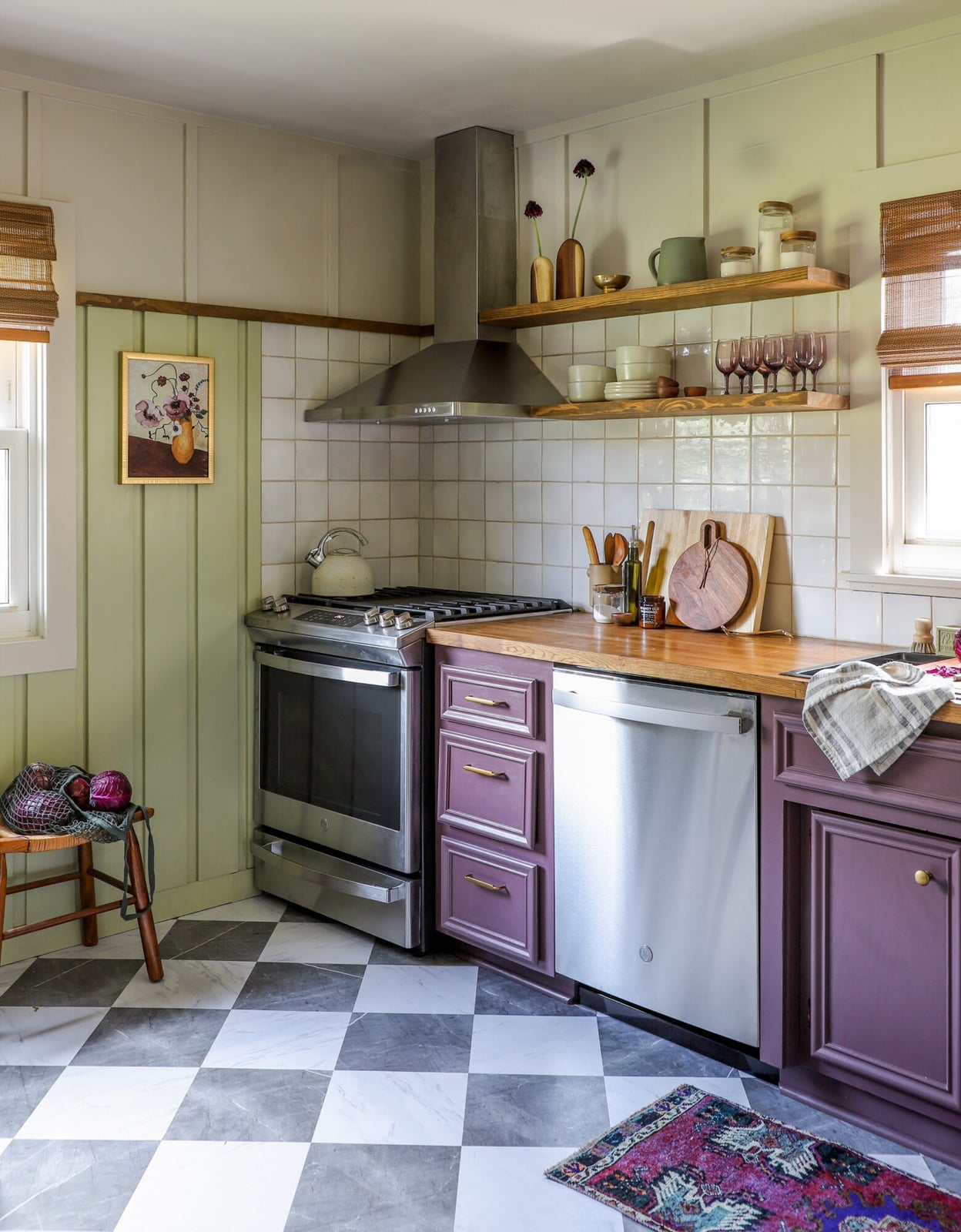
This kitchen proves a vivid color can work in a corner layout without overwhelming it. The purple cabinets claim attention, but the stainless steel range and white counter act as neutral anchors that keep the room grounded. The wood floor adds warmth that prevents the purple from feeling cold. A practical takeaway for a bold palette: pair it with stainless and natural wood instead of more color. The eye gets a rest stop, and the purple feels planned.
Off-White Shaker Cabinets with Ornate Doors in a Galley Kitchen
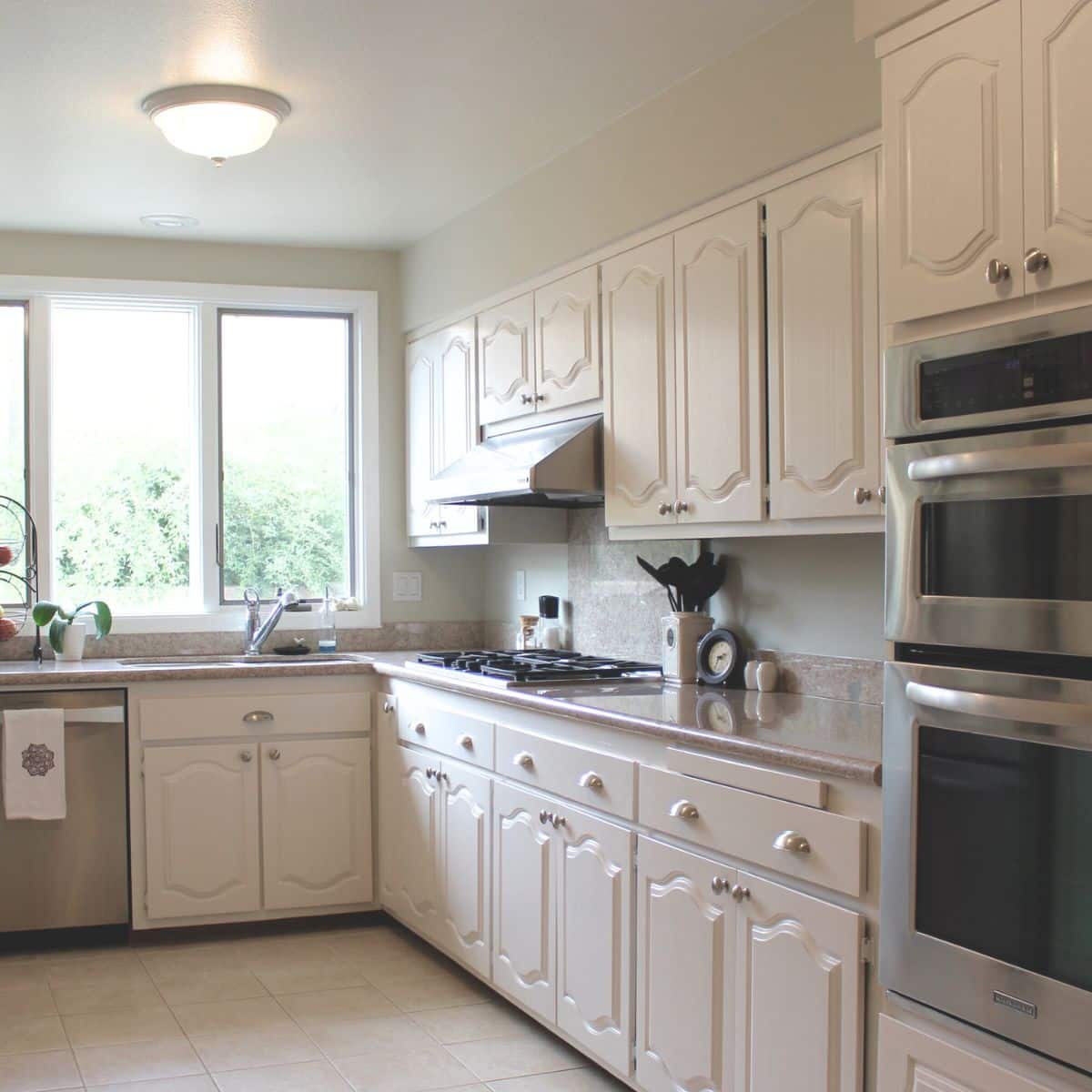
Shaker cabinets usually read as simple, but the ornate doors on these off-white versions add a layer of detail that keeps the galley from feeling purely utilitarian. The double oven and dishwasher sit flush, so the eye moves along the L-shape without interruption.
For storage in a galley, the key is keeping the upper cabinets visually light. Off-white helps with that, and the ornate door fronts add interest without needing open shelving. The window at the end lets in daylight, which makes the space feel roomy.
Final Thoughts
A fresh coat of paint on your kitchen cabinets can turn a tired space into something that feels intentional and personal. The key is letting the color do the work while keeping counters and backsplash simple so the cabinets stay the main event. Before you start, test a few samples on the cabinet doors to see how the light changes the shade through the day. Prep work like cleaning, sanding, and priming makes the difference between a finish that lasts and one that chips within months. Pick a color that makes you happy every time you walk in.