
Most kitchen makeovers stop at the cabinets and counters, but the ceiling is the one surface you see from every angle. It sets the room’s height, light, and mood, whether it is a flat white plane or a web of beams. This guide walks through 21 kitchen ceiling ideas for 2027, from painted colors and molding to vaulted wood and beadboard.
You will get practical notes on what suits a small galley versus an open plan, plus upkeep tips for each finish. No contractor jargon, just honest observations on how each look lives day to day.
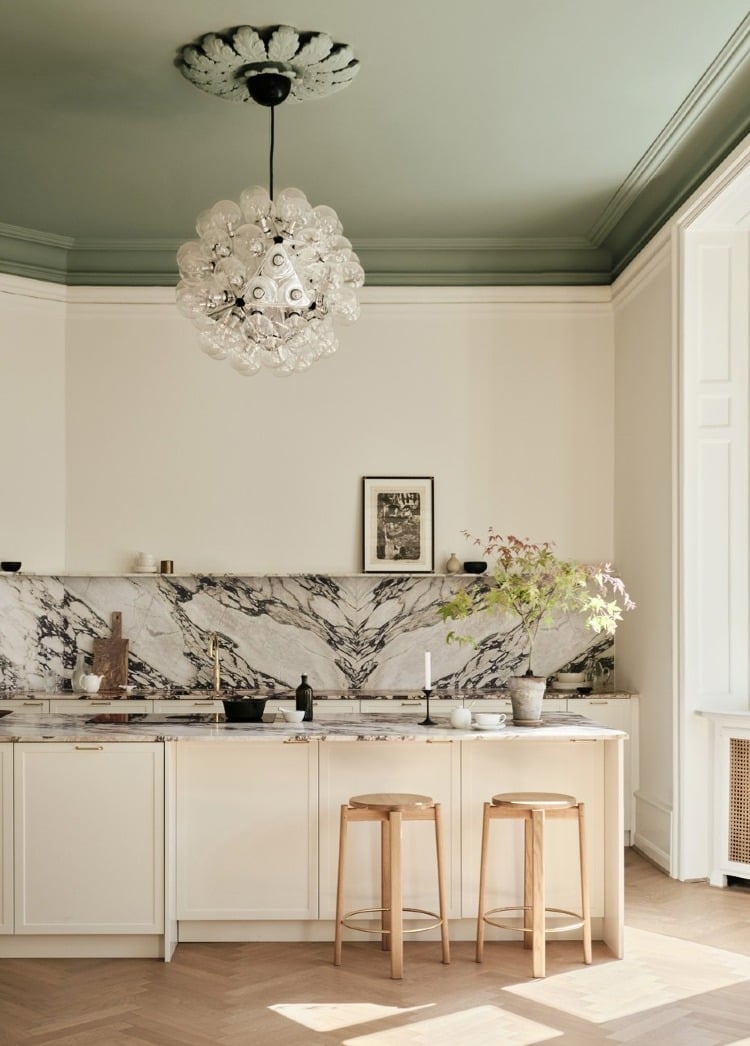
Sage Green Painted Ceiling for a Modern Scandi Kitchen
A sage green ceiling trim draws the eye up without making the room feel smaller. The pale green pairs with cream cabinetry and marble surfaces in a way that feels cool and calm, not heavy. A statement chandelier hangs from the center, and natural light keeps the kitchen bright. The layout is linear with an island, so the ceiling acts as a subtle frame for the whole space. The palette stays restrained: sage, cream, and marble, with no competing colors. That restraint makes the painted ceiling feel planned.
High Vaulted Ceilings with Exposed Wooden Beams in a Rustic Kitchen
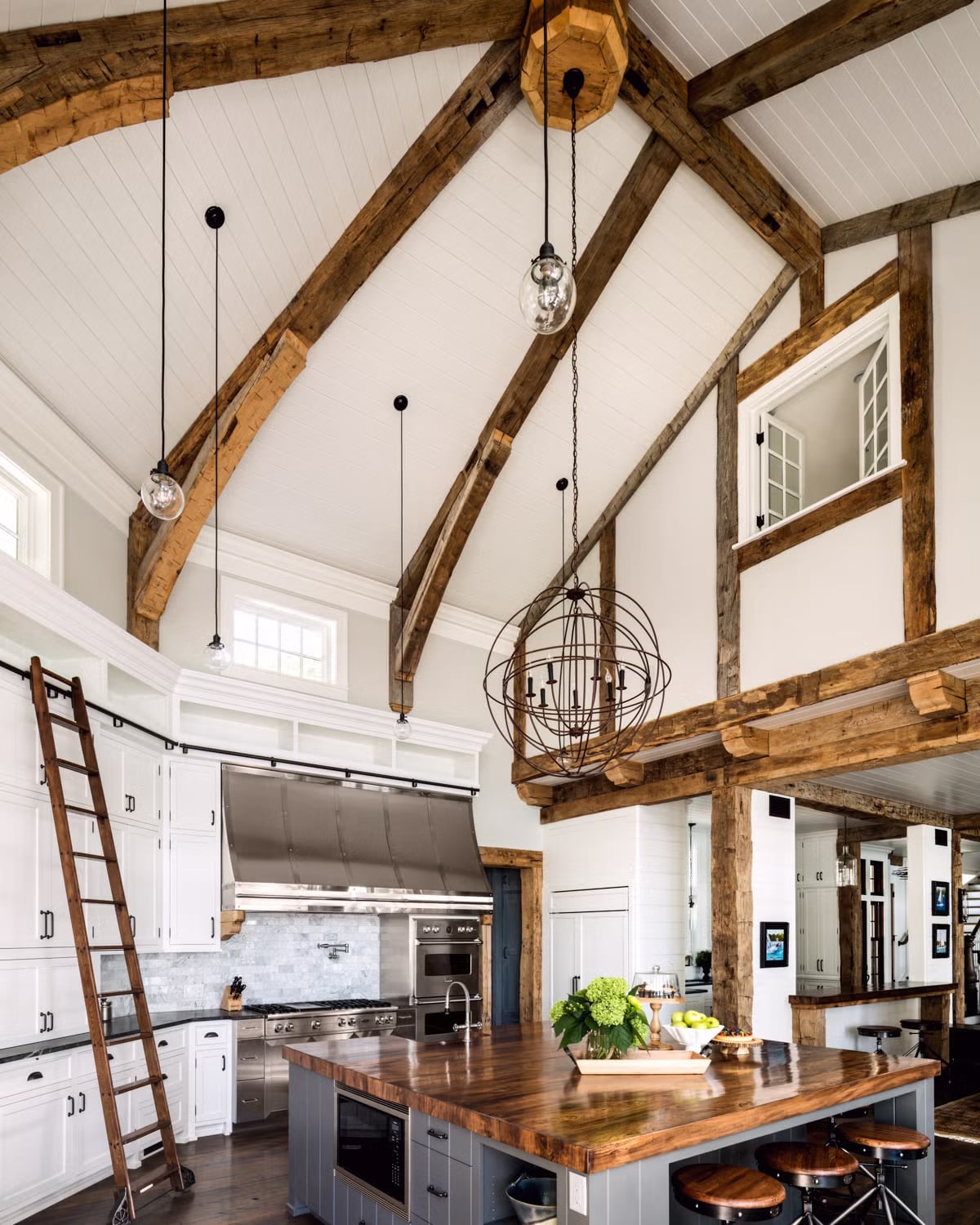
This is a kitchen that uses its height as a feature. The massive vaulted ceiling with exposed wooden beams makes the room feel expansive, and the white shiplap keeps it from feeling dark. A large island with a butcher block top anchors the open plan layout, and pendant lights hang at a scale that matches the ceiling. The palette is simple: white, wood tones, and gray from the stainless steel appliances. What defines the style is the mix of rough wood and clean white surfaces. The ratio of wood to white is about even, which keeps the look balanced. The metal ladder and industrial fixtures are what break it from a purely rustic feel into something more modern.
Traditional Kitchen Ceiling with Intricate Molding Details
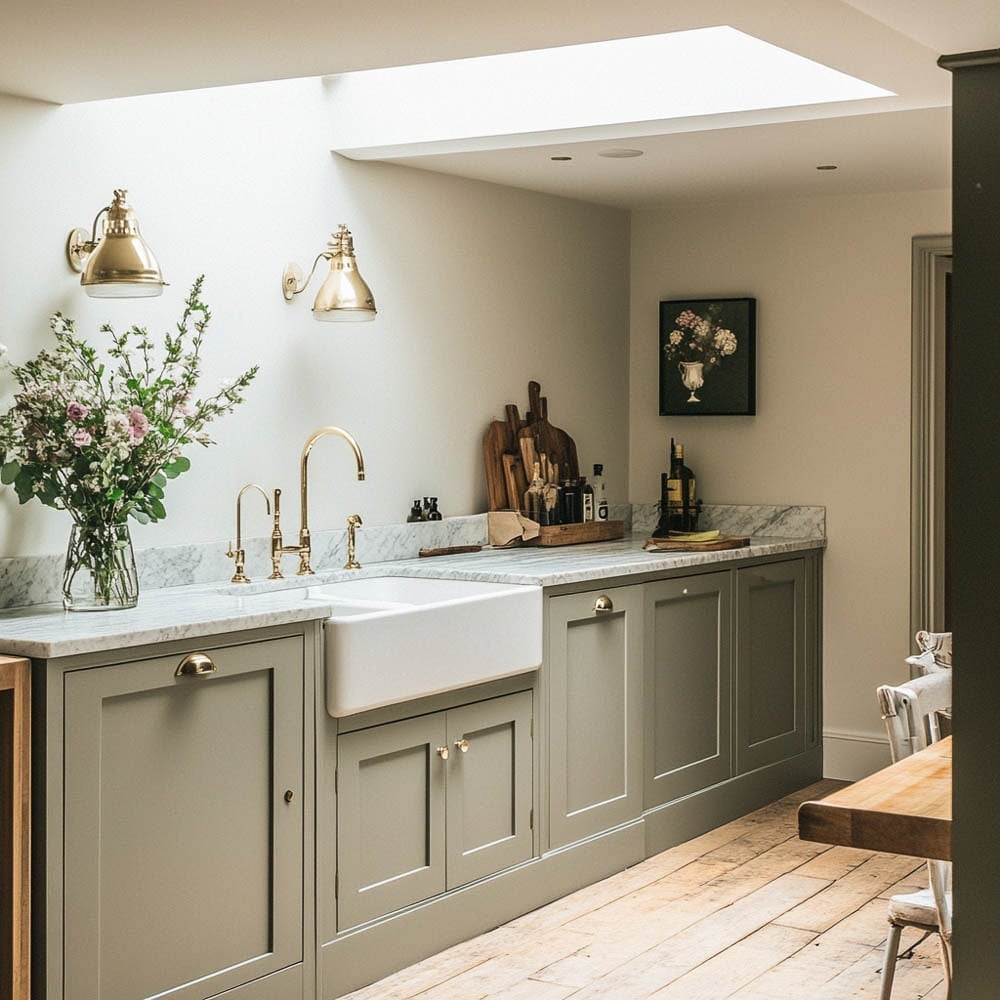
Can ceiling molding make a kitchen feel finished without feeling fussy? In this traditional kitchen, the answer is yes. The detailed ceiling molding adds texture and visual weight at the top of the room, which balances the cabinetry and farmhouse sink below. The palette is sage green and white, with brass fixtures adding warmth. Pendant lights hang from the ceiling and bring natural light into the space without competing with the molding.
The materials work together because they share a similar level of refinement. The wood cabinetry is classic, the marble countertops are polished, and the brass has a soft sheen. The molding ties them together by giving the eye a clear boundary at the top. The layout is linear, so the ceiling detail becomes the main decorative element rather than the furniture.
Farmhouse Kitchen with a Playful Gingham Patterned Ceiling
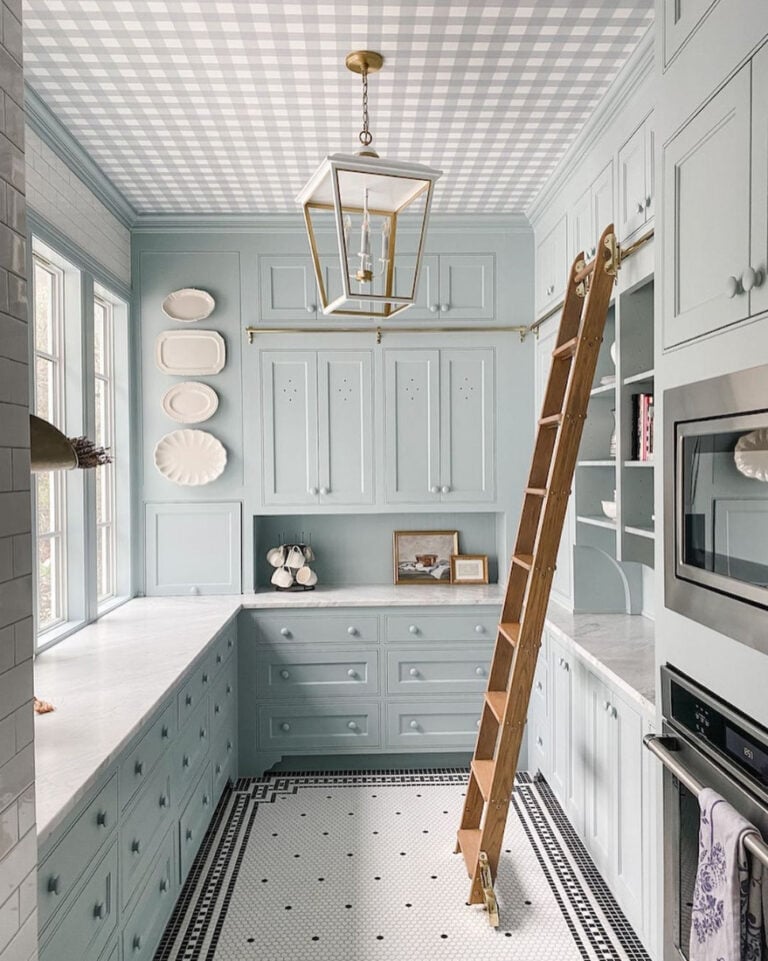
A gingham patterned ceiling brings pattern to a room that is otherwise fairly neutral. The blue and white check sits above a long counter run with wood cabinetry and a black lantern pendant. The pattern appears softer in this sunlit room than it would in a darker space. The blue, white, and black palette keeps the ceiling integrated into the overall scheme. The simple lantern pendant does not compete with the pattern. This kitchen proves that a ceiling can carry the personality of the room without needing anything else to match it.
Rustic Modern Kitchen Featuring a Textured Wood Plank Ceiling
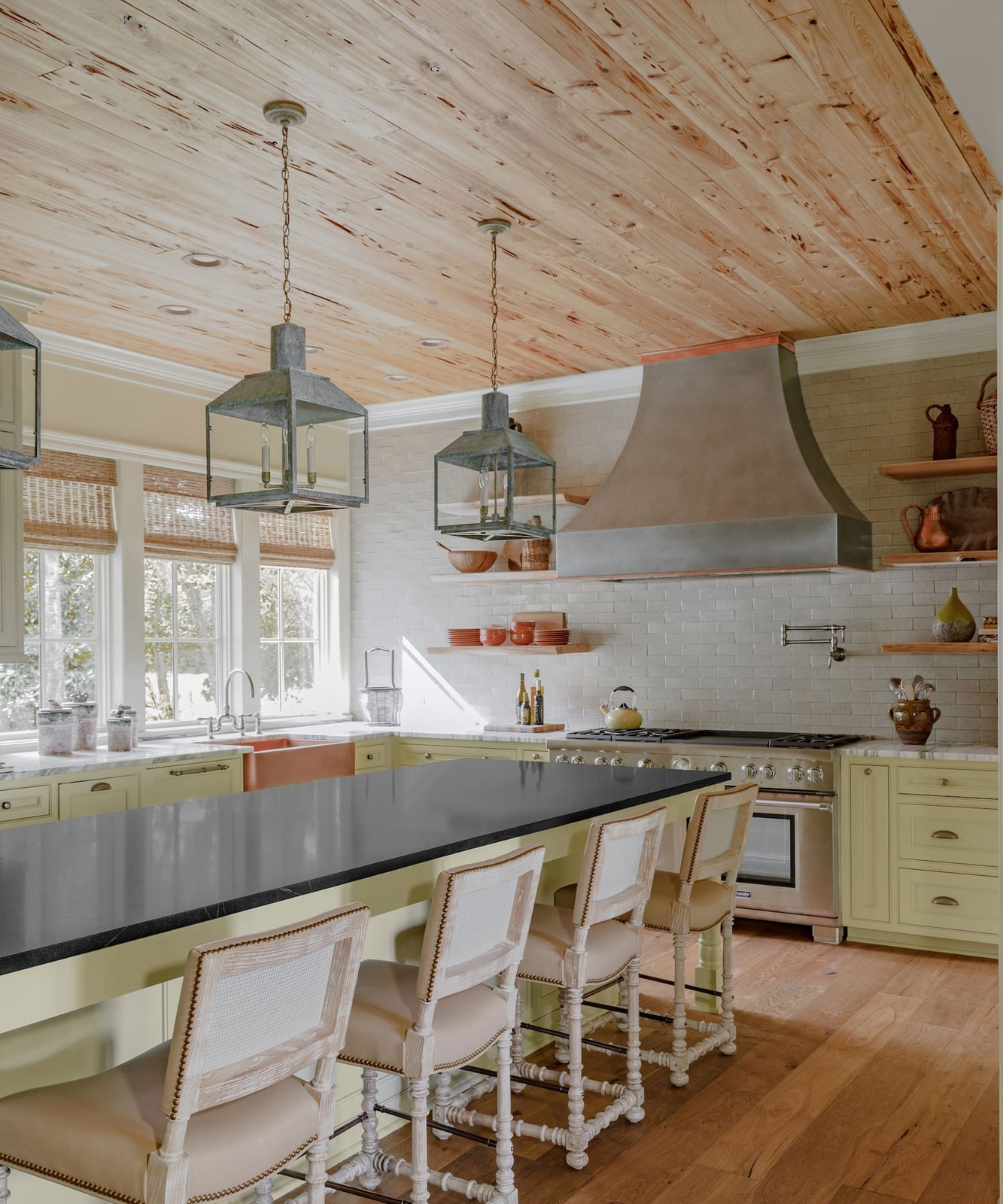
In a kitchen with a textured ceiling, keep other surfaces simple. The wood plank ceiling is the main event, with light wood tones and visible grain. The walls are brick and cream, and the large island has seating that faces the range hood and pendant lights. The palette is light wood, cream, and pale yellow, which keeps the room airy. The ceiling adds warmth without making the space feel closed in. The pendant lights are understated, so they do not fight the texture above. The brick wall adds another layer of texture, but at a different scale, so the two surfaces do not compete.
Farmhouse Kitchen Defined by a Prominent Wood Beam, Close-Up Take
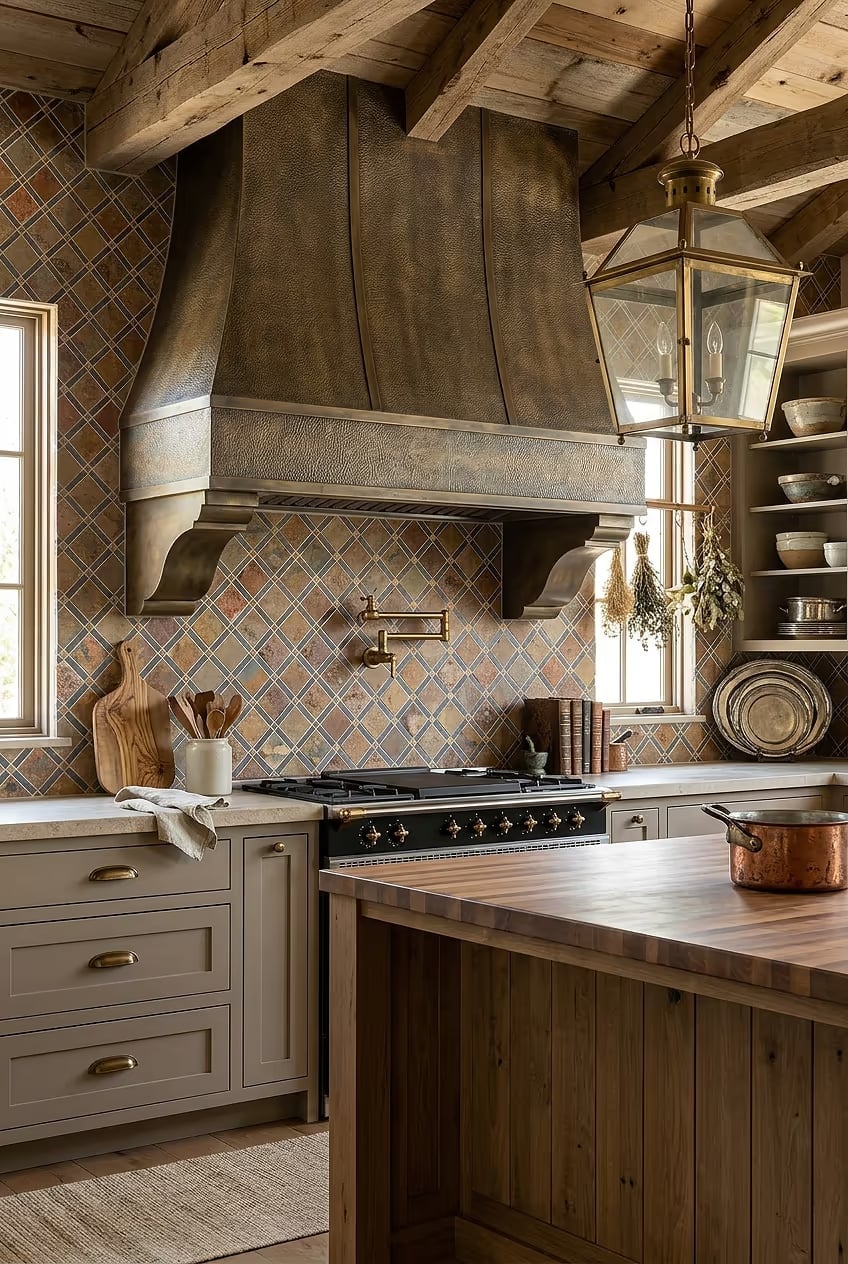
A wood beam ceiling can be a major renovation, but this farmhouse kitchen shows how the look works when the beams stay neutral and the room does the rest. The ceiling is the hero, with its brown wood tones drawing the eye up, while the stone tile floor and wooden island keep the palette grounded. A large metal range hood anchors the cooking zone, and open shelves above the counter add a casual, lived-in feel without cluttering the sightline. Sunlight brightens the wood, and a lantern pendant hangs over the central island to reinforce the farmhouse character. The room feels spacious because the beams are the only heavy element, so the walls and floor stay simple. If you want this look in a rental, consider faux wood beams that attach with brackets instead of structural work, which gives the same visual weight without permanent changes.
Modern Kitchen with Recessed Ceiling Lights and Dark, Close-Up Take
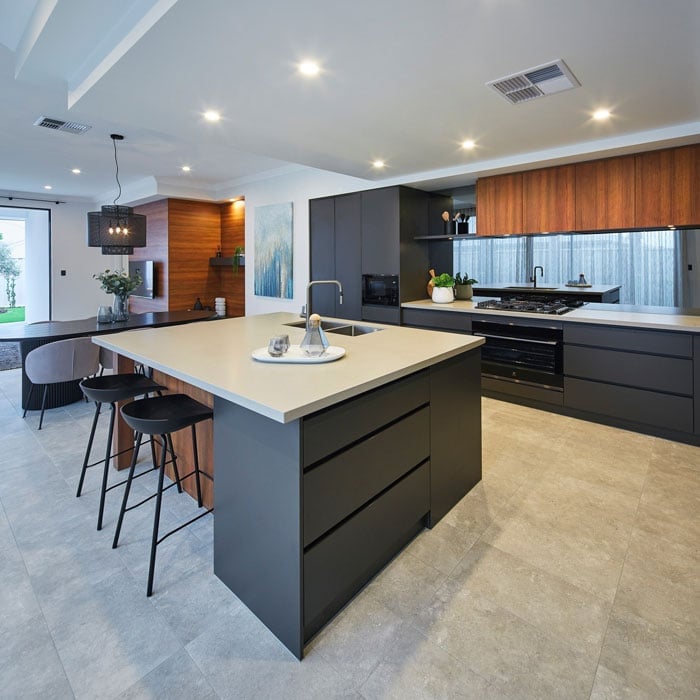
Recessed ceiling lights do more than brighten a room; they let the cabinetry carry the design. In this modern kitchen, the dark gray cabinets and wood accent wall create a strong contrast, and the recessed lights above keep the ceiling clean so nothing competes with that contrast. A pendant light over the large island adds a focused glow for prep work, and the stone countertop and tile backsplash tie the materials together. The galley layout works because the lighting is layered: general light from the ceiling, task light from the pendant, and natural light if the room has a window. For renters, swapping a standard pendant for a plug-in version can give the same focused light without rewiring, since it hangs from a hook and plugs into an outlet.
Modern Farmhouse Kitchen with Vaulted Ceiling, Close-Up Take
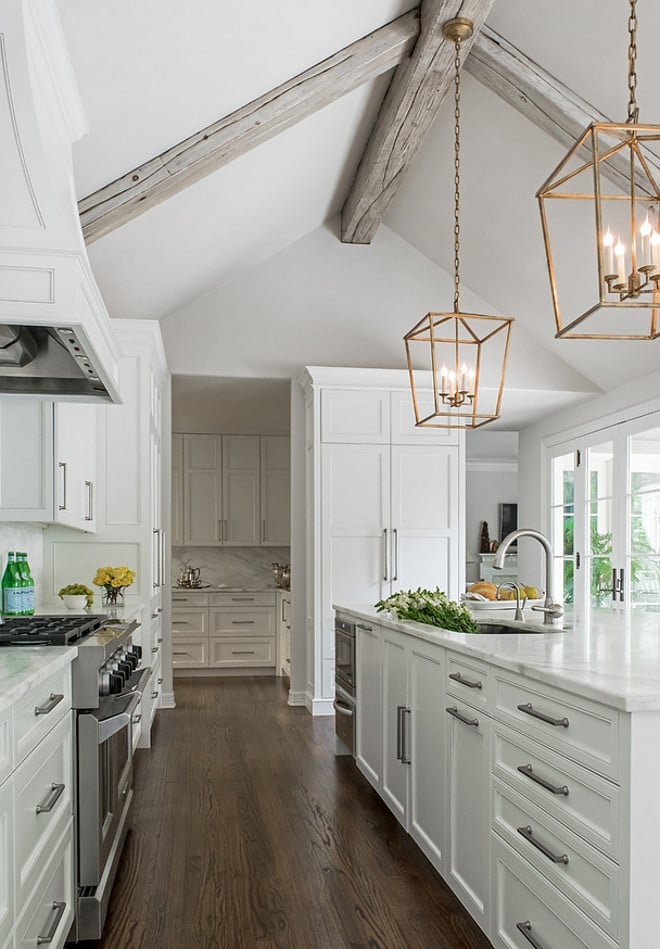
A vaulted ceiling with exposed beams is the strongest feature a modern farmhouse kitchen can have, and this room proves it. The white ceiling and wood beams draw the eye up, making the space feel larger, while the marble countertop and tile floor keep the palette light and airy. Brass lantern pendant lights hang from the beams, adding a warm contrast to the white and wood tones, and the large island anchors the layout. The style works because the beams are the only rustic element; the cabinetry and counters stay clean and modern, so the look feels balanced. In a room with standard height, painted wood beams can mimic the visual interest without the structural change, as long as the beams match the ceiling color to avoid lowering the perceived height.
Rustic Kitchen Accented by Faux Wood Beams, Close-Up Take
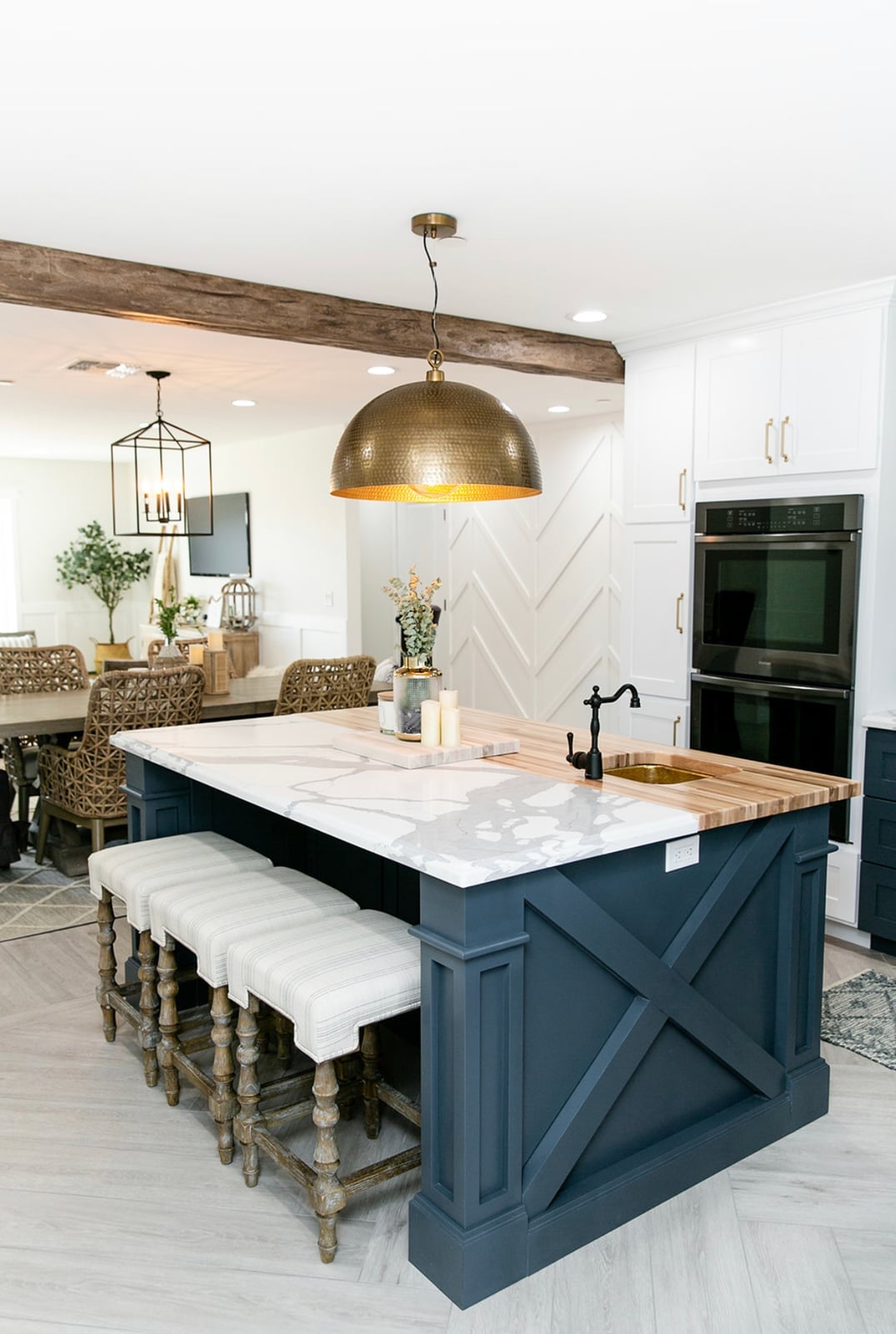
Faux wood beams are a smart way to bring the rustic kitchen ceiling look into a room that is already built, since they skip the structural work that real timber would need. In this roomy island kitchen, the beams are the main feature overhead, with their wood tones standing out against the white ceiling. The cabinetry, island, and range below stay in the same warm family, so the whole space feels connected and cohesive. Tile and stone surfaces add a cool contrast that keeps the wood from feeling heavy. One useful material principle: choose faux beams with a matte finish and visible grain, because that texture does the work of making them look built in. That way the ceiling carries the rustic character while the room keeps a clean, open feel.
Warm Wood Walls and Cabinetry in a Rustic Modern, Close-Up Take
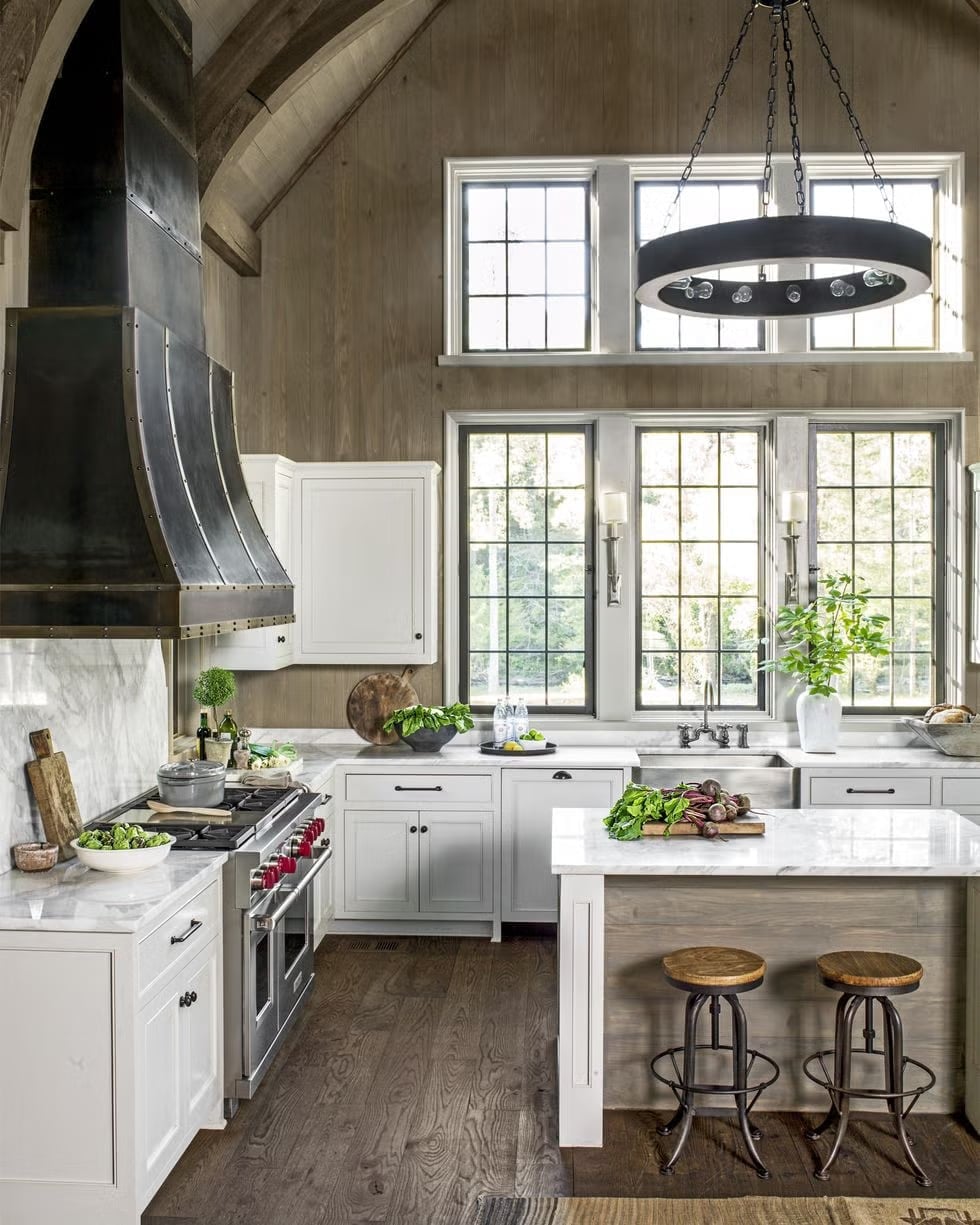
A dramatic metal range hood anchors this rustic modern kitchen, and its dark finish pulls the eye to the cooking zone while the surrounding warm wood walls and cabinetry soften the look. The room is built around a central island with large windows nearby, so natural light spreads across the wood surfaces and keeps them from feeling too dark. A chandelier hangs above the island, adding a second light source that balances the daytime brightness. The palette here is white, wood tones, and black, with marble and stone surfaces adding a cooler note. A useful palette principle: keep the wood tones consistent in warmth, even if the shades vary, so the black metal and white accents can stand out without the room feeling scattered. That mix of warm and cool is what gives rustic modern its balance.
Modern Kitchen with a Sloped Beamed Ceiling and Skylight
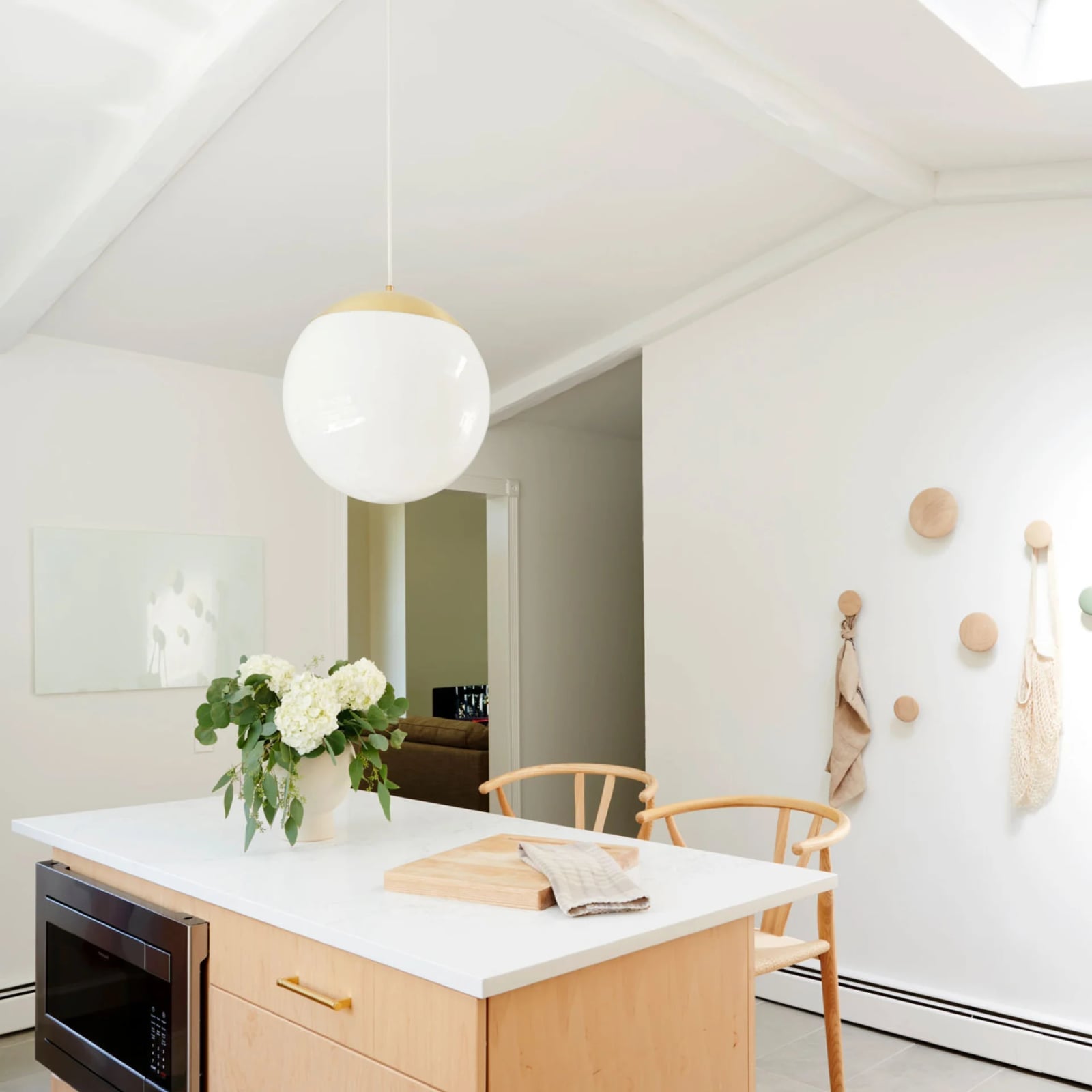
A sloped ceiling means the architecture should set the layout. This modern kitchen puts the island at the center, which works because the angled beams above draw the eye upward and make the room feel larger. A single pendant light hangs over the island, but the real source of brightness is the skylight cut into the slope. That natural light keeps the white and wood palette from feeling too heavy. The beams are structural, so any changes to the ceiling layout should stay cosmetic. Painting them a lighter shade or adding a wash of LED strip light along the ridge can emphasize the angle without touching the framing.
Coastal Farmhouse Kitchen with Vaulted Ceiling and Geometric Lanterns
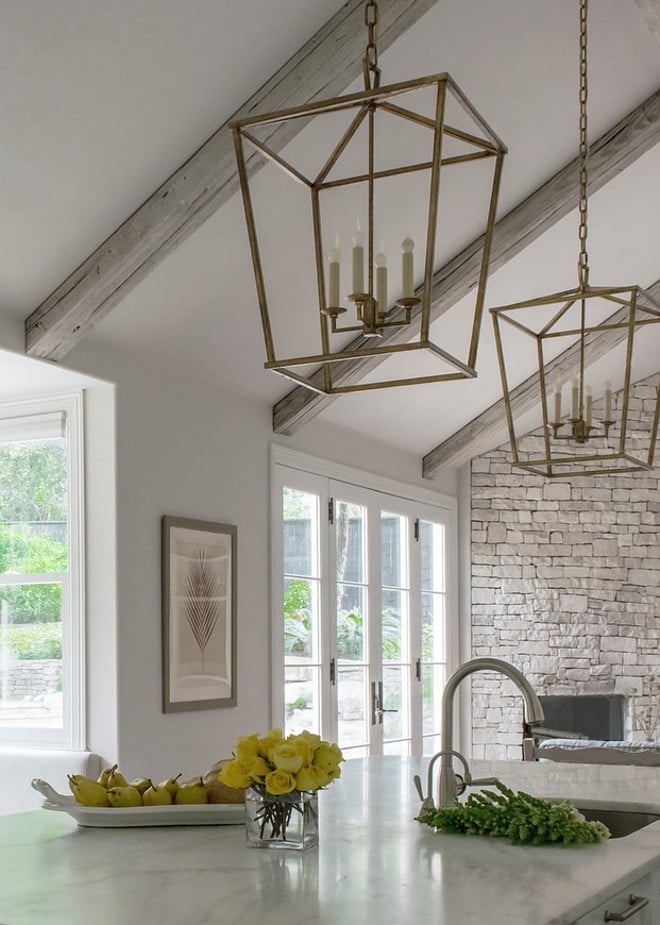
A coastal farmhouse kitchen with a vaulted ceiling and wood beams could lean too rustic if the lighting went heavy. Instead, this room uses geometric lanterns in a gold finish that add a polished contrast. The vaulted ceiling with its wood beams is the main event here, but the palette stays white with wood tones, so the structure doesn’t overwhelm the space. The stone fireplace at one end anchors the open plan, while the lanterns break up the vertical line of the ceiling.
The key to this lighting choice is scale. The geometric shapes are large enough to register against the high ceiling but not so big that they compete with the beams. A farmhouse kitchen with this kind of vaulted ceiling benefits from fixtures that have some visual weight in the metal or glass rather than a delicate look that would get lost. The gold tone echoes the warmth in the wood, which keeps the whole room feeling connected.
Modern Kitchen with Clean Lines and Natural Wood Grain Cabinetry
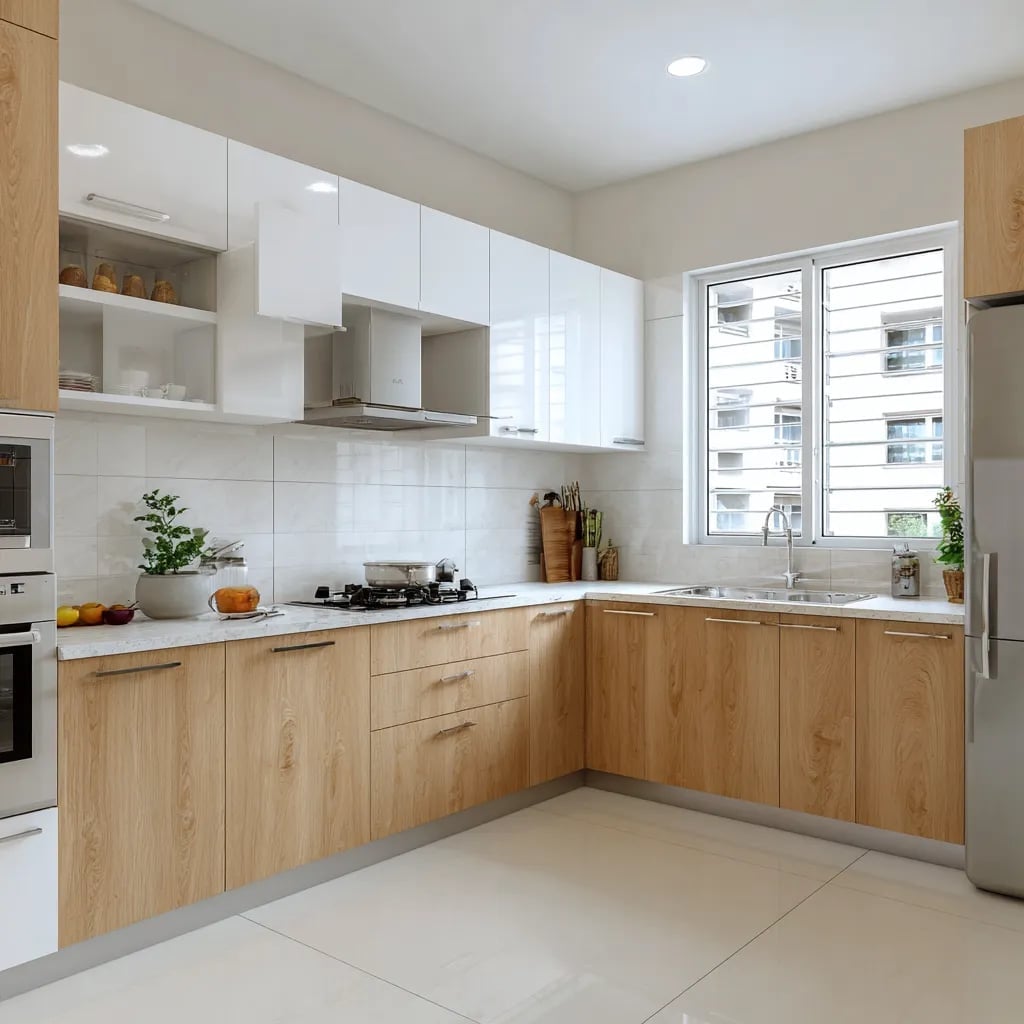
The precise detail here is that the wood grain cabinetry runs in a linear direction, which matches the clean lines of the modern style. The ceiling stays simple with recessed lights, so the cabinetry becomes the texture in the room. White walls and a gray stone island keep the palette from going too warm. The natural wood grain adds movement without needing any pattern on the ceiling itself.
Traditional Galley Kitchen with Amber Glass Pendant Lights
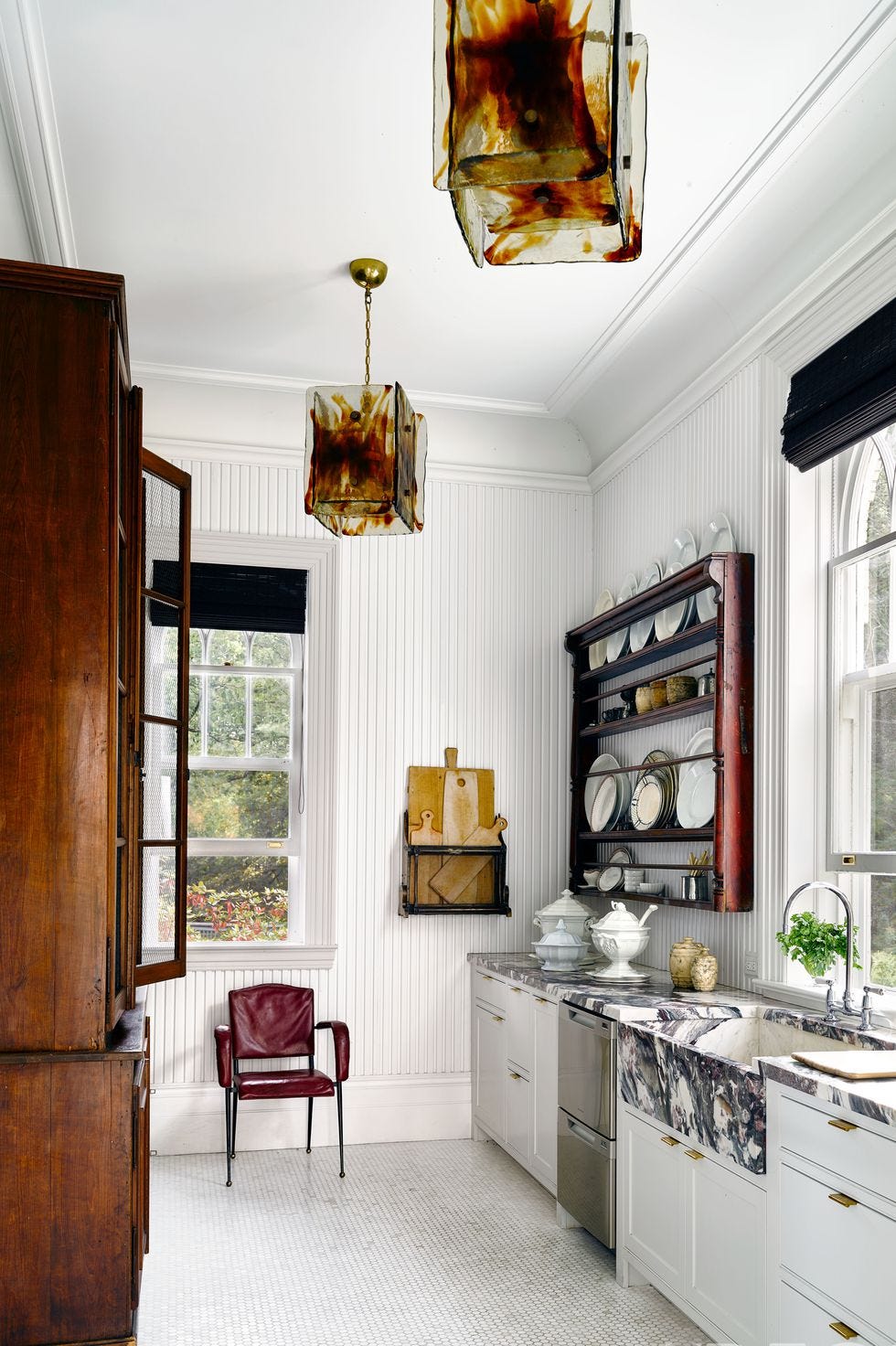
The amber glass pendant lights are the best feature of this traditional galley kitchen. They give off a warm glow that softens the white cabinetry and marble countertops. The galley layout means the ceiling is a narrower canvas, so three pendants hung in a row create rhythm along the length of the room. The amber color also picks up the wood tones in the cabinets, which ties the lighting to the materials. To recreate it, look for glass fixtures with a slight tint; the tint diffuses the light and makes the room feel more comfortable.
Transitional Kitchen with Rich Wood Cabinetry and Cane Inlays
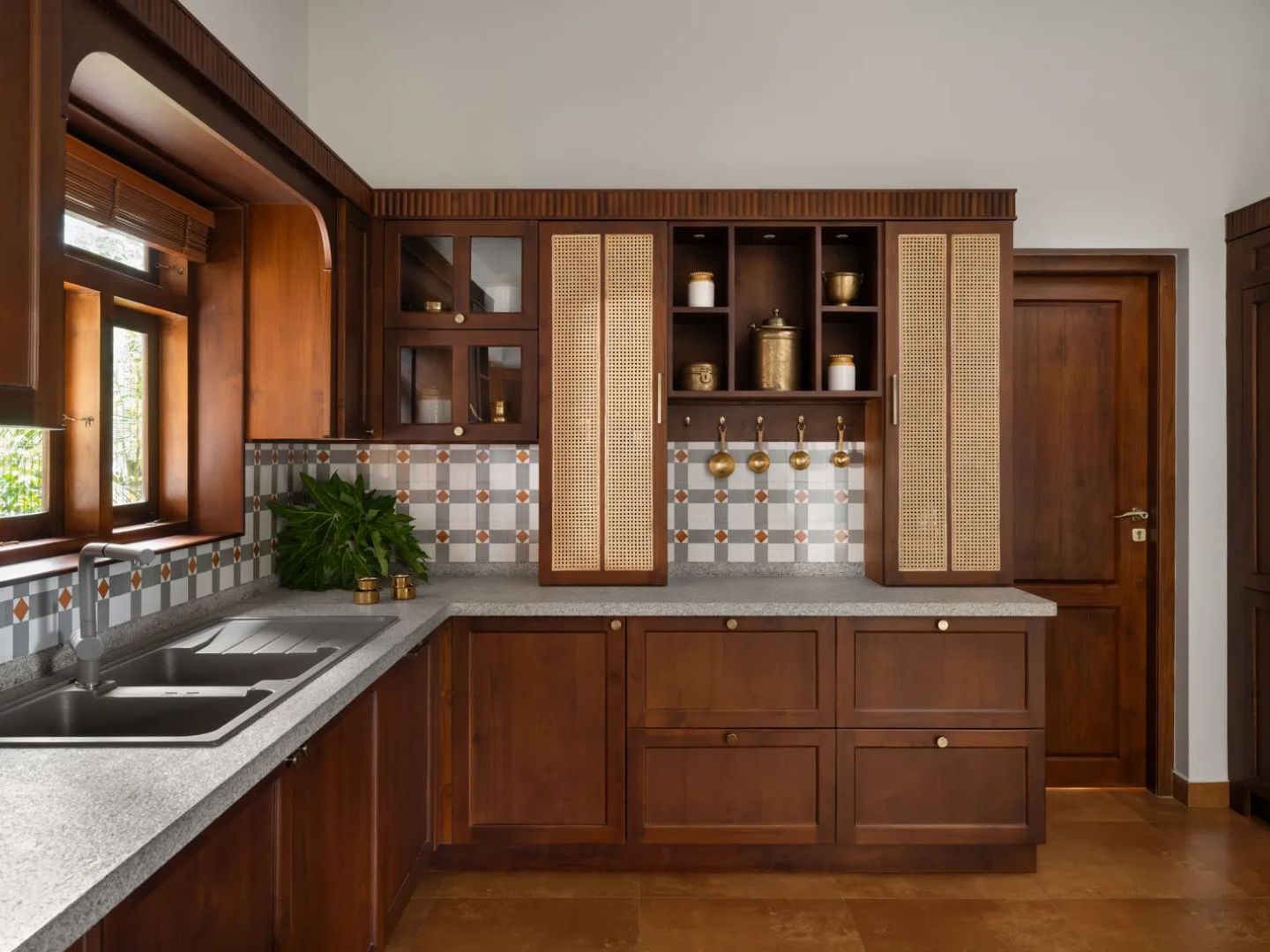
A practical rule for storage in a transitional kitchen is to use the upper cabinets for closed storage and the counter for daily tools. This room uses rich wood cabinets with cane inlays on the upper doors, which adds a handcrafted look without losing any storage space. The L-shaped layout puts the sink and stove on one leg and the prep area on the other, which keeps the workflow efficient.
The cane inlays are a smart swap for solid wood or glass fronts. They let you hide less attractive items while still adding texture. The warm wood tone is balanced by a gray stone countertop and a white tiled backsplash, so the room doesn’t feel too dark. Under-cabinet lighting here would help with task lighting on the counters, and since the cabinets are dark, a strip light under the upper row would prevent shadows.
Farmhouse Kitchen with a White Beadboard Ceiling and Natural Light
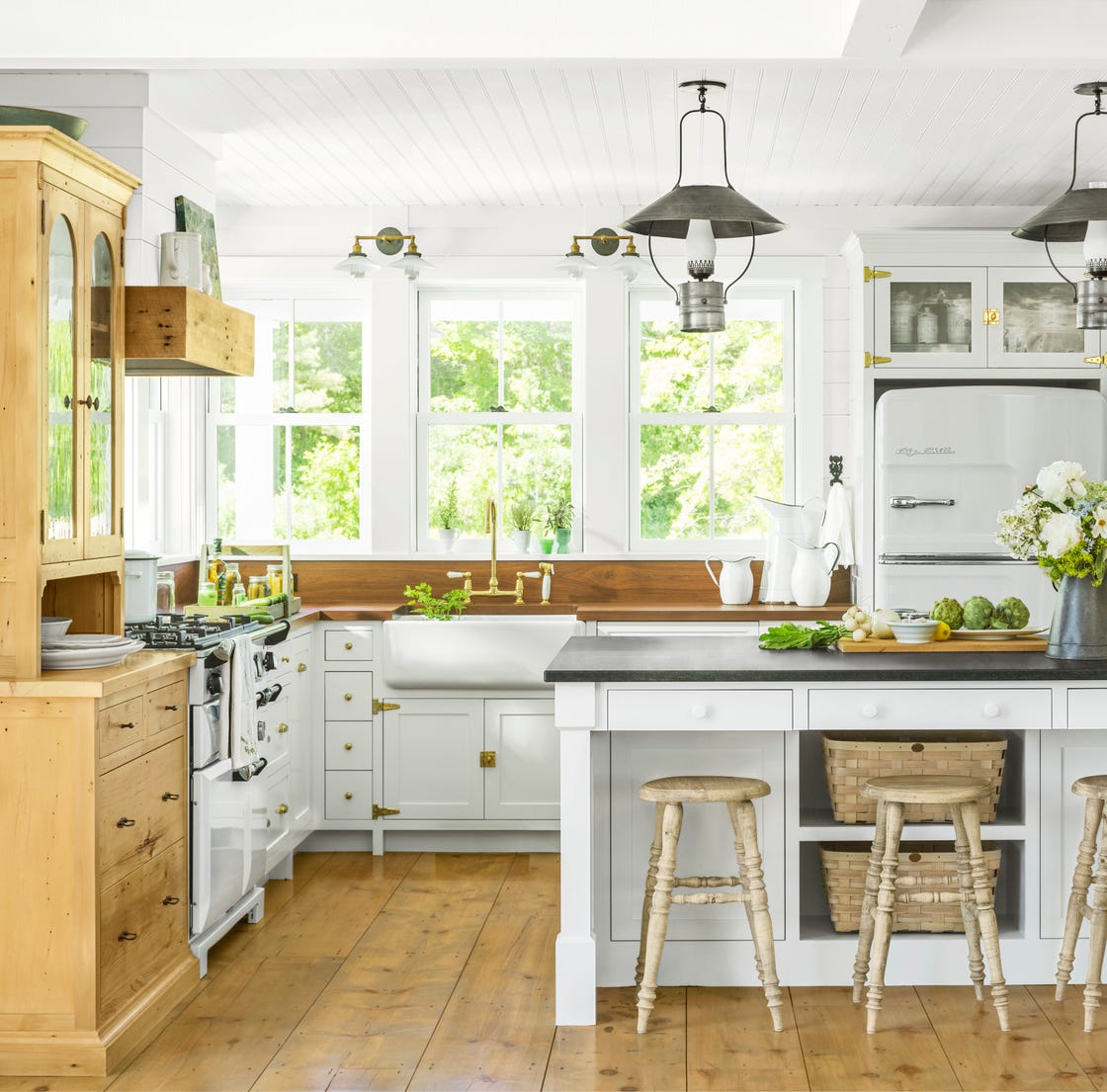
A white beadboard ceiling brings a cottage feel to this farmhouse kitchen without stealing focus. The vertical grooves add subtle texture to an otherwise flat surface, while the pale color keeps the space feeling open and airy. Flooring and cabinetry in wood tones warm the palette, and green accents from the island and countertop accessories tie the look together. Pendant lights hang at a height that clears the island workspace, and nearby windows provide natural light. For a kitchen that gets a lot of use, beadboard is a practical material choice because it hides minor imperfections better than a smooth painted ceiling.
Modern Kitchen with Hanging Plants and Abundant Natural Light
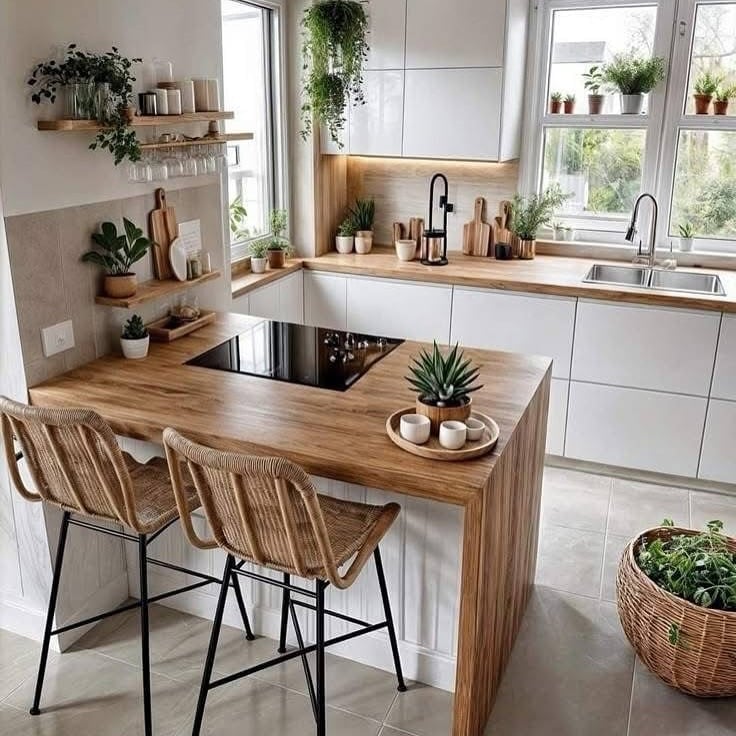
A practical rule for adding life overhead is to choose hanging plants that thrive in bright, indirect light, since that is what most kitchens with good natural light provide. This modern kitchen uses several planters suspended from the ceiling near a large window, creating a soft canopy above the island and counter. The white cabinetry and pale wood tones keep the background simple, letting the greenery become the visual anchor. Rattan and metal planters add texture without competing with the overall clean lines. Under cabinet lighting ensures the counter stays lit for meal prep even after the sun shifts. If you rent, screw-in hooks rated for the weight are a no-drill option, and trailing varieties like pothos or philodendron are forgiving choices.
Farmhouse Kitchen with Sage Green Cabinetry and White Beadboard
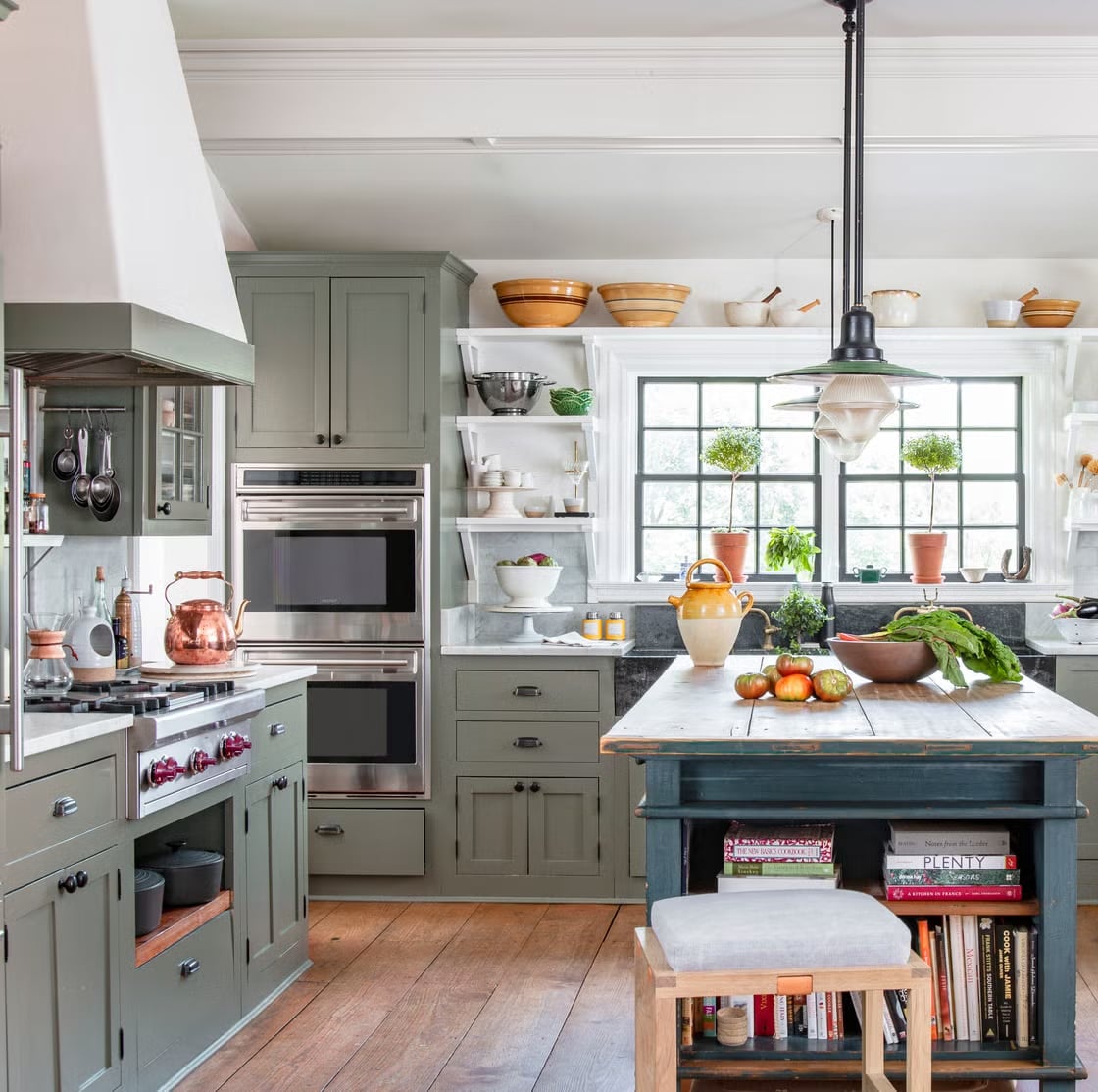
A farmhouse kitchen with sage green cabinetry reads differently than one with classic white. The green adds warmth and depth, especially when paired with wood tones in the island and open shelving. The white beadboard ceiling acts as a neutral backdrop that balances the richer cabinet color. Marble countertops and a tile backsplash in soft whites continue that balancing act, while a single pendant light over the island provides focused task lighting.
The palette works because the ratio of green to white stays in favor of the lighter shade. The lower cabinets and island wear the sage, while the upper wall stays open and bright. What breaks the scheme is introducing a third saturated color too close to the green. Stick with wood, white, and natural stone accents to keep the look cohesive. This setup suits someone who wants color without committing to a dark or bold kitchen.
Compact Modern Kitchen with Dark Stone Countertops and Subtle Ceiling
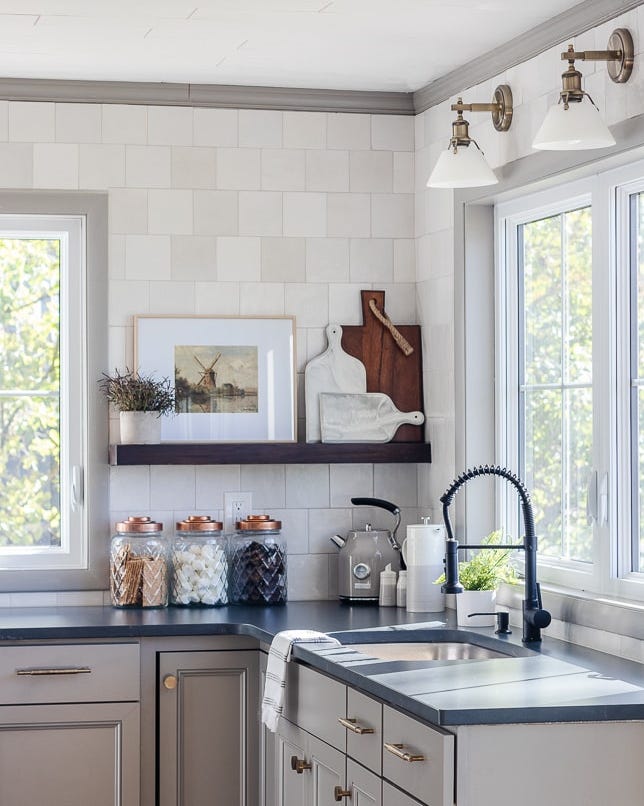
A compact kitchen benefits when the ceiling stays quiet and the countertops carry the weight. Here, dark stone on the counter creates a strong horizontal line that gives the small space a grounded feel, while the ceiling is a simple white finish that does not compete. Wall sconces flank the sink area, providing task lighting without taking up counter space. The gray and white palette keeps the room from feeling closed in, and the dark counter becomes the natural focal point. For a galley or corner layout, this approach keeps the eye moving along the work surface rather than stopping at the ceiling. It is a smart move for a kitchen where every inch counts.
Farmhouse Kitchen with Exposed Brick and a White-Beamed Ceiling
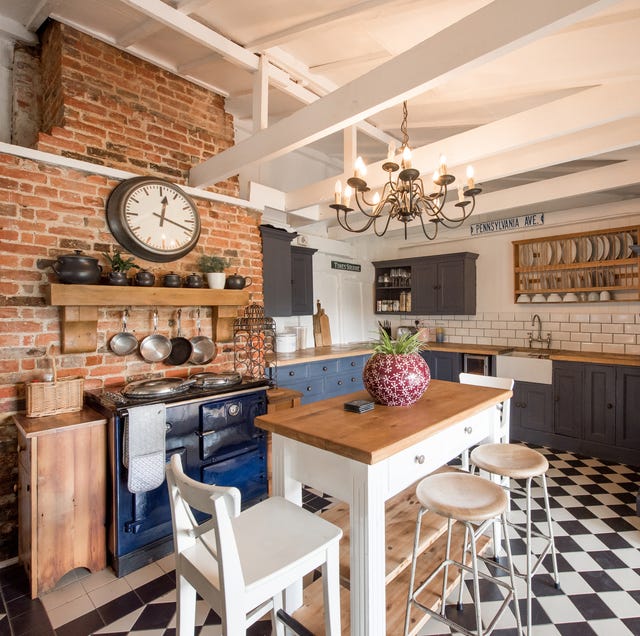
This kitchen makes a clear choice: the exposed brick wall is the main event, and the white-beamed ceiling lets it take center stage. The beams add structure overhead without adding visual weight, thanks to their light finish. Dark blue cabinetry on the island and lower cabinets anchors the room, while open shelving keeps the upper area from feeling crowded. A chandelier with a classic farmhouse shape hangs in the center, its metal finish repeating the dark tones from the cabinets. When you have a strong architectural feature like brick, the ceiling should support rather than compete. White beams are a practical way to add character to a farmhouse kitchen without pulling attention away from the textures that matter most.
Traditional Kitchen with a Vibrant Yellow Painted Ceiling
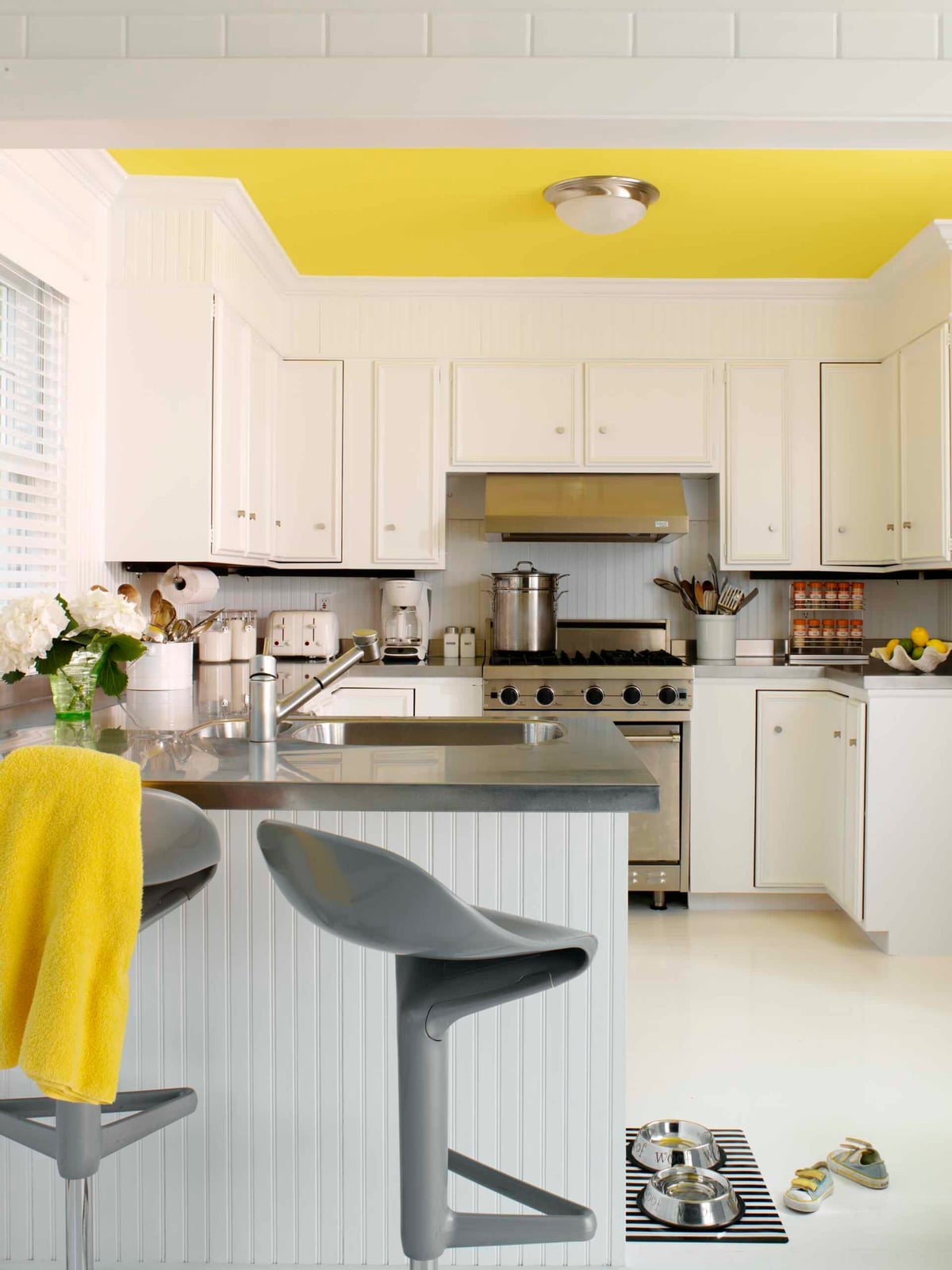
A bright ceiling color pairs well with a neutral backdrop. In this traditional kitchen, the crisp white cabinets and island keep the focus exactly where it belongs, up top. The yellow reads as cheerful without competing for attention, because the palette below it is nearly all white. Natural window light helps the color feel sunny without being heavy, and the overhead fixture keeps the ceiling lit even after dark.
This look suits a kitchen that already has good natural light and a simple layout. The open plan and roomy footprint mean the ceiling gets to be the star without making the space feel smaller. Bar stools and tile flooring add warmth without pulling focus. If you are thinking of painting your ceiling a bold shade, start with a sample patch and live with it for a few days. Light changes throughout the day, and a color that looks great at noon can feel different at dusk.
Final Thoughts
A kitchen ceiling deserves more than a glance upward. The common thread across these 21 looks is that the ceiling works with the room’s light, scale, and daily routine. Painted colors and molding are low-risk updates for renters and owners alike, while beams and vaults change the architecture itself. Recessed lights and pendants shape how the space feels after dark, so plan the lighting with the ceiling, not after it. Keep maintenance simple: dust beams, wipe beadboard, and touch up paint when needed. Start with one idea that matches your kitchen’s size and your tolerance for upkeep, then let the ceiling carry the rest.