
A living room rug does more than cover the floor. It sets the tone for how the space feels and functions, from quiet mornings to busy evenings. This article walks through 31 living room rug ideas that balance style, texture, and daily life.
Each look focuses on what the rug brings to the room, not just how it looks in a photo. Whether you lean toward neutrals or crave color, there is a direction here that fits your habits and your home. The goal is to help you see the rug as part of the whole room, not an afterthought.
Transitional Living Room with a Bold Geometric Accent Rug
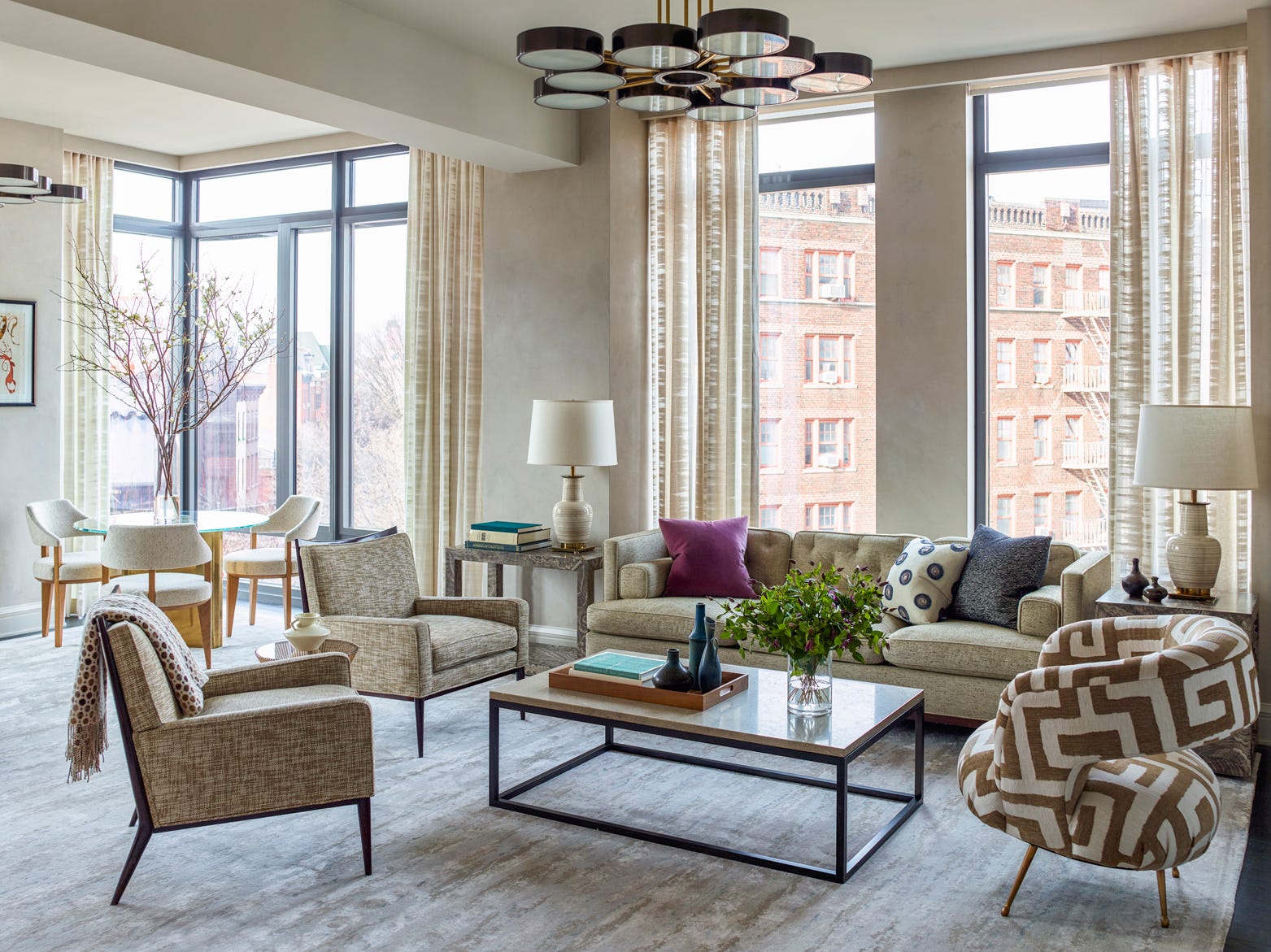
A neutral-toned transitional living room relies on a single patterned piece to create a clear focal point. The rug in beige, cream, and muted brown sits under a coffee table, anchoring the seating arrangement without overwhelming the space. A geometric accent chair nearby picks up the same angular language, which keeps the room feeling intentional rather than cluttered. In a layout where the sofa and armchairs form a loose U-shape around the rug, the pattern becomes the quiet center of the conversation area.
Modern Farmhouse Living Room Centered on a Textured Neutral Rug
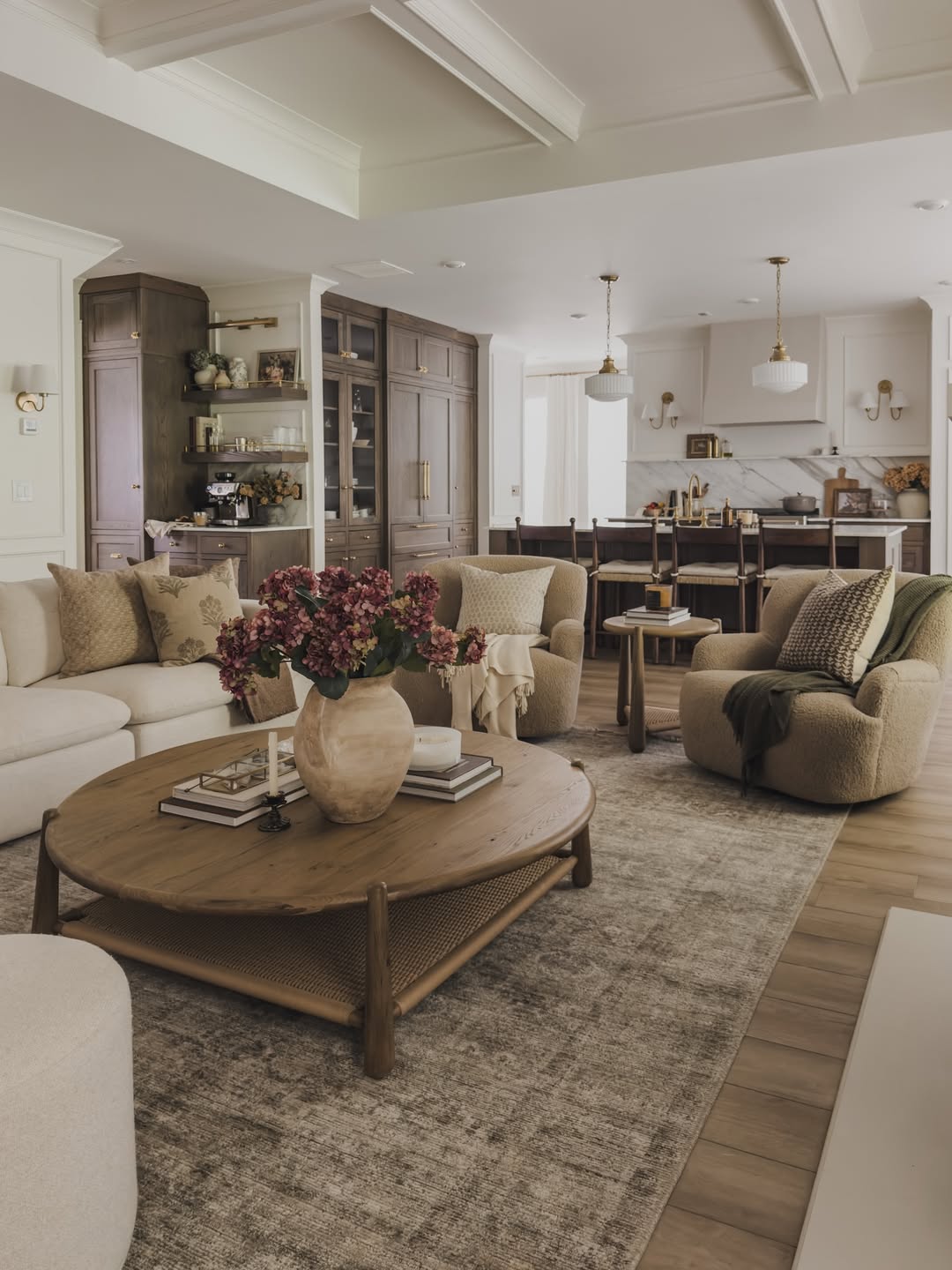
A modern farmhouse living room often balances warm wood with soft textiles, and a textured neutral rug is the piece that holds that balance together. Here the rug sits under both the sofa and the round coffee table, which is a practical rule for open-plan rooms: large enough to unite the seating, neutral enough not to fight the stone fireplace or the boucle armchairs. The palette stays in beige, brown, and muted green, so nothing in the room demands attention over anything else. That restraint lets the texture of the rug do the work, making the whole layout feel grounded without needing a bold color.
Modern Living Room Featuring a Blue, Grey, and White Abstract Rug
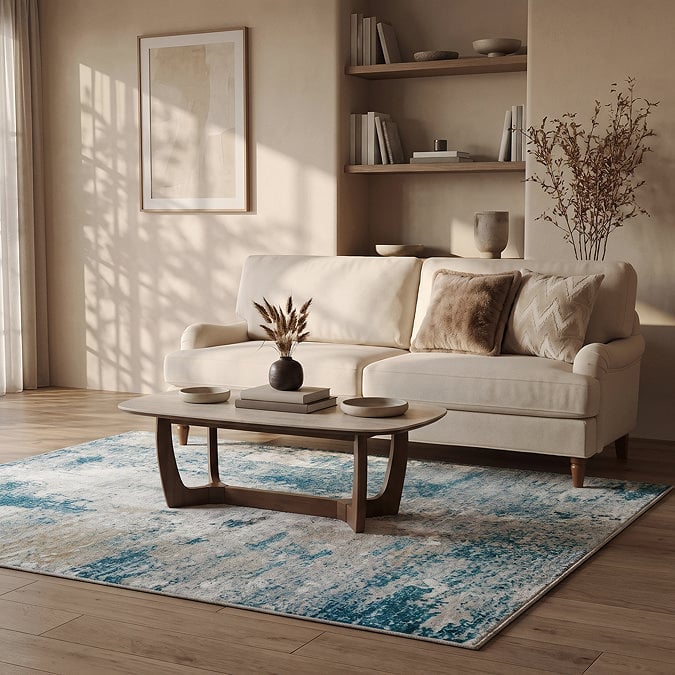
How do you add visual interest to a modern living room without changing the furniture? The answer here is an abstract rug in blue, grey, and white. The rug anchors the seating area under the coffee table, and its cool tones contrast with the warm beige of the wood floor and the sofa upholstery.
The palette works because the rug pulls grey from the walls and blue from the shelves, so the color feels pulled from the room rather than dropped into it. The abstract pattern covers enough surface that you notice it first, but the soft shadows from natural light keep the overall room calm. A practical rule for a palette like this: match one rug color to an existing finish in the room, and the rest will fall in line.
Minimalist Living Room with a Plain Beige Rug for Calmness
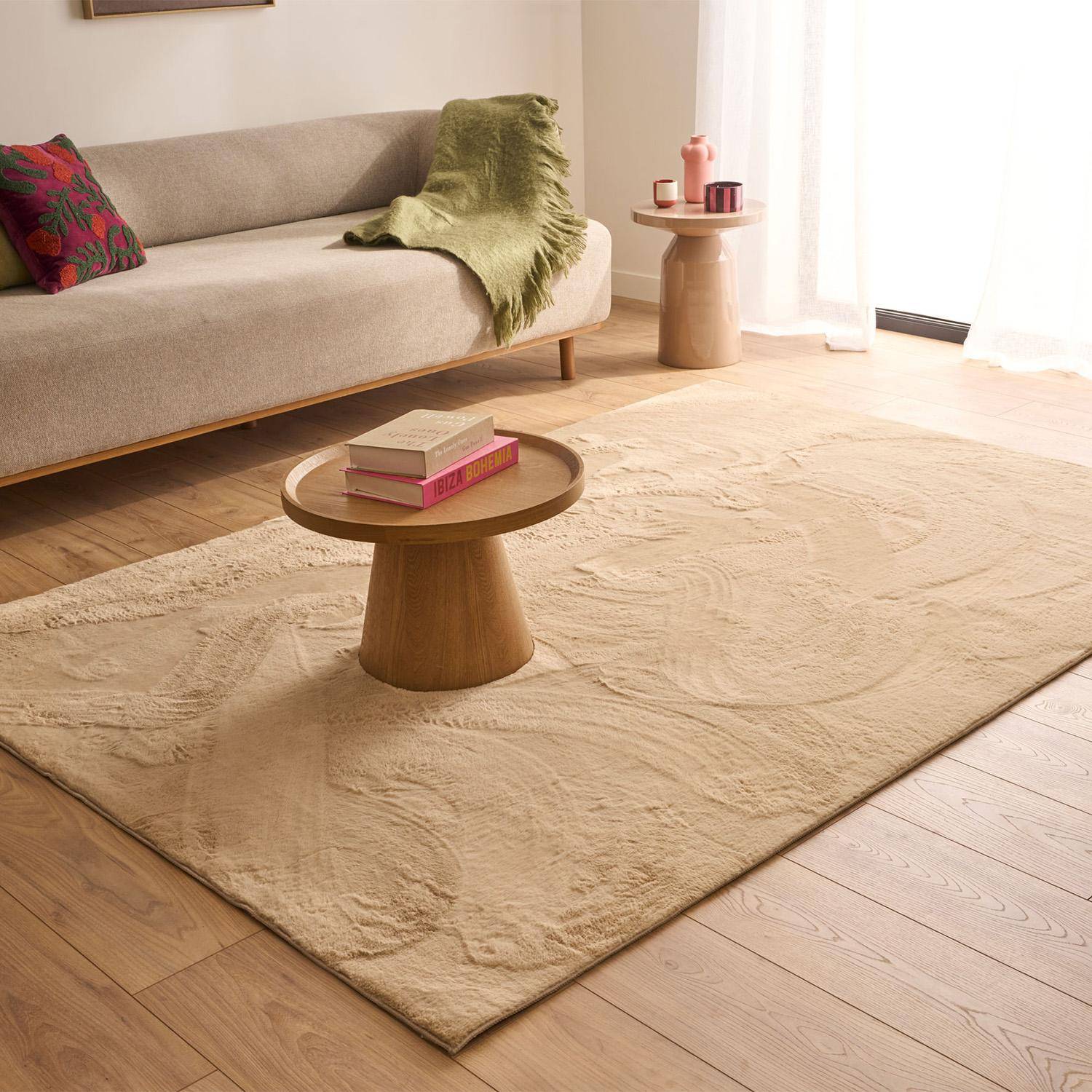
A plain beige rug in a minimalist living room sits under a round coffee table. Its low pile keeps the surface from adding visual noise. Natural light falls across the rug, and because the color is matte and uniform, the light reads as texture. The wood tones of the floor and the sofa stay warm, while the rug holds the center of the room in a soft neutral. That single choice keeps the whole space from feeling cold or stark.
Rustic Living Room with a Textured Orange Rug and Stone Fireplace
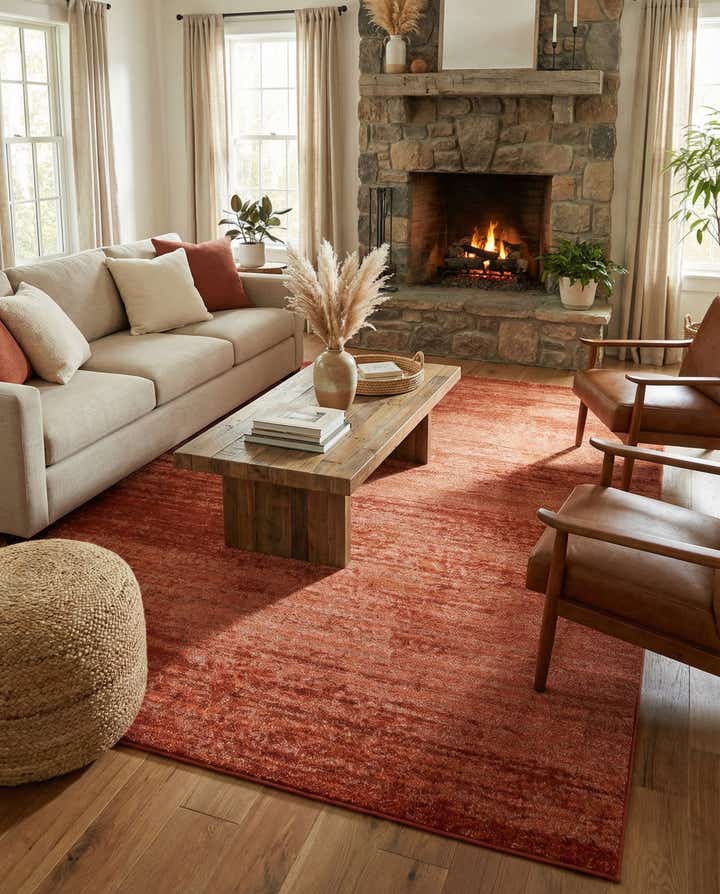
In a rustic living room, let the fireplace and the rug share the same visual weight, but not the same texture. Here a textured orange rug sits in front of a stone fireplace, and the difference between the rough stone and the soft rug pile gives the room depth. The orange pulls warmth from the fire and echoes the brown leather of the armchairs, so the color feels natural. In a layout like this, the rug does not need to stretch under every piece of furniture. Placing it just in front of the fireplace keeps the stone and the hearth as the main event while the rug adds comfort underfoot.
Botanical-Inspired Living Room Rug with Green and Orange Accents
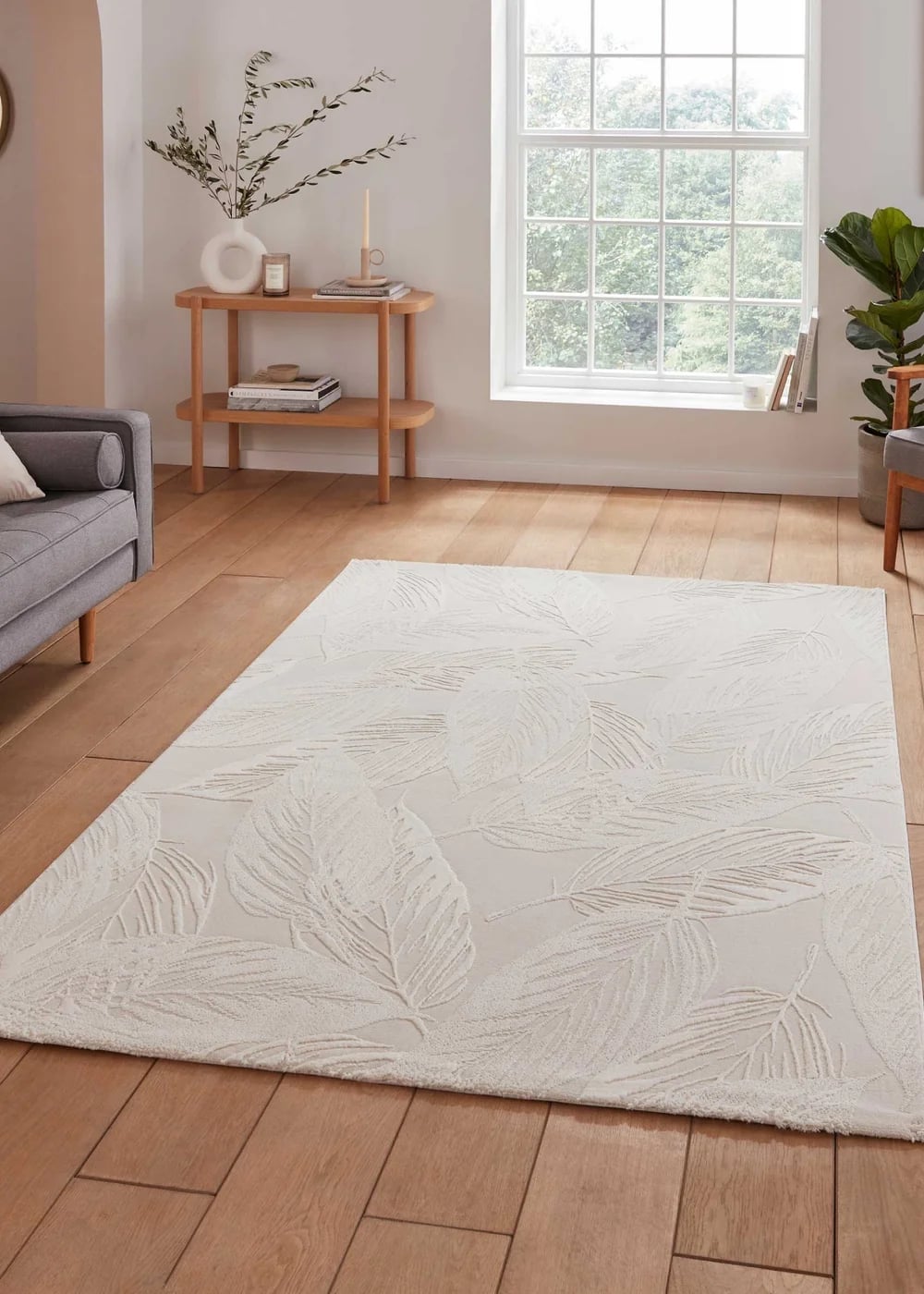
A plain beige rug can feel safe but forgettable. This botanical version in cream, beige, green, and orange gives the room a clear focus without demanding a full redecorate. The rug anchors the seating area under a sofa and chair, and its leaf-like pattern pulls the eye across the floor. The palette works because green and orange are opposites on the color wheel. They energize each other, while the beige and cream keep the look from feeling loud. For a similar effect, look for a rug that repeats the accent colors already in your room. That way the pattern feels connected, not dropped in.
Vibrant Modern Living Room with a Colourful Geometric Rug
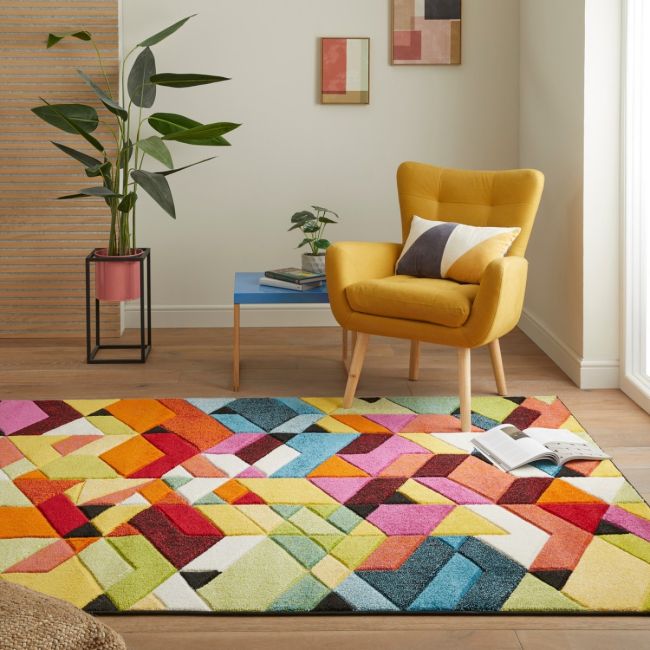
The rug sits front and center in a roomy space, with a bold geometric pattern in yellow, blue, and pink that draws attention immediately. For renters who want a big color change without painting or new furniture, a statement rug like this does the work alone. The armchair and side table stay neutral, so the rug carries the personality. When you move out, the rug rolls up and goes with you, no landlord approval needed.
Boho Living Room Featuring a Chunky Hand-Woven Wool Rug
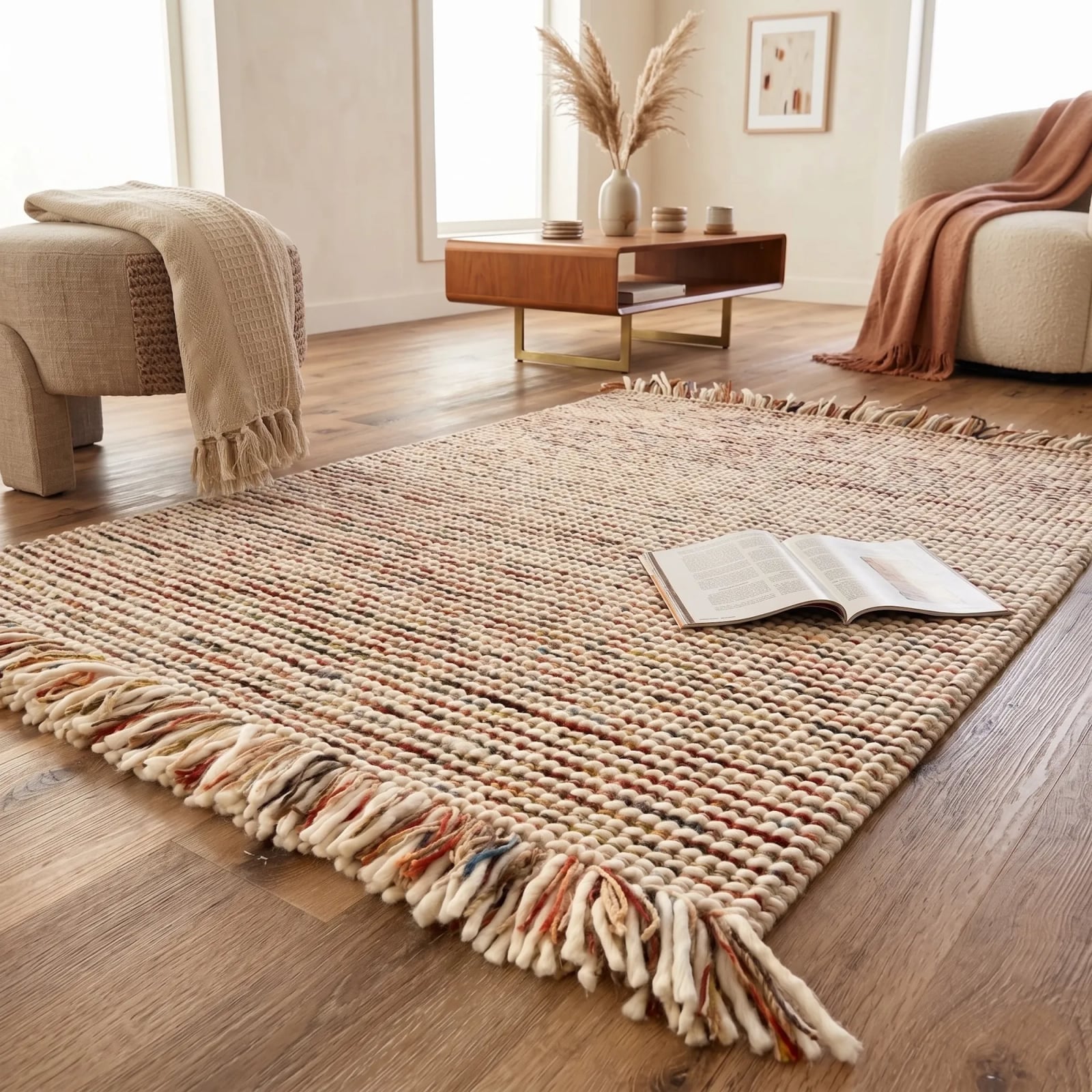
This rug works because it is not trying to be subtle. The chunky hand-woven wool construction in cream and beige with visible fringe adds texture that a flat weave cannot match. It sits under an ottoman and coffee table in a compact room, and the natural fiber keeps the space from feeling too precious. Wool holds up to foot traffic and resists dirt better than synthetic blends, which matters when the rug is the main soft surface in the room. The wood coffee table and neutral armchair let the rug’s weave do the talking.
Modern Organic Living Room with a Highly Textured Jute Rug
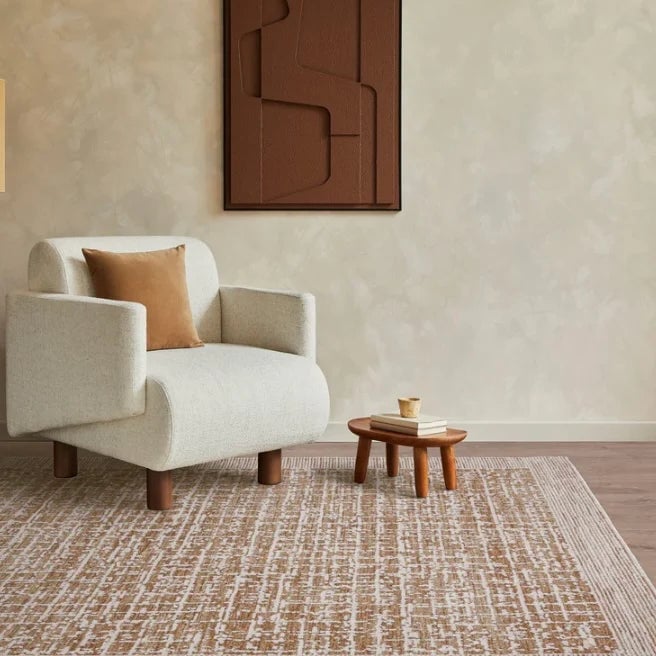
Can a rug add warmth without adding a single color? Jute does exactly that. This compact living room uses a beige, brown, and white jute rug under an armchair and side table, and the texture does the job that pattern usually does. The boucle armchair and wood side table echo the natural feel, so the whole corner reads as grounded rather than sparse.
The practical advantage of jute is durability. It handles high-traffic spots without showing wear the way a plush wool rug might. The trade-off is that jute feels rougher underfoot and can shed at first. For a room where you want organic texture without a high-maintenance fiber, jute is a solid choice.
Cozy Modern Organic Living Room with a Rich Textured Brown Rug
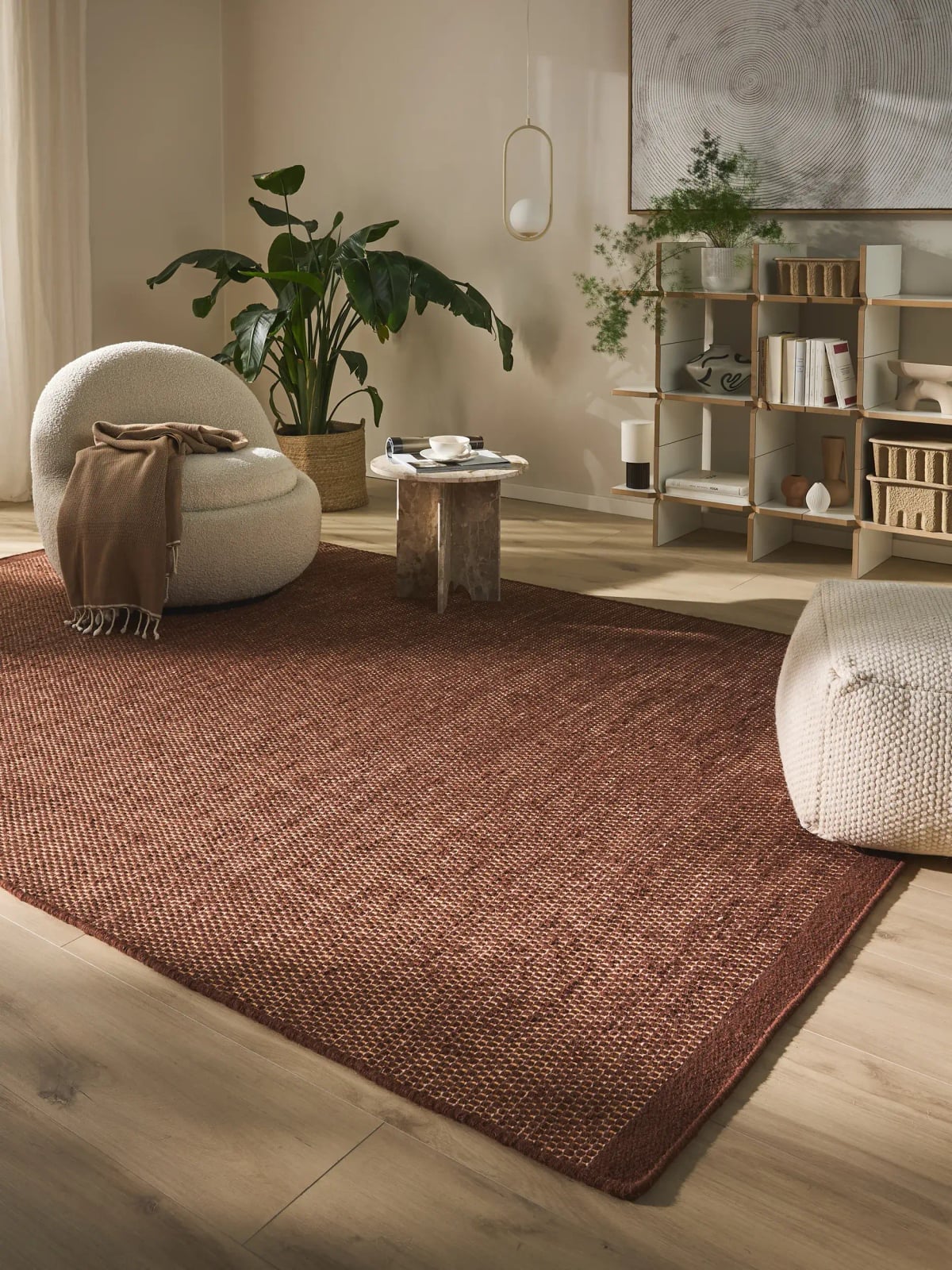
A rich textured brown rug anchors a cozy corner with an armchair, ottoman, and large plant, while a pendant light above defines the zone. The brown grounds the cream and beige palette, and the woven texture adds depth that a flat rug would miss. For a room that feels spacious but needs a defined sitting area, a darker rug creates a visual boundary without walls.
Boho Living Room with a Striped Wool and Jute Rug
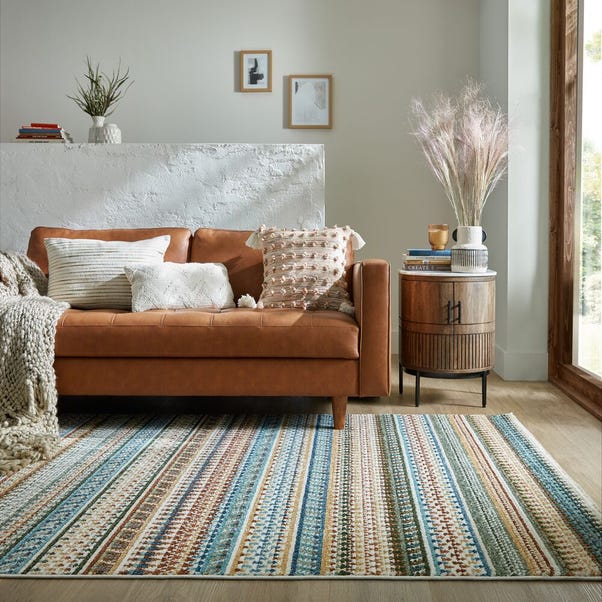
A striped rug can do the work of several accent pieces at once, which is handy when you want color without cluttering the floor. This boho living room uses a blue, brown, cream, and terracotta striped wool and jute rug to anchor the seating area. The natural daylight keeps the palette from feeling heavy, and the mix of wool and jute adds texture that a single-material rug would miss. The sofa and side table stay simple so the rug stays the focal point. Keep the surrounding furniture in solid tones that pull from one of the stripe colors to make the pattern look deliberate.
Traditional Living Room with an Ornate Burgundy and Navy Wool Rug
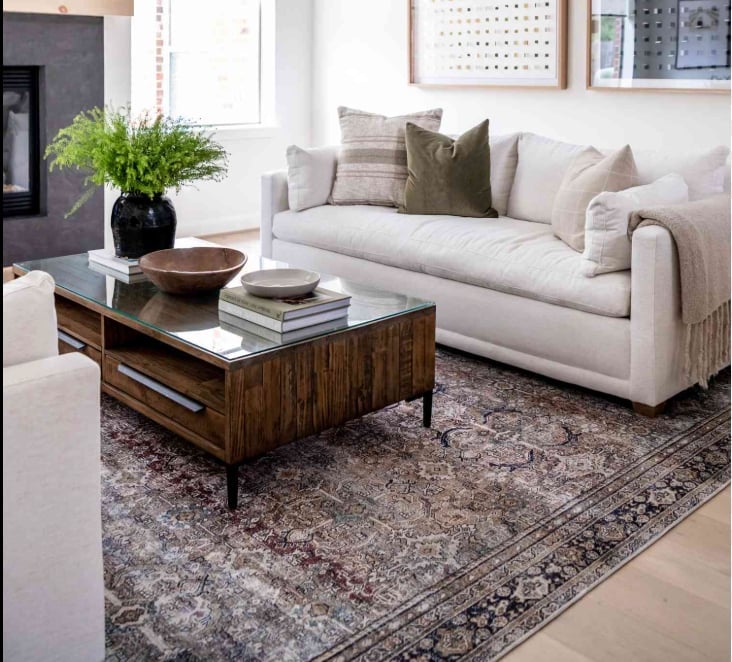
An ornate rug can feel formal, but this traditional living room proves it does not have to be stiff. The burgundy and navy wool rug sits under the coffee table and sofa, grounding the space without overwhelming it. The beige and grey walls and stone elements keep the palette grounded, so the rug appears rich without feeling heavy.
Natural daylight softens the deep tones, and the glass and wood pieces break up the visual weight. If you are drawn to a detailed traditional rug but worry about a dark look, pair it with lighter wall colors and a mix of natural materials. The rug provides the dominant pattern, so everything else can stay simple.
Eclectic Living Room with a Cream and Black Diamond-Patterned Rug
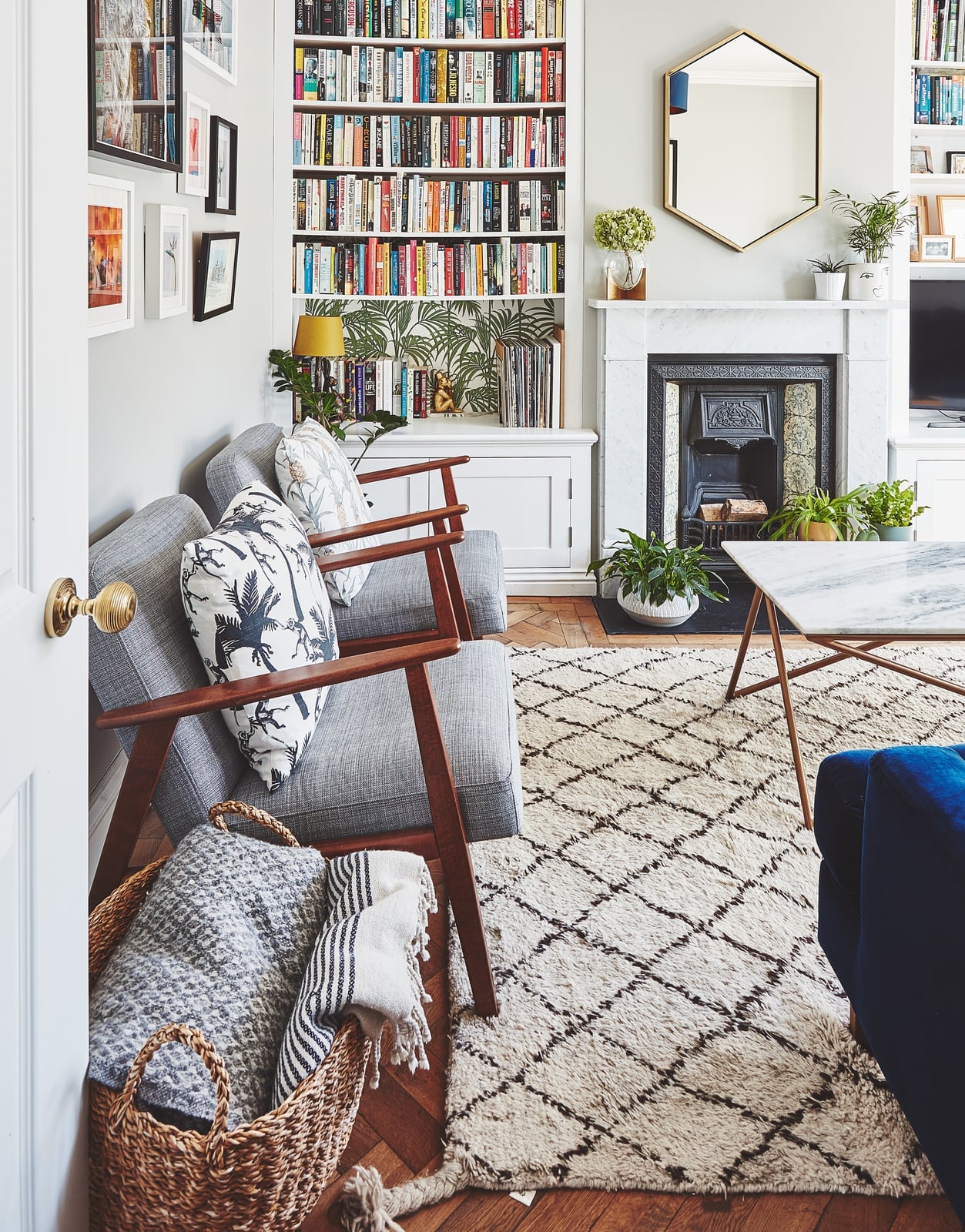
The diamond pattern on this rug repeats without feeling repetitive, thanks to the cream and black contrast that reads as graphic but not harsh. In this eclectic living room, the rug anchors the seating area near the fireplace, and the surrounding pieces, a mix of wood, marble, glass, and a plant, keep the look from feeling too matched. An ambient lamp adds depth, so the black lines stay crisp without dominating the room. A high-contrast geometric rug works well when the room has enough visual variety to hold its own.
Modern Neutral Living Room with a Textured Beige and Cream Diamond Rug
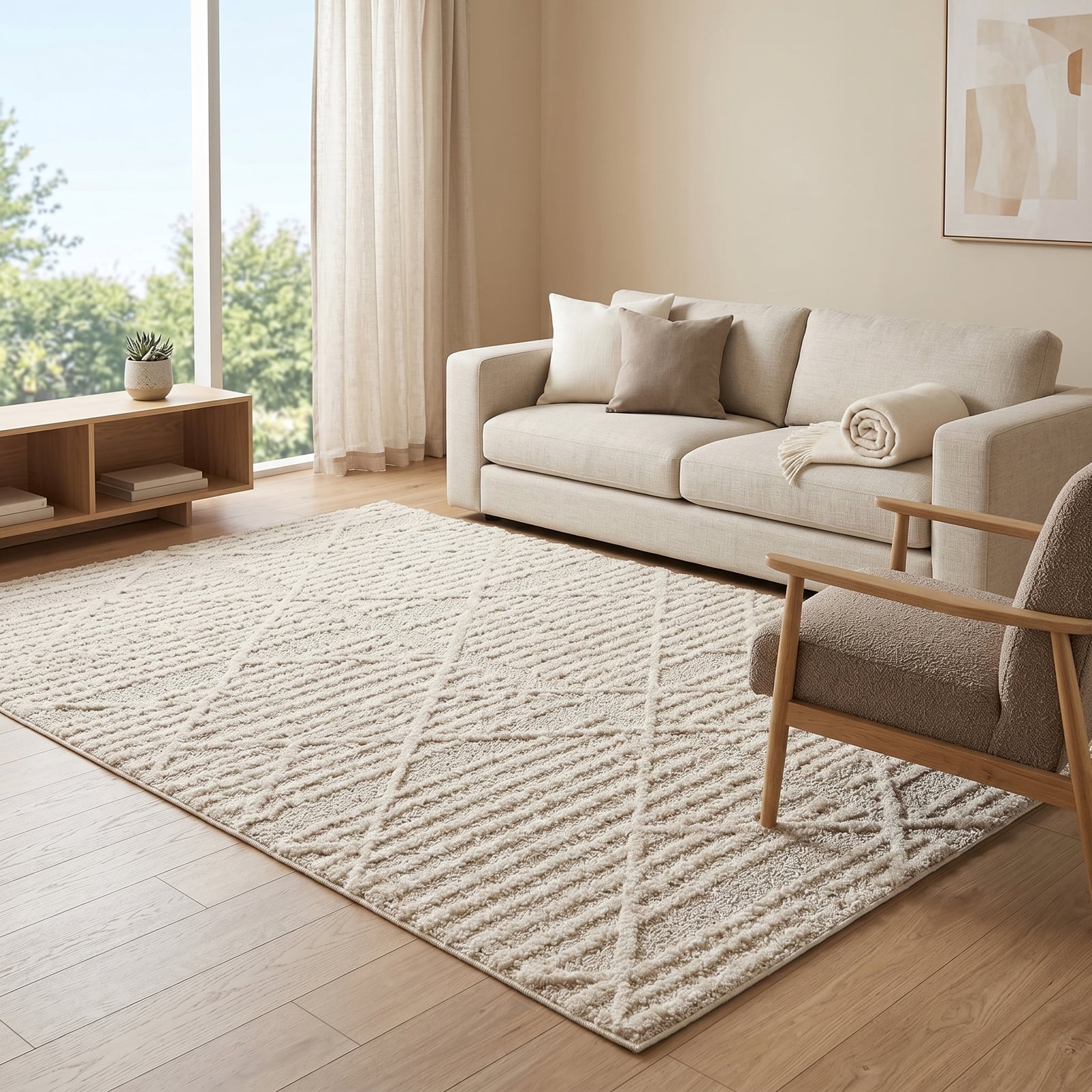
This is a neutral room that does not rely on color for interest. The textured beige and cream diamond rug adds pattern through weave rather than pigment, which keeps the modern neutral palette intact. Natural light from the window hits the rug pile differently through the day, giving the floor subtle movement. The sofa, armchair, and wooden furniture all stay in warm wood tones and soft beige, so the rug becomes the main textural event. For a neutral scheme that does not go flat, choose a rug with visible weave or a low-relief pattern. It adds depth without adding a new color.
Botanical Living Room with a Large Green and Cream Leaf-Patterned Rug
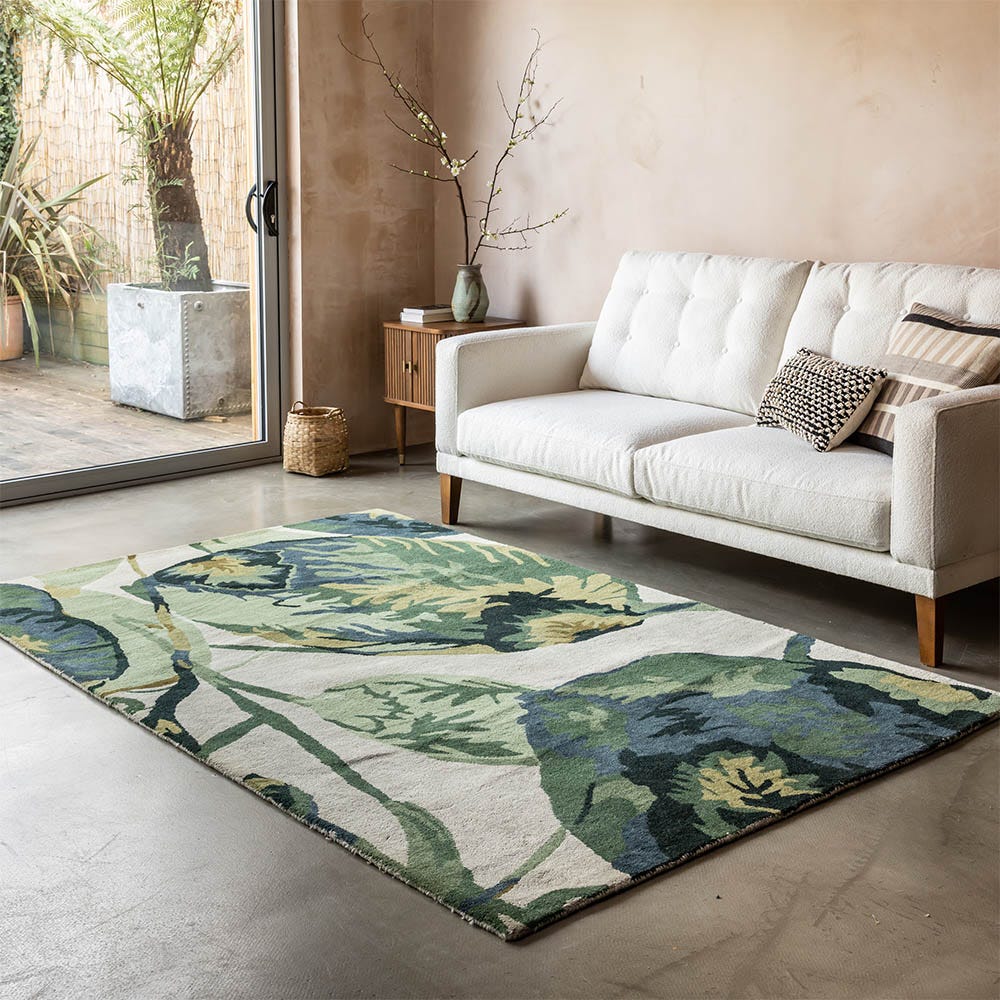
A large patterned rug can anchor a room without needing much else on the floor. This botanical living room uses a green and cream leaf-patterned rug as the central piece, with the sofa and side table arranged around it. The concrete and wood finishes keep the look grounded, so the botanical motif does not feel precious.
Natural light helps the green tones stay fresh. When the rug is the main pattern in the room, keep the other surfaces clean. The leaf pattern already provides enough visual activity. A coffee table or side table with a simple silhouette will not compete. This setup works especially well in a room where the rug can spread out without bumping into walls.
Scandi Living Room with a Textured Cream, Beige, and Grey Geometric
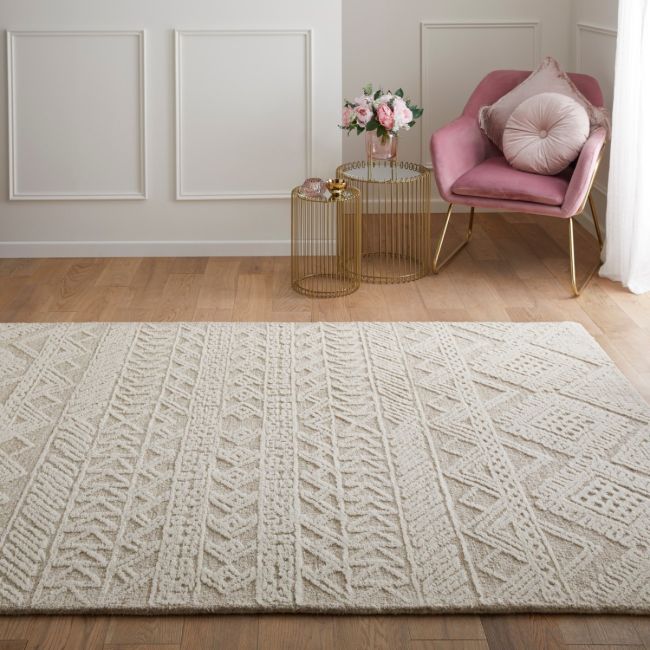
A textured geometric rug in cream, beige, and grey brings the Scandi principle of quiet contrast to a roomy living room. The rug sits under the coffee table, its raised pattern adding visual weight without overwhelming the pale palette. Wool feels warm underfoot and holds up to daily use, while the metal legs of the armchair and side tables keep the look airy. Natural daylight softens the grey tones, so the pattern reads as texture rather than hard lines. This setup works best when the rug repeats a tone found elsewhere in the room, like the beige in a throw or the grey in a lamp base.
Transitional Living Room Anchored by an Intricate Sage Green Geometric
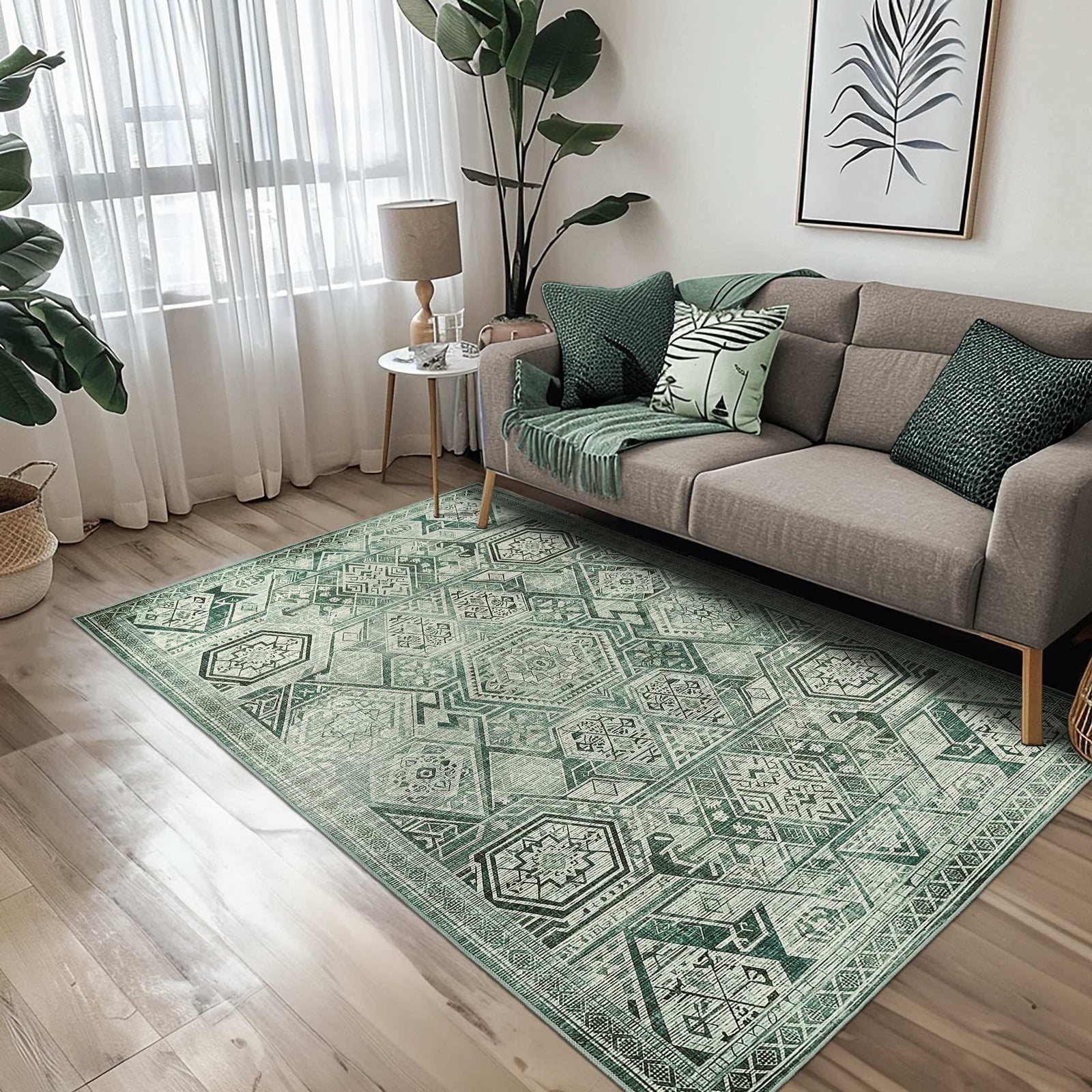
A practical rule for a roomy transitional living room is to let the rug set the color anchor. Here an intricate sage green geometric rug sits under the sofa, pulling grey and white from the walls and fabric into its pattern. The sage green introduces a natural note that large potted plants reinforce. For renters, this layout works because the rug is a portable layer: it defines the seating zone without any permanent change to the wood floor or wall paint. A rug with a dense pile holds its shape under sofa legs and foot traffic, so the pattern stays crisp even as the room gets daily use. The window brings in natural light that shifts the green from muted to fresh depending on the time of day.
Contemporary Living Room with a Bold Black and White Geometric Shag
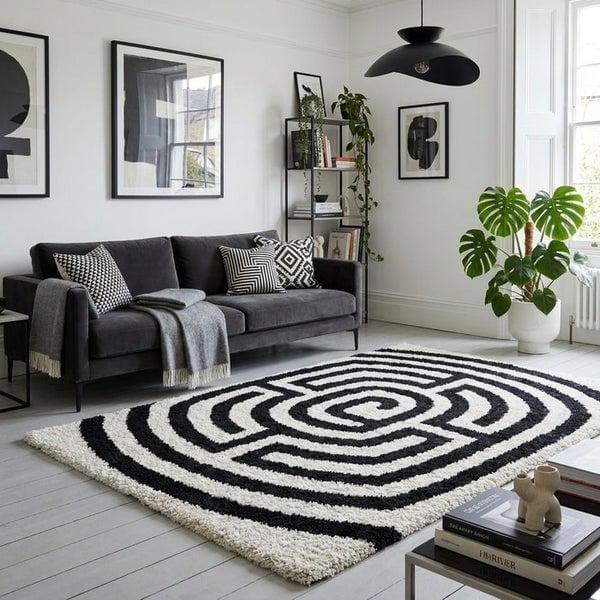
A flatweave rug in the same black and white palette would feel graphic and sharp. This room goes the other direction with a bold black and white geometric shag that adds softness through its pile. The shag texture absorbs sound and gives the seating area a cozy feel, while the high-contrast pattern keeps the look contemporary.
Natural daylight from the window balances the dark tones, and the overhead pendant adds a cool white light in the evening. The large rug anchors the sofa and shelving unit, making the roomy space feel connected. A shag rug needs a vacuum with a beater bar that can handle longer fibers, and it hides footprints better than a flat pile. The black and white palette means the rug works with almost any accent color, from grey to a single warm tone like ochre.
Transitional Living Room with a Light Blue Geometric Border Rug
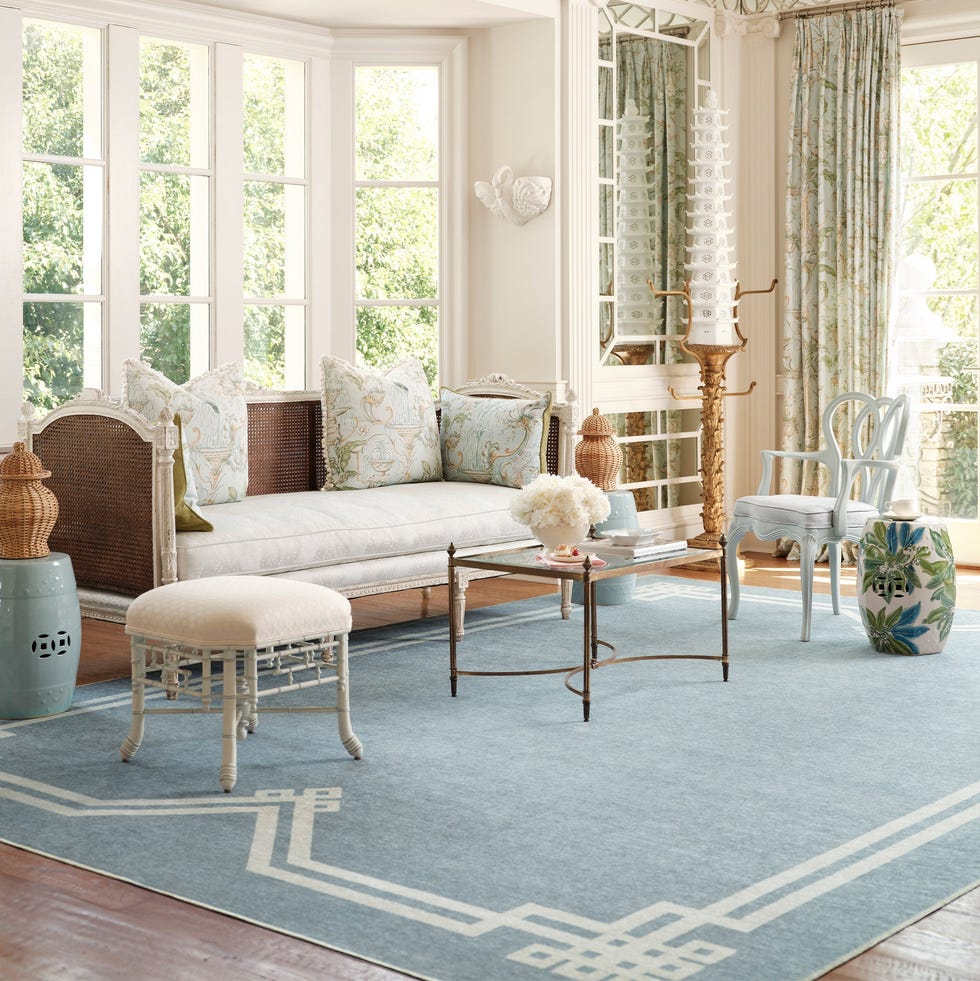
A light blue rug with a geometric border brings a clean edge to a roomy transitional living room. The border frames the seating area, giving the sofa, ottoman, and decorative stools a defined zone without the rug needing to be oversized. Light blue reads as a neutral in this setting, pairing with white and cream without competing. Natural fibers like wool or cotton hold a geometric border pattern well because the weave stays tight. The rattan accents in the room echo the natural texture of the rug, so the palette feels intentional rather than scattered. Natural daylight keeps the blue from feeling cool, and the cream background of the rug brightens the floor area.
Modern Living Room with a Striking Blue Geometric Rug and Leather Sofa
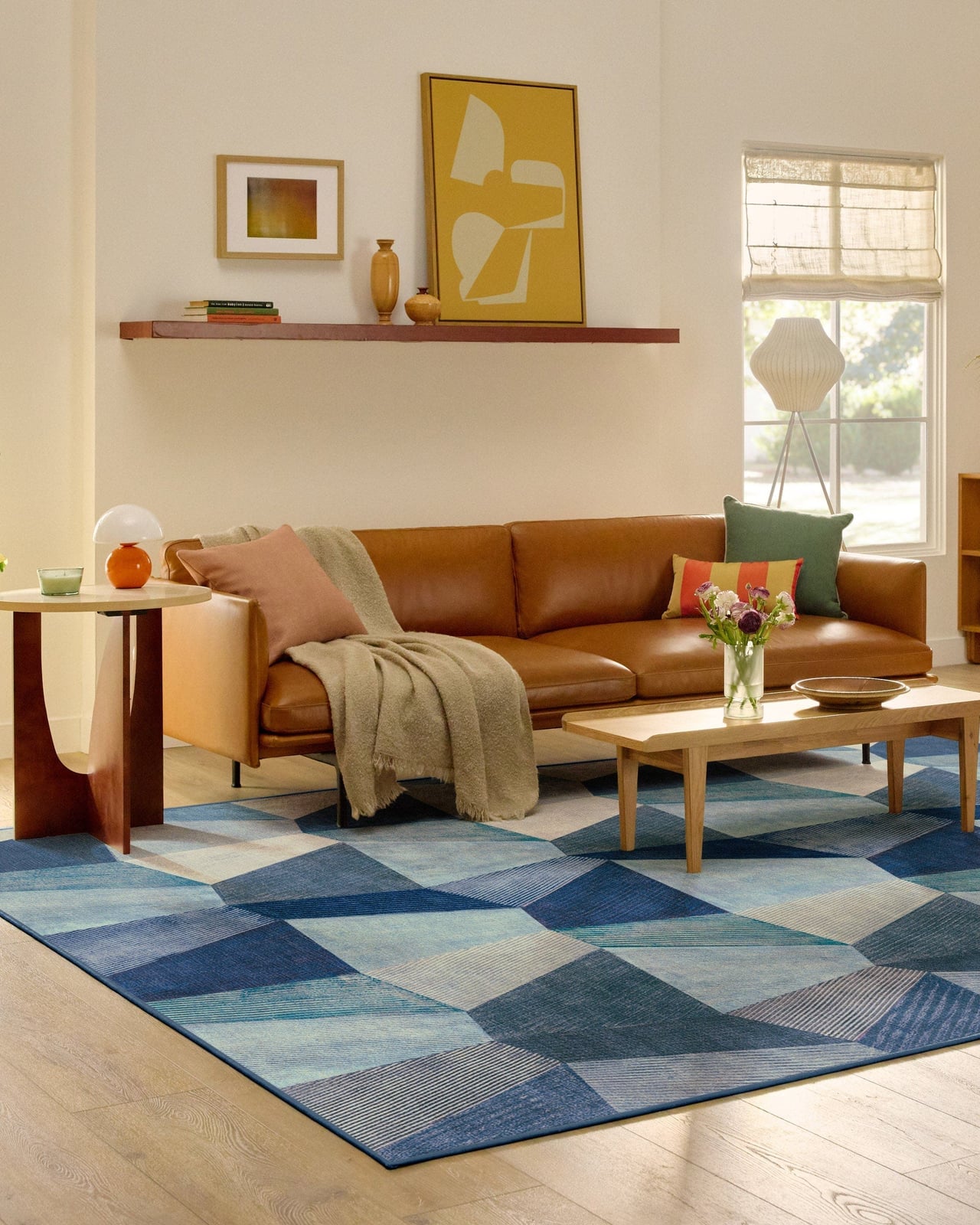
This room gets the scale right. A striking blue geometric rug grounds the seating area, with the leather sofa and coffee table sitting fully on it. In a roomy modern living room, a rug that stops short of the furniture legs makes the space feel smaller. Here the rug extends past the side table and artwork zone, so the seating area is one connected piece. The blue in the rug picks up the cooler tones in the room, while the cream and beige shapes in the pattern echo the leather and wood. A low ambient lamp and a window keep the palette light. The woven textile of the rug adds a soft layer between the leather sofa and the floor, which helps with acoustics in an open layout.
Spacious Modern Living Room with a Large Beige Shaggy Rug
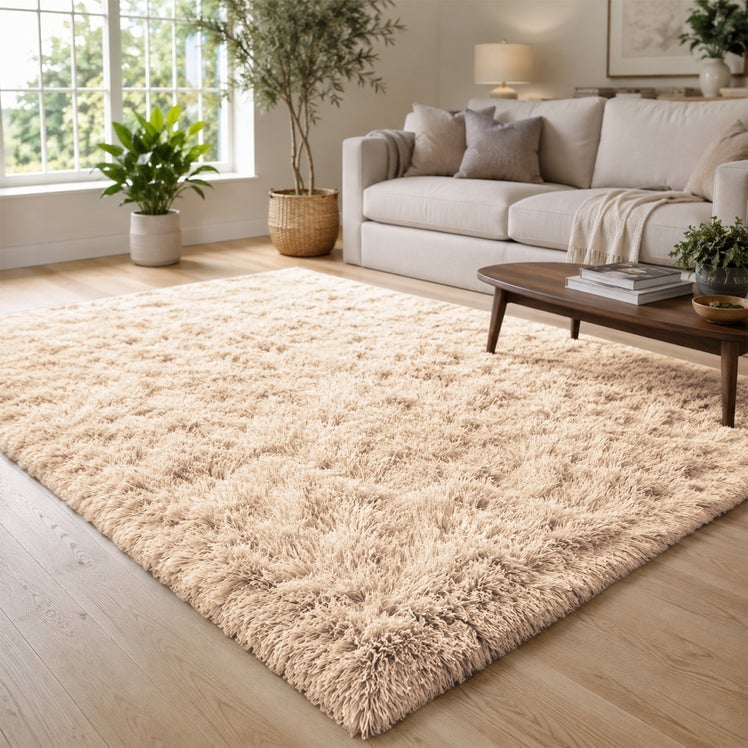
A roomy living room benefits from a rug that matches its footprint. The beige shaggy rug here covers most of the floor, which pulls the seating and coffee table into one defined zone rather than letting them drift apart. The pale beige works with the wood tones and the green of the potted plants, so the room reads as open without feeling empty. Natural light and a warm glow from the room help the shaggy texture catch soft shadows. When a rug spans nearly the whole floor, the room tends to feel larger, not smaller, because the eye moves across a continuous surface rather than stopping at a small island of color.
Modern Living Room with a Plush White Shaggy Rug and Orange Sofa
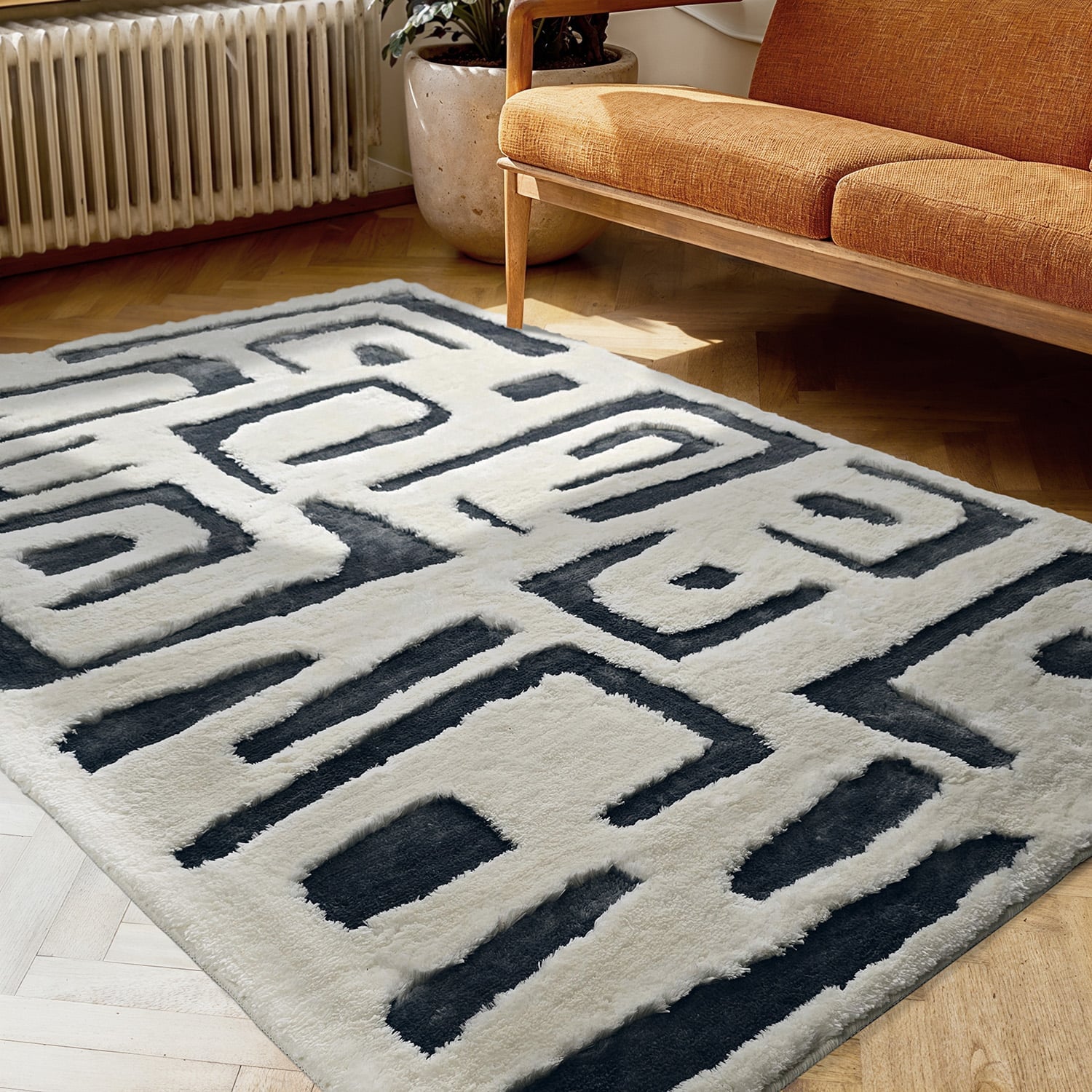
A plush white shaggy rug sits under a navy blue sofa, with an orange sofa nearby. White and navy blue let orange be the accent without competition. Natural light keeps the white rug from feeling heavy, and the metal and wood pieces echo the clean lines of the rug’s shape. The orange appears deliberate because white and navy balance it.
Contemporary Living Room with a Colour Block Geometric Rug
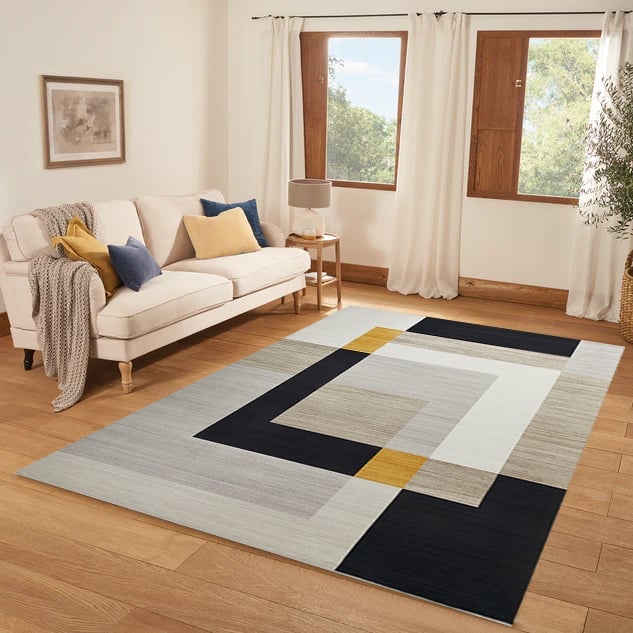
A colour block geometric rug can define a seating area without needing a solid border. The grey, black, white, and mustard yellow blocks create a clear edge around the sofa and coffee table, so the furniture group feels anchored. Soft natural light keeps the contrast from feeling harsh, and the wooden coffee table adds a warm note that the rug does not supply on its own. The look depends on the ratio of pattern to solid: the rug is busy, so the sofa stays plain and the walls stay light. That balance is what keeps the room from feeling chaotic.
Modern Living Room Featuring a Terracotta and Cream Geometric Rug
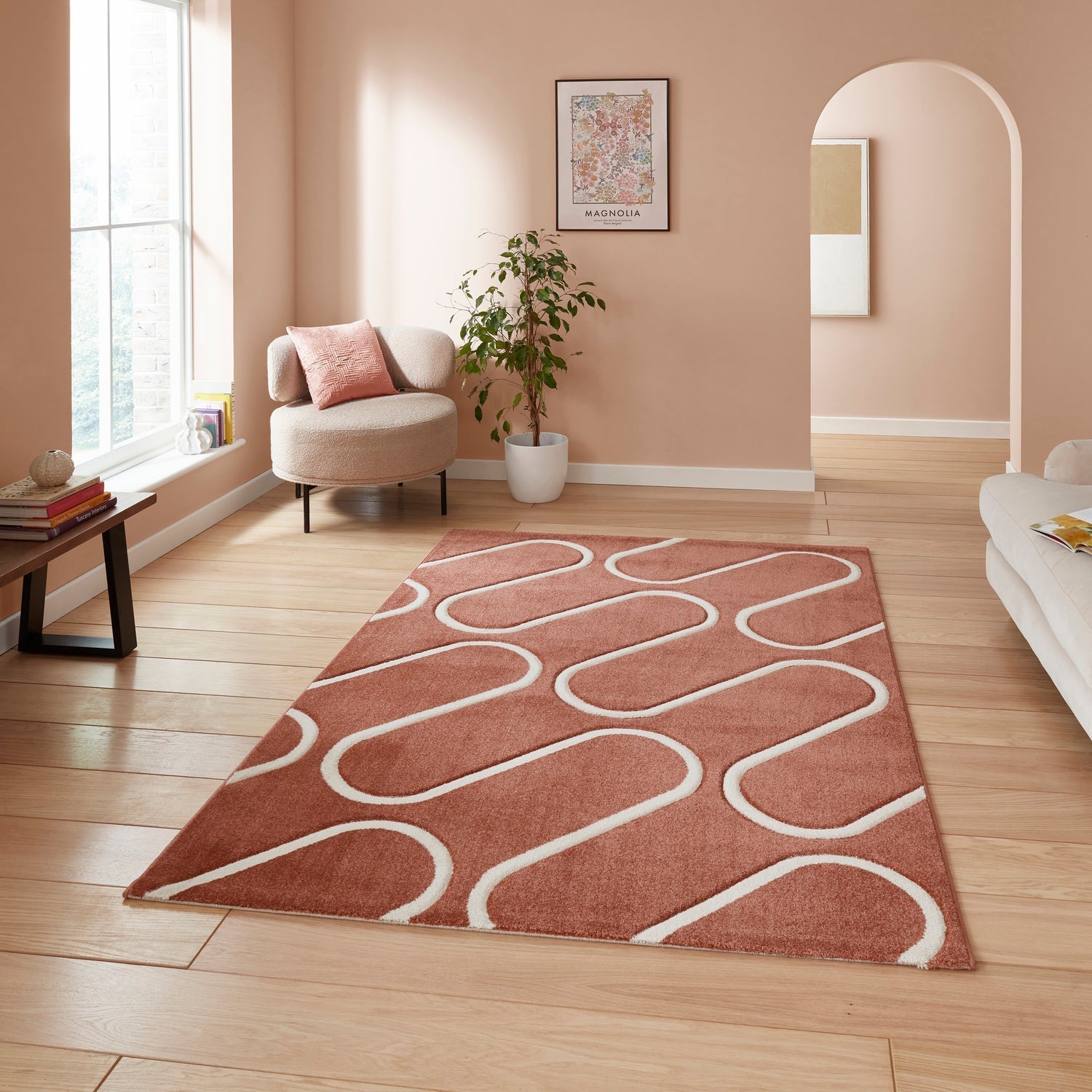
A terracotta and cream geometric rug could easily lean toward boho, but here it looks modern because of the furniture around it. The rug sits centered in the room with a curved armchair and a sofa arranged around it, and natural daylight hits the pile evenly. The terracotta picks up the warmth in the wood floor, while the cream keeps the pattern from dominating the space. The key is that the rug does not compete with the furniture; it sits under it, letting the curved armchair and the plant stand out. A roomy layout helps, because the rug has breathing room around its edges and is not crowded by side tables.
Farmhouse Living Room with a Grey Checkered Rug and Light Wood Floors
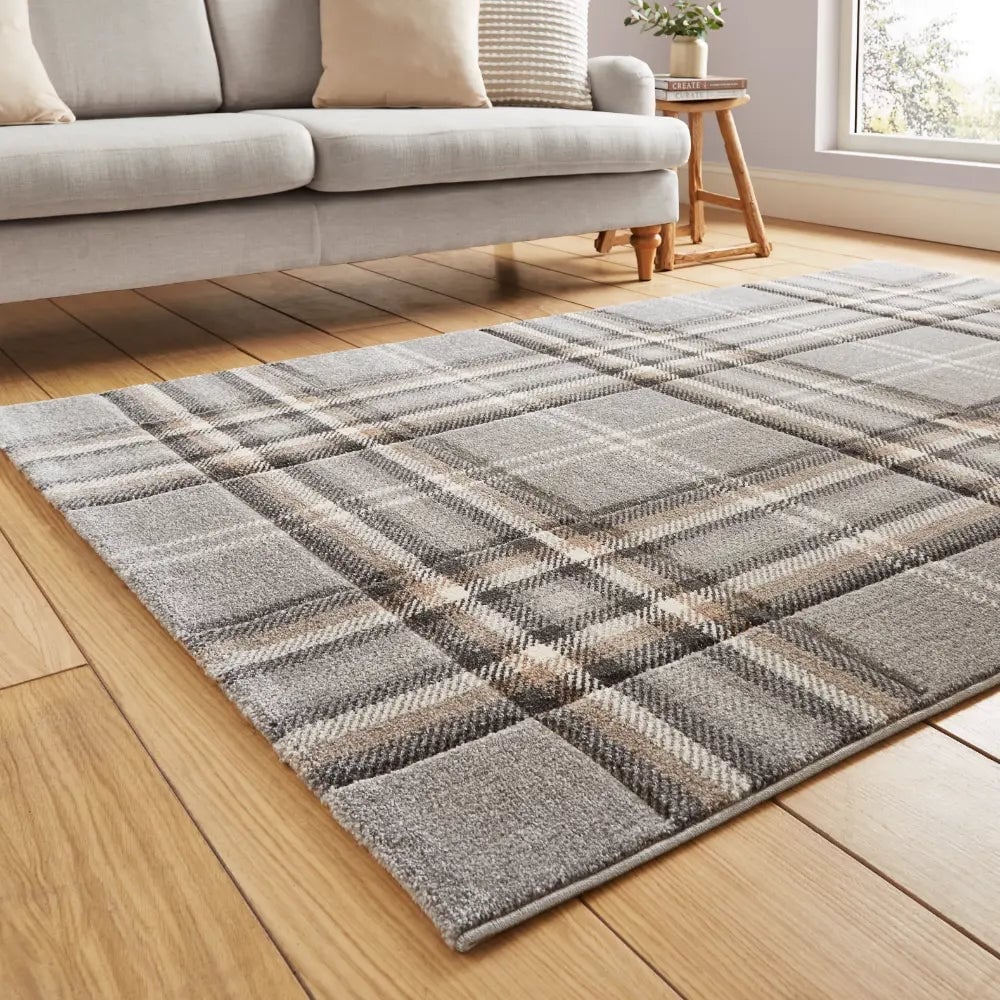
A grey checkered rug on light wood floors gives a farmhouse living room a crisp foundation. The grid pattern reads as traditional but the grey tones keep it from feeling dated, and the beige and white in the room soften the contrast. The rug sits centrally under the sofa and side table, which keeps the furniture from floating. The checkered pattern works because the scale is moderate: small enough to read as texture from across the room, large enough to hold its own against the sofa.
Modern Living Room with a Colourful Squares Geometric Rug, Indoor
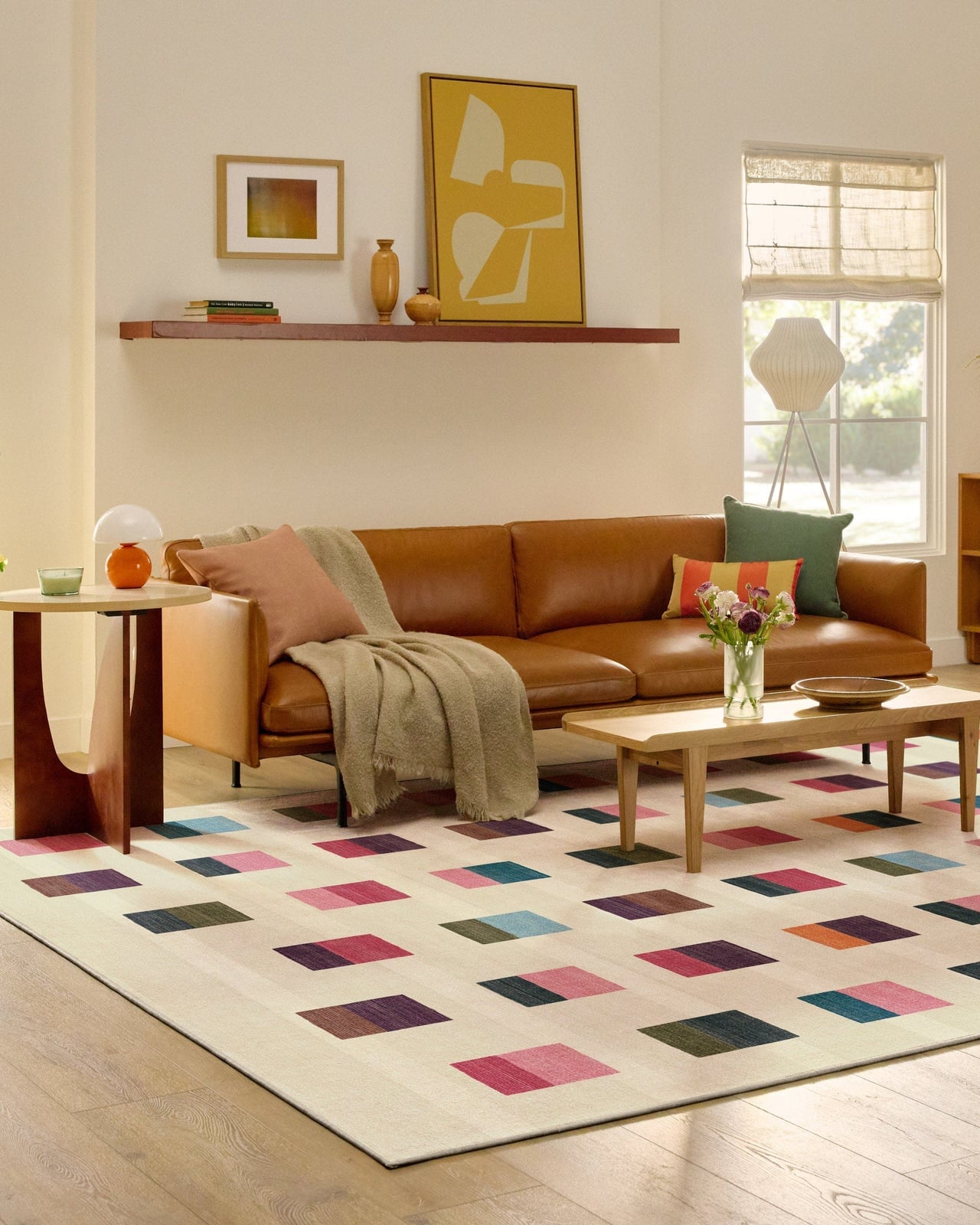
This room makes its case with a living room rug that does not fade into the background. The cream ground lets squares of pink, blue, orange, green, and purple appear deliberate. A leather sofa and wood coffee table keep the setting grounded, so the palette feels curated. Natural light and a warm ambient lamp help each color stay crisp. If you want a colorful rug but worry about commitment, match one or two of its tones in your throw pillows or wall art. That small thread of repetition keeps the whole arrangement cohesive.
Modern Living Room with a Plush Cream Shaggy Rug and Light Wood
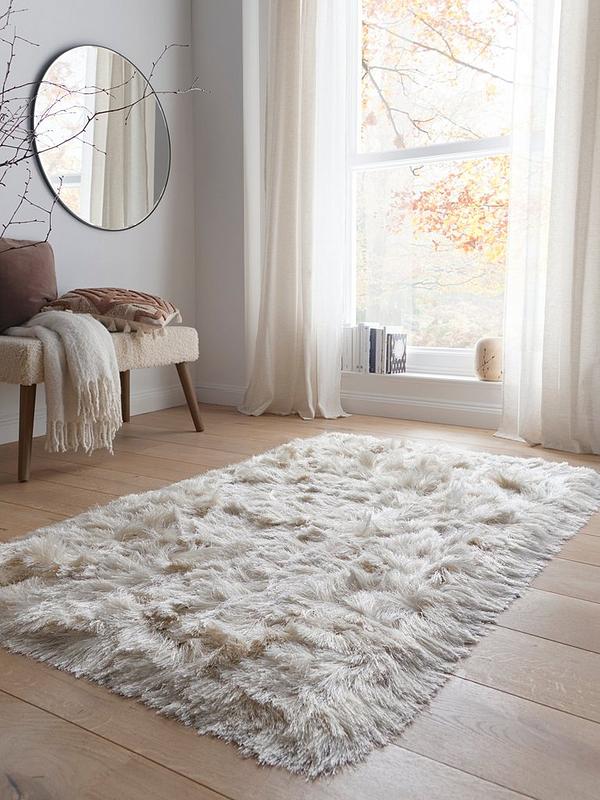
A practical rule for a shaggy rug in a rental: choose a cream or off-white tone that blends with the floor rather than fighting it. The thick cream shag here sits in the center of the room, and the light wood floor around it keeps the visual weight even. Because the rug is the only high-pile piece, the eye moves to it naturally without the space feeling crowded.
Shag requires a bit more upkeep than a flatweave, but the trade-off is a softness that changes how a room feels underfoot. A bench and a single chair keep the layout open, so the rug defines the zone without needing a full furniture set. For renters, a plush neutral rug like this one works as a temporary anchor that pulls a room together until you are ready to invest in permanent pieces.
Coastal Living Room with a Braided Wool and Jute Rug
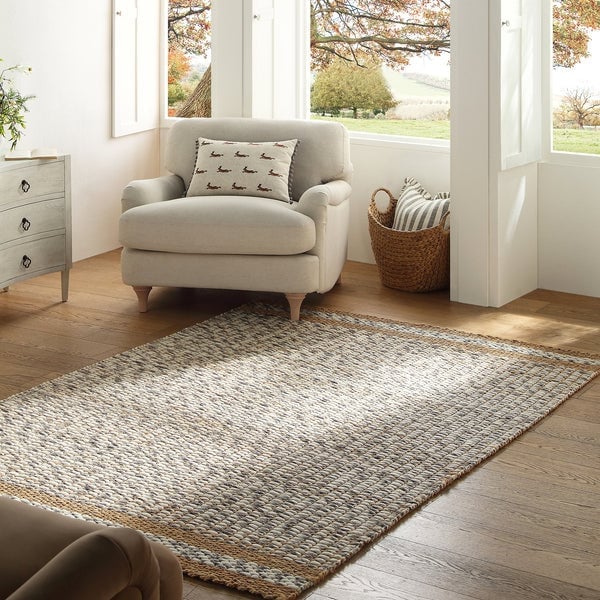
A braided wool and jute rug brings two textures to a coastal living room without adding a busy pattern. The beige and brown tones sit naturally against a white armchair and a wood dresser, so the room feels relaxed rather than staged. The braided construction gives the rug enough visual weight to hold its own in a roomy seating area. What defines this coastal look is the absence of blue: it relies on neutral earth tones and natural daylight to create the seaside feel. The break comes from a single dark wood accent, which keeps the palette from going too beige.
Geometric Flatweave Rug in a Living Room with Tropical Accents
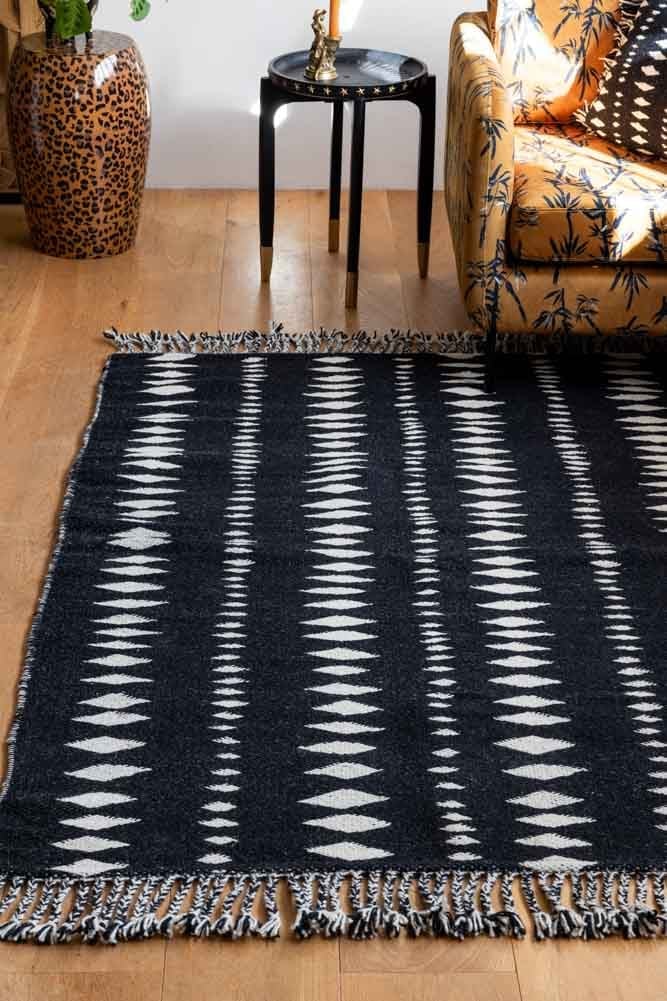
A sharp black and off-white geometric flatweave rug sets up a clean contrast against the natural textures in this living room. The flatweave construction keeps the pattern crisp and the profile low, which matters when a rattan armchair and a patterned planter are already adding visual layers. The rug sits partially under the seating zone, letting the black lines echo the dark outlines in the tropical accents without competing. For a similar effect, look for a rug where the geometric repeat is tight enough to read as texture from across the room but clear enough to hold its own up close.
Modern Living Room with Large Windows and a Patterned Rug
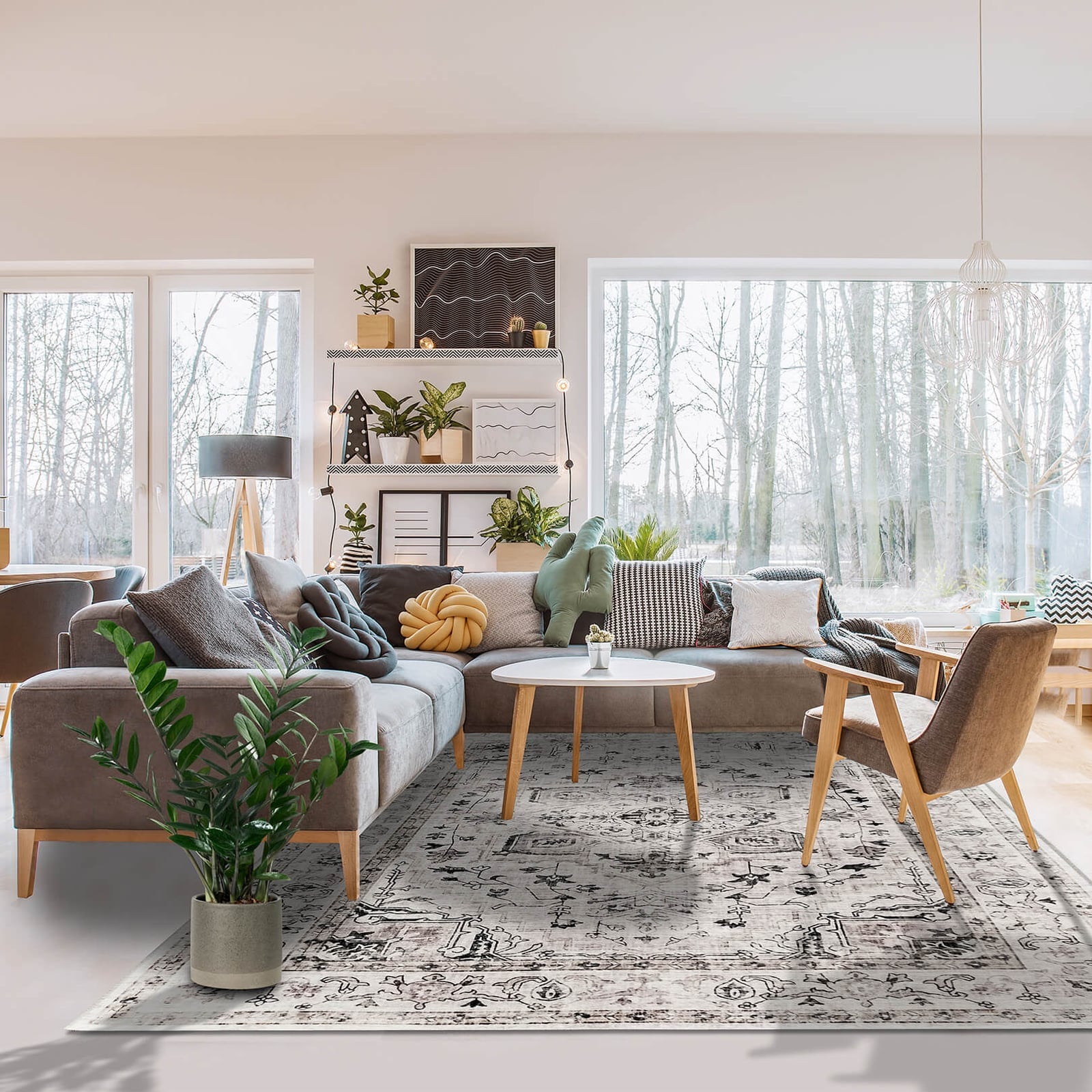
A patterned rug in a room with large windows needs to balance with strong natural light, not fight it. Here a grey and beige patterned rug sits under a grey sectional and a white coffee table, with a wooden chair adding warmth. The large windows bring in a forest view and plenty of daylight, so the rug’s muted tones keep the focus on the outdoors.
The layout arranges the sofa and chairs around the rug and coffee table, which creates a clear conversation zone. A pendant light adds a second light source for evening, but the rug still anchors the seating area after dark. If your room has big windows, choose a rug pattern that looks subtle from a distance and detailed up close. That way it supports the view without stealing the show.
Eclectic Living Room with an Abstract Textured Rug and Metallic
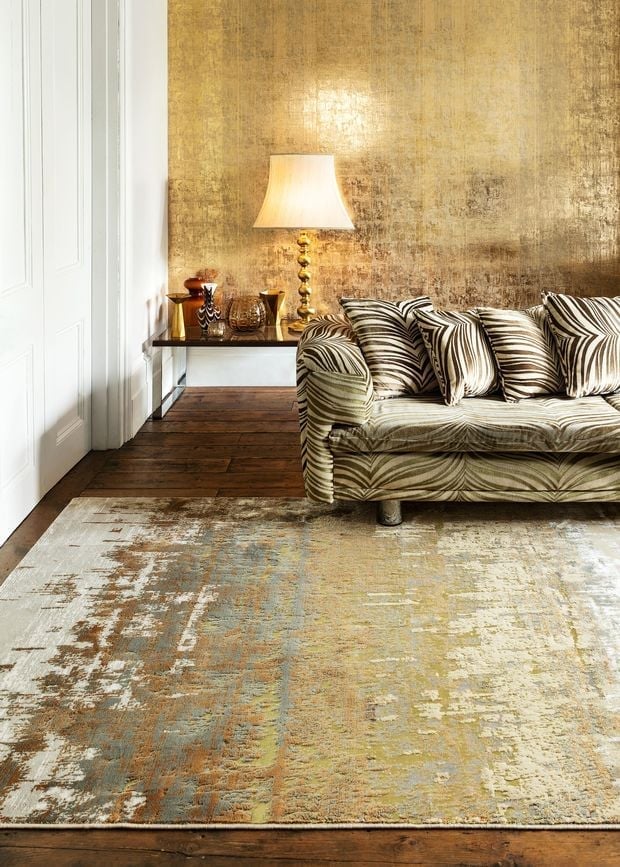
The room uses the rug to bridge warm rust and cool grey, with the abstract pattern acting as a visual handshake between the striped sofa and the textured gold wallpaper. A side table in a dark wood finish adds weight without competing. Keeping the layout simple lets the metallic wallpaper stand out as a deliberate accent. This setup works best when the rug’s pile is low enough to let furniture legs rest evenly, so a flatweave or short loop is the practical choice for a room that sees regular foot traffic.
Final Thoughts
A living room rug is a practical anchor that also shapes the room’s character. Across these 31 rugs, the common thread is fit: a rug that matches your room’s layout, traffic, and light will always look right. Flatweave holds up in busy zones, while shag adds softness in cozy corners. Natural fibers like jute and wool bring texture that ages well with care. Vacuum regularly and rotate every few seasons to keep wear even. Before you buy, measure your seating area and let the rug extend at least 18 inches past the front legs of your sofa. That rule alone makes a room feel connected rather than scattered. Pick the rug that fits your room, not a trend.