
Microcement has earned its reputation as the finish that refuses to fuss. It flows over floors, walls, and countertops in one continuous skin, wrapping a room in quiet texture without grout lines or trim. If you have seen those seamless bathrooms and wondered if the look works beyond a single shower wall, you are in the right place.
This article walks through 33 microcement ideas for 2027, from sculptural stairs to poolside patios, showing how the material adapts to any room without stealing the show. Expect real spaces, real finishes, and practical notes on what makes each installation feel intentional.
Minimalist Bathroom with Round Microcement Sink
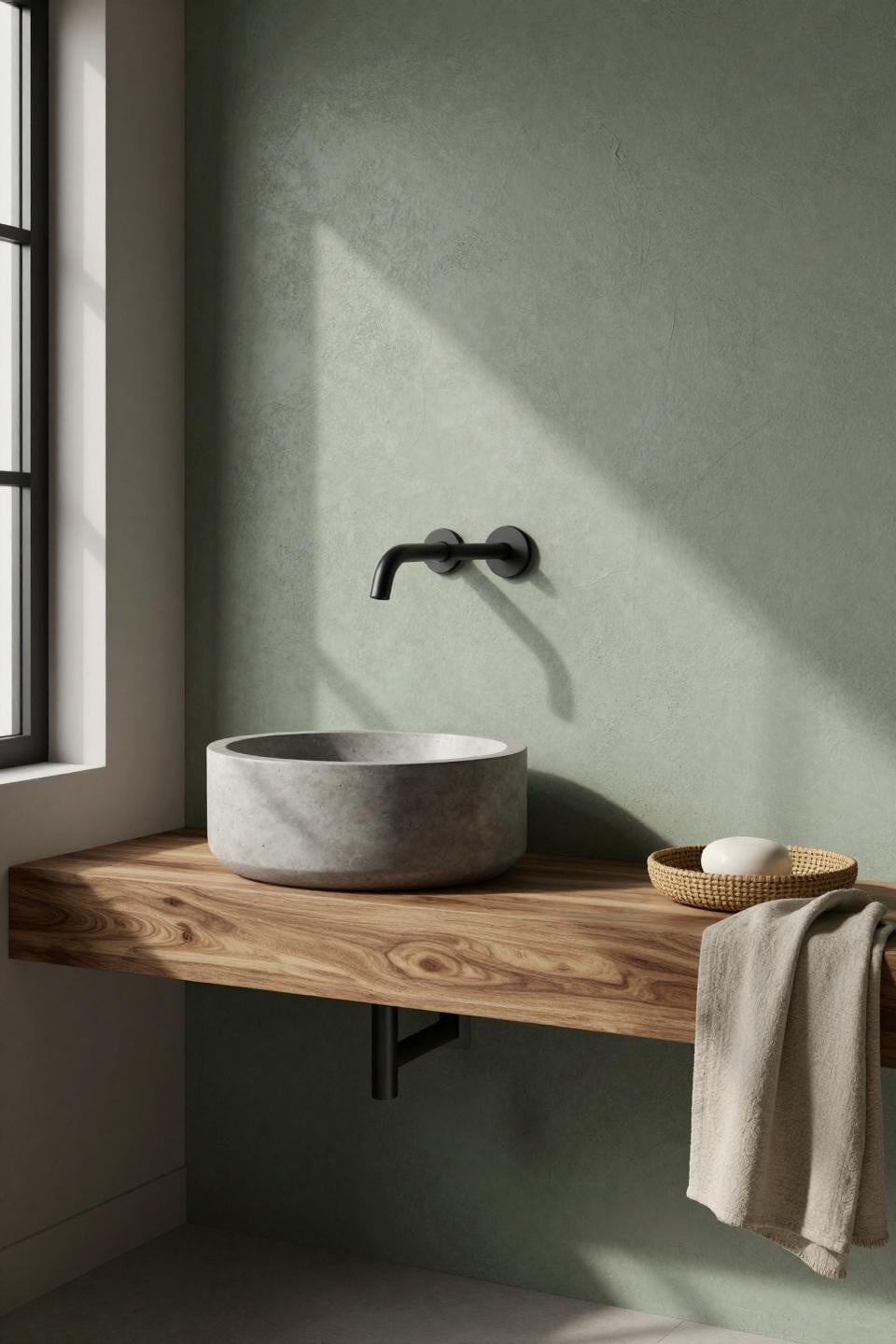
A round microcement sink in sage green changes how the room reads, softening what could be a hard, cold material into something almost organic. The wall-mounted faucet leaves the counter clear, and the wooden shelf nearby adds a warm note without competing for attention. The palette stays tight: gray, wood tones, and that single muted green. What defines the look is the sink’s sculptural presence against an otherwise simple backdrop. What breaks it would be adding anything busy or glossy on the walls. The ratio of solid to empty space here is what makes the sink feel deliberate instead of heavy.
Modern Minimalist Living Room with Microcement Fireplace
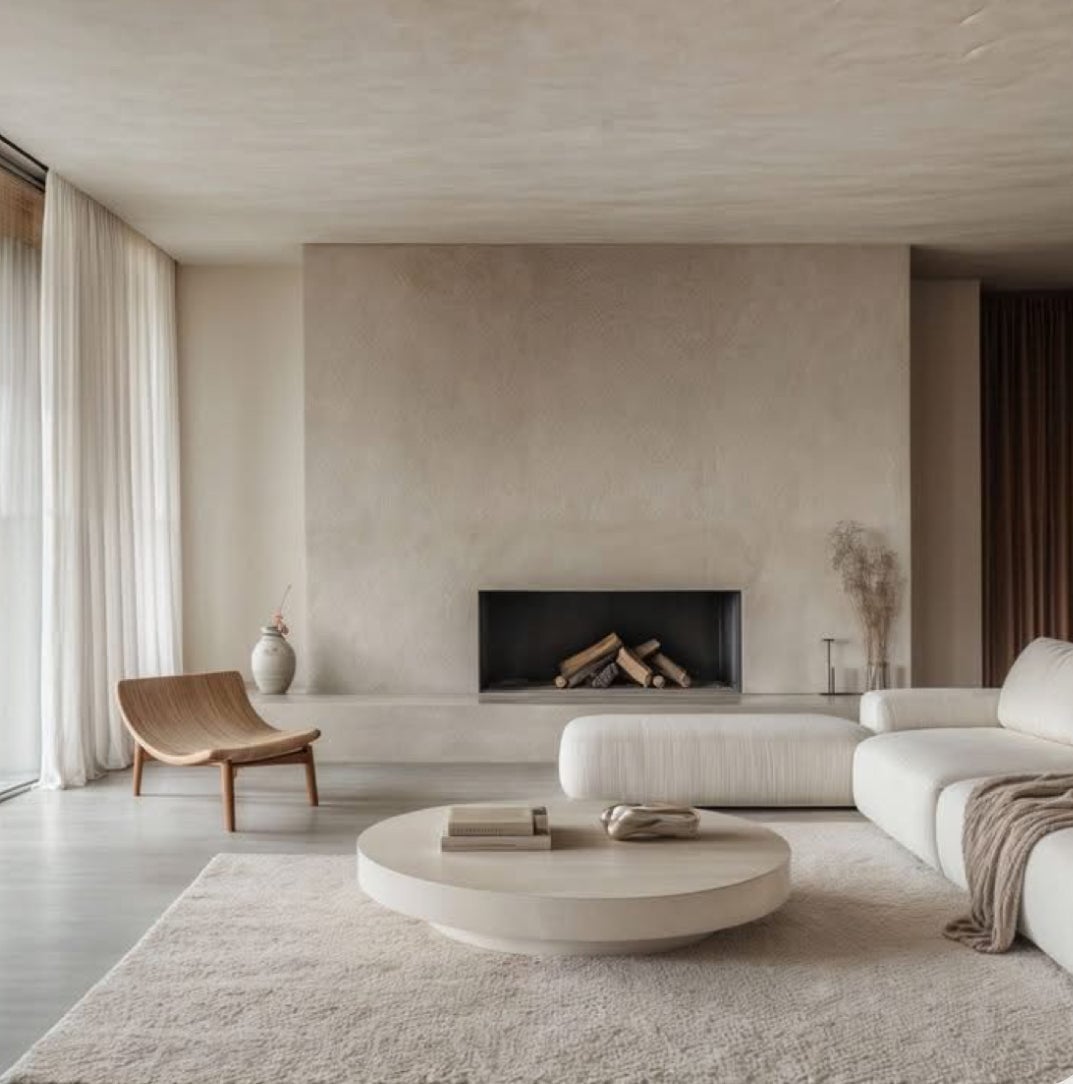
This room works because the fireplace does not try to be the only thing in it. The large microcement surround in warm beige anchors the open plan, but the sofa, ottoman, coffee table, and chair are all low and neutral, so the eye travels across the whole space without stopping at the hearth. The palette stays in beige, cream, white, and wood, which lets the fireplace blend into the room. A stone element on the hearth adds texture without changing the color story. What defines this look is the quiet proportion: the fireplace is big but never dominates. What would break it is introducing a dark or bright accent wall elsewhere in the room. Natural daylight keeps the microcement from feeling flat.
Sculptural Microcement Stairs in a Neutral Palette
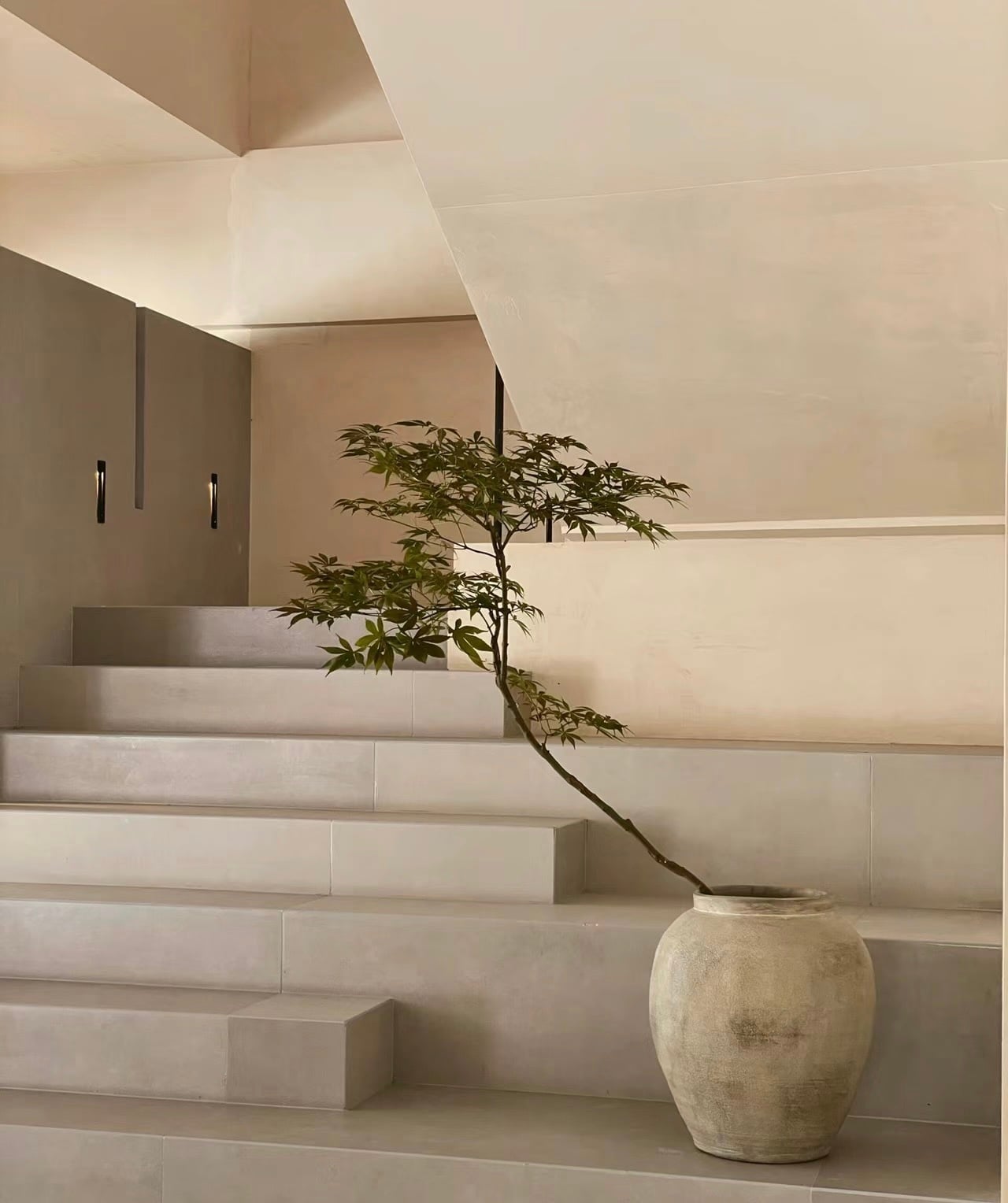
Can a staircase be the main event in a room without making the space feel like a showroom? Yes, when it is sculptural but not ornate. These stairs rise in a clean central line, finished in a neutral beige microcement that reads as solid and continuous. Wall sconces cast soft light across the treads, and a large planter with a modern tree sits at the landing, grounding the vertical movement.
The trick is that the stairs are the only sculptural piece. The walls stay plain, the floor is a simple stone or ceramic, and nothing else competes for attention. What defines the look is that uninterrupted flow from step to step. What breaks it is adding a patterned runner, a bright railing, or anything that disturbs the seamless surface. The layout makes the stairs the natural focal point without forcing it.
Japandi Spa Bathroom with Microcement Walls and Floor
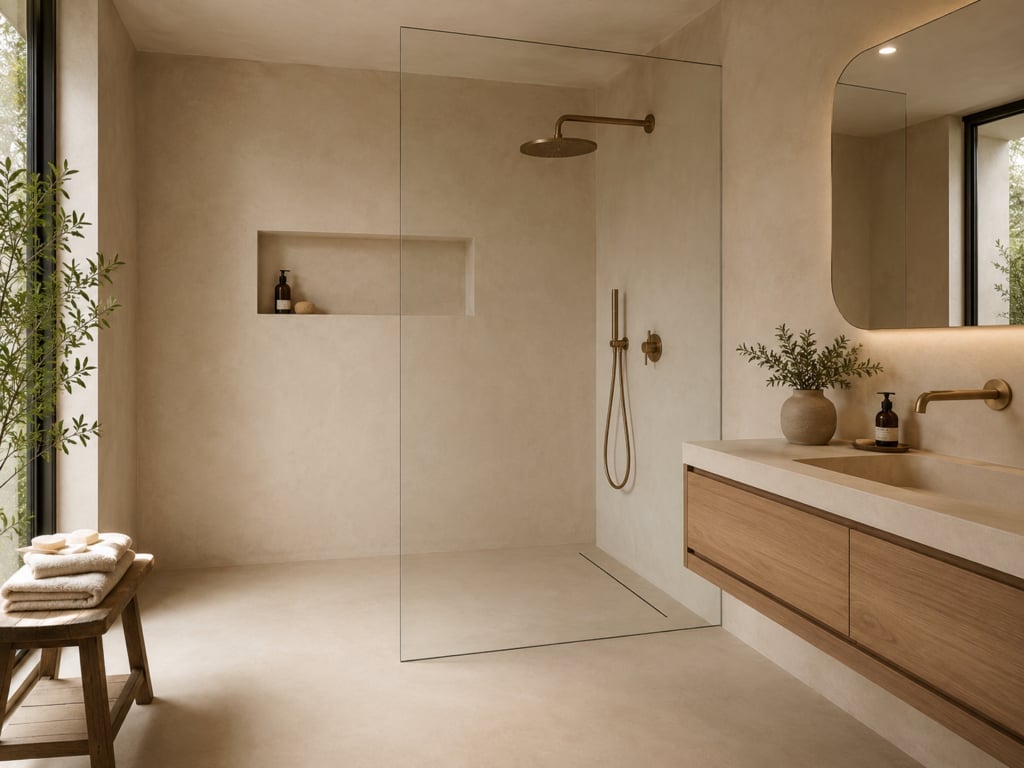
The microcement here covers both walls and floor in a warm beige, creating a single continuous surface that makes the room feel larger and calmer. A floating vanity and a wooden stool bring in natural wood tones, and the glass walk-in shower keeps the sight lines open. Brass accents add a warm glow without breaking the seamless feel. The lighting is layered: a soft integrated glow around the vanity and a warm overhead source. The seamless integration of wood and microcement defines the look. Adding tile or a contrasting wall finish would break it. The wood pieces prevent the space from feeling like a concrete box.
Modern Organic Hallway with Curved Microcement Staircase
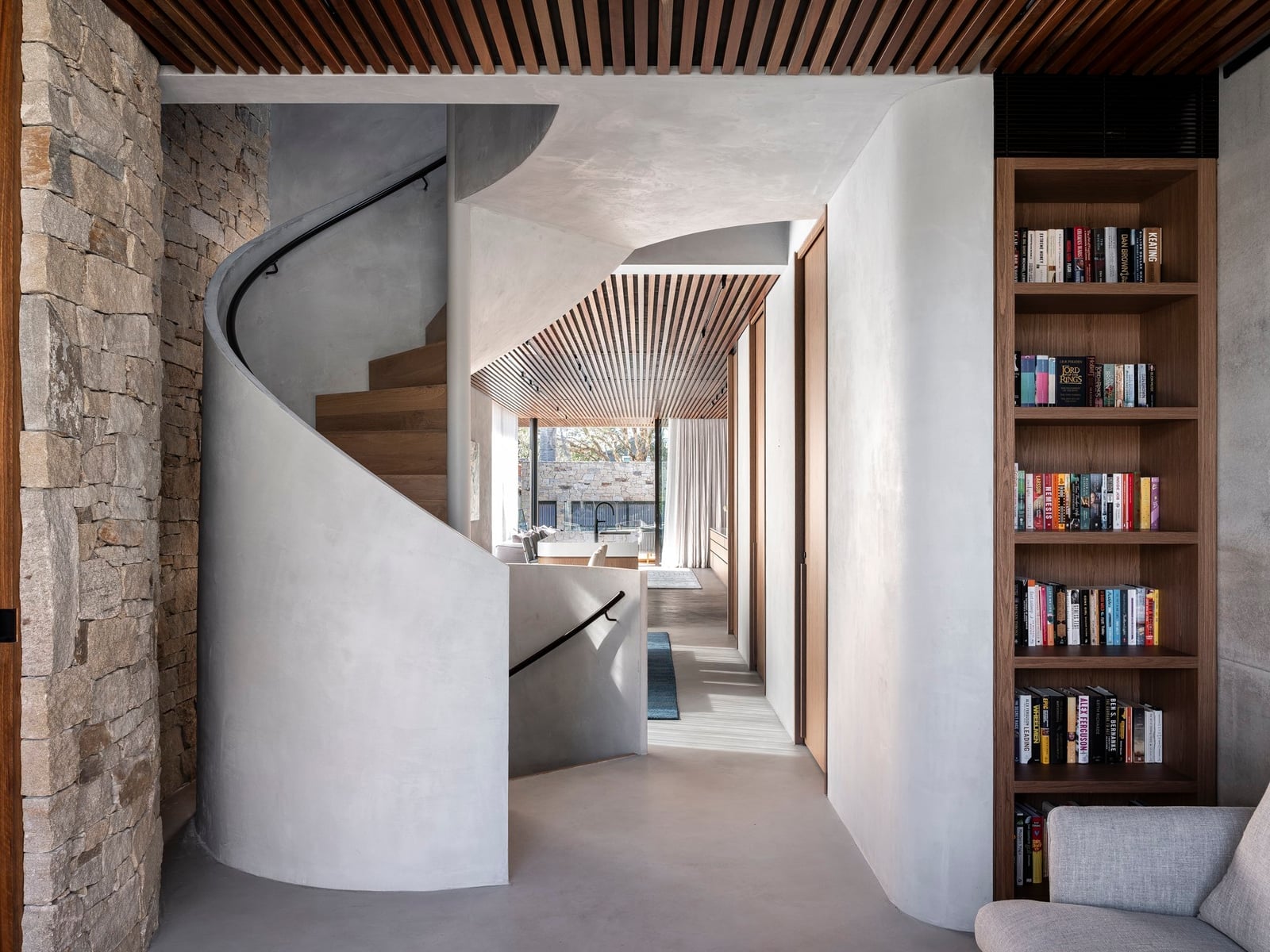
A curved microcement staircase in a roomy hallway needs the rest of the space to stay simple, or the curve starts to feel fussy. Here the gray-beige stairs flow into a wooden slatted ceiling and a stone accent wall, while a built-in bookshelf tucks storage into the wall without adding furniture. Natural light from windows and recessed ceiling lights keep the microcement from looking heavy. The organic line of the staircase contrasts with the straight architecture of the room. Adding a second curved element or a patterned floor would break the balance. The storage is built in, not added on, which keeps the hallway from collecting clutter. This setup works when the entryway has enough width to let the curve breathe.
Boho Spa Bathroom with Terracotta Microcement Bathtub
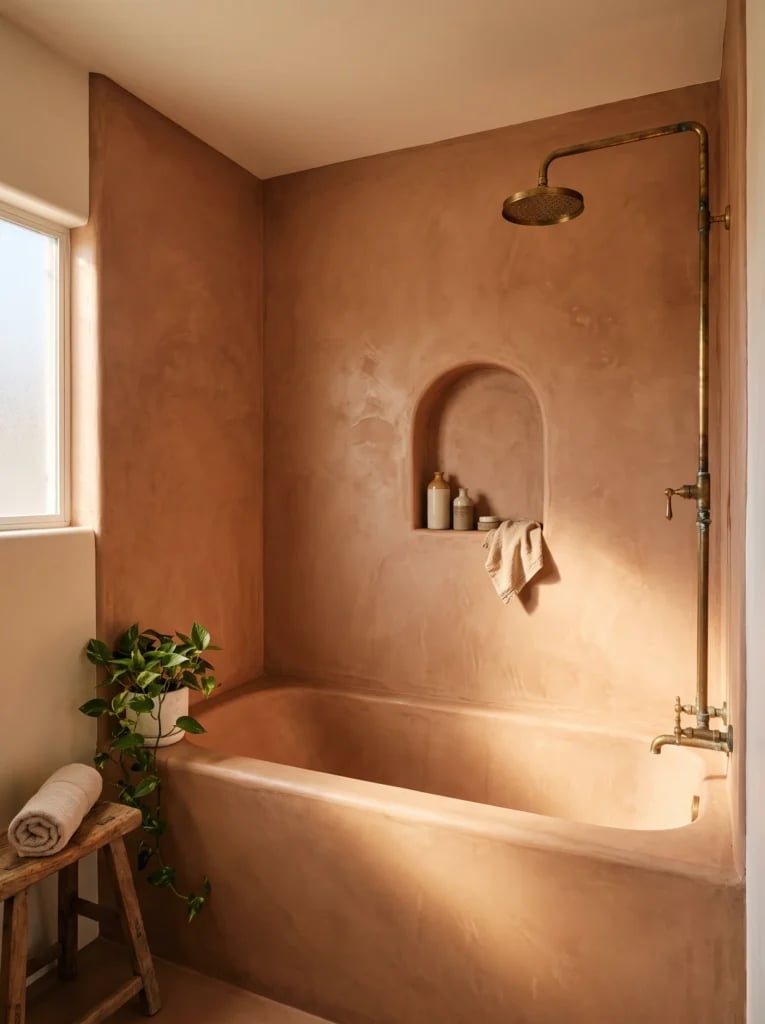
A terracotta microcement bathtub sounds like the kind of splurge you save for a renovation, but the actual move here is subtler. The tub and walls are finished in the same seamless material, so the warm clay color wraps the whole corner without a single grout line to clean. A brass shower fixture and a small wood stool keep the palette grounded. What defines the boho side is the layering: a living plant on the stool, sunlight hitting the matte surface, the tub set into a built-in niche. The ratio is mostly solid color with small warm metal accents. What breaks it is the plant and the stool, because without them the space would read purely spa, not boho. If you want this look in a compact bathroom, the trick is letting one continuous finish do the work and adding texture through accessories instead of tile.
Rustic Modern Hallway with Stone Archway and Microcement Floors
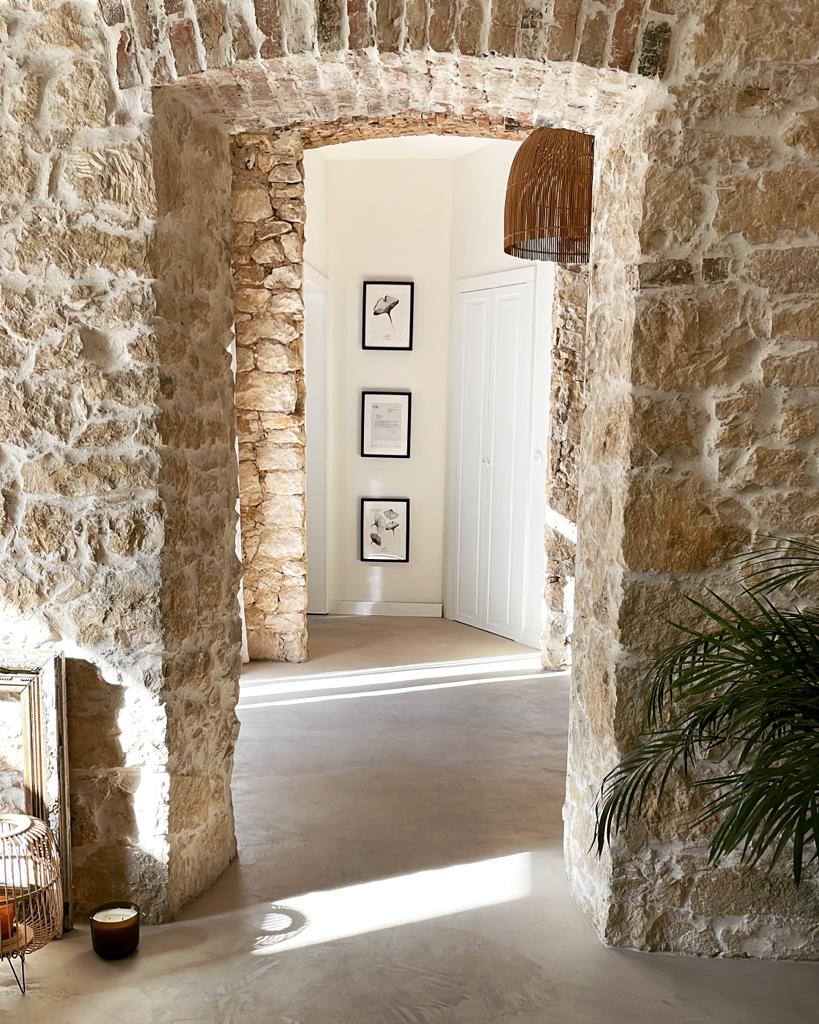
The stone archway is the first thing you notice, and that is the point. Its rough, uneven surface sits directly on a smooth microcement floor, so the contrast between raw and refined is what gives the hallway its character. The microcement reads as a neutral backdrop, letting the stone and a simple wood door hold attention. For a renter, this is the kind of look you can borrow without pouring concrete. A microcement floor is a permanent application, but the palette of warm beige and cream works just as well with a textured vinyl plank in a similar tone. The principle is that one rough element against an otherwise clean floor makes the whole entry feel built, not decorated.
Monolithic Microcement Fireplace in a Modern Living Room, Indoor
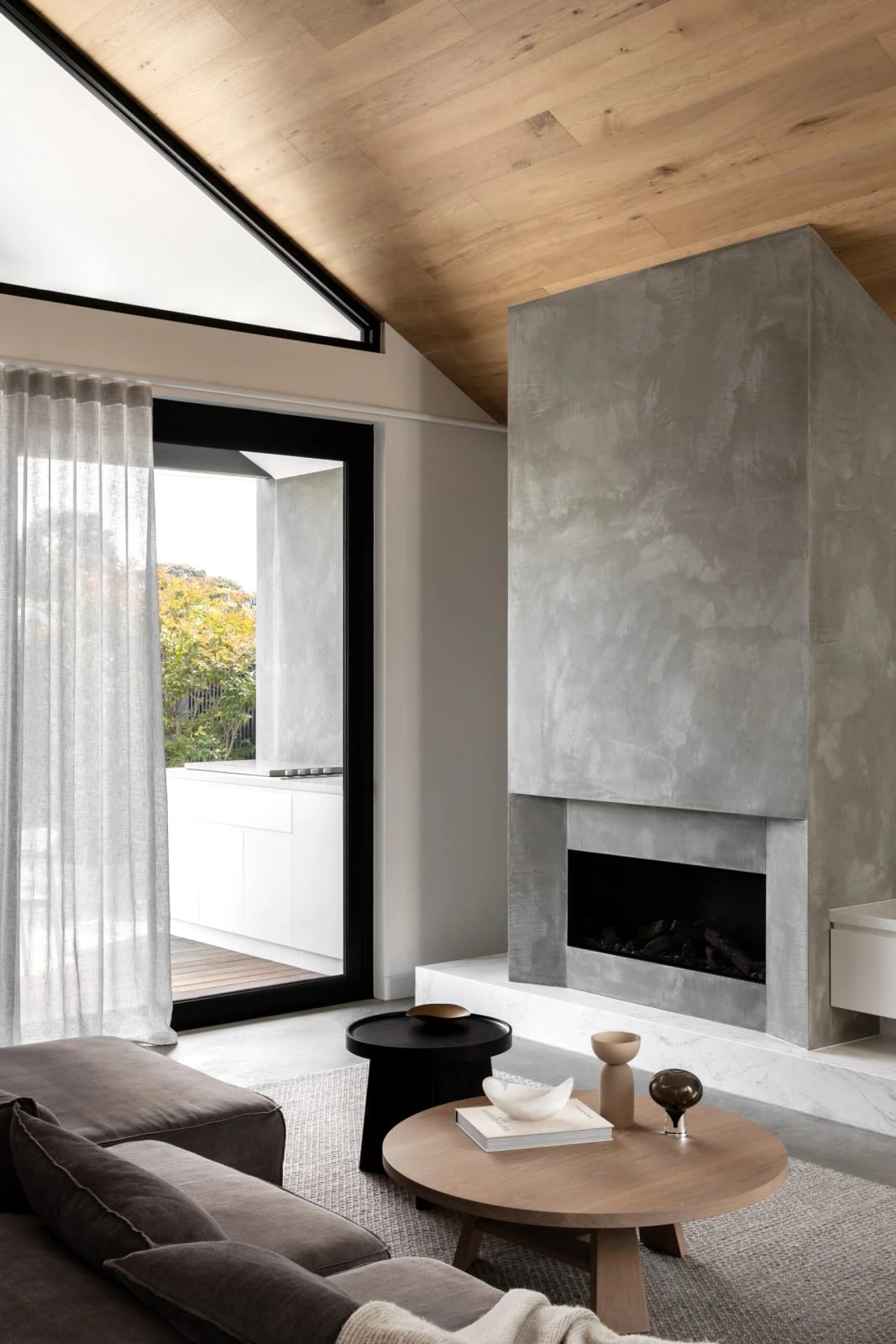
A single massive microcement fireplace anchors this living room, and it does exactly what a monolithic piece should: it claims the space without needing anything else to prop it up. The fireplace is a cool gray block that rises from the floor, while the rest of the room uses warm beige, wood tones, and a white marble coffee table. The sectional sofa faces the fireplace directly, so the layout is built around the hearth. Natural light from one window and recessed ceiling lights keep the gray from feeling cold. The variation comes from the materials around it. The wood floor, the soft fabric of the sofa, the polished marble on the table each one is a different finish, so the microcement stands out as the one continuous surface. If your living room has an awkward corner, a single large fireplace in microcement can define the whole seating area and make the layout feel intentional.
Modern Tropical Patio with Expansive Microcement Floor
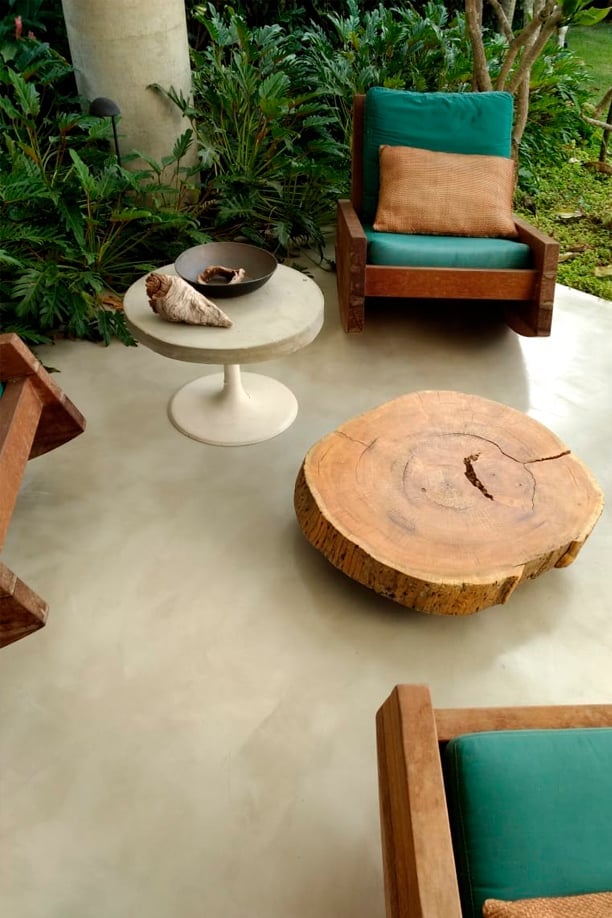
Can microcement hold up outside, or is it strictly an indoor finish? The answer is that it can work on a covered patio, but the climate matters. This patio uses a large gray microcement floor that runs from the seating area to the edge of the space, with no seams or joints breaking the surface. The furniture is what gives it the tropical feel: dark wood outdoor chairs, a wide wood slice table, and a small concrete side table. The palette stays in gray and green, with the plants and wood providing the warmth. The principle is that an expansive continuous floor makes a patio feel larger than it is, especially when the furniture is kept minimal and the greenery is allowed to spill over the edges. Check your local freeze-thaw cycles before committing to microcement outdoors, because the material needs a proper sealant and a covered location to last.
Poolside Patio with Microcement Facade and Neutral Tones
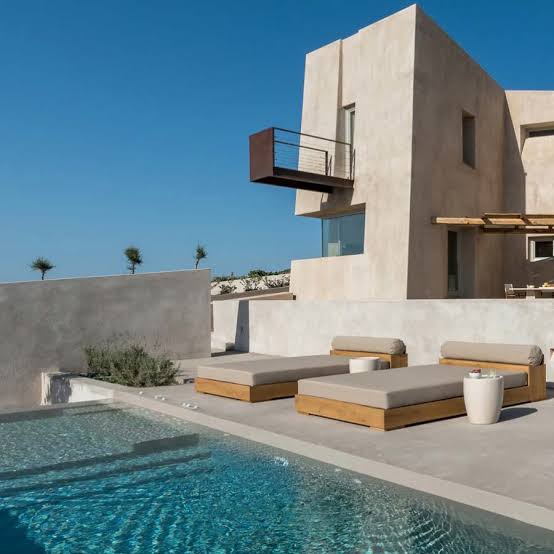
The building facade and the patio floor are both finished in the same neutral gray microcement, which makes the poolside area feel like one continuous volume. The daybeds and lounge chairs sit directly on the concrete, with the blue water providing the only strong color contrast. The scale works because the microcement is a quiet surface that lets the architecture, not the decor, define the space. When you extend the same finish from the vertical wall to the horizontal floor, the outdoor room feels larger and more cohesive. For a pool area, that means less visual clutter and more focus on the water and the loungers.
Modern Living Room with Large Microcement Fireplace, Neutral
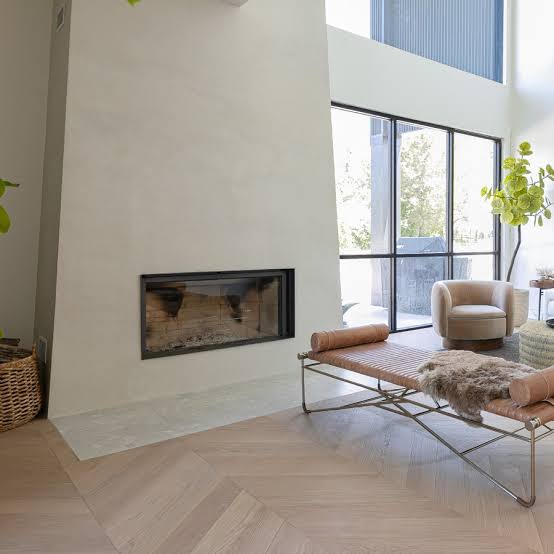
The scale of a room often hinges on the largest surface, and in a neutral living room, a large microcement fireplace surround sets the tone. Cream walls and wood accents keep the palette quiet, while the fireplace becomes the visual anchor. A chaise lounge and an armchair create a corner-focused layout that feels roomy without empty space. The microcement finish offers a smooth, monolithic look that blends with the neutral scheme. Ambient light and natural light from windows keep the room bright without harsh shadows. For a similar effect, let the fireplace be the main event and keep the rest of the room simple. That way, the material itself does the talking.
Minimalist Bathroom with Curved Microcement Walls
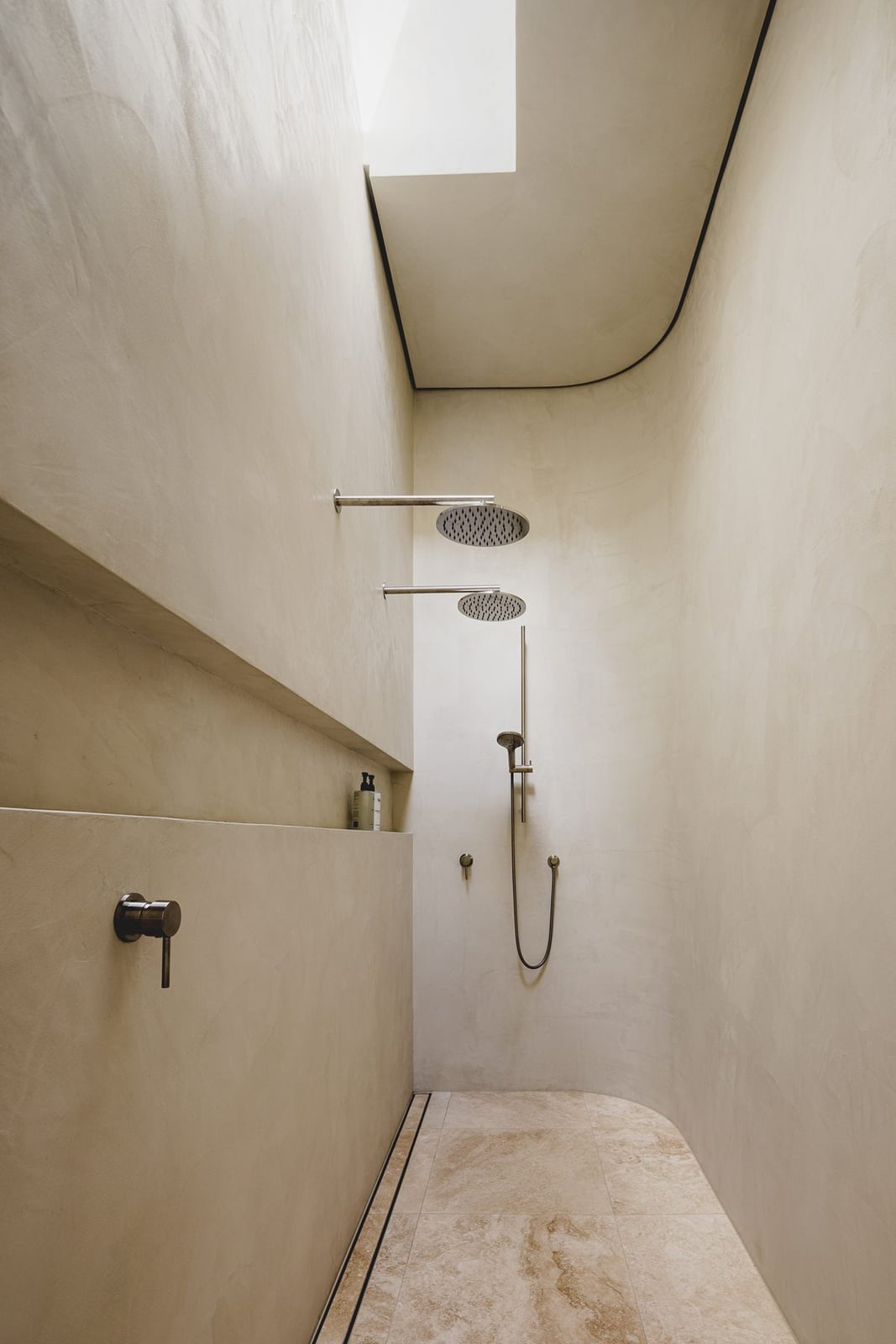
A curved microcement wall creates a deliberate shape, especially in contrast to a standard tiled corner. In this bathroom, the curve wraps the shower area, softening the transition between wall and floor. Beige, cream, and stone tones keep the shape as the focus. A wall-mounted faucet and linear drain maintain clean surfaces, while a skylight brings in natural light that hits the curve differently throughout the day. Stone tile on the floor adds texture next to the microcement walls.
For a minimalist bathroom, the ratio of material to empty space matters. The microcement walls take up visual room, so keeping fixtures minimal prevents clutter. The curve itself breaks the grid of a typical bathroom layout. If you are working with a smaller space, a single curved wall can make it feel more open than a straight one.
Modern Organic Kitchen with Curved Microcement Range Hood
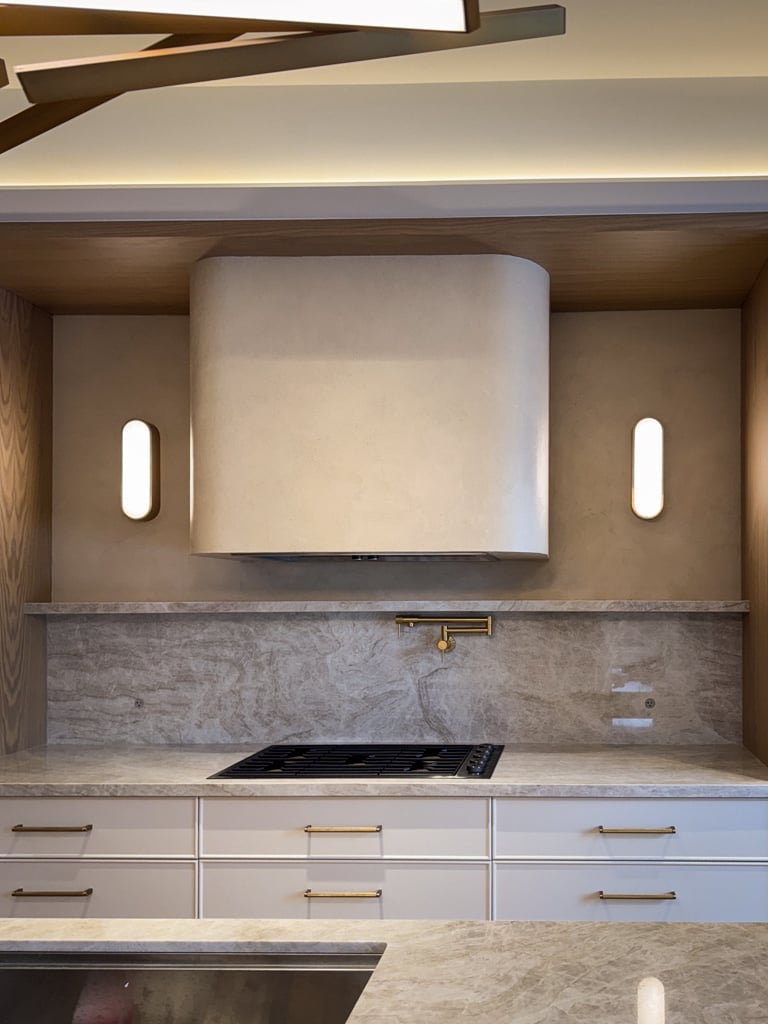
A curved microcement range hood above a gas hob is a precise design choice that bridges the gap between modern and organic. The beige and gray tones of the microcement blend with wood cabinets and a stone countertop. Integrated LED lights and wall lights highlight the hood’s shape without adding bulk. The curve itself is the detail that keeps the kitchen from feeling boxy. In a compact layout, this one sculptural element draws the eye upward and gives the room a focal point that is both practical and architectural.
Modern Bedroom with Textured Gray Microcement Wall
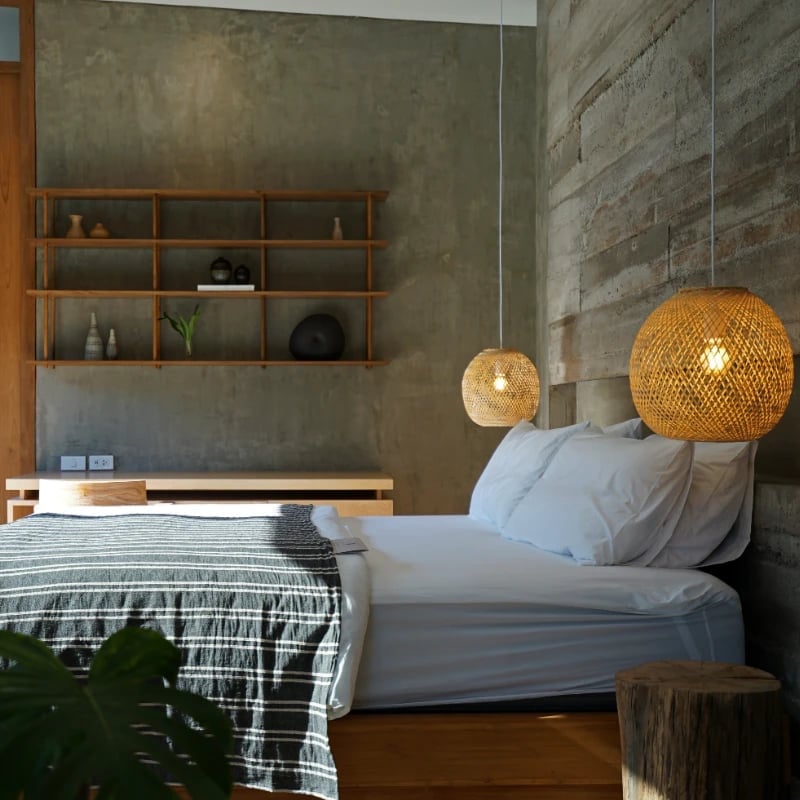
A textured gray microcement wall works best when the rest of the bedroom stays simple. In this room, the bed is the focal point, positioned against the textured wall. Wood shelving, a bedside table, and a rattan piece add warmth without competing. Natural daylight and pendant lights hit the texture at different angles, so the wall changes throughout the day. The gray tone grounds the palette, while white and wood keep it light. For a similar effect, use the textured wall as a headboard alternative. It gives the room depth without adding furniture.
Modern Open-Plan Kitchen with Microcement Island
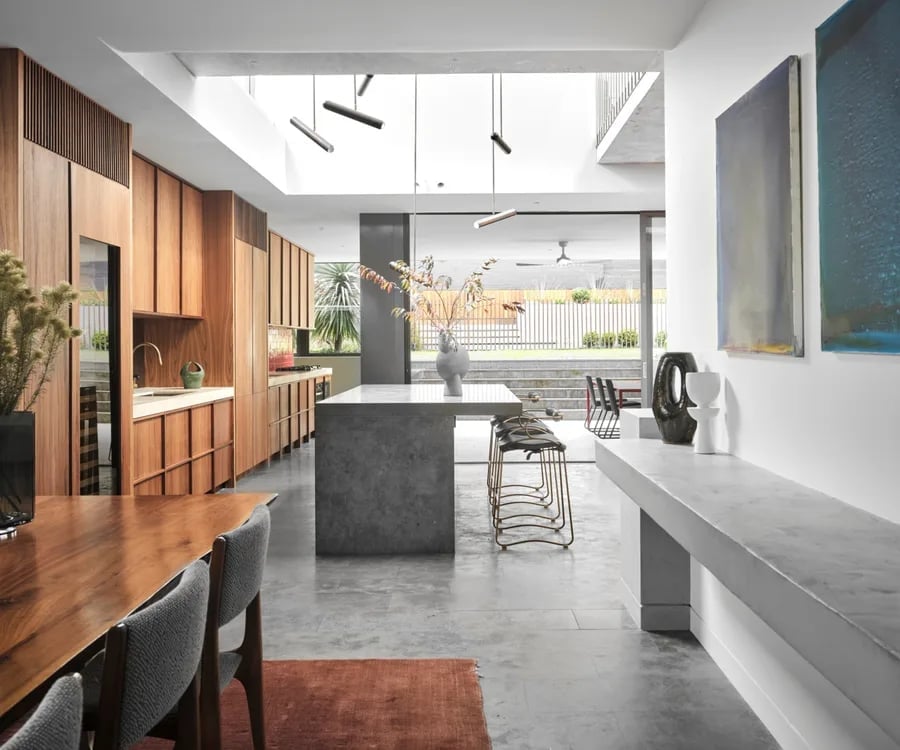
In an open-plan kitchen and dining room, the kitchen island often does double duty as a divider and a gathering spot. A microcement island in neutral tones anchors the room without competing with the wood dining table or stone countertops. The smooth finish is practical for a busy surface, and the layout keeps the cooking zone separate from the dining area. Track lighting and natural light from windows keep both zones bright.
For storage, the island itself can house cabinets or shelves underneath. The microcement finish ties the kitchen to the dining area visually, so the open plan feels connected rather than chopped up. If you have a roomy layout, an island in a contrasting material helps define the cooking zone. Keep the palette neutral to let the texture of the microcement stand out.
Contemporary Spa Bathroom with Textured Microcement
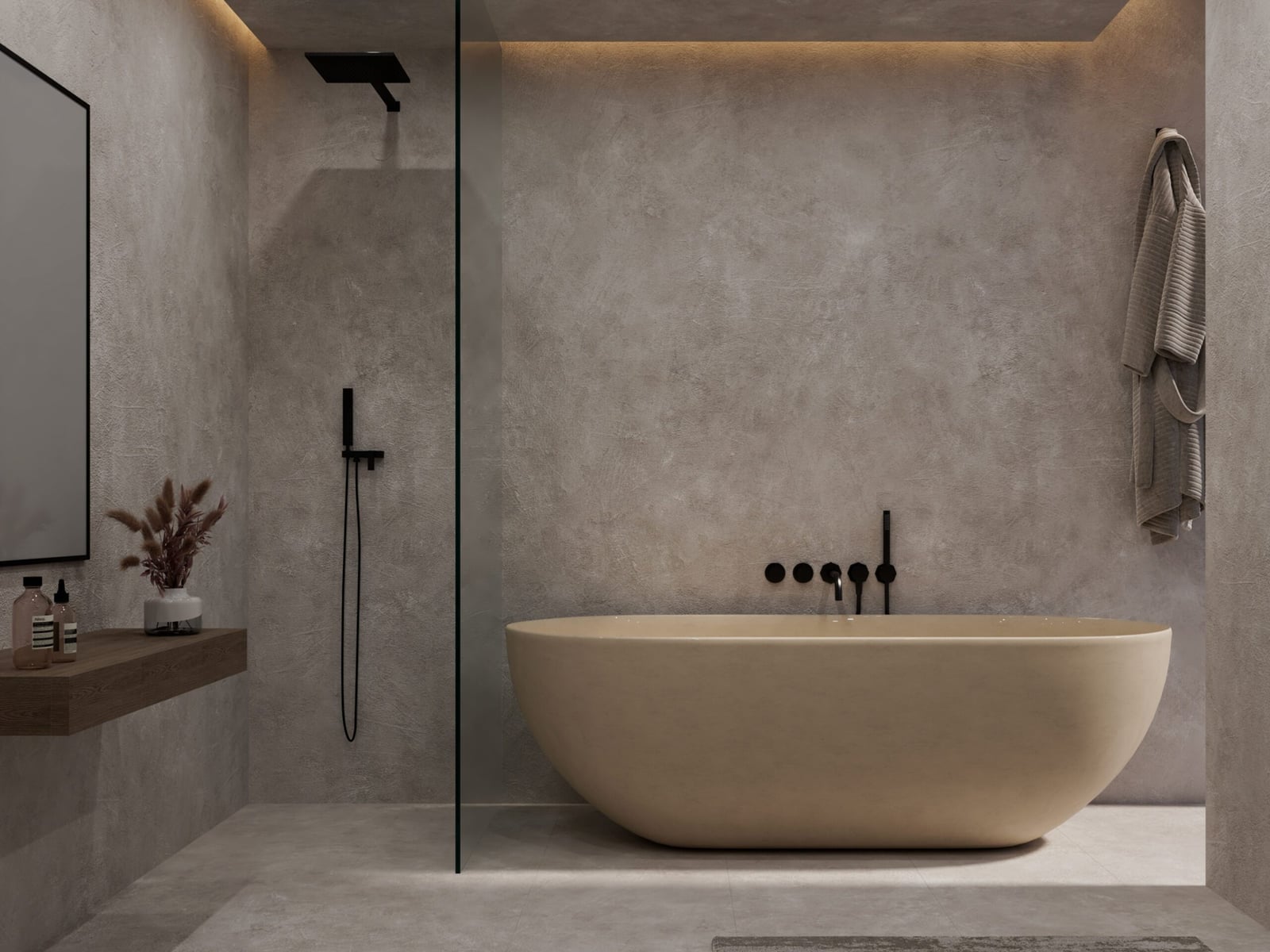
A textured microcement finish across walls and floor turns a spacious bathroom into a spa-like retreat by removing visual interruptions. The warm gray, beige, and taupe palette keeps the room calm, while the freestanding tub and floating vanity sit on the same seamless surface without a single grout line to break the view. A glass shower screen and integrated lighting add function without clutter, so the material does the talking. With stone and wood accents for warmth, this style works when the microcement is the main event and everything else reads as a supporting layer. The ratio is roughly 80 percent microcement to 20 percent natural texture.
Modern Living Room with Tall White Microcement Fireplace
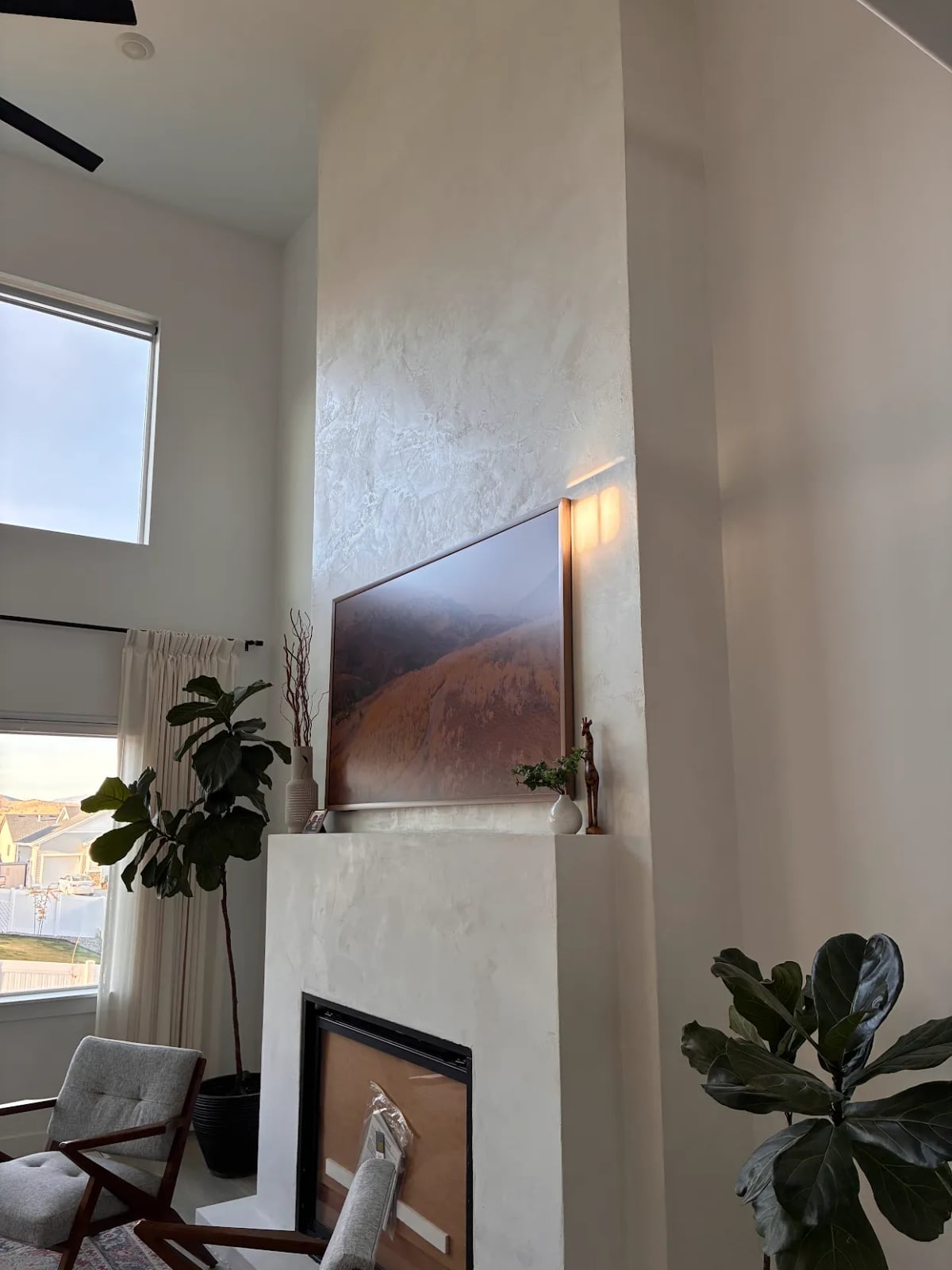
A tall white microcement fireplace holds the visual weight in this open, airy living room. The textured surround rises from floor to ceiling without a mantel or trim, so the eye follows the clean vertical line. Large windows bring in natural light that softens the white finish, and a fiddle leaf fig plant adds green contrast. Accent lighting above the fireplace draws attention after dark. The style is modern because the microcement is the only textured surface, and the wood floor and glass keep the room feeling light.
Compact Modern Bathroom with Smooth Gray Microcement
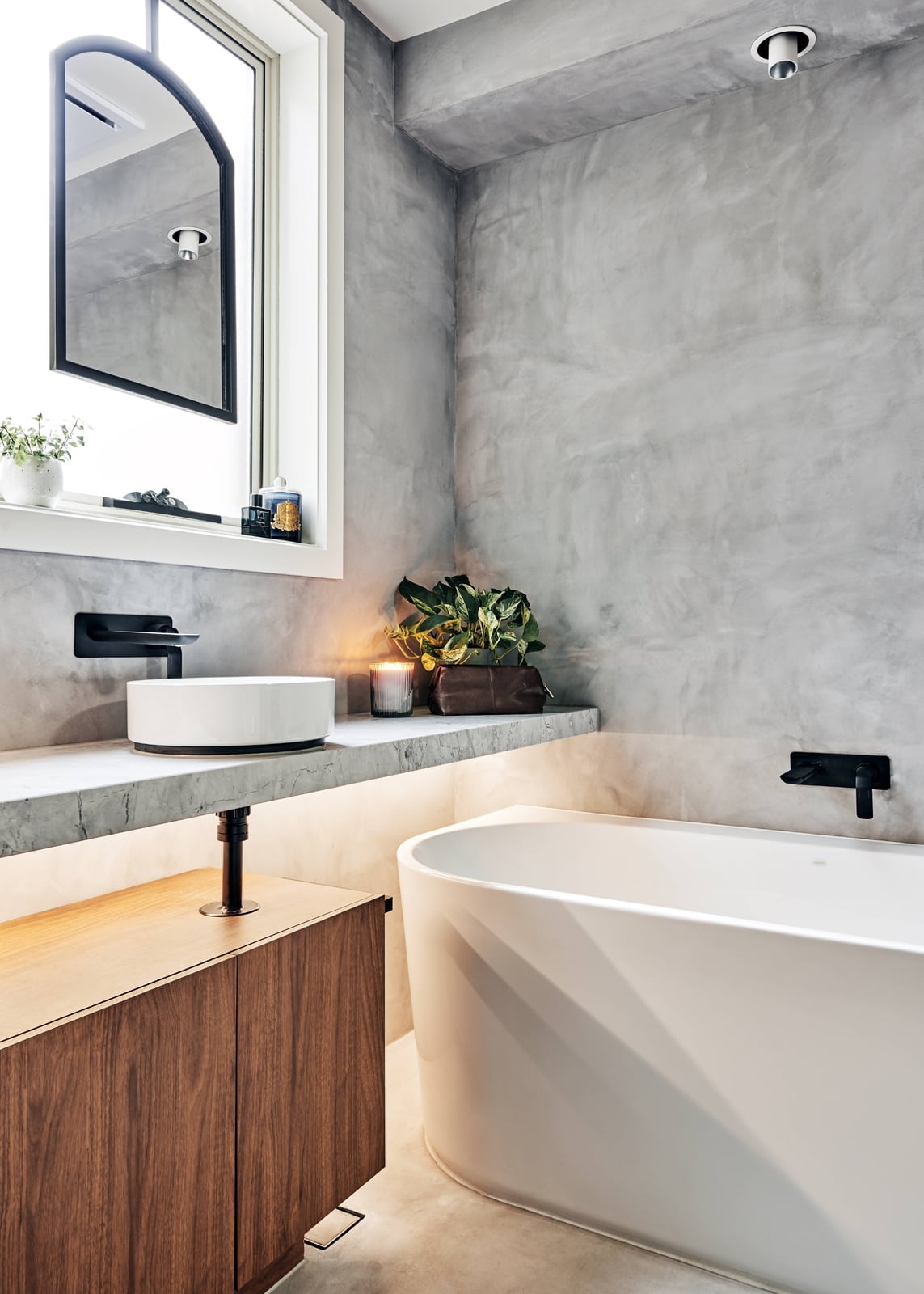
A smooth gray microcement finish reads differently in a compact bathroom than a textured one would, because the lack of grain keeps the small space from feeling busy. In this corner setup, the microcement covers both walls and the vanity, creating a continuous surface that makes the room feel larger than it is. The palette stays in gray, wood tones, and white, with the wood vanity adding warmth against the cool gray.
The marble countertop and ceramic sink break the matte finish with a slight sheen, which adds depth without introducing a new color. Natural light from a nearby window and spotlights overhead keep the gray from turning flat. The trick is to limit the microcement to the surfaces that need to recede, then let the wood and marble provide the visual anchor.
Modern Bathroom with Microcement Walk-In Shower
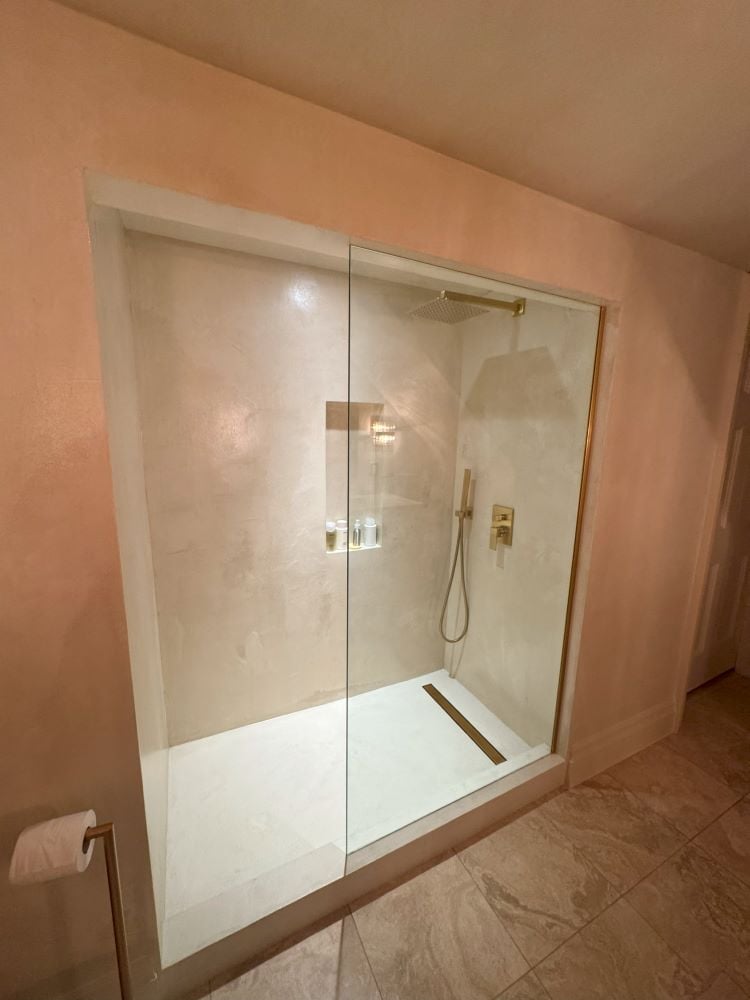
A microcement walk-in shower in beige and gold works because the material can handle constant moisture when properly sealed, making it a practical choice for a compact enclosure. The seamless walls eliminate the grout lines that collect soap scum, so the shower reads as one clean piece. Gold fixtures add a warm accent against the neutral backdrop without competing with the microcement. The glass screen keeps water inside while letting the eye travel across the room. This design suits anyone who wants a shower that feels built-in rather than tiled on, and the material’s durability means it holds up to daily use without chipping at the edges.
Minimalist Bathroom with Integrated Microcement Bathtub
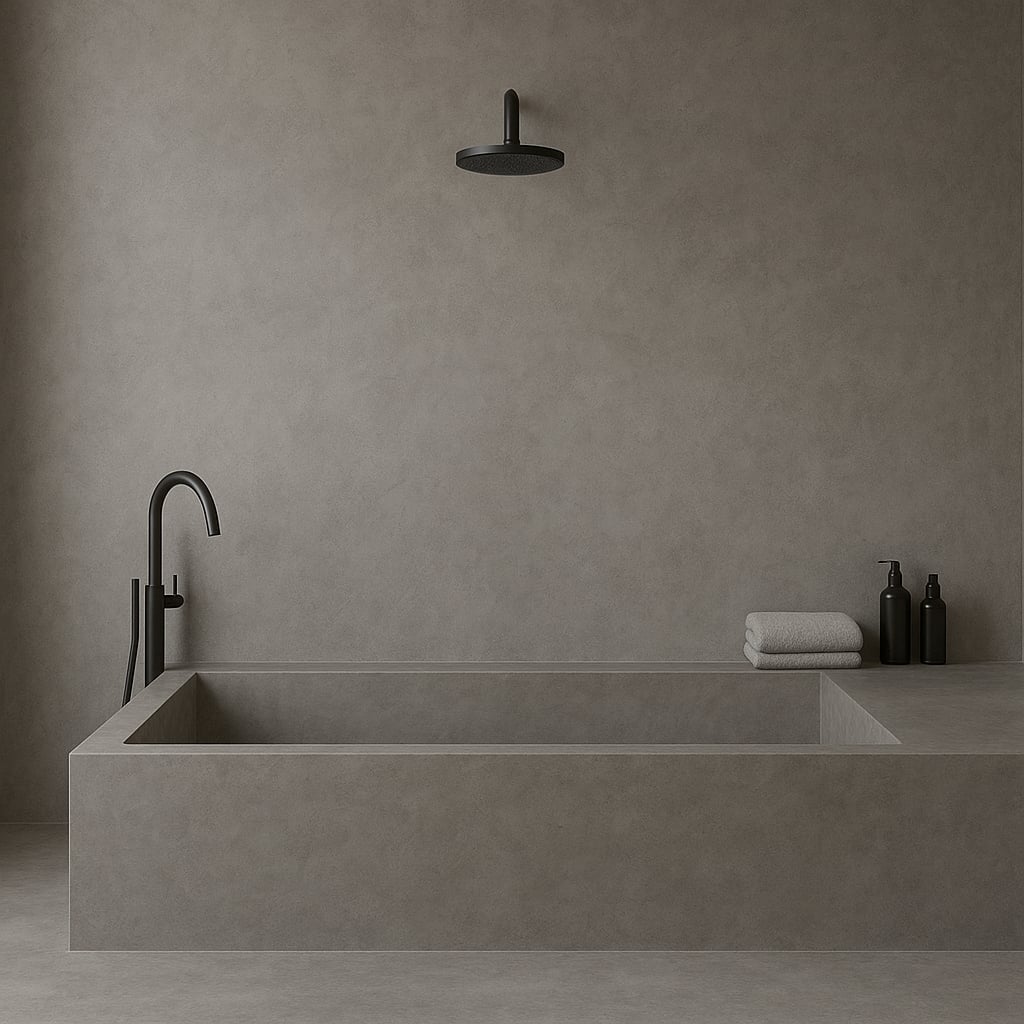
An integrated microcement bathtub is a clear one-line assessment of how far you can take a seamless finish: the tub, floor, and walls all read as one piece. In this compact bathroom, the taupe and gray palette keeps the look calm, and the black shower head and dispenser bottles add just enough contrast to define the space. There are no visible joints where the tub meets the floor, which is the whole point of the material in this setting. The soft ambient lighting prevents shadows from breaking up the surface. The scale works because the bathtub is the hero element, and every other detail stays out of its way.
Contemporary Bathroom with Warm Beige Microcement Walls
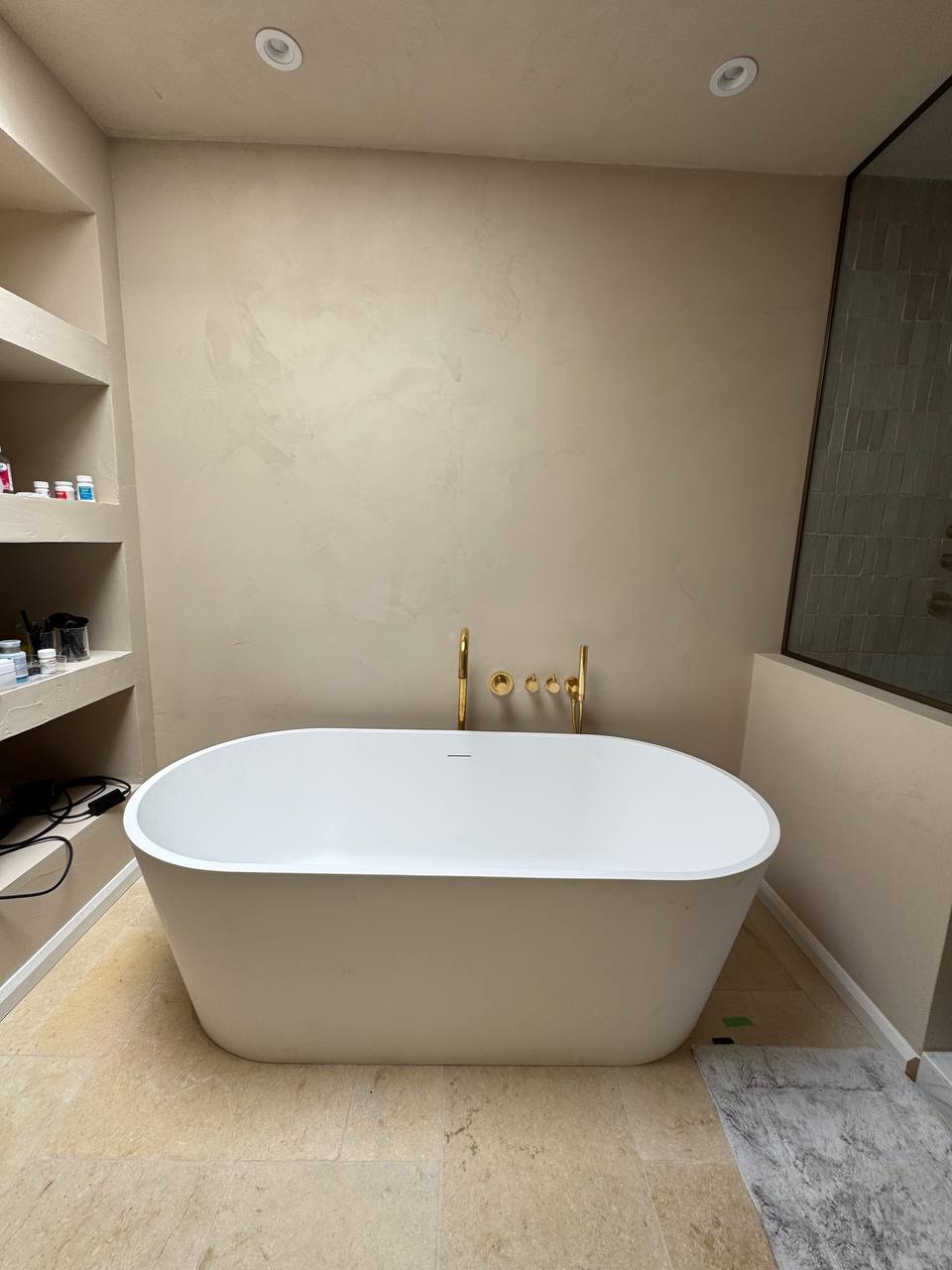
A warm beige microcement finish on the walls keeps a bathroom from feeling cold even when the rest of the materials lean toward stone and brass. The textured surface catches skylight differently throughout the day, so the room changes tone without any decor effort. A freestanding tub sits in the corner, and built-in shelves hold the essentials without adding visual clutter. The palette stays in the neutral family, which means changing towels or adding a plant is all it takes to refresh the look. The material defines the space more than any single piece of furniture does.
Contemporary Bathroom Vignette with Textured Microcement Wall
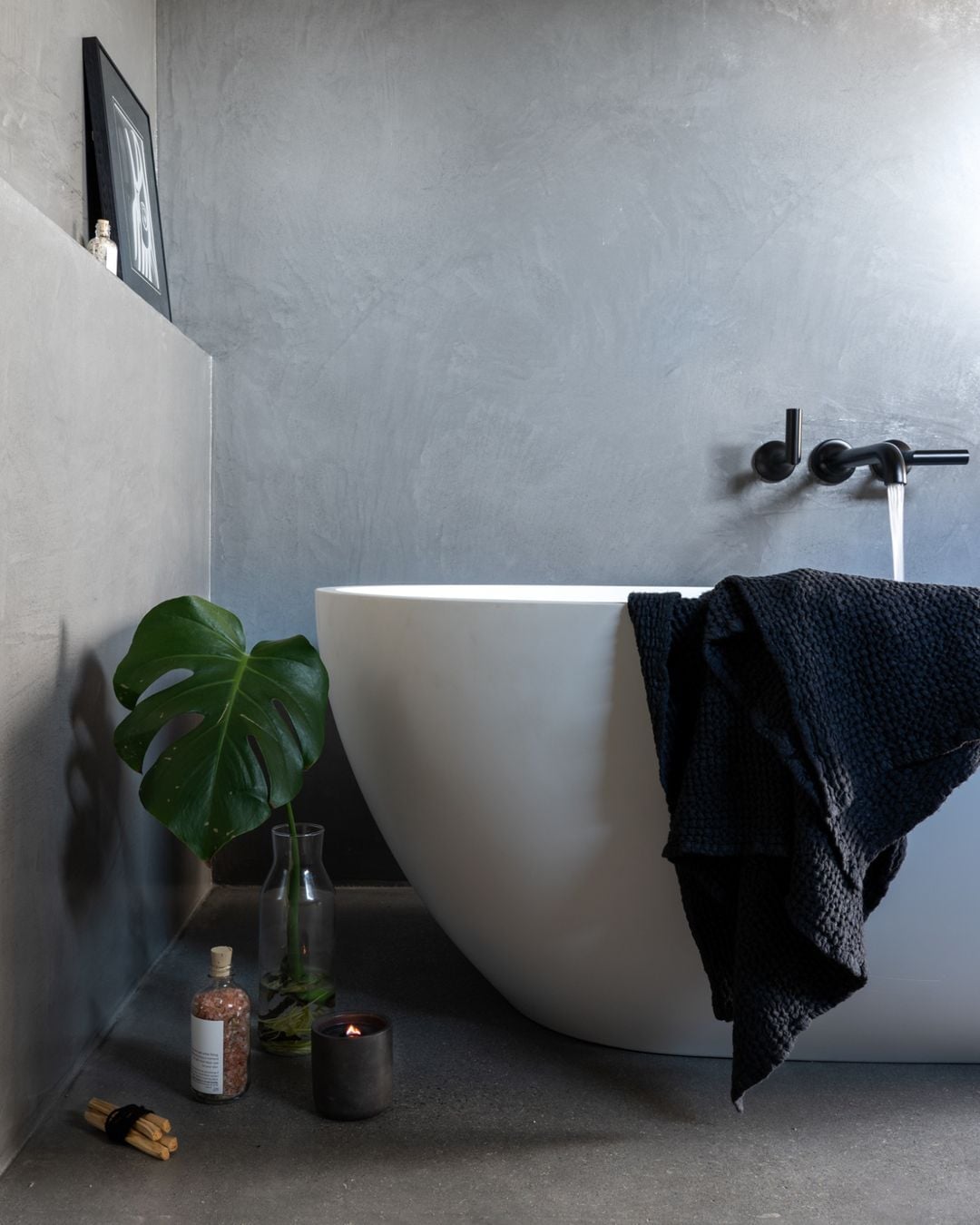
A textured microcement wall turns a bathtub vignette into a focal point. The gray and white palette keeps the scene calm, and the black faucet adds a crisp line that breaks the softness. Soft ambient light makes the texture look deliberate. The stone floor anchors the look, but the wall does the work.
Minimalist Bathroom with Seamless Microcement Shower
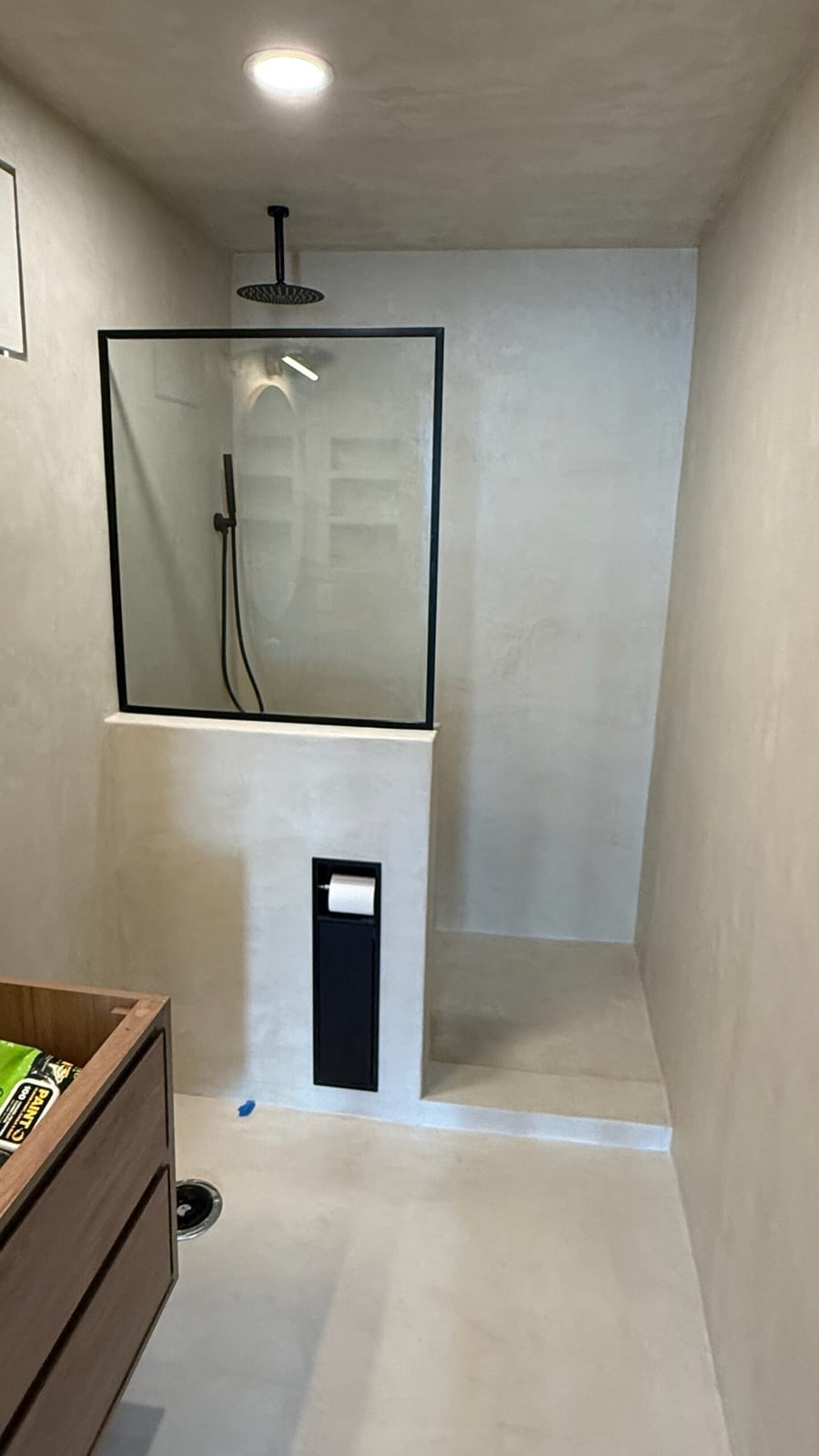
A seamless microcement shower enclosure eliminates the visual breaks that tile grout lines create, which helps a minimalist bathroom: fewer lines mean the eye rests on the shape of the room itself. The neutral beige finish wraps from wall to shower, making the corner feel spacious. A glass panel keeps the water in without blocking the view, and built-in storage means no hanging caddies disrupt the smooth surface. Ambient ceiling light bounces off the matte finish, keeping the room bright without harsh shadows.
Modern Spa Bathroom with Seamless Microcement Finish
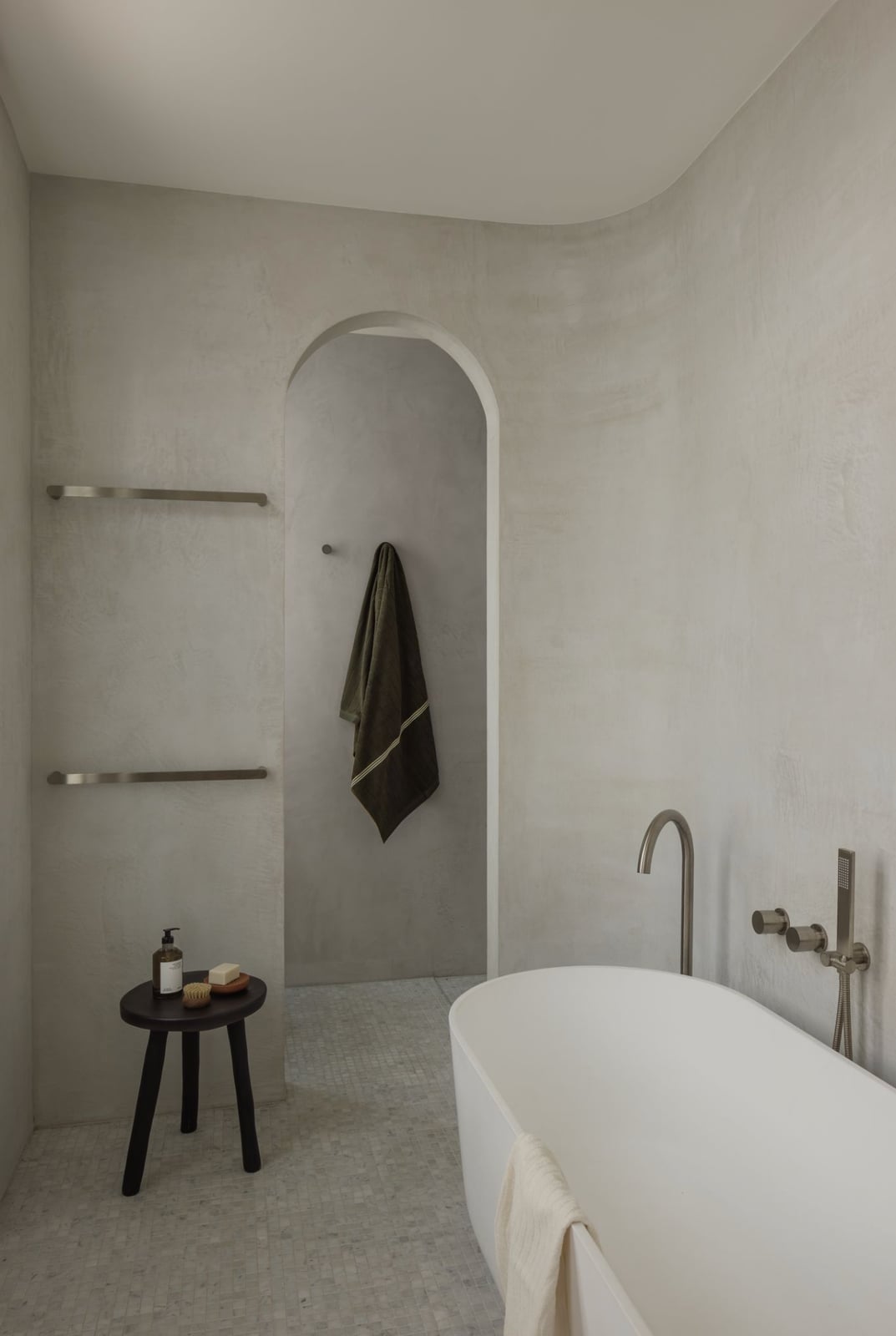
A seamless microcement finish feels different from tile because there is no grout to clean and no pattern to distract. In a modern spa bathroom, that smooth surface lets the eye travel from wall to floor without stopping. A freestanding tub sits near an arched doorway, and the neutral gray palette keeps the space calm. Ambient and natural light soften the edges, and the metal fixtures add contrast. The material choice creates a continuous envelope that makes the bathroom feel like one monolithic space.
Modern Minimalist Exterior with Microcement Pool Edge
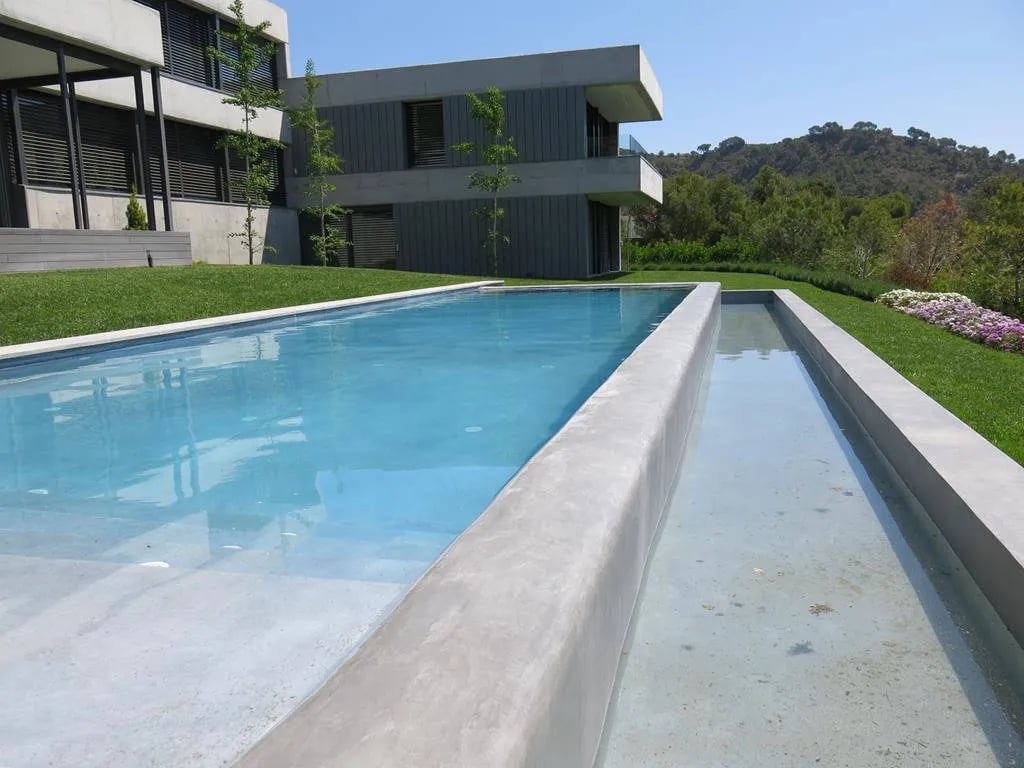
The microcement pool edge follows a clean line that mirrors the linear pool design, so the water and the hardscape form a single plane. Gray microcement contrasts with the blue water and the green grass beyond, making the edge a deliberate border. Bright daylight sharpens the distinction between materials, and the lack of coping or tile keeps the silhouette simple. This pool area looks more like a water feature than a recreational install.
Modern Bathroom with Sculptural Freestanding Tub on Microcement Floor
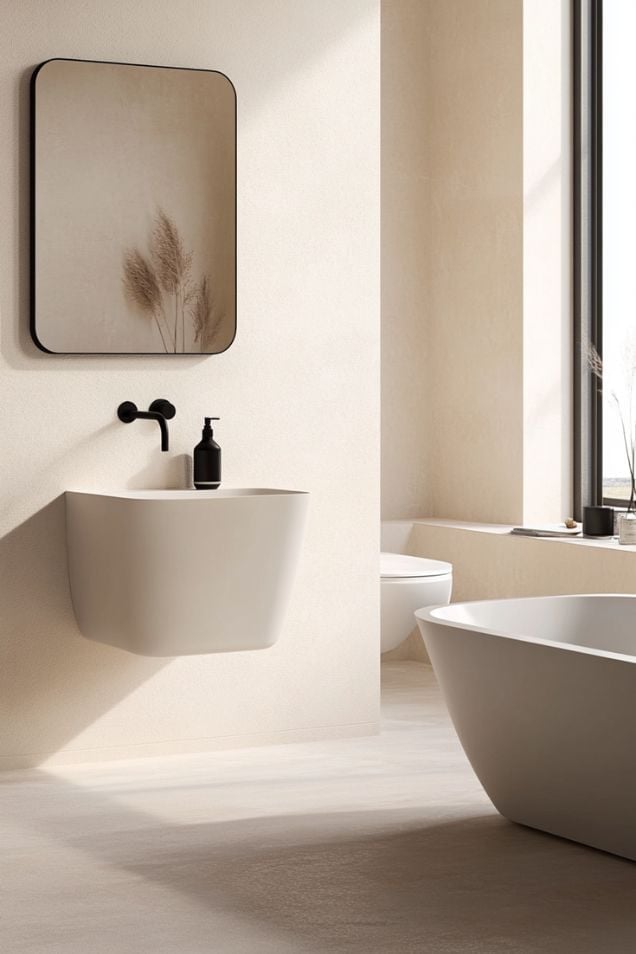
A seamless microcement floor sets the tone here, turning the whole bathroom into a single continuous surface that lets the freestanding tub sit like a sculpture rather than an appliance. The beige and cream palette keeps the room calm, while the matte finish of the floor picks up soft light from the window without glare. The principle at play is material continuity: when the floor reads as one piece, the room feels larger and less busy. That makes the microcement floor a solid choice for anyone who wants a modern bathroom that relies on the finish itself, not on pattern or tile layout, to do the work.
Compact Modern Bathroom with Seamless Microcement Surfaces
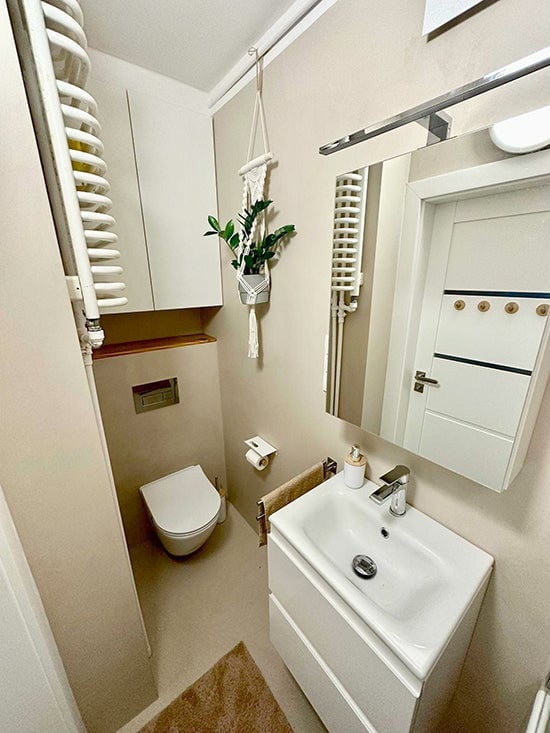
A practical rule for a compact bathroom is to treat walls and floor as one surface, and that is exactly what happens here with microcement applied to both. The beige and white palette keeps the small room from feeling chopped up, and the chrome fixtures add a clean contrast without competing for attention. The seamless finish means fewer grout lines to scrub, which is a real time saver in a tight space. For renters, this look is worth noting even if you cannot pour a new floor: a microcement-look wall coating on an existing tile backsplash can fake the same continuous feel. The key is keeping the color consistent from wall to floor so the eye travels without a visual stop.
Modern Bathroom with Microcement Double Vanity
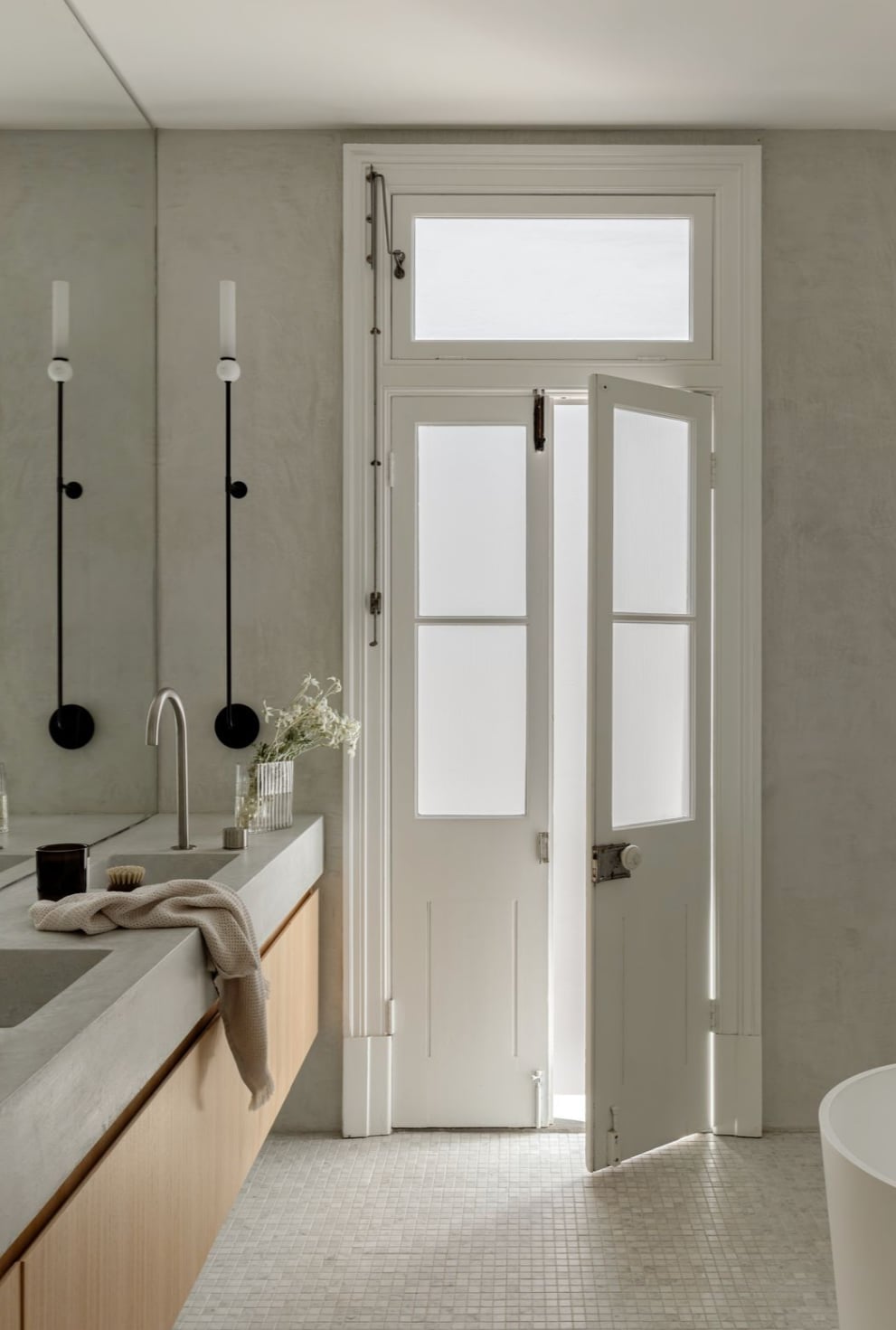
A microcement double vanity in a neutral tone pairs with wood cabinet fronts to add warmth without clutter. The wall sconces on either side of the mirror cast even light across the counter, which helps the matte surface read as intentional rather than stark. The takeaway here is that microcement works best on a vanity when it stays understated, letting the wood grain and light fixtures carry the visual weight.
Modern Interior with Highly Textured Gray Microcement Wall
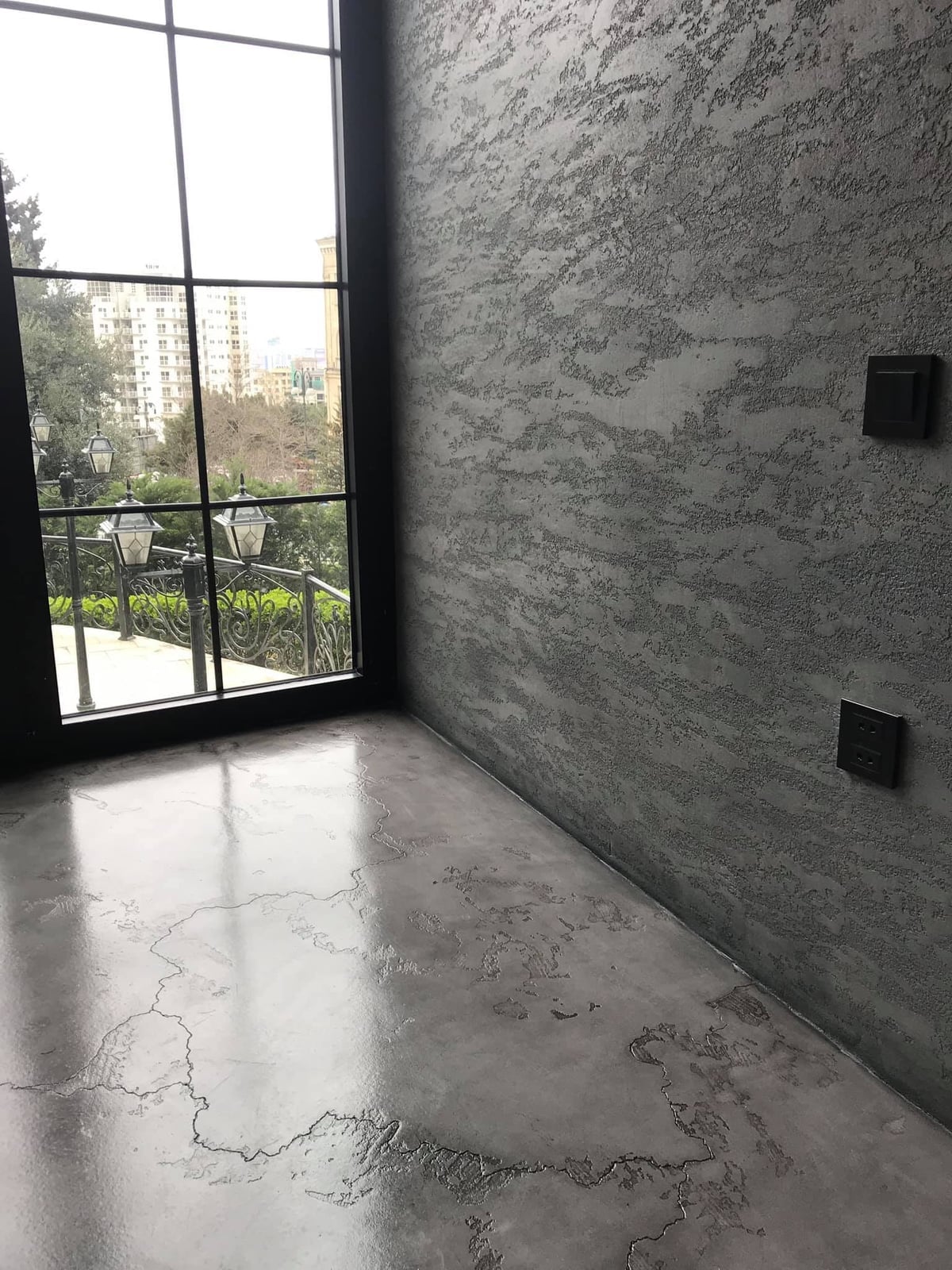
The gray microcement wall here is not smooth. It has a visible texture that creates shadows that shift through the day. That texture turns the wall into a backdrop for the view outside, making the greenery and glass railing stand out more than a flat painted wall would. A textured microcement wall adds depth to an open interior without needing art or shelving. It works best in a simple room, so the wall feels deliberate.
Minimalist Bathroom Vanity with Cool Gray Microcement Sink
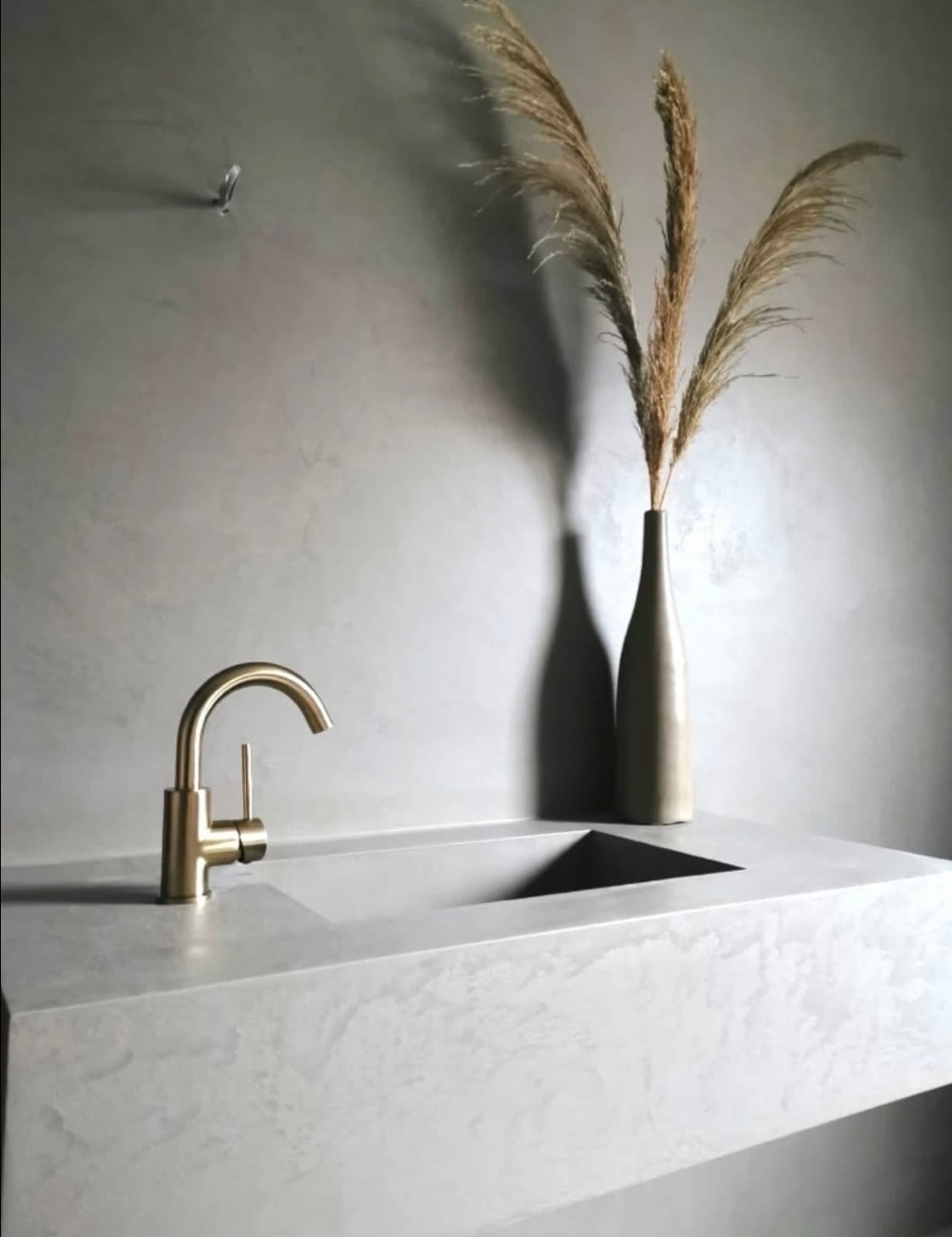
A cool gray microcement sink and countertop sit under a spotlight that picks up the matte finish, while brass fixtures add a warm note that stops the look from feeling cold. Compared to a standard drop-in sink, the integrated microcement version is one continuous shape with no rim or seam, which makes cleaning the counter a single wipe motion. That seamless shape also shrinks the visual footprint, so a compact vanity reads as more open than it is. The principle is that a minimalist bathroom gains the most from an integrated sink because the lack of joints keeps the eye moving without a pause.
Modern Salon with Glossy Textured Microcement Floor
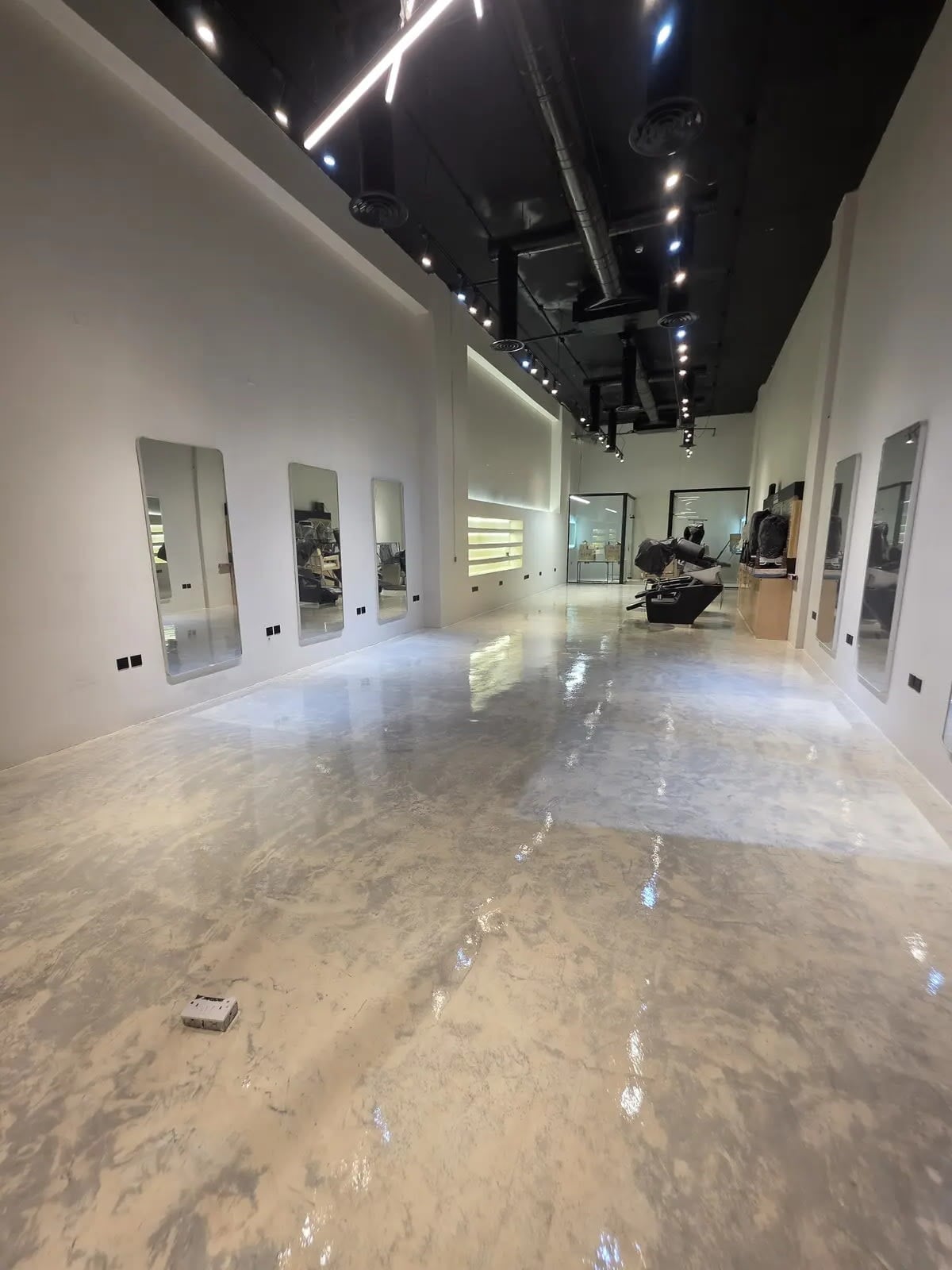
A glossy, textured microcement floor turns a modern salon into a piece of minimal design. The subtle sheen on the gray surface reflects track lighting and window light, while the texture keeps the floor from feeling slick or slippery. Metal salon chairs and large mirrors on the open plan walls stay visually light against that grounded base. This material choice works when the room keeps its palette tight to gray, white, and black, so the floor becomes a deliberate finish.
Minimalist Shower with Seamless Microcement Enclosure, Indoor
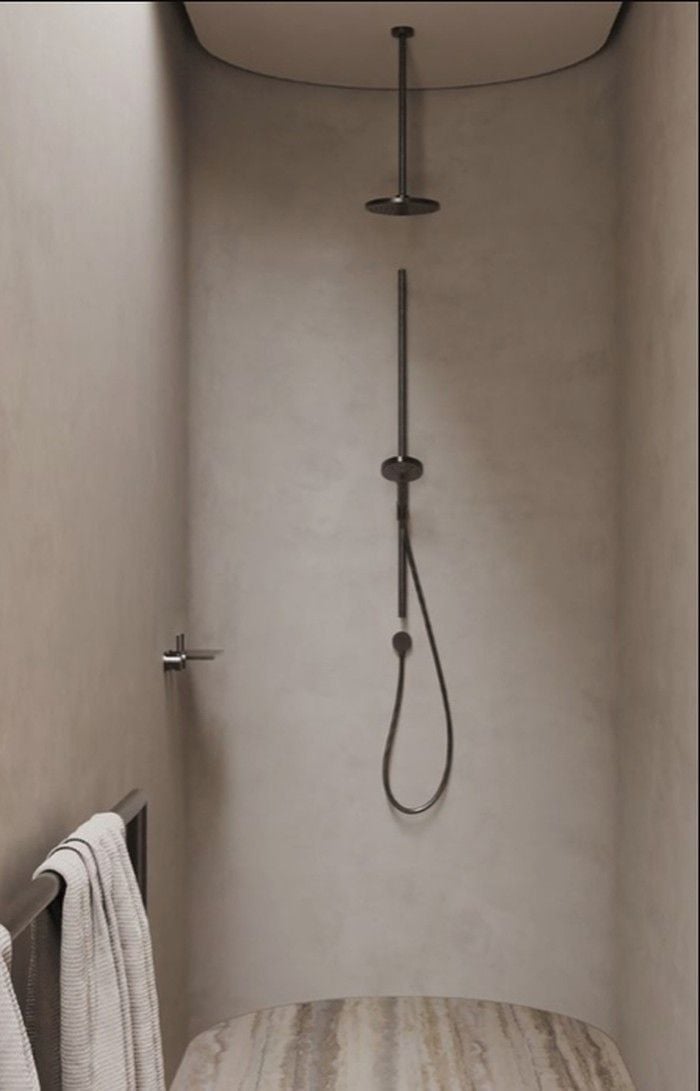
A seamless microcement shower enclosure delivers on the promise of a clean, uninterrupted surface. The gray-beige palette on the walls and floor blurs the line between vertical and horizontal planes, making a compact corner shower feel larger than its footprint. A rain shower head and a handheld shower are mounted on the microcement surface, with a simple towel rack as the only accessory. The palette stays restrained to gray, beige, and charcoal, with metal fixtures in a neutral tone that does not compete for attention. For a minimalist shower, the payoff is a surface that reads as monolithic, with no grout lines to scrub or tile edges to catch the eye.
Modern Farmhouse Bathroom with Off-White Microcement Shower Wall
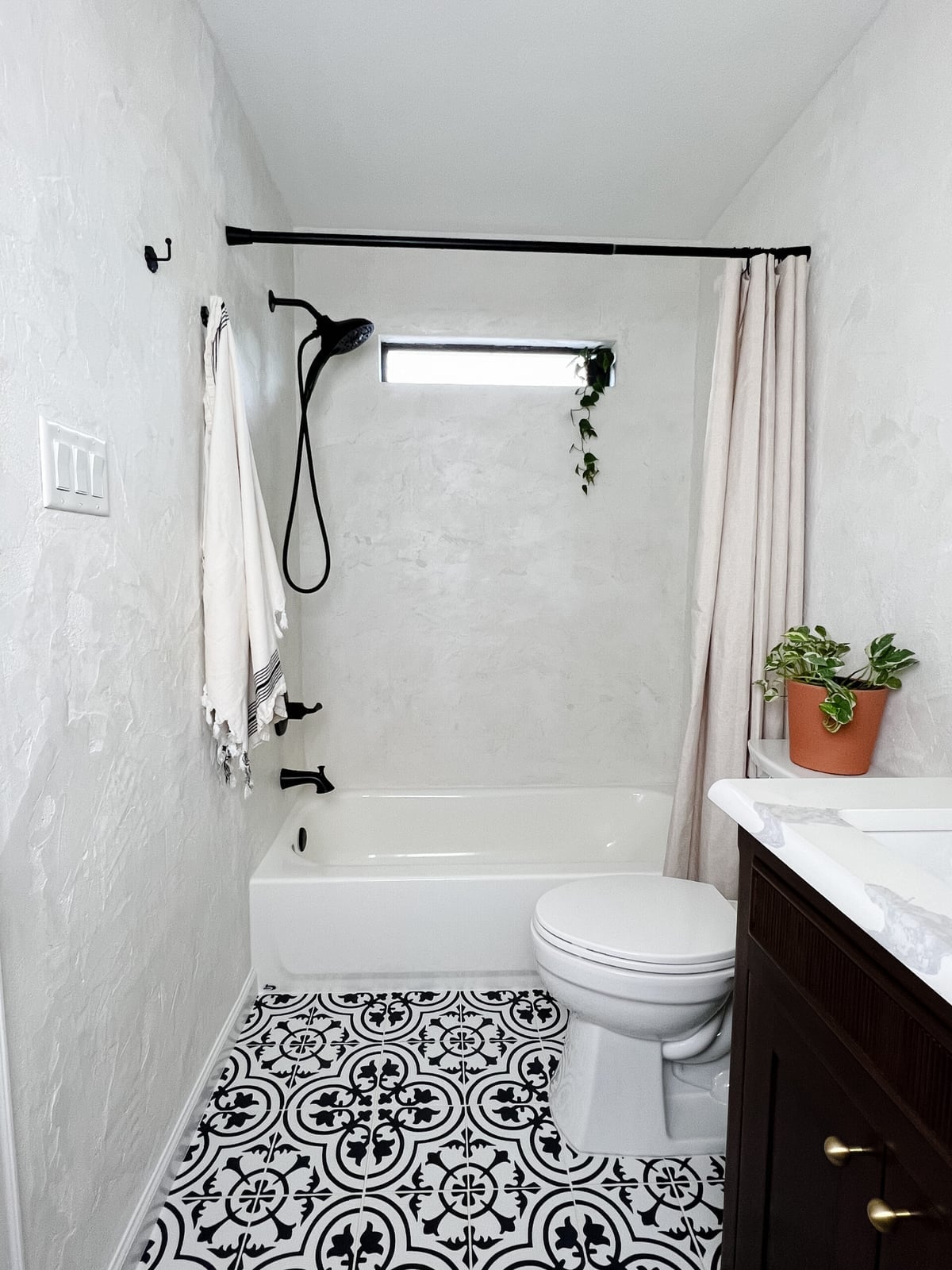
An off-white microcement shower wall offers an alternative to the usual subway tile in a modern farmhouse bathroom. The textured surface brings a soft, hand-applied feel that contrasts with the crisp lines of black metal fixtures and the warmth of wood on the vanity. Natural light from a window hits the wall differently than it would on glossy tile, giving the compact bathroom a quieter, more matte atmosphere.
The microcement wall pairs with a bathtub and a shower curtain, keeping the room from feeling too industrial. The trick is to let the microcement carry the texture while tile handles the wet zones. In a modern farmhouse setting, that mix of off-white microcement, wood, and black metal keeps the look grounded without tipping into rustic cliche.
Final Thoughts
Microcement works because it does not try to be the center of attention. It provides a quiet, textured backdrop that lets other materials and shapes stand out. The key is to let the finish do its job without overcomplicating the space around it. A simple palette, good lighting, and a few intentional pieces are all you need. Microcement is also practical: it is durable, easy to clean, and works in wet areas when properly sealed. Just remember that application is skilled work, so hire a pro for best results. With the right approach, microcement adds a lasting sense of calm and continuity to any room.