
A deck railing does more than keep you from stepping off the edge. It frames the view, sets the tone, and quietly holds the whole outdoor room together. Whether your deck overlooks water, woods, or a backyard, the railing is the line your eye follows first.
This article walks through 31 deck railing ideas for 2027, from cable systems that disappear into the landscape to bold metal profiles that define the space. Each version treats the railing as the hero element, with the deck and its surroundings kept intentionally simple so the rail stays front and center.
Modern Deck Railing with Wood Accents
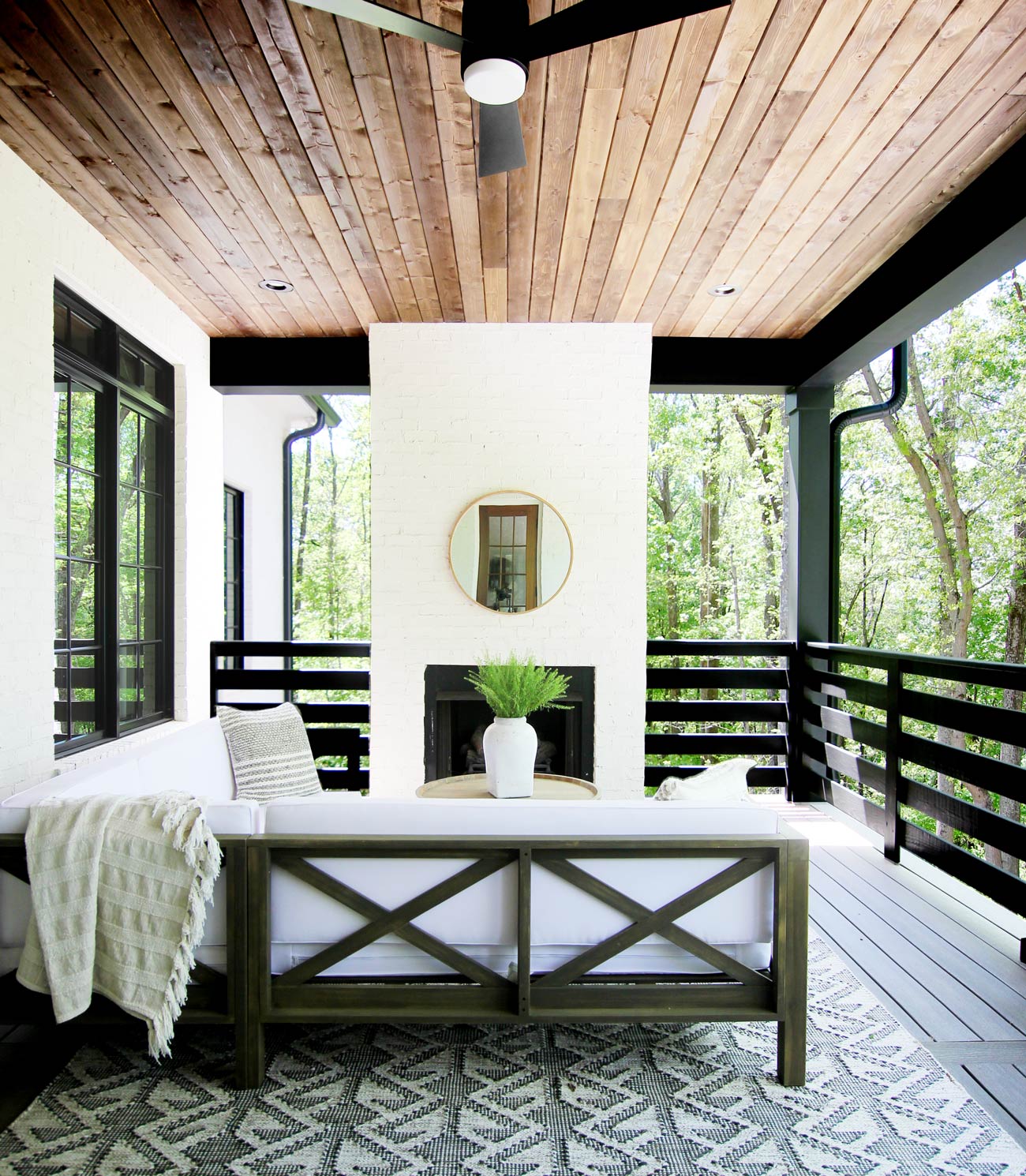
The black horizontal rails cut a crisp line across the deck, but the warm wood paneled ceiling softens the look. A brick fireplace anchors one side, and the open plan seating area with a sofa and rug reads as a second living room. Recessed lights and daylight keep the palette of black, white, and wood tones balanced. A single material, used overhead, can soften an entire railing’s modern edge.
Minimalist Cable Deck Railing
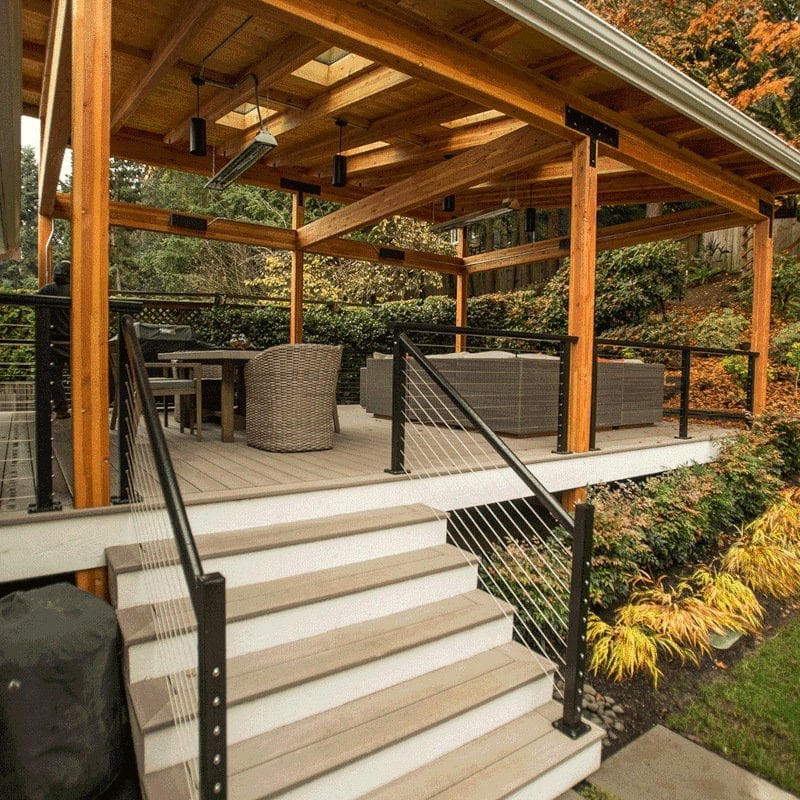
This is a railing that almost disappears, and that is the point. The cable system leaves the view wide open while the wood posts and top rail keep the structure grounded in natural tones. A covered deck with overhead lights and daylight gives the space an indoor-outdoor feel. The palette stays tight: wood, black, white. The principle is that when the railing recedes, the surrounding landscape becomes the decor, so the fewer colors you add, the cleaner that view reads.
Composite Decking with Cable Railings
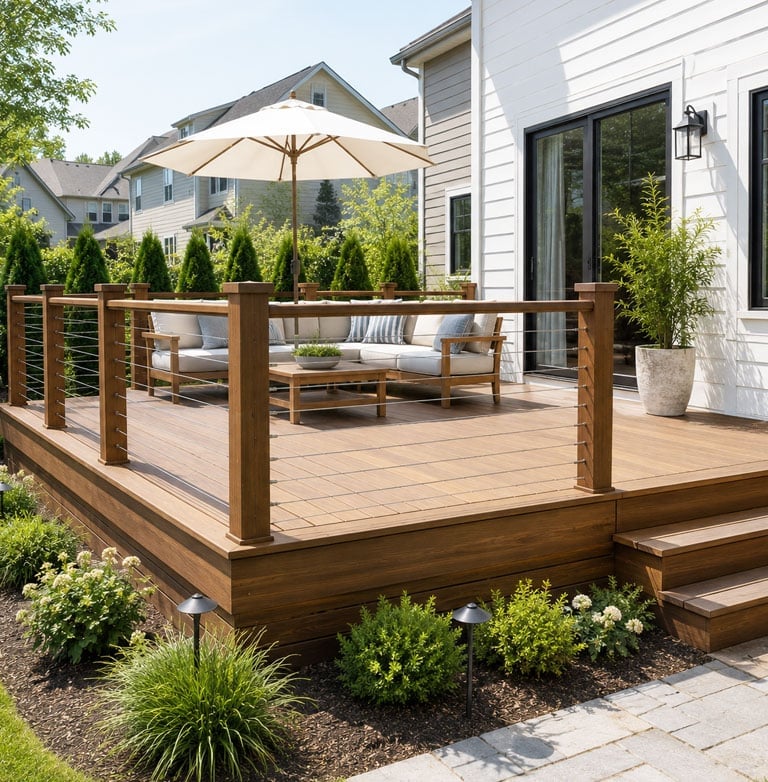
Is a cable railing worth the extra planning when the deck itself needs to hold up to weather and foot traffic? This setup pairs a wood-toned composite deck with a cable system, keeping the structure low maintenance while the view stays clear. An outdoor sofa and coffee table form a seating area near the stairs, and potted plants add green without cluttering the sightline.
The layout works because the railing does not fight the furniture. The cables are thin enough that the sofa and table feel like they belong to the same zone, not two different decks. Subtle landscape lighting picks up after daylight fades. The railing’s visual weight should match the deck’s purpose. If the deck is for lounging, a light railing keeps the seating area as the main feature.
Horizontal Steel Deck Railing
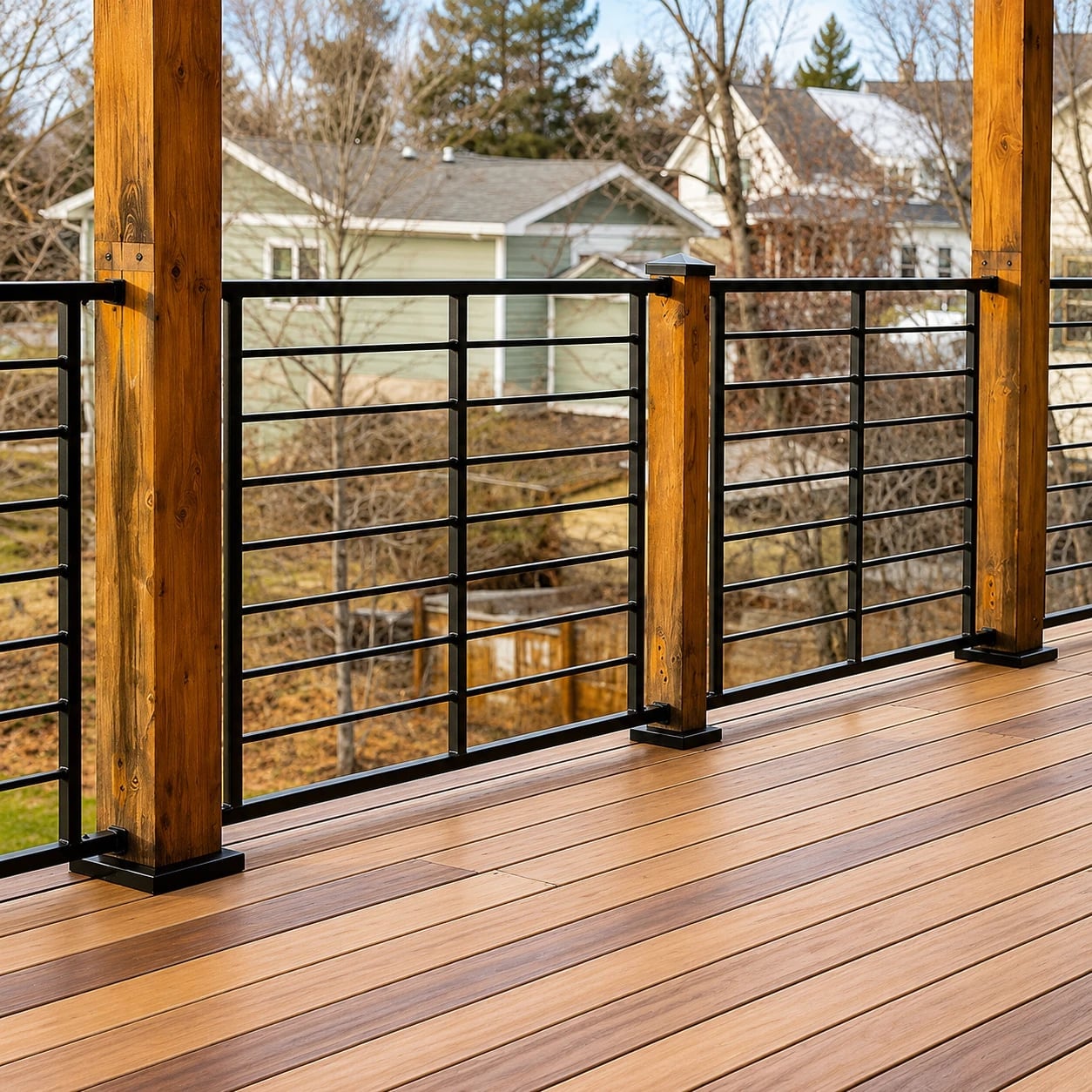
The black steel horizontal bars sit between wood posts, creating a pattern that reads as both industrial and warm because the wood breaks up the metal. Daylight hits the steel evenly, so the lines stay sharp without glare. The principle for a deck railing like this: the spacing between bars matters as much as the material. Wide gaps keep the view open, but the horizontal lines still define the boundary of the deck.
Cable Railing with Panoramic Views
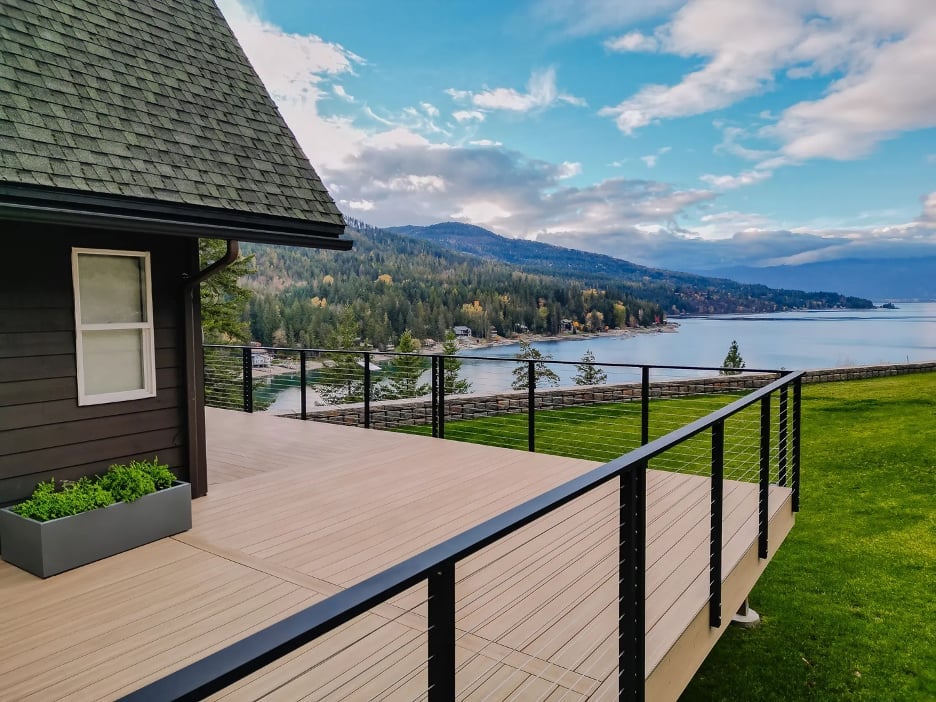
This cable system on a composite deck overlooks a lake and mountains, and the thin horizontal cables do just that. The palette stays neutral with black metal, beige composite, and green landscape. The principle of scale applies here: the wider the view, the thinner the railing should be. A bulky rail would shrink the panorama; a cable system lets the lake feel as big as it is.
Minimalist Wood and Cable Railing
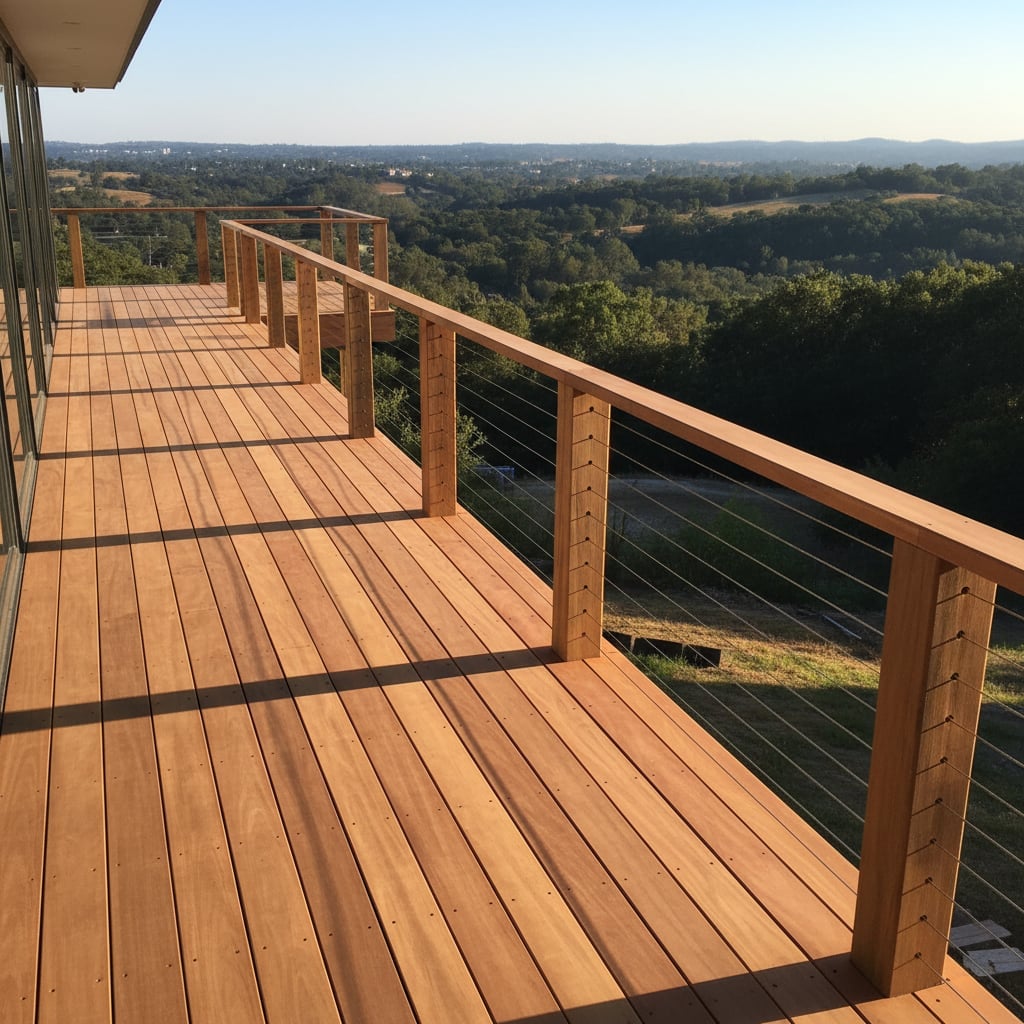
Wood posts and a wood top rail keep the deck feeling warm, while metal cable infills let the view through without visual clutter. The clean lines of the cable railing mean the eye moves straight past the barrier to the yard beyond. A natural wood deck and silver-toned cable sit well together because the palette stays restrained: just two materials, no extra trim. For cable railing, fewer vertical interruptions help the deck feel like a single open platform. This setup favors a wide, unbroken deck where the railing acts as a boundary, not a wall.
Deck Railing at Sunset
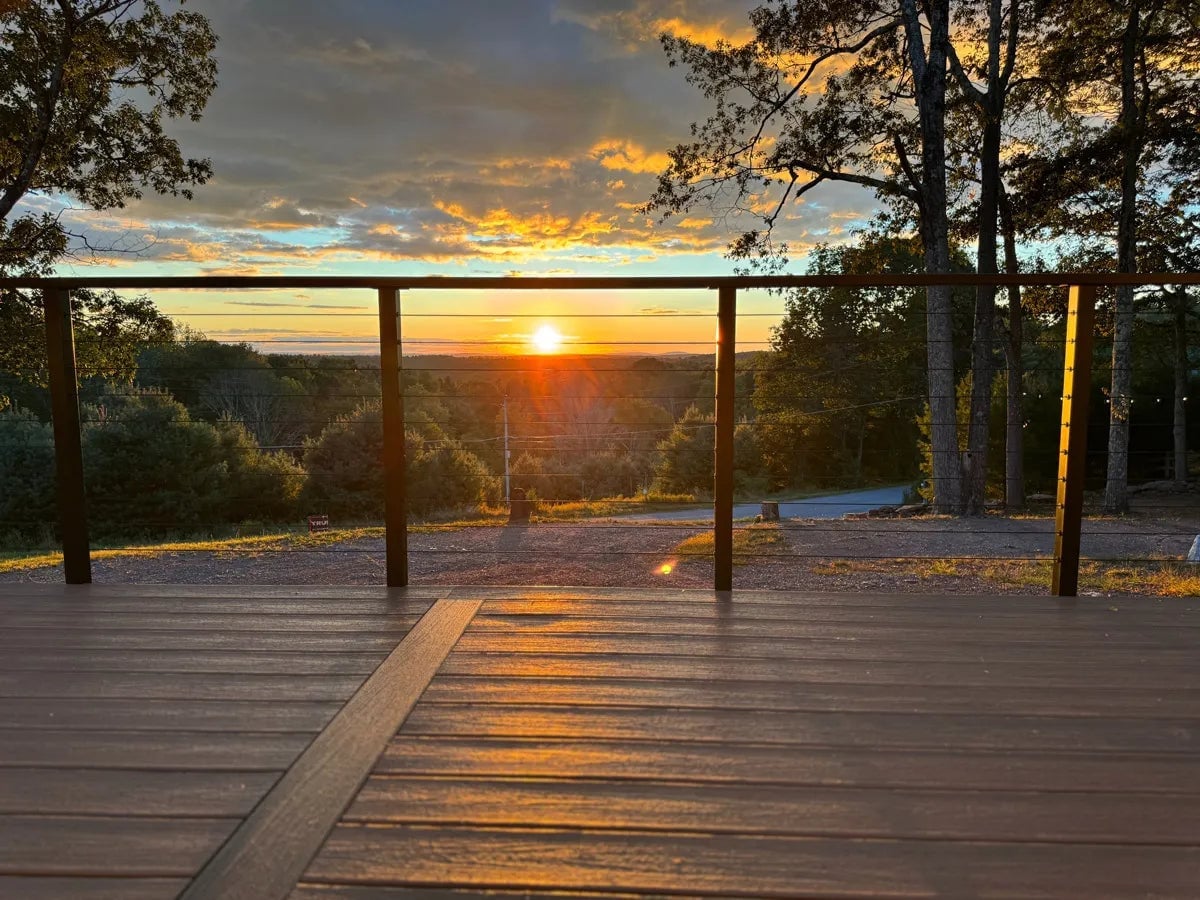
The warm orange and yellow sky shifts the deck railing from a safety feature into a framing device. Dark metal infills against a composite deck catch the low light and read as silhouettes, which keeps the structure from competing with the sunset. A renter-friendly swap is to leave the existing railing in place and add a dark stain or paint to the top rail only. That single change pulls the eye along the horizon line and makes the whole deck feel like a viewing platform without a full replacement. The palette outside the railing does the decorating for you.
Rustic Porch with String Lights
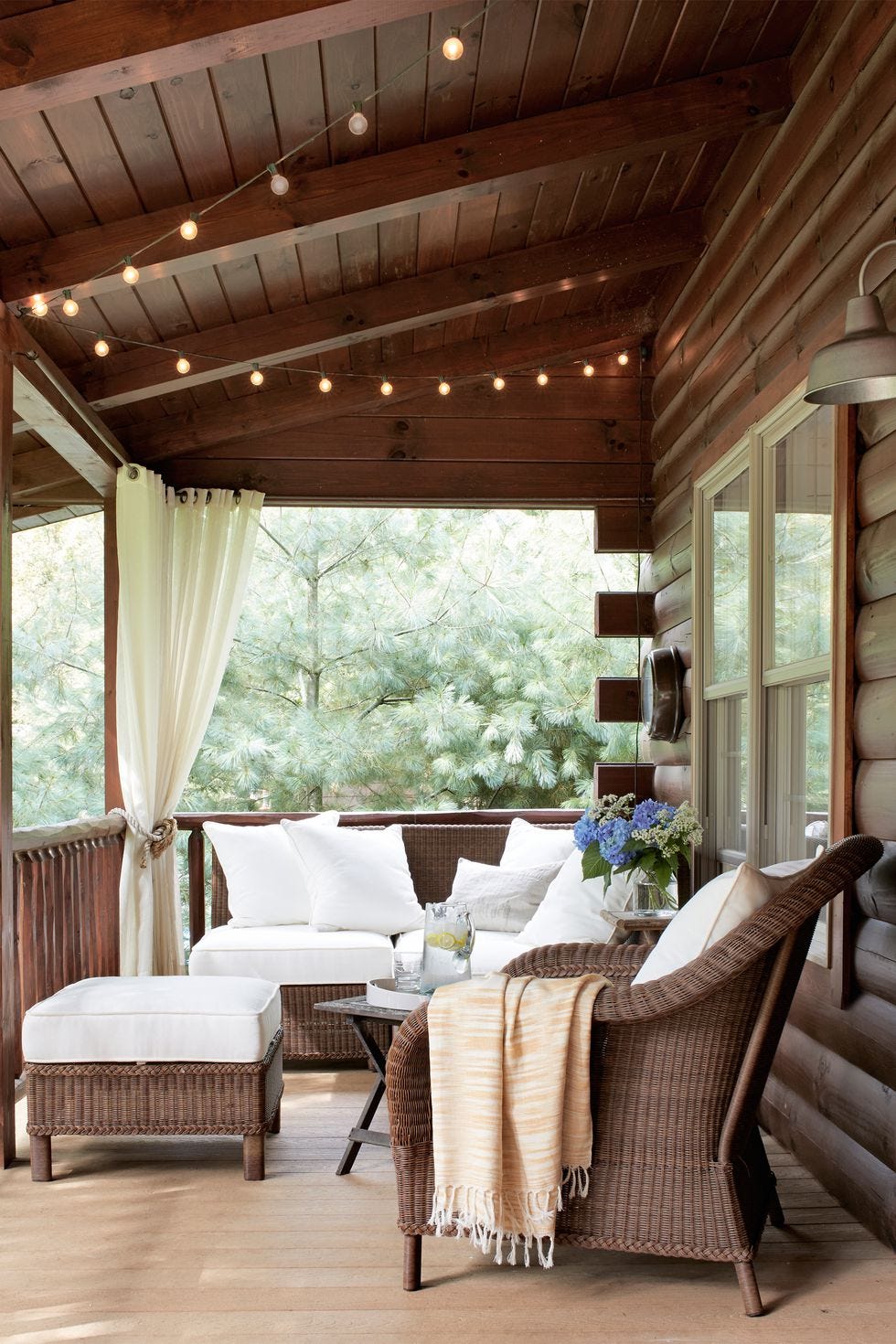
A rustic porch with a wooden railing, a wicker sofa and chairs, and an ottoman already has the bones for a relaxed seating area. The string lights draped above the railing add a soft glow that softens the brown and white palette without touching the structure. For a styling variation, keep the railing unpainted so the wood grain stays visible, then let the lights and fabric cushions bring in color. The wicker pieces sit low enough that the railing remains the visual anchor along the porch edge. The string lights break the straight lines of the wood and make the space feel like a room, not a corridor.
Horizontal Rod Deck Railing
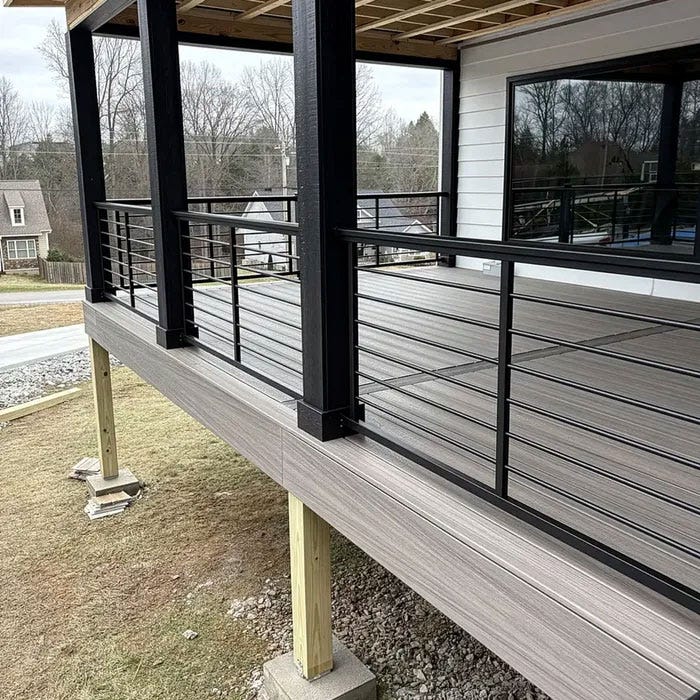
How well does a horizontal aluminum rod railing hold up on a deck that sees rain and sun all year? The answer depends on how the posts connect to the deck frame. Aluminum rods dont rust the way steel can, and the horizontal orientation means fewer joints that can loosen over time. The composite deck boards below stay cool underfoot and dont splinter, which matters when the railing is the only barrier between the deck and the ground. The wood posts add a warm note against the gray and black metal, but they will need sealing every couple of seasons to match the aluminum lifespan. The principle for durable deck railings is that the infill material matters less than the connection points between post and deck.
Farmhouse Porch Railing
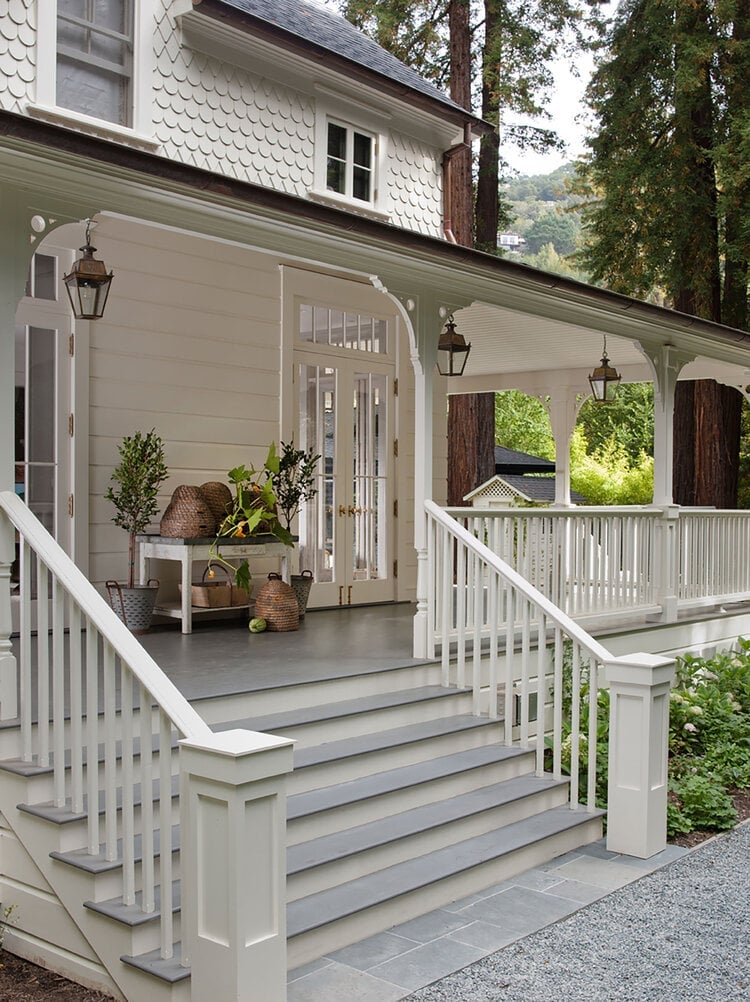
White wood railings with black metal balusters create a crisp, deliberate contrast. The black balusters are spaced evenly along the porch edge, and the white top rail and posts match the columns that support the porch roof. A hanging lantern at the corner adds a vertical element that balances the horizontal lines of the railing. The palette stays simple: white and black with green from the yard beyond. For farmhouse porch railings, the ratio of white to black should lean heavily toward white so the dark balusters become an accent, not a grid.
Sunset Deck with Cable Railing
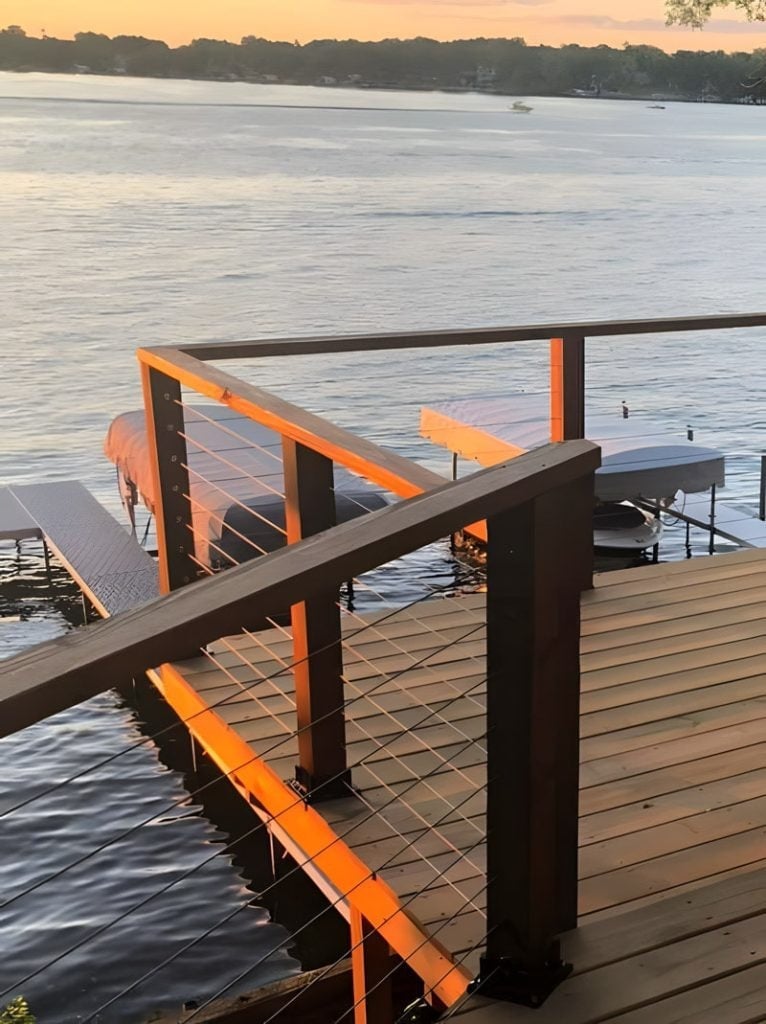
Choosing deck railing starts with the view, and this setup follows that lead. The warm wood deck captures the sunset light while the silver metal cable railing stays nearly invisible, making the blue water and dock beyond the main focus. A dark or bulky top rail would compete with that glow, but the slender cable and natural wood tone keep the palette simple. The deck feels open and expansive, with the railing acting as a support system rather than a visual barrier.
Organic Branch-Like Deck Railing
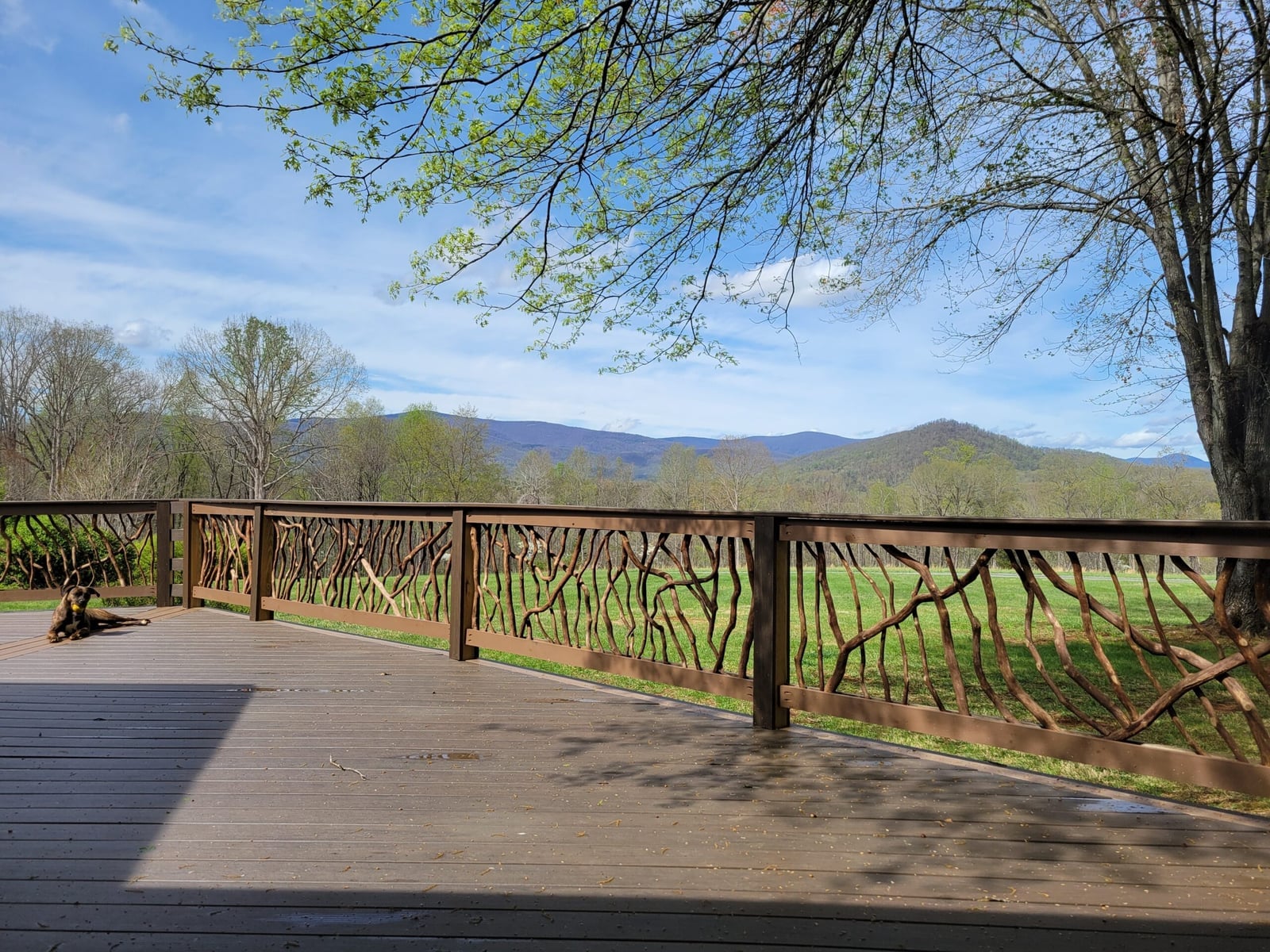
If a straight horizontal or vertical railing feels too rigid, an organic branch-like design offers a close alternative that keeps the same structural purpose. The railing uses natural wood pieces that twist and curve, creating a silhouette that blends into the surrounding green landscape. The brown wood tone matches the composite decking below, so the whole surface looks like one connected material family.
This design works on a deck with a scenic view, because the irregular lines draw the eye outward and keep the focus on the landscape. The organic shape also softens the transition from the built deck to the natural yard, making the outdoor space feel like an extension of the landscape and not a separate platform.
Traditional Porch Railing Contrast
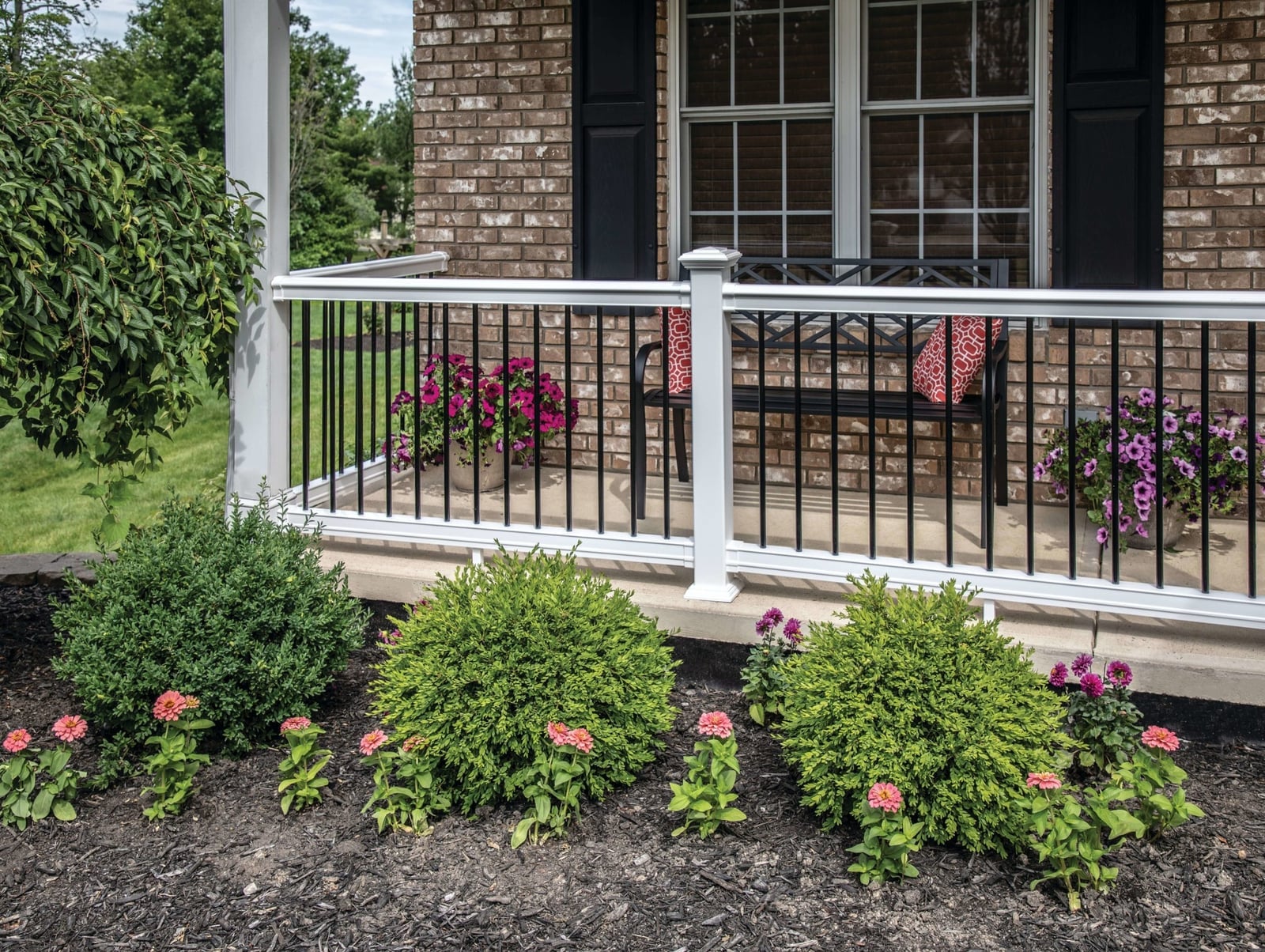
The design plays a clean black-and-white game against a brick-red porch and green plants. White vinyl railing and posts keep the structure light and traditional, while the black balusters add a sharp vertical contrast. The dark balusters also echo the black metal of a nearby bench, which ties the compact front porch together without adding extra color.
Cable Railing with Water View
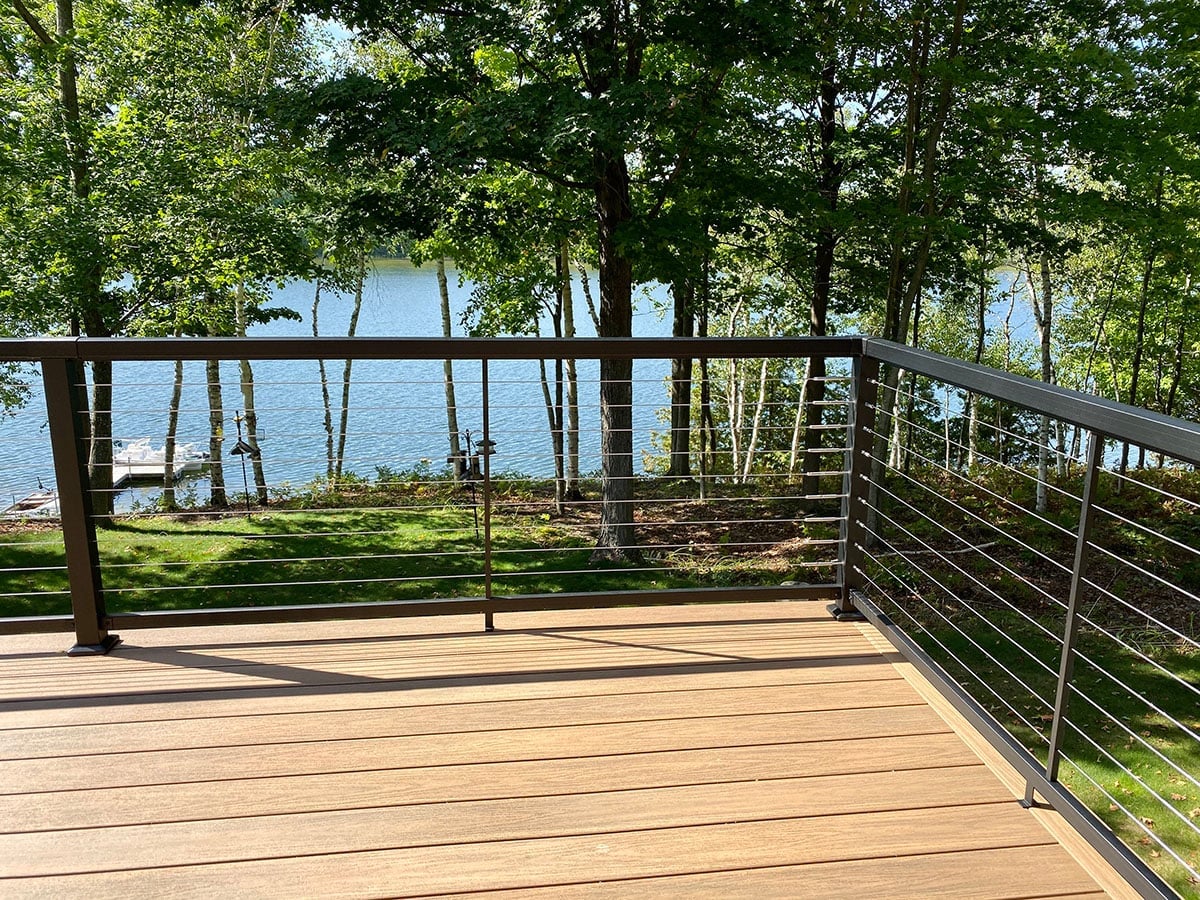
This is a railing designed to disappear. The silver metal cable and slim posts let the water and trees take center stage, with the wood deck and composite decking providing a warm, solid base. The cable system keeps the sightline open, which is the point when you have a view worth preserving. The brown wood tone of the deck and the silver of the cable stay neutral, so the green foliage and blue water provide the only color. For anyone who wants to see the horizon without a thick barrier, this layout proves that less railing actually gives you more of the scene.
Composite Privacy Deck Railing
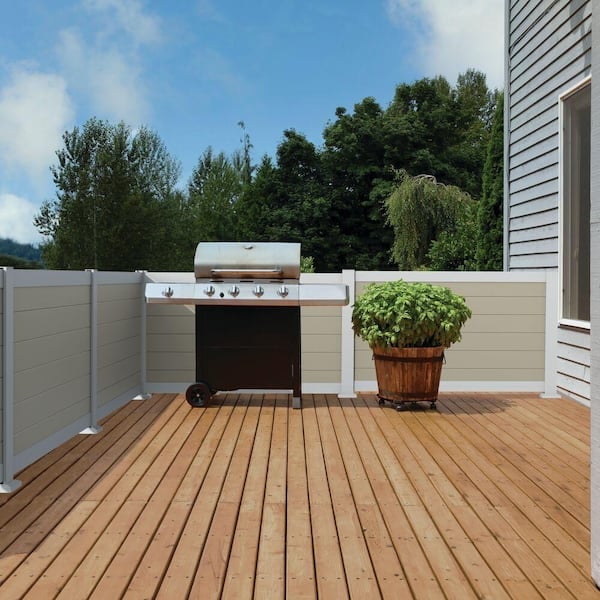
Plan the solid sections of privacy railing where you need screening and leave the rest open, rather than boxing in the entire deck. This setup uses tan composite railing panels as infill between wood posts, creating defined privacy zones without making the whole deck feel closed in. The beige composite tone blends with the wood deck boards, so the panels look like a natural extension of the surface.
Bright daylight makes the material choice matter. Composite panels hold their color longer than painted wood in direct sun, and they do not splinter or warp the way a solid wood privacy wall might. The outdoor grill placed near one panel also suggests a practical layout: the solid railing blocks wind and views from neighbors while you cook, while the open sections keep the deck connected to the yard.
Rustic Deck Railing with Solar Cap
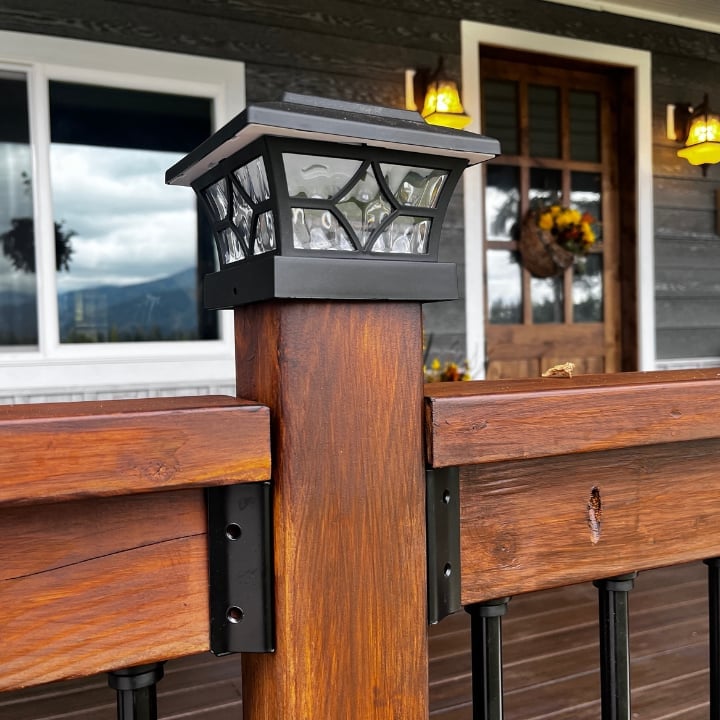
The ornate solar light cap on this wooden deck railing adds function without rewiring. The wood rail and black metal balusters keep the base simple, so the glass globe cap becomes a focal point. Element mode means the railing stays central: the wood stays unfinished, the metal stays dark, and the cap sits on the post top. That single detail shifts the look from plain to finished. For a deck that needs evening light without a separate fixture, this cap does the work. Check your USDA zone before choosing a solar unit; northern winters cut charging hours.
Coastal Porch Steps Railing
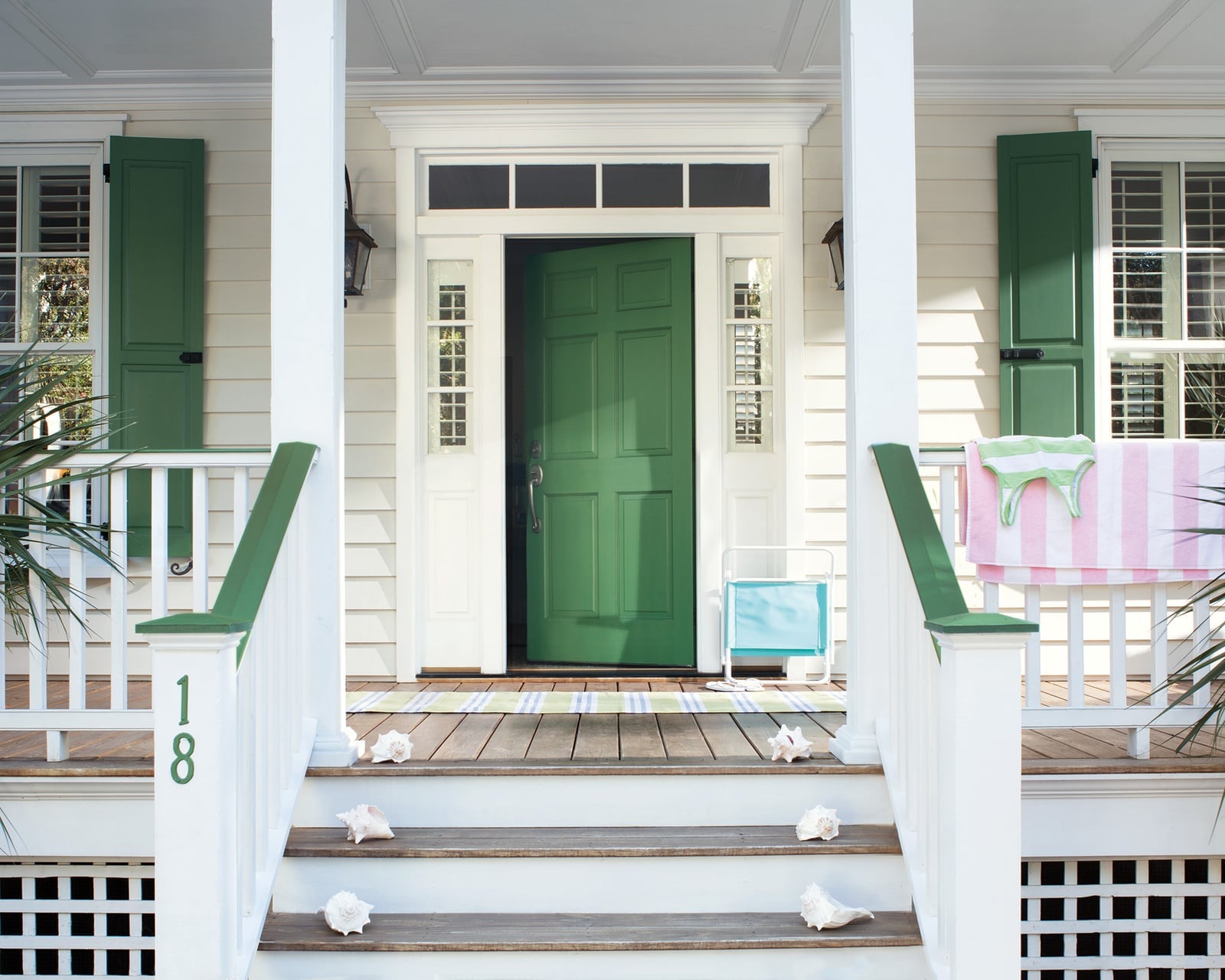
On a compact front porch, let one color lead and another break it. Here the white railing and steps keep the palette airy, while the green front door adds a stop. The natural wood of the step treads and a striped towel on the rail soften the painted surfaces. The palette works because the green appears only on the door and the towel. That ratio of one bold accent to several neutral surfaces keeps a small porch from feeling busy. Renter-safe swap: paint the front door a color you like; the railing stays white and the landlord gets back a neutral.
Multi-Level Deck Railing
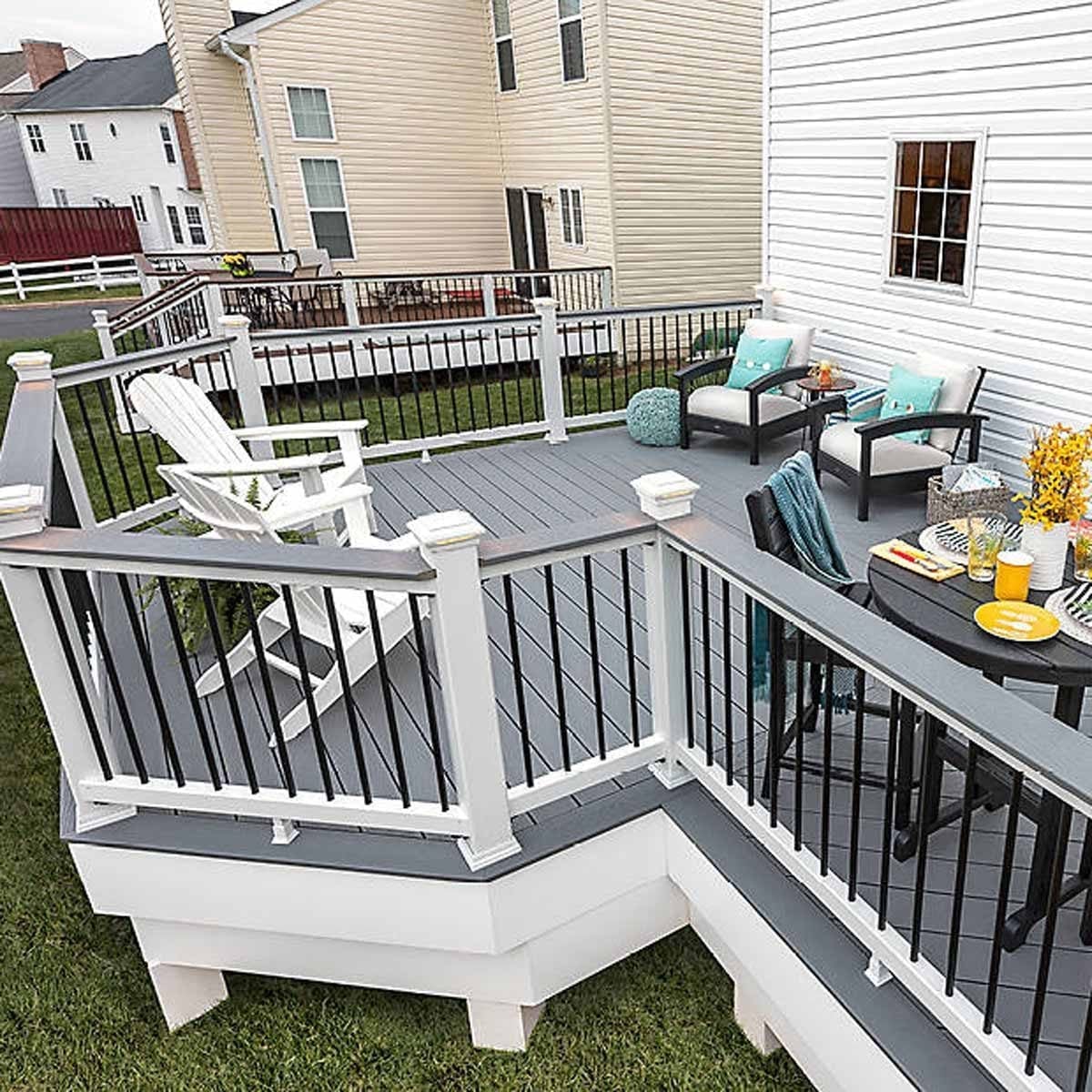
A single-level railing connects one area to the next. A multi-level deck does the opposite: it breaks the space into zones while the railing ties them together. Here the gray composite railing and white balusters run along the upper seating level and the lower dining level, so the eye moves from one to the other without a visual jump. The teal cushions on the dining chairs add a color link between the two levels.
Layout matters because the railing repeats the same profile on both levels. That repetition makes the deck feel planned rather than pieced together. The furniture sits inside the railing line, not against it, which keeps the walkway clear. If you have a split-level deck, match the railing style on both levels; the furniture and cushions can vary by zone.
Aluminum Railing with Stone Accent
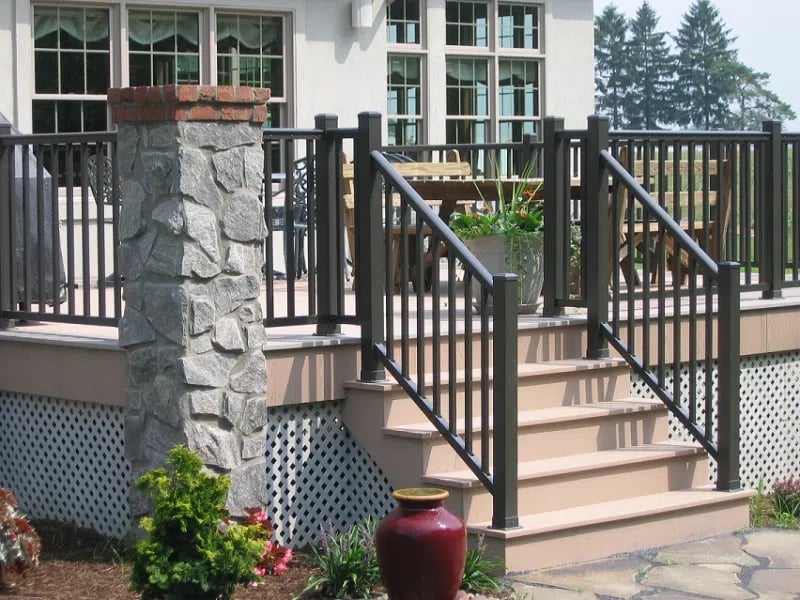
The aluminum railing runs straight along the deck and turns down the stairs, but the stone pillar at the corner is what gives the structure weight. The metal stays slim and gray, the composite steps stay neutral, and the pillar becomes the solid anchor. Element mode keeps the railing the hero, but the pillar proves that one non-metal piece can ground an entire run. For a deck that needs visual stops, a stone pillar at the corner works better than a metal post. The stone adds mass without adding maintenance; aluminum resists rust, and the pillar needs only an occasional rinse.
Gray Metal Cable Railing
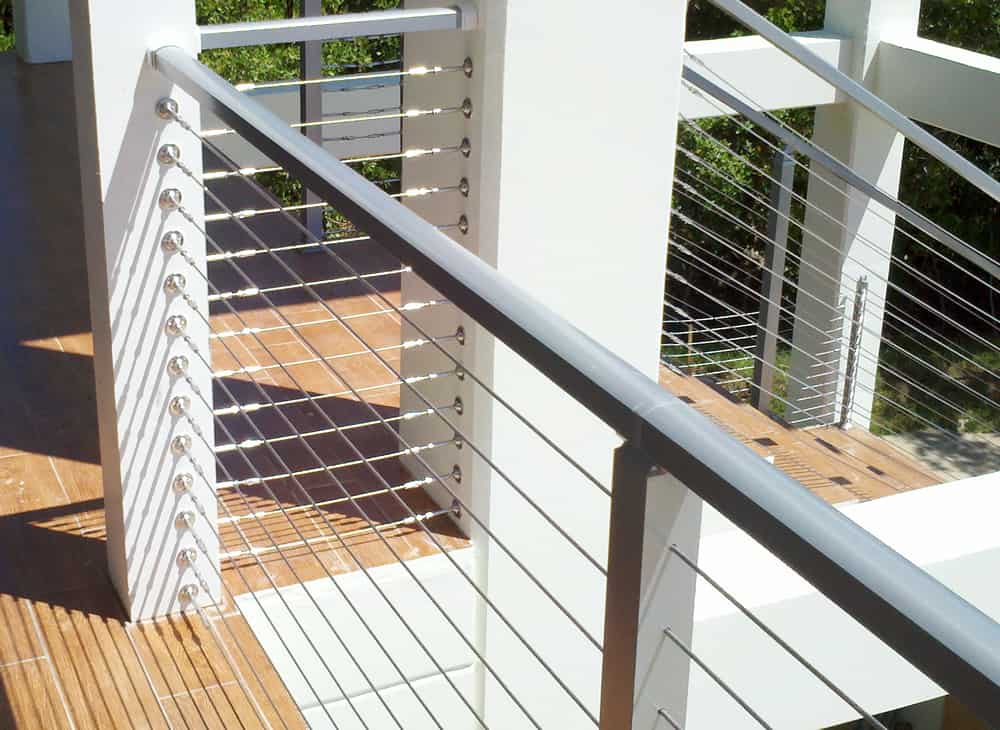
The gray metal frame and white posts keep the palette cool, and the cables let the view through without competing with it. The wood deck underneath stays warm enough to balance the gray. Element mode means the railing is the story: no ornament, no curve, just straight lines and thin cable. That simplicity works best when the surrounding deck is a single material. If your deck has a strong wood grain, a gray metal railing will stand apart from it rather than blend in, which is the point.
Clean White Deck Railing
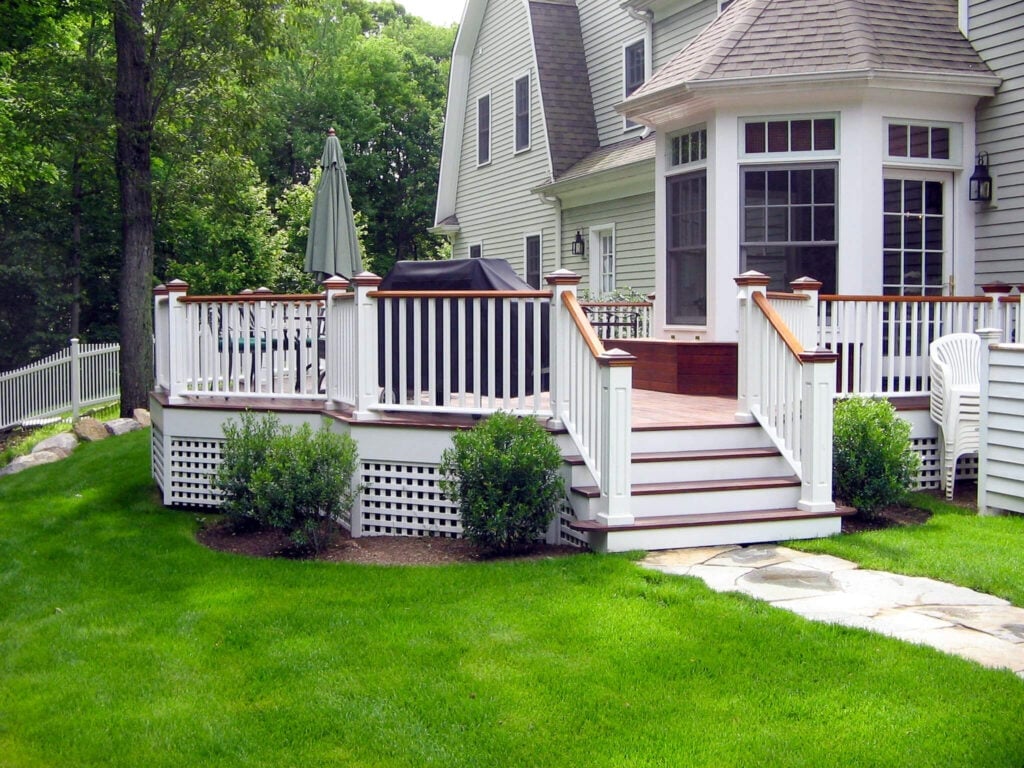
A white railing and a brown top rail keep the palette simple without going flat. The white pickets and rail blend with the house trim, so the deck feels like an extension of the interior. A brown wood top rail and matching deck boards add warmth that stops the all-white look from reading as sterile. The green landscaping and furniture cushions bring in the only other color, and it is enough. The ratio here is about 70 percent white, 20 percent brown, and 10 percent green. That small pop keeps the palette balanced.
Rustic Deck with Scenic View
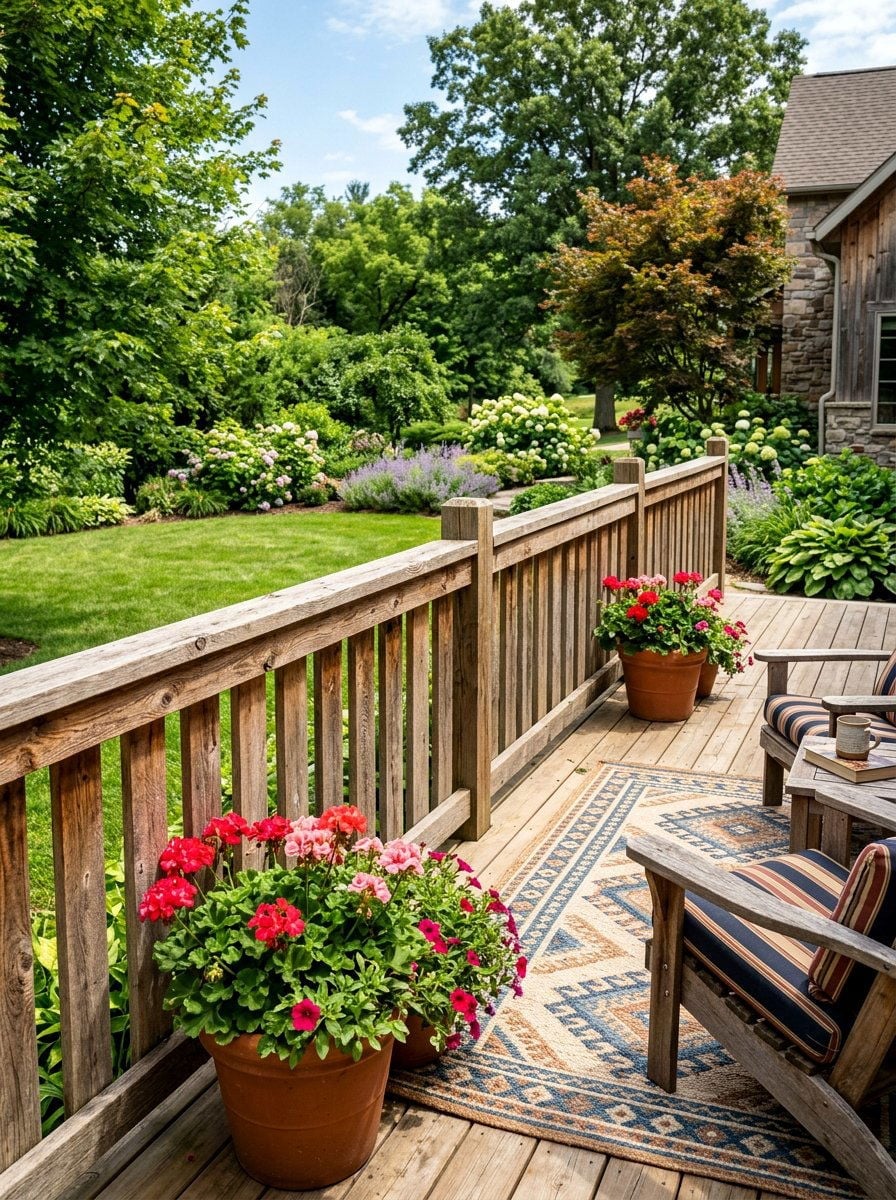
A rustic natural wood deck railing frames the view without competing with it. The raw wood posts and rail match the deck boards, so the eye moves past them to the green trees, blue water, and terracotta pots beyond. The wooden chairs, side table, and rug sit within that same natural palette. A layout like this works because the railing does not try to be the focal point. It just marks the edge and lets the landscape do the talking.
Industrial Wire Mesh Railing
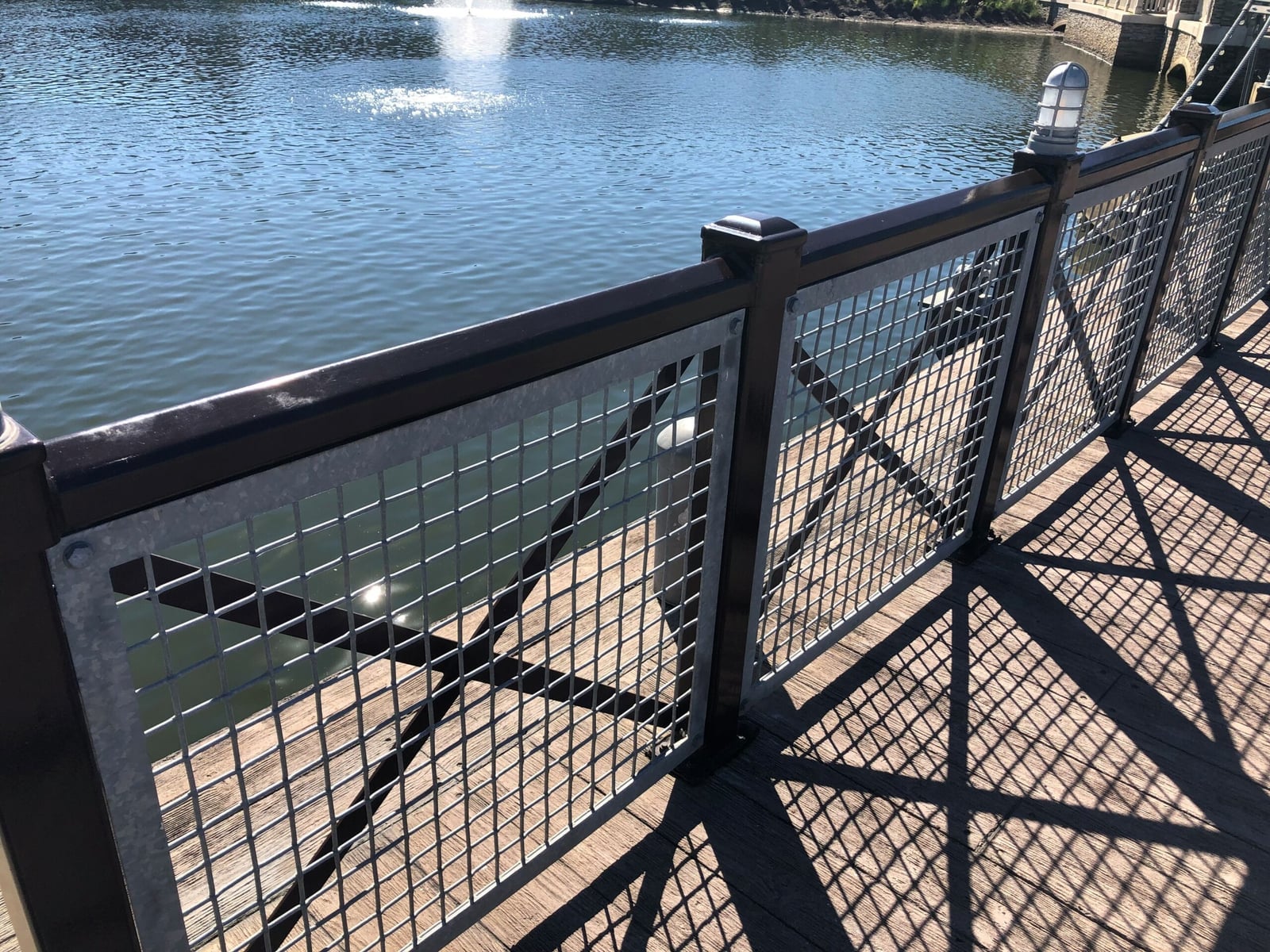
A mesh panel is a practical swap if you want something less common than cables or spindles. The black metal frame and gray mesh keep the industrial look intact while still letting light and air pass through. The grid pattern creates a texture that contrasts with the smooth deck boards below. For a renter, a tension-mounted mesh panel between existing posts can give the same look without permanent changes. Just check that your local code allows it before you hang anything.
Aluminum Railing Overlooking Water
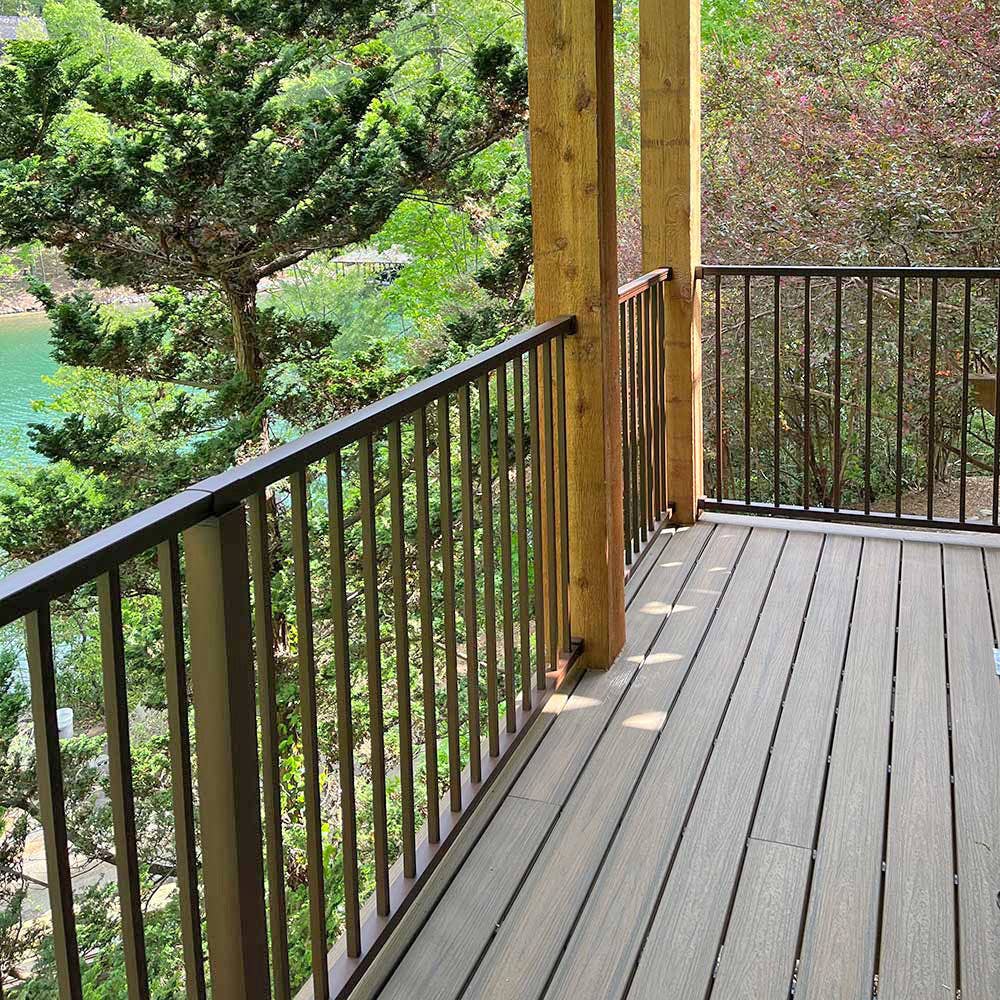
Aluminum railings are a close alternative to steel when you want a slim profile but less weight. The brown aluminum posts and rail blend with the wood deck boards, so the structure does not distract from the water and trees beyond. The thin vertical balusters keep the view open while still meeting code. On a deck with a lake or ocean view, that matters more than the exact metal finish. The natural daylight hitting the aluminum keeps it from feeling too cold against the warm wood tones.
Elevated Deck with Black Metal Railing
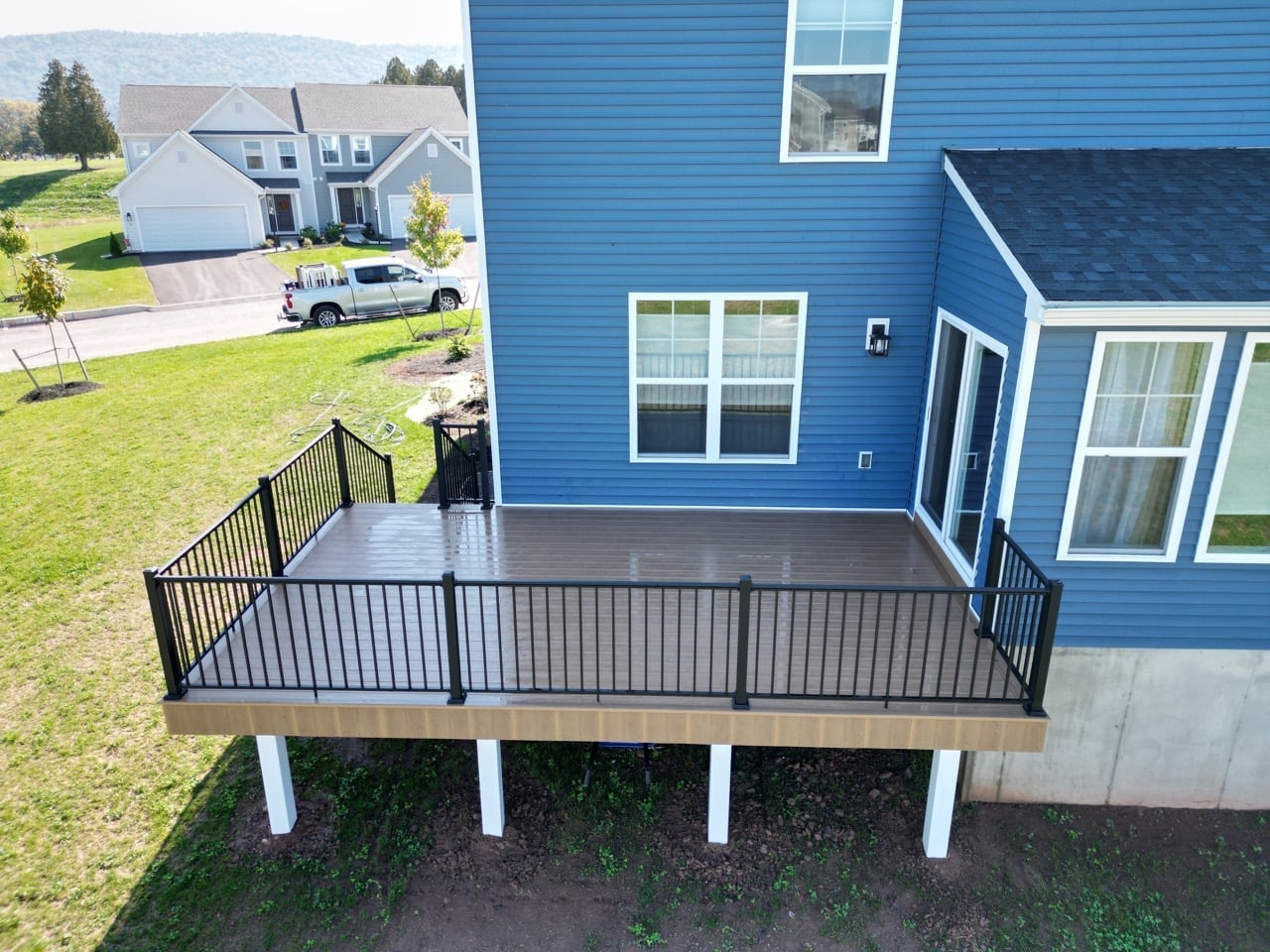
The black metal railing on this elevated deck creates a sharp horizontal line against the blue siding. That contrast defines the deck zone without needing a separate wall or screen. The brown composite decking below the railing adds a warm base, so the black rail does not feel harsh. The scale works because the railing is slim enough to let the house color dominate. On a raised deck, a dark rail like this can anchor the outdoor space without making it feel boxed in.
Modern Deck with Concrete Surface
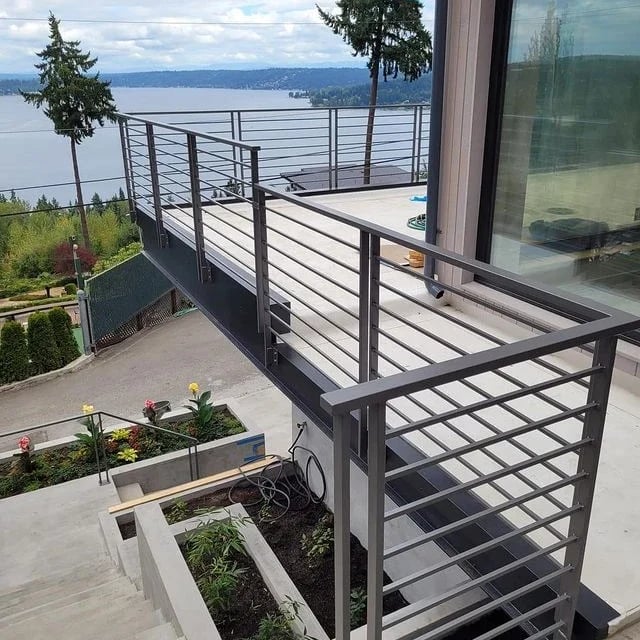
A gray metal cable railing is a smart material choice when you want the view, not the barrier, to be the main event. The horizontal cables and slim posts keep the sightline open across the deck and out to the water, while the wood deck and concrete surface add warmth and texture below. The palette stays restrained in gray, white and blue, so nothing competes with the expansive lake view. The principle here is that the railing should recede visually: dark, thin profiles disappear against a bright sky or distant water, making the deck feel larger than its actual footprint.
Raised Deck with Brick Patio
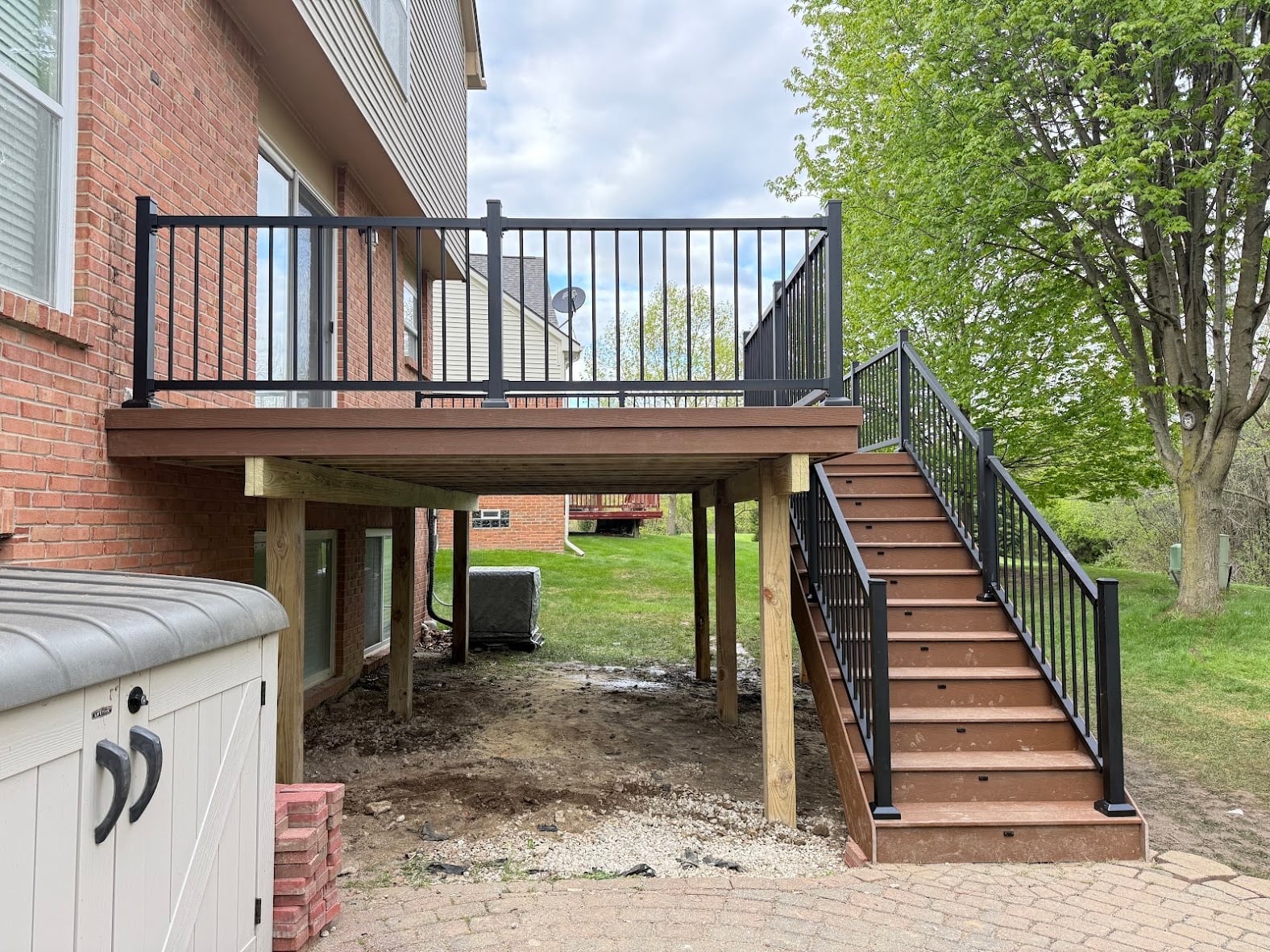
A practical rule for a raised deck with a brick patio below is to match the railing finish to the darkest permanent element in the view. Here the black metal railing ties the wooden deck to the brick patio and surrounding greenery without adding another color to the mix. The layout has stairs leading down to the patio, so the railing does double duty as a handrail and a visual boundary.
For renters, a black metal railing is about as neutral as it gets. It works with almost any deck stain or furniture style you bring in, and it does not lock you into a specific palette. If the railing is already installed, use it as your anchor: pull a cool brown from the deck boards for your rug or cushions, and let the black railing frame the whole setup.
Reclaimed Pallet Wood Railing
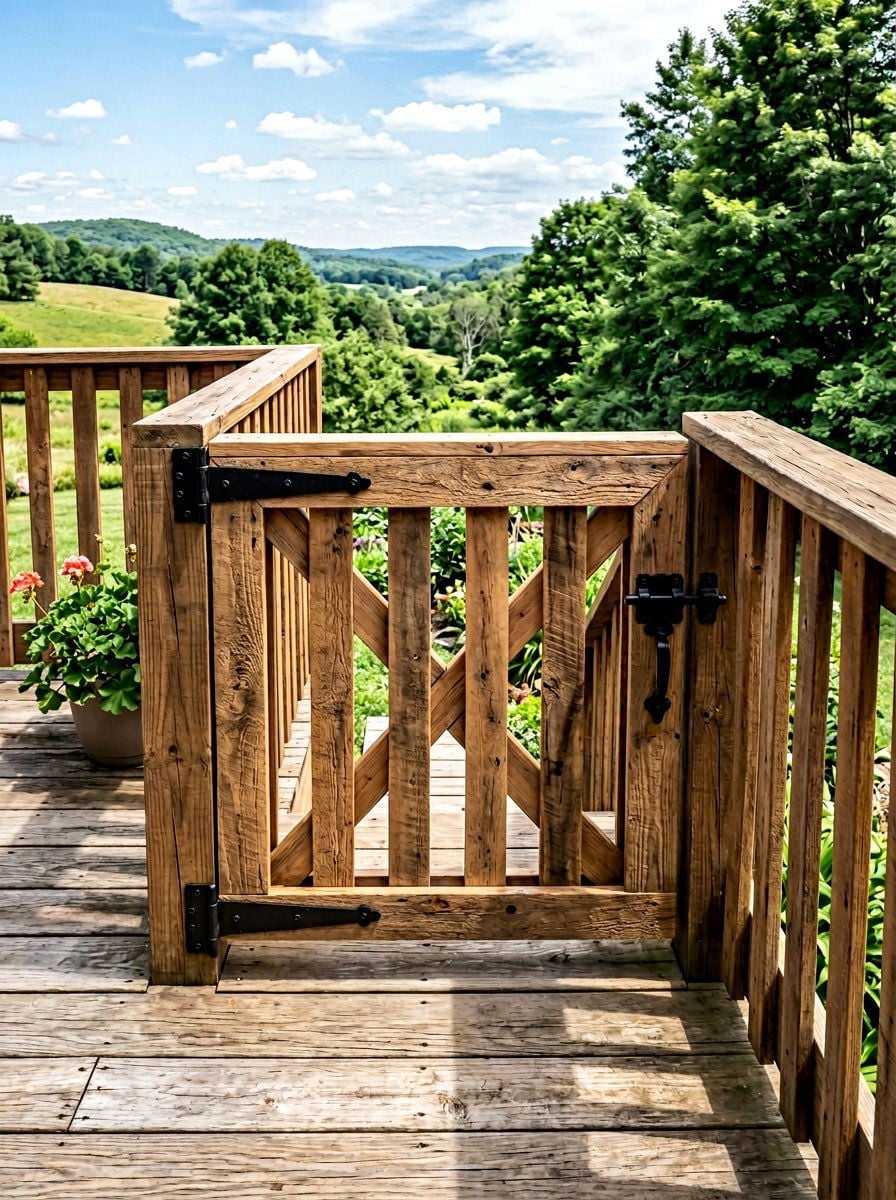
Reclaimed pallet wood brings a mix of natural wood tones and weathered texture that new lumber cannot fake. The gate and railing here use boards of varying widths and grain patterns, held together with simple metal hardware that does not distract from the wood itself. The rustic style works because the materials are honest: no stain tries to hide the pallet origins, and the green of the surrounding deck and yard keeps the look from feeling too dry or brittle.
Traditional Turned Balusters
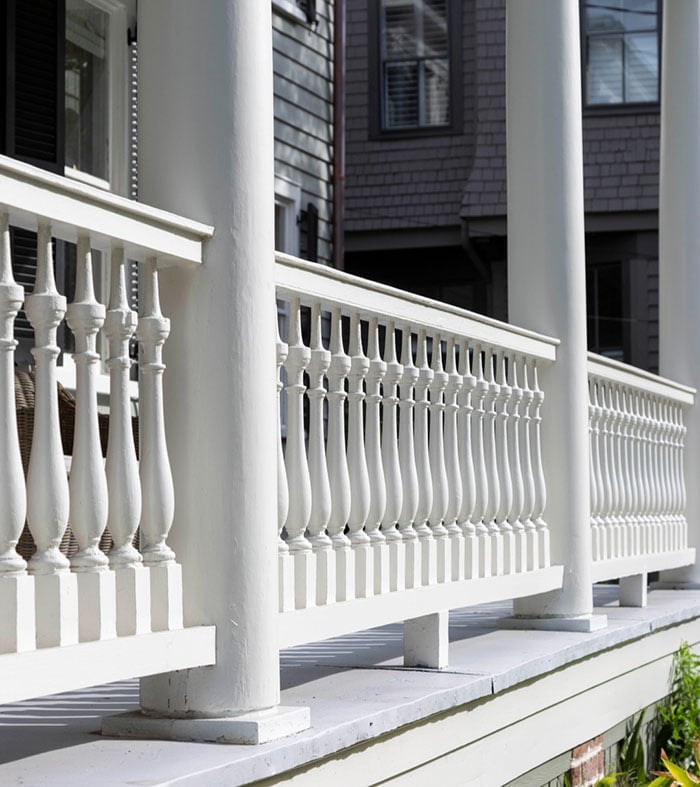
Ornate white turned balusters spaced evenly along a porch railing create a rhythm that reads as classic without being fussy. The painted wood finish catches bright daylight and keeps the porch feeling open, while the gray deck surface below anchors the white verticals. The traditional style depends on proportion: the balusters are substantial enough to read as craft, but not so thick that they block the view from a seated position. White paint on exterior wood needs a good primer and a top coat rated for UV exposure, but the payoff is a railing that feels built-in rather than bolted on.
Geometric Pattern Porch Railing
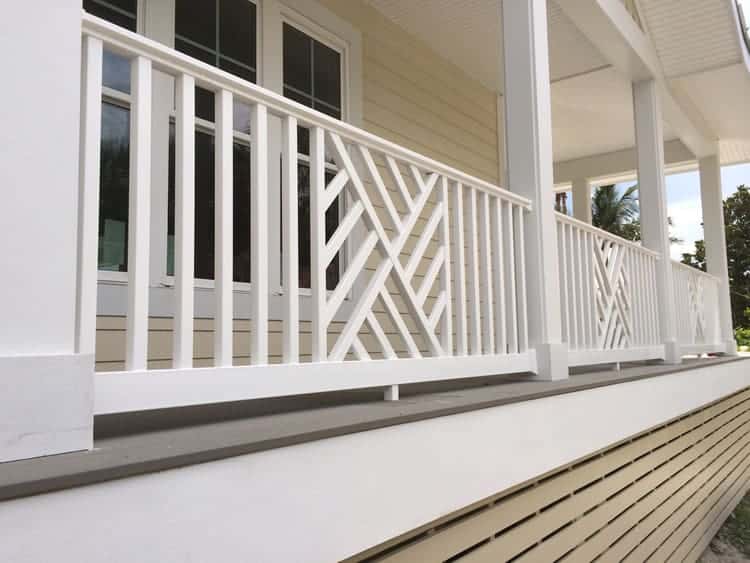
A geometric railing pattern like this one lands somewhere between a traditional baluster and a solid privacy screen. The white vinyl panels with their repeating cutout design sit along the porch edge, letting light through while still defining the boundary. Compared to a standard spindle railing, the geometric version reads as more deliberate and modern, almost like a decorative screen.
For a porch that faces the street, this pattern offers a bit of visual screening without feeling closed in. The beige siding and cream trim keep the overall look light, so the railing becomes the detail that gives the porch its character. If you are working with vinyl, check that the color is rated for full sun exposure in your area, because white vinyl can yellow over time in certain climates.
Prominent Metal Handrail for Stairs
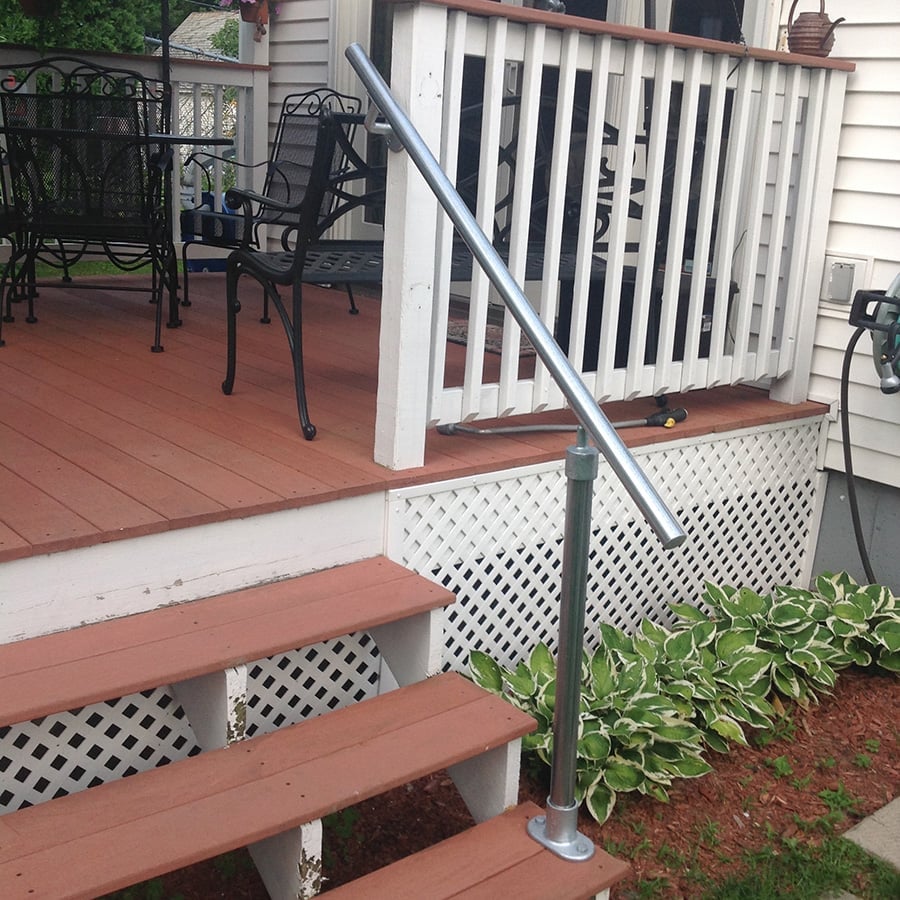
A silver metal handrail running alongside wooden steps creates a clear path that feels both secure and deliberate. The metal finish picks up daylight and contrasts with the red tones in the deck and the white vinyl lattice skirting below. That contrast between warm wood and cool silver keeps the railing readable from a distance, which matters when the stairs are the main way off the deck. A handrail that stands out like this requires simple stair treads, so the eye follows the line of the rail and not any pattern in the wood.
Final Thoughts
Deck railing is one of those elements that gets noticed only when it’s done wrong. The options here show that function and style can share the same space. Cable systems keep views open, wood adds warmth, and metal brings clean lines. Match the material to your climate and the amount of upkeep you’re willing to do. A good railing should last as long as the deck itself. Pick one that suits how you actually use the space, and the view becomes part of the room.