
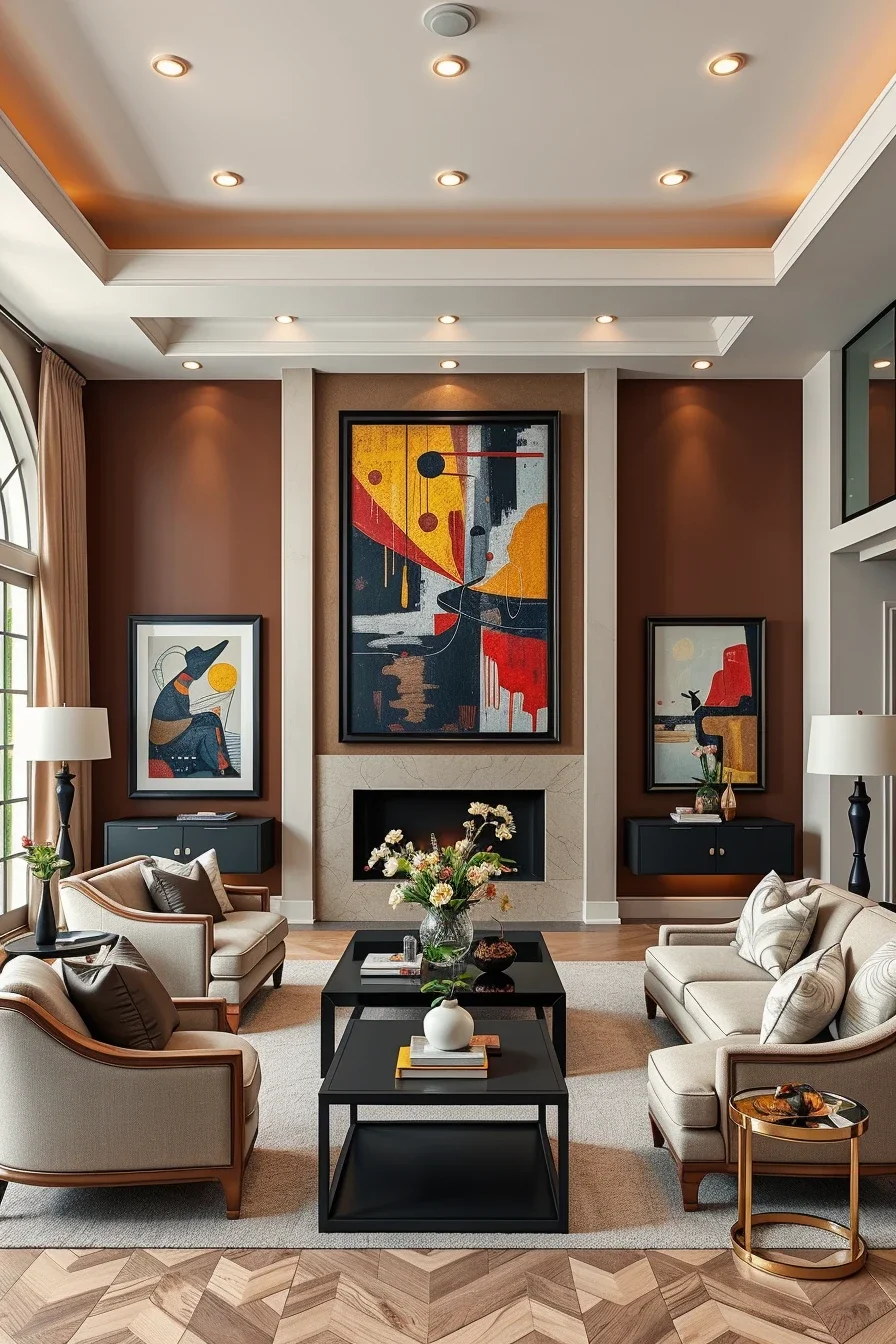
Warm chocolate brown wall colors are making a strong comeback in modern interior design, bringing depth, comfort, and timeless elegance to every room. These rich and inviting shades create a cozy atmosphere while serving as a sophisticated backdrop for contemporary furniture and decorative accents. From luxurious living rooms to stylish bedrooms and elegant home offices, chocolate brown walls can transform ordinary spaces into warm and welcoming retreats. Their versatility allows them to pair beautifully with natural wood, metallic finishes, soft neutrals, and vibrant accent colors. Whether you prefer a minimalist aesthetic or a layered designer look, warm brown tones offer endless opportunities for creative expression. In this article, you’ll discover inspiring ideas, color combinations, and modern decorating techniques to help you incorporate warm chocolate brown wall colors into your home with confidence.
The Timeless Appeal Of Warm Chocolate Brown Walls
I have always appreciated how warm chocolate brown walls create a sense of comfort and permanence in a home. Unlike trendy colors that quickly fall out of favor, warm chocolate brown wall colors offer a classic foundation that feels both luxurious and welcoming. These rich tones work exceptionally well in living rooms, dining spaces, bedrooms, and even home offices because they provide depth while maintaining warmth. When paired with modern finishes and thoughtful decor, chocolate brown becomes surprisingly versatile and sophisticated.
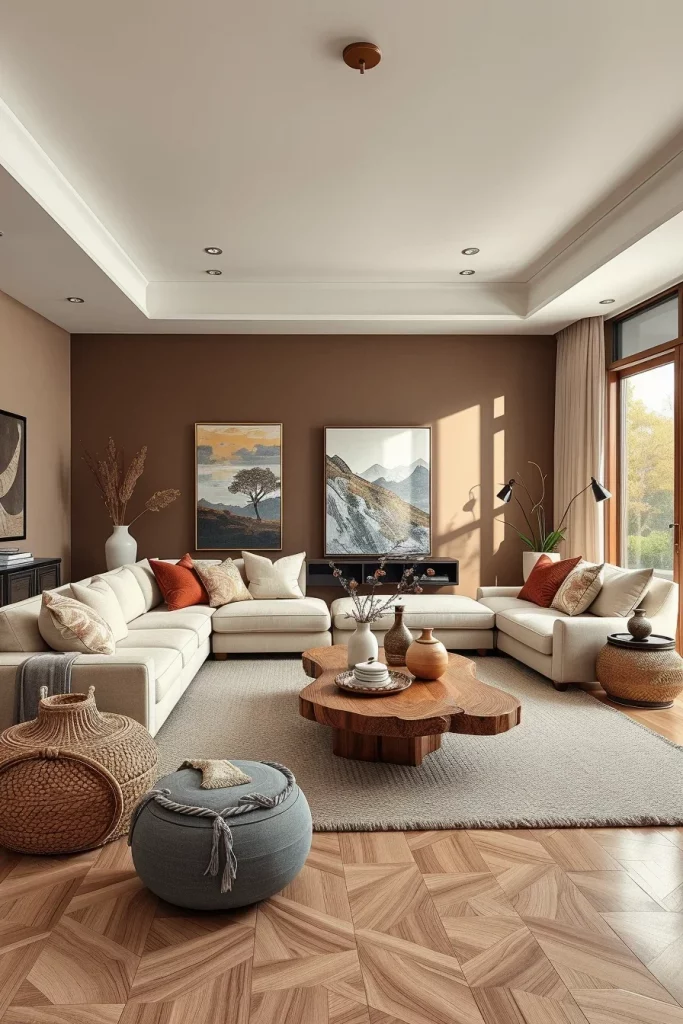
When designing a room with chocolate brown walls, I like to include large upholstered sofas in cream or beige, natural wood coffee tables, textured area rugs, and layered window treatments. These furnishings soften the intensity of the wall color while allowing its richness to shine. Decorative accessories such as ceramic vases, woven baskets, and oversized artwork add visual interest without overwhelming the space. The combination creates a balanced interior that feels refined and comfortable.
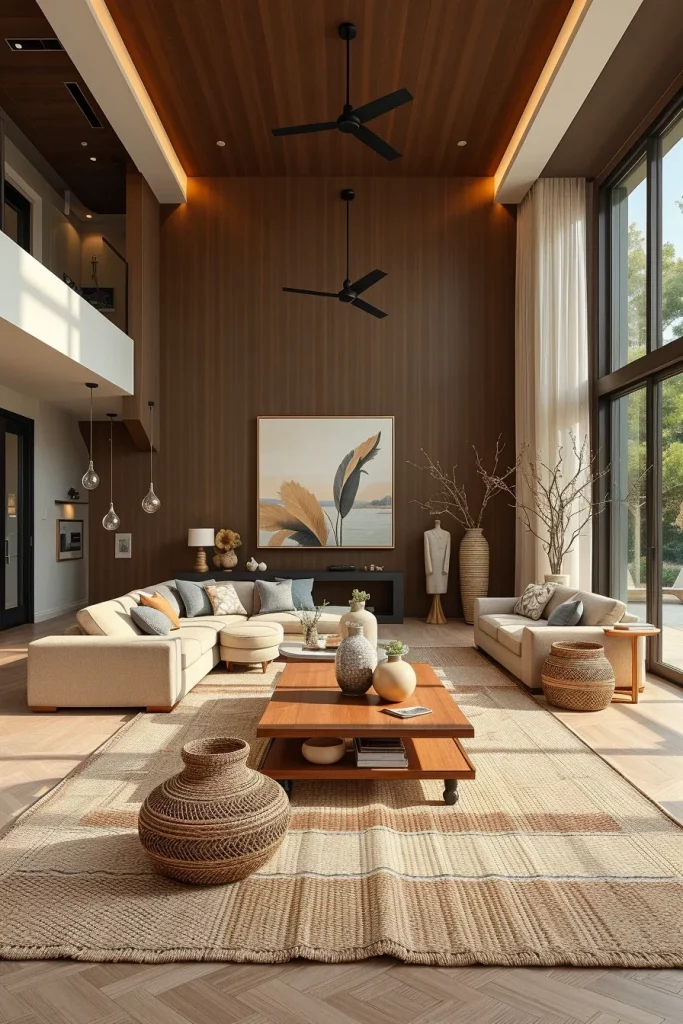
In my experience, many professional designers recommend using warm earthy colors to create rooms that feel grounded and relaxing. Publications such as Architectural Digest frequently highlight brown tones as a way to bring natural warmth indoors. I find that chocolate brown walls achieve this effect beautifully while providing a timeless backdrop for changing decor styles over the years.
To complete this type of room, I would add subtle layered lighting, including floor lamps and table lamps with warm bulbs. This extra illumination highlights the richness of the brown walls and prevents the room from feeling too heavy, especially during evening hours.
Choosing The Perfect Chocolate Brown Shade For Your Space
I always begin by evaluating the room’s natural light before selecting a chocolate brown shade. Rooms with large windows can accommodate deeper and richer browns, while smaller spaces often benefit from medium-toned chocolate brown wall colors that reflect more light. The undertones also matter significantly; some chocolate browns lean warm and reddish, while others feature cooler espresso influences. Selecting the correct undertone helps ensure harmony throughout the room.
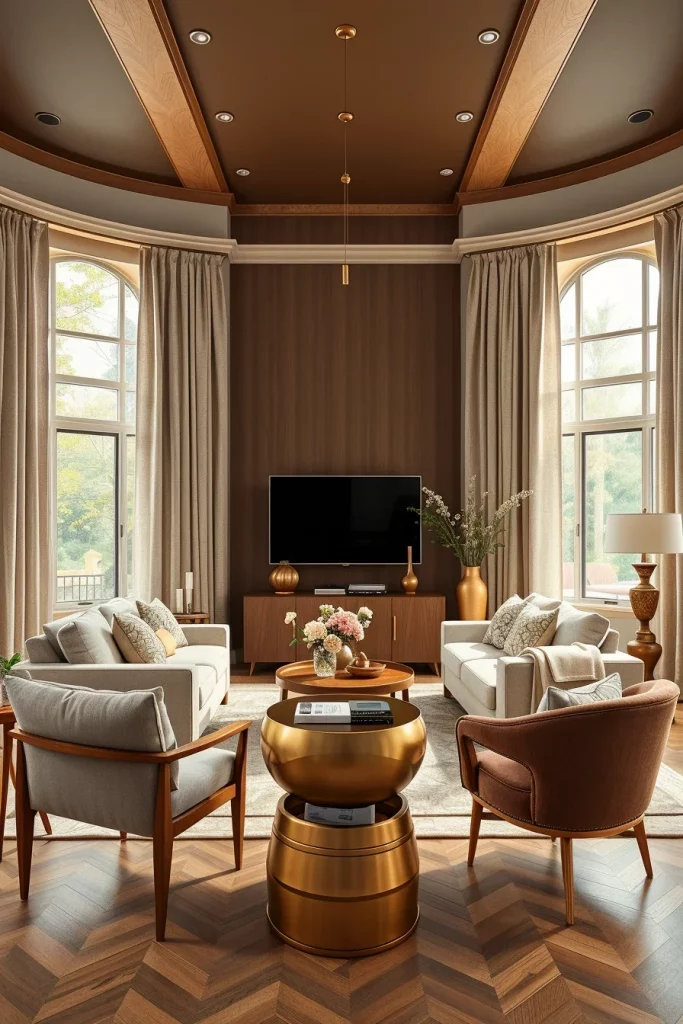
For furniture, I prefer selecting pieces that complement the wall color rather than match it exactly. Light oak dining tables, ivory sectionals, taupe accent chairs, and natural linen drapery create contrast that keeps the room visually engaging. Metal finishes such as brushed brass or matte black can further enhance the chosen shade. Carefully selected textiles introduce softness and dimension.
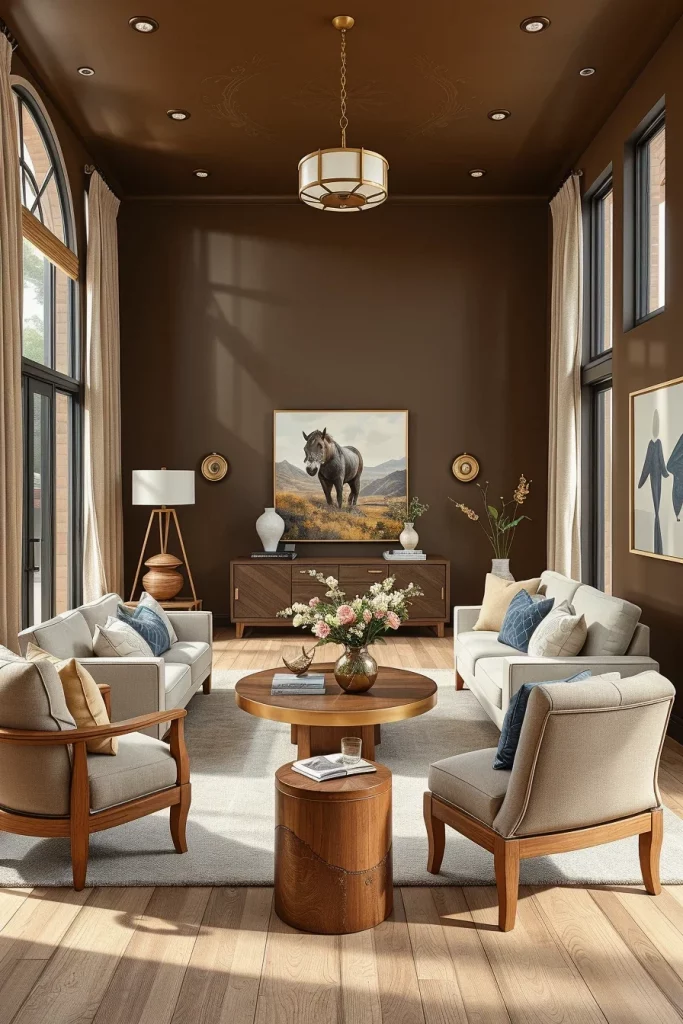
I have found that testing paint samples directly on multiple walls is one of the most valuable steps in the design process. Lighting changes throughout the day can dramatically alter how a brown shade appears. What looks rich and cozy in the morning may feel darker in the evening, so I always evaluate samples under different lighting conditions before making a final decision.
One addition I highly recommend is incorporating natural materials such as stone, wood, and woven fibers. These textures reinforce the organic warmth of chocolate brown walls and help create a cohesive design that feels inviting rather than formal.
Rich Dark Chocolate Walls For Sophisticated Interiors
I often recommend rich dark chocolate walls for homeowners seeking a dramatic yet elegant interior. Deep chocolate brown walls create a luxurious atmosphere that instantly elevates formal living rooms, libraries, dining rooms, and executive-style home offices. The dark backdrop emphasizes architectural details and creates a striking contrast with lighter furnishings and decorative elements.
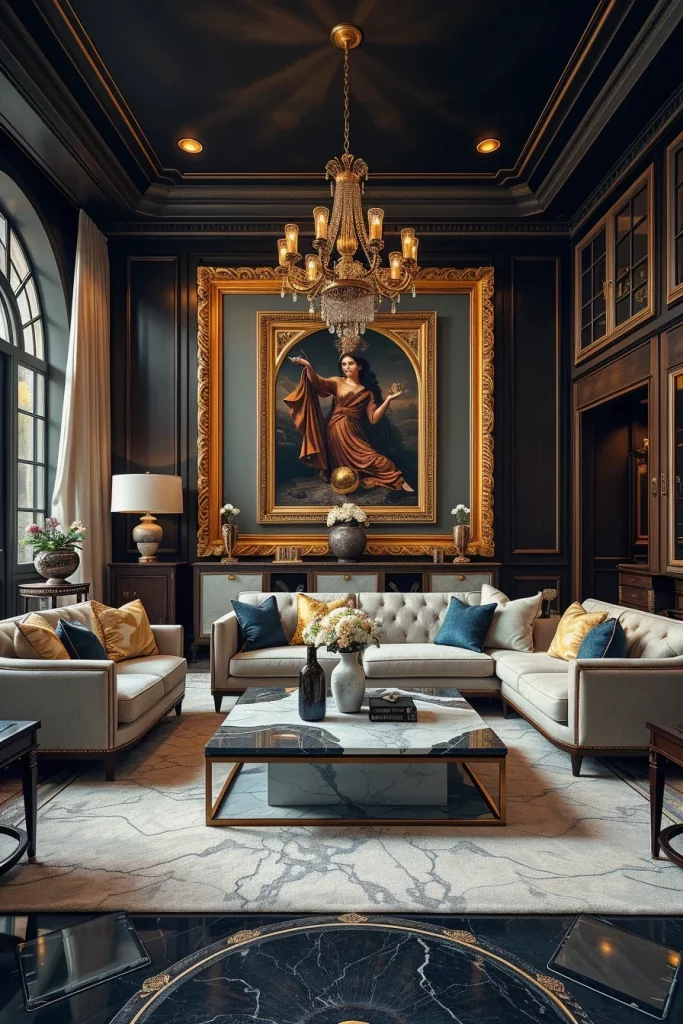
For furnishings, I like to pair dark chocolate walls with plush cream sofas, velvet accent chairs, marble coffee tables, and dark walnut cabinetry. Large-scale artwork framed in gold or black adds sophistication while preventing the walls from feeling empty. Layered textiles, including textured throws and decorative pillows, contribute additional comfort and visual depth.
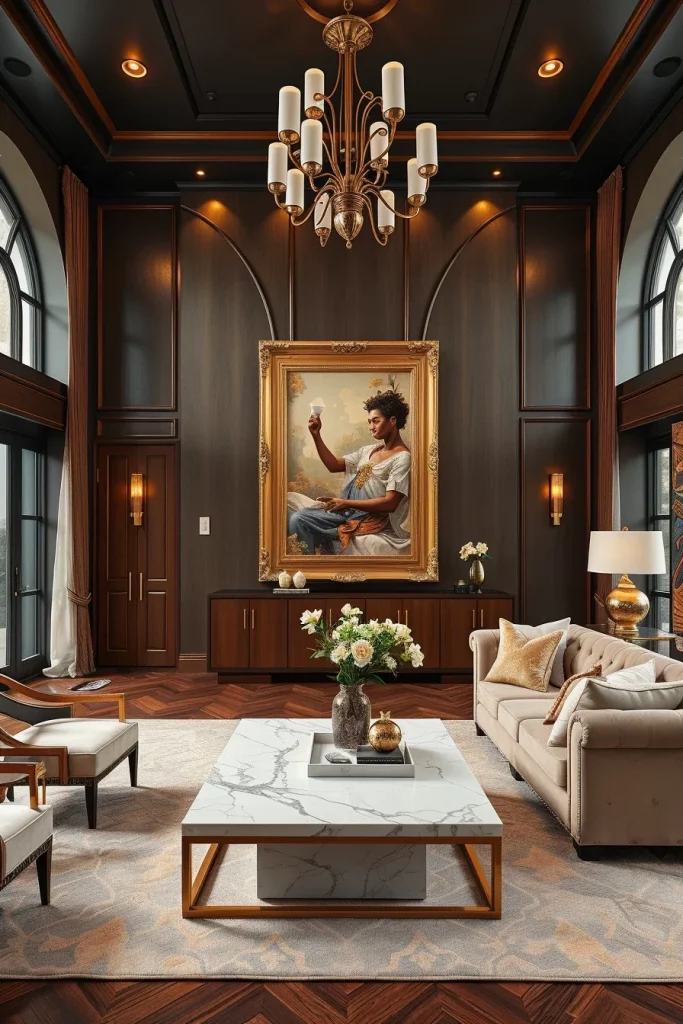
Personally, I find that dark chocolate walls work best when balanced with ample lighting. Interior designers often emphasize the importance of combining natural light with layered artificial lighting when using darker colors. I agree completely because strategic illumination reveals the richness of the paint color and enhances every decorative feature within the room.
To further elevate the space, I would include oversized mirrors positioned across from windows. Mirrors reflect light throughout the room and help maintain an open feeling despite the dramatic wall color.
Milk Chocolate Tones For Cozy Family Living Rooms
I frequently suggest milk chocolate shades for homeowners who want warmth without the intensity of darker browns. These softer warm chocolate brown wall colors create welcoming family rooms that feel comfortable for everyday living. The color provides enough richness to add character while remaining bright enough to keep the room feeling spacious and inviting.
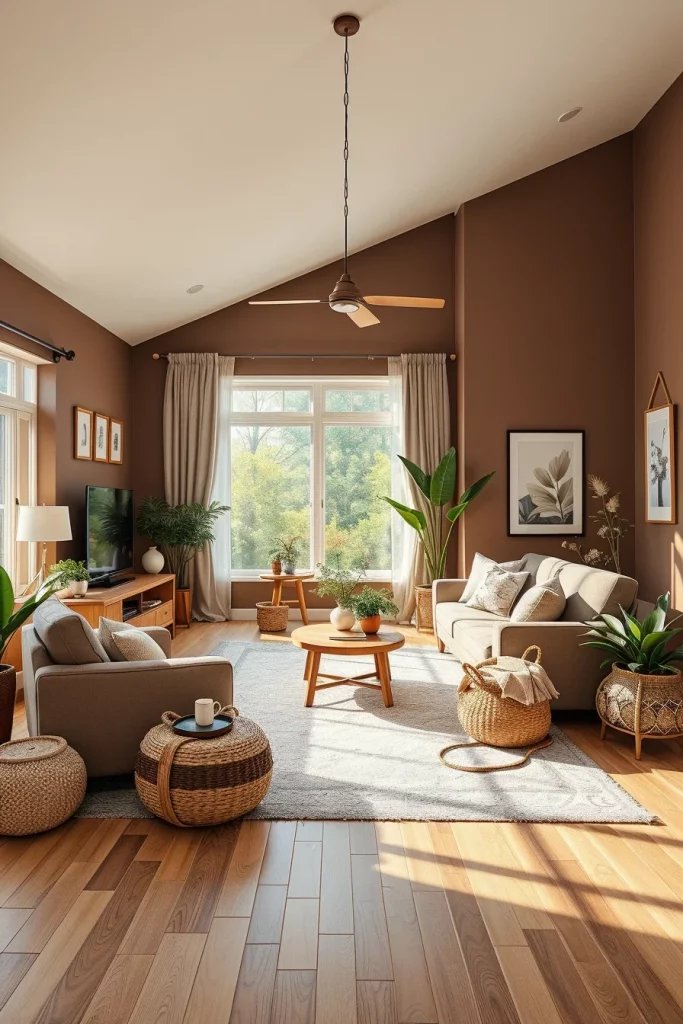
In these living rooms, I often incorporate oversized sectional sofas, light wood entertainment units, woven storage baskets, soft area rugs, and comfortable accent chairs. Neutral upholstery works exceptionally well because it creates contrast while maintaining a relaxed atmosphere. Decorative cushions in cream, caramel, and muted terracotta shades complement the walls beautifully.
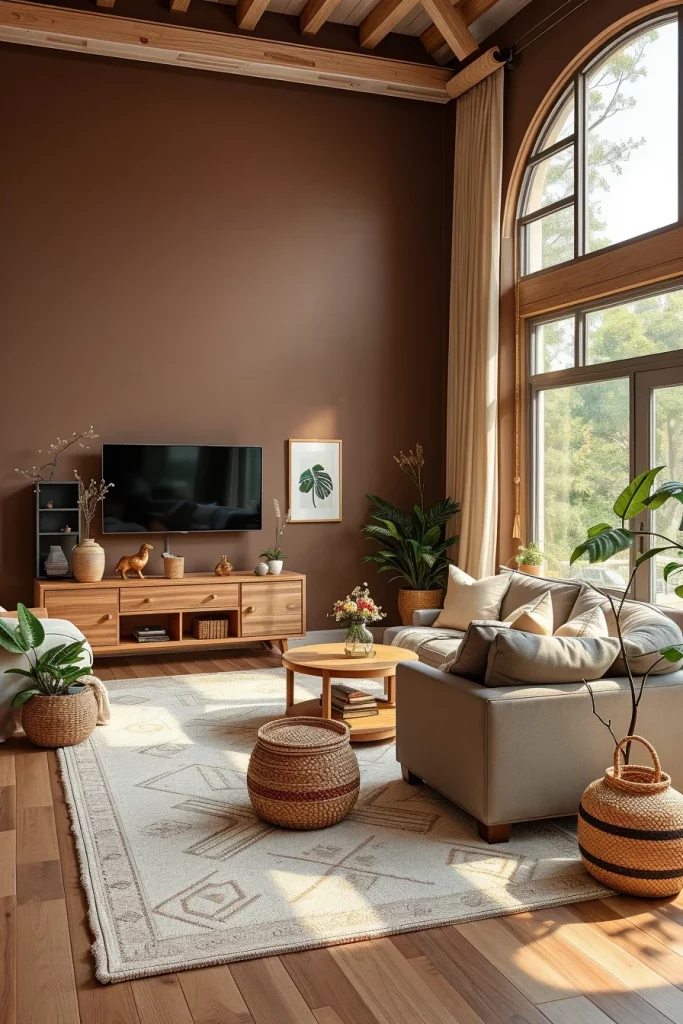
From my perspective, milk chocolate tones are among the easiest brown shades to decorate around. Many design experts recommend layering various neutral colors when working with medium brown walls, and I find this advice particularly effective. The result is a space that feels cohesive, calm, and suitable for both entertaining and family gatherings.
I would also introduce greenery through large indoor plants. Their vibrant foliage provides natural contrast and reinforces the warm, organic character of the room while adding freshness and life.
Chocolate Brown Accent Walls That Transform Any Room
I often recommend a chocolate brown accent wall for homeowners who want to experiment with darker colors without committing to painting an entire room. A single chocolate brown accent wall can create a focal point behind a bed, fireplace, entertainment center, or dining table. This approach introduces drama and sophistication while maintaining overall brightness throughout the space.
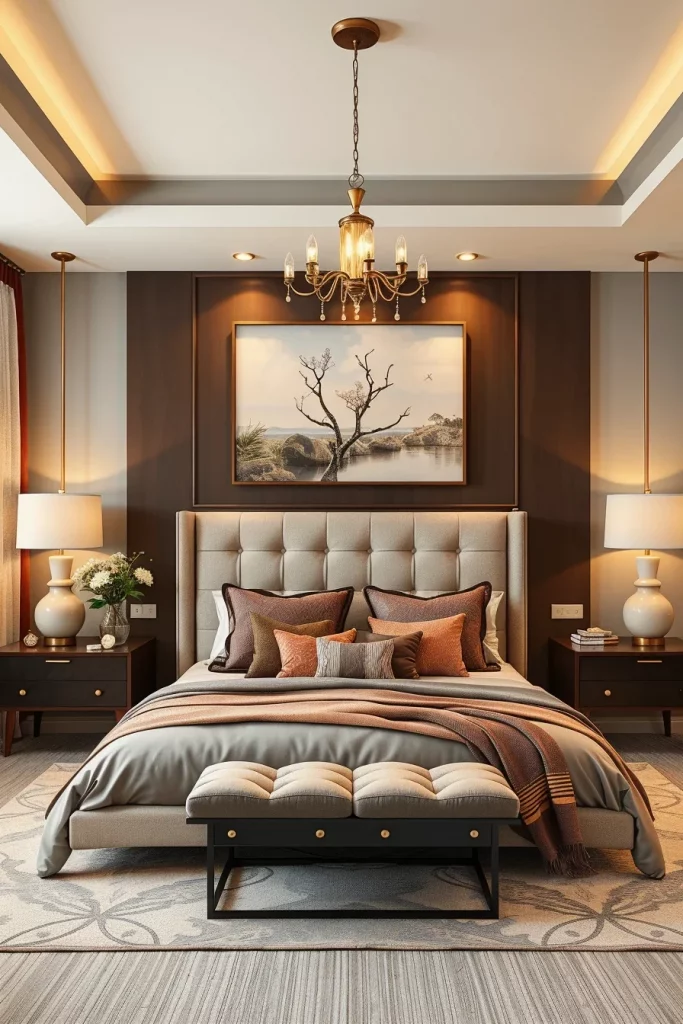
For this design, I usually position statement furniture against the accent wall to maximize visual impact. Upholstered headboards, floating shelves, media consoles, or decorative fireplaces become even more striking when framed by a rich brown backdrop. Artwork, mirrors, and sculptural lighting fixtures help draw attention to the feature wall while enhancing the room’s overall style.
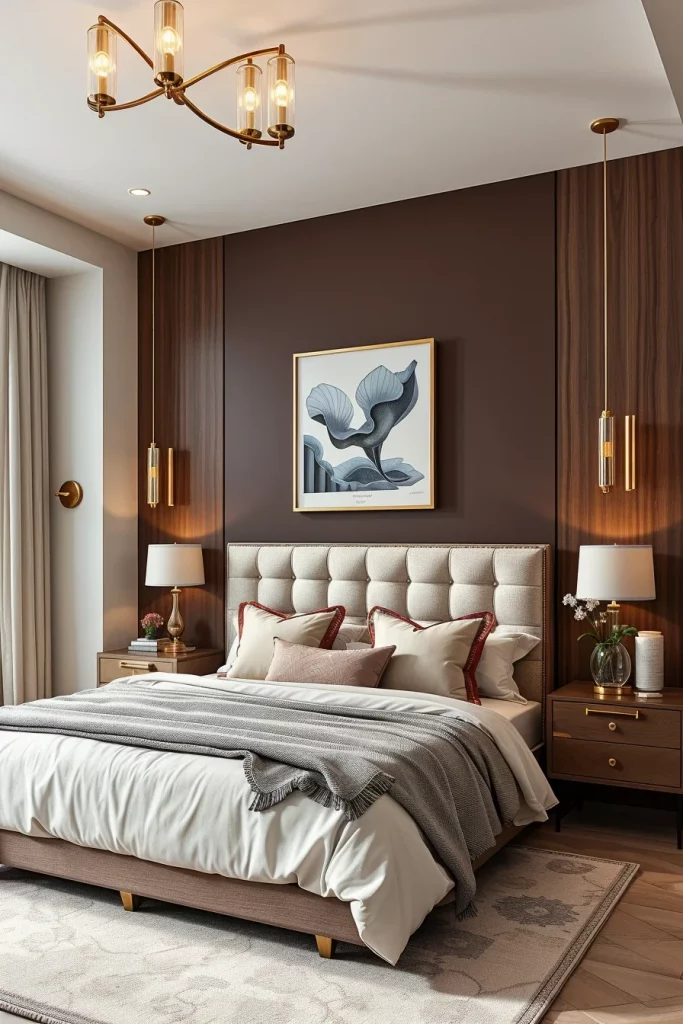
In my experience, accent walls are an excellent solution for introducing bold color in a controlled way. Many interior designers use feature walls to establish visual hierarchy within open-concept spaces. I find that chocolate brown works particularly well because it feels timeless and elegant rather than trendy.
To complete the design, I would add layered textures through rugs, curtains, and decorative accessories. These elements help connect the accent wall with the rest of the room, creating a cohesive and professionally designed appearance.
Layering Warm Brown Walls With Neutral Furniture
I often use neutral furniture to balance the richness of warm chocolate brown wall colors. This combination creates interiors that feel sophisticated without becoming visually heavy. Brown walls naturally provide warmth and depth, while neutral furnishings introduce brightness and openness. The result is a well-balanced room that feels welcoming, timeless, and adaptable to changing trends.
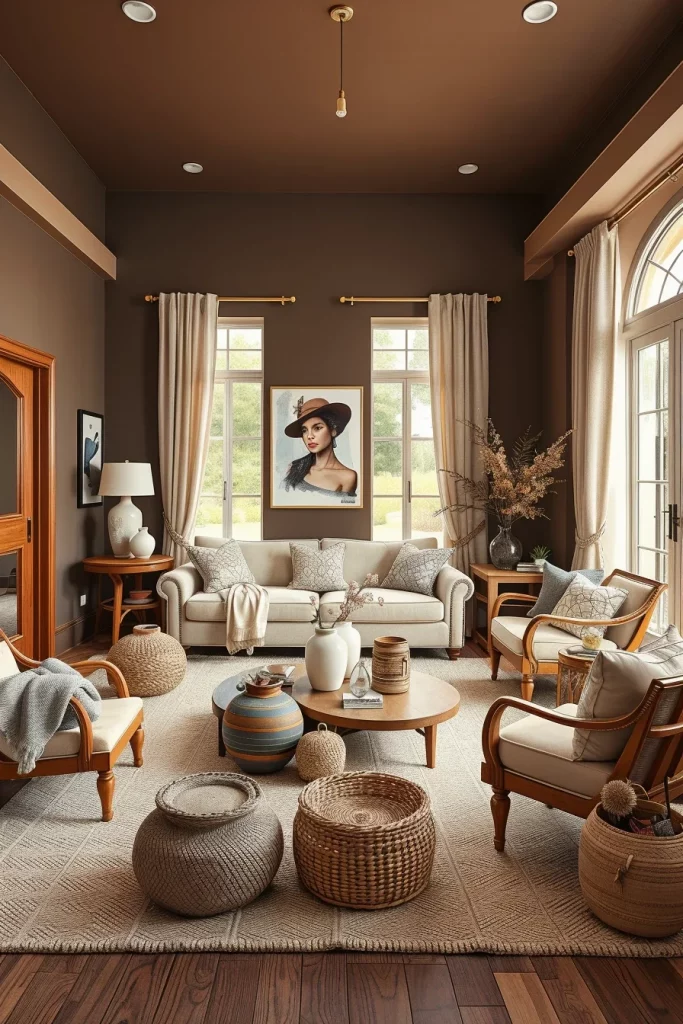
When designing these spaces, I typically select cream sofas, beige armchairs, ivory drapery, and light oak or ash wood furniture. Textured rugs in soft neutral shades help define seating areas while adding comfort underfoot. Decorative accessories such as linen cushions, ceramic vases, and woven baskets introduce subtle layers of texture that prevent the room from feeling flat. Each element contributes to a cohesive and calming atmosphere.
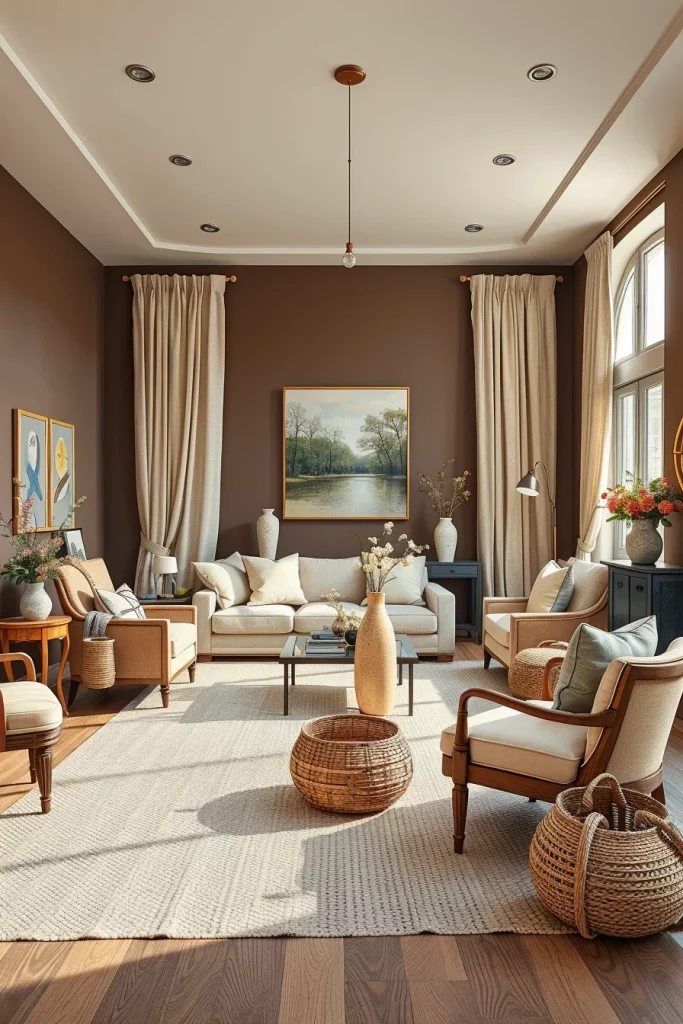
In my experience, one of the greatest advantages of neutral furnishings is their flexibility. Many professional designers recommend building a room around a neutral foundation because it allows decorative accents to evolve over time. I find this particularly effective with chocolate brown walls because the color already provides enough visual interest and character.
To enhance this design further, I would add a variety of textures through bouclé fabrics, natural wood grains, and woven materials. These details create depth and keep the neutral palette engaging and visually rich.
Modern Minimalist Spaces With Chocolate Brown Backdrops
I have found that modern chocolate brown wall colors can work beautifully in minimalist interiors. While many people associate minimalism with white walls, chocolate brown creates a warmer and more inviting interpretation of the style. The clean lines and uncluttered layouts typical of minimalist design become even more striking when contrasted against rich brown backdrops.
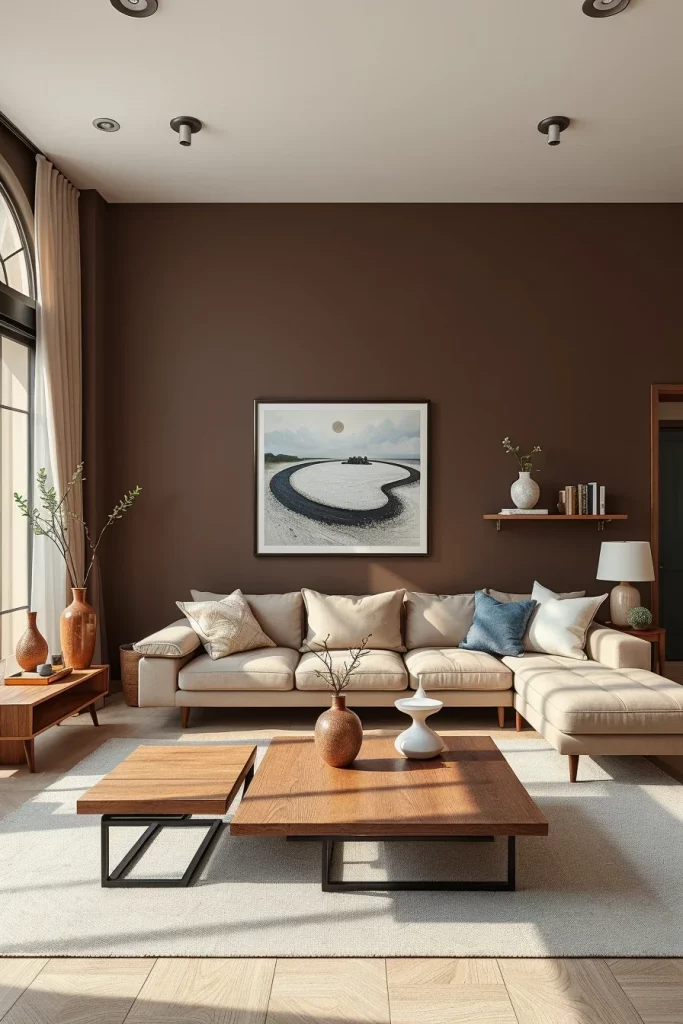
For furniture, I prefer simple low-profile sofas, streamlined coffee tables, floating storage units, and understated lighting fixtures. The focus remains on quality materials and thoughtful proportions rather than excessive decoration. Soft textiles in beige, taupe, and ivory provide contrast while maintaining the minimalist aesthetic. Every piece serves a practical purpose while contributing to the room’s overall harmony.
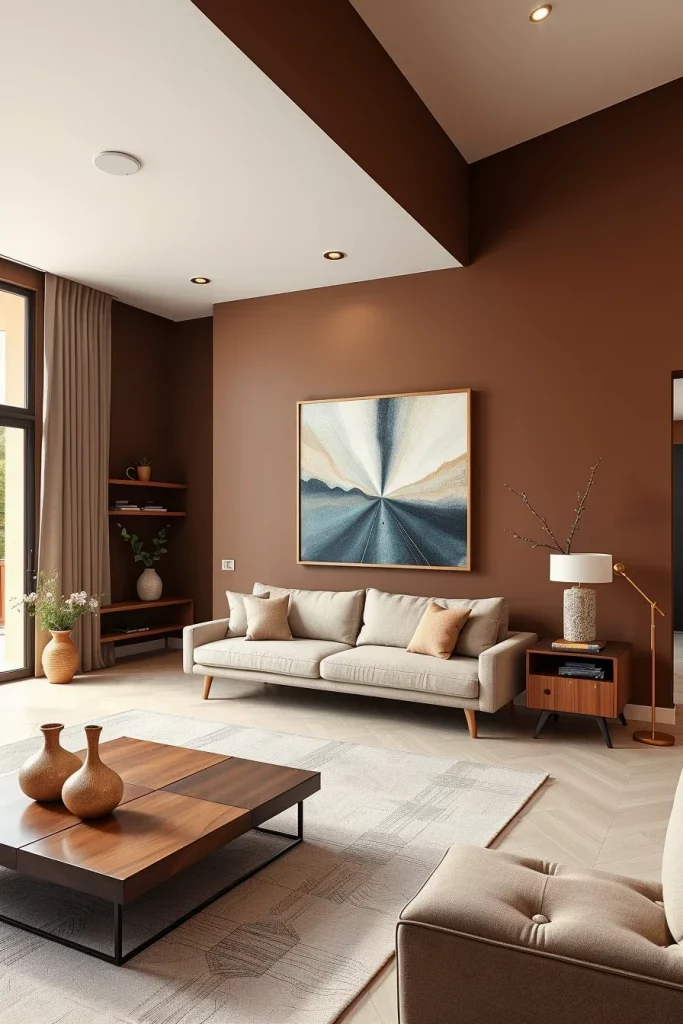
Personally, I believe chocolate brown walls help minimalist interiors feel more comfortable and livable. Design publications often emphasize the importance of incorporating warmth into contemporary spaces, and brown tones accomplish this naturally. The color adds character without compromising the simplicity that defines minimalist design.
If I were completing this room, I would include a few carefully chosen decorative objects such as sculptural ceramics or a single large piece of artwork. These additions provide personality while preserving the clean and uncluttered appearance.
Contemporary Lighting Ideas For Chocolate Brown Interiors
Lighting plays a crucial role when decorating rooms with chocolate brown walls. I always consider both natural and artificial light because proper illumination enhances the richness of brown tones while preventing the space from feeling dark. Well-planned lighting can completely transform the atmosphere of a room and highlight its most attractive design features.
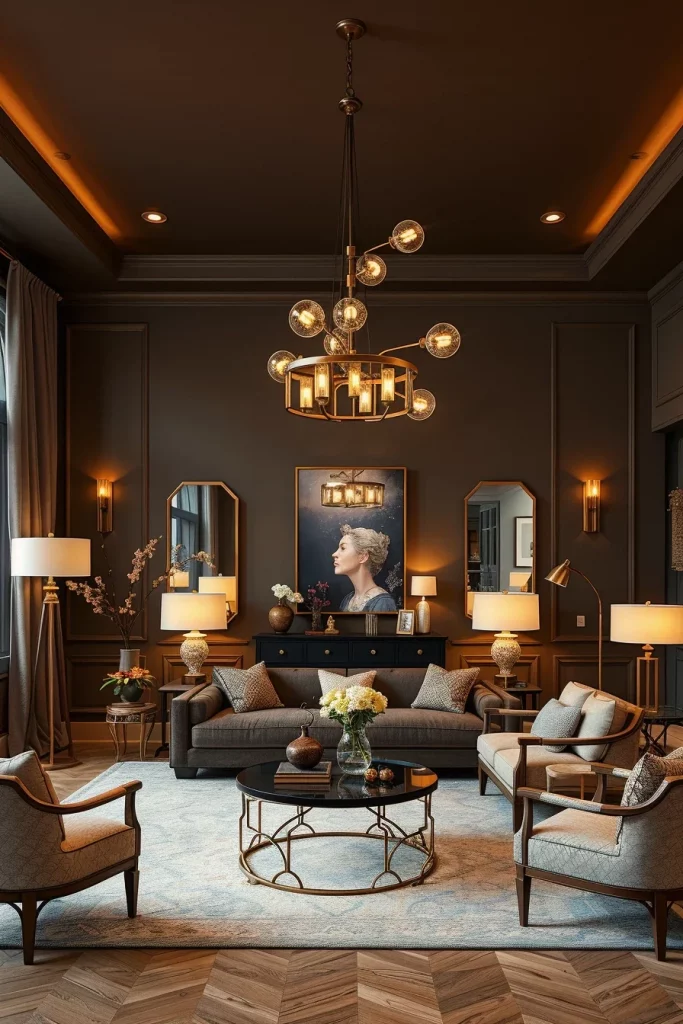
I like to combine recessed ceiling lights, statement pendants, wall sconces, floor lamps, and table lamps to create multiple layers of illumination. Warm white bulbs are particularly effective because they complement the natural warmth of chocolate brown paint. Reflective surfaces such as glass tables, metallic accents, and mirrors help distribute light throughout the room and create additional visual interest.
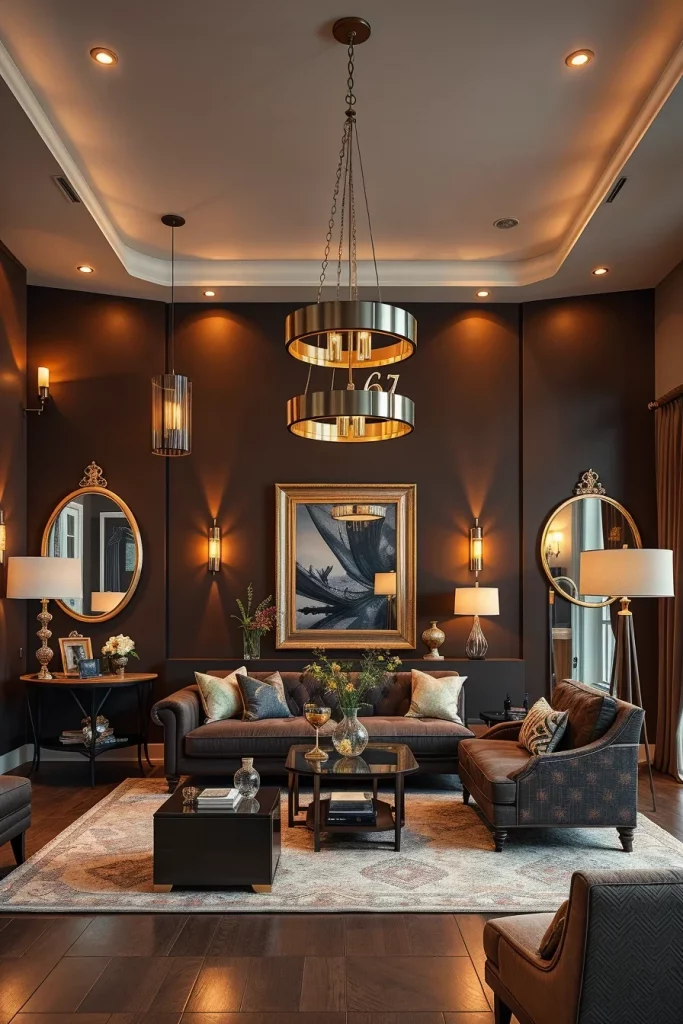
From my perspective, layered lighting is one of the most important design strategies when working with darker wall colors. Interior design experts frequently emphasize that relying on a single overhead fixture rarely provides sufficient depth or ambiance. I have found that combining several light sources creates a more comfortable and visually dynamic environment.
To maximize brightness, I would also incorporate large mirrors and light-colored window treatments. These features help reflect daylight and ensure that the room remains bright and welcoming throughout the day.
Elegant Gold Accents Against Chocolate Brown Walls
I often recommend pairing warm chocolate brown wall colors with gold accents because the combination feels luxurious yet approachable. Gold introduces warmth and sophistication while complementing the rich undertones of brown. Together, these elements create interiors that feel refined, elegant, and visually balanced.
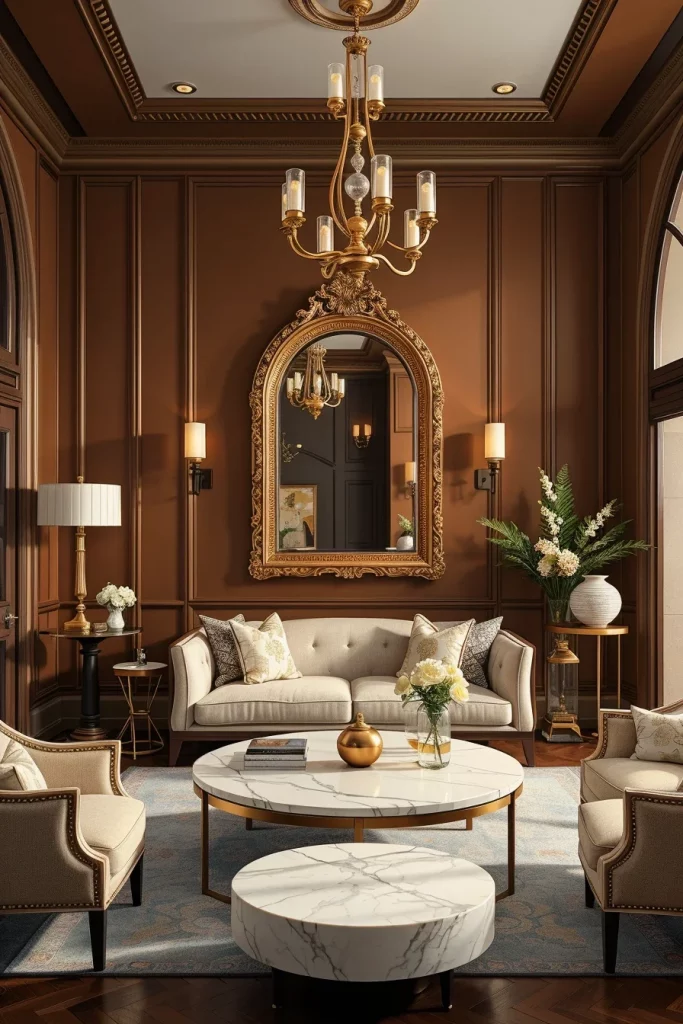
In these spaces, I like to incorporate gold-framed mirrors, brass light fixtures, metallic coffee tables, decorative trays, and hardware finishes. Upholstered furniture in cream, camel, or ivory shades provides contrast and allows the metallic accents to stand out. Layered textiles and carefully selected artwork contribute additional depth while maintaining a cohesive color palette.
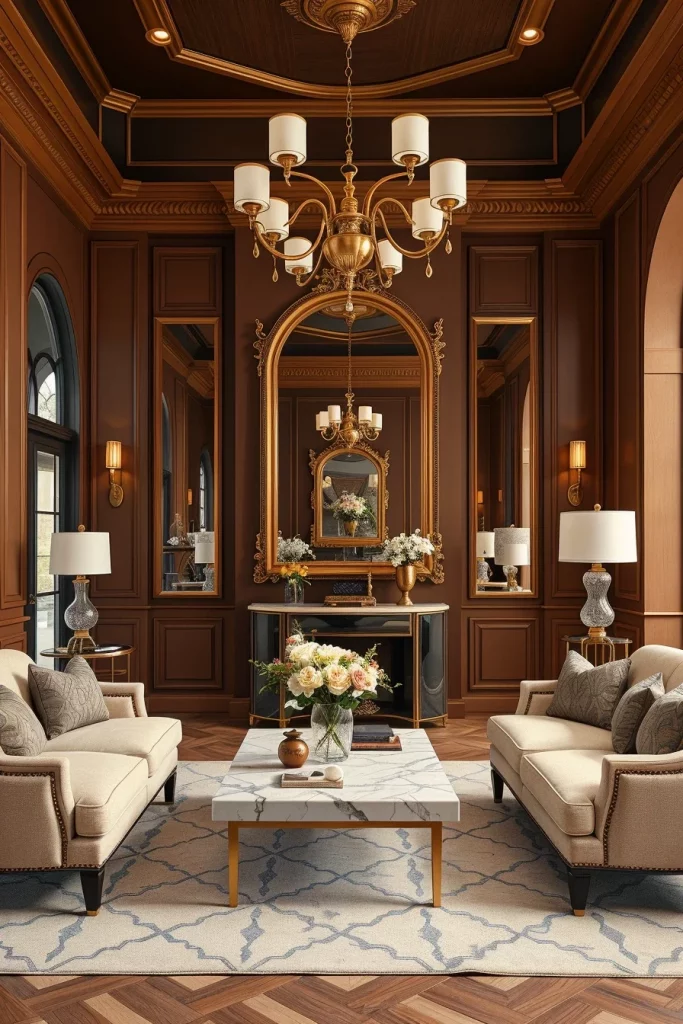
I have noticed that gold accents work particularly well when used selectively rather than excessively. Many leading interior designers advocate for restraint when introducing metallic finishes, and I agree with this approach. Thoughtfully placed gold details create focal points without overwhelming the room or making it feel overly formal.
To further enrich the design, I would add natural stone surfaces such as marble or travertine. These materials enhance the luxurious atmosphere while introducing subtle texture and visual variation.
Black And Chocolate Brown Combinations For Dramatic Style
I frequently use black and chocolate brown together when creating interiors with strong visual impact. This bold combination delivers a dramatic, contemporary aesthetic while maintaining warmth and sophistication. The richness of chocolate brown walls softens the intensity of black elements, resulting in a balanced and highly stylish environment.
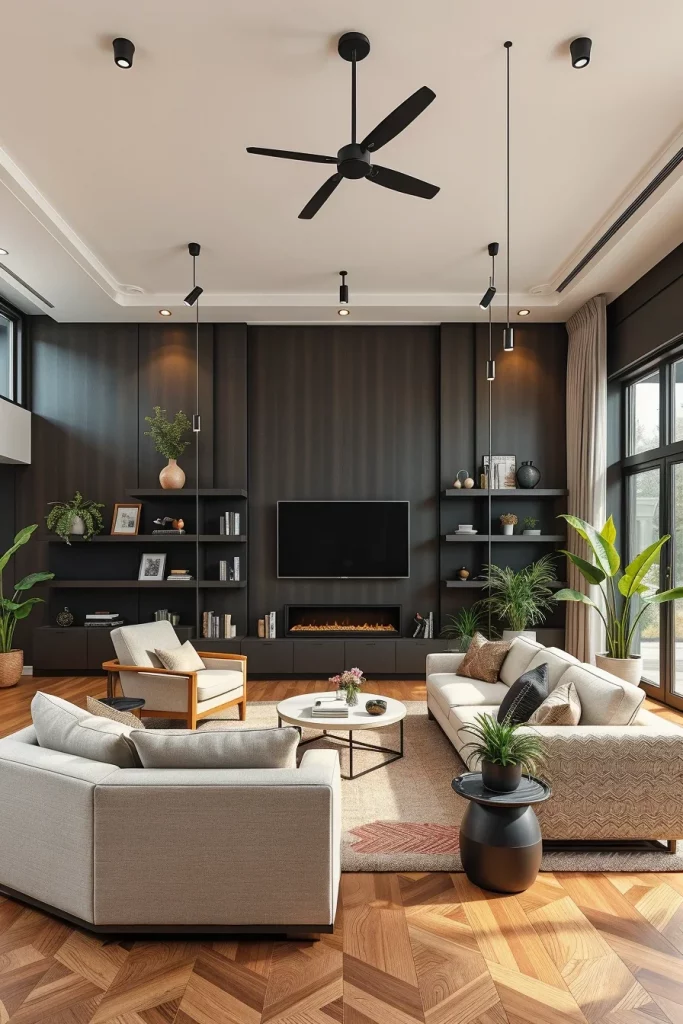
For furniture and decor, I often select black metal shelving, matte black lighting fixtures, dark-framed artwork, and sleek contemporary furniture. Lighter accents such as cream upholstery, beige rugs, and natural wood surfaces help prevent the palette from feeling too heavy. The contrast between dark and light elements creates depth and highlights architectural features throughout the room.
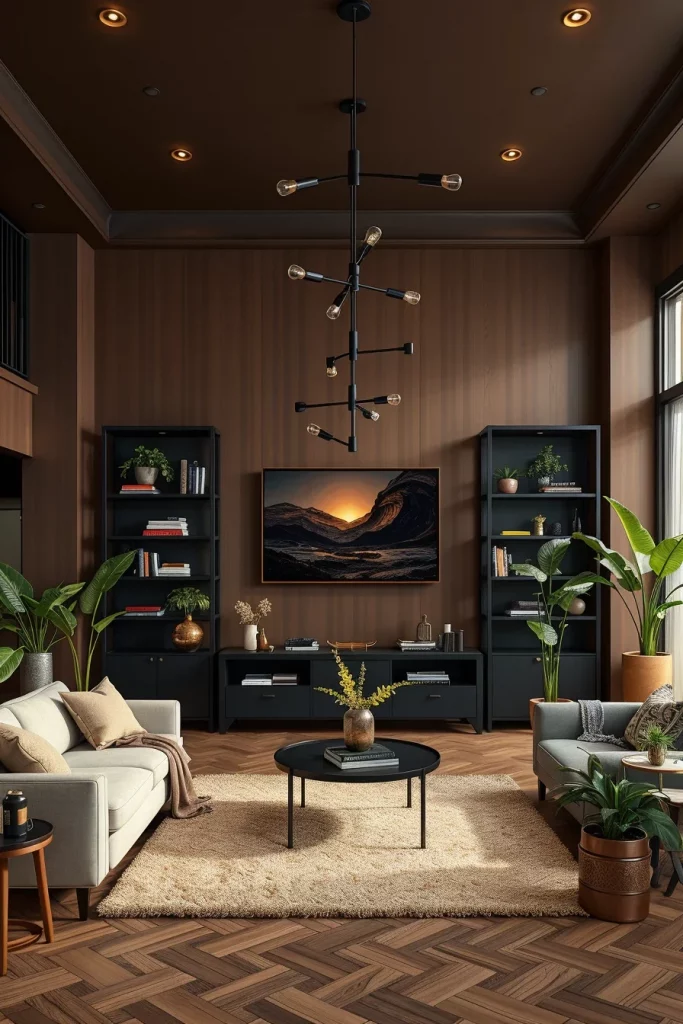
In my experience, this color pairing works especially well in modern living rooms, dining areas, and home offices. Design professionals frequently use dark contrasts to create visual drama, and I find that chocolate brown introduces a level of warmth that pure black-and-white schemes sometimes lack. The result feels sophisticated and highly personalized.
To complete the space, I would include layered lighting and a few organic elements such as indoor plants or wooden accessories. These additions soften the dramatic palette and ensure the room remains inviting as well as visually striking.
Soft Cream Decor To Balance Deep Brown Wall Colors
When I design a room featuring warm chocolate brown wall colors, I often use soft cream decor to create visual balance and prevent the space from feeling too dark. The richness of chocolate brown walls provides depth and warmth, while cream-colored furnishings introduce brightness and softness. This combination works especially well in living rooms and family spaces where comfort is a priority. Large windows, natural light, and layered textiles further enhance the contrast between the dark walls and lighter decorative elements.
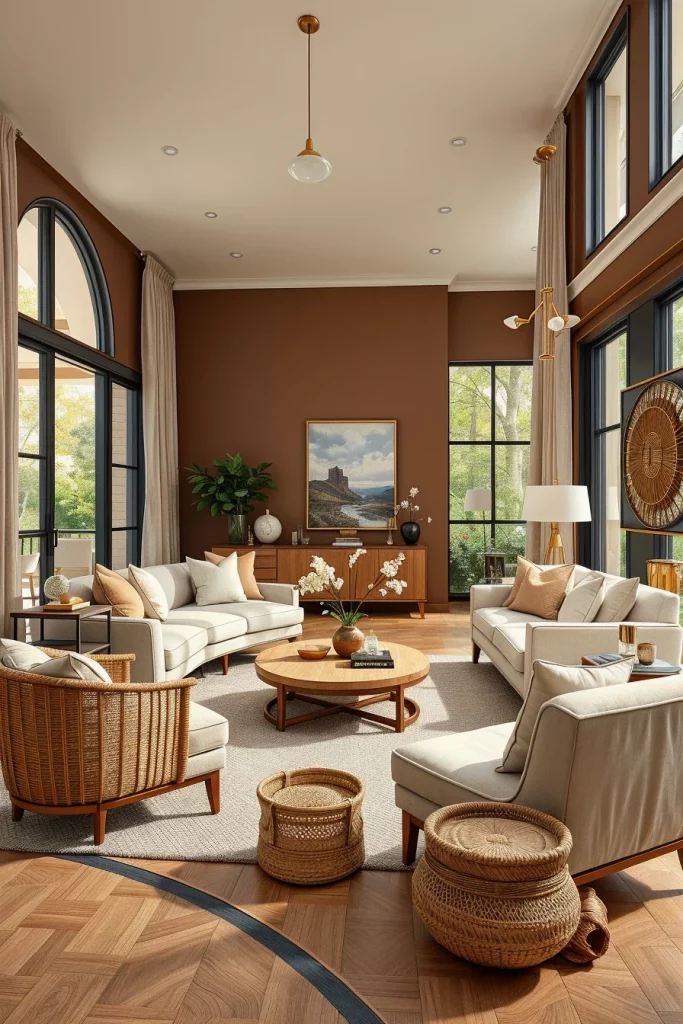
I like incorporating cream sofas, upholstered armchairs, linen curtains, and textured area rugs to soften the strong presence of the brown walls. Light wood coffee tables, ceramic vases, and woven baskets add natural texture while maintaining a cohesive color palette. Brass or gold accents can introduce subtle elegance without overwhelming the room. The result is a sophisticated environment that feels welcoming and practical for everyday living.
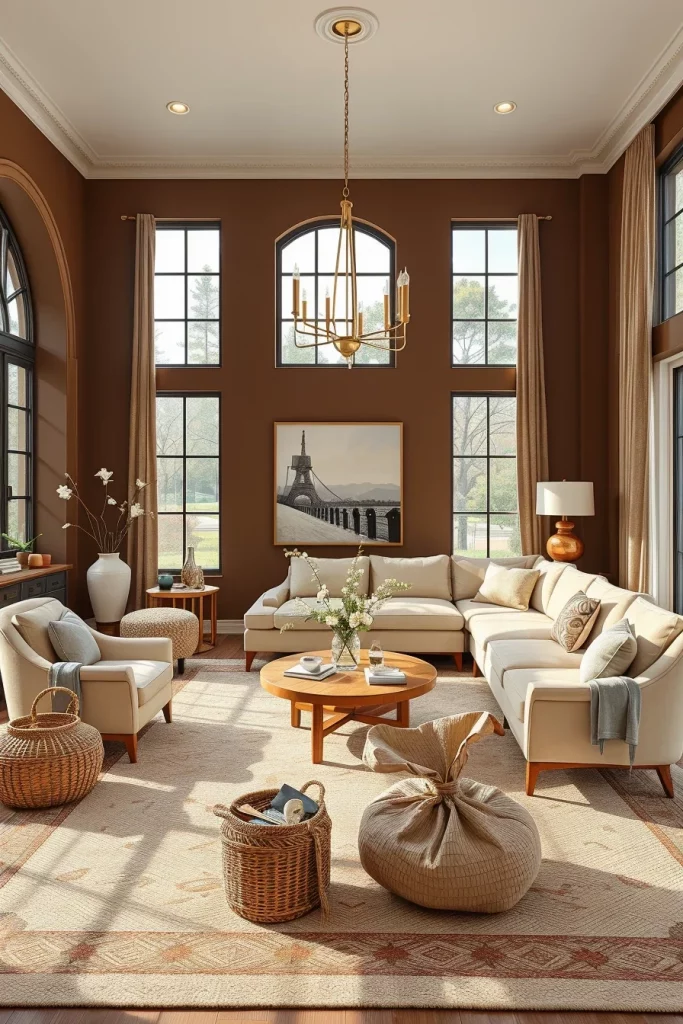
From my experience, many interior designers recommend using lighter accessories to create dimension when working with dark wall colors. Publications such as Architectural Digest frequently highlight the importance of contrast when decorating with deep tones. I find that cream decor prevents chocolate brown walls from feeling heavy while preserving their luxurious character.
To complete this design, I would add layered lighting through floor lamps, table lamps, and wall sconces. Multiple light sources help illuminate the rich wall color and create a warm atmosphere throughout the evening.
Creating Luxury Bedrooms With Chocolate Brown Walls
One of my favorite ways to use warm chocolate brown wall colors is in luxury bedroom design. Brown walls naturally create a cocooning effect that makes a bedroom feel intimate, restful, and elegant. When paired with high-quality materials and carefully selected furnishings, the space gains a boutique hotel atmosphere. The deep wall color also serves as an excellent backdrop for statement furniture and luxurious textiles.
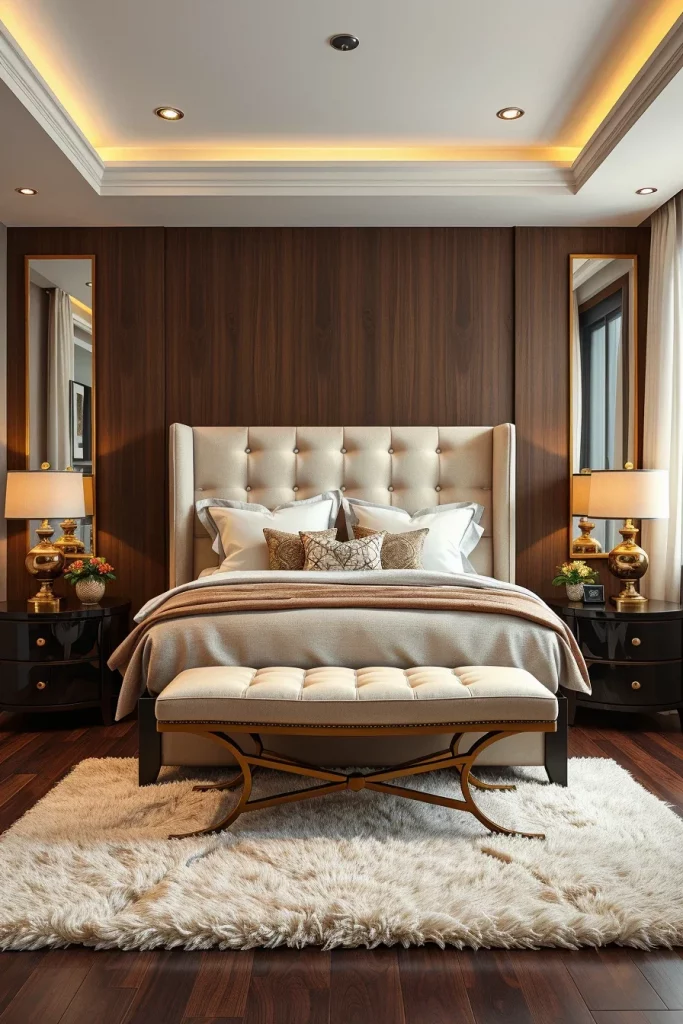
I often include a large upholstered bed with a cream or taupe headboard, layered bedding, oversized pillows, and plush throws. Dark wood nightstands complement the wall color, while crystal or brass bedside lamps introduce sophistication. Soft area rugs, blackout drapes, and upholstered benches contribute to comfort while maintaining visual harmony throughout the room.
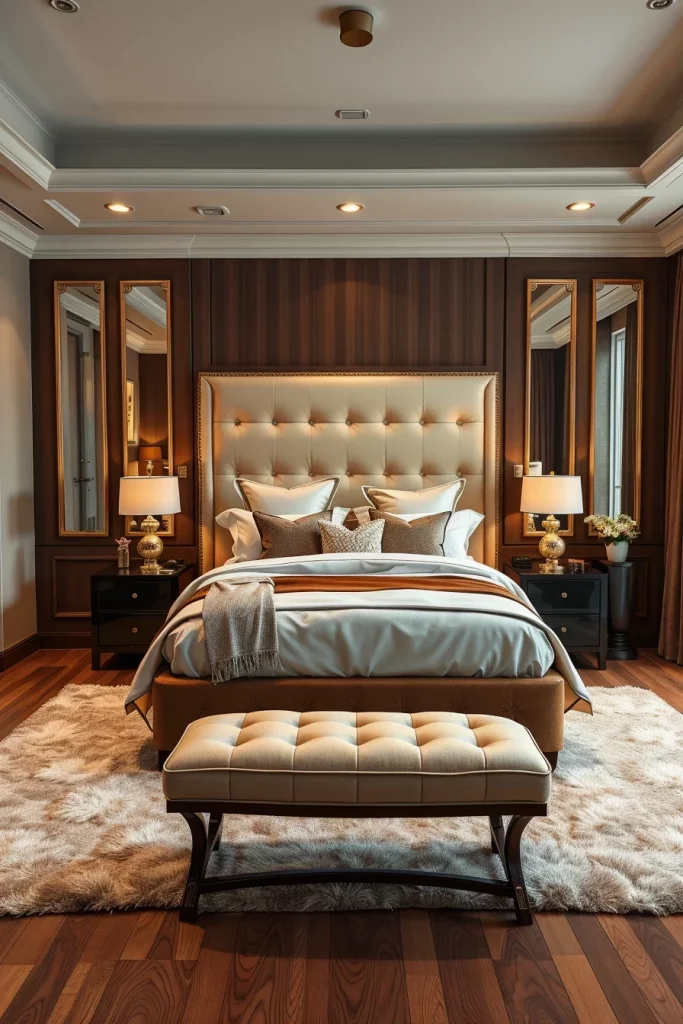
Personally, I appreciate how chocolate brown walls create a sense of calm and relaxation. Many luxury interior projects use darker color palettes because they reduce visual distractions and encourage rest. In my own designs, I often balance the richness of brown with lighter bedding and reflective metallic accents to keep the room feeling open and refined.
I would also recommend incorporating subtle ambient lighting behind the headboard or beneath furniture. These details emphasize the depth of the wall color and add a modern luxury touch.
Warm Chocolate Brown Walls In Modern Dining Rooms
Modern dining rooms benefit greatly from warm chocolate brown wall colors because they create an intimate atmosphere ideal for entertaining and family gatherings. The rich walls add depth while providing a sophisticated backdrop for contemporary furniture. In open-concept homes, chocolate brown dining rooms can serve as an elegant visual anchor that defines the dining area without requiring physical barriers.
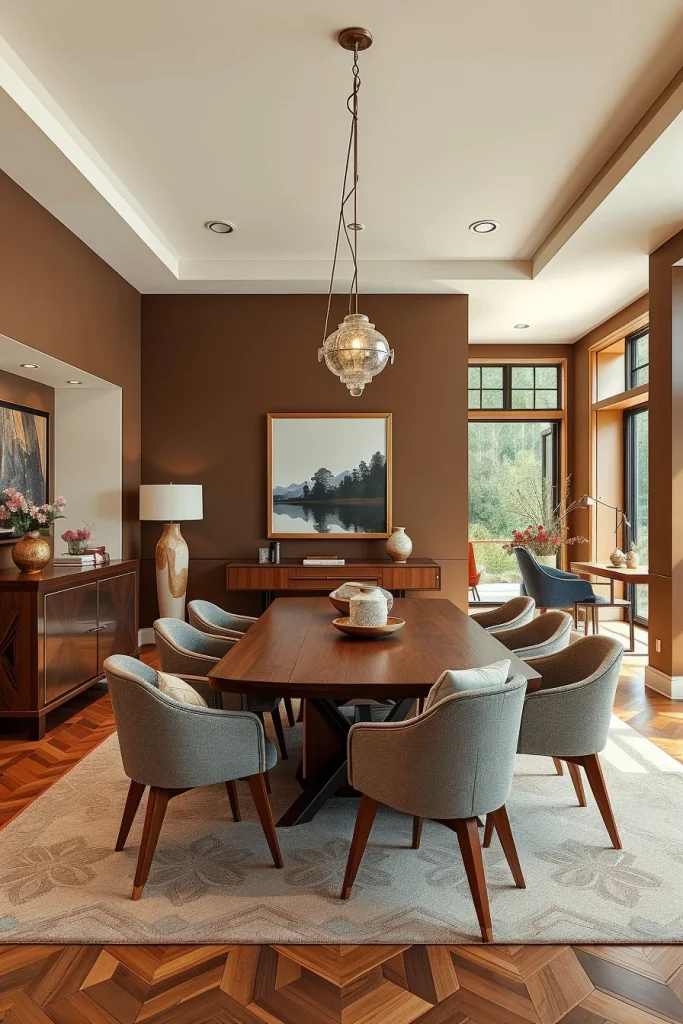
I typically pair chocolate brown walls with a sleek dining table made from walnut or oak, complemented by upholstered dining chairs in neutral tones. Statement pendant lighting above the table creates a focal point while emphasizing the room’s vertical space. Decorative centerpieces, ceramic vessels, and simple artwork help maintain a clean, modern appearance without clutter.
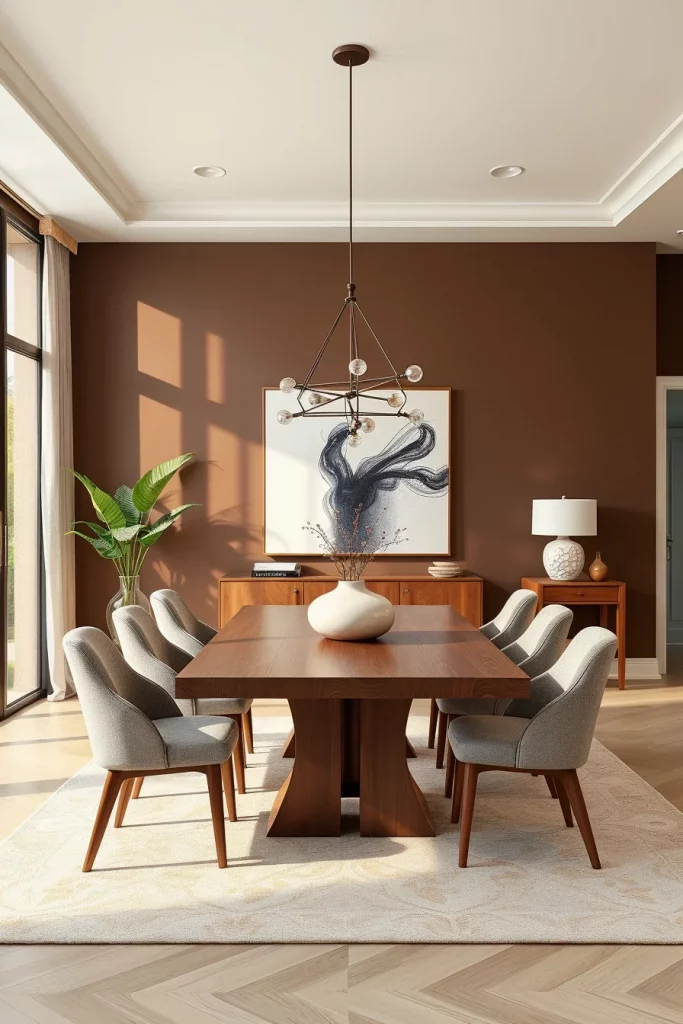
In my experience, darker dining room walls encourage a more intimate dining environment. Interior designers often use deep colors in dining spaces because they create warmth and help guests feel comfortable lingering longer during meals and conversations.
To enhance this design further, I would introduce a large area rug beneath the dining table and consider built-in cabinetry or floating shelves for functional storage and display.
Stylish Home Office Designs Featuring Chocolate Brown Tones
A well-designed home office featuring warm chocolate brown wall colors can feel both productive and sophisticated. Brown walls provide a sense of stability and focus, making them particularly suitable for work environments. Unlike brighter colors that may feel distracting, chocolate brown creates a grounded atmosphere that supports concentration throughout the day.
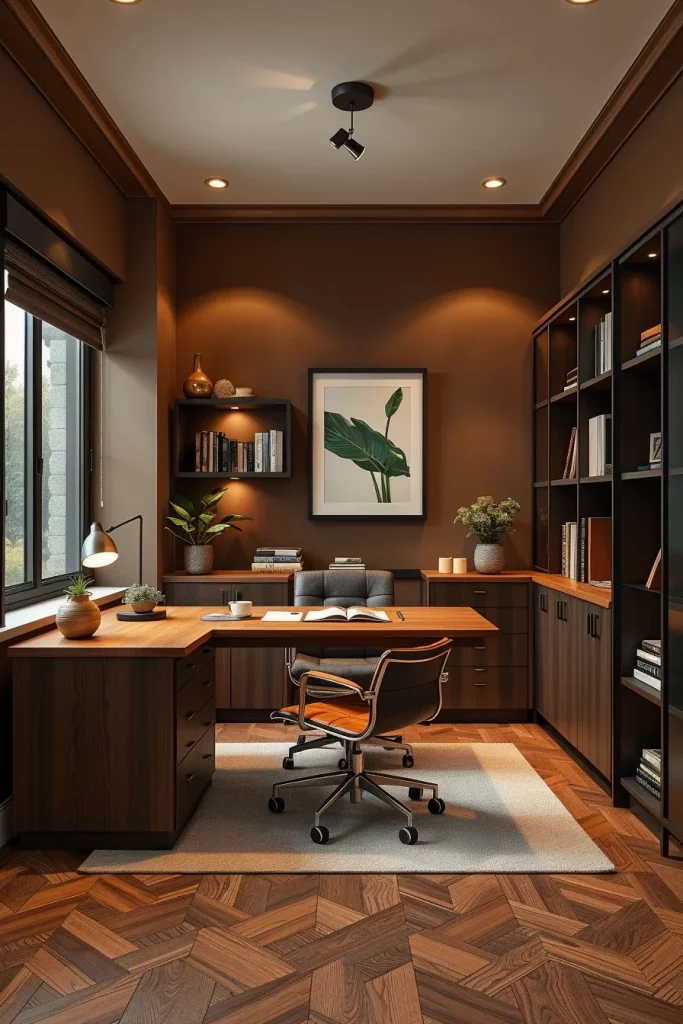
I often select streamlined desks with natural wood finishes, ergonomic seating, and built-in shelving to maximize functionality. Leather desk chairs, matte black hardware, and modern task lighting complement the rich wall color beautifully. Decorative accessories should remain purposeful, including framed artwork, books, and minimal greenery.
From my perspective, a home office should balance professionalism and comfort. Chocolate brown walls achieve this balance by adding character without overwhelming the workspace. Many contemporary office designs incorporate earth tones because they feel timeless and adaptable as design trends evolve.
To improve this office setup, I would add layered lighting solutions and acoustic elements such as upholstered panels or textured rugs to enhance comfort and productivity.
Textured Wall Finishes That Elevate Brown Color Schemes
When working with warm chocolate brown wall colors, I often recommend incorporating textured wall finishes to add depth and visual interest. Flat paint can look beautiful, but subtle texture introduces another dimension that enhances the richness of the color. This approach works particularly well in contemporary homes where understated details create sophisticated interiors.
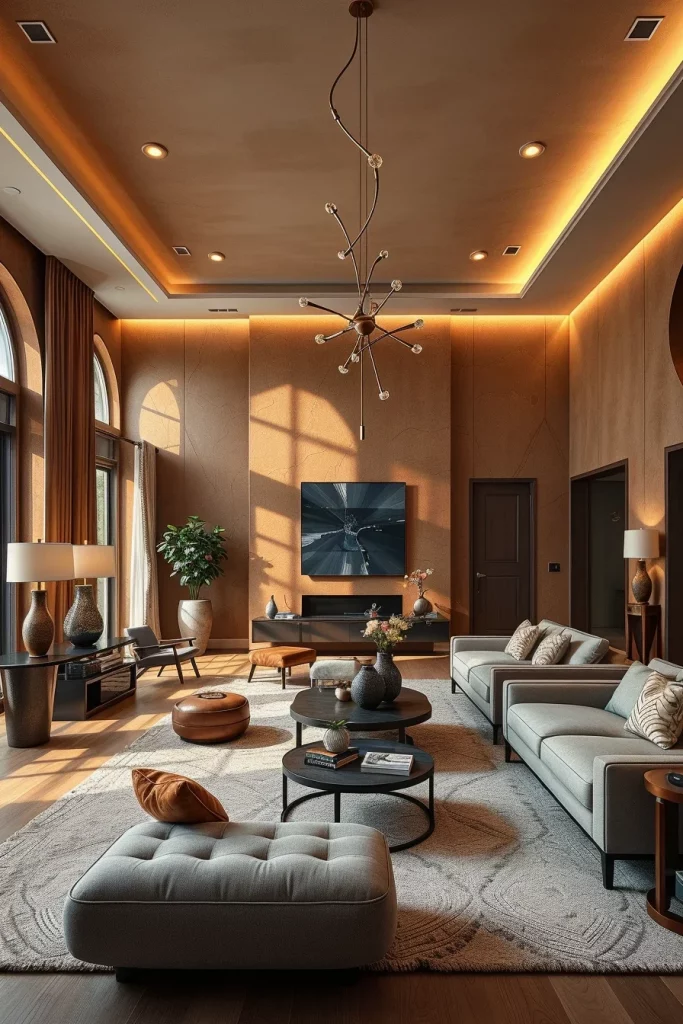
I frequently use Venetian plaster, limewash finishes, textured wallpapers, or decorative wall panels to complement chocolate brown tones. These finishes interact with natural and artificial light differently throughout the day, creating movement and character across the walls. Paired with modern furnishings and clean architectural lines, textured surfaces elevate the entire room.
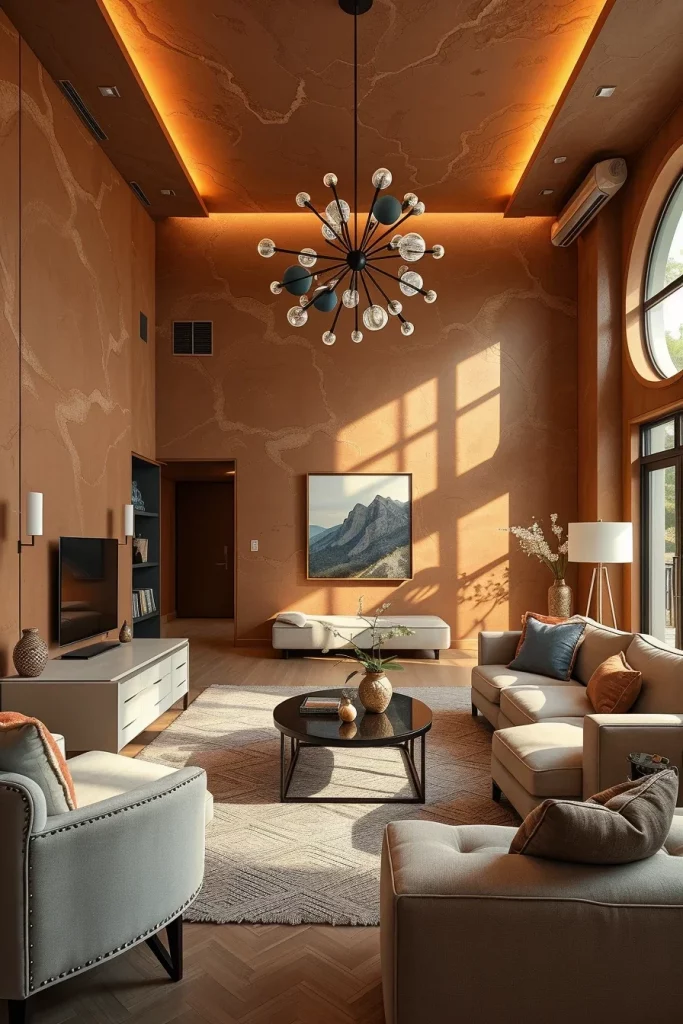
In my opinion, texture is often the missing element that transforms a good design into an exceptional one. Design publications regularly showcase textured walls because they add luxury without requiring excessive decoration. Even subtle finishes can dramatically improve the overall aesthetic of a room featuring brown walls.
To complete the space, I would introduce carefully selected accent lighting that highlights the wall texture and emphasizes its unique visual qualities.
Natural Wood Elements Paired With Chocolate Brown Walls
When I work with warm chocolate brown wall colors, I often rely on natural wood elements to create a balanced and inviting atmosphere. Wood introduces organic texture and warmth that complements the richness of chocolate brown without competing for attention. This combination feels timeless and works equally well in modern, transitional, and rustic-inspired interiors. The natural grain patterns also help prevent darker walls from appearing flat or overly formal.
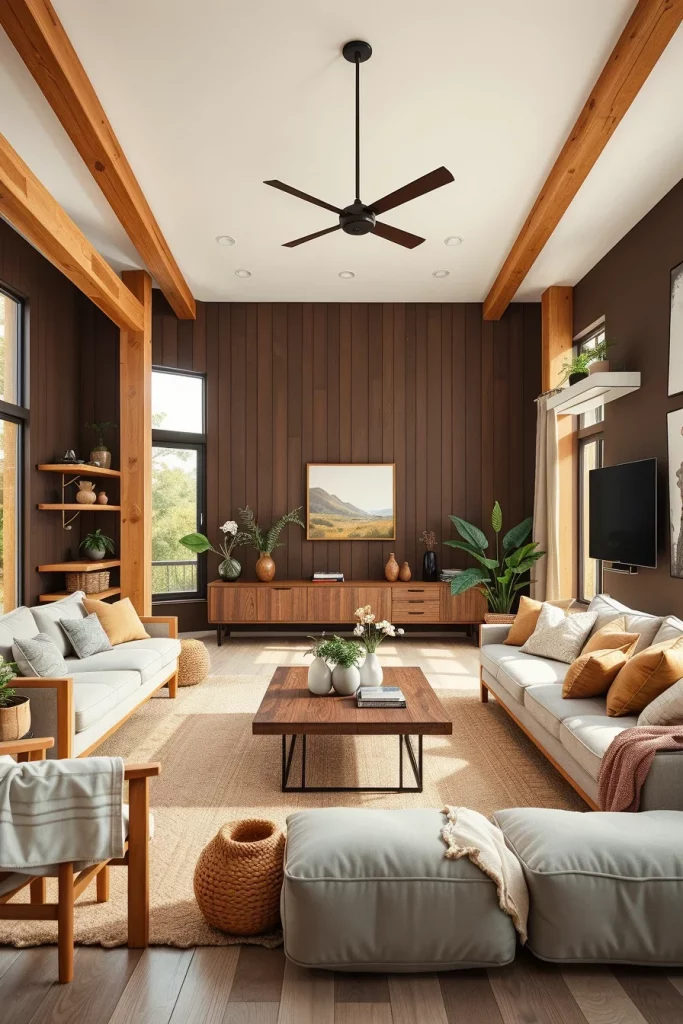
I typically incorporate oak, walnut, or reclaimed wood furniture throughout the room. A substantial wooden dining table, floating shelves, exposed ceiling beams, or a handcrafted console table can become focal points within the design. Wood flooring paired with soft neutral rugs creates visual continuity, while smaller accents such as wooden picture frames, bowls, and side tables reinforce the natural aesthetic. These elements add character and make the room feel layered and thoughtfully designed.
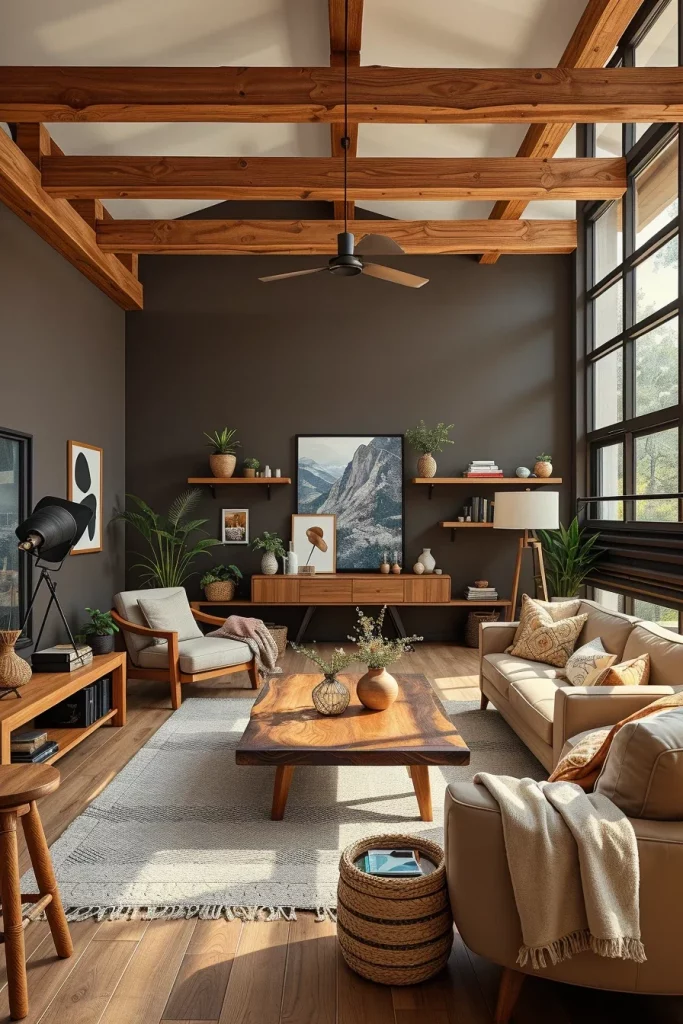
In my experience, natural materials help create interiors that remain appealing for many years. Many professional designers recommend combining rich wall colors with authentic materials because the contrast feels sophisticated yet approachable. I find that wood softens the boldness of chocolate brown walls while preserving their luxurious appeal.
To further enhance this design, I would include indoor plants and woven natural-fiber accessories. These additions strengthen the connection to nature and make the room feel fresh and welcoming.
Contemporary Artwork Ideas For Brown Wall Interiors
One of the most effective ways to personalize interiors featuring warm chocolate brown wall colors is through carefully selected contemporary artwork. Brown walls provide a dramatic backdrop that allows artwork to stand out while creating a gallery-like atmosphere. Whether the room is minimalist or richly layered, art introduces personality, color, and visual movement.
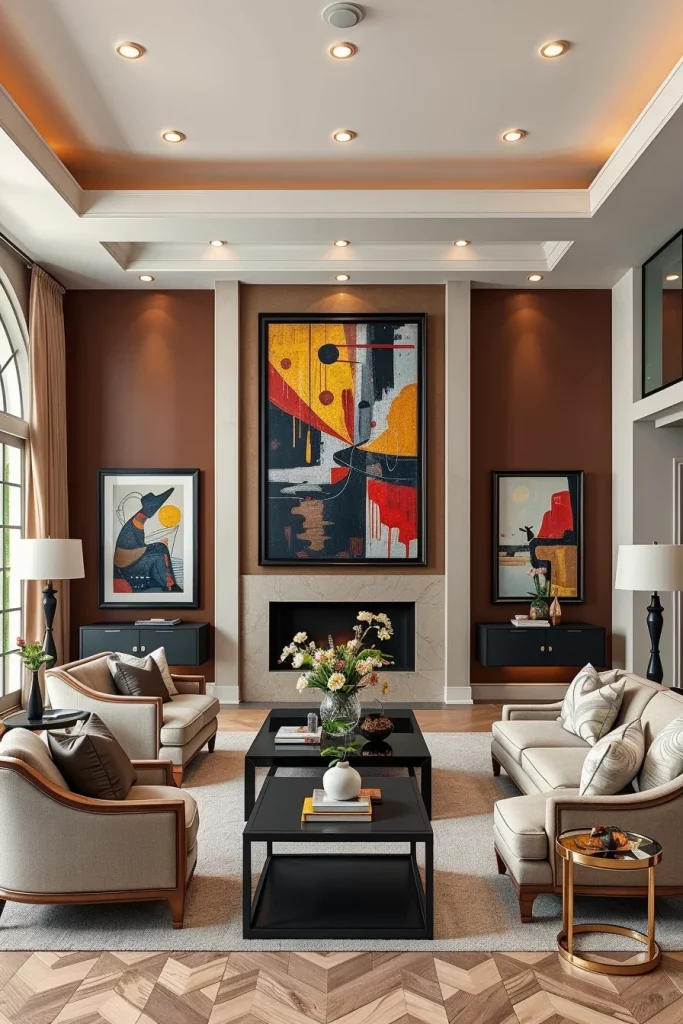
I often choose oversized abstract paintings, black-and-white photography, modern line art, or sculptural wall pieces. Large-scale artwork works particularly well because it prevents the wall color from overwhelming the room. Frames in black, brass, or natural wood complement chocolate brown beautifully. Strategic placement above sofas, fireplaces, or console tables helps create strong focal points that anchor the design.
Personally, I believe artwork should reflect both the room’s style and the homeowner’s personality. Interior design publications frequently emphasize that artwork is one of the most impactful ways to elevate a space. Against chocolate brown walls, even simple pieces gain additional depth and presence because of the rich background color.
I would also recommend incorporating accent lighting specifically directed at artwork. Picture lights or adjustable wall-mounted fixtures can dramatically enhance the visual impact of each piece.
Statement Mirrors That Enhance Chocolate Brown Spaces
Statement mirrors can transform rooms featuring warm chocolate brown wall colors by introducing brightness and visual expansion. Because darker walls absorb more light than lighter shades, mirrors become especially valuable design tools. They reflect natural daylight and decorative lighting, helping the room feel larger and more open without diminishing the cozy atmosphere.
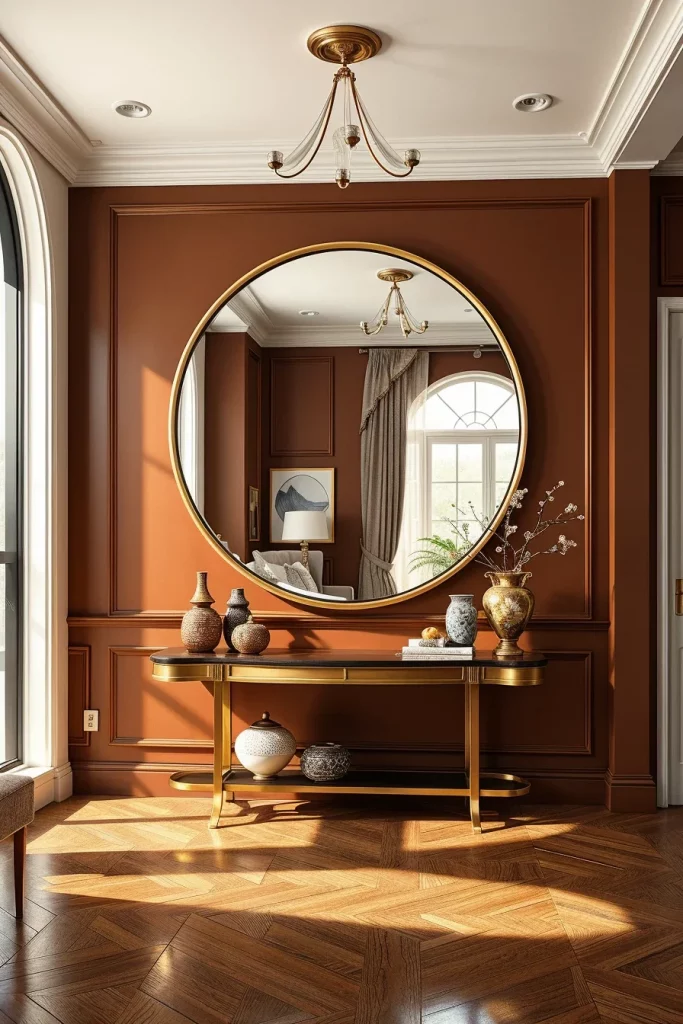
I frequently use oversized rectangular mirrors, round contemporary mirrors, or decorative designs with metallic frames. Positioning a mirror opposite a window maximizes natural light reflection throughout the space. In living rooms, entryways, and dining rooms, mirrors can function as both decorative art and practical features. Brass, black metal, or warm wood frames work exceptionally well with chocolate brown walls.
From my perspective, mirrors are among the most versatile accessories available to interior designers. They enhance architectural features, improve lighting conditions, and contribute elegance to almost any room. I often recommend statement mirrors when clients want to make a darker room feel more dynamic and visually balanced.
To complete this look, I would pair the mirror with subtle decorative accessories such as candles, ceramic vases, or a console table that reinforces the room’s overall style.
Cozy Reading Nooks Framed By Warm Brown Walls
A reading nook surrounded by warm chocolate brown wall colors creates a comfortable retreat that encourages relaxation and focus. The deep wall color naturally defines the space and makes it feel separate from the rest of the room. Whether incorporated into a living room, bedroom, or dedicated library, this design approach creates a sense of comfort and privacy.
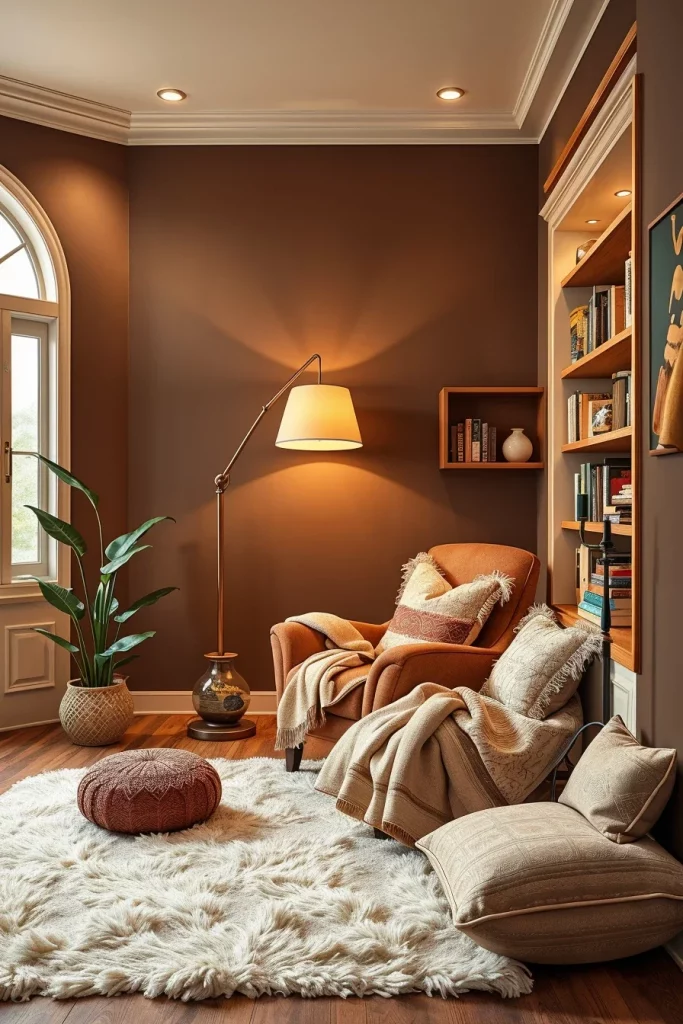
I like including a generously sized armchair, a small side table, and a floor lamp with adjustable lighting. Soft throw blankets, decorative cushions, and a plush area rug enhance comfort while adding texture. Built-in bookshelves or floating shelves provide practical storage and help establish the nook’s purpose. Warm lighting is particularly important because it complements the richness of the wall color and supports extended reading sessions.
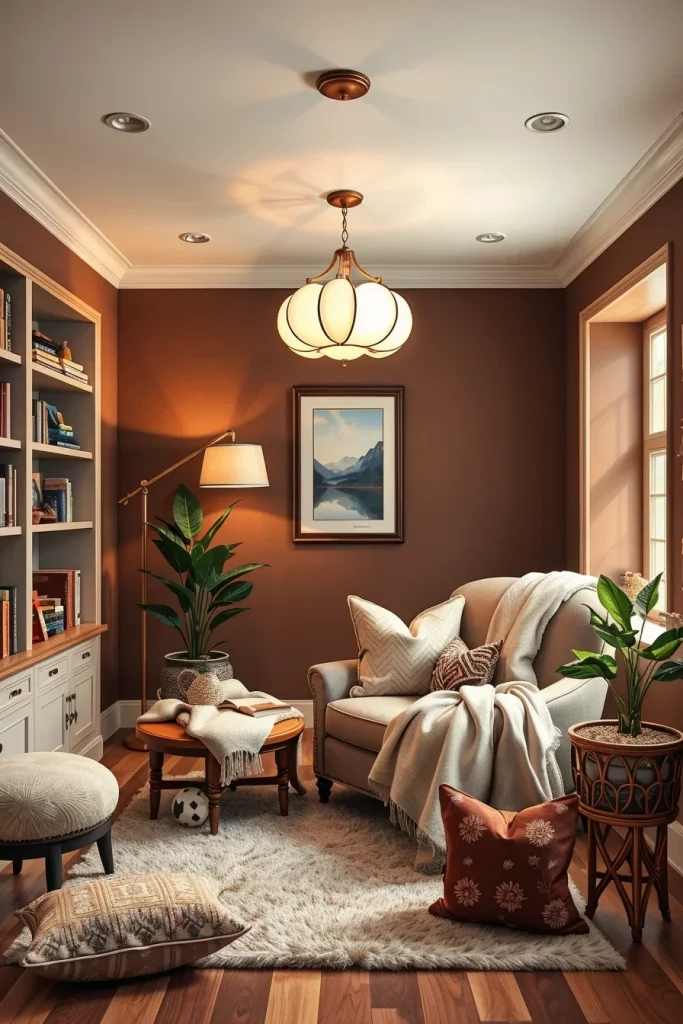
In my experience, creating a dedicated reading corner adds both function and character to a home. Many designers emphasize the importance of designing spaces that encourage daily rituals and relaxation. A well-designed reading nook accomplishes this while showcasing the beauty of chocolate brown walls.
I would also add a small plant or natural decorative element to introduce freshness and soften the darker color palette.
Modern Fireplace Designs Complementing Chocolate Brown Decor
Modern fireplaces pair beautifully with warm chocolate brown wall colors, creating a focal point that feels both luxurious and welcoming. The richness of the wall color emphasizes the architectural presence of the fireplace while enhancing the room’s overall warmth. This combination works especially well in contemporary living rooms where clean lines and sophisticated materials define the design.
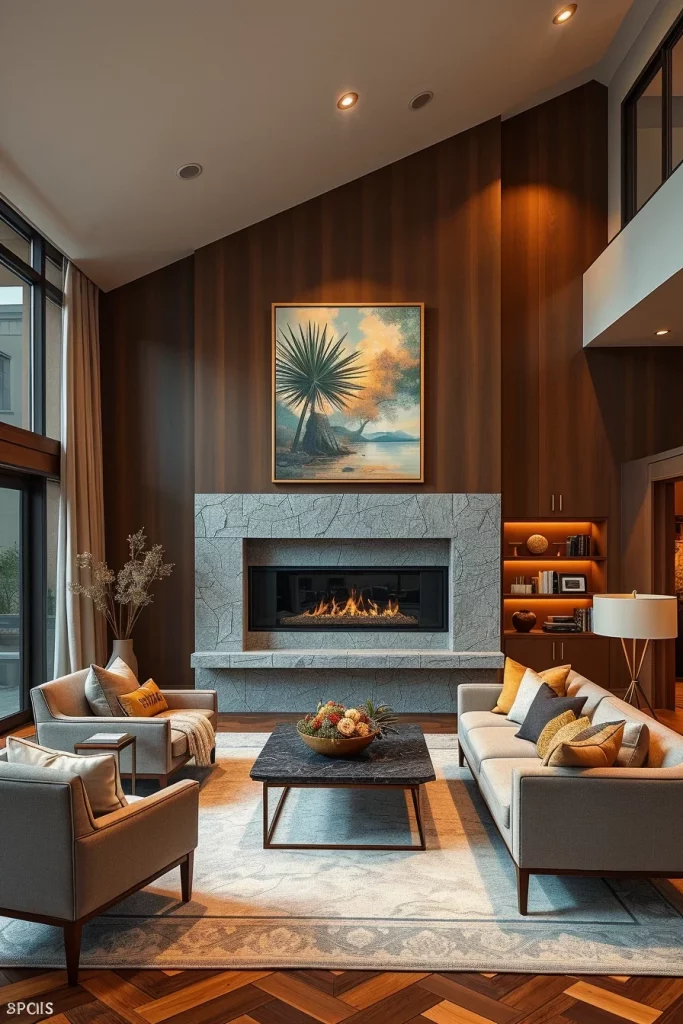
I often select linear gas fireplaces, sleek stone surrounds, or minimalist built-in fireplace designs. Materials such as natural stone, marble, concrete, or textured tile provide contrast against chocolate brown walls. Comfortable seating arranged around the fireplace encourages conversation and relaxation, while carefully chosen lighting highlights the architectural details.
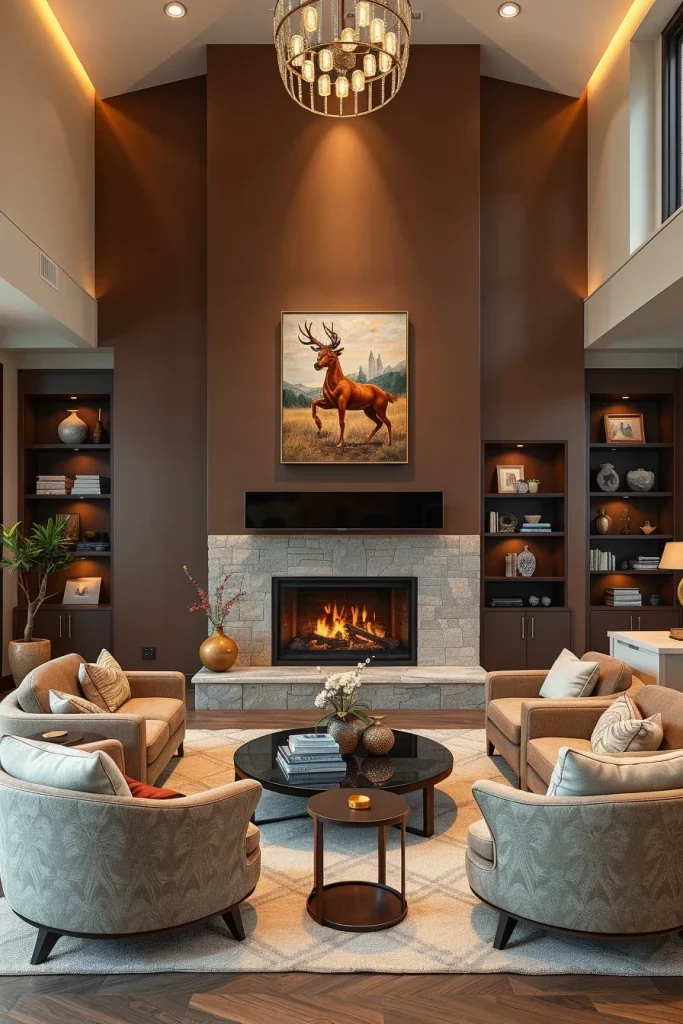
Personally, I consider fireplaces one of the strongest focal points available in residential design. When combined with chocolate brown walls, they create a layered and inviting environment suitable for both everyday living and entertaining. Many modern interiors use fireplaces not only for warmth but also as sculptural design features.
To complete the room, I would add large-scale artwork, built-in shelving, and carefully selected decorative objects that complement the fireplace without competing for attention.
Earthy Green Accents For Fresh Chocolate Brown Interiors
I often recommend pairing warm chocolate brown wall colors with earthy green accents because the combination feels naturally balanced and visually refreshing. Deep brown walls create a rich backdrop that grounds the room, while shades of olive, sage, eucalyptus, and moss green introduce life and softness. This pairing works especially well in living rooms, family spaces, and open-concept areas where a calm and welcoming atmosphere is important. Natural daylight further enhances the contrast between the warm walls and fresh greenery.
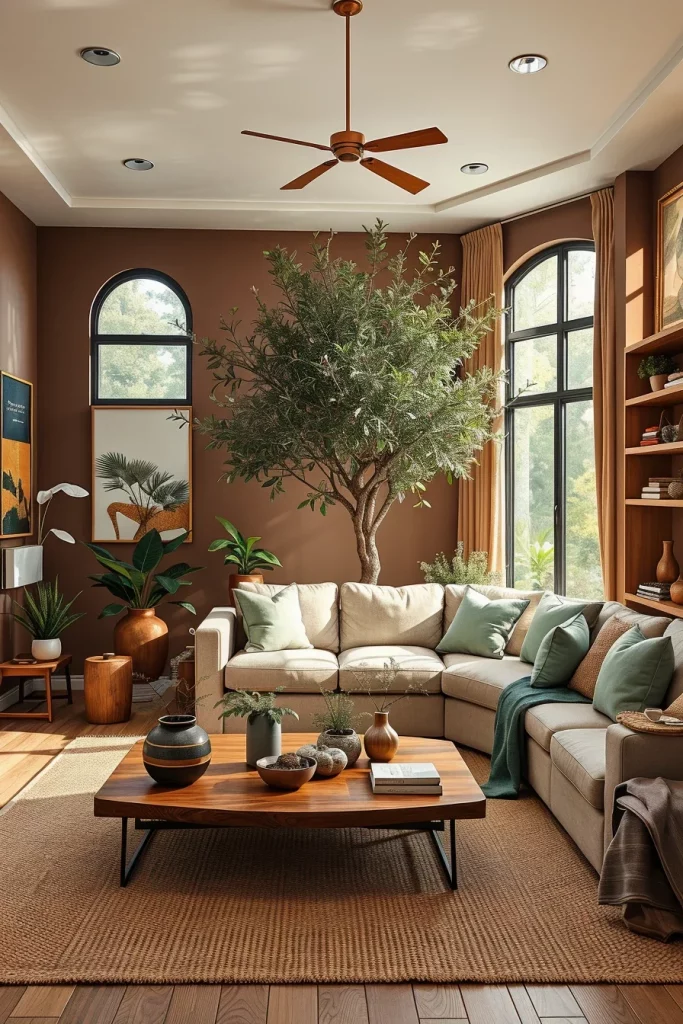
When designing this type of interior, I like incorporating large potted plants, olive trees, and textured ceramic planters throughout the room. A neutral linen sofa, woven area rug, walnut coffee table, and green accent pillows help create layers of texture without overwhelming the space. Wooden shelving and natural fiber baskets complement the earthy palette and add practical storage. Every element supports the organic feeling while allowing the chocolate brown walls to remain the focal point.
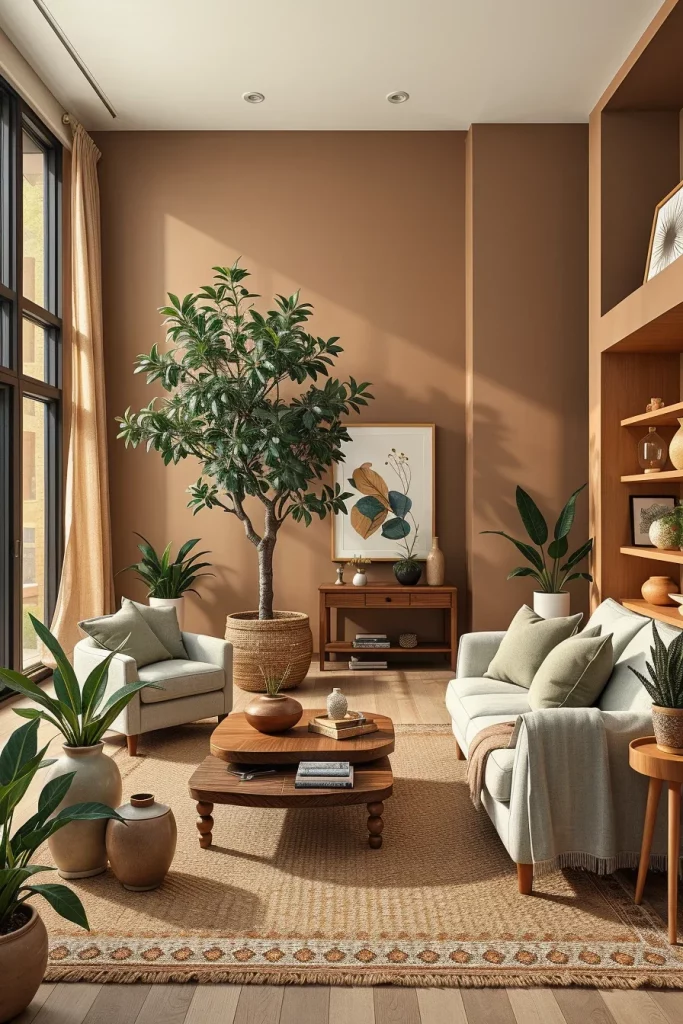
From my experience, many professional designers featured in leading interior design publications emphasize the importance of bringing natural materials into darker interiors. I find that combining greenery with rich brown walls prevents the room from feeling heavy and instead creates a sophisticated connection to nature. This approach works particularly well for homeowners who want a cozy yet modern aesthetic.
I would also add warm ambient lighting through floor lamps, wall sconces, and table lamps with soft white bulbs. Proper lighting highlights the depth of the brown paint while keeping the green accents vibrant throughout the day and evening.
Creative Shelf Styling Against Deep Brown Backgrounds
One of my favorite ways to showcase warm chocolate brown wall colors is by using thoughtfully styled shelving. Deep brown walls naturally create contrast behind decorative objects, making books, artwork, ceramics, and sculptural pieces stand out more dramatically. This design approach works beautifully in home offices, living rooms, libraries, and dining spaces where visual interest is desired without adding excessive furniture.
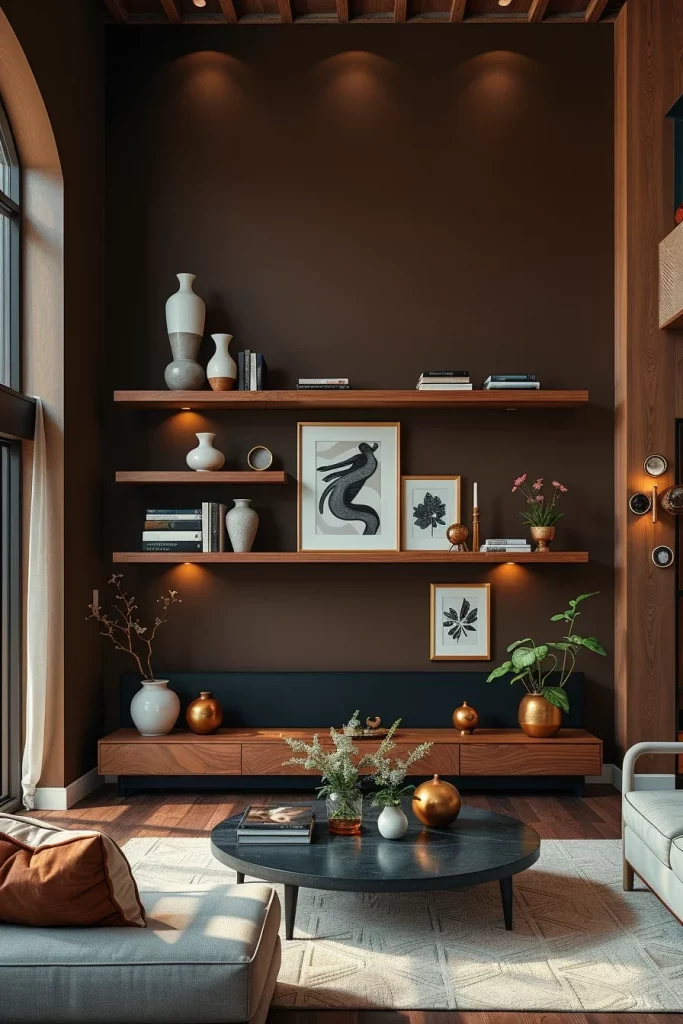
I typically choose floating wood shelves in medium walnut or oak finishes. Decorative accessories such as matte pottery, framed black-and-white photography, stacked design books, and handcrafted sculptures create a curated appearance. Metallic accents in brass or bronze add subtle sophistication, while small plants soften the overall arrangement. The dark wall acts almost like a gallery backdrop, allowing each item to receive greater visual attention.
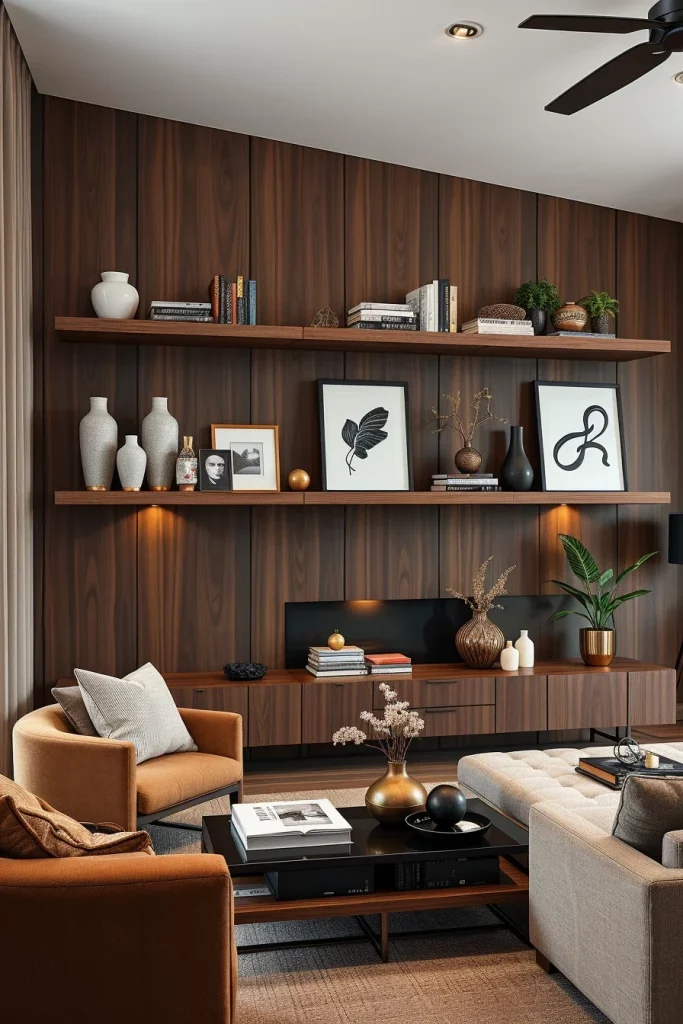
In my opinion, restraint is important when styling shelves against chocolate brown walls. Many professional stylists recommend leaving open space between decorative objects rather than filling every surface. I have found that a carefully edited display often appears more luxurious and contemporary than overcrowded shelving.
To complete the design, I would incorporate concealed LED shelf lighting. This feature adds dimension, highlights decorative objects, and enhances the rich undertones found in chocolate brown paint.
Luxurious Velvet Furniture With Chocolate Brown Walls
I often use velvet furnishings when designing interiors with warm chocolate brown wall colors because both elements contribute to an elegant and layered atmosphere. Chocolate brown walls provide depth and warmth, while velvet introduces softness and visual richness. Together they create spaces that feel refined, comfortable, and highly intentional.
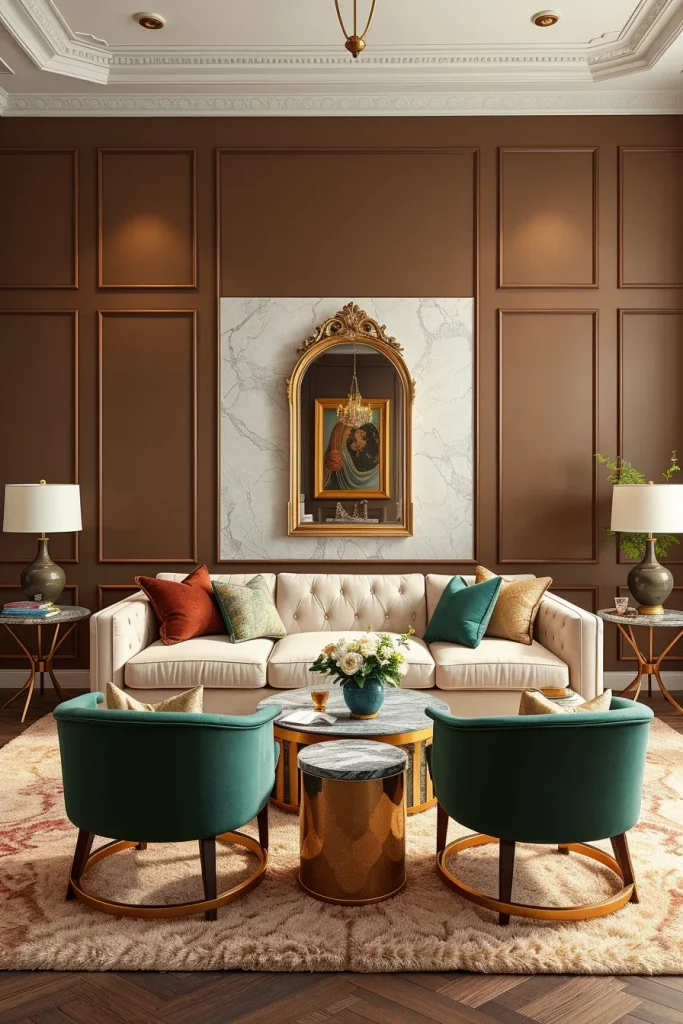
For furniture selection, I frequently recommend a velvet sofa in cream, caramel, forest green, or muted blue. Accent chairs with curved silhouettes, marble side tables, and plush area rugs help balance the richness of the velvet texture. Gold-framed mirrors, oversized artwork, and sophisticated lighting fixtures contribute to a boutique-style appearance. The combination of smooth walls and tactile furnishings creates an appealing contrast throughout the room.
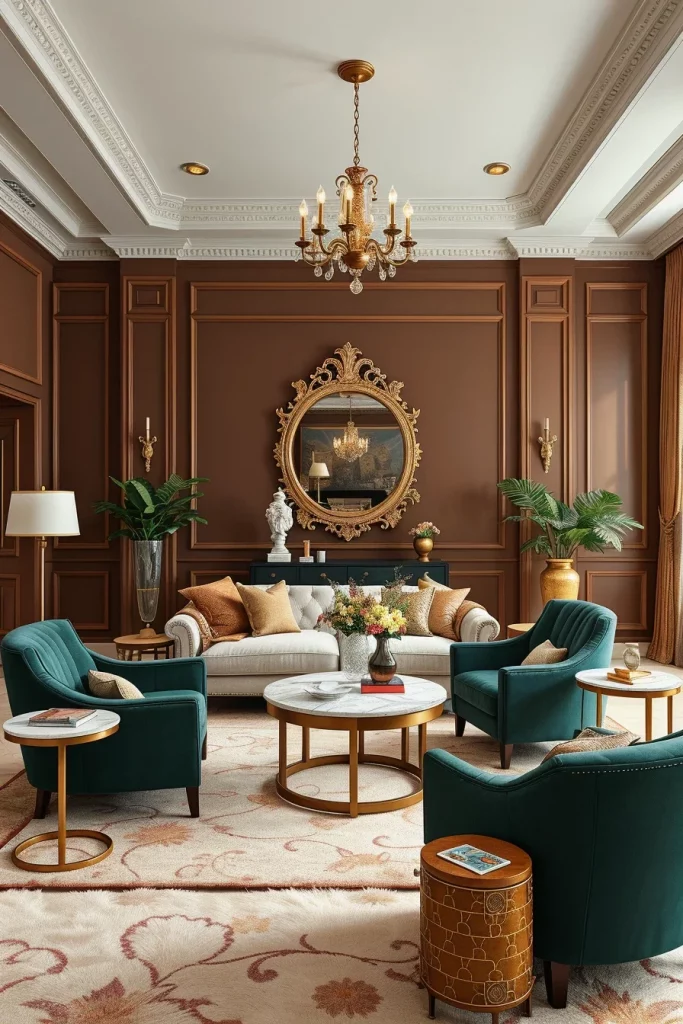
From my perspective, velvet works best when paired with a thoughtful mix of materials. Designers often emphasize the importance of combining soft textiles with wood, stone, and metal finishes to avoid visual monotony. I have seen this approach create interiors that feel both luxurious and approachable.
A feature I would add is layered window treatments that combine sheer curtains with heavier drapery panels. This allows for better light control while enhancing the elegant character of the room.
Warm Metallic Finishes For Contemporary Brown Spaces
When working with warm chocolate brown wall colors, I frequently introduce metallic finishes to add brightness and sophistication. Chocolate brown naturally complements warm metals, creating a refined palette that feels contemporary rather than traditional. The contrast between dark walls and reflective surfaces adds energy and dimension to the room.
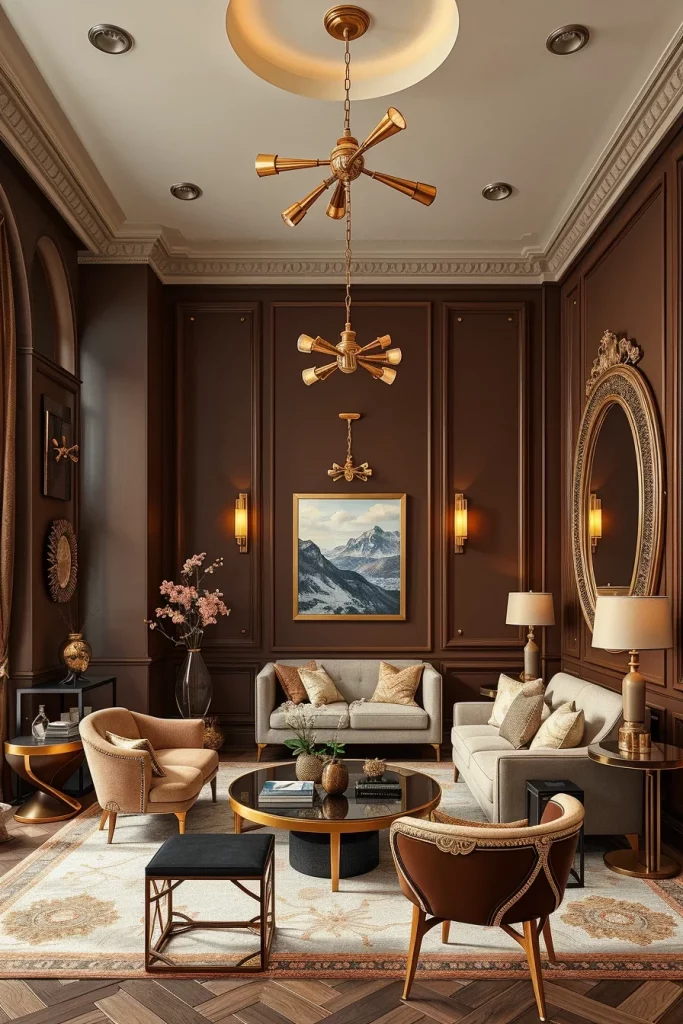
I prefer using brushed brass hardware, bronze lighting fixtures, copper decorative accessories, and gold-framed mirrors. These finishes reflect light beautifully and prevent the darker walls from feeling visually flat. In kitchens and dining rooms, metallic pendant lighting and cabinet hardware create subtle focal points without competing with the wall color. In living spaces, metallic coffee tables and decorative trays contribute to a polished appearance.
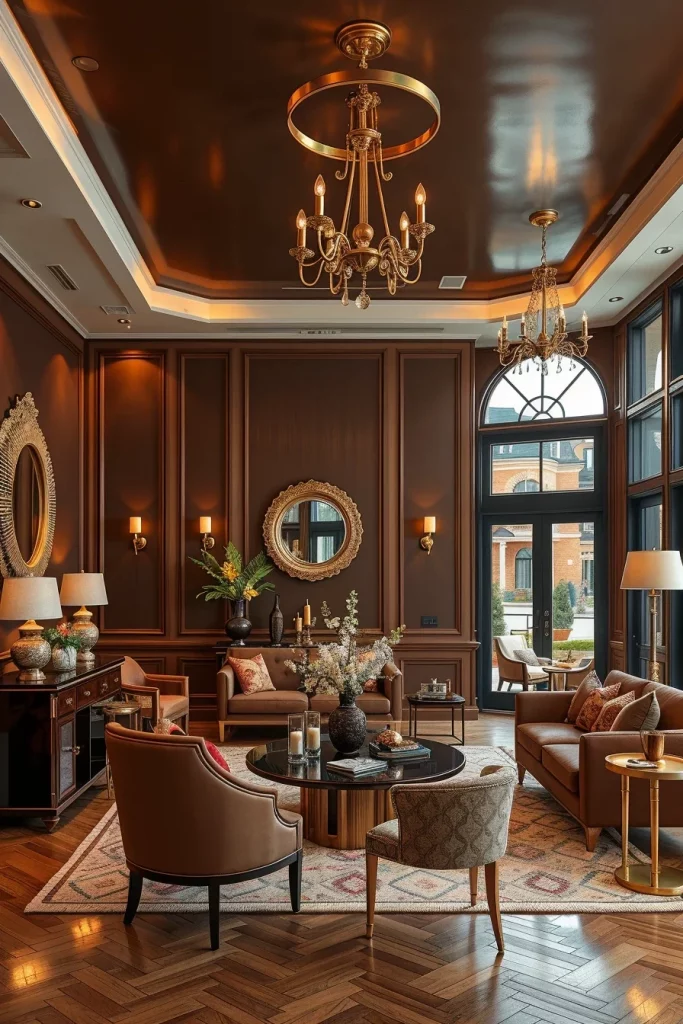
In my experience, moderation is essential when incorporating metallic finishes. Professional designers often recommend selecting one dominant metal finish and repeating it consistently throughout the room. This strategy creates visual harmony and prevents the design from appearing disjointed.
To elevate the space further, I would include layered lighting sources. Metallic surfaces become even more attractive when illuminated from multiple angles, enhancing both function and atmosphere.
Unique Ceiling And Trim Ideas With Chocolate Brown Walls
Many homeowners focus entirely on wall color, but I believe ceilings and trim play an equally important role when using warm chocolate brown wall colors. Thoughtfully designed architectural details can dramatically influence how the color is perceived. Contrasting ceilings and trim create definition, while monochromatic treatments produce a bold and immersive effect.
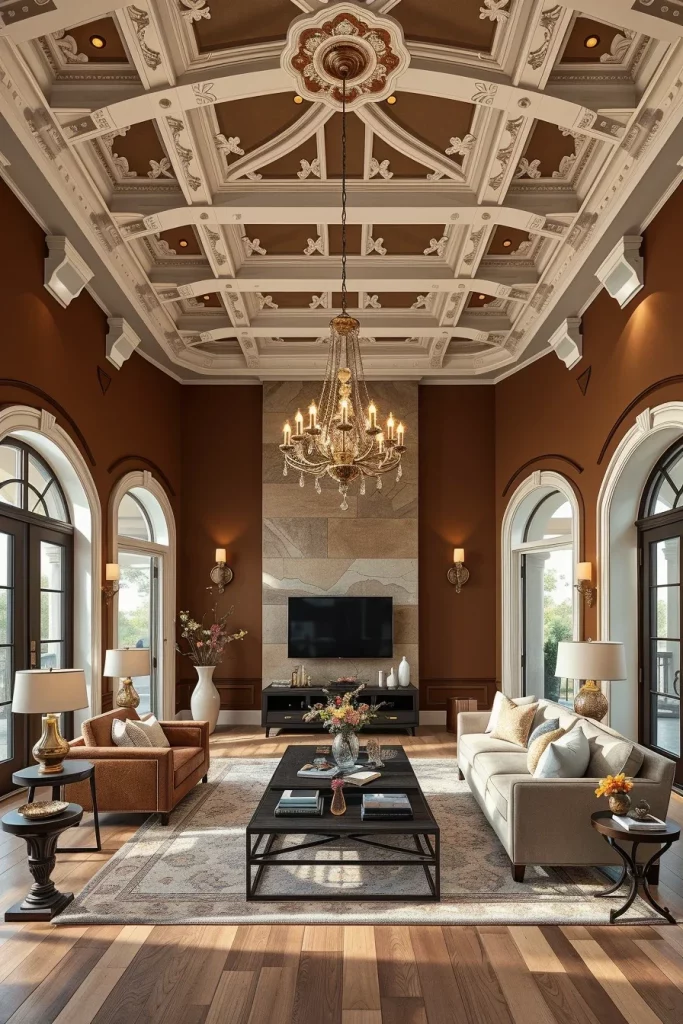
I often pair chocolate brown walls with crisp white trim to emphasize architectural lines and maintain brightness. For a more contemporary look, I sometimes recommend painting trim in a matching brown tone for a seamless appearance. Coffered ceilings, decorative beams, tongue-and-groove paneling, and subtle molding details can all enhance the overall design. These features add character while complementing the richness of the walls.
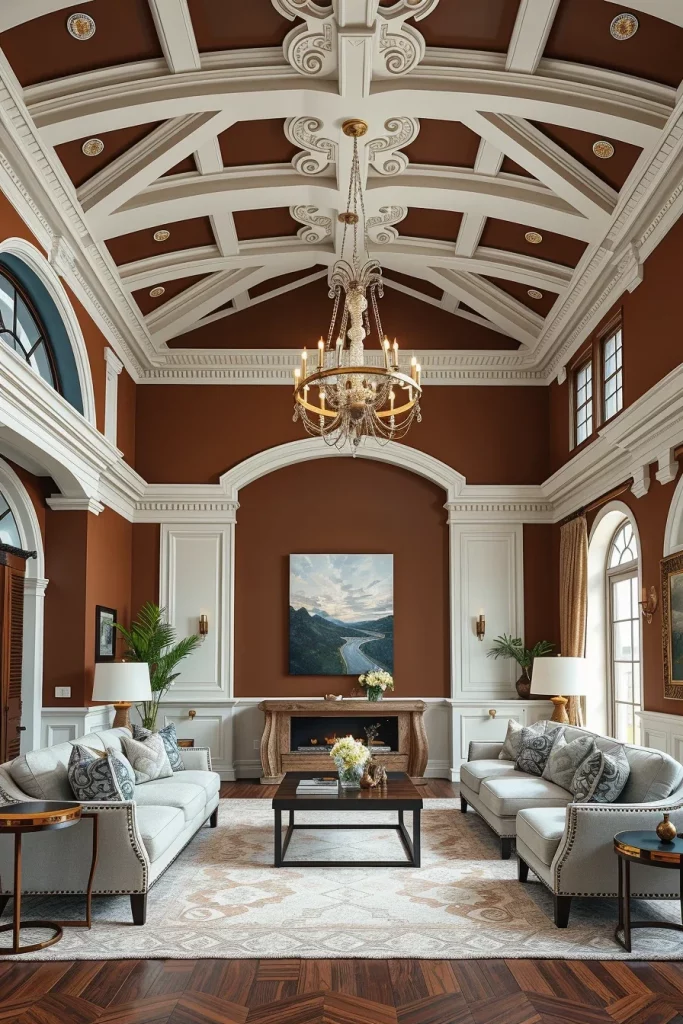
Personally, I find that painted ceilings are often underutilized. Design experts frequently note that ceilings represent a significant visual surface that should not be overlooked. Depending on the room size and lighting conditions, a soft cream ceiling or a slightly darker brown ceiling can dramatically change the mood.
I would also incorporate statement ceiling lighting, such as a sculptural chandelier or modern pendant fixture. This draws the eye upward and helps balance the visual weight of the darker wall color.
Open Concept Living Areas Enhanced By Rich Brown Colors
I frequently use warm chocolate brown wall colors in open-concept homes because they help unify large spaces while creating a sense of warmth and intimacy. In modern floor plans where the living room, dining area, and kitchen flow together, chocolate brown walls provide visual continuity and prevent expansive interiors from feeling cold or disconnected. The richness of the color helps define the space without the need for physical partitions.
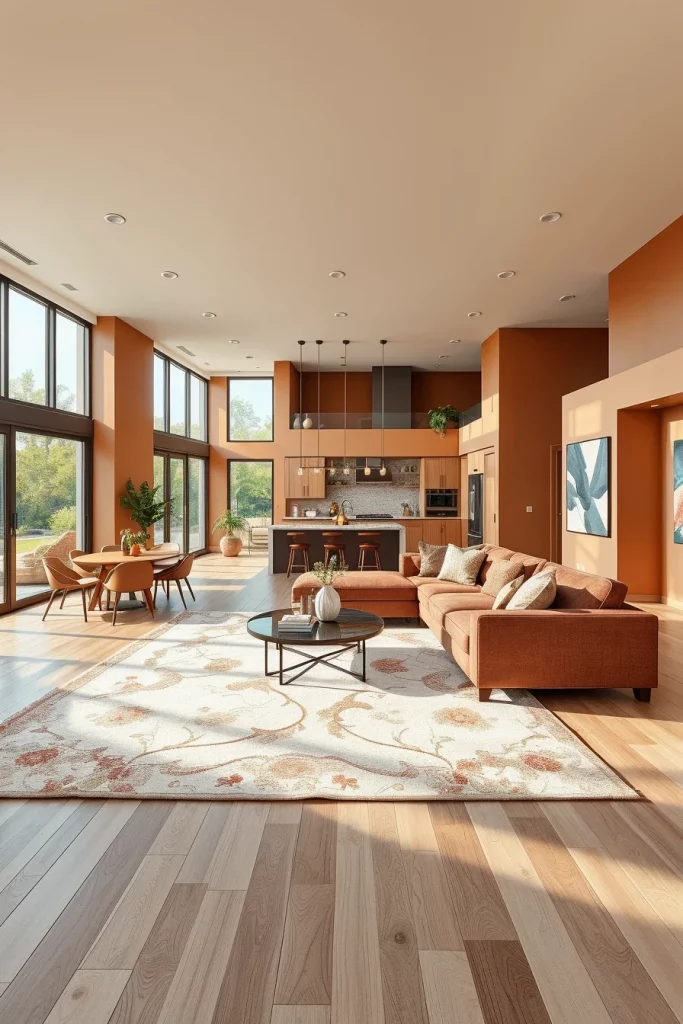
When designing an open-concept layout, I usually combine chocolate brown walls with light-colored flooring, neutral upholstered seating, and natural wood furniture. A large sectional sofa, oversized area rug, dining table with clean lines, and minimalist kitchen cabinetry create a cohesive appearance. Strategic placement of accent lighting, decorative accessories, and artwork ensures that each zone maintains its own identity while remaining connected to the overall design.
In my experience, balance is essential in larger spaces. Interior designers often recommend varying textures rather than introducing too many colors. I find that layering linen, wood, stone, glass, and metal finishes allows chocolate brown walls to feel sophisticated and contemporary rather than overwhelming.
I would also include large windows or glass doors whenever possible. Natural light enhances the richness of the brown tones and helps maintain an open, airy atmosphere throughout the entire space.
Seasonal Decorating Ideas For Chocolate Brown Interiors
One of the advantages of warm chocolate brown wall colors is their ability to adapt beautifully throughout the year. I appreciate how these walls provide a versatile backdrop that can easily accommodate seasonal updates without requiring major redesigns. Whether decorating for spring, summer, autumn, or winter, chocolate brown remains timeless and relevant.
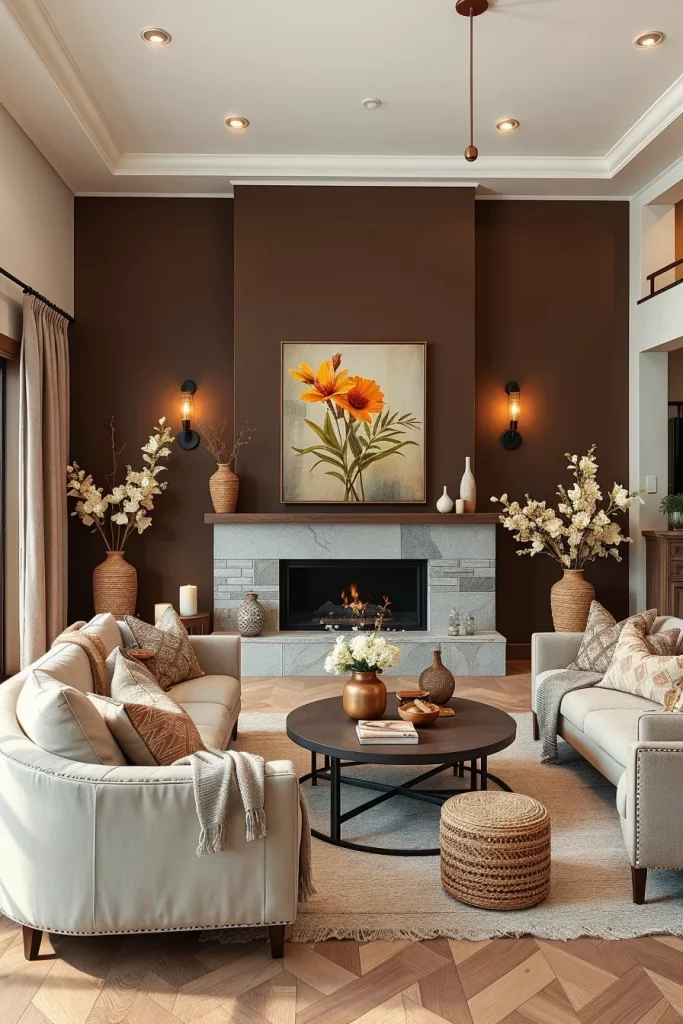
For spring and summer, I often introduce lighter textiles, botanical prints, fresh flowers, and natural woven accessories. During autumn, I incorporate rust-colored pillows, amber glass decor, and textured throws. In winter, plush blankets, candlelight, and layered fabrics create a cozy environment. Because the walls already provide depth and warmth, seasonal accents become more impactful and visually appealing.
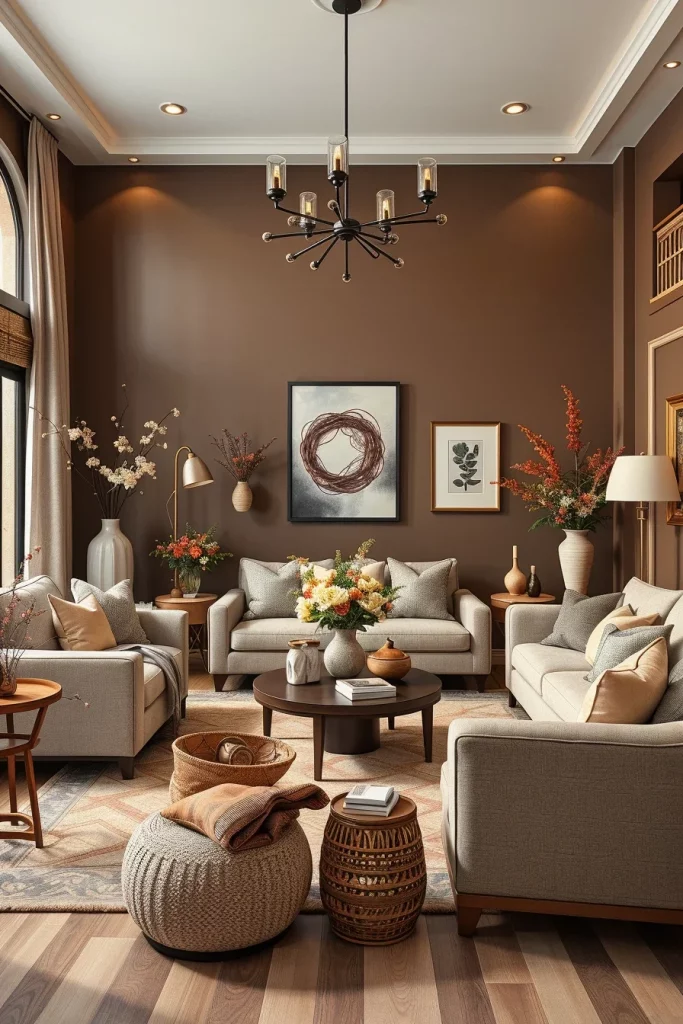
Personally, I prefer investing in high-quality neutral furniture and updating only the decorative details throughout the year. This strategy allows homeowners to refresh their interiors affordably while maintaining a consistent design foundation. Chocolate brown walls support nearly every seasonal palette, making decorating much easier.
To complete the seasonal flexibility of the room, I would recommend interchangeable artwork and decorative pillow covers that can be swapped as trends and seasons change.
Boutique Hotel Inspired Designs Using Chocolate Brown Walls
I often draw inspiration from luxury boutique hotels when designing spaces with warm chocolate brown wall colors. Boutique hotels are known for creating environments that feel both luxurious and welcoming, and chocolate brown walls contribute significantly to that atmosphere. The color immediately introduces depth, sophistication, and comfort, making residential interiors feel elevated and carefully curated.
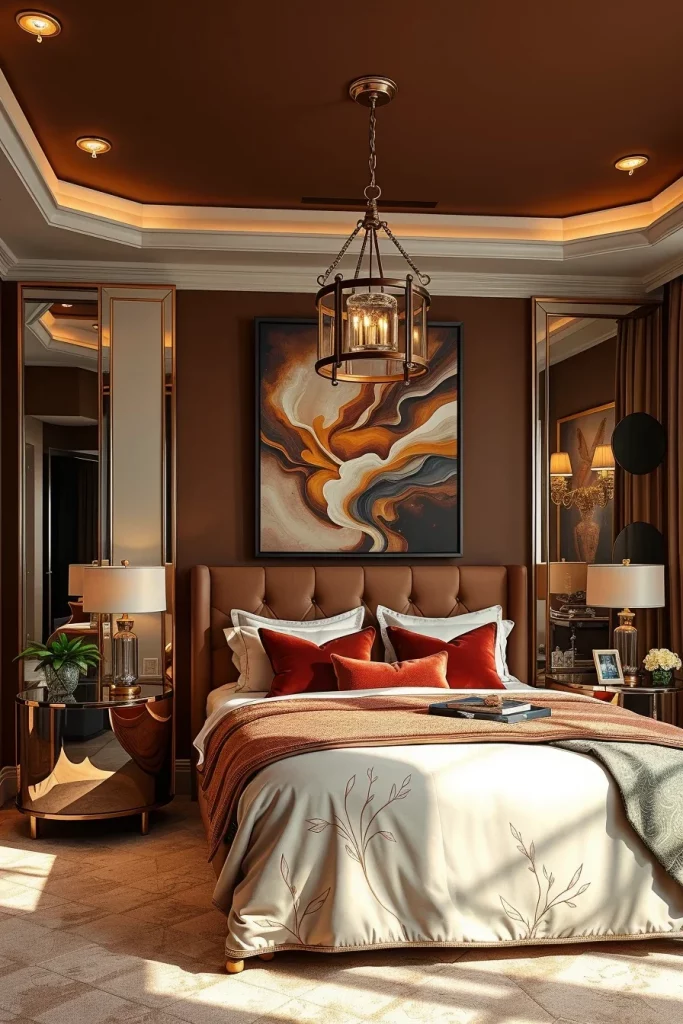
To achieve this look, I typically select upholstered headboards, elegant nightstands, layered bedding, statement lighting, and custom window treatments. Rich textures such as velvet, linen, leather, and wood create the layered aesthetic commonly found in upscale hospitality design. Decorative mirrors, oversized artwork, and subtle metallic accents further enhance the sense of refinement.
In my opinion, boutique hotel design succeeds because every detail serves a purpose. Many hospitality designers focus on creating memorable experiences through lighting, texture, and comfort rather than relying solely on decorative trends. I have found that applying this philosophy to residential interiors results in spaces that remain stylish for years.
I would also add a comfortable reading corner with an accent chair, side table, and floor lamp. This feature reinforces the relaxed luxury associated with boutique hotel environments.
Creative Modern Decor Trends Featuring Warm Brown Tones
Current interior design trends have embraced warm chocolate brown wall colors as an alternative to cooler gray palettes. I see more homeowners choosing rich brown tones because they add warmth, character, and a stronger connection to natural materials. Contemporary interiors increasingly favor earthy color schemes that feel authentic and inviting.
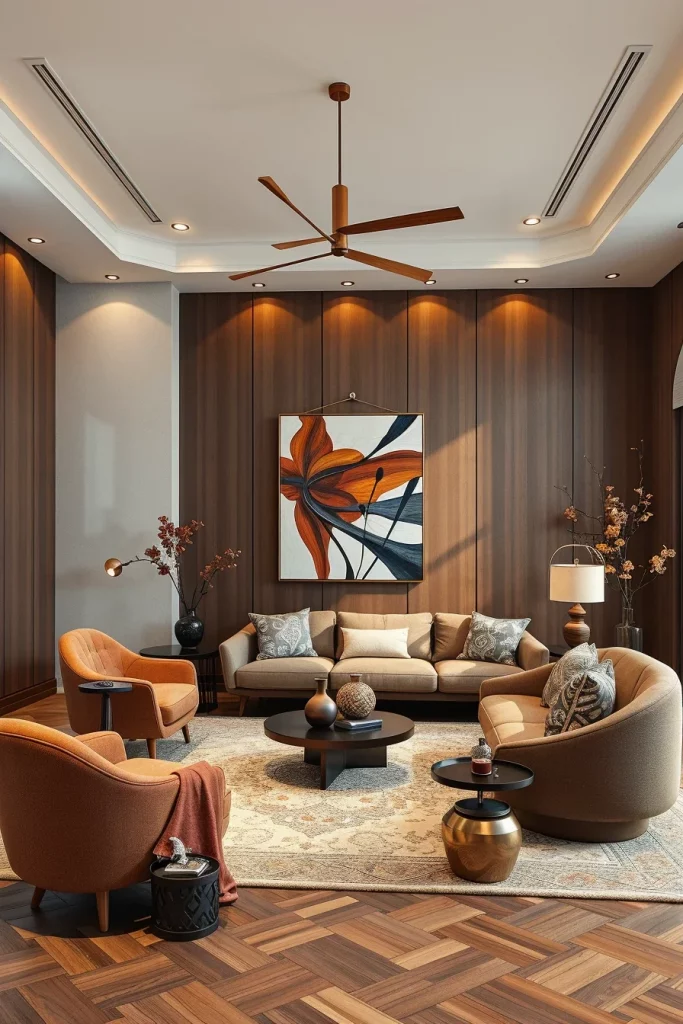
In modern spaces, I often pair chocolate brown walls with sculptural furniture, curved silhouettes, minimalist lighting, and organic textures. Large abstract artwork, handcrafted ceramics, and statement coffee tables help create visual interest without cluttering the room. The combination of clean lines and warm tones allows the interior to feel current while maintaining long-term appeal.
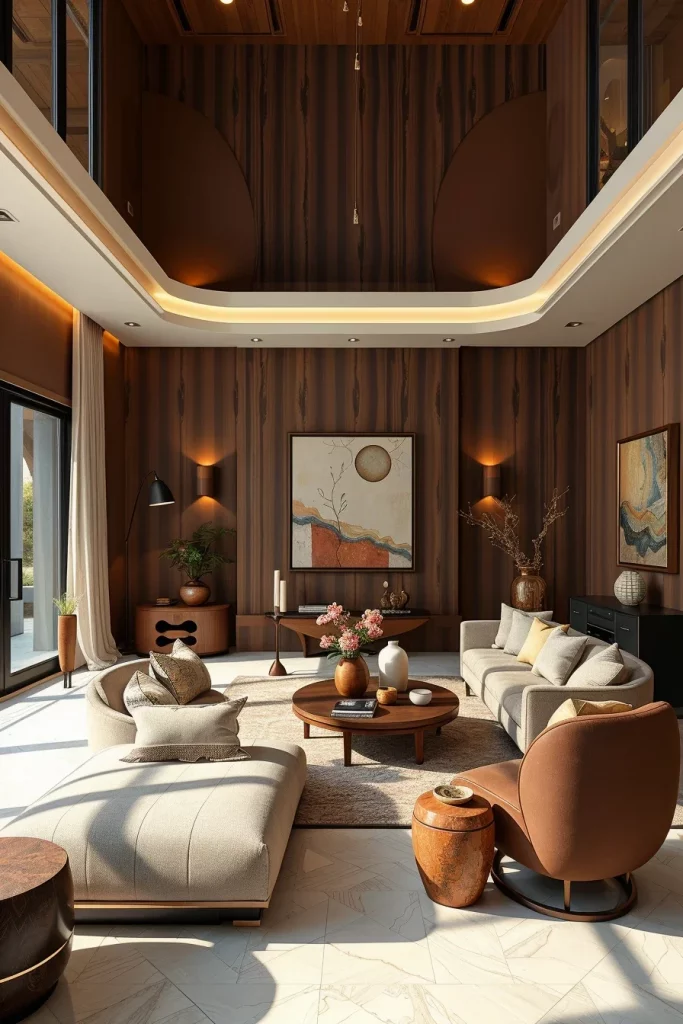
From my perspective, one of the most successful trends is the integration of sustainable materials. Designers and industry publications continue to highlight the value of natural wood, recycled materials, and artisan-made decor. These elements complement chocolate brown walls exceptionally well and contribute to a more meaningful design story.
To further modernize the space, I would include hidden storage solutions and multifunctional furniture pieces that support contemporary lifestyles without compromising aesthetics.
Designing A Cohesive Home With Warm Chocolate Brown Wall Colors
When using warm chocolate brown wall colors throughout a home, I focus on creating consistency without making every room feel identical. A cohesive design relies on repeated materials, complementary colors, and thoughtful transitions between spaces. Chocolate brown can serve as the unifying element that ties the entire home together.
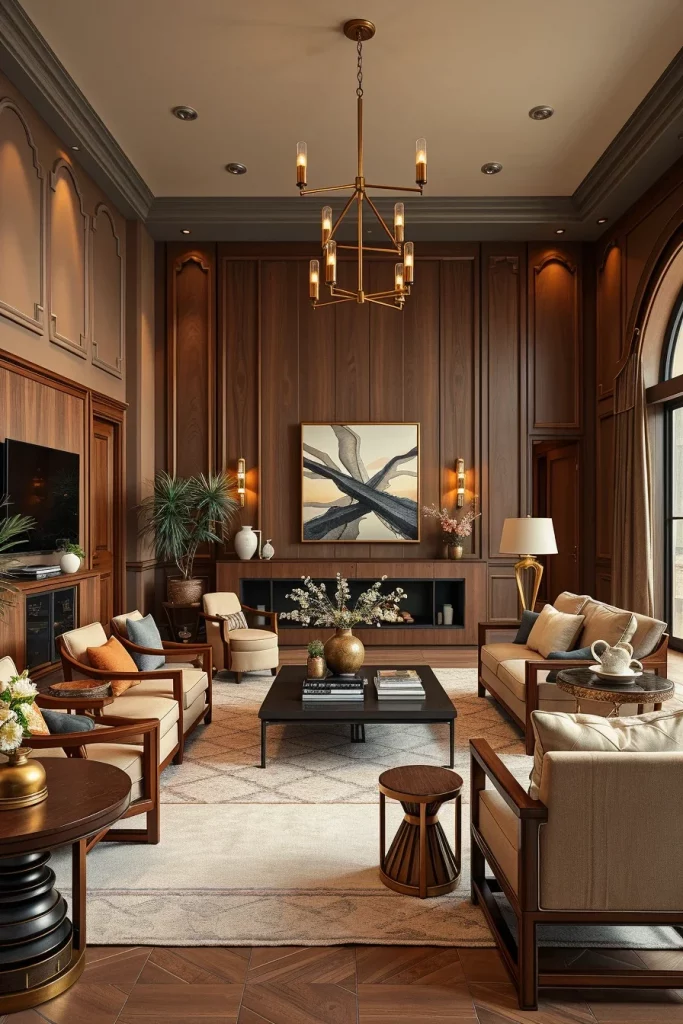
I typically establish a core palette that includes warm neutrals, natural wood finishes, soft textiles, and carefully selected accent colors. Living rooms, bedrooms, dining spaces, and home offices can each feature unique furnishings while sharing similar design principles. Repeating materials such as walnut wood, brass hardware, linen fabrics, and stone surfaces helps maintain visual continuity.
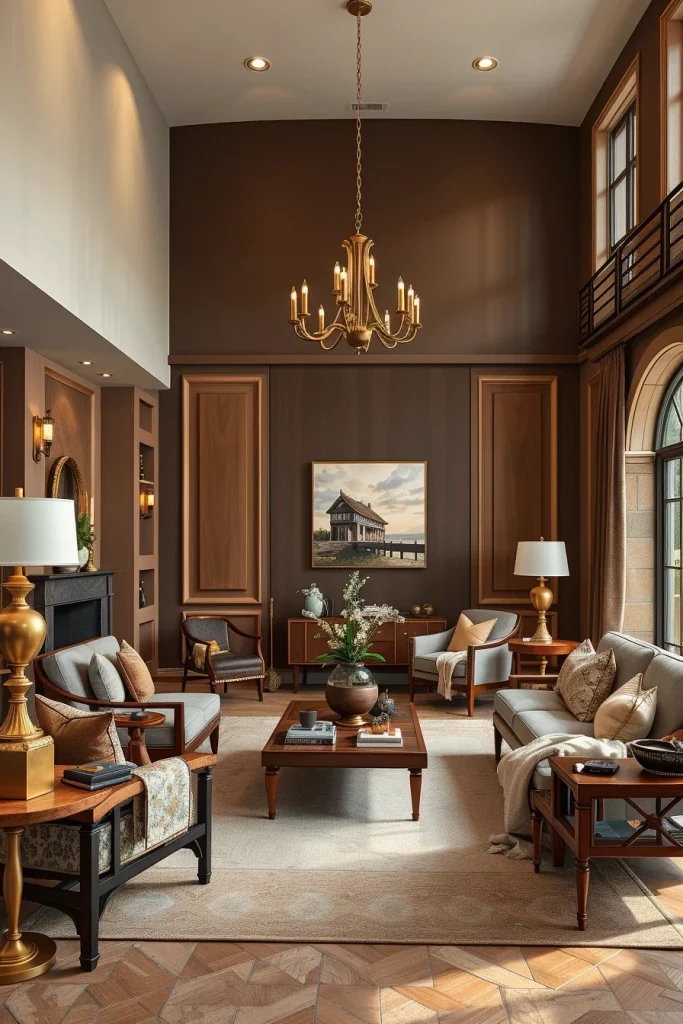
In my experience, successful whole-home design is less about matching and more about coordination. Professional designers often recommend creating a consistent design language that allows individual rooms to express their own character while still feeling connected. I have found this approach especially effective when working with rich wall colors like chocolate brown.
I would also develop a comprehensive lighting plan that includes ambient, task, and accent lighting throughout the home. Consistent lighting quality enhances the beauty of chocolate brown walls and strengthens the overall sense of cohesion.
Chocolate brown walls have proven that dark colors can be both welcoming and sophisticated when paired with the right materials, lighting, and decor. From natural green accents and luxurious furnishings to modern architectural details and cohesive whole-home palettes, these ideas demonstrate the versatility of warm chocolate brown wall colors. I hope these design inspirations help you create a home that feels stylish, comfortable, and uniquely personal. If you have a favorite approach or your own decorating experience with chocolate brown walls, feel free to share it in the comments below.