
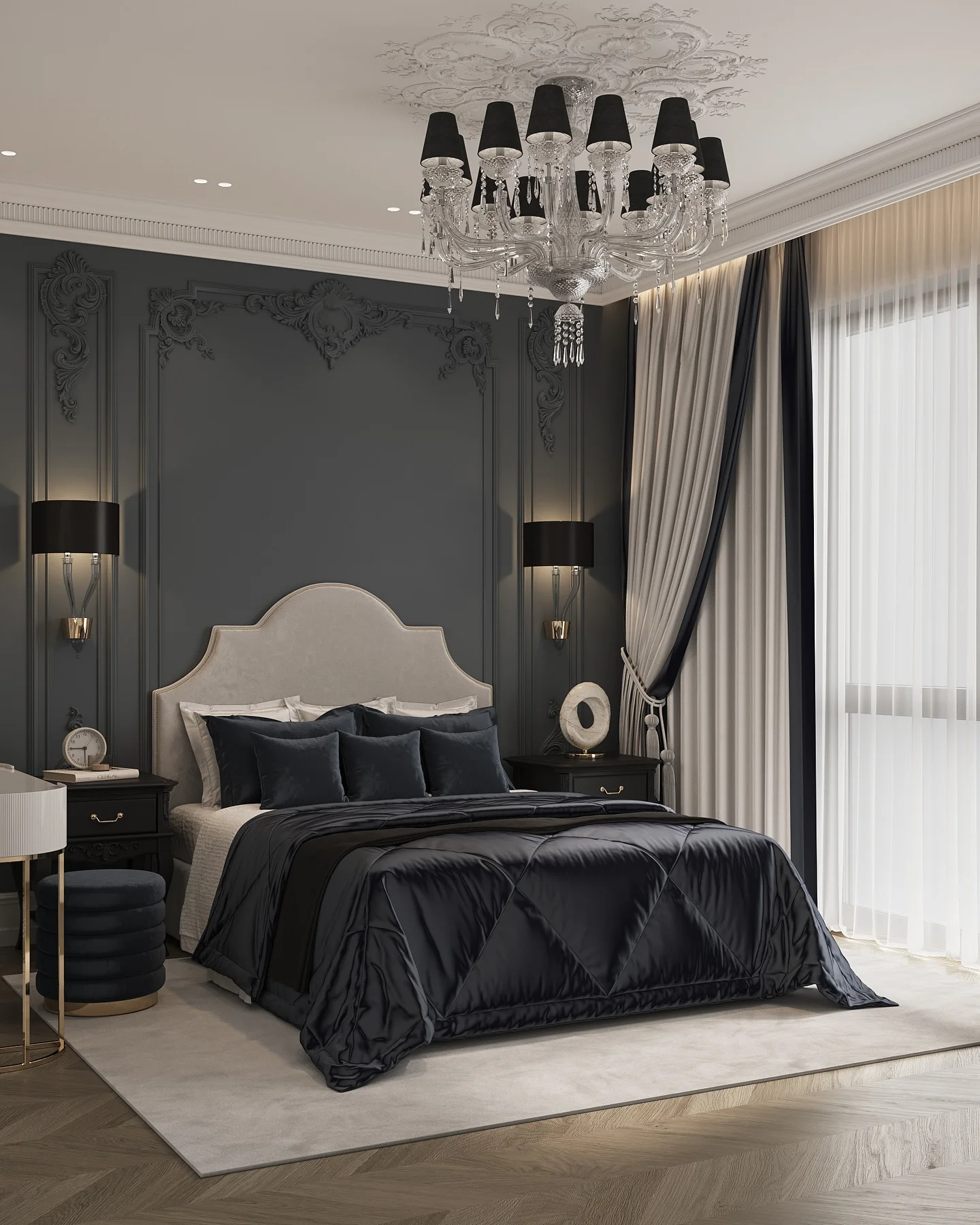
Personalized bedroom decor is the perfect way to turn a private retreat into a space that truly reflects your taste and personality. I love how thoughtful choices in color, furniture, lighting, artwork, and textiles can completely change the mood of a bedroom without sacrificing comfort. Whether you prefer soft neutral tones, dramatic dark shades, expressive artwork, or sculptural lighting, there are countless ways to create a look that feels uniquely yours. The key is to choose details that not only look beautiful but also support how you actually use and enjoy the room. In this collection, I’m sharing stylish bedroom ideas that show how different design elements can work together to create a polished and personal atmosphere. Which details would you choose to make your own bedroom feel more special?
Soft Neutral Bedroom With a Sculptural Leaf Accent Wall
I immediately notice the calm, sophisticated composition of this bedroom, where warm gray, cream, and taupe tones create a cohesive backdrop. The upholstered bed has a generously curved headboard and matching upholstered base, while built-in cabinetry and open shelving frame the left side of the room. Behind the bed, a large arched panel in a darker tone features delicate linear leaf artwork and concealed lighting around its perimeter. A sculptural chandelier with gold-toned metal and textured translucent elements becomes a major focal point overhead, while a compact desk and upholstered chair make practical use of the opposite side.
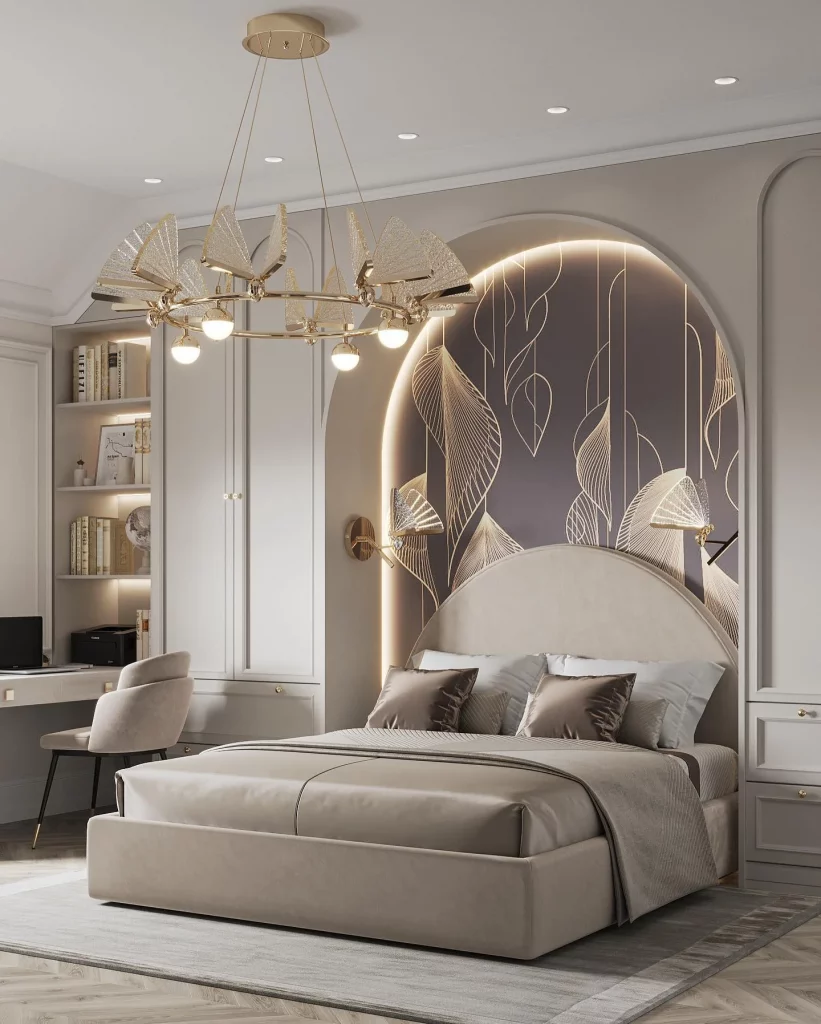
What makes this arrangement work for me is the way storage, work space, and sleeping space are integrated without visually competing with one another. The built-in cabinets provide a highly organized appearance, while the open shelves break up the cabinetry and give the room a place for books and small objects. The illuminated arch adds depth behind the bed, and the rounded furniture echoes its shape, creating a remarkably consistent visual rhythm.
I would take inspiration from this room if I wanted a bedroom that felt polished without relying on strong colors. The most effective detail is the repetition of soft curves: the bed, illuminated arch, chandelier elements, and even the chair contribute to a gentle flow. I would keep the surrounding palette restrained and allow one architectural feature, such as the illuminated wall panel, to become the defining personalized element.
Elegant Bedroom With Layered Wall Panels and Crystal Lighting
This bedroom takes a more formal approach, combining taupe upholstered wall panels with framed architectural detailing in a soft neutral room. The upholstered bed has a broad, low-profile frame, and champagne-colored pillows add warmth against the pale bedding. On the right, a black bedside cabinet provides contrast beneath an elaborate vertical wall light, while a rounded illuminated mirror sits above a small console. A large crystal chandelier stretches across the upper portion of the composition and reinforces the room’s refined atmosphere.
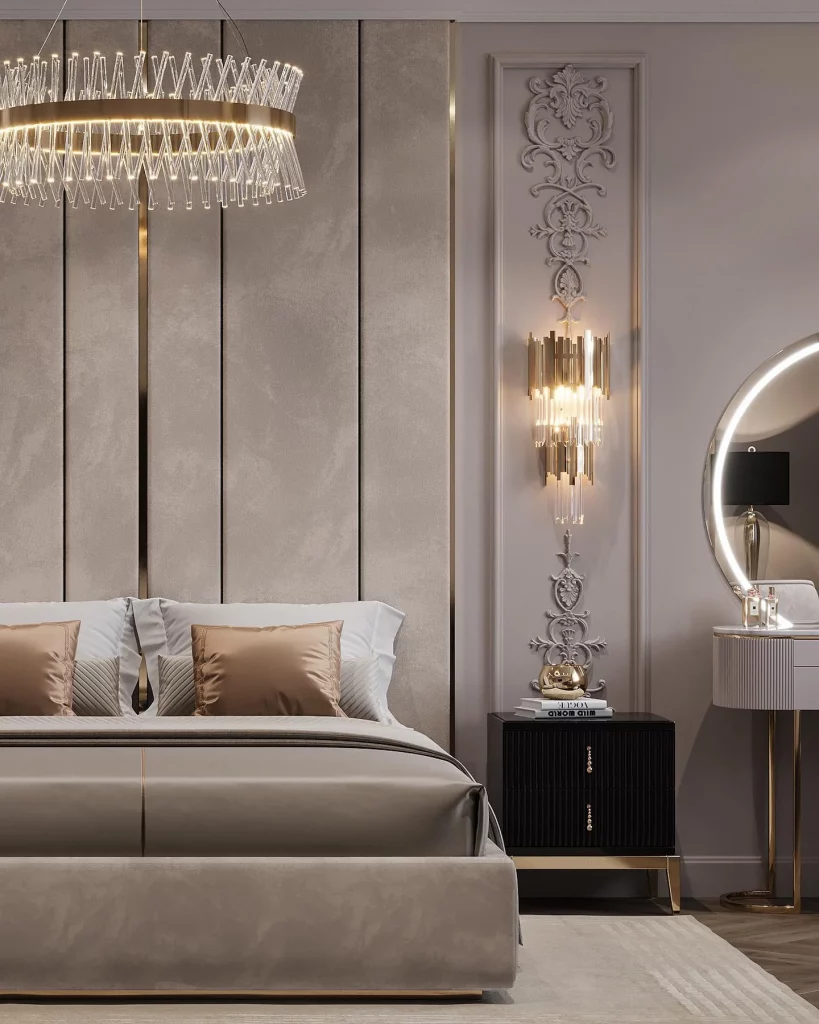
I like the balance between softness and structure here. The tall upholstered panels create a padded visual backdrop for the bed, while the decorative molding on the adjacent wall gives the space architectural definition. The dark bedside cabinet is particularly useful visually because it prevents the neutral palette from becoming too uniform, and the illuminated mirror adds another source of reflected light.
For a similar look, I would focus on layering rather than adding more individual decorations. A paneled wall, one substantial chandelier, coordinated bedside lighting, and a few carefully chosen textiles can already create a highly finished bedroom. The key is maintaining repetition in the finishes so that the different elements feel deliberately connected rather than randomly collected.
Colorful Bedroom With Tropical Pattern and Arched Details
This bedroom makes a completely different impression through its saturated mustard ceiling and trim, dark reddish-brown architectural lines, and large patterned wall behind the bed. The wallpaper is filled with layered leafy shapes in green, cream, and warm yellow tones. A black curved headboard contrasts strongly with the patterned backdrop, while mustard and deep blue bedding introduces additional color. Matching small round bedside tables sit on either side of the bed, and tall arched mirrored or paneled sections create symmetry.
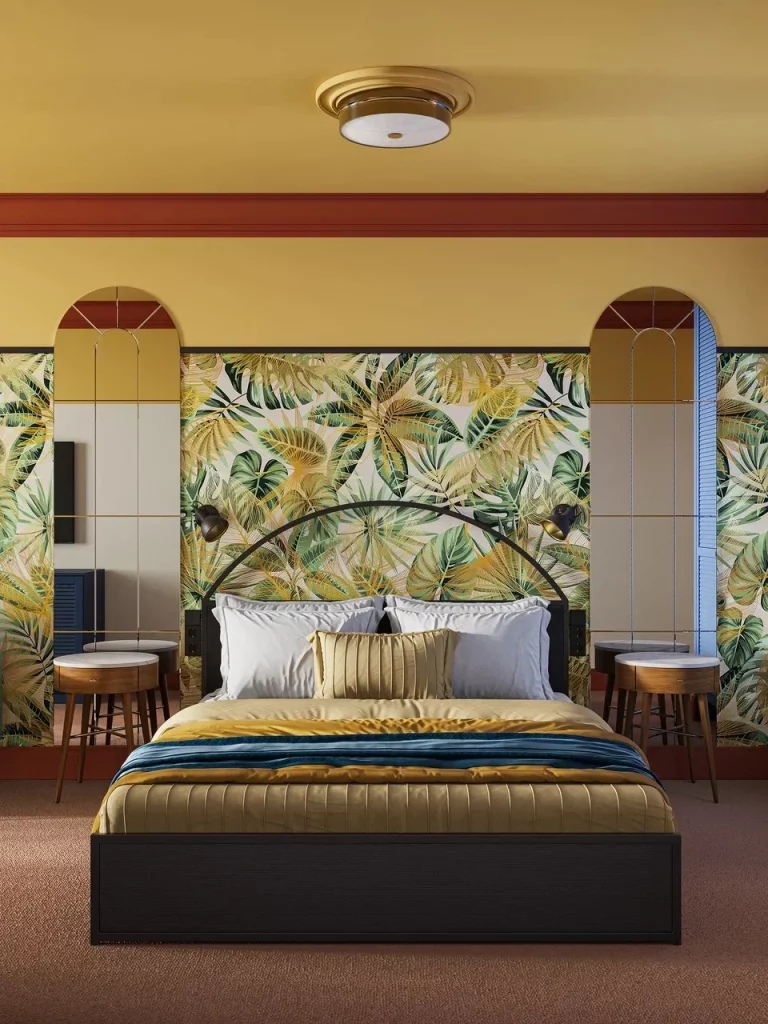
The strongest feature for me is the repetition of color throughout the room. The mustard ceiling relates directly to the bedding, while the deep blue blanket picks up one of the darker tones within the overall composition. The symmetrical bedside tables also make the bold wallpaper feel controlled rather than chaotic, giving the eye a stable structure around the bed.
I would use this approach when personalization means being unapologetically expressive. Instead of decorating every surface, I would choose one dominant pattern and then pull two or three colors from it for the bedding and architectural accents. That makes a highly individual bedroom feel intentional while allowing the statement wall to remain the visual center.
Serene Bedroom With Arched Backdrop and Butterfly Art
This bedroom has a light, airy character built around pale blue, white, and soft neutral tones. The bed features a vertically segmented upholstered headboard positioned within a large illuminated arch, while a collection of metallic butterfly forms spreads across the arched wall above it. Vertical wall detailing runs across the rest of the room, and pale blue curtains frame the window on the left. A crystal chandelier, glass-based table lamps, and a tufted bench at the foot of the bed add layers of texture and reflective detail.
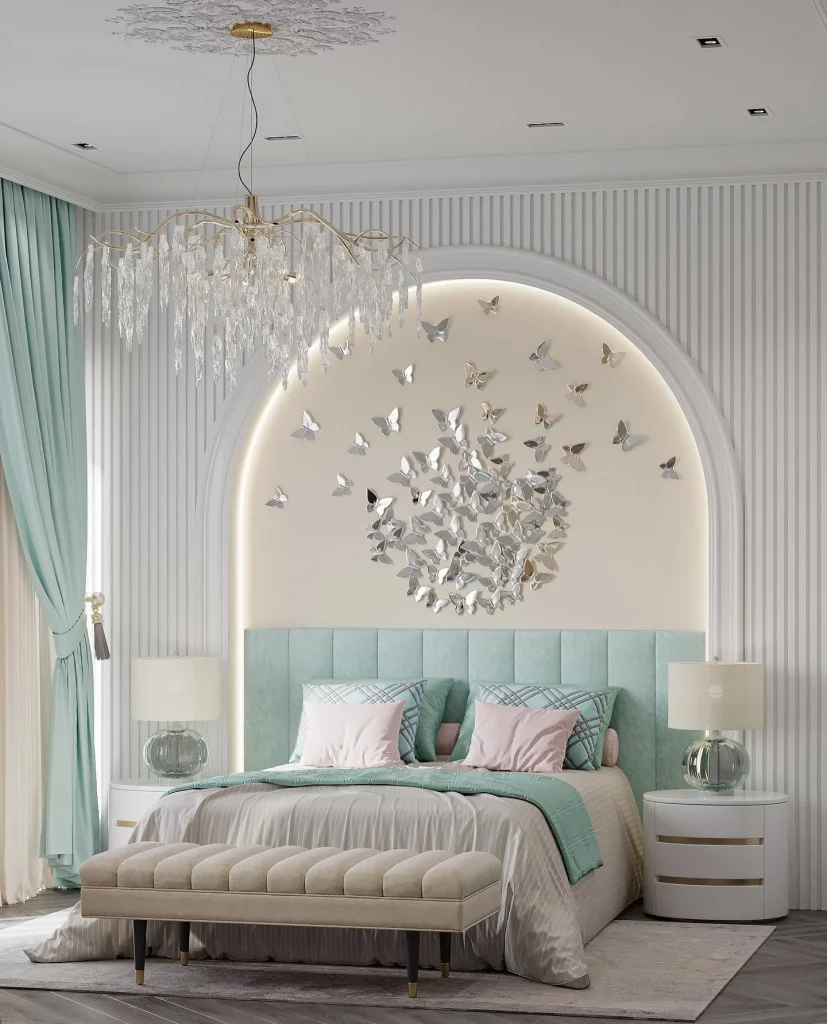
I find the symmetry particularly effective here. The matching round bedside tables and lamps establish a balanced frame around the bed, while the curved arch softens the strong vertical lines elsewhere in the room. The butterfly arrangement also gives the large empty wall a clear focal point without overwhelming the pale palette.
If I were recreating this feeling, I would begin with the architectural shape behind the bed and let the decorative element follow that shape. The lesson I take from this image is that personalization can come from a single recognizable motif repeated thoughtfully rather than from many unrelated accessories. Soft curtains and coordinated bedding would then reinforce the peaceful quality of the room.
Moody Charcoal Bedroom With Classic Decorative Detailing
This bedroom shifts into a dramatically darker palette, with charcoal walls, black furniture, deep navy bedding, and a pale upholstered bed providing contrast. Decorative molding frames the wall behind the bed, while a large crystal chandelier with black shades hangs beneath an ornate ceiling medallion. Tall layered curtains cover the large window, and matching bedside lamps reinforce the symmetry of the arrangement. The pale rug and light wood-toned flooring prevent the dark palette from making the room feel visually closed in.
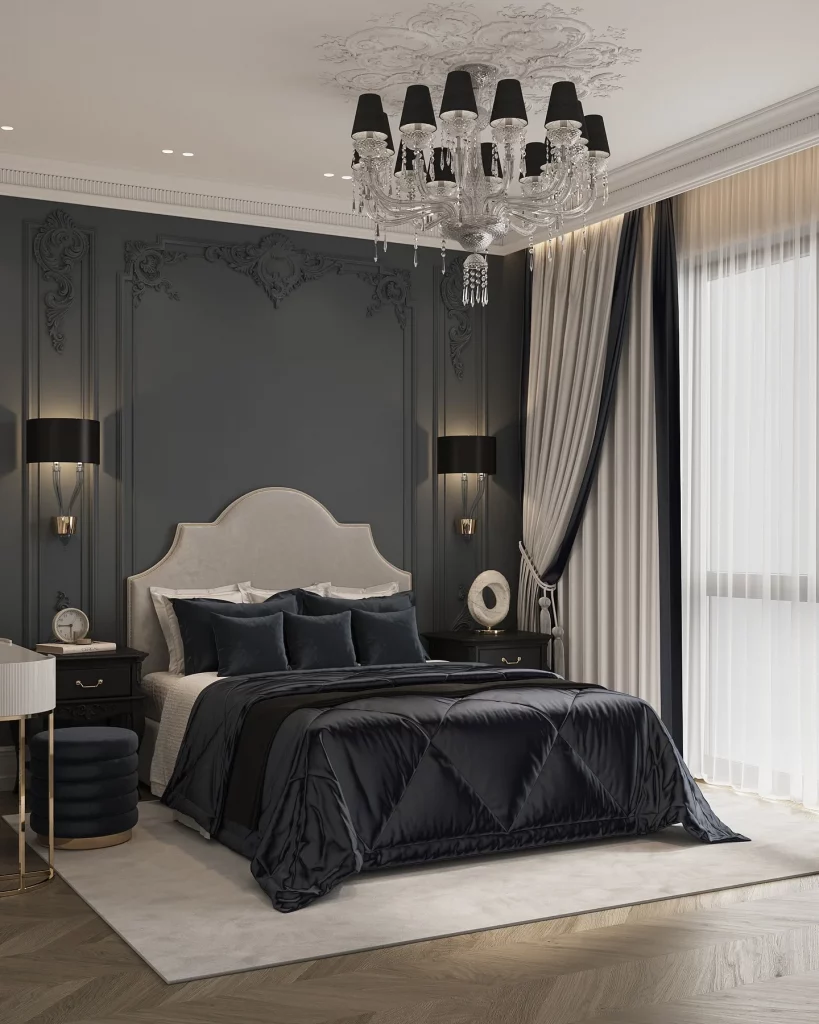
I like how carefully the contrast is distributed throughout this room. The light headboard stands out against the dark wall, while the pale rug creates another visual break between the dark furniture and the floor. Matching bedside tables and lamps give the composition order, allowing the rich bedding and charcoal walls to feel intentional rather than heavy.
For me, this is a good example of how a dark bedroom can remain elegant when its proportions are balanced with lighter surfaces. I would concentrate the deepest colors around the walls, furniture, and textiles while preserving enough pale upholstery, flooring, or window light to keep the room visually open. The decorative molding also shows how architectural details can become part of the personality of a bedroom.
Contemporary Neutral Bedroom With Statement Lounge Chair
This bedroom combines pale upholstered furniture with warm gray paneled walls and a sculptural chandelier made from repeated translucent leaf-like pieces. The bed has a softly curved upholstered headboard and matching base, while a dark wood console and rounded mirror occupy the wall opposite the window. In the foreground, a distinctive brown-and-cream lounge chair introduces a stronger color and pattern contrast. The herringbone floor adds another layer of visual texture beneath a large pale area rug.
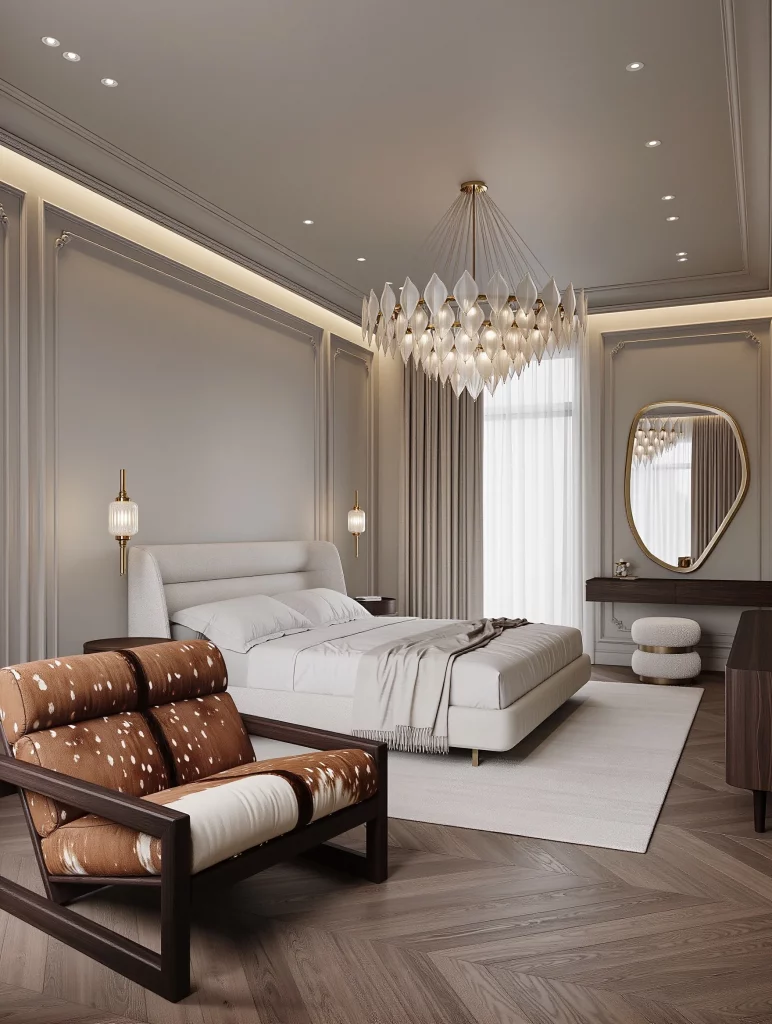
What I find especially successful is the way the room uses one strong accent chair without turning the entire space colorful. The bed and walls remain quiet, so the patterned chair becomes an identifiable personality marker. The chandelier adds visual interest overhead, while the simple bedding keeps attention on the furniture silhouettes and architectural paneling.
I would use this idea in a bedroom where I wanted personality without changing the entire color scheme. A single memorable chair can tell the viewer a lot about the person who lives there, especially when the rest of the room provides a restrained background. I would also repeat one material or finish from the chair elsewhere if possible, keeping the connection subtle rather than overly coordinated.
Deep Blue Bedroom With Oversized Floral Artwork
This bedroom is much more expressive, pairing a deep blue upholstered bed with a large painting of pink, white, and blue flowers. The artwork is positioned within a softly illuminated recessed wall feature, with slim gold-toned wall lights placed symmetrically on both sides. Matching rounded bedside tables and glass globe lamps flank the bed, while rich blue curtains continue the color of the upholstery. A sculptural white chair with blue detailing sits at the side, and the patterned wood floor adds warmth underneath.
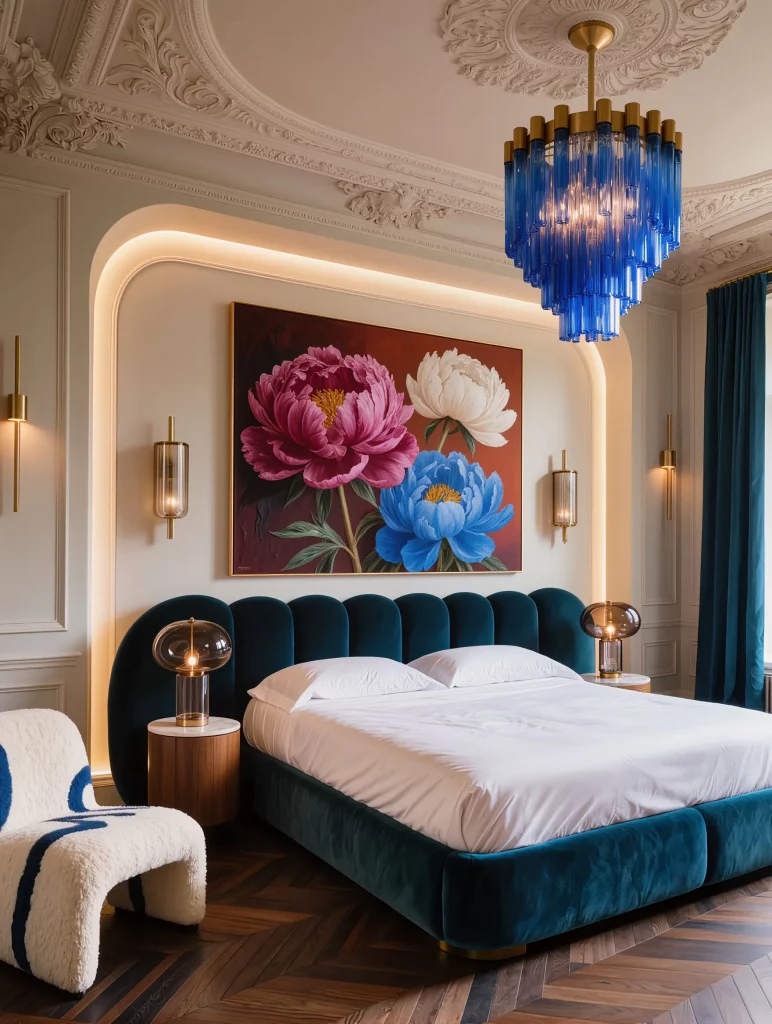
The room works because the large artwork and bed clearly communicate with one another. The blue from the painting appears again in the upholstery and curtains, while the warm gold details provide a refined contrast. I also like the rounded forms of the bed, bedside tables, and lamps because they soften the stronger color contrasts and keep the room comfortable-looking.
This is the kind of bedroom I would choose as inspiration for a highly personalized space because the artwork becomes part of the room’s identity. Rather than treating wall art as an afterthought, I would select one substantial piece first and build the surrounding colors around it. That approach can make the bedroom feel much more individual while keeping the overall design cohesive.
Warm Neutral Bedroom With Dramatic Butterfly Artwork
This bedroom creates a warm, intimate atmosphere through layers of beige, cream, and soft brown. The upholstered bed has a vertically channeled headboard, while a large artwork featuring a sculptural butterfly in white and gold dominates the wall above it. A wide crystal chandelier hangs from an illuminated tray ceiling, and tall glass-and-metal wall lights provide additional illumination on either side. Built-in shelving is visible to the right, while matching bedside tables frame the bed.
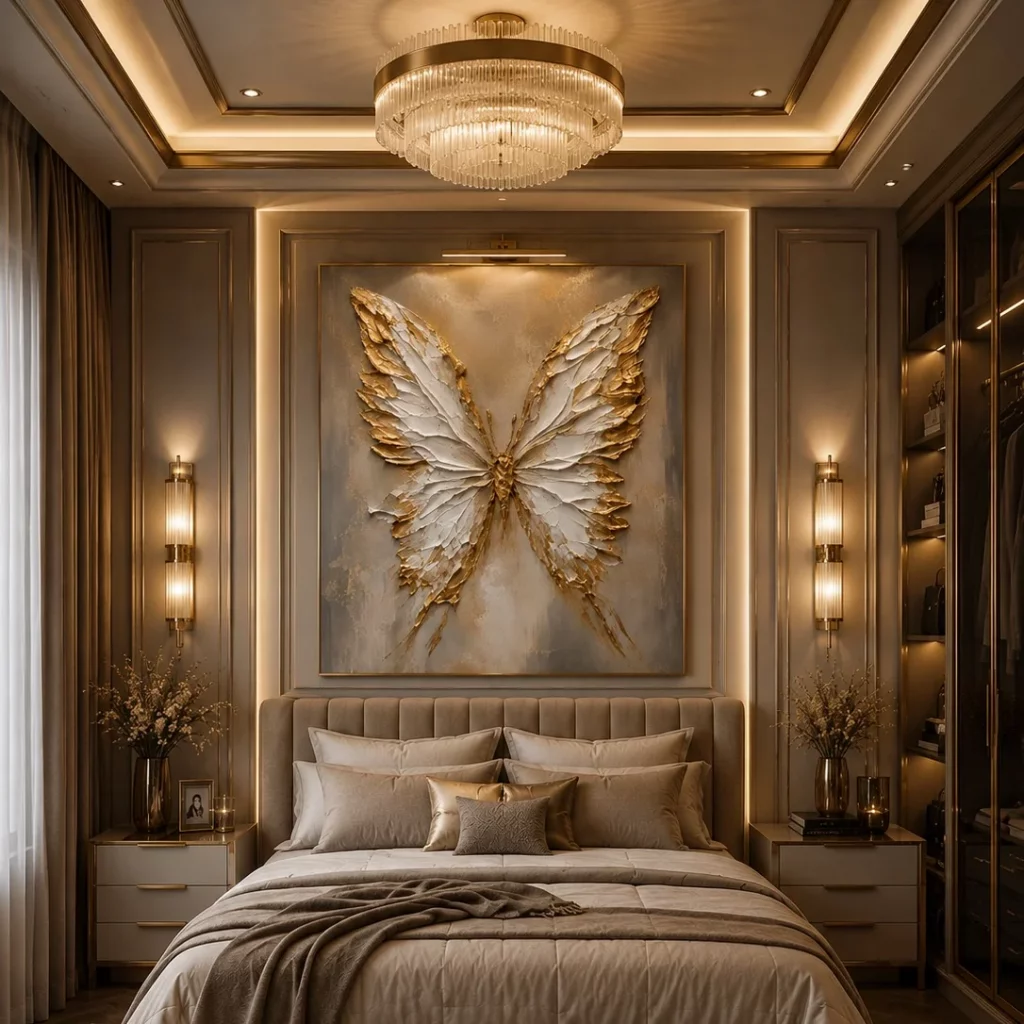
I like the restrained color palette because it allows the butterfly artwork to remain the obvious focal point. The repeated gold accents appear in the artwork, lighting, and small furniture details, creating continuity throughout the room. At the same time, the built-in shelving makes practical use of the wall beside the bed and adds a sense of permanence to the layout.
For a similar bedroom, I would prioritize one oversized piece of artwork rather than filling the wall with multiple smaller pieces. The image shows how a single motif can establish a strong personal identity when it is supported by compatible lighting and furniture. Keeping the surrounding colors close in tone would also help the artwork remain visually powerful without making the room feel crowded.
Monochromatic Bedroom With Sculptural Floral Portrait
This bedroom is built almost entirely around soft cream and beige tones, creating a very calm monochromatic composition. A large sculptural portrait of a woman surrounded by oversized flowers occupies the wall above the upholstered bed and serves as the central decorative statement. Slim pendant lights hang beside the bed, while simple white bedside cabinets provide storage. A tall textured vase with delicate branches sits on the right, and subtle perimeter lighting emphasizes the artwork and the wall behind it.
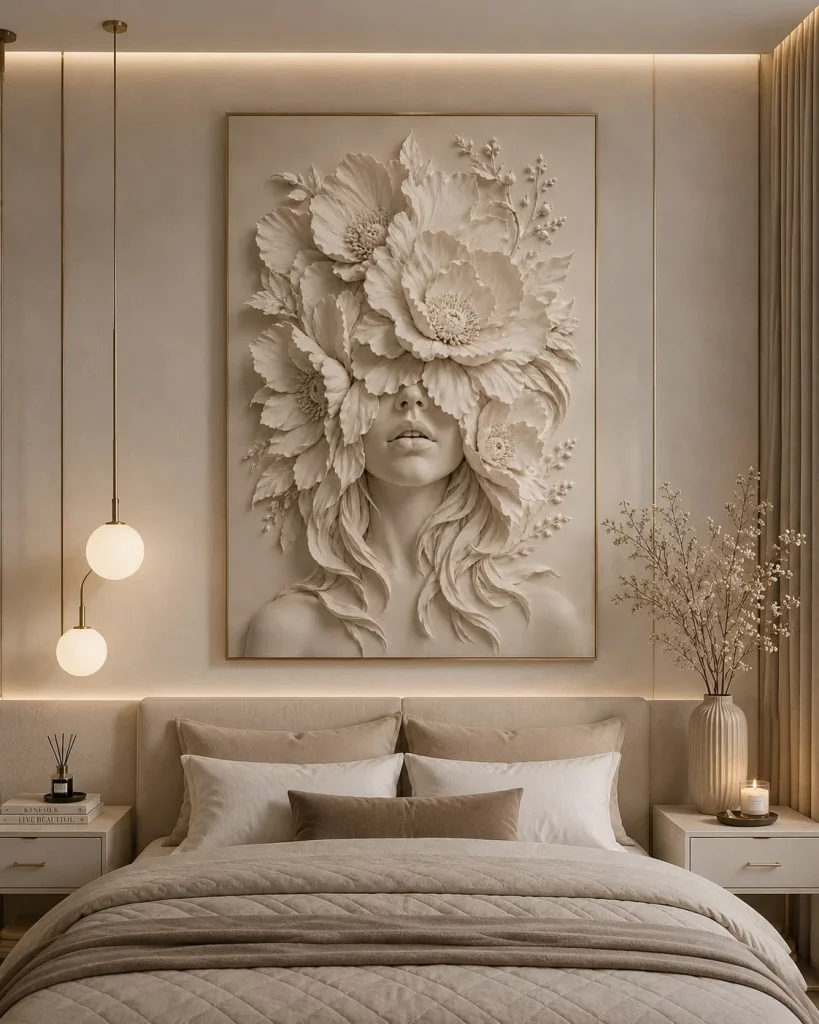
I find the oversized artwork especially effective because the rest of the room is intentionally quiet. The bed, bedding, nightstands, and walls all stay within a closely related palette, so the sculptural portrait becomes the defining feature without requiring strong color. The pendant lights also preserve the clean composition by providing illumination without visually filling the bedside area.
This image reminds me that personalization does not always require bold color. A meaningful or distinctive artwork choice can completely change the character of an otherwise restrained bedroom. I would keep the furniture simple in a room like this and use lighting to emphasize the artwork, as the image demonstrates particularly well.
Contemporary Bedroom With Clustered Glass Pendant Lights
The final bedroom combines a soft upholstered bed with a tall segmented headboard, warm neutral walls, dark wood paneling, and a striking cluster of glossy black spherical pendant lights. The pendants hang at different heights above the bed, creating a sculptural centerpiece. A long upholstered bench sits at the foot of the bed, while dark bedside tables and a large wall mirror continue the contemporary look. On the left, a tall black pedestal supports a large arrangement, and the herringbone wood floor adds warmth beneath the pale area rug.
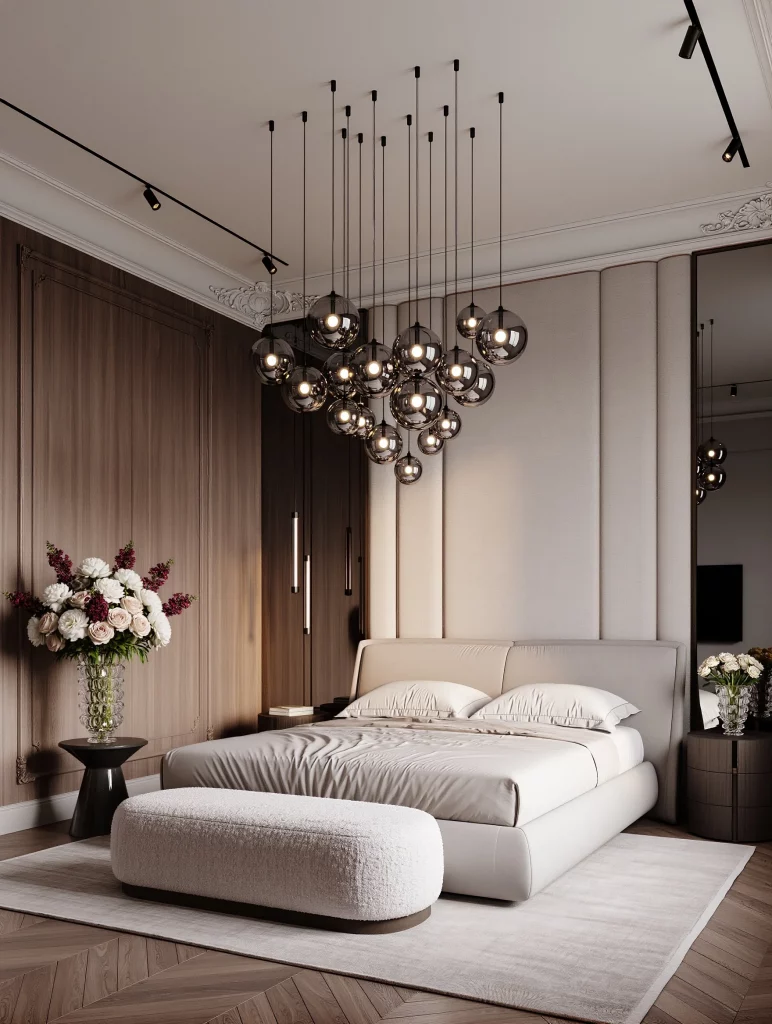
What works particularly well for me is the contrast between the soft upholstered surfaces and the hard, reflective appearance of the pendant lights. The dark wood wall provides another strong counterpoint to the pale bed, while the large mirror visually expands the composition and reflects the lighting. The bench also adds useful seating without disturbing the clean proportions of the bed area.
If I were personalizing a bedroom in this direction, I would start with the lighting because it is clearly the feature that gives this room its strongest identity. A cluster of pendants can act almost like functional sculpture, especially when the surrounding furniture remains relatively simple. I would then use the same balance of pale upholstery, dark accents, and warm wood to create a bedroom that feels contemporary but still comfortable.
Moody Plum Bedroom With Sculptural Crystal Lighting
The first bedroom immediately catches my attention with its deep plum-colored paneled walls, warm taupe ceiling, and striking crystal chandelier suspended dramatically above the bed. The upholstered bed has a soft brown finish and a tall, gently curved headboard, while crisp white bedding creates contrast against the darker surroundings. A large abstract artwork introduces black, burgundy, cream, and blue accents, and matching wall sconces add another layer of soft illumination. I also love the patterned upholstered bench at the foot of the bed and the chevron-patterned flooring, which give the room a sophisticated, layered appearance.
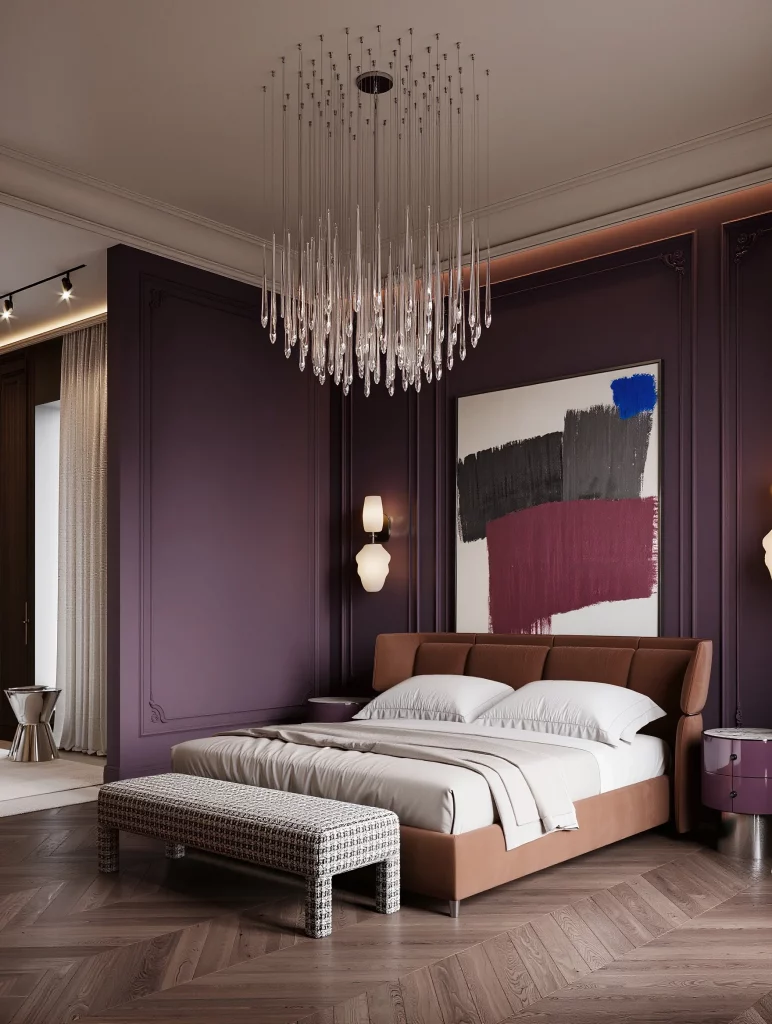
For me, the success of this room comes from the balance between a dark wall color and lighter bedding. The bed remains the visual center because the white sheets stand out clearly against the surrounding plum panels. The chandelier draws the eye upward and makes use of the room’s generous ceiling height, while the bench provides a practical place to sit without visually competing with the bed.
If I were recreating this atmosphere, I would begin with one strong wall color and allow the furnishings to remain relatively restrained. The artwork could then provide a secondary color story without requiring numerous decorative accessories. I think the lighting is particularly important here: combining the central chandelier with wall sconces creates depth and prevents the dark palette from feeling flat.
Soft Gray Bedroom With an Elegant Arched Headboard Wall
This bedroom takes a completely different approach, surrounding the bed with a large architectural arch that frames a delicate branch-patterned wall treatment. The upholstered gray headboard has a curved, button-tufted silhouette, while the matching bedding continues the soft neutral palette. Two white nightstands with decorative details sit symmetrically beside the bed, each topped with a classic table lamp. A crystal chandelier hangs centrally overhead, and long gray curtains frame the window on the left. I find the upholstered bench with its curved legs especially effective at the foot of the bed because it reinforces the room’s graceful shapes.
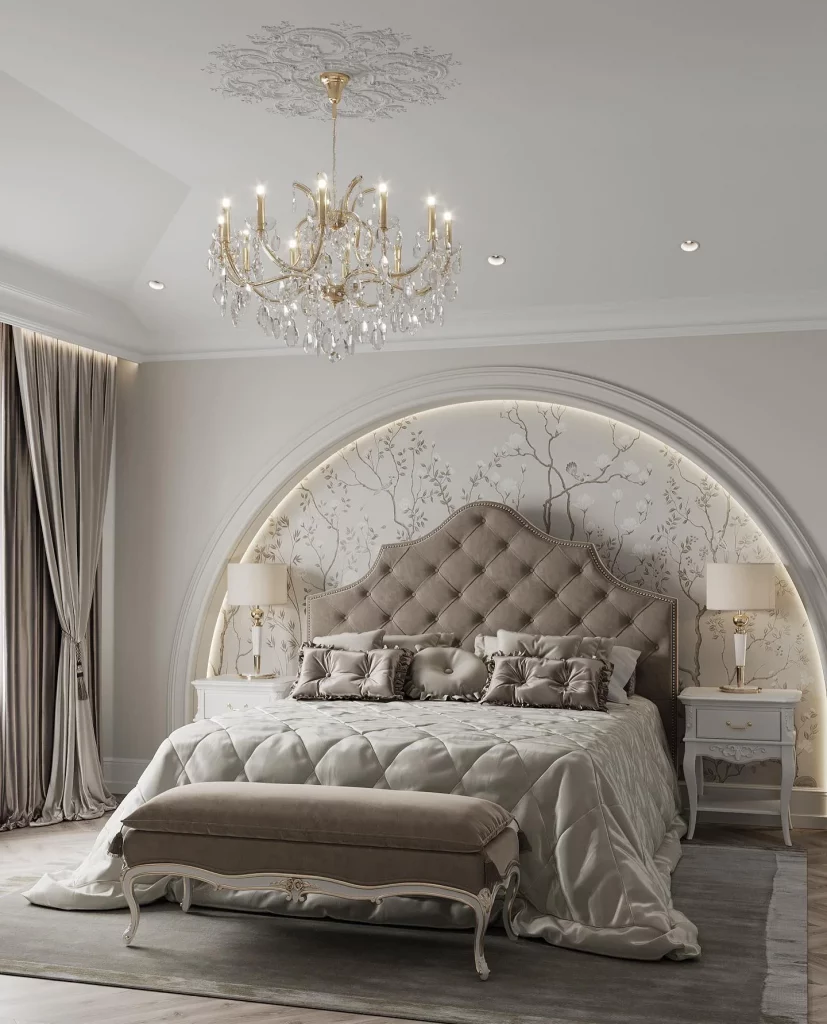
The symmetrical arrangement makes this bedroom feel particularly organized and restful. The two matching lamps, nightstands, and pillows create visual balance, while the large arch establishes a clear focal point behind the bed. The quilted bedding adds texture without introducing a competing color, allowing the architectural framing and headboard to remain the main features.
I would use this idea when I wanted to give a bedroom a strong sense of structure without filling the space with accessories. The key lesson I take from this photograph is that one carefully designed wall can provide much of the room’s personality. Keeping the surrounding furniture coordinated allows the decorative arch and headboard to receive the attention they deserve.
Warm Contemporary Bedroom With Olive Green Accents
The third bedroom feels much more relaxed, with a softly upholstered cream-colored bed positioned against a wall that combines pale paneling with narrow dark vertical elements. A large abstract artwork hangs above the bed, introducing muted green, cream, gray, and darker tones. The bedding layers a textured neutral cover with several pillows and an olive green throw, while a sculptural glass chandelier provides a distinctive focal point overhead. Tall curtains cover the large window, and a small round table sits near the window beside the bed. I particularly like the way the herringbone floor adds subtle pattern beneath the otherwise calm palette.
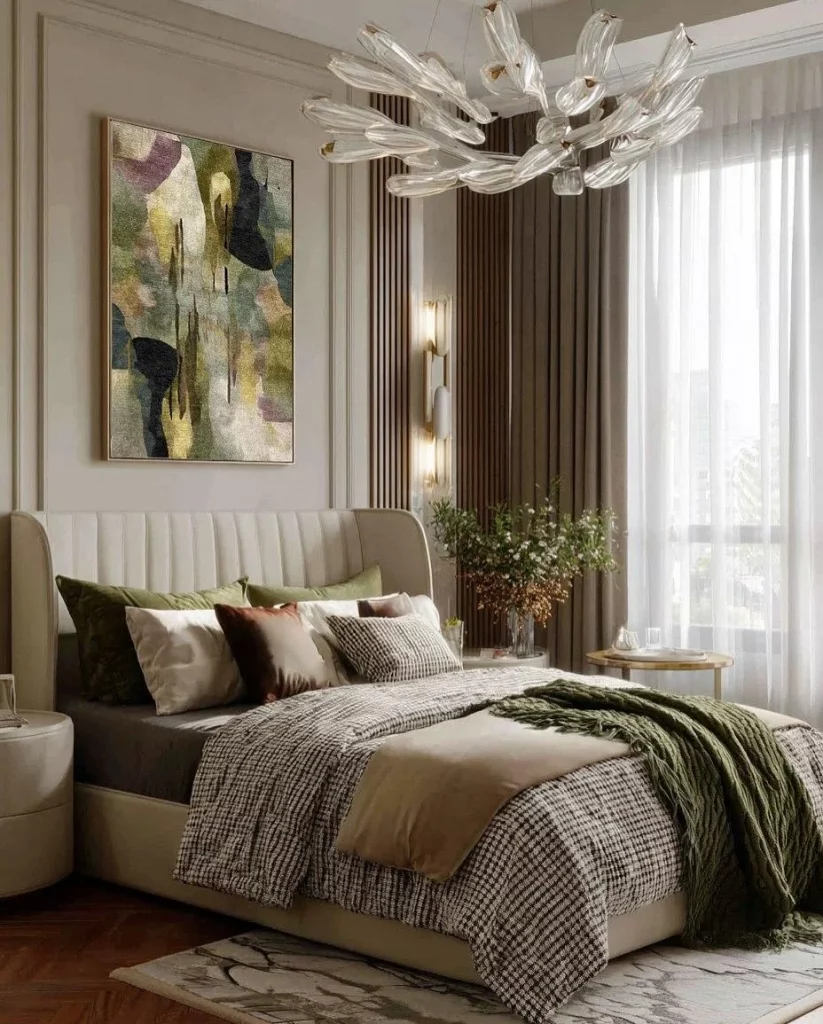
What works here is the controlled use of contrast. The room does not depend on many strong colors; instead, the olive accents in the pillows and throw connect naturally with the artwork. The vertical wall detailing adds architectural interest behind the bed, while the large window supplies abundant natural light. The arrangement also leaves enough open floor area around the bed to keep the room comfortable rather than crowded.
For my own version of this look, I would choose a neutral upholstered bed first and then repeat one muted accent color in two or three places. The artwork would become the reference point for those accents. I think this approach is particularly useful when personalizing a bedroom because a favorite color can be introduced through removable textiles rather than becoming a permanent feature of the entire room.
Modern Bedroom With Mirrored Wardrobe Doors and Sculptural Lighting
This bedroom combines contemporary furniture with decorative architectural details in a particularly polished way. The white upholstered bed has a rounded base and a tall channel-style headboard, while a large mirrored wardrobe occupies much of the wall opposite or beside the bed. A dramatic chandelier with multiple white textured shades hangs over the room, and a modern linear track light runs across the ceiling. The bedding uses white, taupe, and dusty burgundy tones, while an abstract area rug repeats burgundy, mauve, cream, and darker shades in an irregular pattern. A person in a long burgundy dress is visible at the right side, adding an unexpected human element to the composition.
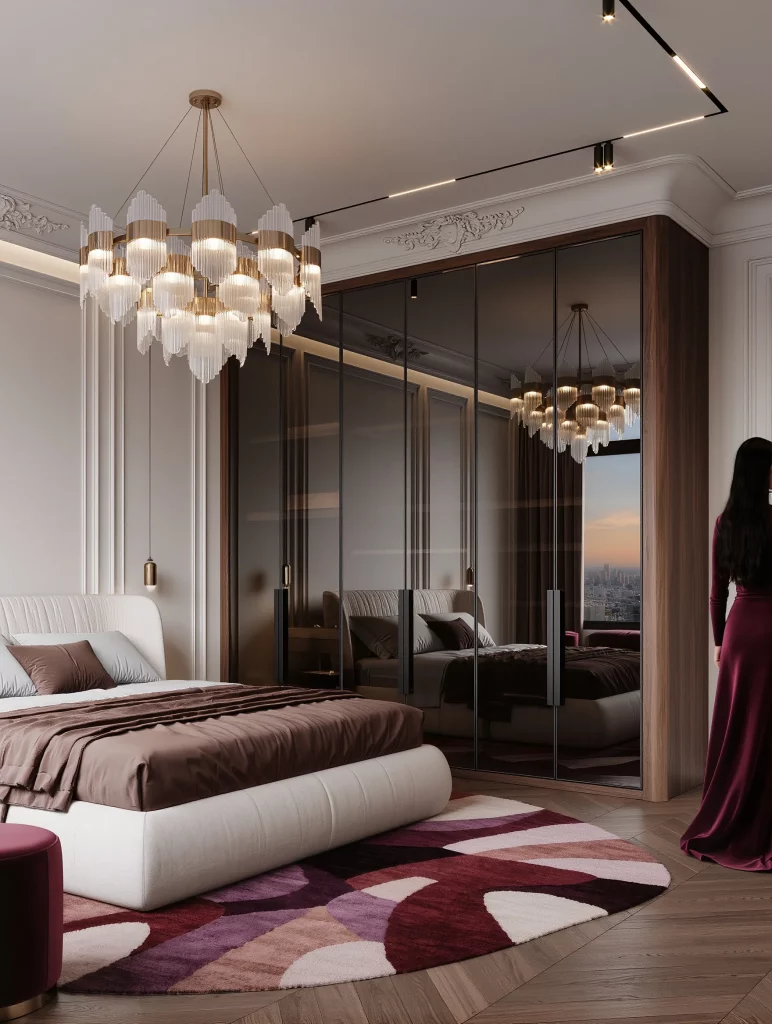
The mirrored wardrobe is one of the most practical features I notice because it visually expands the room while providing a substantial storage surface. The rounded bed introduces softness against the straight wardrobe panels, and the unusual rug gives the neutral furniture a stronger personality. I also like how the burgundy bedding connects visually with the rug and the dress shown in the photograph.
I would take inspiration from the way this room mixes curved and linear forms. Instead of making every piece match, I would combine a rounded bed or upholstered element with more structured cabinetry or wall details. Keeping one accent color repeated across textiles and artwork is another simple way I would personalize the space without overwhelming it.
Warm Wood Bedroom Framed by a Garden View
This bedroom has a noticeably warmer and more natural visual character, with horizontal wood wall boards, exposed ceiling beams, and large windows overlooking mature trees and a lawn. The substantial upholstered bed has a tall gray headboard, while the bedding is layered in cream, beige, and gray tones. A wooden nightstand sits beside the bed, and several fabric-shaded lights provide warm illumination. Near the windows, an upholstered armchair creates a small sitting area, while a large geometric-patterned rug covers much of the floor. I find the combination of wood, soft textiles, and the outdoor view especially inviting.
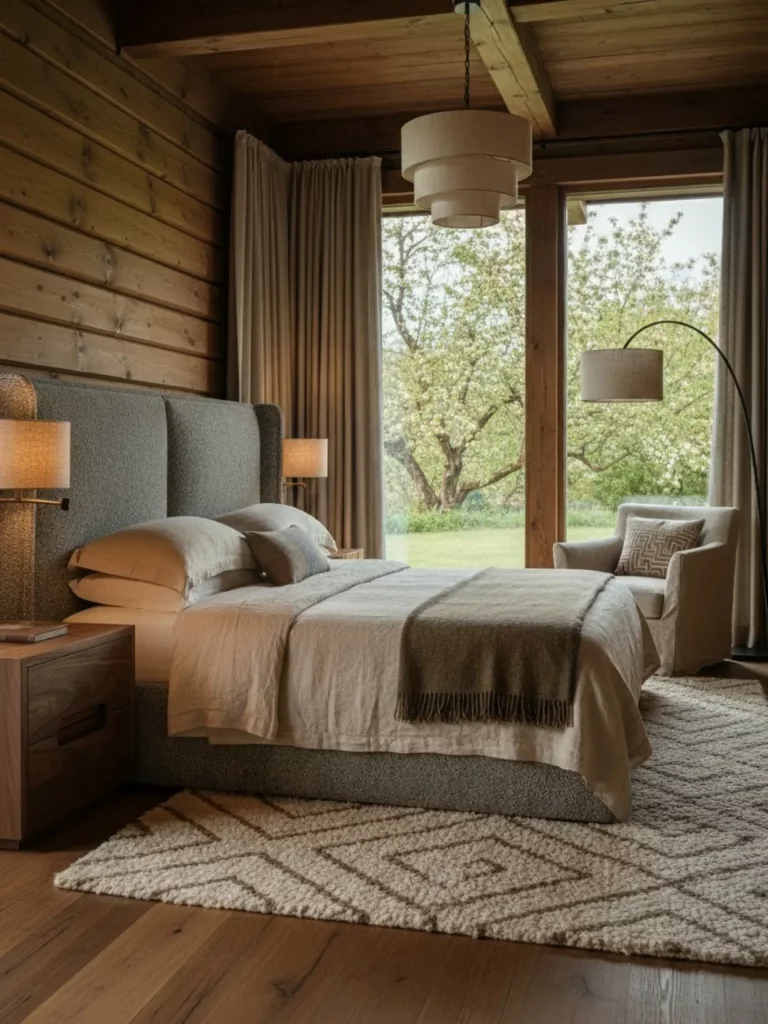
The furniture arrangement makes excellent use of the room’s relationship with the windows. The bed remains the primary focal point, but the chair near the glass creates another functional area without requiring much furniture. The neutral textiles soften the stronger wood surfaces, while the patterned rug adds visual definition beneath the bed and chair.
Personally, I would preserve the simplicity of this composition rather than adding many accessories. The view outside already contributes significant visual interest, so I would allow the windows to remain important. If I wanted to personalize the room further, I would work through bedding, a throw, or a small number of carefully chosen objects rather than covering the walls or surfaces.
Contemporary Neutral Bedroom With Oversized Botanical Artwork
The sixth bedroom is built around a large botanical artwork placed directly above a broad upholstered headboard. The image uses an elegant combination of beige, taupe, dark brown, and muted green, with the artwork introducing large leaves and pale blossoms as its main decorative statement. Matching bedside tables sit on either side of the bed, each accompanied by a substantial table lamp and small decorative arrangements. Floor-to-ceiling curtains frame the window on the left, while narrow vertical wall details add dimension behind the bed. The dark green bed runner and coordinated pillows provide the strongest color contrast in the room.
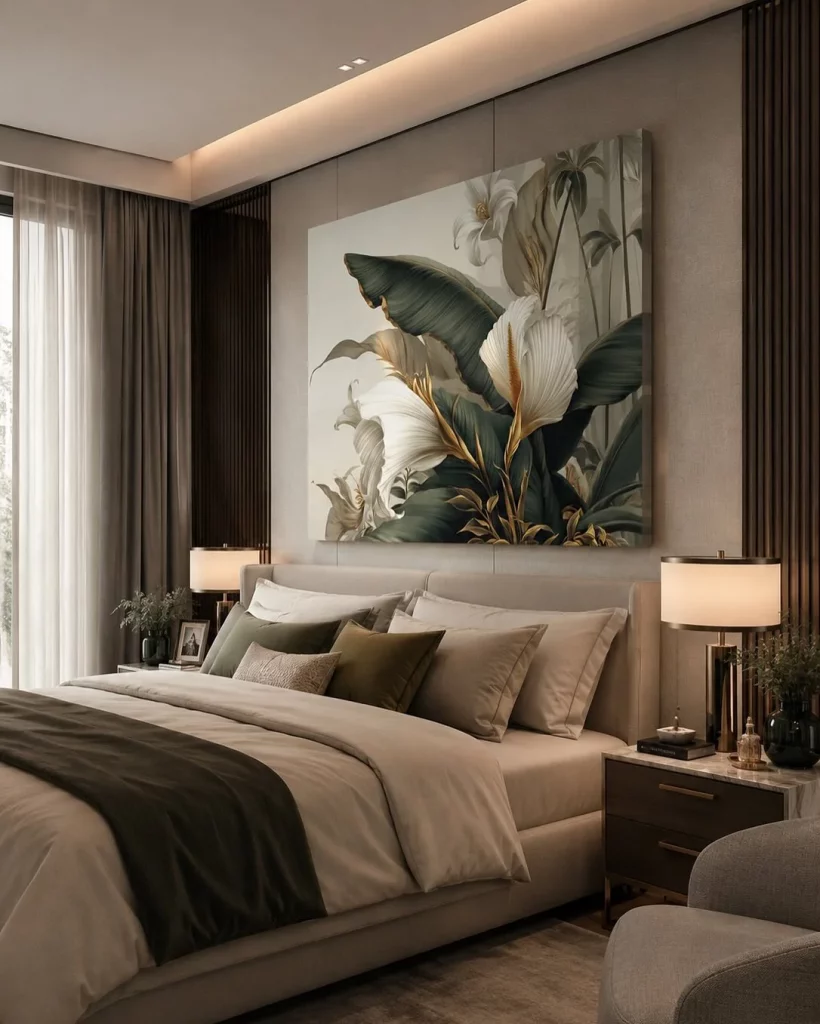
I like how the oversized artwork gives the entire bedroom a recognizable identity without requiring numerous separate decorative pieces. The bed, nightstands, and lamps form a strong horizontal composition beneath it, while the dark runner visually anchors the lighter bedding. The arrangement also demonstrates how repeating a color from artwork in the textiles can make a room feel intentionally coordinated.
When personalizing a bedroom, I often think a single large artwork can be more effective than many small pieces. In this room, the botanical image determines the green and neutral palette almost effortlessly. I would choose artwork that genuinely reflects my taste and then pull one or two subtle colors from it for pillows, throws, or other visible textiles.
Dark Bedroom With Dramatic Moonlit Artwork
This bedroom embraces a much darker and more intimate mood, with charcoal walls, a black upholstered bed, and deep bedding layered with warm brown and gold-toned accents. Centered above the headboard is a large artwork depicting a dark female silhouette against a glowing golden moon, surrounded by delicate golden details. Slim pendant lights hang on either side of the bed, while warm integrated lighting runs along the upper edges of the wall. A dark round ottoman or table occupies the foreground, and a glass-fronted wardrobe or dressing area is visible on the right.
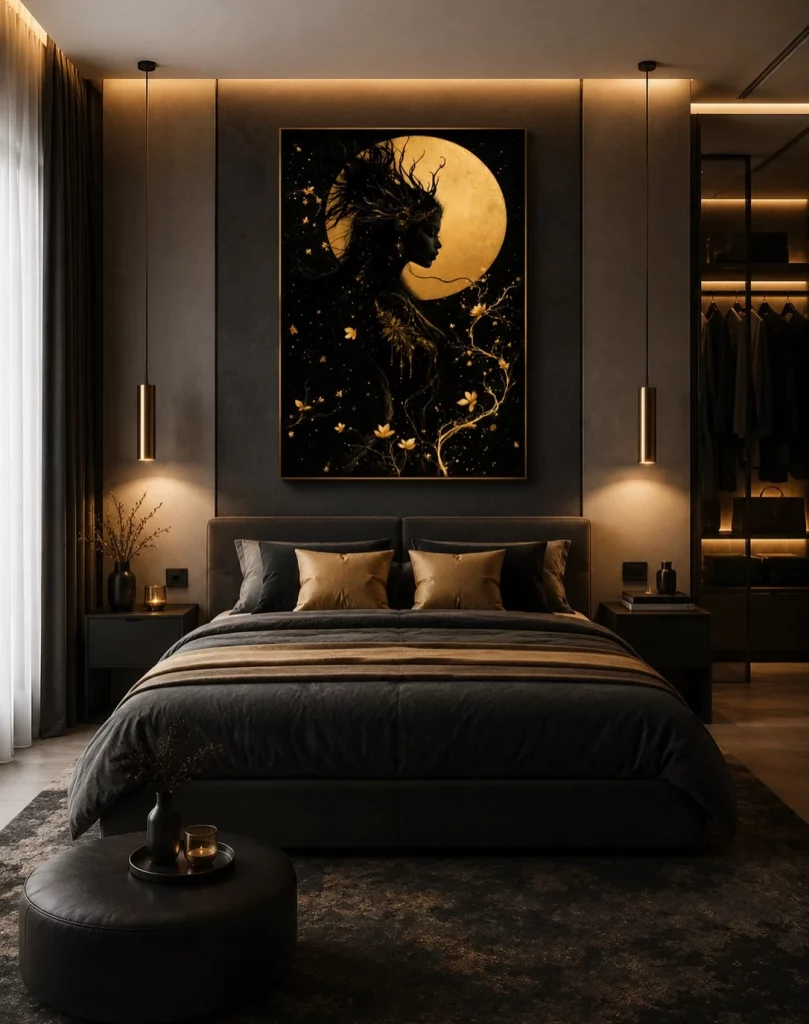
The room works because nearly every element supports the same atmospheric palette. The golden artwork becomes especially powerful against the dark wall, while the warm lighting repeats the artwork’s golden tones. The symmetrical pendant lights also frame the bed without adding bulky bedside fixtures, keeping the composition clean and visually focused.
I would use this photograph as inspiration for anyone who wants a bedroom to feel more intimate without relying on excessive decoration. A dark wall treatment, one expressive piece of art, and carefully positioned warm lighting can create a strong mood on their own. The important part, in my view, is to keep the number of competing focal points low so that the main artwork remains memorable.
Serene Neutral Bedroom With Japanese-Inspired Architectural Details
The eighth bedroom has a light, peaceful palette of white, cream, pale gray, and natural brown. Behind the bed, a grid-like wall treatment creates a structured backdrop, while a large circular artwork displays a black-and-white landscape image. The bed has a softly upholstered headboard and simple white bedding, accompanied by a long patterned cushion and a dark throw. A large rounded mirror appears along the left wall, and a sculptural pendant hangs above the bed. In the foreground, a curved upholstered bench with dark vertical detailing creates a strong contrast against the pale rug.
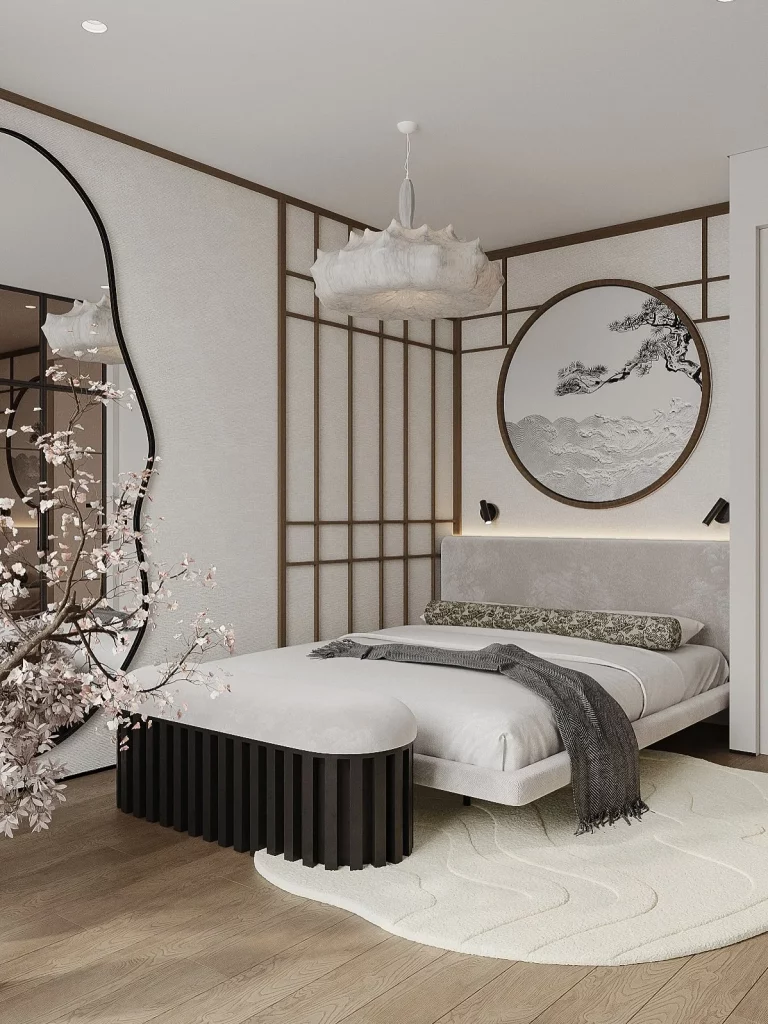
The room feels spacious because the palette remains restrained and the furniture has generous breathing room around it. I particularly like the contrast between the soft curves of the mirror, pendant, bench, and bed and the strict geometry of the wall grid. The circular artwork also breaks up the straight lines and gives the wall an obvious focal point.
For me, this photograph demonstrates how personalization can come from shapes as much as from colors. If I wanted a similarly calm bedroom, I would look for one or two distinctive curved pieces and combine them with a more structured architectural backdrop. The restrained color scheme would then allow those silhouettes to become the defining features.
Minimal Bedroom With Illuminated Landscape Artwork
This bedroom uses a simple contemporary layout centered on a large illuminated landscape image above the bed. The artwork stretches across most of the wall and depicts a softly colored landscape with trees and distant architectural forms. Below it, a wood-toned horizontal headboard wall extends behind the bed, with small dark reading lights positioned on either side. The bed itself has a pale upholstered frame and white bedding, while an olive green coverlet adds a muted accent. Matching low nightstands extend outward from the bed, and full-height curtains occupy the right side of the room.
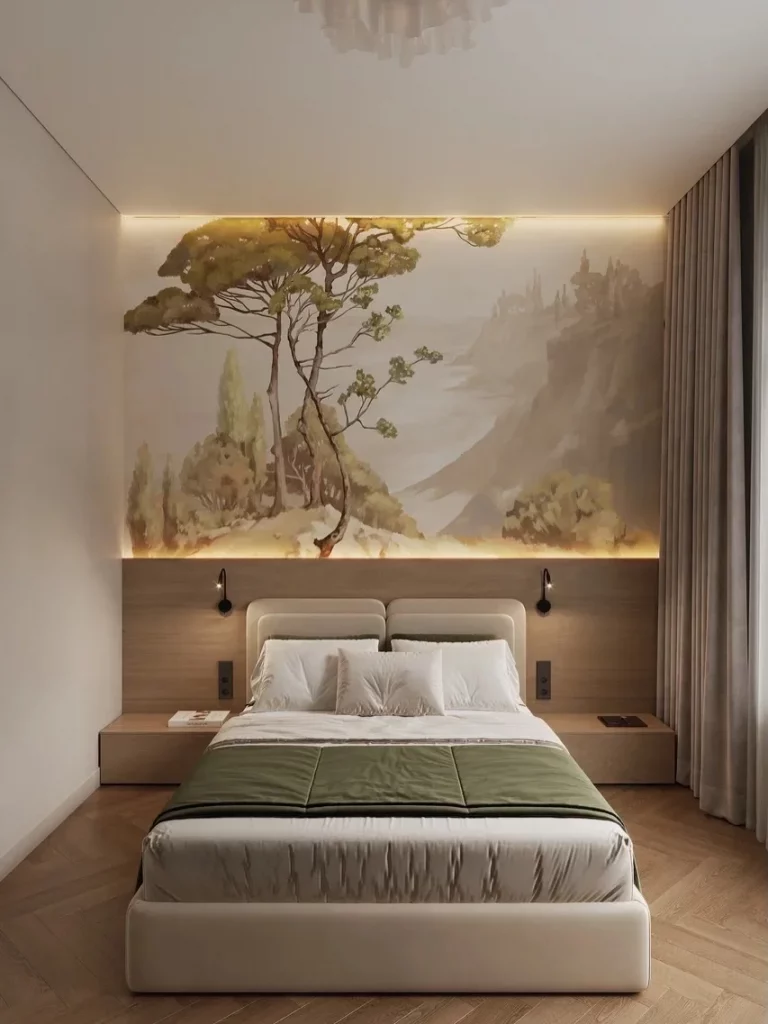
The integrated nightstands are one of the details I find most practical because they create a streamlined arrangement without visually separating the bed from the wall. The illuminated artwork adds depth and a soft glow behind the bed, while the restrained bedding keeps the room from becoming visually busy. The olive coverlet also provides just enough color to keep the otherwise neutral composition from feeling one-dimensional.
I would recreate this concept by treating the wall behind the bed as one connected composition rather than a collection of separate objects. A large artwork can define the room’s character, while integrated lighting can make it especially effective in the evening. I would keep the surrounding furniture simple so that the illuminated image remains the primary feature.
Blue and Burgundy Bedroom With Statement Horse Artwork
The final bedroom combines pale blue paneled walls with a rich burgundy upholstered bed and matching accents. A large artwork featuring a white horse dominates the wall behind the headboard, incorporating flowing blue, white, and warm reddish-brown forms. The bed has a tall channel-tufted blue headboard and a burgundy upholstered base, while the bedding remains crisp white with a burgundy throw. A crystal-style linear chandelier hangs above the bed, and slim wall sconces add additional lighting. A sculptural upholstered bench sits at the foot of the bed, complemented by a small metallic side table.
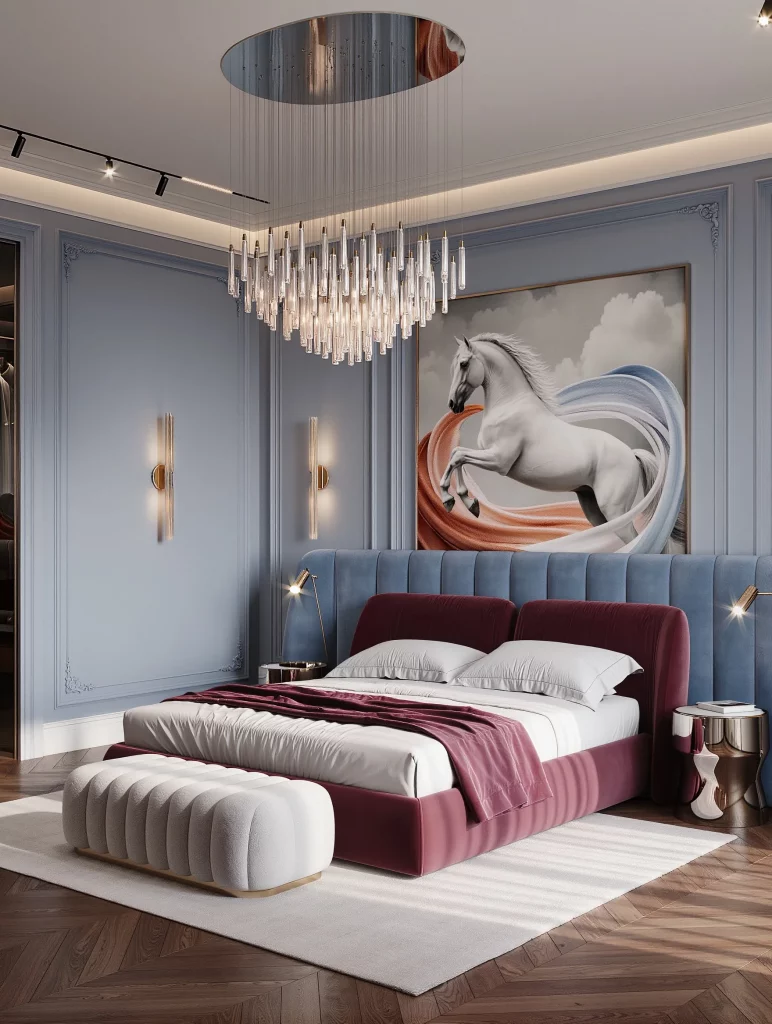
What makes this room memorable to me is the way the artwork establishes the color relationship for the entire space. The pale blue walls echo the cool tones in the artwork, while the burgundy bed and throw pick up its warmer accents. The repeated vertical lines in the headboard and wall panels also create a sense of rhythm, while the rounded bench provides a softer counterpoint.
I would approach a personalized bedroom in this way when I wanted a favorite artwork to become the foundation of the design. Instead of choosing furniture independently, I would identify two or three colors from the artwork and repeat them selectively. This creates a room that feels personal and coordinated while still leaving the artwork as the main expression of personality.
Black Geometric Accent Wall With Warm Integrated Lighting
I immediately notice the dramatic black geometric wall behind the bed, made from large irregular panels outlined with warm integrated lighting. The upholstered gray bed has a broad headboard and a low platform base with subtle illumination underneath, while navy bedding introduces a restrained color accent against the darker surroundings. Above the bed, three suspended circular pendant lights create a sculptural focal point, complemented by slim linear ceiling lighting. Black bedside tables, small directional lamps, gray carpeting, and neutral curtains complete the sophisticated bedroom.
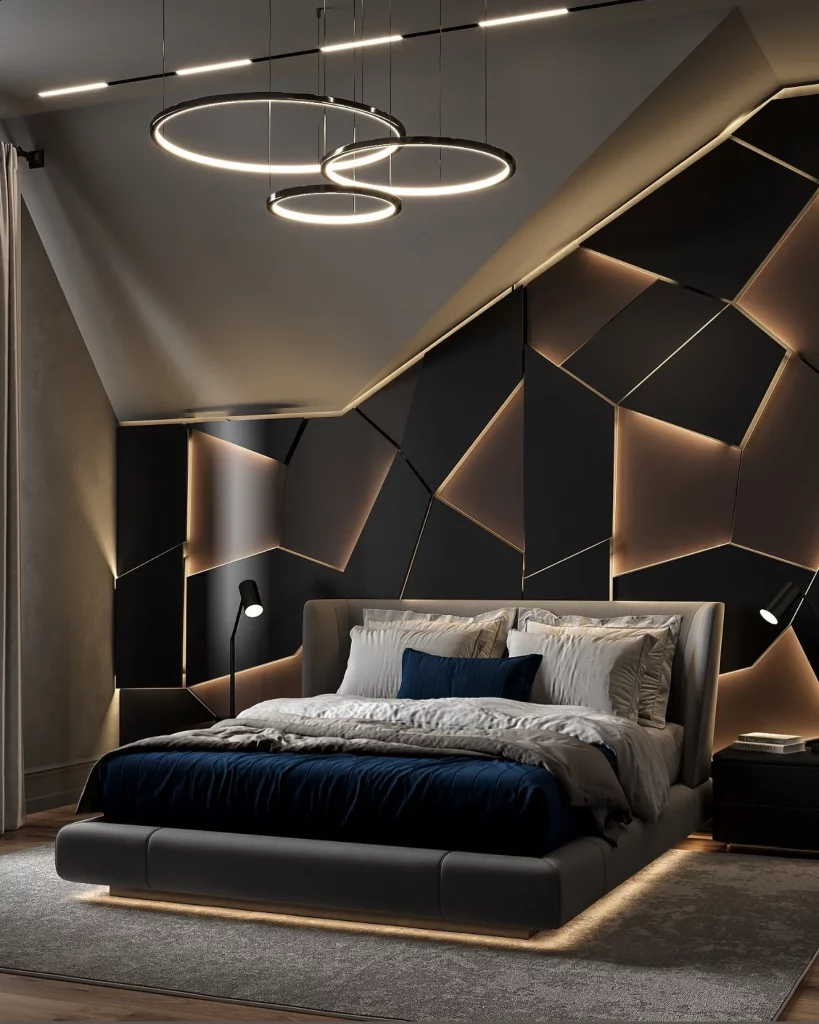
What makes this room work for me is the strong relationship between the architectural wall and the lighting. The illuminated edges emphasize the unusual panel shapes without requiring additional wall decoration, while the low lighting beneath the bed gives the furniture a visually lighter appearance. The navy textile adds just enough contrast to prevent the black-and-gray palette from feeling completely flat, and the layered lighting makes the room adaptable to different moods.
I would take inspiration from this room if I wanted a bedroom that felt highly individual without filling it with accessories. The geometric wall already provides most of the visual character, so I would keep the remaining furnishings relatively controlled and let the lighting become part of the design. The combination of dark surfaces, soft upholstery, and warm illumination is particularly effective because each element balances the others.
Black and Cream Bedroom With Ornate Paneling
This bedroom takes a completely different direction, pairing a cream upholstered bed with a dark wall and black built-in cabinetry outlined with thin metallic detailing. The headboard consists of individual padded rectangular panels beneath an ornate decorative wall panel. A large crystal chandelier hangs centrally above the bed, while a tufted gray-blue bench sits at the foot. Floor-to-ceiling curtains at the window soften the darker palette, and matching decorative wall details create a highly coordinated composition.
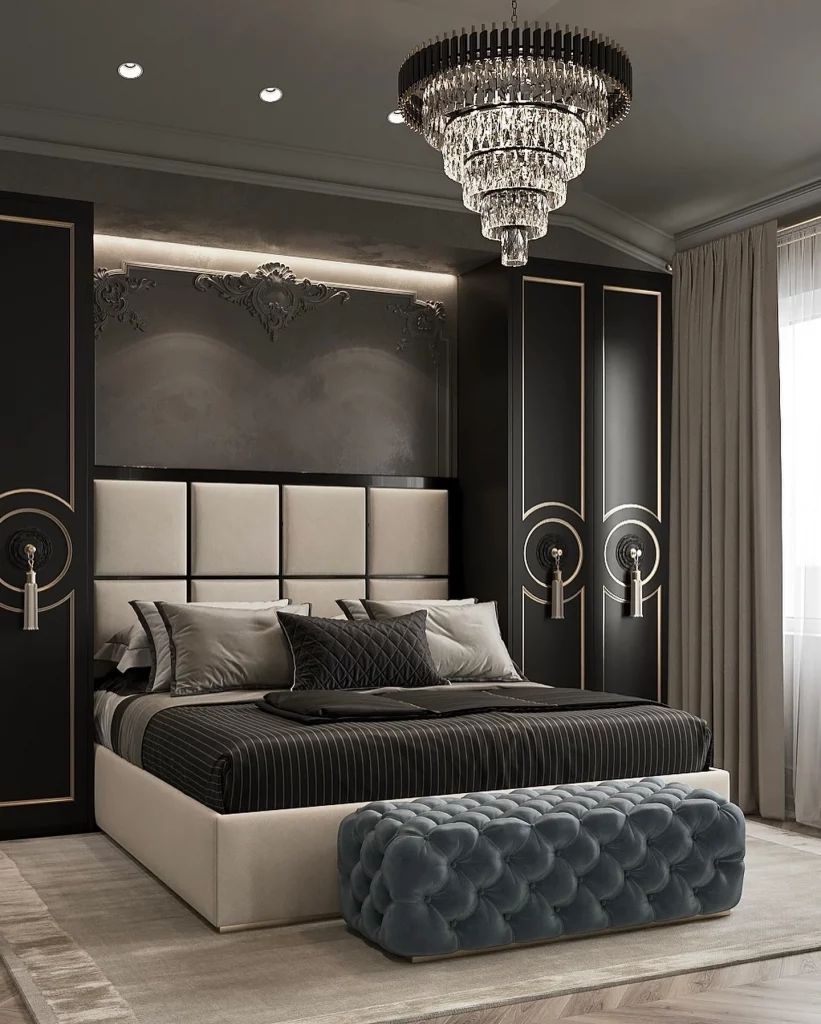
I like how the room uses repetition to make the elaborate decoration feel intentional. The rectangular headboard panels echo the strong vertical and horizontal lines of the cabinetry, while the metallic outlines and chandelier introduce reflective details. The bench provides a practical place to sit at the foot of the bed and also connects the pale upholstery with the darker bedding.
For me, the key lesson here is that a highly decorated bedroom can still feel organized when the colors and shapes are repeated consistently. If I were recreating this look, I would focus on the contrast between cream upholstery and dark architectural elements before adding decorative details. The chandelier then becomes a natural finishing point rather than competing with numerous unrelated accessories.
Soft Pastel Bedroom With Forest Mural
Here I see a much lighter bedroom built around a large wall mural depicting a delicate forest scene in pale blue, lavender, and soft neutral tones. The rounded upholstered bed has a pale blush finish, while the bedding combines white, pale gray, and light blue. Matching rounded bedside tables sit on either side, and a delicate chandelier hangs above the center of the room. The pale hardwood floor and understated furnishings allow the mural to remain the dominant visual feature.
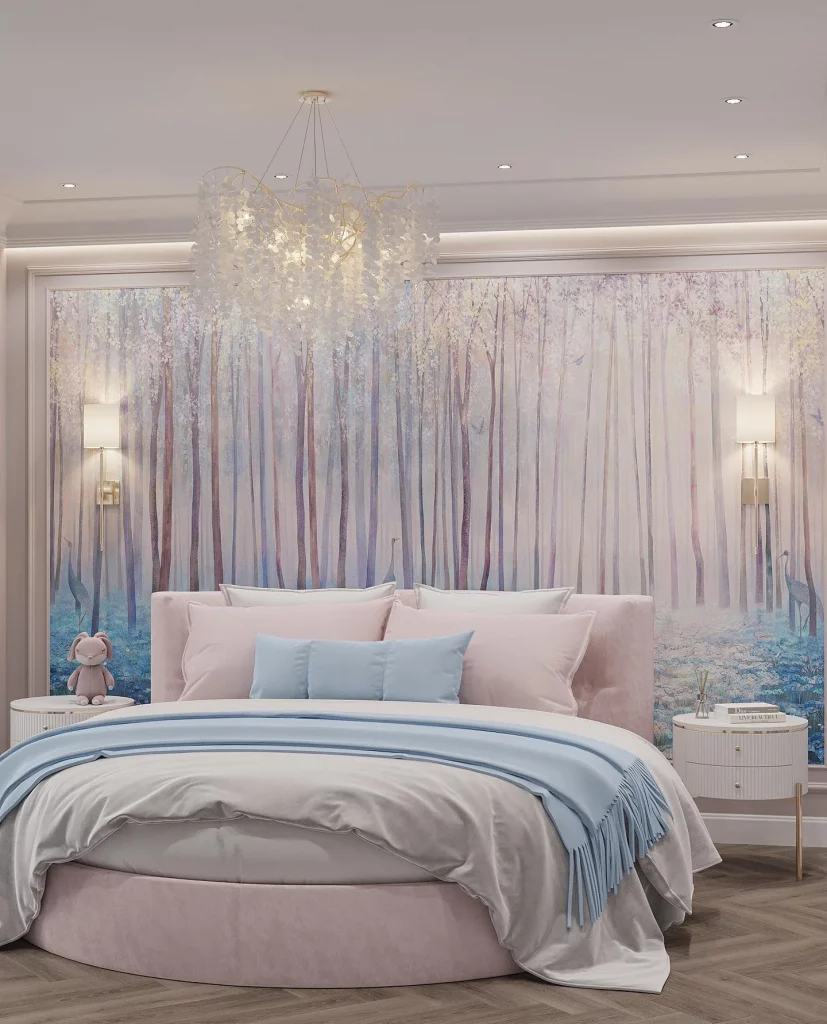
The room works especially well because the colors of the bedding directly relate to the artwork behind the bed. I like the way the pale blue throw and pillows visually pick up the cooler tones in the mural without making the room feel overly coordinated. The rounded furniture also creates a softer impression, which complements the flowing vertical lines of the artwork.
I would use this approach when personalizing a bedroom through one large-scale visual feature rather than many small decorations. A mural can establish the atmosphere of the entire room, making it easier to select bedding and furniture afterward. In this case, the restrained palette keeps the elaborate wall from overwhelming the bedroom and gives the whole space a calm, cohesive appearance.
Plum and Burgundy Bedroom With Sculptural Glass Chandelier
This bedroom combines ornate architectural detailing with rich plum and burgundy furniture. A large sculptural chandelier made from translucent pink-toned glass forms a striking centerpiece overhead. On the left, tall built-in shelving displays books and small decorative objects, while glossy cabinetry continues along the wall. A large floral artwork occupies the opposite wall, and the bed features a dramatic black-and-cream striped upholstered frame. The herringbone floor adds another strong visual pattern beneath the neutral rug.
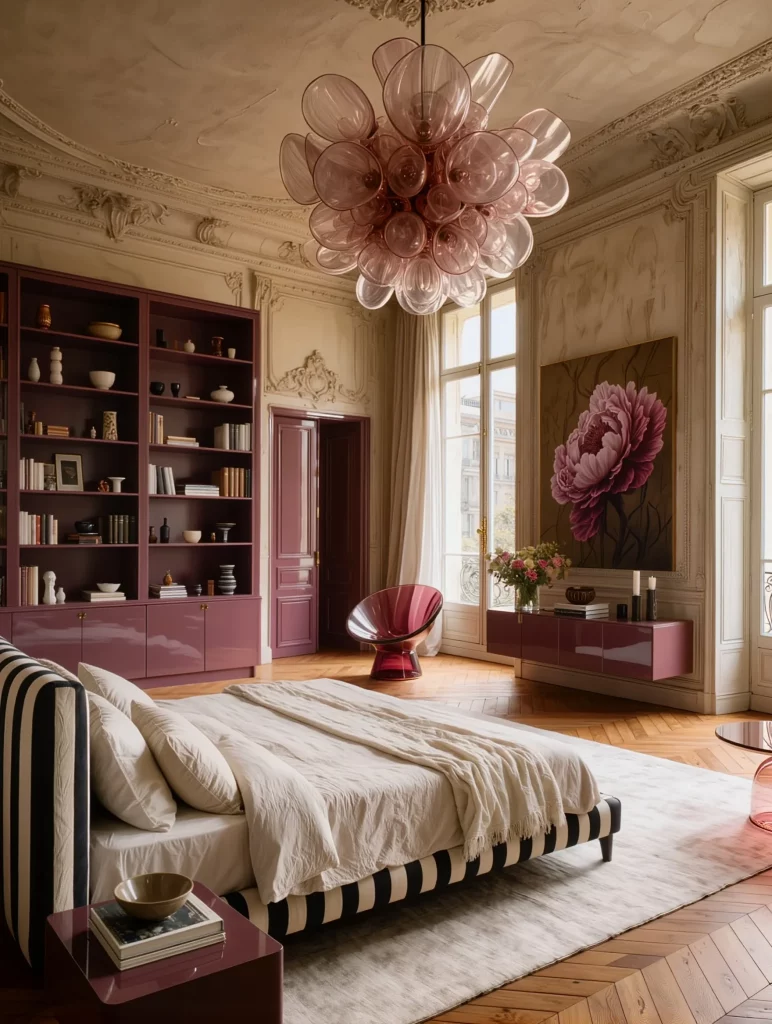
I find the contrast between the architectural shell and the contemporary furniture particularly interesting. The decorative ceiling and wall moldings provide a detailed backdrop, while the glossy burgundy cabinetry and sculptural chair introduce a more modern character. The shelving is also useful because it combines storage and display in one prominent element instead of leaving the walls visually empty.
If I were taking inspiration from this room, I would choose one strong color family and repeat it through several substantial pieces rather than scattering many unrelated accents around the bedroom. The burgundy cabinetry, chair, and console create continuity, while the neutral bedding and rug provide visual relief. The large chandelier then works as an artistic centerpiece that connects the traditional architecture with the more contemporary furnishings.
Green Upholstered Bed With Crystal Ring Lighting
This bedroom uses a deep green upholstered headboard as its strongest color statement against an otherwise pale interior. Two large circular crystal pendant fixtures hang above the bed, while a vertical crystal light is visible through the doorway on the right. White paneled walls, long neutral curtains, a black rounded bedside table, and pale bedding keep the surrounding palette restrained. Small green pillows reinforce the connection between the bed and the accent color.
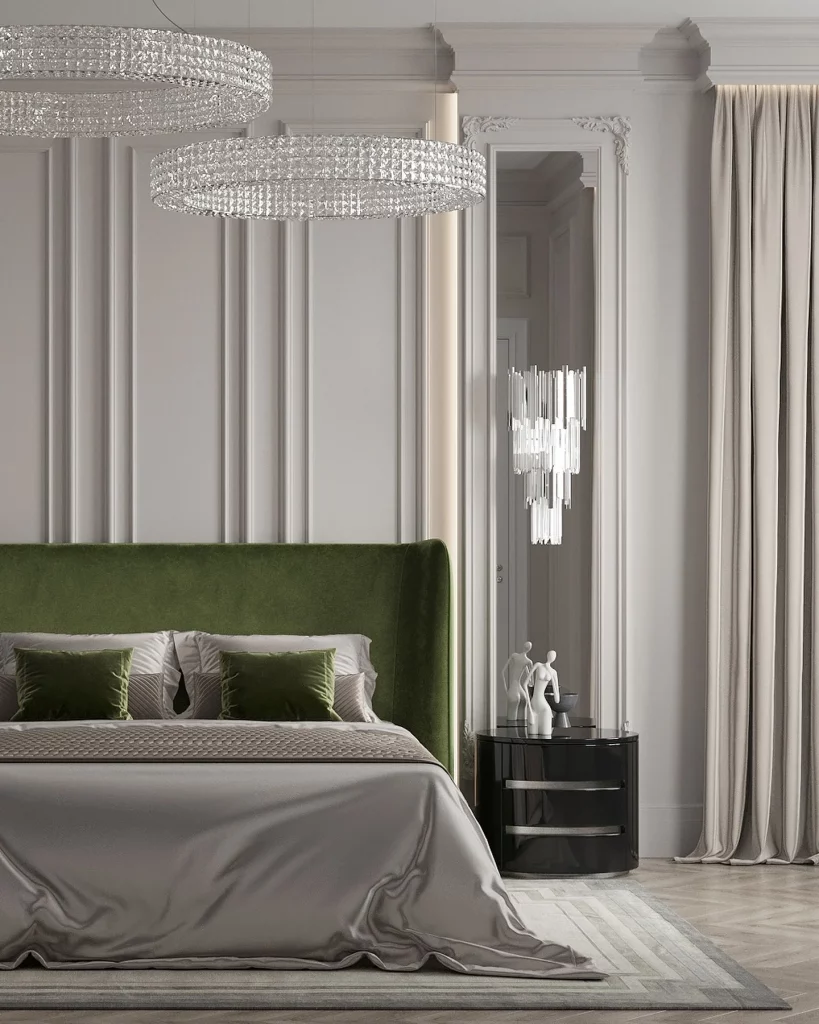
The simplicity of the palette makes the green headboard particularly effective. I like how the two green cushions repeat its color without turning the entire room green, while the crystal lighting adds brightness and texture above the darker upholstery. The black bedside table provides another controlled contrast and gives the composition a clear visual anchor beside the bed.
For me, this is a good example of how one saturated furniture piece can personalize an otherwise neutral bedroom. I would let the upholstered headboard carry most of the color responsibility and use only a few matching textiles elsewhere. The result feels distinctive without needing numerous decorative objects, and the combination of green upholstery, white walls, and sparkling lighting creates a polished visual balance.
Neutral Bedroom With Sculptural Wave Wall Panels
This bedroom is centered around a cream upholstered bed with a distinctive segmented base and rounded edges. Behind it, large taupe-gray wall panels feature sweeping white abstract lines that extend vertically across the entire accent wall. Integrated vertical lighting separates portions of the wall treatment, while a long, thin rectangular ceiling fixture adds another geometric element overhead. The bedding remains soft and neutral, with several layered pillows and a textured throw.
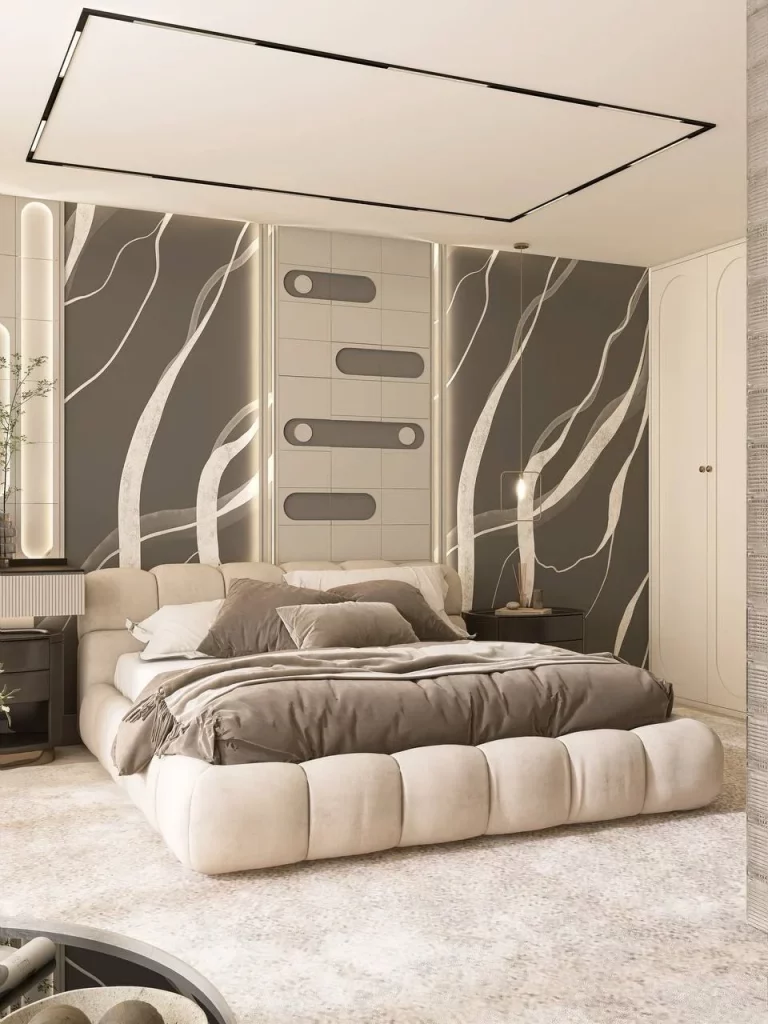
I like how the curved lines in the wall treatment contrast with the structured cabinetry at the center of the wall. The bed echoes that softer approach through its rounded upholstery, creating a visual relationship between the furniture and the backdrop. At the same time, the neutral colors make the room feel unified rather than visually busy.
This design inspires me to think about personalization through custom-looking surfaces instead of decorative accessories. A strong wall treatment can give a bedroom an individual identity while leaving the rest of the furniture relatively simple. I would keep the bedding close to the wall palette, as shown here, so the sculptural lines remain the primary visual feature.
Elegant Floral Bedroom With Curved Upholstered Headboard
This bedroom features a large floral wall covering in a muted gray-green tone, decorated with delicate branches, blossoms, and small birds. A curved cream upholstered headboard sits directly in front of it, while pale blue cushions and a matching bench introduce subtle color. A multi-arm chandelier hangs above the bed, with matching wall sconces on either side. The room is framed by pale curtains, paneled walls, and coordinated bedside furniture.
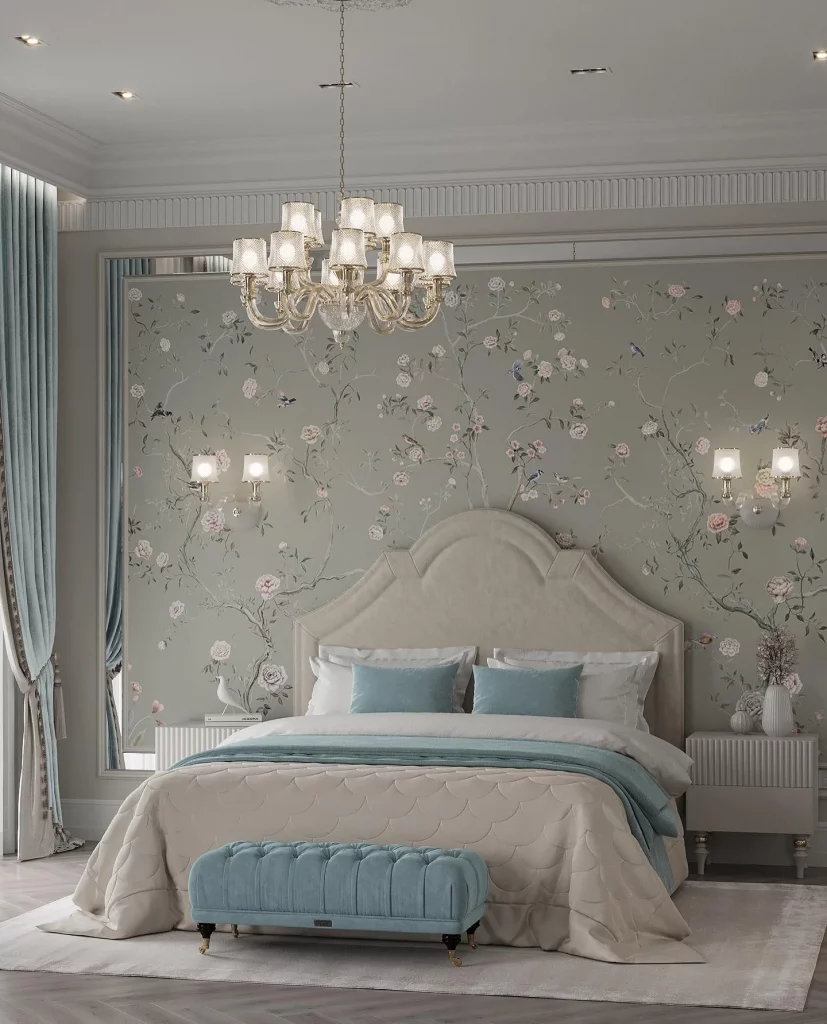
The composition feels balanced because the elaborate wall covering is surrounded by relatively quiet furniture and upholstery. I particularly like the way the pale blue details repeat in the curtains and bedding, creating a gentle color connection with the muted backdrop. The chandelier and sconces also provide symmetry, which helps the decorative wall feel like an intentional centerpiece rather than an isolated feature.
I would approach a bedroom like this by selecting the wall treatment first and allowing its colors to determine the rest of the palette. The curved headboard softens the strong rectangular framing around the wall, while the matching lighting emphasizes the bed without obscuring the artwork. This is a useful strategy when personalization comes from a favorite pattern or decorative motif.
Classic Bedroom With Floral Panel and Refined Vanity Area
The next room continues the floral theme but presents it in a more structured setting. A large framed floral panel fills the wall behind a softly curved cream headboard, surrounded by substantial white decorative molding. The bed is paired with a long upholstered bench, ornate bedside tables, and a desk or vanity with a matching chair on the right. A large chandelier hangs above, while tall layered curtains frame the window and a pale area rug covers much of the wood floor.
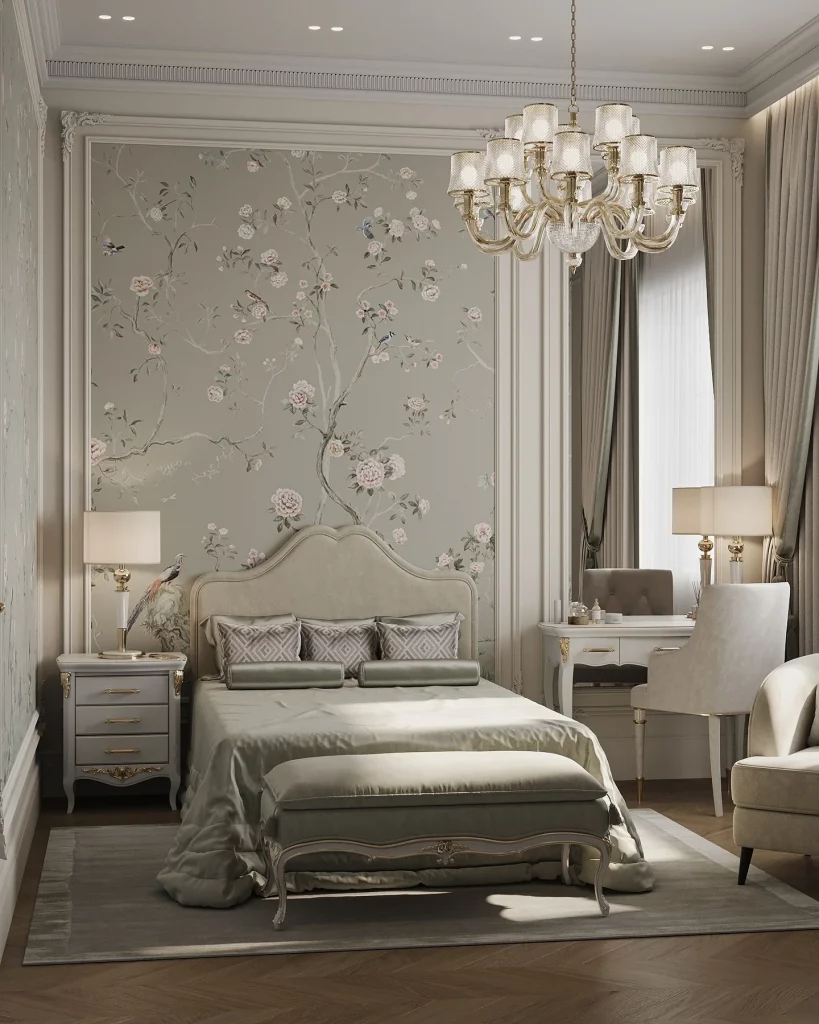
I like the way the furniture arrangement gives this bedroom more than one functional zone. The vanity area provides a dedicated place for sitting and getting ready, while the bench at the foot of the bed adds another useful surface without interrupting the central pathway. The matching furniture finishes and repeated molding details make the different elements feel like parts of one composition.
For me, the most useful idea here is to personalize a bedroom through coordinated furniture rather than relying only on decoration. The floral panel supplies the visual interest, while the vanity, bedside pieces, and bench support everyday use. I would preserve the generous spacing between these pieces because it allows the room to feel refined instead of crowded.
Pink and Gold Bedroom With Statement Swing Chair
This bedroom introduces a much softer and more playful palette with blush pink upholstery, pale gray textiles, and gold accents. The main wall has a large arched architectural frame surrounding a vertically paneled pink upholstered section behind the bed. A distinctive round hanging chair with a pink cushion occupies the left side of the room, while several gold pendant lights and a sculptural gold chandelier add visual interest overhead. The bed combines a pale upholstered headboard with a pink base and layered decorative cushions.
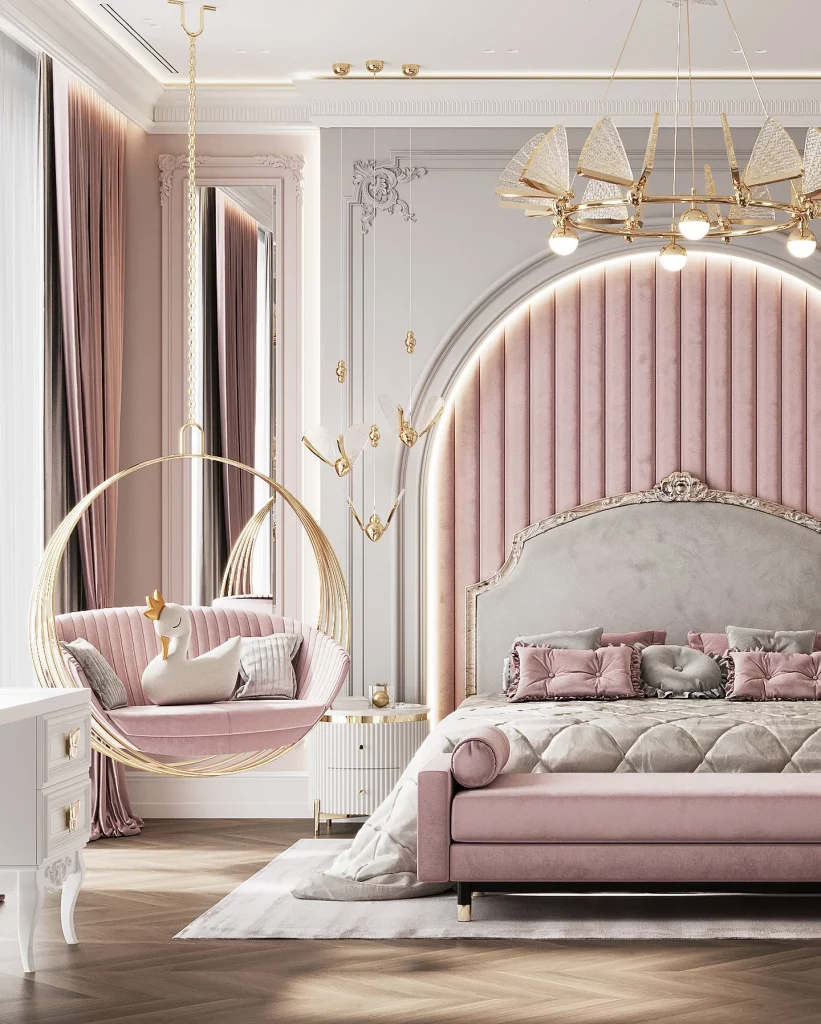
The hanging chair immediately gives the bedroom a strong personal character, while the repeated gold details connect it visually to the lighting and furniture hardware. I also like how the arched wall feature frames the bed and creates a clear focal point without relying on artwork. The combination of curved forms, vertical upholstery, and circular lighting gives the room a consistent vocabulary.
I would borrow the idea of using one unexpected piece of furniture to make a bedroom feel personal. In this case, the hanging chair is both decorative and functional, creating a separate spot within the room without requiring another large furniture arrangement. Keeping the surrounding palette within blush, cream, gray, and gold allows that unusual feature to remain the star.
Lavender Upholstered Bed With Botanical Wall Design
The final bedroom combines a pale lavender upholstered headboard with a large muted botanical wall covering in soft green and gray tones. The headboard has a distinctive scalloped silhouette, while a padded mint-green bench sits at the foot of the bed. A crystal chandelier with gold-toned branches hangs above, and matching wall lights flank the bed. Rounded bedside tables and long lavender curtains complete the layered, coordinated look.
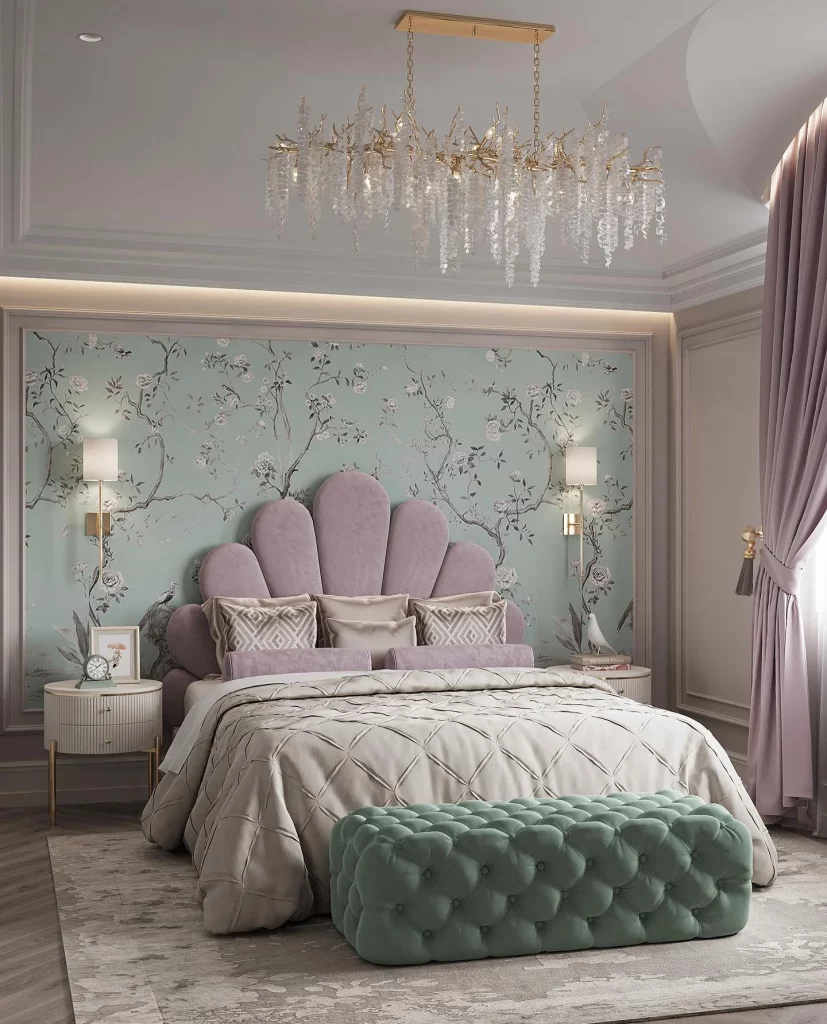
I like how this room uses several gentle colors without losing a clear sense of structure. The lavender headboard provides a strong central shape, while the mint bench adds a second soft color that relates naturally to the botanical backdrop. The chandelier introduces sparkle overhead, and the symmetrical wall lighting reinforces the importance of the bed as the room’s main focal point.
For me, this is a particularly effective example of personalized decorating through shape and color rather than excessive accessories. The unusual headboard, patterned wall, and upholstered bench each have a distinct personality, yet they share a soft visual language. If I were recreating the atmosphere, I would maintain this same balance of muted colors, rounded upholstery, and carefully positioned lighting so the bedroom remains elegant and cohesive.
Soft Taupe Bedroom With a Statement Upholstered Headboard
The first bedroom immediately catches my attention with its sophisticated taupe and mauve-gray palette. A tall upholstered headboard in deep muted plum creates a strong focal point against the paneled wall, while the bed is dressed in a striped satin-like comforter layered with coordinated pillows. I especially like the contrast between the dark headboard and the lighter bedding because it gives the room depth without introducing a busy color scheme. A sculptural crystal chandelier hangs centrally above the bed, while a wall sconce adds another layer of warm illumination.
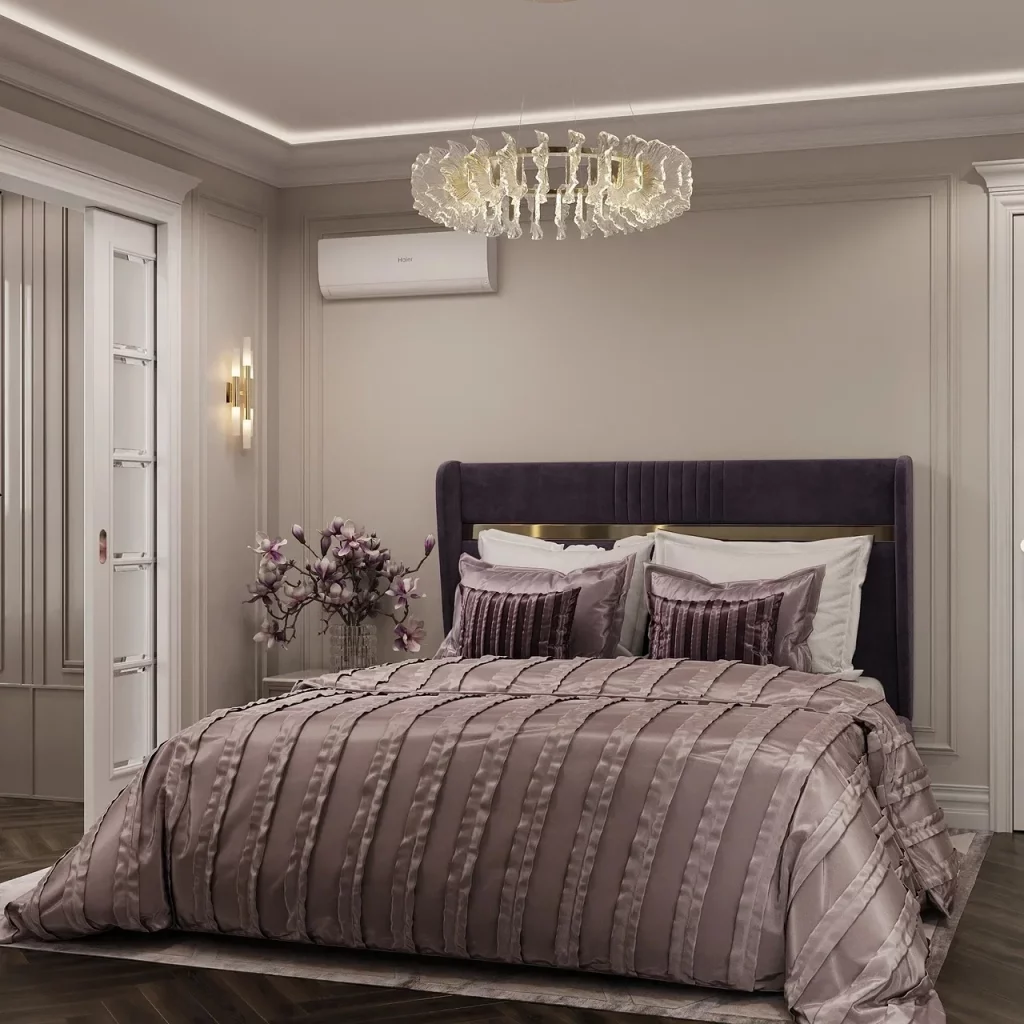
The symmetry of this bedroom makes the composition feel especially polished. Matching bedside surfaces flank the bed, while the floral arrangement on one side adds a delicate decorative accent against the otherwise controlled palette. The built-in wall molding frames the headboard beautifully and gives the large wall a finished appearance. I also notice how the bedding repeats several related neutral and mauve tones, which helps all the individual elements feel connected.
For me, this is a great example of how personalization can come through color relationships rather than an abundance of accessories. I would start with one dominant feature, such as the upholstered headboard, and then select bedding, pillows, lighting, and small decorative details that echo its color. The result feels coordinated while still retaining enough variation in texture to keep the bedroom interesting.
One finishing detail I would preserve is the statement chandelier. Its transparent material keeps the ceiling visually light while providing an elegant focal point. I would also maintain the restrained approach to accessories because the wall paneling, headboard, bedding, and lighting already provide plenty of visual character.
Elegant Cream Bedroom With Geometric Wall Paneling
The second bedroom has a much lighter and softer appearance, built around cream, ivory, and warm beige tones. The most distinctive feature is the tall upholstered wall behind the bed, where narrow vertical panels meet geometric shapes around the center. The bed itself is dressed in a pale striped comforter with matching decorative pillows, while two rounded bedside tables create symmetry on either side. A large crystal chandelier dominates the ceiling, and delicate wall sconces provide balanced lighting.
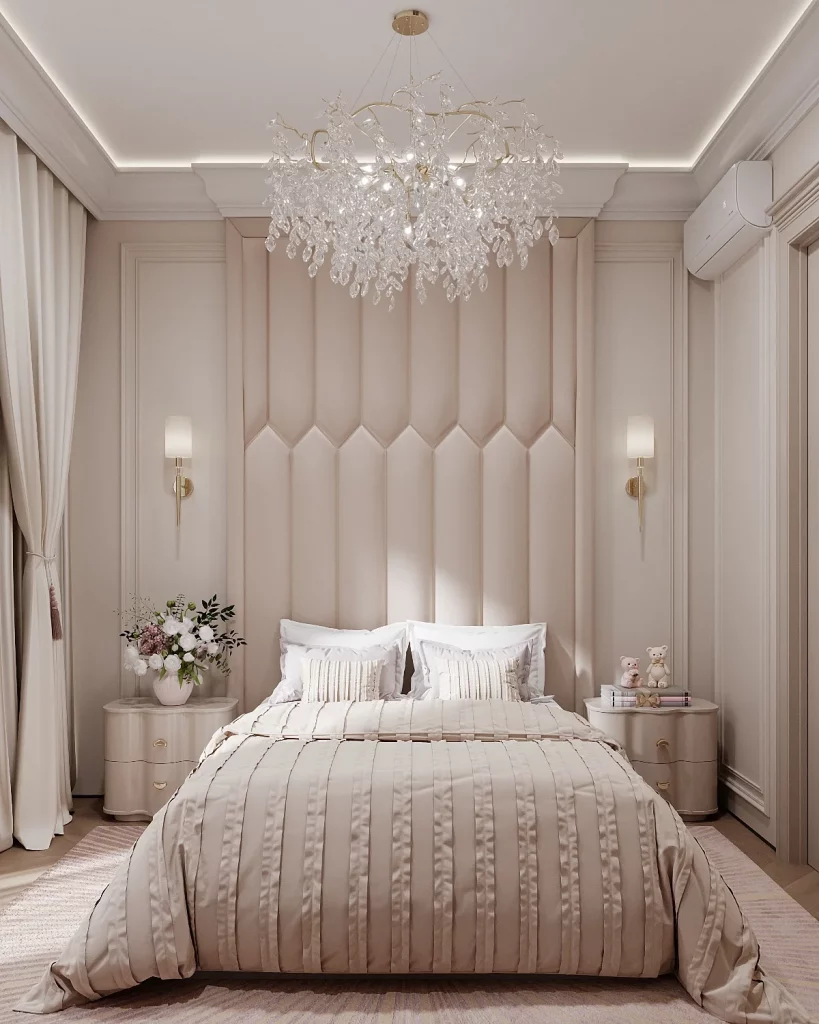
I find the vertical wall treatment particularly effective because it draws the eye upward and makes the bed wall feel taller and more substantial. The matching bedside tables keep the arrangement orderly, while the soft bedding prevents the architectural detailing from feeling too heavy. Long curtains frame the left side of the room, and the light carpet visually connects the bed with the rest of the space.
From my perspective, this room demonstrates how personalization can be created through architectural detailing. Instead of filling the bedroom with numerous decorative objects, the design gives the wall behind the bed a distinctive identity. I would use a similar approach when working with a bedroom that needs character but should still feel calm and uncluttered.
The small decorative objects visible on the right bedside table and the floral arrangement on the left provide just enough variation to keep the symmetry from feeling sterile. I would keep these accents carefully edited rather than adding more pieces, because the geometric wall and chandelier already provide strong visual interest.
Playful Bedroom With a Scenic Statement Wall
The third bedroom takes a completely different direction with a large scenic wall mural positioned directly behind the bed. The artwork depicts a detailed landscape with trees, water, animals, and distant mountains, immediately becoming the room’s main focal point. In front of it sits a rounded upholstered headboard in a warm beige tone, complemented by pale blue bedding, cream pillows, and a beige quilt. Dark bedside tables on either side provide contrast, while blue curtains repeat the cool tones of the bedding.
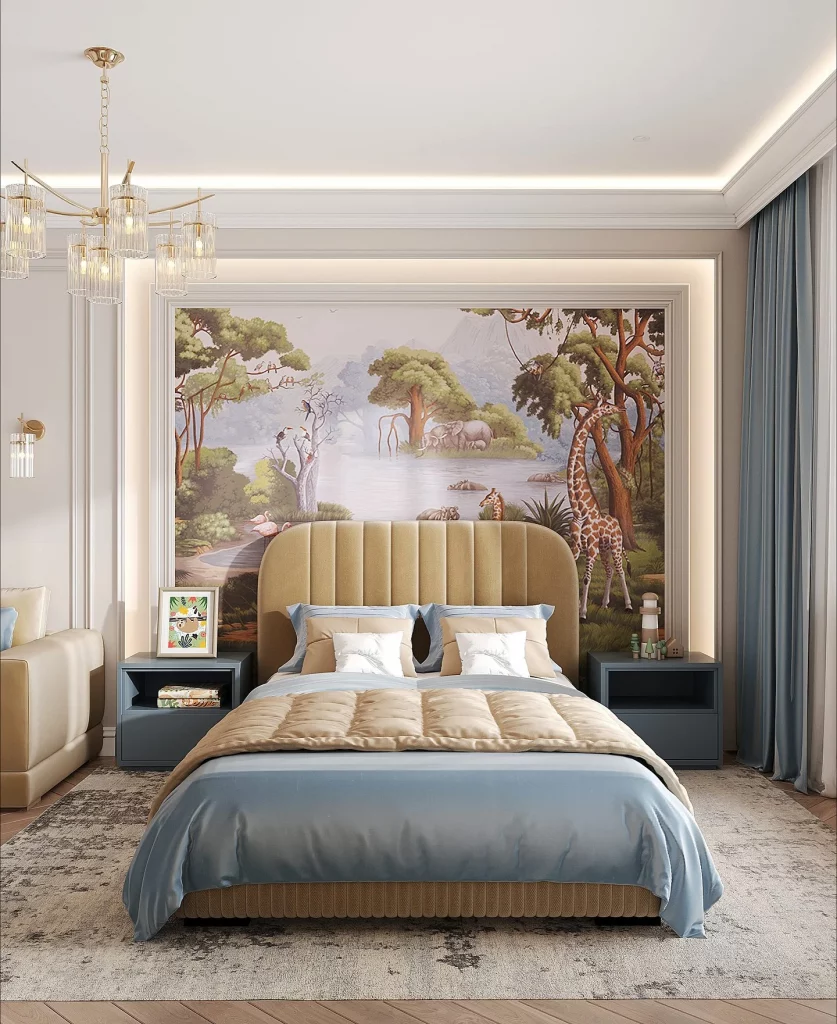
I particularly like how the rest of the room has been kept relatively controlled so the mural can take center stage. The rounded headboard softens the strong rectangular composition of the artwork, while the blue textiles create a visual bridge between the bed and the curtains. The dark bedside tables also give the composition a grounding element and prevent the pale furnishings from blending together.
To me, this is one of the clearest examples of personalization through a single expressive feature. The scenic artwork gives the bedroom an unmistakable identity without requiring numerous decorative objects. If I were recreating this approach, I would choose one large piece of imagery that genuinely reflects the mood I want and then pull a few secondary colors from it for the bedding and window treatments.
The small framed artwork and decorative objects placed on the bedside tables add personality without competing with the large mural. I would follow the same principle when styling a room around a statement wall: let the main feature remain dominant and use smaller accessories to support it rather than interrupting it.
Soft Blue Bedroom With an Ornate Tufted Headboard
The fourth bedroom creates a graceful atmosphere through a pale blue upholstered headboard framed with ornate silver-toned detailing. The headboard has a deep tufted pattern that gives the bed a substantial presence, while white bedding and champagne-colored pillows keep the palette soft. Matching white bedside furniture sits on either side, and pale blue curtains frame the window. Above the bed hangs an elegant chandelier with multiple white shades and delicate crystal details, while a cushioned bench sits at the foot of the bed.
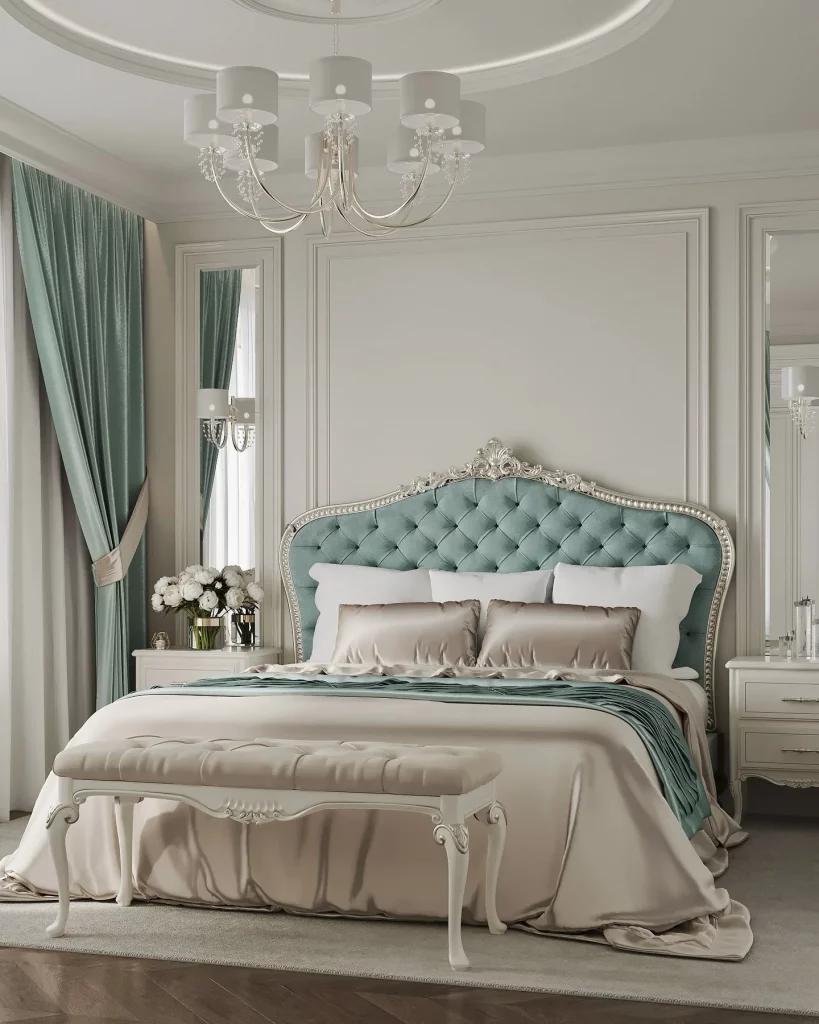
The repeated pale blue and white tones make this bedroom feel cohesive from one side of the room to the other. I like the way the curtains echo the headboard without matching it too literally, creating a subtle connection between the vertical and horizontal elements. The upholstered bench at the foot of the bed also reinforces the bedroom’s layered, coordinated appearance while providing a practical place to sit.
In my view, the strongest personalized element here is the choice of the ornate headboard. Its curved outline, tufting, and decorative frame establish the room’s character immediately. I would build the rest of the bedroom around a feature like this rather than trying to make every item equally decorative. Keeping the bedding relatively simple allows the headboard to remain the star.
The chandelier and matching bedside furniture reinforce the refined character without introducing a competing color. I would keep the accessories similarly restrained and focus on maintaining the balance between the ornate bed, soft textiles, and clean surrounding surfaces.
Romantic Mauve Bedroom With a Curved Tufted Headboard
The fifth bedroom has a more romantic and intimate character, centered around a tall cream-colored curved headboard with deep button tufting. The bed is covered in glossy mauve-brown bedding decorated with delicate white floral branches, while matching patterned pillows repeat the same motif. Mirrored bedside furniture adds reflective surfaces on both sides of the bed, and crystal pendant-style lighting hangs beside the headboard. A large crystal chandelier occupies the upper left portion of the room, completing the glamorous composition.
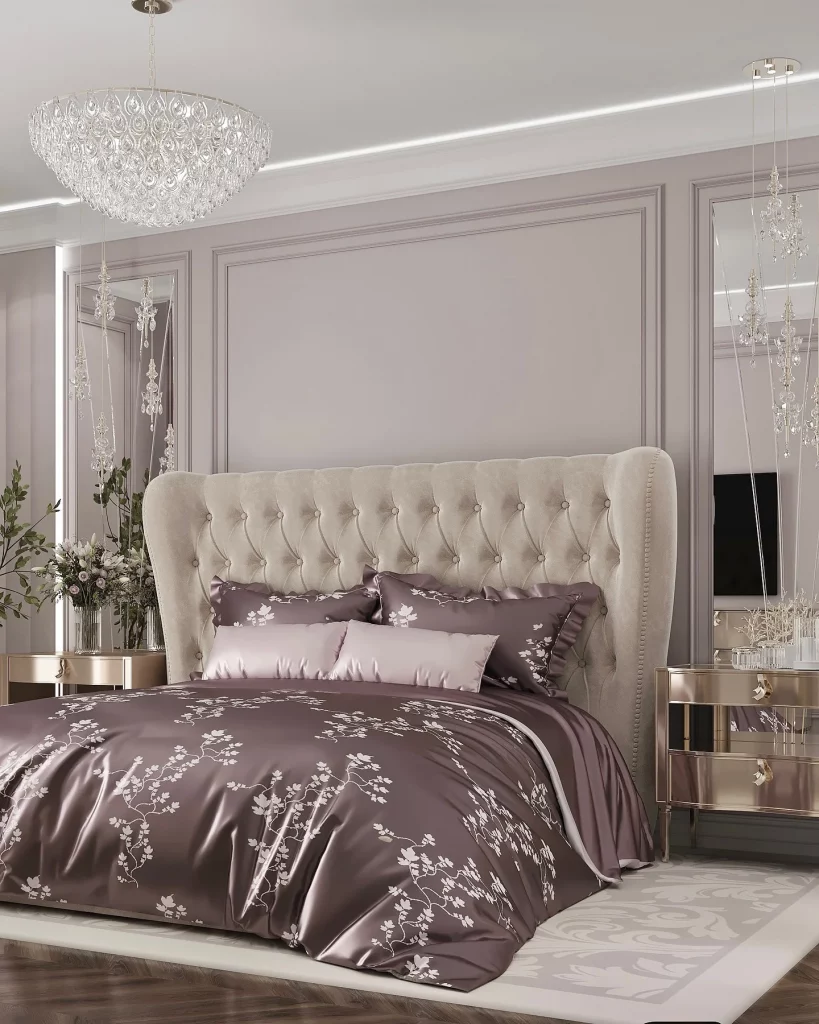
I particularly like the contrast between the matte cream upholstery of the headboard and the sheen of the patterned bedding. The curved top of the headboard softens the strong rectangular wall paneling behind it, while the floral pattern introduces a delicate decorative layer without covering the entire room in additional accessories. The mirrored bedside pieces also reflect the lighting and contribute to the room’s polished appearance.
For me, this bedroom shows how textiles can become the main source of personality. The mauve bedding immediately establishes the mood, and the white floral pattern gives it a distinctive identity. If I wanted to recreate this idea, I would choose bedding with a pattern or finish that genuinely appeals to me and then keep the larger furniture pieces in complementary neutral tones.
The combination of crystal lighting, mirrored furniture, tufted upholstery, and glossy bedding creates a deliberately coordinated look. I would avoid adding too many additional decorative elements here because the existing textures already provide plenty of detail. The strongest finishing touch is simply allowing these materials and patterns to remain visible and balanced.
Personalized bedroom decor is about creating a space that feels beautiful, comfortable, and genuinely connected to your style. From statement artwork and sculptural lighting to elegant neutrals and rich colors, even a few thoughtful details can transform the atmosphere. I hope these ideas inspire you to experiment with your own favorite colors, textures, shapes, and decorative accents. Which bedroom idea was your favorite? Leave a comment and share the look you would love to recreate in your own space.