
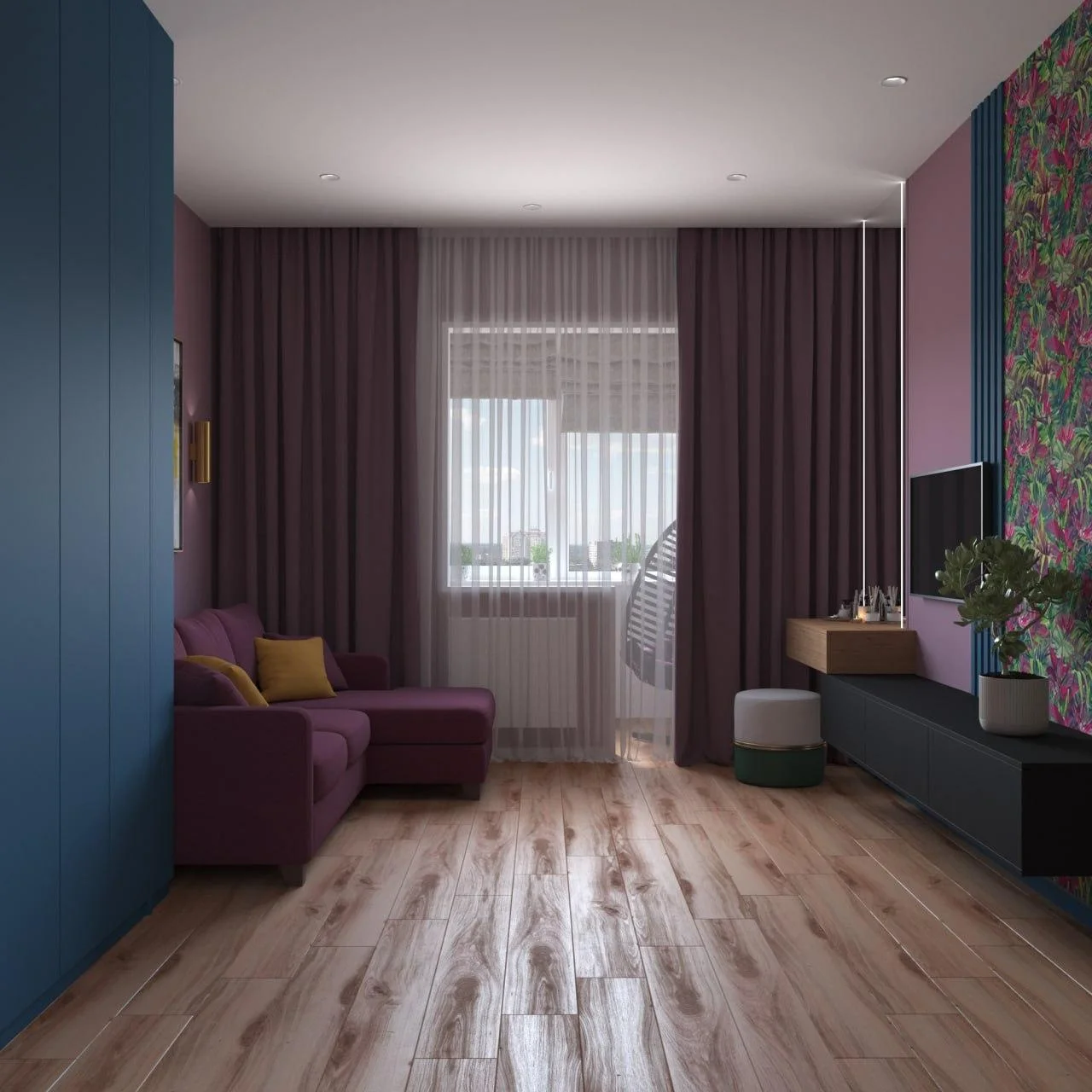
Plum is having a moment, and I love how effortlessly this rich, moody shade can transform a living room. From deep plum walls to softer accents in upholstery and decor, there are so many ways to bring this color into a space without making it feel overwhelming. I especially like how plum works with warm neutrals, creamy tones, natural textures, and darker finishes to create a room that feels layered and inviting. Whether you want to make a bold statement or simply add a few plum details, this color can adapt beautifully to different decorating styles. This season, I’m looking at some of the most inspiring ways to use plum while keeping the overall room stylish, comfortable, and current. Here are the plum living room ideas I would try if I wanted to give my space a fresh seasonal update.
Soft Plum Accents in a Light Contemporary Living Room
The first room takes a restrained approach to plum, using it as a precise accent against an otherwise light and airy interior. I can see a large black television mounted above a long white media cabinet, with a slim plum band running across the cabinetry and continuing around the walls as a narrow border. The same color appears in the shelving beside the window, while the cream upholstered sectional, beige curtains, pale flooring, and soft white walls keep the overall room calm. A round light-colored coffee table sits in front of the sofa, and a few plum-toned cushions reinforce the color connection without overwhelming the space.
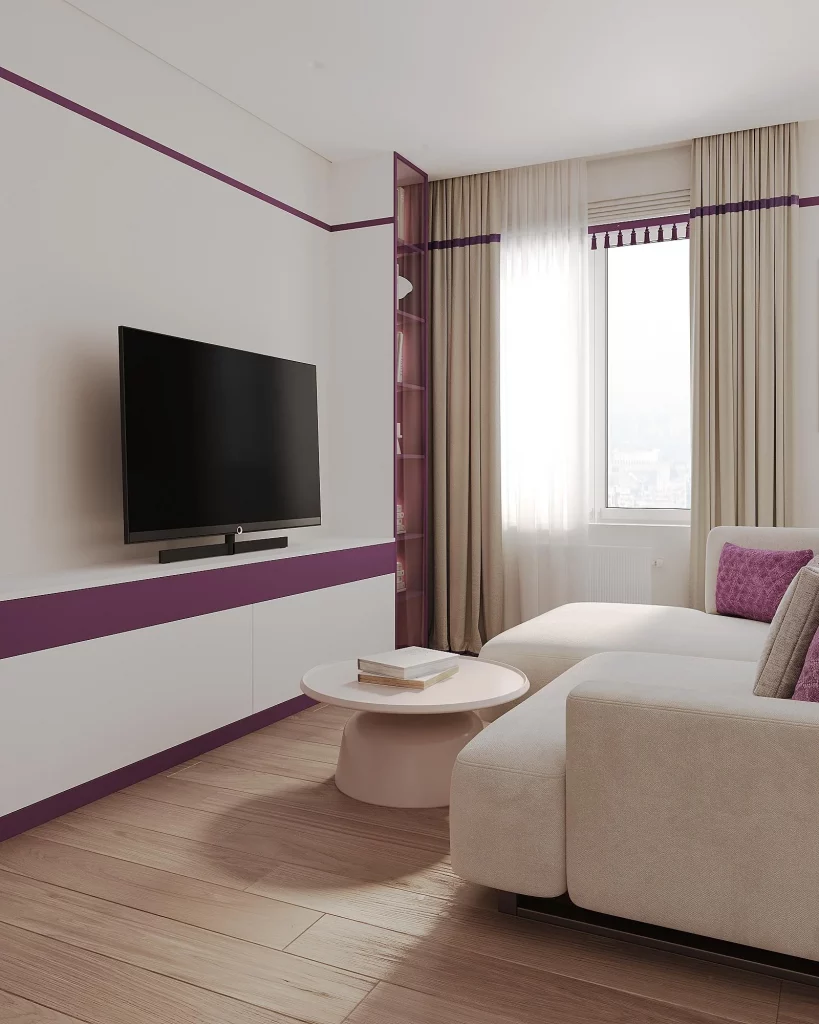
What makes this approach work for me is the repetition of the plum detail. Instead of placing the color in one isolated accessory, the room carries it through several architectural and decorative points. The long horizontal line visually connects the television wall and cabinetry, while the vertical shelving creates a nice transition toward the window. I also like how the neutral sofa and curtains prevent the plum from becoming too heavy, making this a practical idea for someone who wants to experiment with the shade gradually.
From my perspective, this is one of the easiest plum living room ideas to adapt. I would start with one strong plum detail, such as a painted trim line, cabinet accent, shelving interior, or a pair of cushions, and repeat it in another visible area of the room. Keeping the larger furniture pieces neutral gives me much more freedom to change the accent color later without redesigning the entire space.
Deep Plum Walls With a Velvet Sectional
Here, plum becomes the defining color of the room. I’m looking at a deep plum wall with decorative panel molding, a large framed abstract artwork, and a matching plum sectional sofa that fills the main seating area. Dark curtains frame the tall window, while a black round coffee table with a thin metallic frame sits over a large gray rug. A sculptural branching light fixture hangs above the seating area, and warm lighting along the upper edge of the wall adds another layer of depth. The result is rich, intimate, and very enveloping.
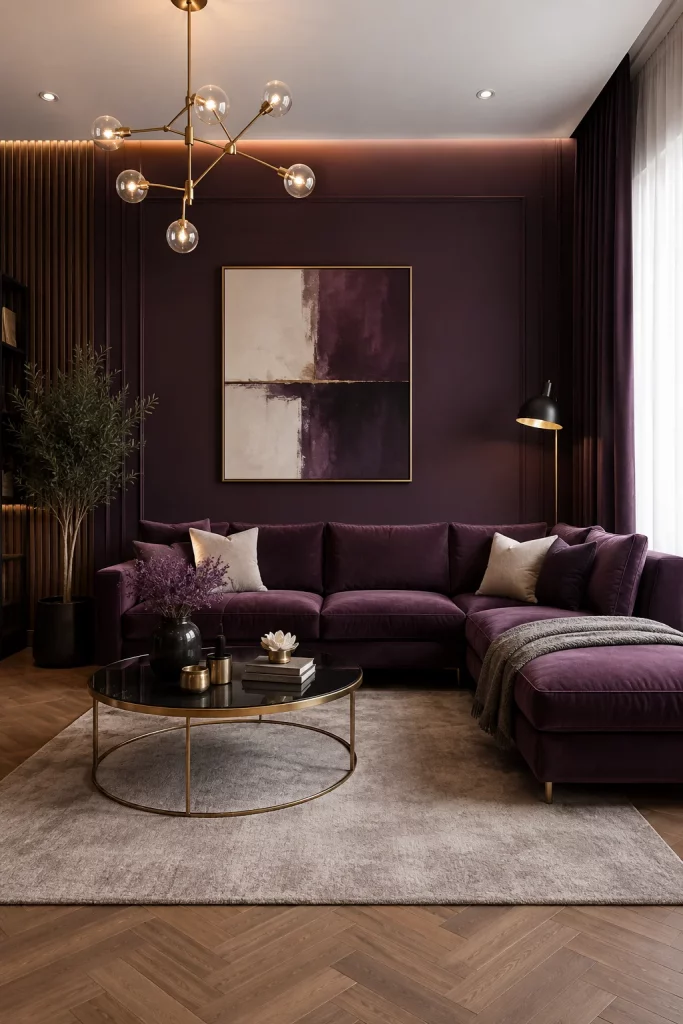
I particularly like the consistency between the wall and sofa because the matching tones create a strong visual envelope rather than making the furniture look like a separate addition. The gray rug breaks up the darker palette, while the artwork introduces lighter and contrasting areas above the sofa. The metallic detailing on the coffee table and lighting also gives the composition a little definition against all that saturated color.
If I were recreating this look, I would pay close attention to balance. A deep plum wall can look beautiful when the surrounding pieces are equally intentional, but I would avoid filling every available surface with the same dark shade. In this image, the lighter artwork, rug, pillows, and warm lighting give the eye places to rest. That contrast is what keeps the room sophisticated instead of visually flat.
Plum Curtains Framing a Bright Minimal Living Room
This living room shows me how effective plum can be when it is concentrated around the windows. The room is predominantly white and light gray, with a large pale sectional facing a wall-mounted television and streamlined white cabinetry. Floor-length plum curtains frame the window, while smaller plum and muted mauve cushions add a softer connection to the window treatment. A simple round coffee table, pale rug, light flooring, and sculptural circular ceiling fixture keep the rest of the room understated and contemporary.
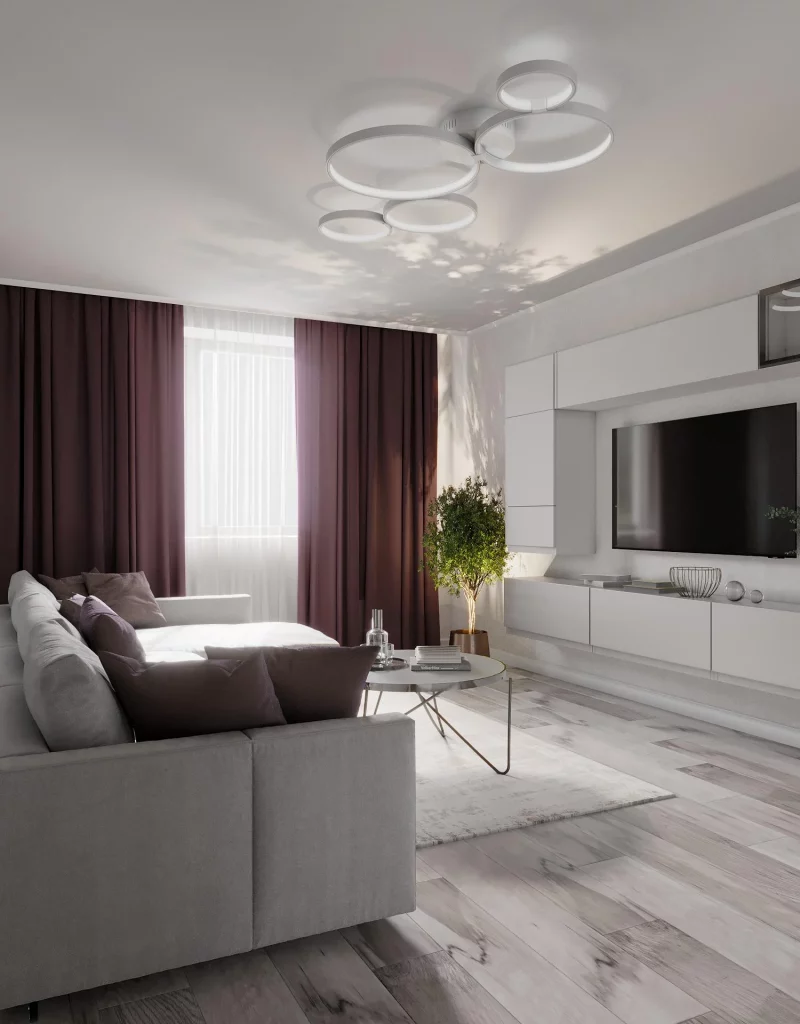
I like the way the curtains create an immediate focal point without taking over the room. Their height emphasizes the generous window and gives the pale interior a stronger sense of structure. The plum cushions are also useful because they repeat the curtain color at a lower level, visually tying the seating area together. At the same time, the white media wall keeps the room feeling open and uncluttered.
For me, this is a particularly practical idea when I want to introduce plum without painting walls or replacing major furniture. Curtains can make a surprisingly strong difference because they occupy a large vertical area. I would choose a rich plum fabric and then repeat the shade in just a few small details, as this room does, rather than trying to match every accessory.
Moody Plum Sofa Against a Dark Statement Wall
This room takes a much moodier direction, with a low, generously cushioned plum sofa positioned against a dark wood-toned wall. A large circular artwork with a vivid yellow center becomes the main focal point above the sofa, creating a striking contrast with the deep background. The ceiling and part of the wall continue the wood finish, while sheer curtains soften the bright window on the right. A slim floor lamp stands beside the seating, and a dark round coffee table anchors the foreground.
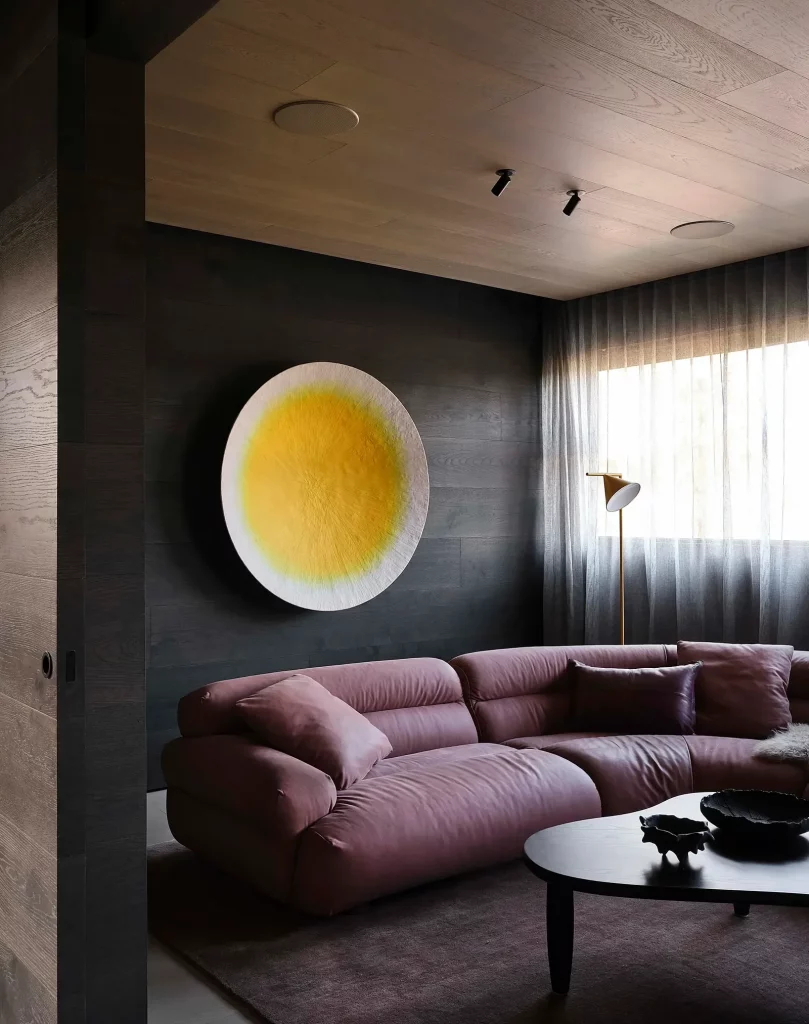
The strongest element here is the contrast between the plum upholstery, dark surfaces, and bright yellow artwork. I think the circular artwork is especially effective because its shape breaks up the horizontal lines of the sofa and wall while its color immediately attracts attention. The low sofa also gives the room a relaxed, lounge-like feeling, while the large rug visually defines the seating zone.
I would use this image as inspiration if I wanted a plum living room with a more intimate atmosphere. Rather than adding lots of decoration, I would focus on one saturated sofa, one darker background surface, and one artwork with enough contrast to command attention. The lesson I take from this room is that a limited palette can still feel layered when the shapes, textures, and proportions are carefully considered.
Plum Sectional With Statement Lighting and Abstract Art
This living room combines a deep purple-plum sectional with an oversized abstract artwork covering much of the main wall. The artwork brings together gray, black, cream, dusty pink, and muted plum tones, which makes it feel naturally connected to the sofa. Above it hangs a cluster of spherical pendant lights, creating a dramatic centerpiece. A pair of round coffee tables with slim metallic frames sits in front of the sectional, while the herringbone-patterned floor adds another layer of visual interest.
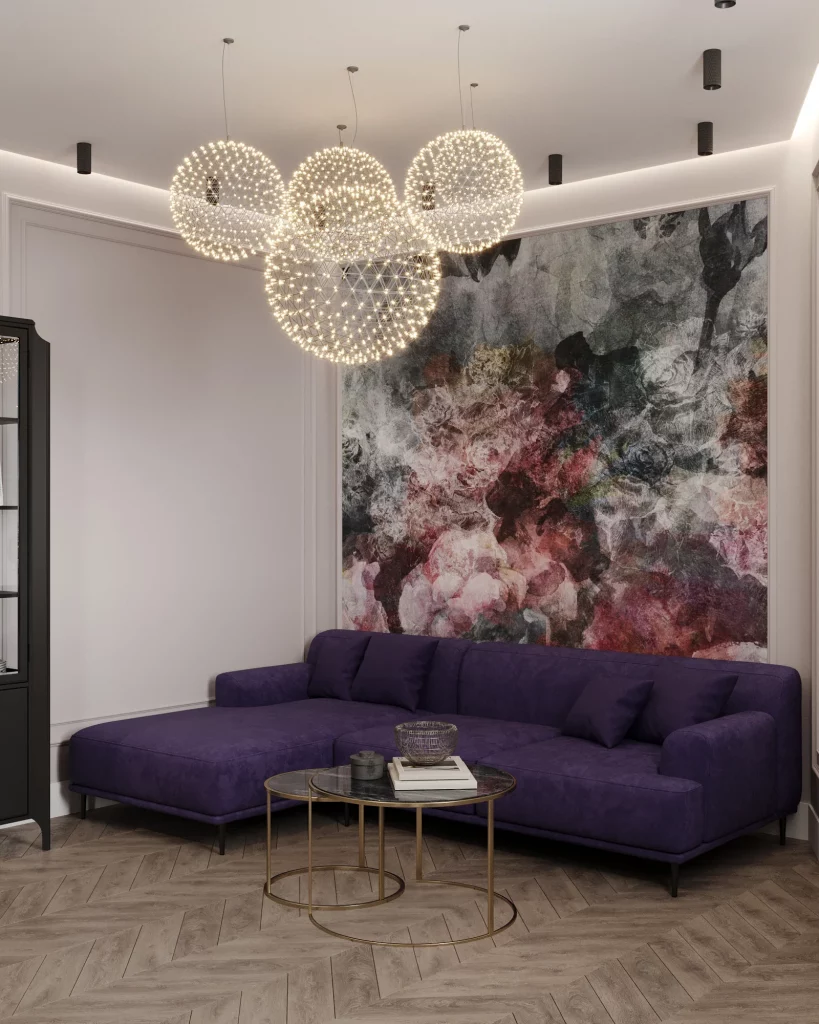
I like how the large artwork and lighting fixture work together rather than competing for attention. The artwork fills the wall behind the sofa, while the glowing spheres occupy the space above it, creating a strong vertical composition. The nested coffee tables are practical too, because their different sizes provide a flexible surface while keeping the center of the room visually light.
From my own decorating perspective, this is a good reminder that plum does not have to be the only statement in the room. I would let the sofa establish the main color and then use artwork to introduce related shades rather than searching for accessories in an exact matching plum. That approach usually creates a more natural and collected result.
Plum-Tinted Lighting for a Futuristic Living Room
The sixth room uses plum in a completely different way, allowing colored lighting to shape the atmosphere. A brownish plum sofa sits in front of a large mirrored wall, while purple illumination outlines the circular recessed ceiling feature and reflects across the polished light floor. Tall curtains occupy the left side, and a large dark plant arrangement appears on the right. The mirrored surfaces and long vertical elements give the room a sleek, almost futuristic character.
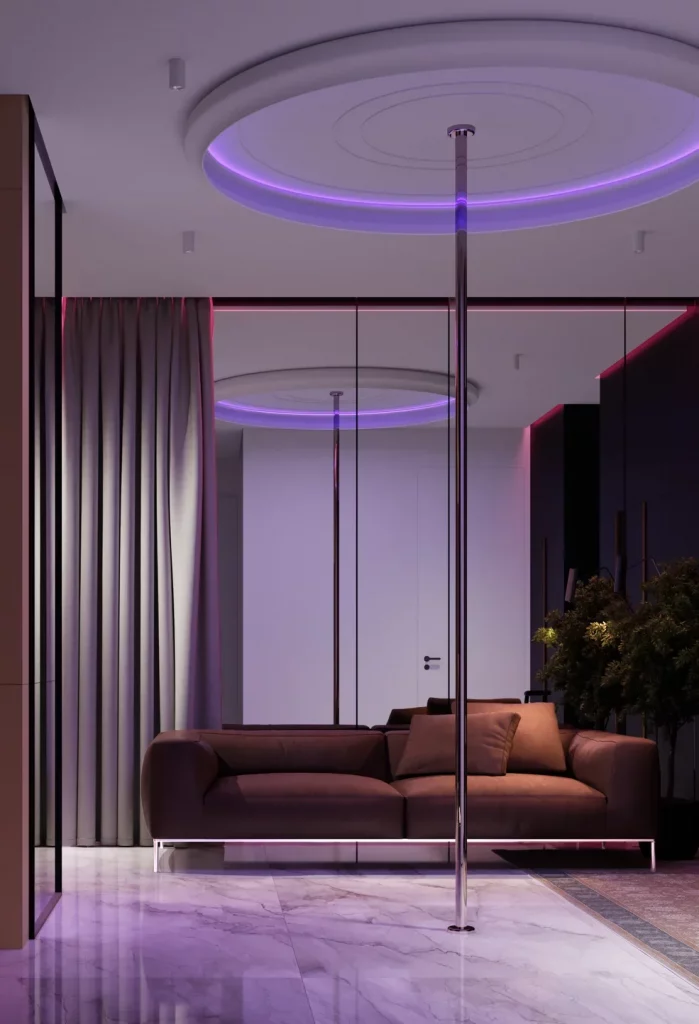
What I find interesting is that the plum color is not mainly coming from the furniture itself. Instead, the lighting changes the appearance of the entire space, including the ceiling, floor, sofa, and reflections. The mirror also multiplies the circular ceiling detail, making the room feel visually deeper. The result is much more atmospheric than a traditional plum color scheme.
I would approach colored lighting carefully because it can completely alter the mood of a room. If I wanted to borrow this idea, I would begin with one concealed purple light source or illuminated architectural detail rather than filling the room with multiple colored fixtures. The image shows how powerful one coordinated lighting treatment can be when the rest of the space has a simple, contemporary foundation.
Elegant Plum Accent Wall With a Cool-Toned Sofa
This room takes a more tailored approach to plum. A textured dark plum wall sits behind the television, framed by narrow vertical dark panels, while the sofa is upholstered in a muted blue-gray tone. A black console table runs behind the sofa, topped with a pair of rounded neutral vases. Floor-length dusty pink curtains frame the window, and a traditional chandelier hangs from a ceiling with decorative trim. The pale marble-look floor introduces a crisp contrast to the deeper wall.
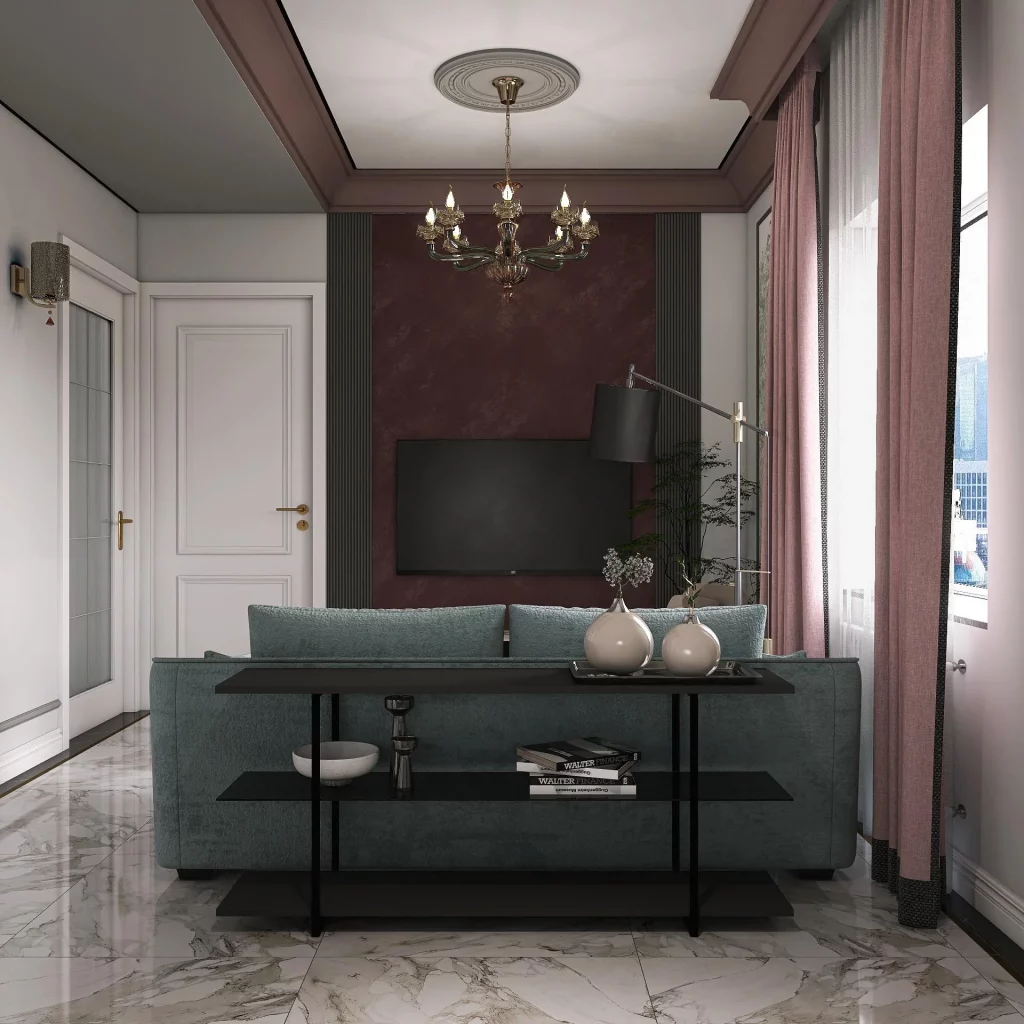
For me, the most successful detail is the way the plum wall is balanced by the cooler sofa and pale floor. The room does not rely on a single-color palette, yet the colors feel connected because the curtains soften the transition between the dark wall and the lighter furniture. The console behind the sofa also makes good use of the space and provides a surface for the simple decorative arrangement visible in the image.
I would consider this a useful example for anyone who likes plum but wants a more refined, layered interior rather than a monochromatic room. I would choose plum for one major wall, then introduce related muted tones through textiles while keeping larger contrasting pieces relatively calm. That gives the color importance without making it feel overpowering.
Plum Drapery With Crisp White Window Treatments
This image shows a much lighter interpretation of plum, with deep plum curtains framing tall white windows and white Roman shades edged with matching plum trim. The surrounding room is predominantly white, including the upholstered armchair, walls, and window area. A simple stack of books rests near the chair, while the natural outdoor view provides the only strong visual detail beyond the textiles.
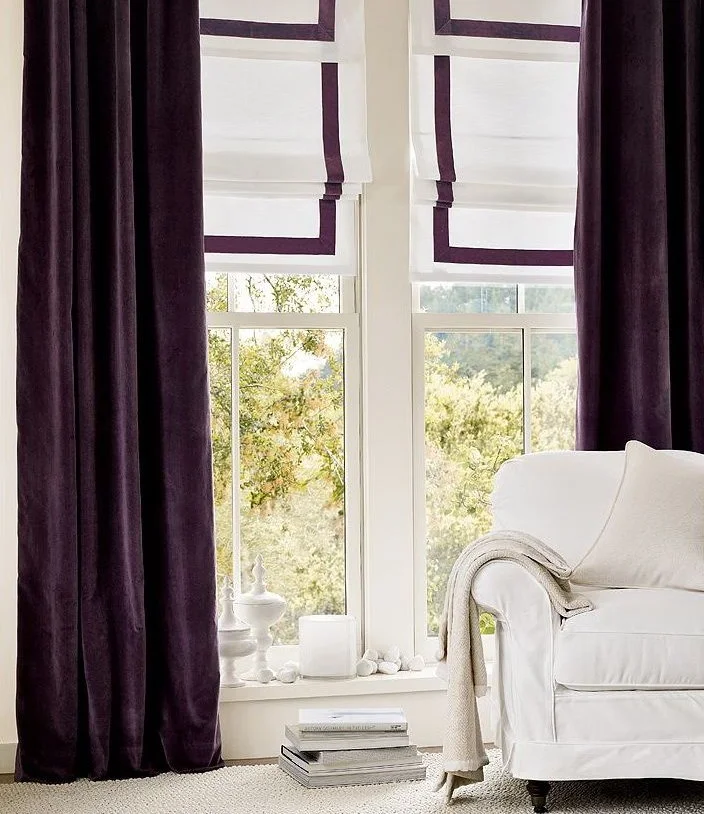
I love how precise the plum accents are here. The dark curtains create a strong frame around the windows, while the plum edging on the Roman shades creates a smaller, more delicate repetition of the same color. Because the rest of the room remains so light, these details feel intentional rather than heavy. The arrangement also makes the window itself feel like an architectural feature.
For my own space, I would borrow the idea of combining a strong curtain color with a much thinner matching border elsewhere. It creates a coordinated look without requiring numerous decorative objects. This is also a useful approach when I want plum to feel elegant and controlled rather than dramatic.
Playful Plum and Lavender With Patterned Drapery
This living room has a much more expressive color combination, pairing a soft purple sofa with a vivid magenta-plum armchair. The walls are painted a muted lavender tone, and the window is framed by patterned curtains in a gray-beige base with a geometric honeycomb-like design. Several pillows introduce pale blue, purple, and stronger pink shades, while a large pale coffee table and dark purple rug ground the seating arrangement. Fresh-looking floral arrangements are also visible on the table and side surfaces.
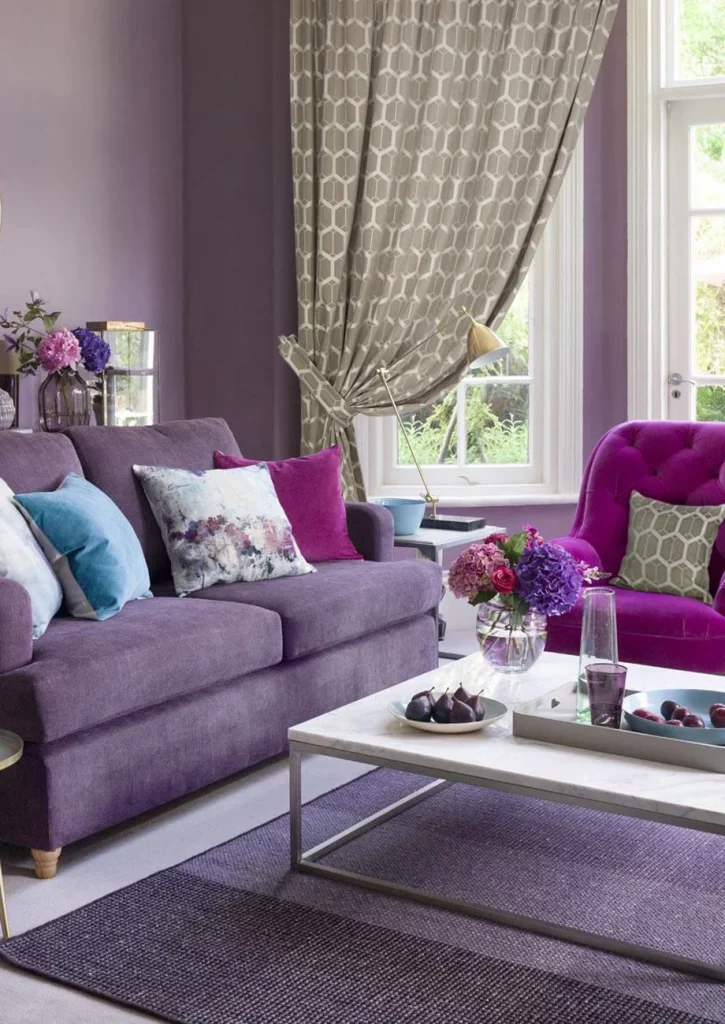
I think this image demonstrates how plum can become playful when several neighboring colors are allowed to interact. The sofa creates a soft foundation, while the brighter chair provides a clear focal point. The patterned curtains add another visual layer without using the same saturated shade as the chair, and the pale blue pillow gives the palette a cool counterpoint.
If I were adapting this idea, I would choose one plum-based furniture piece as the main statement and then build outward with softer lavender, blue, and pink accents. The important thing for me would be keeping the larger surfaces relatively controlled so the mix of colors remains intentional. This room works because the colors are varied, but they still belong to the same visual family.
Modern Plum Living Room With Integrated Workspace
The final image brings plum into a dark, contemporary living room that also includes a compact work area. A deep neutral sofa occupies the foreground, while a black-framed glass door opens along the right side. Behind the sofa, dark cabinetry and shelving surround a warm wood-toned section with integrated lighting. A small desk with a curved black lamp and office chair sits beside the sofa, while long plum curtains and plum-toned illumination give the room its signature color. The overall setting feels sleek and intimate.
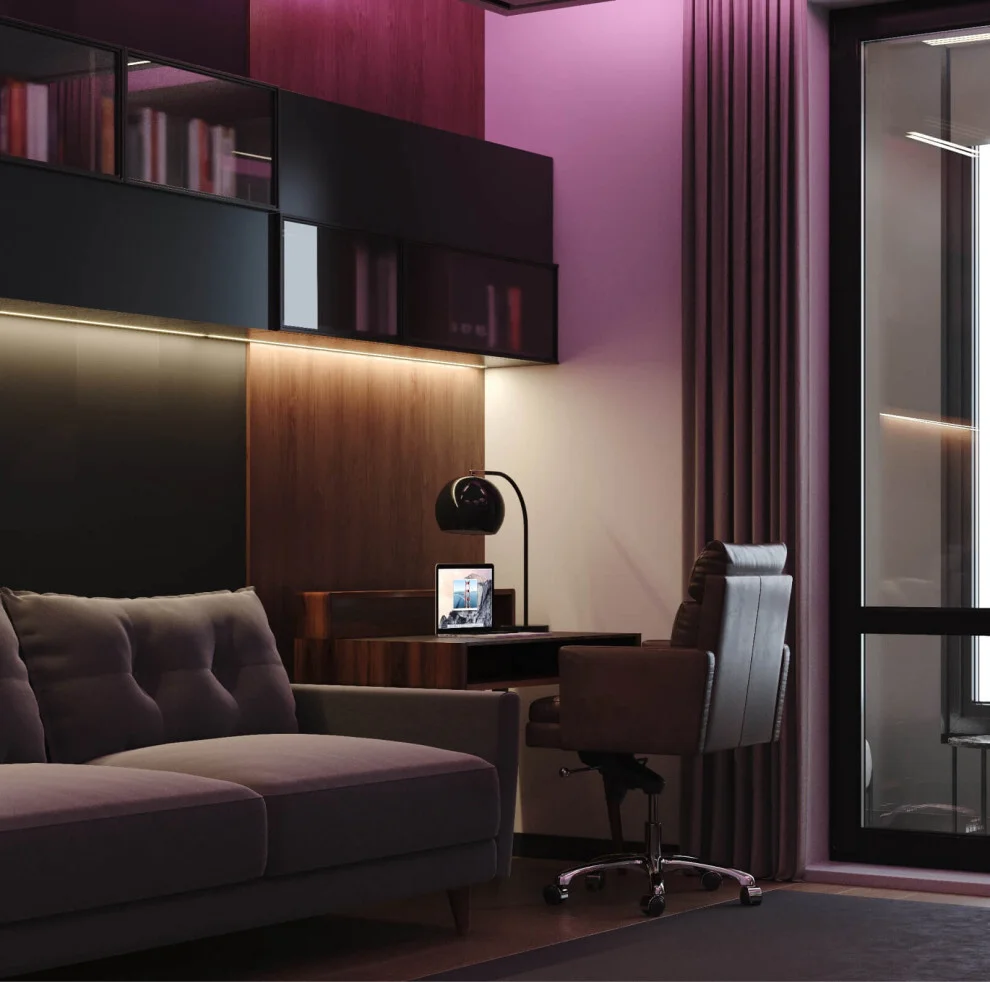
What works especially well here is the combination of living and working functions without visually separating them too much. The desk is tucked into the existing furniture composition, and the built-in cabinetry provides a strong backdrop while keeping the arrangement streamlined. The plum curtains add softness to the darker room, while the subtle colored lighting reinforces the same palette.
I would take inspiration from this room if I wanted plum to feel modern rather than traditionally decorative. Instead of relying on lots of plum accessories, I would use the color through curtains and carefully controlled lighting, then let dark cabinetry, warm wood, and neutral upholstery provide the foundation. It is a good example of how color can define an atmosphere without becoming the only thing you notice.
Soft Plum Sofa With Warm Neutral Surroundings
The first living room takes a restrained approach to plum, using a compact deep-plum sofa as the main source of color against a warm taupe wall. I like the simple arrangement: the sofa sits directly beneath an abstract artwork in brown, cream, and white, while a slim brass floor lamp adds a delicate vertical accent beside it. A small white wire-frame side table, neutral pillows, a large pale rug, and full-height beige curtains keep the room feeling light and balanced.
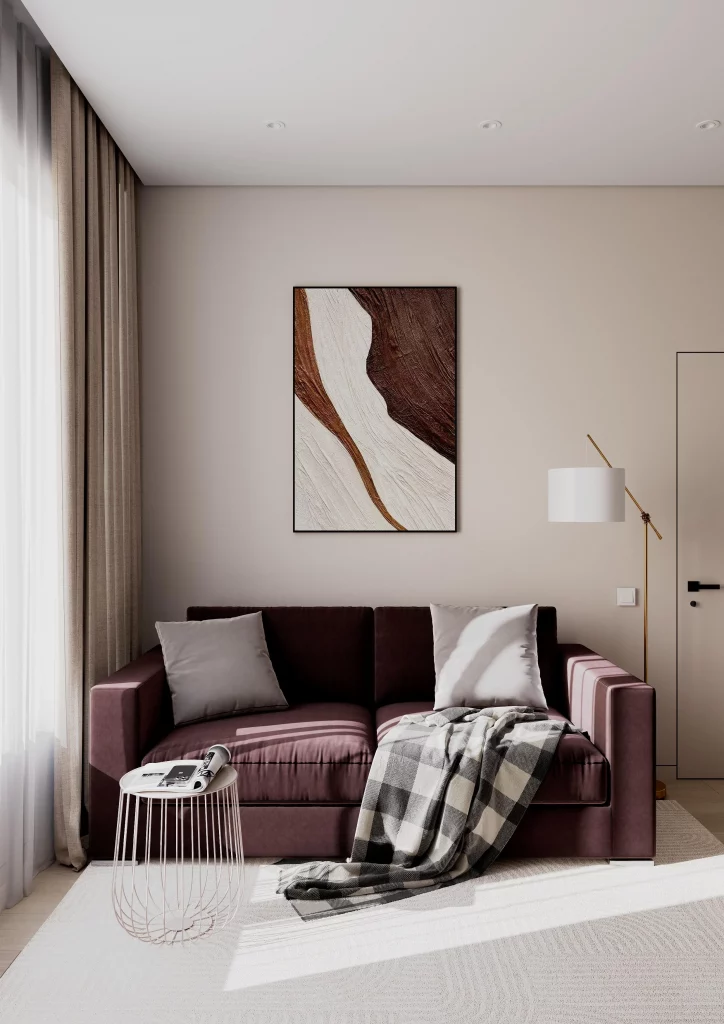
What makes this combination work for me is the contrast between the saturated sofa and the quiet background. The plum upholstery has enough presence to define the seating area, but the neutral wall, rug, and curtains prevent it from overwhelming the room. The open construction of the side table also keeps the floor visually light, which is especially useful when the sofa itself is a substantial color block.
I would use this image as inspiration if I wanted to introduce plum without committing to a fully colorful living room. A single sofa can carry the entire palette, while artwork and soft furnishings can repeat just a hint of the deeper brown and cream tones already visible here. The result feels considered rather than overly coordinated.
Plum Dining Area With Layered Drapery
This room brings plum into a more formal dining setting, with rich plum curtains framing the space on both sides and upholstered dining chairs introducing another layer of purple. The glass dining table keeps the center visually open, while the large crystal-style pendant becomes the main focal point overhead. An abstract painting in muted blue, beige, gray, and brown sits between the curtains, creating a calmer counterpoint to the darker textiles.
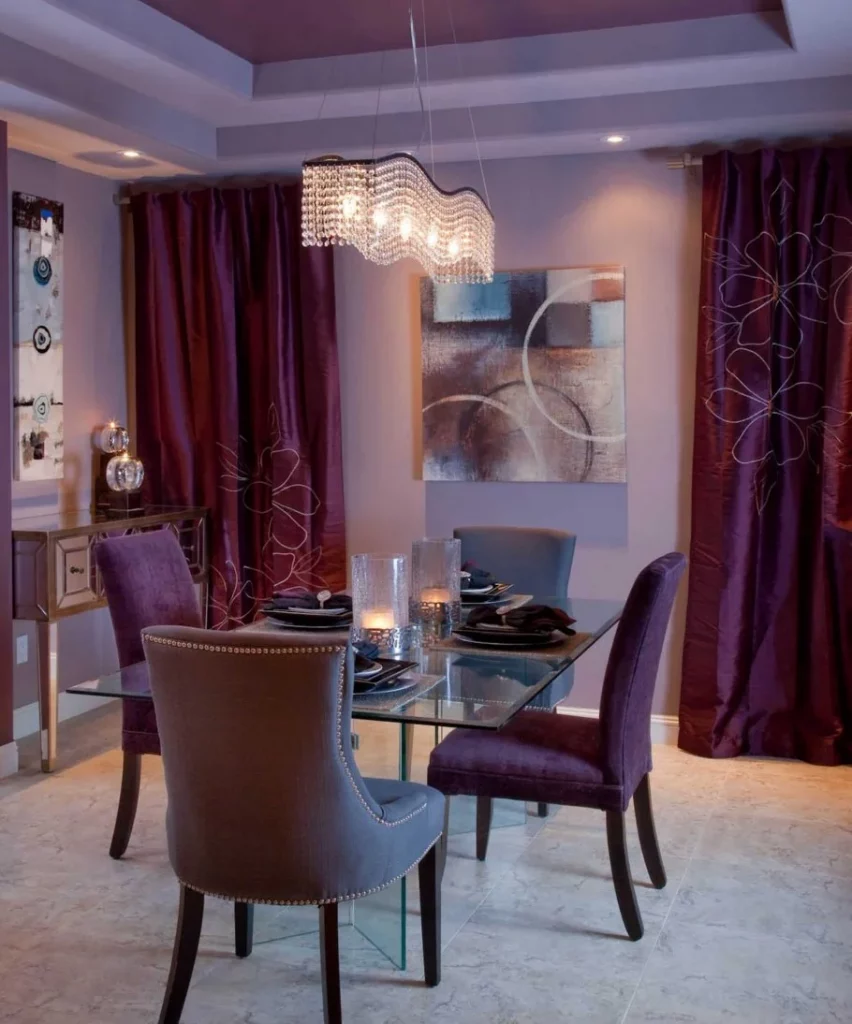
I like how the transparent table works with the heavier curtains and upholstered chairs. The glass surface gives the room breathing space, while the plum fabric adds depth and softness around the perimeter. The matching color family across the curtains and chairs also creates a strong sense of continuity without requiring every object to look identical.
For me, this is a good reminder that a plum palette does not have to stop at the living room. If a dining area sits nearby, repeating the shade in window treatments or seating can make the larger home feel connected. I would keep the surrounding artwork and hard surfaces relatively subdued, as shown here, so the plum remains the strongest visual statement.
Bold Plum Sectional With Artistic Personality
Here, plum becomes much more expressive. A large plum sectional fills the lower portion of the room and is layered with dark purple pillows, patterned leopard-print cushions, and a vivid central pillow with a graphic design. The room also includes a large colorful abstract artwork, dark curtains, reflective metallic tables, patterned stools, and a richly patterned area rug. Even the accessories contribute to the deliberately eclectic visual energy.
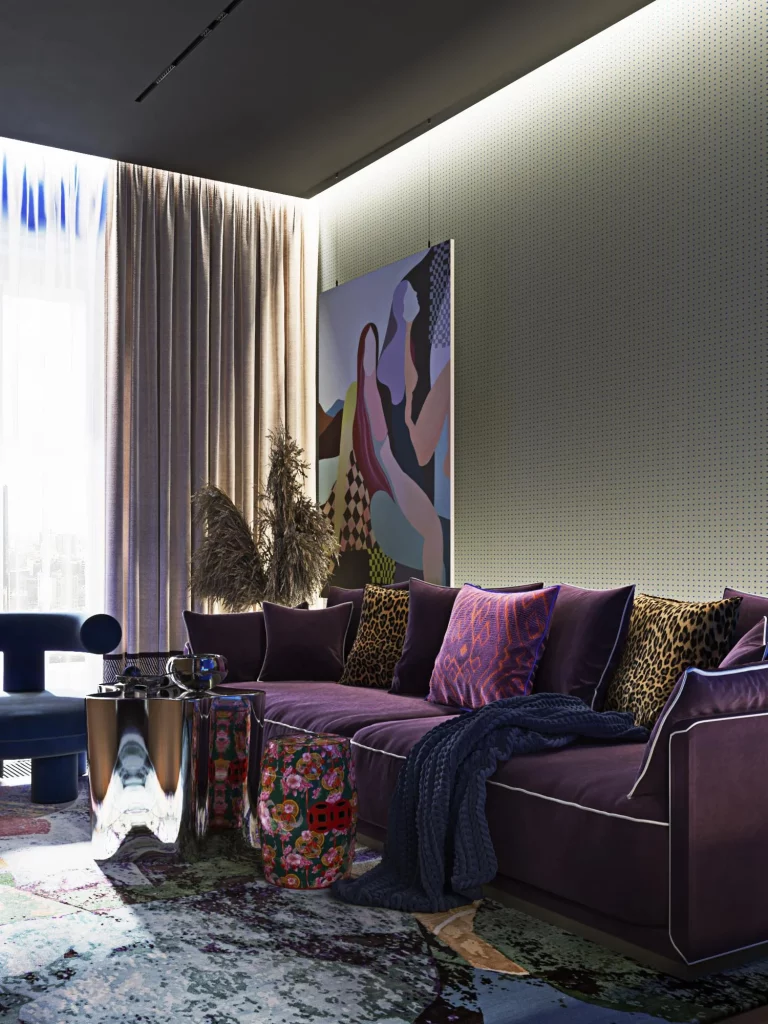
The sectional gives the room a strong foundation because its generous shape provides plenty of seating while creating a single dominant color field. I particularly like the way the smaller decorative pieces break up the solid upholstery. Metallic surfaces add contrast, while the patterned rug visually anchors all the different colors beneath the seating area.
If I wanted to recreate this idea, I would start with the plum sofa and then add patterns gradually rather than buying everything at once. The image shows that plum can handle playful combinations, but the key is to repeat a few related tones across the artwork, cushions, rug, and accessories. That creates visual rhythm even when the individual patterns are quite different.
Classic Plum Sofa Framed By Display Cabinets
This living room uses a traditional-looking plum sofa as the centerpiece, positioned symmetrically between two dark display cabinets. The sofa has clean, substantial proportions and is styled with two striped decorative pillows and two lighter textured cushions. Above it hangs an ornate crystal chandelier with delicate dark metalwork, while the dark flooring and wood coffee table reinforce the room’s more formal character.
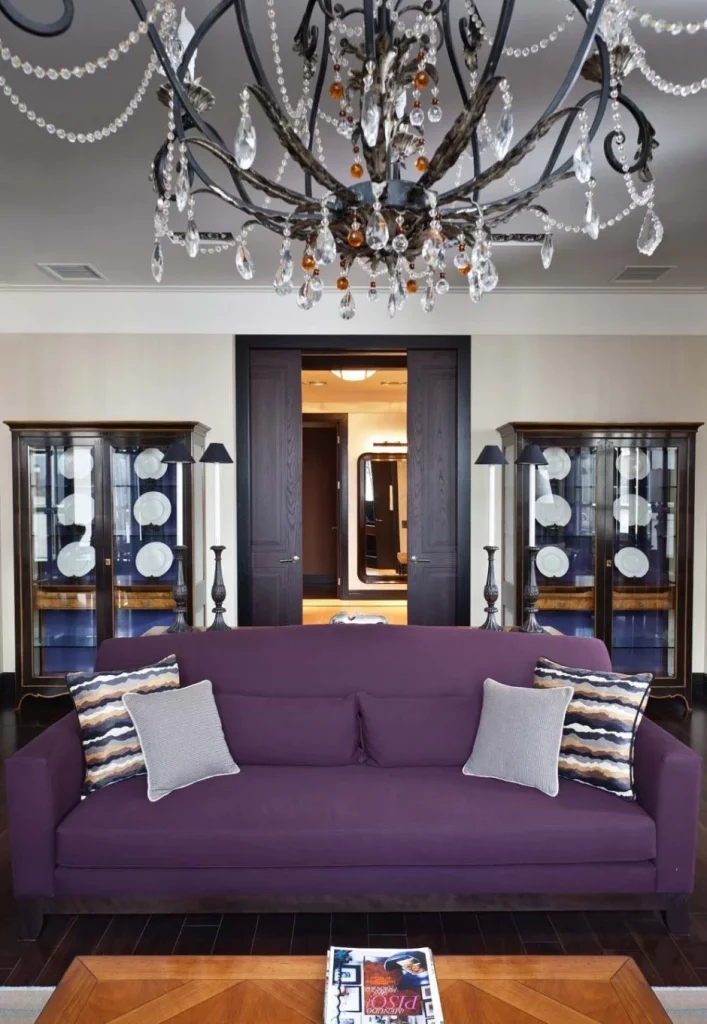
The symmetry immediately makes the space feel organized. I like the way the two display cabinets frame the sofa and the central doorway behind it, creating a strong visual axis. The plum upholstery softens the darker furniture while giving the seating area enough color to stand apart from the pale walls.
For me, this is a useful approach when working with a strong upholstery color in a more classic room. Rather than surrounding the sofa with lots of additional color, I would let the plum remain the focal point and use neutral or patterned cushions to introduce smaller variations. The chandelier then adds sparkle and vertical interest without competing with the sofa itself.
Plum Sofa With Geometric Wall Detail
This more contemporary room combines a plum sofa with a charcoal-gray paneled wall featuring angular geometric lines. On the opposite wall, a large black-and-white graphic surface creates a completely different visual texture. The sofa is styled with plum, beige, and patterned cushions, while a small round side table and pale rug keep the seating area relatively simple.
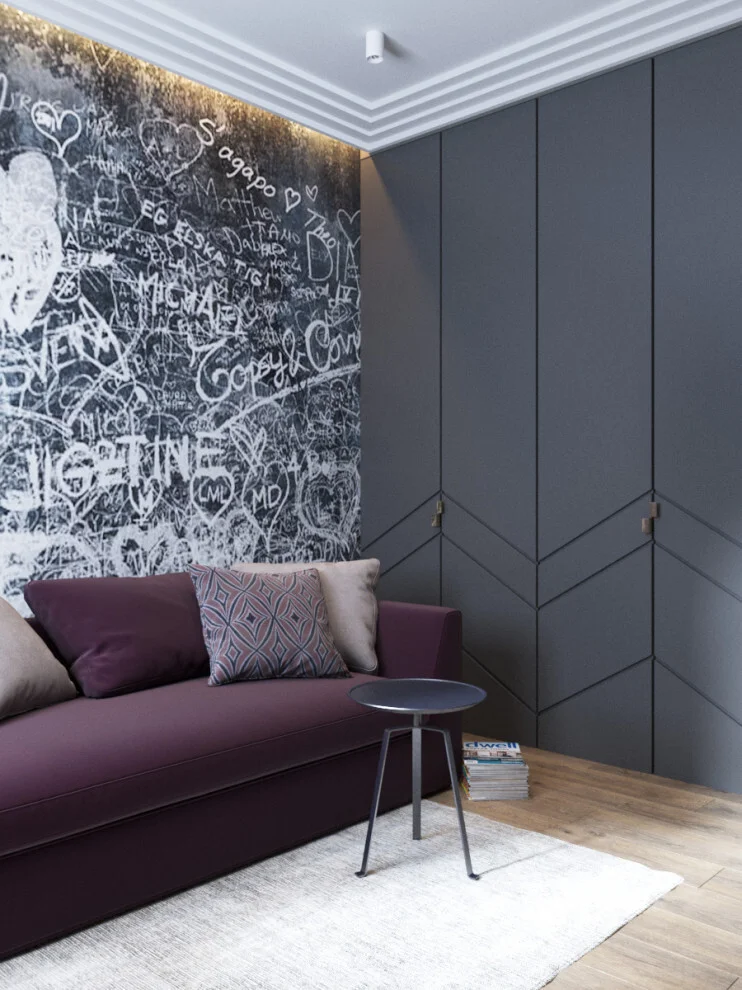
I find the contrast between the soft upholstery and structured wall treatment especially effective. The plum sofa brings warmth and softness into a room dominated by charcoal and monochromatic surfaces. At the same time, the geometric paneling gives the background a strong architectural presence without requiring additional furniture.
I would borrow this idea when I wanted plum to feel modern rather than traditional. Keeping the furniture silhouette relatively simple allows the color to work alongside sharper architectural details. A limited palette also helps the geometric wall remain interesting without making the room feel visually crowded.
Elegant Plum Curtains In A Light Sitting Room
This sitting area takes a much softer approach, pairing plum-purple curtains with a pale upholstered sofa and matching plum armchair. The curtains are especially noticeable because one panel includes a delicate floral embroidered border, adding a decorative detail without covering the entire fabric in a pattern. Patterned pillows, a brown textured throw, a glass coffee table, and a white ceramic lamp complete the comfortable arrangement.
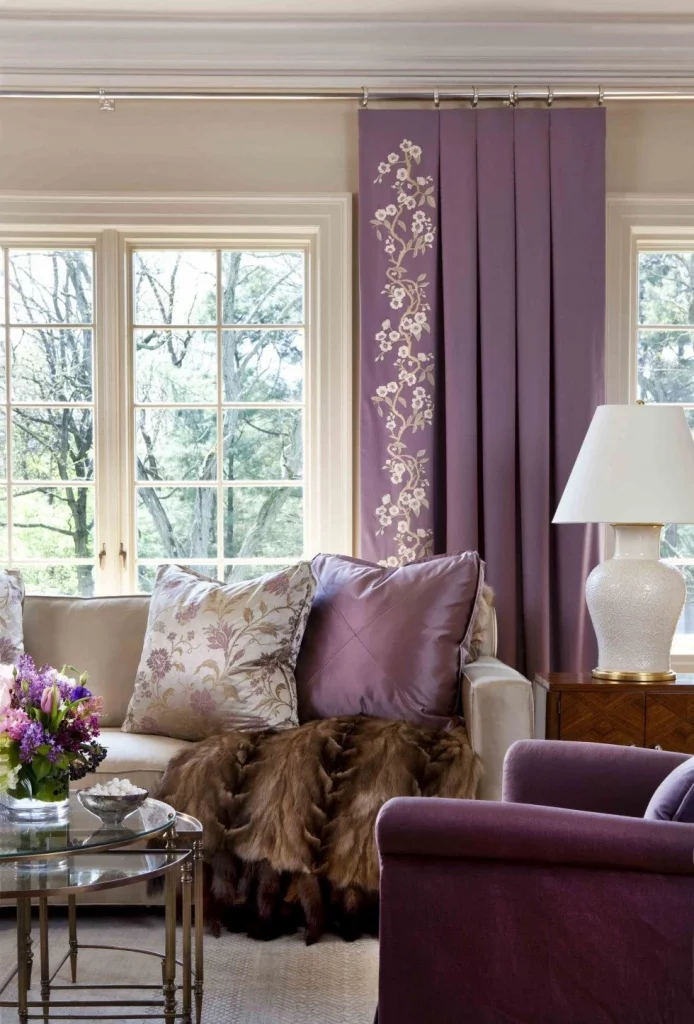
What I like most is the way the plum is concentrated around the seating area and windows rather than spread across every surface. The pale sofa gives the room an airy foundation, while the purple armchair and curtains create enough color to make the space feel layered. The large windows also bring in natural light, which keeps the deeper textiles from feeling too heavy.
In my experience, curtains can be one of the easiest ways to experiment with a strong color because they can dramatically change the atmosphere without replacing major furniture. Here, the plum fabric feels especially successful because it is balanced by pale upholstery and natural daylight. I would keep the rest of the room similarly calm if I wanted to achieve this elegant effect.
Compact Plum Workspace Beside The Bedroom
This compact interior uses plum curtains and a muted plum wall to create a cozy backdrop for a small built-in desk. White cabinetry hangs above the desk, while open shelving holds a row of books. A white chair and slim white desk lamp keep the workspace visually light, and the edge of a bed is visible on the right, showing how efficiently the work area has been incorporated into the room.
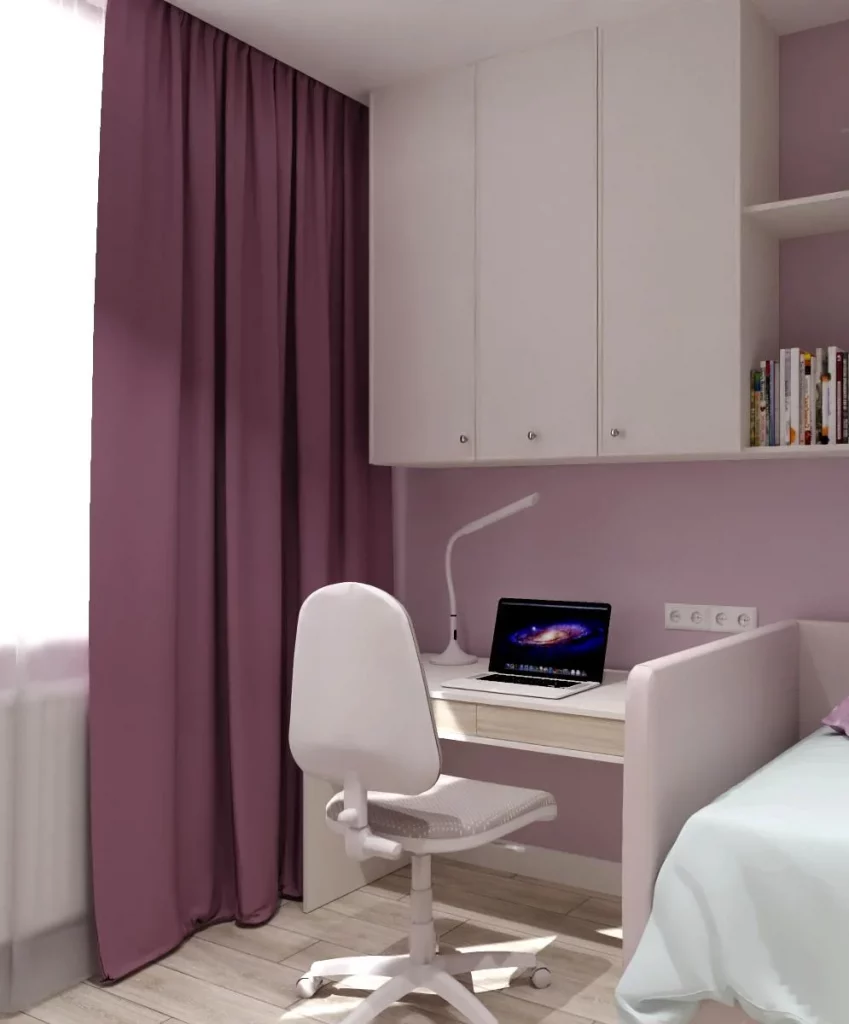
I like the practicality of this setup because the plum color helps visually define the workspace without needing a separate room or bulky divider. The white cabinetry provides closed storage above the desk, while the open shelf keeps frequently used items accessible. The compact arrangement makes good use of a narrow section of wall while leaving the rest of the room open.
Although this is not a traditional living room, I think the color idea translates beautifully to a living space. A muted plum wall or full-length curtain can create a defined reading, working, or lounging zone within a larger room. I would especially consider this approach in an apartment where one room needs to perform several functions.
Plum Accent Pillows In A Neutral Lounge
This spacious living room uses plum as an accent rather than the dominant color. Two light neutral sofas face a large dark coffee table, while several plum and patterned cushions bring color into the seating arrangement. Matching plum accents also appear on the smaller upholstered seating at the edge of the room and in the lampshade, while floor-to-ceiling curtains and dark built-in cabinetry create a sophisticated background.
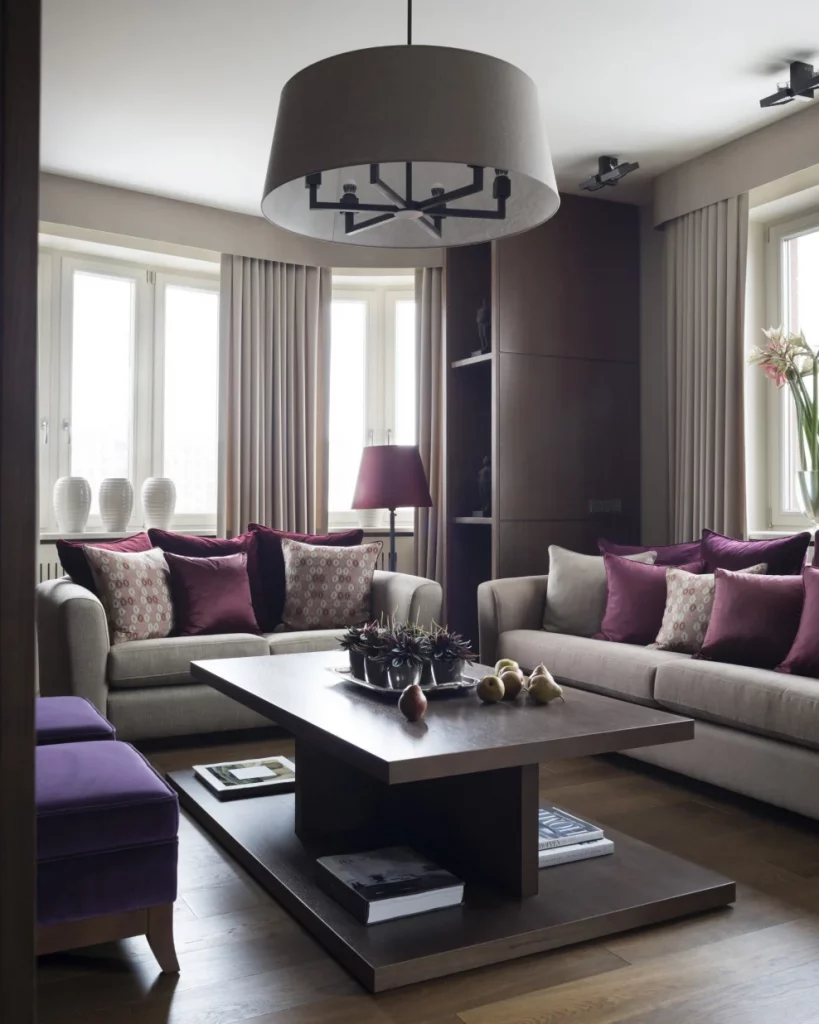
This is one of my favorite approaches for anyone who likes plum but does not want a purple sofa. The neutral upholstery gives the room a calm foundation, and the repeated plum cushions add enough saturation to make the space feel distinctive. The large coffee table also provides generous surface area and a strong central anchor without competing with the seating.
I would recreate this look by choosing two or three plum accents and repeating them at different heights, just as the image does. Keeping the primary furniture neutral makes seasonal changes much easier because the cushions and smaller upholstered pieces can be switched without redesigning the entire room. It is a practical way to experiment with a richer color.
Soft Mauve Curtains In A Refined Neutral Interior
This bright living room shows a much paler interpretation of plum through long mauve curtains that frame the windows. The rest of the room stays predominantly cream and white, with a large pale sofa in the foreground, white built-in cabinetry, a television mounted within a paneled wall, and a light patterned rug. A crystal-style ceiling fixture adds another delicate detail above the room.
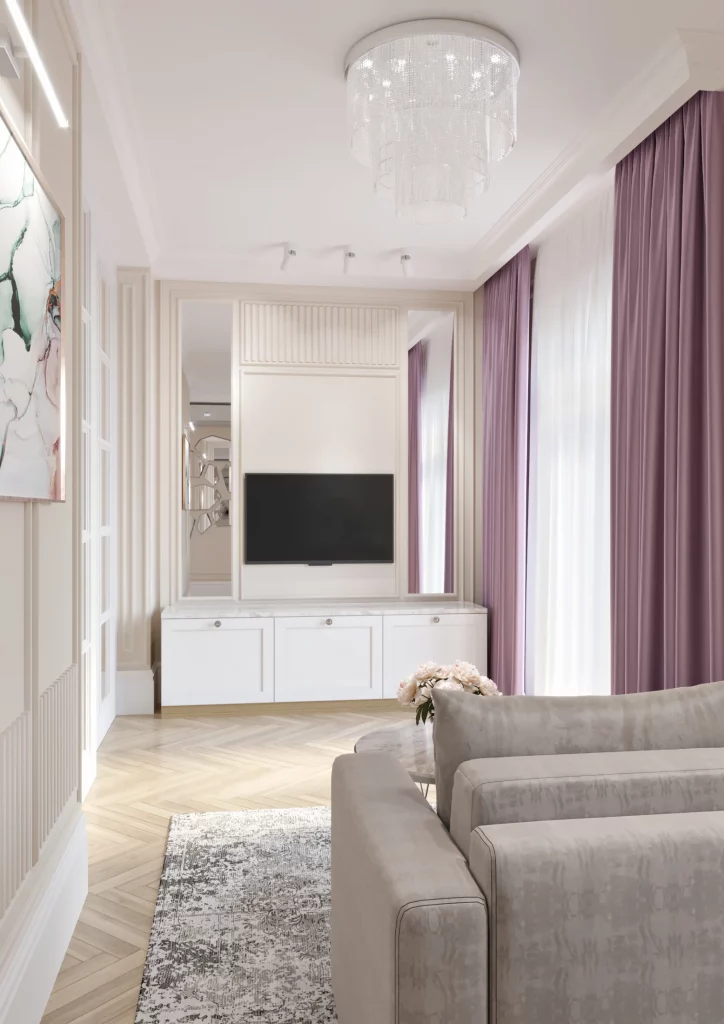
I like the subtlety here because the curtains introduce color without making the room feel dark. Their full height emphasizes the tall proportions of the space, while the pale upholstery and light flooring maintain an open appearance. The combination works particularly well because the mauve has enough grayness to sit comfortably beside the cream finishes rather than appearing overly saturated.
For me, this is a great option when a deeper plum feels too strong. A dusty mauve curtain can deliver the same general color family in a much quieter way. I would also keep the surrounding finishes light, as shown here, because that contrast makes the window treatment feel intentional and elegant.
Deep Purple Velvet Sofa With A Golden Accent
The final image takes the plum concept to its darkest and most dramatic point with a deep purple velvet sofa against a charcoal wall. The sofa has rounded arms and substantial cushions, while a single mustard-yellow pillow creates a striking contrast at the center. A colorful geometric rug introduces pink, orange, yellow, and purple tones, and a glossy dark coffee table adds a reflective surface in front of the seating.
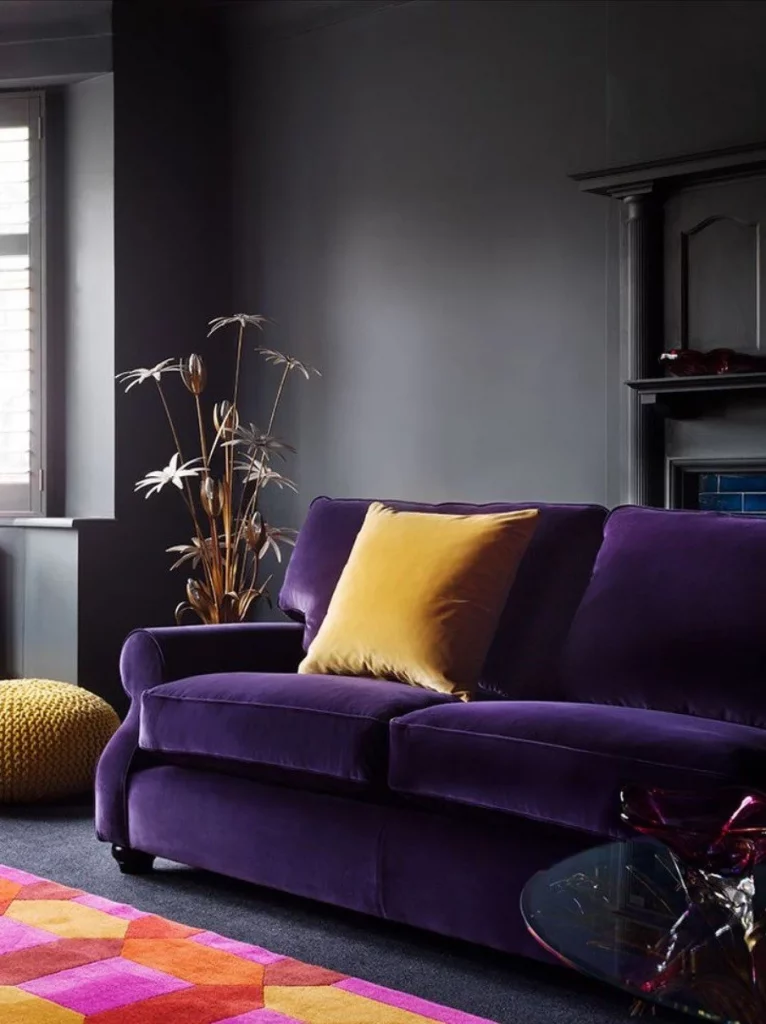
What makes this room so compelling to me is the confidence of the color combination. The dark wall and sofa create a moody foundation, but the yellow pillow and colorful rug prevent the palette from becoming flat. The metallic-looking decorative piece on the coffee table and the sculptural arrangement in the corner add more visual interest without filling every available surface.
I would use this image as inspiration if I wanted a plum living room with real personality. Velvet naturally intensifies a deep color because its surface changes with the light, so the upholstery becomes an important part of the room’s atmosphere. If I were recreating the look, I would keep one contrasting shade, such as the mustard tone shown here, as a deliberate accent rather than introducing many unrelated colors.
Soft Plum Sectional With Sculptural Black-and-White Accents
The first living room uses a large, softly structured plum sectional as its main visual feature. I love the way its deep muted-purple upholstery is balanced by a light wall, gray curtains, pale cushions, and a patterned gray-and-white area rug. Two black-framed abstract prints sit above the sofa, while a black-and-white globe chandelier adds a strong graphic element overhead. A slim black floor lamp and two nesting coffee tables continue the restrained black accents, while the warm wood floor prevents the room from feeling too cool.
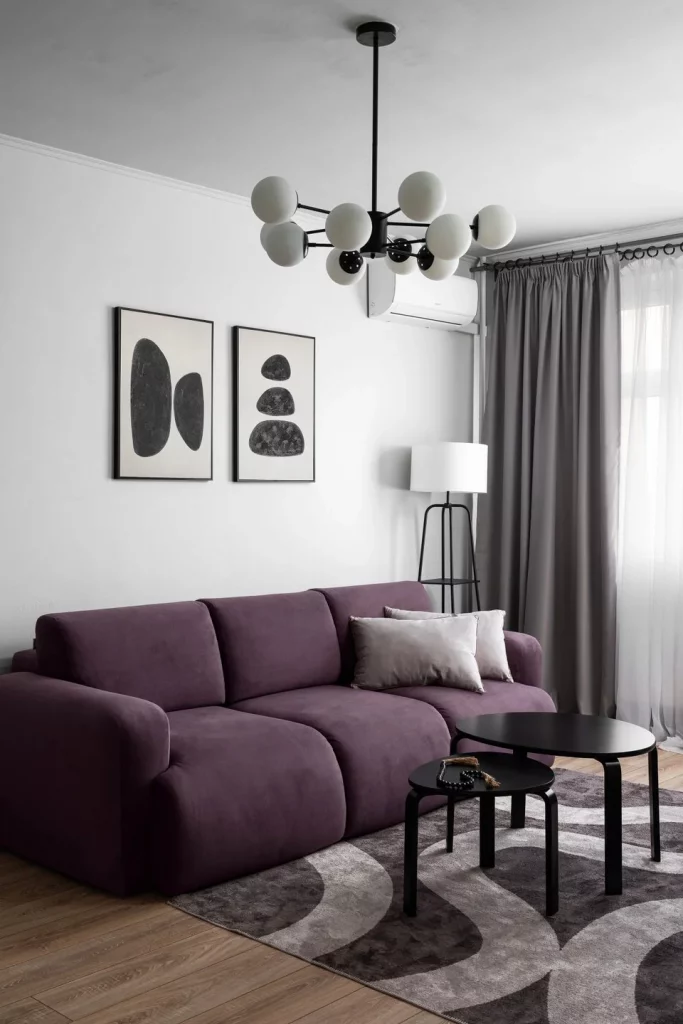
For me, the sectional is what makes this room especially inviting. Its generous proportions create plenty of comfortable seating, while the simple shape keeps the strong plum color from becoming visually overwhelming. The layered coffee tables are practical because they provide separate surfaces without taking up the visual weight of one large table. I also like how the rug visually connects the seating area and helps define it against the wood flooring.
If I were recreating this look, I would start with the sofa and keep the surrounding palette relatively quiet. The combination of plum, gray, white, black, and warm wood feels carefully edited rather than overly decorated. The spherical chandelier is another detail I would pay attention to because its sculptural shape gives the room personality without competing with the sofa. The overall effect feels modern, comfortable, and very easy to live with.
Plum Lounge With Exposed Ceiling Structure and Purple Art
This interior takes plum in a more atmospheric direction. I can see purple upholstered seating on the left and a large dark sofa on the right, creating a conversational arrangement around the open central floor area. Above it, exposed structural beams form a strong architectural grid across the ceiling, while several spherical pendant lights introduce a softer shape. The most noticeable decorative feature is the large, textured purple botanical-style installation above the long light-colored cabinet.
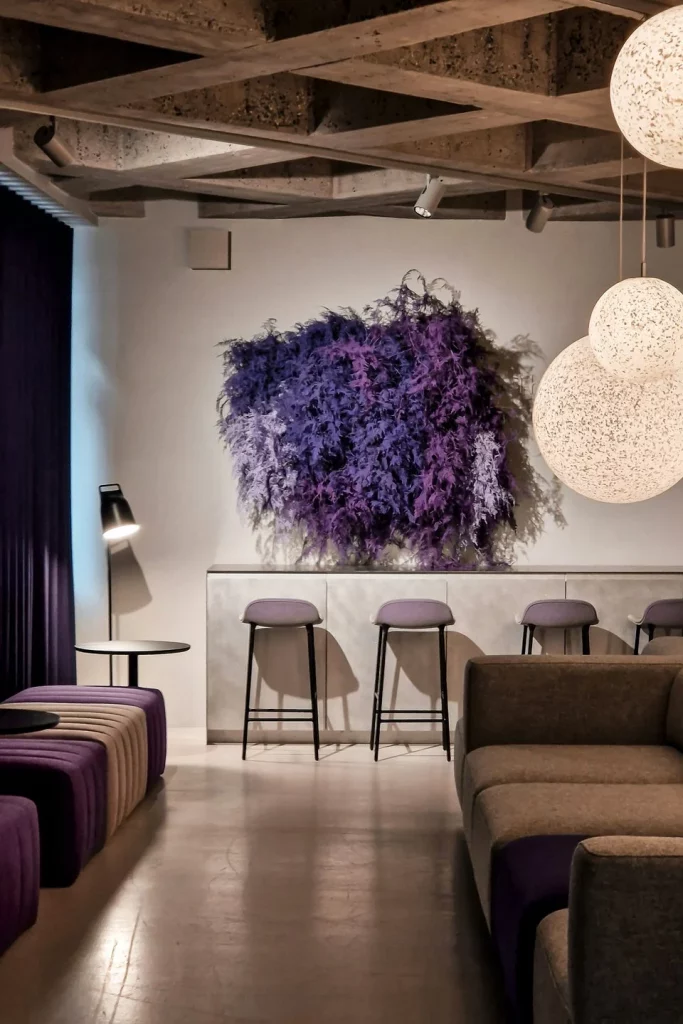
I think the contrast between the rough ceiling structure and the plush purple furnishings gives this room its character. The long cabinet provides a practical horizontal surface beneath the oversized wall feature, while the bar-height stools create a secondary seating zone. The different seating areas make the room feel designed for both relaxing and socializing. I also like the way the dark curtains and brown sofa provide visual weight without competing directly with the purple elements.
What I would take from this room is the idea of using plum as part of a broader tonal story rather than treating it as an isolated accent. The purple furnishings, oversized wall feature, and smaller purple details feel connected, while the neutral cabinet and floor give the eye somewhere to rest. If I wanted to soften the space, I would keep the same restrained palette and simply rely on warm, layered lighting to emphasize the textures already visible here.
Classic Plum Sofa Framed by Layered Artwork
The third room shows a more traditional approach to plum, with a deep purple sofa placed directly beneath a large horizontal artwork in shades of white, pink, plum, and black. Smaller framed artworks are arranged symmetrically on both sides, and matching table lamps sit on dark side tables. In front of the sofa, a large upholstered ottoman serves as the center of the seating arrangement, topped with a tray holding books and decorative objects. A vase filled with delicate pink branches adds a lighter note against the dark upholstery.
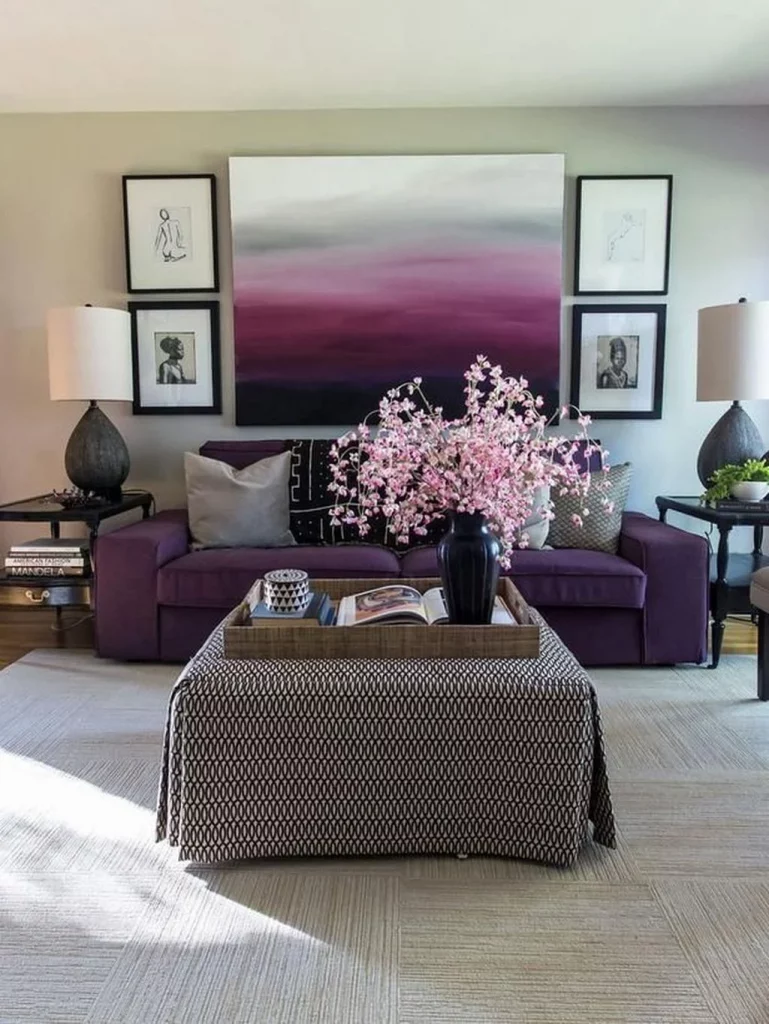
I find the symmetry particularly effective here. The matching lamps and balanced artwork arrangement give the room a sense of order, while the large ottoman creates a comfortable and functional centerpiece. Rather than introducing another strong furniture color, the design lets the plum sofa remain the main anchor. The pale rug and neutral walls also make the purple upholstery stand out without making the entire room feel dark.
For me, this is a great example of how to make plum feel polished and established. I would use a large piece of artwork to introduce several related shades and then repeat one or two of them through the sofa and accessories. The key is not to match everything exactly. The subtle differences between the plum upholstery, pink artwork, black frames, and pale neutral surfaces are what give the room depth.
Deep Plum Walls With Botanical Artwork and Velvet Seating
This living room takes a much moodier approach, surrounding a deep gray-purple sofa with walls in a rich plum shade. Two large botanical-style artworks with dark backgrounds hang above the sofa, while patterned cushions introduce flowers, birds, and other colorful details. A white textured table lamp with a black shade sits on one side, and a glass coffee table with a metallic frame occupies the center. The dark wall, sofa, and artwork create a dramatic backdrop for the small touches of yellow, pink, green, and red.
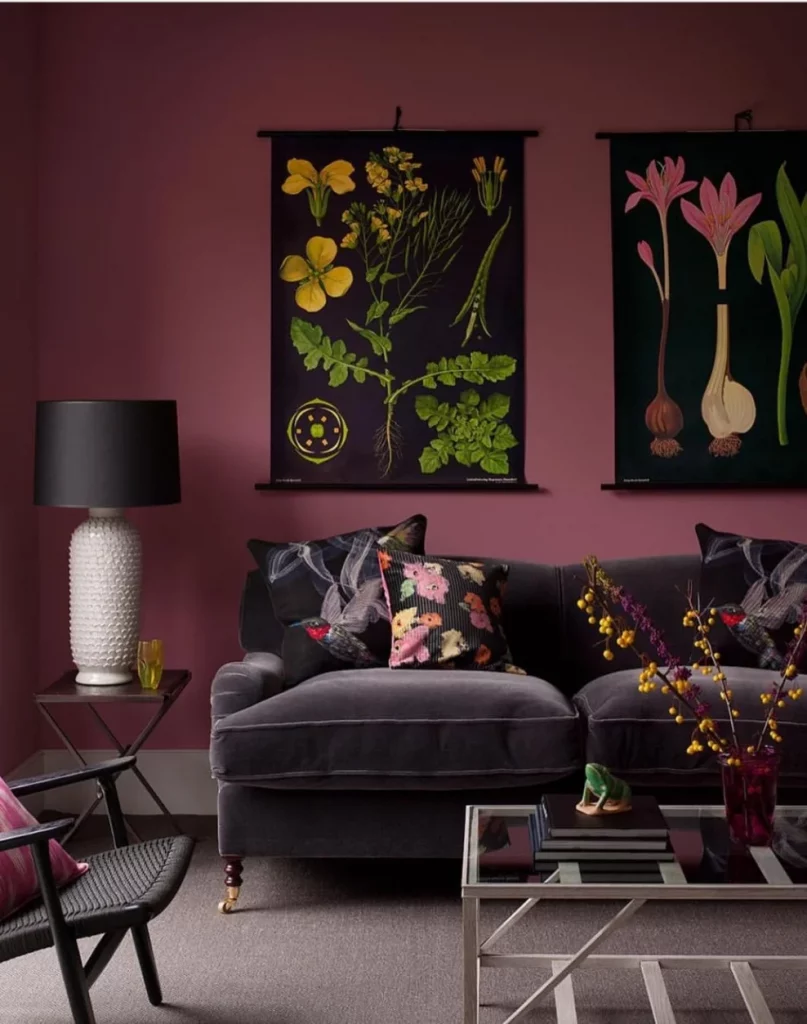
I like how the room uses the wall color as a foundation rather than simply adding purple furniture to a neutral room. The sofa almost blends into the background, which allows the patterned cushions and artwork to become more noticeable. The rectangular coffee table keeps the center practical for books and decorative pieces, while the open metal framework prevents it from looking too heavy against the dark palette.
If I were working with a wall this deep, I would follow the same principle shown here and introduce artwork with enough contrast to remain visible. I would also keep the larger furniture relatively close in tone to the walls if I wanted a cocooning effect. The small bursts of color in the cushions and artwork are enough to keep the room lively, so I would resist adding too many competing accents.
Compact Purple Sofa With Soft Neutral Surroundings
The fifth image shows a much quieter plum living room. A compact purple sofa sits against a textured taupe-gray wall, with a framed artwork centered above it and two slim vertical wall sconces placed symmetrically on either side. The sofa has a simple straight silhouette and is paired with two pale cushions. The light wood floor stretches across the room, leaving generous open space around the furniture and making the seating area feel uncluttered.
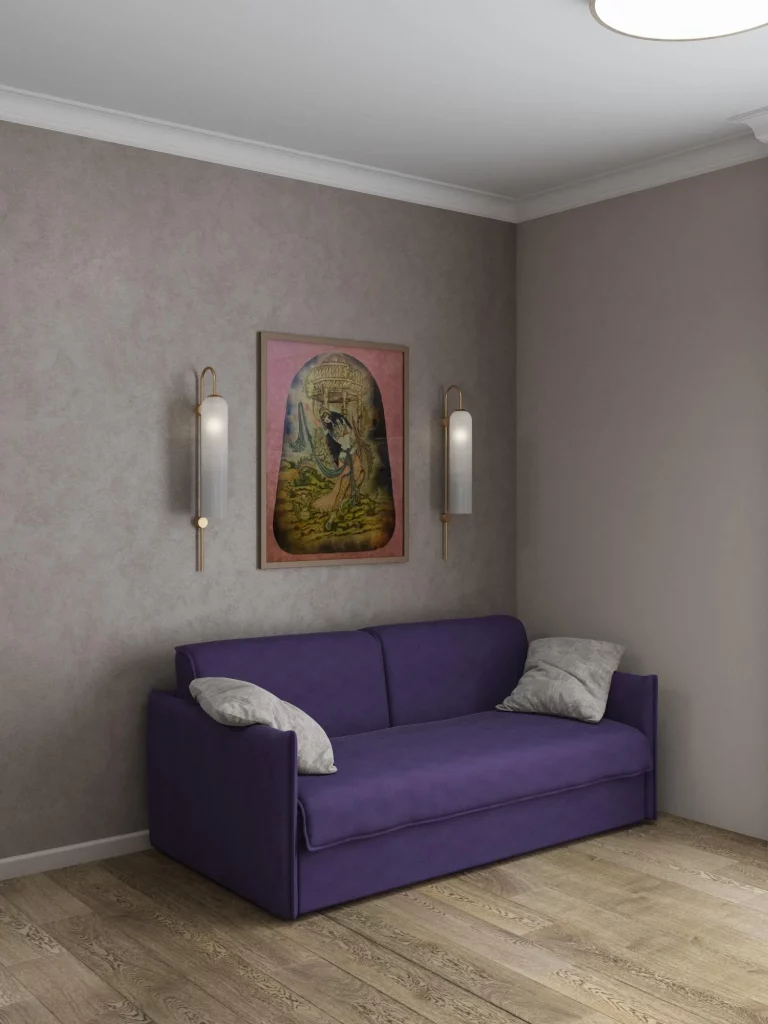
What works especially well for me is the balance between the strong sofa color and the understated room around it. The neutral wall and floor give the plum upholstery enough room to stand out, while the matching sconces create a clear visual frame around the artwork. Because the sofa is relatively compact, the room does not feel crowded. The open floor also makes the space appear more flexible and easy to move through.
This is one of the easiest ideas in the collection to adapt to a smaller living room. I would keep the furniture footprint modest and let one plum piece provide the color statement. The artwork and sconces are also a useful reminder that a small wall can feel finished without being filled with numerous decorative objects. For me, the simplicity is exactly what gives this room its calm character.
Plum Media Wall With Vertical Textured Panels
The sixth room combines a plum-toned built-in cabinet with a light media wall featuring narrow vertical paneling. A black television is mounted in the center, while a floating light wood console runs beneath it. On the left, tall plum cabinetry integrates with the overall wall composition. Floor-to-ceiling curtains in a warm taupe shade soften the right side, and a small round side table with an open wire base sits in the foreground.
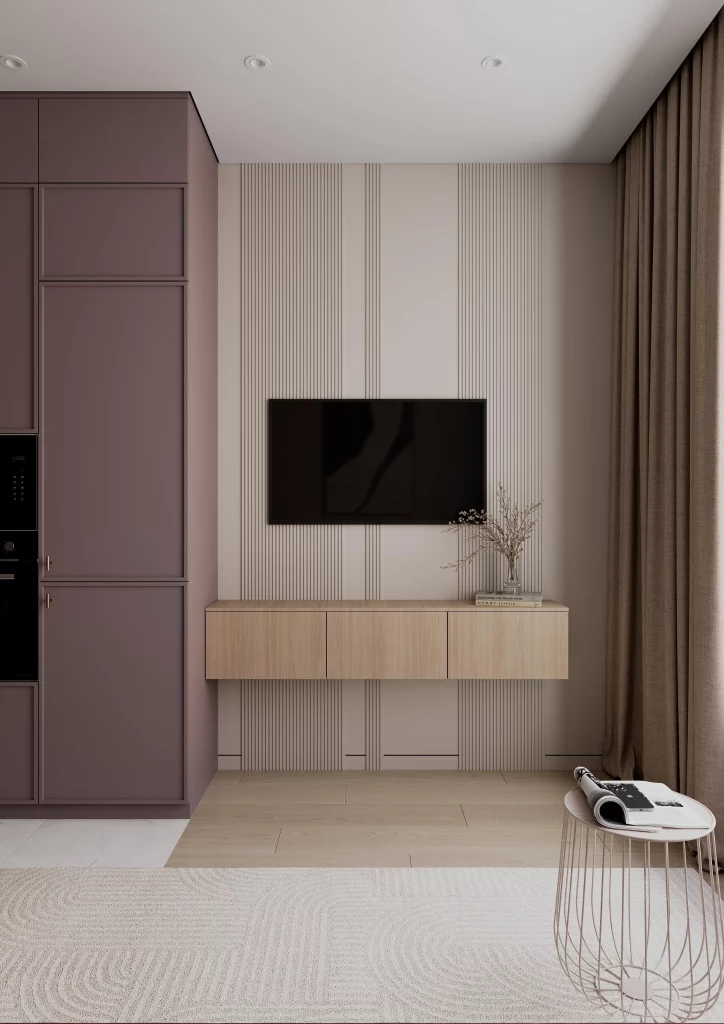
I particularly like the way the plum cabinetry is used as part of the architecture rather than as a standalone accent. The vertical wall treatment gives the television zone texture and rhythm, while the floating console keeps the floor visually open underneath. The light wood adds warmth and creates a natural transition between the pale wall and darker plum cabinetry. The result feels organized without looking overly busy.
From my perspective, this is a smart approach when a living room needs to combine storage with entertainment. Instead of adding several separate cabinets, the tall cabinetry and floating console create a more unified composition. I would keep the decorative styling on the console minimal, as shown here, because the wall texture, cabinetry, and television already provide enough visual information.
Plum Reading Corner With Floor-to-Ceiling Drapery
The seventh image creates an intimate seating corner around a plum upholstered armchair and matching rounded ottoman. Floor-to-ceiling curtains frame the large window, with sheer curtains layered behind darker plum-gray drapery. A small round glass table sits beside the chair, supported by a sculptural metallic base, while a contemporary pendant light hangs centrally above the arrangement. A pale area rug defines the seating zone against the darker wood floor.
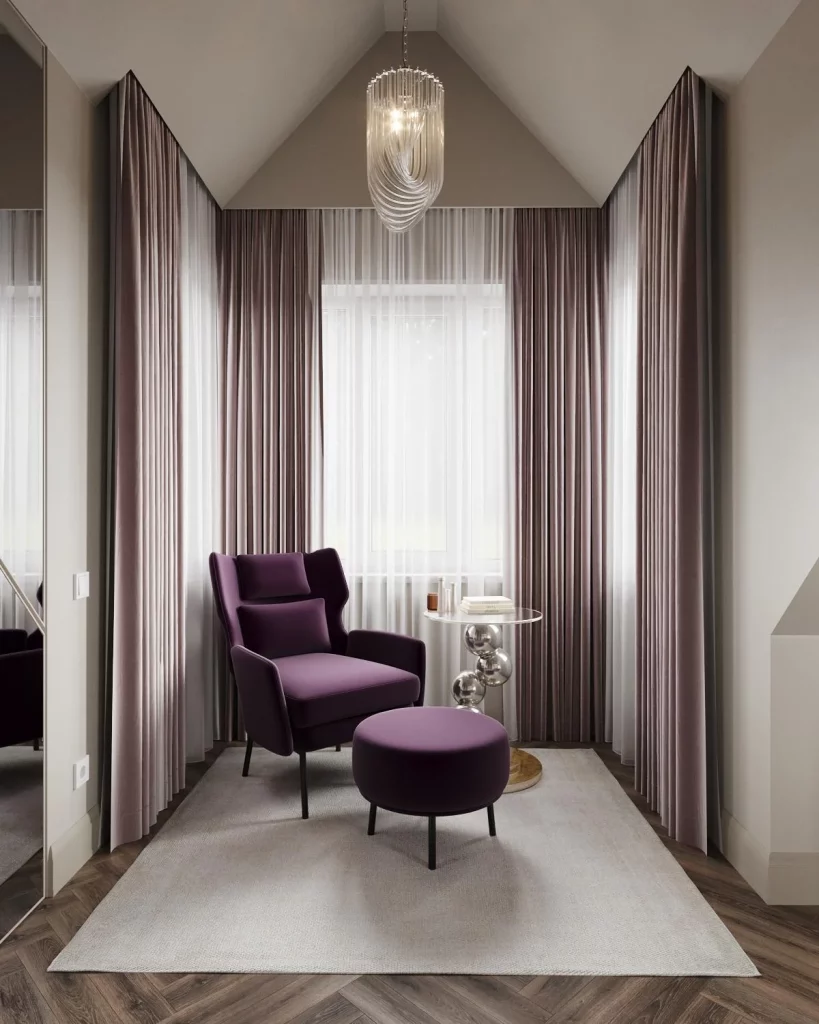
For me, this is a beautiful example of using plum on a smaller scale. Instead of covering an entire sofa, the color appears on the chair and ottoman, allowing the rest of the room to remain soft and neutral. The matching upholstery makes the corner feel intentional, while the rounded forms of the ottoman and table add visual softness. The large rug also makes the seating area feel like a separate destination within the room.
I would use this idea when I wanted to experiment with plum without committing to a large sofa or painted walls. A single comfortable chair can create a dedicated reading or relaxing spot, especially when it is paired with a nearby table and good lighting. I also like the full-height curtains because they emphasize the height of the room and make the window treatment feel integrated with the architecture.
Rich Purple Chesterfield Sofa in an Open Contemporary Interior
The eighth room makes plum the unmistakable centerpiece with a richly saturated purple Chesterfield-style sofa. Its deep button tufting, rolled arms, and substantial proportions give it a strong traditional character, while the surrounding interior is much more contemporary. Behind the sofa, vertical wood slats divide the living area from the kitchen, and white brick walls contrast with darker architectural elements. Black pendant lights, striped cushions, and a small black side table reinforce the graphic quality of the space.
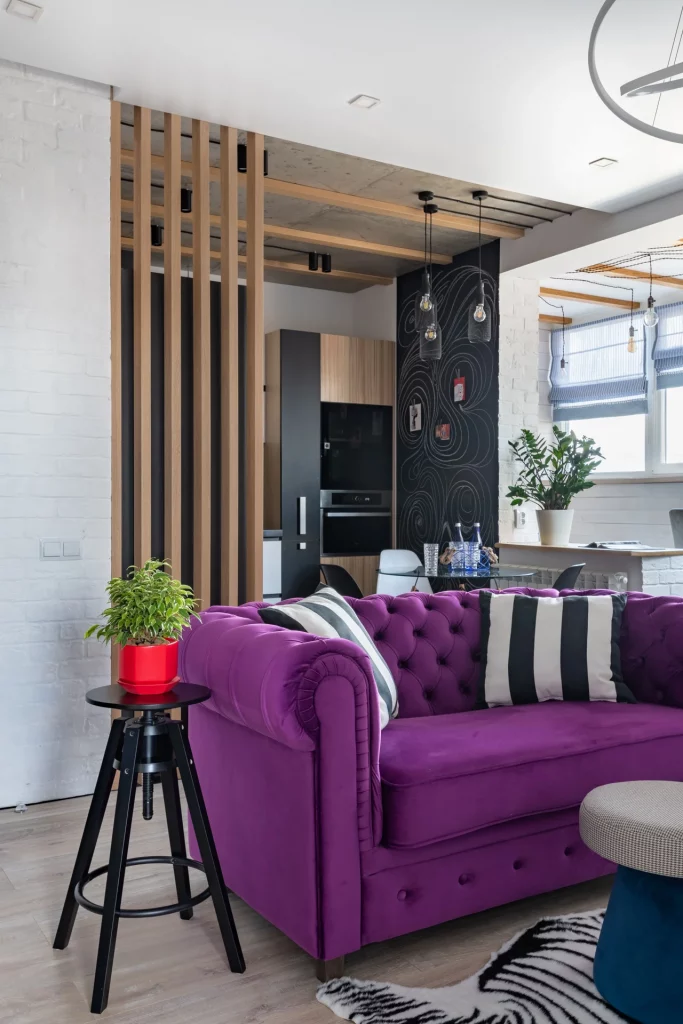
I like the tension between the classic sofa and the cleaner architectural background. The tufted upholstery gives the seating a luxurious visual texture, while the open room, wood dividers, and simple lighting prevent it from feeling overly formal. The small table beside the sofa is practical for placing a drink or decorative object, and the open arrangement allows the sofa to remain visible as the focal point of the living area.
If I were adapting this idea, I would let the sofa carry most of the personality and keep the surrounding furniture relatively restrained. The image shows that a richly colored traditional sofa can work beautifully in a modern open-plan setting when its surroundings provide clean lines and contrasting textures. I especially like the combination of purple, black, white, and natural wood because it feels confident without becoming visually chaotic.
Futuristic Plum Lounge With Curved Architectural Forms
The ninth image moves into a much more experimental interpretation of plum. The room is built around curved architectural forms, with rounded steps leading toward a raised seating platform. A low plum-toned sofa and cushions sit against a backdrop of soft lavender and pink surfaces, while concealed purple lighting follows the curves of the ceiling. A large yellow spherical accent hangs near the upper right, and transparent turquoise-toned tables introduce a striking contrast in the foreground.
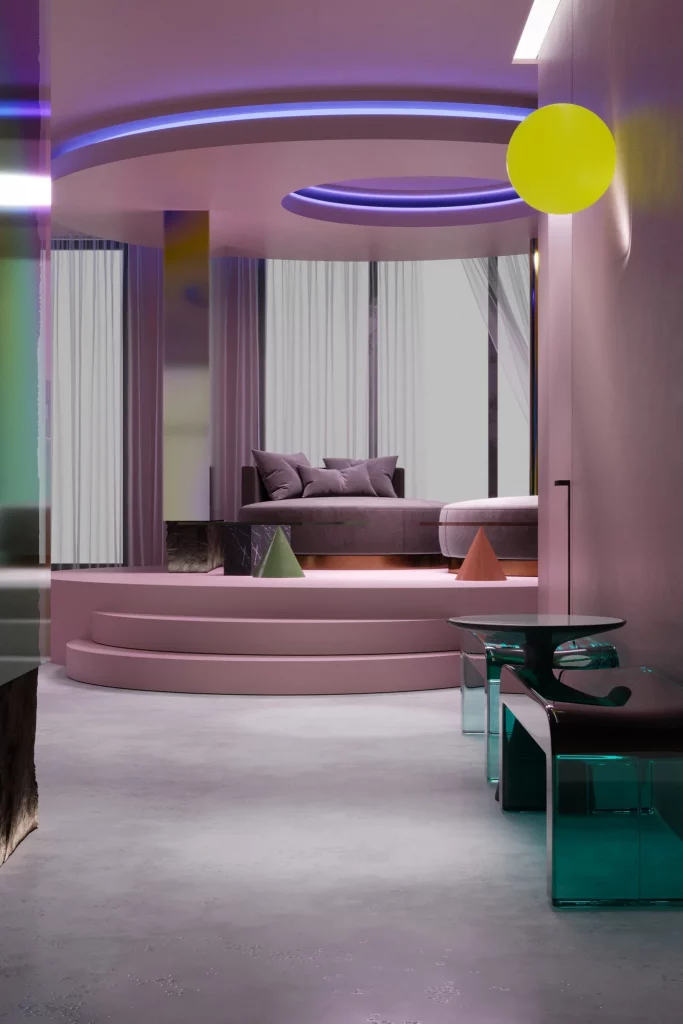
What stands out to me is how completely the color is integrated into the architecture. Plum and lavender are not limited to the furniture; they appear throughout the walls, ceiling details, lighting, and seating area. The curved forms also make the room feel more fluid and immersive. The transparent tables add another layer of visual interest because they remain lightweight despite their unusual shapes and strong color contrast.
I would treat this image as inspiration for experimenting with plum beyond conventional furniture. Even if I did not recreate the architectural curves, I could borrow the idea of repeating related purple tones across several surfaces and then introducing one unexpected contrasting accent. The important lesson for me is that a bold color becomes easier to handle when it is repeated thoughtfully throughout the room instead of appearing only once.
Elegant Purple Sectional With Classic Wall Paneling
The final room combines a purple sectional with elegant wall paneling in a soft neutral shade. The sofa has a clean, contemporary shape with a chaise extending toward the right, while several cushions in white, gray, black, and yellow create contrast. Two slim gold-toned wall sconces sit within the paneled wall, and a ceiling-mounted projector is positioned above the seating area. Long neutral curtains frame the window, while a large pale patterned rug grounds the entire arrangement.
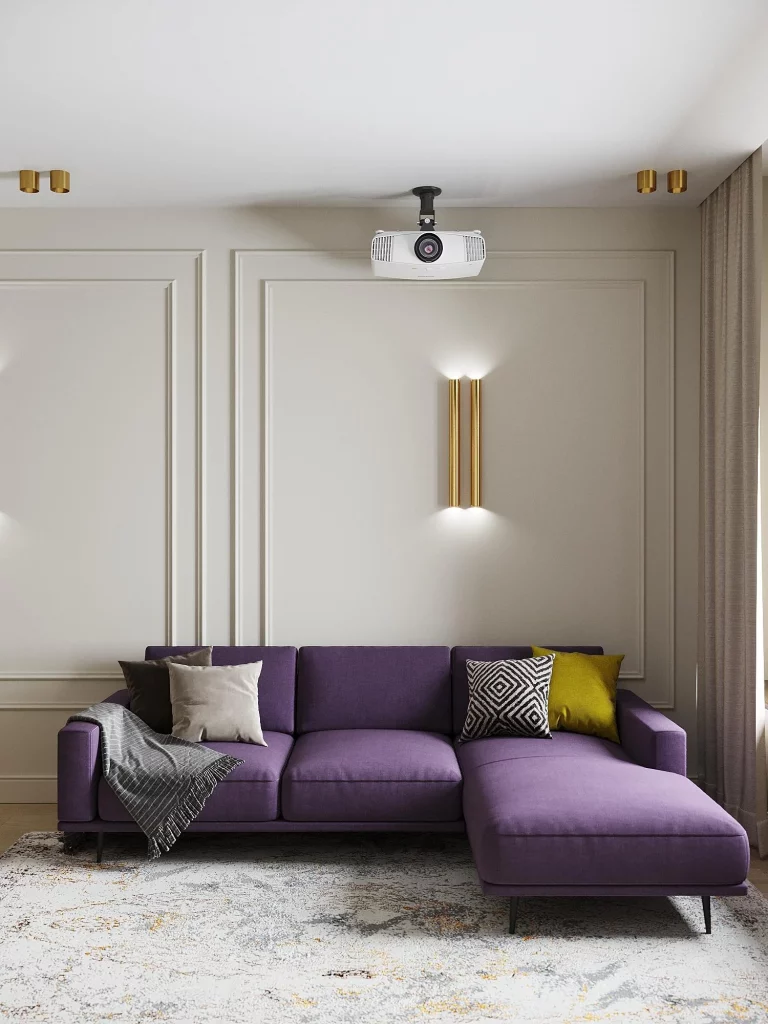
I think this room succeeds because it gives the plum sectional plenty of visual space while surrounding it with quiet architectural details. The paneled wall adds depth without introducing another strong color, and the long chaise makes the sofa particularly practical for stretching out or relaxing. The mix of cushions keeps the seating casual, while the projector adds a clear entertainment function without requiring a separate media cabinet.
For my own decorating, I would take inspiration from the restrained color balance here. Plum provides the main personality, while yellow, black, white, gray, gold, and warm neutrals are used in much smaller amounts. I also like the combination of classic wall detailing with contemporary furniture because it creates a room that feels current but not overly dependent on one trend. It is a very practical way to make a strong purple sofa feel sophisticated.
Soft Plum Seating With an Elegant Layered Finish
The first room pairs a large L-shaped sectional in a muted plum-gray velvet with matching soft cushions and a round, deeply upholstered coffee table. I love the way the seating fills the foreground while the open kitchen and dining area remain visible behind it. The ceiling combines dark beams with a stone-like finish, while a delicate branch-style chandelier hangs above the seating and adds an intricate focal point. Light walls, white cabinetry, a textured backsplash, and pale flooring keep the room from feeling too heavy.
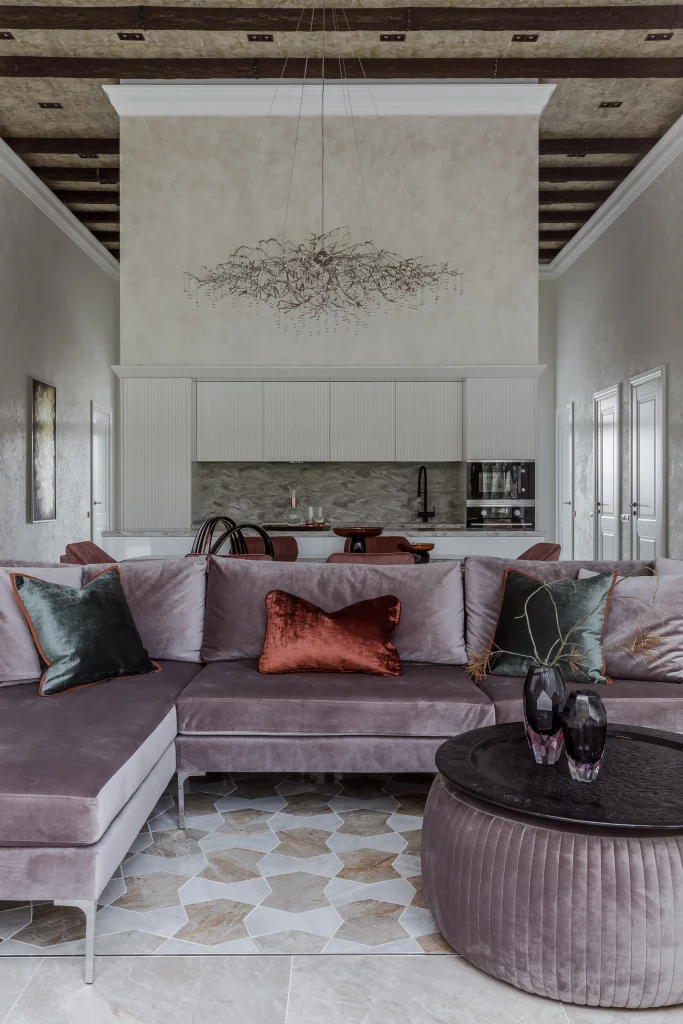
For me, the strongest feature is the way the muted plum upholstery connects with the warmer reddish-plum accent pillows without making everything look overly coordinated. The sectional also creates a comfortable zone for relaxing while naturally defining the living area within the larger open-plan space. The patterned floor immediately in front of the sofa adds another layer of visual interest, and the large upholstered coffee table provides a practical surface without introducing a hard, angular shape.
I would take inspiration from this room by choosing plum upholstery with a slightly softened, dusty undertone rather than an extremely saturated purple. I find that this approach makes the color easier to live with and allows architectural details, lighting, and textures to remain part of the overall composition. If I were recreating the look, I would let one substantial piece carry the plum color and use smaller accents to echo it rather than repeating the shade everywhere.
Plum and Mustard in a Playful Modern Living Room
Here, plum appears through the long mauve-purple curtains and a small pinkish cushion, while a large mustard-yellow sofa becomes the dominant seating feature. The television sits on a long wooden console with a reddish-toned top, and the wall behind it is covered with an elaborate green geometric line pattern made from vertical lines, curves, and rectangular sections. A group of black arched pendant lights hangs overhead, while the wood floor is laid in a herringbone pattern.
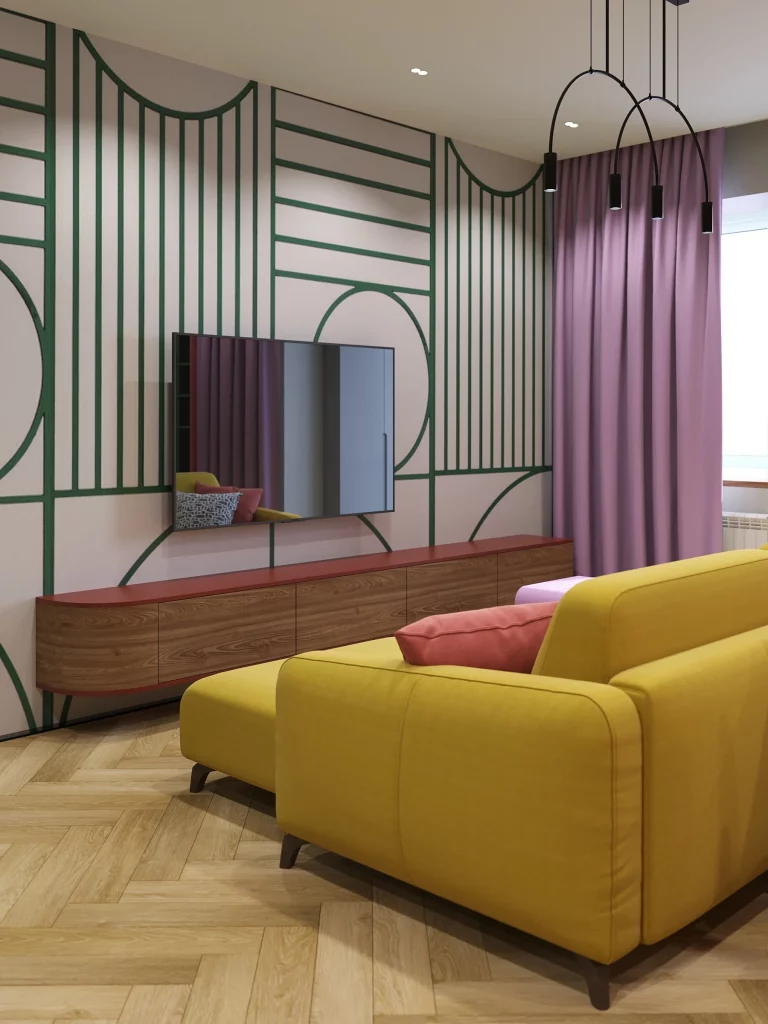
I like how confidently this room combines colors that could easily compete with one another. The yellow sofa has enough visual weight to balance the deep curtain color, while the green wall pattern provides a structured backdrop instead of another large block of color. The long console also keeps the television area visually organized and gives the wall a strong horizontal line that works nicely with the geometric treatment behind it.
From my perspective, this is a great example of using plum as part of a larger color story rather than making it the only feature. I would keep the basic relationship between the colors intact if I were adapting the idea at home, especially the contrast between the warm sofa, cool plum curtains, and green graphic wall. The key is to give each color a clear role so the room feels intentional instead of crowded.
Dusty Plum Sofa Against a Calm Window Wall
This living room takes a much quieter approach, with a dusty plum upholstered sofa positioned beneath a wide group of windows. Soft Roman shades cover the windows, while full-length gray-green curtains frame the right side. A dark media console sits opposite the sofa, accompanied by tall indoor greenery and a few black decorative objects. The wood flooring and large muted area rug create a subdued foundation, while the pale walls and generous daylight keep the room feeling open.
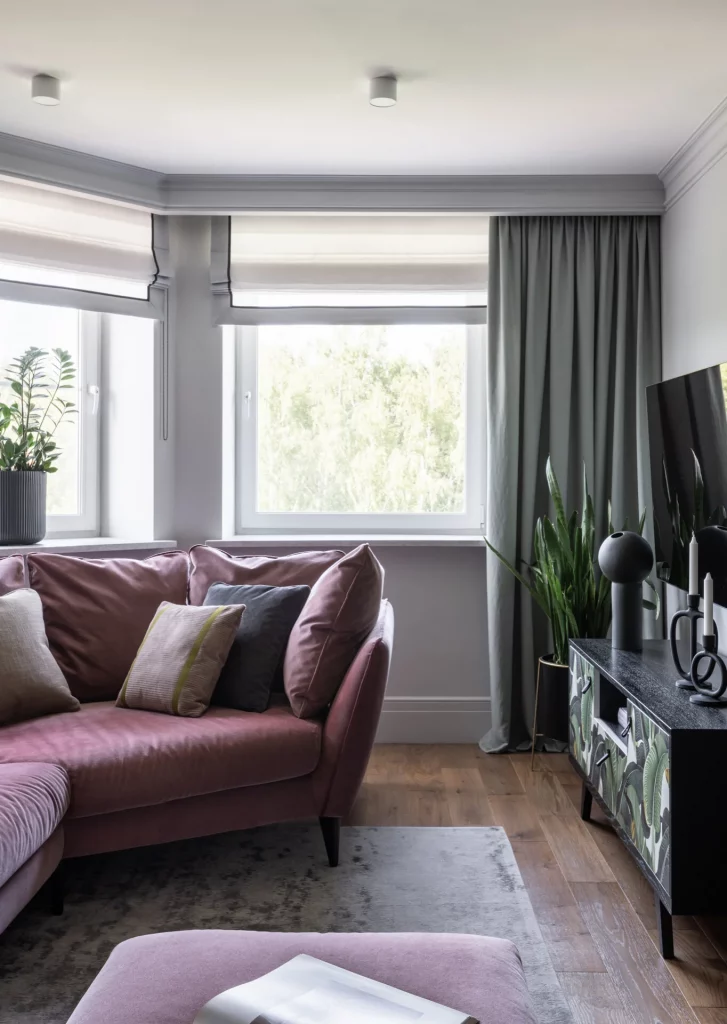
I find the balance particularly successful because the plum sofa has a soft, almost smoky quality that works naturally with the gray-green curtains. The seating looks generous and comfortable, while the arrangement leaves plenty of visual space around the windows. The dark console anchors the opposite side of the room without overwhelming the lighter surroundings, and the rug helps visually connect the sofa and media area.
When I look at a room like this, I am reminded that plum does not have to be bold to make an impact. I would choose a desaturated plum fabric if I wanted a similarly relaxed atmosphere, then pair it with restrained neutrals and darker accents. The natural daylight shown here is also important, so I would pay attention to how the chosen plum tone changes throughout the day before committing to upholstery or curtains.
Lavender-Plum Home Office Corner With Sculptural Seating
This compact room uses a much lighter interpretation of plum through floor-to-ceiling curtains and a rounded upholstered chair in a soft lavender-plum tone. A long matte-black desk runs along the wall, with a laptop, books, and a few simple accessories placed on top. The wall behind the desk is pale, while the floor has a dark finish that creates contrast with the lighter upholstery. A slim black pendant hangs above the work area.
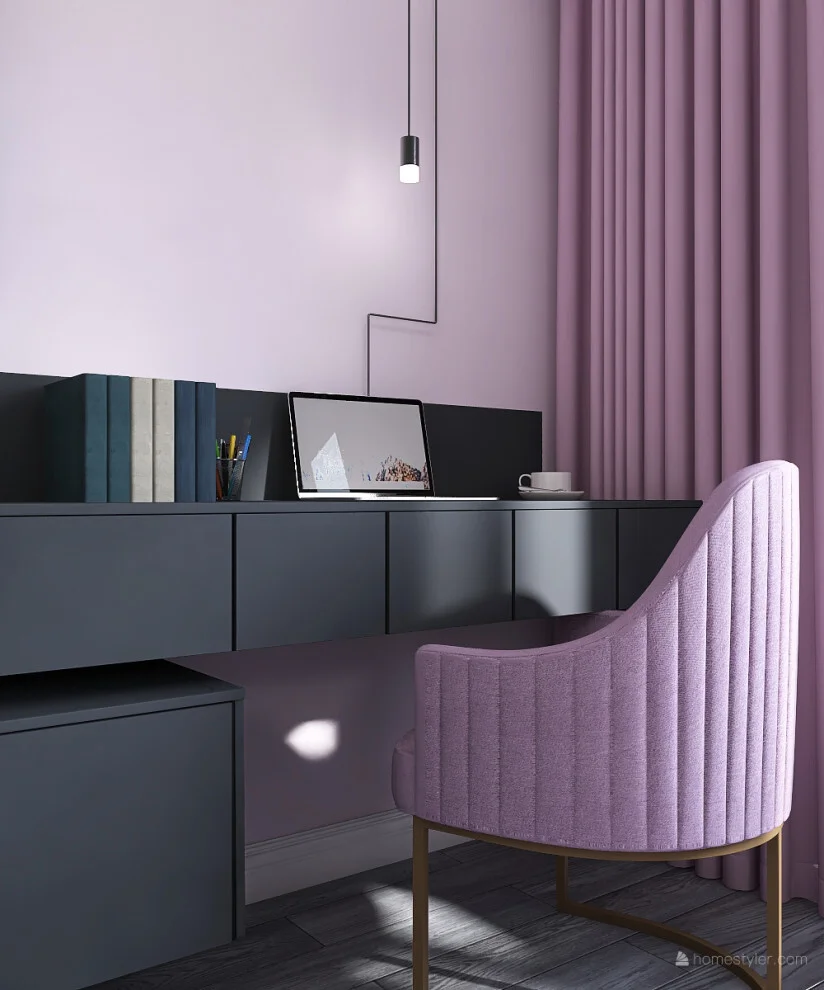
What works for me is the clear contrast between the dark desk and the soft plum seating. The rounded chair introduces a comfortable, sculptural shape against the long straight lines of the desk, while the curtains add height and make the compact room feel more vertically developed. The limited palette also keeps the workspace visually calm, which is useful when the same room needs to support concentration.
I would borrow this idea if I wanted to introduce plum without committing to a plum sofa. A statement chair or full-height curtains can give the color a strong presence while keeping the main furniture neutral. I also like the restrained approach to accessories here because it allows the unusual chair shape and rich curtain color to remain the main visual features.
Bold Plum Seating With Graphic Black and White Accents
This lively living room centers on a rich purple-plum sofa and a matching deep purple chair, with black-and-white striped cushions and a zebra-patterned rug adding strong contrast. The room also includes a red floor lamp, blue-painted shutters, a white painted brick wall, and several green plants. A white media cabinet runs along the brick wall, while a sculptural white ceiling light adds another modern detail overhead.
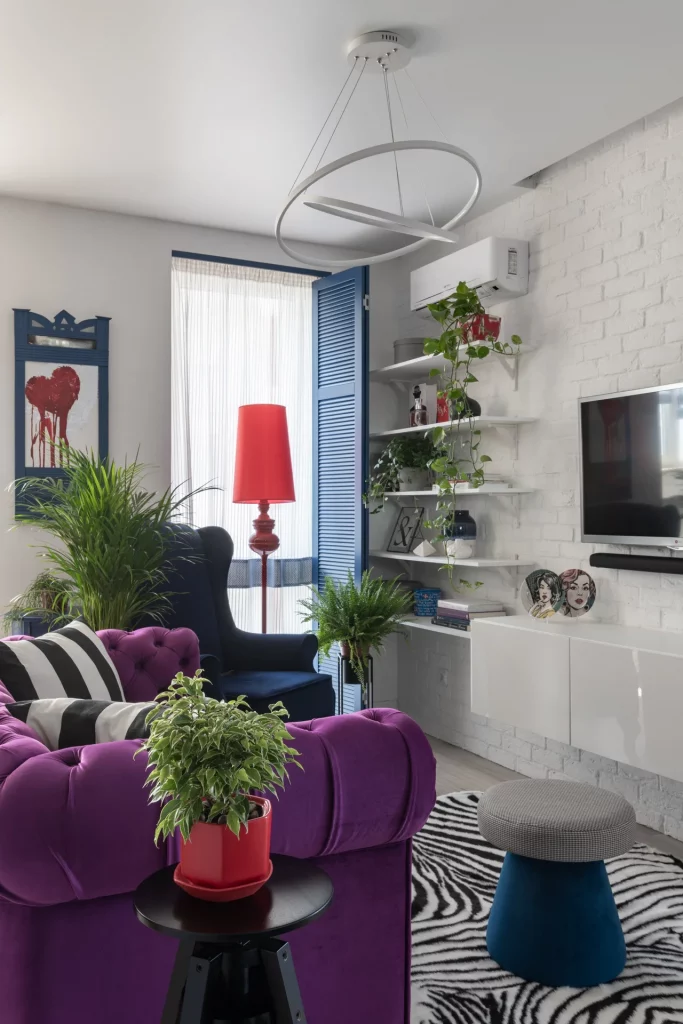
I love how this room treats plum almost like a statement color in a fashion-forward palette. The purple seating provides a strong visual anchor, while the black-and-white patterns stop the composition from becoming too monochromatic. The blue shutters and red lamp introduce additional color, but because they appear in distinct pieces, the room still has a recognizable structure.
For me, the lesson here is that plum can handle playful styling when the furniture shapes and color placement are carefully controlled. If I wanted to recreate the energy of this space, I would start with one substantial plum seating piece and then add contrasting patterns in smaller doses. I would also keep the larger architectural surfaces relatively simple so the color and patterns have room to stand out.
Deep Plum Sofa With Tailored Geometric Details
The sixth room features a deep plum sofa with a strongly tailored silhouette, vertical channel-like upholstery, and contrasting light piping around its edges. Patterned cushions in black, cream, and muted plum sit against the sofa, while a small round black side table occupies the corner. Behind the seating, a large gray built-in storage wall has angular lines across its doors, and the ceiling is finished with layered white molding.
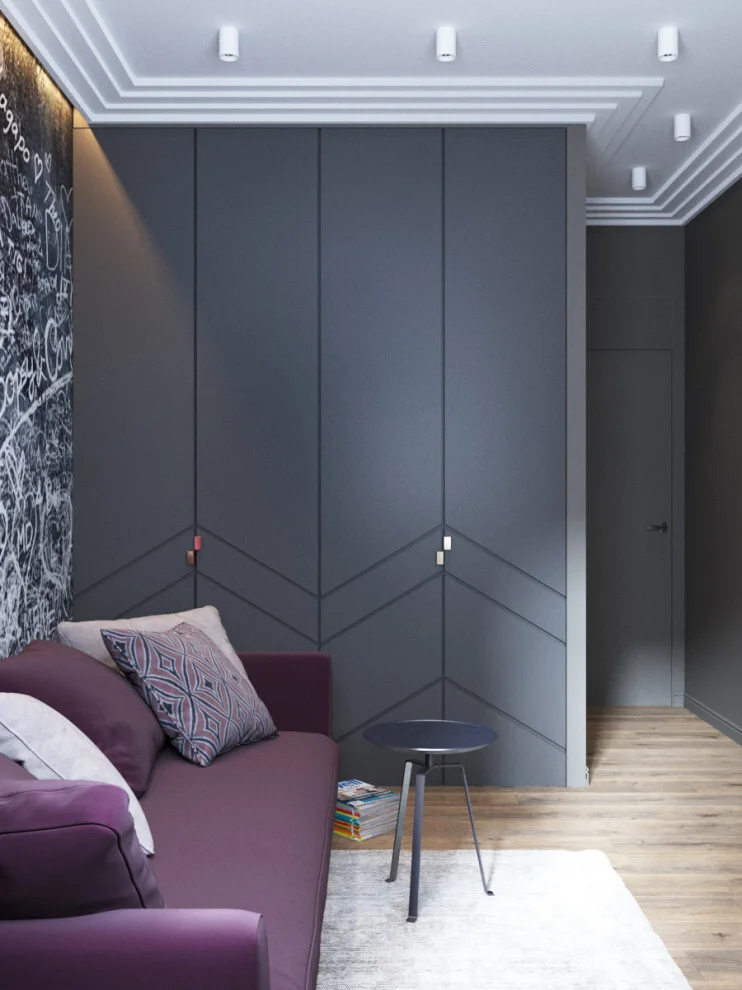
I find the combination of the rich sofa and structured storage especially effective. The sofa brings softness and color, while the geometric cabinet doors introduce a sharper architectural rhythm. The limited amount of furniture also makes the room feel orderly, and the wood flooring adds warmth without competing with the deep plum upholstery.
This is the kind of plum living room I would consider when I want something sophisticated but not overly ornate. I like the idea of combining a saturated fabric with clean furniture lines because it keeps the color feeling contemporary. The contrasting piping is also a small detail that makes the sofa more visually defined, something I would look for when choosing a statement piece.
Plum-Toned Open Plan Living With Reflective Finishes
This open-plan interior uses a pale mauve-plum palette across the sofa cushions and dining-area chairs, while glossy cabinetry and a dark stone-look kitchen counter add contrast. A large mirror visually expands the room and reflects the intricate chandelier hanging near the windows. Sheer curtains and patterned drapery cover the tall windows, and recessed and pendant lighting combine to create a bright, polished atmosphere.
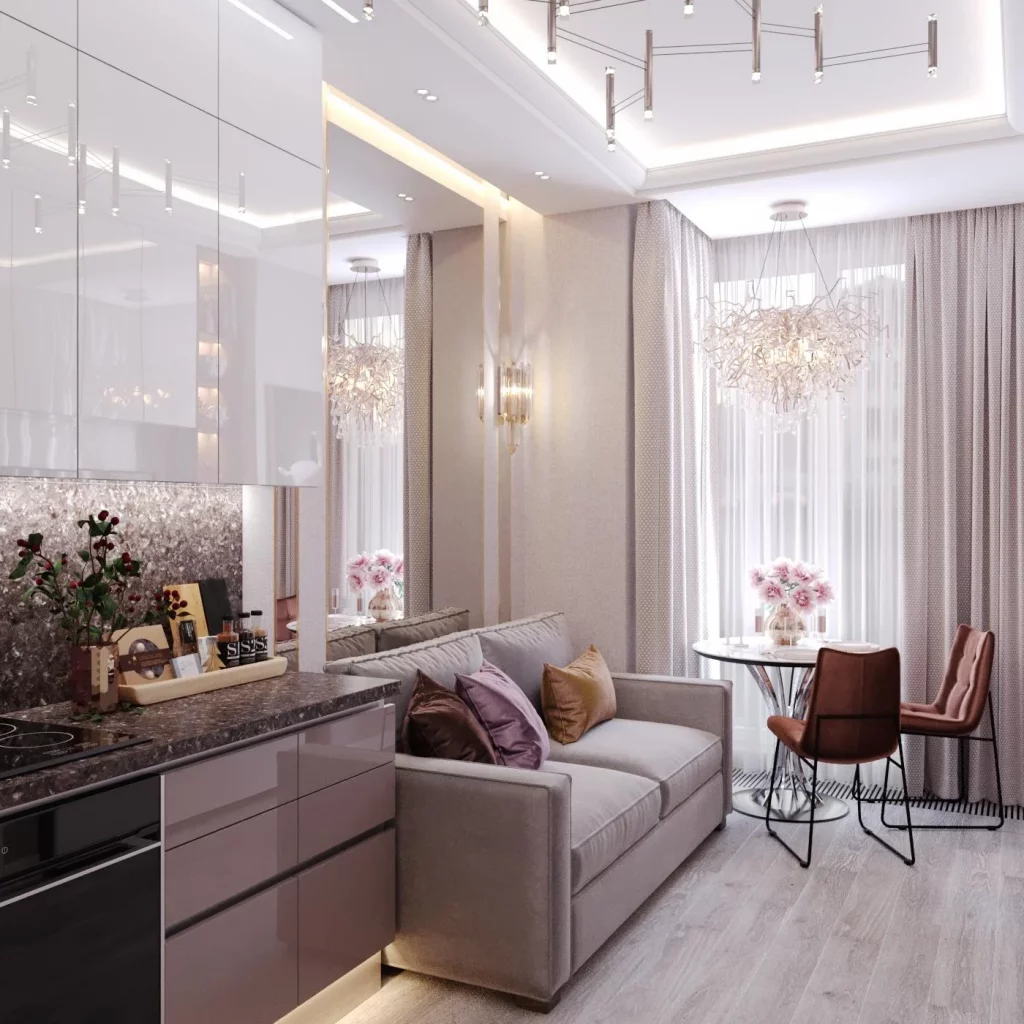
I like how the soft plum accents are distributed rather than concentrated in one oversized piece. The sofa remains light and neutral, while plum-colored cushions and dining chairs introduce continuity across the open layout. The reflective cabinetry and mirror also bounce light around the space, helping the deeper accents feel lighter and more integrated.
For me, this is a useful approach for anyone who likes plum but wants an airy room. I would use plum through cushions, occasional upholstery, or dining chairs and allow pale walls, sheer window treatments, and reflective surfaces to provide the visual breathing room. The result shown here feels coordinated because the color appears in several connected areas without taking over the entire interior.
Moody Plum Lounge With Electric Blue Lighting
This room takes plum in its most dramatic direction, with a deep purple sofa surrounded by a dark ceiling and a dark wall treatment. Leopard-patterned and geometric cushions bring texture and pattern to the seating, while a polished metallic coffee table reflects the surrounding colors. An abstract artwork appears on the left, and vivid blue lighting outlines the wall and storage area behind the sofa, creating a striking nighttime atmosphere.
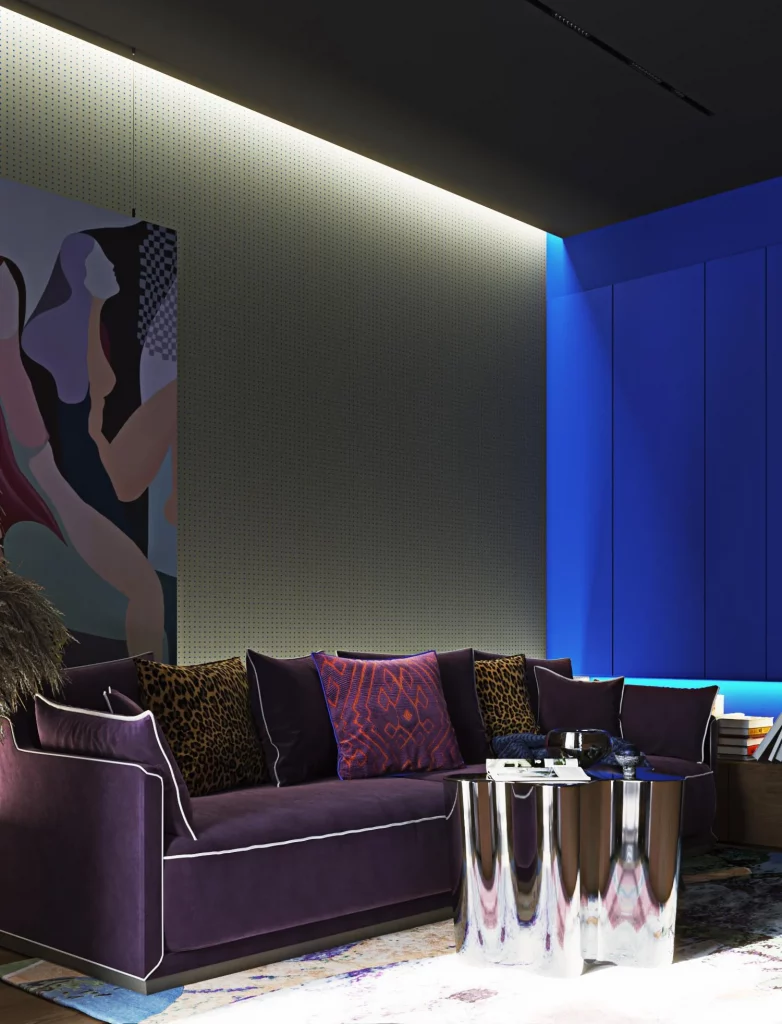
What makes this room work is its willingness to embrace contrast. The deep plum sofa could easily feel heavy in a lighter setting, but here it belongs to a deliberately moody palette. The metallic coffee table provides a reflective break from the darker surfaces, while the blue illumination creates another layer of depth without requiring additional furniture.
I would approach a room like this differently from the softer plum examples in the collection. If I wanted this atmosphere, I would let the plum remain deep and concentrated, then use lighting and reflective surfaces to give the color dimension. I also like the use of patterned cushions because they prevent the large sofa from reading as one uninterrupted block of color.
Plum Sofa Framed by Warm Wood and Soft Lighting
The ninth interior features a long plum sofa with a deep upholstered back and neatly divided seat cushions. Warm wood frames the opening behind the sofa and appears again in the flooring, while the adjoining area includes a simple dining table and purple upholstered chairs. A sculptural wall treatment with illuminated angled sections creates a subtle focal point behind the dining area, and small pendant lights hang from a wood-toned fixture.
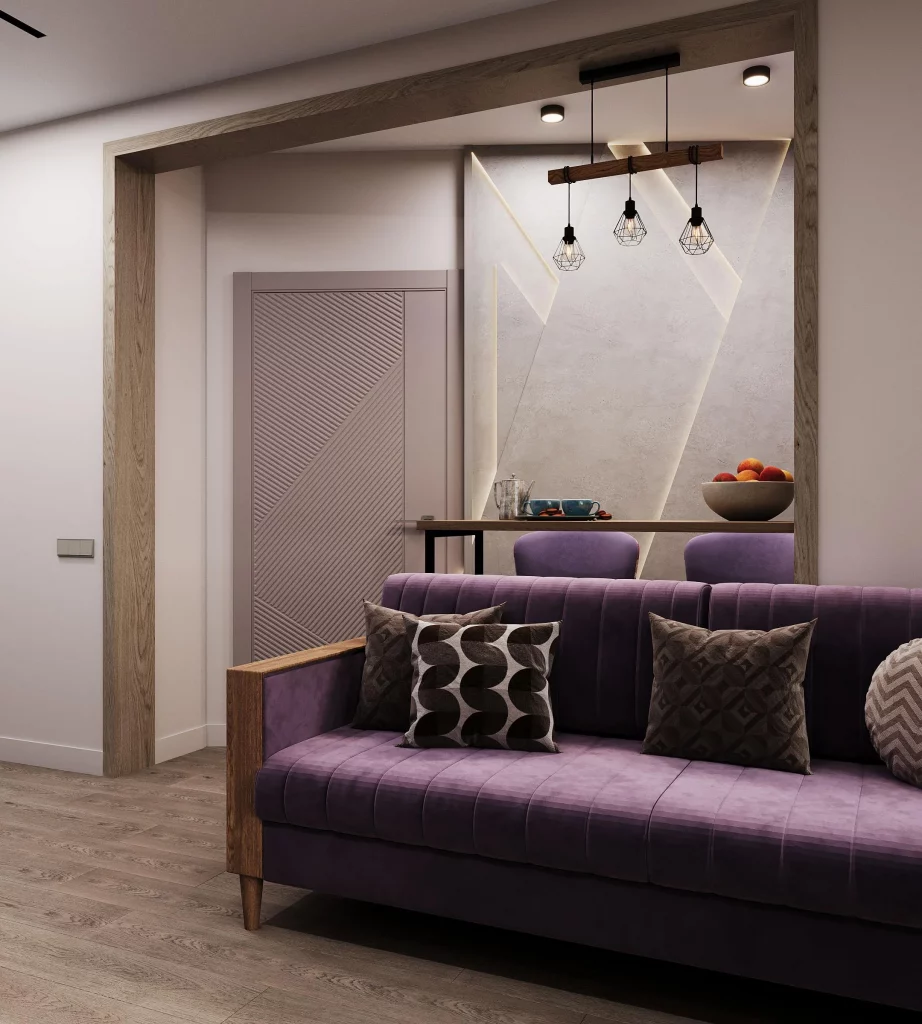
I find the relationship between the plum upholstery and warm wood particularly inviting. The wood frame visually defines the transition between spaces without closing the room off, while the long sofa provides generous seating and a clear focal point. The patterned cushions introduce contrast without taking attention away from the rich upholstery.
This is one of the plum combinations I would most easily adapt for everyday living. Warm wood naturally softens a deeper purple, and the simple furniture arrangement keeps the room practical. If I were using the idea in my own space, I would focus on getting the balance between the substantial plum sofa and the surrounding wood tones right, because that relationship is what gives this interior its comfortable character.
Soft Plum Seating With a Practical Display Wall
The final room uses pale dusty-plum upholstery on a compact sofa positioned beside a tall open shelving unit. The shelving combines open compartments with closed white-fronted sections and holds books, small collectibles, and several trophies. Gray curtains frame a bright window, while framed technical-style drawings hang above the sofa. The wood flooring extends throughout the room and gives the otherwise cool palette a warmer foundation.
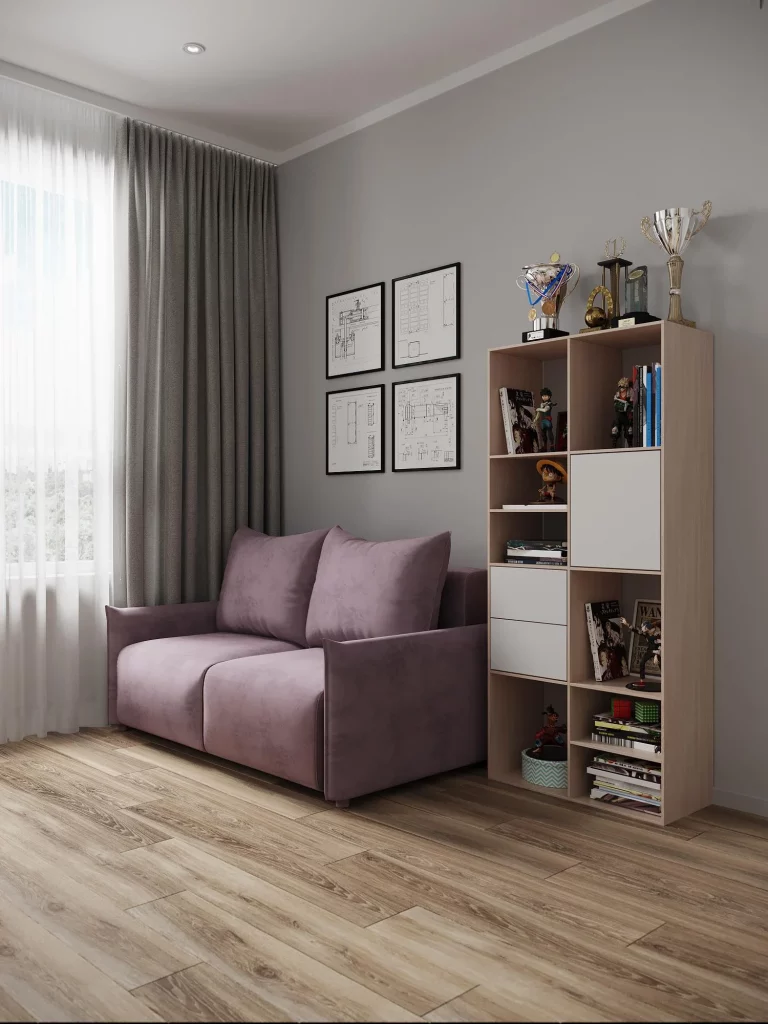
I especially like how the plum sofa is used here without making the room feel color-heavy. Its compact scale suits the space, and the shelving unit adds both storage and a visual divider between the seating area and the rest of the room. The combination of open shelves and closed compartments is also practical because it allows displayed items to remain visible while less decorative belongings can be kept out of sight.
For me, this image is a good reminder that plum can be surprisingly versatile in smaller living areas. A soft, muted version of the color works beautifully when paired with neutral walls, gray textiles, and warm flooring. I would also take inspiration from the shelving arrangement, especially if I wanted a living room to combine comfortable seating, personal collections, and useful storage without adding unnecessary furniture.
Soft Plum Accents With a Tailored Gray Sectional
The first living room takes a gentle approach to plum, pairing a large charcoal-gray sectional with a pale pink wall framed by substantial white molding. Two slim brass wall sconces sit within the decorative wall panels, while an abstract artwork adds touches of pink, purple, green, blue, and warm neutral shades. The window is dressed with sheer white curtains and heavier taupe-gray drapes, and the warm wood floor grounds the entire composition. I especially like the small plum-pink cushions because they introduce color without overwhelming the calm gray upholstery.
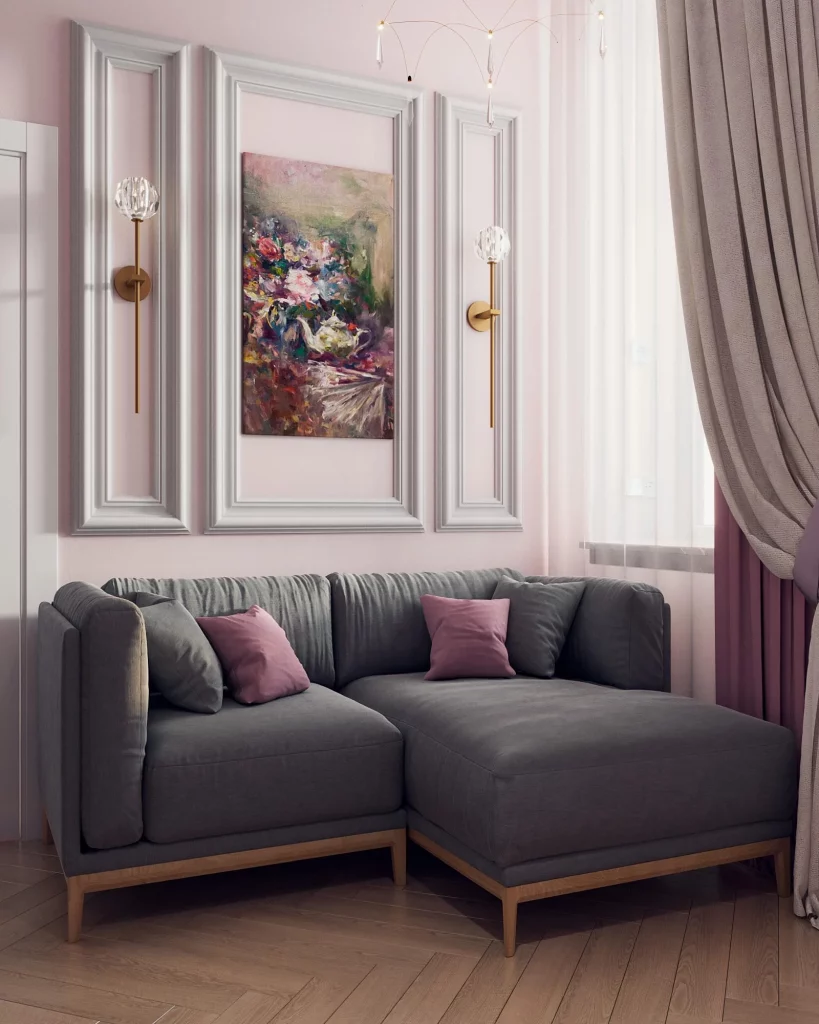
The sectional gives this room a strong sense of comfort and practicality, with its generous chaise section creating an easy place to stretch out. I find the combination of gray upholstery and soft plum accents particularly effective because the neutral sofa keeps the color palette relaxed. The framed wall treatment also gives the room structure, while the matching vertical sconces add symmetry and make the wall feel intentionally designed rather than simply decorated.
From my perspective, this is one of the easiest approaches to recreate if I want to experiment with plum without committing to a fully colored room. I would start with a neutral sofa I already love, then repeat a muted plum tone through cushions, artwork, curtains, or one small decorative accent. The key is to choose a shade that relates to the artwork and surrounding textiles, as this image does, so the color feels connected rather than randomly added.
Deep Plum and Blue for a Bold Modern Living Room
This room takes plum much further, using a deep plum sectional along the left side and rich plum curtains around the central window. A large dark blue built-in or cabinet wall occupies the opposite side, creating a strong contrast with the colorful floral-patterned wall treatment near the television. The light wood floor introduces warmth, while mustard-yellow cushions add a small but noticeable contrast against the plum sofa. I also notice the compact upholstered stool and dark media console, which keep the room practical without adding visual clutter.
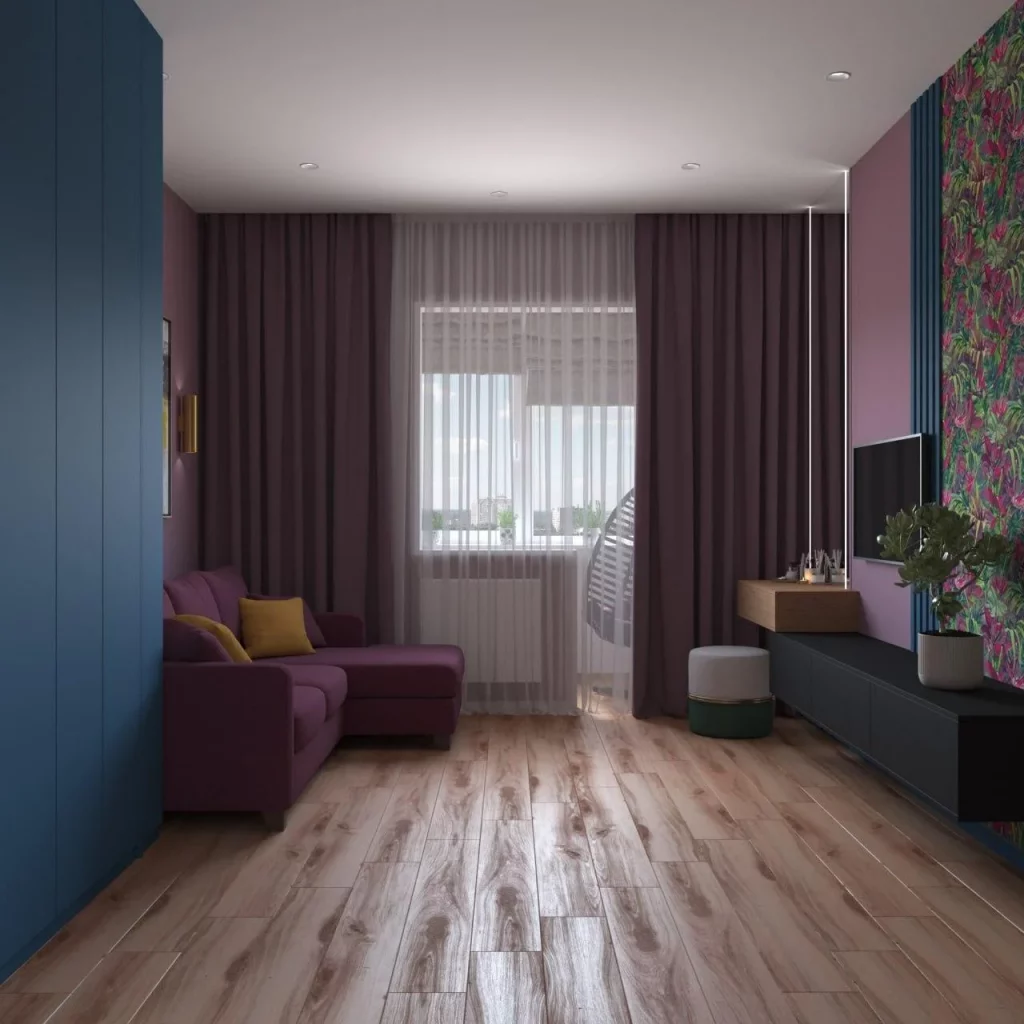
I think the success of this space comes from the way several deeper colors are given their own areas instead of being mixed everywhere. The plum seating establishes the main mood, the blue cabinetry provides visual weight, and the patterned wall adds energy in a controlled section. The large window and sheer curtains also help prevent the darker palette from feeling too enclosed. For me, this is a good example of how a saturated living room can remain comfortable when lighter flooring and natural daylight are allowed to balance the deeper finishes.
If I wanted to recreate this atmosphere, I would choose one dominant plum element first, such as a sofa or full-length curtains, and then introduce one contrasting deep shade rather than several competing colors. I would also pay attention to daylight because the appearance of plum changes considerably depending on the amount of natural light. The image shows how sheer curtains can soften strong color while still allowing the room to retain its dramatic character.
Elegant Mauve Seating Framed by Layered Drapery
Here, a muted plum-mauve armchair becomes the focal point of a bright corner surrounded by tall windows. The chair has a classic wingback silhouette, rounded arms, and decorative detailing along the edges, while the surrounding windows are dressed in layers of pale beige and mauve drapery with elaborate gathered swags. A slim white floor lamp bends over the seating area, and a small metallic side table holds a large mauve-toned bouquet. The light wood floor and pale ceiling keep the overall setting airy despite the substantial window treatments.
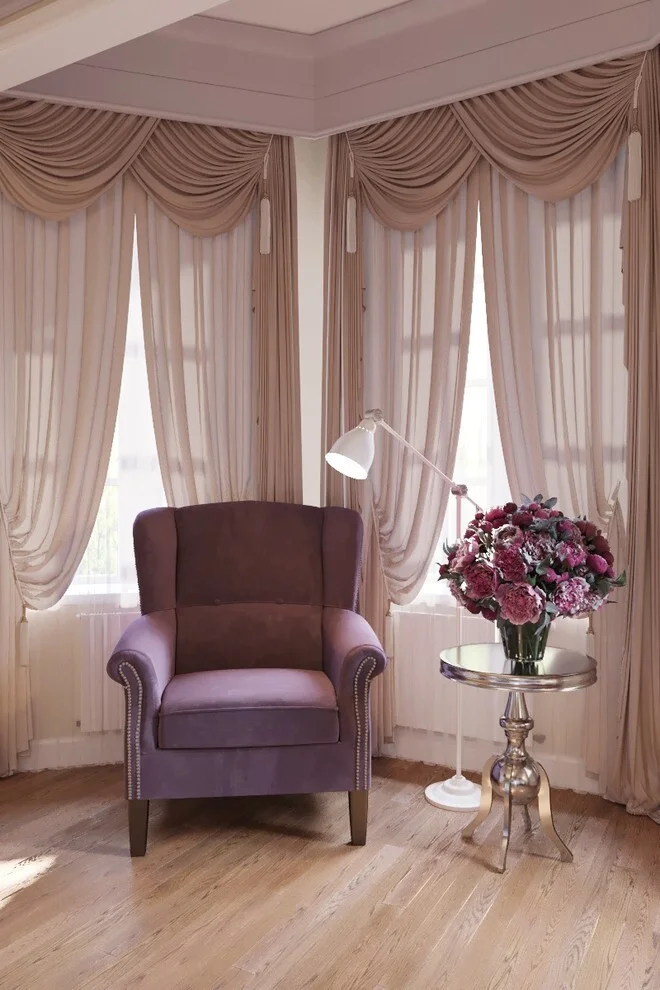
I like how the single chair creates a clearly defined reading or relaxation spot without requiring a large seating arrangement. The compact side table is positioned at a useful height for keeping small items nearby, while the floor lamp provides focused illumination directly beside the chair. The extensive drapery also gives the windows a softer, more enveloping appearance, making this corner feel separate from the rest of the room even though there is very little furniture.
For my taste, this image demonstrates that plum does not always need to appear as a dark or saturated shade. A dusty mauve can create the same color connection in a much softer way. If I were adapting this idea for a contemporary living room, I would keep the basic principle of one plum-toned statement chair surrounded by lighter textiles and finishes. That approach gives the color plenty of presence while maintaining a relaxed, elegant atmosphere.
Blush-Plum Sofa With Warm Wood and Vertical Slat Screening
The final room uses a soft pink-plum sofa as its main color statement against a mostly white interior. The seating is arranged around a matching upholstered ottoman, with several cushions introducing cream, muted gray, pink, and a small olive-toned accent. A large framed abstract artwork hangs behind the sofa, while a tall vertical wood-slat divider partially separates the living area from another part of the room. The warm wood floor repeats the tone of the divider, and a dark planter with foliage adds contrast in the foreground.
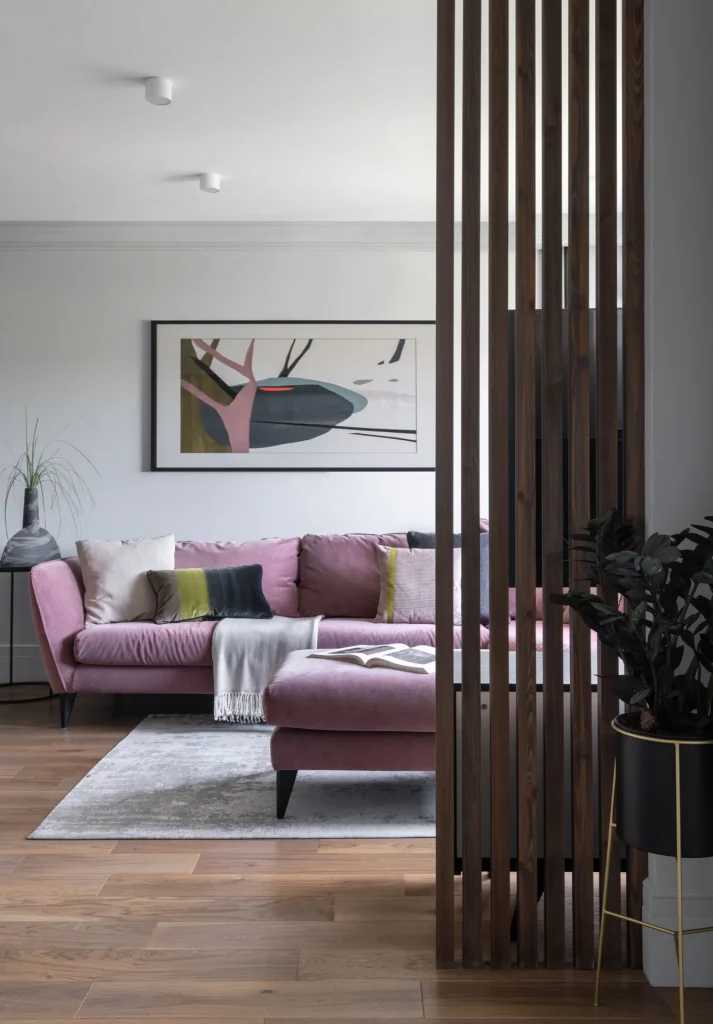
What works especially well here is the balance between the soft upholstery and the stronger architectural lines of the vertical divider. I find that the slats add definition without completely closing off the room, so the space still feels visually connected. The low sofa and ottoman also create a relaxed arrangement, while the mix of cushion colors keeps the seating area from looking too uniform. The neutral walls give the plum-pink upholstery enough room to become the visual focus.
I would use this image as inspiration if I wanted a plum living room that felt modern but not overly intense. Instead of covering the entire room in the color, I would let a sofa or another substantial upholstered piece carry most of the plum tone and keep the surrounding architecture lighter. The wood elements are especially useful because their warmth prevents the pale pink-plum upholstery from feeling too sweet, creating a more balanced and contemporary result.
Plum is one of those colors that can instantly give a living room more depth, warmth, and personality. I love that it can look dramatic when used generously or subtle when introduced through smaller accents and textiles. Whether you choose a plum sofa, an accent wall, or just a few carefully selected accessories, there are plenty of ways to make the shade feel natural in your space. For me, the key is balancing its richness with lighter tones and textures that keep the room feeling comfortable. If you’ve been thinking about trying something a little different this season, plum is definitely a color worth considering.