
A retaining wall is rarely just a functional solution for a sloped yard. It’s a chance to shape your garden’s entire character, whether that means clean modern lines, rustic stacked stone, or a layered terraced look. The right design anchors your outdoor space and creates new zones for planting, seating, and entertaining.
These 34 retaining wall ideas show how different materials, heights, and curves can turn a practical necessity into a defining landscape feature. From sleek concrete blocks to natural stone and gabion cages, each option offers a distinct style and practical benefit. You will see walls that double as seating, integrate steps, or frame a water feature, all while managing grade changes effectively.
Multi-Level Luxury Modern Landscape with Gray Concrete Block and Stone
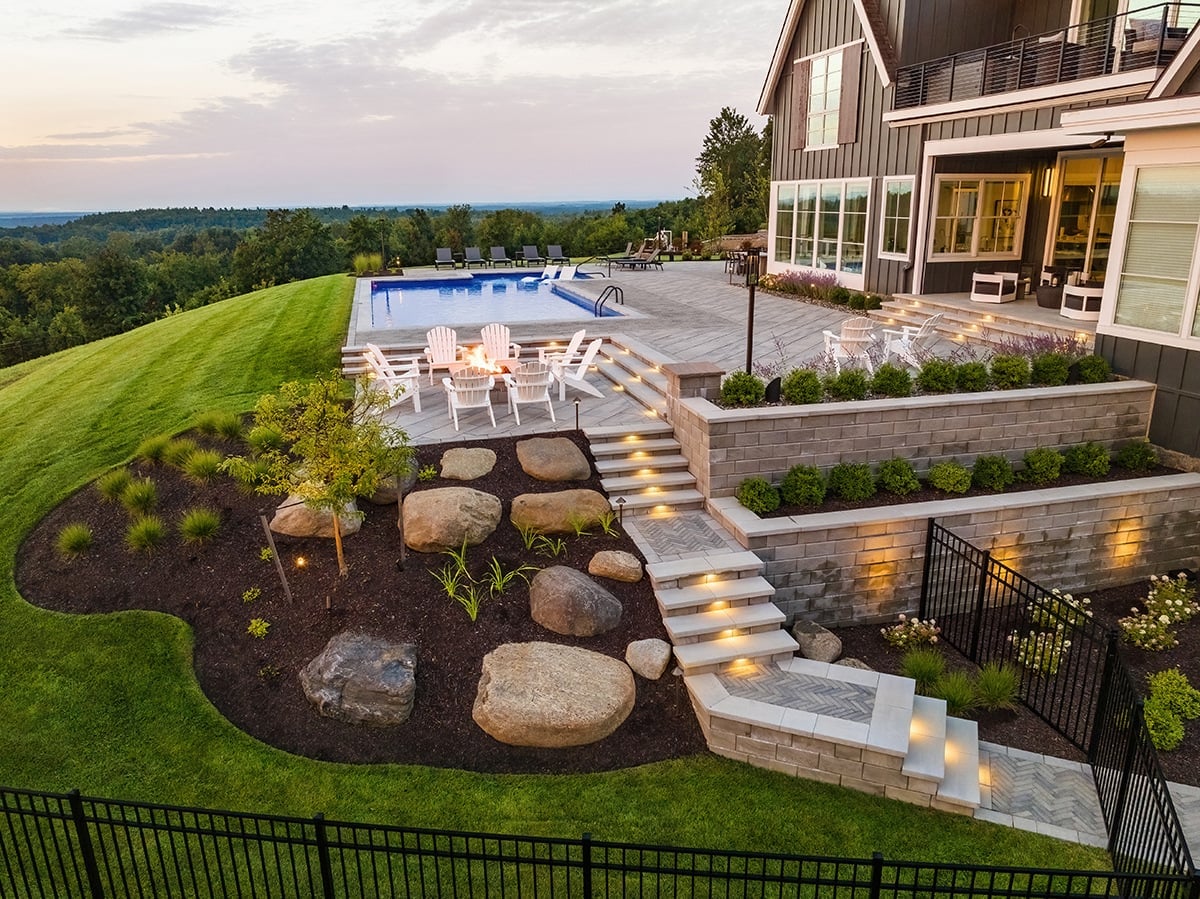
This backyard does not hide its structure; it makes the structure the show. Multi-level retaining walls in gray concrete block and stone carve the slope into distinct zones, each with a job: an outdoor kitchen near the house, a pool lower down, a fire pit tucked into its own pocket. The tiering turns a steep yard into a series of rooms you can actually use. At dusk, integrated lighting picks out the edges of each level, and the fire pit glow anchors the whole scene. The palette stays cool, with grays and green, warmed by wood tones and the fire. This is luxury modern landscape design that works because the layout came first.
Sleek Black Metal Retaining Wall with Integrated Water Feature
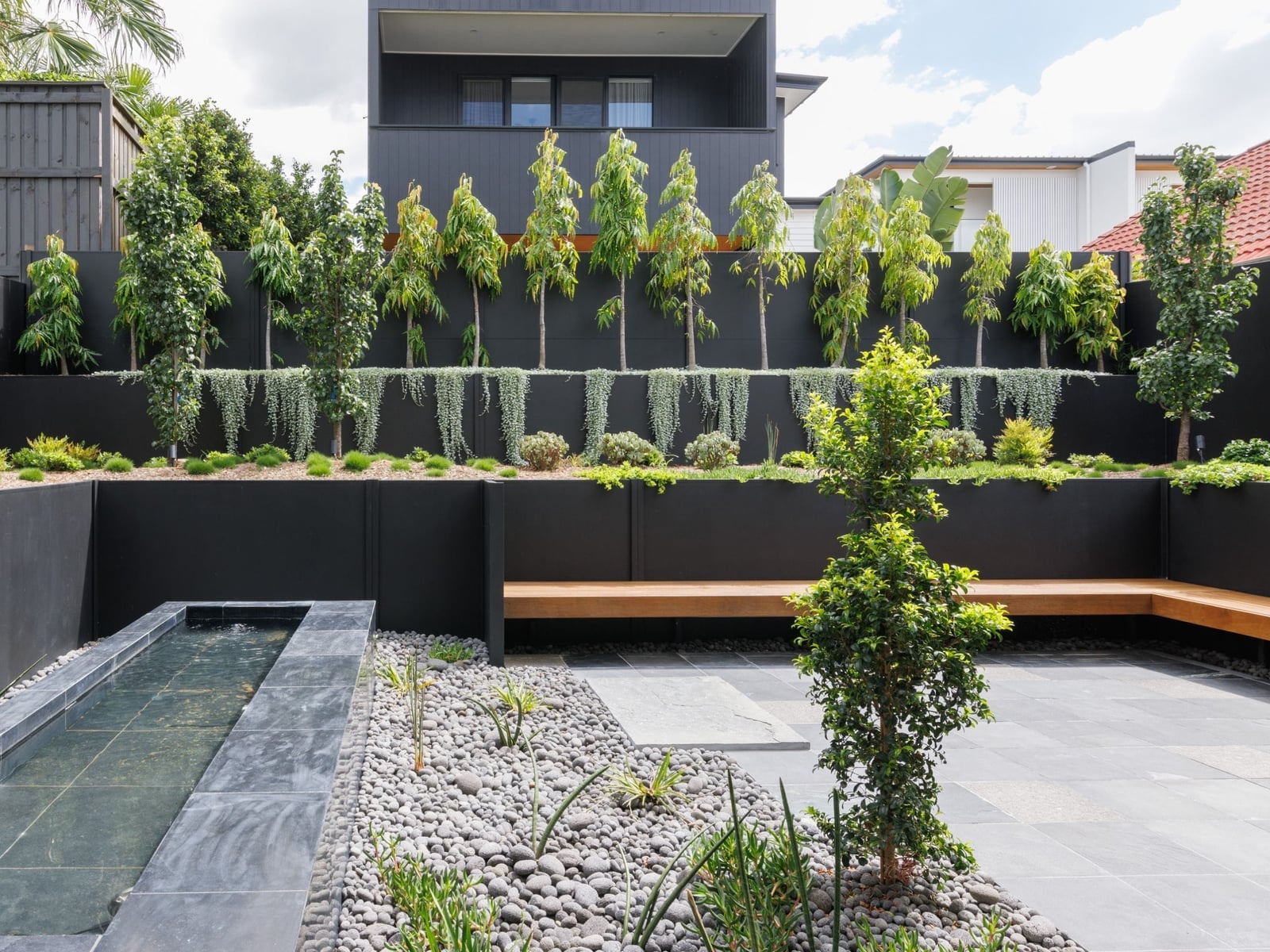
A black metal retaining wall reads as a crisp line in the landscape, especially against the soft gray of a stone patio. The dark finish gives the yard a modern edge without adding visual weight, and when you pair it with a water feature, the wall does double duty: it holds back the slope and frames the sound of moving water. The palette here is restrained, black, green, gray, and wood tones, with the bench and plantings adding warmth. On an overcast day, the black metal picks up the muted light and stays sharp. This modern black metal retaining wall design works best when the materials around it stay simple, letting the dark surface and the water carry the moment.
Curving Natural Stone Retaining Wall with Granite Steps
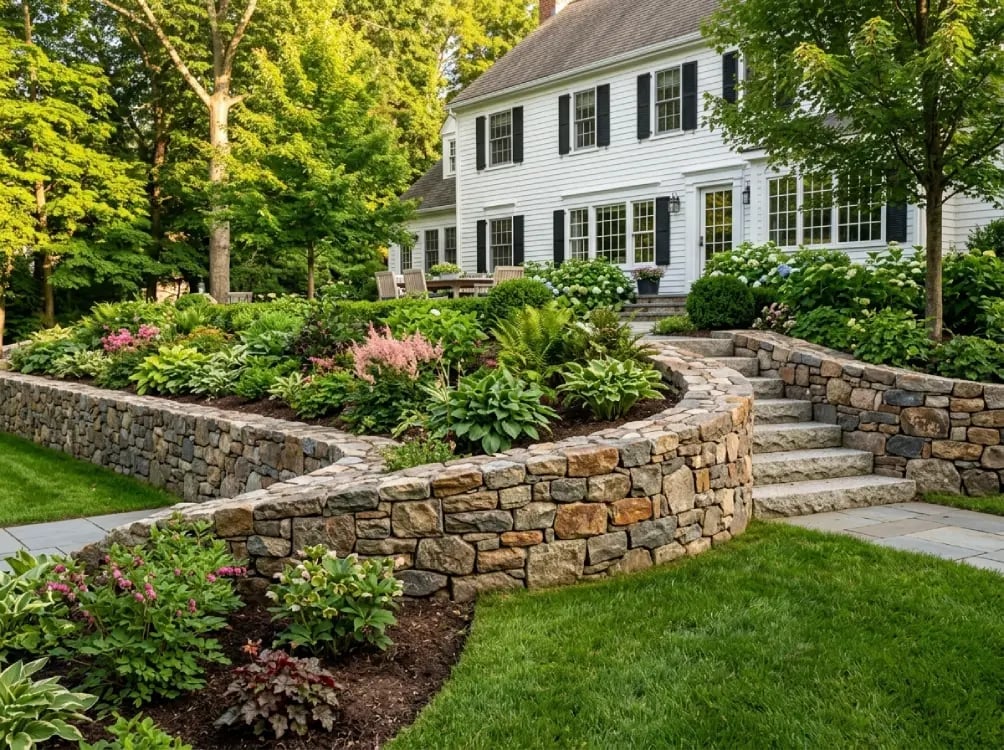
How do you make a sloped garden feel like a stroll rather than a climb? The answer is often a curved wall and a set of well-placed steps. Here, a curving natural stone retaining wall follows the contour of the yard, creating terraced beds that hold lush plantings in pink and white against the green. Granite steps wind through the garden, turning the slope into a pathway with a destination. The curve softens what could feel like a hard barrier, and the natural stone blends with the grass and plants. This traditional garden stone retaining wall with steps suits anyone who wants a garden that feels established, not engineered. The key is letting the wall follow the land, not fight it.
Formal Garden with Curved Stacked Stone Retaining Wall and Manicured
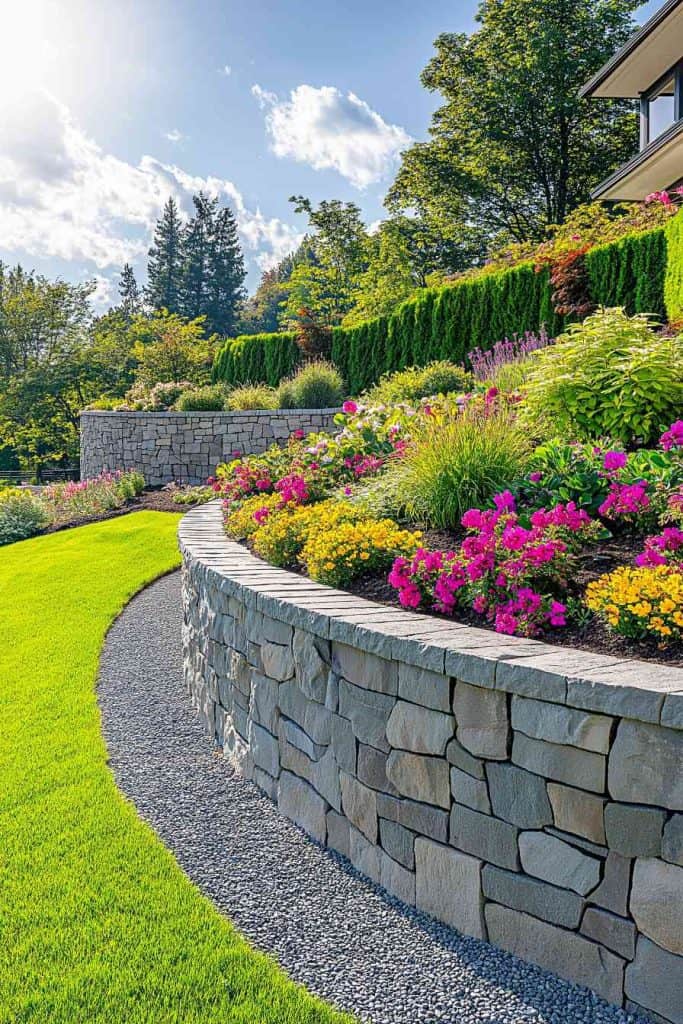
A curved stacked stone retaining wall can hold a formal garden together with surprising grace. The curve softens the geometry, while the stacked stone keeps a tidy, uniform face that suits a manicured setting. In bright daylight, the stone’s natural gray reads clearly against the green lawn and the pink and yellow flower beds. The tiered layout gives the garden structure, with each level a stage for a different planting. The wall does more than retain soil; it defines the shape of the whole space, guiding the eye along the curve. For a formal garden, the clean lines of the stone and the careful curve are what make the design feel intentional.
Modern Garden with Black Gabion Retaining Wall and Tiered Beds
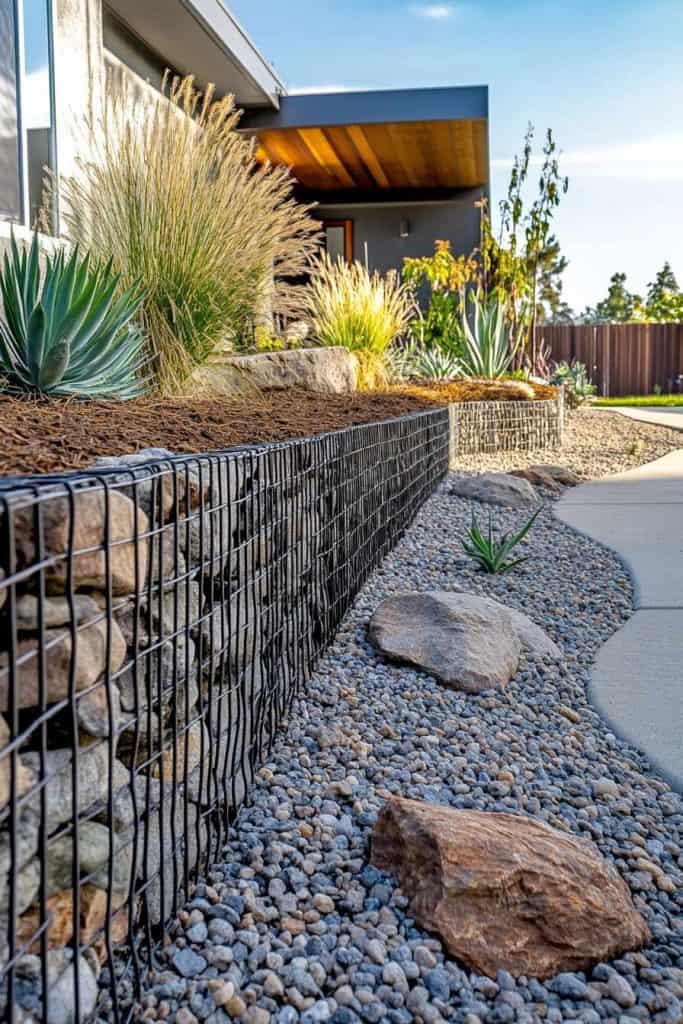
A practical starting point for a sloped garden: let the wall do the heavy lifting, then use the tiers it creates. A black gabion retaining wall, with its dark metal cage and gray stone fill, gives a modern garden a solid, textural backbone. The tiered beds above and below the wall hold decorative gravel and modern planters, keeping the look clean and open. The contrast between the dark metal and the green plants is what makes this design pop. Gabion walls also offer a subtle storage win: the gaps between stones can hold small pots or garden tools if you tuck them carefully, though most will use the top cap as a shelf for a few potted herbs. This modern black gabion retaining wall garden suits anyone who likes structure with a bit of grit.
Modern Boho Patio with Slatted Wood Wall and Built-in Bench
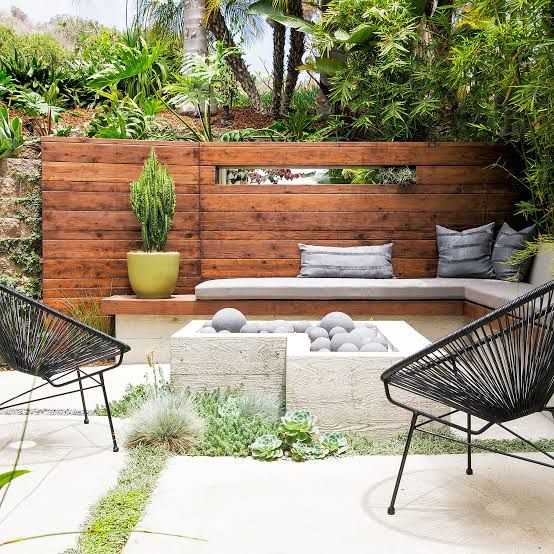
A poured concrete fire pit often steals the show, but a slatted wood wall with a built-in bench is what actually makes this patio a place to stay. The warm wood sets the tone, with gray cushions and layered green plants keeping the look grounded rather than matchy. Modern chairs sit opposite the bench, so the conversation flows across the fire pit instead of lining up like a waiting room. The palette stays in the natural range, which is what makes the boho part work: it reads as relaxed, not curated. What breaks the formula here is the concrete underfoot. The hard surface keeps the wood from feeling too soft or temporary, giving the whole setup an edge that stops it from tipping into full rustic.
Natural Stone Retaining Wall with Integrated Concrete Steps
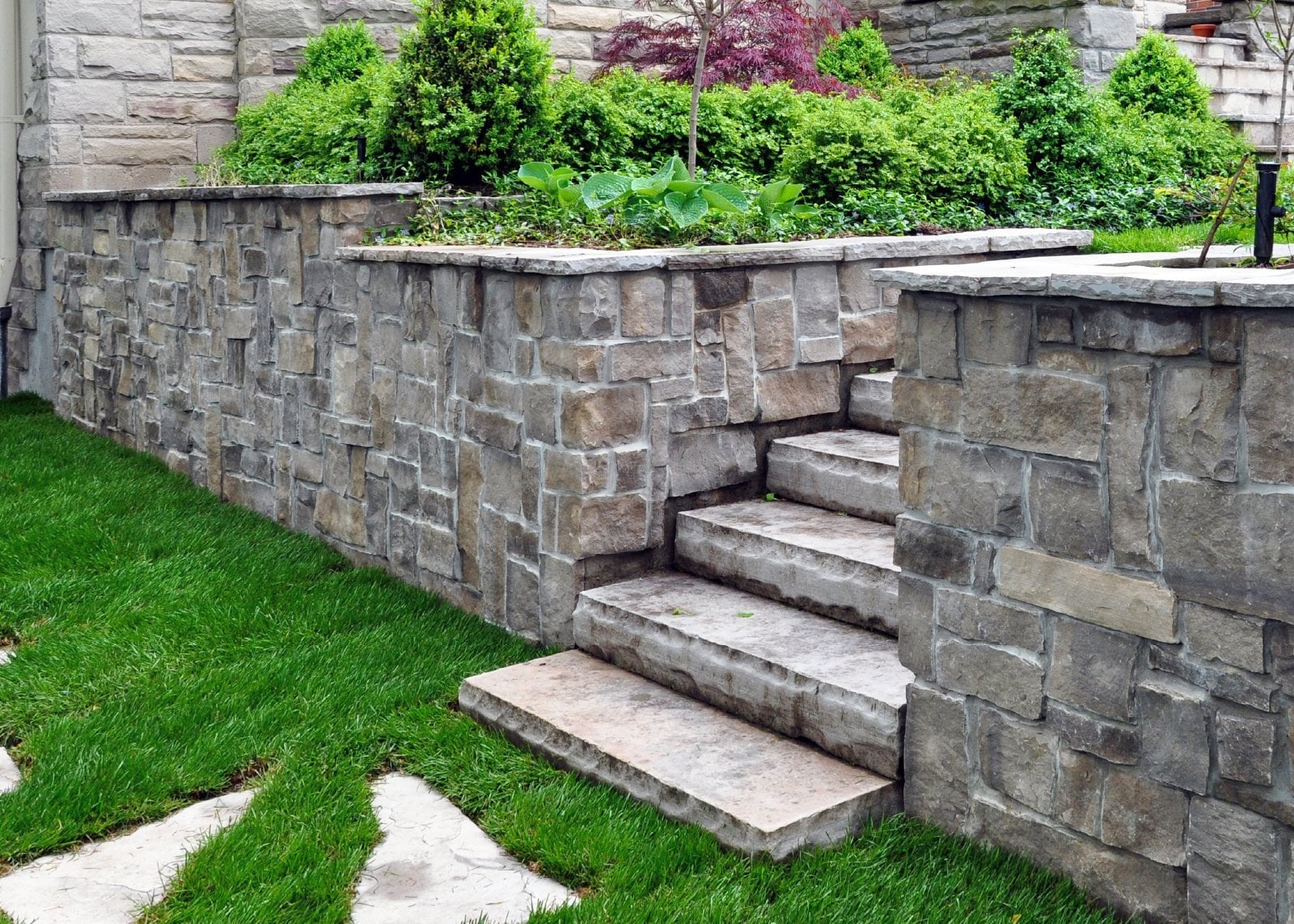
What stands out about this wall is that the steps feel continuous with it, not tacked on later. The natural stone runs in a warm gray-beige range, and the concrete steps match that same muted tone, so the eye moves up the grade without a hard visual stop. Grass flanks both sides, which keeps the whole thing from reading as too engineered. For a renter or a homeowner who does not want to commit to full masonry, a dry-stack stone veneer over a compacted base can mimic this look without the permanence. Check your local codes before digging, since anything over a certain height usually requires a permit.
Multi-Level Stone Retaining Walls and Steps for Traditional Terraced
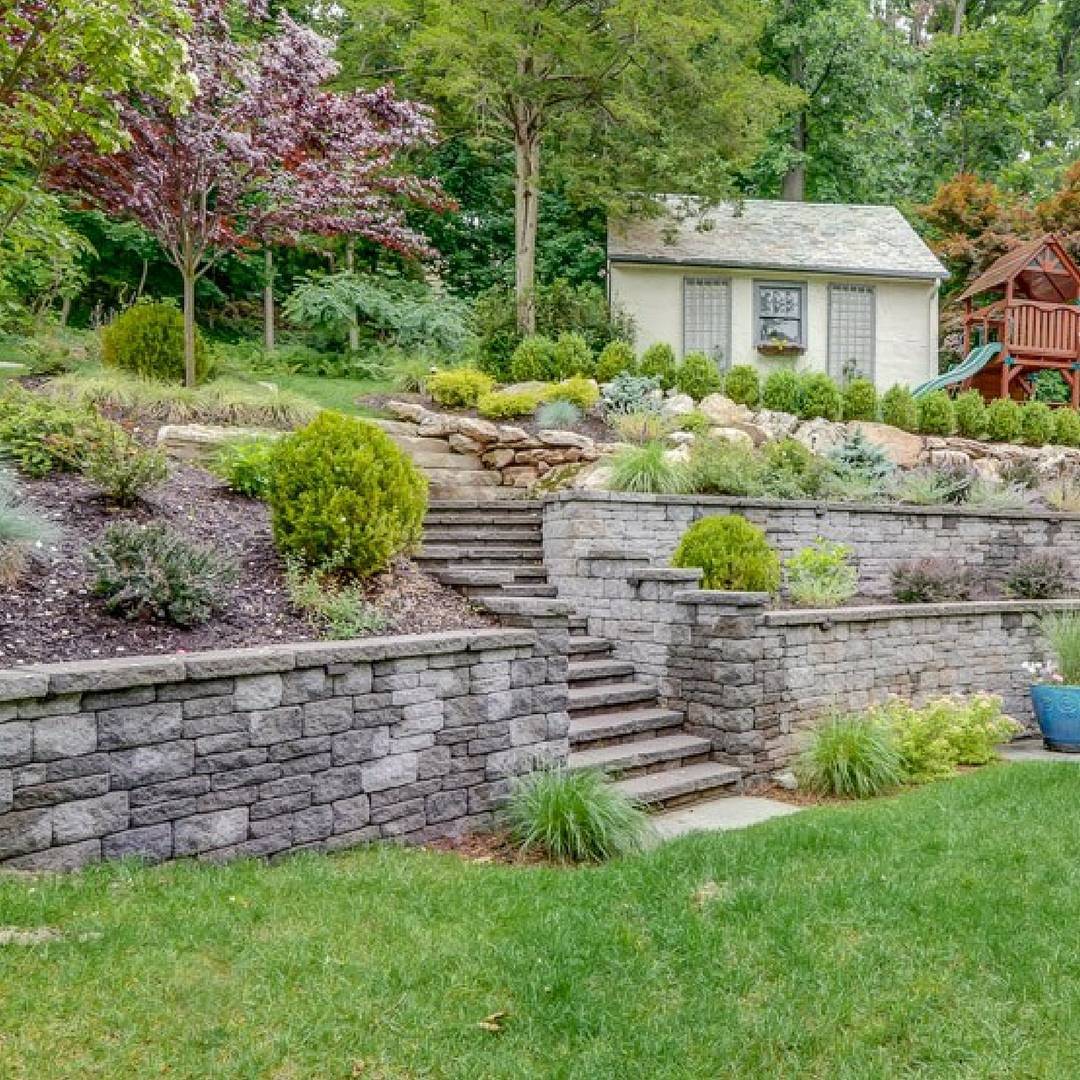
This is a straightforward take on terraced landscaping: stone block walls step down the slope in clear, even levels, with stone steps cutting through the middle. The palette stays in gray and green, with a small white shed and a wooden playset adding contrast without competing. The layout works because each level has a job. The top holds the shed, the middle keeps the grass open, and the lower beds soften the transition. What defines this style is the repetition: the same block, the same rise, the same rhythm all the way down. What breaks it is the playset. It is the one element that does not follow the stone logic, and that is exactly why the yard feels lived in.
Cozy Backyard Seating with Rustic Stone Retaining Wall and Ivy
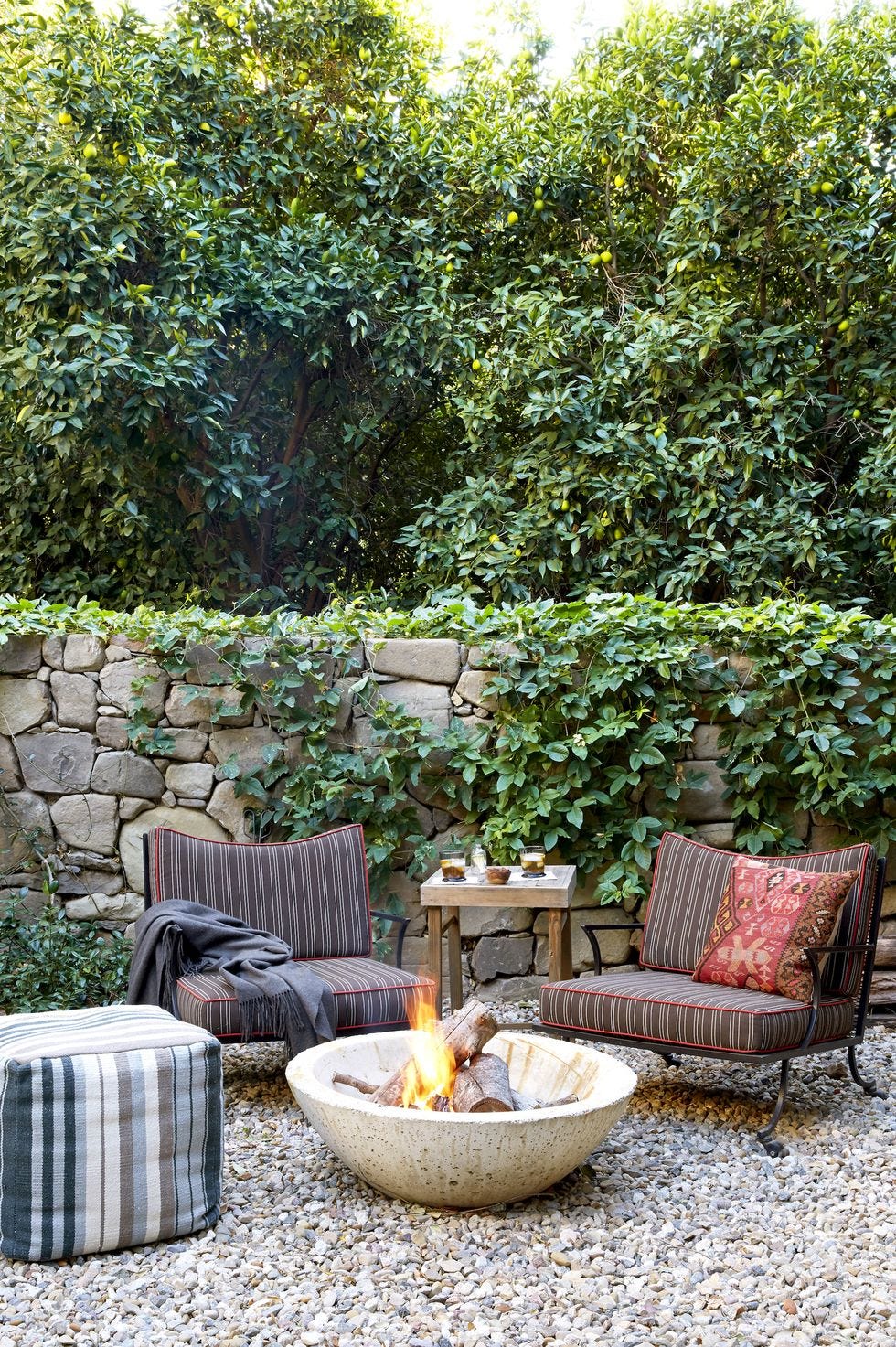
Can a retaining wall do more than hold back dirt? In this backyard, it pulls double duty as a backdrop for a seating nook. The stone wall is textured and irregular, with ivy climbing across the surface, softening what could be a hard edge. Two striped armchairs and a concrete fire bowl sit on gravel, creating a clear zone that feels separate from the rest of the yard. The palette runs green, brown, and gray, which is exactly what you want when the wall itself is the main visual weight. A side table keeps drinks off the ground. The ivy is the detail that makes the wall feel established, but it does need regular trimming to keep it from taking over the seating area.
Modern Outdoor Living Patio with Concrete Block Retaining Walls
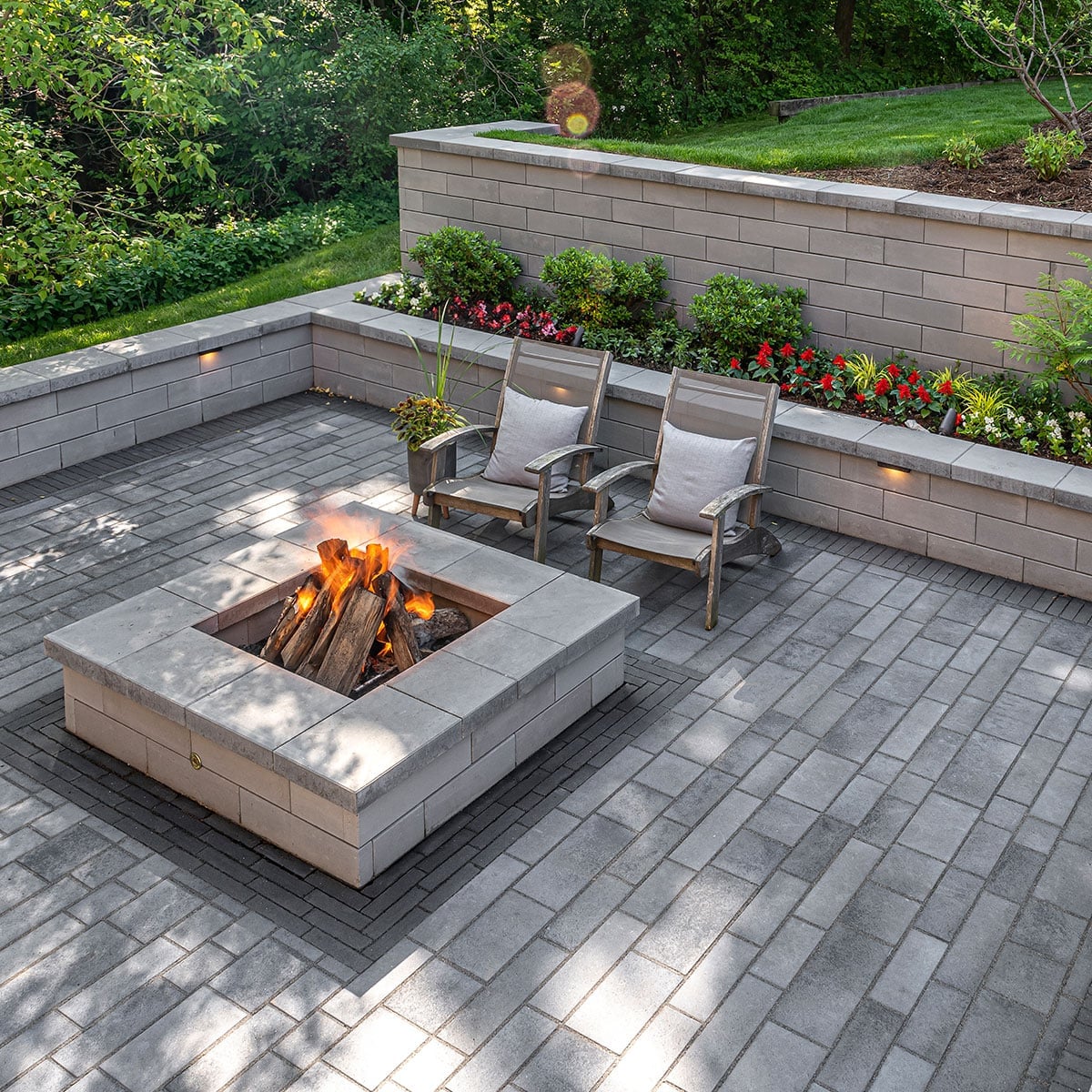
Concrete block retaining walls define the levels here, but the fire pit is what anchors the whole patio. The walls create a clear boundary around the seating area, with patio pavers extending the living space outward. Late afternoon light softens the gray and beige palette, while green plants along the wall edges keep the hardscape from feeling too industrial. Chairs face the fire pit from multiple sides, which is what makes the layout work for conversation rather than just looking at the view. The scale feels intentional: the walls are substantial enough to define the space but low enough that they do not block sight lines to the rest of the yard.
Modern Landscape with Multi-Tiered Gray Stone Block Retaining Walls
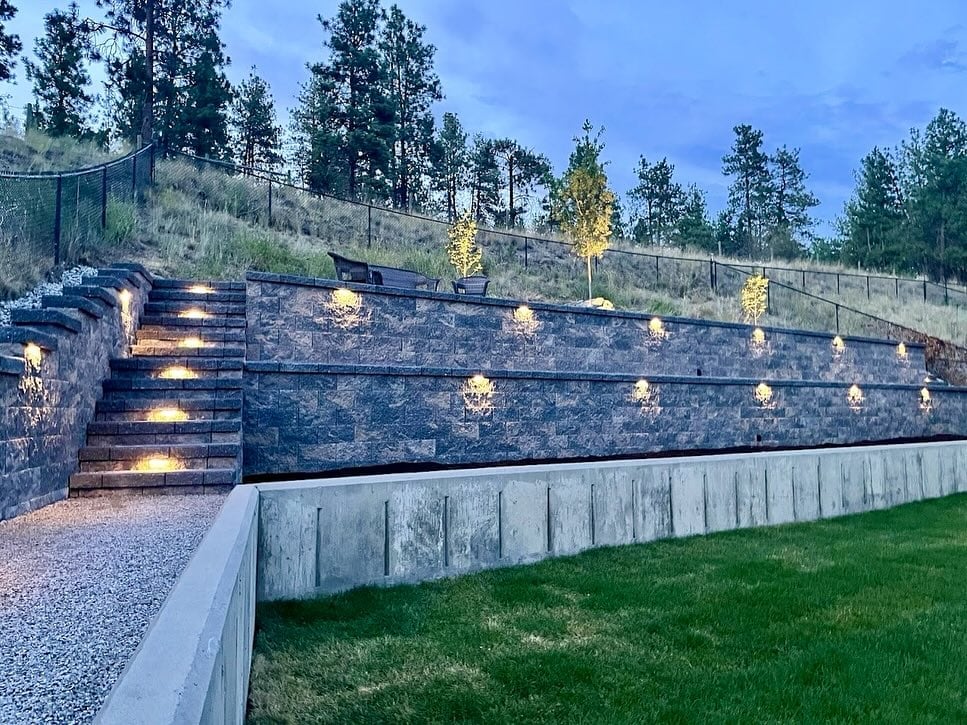
A practical rule for outdoor lighting is to aim for a soft glow rather than a flood, and this multi-tiered wall demonstrates the approach well. The integrated LED accent lights run along the stone blocks, casting a warm, low-level illumination that defines the terraced levels and steps without washing out the dusk sky. The gray stone and dark gravel stay in the background, so the light reads as a natural extension of the landscape rather than an add-on. What defines the look is the restraint: the fixtures are barely visible, and the glow follows the wall’s geometry. What breaks it would be a brighter, whiter light or fixtures that draw attention to themselves.
Spacious Backyard with Naturalistic Tiered Stone Retaining Walls
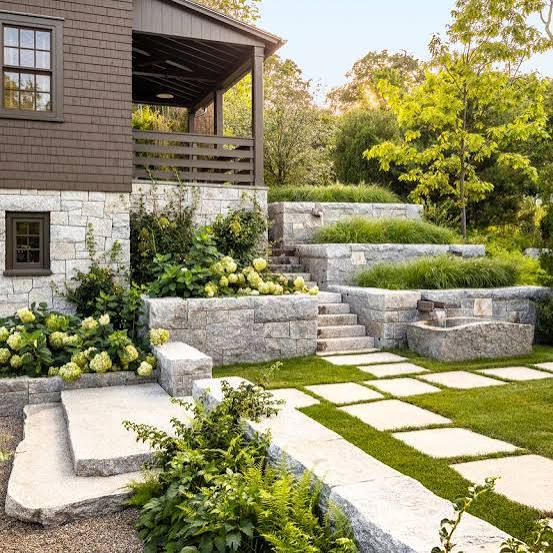
A formal stone wall relies on uniform blocks and straight lines. This naturalistic version takes the opposite approach. The gray stone varies in size and shape, and the walls curve gently across the yard, creating terraced garden levels that seem to belong to the slope. The natural range of stone, green grass, and white flowers keeps the eye moving through the space instead of stopping at one hard edge.
The ratio of hardscape to planting matters here. The stone steps and pathways take up enough ground to feel deliberate, but the lush plantings soften every boundary. The irregularity defines the look: no two stones match, and the walls step up the hill in a rhythm that mirrors the surrounding landscape. A straight, uniform cap or a block color that does not appear in the stone would break it.
Naturalistic Garden with Irregularly Stacked Gray Stone Retaining Wall
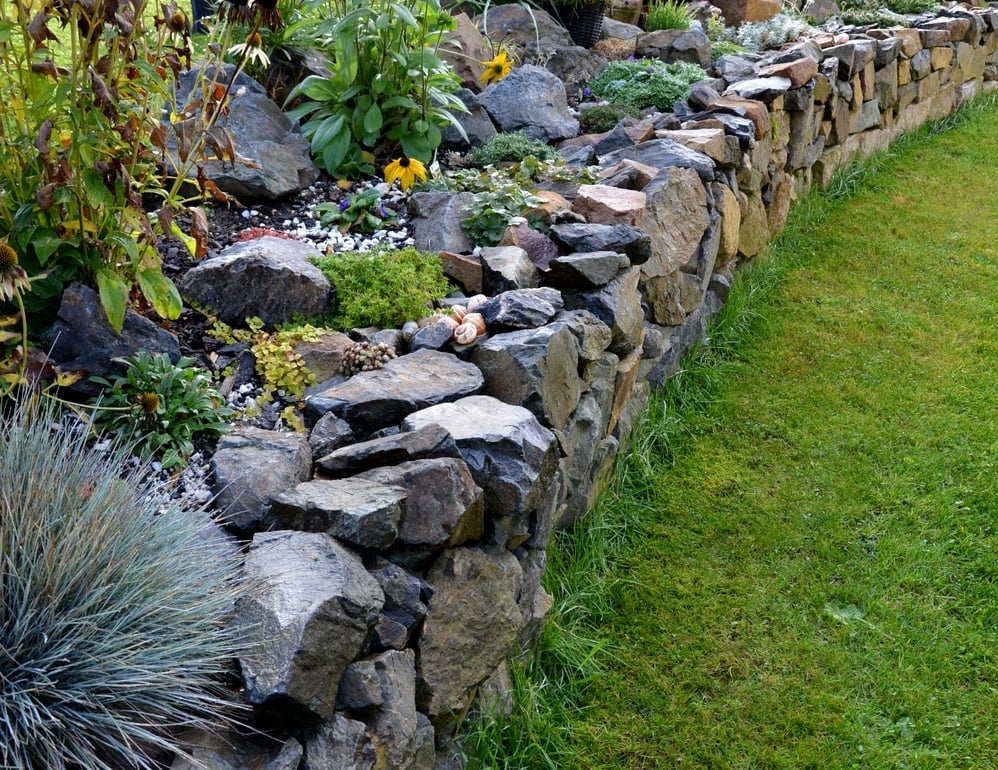
The wall curves through the garden without a straight run, and the stones stack at slightly different angles, which gives the surface a texture that changes with the daylight. Mixed plantings of ornamental grass and flowers in yellow and purple spill over the top edge, so the wall functions as a garden feature. The gravel path at its base reinforces the naturalistic feel. The irregular stacking and the way the wall follows the planting bed define the look. A uniform cap row or a straight line of identical stones would break it.
Modern Transitional Patio with Gray Stone Retaining Wall
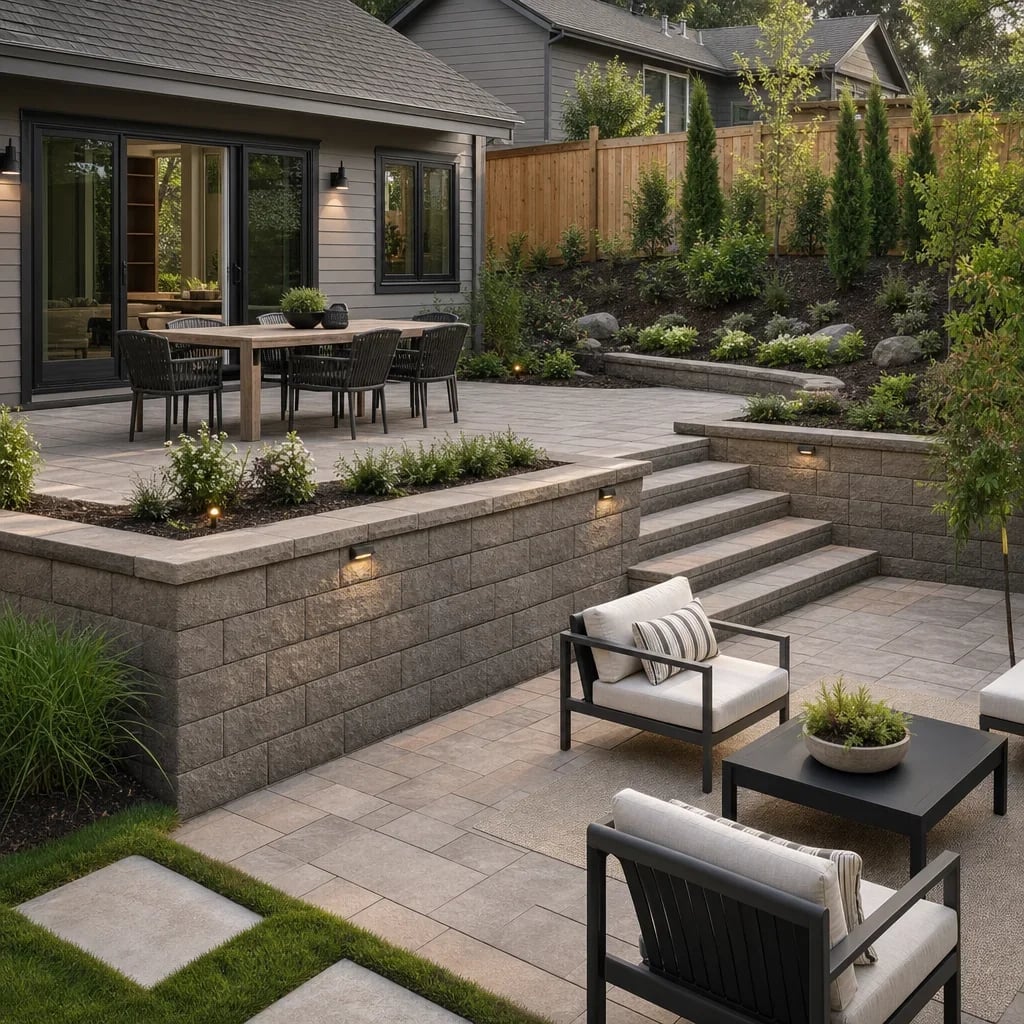
This patio works because the retaining wall does double duty as a light source. The integrated landscape lighting runs along the stone blocks, casting a warm glow across the beige patio pavers and the dark metal dining set beyond. In the evening, the wall becomes the defining feature of the space, separating the upper seating area from the lower dining zone without blocking the view. The gray stone stays neutral, so the furniture and the people using it take center stage. The balance between structure and softness comes from pairing the hard stone wall with cushioned lounge chairs and fabric dining seats. A wall that competes with the furniture for attention, either through a bright color or an overly busy stone pattern, would upset that balance.
Landscaped Garden with Multi-Tiered Stone Block Retaining Wall
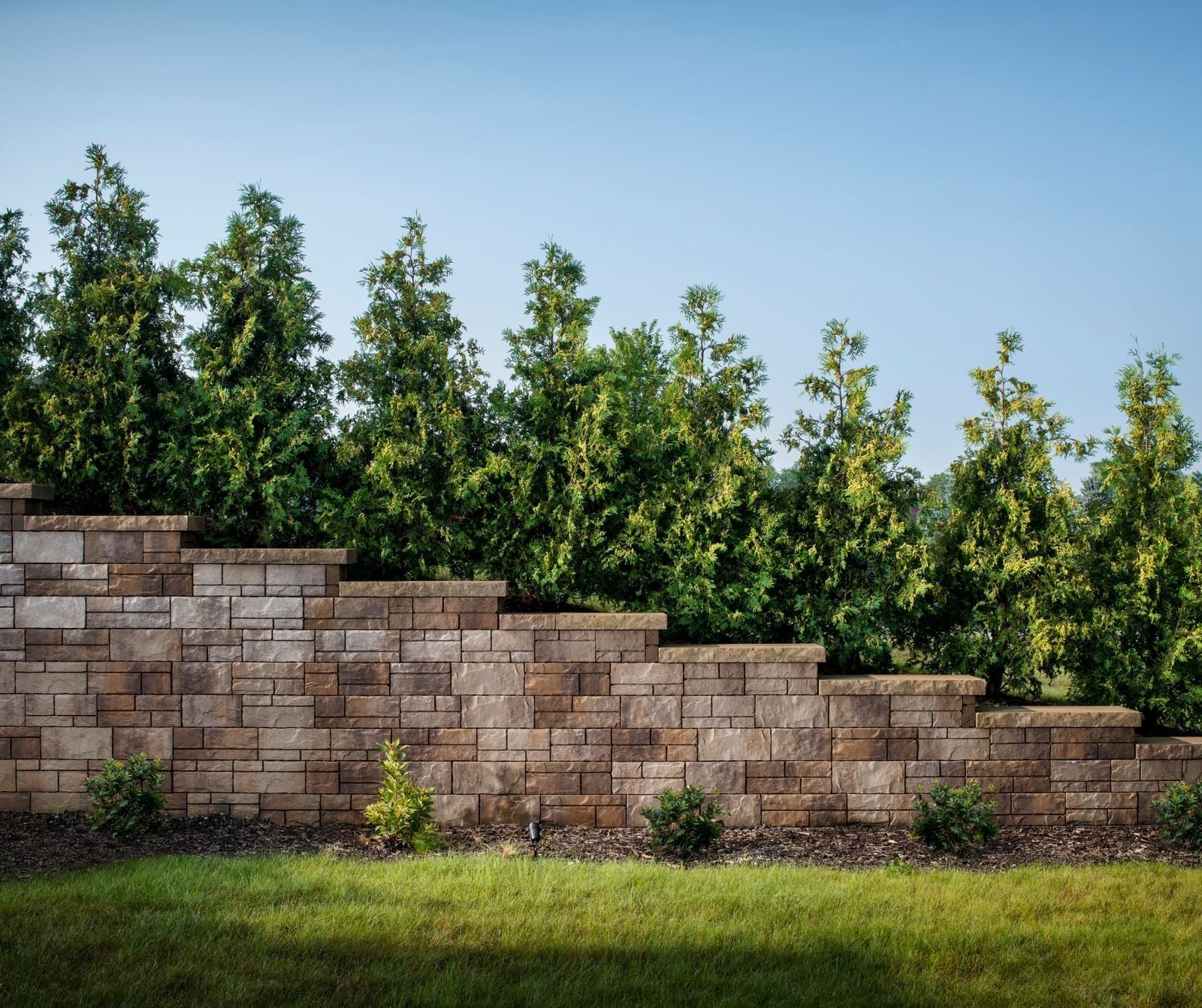
For a sloped garden, break the grade into multiple levels instead of holding everything back with one tall wall. This garden uses a stepped stone block wall that rises in stages, with each tier creating a flat planting area. The evergreen trees sit at different heights, so the eye moves up the slope naturally instead of hitting a single hard barrier. The daylight and clear sky keep the palette simple: gray stone, green foliage, and brown tree trunks.
The layout works because the wall steps follow the natural contour of the hill. The lowest tier holds the largest trees, and each subsequent tier gets slightly smaller plantings, which reinforces the sense of depth. The repetition of the stone blocks across the tiers defines the look: the same material and color at every level, so the wall appears as one cohesive structure. A different stone color on the upper tiers or a gap in the stepping pattern would break the visual rhythm.
Modern Patio with Sweeping Curved Concrete Retaining Wall and Built-in
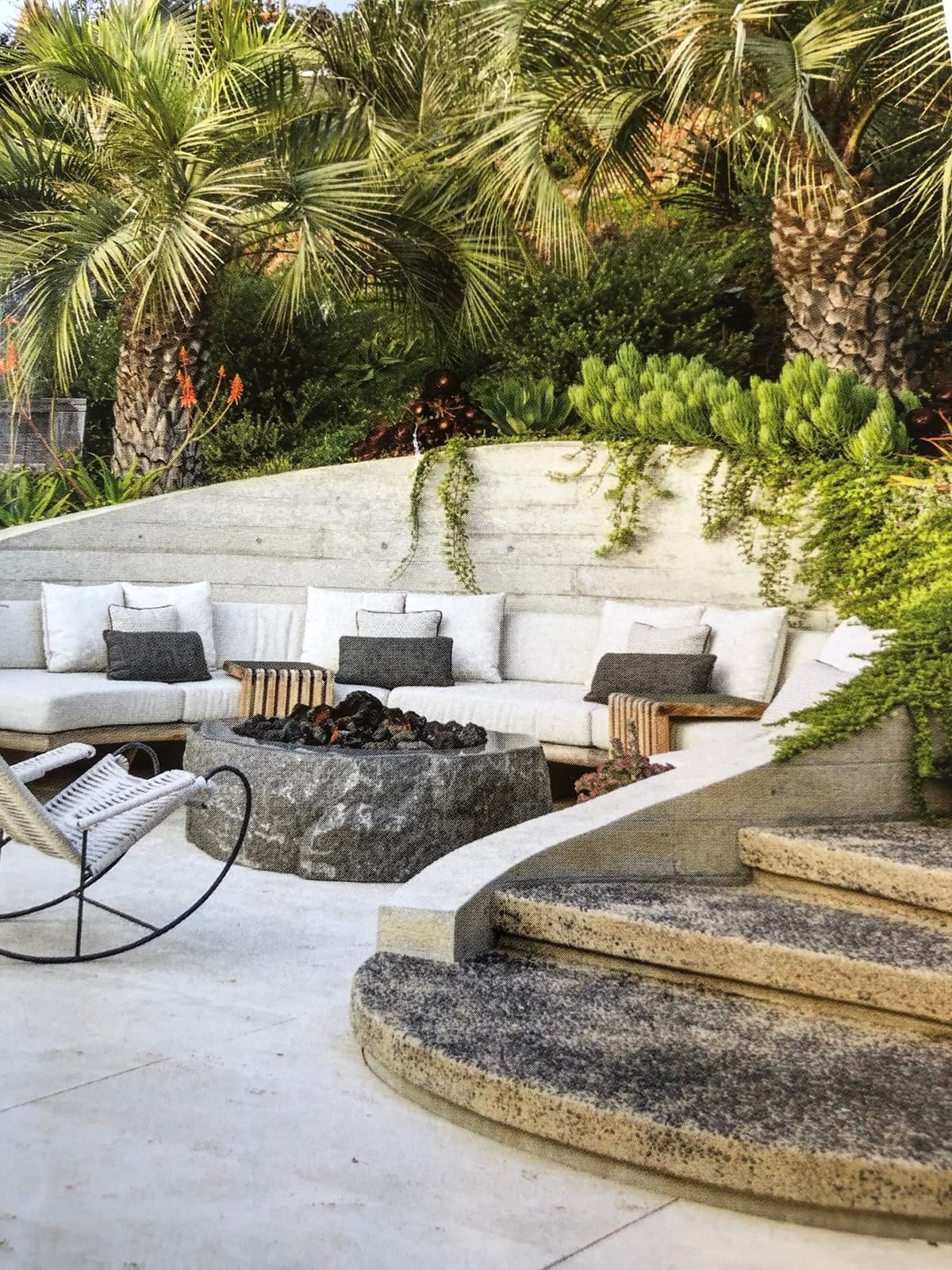
A sweeping curved concrete retaining wall does more than hold back the slope; it sets the whole patio in motion. The smooth, neutral finish acts as a quiet backdrop for a stone fire pit and a sectional sofa, while the built-in seating around the fire anchor the space without blocking the view. The curve itself defines the modern style here. It softens the hard lines of concrete and keeps the patio from feeling like a flat, square afterthought. What breaks the look would be adding too many competing shapes or colors; the wall works because it leads the eye, not because it shouts.
Rustic Garden with Stacked Weathered Wood Sleeper Retaining Wall
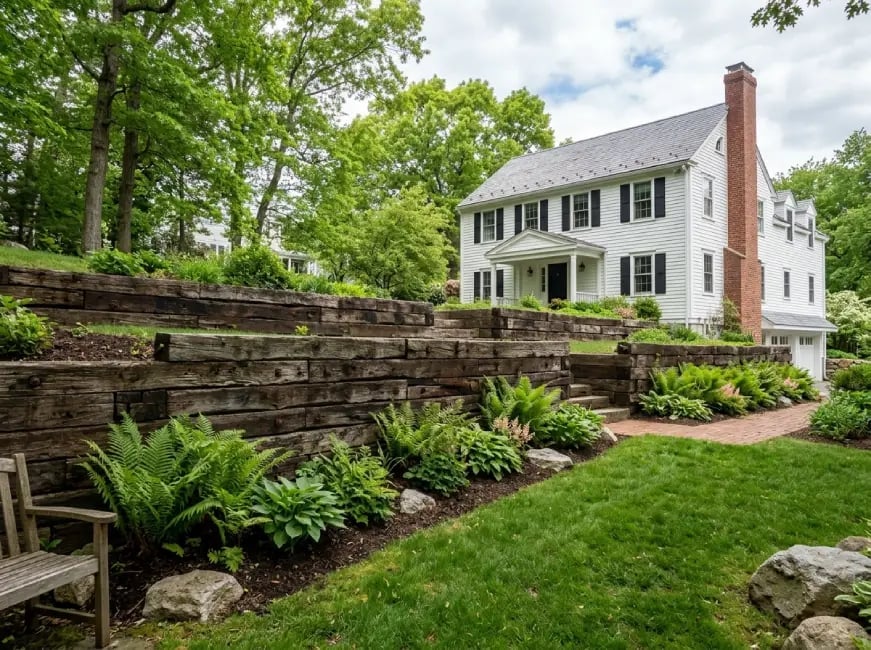
A practical rule for a rental garden is to look for movable or modular retaining wall options, but if you own the space, stacked weathered wood sleepers offer a permanent rustic solution that blends into the landscape. The brown wood tones against gray stone accents and green ferns create a natural palette that feels established rather than built. The wood sleepers define the rustic style here, their worn texture and irregular stacking bring a hand-built feel that suits a terraced garden with a pathway. What would break the look is adding anything too polished or symmetrical, like a sleek metal bench or a perfectly manicured hedge.
Modern Terraced Landscape with Layered Concrete Block Retaining Walls
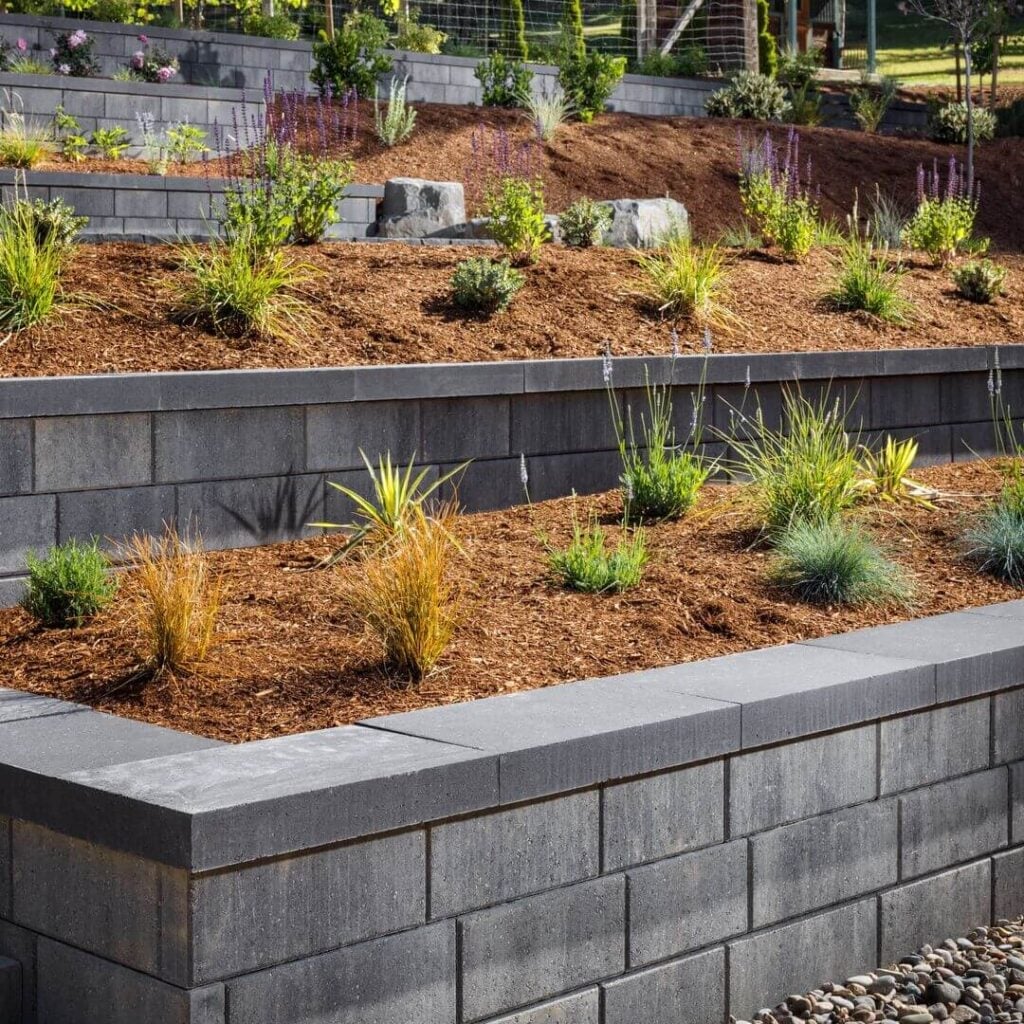
Where a single retaining wall might feel like a hard edge, a series of layered concrete block walls turns a sloped yard into usable terraces. The modern terraced landscape here uses gray blocks to create clean horizontal lines that step down the hill, with ornamental grasses and shrubs softening each level. The layout is the real trick: each tier gives you a distinct planting zone, so you can vary sun and shade plants without fighting the grade. Gravel pathways between the walls keep access practical, and the mulch in the beds reduces upkeep. The repetition of the block form defines this style. The ratio of wall to planting is about one to three, with the greenery taking up more visual space than the concrete.
Naturalistic Garden with Sweeping Natural Stone Retaining Wall
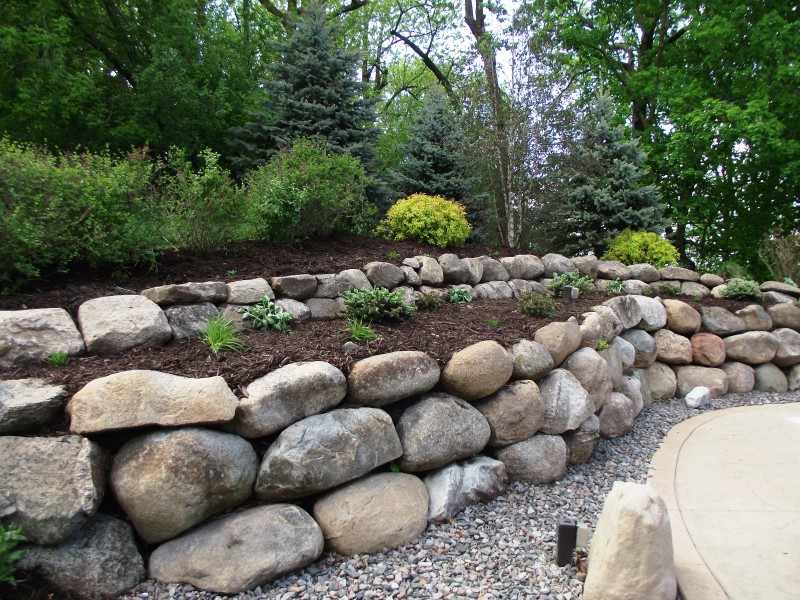
A sweeping natural stone retaining wall follows the land instead of fighting it, and that curve is what gives this garden its relaxed, established feel. The gray stone is stacked in irregular courses, with gravel and mulch filling the gaps and softening the transition to the tiered beds above. The naturalistic style depends on the wall feeling like it grew there, not like it was delivered on a truck. What would break the look is a straight, uniform line or a polished capstone. The charm is in the variation, not the precision.
Contemporary Garden with Concrete Block Retaining Wall and Integrated
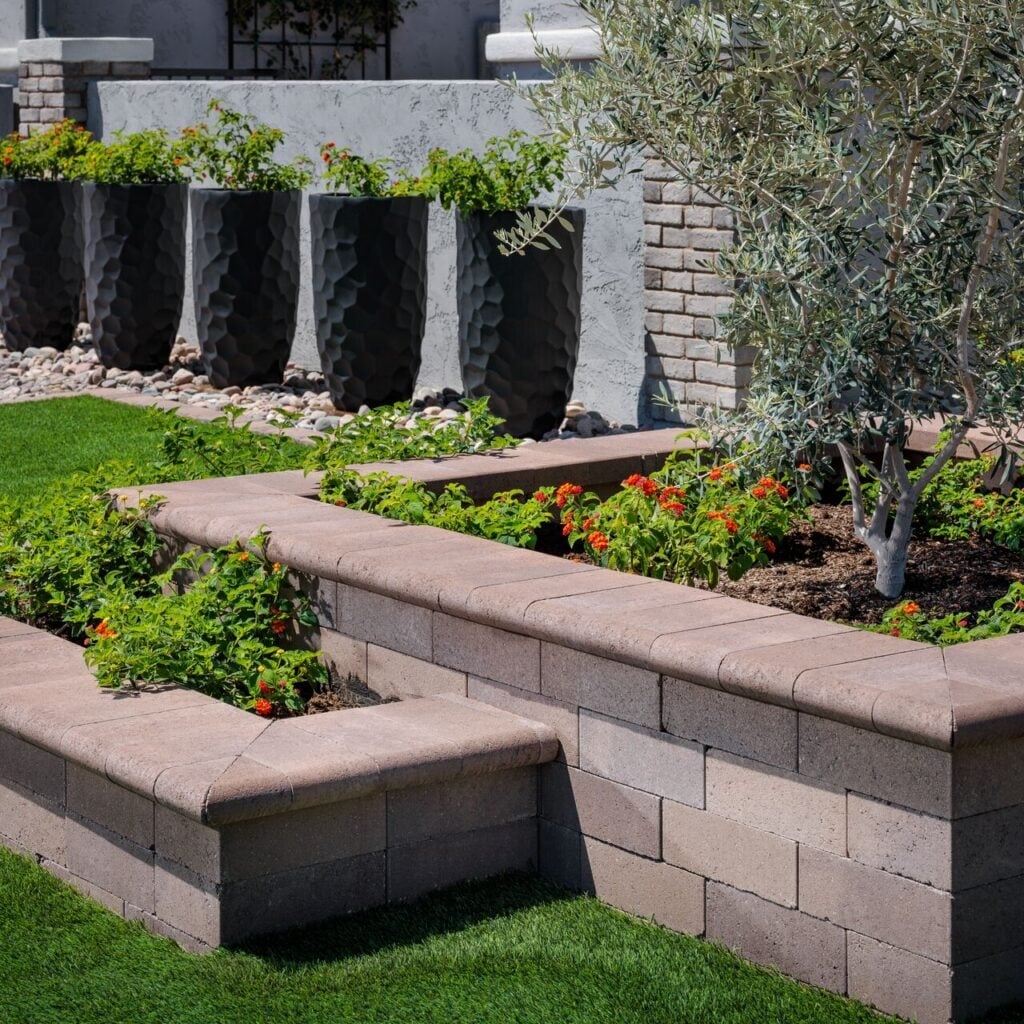
A concrete block retaining wall with integrated planters is a straightforward way to add both structure and greenery to a garden edge. The contemporary style here relies on the geometry of the blocks, the gray concrete, the brown stone accents, and the orange tones of a nearby olive tree. The planters built into the wall raise the soil level, which makes planting and weeding easier on the back and keeps the garden beds defined without extra edging. What defines this look is the balance between hard and soft, the blocks provide the grid, and the plants spill over it. The ratio of wall to planter is roughly two to one, with the greenery breaking up what could otherwise be a solid gray mass. Overcrowding the planters with too many varieties would ruin the look; sticking to one or two species keeps the geometry clear.
Rustic Modern Patio with Curved Stacked Stone Retaining Wall
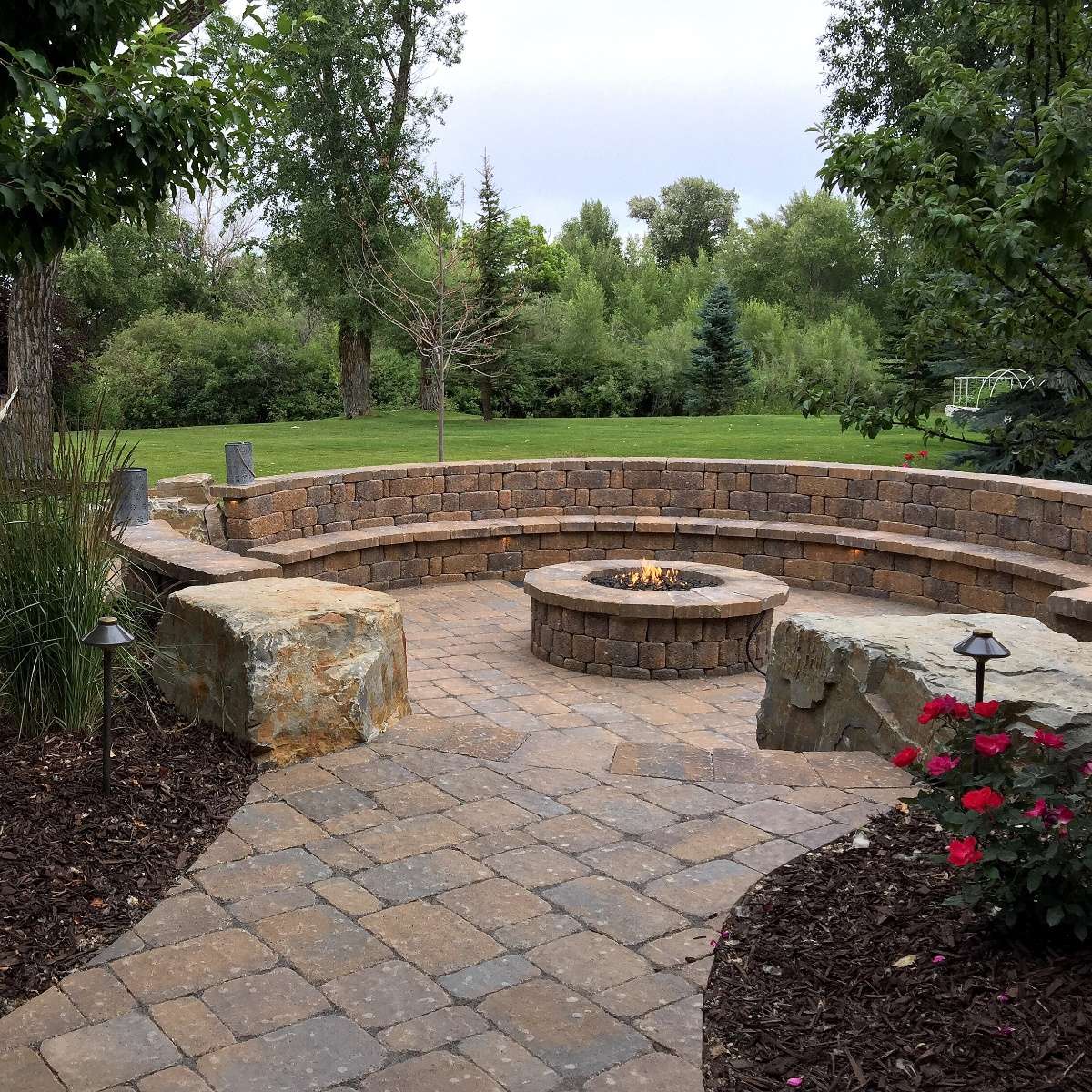
A curved retaining wall can shape how a patio is used. Here, the wall wraps around a fire pit, and the built-in seating follows that same curve, so the whole space leans toward the center instead of facing outward. Large boulders sit near the wall, grounding the stone work in the surrounding landscape. The palette stays warm with browns, beiges, and touches of orange, which keeps the rustic modern style from feeling cold. Stone pavers underfoot tie the seating zone together, while the subtle landscape lighting is placed to pick out the wall’s texture after dusk. This layout works best when the seating is the main event and the patio stays simple, letting the curved wall act as the quiet anchor of the yard.
Landscaped Garden with Stone Retaining Wall and Vibrant Hydrangeas
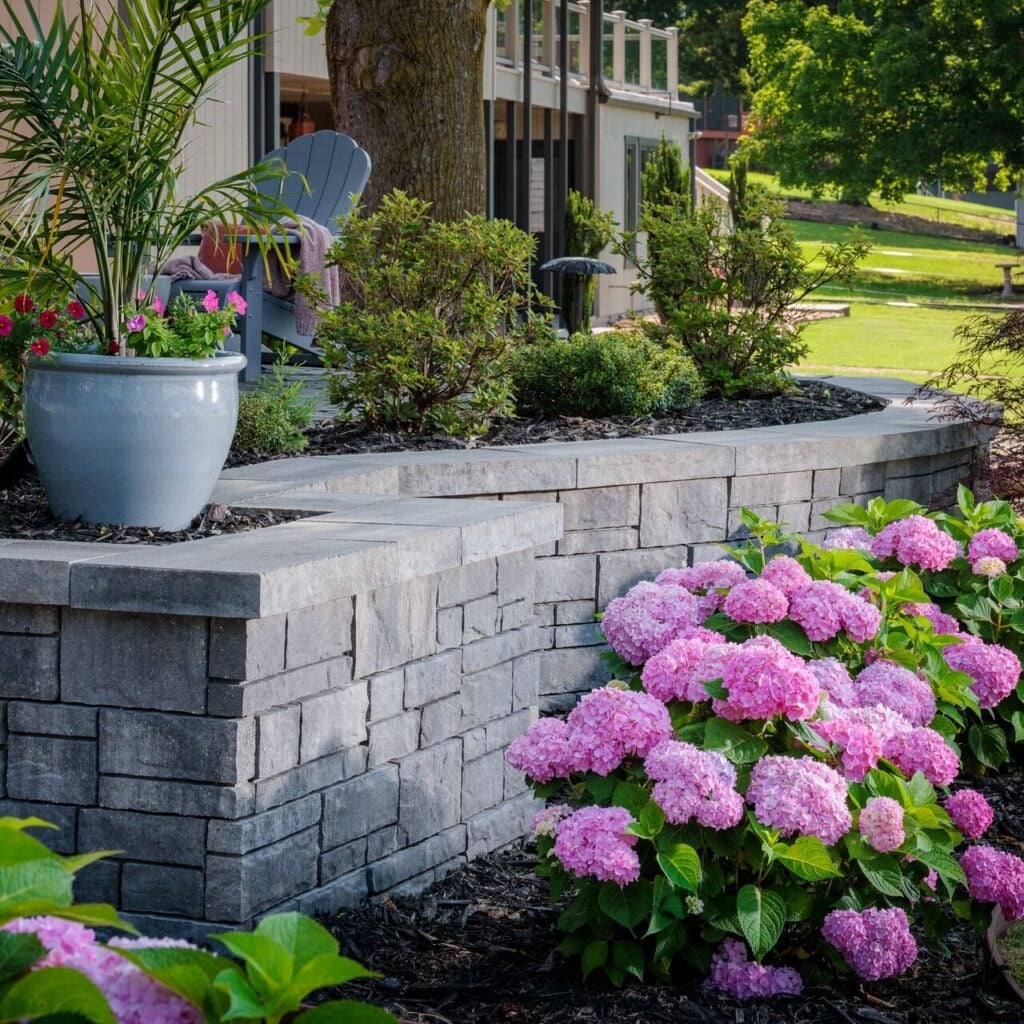
The stone retaining wall here is almost a backdrop, because the vibrant pink hydrangeas take center stage. Large hydrangea bushes spill over the gray stone blocks, and a palm plant adds a taller green note behind them. The tiered garden beds give the wall a reason to exist, holding back the upper level while the lower bed stays filled with mulch and blooms. This is a landscaped garden that leans on color contrast: cool gray stone against warm pink flowers. The palette is gray and green, with pink as the pop. Choose a wall in a neutral tone and let the planting carry the color, so the structure supports the garden without competing with it.
Contemporary Garden with Stacked Stone Retaining Wall and Integrated
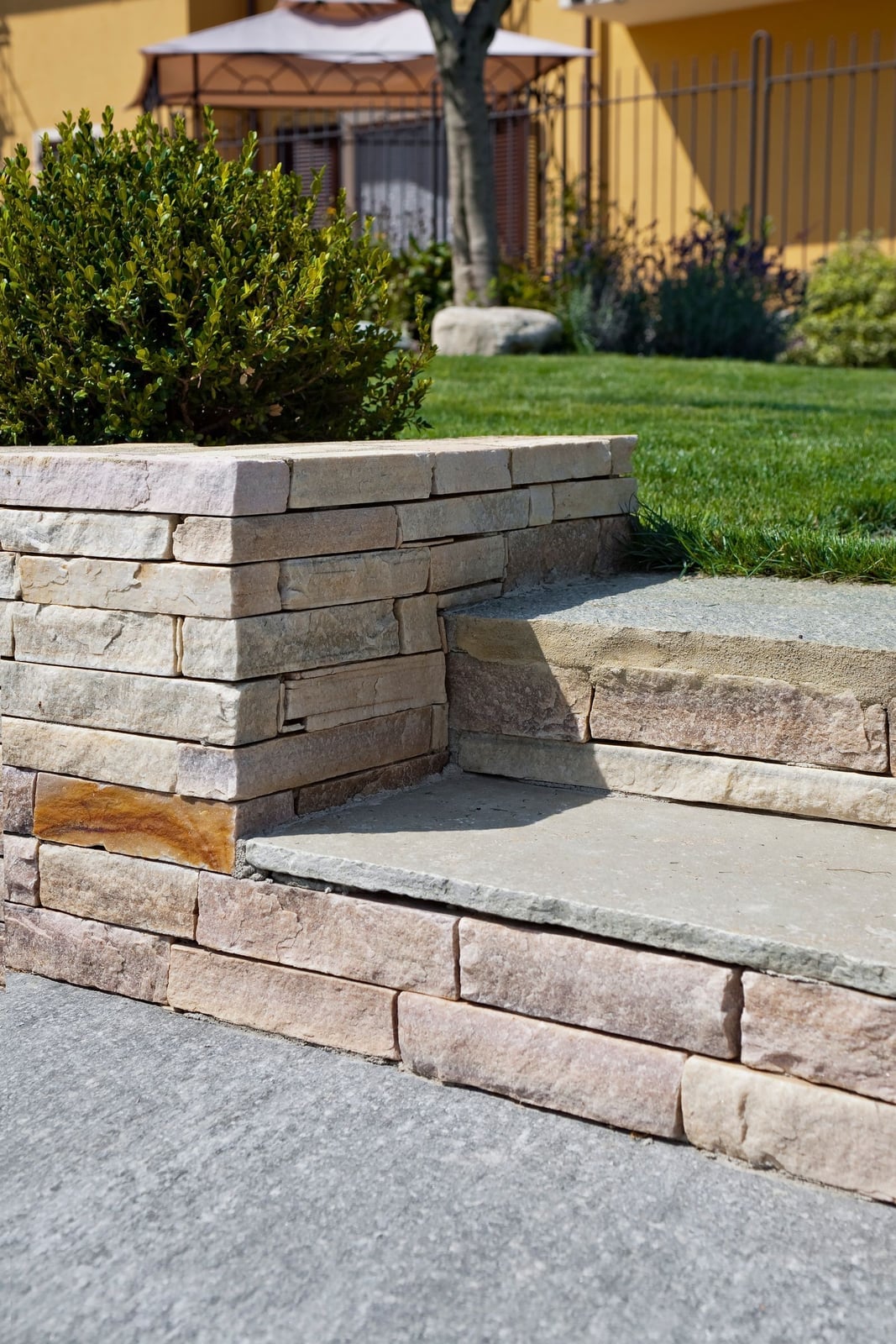
In a compact slope, the retaining wall can double as the staircase. Here, the stacked stone wall rises alongside integrated stone steps, so the transition between levels feels like part of the same structure. The tan and beige stone tones blend with the gray concrete, and the grass at the edges softens the hard lines. This approach suits a contemporary garden where you want clean geometry without a lot of visual clutter. The key is matching the step treads to the wall stone, so the eye moves up the slope without stopping. In a tight space, that continuity keeps the whole composition calm and easy to read.
Modern Front Yard with Multi-Level Retaining Walls and Integrated
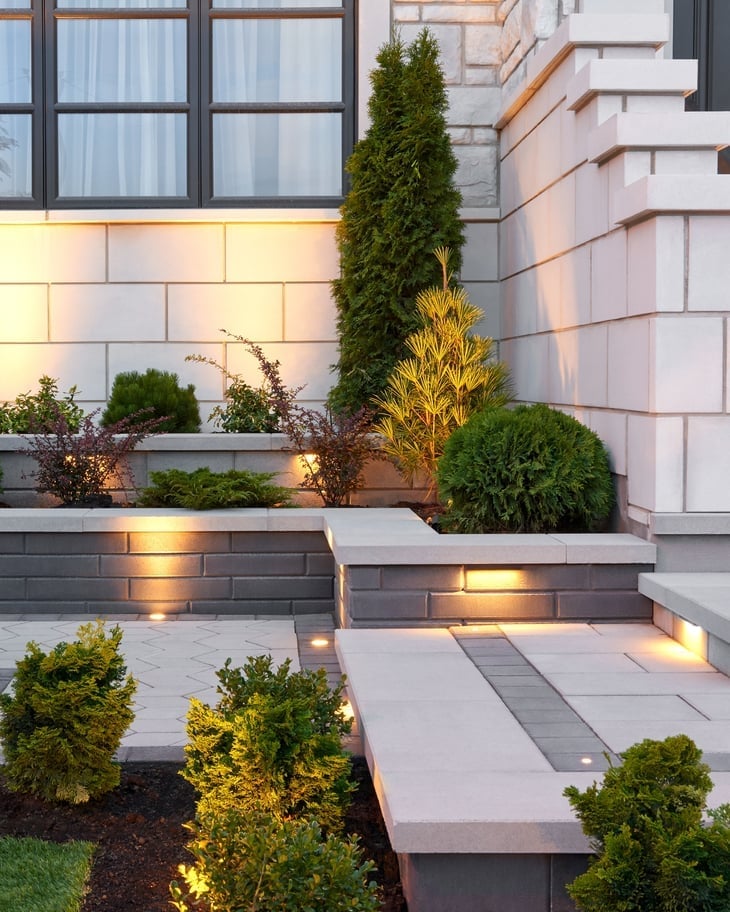
Compared to a single tall wall, a front yard with multi-level retaining walls feels more like a series of terraces than a barrier. Here, the gray stone and concrete walls step down in tiers, with a walkway threading between them and plants tucked into each level. The integrated lighting is what sets this apart from a plain landscaped slope. Small fixtures along the walls cast light downward, picking out the texture of the stone and the edges of the path, so the front yard stays visible and welcoming after dark. The palette stays cool with gray, white, and green, which keeps the evening lighting from feeling warm or glowy. This layout works well when you want to guide guests from the street to the door without a single dramatic drop.
Traditional Garden with Low Concrete Block Retaining Wall and Stone
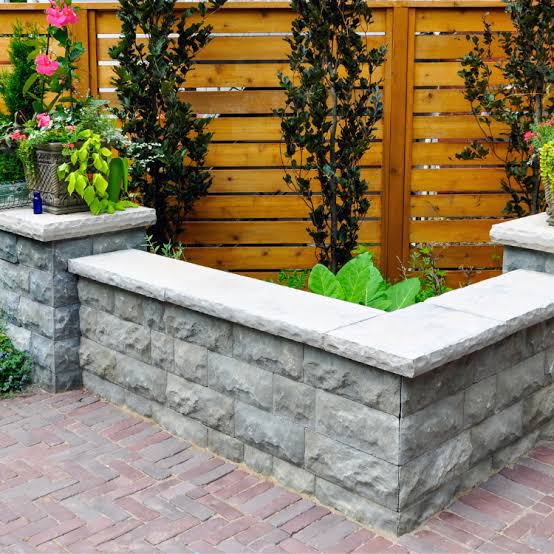
A low concrete block wall with a stone cap reads as a finished edge rather than a raw structural piece. In this corner garden, the gray stone cap sits on the block wall, and the brick paver patio below gives the space a warm, classic base. The red brick against the gray stone and green plants keeps the traditional style from feeling monotonous. The wall is low enough to double as a seating cap, which is a quiet way to add function without building a separate bench. This kind of low wall works best at the edge of a patio or around a small garden bed, where it defines the area without blocking the view.
Modern Garden Patio with Gabion Retaining Walls and Wooden Steps
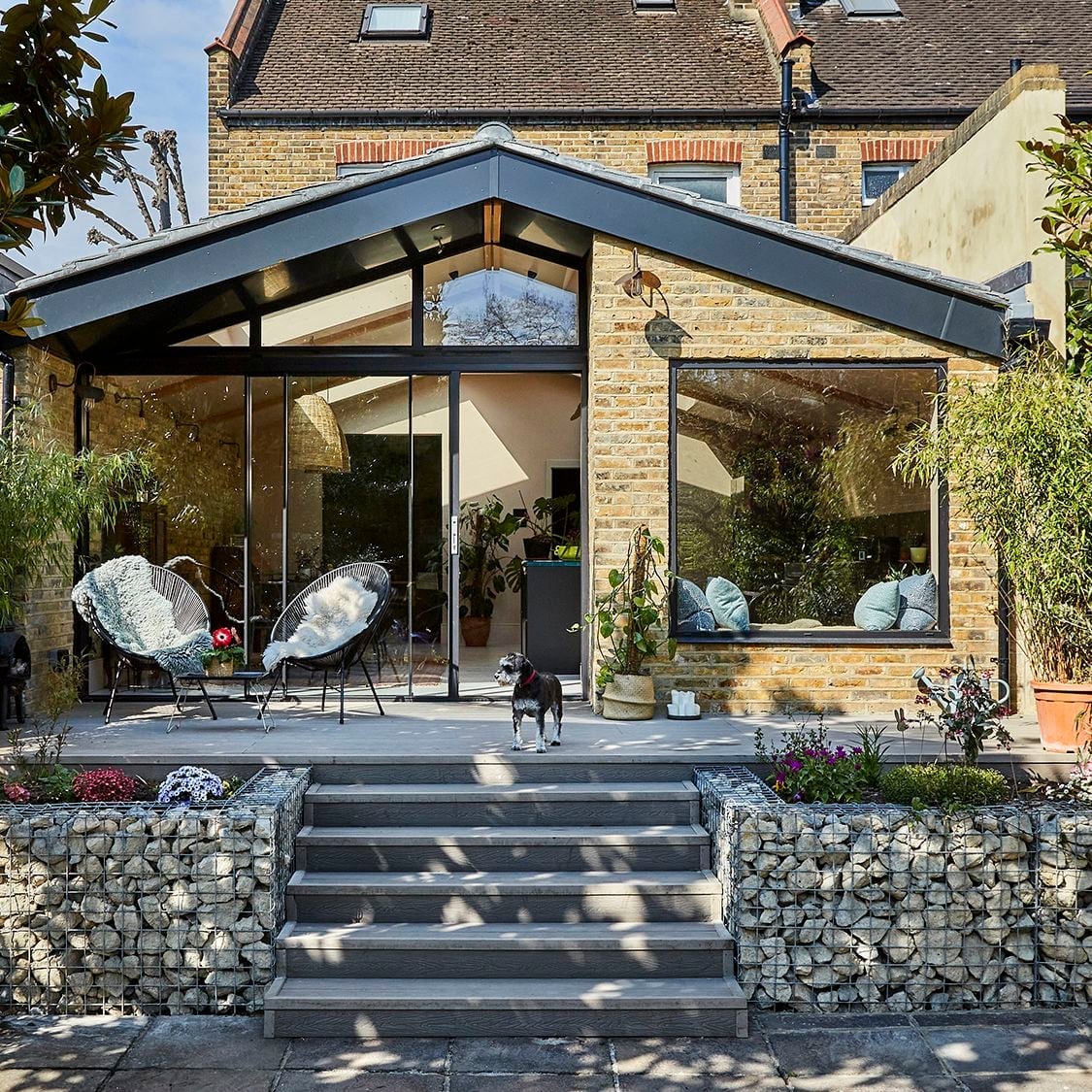
A gabion wall is the budget-conscious cousin of solid stone, and it earns its spot here by doing the same job with a fraction of the fuss. The patio in this modern garden uses wire cages filled with gray stone to flank a set of wooden steps, creating a clean, industrial edge. What defines the style is the hard, open grid of the gabion and the soft green of the surrounding plants, with a yellow brick accent adding a warm note that keeps the palette from turning cold. The ratio leans heavily on the stone cages they take up most of the visual weight, while the wood steps and metal chairs break the repetition with lighter, warmer textures.
Naturalistic Garden Landscape with Massive Natural Stone Block
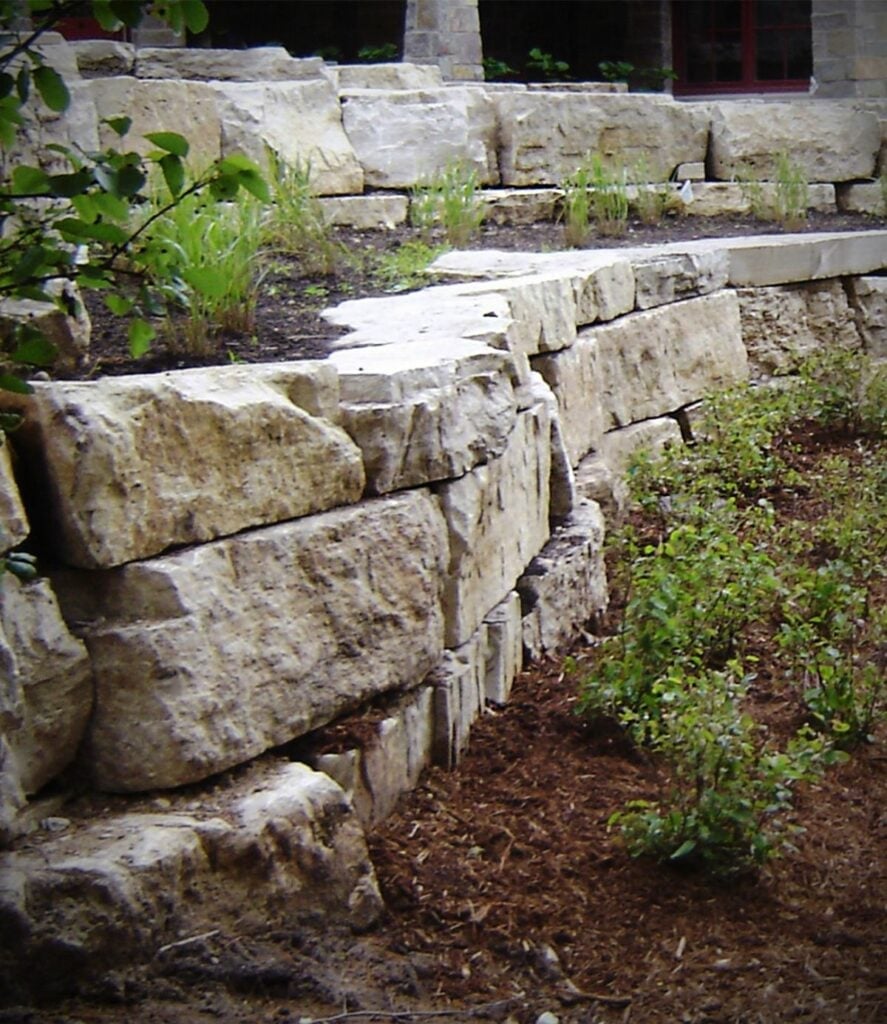
Any retaining wall benefits from bigger blocks because fewer seams create a more natural look. This garden landscape uses massive natural stone blocks stacked in a way that mimics how rock would settle on its own, creating terraced beds that feel like they have been there for decades.
The style here is defined by the scale of the stone. Each block is large enough to hold its own against the surrounding greenery, so the wall becomes a geological feature. The beige and gray tones blend into the soil and mulch, while the plants soften the top edge. What breaks the naturalistic feel would be adding anything too uniform or man made, like a straight concrete cap or painted trim. The trick is to let the stone do the talking and keep the planting loose.
Expansive Modern Landscape with Tiered Concrete Block and Stone
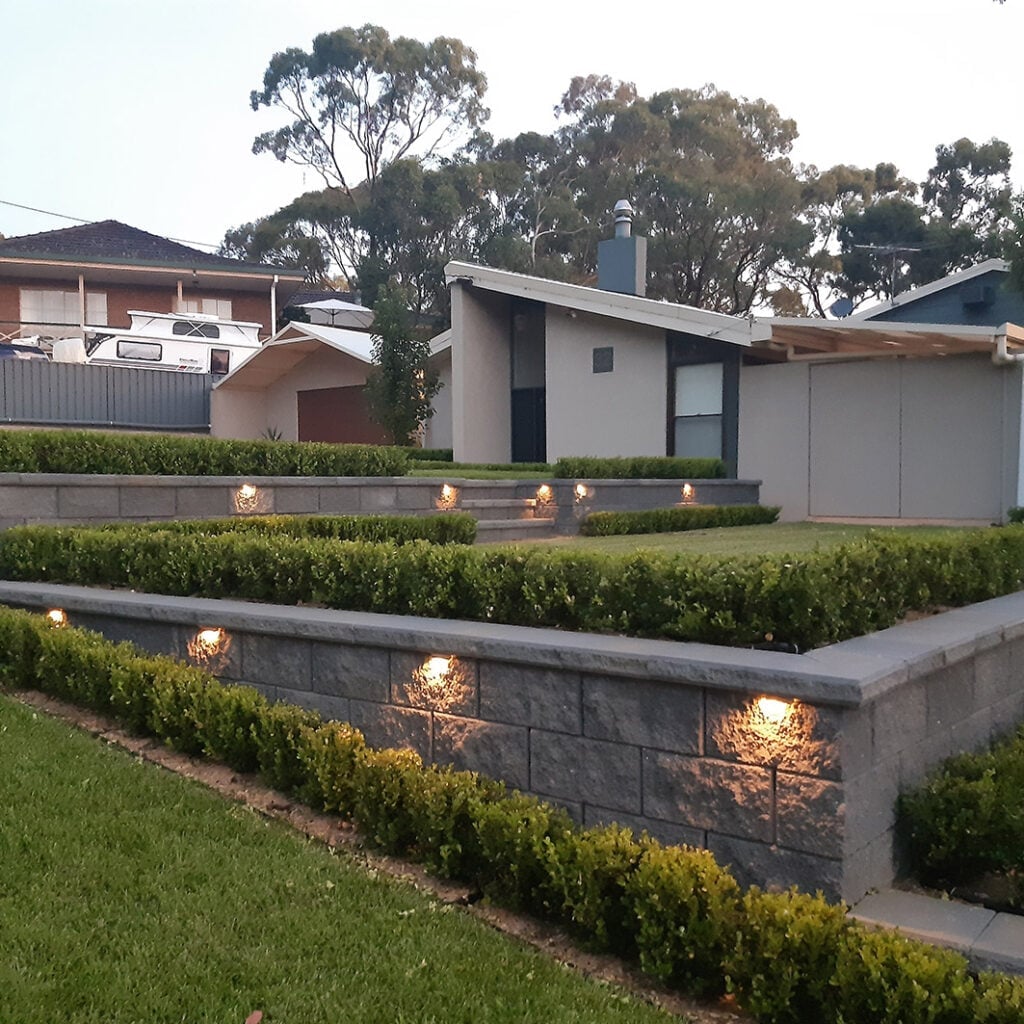
This front yard uses three distinct levels of retaining walls, each one lit from below by integrated pathway lights that turn the whole slope into a nighttime feature. The lowest tier uses concrete block for a clean, modern line, while the upper tiers shift to stone and are backed by manicured hedges that soften the transition from hardscape to grass. The layout works because each level has a job to do: the bottom wall holds back the bulk of the grade, the middle tier creates a flat band for the hedges, and the top wall frames the lawn. The evening lighting picks out the texture of the stone and gives the whole design a sculptural quality that daytime alone could not match.
Naturalistic Garden Bed Edge with Textured Tan and Beige Stone
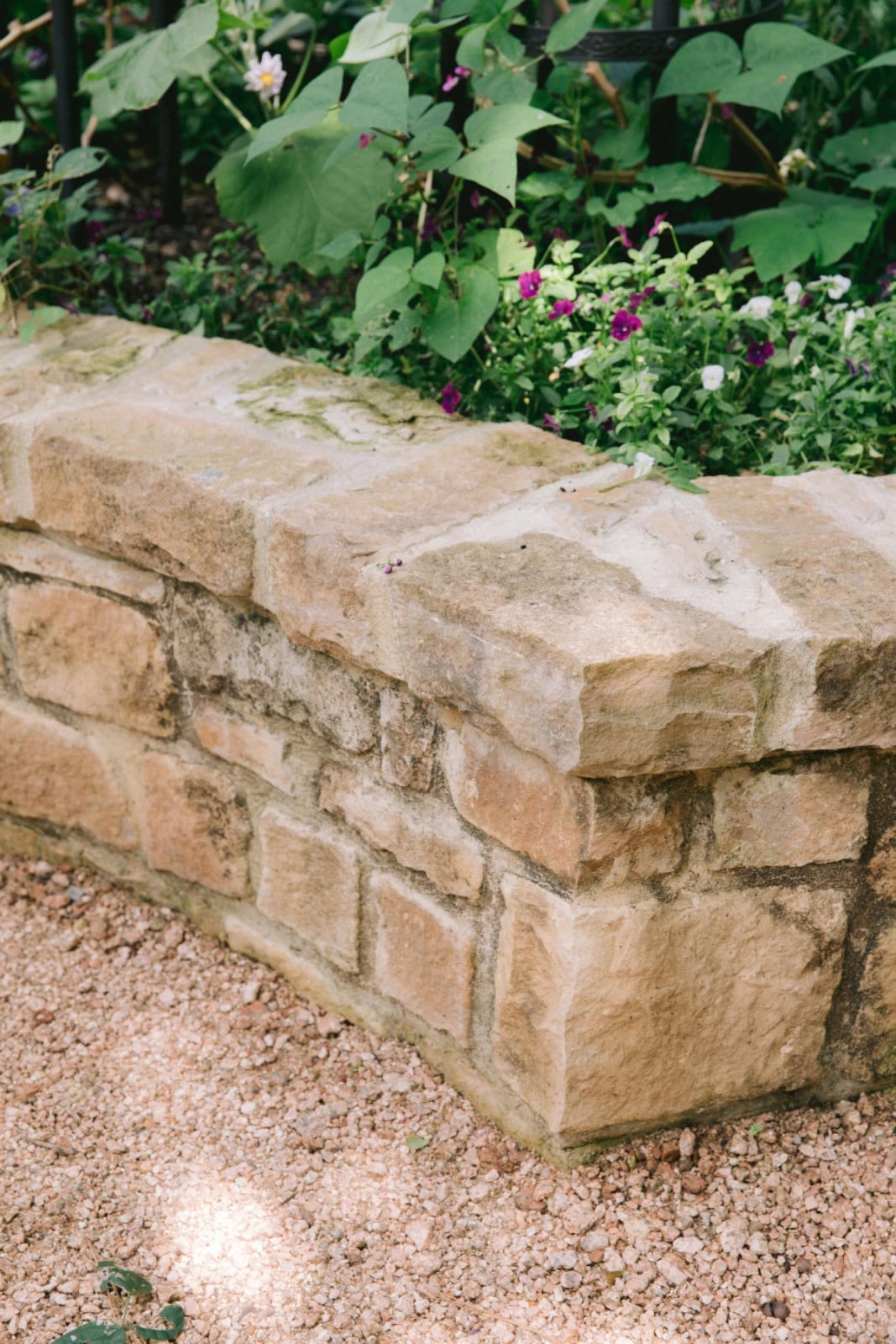
The stone here is a collection of tan and beige pieces with visible texture, so the surface catches sunlight differently than flat concrete. This low wall borders a garden bed, keeping soil and mulch contained while adding a visual edge that resembles a natural outcropping. The warm neutral palette complements the plants, and the gravel at the base aids drainage, preventing the wall from sitting in mud. To recreate it on a smaller scale, look for stones with visible grain or fossil marks. The irregular surface gives this edge its character, not the exact shape of each piece.
Modern Garden with Stacked Gray Modular Concrete Block Retaining Walls
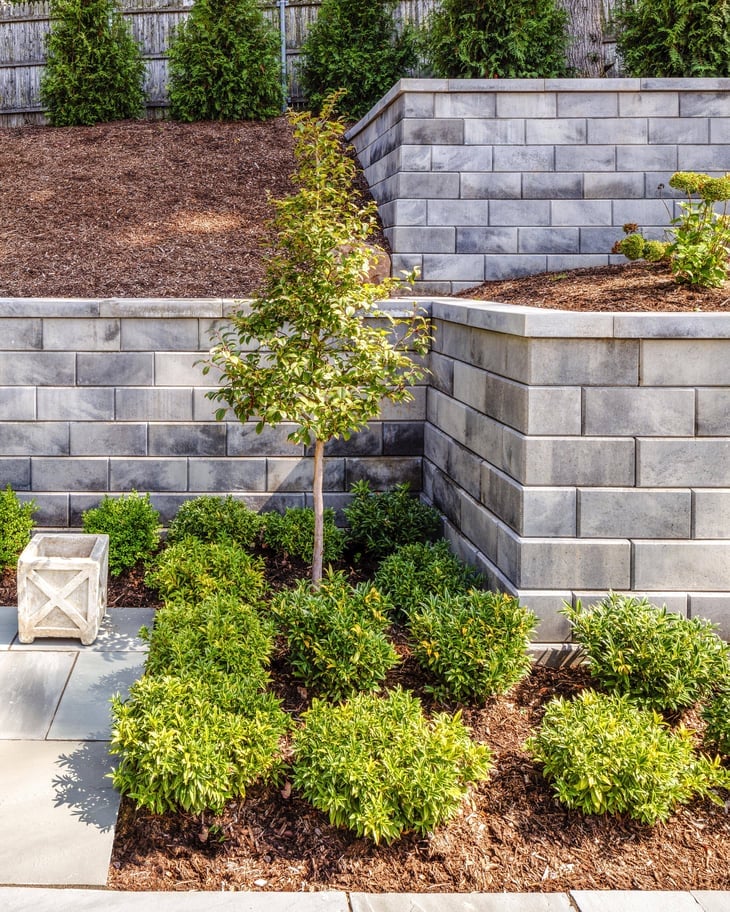
Stacked concrete block is the close alternative to natural stone that sacrifices some texture for a much cleaner line. This modern garden uses gray modular blocks in a tiered layout, with the walls stepping up to create defined planting areas for a small tree and ground cover. The palette stays tight: gray concrete, green leaves, and brown mulch, with no competing colors to distract from the geometry.
What makes this work is the precision of the blocks. Each one is the same size, so the stacked walls have a rhythm that natural stone cannot replicate. The mulch and stone paver base at the bottom keep the soil from splashing up onto the concrete, which helps the clean look last longer. The style is defined by that repetition, and what breaks it would be adding anything organic or irregular to the wall itself. Save the loose planting for the beds, not the blocks.
Organic Garden Feature with Spiral Stone Retaining Wall Raised Planter
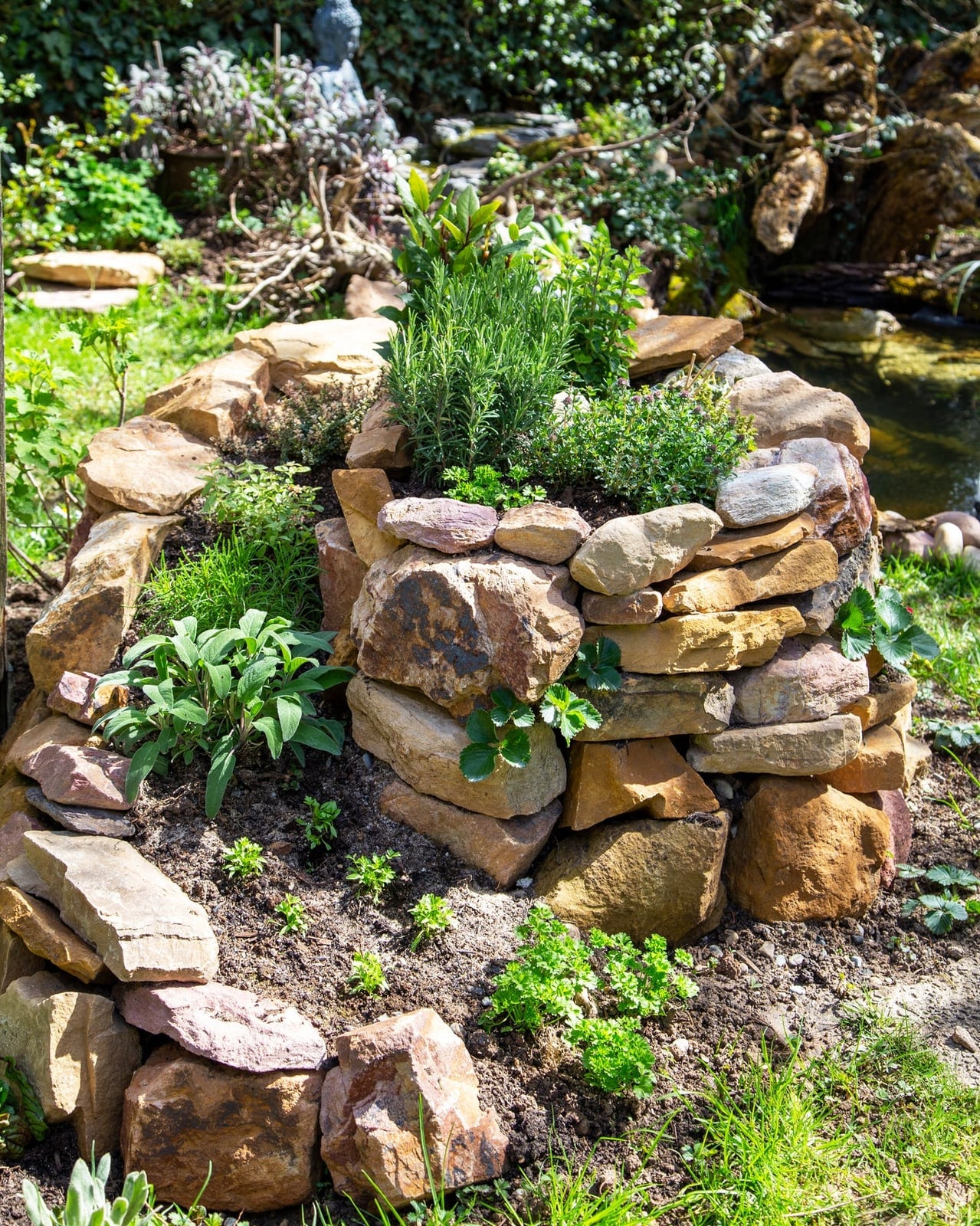
A spiral of stacked stone rising from the ground turns a raised bed into a sculptural garden feature. The wall coils inward, creating a single continuous planter that holds herbs and low plants in its center. The brown and tan stone reads like a natural outcrop, while the curve keeps the form organic rather than geometric. What defines this look is the spiral itself: a single line of stone that does the work of both retaining soil and shaping the garden. The ratio of stone to planting leans heavily on the wall, so the greenery reads as filling the space rather than competing with it. A few trailing plants spilling over the edge break the hard line of the stone, softening the whole thing without losing the structure.
Rustic Outdoor Living Patio with Prominent Stone Fireplace and Wooden
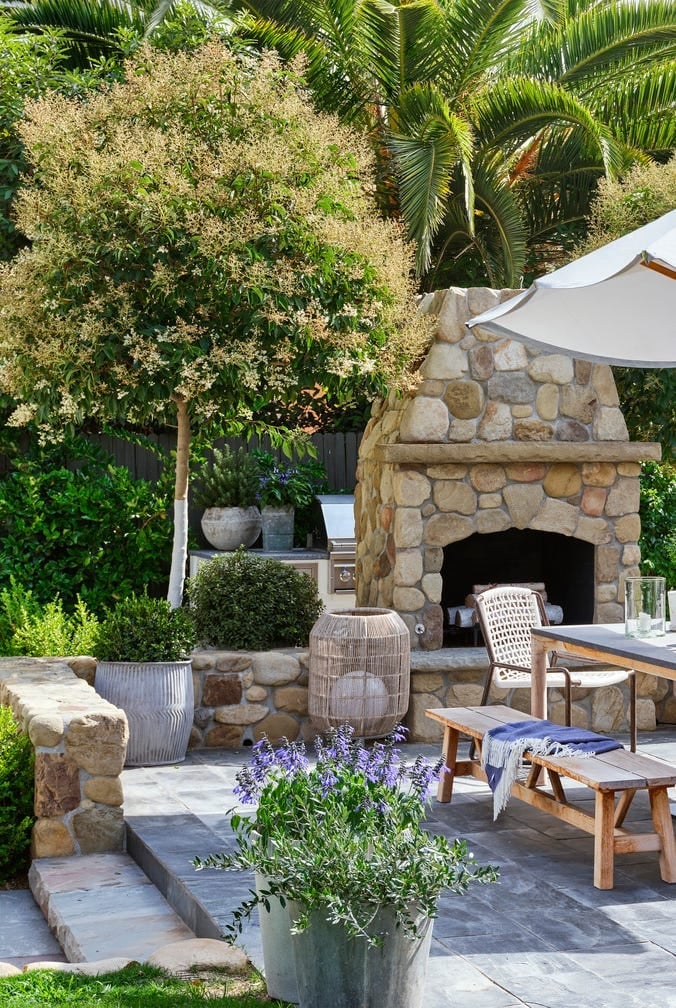
This patio centers on a stone fireplace that anchors the whole outdoor room. The fireplace is the hero element here, built from stacked stone in warm earth tones that match the surrounding hardscape. A wooden dining set and benches sit nearby, their natural finish keeping the look cohesive. The palette stays in a narrow range of stone gray, wood brown, and the green of nearby shrubs, with white cushions adding the only contrast. What defines the rustic outdoor living style is the fireplace itself: it makes the patio feel like an extension of the house rather than a separate space. The ratio of stone to wood favors stone, which gives the patio a grounded, permanent feel. A metal umbrella and soft cushions break the ruggedness just enough to keep it comfortable.
Formal Garden with Multi-Level Stone Retaining Walls, Pond, and Water
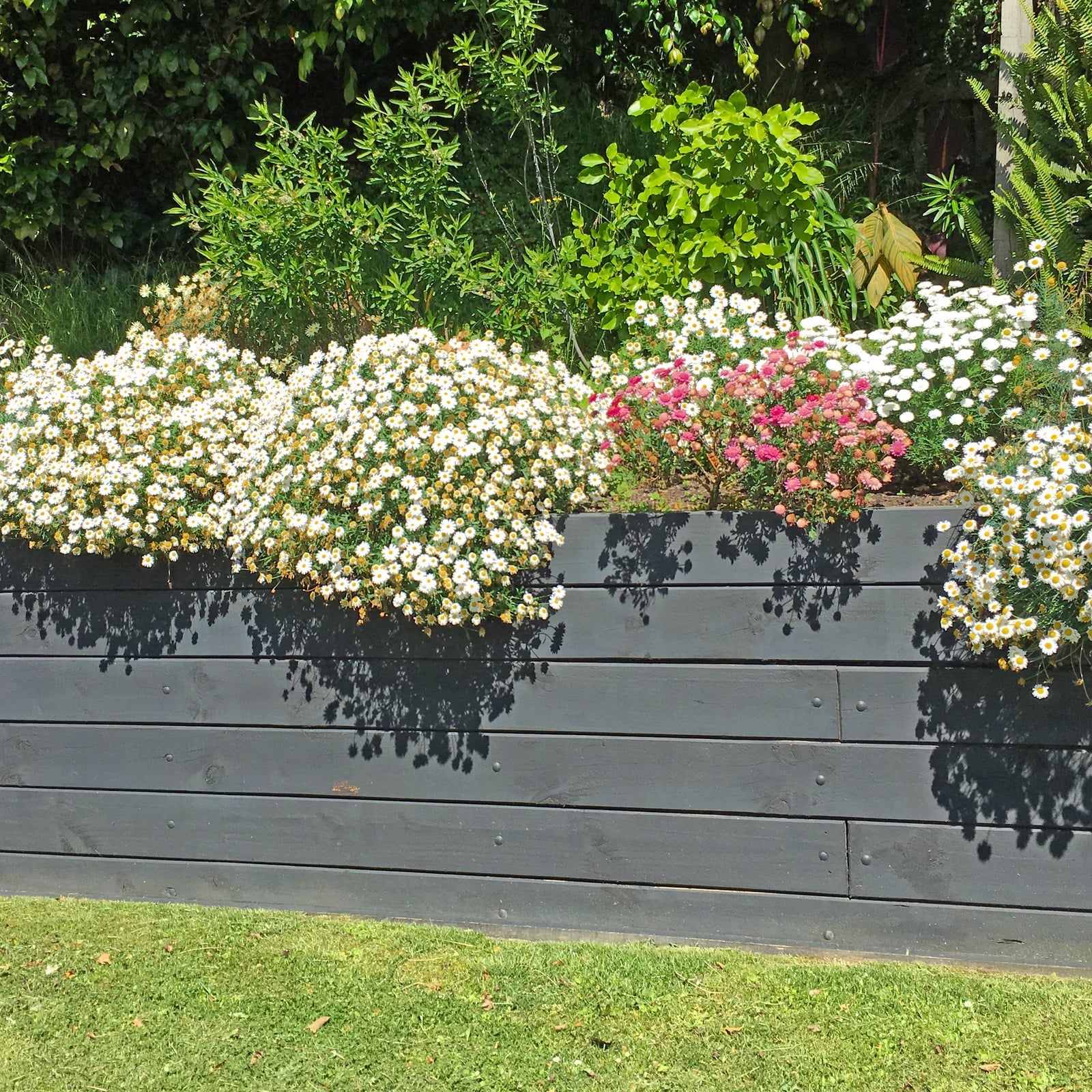
This garden reads as formal but not stiff, thanks to multi-level stone retaining walls that terrace the slope rather than flattening it. The walls step down in stages, each level holding manicured hedges and flower beds in pink and white. A pond and water feature sit at the lowest level, their still surface reflecting the sky. The layout does the work here: the tiered walls create distinct garden rooms without needing fences or partitions. One level holds the pond, another holds the formal hedges, and a pathway winds between them, connecting each space without forcing a straight line. The stone is consistent across every wall, a light gray that reads as one material rather than a patchwork. The pink flowers and clipped hedges break the stone’s uniformity, adding softness without losing the garden’s formal bones.
Naturalistic Garden with Curved Natural Stone Retaining Walls
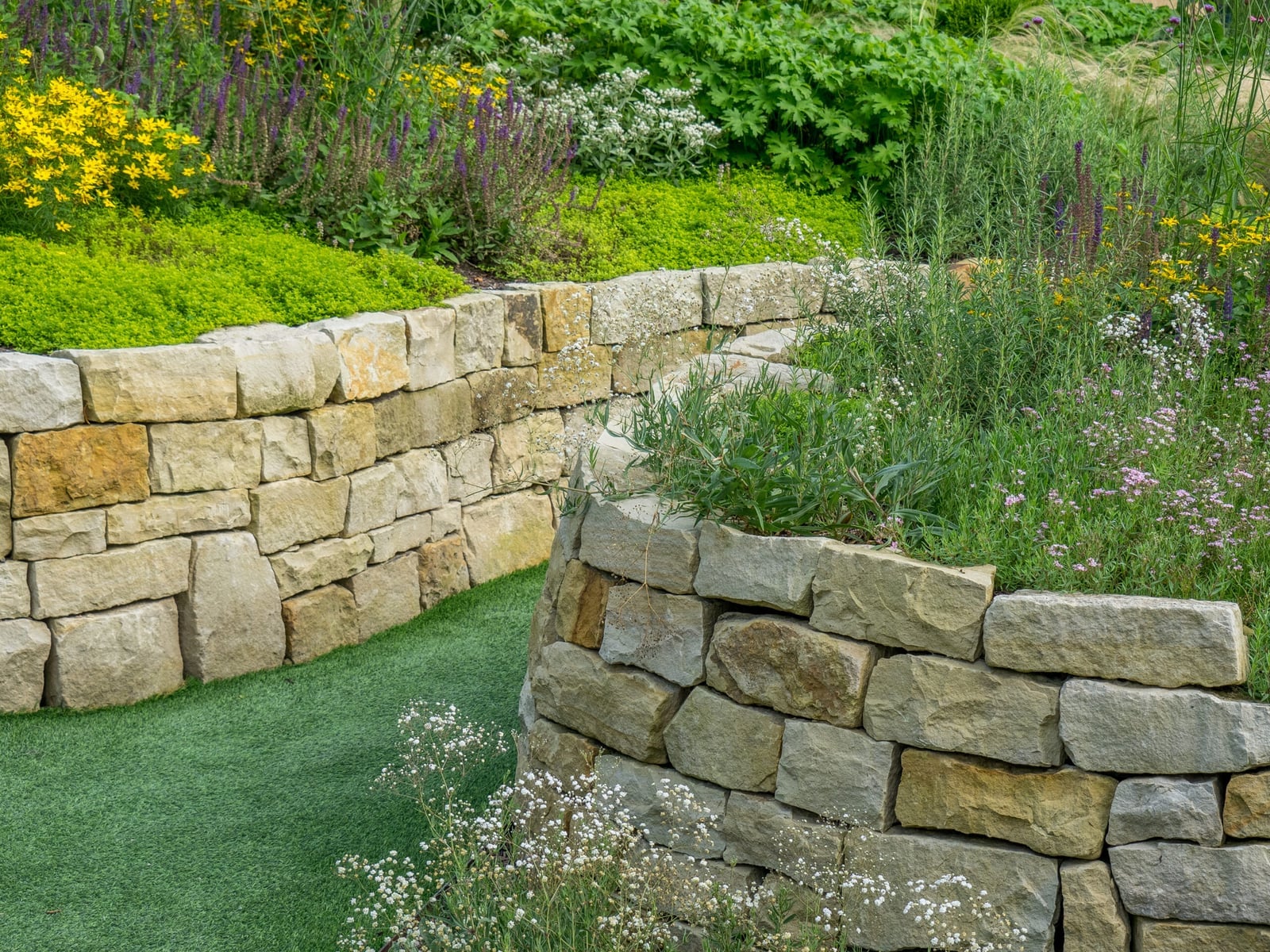
A curved stone wall snakes through this garden, following the natural contours of the land rather than imposing a straight line. The wall is built from tan stone in irregular sizes, stacked without visible mortar, which gives it the look of a dry-stack wall that has been there for decades. The curve creates a winding bed for lush planting on the uphill side, while the downhill side opens to lawn. The layout is the real feature here: the wall does not just hold back soil, it directs the eye along a path through the garden. The curve softens the boundary between planted areas and open grass, making the transition feel gradual rather than abrupt. The yellow-green of the lawn and the deeper green of the shrubs break the tan stone, keeping the garden from reading as all one texture.
Final Thoughts
The best retaining wall blends into the landscape as if it always belonged there. Stone, concrete, metal, or wood, each material asks for a different kind of upkeep. Weep holes and drainage gravel keep water from building up behind the wall. Cracks in concrete or shifting stones mean the base may need attention. For wood sleepers, check for rot every few years and replace any that soften. Gabion baskets need the wire mesh inspected after heavy storms. A well-built wall should last decades with seasonal checks after freeze-thaw cycles. Pick the style that suits your yard’s natural lines, and the structure will earn its keep.