
A small bedroom can feel stylish, comfortable, and thoughtfully designed when every element is chosen with intention. I’ve always found that compact spaces can have just as much personality as larger rooms, especially when the layout, colors, textures, and furniture work together. In this collection of Small Bedroom Ideas For Stylish Modern Homes, I’m exploring practical designs that make limited space feel welcoming without sacrificing visual appeal. From calm neutral palettes and tailored upholstery to fresh colors and smart built-in furniture, each room offers a different way to approach modern bedroom design. I’ll look closely at the details that help these spaces feel balanced, functional, and relaxing while making the most of the available footprint. Whether you are refreshing a tiny bedroom or simply looking for stylish ideas, these interiors offer plenty of inspiration to bring a polished modern feel into your home.
Warm Neutral Bedroom With a Soft Minimalist Feel
I immediately notice how calm and balanced this bedroom feels. The bed sits centrally against a warm beige upholstered headboard, with two compact floating nightstands positioned symmetrically on either side. White bedding keeps the palette light, while a textured beige throw falls casually across the lower half of the bed. Wall-mounted lamps provide soft illumination beside the headboard, and a simple framed artwork hangs above it. Floor-to-ceiling sheer curtains bring gentle daylight from the large window, while the light wood herringbone floor adds subtle visual texture. A small potted plant occupies the corner without overwhelming the room.
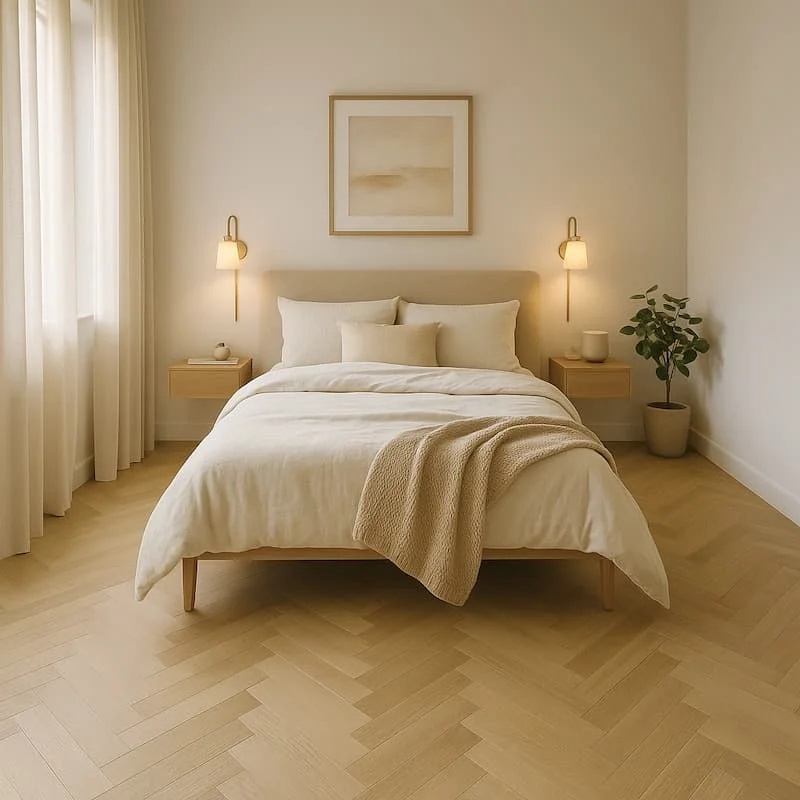
What makes this arrangement especially effective for a small bedroom is the restrained furniture footprint. The floating nightstands leave the floor visually open, while the centered bed creates a strong sense of order. I also like the way the limited beige-and-white palette makes the room feel peaceful rather than crowded. Even the artwork and plant are carefully scaled, so they add personality without competing with the bed.
I would use this as inspiration whenever I want a bedroom to feel larger without making it feel empty. In my experience, matching the wall, headboard, bedding, and floor within closely related neutral tones creates a seamless visual flow. The wall-mounted lighting is another detail I would borrow because it provides bedside illumination without requiring bulky table lamps.
Colorful Bedroom With Patterned Textiles and Decorative Screens
This bedroom takes a much more expressive approach. A pale upholstered bed is layered with several patterned pillows in blue, pink, turquoise, gold, and multicolor prints, while a rich magenta throw covers most of the lower bedding. The gray wall provides a quiet backdrop for the colorful textiles, and patterned blue-gray curtains frame the window. On the right, an ornate carved wooden folding screen becomes a major decorative feature, while a small circular wall arrangement adds another burst of color.
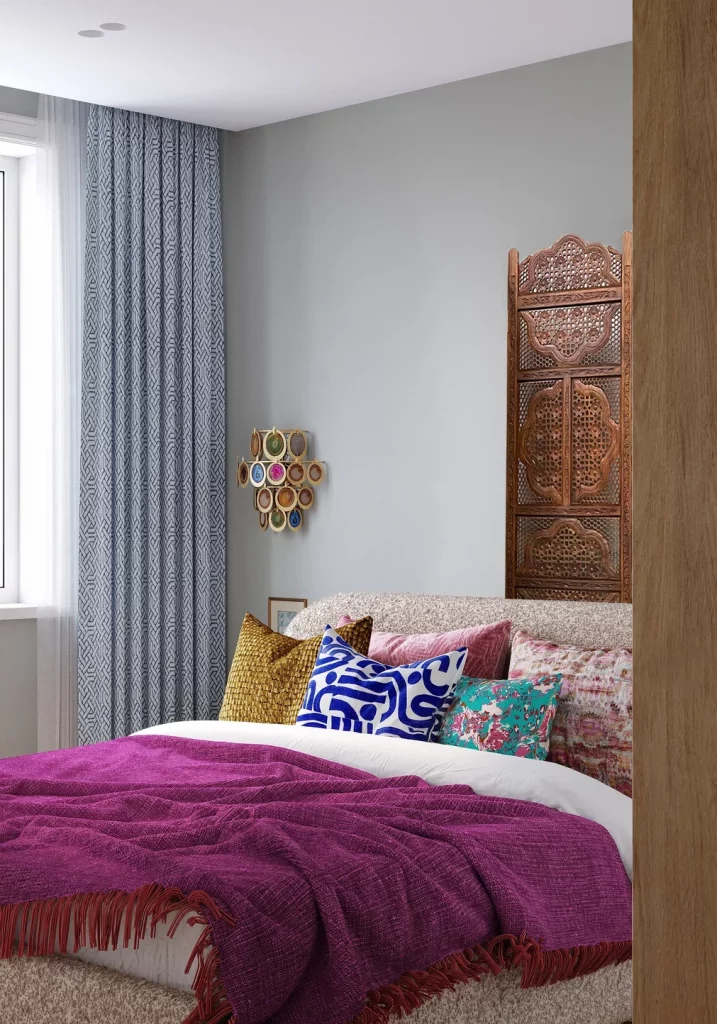
I like how the room keeps the main architectural elements relatively quiet and lets the textiles do most of the visual work. The bed remains the focal point, but the variety of pillows and the saturated throw make it feel personal and layered. The compact wall decoration and folding screen also add interest without requiring additional large pieces of furniture.
For a small bedroom, I would take this as a lesson in concentrating color rather than scattering it everywhere. A few strong textiles can transform a simple bed dramatically, especially when the walls and larger surfaces remain restrained. I would also keep an eye on proportion: the decorative screen is tall and narrow, so it adds height without taking up much floor space.
Contemporary Bedroom With Mirrored Wardrobe Doors
Here, I see a polished combination of soft neutrals, natural wood, and black accents. The upholstered bed has a rounded cream-colored headboard with subtle button detailing, while a warm wood wall treatment rises behind part of the bed. To the left, black-framed mirrored wardrobe doors reflect the room and visually extend the space. A modern black ceiling fixture with multiple white globe shades provides a sculptural focal point, while small black bedside tables and directional wall lights reinforce the contemporary look. The bedding remains white and beige, with a patterned throw adding gentle texture.
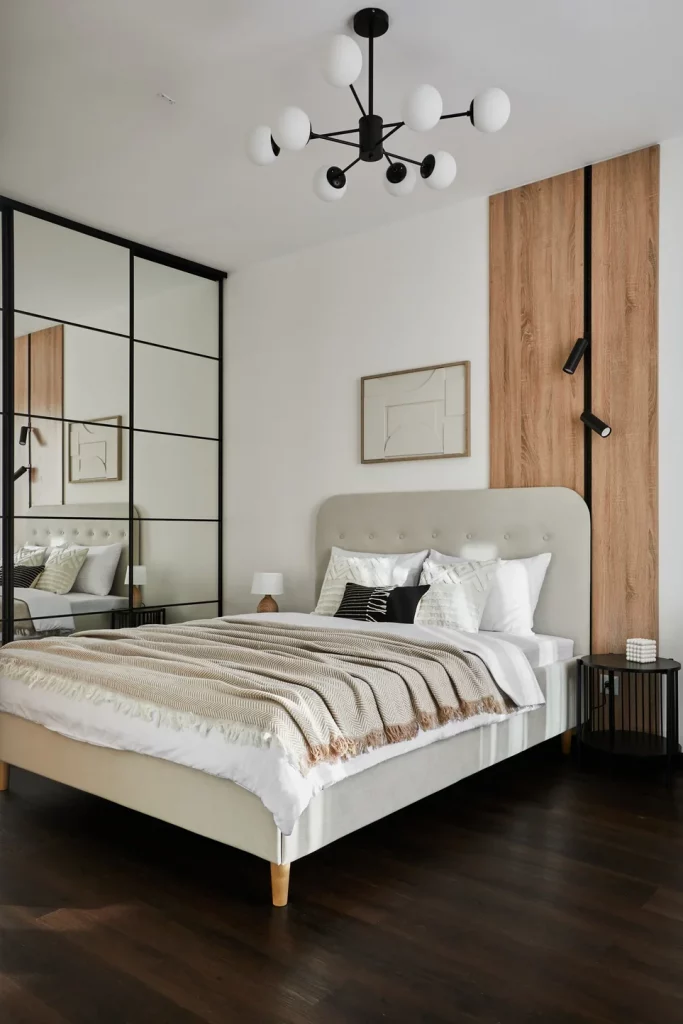
The mirrored wardrobe is particularly smart in a smaller room because it performs a practical storage function while reflecting light and surrounding space. I also appreciate the contrast between the dark flooring and the pale bed, which gives the room definition without making the furniture feel heavy. The wood panels add warmth to what could otherwise become a very monochromatic interior.
If I were recreating this feeling, I would focus on a limited material palette and repeat the same black accent in several places. The ceiling light, wardrobe framing, bedside furniture, and wall fixtures feel connected because they share a visual language. That repetition is an easy way to make a small room look intentionally designed rather than simply furnished.
Bright Compact Bedroom With Integrated Wardrobe Storage
This bedroom is exceptionally pared back, with a large white-framed window dominating the far wall. Horizontal blinds filter the daylight, while a dark radiator sits directly beneath the window. The bed occupies the lower portion of the room and is dressed almost entirely in white, with the bedding casually rumpled for a relaxed appearance. Full-height pale cabinetry lines the left and right sides, creating a clean built-in effect. Recessed ceiling lights and a small bedside light provide understated illumination.
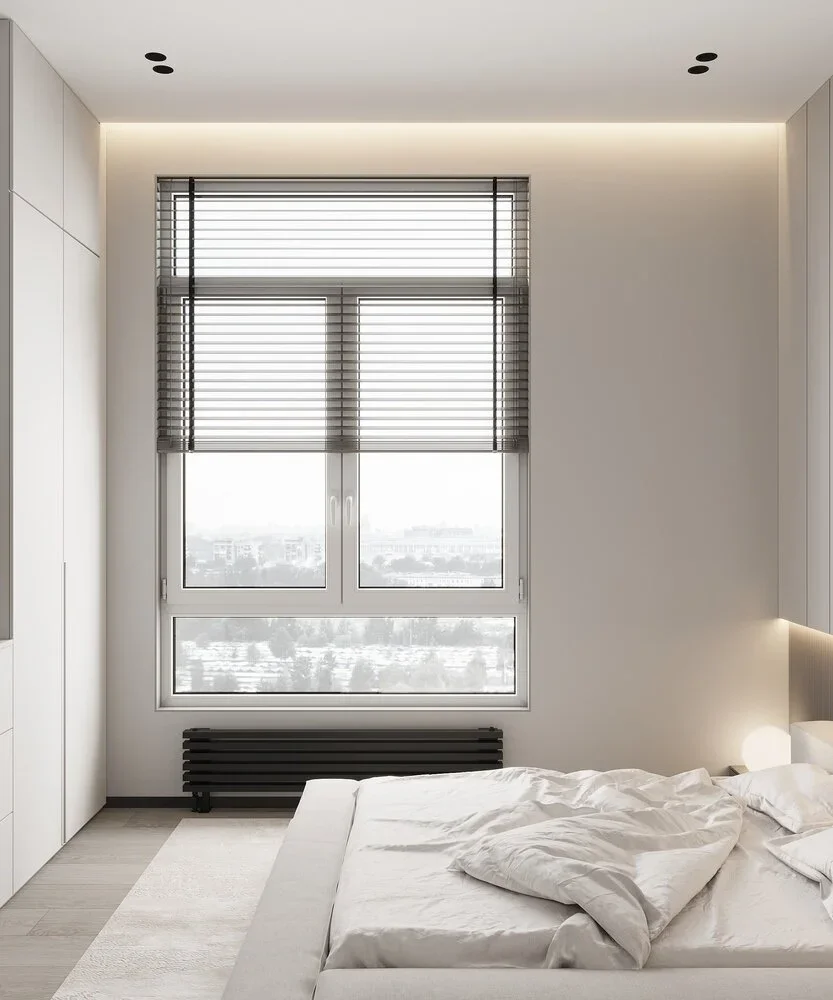
I think the strongest idea here is the use of vertical built-in storage around the sleeping area. Instead of filling the room with freestanding wardrobes, the cabinetry creates a continuous architectural backdrop and leaves the central floor area relatively uncluttered. The white surfaces also help bounce daylight around the room, which is especially valuable when working with limited square footage.
I would choose this approach for anyone who wants a small bedroom to feel extremely clean and organized. The restrained palette makes the window feel even more important, while the uncomplicated bedding prevents the room from looking overly staged. In a compact space, I find that uninterrupted surfaces can be just as powerful as decorative details.
Elegant Upholstered Bedroom With Layered Window Treatments
This room has a softer, more refined character. The bed features a tall upholstered headboard and matching upholstered base in a pale gray-beige shade. Crisp white bedding is paired with softly textured pillows and a light neutral throw. Behind the bed, subtle wall molding creates understated architectural interest, while tall taupe curtains and sheer white panels cover the large window. Dark wood bedside tables bring contrast, and a large woven pendant light hangs overhead with a warm metallic interior detail.
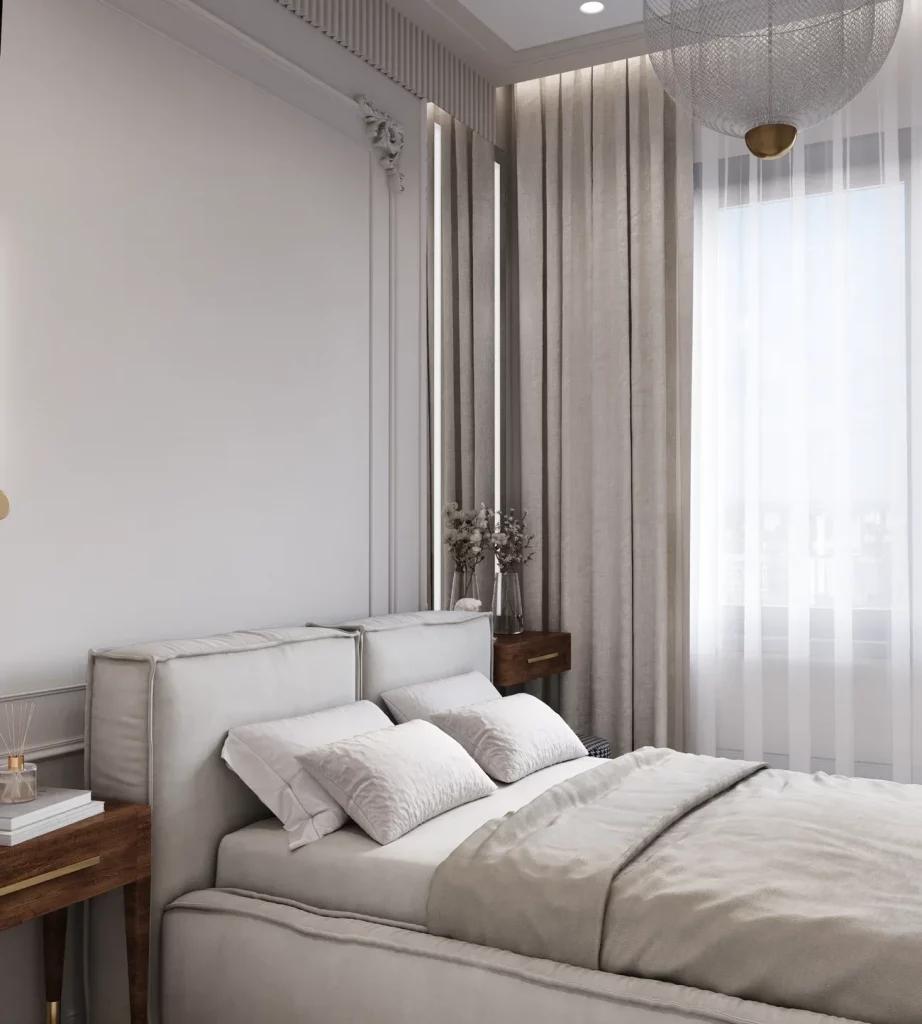
The combination of upholstery, fabric, and molding makes the bedroom feel comfortable without relying on a lot of furniture. I particularly like the way the tall curtains emphasize the height of the room. The dark wood nightstands also give the pale palette enough contrast to keep it from becoming flat.
For me, this is a good example of how texture can replace excessive decoration. In a small bedroom, I would rather layer a few beautiful fabrics than introduce lots of accessories. The upholstered headboard, curtains, bedding, and pendant all contribute to the sense of softness while keeping the overall composition visually controlled.
Natural Wood Bedroom With Artistic Wall Treatment
This compact bedroom introduces warmth through extensive medium-toned wood cabinetry and flooring. A tall upholstered headboard in pale gray sits beside a wood nightstand, while matching built-in cabinetry continues along the adjacent wall. Behind the bed, a large watercolor-like wall treatment blends muted green, blue, gray, and pale tones. A simple white wall sconce illuminates the bedside area, and a sculptural pink vase with greenery adds a small decorative accent. The bedding combines pale blue with a delicate patterned throw.
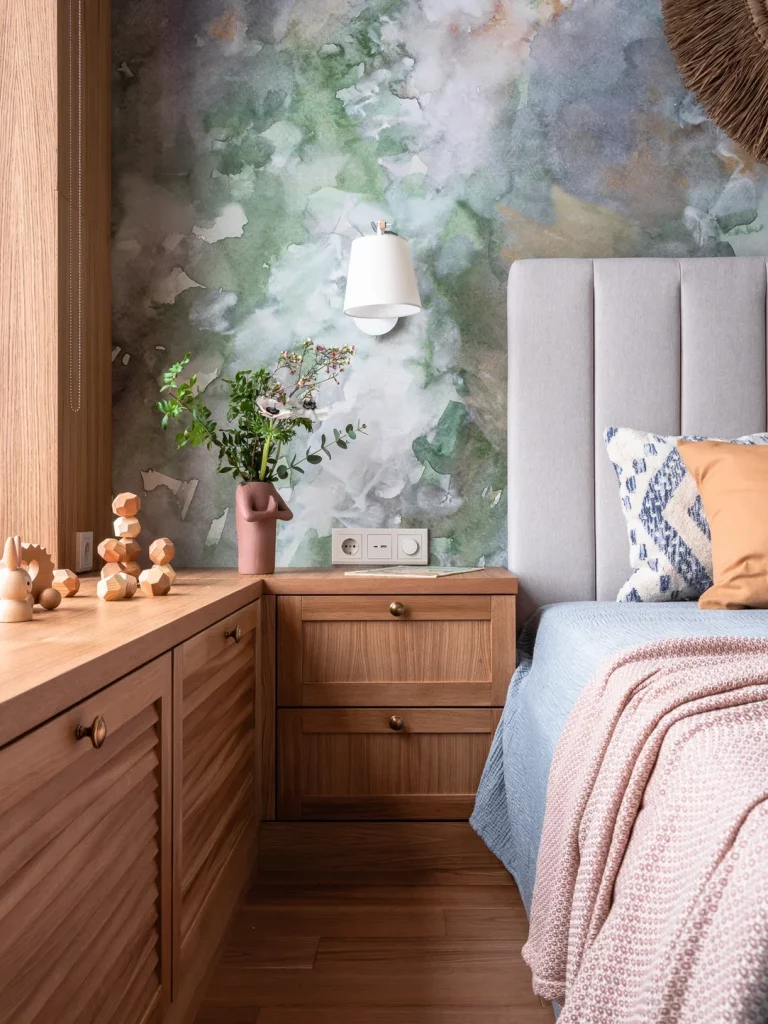
I like the way the cabinetry makes use of the available wall area while maintaining a consistent material language. Rather than adding multiple separate storage pieces, the wood furniture reads almost as one continuous composition. The artwork-like wall treatment also gives the bed a defined backdrop, making the sleeping area feel more intentional.
If I were adapting this idea, I would let one expressive wall treatment carry most of the decorative responsibility. That keeps a small room interesting without requiring numerous accessories. I also think the restrained color relationship between the gray headboard, pale blue bedding, and muted wall tones is a useful lesson in creating a layered palette that still feels restful.
Cozy Small Bedroom With Warm Pattern and Compact Seating
This bedroom feels especially inviting because of its warm autumnal palette. A white upholstered bed sits beneath a white paneled ceiling, while patterned blue-and-white upholstered sections form a distinctive headboard treatment. A rust-colored textured throw is draped across the bed, echoing the patterned curtains beside the window. A dark wood chest of drawers occupies the left side, while a small round table and compact seating area sit near the window. A patterned rug in warm brown and rust tones anchors the floor, and a yellow table lamp adds a cheerful accent.
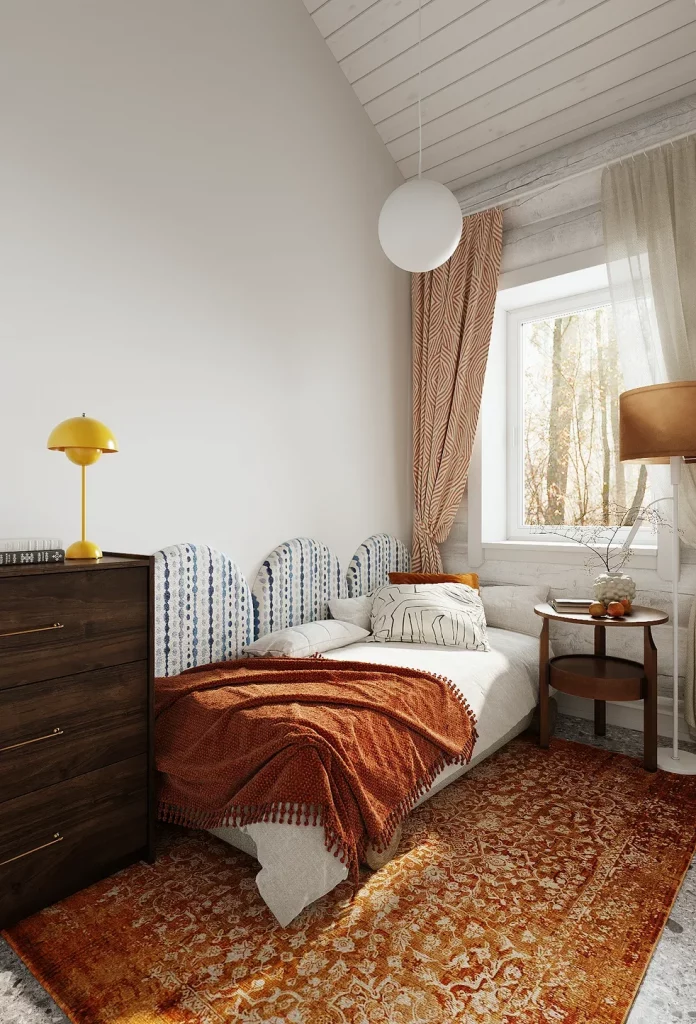
The room demonstrates how a small bedroom can accommodate several functional zones without feeling chaotic. The bed remains central, the chest provides storage, and the small seating area uses the window side efficiently. The repeated patterns and warm colors visually connect the different parts of the room, while the white walls and ceiling keep the overall effect from becoming too heavy.
I would borrow the idea of using one dominant warm palette and repeating it through textiles. The rust throw, curtains, rug, and small accents create continuity, while the blue pattern adds contrast. For a compact bedroom, this kind of repetition can make multiple furnishings feel like part of one deliberate composition.
Modern Blue Bedroom With Graphic Accent Wall
This bedroom takes a sharper contemporary direction. A deep blue upholstered bed creates a strong focal point against a pale wall covered with an irregular black line pattern. White bedding keeps the bed fresh, while a rust-colored cover introduces warmth. A black-and-white patterned cushion reinforces the graphic quality of the wall. Black-framed glass elements and a white sliding door appear on the opposite side, while a striking black ceiling fixture with multiple illuminated arms adds another modern geometric detail.
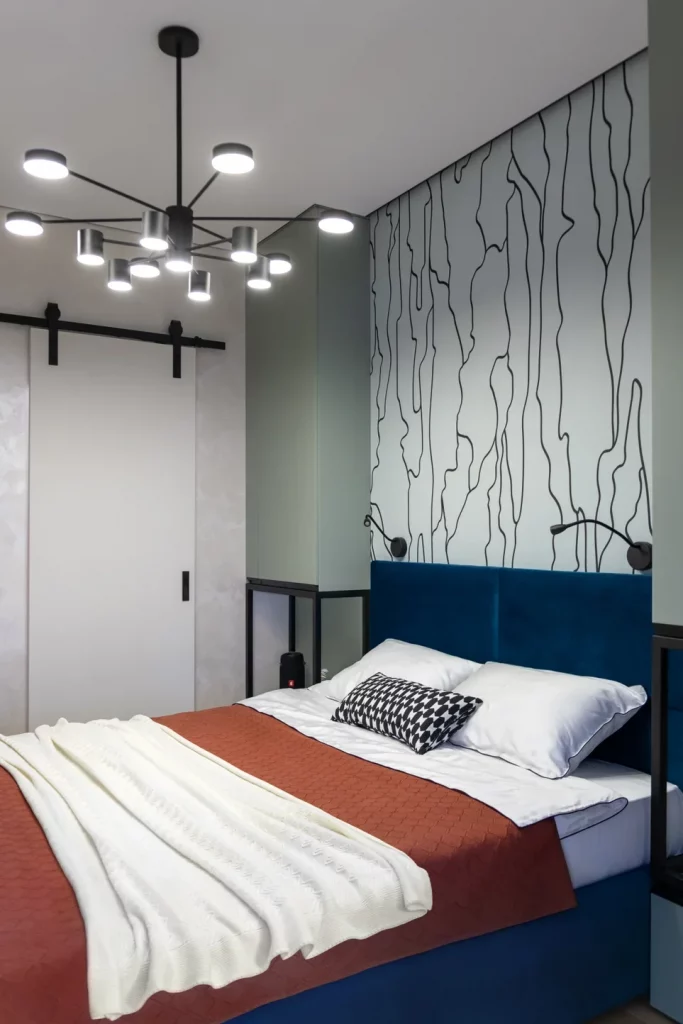
What I find effective here is the balance between bold elements and simple bedding. The deep blue bed and graphic wall are visually strong, but the white sheets and pale surrounding surfaces prevent the room from feeling overly dense. The black accents also repeat across the lighting, framing, and small fixtures, creating consistency.
For me, this is proof that a small bedroom does not have to be neutral to feel spacious. The trick is controlling where the strongest colors and patterns appear. I would keep the major furniture pieces simple and allow one wall, one textile, or one saturated color to provide the drama.
Green Bedroom With Playful Flying-Bird Wallpaper
This bedroom makes a dramatic statement through its green wall covered with repeated flying-bird illustrations. A pale upholstered bed sits against the patterned wall, while crisp white bedding keeps the sleeping area visually light. A deep burgundy upholstered chair stands in front of a small round white table, creating a compact sitting or working corner. A tall glass vase filled with long stems occupies the tabletop area, while gray curtains and a dark wood floor provide additional contrast.
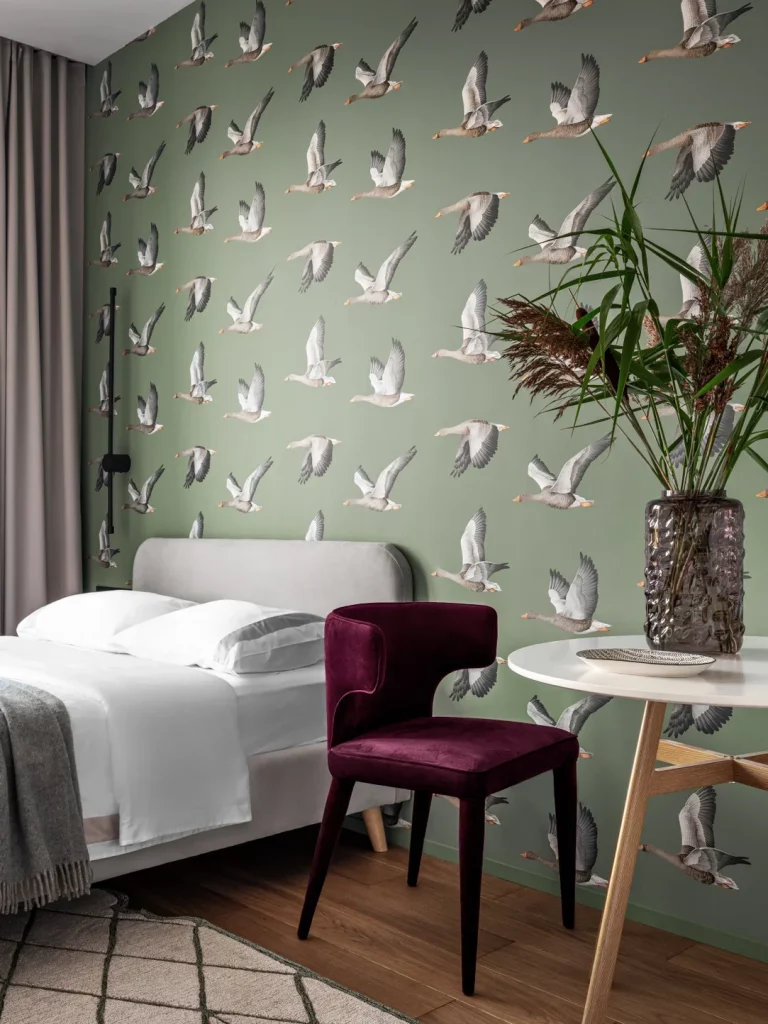
I especially like how the wallpaper turns the entire wall into the room’s primary decorative element. Because the bed itself remains pale and relatively simple, the pattern can take center stage without competing with an elaborate headboard. The compact table and chair also demonstrate how a small bedroom can include a secondary function without requiring a large desk or bulky seating arrangement.
If I wanted to recreate this effect, I would keep the surrounding furniture as visually quiet as possible. The burgundy chair is a smart accent because it adds depth while remaining compact. I also like the connection between the green wall, dark flooring, and darker furnishings, which gives the room a grounded quality.
Deep Green Bedroom With Soft Blue Artwork
The final bedroom is intimate and sophisticated, centered around a deep green wall that creates a rich backdrop for the pale upholstered bed. A light wood bedside table with two drawers sits beside the bed, topped with stacked books and a sculptural cream-colored object. Above it hangs a circular wall light with overlapping forms, while framed artwork depicting a reclining figure in pale blue tones adds a serene focal point. White bedding and a beige textured bed covering soften the darker wall, and the floor has a warm wood finish.
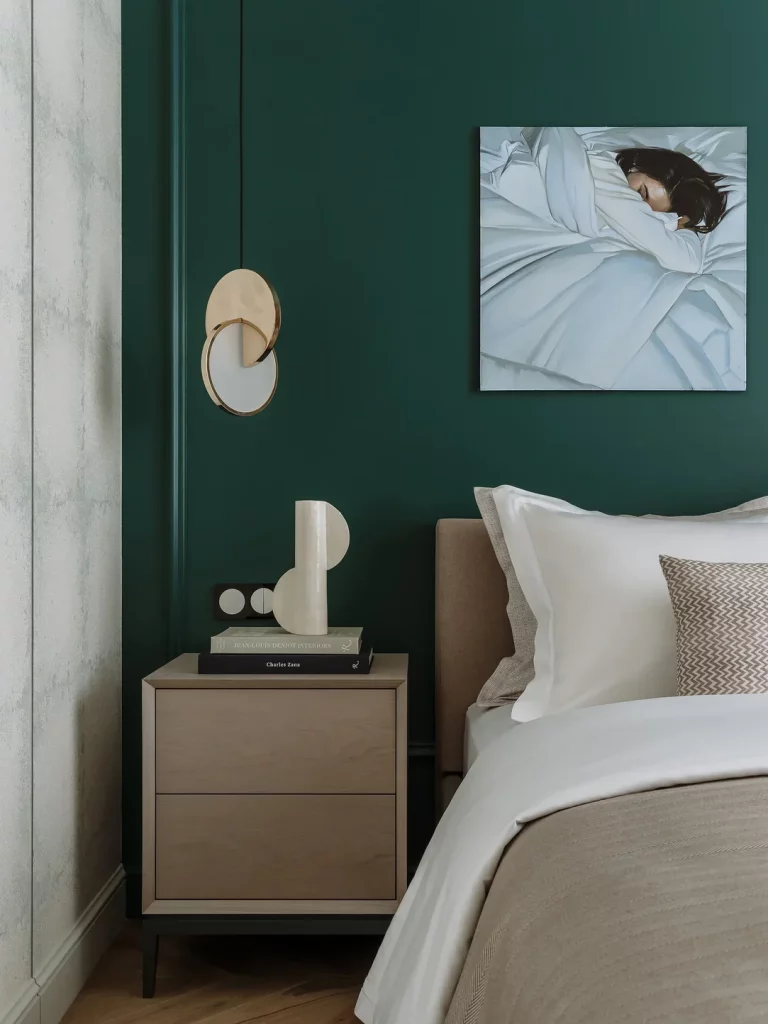
This room works because the dark wall is balanced by generous amounts of white and pale neutral upholstery. The bedside table provides useful storage without looking bulky, and the books and decorative object give the surface a lived-in quality. I also think the artwork is particularly effective because its pale blue tones create a quiet contrast against the deep green background.
I would consider this approach when I want a small bedroom to feel cocooning rather than simply bright. A dark wall can actually make a compact room feel more intimate when it is balanced with lighter bedding and furniture. My favorite detail is the restrained styling: there are only a few objects on display, so every one of them feels intentional.
Deep Green Bedroom With Tailored Upholstery
I love the confident mood of this compact bedroom, where deep green walls create a rich backdrop for a tall brown upholstered headboard with narrow vertical channels. The bed is dressed in crisp white bedding, layered with taupe and warm tan pillows, a gray coverlet, and a deep teal throw across the foot. Above the headboard, a geometric arrangement of raised rectangular panels adds subtle dimension, while a black ribbed bedside cabinet, small potted plant, and slim wall-mounted light keep the composition clean.
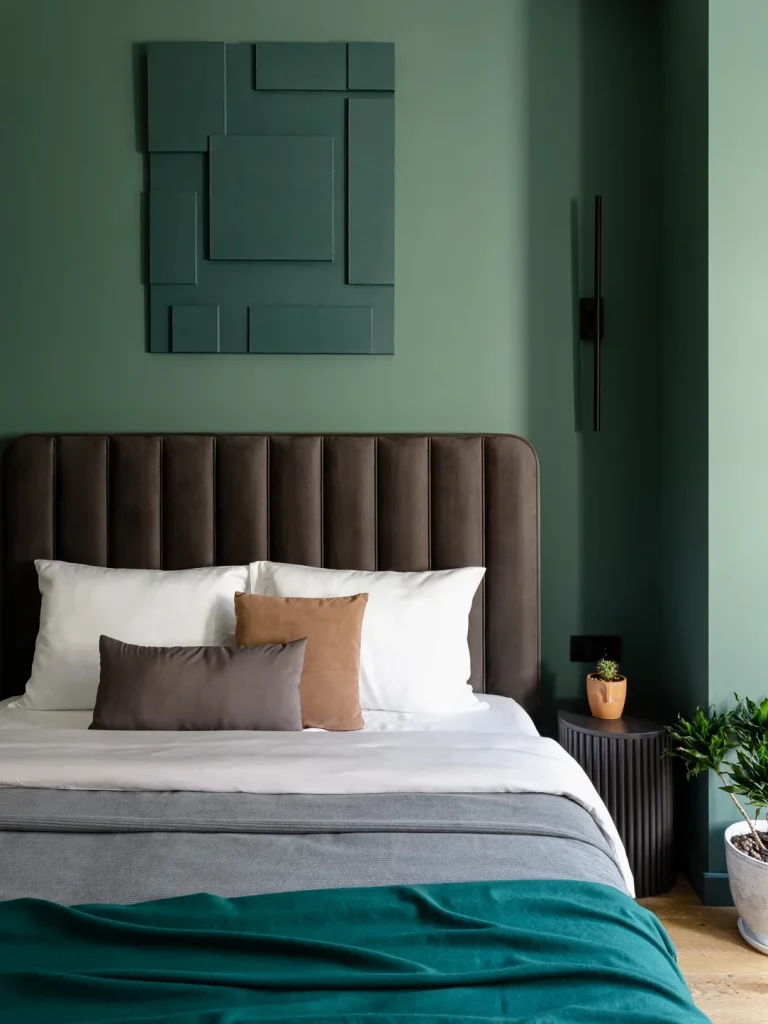
The restrained furniture arrangement works particularly well because the bed remains the clear center of attention. The vertical headboard channels draw the eye upward, while the dark wall color gives the room depth rather than making the compact footprint feel visually empty. I also like the contrast between the cool green, brown upholstery, white bedding, and saturated teal blanket because it creates layers without relying on excessive decoration.
For me, this is a great example of how a small bedroom can feel sophisticated through proportion and color alone. I would keep the surrounding surfaces relatively uncluttered and let the upholstered headboard, geometric wall art, and carefully chosen textiles do the visual work. The small plant on the bedside cabinet also brings a modest organic detail without overwhelming the space.
Built-In Walnut Storage Framing a Compact Bed
This bedroom makes a compact layout feel exceptionally organized by surrounding the bed with a full wall of walnut-toned built-in cabinetry. Tall cupboards frame both sides, while smaller upper cabinets and open shelves create a structured composition above the upholstered headboard. Two slim black reading lights sit beside the bed, and a traditional brass chandelier hangs centrally overhead. The bedding stays mostly white, with navy-blue pillows and a matching dark blue coverlet adding contrast.
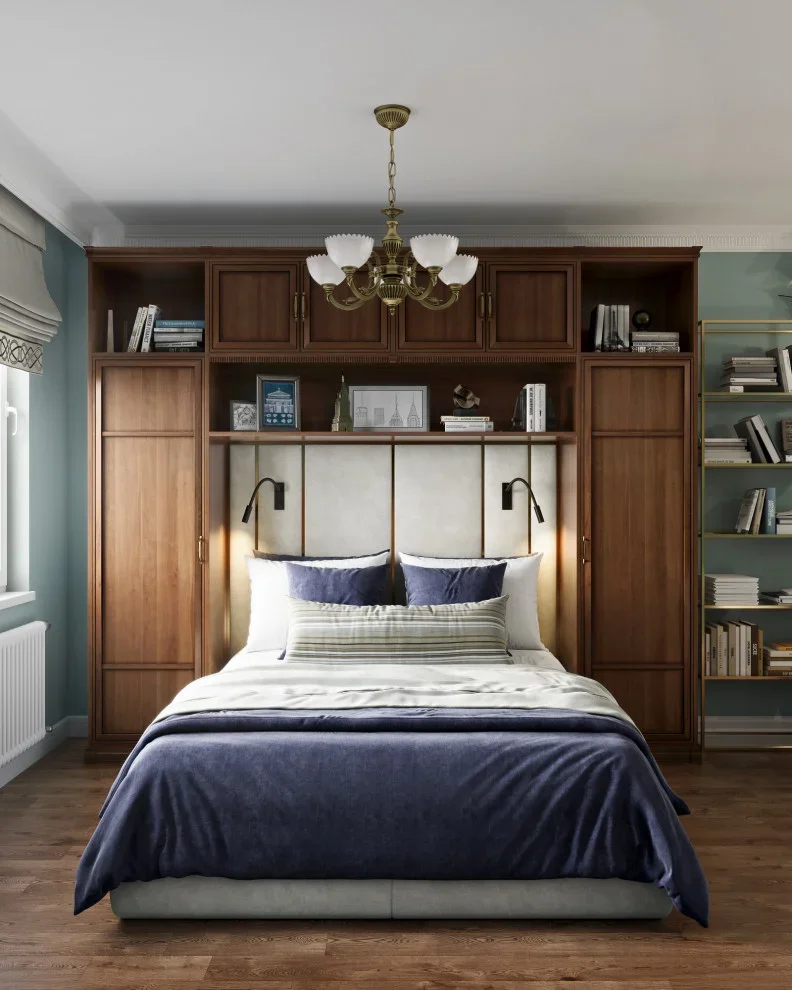
I find the built-in arrangement especially practical because it combines closed storage and display shelving in one architectural composition. Instead of requiring several freestanding storage pieces, the cabinetry uses the wall around the bed efficiently. The open shelves provide space for books and framed pieces, while the cupboards visually conceal the bulk of the room’s storage needs.
If I were recreating this idea in a smaller bedroom, I would pay close attention to the balance between open and closed sections. The image shows that storage can become part of the room’s design rather than simply something to hide. Keeping the bed centered within the cabinetry also gives the compact room a strong sense of order.
Soft Neutral Bedroom With Woven Wardrobe Doors
Here, the bedroom takes a much quieter approach with a large built-in wardrobe finished in pale beige tones and woven-looking inset panels. The wardrobe occupies a substantial portion of the wall, while the upholstered bed continues the soft neutral palette. White bedding, a light rug, pale flooring, and a simple dark throw create a calm foundation. A textured white wall treatment adds another layer behind the bed, while a slim black reading lamp provides functional contrast.
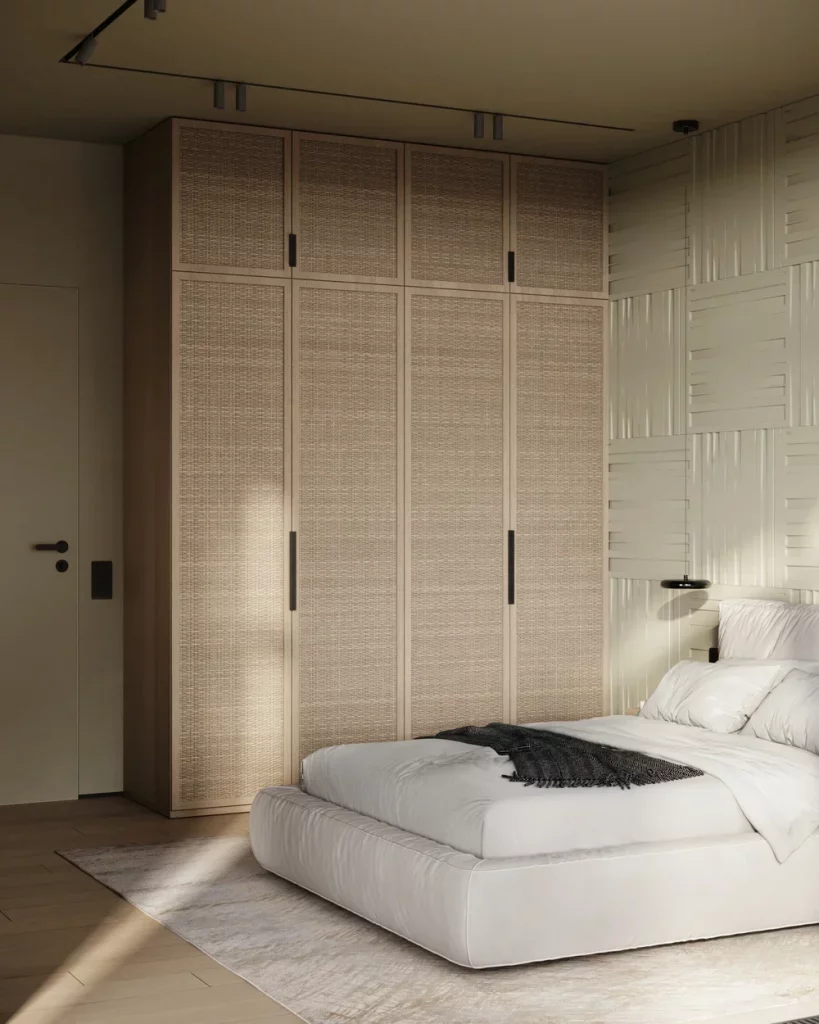
I think this arrangement works beautifully for a small bedroom because the wardrobe is integrated into the overall architecture instead of competing with the bed. Its tall doors emphasize the room’s height, and the consistent neutral palette prevents such a large storage element from feeling visually heavy. The low-profile upholstered bed also keeps the lower portion of the room relatively open.
My favorite lesson here is that storage does not have to look utilitarian. The softly textured wardrobe fronts introduce visual interest while maintaining a restrained palette. I would use the same principle in a compact room by choosing one substantial storage element and keeping the rest of the furniture simple and visually calm.
Elegant Green Accent Wall With Floating Bedside Shelf
This bedroom combines a dark green textured upper wall with a lighter lower wall separated by a crisp horizontal trim. A cream upholstered headboard rises beside the bed, while a white floating bedside shelf extends along the wall. The shelf has a vertically ribbed front and holds a small round gold-framed mirror, a decorative vase, and a compact lamp. A dark rounded stool sits beneath it, while ornate raised detailing around a wall frame adds a traditional decorative note.
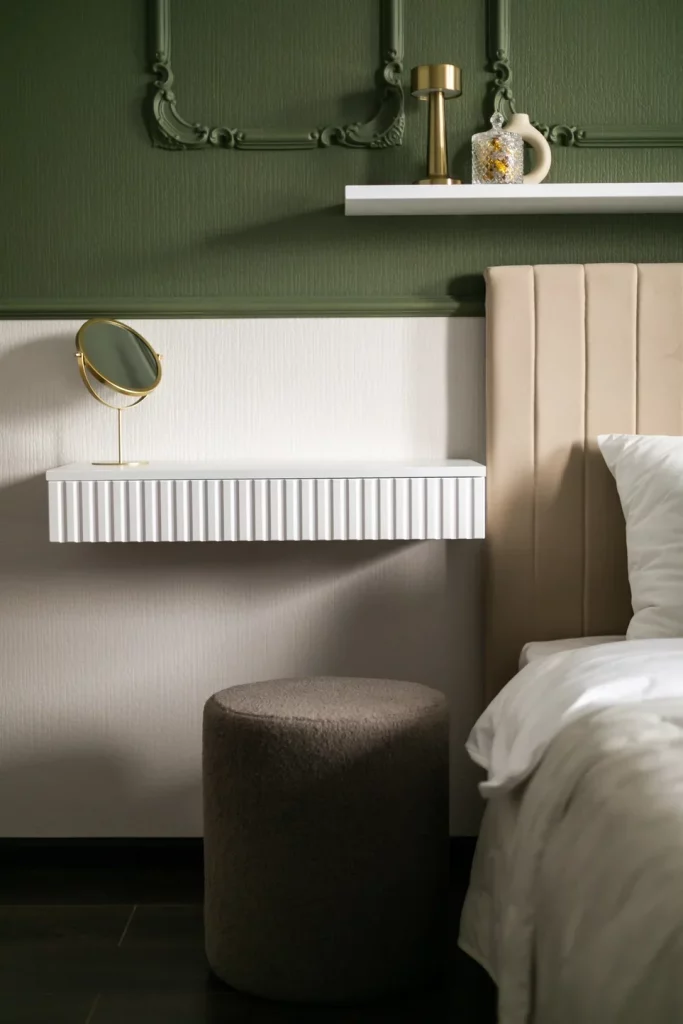
The floating shelf is one of the smartest features in this composition because it provides useful surface space without visually filling the floor. I also like how the rounded stool fits beneath the shelf, making use of otherwise unused vertical space. The cream headboard softens the strong green wall, while the white lower paneling creates a clean transition between the darker upper section and the bedding.
For a small bedroom, I would take particular inspiration from the combination of wall-mounted storage and carefully scaled furniture. A compact bedside solution can provide the functions I need while leaving more floor area visible. The limited number of accessories also keeps the arrangement elegant rather than busy.
Statement Wood Wall With a Compact Dressing Area
This striking bedroom uses richly patterned brown wood across the walls and ceiling, with pale linear markings running through the finish. The treatment wraps around a compact dressing area containing a floating white desk, a rounded upholstered chair, and dark shelving visible beyond it. At the bedside, a sculptural wooden table sits next to a pale upholstered bed, while a simple dark pendant provides focused lighting.
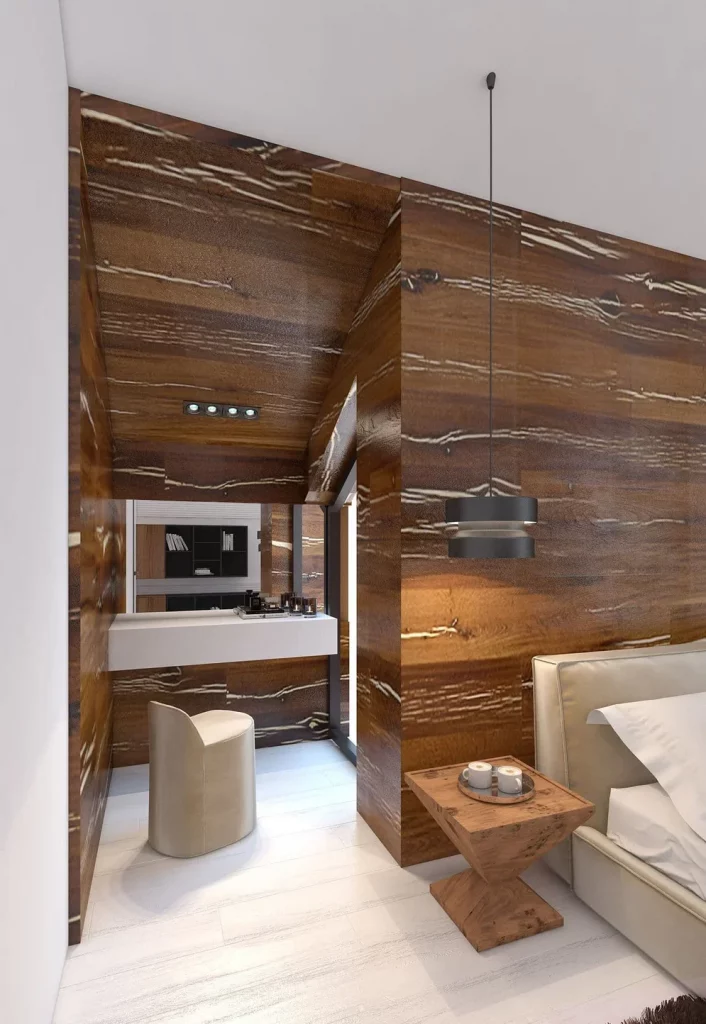
I find the layout especially interesting because the dressing zone is integrated into the bedroom without requiring a separate room. The floating desk keeps the floor underneath visually open, and the compact chair can tuck neatly into the space. The continuous wall and ceiling finish also creates a strong architectural identity, allowing the relatively simple bed and desk to sit comfortably within the composition.
This image reminds me that a small bedroom can support more than just sleeping when each zone is carefully scaled. If I wanted to recreate the concept, I would prioritize a shallow or floating work surface rather than introducing a bulky desk. The key is to preserve circulation while allowing the wall treatment to provide most of the room’s visual character.
Fresh Small Bedroom With Soft Green and Yellow Layers
This compact bedroom feels light and cheerful through a restrained palette of white, pale green, soft gray, and yellow. A gray upholstered bed sits against vertically paneled walls, with bright yellow pillows and a matching yellow-edged throw providing the strongest color accent. A pale green duvet adds another soft layer, while a dark green rounded stool sits beneath a small bedside table. A woven wall hanging, simple Roman shade, circular mirror, and delicate dried arrangement complete the room.
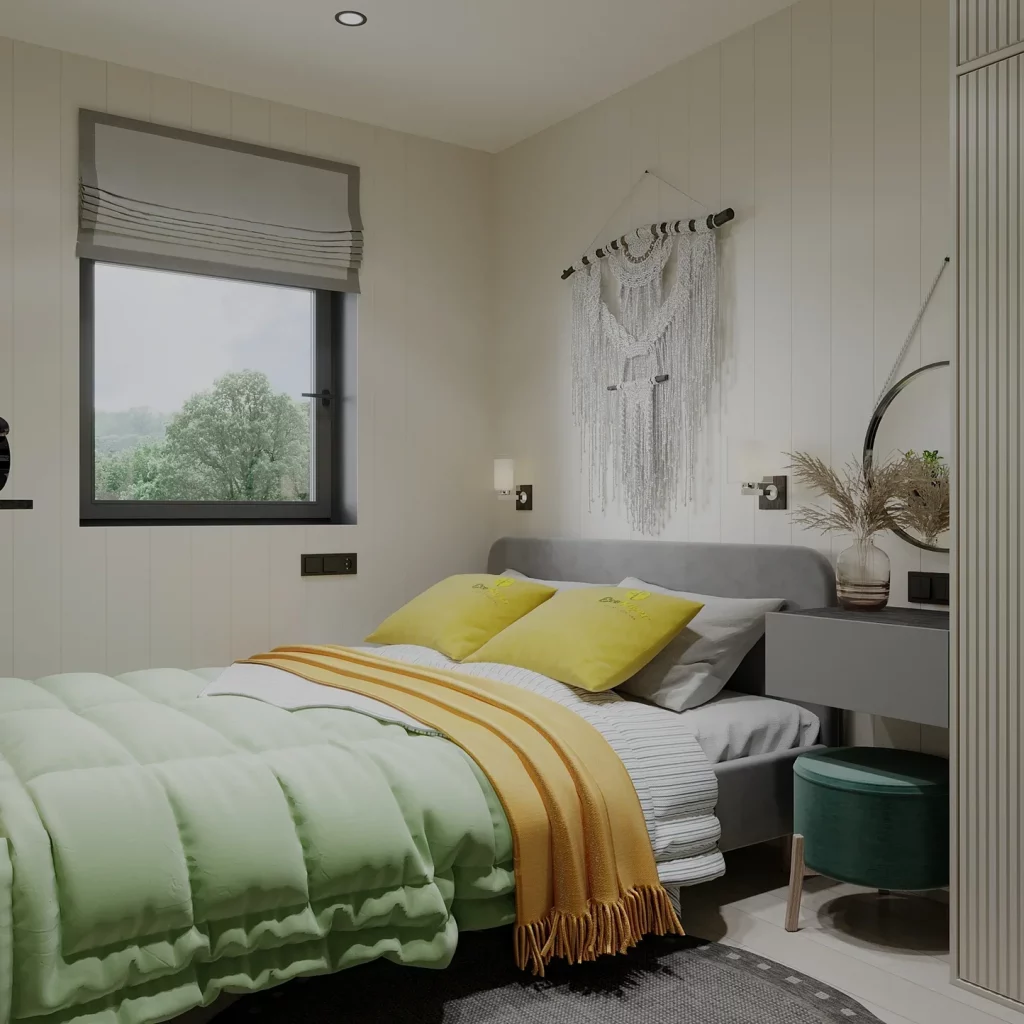
I like how the color is concentrated in the bedding rather than spread across every surface. That makes the small room feel coordinated while allowing the pale walls and white ceiling to maintain an airy appearance. The compact stool is another practical choice because its rounded shape fits naturally into the limited floor area without introducing visual heaviness.
For me, this is a useful approach when I want a small bedroom to feel personal without making it overly decorated. I would build the palette around one or two accent colors and repeat them selectively through pillows and a throw. Keeping the larger furniture pieces neutral makes those smaller changes easy to refresh later.
Dark Green Bedroom With a Dramatic Tree Wall Mural
This bedroom creates a dramatic focal wall with a dark green mural depicting a tree-filled landscape. The remaining walls continue in a deep green tone, while the bed, bedding, and large upholstered bench at the foot are kept in soft beige and white. A cluster of glass globe pendants hangs overhead, and small bedside lamps provide additional illumination. A large abstract black-and-white wall piece appears on the adjacent wall.
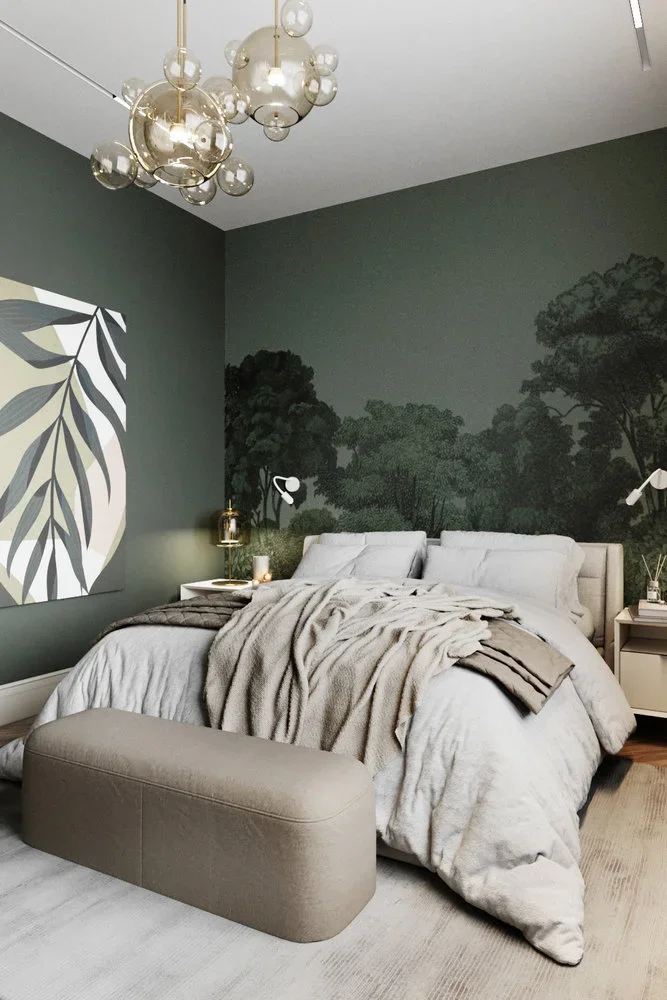
The layout works because the statement wall supplies most of the decoration, allowing the furniture to remain simple. The upholstered bench provides useful seating at the foot of the bed without introducing a complicated shape, while the pale textiles create a strong contrast against the darker surroundings. The lighting also adds an important layer, particularly because the darker palette benefits from several points of illumination.
I would use this room as inspiration for anyone who wants personality in a small space but does not have room for many decorative objects. One expressive wall can establish the atmosphere on its own. Keeping the bed and bench in restrained neutrals, as shown here, helps the mural remain the visual focus.
Soft Blue Bedroom With Artistic Wall Treatment
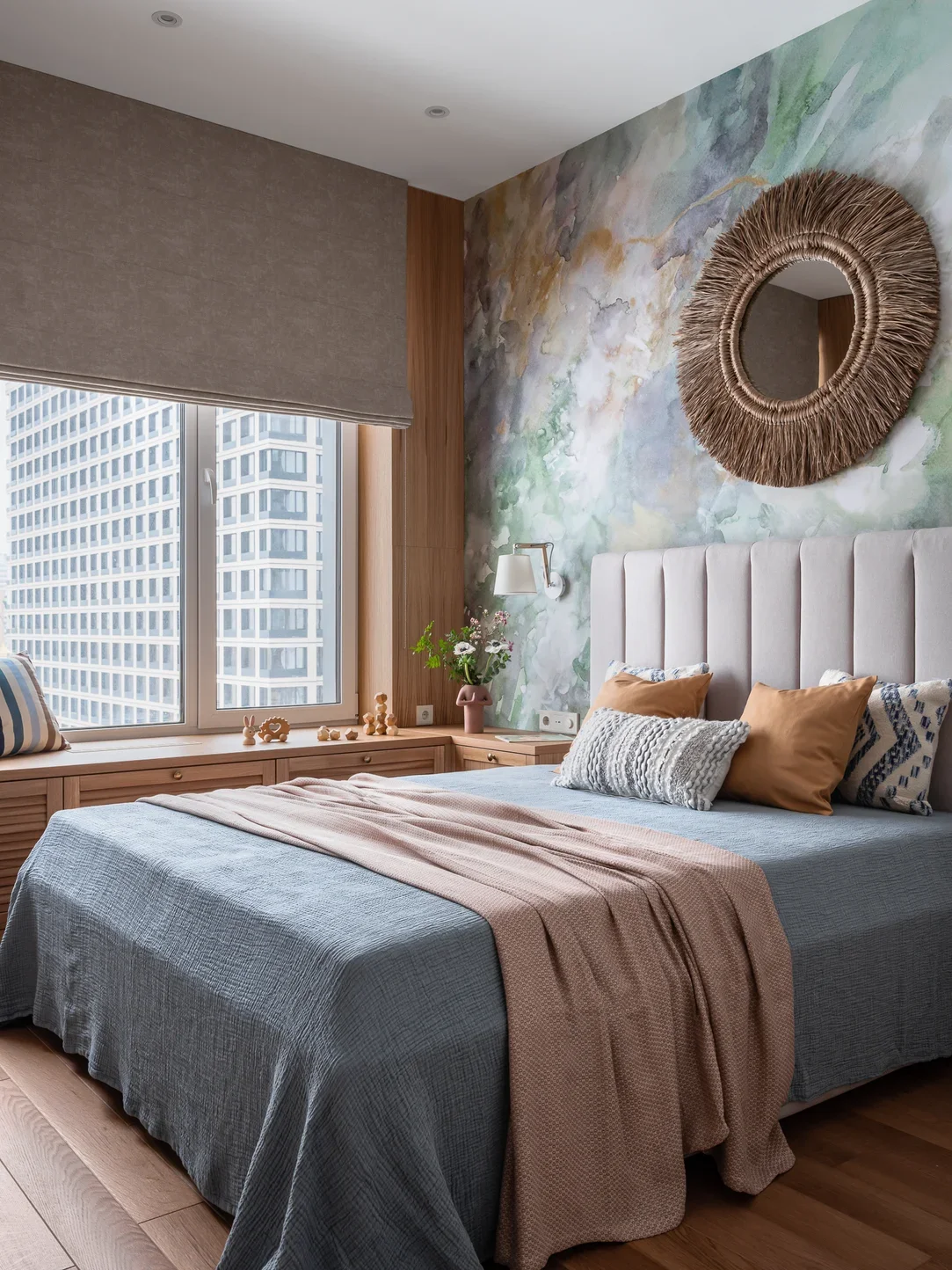
This bedroom combines a soft blue-gray bedspread with a tall cream upholstered headboard and an expressive abstract wall treatment in pale green, gray, blue, and warm neutral tones. A large round woven-framed mirror hangs above the headboard, creating a strong circular focal point. Warm wood cabinetry and bedside furniture line the window wall, while a taupe Roman shade coordinates with the surrounding neutral finishes. Cushions in tan, white, and patterned blue add gentle contrast.
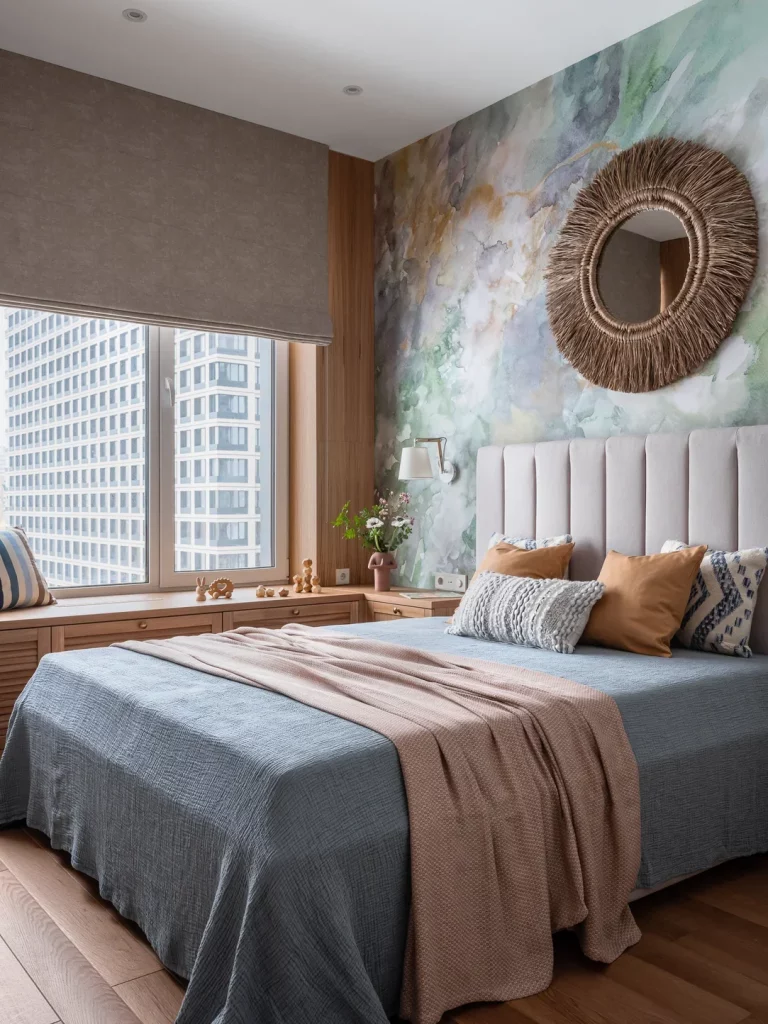
I find the arrangement particularly effective because the bed remains visually calm while the wall behind it carries the personality. The large mirror adds another shape to the composition and helps balance the broad vertical headboard. Meanwhile, the cabinetry beneath the window uses that wall efficiently and provides a practical surface without crowding the sleeping area.
If I were adapting this look, I would focus on combining one expressive wall finish with a small number of complementary textures. The image shows how blue-gray bedding, warm wood, woven details, and soft upholstery can coexist without making a compact bedroom feel chaotic. The repeated neutral tones keep everything connected.
Compact Bedroom With Integrated Desk Storage
This view highlights the practical side of the same soft bedroom palette, with a built-in white storage wall incorporating louvered cabinet doors, open shelving, and a compact desk. A small upholstered chair sits beneath the desk, while books, artwork, a vase, and a few decorative objects occupy the shelves. At the left edge, the upholstered bed and layered cushions continue the pale blue, white, and warm tan color scheme.
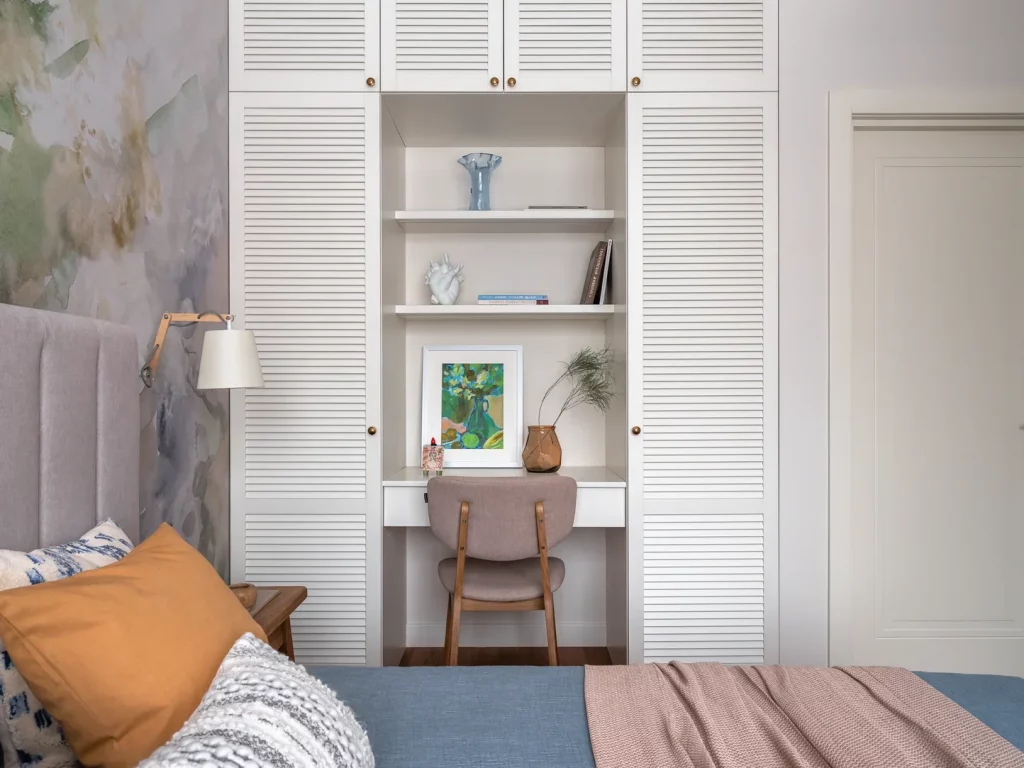
What stands out to me is how much functionality is concentrated into one vertical wall. The combination of tall closed cabinets and a small integrated desk makes efficient use of the available space while keeping the center of the room open. The desk is also visually contained within the storage system, so it feels like part of the bedroom rather than an additional piece of furniture.
For a small bedroom, I think this is one of the most useful concepts in the collection. A dedicated work surface does not always need a separate desk with its own footprint. A built-in niche can provide the same function while preserving circulation and maintaining a consistent visual language throughout the room.
Serene White Bedroom With Floor-to-Ceiling Curtains
The final bedroom takes a serene, almost monochromatic approach, with a large upholstered bed in soft white and cream tones positioned against a pale paneled wall. White bedding and pillows keep the palette cohesive, while a light taupe throw adds subtle contrast. Tall gray-beige curtains frame the window and extend vertically toward the ceiling, and a delicate sheer curtain allows natural light to filter through. Dark wood bedside tables and a large woven pendant add warmth and texture.
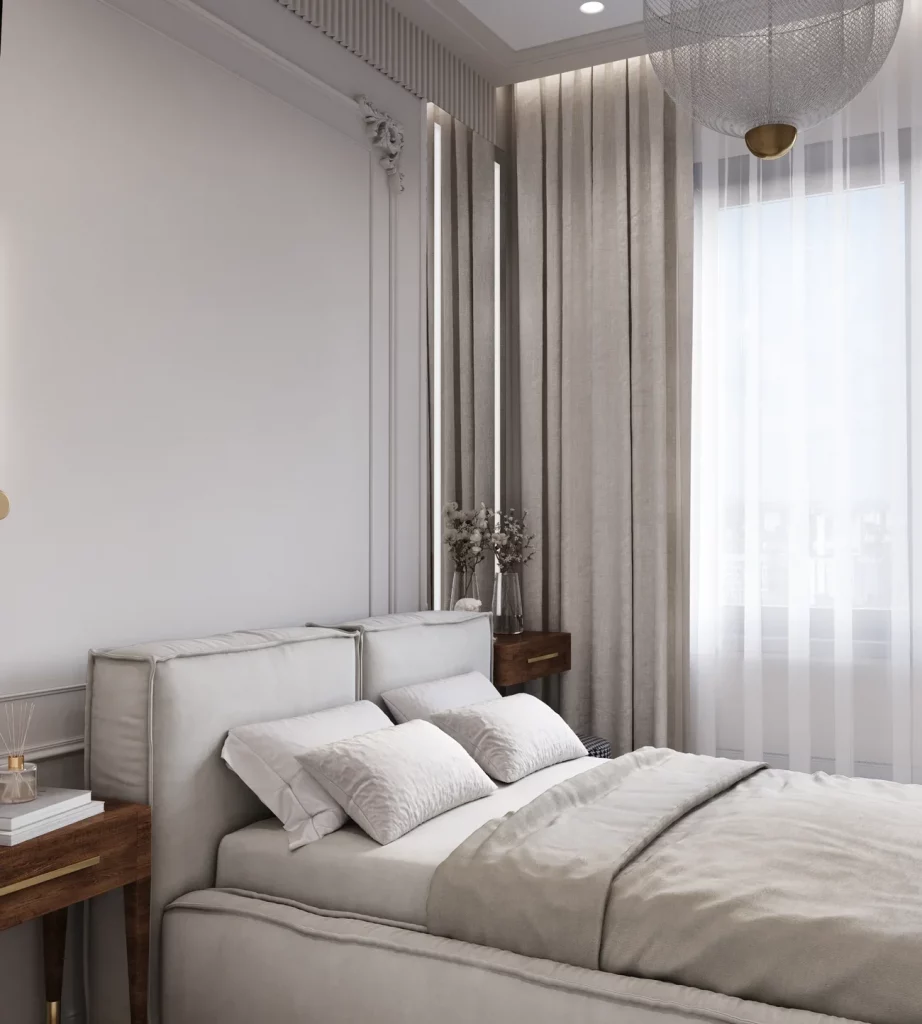
I love how the room uses height rather than excessive furniture to create impact. The tall curtains draw the eye upward, while the substantial upholstered bed provides softness without requiring many decorative pieces. The narrow bedside tables also preserve floor space and provide just enough surface for essentials, which is especially helpful in a compact bedroom.
My takeaway is that a small bedroom does not need a complicated palette to feel finished. I would focus on varying texture within a quiet color family, just as this room does with upholstery, bedding, curtains, wood, and woven lighting. The result feels comfortable and polished while leaving plenty of visual breathing room.
Elegant Narrow Bedroom With Soft Neutral Layers
The first bedroom makes a narrow footprint feel elegant through a restrained palette of white, cream, taupe, and warm brown. A white upholstered bed sits at the far end of the room, paired with a compact three-drawer nightstand beside it. The walls are covered in a subtle geometric-patterned wallpaper, while full-length taupe curtains frame the window on the left. Above the bed, a delicate chandelier with multiple fabric shades and crystal-like details adds a refined focal point without overwhelming the room. I also notice the warm wood flooring, neatly layered bedding, and small cushions that keep the setting soft and coordinated.
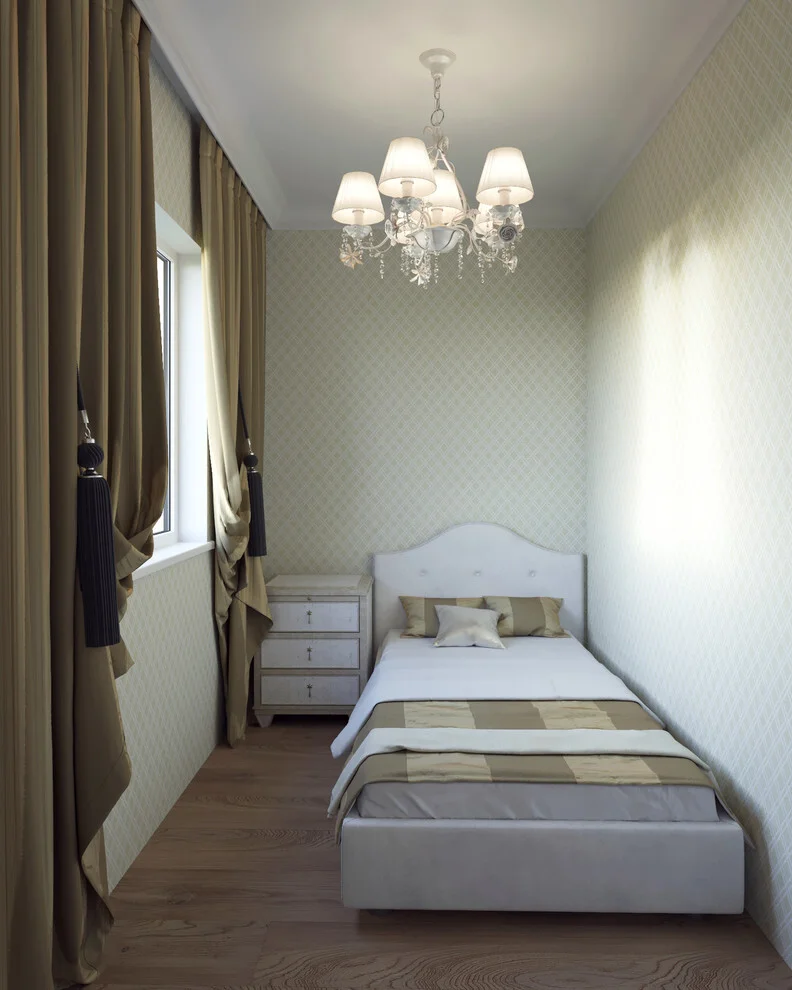
What works especially well here is the straightforward placement of the bed along the length of the narrow room. The furniture stays compact, leaving a usable walkway beside the bed rather than filling the available floor area. I like the way the tall curtains draw the eye upward and make the window feel more substantial, while the pale walls and bedding prevent the relatively tight proportions from feeling visually heavy.
From my perspective, this is a good example of using elegance selectively in a small bedroom. Instead of adding many decorative objects, I would focus on one statement light fixture, one refined window treatment, and a consistent neutral palette. The chandelier provides enough visual interest that the rest of the room can remain calm, which is a useful strategy when square footage is limited.
Built-In Bed Platform With Integrated Storage
This compact bedroom takes a completely different approach, using built-in furniture to make the most of an unusually tight space. The bed is positioned beneath a wide window, with a warm wood panel serving as the headboard and visual anchor. A white built-in platform surrounds the mattress, with two drawers integrated beneath the bed on the left and a set of broad steps rising to the sleeping area on the right. The room is almost entirely white, while the wood floor, window seat, beige Roman shade, and small taupe textile accents add warmth.
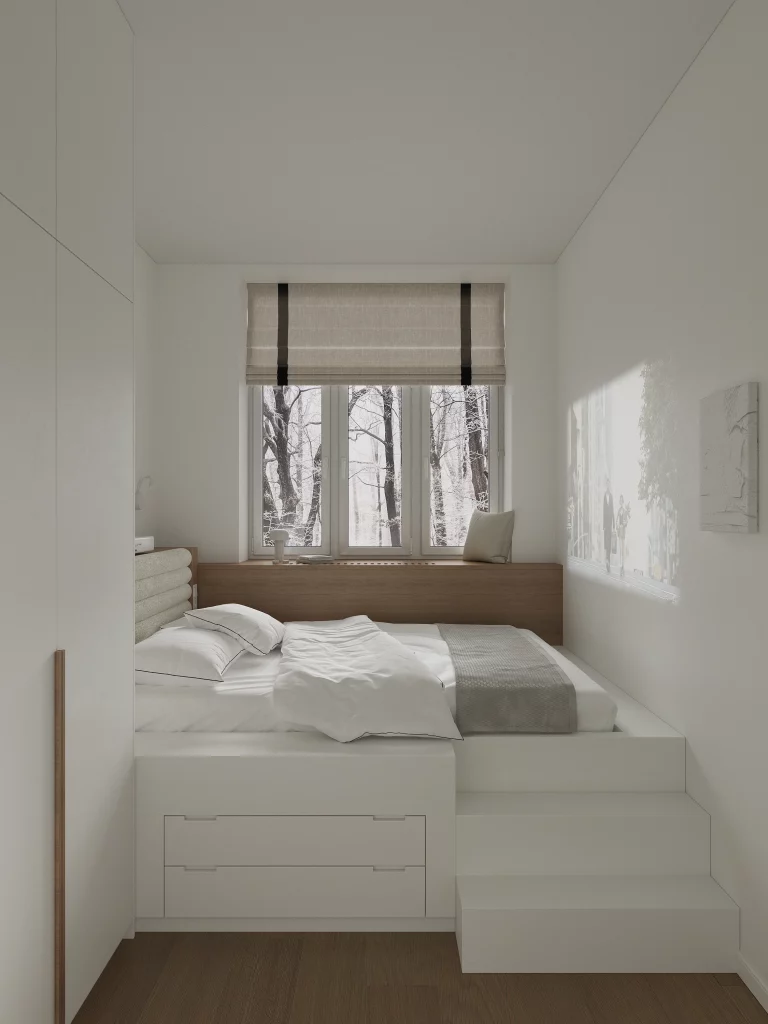
I especially like how the raised bed creates several functions within one compact structure. The drawers provide concealed storage without requiring a separate dresser, while the steps use otherwise difficult floor space in a practical way. The window seat also turns the area beneath the window into a useful surface rather than leaving it empty. Because the cabinetry and platform share the same pale finish as the walls, the built-in arrangement feels visually integrated.
If I were working with a bedroom this small, this is one of the ideas I would study most closely. Custom or carefully planned built-ins can turn awkward dimensions into an advantage by combining sleeping, storage, and circulation in one composition. I would keep the finish light and the bedding simple, as shown here, so the architecture remains the main feature rather than making the room feel crowded.
Warm Wood Bedroom With A Simple Black Bed Frame
The third bedroom feels warm and relaxed because nearly every major surface is finished in light natural-toned wood. The walls and ceiling are covered with horizontal wood boards, creating a continuous envelope around the room. A black metal bed frame provides contrast against the pale timber, while white bedding keeps the center of the room fresh and uncluttered. Matching small bedside tables sit on either side, and a large wood wardrobe occupies the right wall. Above the bed, several framed artworks are arranged together, adding a personal focal point.
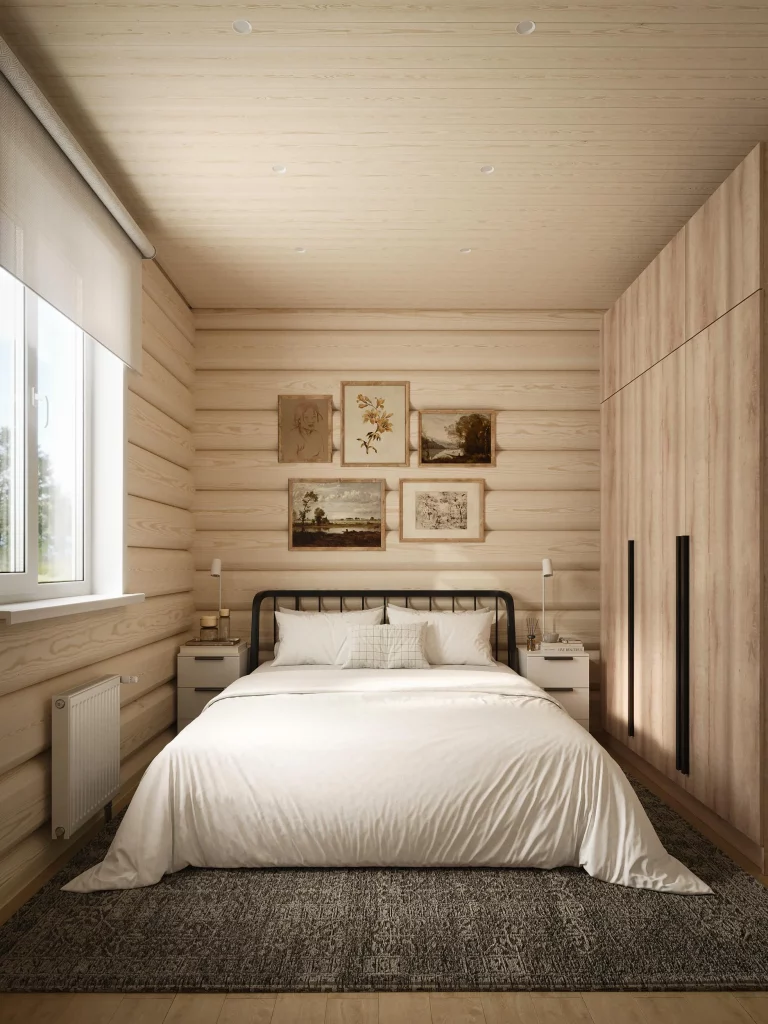
The layout is particularly effective because the larger pieces are pushed toward the perimeter, leaving the bed centered and easy to approach. The wardrobe uses an entire wall efficiently instead of scattering storage around the room. I also like the visual balance created by the dark bed frame against the lighter wood; without that contrast, the room could feel overly uniform.
For me, the lesson here is that a small bedroom does not necessarily need an all-white palette to feel open. The pale wood keeps the room visually cohesive while the black frame, darker rug, and framed artwork introduce enough contrast to give the space definition. When using a strong material across several surfaces, I would follow this example and keep the furniture forms relatively simple.
Upholstered Bed And Symmetrical Neutral Styling
This bedroom uses symmetry and soft neutrals to create a polished, comfortable atmosphere. The large upholstered headboard has a gently curved top and extends vertically along both sides of the bed. White bedding is layered with beige and golden-tan pillows, while dark wood bedside tables sit evenly on both sides. Matching wall sconces frame the headboard, and a large sculptural chandelier hangs above. A dark wood bench at the foot of the bed holds several stacked books, adding another horizontal layer to the composition.
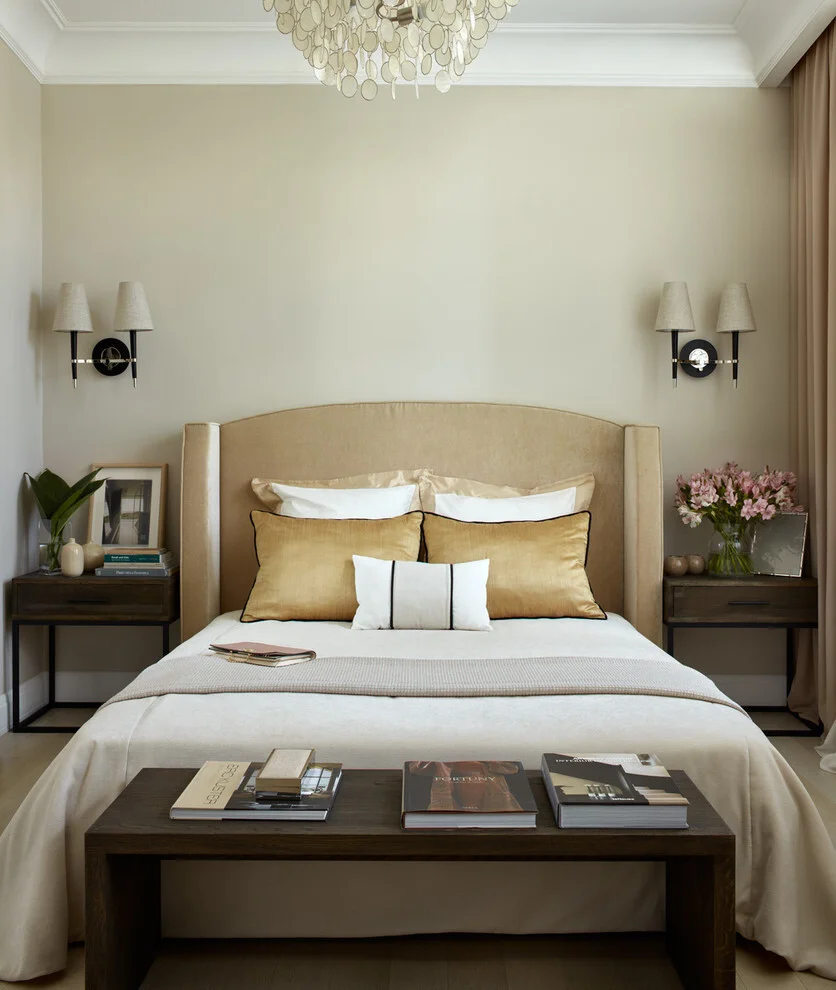
The symmetry immediately makes the room feel organized. Matching bedside tables and sconces create visual balance, while the broad upholstered headboard gives the bed enough presence to anchor the room without requiring a busy wall treatment. I also appreciate the bench because it adds a useful surface at the foot of the bed while keeping the center of the room relatively open.
I would borrow this approach when I wanted a small bedroom to feel more sophisticated without adding lots of furniture. A strong headboard, paired lighting, and a limited palette can do much of the decorative work. The combination of cream, beige, white, and dark wood also shows how a neutral room can have depth when different textures and finishes are layered carefully.
Compact Daybed Bedroom With Vertical Wall Storage
The fifth bedroom is extremely compact, with the bed fitting almost wall-to-wall beneath a built-in storage arrangement. The upholstered bed has a rounded, padded form that continues along the sides, creating the appearance of a cozy daybed. Behind it, a vertical slatted wall panel provides texture and contrast, while a long white cabinet is mounted above the bed. Small open shelves sit above the cabinet and hold a few books and decorative objects. A sculptural white side table and a piece of wall art complete the visible arrangement.
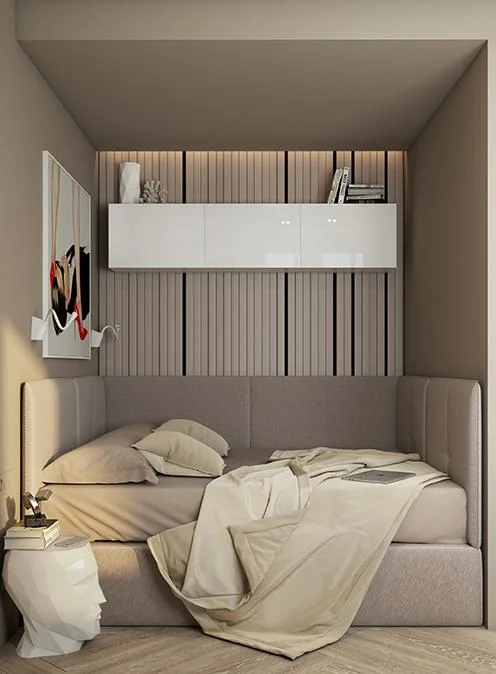
This design makes excellent use of vertical space. Rather than taking valuable floor area with a large storage unit, the room uses the wall above the bed for closed and open storage. The built-in approach also makes the sleeping area feel deliberately designed for the dimensions of the room. I like the soft upholstery because it gives the compact space a comfortable quality without requiring additional chairs or bulky furnishings.
For a bedroom with very limited floor space, I would pay close attention to this vertical strategy. Wall-mounted cabinetry can preserve circulation while providing practical storage, and a built-in bed can make an awkward room feel intentional. I would also keep the palette close to the warm gray, cream, and soft wood tones visible here so the different functions read as one cohesive composition.
Patterned Bedding And Draped Window Treatments
This bedroom introduces more pattern and contrast while keeping the overall composition controlled. A large bed is centered beneath a wide window dressed with sheer white curtains and textured tan drapes gathered at both sides. Two large pillows feature bold black-and-white organic stripes, while a smaller dark cushion has a gold-toned decorative motif. The bedding combines white, pale blue-gray, and a dark patterned coverlet with intricate pale detailing. Matching dark bedside tables and substantial table lamps frame the bed, while a large circular pendant fixture adds another strong shape overhead.
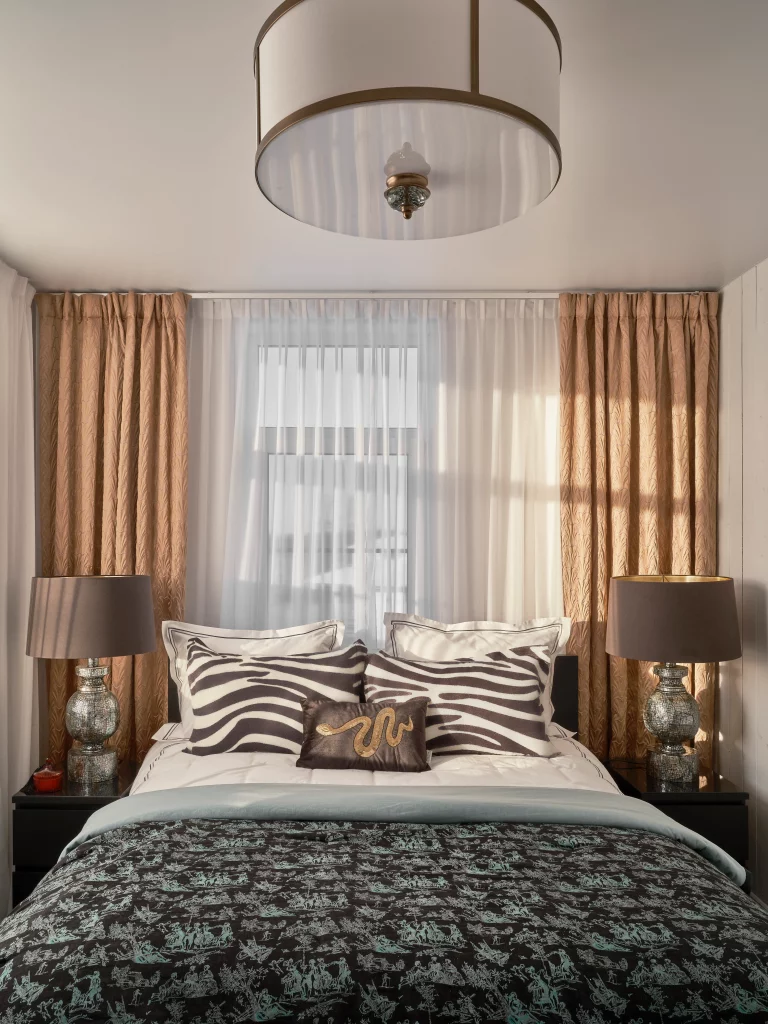
I think the success of this room comes from repeating the same dark-and-light contrast across different elements. The patterned pillows and bedcover are noticeable, but the surrounding curtains, walls, and main bedding remain relatively quiet. The matching lamps also help anchor the stronger patterns so they do not feel scattered throughout the room.
If I wanted to make a small bedroom more expressive, I would take inspiration from this balance rather than trying to introduce pattern everywhere. One or two recognizable textile motifs can provide personality while larger surfaces remain calm. The layered curtains are another practical detail I would consider because they offer control over natural light while also giving the window greater visual weight.
Dark Green Bedding With A Playful Illustrated Wall
The seventh bedroom combines a deep green bedcover with a large black-and-white illustrated wall behind the headboard. The padded gray headboard has vertical channeling and gives the bed a substantial, comfortable appearance. A cream knitted throw with tassel ends lies across the bed, while a row of decorative pillows introduces yellow, white, black, and gray circular motifs. To the left, a built-in window seat has a warm mustard cushion, and a tall white storage unit fills the area beside it. A sculptural pendant with small bird figures hangs overhead.
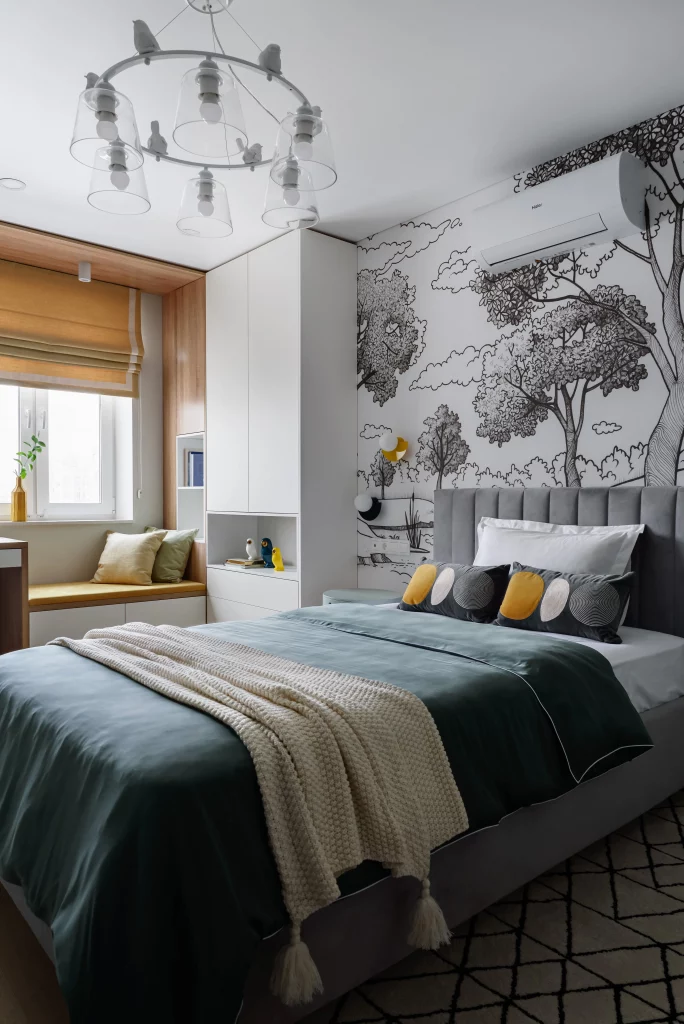
The room works because the strong wall illustration is balanced by relatively simple furniture and a controlled color palette. The deep green bedding adds richness without competing directly with the black-and-white wall, while the yellow accents connect the bed to the window seat. The built-in storage also makes efficient use of the wall beside the window, keeping the compact room functional.
I particularly like how personality is introduced through the wall treatment and textiles rather than through a collection of extra furniture. In a small bedroom, that distinction matters because floor space is precious. I would choose one strong visual feature, then repeat a few of its colors in bedding or accessories, as this room does with the dark, neutral, and mustard tones.
Blue Bedding Against A Warm Wood Storage Wall
The eighth bedroom has a cozy, enclosed feeling created by a large wood-paneled wall and matching cabinetry. The bed sits directly against the wood backdrop, with a striped upholstered headboard in soft gray and white. Pale blue bedding covers the mattress and is arranged in a deliberately relaxed, rumpled style. On the right, open shelving provides space for books and small decorative objects, while closed cabinets extend across the wall. A large white pendant with a rounded sculptural shape hangs above the bed, and a small black bedside table provides contrast.
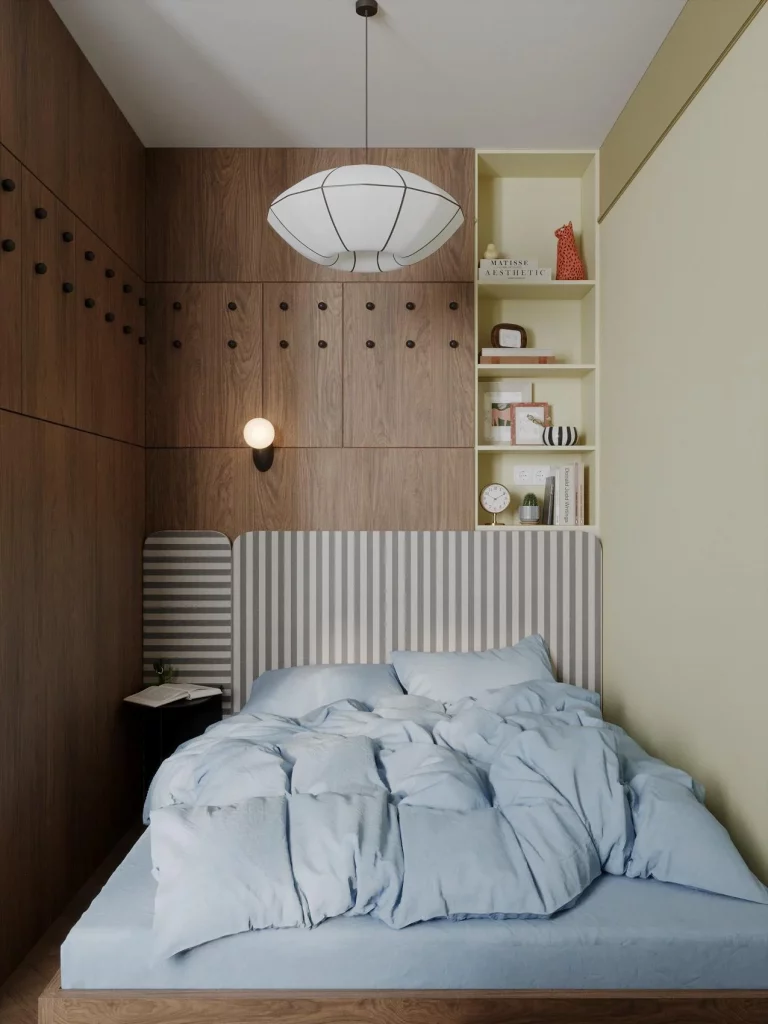
The built-in storage is the standout practical feature here. By combining cabinets and shelving around the sleeping area, the room gains substantial storage without requiring a freestanding wardrobe or additional furniture in the walking area. I also like the way the wood wall visually frames the bed, making the sleeping zone feel defined even though the room itself is compact.
For me, this is a strong reminder that storage can also become part of the room’s character. Rather than trying to hide every practical element, I would integrate cabinetry into the overall composition and let the material create a backdrop. The pale blue bedding then provides a softer counterpoint to the warm wood, keeping the room comfortable rather than overly structured.
Soft Cream Bedroom With Paneled Walls And Floral Accent
The ninth bedroom is wrapped in a soft cream palette, with paneled walls, a large cream upholstered bed, and matching built-in wardrobes across the back wall. One wall combines vertical striped treatment on the lower portion with framed panel detailing above. The bed is dressed in white and pale blush bedding, while a gray patterned throw adds subtle contrast. On the right, a small cream bedside table holds a vase with dried stems. The most noticeable decorative feature is the large floral-patterned wall covering behind the bed, complemented by a modern white branching pendant overhead.
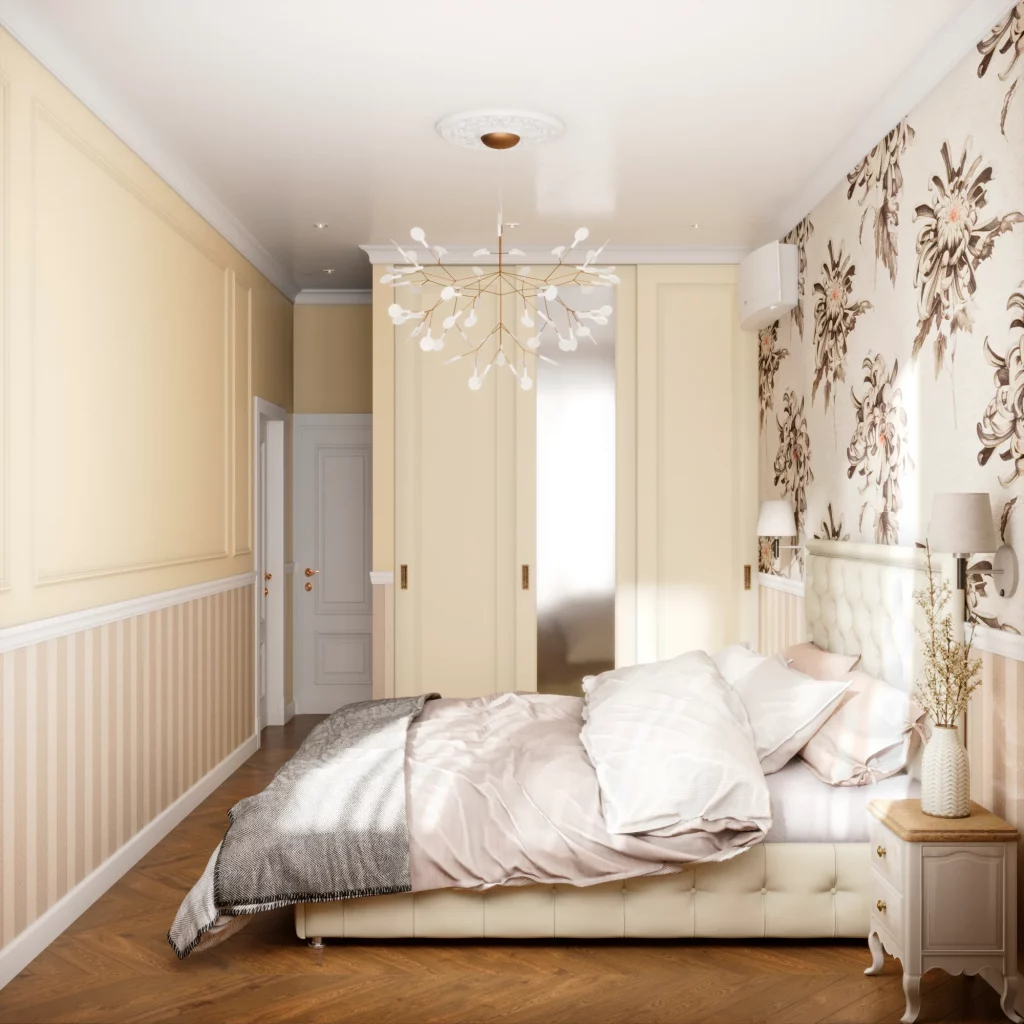
The room feels spacious because the cabinetry, walls, and major furniture stay within a closely related palette. The built-in wardrobe keeps storage organized along one side, while the upholstered bed adds softness to the otherwise structured surfaces. I also like the way the floral wall treatment is confined to one major area, giving the room a focal point without breaking the calm continuity of the cream tones.
If I were recreating this atmosphere, I would keep the architecture and furniture tonal and let one patterned surface provide the visual emphasis. The pale bedding and simple bedside styling are especially effective because they allow the wall treatment to remain the main decorative statement. In a small room, this kind of hierarchy can make the design feel intentional rather than crowded.
Olive And Brown Bedroom With A Tailored Modern Finish
The final bedroom combines olive green, warm brown, cream, and soft gray in a sophisticated compact arrangement. The bed has a simple dark wood frame with a green upholstered base and a white mattress layered with olive and brown bedding. The headboard wall is finished in a textured neutral material, while the adjacent wall features angled panel detailing. Two dark bedside tables sit symmetrically beside the bed, each paired with a small wall-mounted light. Above the headboard hangs a framed colorful artwork, and two small hanging lights appear near the side walls. Floor-length curtains cover the large window on the left.
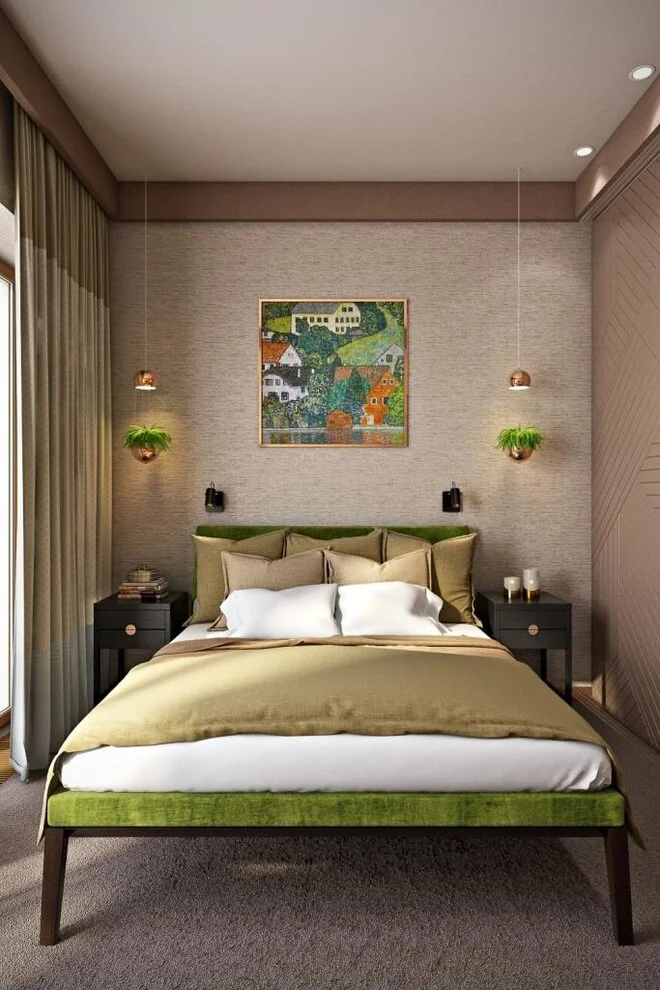
I like the proportions of this room because the bed remains the central feature while the bedside tables and lighting are kept visually compact. The green upholstery adds a defined band of color beneath the bedding, and the darker bedside furniture provides enough contrast to prevent the neutral walls from feeling flat. The framed artwork adds a concentrated burst of color without requiring a large collection of accessories.
This is the kind of small bedroom I would use as inspiration when I wanted something modern but not overly minimal. The palette feels layered rather than monochromatic, yet the number of colors remains controlled. I would also repeat the relationship between the olive bedding, dark wood, and warm neutral walls, because that combination gives the compact room a grounded and cohesive appearance.
White Built-In Storage Framing a Compact Bedroom
The first bedroom uses an almost entirely white palette, with floor-to-ceiling cabinetry wrapping around the upper portion of the bed area. The clean cabinet fronts create a seamless architectural backdrop, while an open shelving unit beside the bed provides space for a small decorative object, books, and a phone. A window brings in natural light from the left, where a small potted plant sits on the sill. White bedding with a fine blue grid pattern is finished with a blue checked coverlet, giving the room a crisp, fresh feeling.
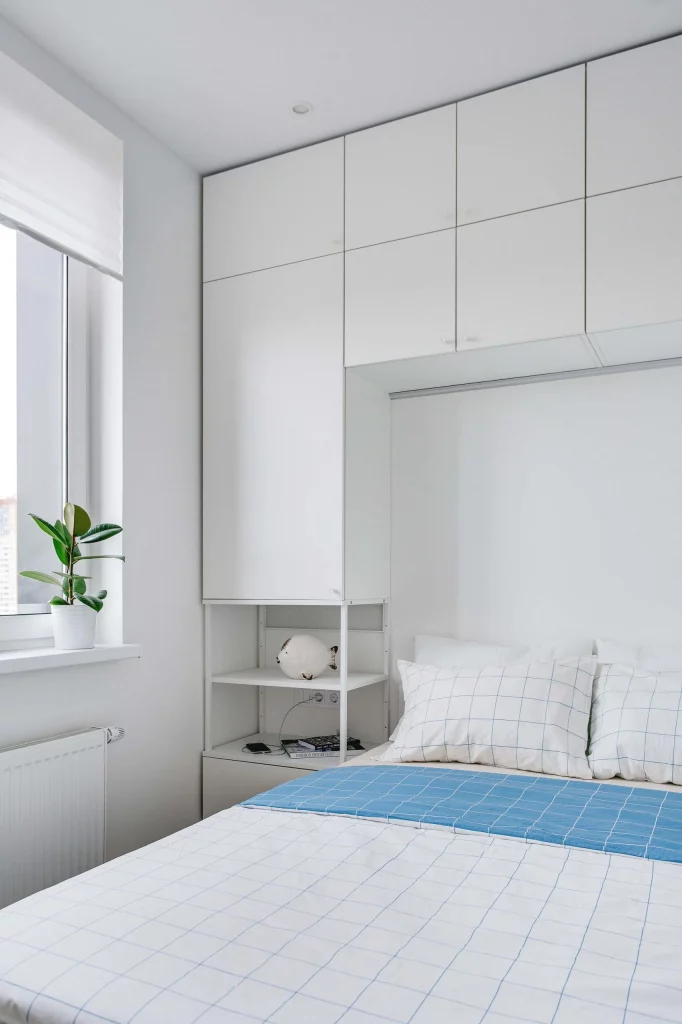
I think this arrangement works particularly well because the storage rises vertically instead of consuming additional floor area. The built-in cabinetry also keeps the visual field calm, while the open shelving breaks up the solid bank of doors and provides useful bedside access. Even the small blue accents in the bedding help define the sleeping zone without making the compact room feel busy.
From my perspective, this is one of the most practical approaches to a small bedroom. I would focus on maintaining the strong white-on-white foundation and using a simple patterned textile, just as shown here, to introduce a little visual character. The result feels organized, bright, and remarkably efficient.
Raised Bed Platform With Integrated Storage
This compact bedroom takes a completely different approach by lifting the bed onto a raised wooden platform. A short staircase leads up to the mattress, while white-fronted drawers are built directly beneath the sleeping area. The surrounding walls are painted a muted blue-gray, creating a calm contrast with the warm wood flooring and platform. A tall white wardrobe occupies the right side, and a small stack of boxes sits beside the bed.
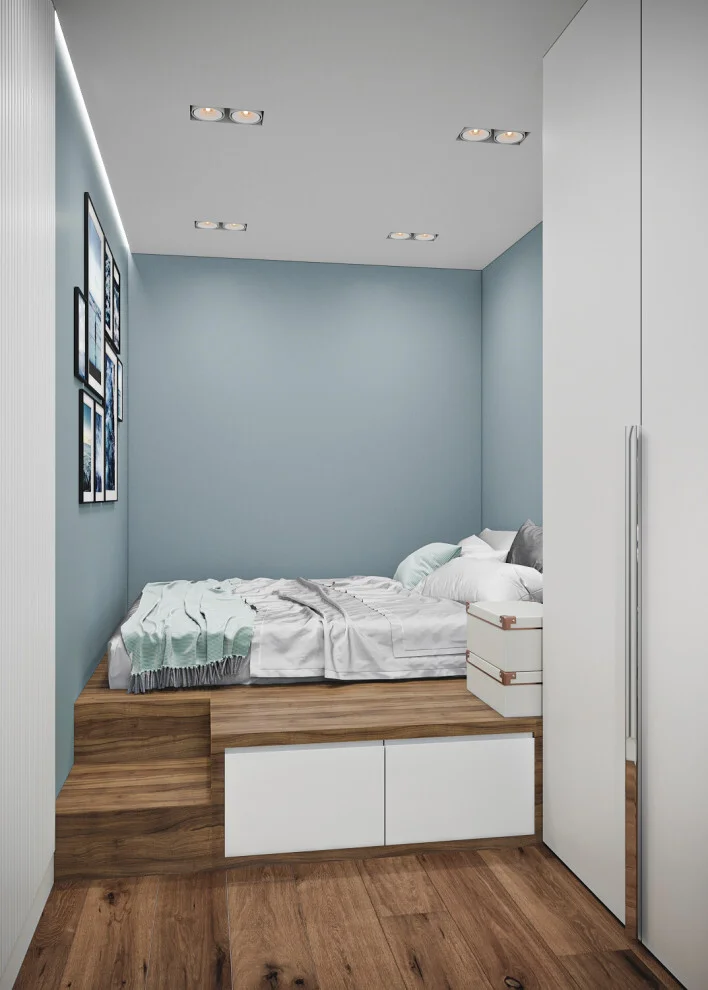
I particularly like how the elevated sleeping platform turns the bed into a multifunctional architectural feature. The drawers underneath use space that would otherwise be lost, while the stairs also create a practical transition between the floor and sleeping level. Because the furniture is concentrated into the perimeter, the center of the room remains visually open.
For me, this is a strong example of how a small bedroom can benefit from treating storage as part of the architecture rather than as separate furniture. The restrained blue-gray walls keep the room restful, while the wood adds warmth and definition. I would preserve that balance rather than introducing too many additional decorative pieces.
Soft White Daybed With Layered Neutral Textures
The third bedroom is exceptionally light, with white walls, pale flooring, a white upholstered bed, and full-height curtains surrounding a central window. The bed functions almost like a built-in daybed, with its upholstered frame extending around the sleeping area. White and pale gray pillows are mixed with a blush-toned rectangular cushion and a black-and-white geometric cushion. A gray knitted throw with tassels is casually draped across the front.
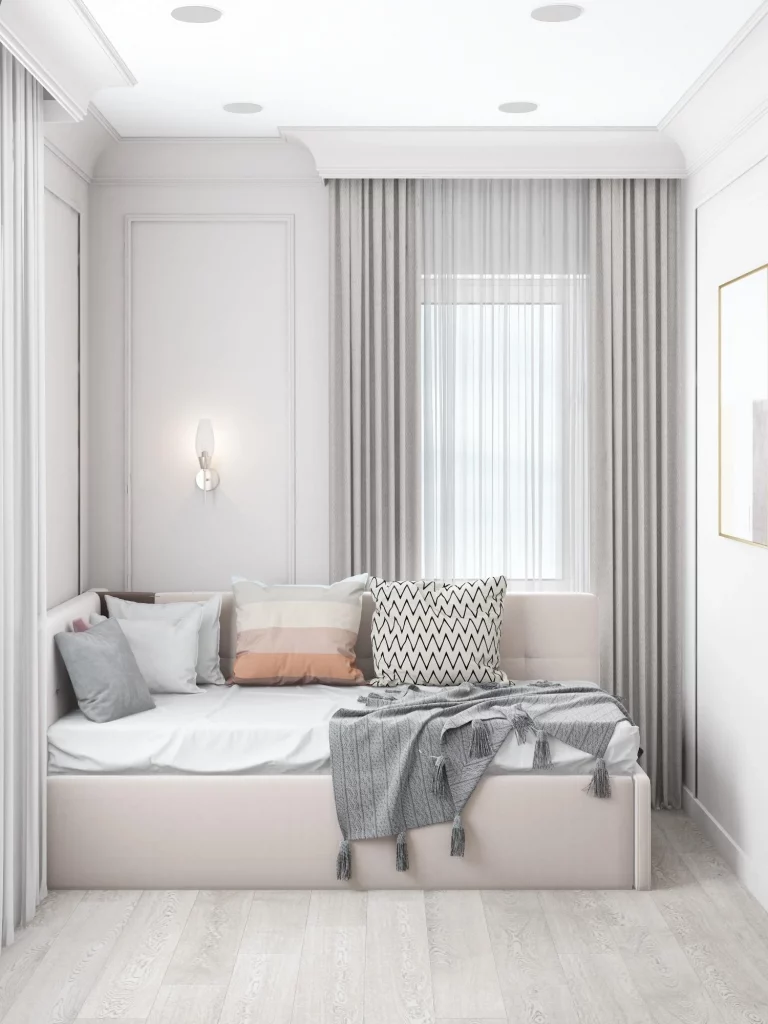
I find the compact proportions especially successful because the furniture stays low and visually soft. Instead of filling the room with separate pieces, the upholstered bed occupies the main wall-to-wall zone and creates a comfortable focal point. The curtains also frame the window without competing with the pale palette, allowing natural light to remain one of the room’s strongest features.
What stands out to me is the way texture does the decorative work here. The knitted throw, patterned cushion, sheer curtains, and soft upholstery create interest without relying on a large collection of objects. For a similar result, I would keep the palette restrained and let a few contrasting textiles provide the personality.
Layered Neutral Bedroom With Lime Green Accents
This bedroom combines a pale wood-look wall behind the bed with softly patterned wallpaper on the adjacent wall. The headboard is integrated into the wall treatment, while tall white shelving units frame the sleeping area on both sides. The bed is dressed in crisp white bedding and accented with lime green pillows and botanical-patterned cushions. Two framed abstract pieces hang above the headboard, flanked by warm wall lights.
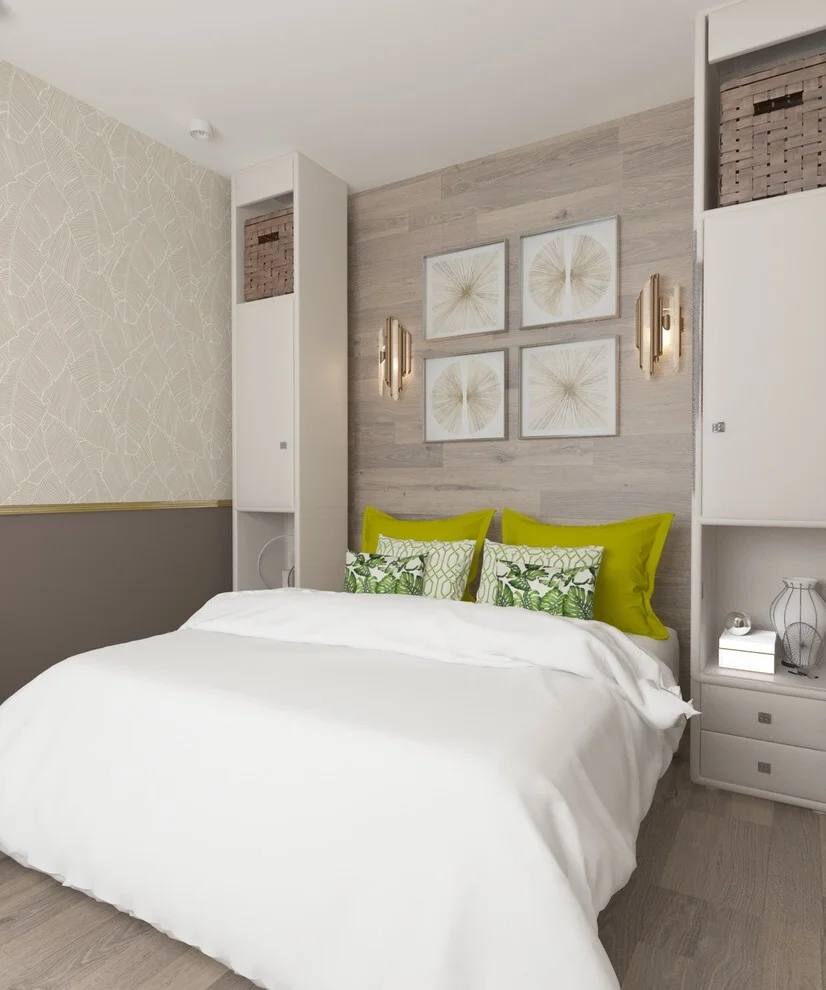
I like the way the storage towers make use of the vertical space without visually crowding the bed. Their white finish blends with the surrounding cabinetry, while the pale wall behind the headboard gives the sleeping area enough definition to feel intentional. The green cushions provide a lively focal point, but the rest of the room remains calm and neutral.
In my view, the lesson here is that a small bedroom does not have to be completely monochromatic to feel spacious. The restrained foundation allows one strong accent color to stand out beautifully. I would keep the green concentrated in the bedding, as shown, because that makes the color easy to change while preserving the room’s underlying structure.
Warm Taupe Bedroom With Full-Height Curtains
Here, the bedroom shifts toward a warm, cocooning palette of taupe, beige, soft brown, and muted gold. A substantial upholstered bed sits against a pale wood headboard, while a large window occupies the right side of the room. Sheer white curtains filter the daylight, layered with heavy olive-gold curtains that extend from ceiling height to the floor. The bedding is neutral, with a textured brown runner folded across the lower portion.
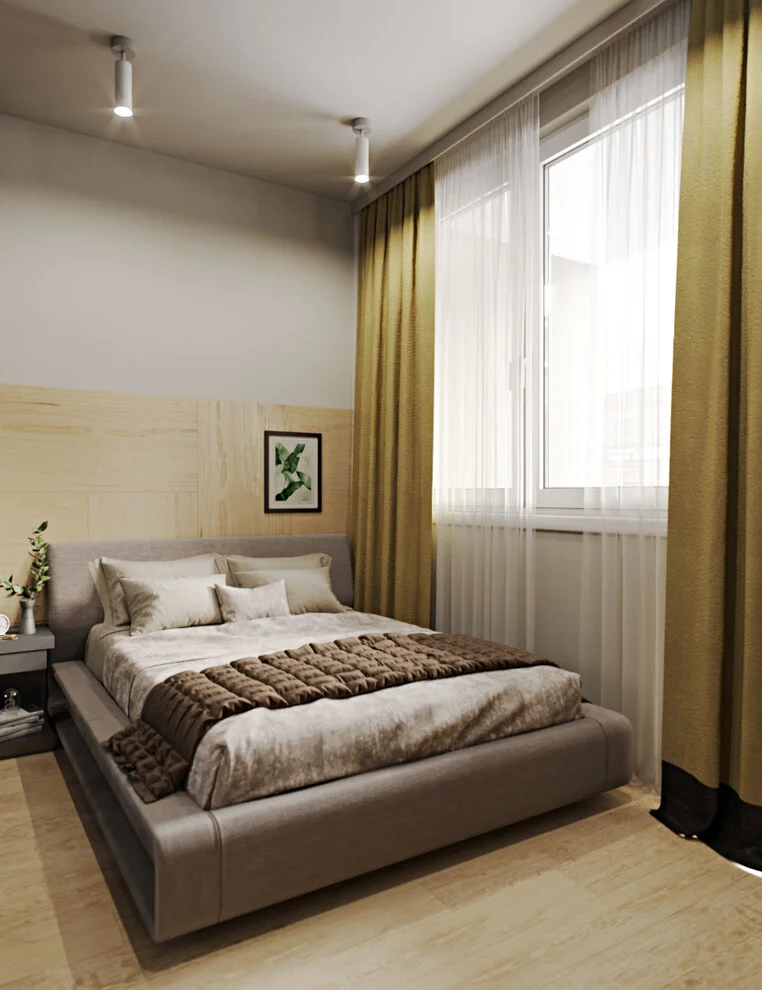
I think the success of this small room comes from its consistent tonal layering. The bed, flooring, headboard, and textiles all sit within a related neutral family, so the space feels cohesive rather than fragmented. The tall curtains also emphasize the room’s vertical dimension, while the large window prevents the deeper colors from making the bedroom feel closed in.
For me, this is a great reminder that small rooms can handle deeper accents when the overall palette stays controlled. I especially like the contrast between the soft gray-beige upholstery and the richer curtain color. I would keep the bedding similarly understated so the window treatment remains one of the defining visual elements.
Compact Platform Bedroom With Moody Plum Details
This room makes excellent use of a raised sleeping platform, with built-in drawers and open compartments beneath the bed. The sleeping area sits against a softly patterned wall mural in pale gray and dusty tones, while the floor platform has a muted plum finish. Deep gray curtains frame the large window, and a white dresser sits below it. The bedding introduces dusty mauve and plum shades with a patterned throw across the bed.
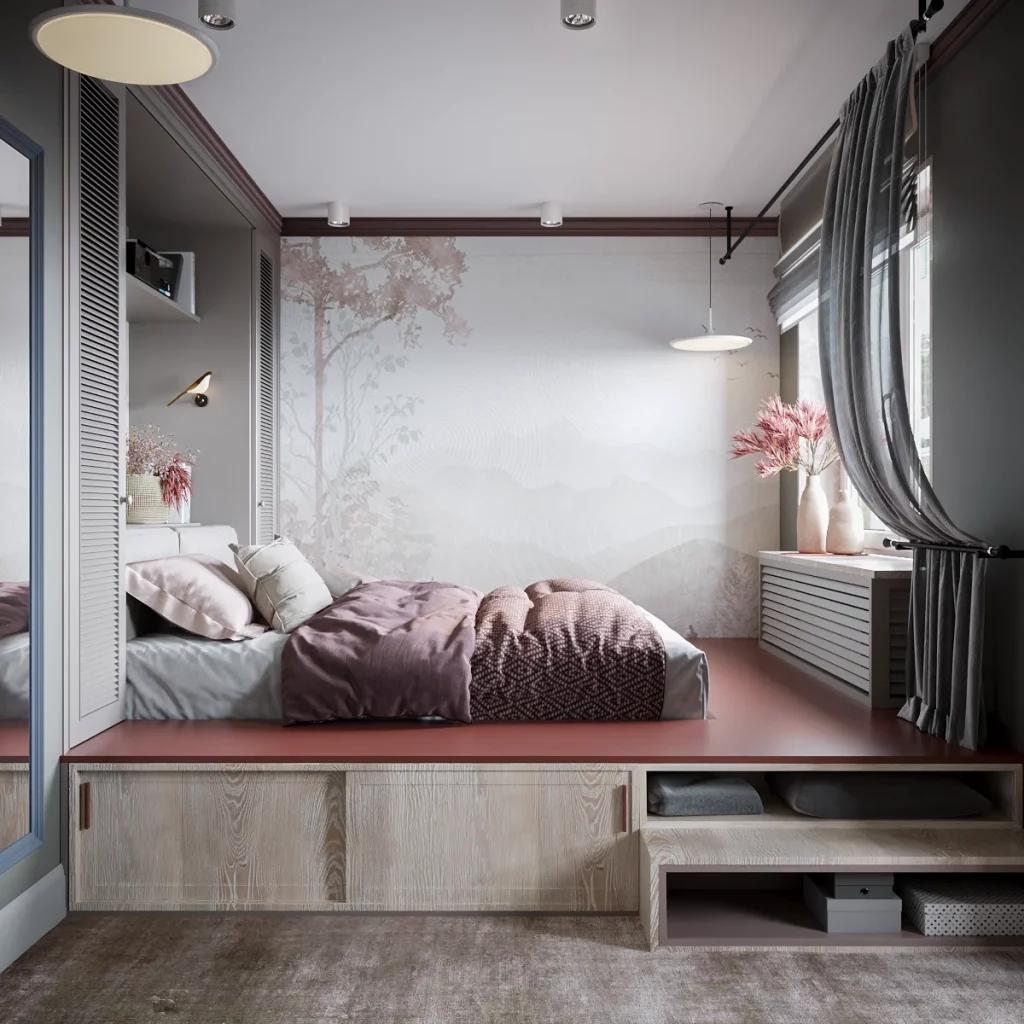
I love how much function is packed into this compact arrangement. The elevated bed creates substantial storage underneath, while the open shelving beside it provides a practical place for everyday items. The built-in cabinetry also creates a clear separation between the sleeping zone and the surrounding room without requiring additional floor-standing furniture.
The color story is equally interesting to me because the plum tones appear in several connected areas rather than being isolated in one object. That repetition gives the compact space a sophisticated sense of continuity. I would keep the surrounding neutrals quiet, as shown, so the muted plum remains atmospheric rather than overpowering.
Wood-Lined Sleeping Nook With Open Shelving
This small bedroom feels especially distinctive because the walls and ceiling around the bed are covered in warm, light-toned wood paneling. A compact upholstered headboard sits beneath a mounted antler decoration, while open shelving runs along the right side and provides space for books and small objects. The bedding is gray and white, topped with a thick cream-colored knitted blanket. A white brick wall and small seating area are visible just beyond the sleeping nook.
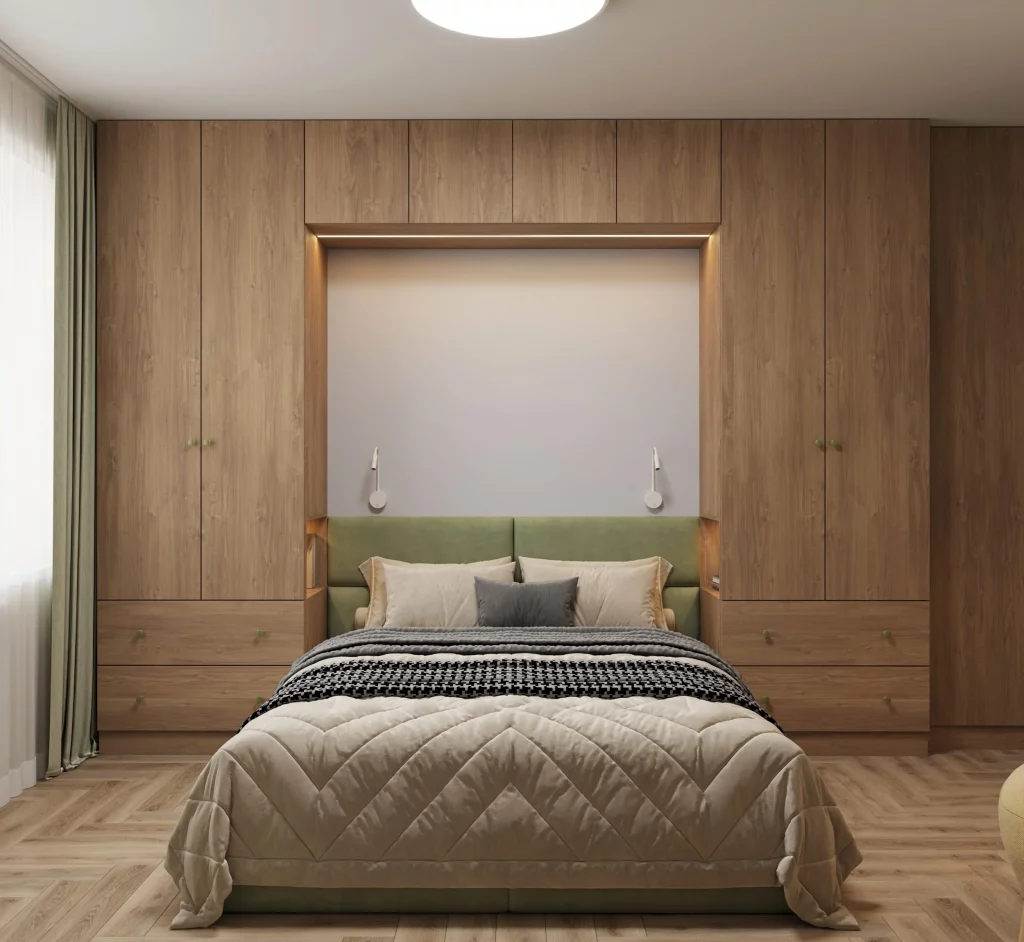
I think the strongest feature is the way the wood-lined zone visually defines the bed without needing a large traditional headboard. The shelving is integrated into the same material, creating a continuous composition and making the most of the narrow room. The substantial knitted blanket adds softness against the harder lines of the paneling and shelving.
From my perspective, this design works because the materials are doing several jobs at once: defining the sleeping area, providing storage, and adding warmth. I would avoid interrupting that continuity with too many contrasting finishes. The combination of warm wood, muted bedding, and open shelving already gives the room plenty of character.
Elegant Plum Headboard With Built-In Cabinetry
The final bedroom brings a much richer decorative mood, with a deep plum upholstered headboard framed by a floral-patterned wall panel. White cabinetry with raised panel doors surrounds the bed and continues across the upper wall, creating a substantial built-in storage composition. Mauve curtains frame the window, while the bed is layered with pale pink, purple, and gold cushions. A decorative chandelier hangs above, adding another refined focal point.
I find the built-in cabinetry particularly effective because it makes the compact bedroom feel highly organized while still leaving room for decorative expression. The cabinetry creates a strong frame around the bed, while the recessed sleeping area gives the headboard and patterned backdrop a clear visual presence. The layered textiles then soften the otherwise structured arrangement.
For me, this room proves that a small bedroom does not have to look purely minimal to feel well planned. The colors are coordinated across the headboard, curtains, cushions, and bedding, which keeps the richer palette cohesive. I would maintain that same color discipline because it is what allows the decorative details to feel intentional rather than crowded.
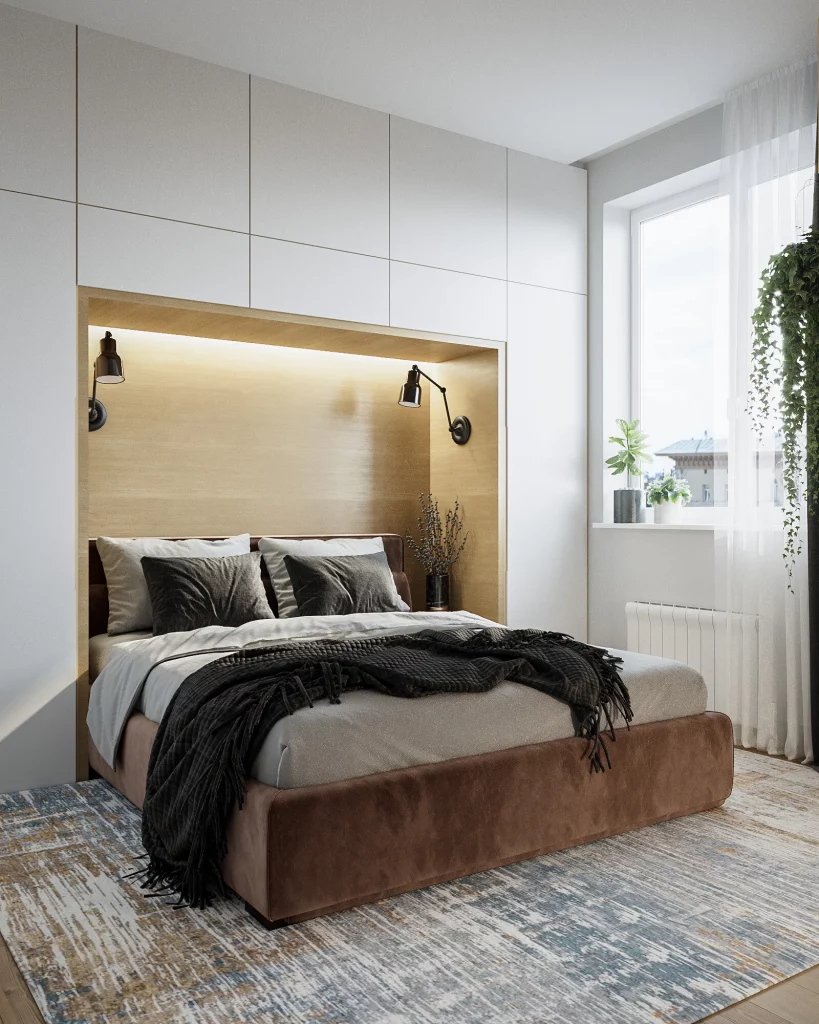
Modern Bedroom With a Warm Wood Alcove
This bedroom uses a white wall of overhead cabinets to frame a recessed sleeping alcove finished in warm wood. The bed has a brown upholstered base and a low headboard, while black wall-mounted reading lights provide focused illumination on either side. White bedding is layered with dark gray pillows and a large black fringed throw. A large window with sheer curtains brightens the right side, and a patterned area rug adds texture beneath the bed.
I like how clearly the alcove establishes the sleeping zone within the compact room. The wood-lined recess adds warmth and depth, while the overhead cabinetry provides valuable storage without interrupting the clean geometry. The dark textiles and lighting fixtures also create contrast against the pale cabinetry and walls, giving the room a more grounded appearance.
In my experience, this kind of balance is especially effective in smaller spaces because it gives the eye a few strong focal points rather than a collection of competing details. The wood alcove, upholstered bed, and dark throw work together as one composition. I would keep the surrounding surfaces relatively quiet so those features remain the focus.
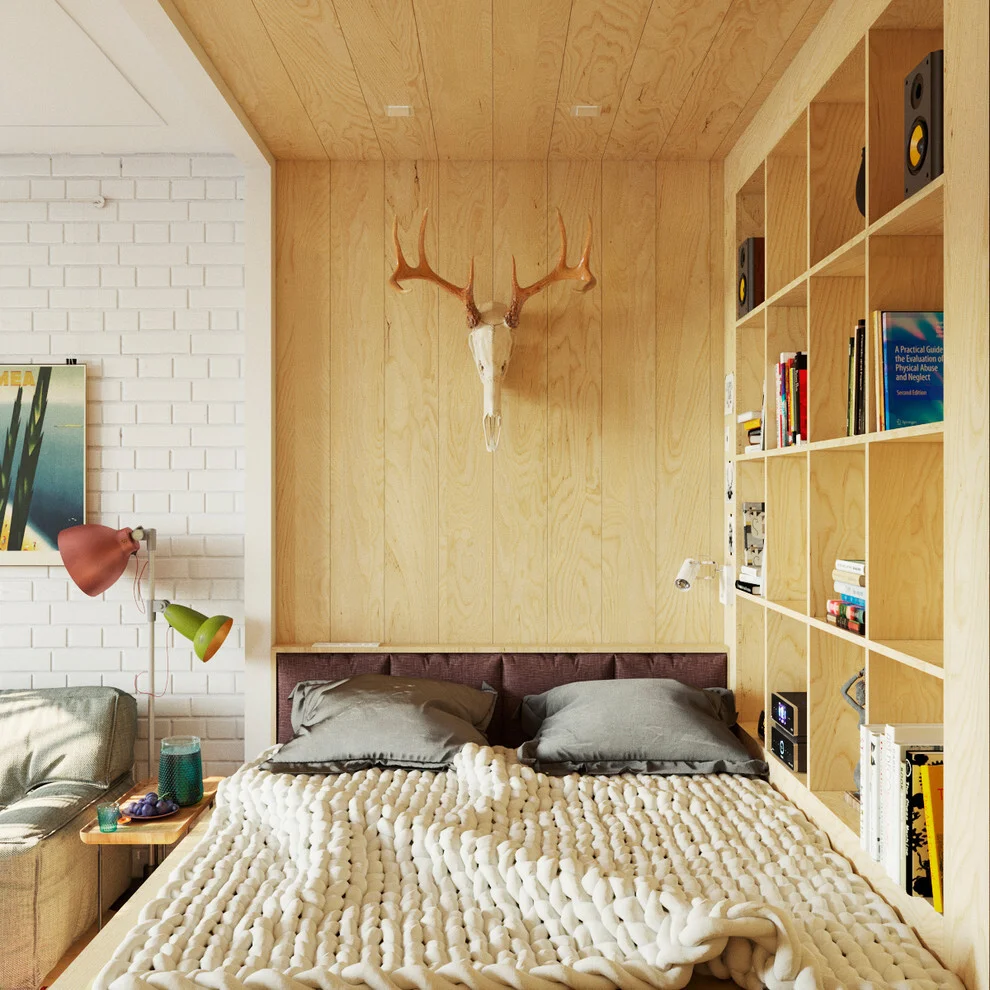
Small Bedroom With Full Wall Storage and Soft Green Upholstery
The last bedroom centers on a built-in wall of warm wood cabinetry that surrounds a recessed bed. The central alcove has a pale backdrop and two slim wall lights, while the headboard is upholstered in a muted green fabric. Cream pillows and a gray accent cushion sit against the headboard, and the bed is covered with a cream quilt featuring a bold geometric chevron pattern. Matching wood flooring and cabinetry create a unified warm base.
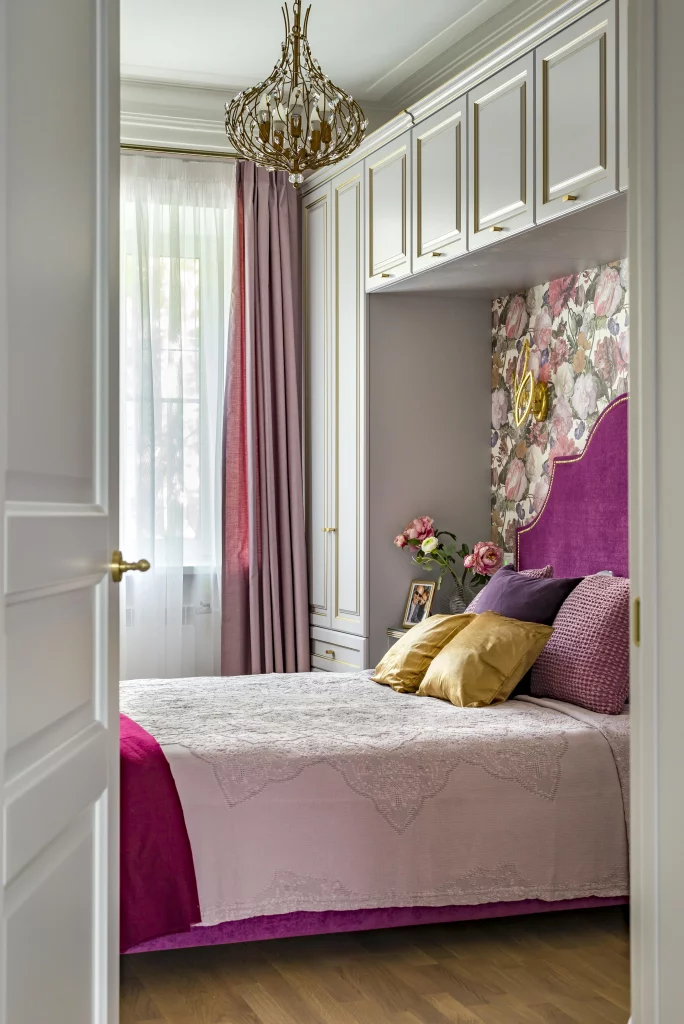
I think this is one of the clearest examples of turning a small bedroom into a highly efficient built-in composition. The cabinets use the full height of the wall, while drawers below provide additional accessible storage. At the same time, the recessed bed feels visually separated from the cabinetry, so the room does not read as one continuous bank of storage.
What I appreciate most is the subtle contrast between the warm wood, muted green headboard, and cream bedding. It adds personality without making the compact room feel visually heavy. If I were recreating this atmosphere, I would preserve the same restrained palette and let the geometric bedding provide the strongest decorative accent.
Deep Neutrals and Soft Textures in a Compact Bedroom
The first bedroom creates an intimate, cocoon-like feeling with a compact upholstered bed positioned against the wall and a large window stretching across the back of the room. I notice a restrained palette of charcoal, taupe, gray, white, and muted dusty rose, with dark full-length curtains framing sheer white drapery. The bed has a softly rounded upholstered headboard and matching gray bedding, while a rose-colored throw adds a subtle contrast. A patterned gray rug anchors the bed, and a slim pendant light, oval wall mirror, and delicate branch arrangement provide small decorative accents without overwhelming the space.
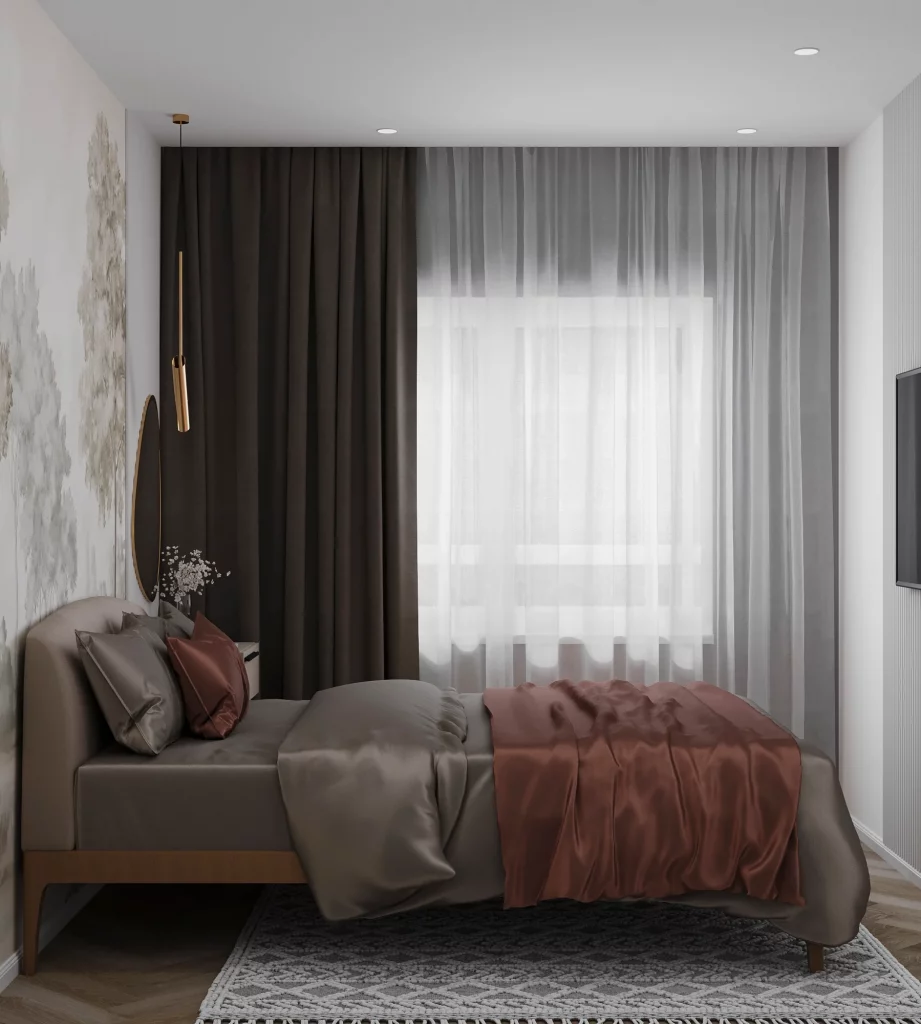
I think this arrangement works particularly well for a small bedroom because the furniture stays visually close to the walls, leaving the center relatively open. The raised bed base also allows some of the flooring to remain visible, which helps prevent the room from feeling completely filled by the bed. Layered window treatments give the space flexibility, too: the sheer curtains soften daylight while the darker curtains can create a more enclosed atmosphere when closed.
From my perspective, the strongest lesson here is the power of texture when the color palette is quiet. The combination of smooth upholstery, soft bedding, flowing curtains, and the patterned rug creates depth without needing lots of objects. I would use this approach when I wanted a small bedroom to feel sophisticated and restful rather than busy. Keeping the larger pieces within a closely related neutral palette is an easy way to create visual calm.
Fresh Lime Green and Turquoise for a Playful Small Bedroom
This bedroom takes a completely different direction with a fresh lime-green and white palette accented by turquoise and blue. The bed sits against a striking built-in wall composition featuring geometric panel divisions and a large rounded opening above the headboard. Through that opening, leafy greenery is visible, creating a strong focal point behind the pillows. Matching lime-green bedding continues the color story, while turquoise curtains and a blue accent cushion add energetic contrast. A large window brings in plenty of daylight, and the wood-toned floor adds warmth beneath the vivid colors.
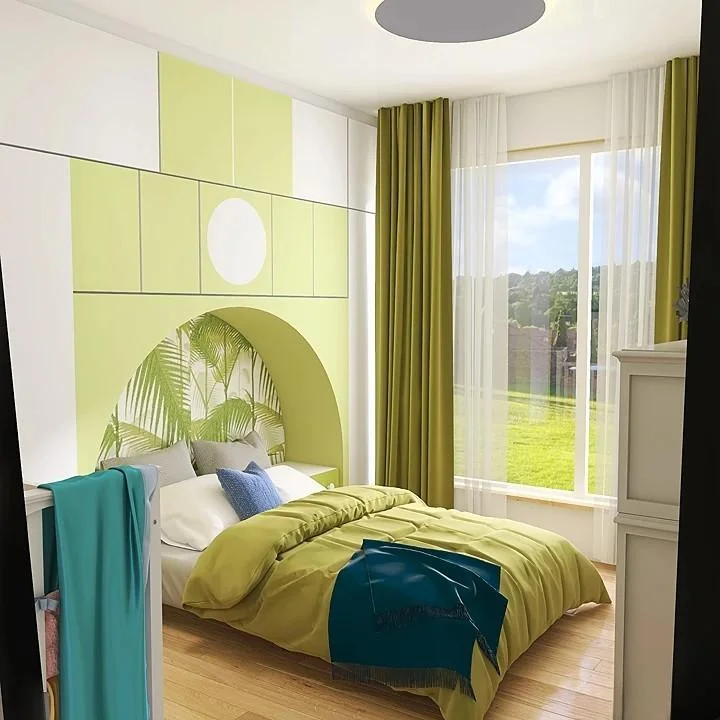
I like how the built-in wall gives this small room a strong sense of structure without requiring additional furniture. The bed remains the dominant piece, while the surrounding cabinetry or paneling makes the wall itself part of the design. The bright palette also helps the room feel lively and open, particularly with the generous window and white ceiling balancing the stronger green tones.
For me, this is a good reminder that a small bedroom does not automatically have to use pale neutrals. A carefully controlled color scheme can actually make a compact space more memorable. If I were recreating this look, I would choose one dominant color, repeat it across the largest textile or architectural element, and then introduce only one or two contrasting shades. That keeps the room expressive while preventing the limited floor area from feeling visually cluttered.
Tailored Upholstery and Layered Gray Tones
The third bedroom feels polished and quietly dramatic, centered around a substantial upholstered headboard in a warm terracotta-brown shade. The headboard has a distinctive shaped silhouette with gently angled upper corners and rows of tufted buttons. Gray walls and matching gray bedside tables create a calm backdrop, while gray bedding and dark charcoal pillows establish a layered neutral foundation. A deep green throw is spread across the lower portion of the bed, bringing a rich accent color into the otherwise restrained scheme. Floor-length light curtains frame the windows, and exposed brick appears along the right side of the room.
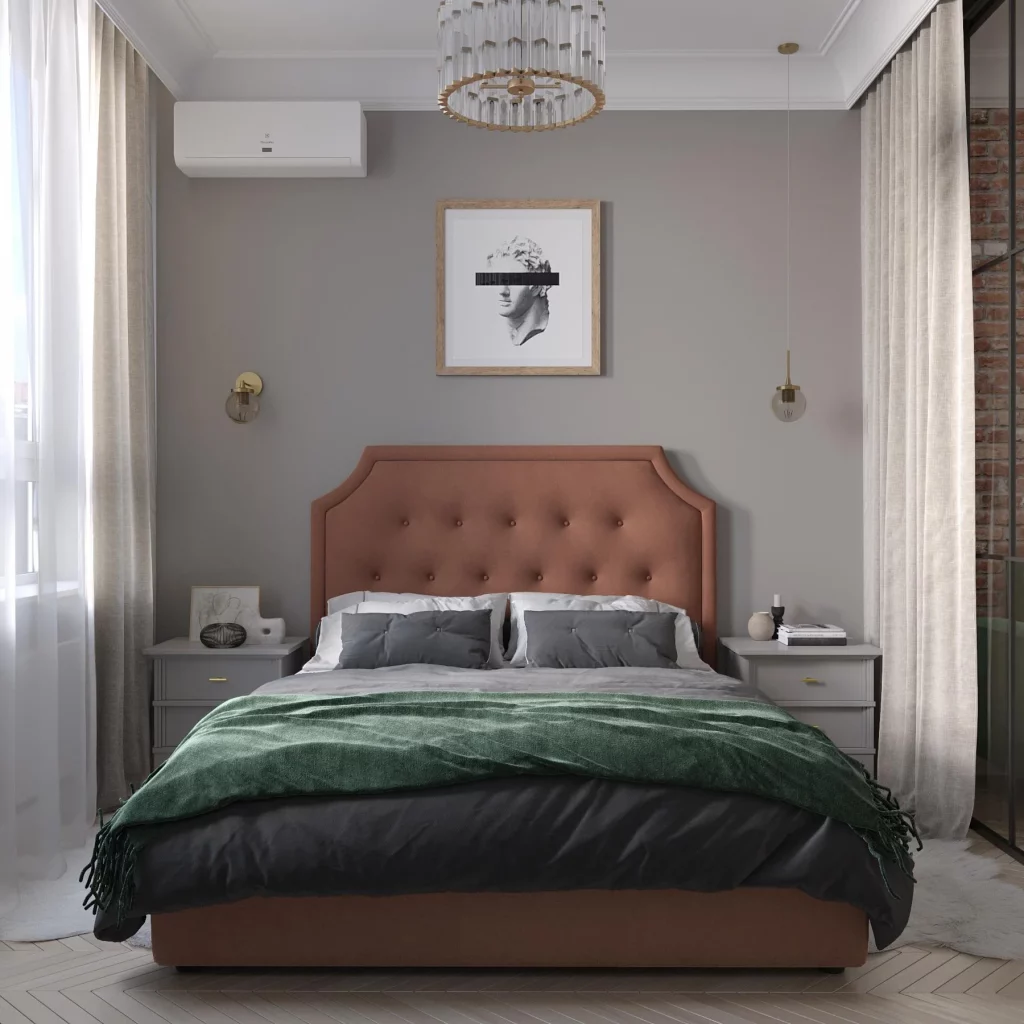
I find the symmetrical layout especially effective here. Matching bedside tables flank the bed, with wall-mounted lights positioned on both sides, creating balance without taking up much surface area. The large headboard gives the bed a clear visual center, while the narrow tables provide useful bedside space without making the room feel crowded. Even the artwork above the bed is carefully centered, reinforcing the orderly composition.
My favorite detail is the way the room combines softness with a few harder architectural and decorative surfaces. The upholstered headboard and curtains soften the gray walls, while the exposed brick adds texture and contrast. I would borrow this strategy in a compact bedroom by choosing one substantial upholstered feature and keeping the surrounding furniture simple. It creates a finished, tailored appearance without depending on a large collection of accessories.
Built-In Wood Storage With Fresh Green Accents
The fourth bedroom makes excellent use of integrated wood-toned furniture, with tall vertical cabinetry covering much of the wall beside and behind the bed. The bed is tucked into a built-in composition that also extends beneath the window, creating a continuous visual line around the sleeping area. A muted green wall fills the remaining visible section, while white Roman-style window shades soften the large window. Bedding in several shades of green is layered across the bed, complemented by white pillows and a yellow-green patterned cushion. A slim black wall light and black ceiling track lighting add practical illumination without occupying floor space.
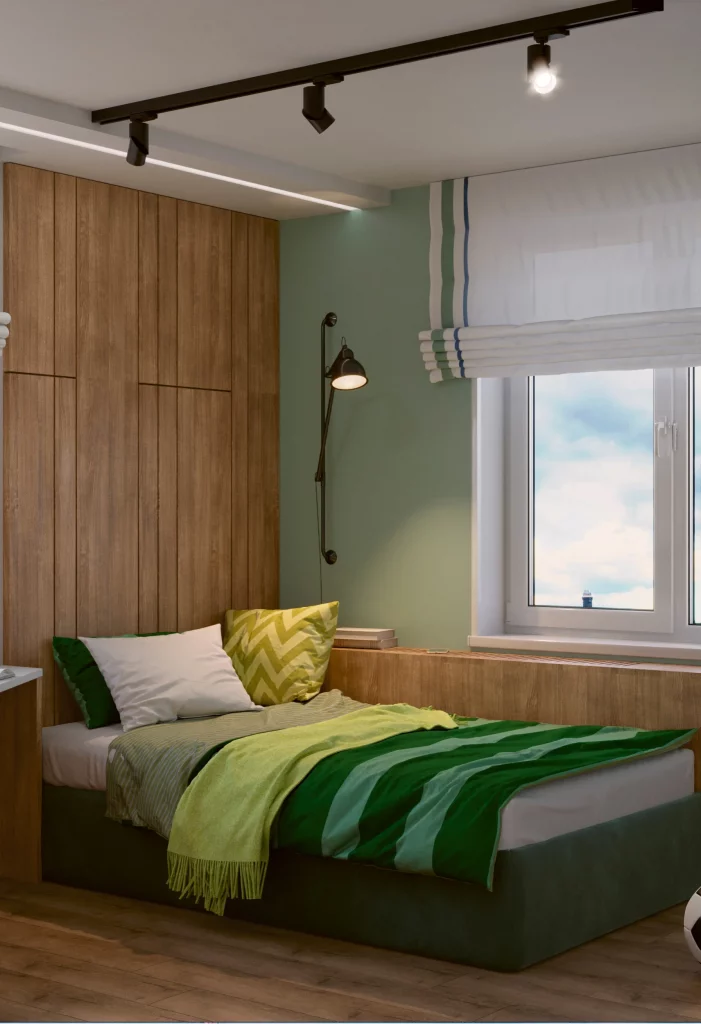
I think this is one of the most practical approaches for a small bedroom because the architecture is doing much of the organizational work. The tall cabinetry uses vertical space instead of spreading storage across the floor, while the built-in section beneath the window turns an otherwise difficult area into part of the overall furniture arrangement. The bed also fits naturally into the composition rather than looking like a separate piece squeezed into a compact room.
If I were planning a small bedroom around this idea, I would pay close attention to vertical storage and consistent finishes. Repeating the wood tone across the cabinetry and bed surround makes the furniture feel like one continuous element, which visually simplifies the room. I also like the restrained use of green: the wall and bedding relate to one another without making every surface the same shade. For a compact space, that kind of repetition can make practical storage feel like an intentional design feature rather than something added afterward.
Small bedrooms can be just as distinctive as larger ones when the layout, color, and furniture are considered together. I love how these four rooms demonstrate completely different moods while each making thoughtful use of a limited footprint. From layered neutrals and tailored upholstery to expressive color and built-in storage, there is plenty of inspiration here for creating a bedroom that feels both stylish and genuinely livable. Which of these small bedroom ideas would you choose for your own home? Leave a comment and share the design that caught your eye most.
A small bedroom can be both practical and beautiful when the layout, colors, furniture, and textures are carefully balanced. These ideas show that even limited space can feel polished, comfortable, and full of personality without becoming overcrowded. I especially love how smart storage, thoughtful color choices, and well-proportioned furniture can make every square foot work harder. Whether you prefer soothing neutrals, expressive color, elegant upholstery, or built-in solutions, there is plenty of inspiration to adapt to your own space. Which small bedroom idea was your favorite? Share your thoughts in the comments and let me know which look you would love to recreate.