
Trim is the frame that holds a room together, but white isn’t the only option. Whether you’re painting baseboards, window casings, or crown molding, the right color can shift the whole feel of a space. This article rounds up 35 trim colors that actually work, from subtle grays to bold blues and greens.
You’ll see how different finishes and shades change the mood in living rooms, hallways, bedrooms, and more. It’s about making trim a deliberate part of the palette, not an afterthought. Expect practical ideas you can borrow, no matter your style.
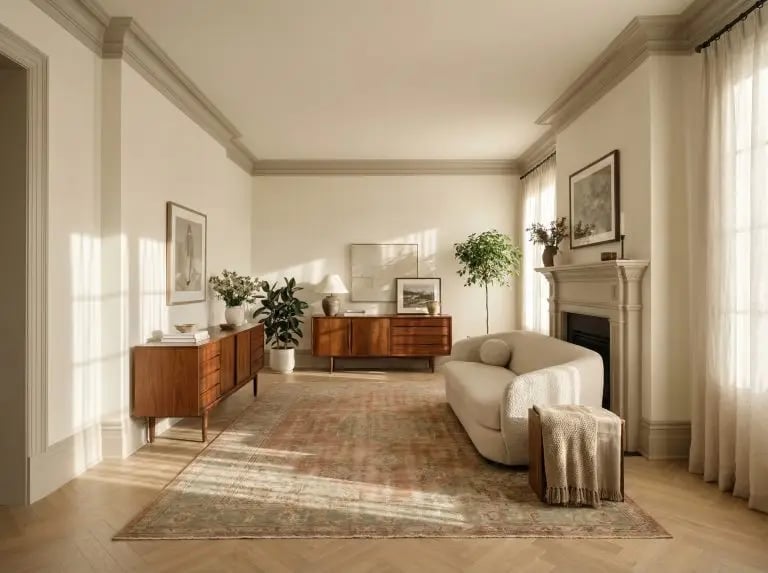
Modern Organic Living Room with Contrasting Ceiling Trim
In a modern organic living room, the ceiling trim does more than finish the edge. Painted in a muted green that echoes the stone and wood below, it draws the eye upward without competing with the curved sofa or fireplace. The off-white walls keep the room airy, while the trim adds just enough weight to balance the natural textures. It is a subtle shift in a mostly neutral palette, and it gives the ceiling its own presence in the room.
Traditional Living Room Defined by Dark Green Trim
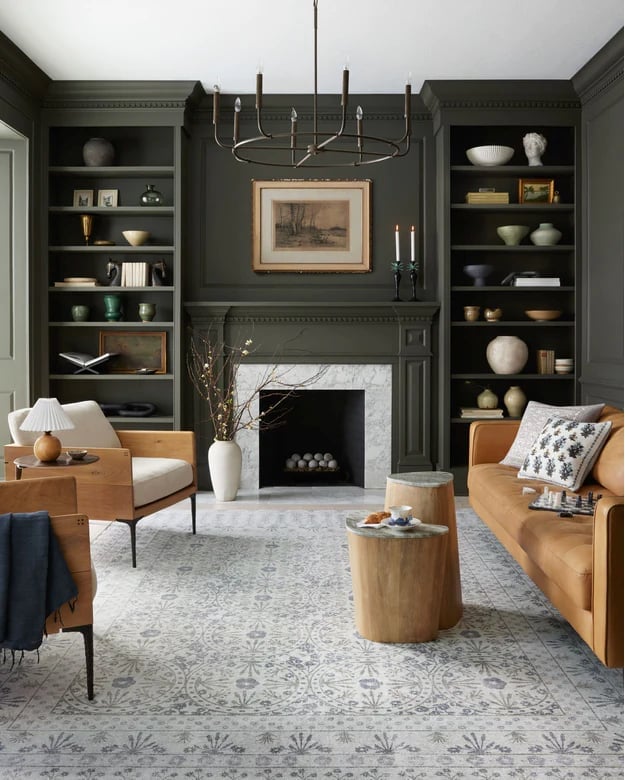
Dark green trim can define a traditional living room without taking over. Here the built-in bookshelves flanking the fireplace wear the same deep green as the walls, so the trim reads as part of the architecture rather than an afterthought. Cream upholstery and brass hardware balance the dark walls, and the layered lighting from the chandelier, table lamp and sconces makes the green shift from moody to warm depending on the time of day. The ratio of dark to light is what makes this palette work: the green holds the perimeter, while the lighter pieces sit in the center.
Modern Office Featuring Sage Green Built-in Cabinetry
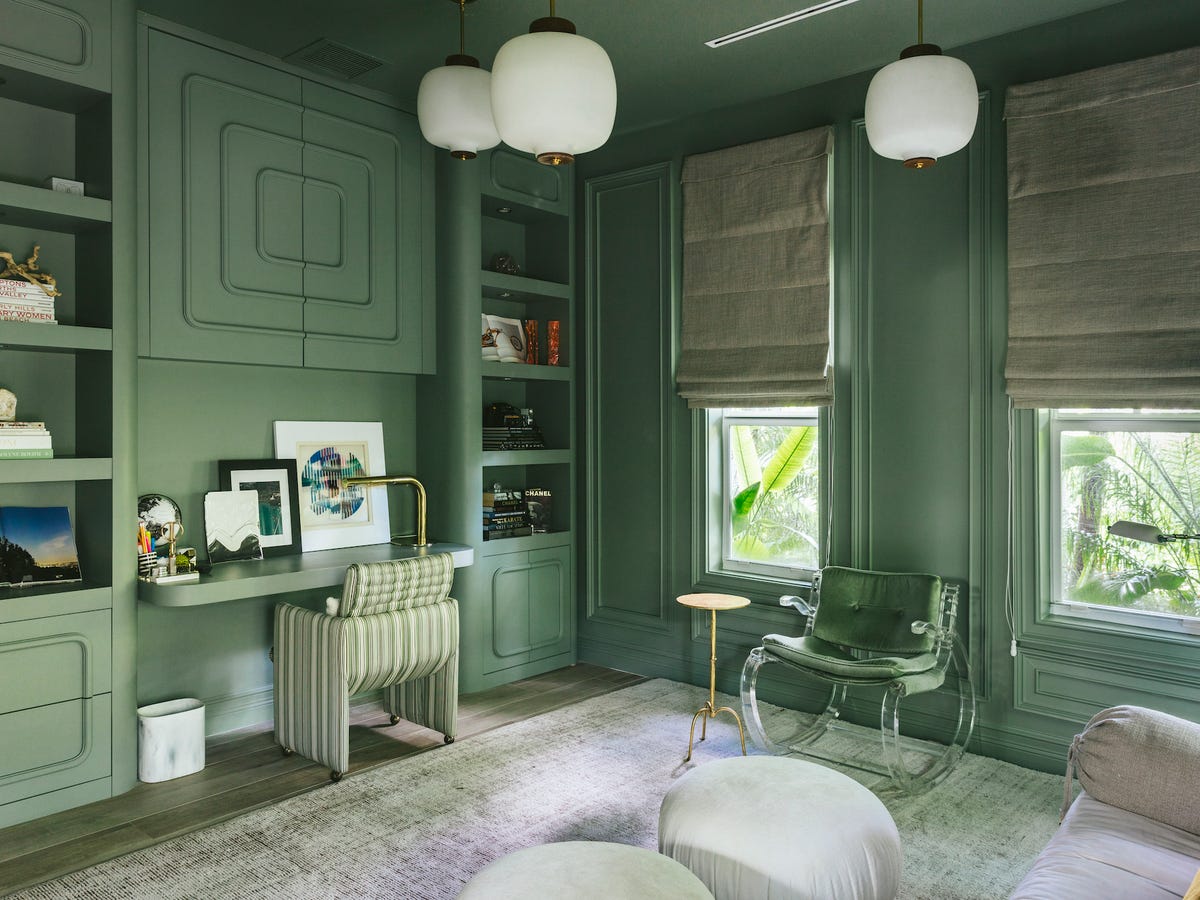
What if your office cabinetry could do double duty as both storage and wall color? In this modern office, the sage green built-in desk and shelving unit extends to the walls, creating a monochromatic backdrop that feels calm rather than closed in. The gray and white accents from the desk chair and roman blinds give the eye a place to rest.
The material mix matters here: painted wood on the cabinetry, glass in the shelving doors, metal on the hardware and fabric on the blinds. Each texture breaks up what could be a solid block of green. The pendant lights and desk lamp add task lighting, while natural light from the windows keeps the green from reading too flat during the day.
Traditional Doorway with Deep Blue Painted Trim
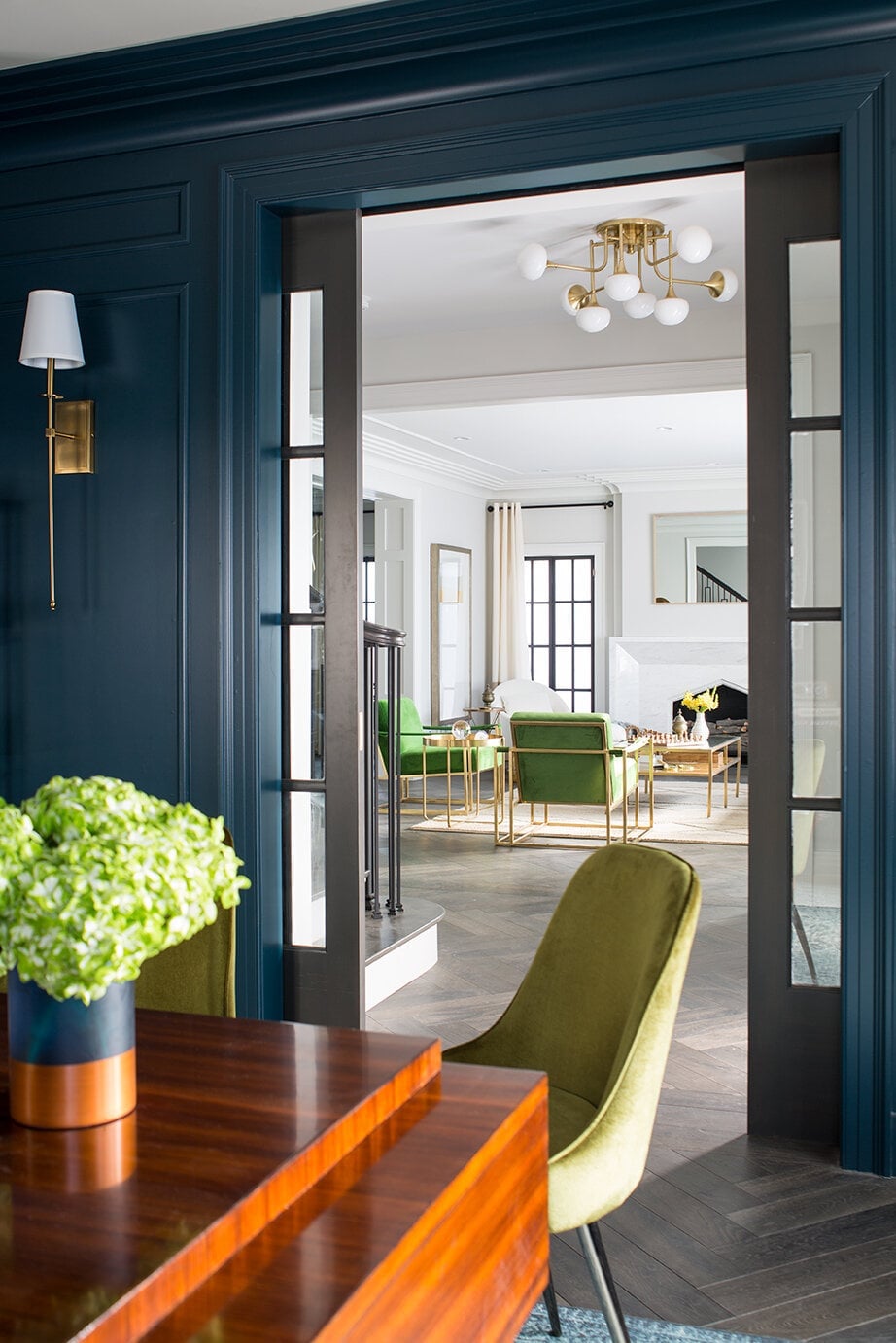
A deep blue trim around a traditional doorway can make a simple passage feel intentional. The dark wood of the door and frame takes on a richer tone next to the blue, and the wall sconce casts enough light to show the paint’s depth without washing it out. What makes this work is the contrast between the glossy blue and the matte wall paneling beyond. The trim becomes a frame for the view through the doorway, guiding the eye from one room to the next.
Minimalist Bedroom with Contrasting Gray Window Trim
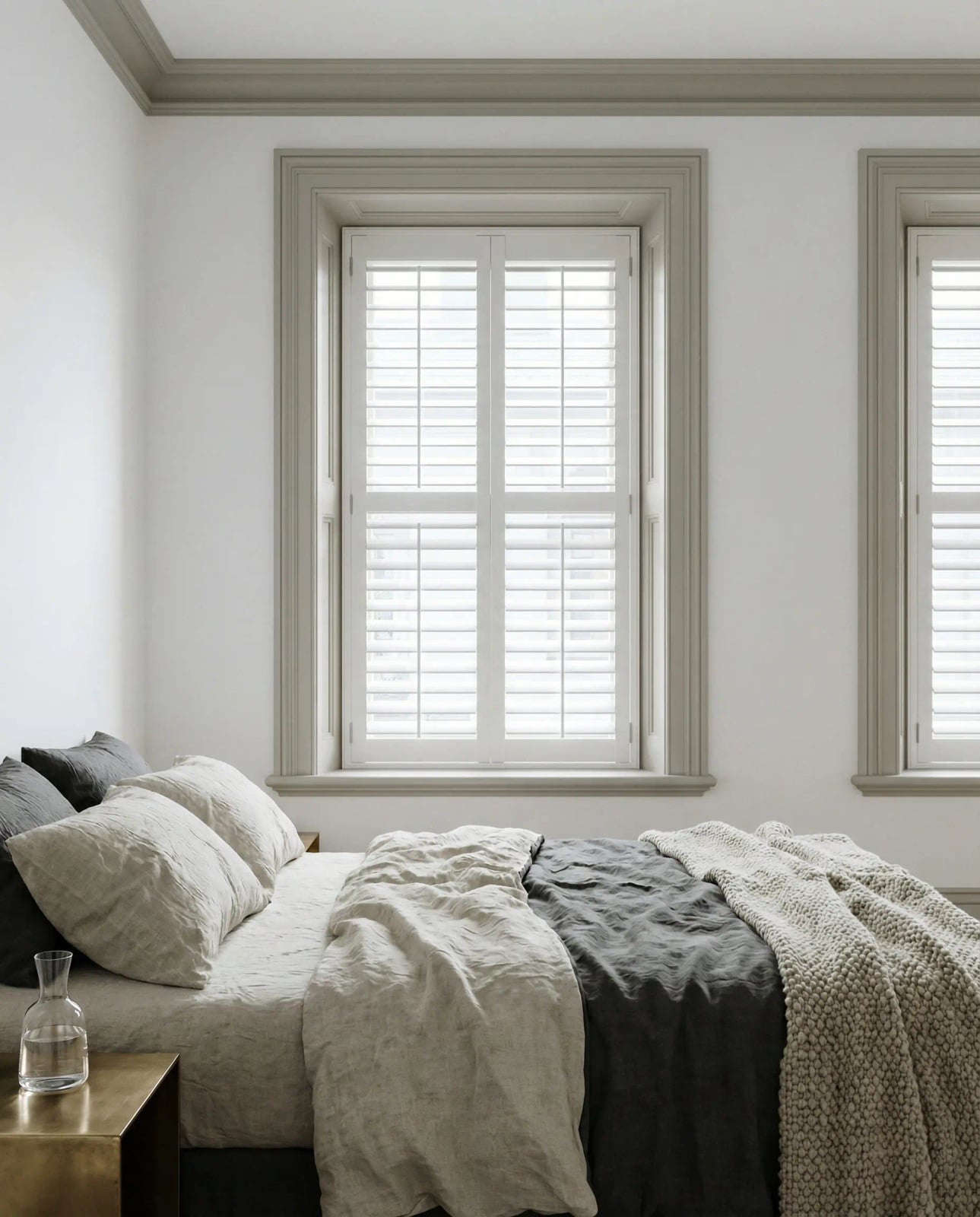
A practical rule for minimalist bedrooms: when the walls are white, the window trim does not have to be. Gray trim around the windows creates a clear boundary between the glass and the wall, giving the room structure without adding clutter. White shutters and linen bedding keep the space soft, while the charcoal trim adds a graphic line that echoes the bed’s clean geometry. The natural light coming through the windows makes the gray look different at every hour, which is the kind of subtle change a minimalist space needs to feel alive.
Dramatic Hallway in Monochromatic Deep Navy Blue
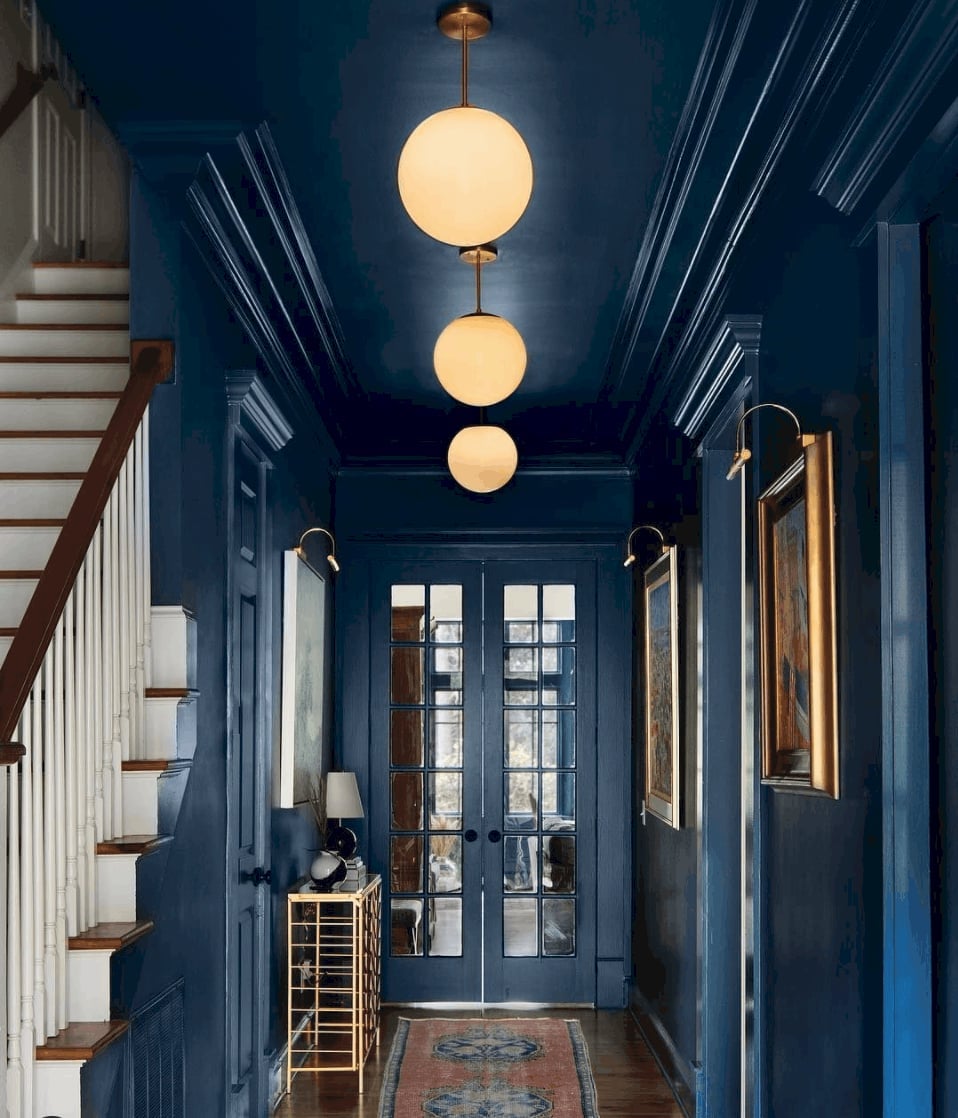
A full coat of deep navy blue on walls, ceiling, and trim creates a hallway that feels like a jewel box rather than a pass-through. The monochromatic approach erases the usual boundary between wall and crown molding, so your eye travels the length of the space without stopping. Glass-paneled doors and a staircase read as sculptural silhouettes against all that color. The payoff is a moody, cocoon-like entry that makes white trim feel almost timid by comparison. A set of globe pendant lights and wall sconces keep the navy from reading as flat, while brass accents on hardware add tiny points of warmth. The trick that makes this work is letting the finish do the talking, satin or eggshell sheen on the woodwork catches the overhead light just enough to define the architecture without needing a second color.
Transitional Dining Room with Navy Blue Wainscoting
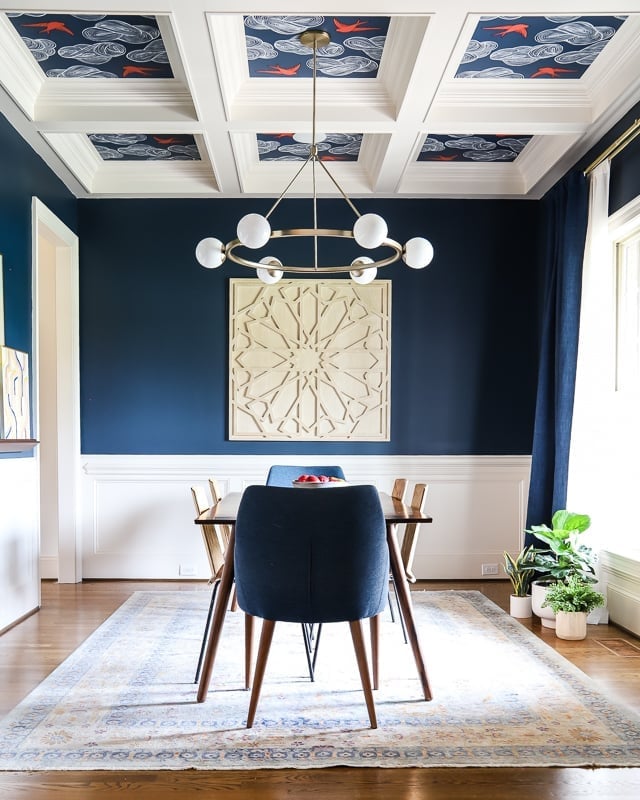
Navy blue wainscoting stops about two-thirds up the wall, leaving a band of white above that keeps the room from feeling closed in. The dark lower half anchors the dining table and chairs, while the lighter upper half and the chandelier keep the space formal but not heavy. For a renter-friendly version, try a peel-and-stick wainscoting panel system or a temporary wallpaper with a wainscoting pattern. Both give you the architectural line without committing to paint or permanent millwork.
Transitional Living Room Featuring Olive Green Paneled Trim
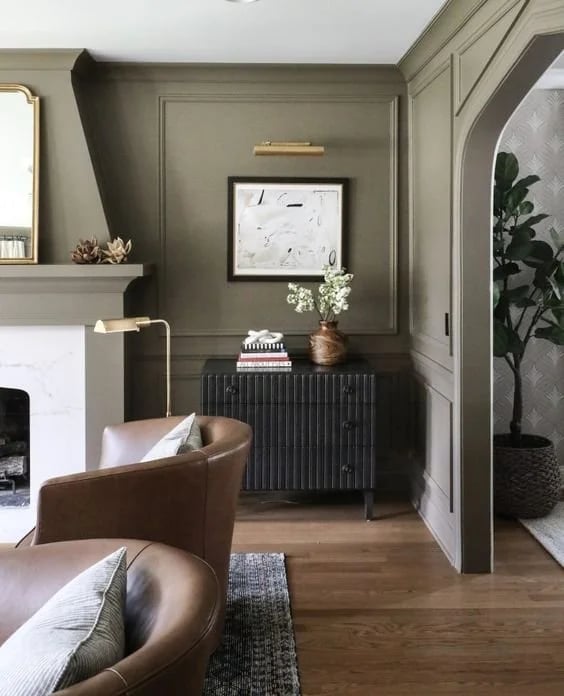
Olive green paneled trim works as a neutral, not a statement. The warm, earthy tone bridges the brown leather armchairs and the stone fireplace surround, pulling the room together. White walls above the paneling keep the space airy, while the olive serves as a grounded baseboard-to-chair-rail zone. The material mix, painted wood against leather and stone, means the trim color does not compete; it just holds the room’s lower half in place. The finish choice matters here: a matte or eggshell sheen on the olive prevents glare and keeps the color looking soft.
Modern Farmhouse Hallway with Light Gray Door and White Trim
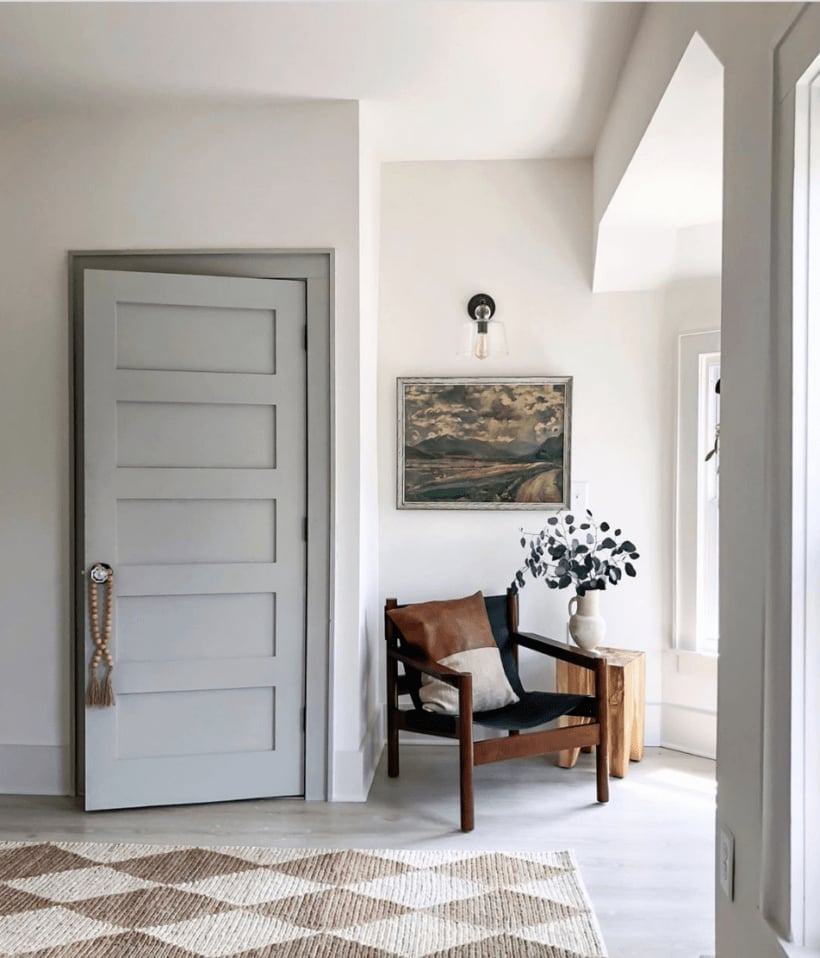
Can a light gray door read as a neutral without feeling like an afterthought? In this modern farmhouse hallway, the five-panel door in soft gray sits against crisp white trim, and the contrast is subtle enough that the door becomes part of the wall rather than a focal point. The gray picks up the brown tones in the adjacent leather chair and the black frame of the artwork, so the whole corner feels intentional. White baseboards and casing keep the traditional farmhouse bones intact. For the same effect in a smaller space, match the door color to a mid-tone element in the room, a rug, a piece of furniture, so the gray doesn’t float.
Modern Organic Dining Room with Deep Olive Green Walls
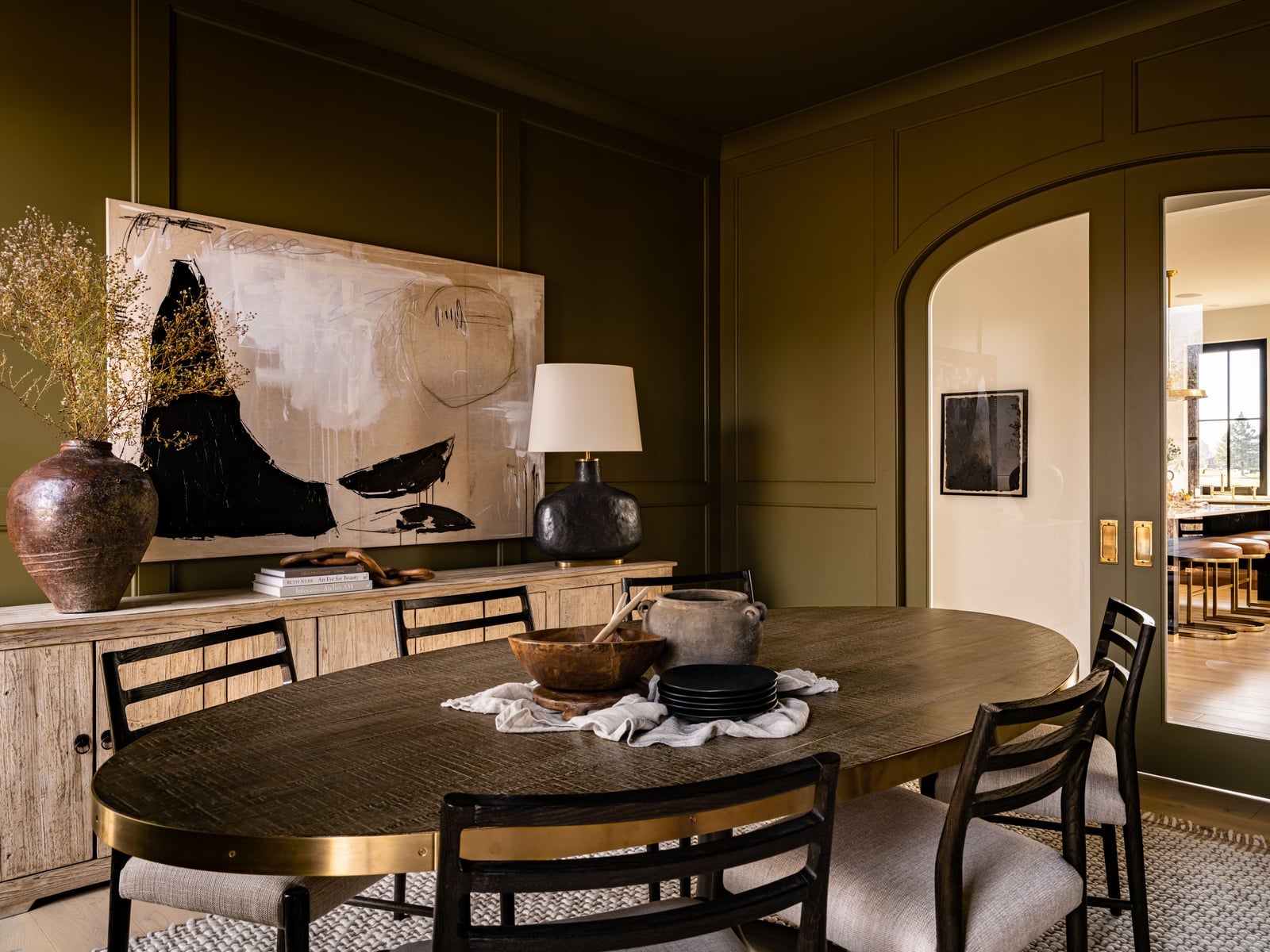
Deep olive green walls turn this dining room into a grounded, earthy space without making it feel dark. The rich green pairs with natural wood tones on the oval dining table and sideboard, while brass accents on hardware and lighting add warmth. The textured paint finish on the walls gives the room a tactile quality that flat paint can’t match. White or cream trim would stand out too much here; instead, the trim reads as a subtle boundary that lets the olive green take center stage.
Traditional Office with Deep Purple Built-in Cabinetry
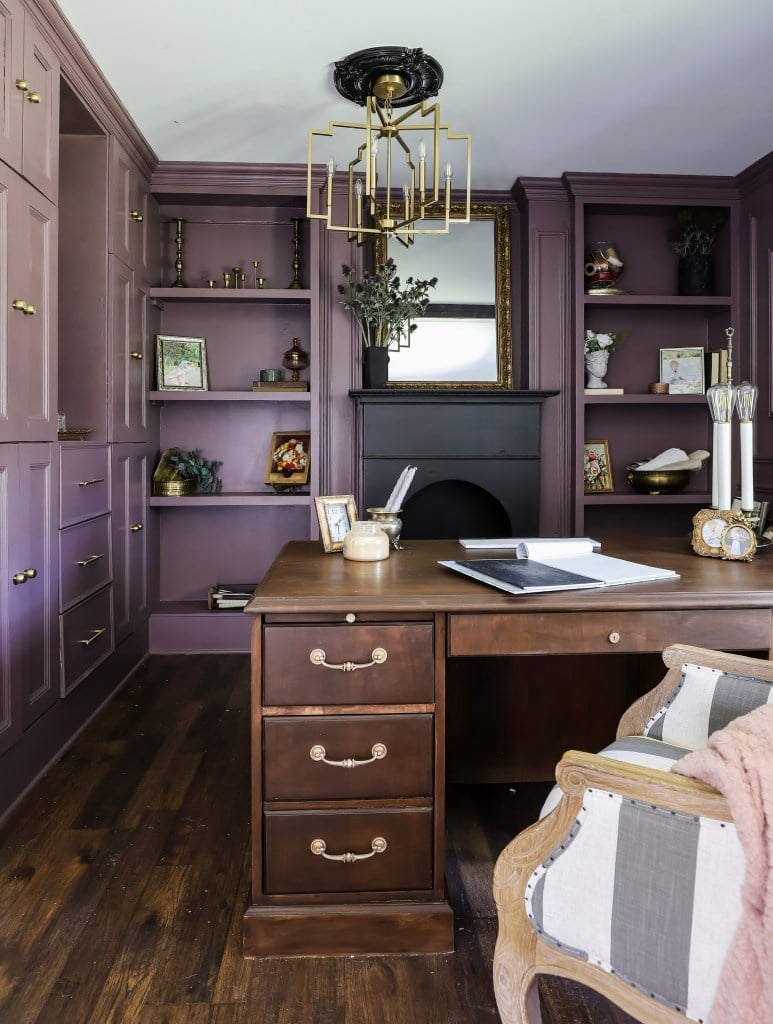
A dark trim color works best when it has a partner. The deep purple built-in shelving and cabinets in this traditional office would feel heavy alone, but the wood tones of the desk and the gold of the brass hardware and chandelier give it something to talk to. The purple reads as the anchor, not the whole story, because the palette has balance: the wood desk and armchair add warmth, while the glass in the cabinet fronts keeps it from closing in. What defines this look is the ratio of dark to light. The purple takes up the walls, but the ceiling and floor stay neutral, so the room breathes. A single bright element, like a brass lamp, breaks the moodiness just enough to keep it working.
Farmhouse Hallway with Green Painted Trim Accents
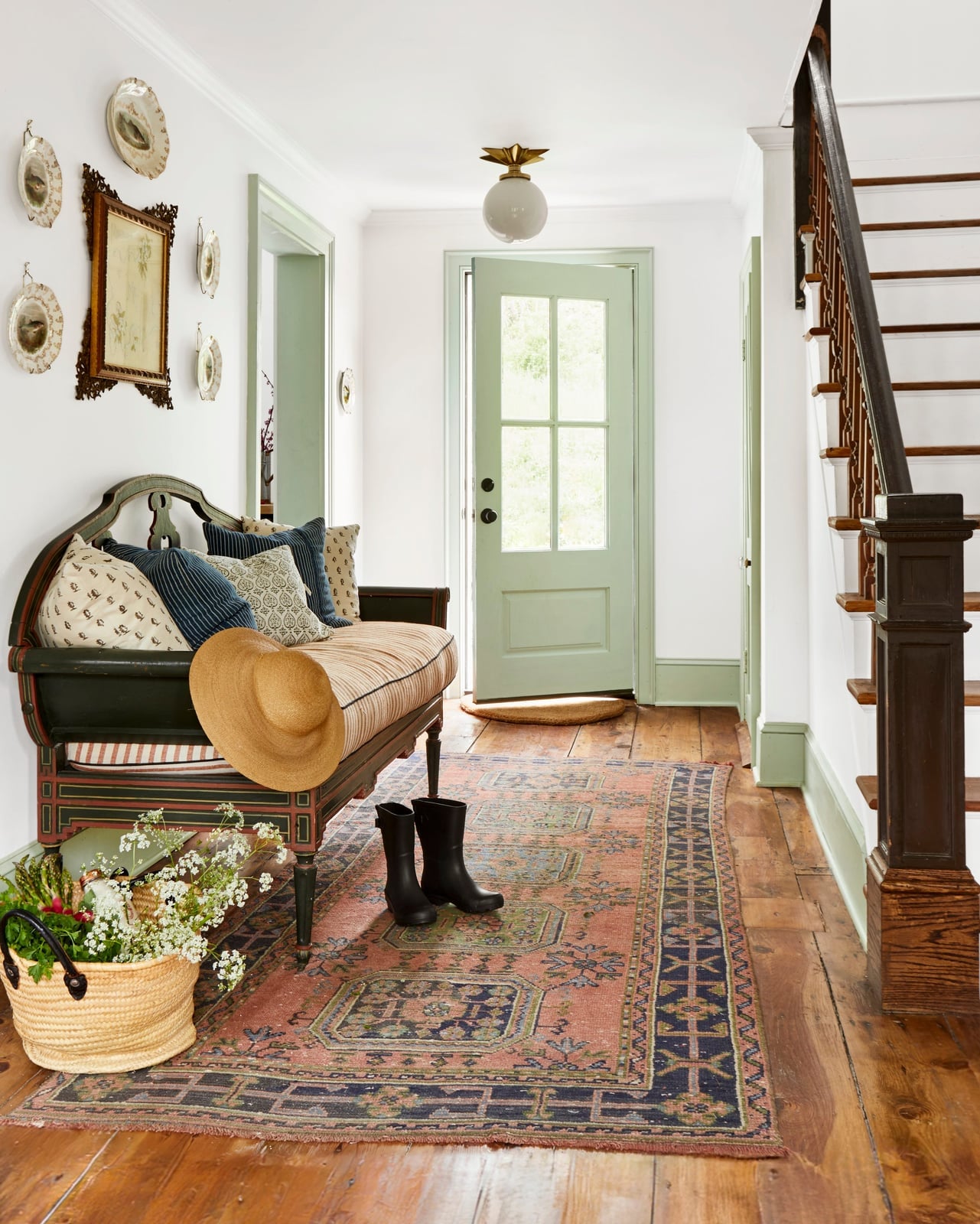
Green trim in a farmhouse hallway could go rustic or sweet. This one picks sweet. The painted bench is the focal point, with its green frame and patterned cushions that bring in pink and blue. The rug runner underfoot weaves those same colors together, so the bench looks like part of a cohesive plan. The straw basket and boots next to it add the farmhouse side, keeping the look grounded.
The trick is that the green is an accent, not the whole trim story. The walls are white, the ceiling light is simple, and the natural light keeps the space bright. If you tried this with a darker green on every baseboard and door, the compact hallway would feel smaller. Keeping the green to one painted piece gives you the color without committing to repainting every inch of woodwork.
Traditional Office with Dark Gray Walls and Trim
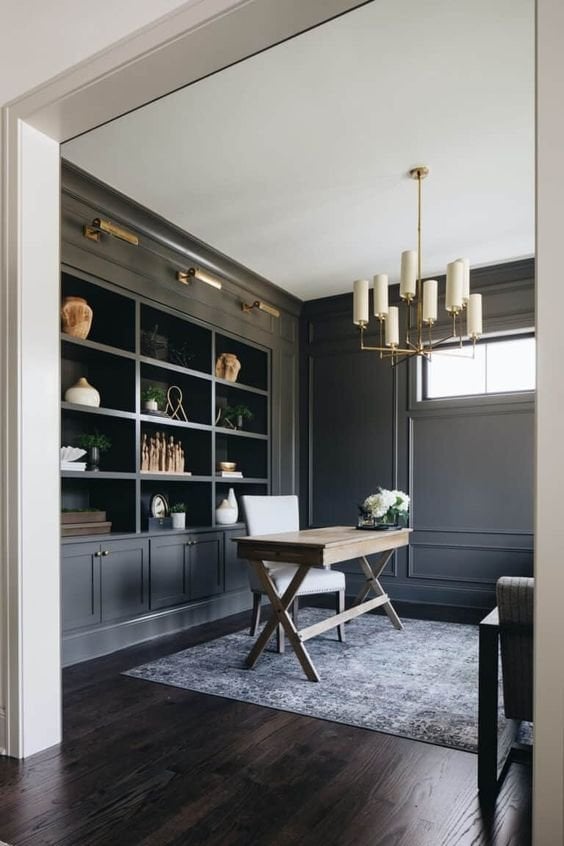
Dark gray on both the walls and the built-in bookshelves creates a single surface that makes the room feel wrapped in color. The traditional office keeps its shape because the wood desk, upholstered chair, and brass details on the chandelier and sconces sit against that gray like objects in a case. The natural light from the window and the overhead chandelier stop the gray from going flat. It stays dimensional, shifting between shadow and light across the painted surfaces. What breaks the monochrome is the rug, which adds a pattern and a lighter tone underfoot.
Playful Child’s Bedroom with Vibrant Green Window Trim
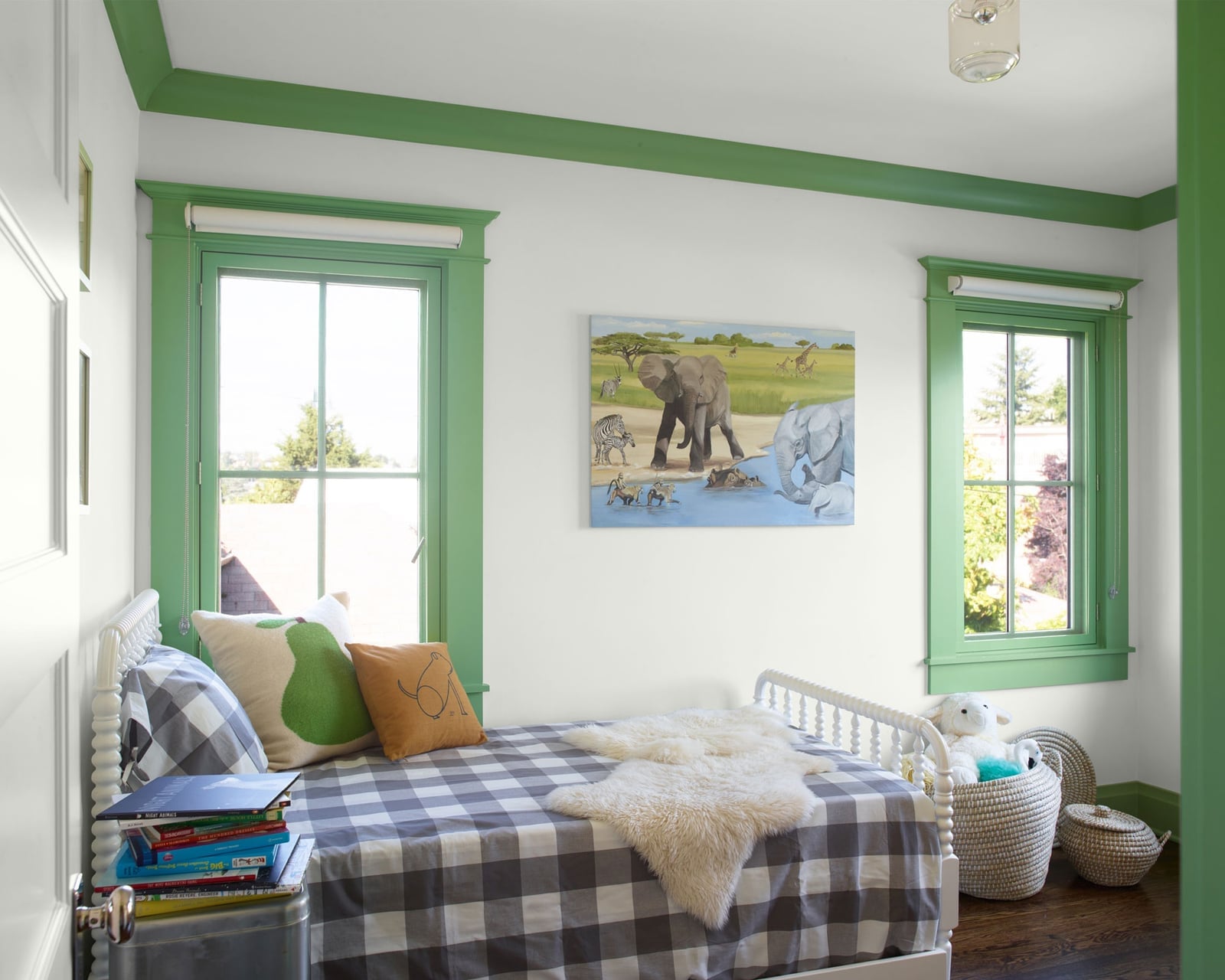
Vibrant green window trim in a child’s bedroom is a shortcut to personality without painting the whole room. The white walls keep the space calm, and the green frames the window like a piece of art. The multi-color bedding and pillows pick up the green and add other brights, so the trim feels intentional rather than random. The natural daylight hitting the green makes it pop even more, a darker room would dull that energy. For a compact bedroom, this approach gives you a focal point without cluttering the walls. The baskets under the window add storage that blends in, so the trim stays the star.
Transitional Doorway with Thick Cream Painted Trim
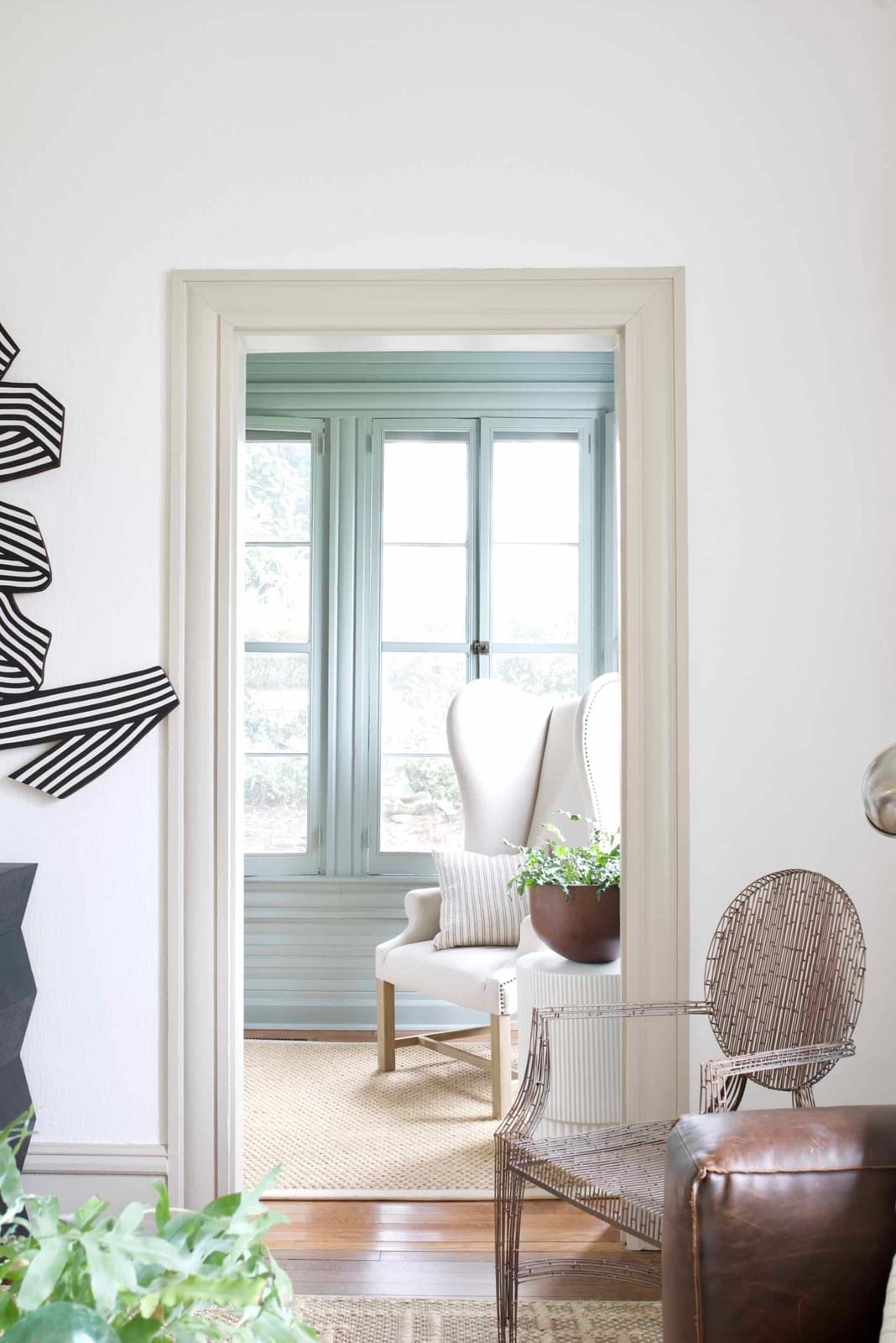
Thick trim in a warm cream color works as a transition between rooms because it reads as structure, not decoration. In this transitional doorway, the cream paint picks up the pale green of the room beyond and the wood tones of the wicker and leather chairs visible through the opening. The trim becomes the frame that holds the view together.
The practical rule is that thick cream trim forgives a lot. It does not show dust as fast as white, and it bridges warm and cool palettes. Here, the wicker chair and the leather chair sit on opposite sides of the doorway, and the cream trim ties them together without matching either one. The potted plant adds a living element that softens the painted wood. If the trim were pure white, it would contrast harder with the pale green room, making the transition feel abrupt instead of smooth.
Modern Hallway with Sage Green Door and Trim
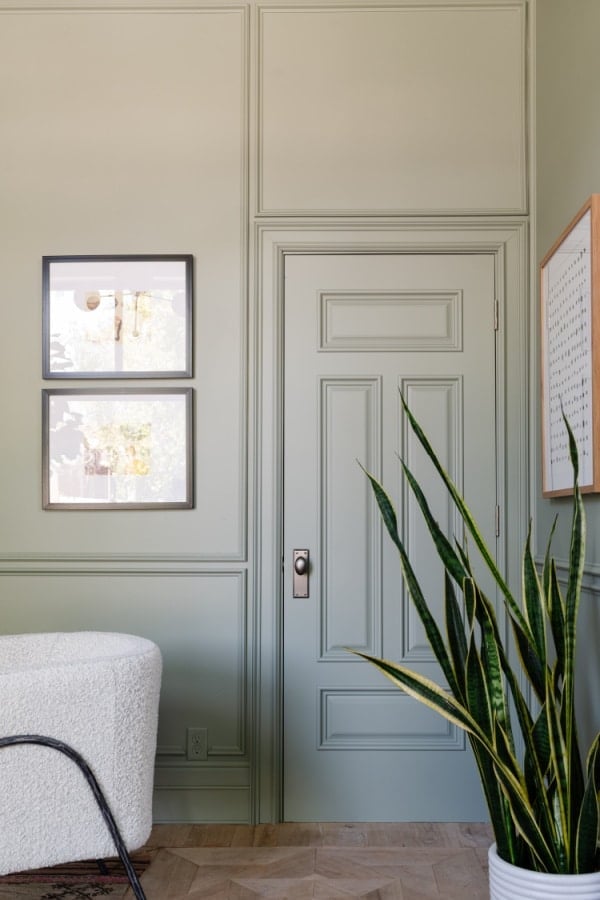
Sage green has a quiet confidence that works harder than a neutral without asking for attention. Here the door and wainscoting wear the same shade, which pulls the compact space into a single line instead of chopping it up. White walls and a simple snake plant keep the look clean. The rule for this palette is to commit: painting just the door reads as a question, but painting the trim too reads as a statement. What breaks the scheme is adding a second pastel. One green is decisive; two is cautious.
Eclectic Hallway with Vibrant Teal Painted Trim
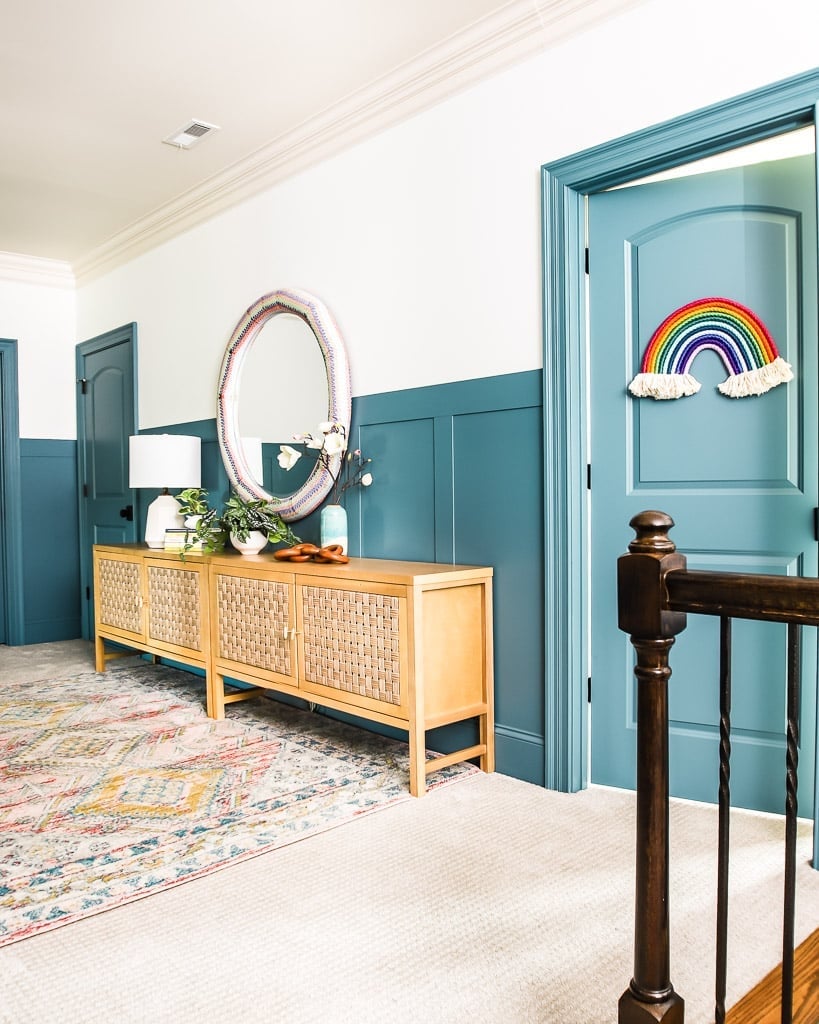
A practical rule for renters is that painting trim is reversible with a weekend and a primer coat, and it changes the whole feel of a hallway without touching the walls. This teal wainscoting and matching doors anchor the room while the walls stay white. A colorful rug and woven cabinet fronts add texture without competing. The wood railing keeps the look grounded. What defines this palette is confidence: teal at full saturation, not muted. What breaks it is a second bold color on the walls. Let the trim be the loudest thing in the room.
Modern Living Room with Dark Gray Crown Molding
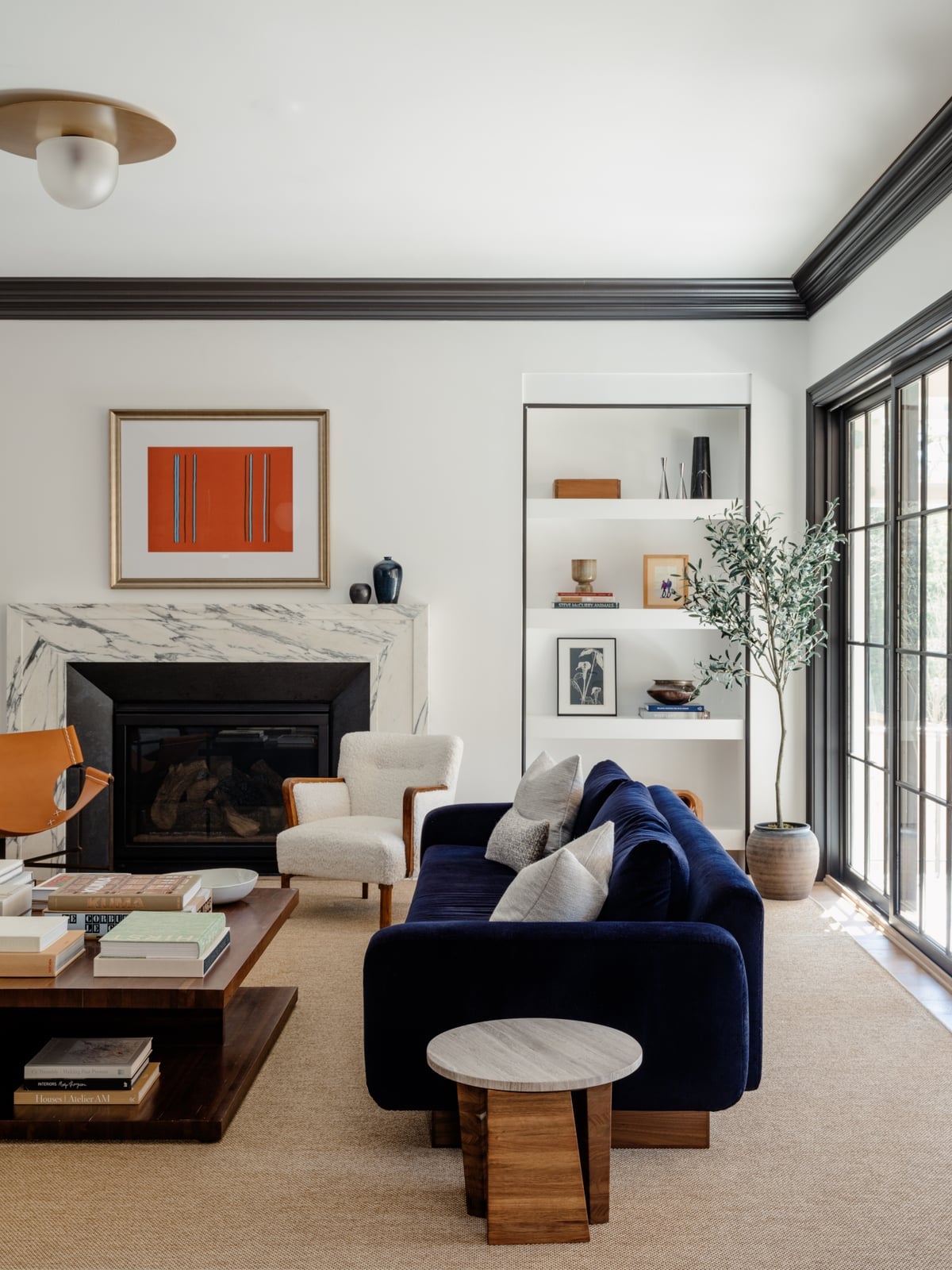
White crown molding fades into the ceiling. Dark gray crown molding draws a hard line that defines the room’s height. This modern living room uses that contrast to frame the space, with the dark trim running cleanly against white walls and a navy sofa. The fireplace and shelving stay neutral, so the molding becomes the only architectural anchor.
The same dark gray does not appear anywhere else. It is a single accent, not a theme. The marble and metal pieces balance the room. Scale matters here: thin crown molding in a dark color can look like a mistake, but a wider profile creates a deliberate effect. If the trim were any darker, the room would close in.
Traditional Entryway with Bright Yellow Walls and White Trim
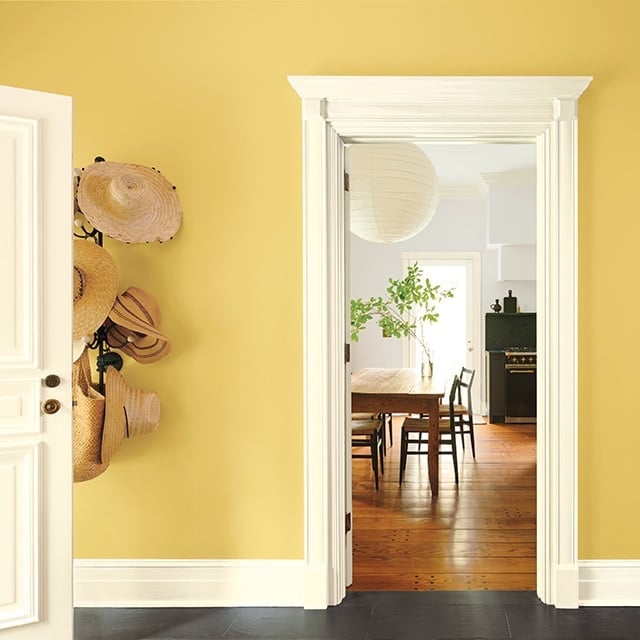
Bright yellow walls stop a visitor cold, and the white trim here does not soften them so much as sharpen the contrast. The doorway, hats, and wood tones keep the look grounded in something familiar. What keeps this from feeling like a child’s room is the restraint: only one wall goes yellow, and the trim stays crisp. The rule for this kind of palette is that the brighter the wall, the cleaner the white needs to be. A warm white would muddy the effect. A cool white keeps the yellow fresh rather than heavy.
Eclectic Living Room with Dramatic Dark Gray Trim
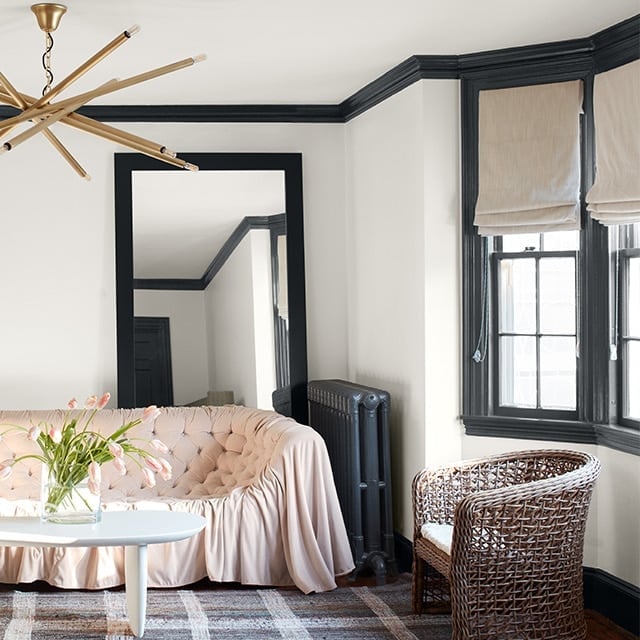
This room uses dark gray window trim as the anchor for a space that otherwise leans soft and layered. Off-white walls, a tufted sofa, and a rattan chair all sit back quietly while the trim steps forward. The ornate mirror and chandelier add the eclectic note, but the dark paint around the windows and mirror is what holds the room together. What defines this palette is that the dark gray appears only on the architectural edges, never on furniture. What breaks it is repeating the gray on a large upholstered piece. The trim is the frame; the rest is the picture.
Modern Living Area with Subtle Painted Trim Accents
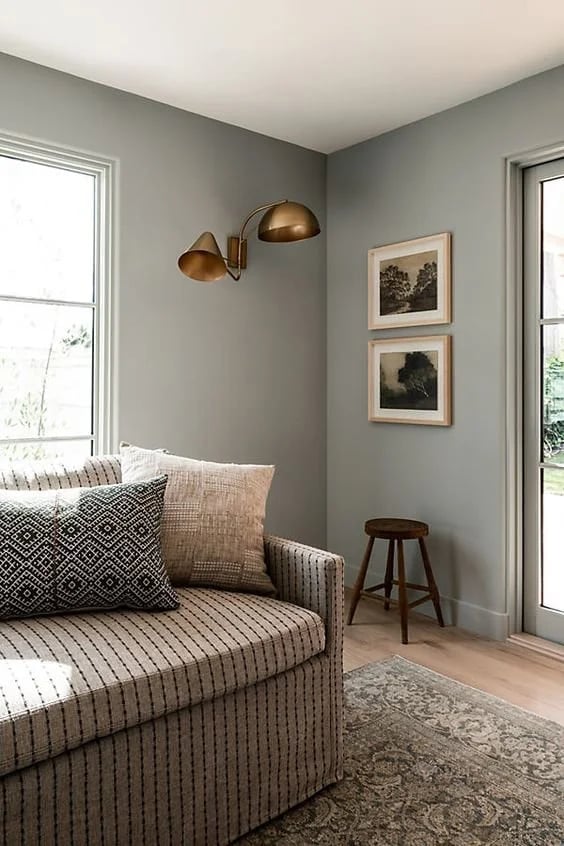
To use subtle trim accents, treat the material as a bridge between wall and furniture. In this modern living area, the painted trim is a quiet gray that connects the beige wall to the brass wall sconce. The compact corner seating relies on that tonal bridge: the gray in the trim matches nothing exactly but relates to the sofa fabric and the stool’s metal legs. The natural light keeps the trim from feeling heavy, while the sconce adds a warm note. The trim defines the room’s character. What breaks the look is introducing a third cool color that competes with the gray-beige-brass ratio. A single throw in a contrasting tone would shift the balance entirely.
Traditional Hallway with Contrasting Blue Painted Trim
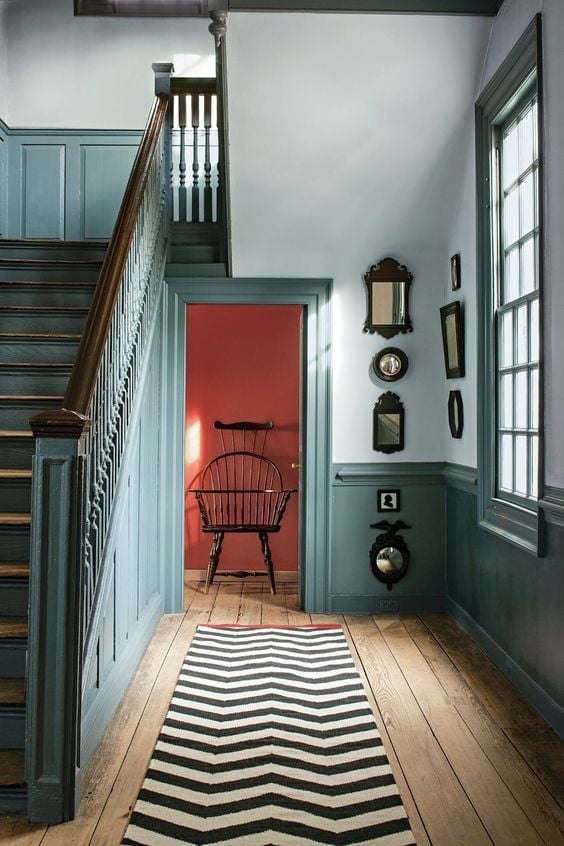
The hallway uses a blue painted trim that runs from baseboard to door casing, with red accents on the stair risers and a patterned rug. Traditional style usually pairs trim with white, but here the blue reads as the consistent line through the space. Natural light from the window at the end of the hall keeps the palette from turning flat. The wood stair treads and a small chair in a warm tone break the cool dominance of the blue and white. The ratio is roughly two-thirds cool to one-third warm, which gives the hallway energy without feeling busy.
Traditional Hallway Featuring Navy Door with White Trim
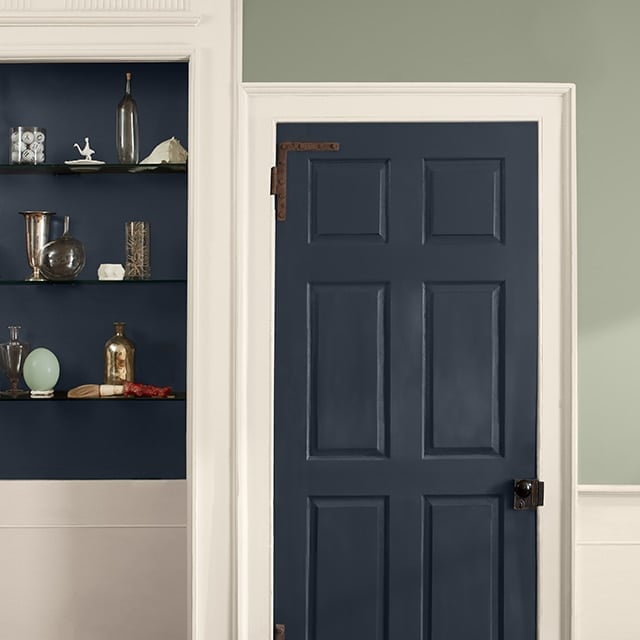
Contrast trim works when the door finish leads and the wall trim follows. In this compact hallway, the navy blue door has white casing that repeats the white shelving unit beside it. The door anchors the space because its deep tone is the darkest element in the vignette. The white trim frames the navy so it does not close in the room. The gray-green wall behind the shelving adds a third layer that prevents the navy and white from feeling stark. To recreate it in a rental, use removable door film or a tension rod with a painted panel instead of painting the door itself.
Modern Hallway with Dark Painted Trim and Stained Glass
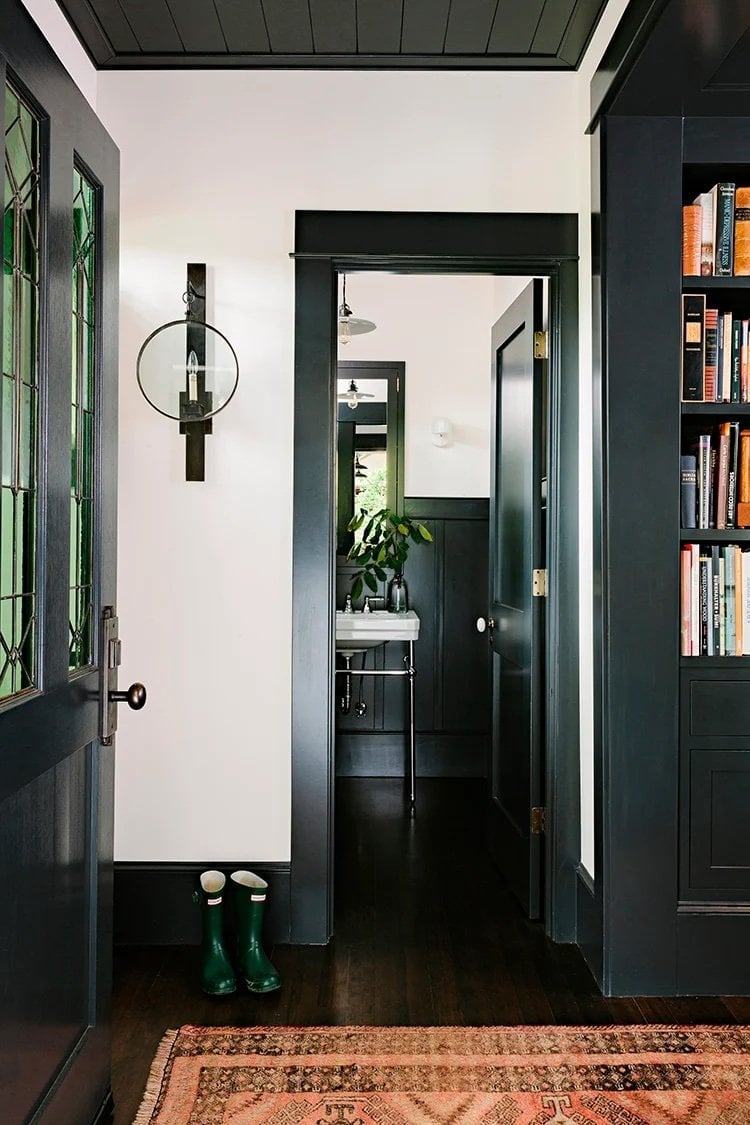
Dark painted trim in a hallway can feel severe, but here the stained glass window and wall sconce soften the contrast. The black trim on the doors and baseboards frames the space without dominating it, because the overhead light bounces off the white walls and the glass panel. The green rug introduces a cool note that keeps the black from reading as a strict monochrome. The bookshelf next to the doors adds texture that breaks the hard lines of the trim. Style mode here means the dark paint defines the architecture, not the decor. What breaks the look is adding another dark element at eye level, such as a black picture frame, which would compete with the trim’s role as the structural line.
Modern Living Room with Striking Red Window Trim
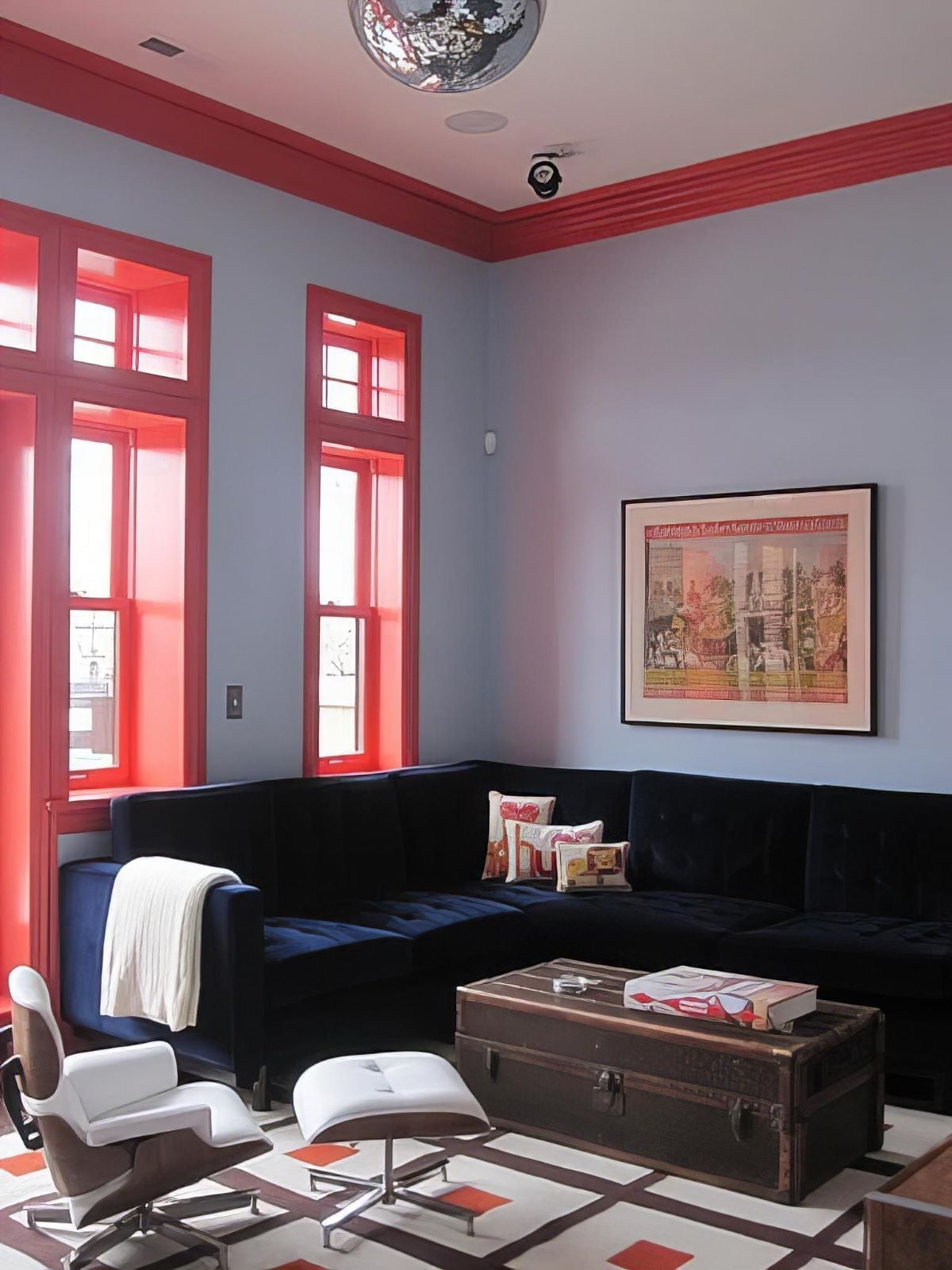
The bright red window trim in this modern living room sits against a blue wall and a dark blue sectional sofa. The palette is cool dominant with a single warm accent, so the red reads as a deliberate focal point rather than a mistake. The white chairs and trunk coffee table provide neutral ground that lets the red and blue hold the room. The disco ball adds a reflective note that catches the recessed light, which keeps the red from flattening the window. The ratio is roughly one part red to three parts blue and white, which gives the trim authority without overwhelming the seating.
Traditional Living Room with Contrasting Dark Window Trim
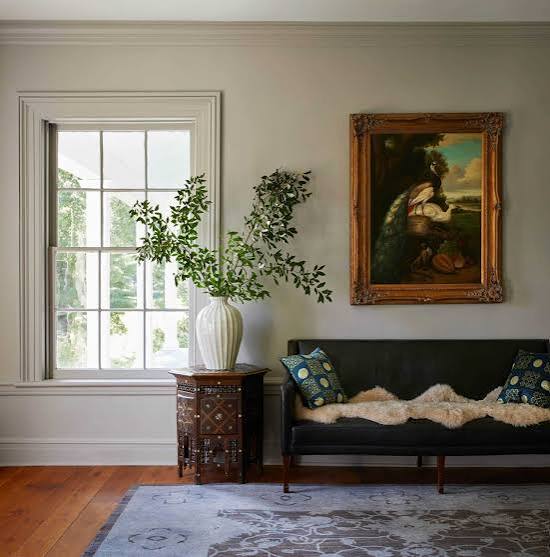
Dark window trim against light gray walls is a shortcut to traditional character without a full color overhaul. The room keeps a neutral backdrop of white and light gray while the dark green paint on the window frames anchors the eye. A dark sofa and patterned rug stay in the same tonal family, so the contrast looks deliberate. The overhead light and natural daylight balance the darker edges. This look works when the trim color is repeated somewhere else in the room. Here, the wood tones in the ornate side table and framed art echo the depth of the green, tying the palette together.
Modern Minimalist Hallway with Gray Baseboard Trim
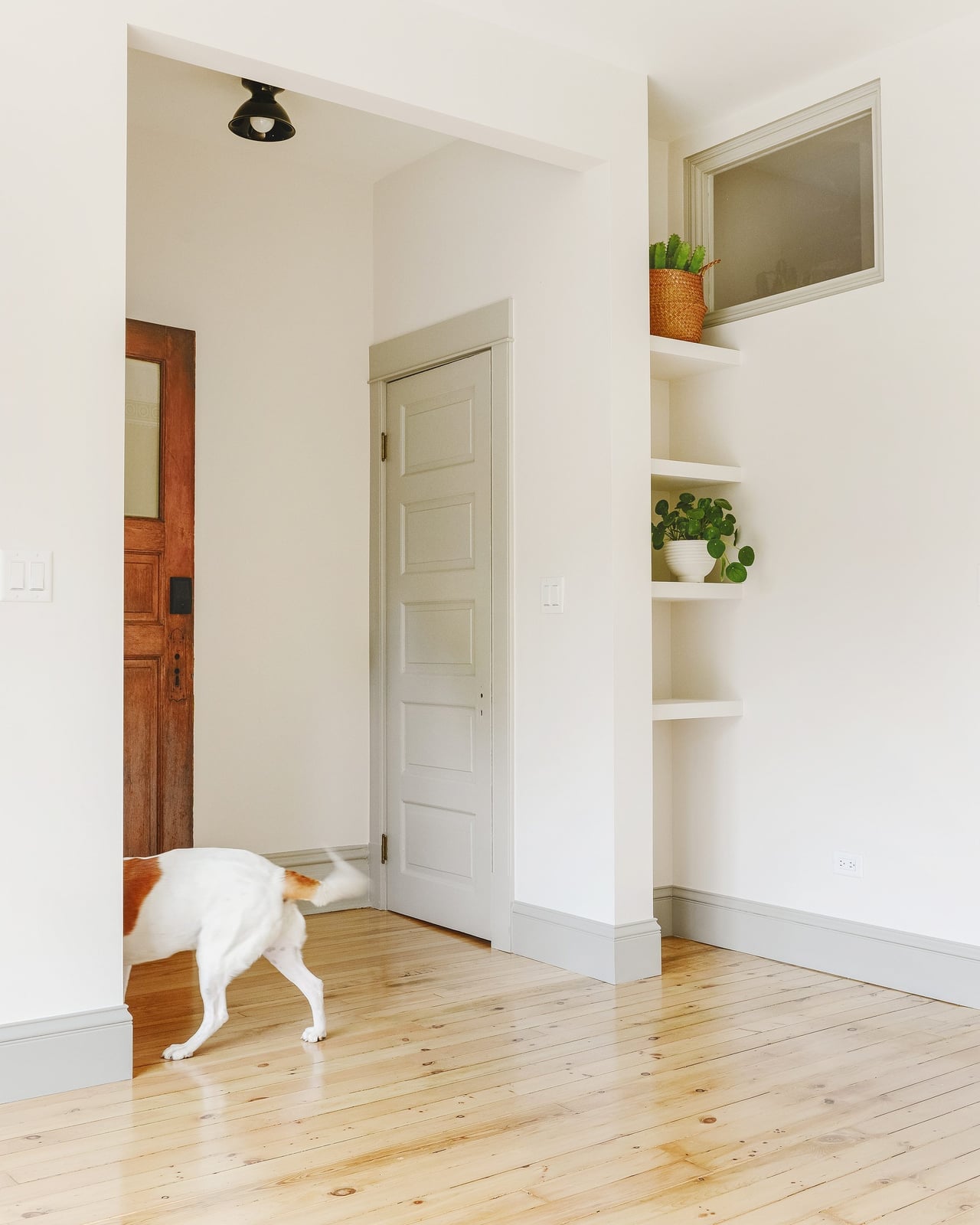
For a minimalist hallway, choose a baseboard color that defines the floor line without competing with the walls. Here, light gray baseboard trim sits between white walls and a natural wood floor. The gray acts as a neutral bridge instead of a stark white line. The floating shelves and potted plant keep the wall surface clean, so the trim becomes a subtle structural detail.
This approach is renter-friendly. If you can’t paint the walls, painting the baseboards a contrasting light gray changes how the hallway looks. The overhead light and window light keep the space open. The wooden door stays warm against the cool gray. The trick is keeping the sheen low so the trim remains understated.
Traditional Hallway with White Trim and Arched Doorway
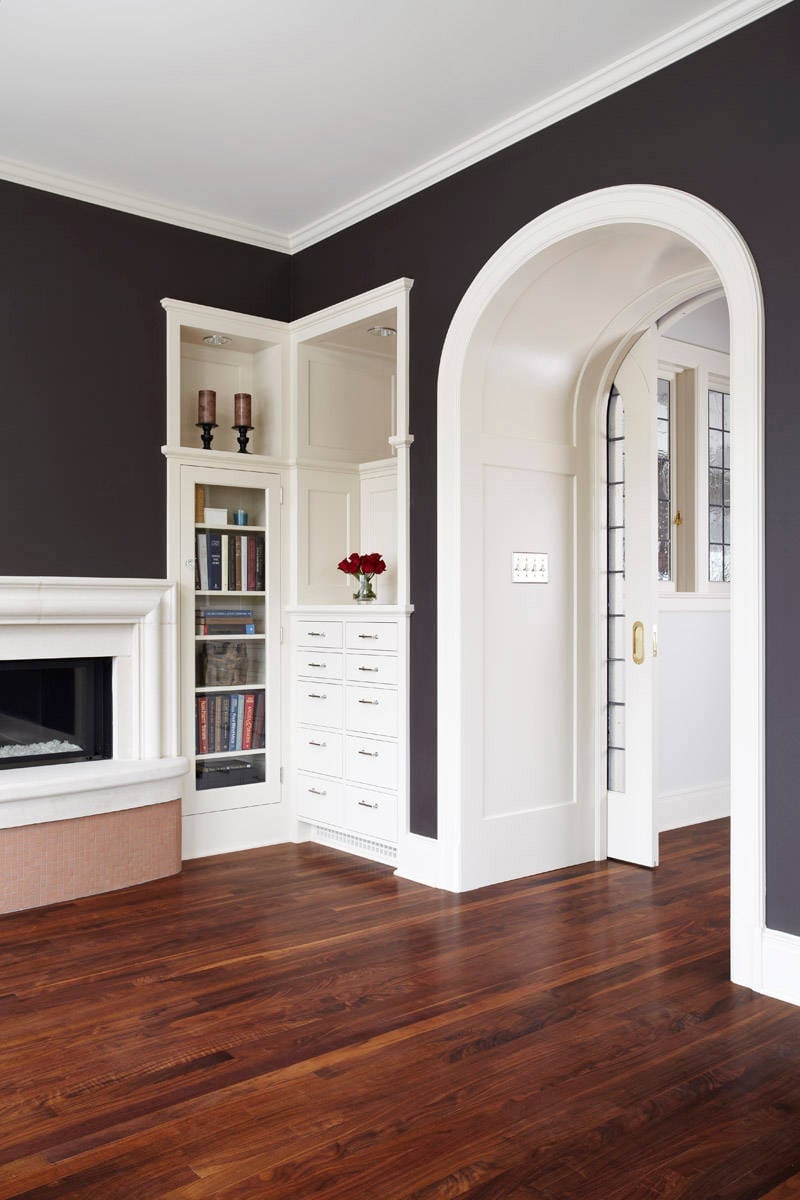
The built-in cabinet with white painted wood and glass fronts is the visual anchor of this hallway. White trim frames the arched doorway and the cabinet, creating a continuous line that makes the room feel wider. The dark gray stone around the fireplace and the wood tones in the floor provide enough weight so the white doesn’t wash out. Scale matters: the cabinet’s drawers and shelves are proportional to the arch height. If the trim were narrower, the arch might feel disconnected from the built-in.
Modern Rustic Dining Room with Dark Wood Trim
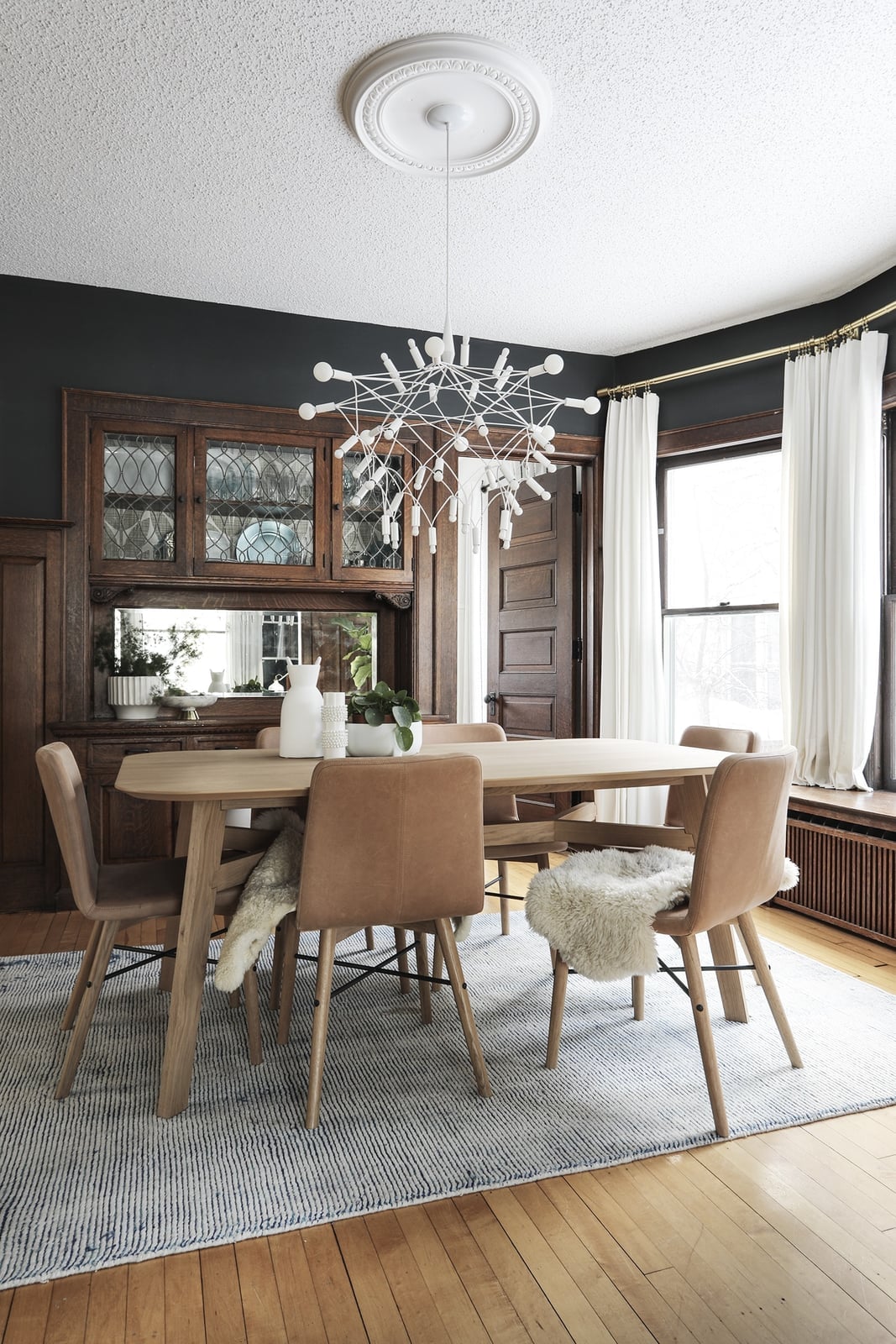
Dark wood trim sets the tone for a modern rustic dining room. The deep brown frames around windows and doors contrast with white walls, making the wooden dining table and chairs feel like part of a cohesive material story. The glass in the cabinet and the metal chandelier add lightness. Natural light from the windows softens the dark edges. The trick is keeping the wood trim matte. A glossy finish would push the look toward formal traditional. Here, the flat sheen keeps the room grounded and relaxed.
Traditional Living Room with White Walls and Trim
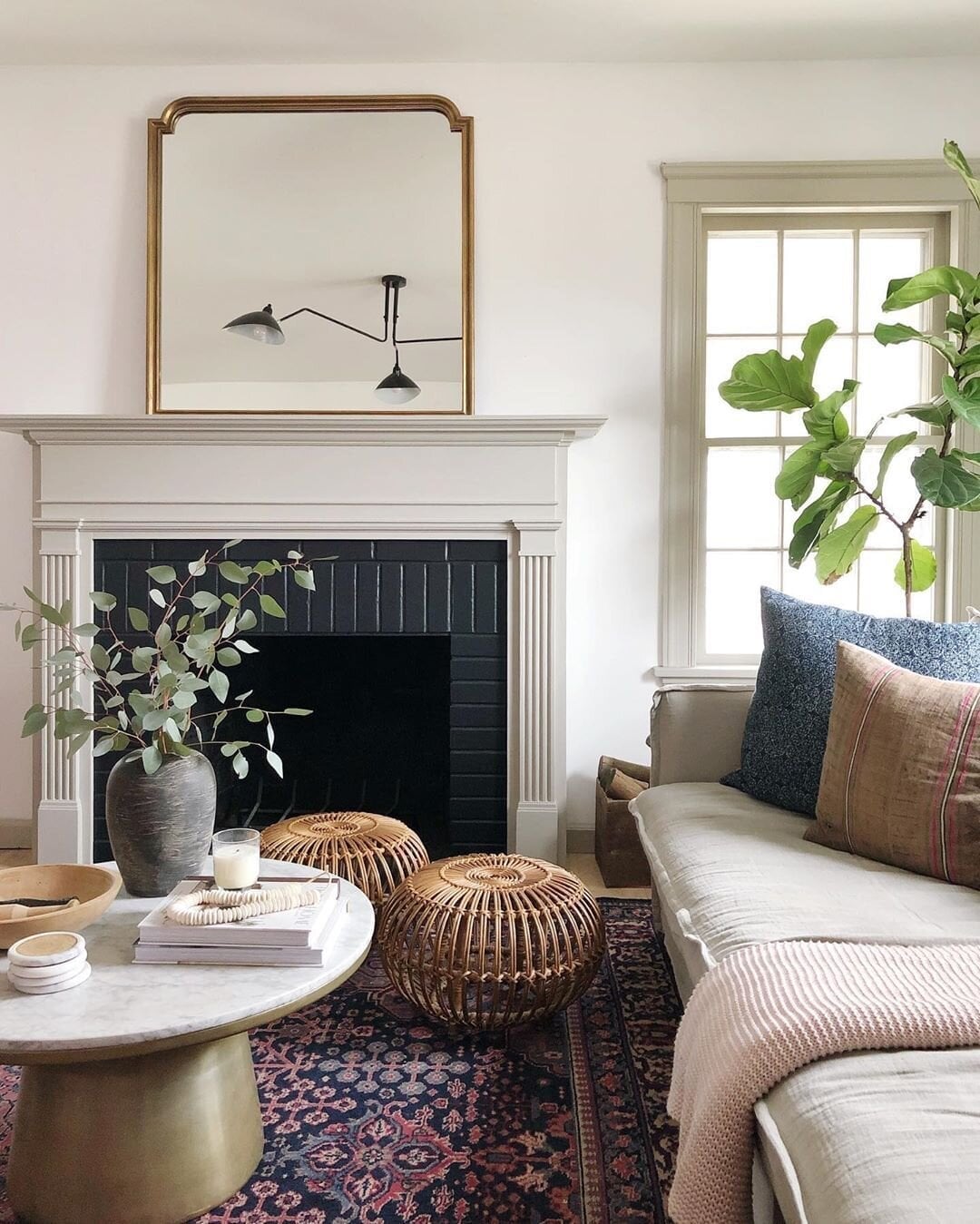
White walls and trim might sound safe, but this room shows how texture keeps it from falling flat. The marble fireplace surround and dark tile insert create a focal point that the white backdrop frames. Navy and green accents in the sofa and rattan ottomans add depth. The overhead fixture and natural window light prevent the white from feeling cold.
What breaks the monotony is the mix of materials. The tile is matte, the marble is polished, the rattan is woven. Without those surface contrasts, white trim on white walls can feel like a blank room. Here, the fireplace becomes the hero because the trim steps back and lets the materials speak.
Transitional Dining Room with Sage Green Walls and White Trim
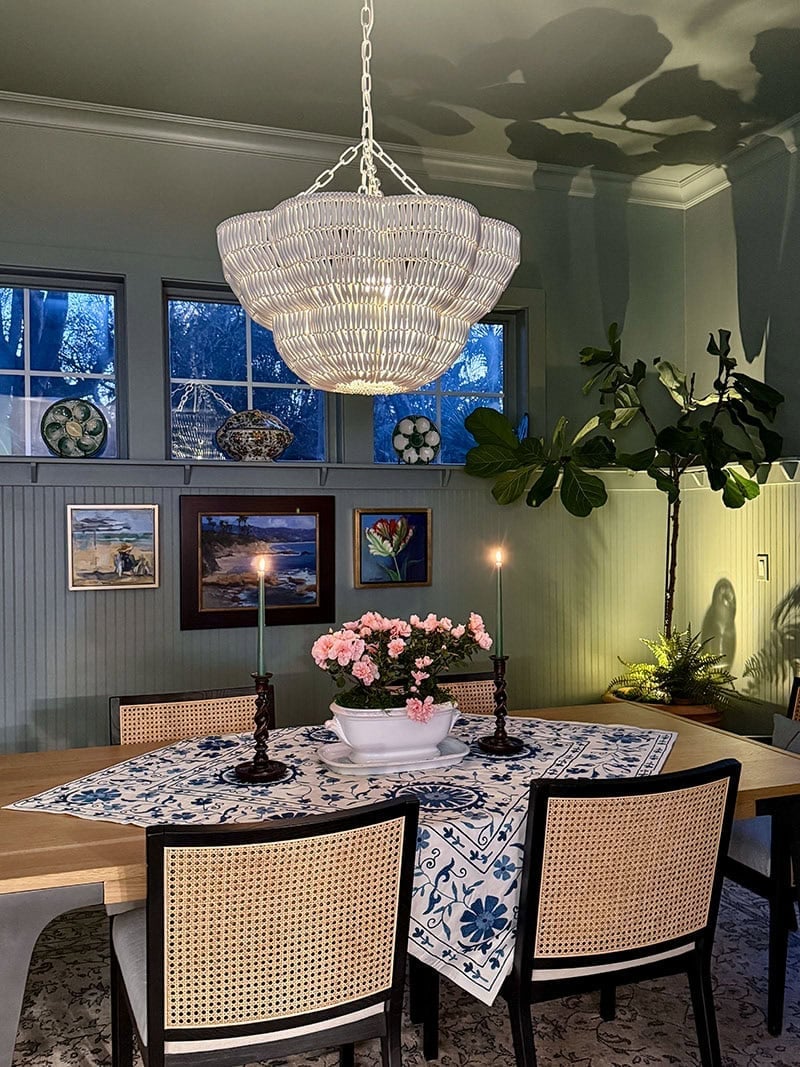
Sage green walls and white trim together create a palette that feels both grounded and airy, and this room proves it. The sage reads as a neutral, not a color, so the white trim around windows and baseboards defines the architecture without fighting for attention. What defines this look is the ratio: the wall color dominates, the trim frames it, and the wood and cane furniture sits in between. A cane back dining chair introduces texture that stops the room from reading as flat. The layered chandelier above the table adds a second moment of visual weight. The one thing that breaks the calm? Nothing, if you keep the wall color matte and the trim in a true white. The practical rule for this palette is simple: when the wall color has a gray undertone, your white trim needs to be cooler, not warmer, to keep the contrast crisp.
Compact Kitchen with Gray Trim Around Doorway
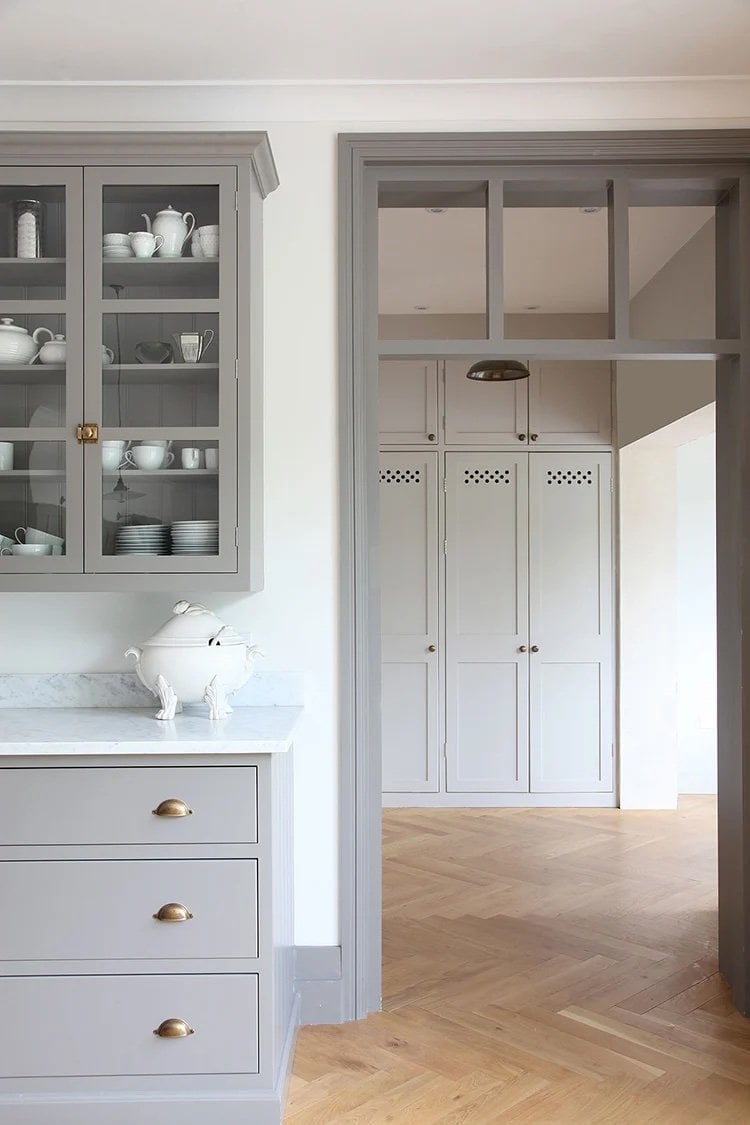
This compact kitchen proves that gray trim around a doorway does more than mark a threshold. The light gray paint on the door frame matches the cabinetry, which pulls the eye through the room instead of stopping it at the opening. The white cabinets and marble countertop keep the palette clean, while the wood flooring adds warmth that keeps the gray from reading as cold. The proportion of the gray appears on the trim and the cabinets, but not on the walls, which stay white. That ratio keeps the room from feeling heavy. The marble countertop offers a subtle pattern that breaks up the solid painted surfaces. In a compact kitchen, when you paint the doorway trim to match the cabinets, you extend the sightline and make the room feel larger than its square footage.
Farmhouse Dining Room with Ornate White Trim
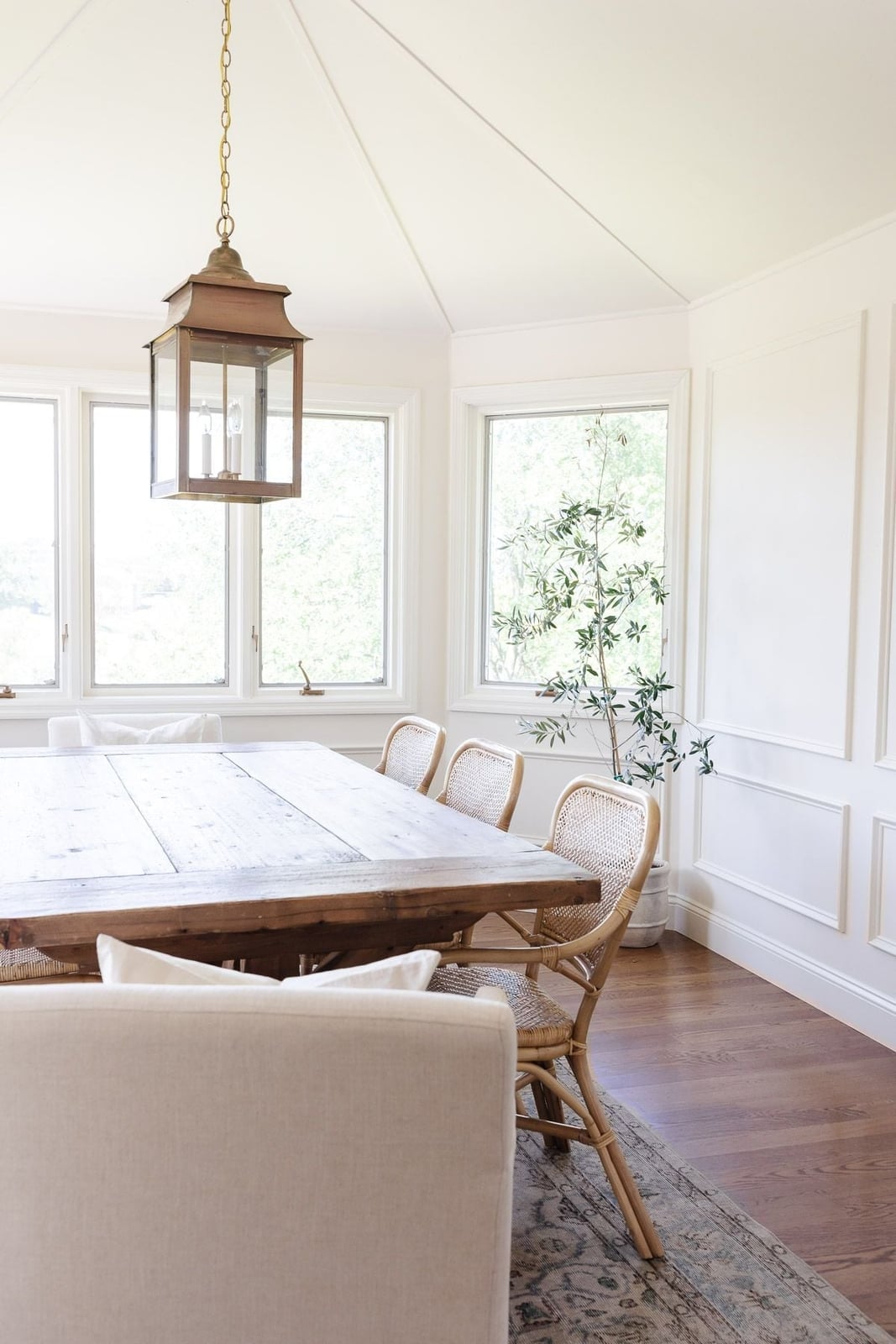
Ornate white trim often feels like it belongs in a formal parlor, not a farmhouse dining room, but this space proves otherwise. The large wooden dining table and rattan chairs introduce enough natural texture that the trim adds character, not fussiness. The white trim wraps the doors, drawing attention to the architecture, while the linen sofa and plaster walls keep the room soft. A hanging lantern above the table adds a second layer of light that warms the white surfaces.
What defines this style is the balance between ornate and rustic. The trim is detailed, but the materials around it are raw: wood, rattan, linen. The ratio leans heavily on natural surfaces, so the trim becomes a frame. The one thing that can disrupt the look is adding more ornate furniture. Keep the seating simple, and the trim stays in its supporting role.
Farmhouse Bedroom with Gray Painted Trim Around Doorways
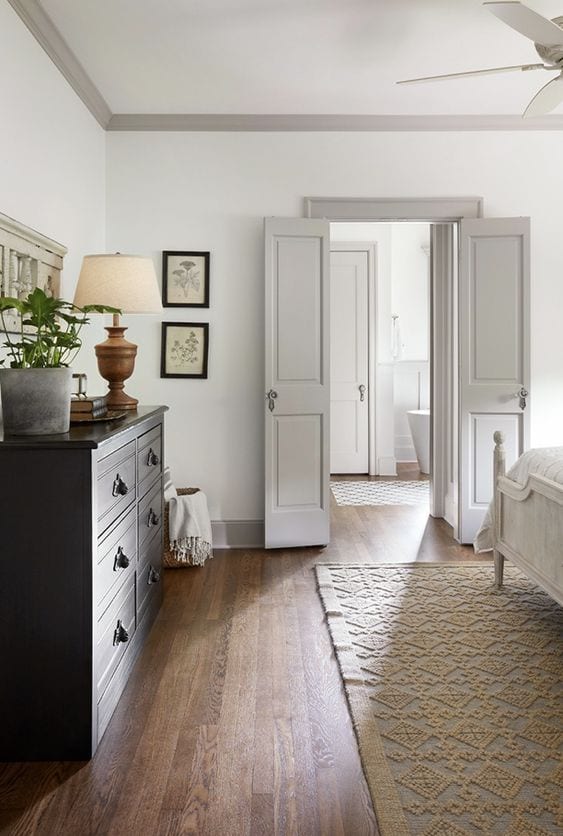
Gray painted trim around the doorways in this farmhouse bedroom does something unexpected: it defines the exit. The gray acts as a natural shadow, so the doorway becomes a visual anchor. The wood flooring and fabric rug keep the room warm, while the white walls let the gray trim stand out just enough. When you paint trim a darker shade than the walls, you create depth at the edges of the room, which can make a large bedroom feel more intimate. The dresser and bed sit in the middle of the space, and the gray door frames act like bookends. Natural light from the doorway hits the gray paint and softens it, keeping the look from feeling too heavy.
Transitional Bedroom with Pale Blue Walls and White Trim
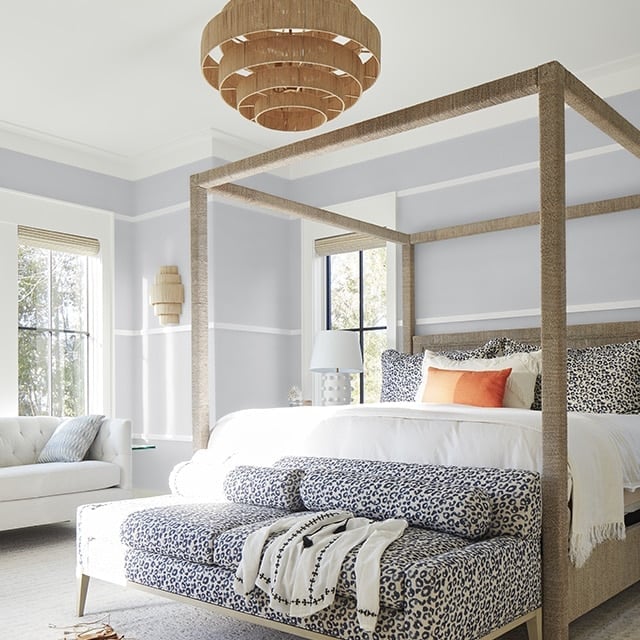
This transitional bedroom uses pale blue walls and white trim to create a calm palette. The blue has a hint of gray, which keeps it from reading as a nursery color, and the white trim adds a crisp edge. The rope-wrapped four-poster bed introduces texture and a natural wood tone that breaks up the cool palette. A patterned bench at the foot of the bed adds an orange accent, which warms the room without clashing. The white trim acts as the anchor, holding the blue walls and the natural materials together. When your wall color is pale, use a white trim with a similar undertone. A blue-gray wall needs a white that leans cool, not cream, to keep the contrast clean.
Final Thoughts
Trim is the quiet workhorse of a room, and color gives it a voice. Across 35 looks, one thing holds true: contrast and tone matter more than the shade itself. Dark trim anchors a space; light trim opens it up. Bold hues like teal or deep blue add personality without overwhelming. Before you paint, consider the room’s natural light and the finish sheen. Flat or matte reads modern; satin or semi-gloss holds up to cleaning and adds a subtle sheen. If you rent, check with your landlord before painting. For outdoor trim, remember that darker colors fade faster in direct sun. The best trim color is the one that makes the rest of the room feel right.