
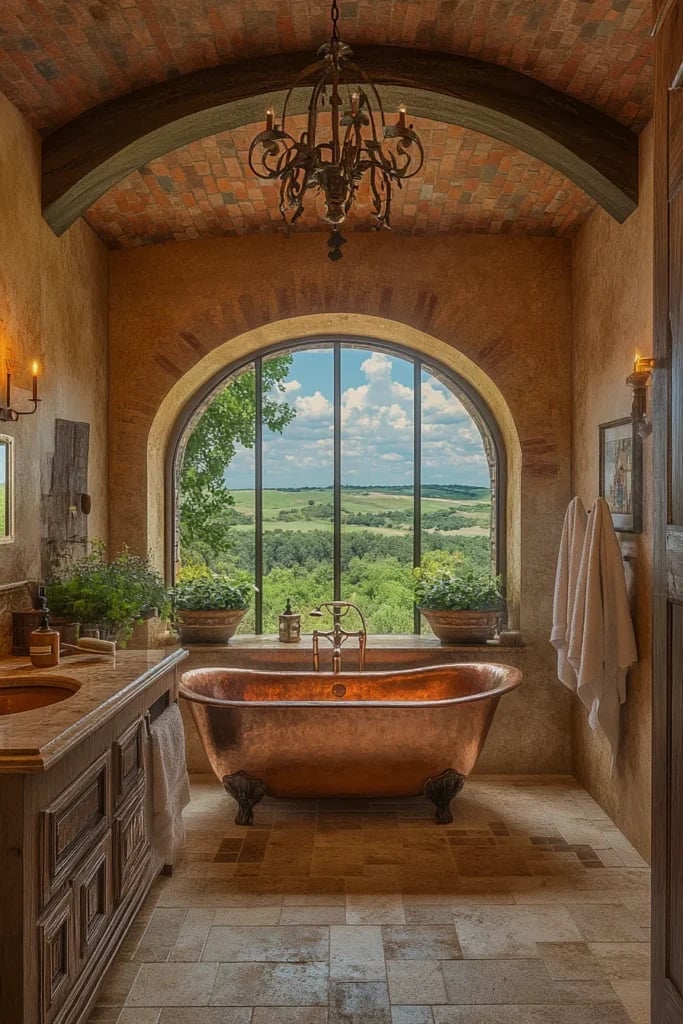
A Tuscan bathroom leans into warmth, texture, and a sense of history. It’s not about matching fixtures or chasing a trend. This style draws from sunbaked earth, aged metal, and handcrafted details that feel settled rather than staged. Think plaster walls, stone floors, copper accents, and wood that shows its grain.
The look is grounded and lived-in, never fussy. In this article, we walk through 36 Tuscan bathroom ideas that capture that spirit. You will see how tile, tubs, vanities, and lighting come together to create a space that feels like a quiet retreat.
Tuscan Villa Bathroom with Panoramic Arched Window and Copper Tub
The room works because the freestanding copper tub sits centered under a panoramic arched window, which makes the view the real focal point. A wrought iron chandelier and wall sconces add warm light without competing with the natural light from outside. The double vanity and stone tile floor keep the layout grounded, so the eye moves between the tub and the window rather than bouncing around the room. Earth tones in the brick and tile tie the green and blue sky outside to the copper finish inside. That is the layout principle here: place the hero element where it has the best sightline, then let everything else stay simple.
Mediterranean Bathroom with Textured Plaster Walls and Arched Doorway
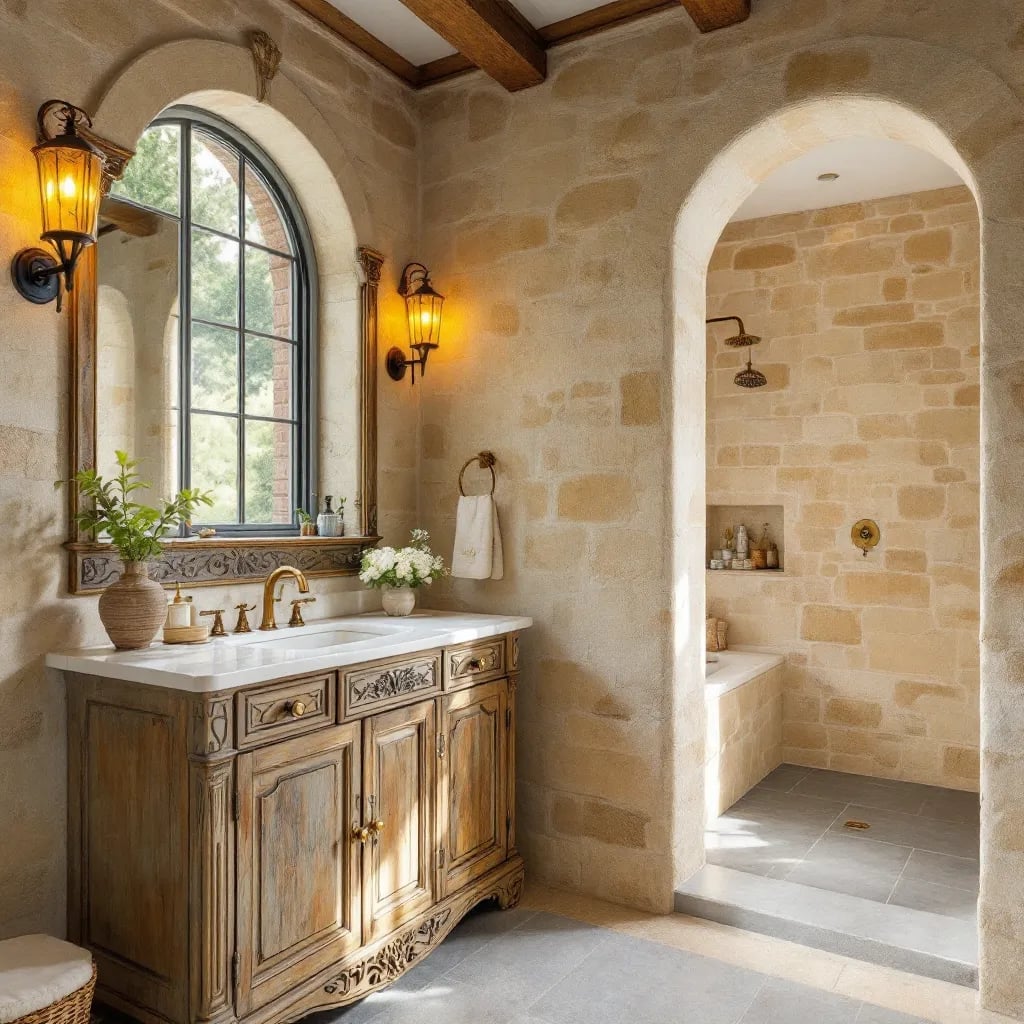
The palette is beige, brown, white, and black, which sounds neutral until you see how the textured plaster walls give it depth. The plaster reads as warm and hand-applied, so the white double vanity and black accents in the doorway feel deliberate rather than flat. Pendant lights hang low enough to cast light across the plaster surface, catching every ridge and shadow. An arched doorway softens the transition to the shower area, keeping the flow open. The material principle is that texture acts as a color all its own. If your walls are smooth, you lose that layering effect, so consider adding a limewash or Venetian plaster finish to get a similar Mediterranean feel.
Spacious Tuscan Bathroom with Hammered Copper Tub and Stone Floors
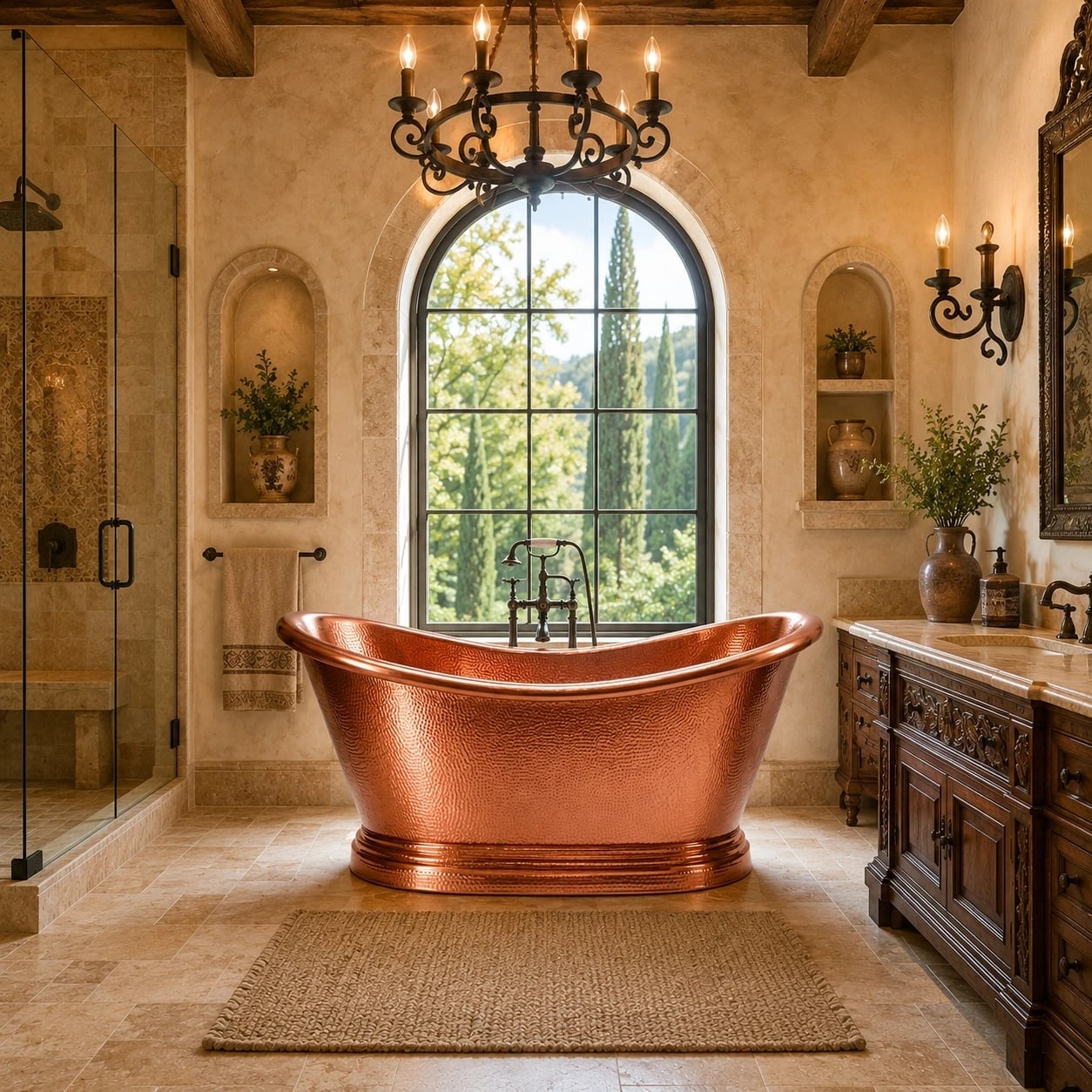
A large bathroom feels intentional when materials are grouped with purpose. A hammered copper freestanding tub sits in the center of the room, with stone tile floors stretching out around it. The copper finish is matte and textured, so it catches light differently from every angle. On the left side, a shower is tucked into the layout, and on the right, a wood vanity balances the weight of the tub. A chandelier and wall sconces add warm light that bounces off the plaster walls and stone floors.
Contrast between materials creates visual interest. The smooth stone tile grounds the rough copper, and the wood vanity adds a third texture that prevents the room from feeling one note. Earth tones in the green and copper palette repeat across the finishes, so the room reads as cohesive without being monotonous.
Tuscan Vanity with Hammered Copper Sink and Rustic Wood
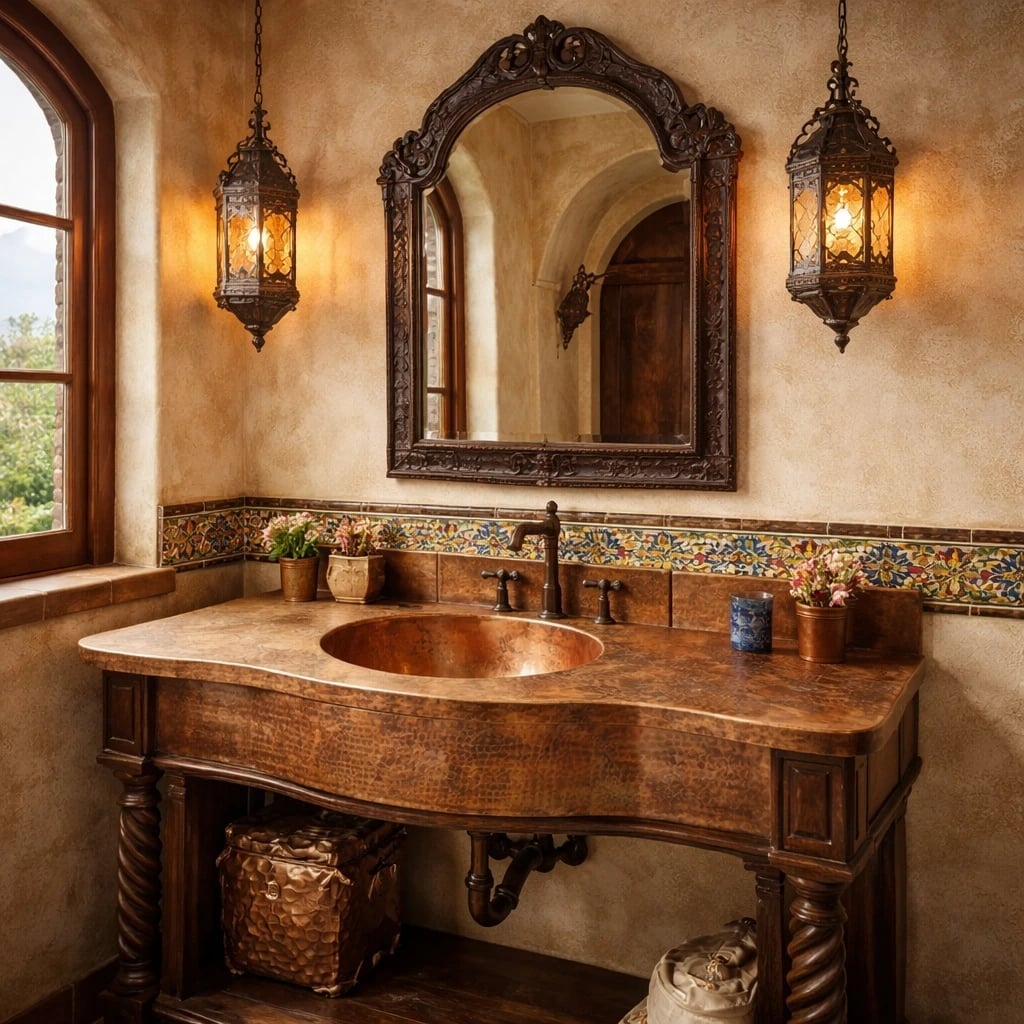
The vanity pairs a hammered copper sink and countertop with rustic wood cabinetry, which is a combination that works because the copper is the star and the wood is the stage. An ornate mirror hangs above, framed in a dark finish that echoes the wood tones below. Hanging lanterns on either side cast warm ambient light across the copper surface, making the hammer marks visible. The open shelf below the sink keeps the vanity from feeling heavy. The material principle is that a single statement surface, like copper, needs a neutral partner to let it shine. If the wood were also distressed in a similar tone, the two would compete rather than complement.
Mediterranean Bathroom with Travertine Tile and Wrought Iron Mirror
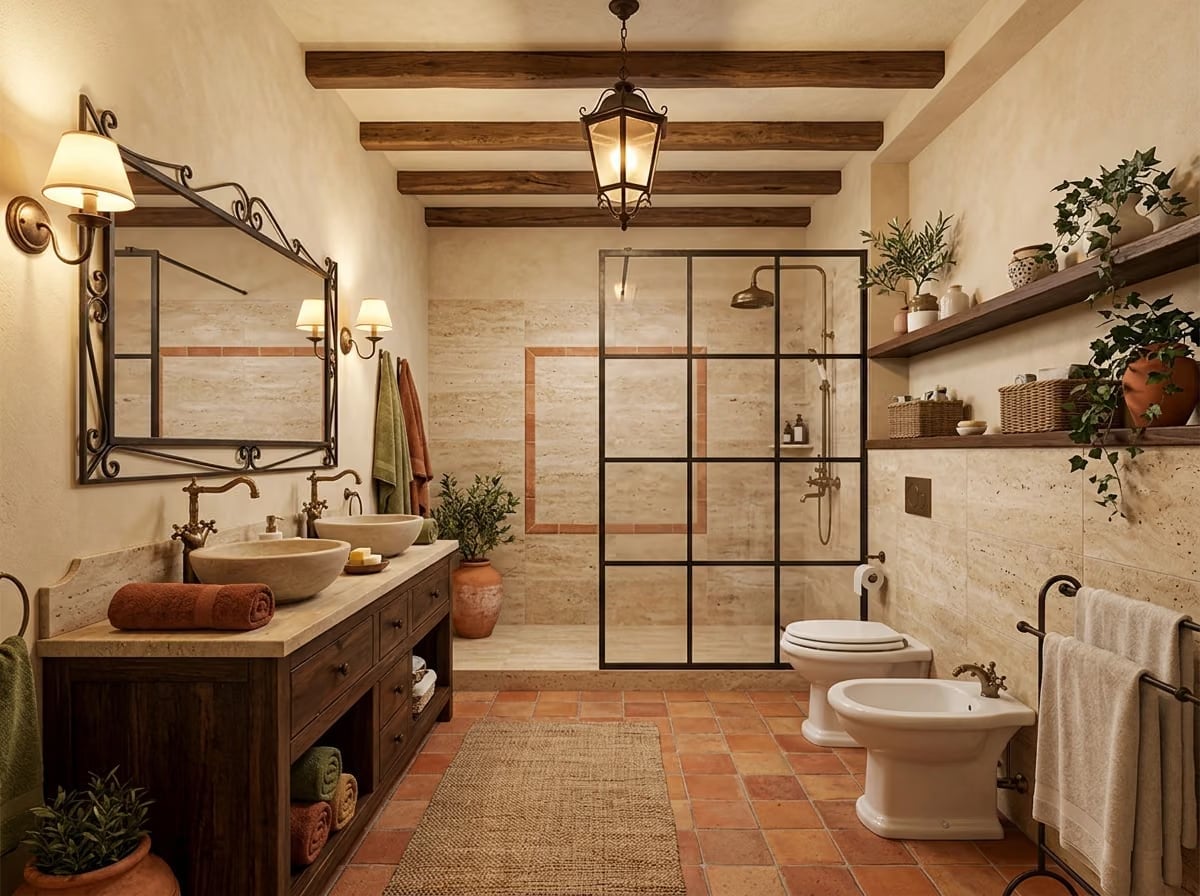
To create a cohesive look, pick one finish that repeats across the room. Here, the travertine tile on the floor and the wrought iron in the ornate mirror tie the double vanity and freestanding tub together. The palette stays in earth tones with terracotta and cream, so the travertine acts as the base and the wrought iron adds contrast. A pendant light hangs above the tub, while wall sconces flank the mirror, giving two layers of ambient light. The layout is symmetrical, with the vanity on one side and the tub centered, which makes the room feel balanced. Stone and metal work best when the stone is matte and the metal is dark. A polished metal finish would compete with the texture of the travertine.
Mediterranean Bathroom with Arched Window and Stone Tub
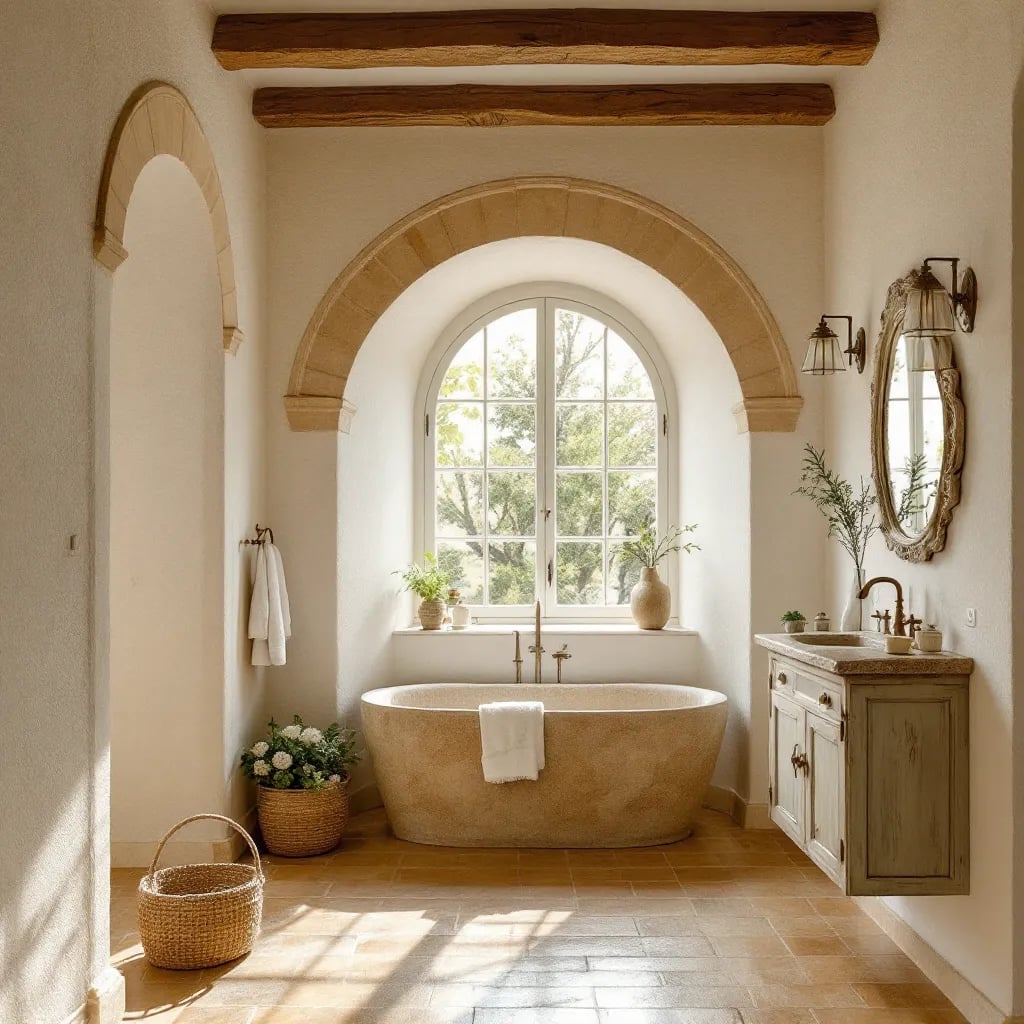
A stone tub sounds like a splurge, but the real cost here is the layout, not the material. The tub sits centered under an arched window, which means the room does the heavy work of making it feel like a retreat. Plaster walls and terracotta floor tiles keep the palette in earth tones, so nothing fights the view outside. A rustic wood vanity and wall sconces handle the practical side without crowding the open floor. The decor principle is simple: anchor the tub under the best natural light, and the rest of the room can stay uncomplicated. That single placement gives the whole space its calm, roomy feel.
Opulent Mediterranean Bathroom with Copper Tub and Arched Doorways
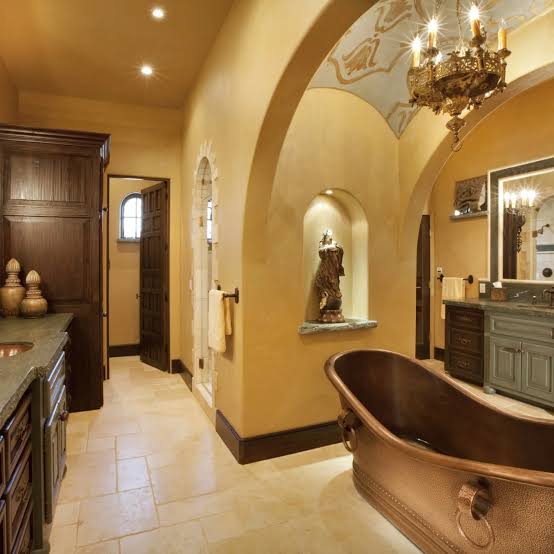
Copper tubs and arched doorways look permanent, but the renter-friendly move is to focus on what hangs. An ornate chandelier and accent lighting draw the eye up, making the plaster walls and stone floors feel richer without altering them. The ochre and gold palette comes from the metal and the warm wall finish, not from paint or tile you have to install. Swap the chandelier for a plug-in pendant and the copper tub for a freestanding acrylic one in a warm metallic finish, and the same open plan reads as luxe without a single structural change.
Elegant Mediterranean Bathroom with Freestanding Copper Tub and Arched
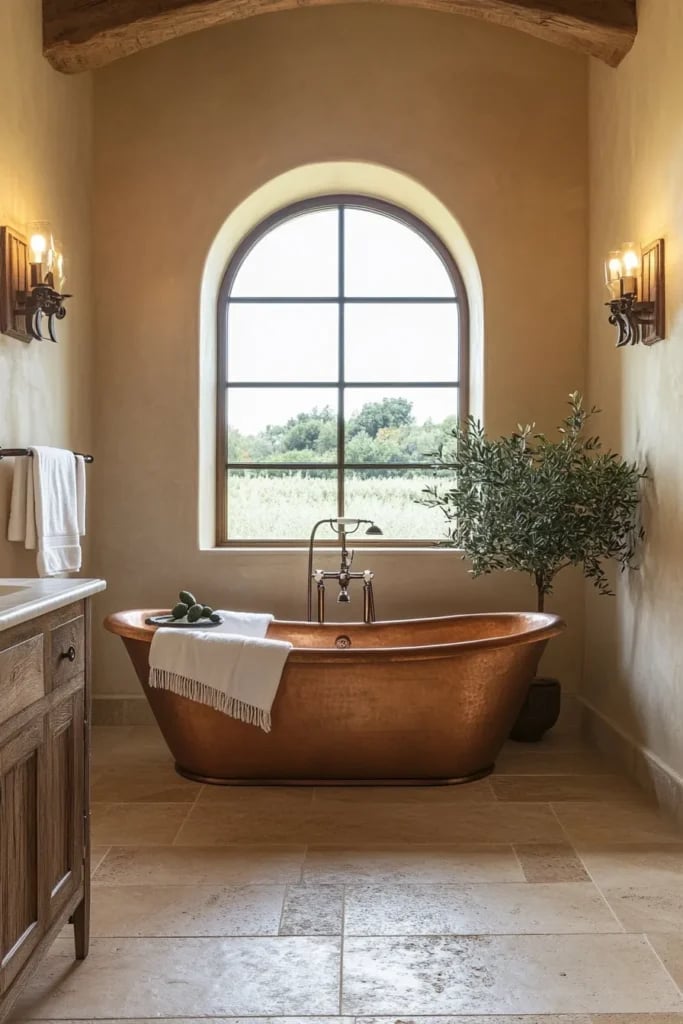
This room proves a copper tub works best when nothing else competes. The palette uses beige, tan, and cream, with stone tile floors and a simple wood vanity keeping the backdrop quiet. The arched window above the tub brings in natural light that hits the metal finish, so the copper appears warm. Wall sconces on either side of the window balance the light and frame the tub without adding clutter. The variation here is restraint: let one material, copper, carry the character, and let the room support it.
Mediterranean Bathroom with Carved Wood Vanity and Ornate Mirror
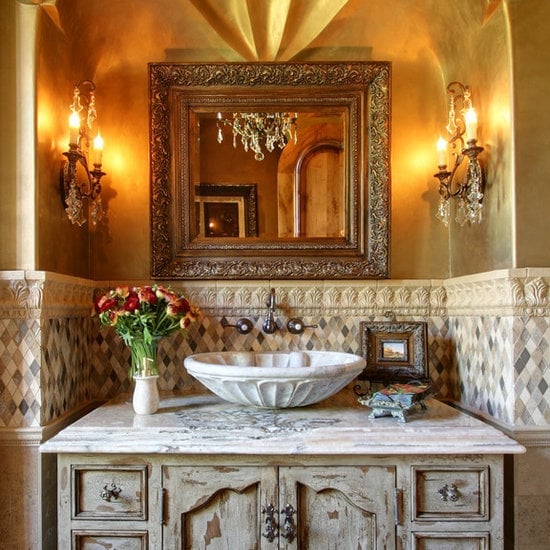
Does a carved wood vanity hold up in a bathroom? Yes, if the wood is sealed properly and the room has ventilation. This one sits under a decorative mirror with wall sconces on each side, and the stone countertop and tile floor handle the moisture that would otherwise hit the wood. The gold and cream palette keeps the ornate details from feeling heavy, and the chandelier adds light without competing with the mirror. The durability principle is about separation: keep the carved wood away from direct water splash by pairing it with a stone sink and a counter that extends past the basin edges.
Mediterranean Bathroom with Ornate Tilework and Freestanding Tub
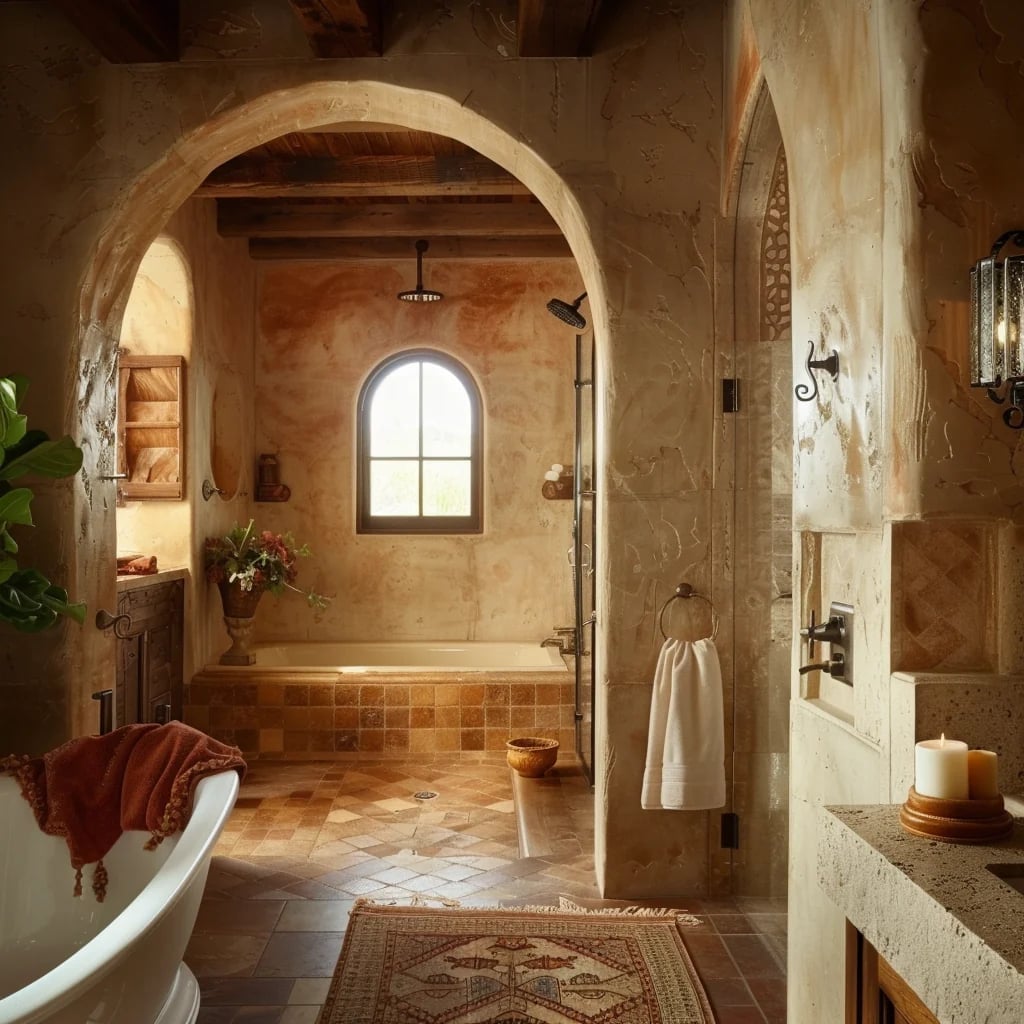
The tilework here uses yellow, terracotta, blue, and green, which is a wider palette than most Mediterranean bathrooms carry. The freestanding tub sits centered in the room, and the arched window above it brings in ambient light that makes the tile colors shift throughout the day. A wood vanity off to the side keeps the layout from feeling too busy. The materials principle is that ornate tile needs a simple anchor: the plain tub and the neutral plaster walls let the pattern be the event without overwhelming the space.
Mediterranean Bathroom with Copper Vessel Sink and Sage Green Tile
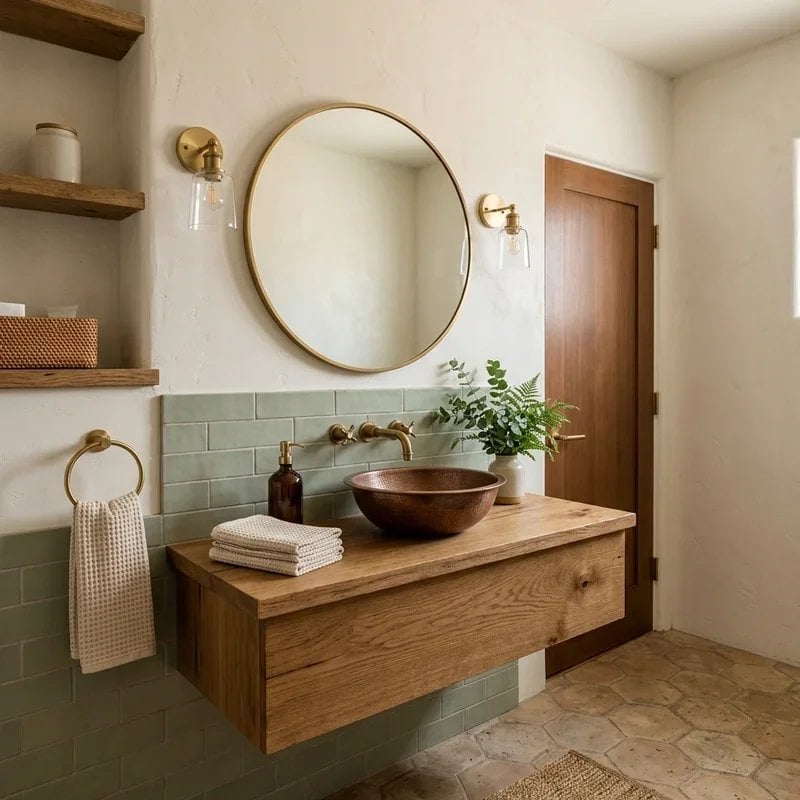
A floating vanity is a smart choice for a roomy bathroom that still wants some floor visible. This one pairs a warm wood base with a copper vessel sink that catches the eye without trying. Sage green tile on the wall behind it ties the earth tones together and keeps the palette grounded. The round mirror above echoes the sink’s soft curve. Two sconces on either side add task light for daily use. Natural light from a nearby window softens the whole setup. The brass faucet matches the copper finish without matching it exactly, which feels intentional rather than matched. For a renter, swapping in a copper vessel sink on an existing vanity is a low-commitment way to get the look.
Tuscan Bathroom with Ornate Tiled Shower and Stone Archway
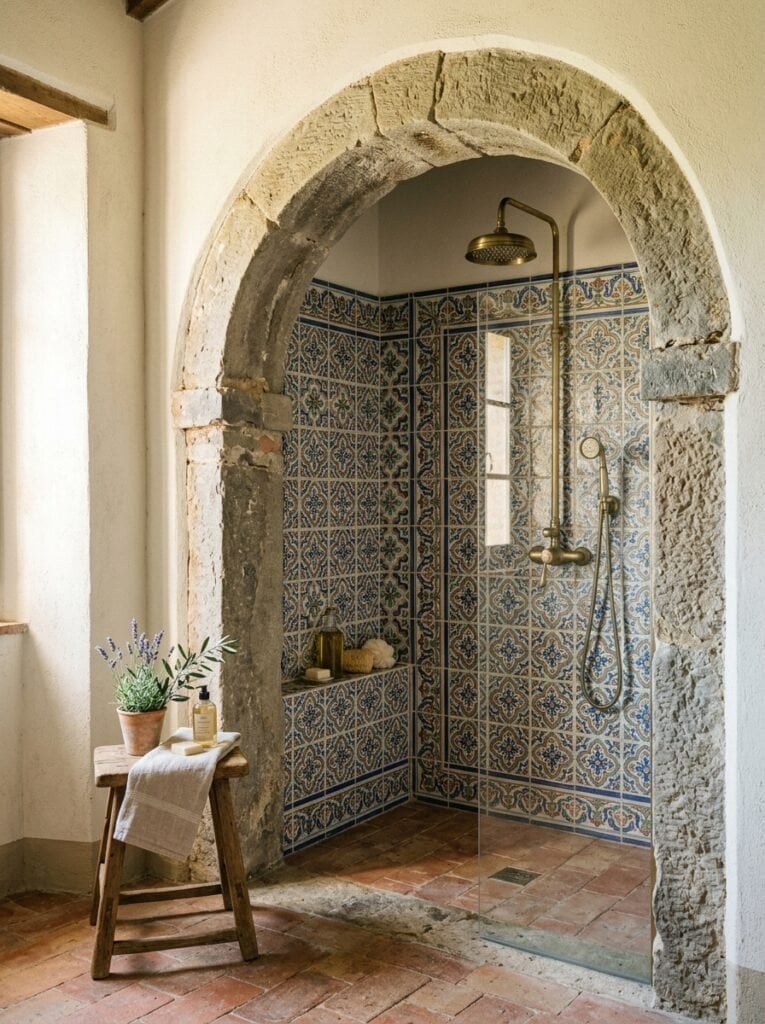
A Tuscan bathroom often leans warm and earthy, but this one goes a different direction with a cool blue and white tile shower. The contrast is what makes it work. The intricate tile work covers the shower walls inside a stone archway, so the blue feels contained rather than cold. Terracotta floor tiles underneath bring the warmth back.
The archway frames the shower like a piece of art, which is useful in a compact space where every surface needs to earn its place. A small window above lets in natural light that hits the blue tiles and makes them shift through the day. The brass fixtures add a warm metallic note that keeps the cool tile from feeling stark. The palette is split into two camps: warm stone and terracotta below, cool tile and white above. That split is what gives the room its balance.
Tuscan Bathroom with Sunburst Mirror and Carved Wood Vanity
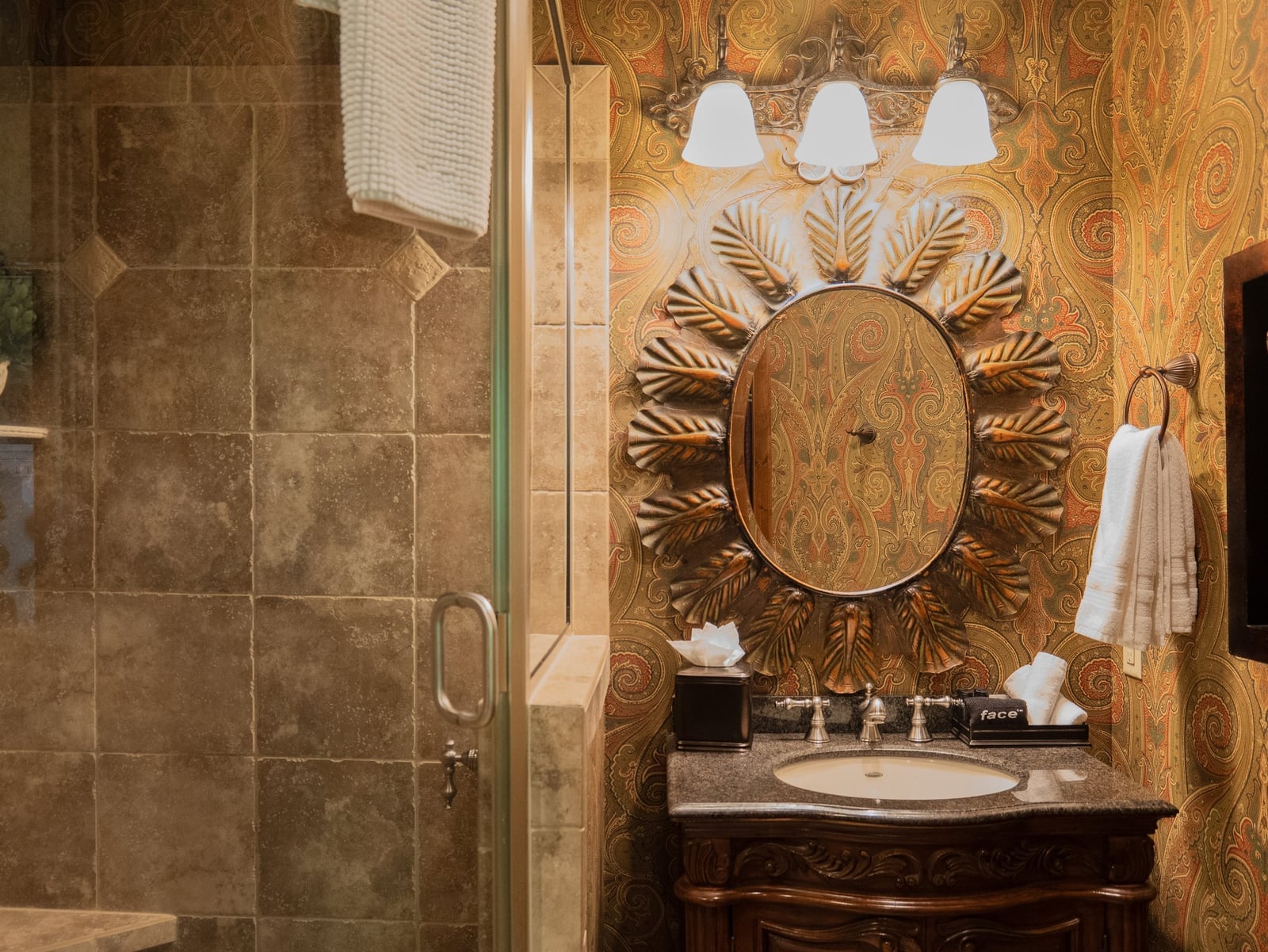
The sunburst mirror is the first thing you notice, and it sets the tone for the whole vanity area. Its ornate metal frame catches the warm overhead light and casts a soft glow onto the dark carved wood below. The vanity has visible grain and detailing that asks for a closer look. Tiled walls in earthy tones behind it keep the background quiet so the mirror and vanity can hold the focus. The warm ambient light from the overhead fixtures keeps the gold tones in the mirror from going flat. A single pendant or pair of sconces would work just as well here, as long as the light is warm and directed downward.
Mediterranean Bathroom with Travertine Tile and Wooden Beamed Arched
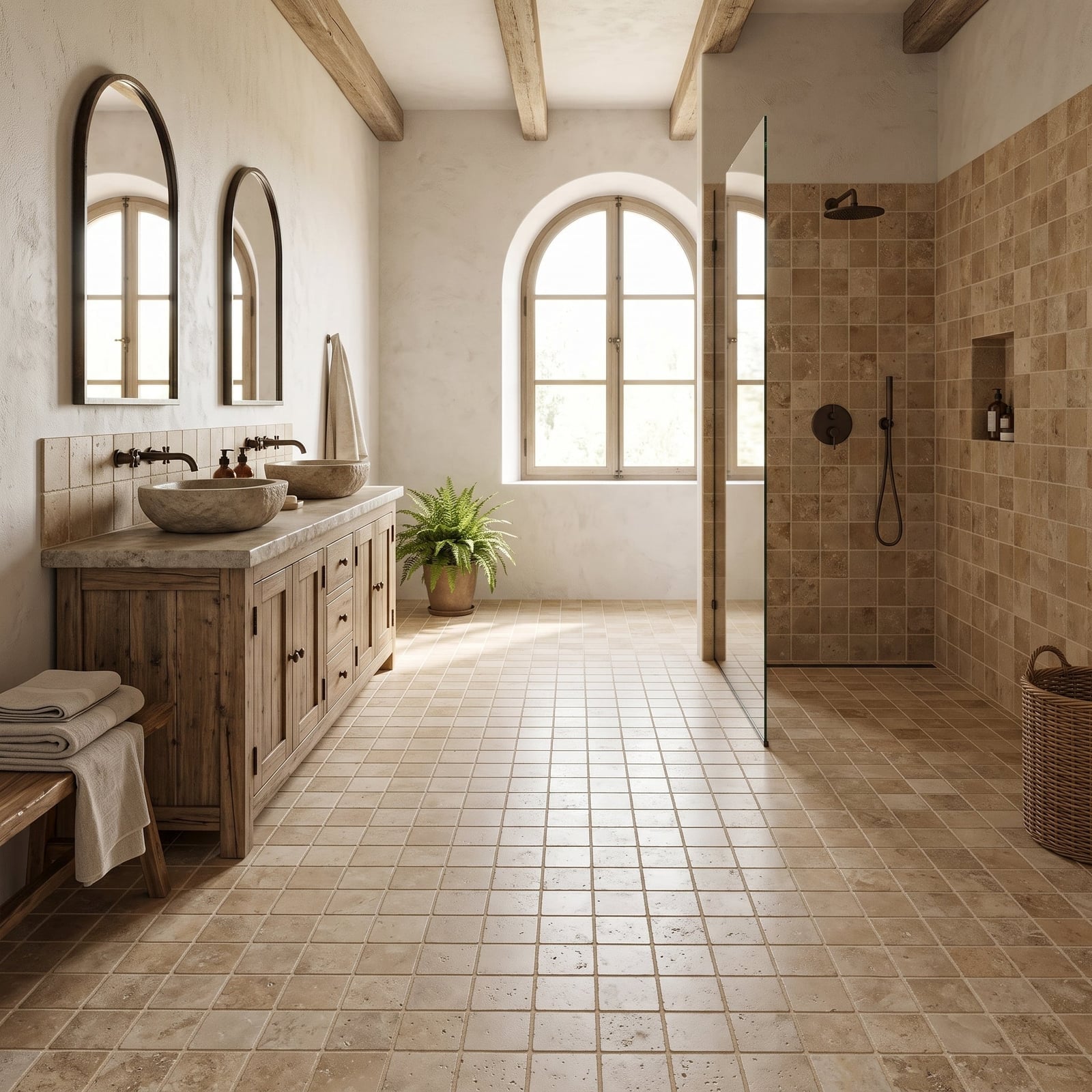
This is a room that understands how light moves. The arched window with wooden beams above it lets in natural light that lands directly on the double vanity below. The stone vessel sinks pick up that light and reflect it softly, while the travertine tile on the floor and walls absorbs it. The result is a space that feels bright but never harsh. The double vanity is centered under the window, which is the obvious layout choice and the right one. Two wall sconces flank the mirror to provide even task light in the evening. The beige and cream palette keeps everything calm. If you have a window in your bathroom, consider centering your vanity under it. It makes the sink area feel like the natural focal point and gives you the best light for daily tasks.
Mediterranean Bathroom with Rustic Wood Double Vanity and Stone
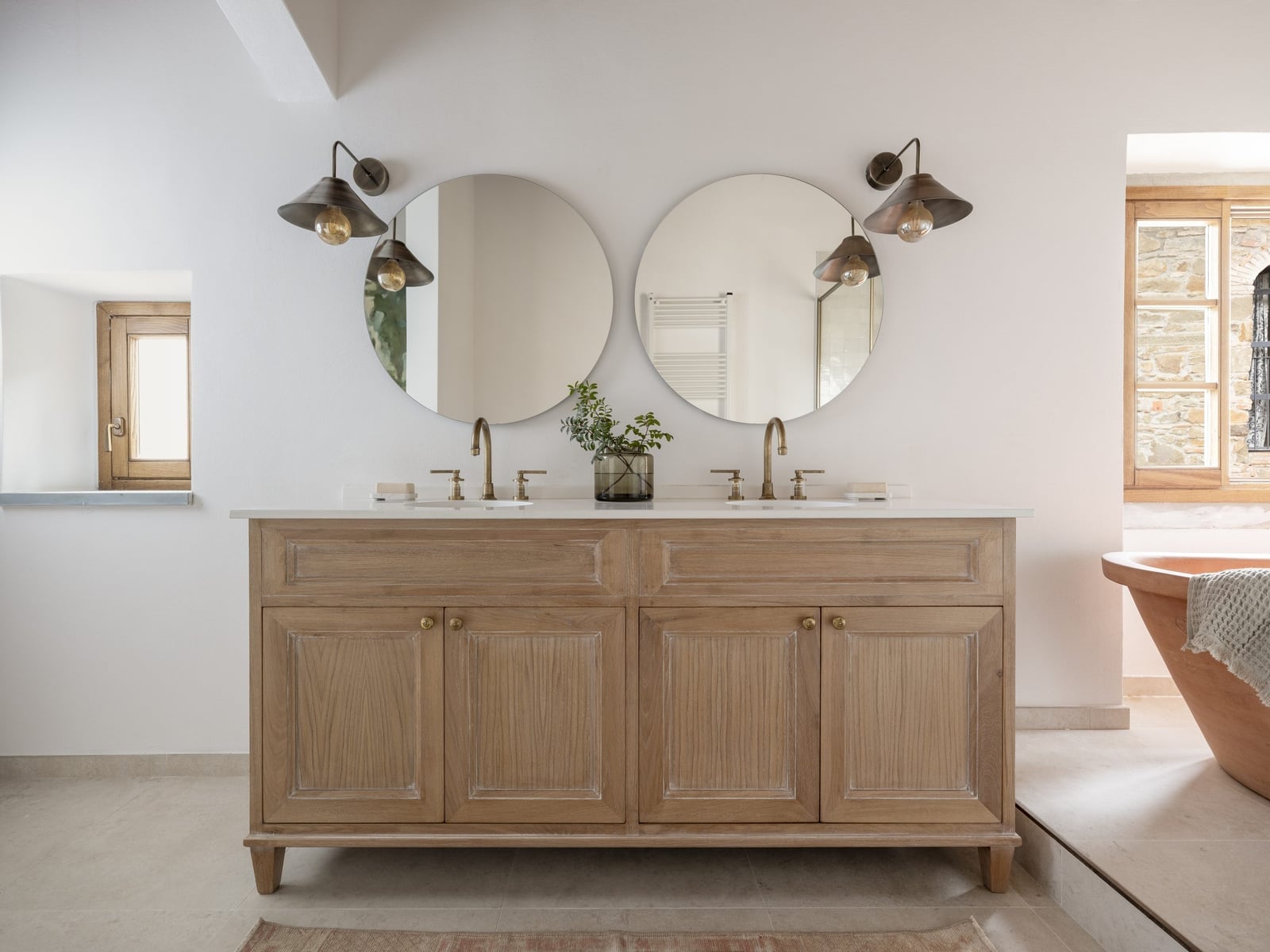
For a double vanity, the storage underneath should match the visual weight of the sinks above. This one uses a rustic wood base with visible grain and a chunky feel that balances the stone vessel sinks. The round mirrors above prevent a heavy look. The stone accents on the counter and the tile backsplash tie into the beige and white palette, so the wood becomes the main focus.
Wall sconces on either side of each mirror give task light without taking up counter space. That is a useful trick in a roomy bathroom where you still want clear surfaces for daily items. A window nearby provides natural light during the day. The wood vanity offers plenty of drawer and cabinet storage below. For a roomy bathroom, a double vanity with this much visual weight needs the floor area to breathe around it. Leaving a few feet of open tile on either side prevents a cramped feel.
Compact Mediterranean Bathroom with Wall-Mounted Sink and Terracotta
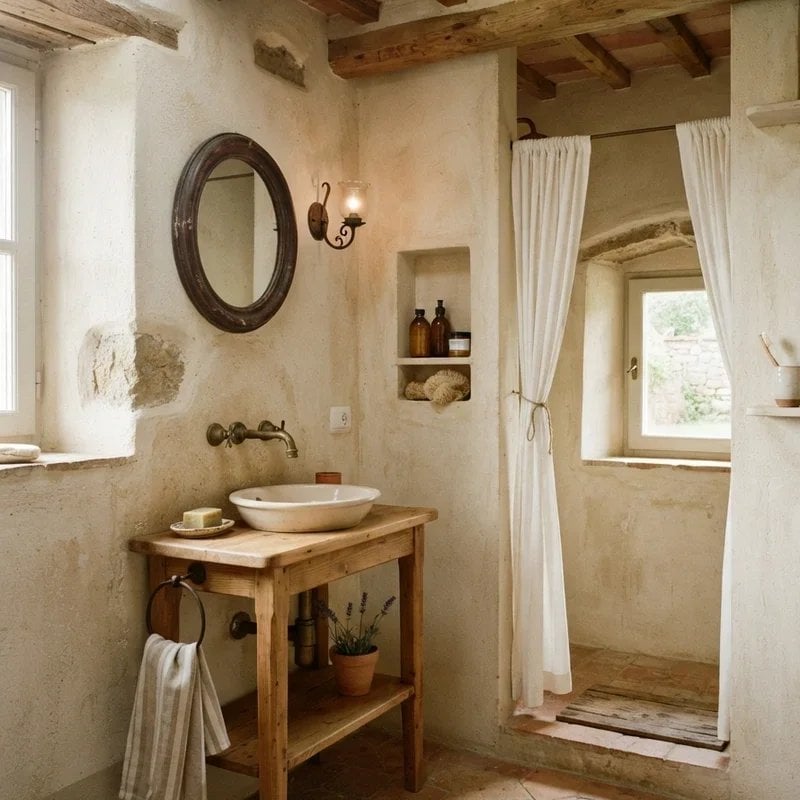
A wall-mounted sink frees up floor area in a compact layout, making the room feel less crowded. This one pairs a rustic wood vanity with terracotta tile and cream plaster walls for a warm Mediterranean palette. The shower enclosure sits on the right, with the sink and vanity on the left, creating a balanced flow even in a tight footprint. Brass fixtures add a subtle contrast against the earthy tones. If your space is small, a wall-mounted sink is a practical swap that opens up the floor for easier cleaning and a lighter visual feel.
Rustic Mediterranean Bathroom with Vintage Clawfoot Tub and Wooden
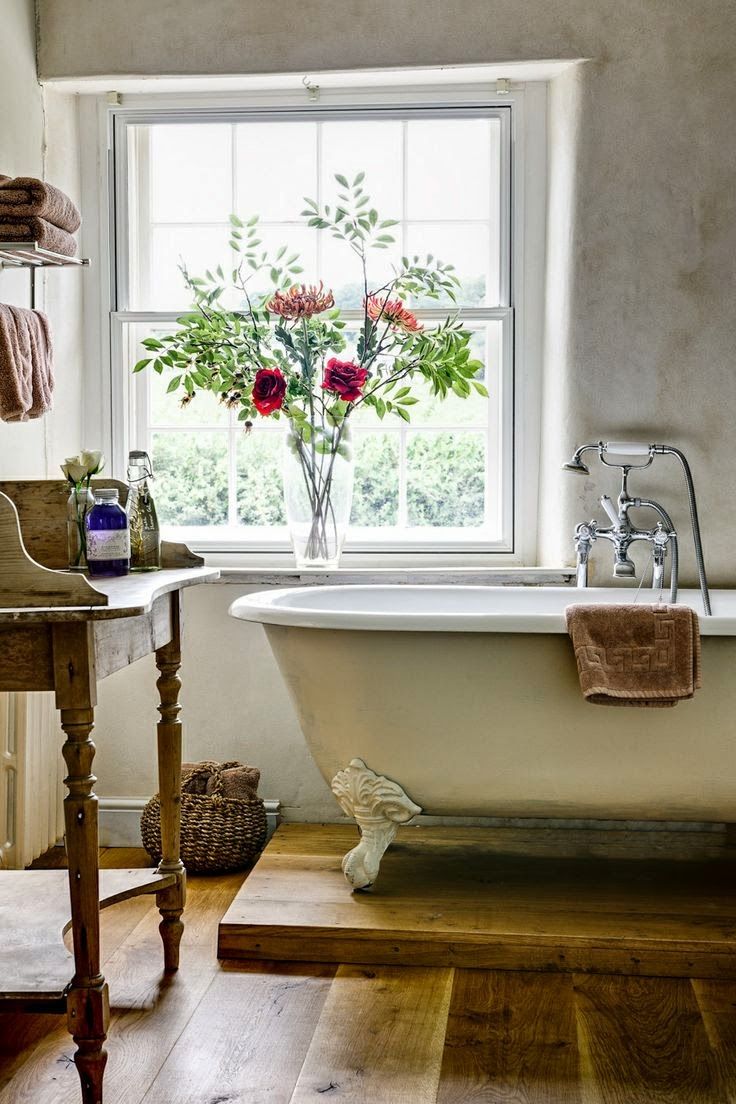
A practical rule for a clawfoot tub is to place it where it gets natural light, since the porcelain finish and silhouette become the focal point. Here the tub sits centered near a large window, with a wooden table beside it for holding towels or bath products. The mix of cream, wood tones, and soft green keeps the room feeling grounded without being heavy. For renters, a clawfoot tub is a freestanding piece that can move with you, and the wooden table adds storage without permanent installation. Natural light from the window does the work of making the space feel roomy.
Mediterranean Bathroom with Blue Tile, Copper Tub, and Shutters
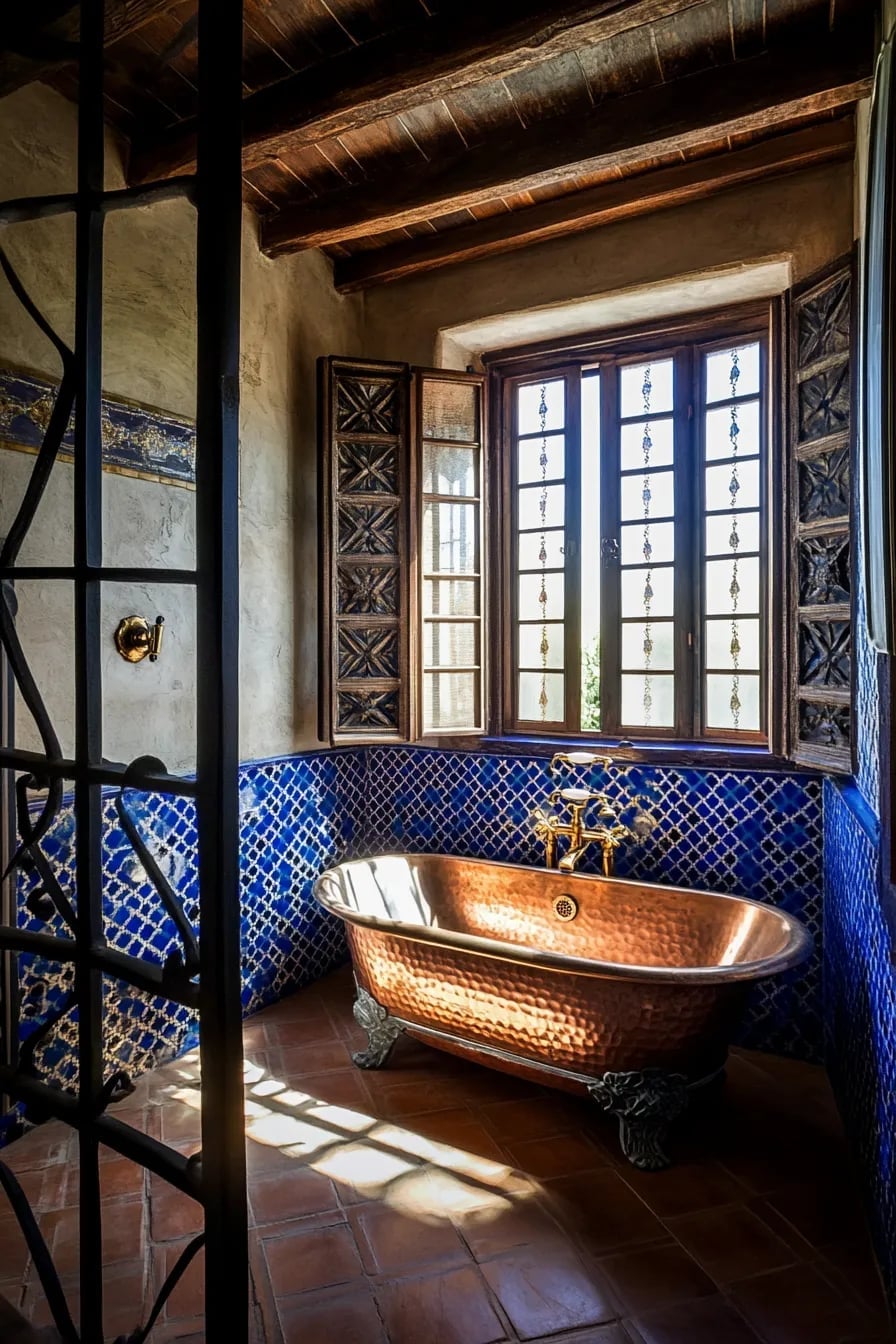
Where many Mediterranean bathrooms lean on warm terracotta and beige, this one swaps in vibrant blue tile for a cooler counterpoint. The copper clawfoot tub anchors the corner, while ornate shutters frame the window and cast dramatic shadows across the tiled walls. The palette pairs blue and copper with terracotta accents, a combination that feels pulled from a coastal villa rather than a hillside farmhouse.
The tiled shower area continues the blue theme, keeping the color consistent without overwhelming the room. Wood and stone elements break up the tile, so the space reads as layered rather than loud. The key is ratio: blue covers the walls and shower, but the copper tub and warm wood keep the room from tipping into cold. It is a variation that works for anyone who wants Mediterranean style with a cooler, more coastal edge.
Mediterranean Bathroom with Clawfoot Tub and Ornate Carved Vanity
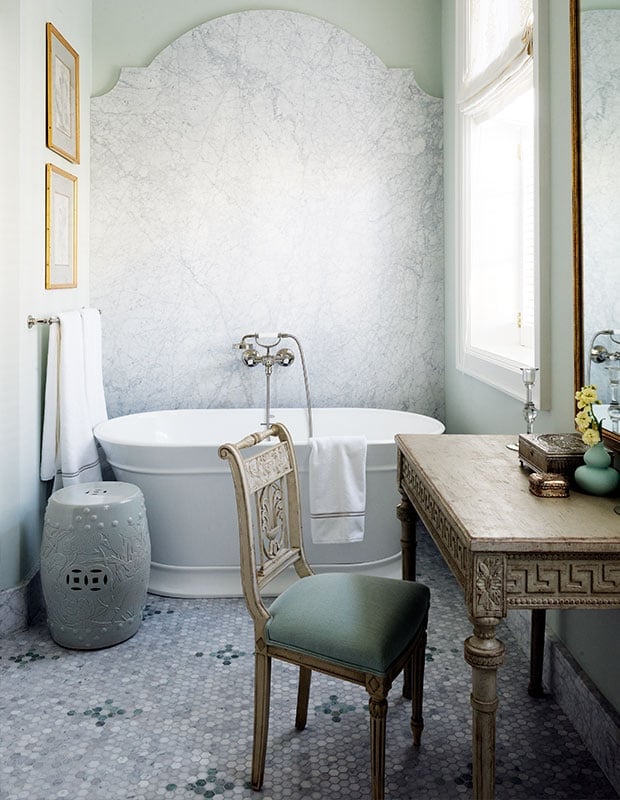
The ornate carved vanity stands out here because it uses a blue and white marble top that echoes the tilework, tying the two key pieces together. A clawfoot tub sits opposite, with a garden stool nearby for holding a towel or book. The chandelier and natural light from the window both highlight the carved details on the vanity. For a room with strong decorative elements, matching the vanity counter to the tile palette keeps the look cohesive rather than busy.
Mediterranean Bathroom with Extensive Travertine Tile and Rustic
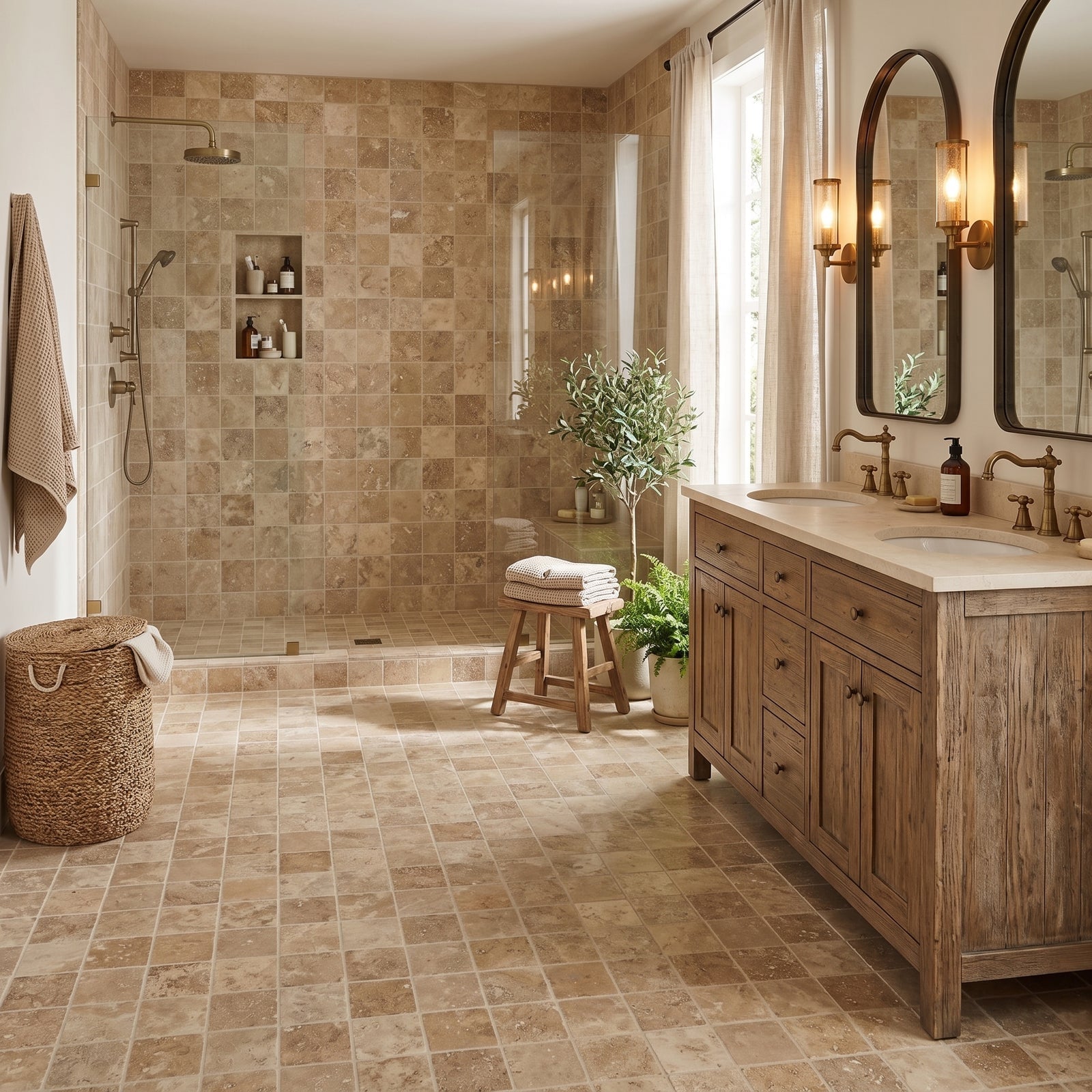
This bathroom uses travertine tile across the shower, floor, and vanity surround, creating a seamless beige and tan palette. The double vanity features rustic wood cabinetry that contrasts with the stone, while brass sconces add a warm metallic note. A woven basket near the vanity offers casual storage. The open plan layout lets natural light carry across the whole space. Committing to one stone throughout makes the room appear larger and more cohesive. The rustic wood prevents the finish from feeling too polished or cold.
Mediterranean Bathroom with Stone Vessel Sink and Arched Mirror
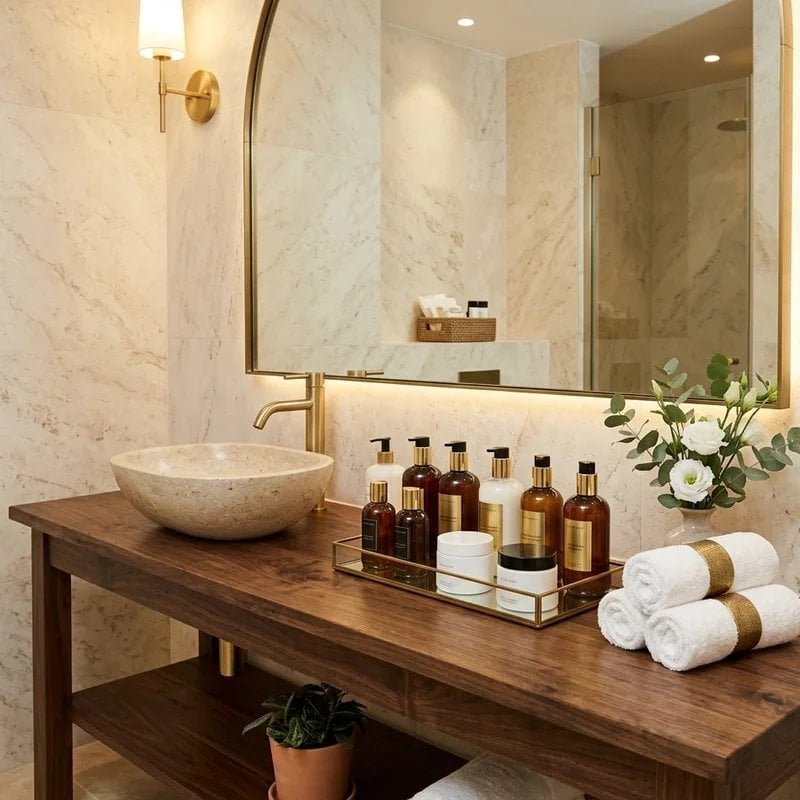
A single vanity works best when it acts as the room’s anchor. Here, the stone vessel sink sits on a wooden vanity, with a brass faucet rising from the counter and an arched mirror hanging above. The vanity’s warm wood tones ground the beige, gold, and cream palette, while the wall sconce on each side adds a soft ambient light that keeps the stone from feeling too heavy.
The open shelving below the sink provides a spot for folded towels or a small basket, which is a practical move for a room that feels roomy but not oversized. The stone sink introduces an organic texture that contrasts with the smooth marble surfaces often seen in this style. Keeping the room simple lets the vanity hold attention without competing with other elements.
Compact Mediterranean Bathroom with Terracotta Floor and Brass
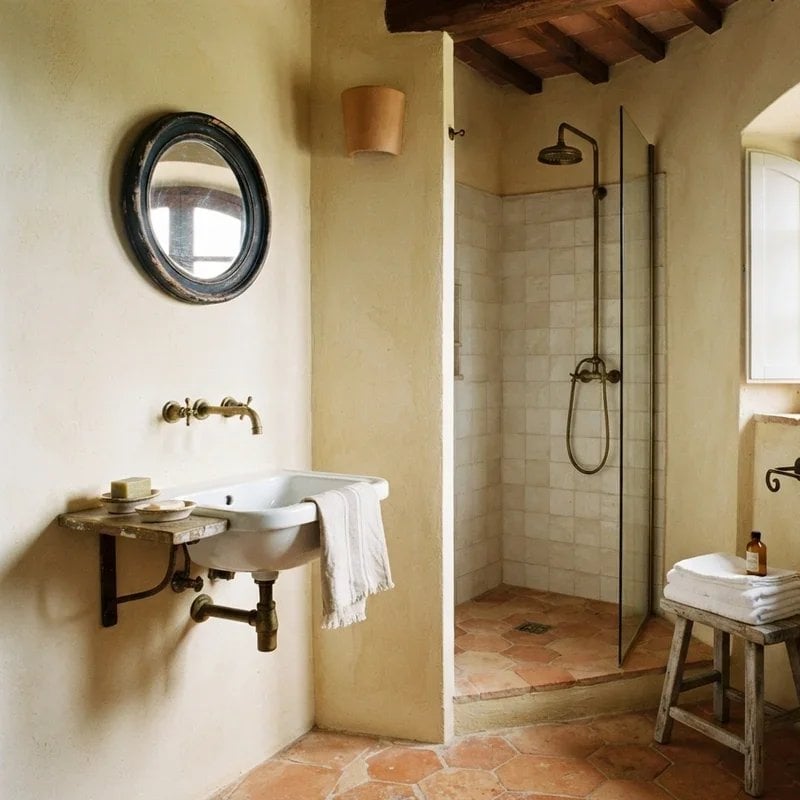
The wall-mounted sink and vanity sit on the left, with a shower enclosure on the right, and the terracotta floor tiles tie both sides together. The cream plaster walls keep the compact layout from feeling cramped, while the wood tones in the vanity and the brass fixtures add warmth without taking up extra visual space. The palette of terracotta, cream, and wood tones makes a small room feel grounded rather than crowded.
Mediterranean Bathroom with Pink Floor Tiles and Fluted Glass Vanity
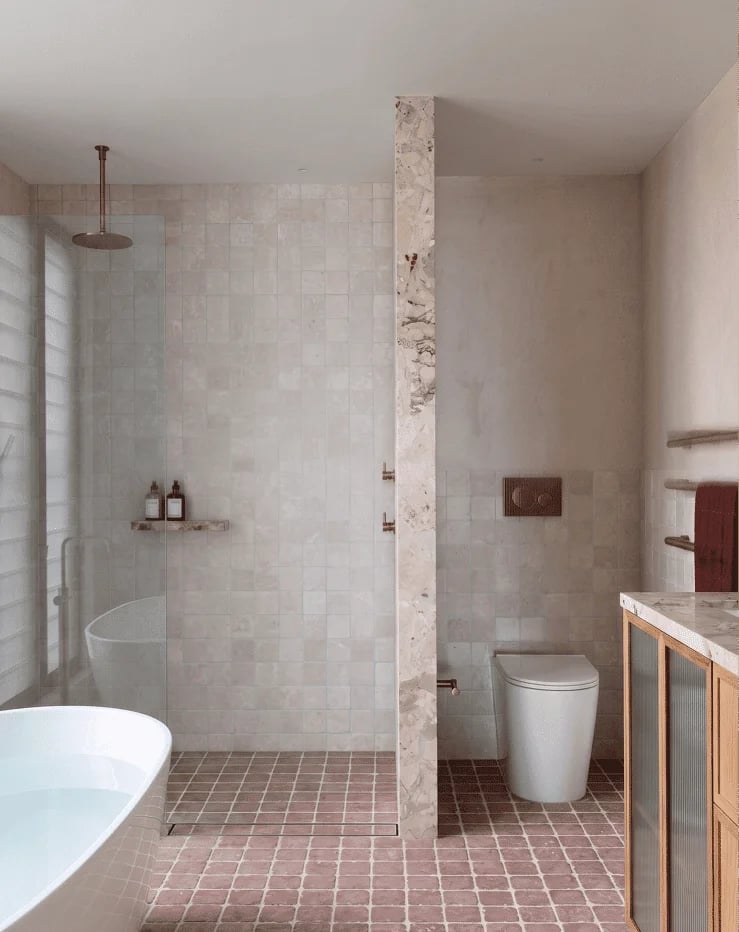
A room with both a walk-in shower and a freestanding tub needs a palette that links the two zones. The pinkish floor tiles here do that job, stretching from the shower area across to the tub and tying into the white walls and wood cabinet. The fluted glass vanity adds a transparent element that keeps the room feeling open, while the marble counter introduces a smooth surface that contrasts with the textured tile. The recessed lighting overhead provides even illumination, so the pink tone looks warm. This palette works because the pink stays on the floor and the white and wood carry the vertical surfaces, keeping the ratio of color to neutral in check.
Mediterranean Bathroom with Carved Stone Bathtub and Skylight
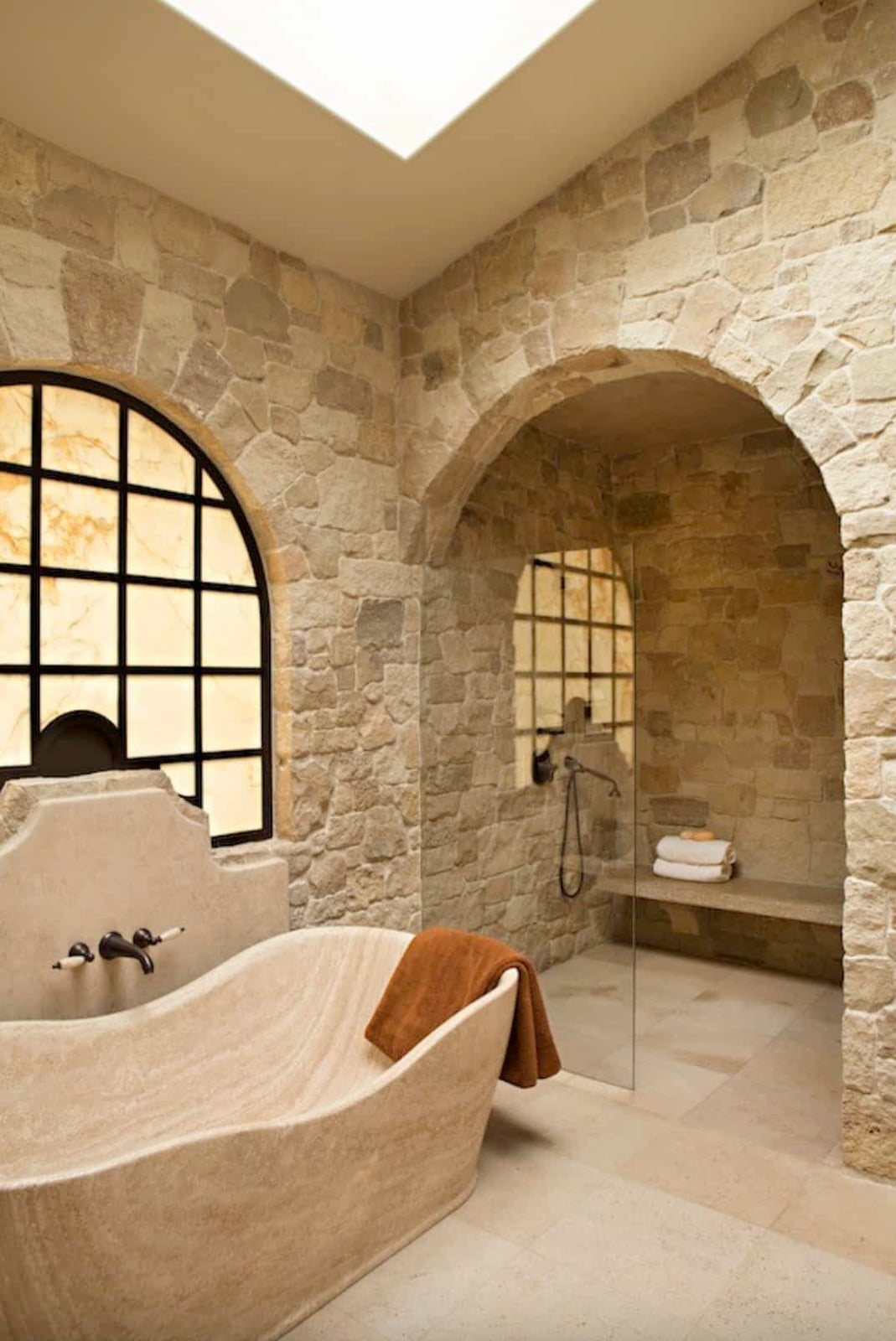
A carved stone bathtub could easily feel too heavy for a bathroom, but the natural light from the skylight and window changes that. The beige, cream, and tan palette keeps the space calm, while the stone bench and arched shower echo the tub’s material without repeating it exactly.
The skylight brings in overhead light that softens the stone’s mass, and the window adds side light that catches the texture of the carved surface. This combination of light sources means the tub reads as a sculptural element rather than a block. For anyone considering a stone tub, the key is to plan for light from above and beside, so the material has a chance to show its character rather than sitting in shadow.
Mediterranean Bathroom with Marble Accent Wall and Wood Vanity
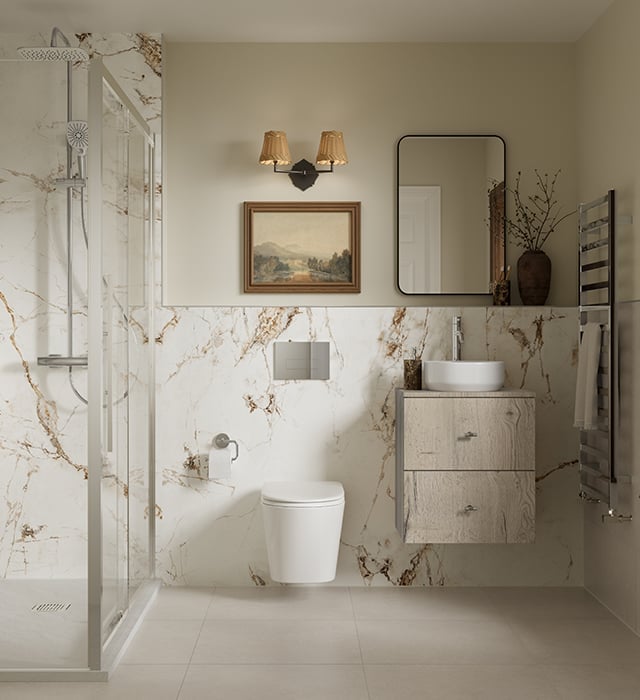
The dramatic marble accent wall runs behind the wood vanity and vessel sink, with an ornate mirror hanging above. The cream, gold, and brown palette stays restrained, so the marble becomes the main visual focus. The wall sconces on each side of the mirror provide task lighting, and daylight from the window warms the marble. For a compact room with a single vanity and shower enclosure, the marble wall adds depth without needing extra square footage.
Compact Tuscan Bathroom with Rustic Wood Vanity and Stone Sink
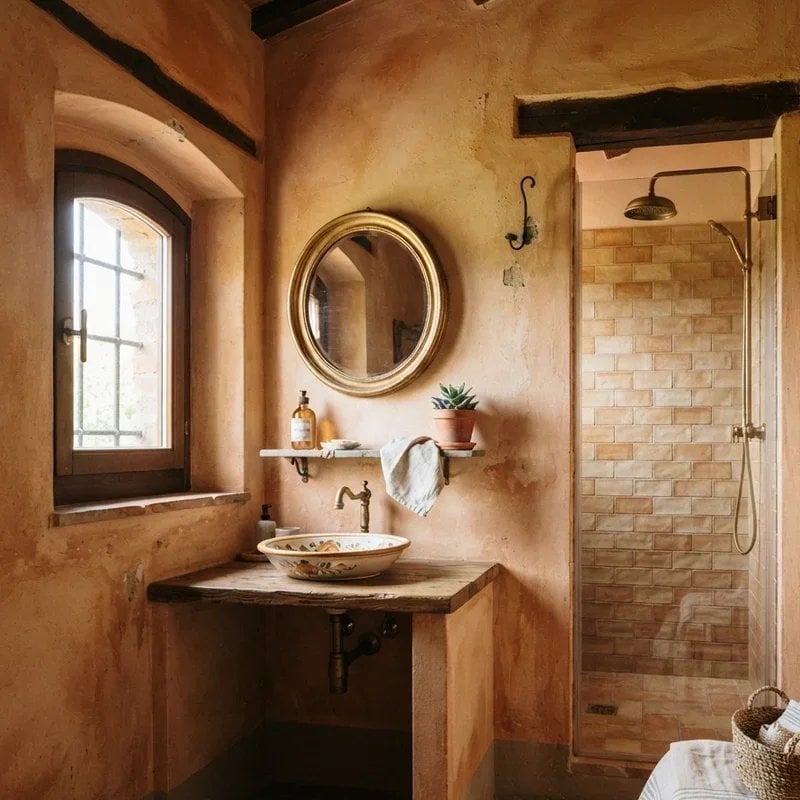
A compact Tuscan bathroom can still deliver a lot of character. The room uses a rustic wood vanity paired with a stone sink as the main focal point. Plaster walls and a terracotta tile floor keep the palette warm without making the space feel cramped. An arched window brings in natural light, and a single wall sconce provides task lighting. In a small layout, choosing one substantial piece like this vanity and sink combo lets the room feel intentional rather than crowded. The key is to let the natural materials do the work. Wood and stone bring texture and warmth that a smaller room can absorb without feeling overwhelmed.
Mediterranean Bathroom with Vertical Terracotta Tiles and Brass
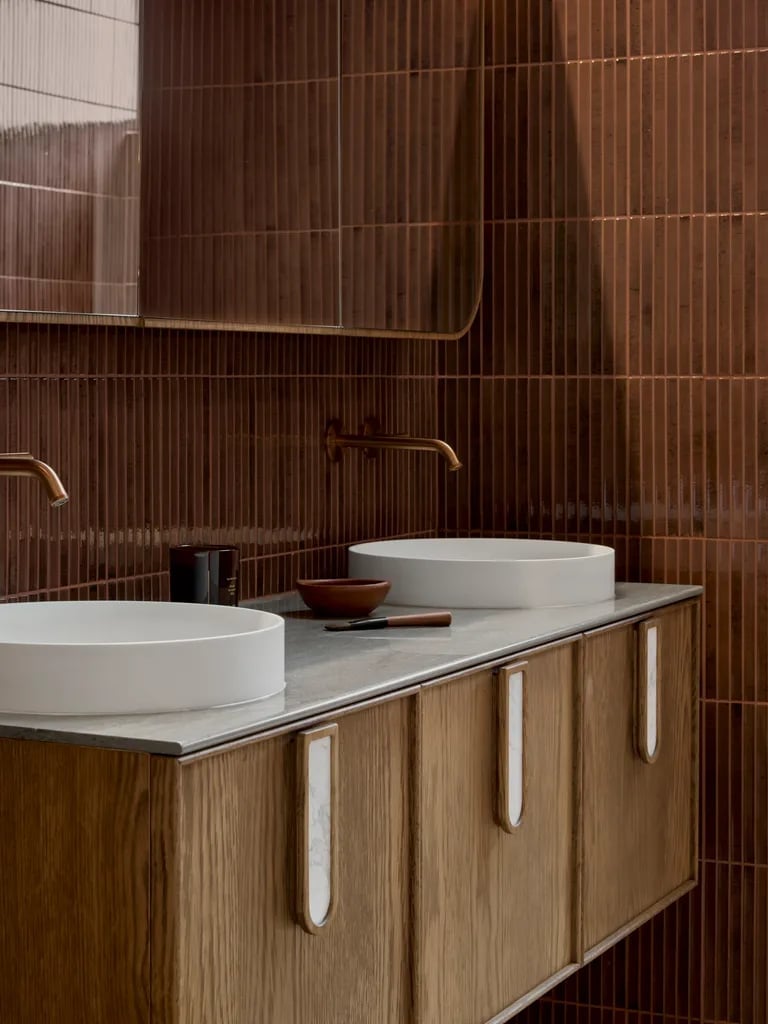
A practical rule for renters is to focus on what you can change without touching the structure. In this roomy bathroom, the vertical terracotta tile wall is the main visual anchor. It runs behind a double vanity with a wood base and brass faucets. The vertical orientation draws the eye upward, which makes the ceiling feel higher. Brass faucets add warmth against the brown and white palette. Natural light from a mirror helps balance the darker wood tones. If you are renting and cannot install tile, a peel-and-stick option in a warm terracotta shade can mimic the look. Pair it with a wood vanity and swap out the faucet for a brass finish if your landlord allows fixture changes.
Tuscan Bathroom with Ornate Vanity, Patterned Tiles, and Wrought Iron
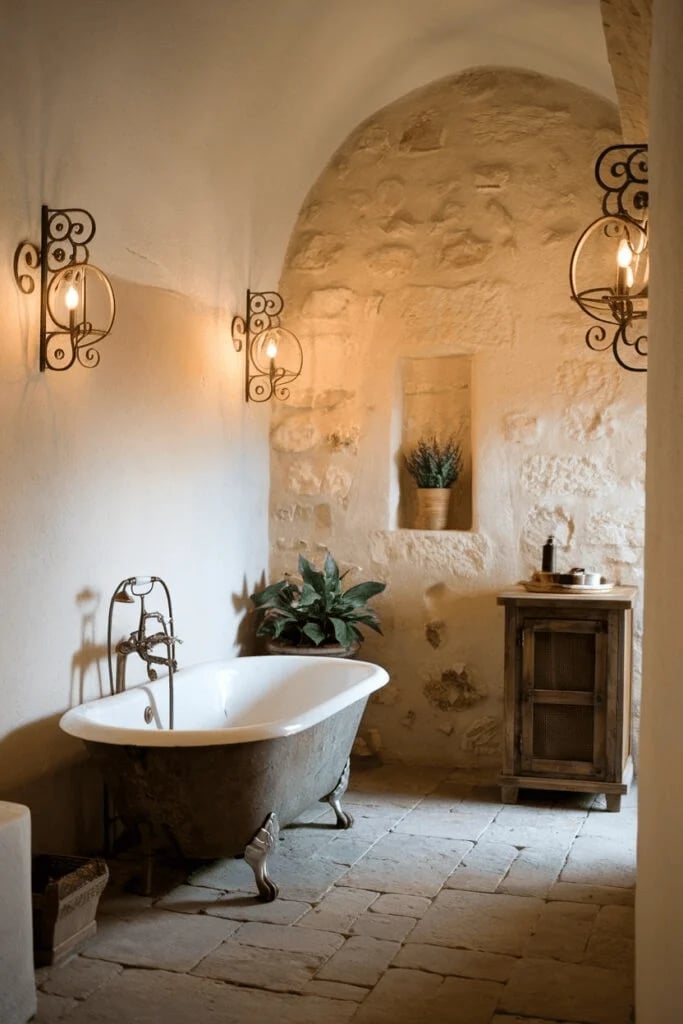
The ornate wooden vanity in this Tuscan bathroom is carved with detail that reads as handcrafted rather than mass-produced. Patterned tiles in cream, terracotta, blue, and gold run across the floor and up the wall behind the vanity. A wrought iron mirror with an intricate frame hangs above the sink. Natural light from a window hits the vanity and tiles, while accent lighting highlights the mirror. The combination of carved wood, patterned tile, and wrought iron creates a layered look that feels collected over time. Each piece has its own weight, so the room avoids looking flat.
Mediterranean Bathroom with Seamless Travertine Vanity and Wood
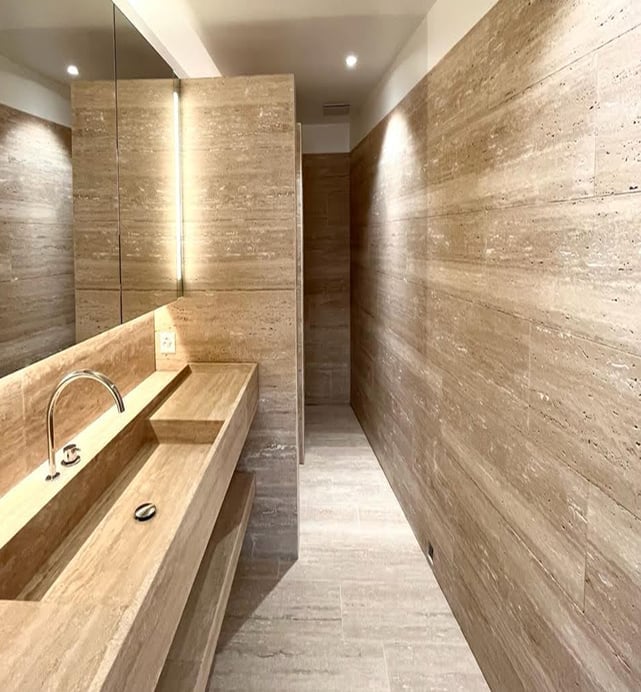
The seamless travertine vanity in this Mediterranean bathroom is a single slab that runs the length of the wall. The stone has a honed finish, so it does not compete with the wood accents for attention. A minimalist faucet keeps the look clean. Recessed lights and strip lighting provide even illumination across the vanity surface. Travertine is a porous stone, so it needs to be sealed properly during installation to resist water damage. The beige, cream, and taupe palette feels calm, and the wood accents add warmth without breaking the monolithic feel of the stone. This setup works well for anyone who wants a vanity that reads as one continuous piece.
Tuscan Bathroom with Terracotta Tiles and Vintage Pedestal Sink
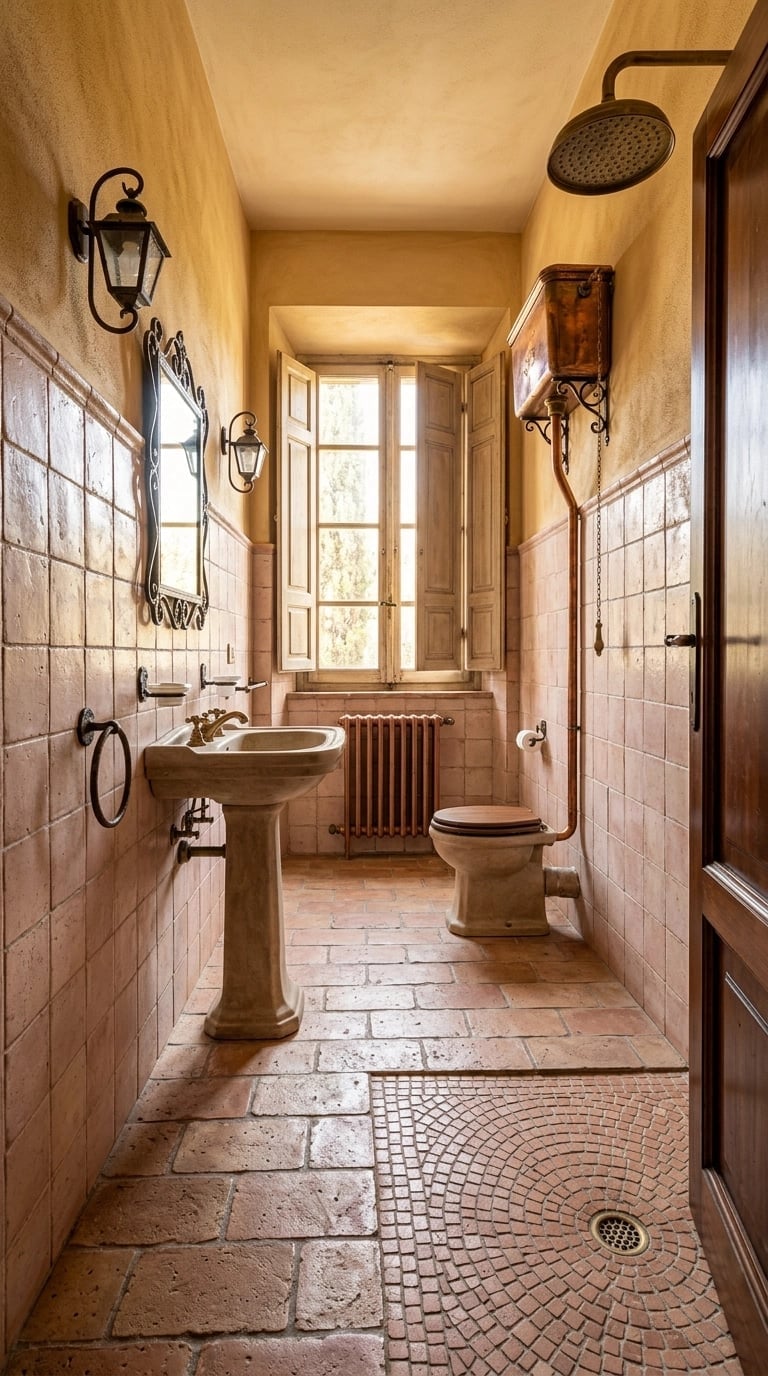
A pedestal sink is the obvious choice for a compact bathroom, but this Tuscan version shows how it can hold its own against a more elaborate vanity. The pink terracotta floor tiles are the room’s strongest visual element. The cream pedestal sink sits against them without competing, and its simple shape keeps the focus on the tile. Wooden shutters over the window add warmth, while wall sconces provide soft light. A vintage radiator in the corner nods to an older building without demanding attention. The palette stays in the warm range with terracotta, cream, and brass accents. In a small space, letting the floor tile take center stage works better than trying to add more pieces.
Mediterranean Bathroom with Pink Square Tiles and Wood, Close-Up Take
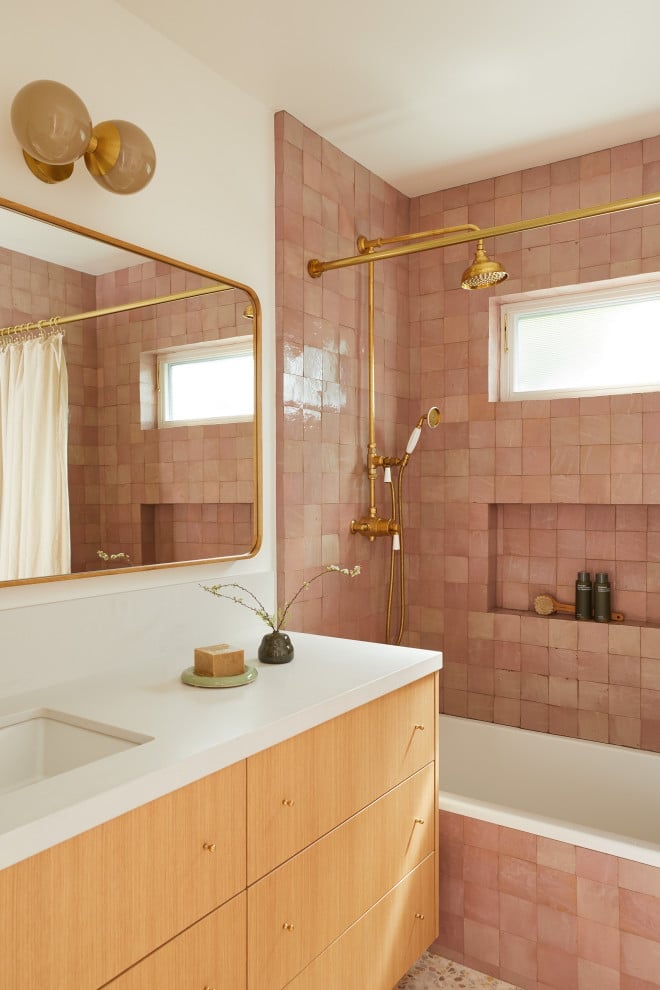
Pink square tiles covering the walls could easily take over a room, but here they work because the palette stays simple. A wood vanity with brass fixtures keeps the look grounded, and the white trim and ceiling stop the pink from feeling overwhelming. The bathtub with a shower setup sits within the tiled area, so the color serves as a backdrop. Ambient light hits the pink tiles directly, softening the shade and keeping it from looking flat. In a roomy bathroom, a single bold color on the walls works when the vanity, fixtures, and ceiling stay in neutral tones that let the color breathe.
Mediterranean Bathroom with Carved Wood Vanity, Close-Up Take
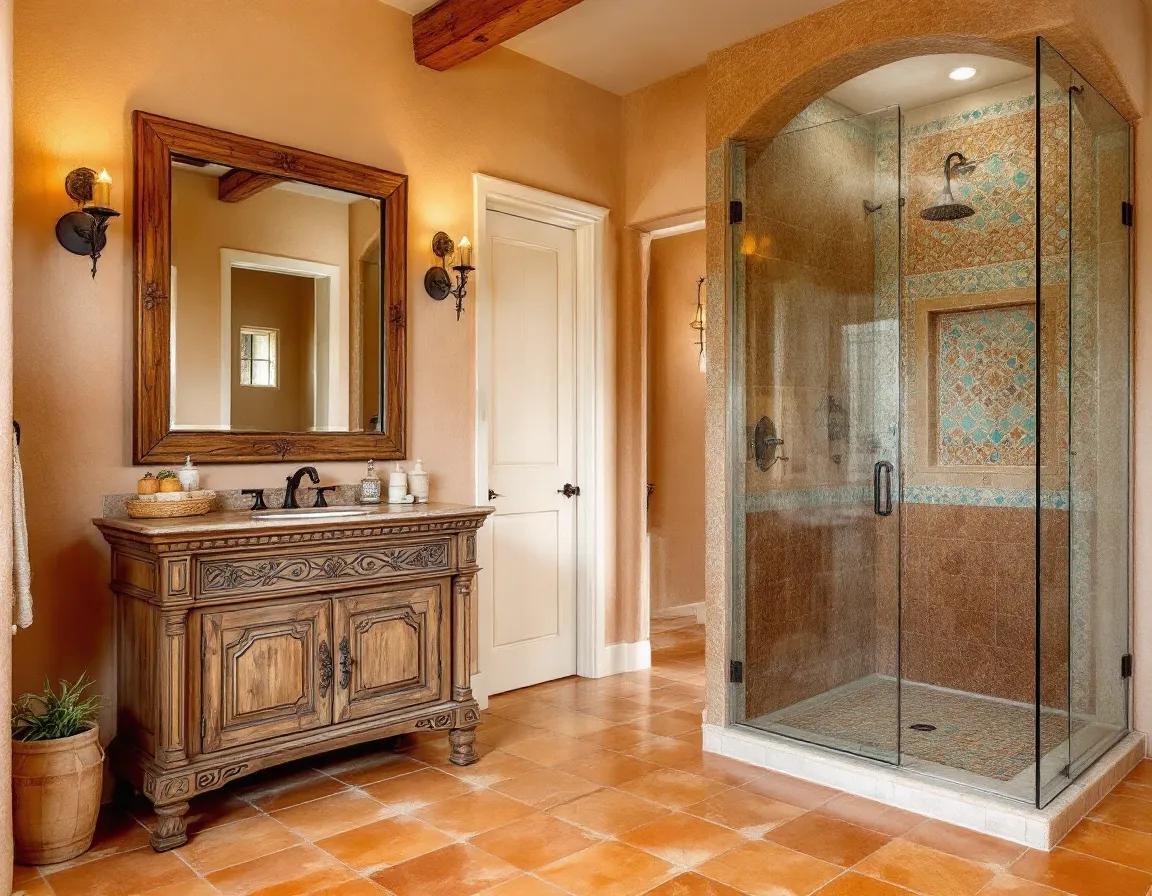
This is a room where the carved wood vanity does the talking. The dark wood has visible grain and detailing that looks handcrafted, and it stands out against the cream plaster walls and terracotta tile floor. The arched shower entry on the right echoes the curve of the ornate mirror above the vanity, which creates a visual rhythm across the room. Blue accent tiles in the shower add a cooler note to the warm terracotta and brown palette. Wall sconces provide ambient light that hits the wood grain directly, making the vanity the clear focal point even from across the room. In a Mediterranean bathroom, a single ornate piece can anchor the whole layout when the surrounding materials stay simple.
Tuscan Bathroom with Clawfoot Tub and Ornate Floor, Close-Up Take
A clawfoot tub is often the centerpiece in a vintage-style bathroom, but this one has competition from the floor. The ornate patterned tiles in earth tones and cream cover the floor in a repeating design that draws the eye down as much as the tub draws it up. The clawfoot tub sits centered in the room, with a glass shower enclosure on the left and a wood vanity on the right. Wall sconces and natural light from a window keep the room bright, so the intricate floor pattern does not make the space feel dark or busy.
The trick here is letting the floor tiles be the main pattern while keeping everything else in solid tones. The wood vanity has a simple silhouette, the tub is white, and the walls stay in cream. In a Tuscan bathroom with ornate floor tiles, the tub and vanity need to be quiet so the floor can be loud without overwhelming the room.
Mediterranean Bathroom with Textured Plaster and Stone, Close-Up Take
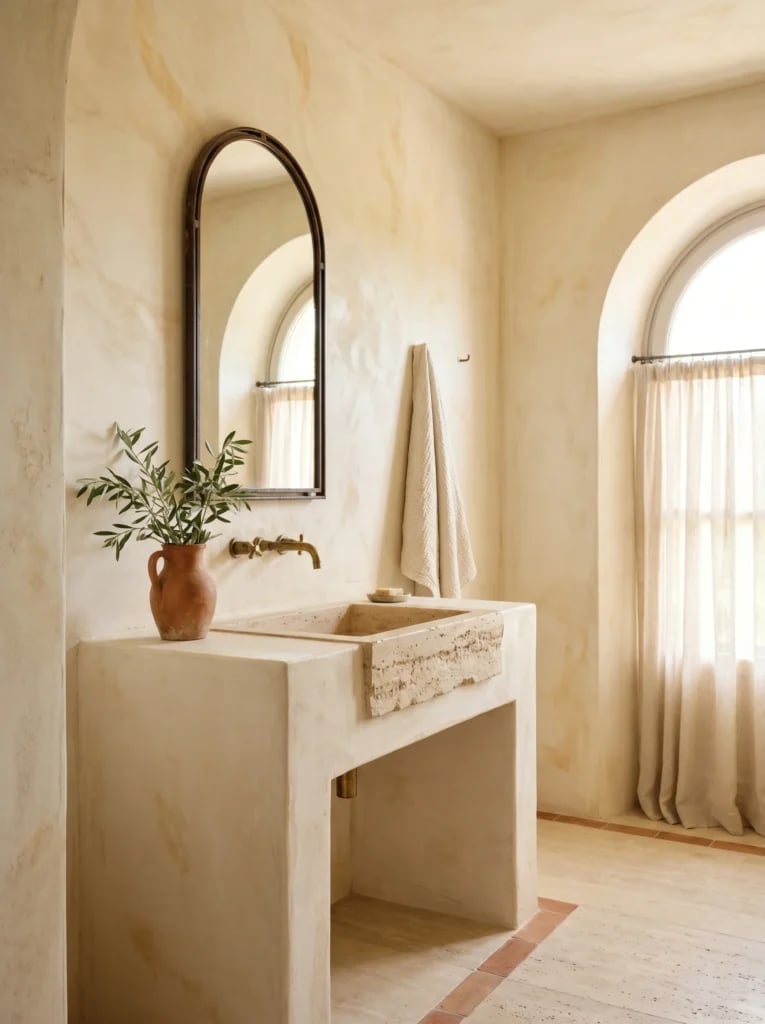
The textured plaster walls in this roomy bathroom give the cream and beige palette a tactile quality that flat paint cannot match. The stone pedestal sink sits against the wall under an arched mirror, with a brass faucet rising from the basin. The hand applied finish changes appearance as the sun moves through the day. The terracotta tile floor adds a warm base. For a room that relies on texture, the lighting is the practical piece that makes the materials look finished. Wall sconces on each side of the mirror would add the same effect without altering the walls.
Vintage Apothecary Bathroom with Repurposed Dresser, Close-Up Take
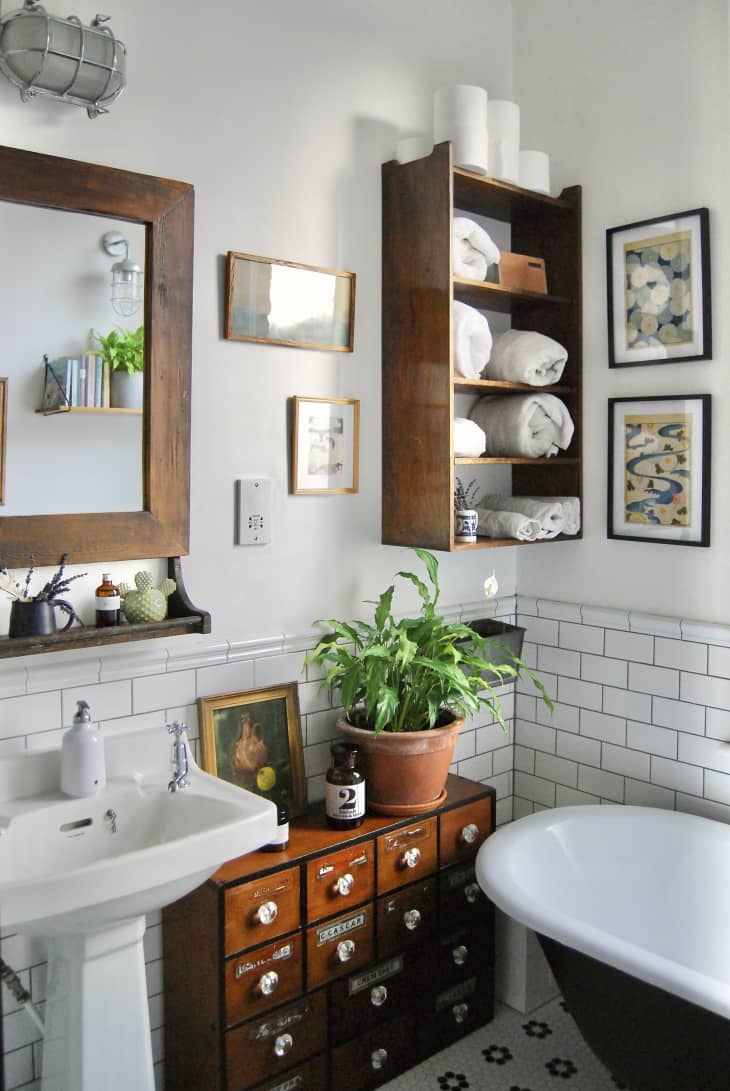
A vintage dresser makes a surprisingly smart vanity for a compact bathroom. The green painted wood base with brass hardware has drawers that offer real storage for toiletries and towels, which a standard pedestal sink cannot match. A marble top protects the wood from water, and an ornate mirror hangs above to keep the apothecary feel intact. The warm wall sconce on each side provides task lighting for the sink area without taking up counter space. The key to making a repurposed piece work in a bathroom is sealing the wood properly and making sure the sink basin fits the dresser top without overhang. It is a swap that gives a small room character and actual storage without a full renovation.
Compact Mediterranean Bathroom with Decorative Sink and Copper Faucets
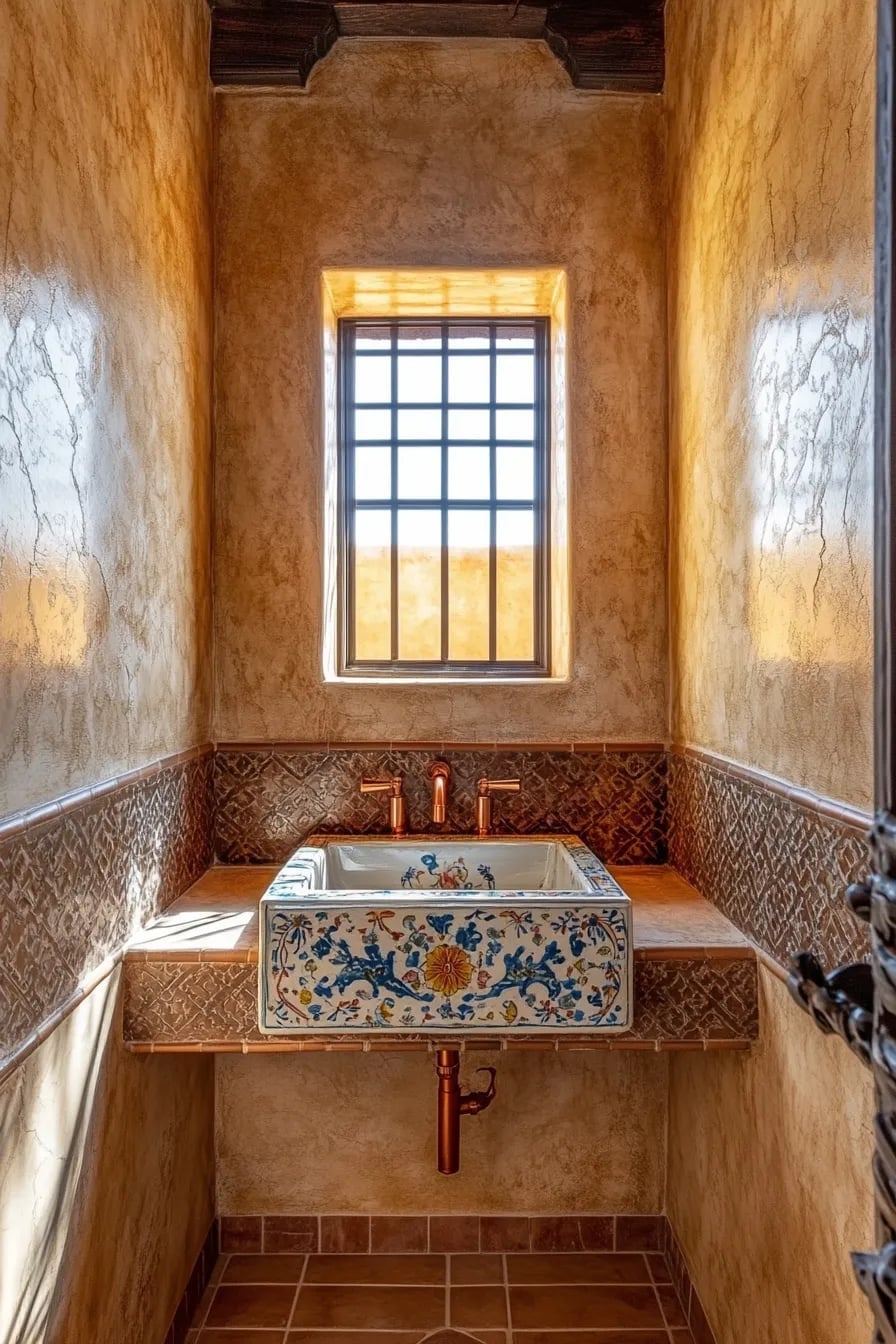
A compact Mediterranean bathroom often defaults to a simple pedestal sink to save space. This one goes the other direction, using a highly decorative sink as the room’s main event. The basin has an ornate shape and finish that draws the eye immediately, while copper faucets rising from the counter keep the metal tones warm and consistent with the style. A tiled backsplash in earth tones with touches of blue and yellow runs behind the sink, tying the palette together without adding more visual weight. The window above the sink has a metal grate that filters natural light, casting patterned shadows across the tile and sink. The plaster walls stay in a neutral white, so the decorative sink and tilework do the talking. In a small space, letting one piece be ornate and keeping everything else simple is a layout trick that avoids clutter. The copper faucets echo the warm tones in the tile, so the room reads as cohesive rather than busy.
Final Thoughts
A Tuscan bathroom works best when the materials feel honest. Plaster, stone, copper, and wood all age gracefully, which means less fuss over upkeep. If you are renting, focus on swap-in pieces like a wooden stool, a wrought iron mirror, or a ceramic vessel sink. For homeowners, tile and fixture choices carry the look longest. Check your local climate before committing to natural stone or unsealed plaster, especially if you live in a humid zone. Keep the layout simple, let texture do the work, and resist the urge to over-decorate. That restraint is what makes the style feel timeless.