
Two-tone kitchen cabinets are a practical way to break up a monochrome space without a full renovation. By pairing a darker shade on the lower cabinets or island with a lighter tone above, you add visual weight where it counts and keep the room from feeling top-heavy.
This collection of 28 kitchens shows how different color combinations work with real storage layouts, from deep green perimeter cabinets to light wood uppers. Each setup focuses on the cabinetry as the main element, so you can see how the color split changes the feel of the kitchen without extra clutter.
Modern Kitchen with Dark Wood Uppers and Grey Lowers
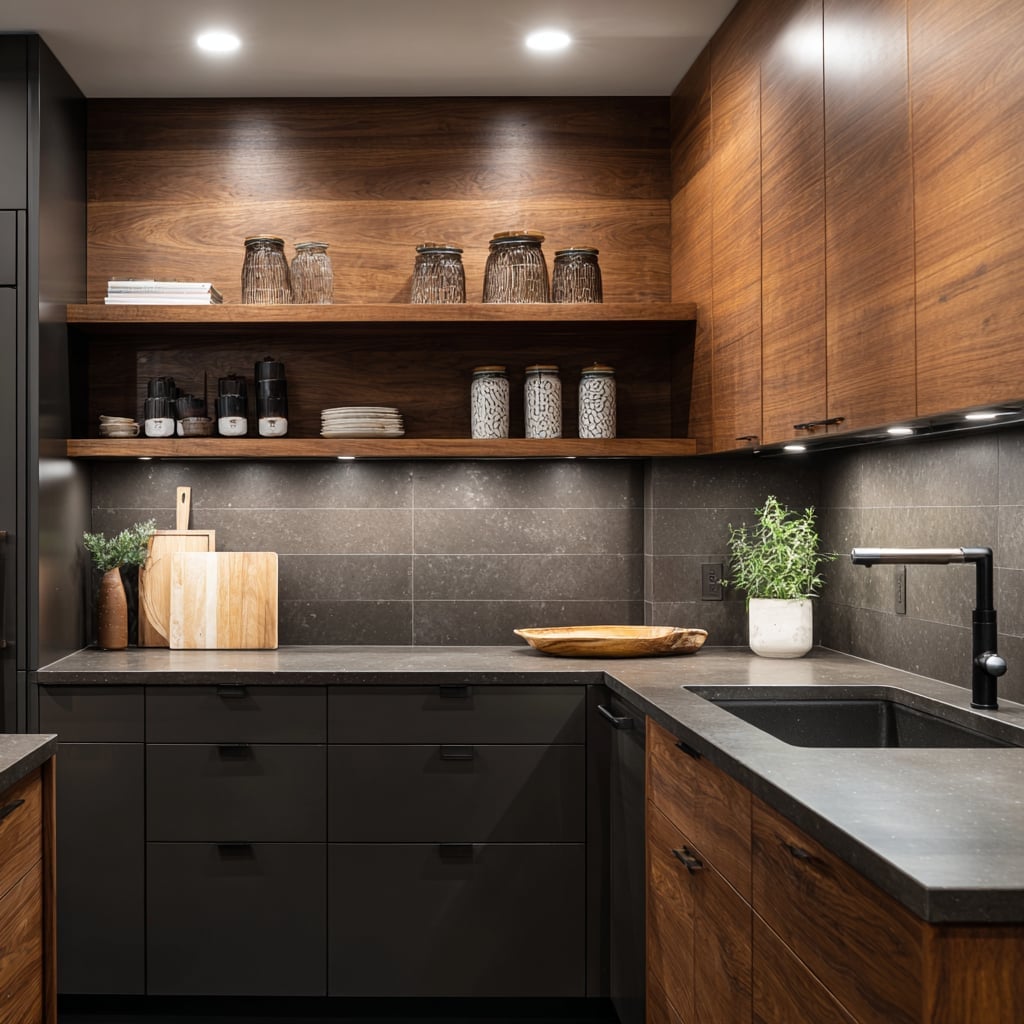
A corner kitchen with an island gets a grounded feel when the upper cabinets are dark wood and the lowers are grey. The wood shelves pick up the same tone as the uppers, so the eye moves up and down without a hard stop. Stone countertops and black details keep the palette tight. Under-cabinet lighting is the quiet workhorse here: it makes the dark wood read as warm instead of heavy, and it gives the counters a clear task light. Recessed lights handle the rest. This layout works because the dark tone stays above eye level, while the grey lowers keep the base of the room from feeling closed in.
Deep Blue and Natural Wood Two-Tone Cabinetry
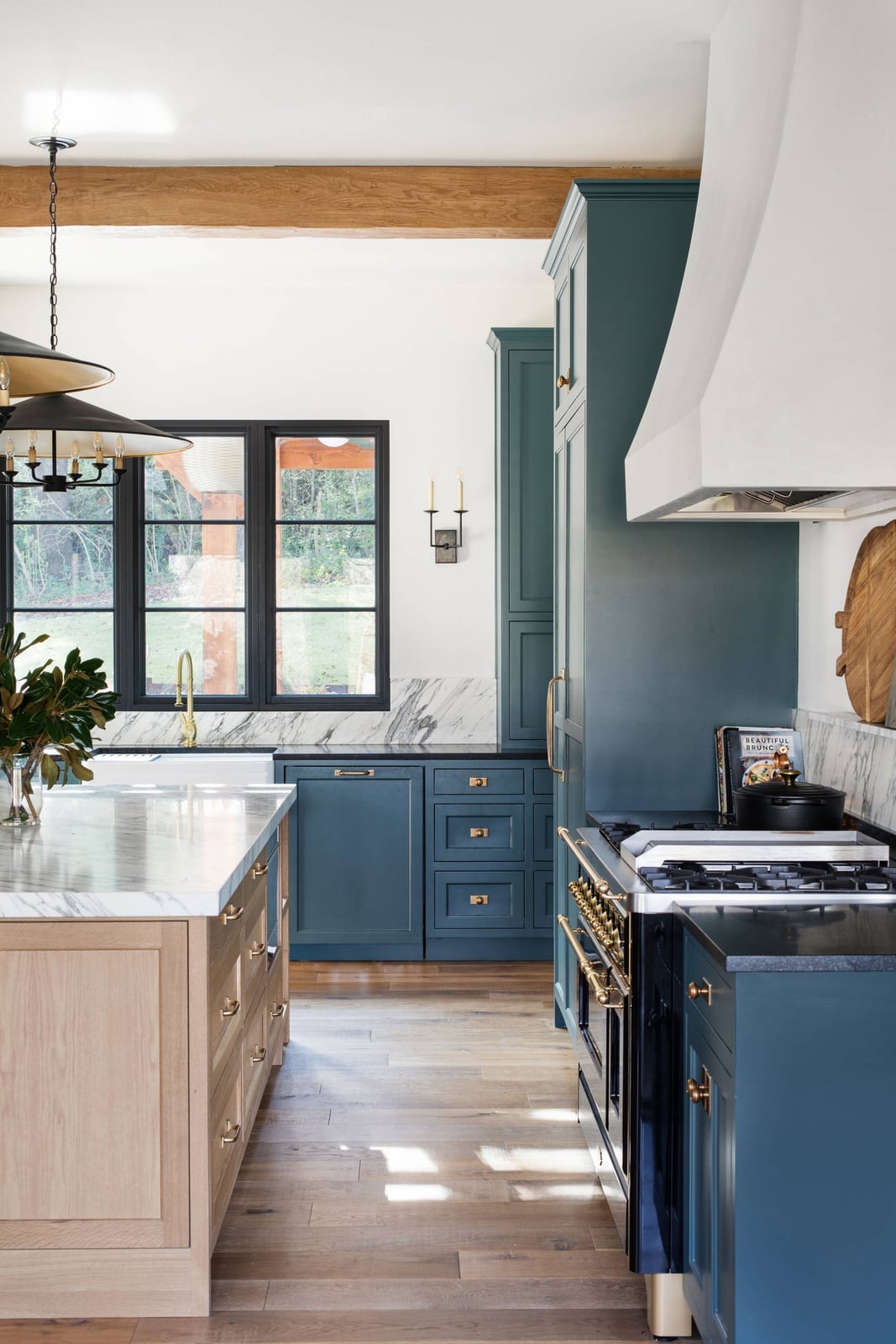
Deep blue cabinets paired with natural wood and white marble is a palette that holds its own without trying to be neutral. The blue reads as the anchor, the wood adds warmth, and the marble keeps things light. A galley layout with an island gives the deep tone room to breathe. The brass faucet is the small detail that ties the wood and the blue together, since both have a slight warmth to them. For a modern transitional kitchen, the ratio matters: the blue covers the main cabinetry, the wood shows up on the island, and the white stays on the counters and backsplash. That balance keeps the blue from dominating the whole space. If you are drawn to deep blue natural wood two tone kitchen cabinets, this is a workable starting point.
Classic Kitchen with Olive Green Island and White Shaker Cabinets
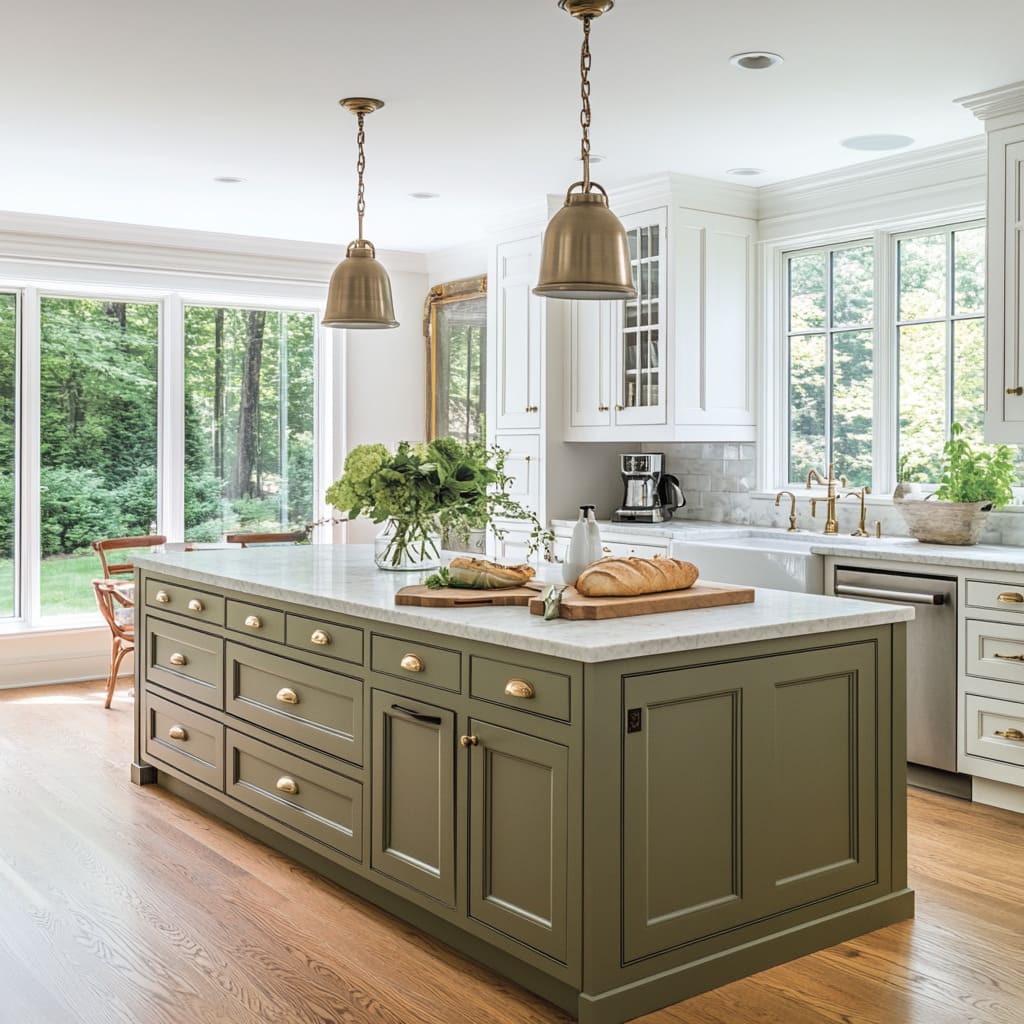
What makes an olive green island feel like a deliberate choice? It comes down to the materials around it. White shaker cabinets give the green a clean backdrop, and the marble countertop adds a soft veining that echoes the muted tone of the island. The wood tones in the room, likely in the floor or open shelving, keep the green from floating. Pendant lights over the island add a focused pool of light that makes the painted surface the obvious center of the room. Let the island carry the color and keep the perimeter quiet. That way the green is a deliberate choice, not a leftover. For a classic kitchen, this pairing works because the shaker profile is familiar, while the olive green gives it a current edge.
Dark Green Cabinets Paired with a Brass Island
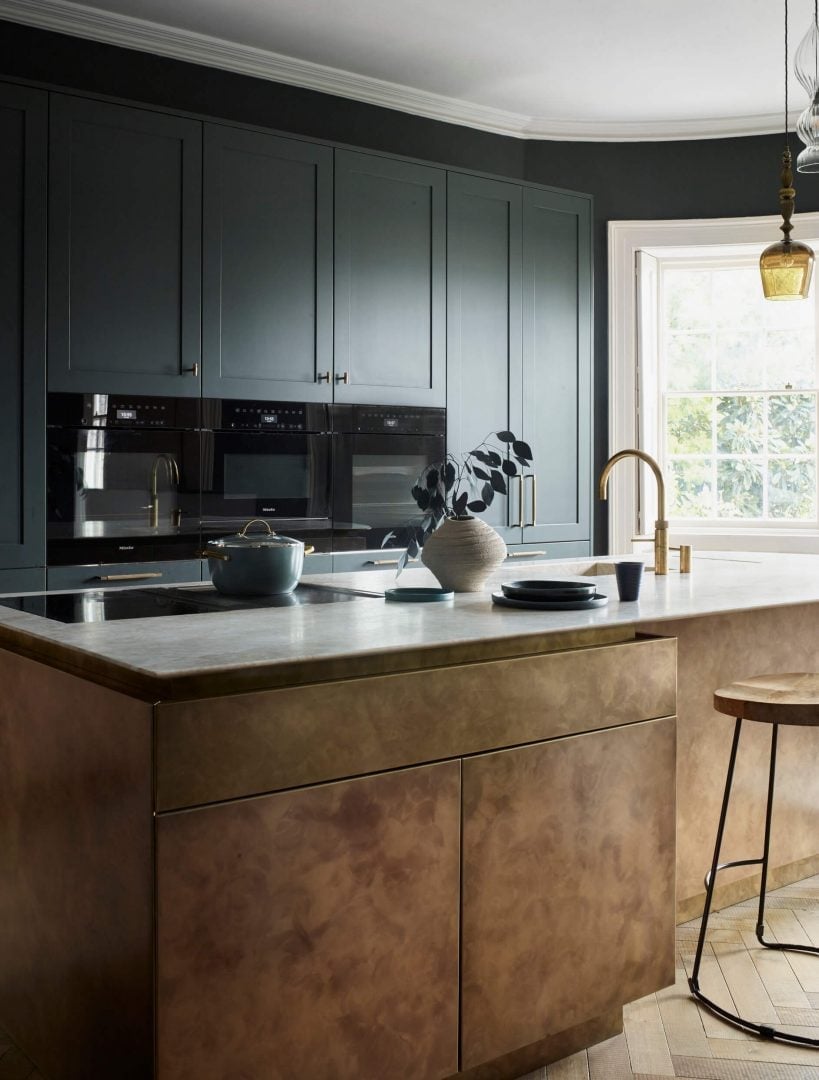
Brass hardware on dark green cabinets is a direct way to add light to a deep color. The brass island and fixtures catch the task lighting and the pendant lights, so the metal does more than just decorate. In a modern kitchen with integrated appliances, the green stays the main surface, while the brass works as the bright accent. A marble island top keeps the look from going too dark. The practical note is lighting: dark cabinets need a strong light source near the work surface, whether that is under-cabinet strips or a pendant aimed at the island. The brass reflects that light, which is why it stands out here. If you want the dark green cabinets brass island modern kitchen look, plan the lighting before you pick the hardware.
Light Wood Perimeter Cabinets with a Grey Island
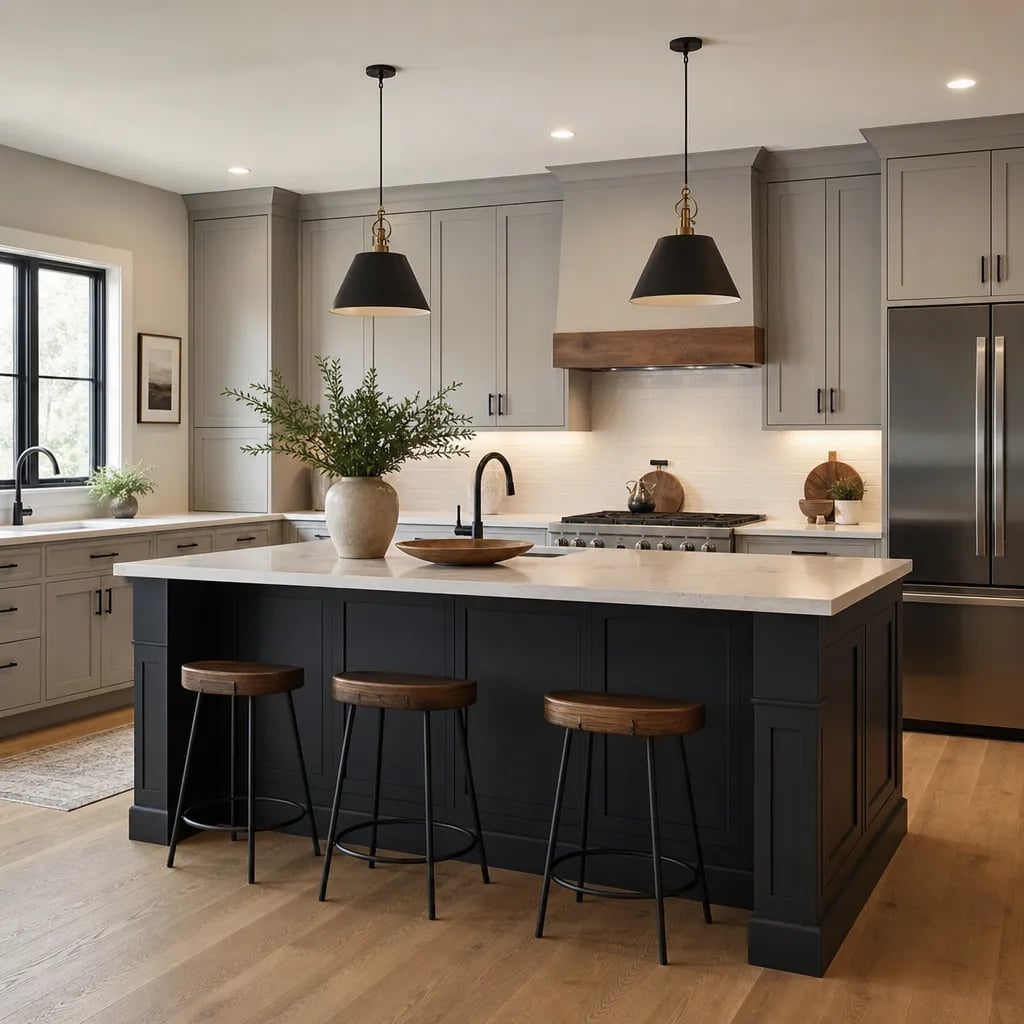
In a two-tone kitchen, keep the lighter color on the perimeter and the darker color on the island. Light wood cabinets along the walls make the room feel open, while a grey island gives the eye a place to land. In an open plan space, that contrast defines the cooking zone without adding walls. The marble countertops on the island echo the light tone of the wood, so the grey acts as a base rather than a separate element. Pendant lights over the island add task light where you need it, and recessed lights fill the rest. Storage works the same way: keep everyday items in the grey island where they are easy to reach, and tuck less used things into the light wood uppers. The two tones become a functional split, not just a color choice.
Dark Green and White Two-Tone Cabinets with Black Range
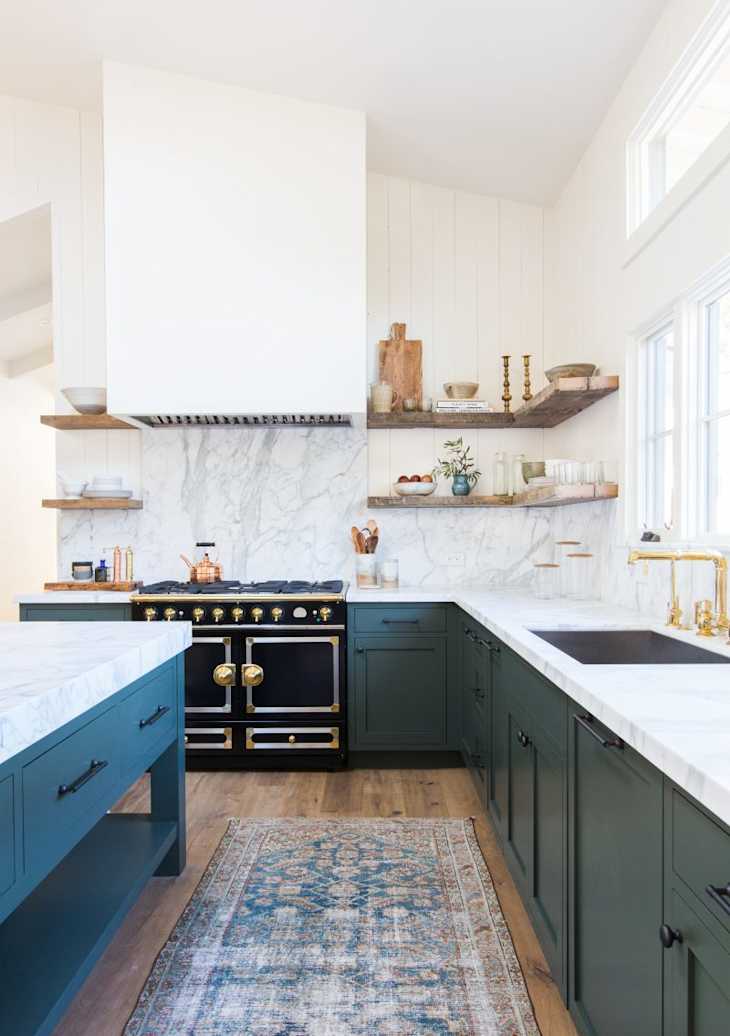
If you are leaning toward navy lowers but worry the room will feel heavy, dark green is a softer anchor. Here the lower cabinets and island are painted a deep forest green, while the uppers stay white. The palette gets its structure from that black range: it sits against the green island and stops the eye from wandering. White marble on the island countertop and a wood floor balance the cool tones. A single dark element in a different material, here the black range, can tie two cabinet colors together without adding a third paint color. It is a budget swap in the sense that you are using an existing appliance as your third color instead of painting a third set of cabinets.
White and Deep Blue Cabinets with a Patterned Wood Floor
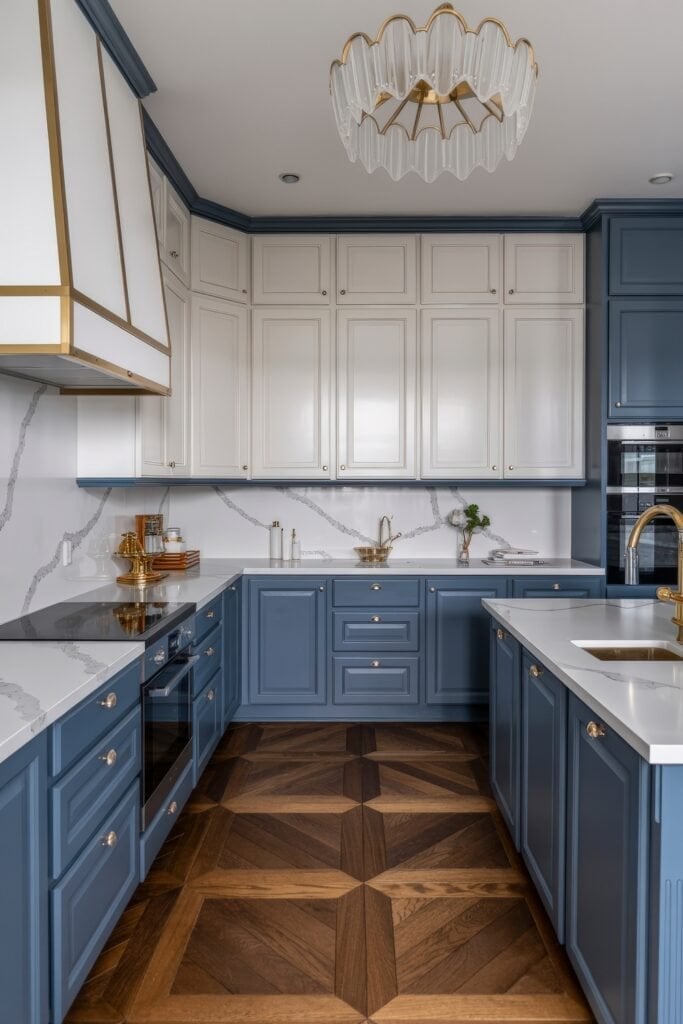
White uppers and deep blue lowers are a classic two-tone pair, but what makes this kitchen feel particular is the patterned wood floor. The floor introduces a warm, busy texture that the clean cabinet lines need. A marble backsplash and brass hardware add the light and metallic notes that keep the deep blue from flattening the room. For a renter, the takeaway is that you do not need to paint cabinets to get this effect. A large blue island on casters or a blue kitchen cart set next to white perimeter cabinets mimics the same split. The floor is doing the real work of holding the look together.
Deep Green and Natural Wood Two-Tone Cabinets with Slate Floor
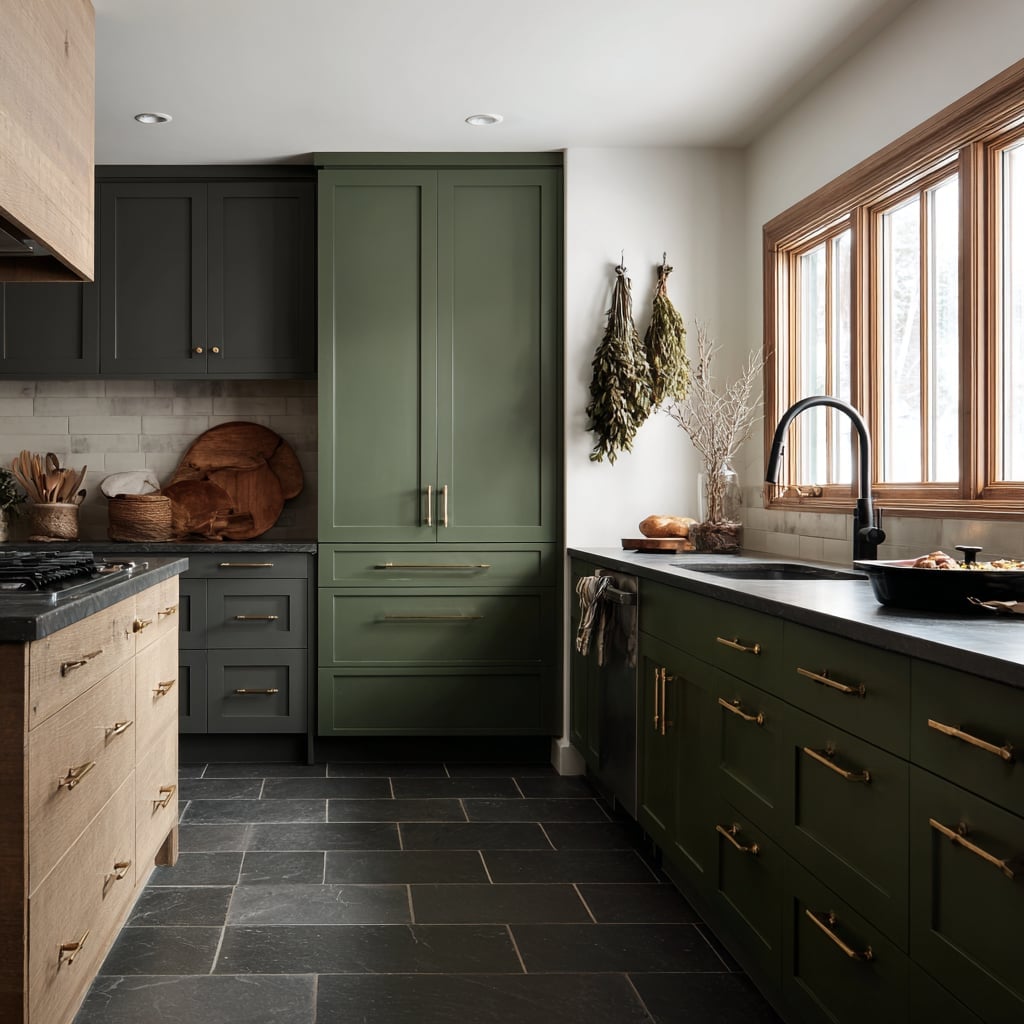
This is a straightforward split: deep green painted upper cabinets and natural wood base cabinets. The wood is warm and unvarnished looking, which keeps the green from feeling like a solid wall of color. The slate tile floor is grey and matte, so it does not compete with the wood for warmth. The natural light hits the wood base and the green uppers at different angles, giving the kitchen depth without any pattern. The material lesson is about weight distribution. Painted wood on top and raw wood below makes the room feel grounded. If you reverse it, dark paint on the base, the room can feel top-heavy unless you have a light floor to balance it.
Contemporary Kitchen with Brown Wood Cabinets and Curved Range Hood
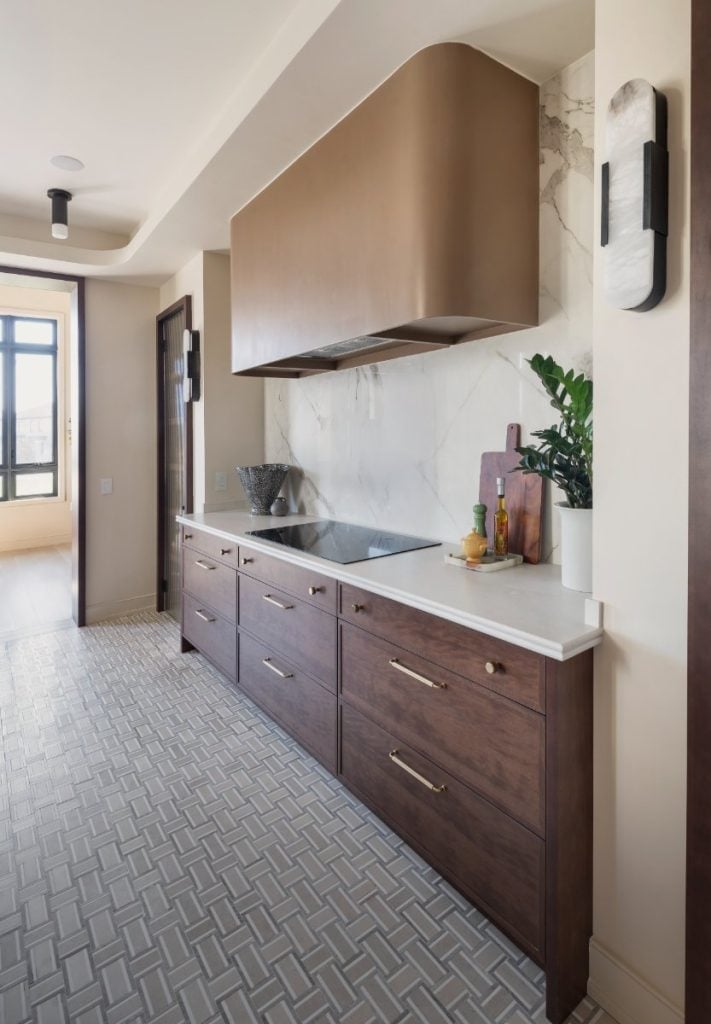
Can you make a compact kitchen feel sculptural without adding square footage? This one does it with a single curved form. The brown wood cabinets run along a linear layout, but the curved range hood in the same wood finish breaks the straight line. The hood becomes the focal point, so the rest of the cabinetry can stay simple and flat-front. The countertop is a light stone, and the backsplash is a neutral tile that does not interrupt the flow. The storage principle here is about visual subtraction. In a small kitchen, every handle and panel line adds noise. A curved hood removes the need for any decorative element above the range. You get the interest from the shape rather than from hardware or tile.
White and Teal Two-Tone Cabinets with Wooden Island Countertop
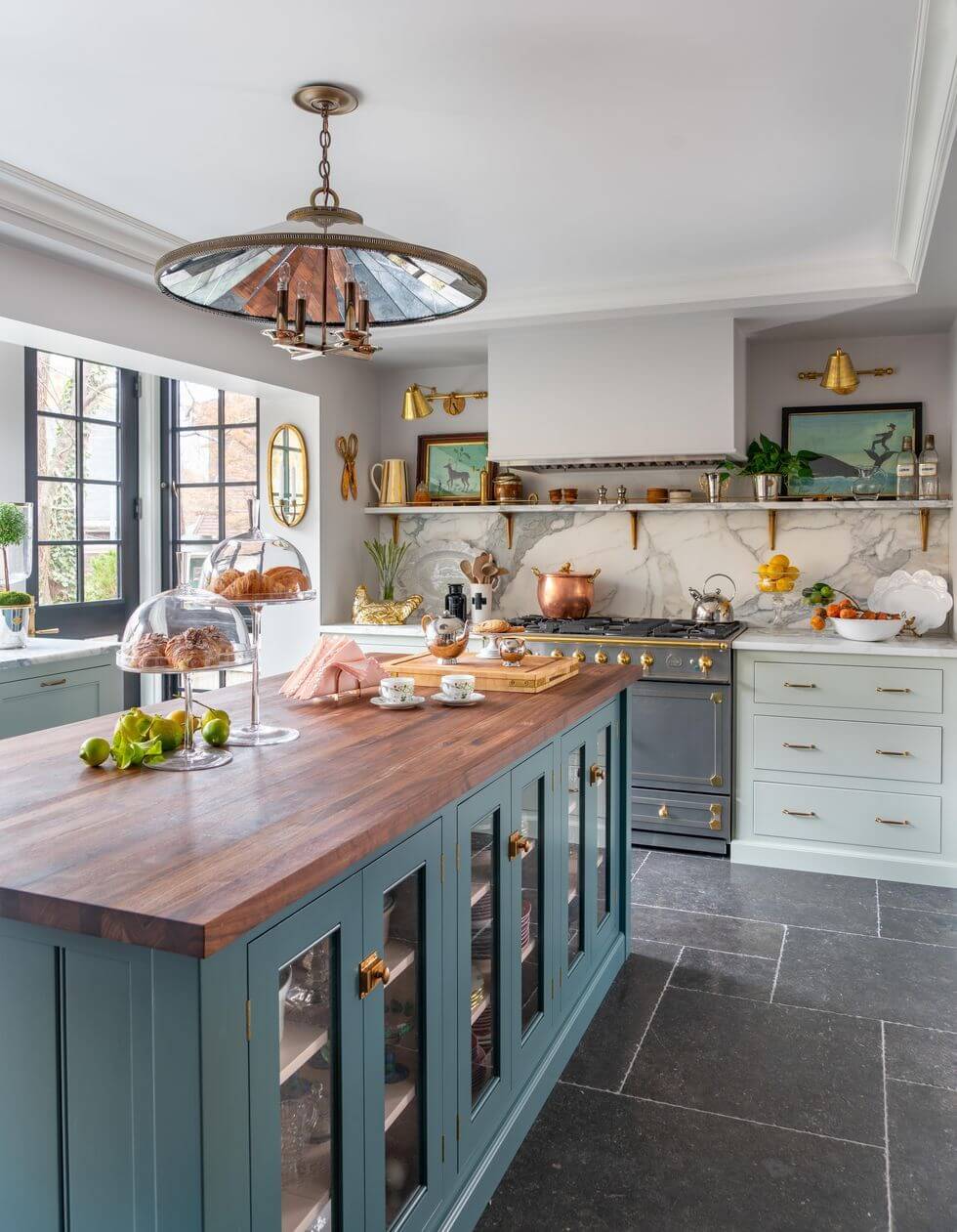
White upper cabinets and teal lower cabinets make a clean color block, but the unexpected move is the wooden island countertop. Instead of matching the marble perimeter counters, the island uses a butcher block style surface in a warm wood tone. That wood sits between the teal base and the white uppers, acting as a neutral bridge. The pendant lights above the island are a simple metal shade, so they do not pull attention from the counter. The proportion lesson is that a two-tone kitchen needs a third surface to mediate the contrast. Here the wood countertop does that job. Without it, the teal and white would feel like two separate rooms meeting at the counter edge.
Black Glass-Front Uppers with White Lower Cabinets
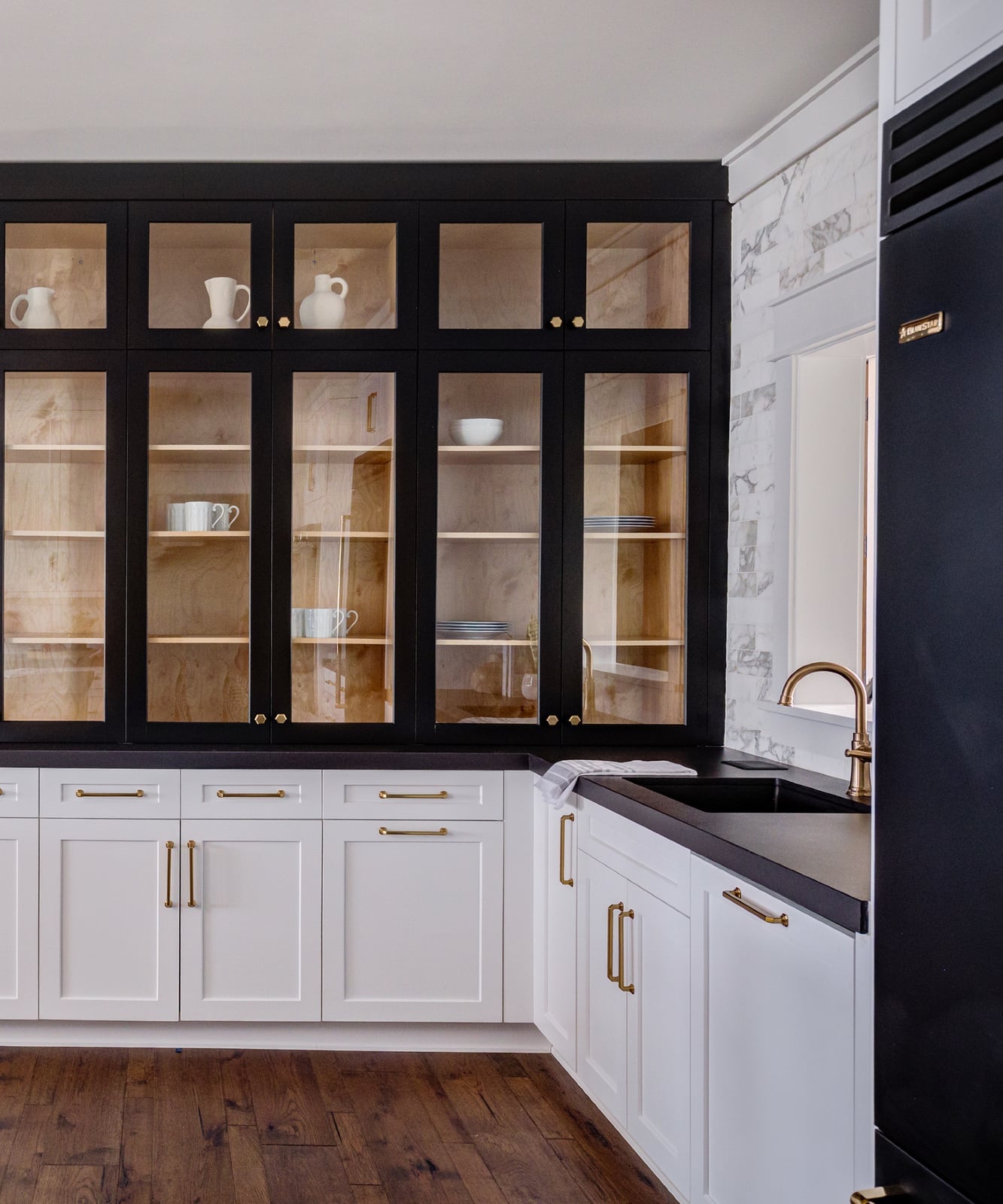
A practical rule for storage is to put what you use every day behind glass and the rest behind solid doors. Black glass-front upper cabinets sit above white lower cabinets and drawers, with black appliances repeating the dark tone. The glass fronts break up a wall of cabinetry so it does not feel too heavy, and they let you see dishware or glassware without opening a door. The white lowers keep the counter area visually light, and the wood tones in the marble countertop add warmth. This setup works well in a modern kitchen where you want the uppers to feel like display pieces rather than just storage.
Dark Wood and Cream Two-Tone Cabinets with Brass Accents
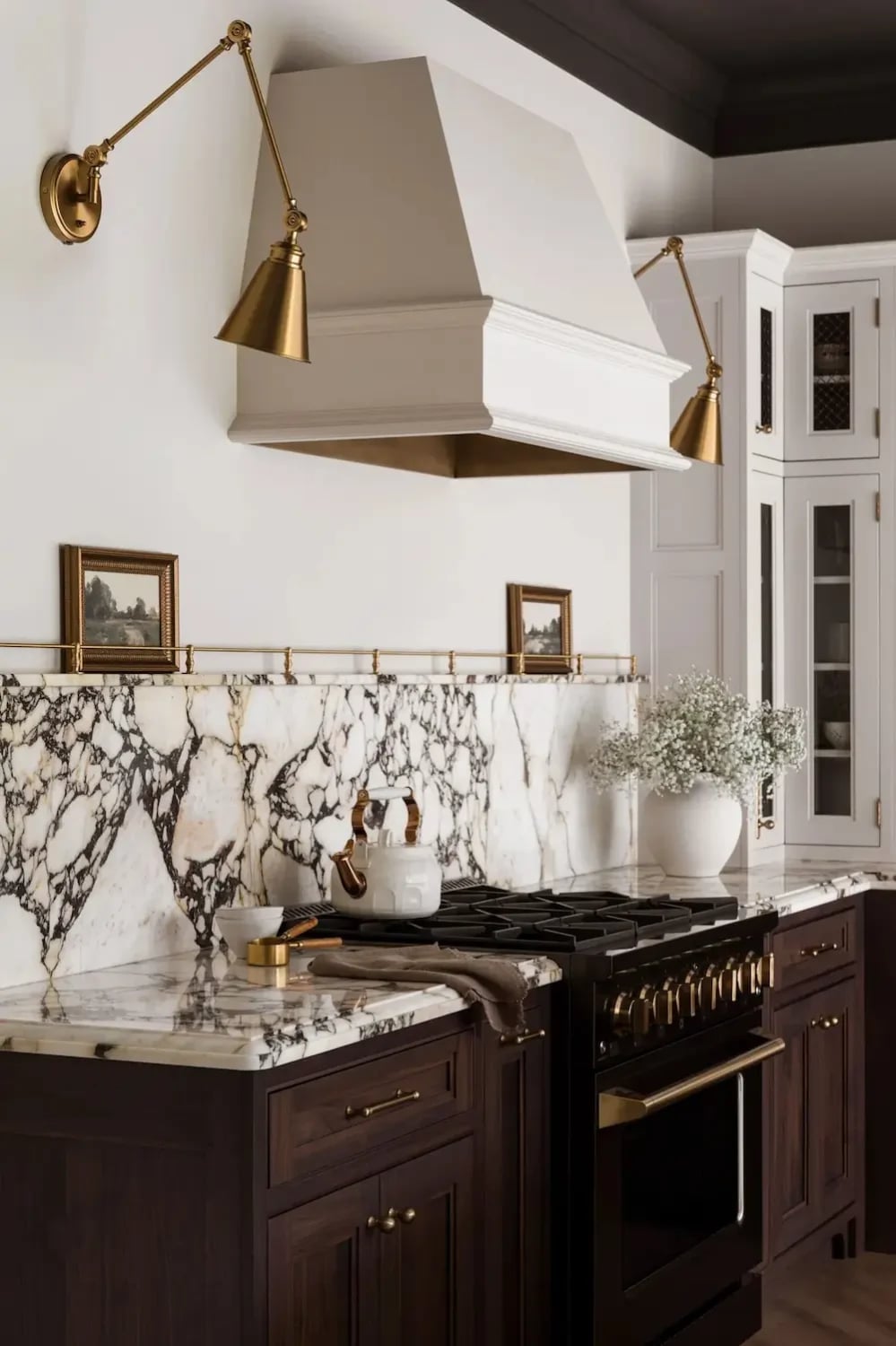
Cream cabinets can feel too sweet on their own, but paired with dark wood they gain some weight. The dark wood cabinets anchor the room while the cream cabinets keep it from feeling like a cave. Brass sconces and hardware add a warm metallic note that connects the two tones. The marble countertop and backsplash bring in a cool, veined surface that breaks up all the solid color.
What defines this palette is the ratio: more cream than dark wood, so the room stays bright. The brass accents are the thread that ties it together. A transitional kitchen like this one works because the cream is not a stark white and the wood is not black. The two tones sit close enough in depth that the contrast feels deliberate.
Teal Lower Cabinets with White Upper Cabinets and Marble Island
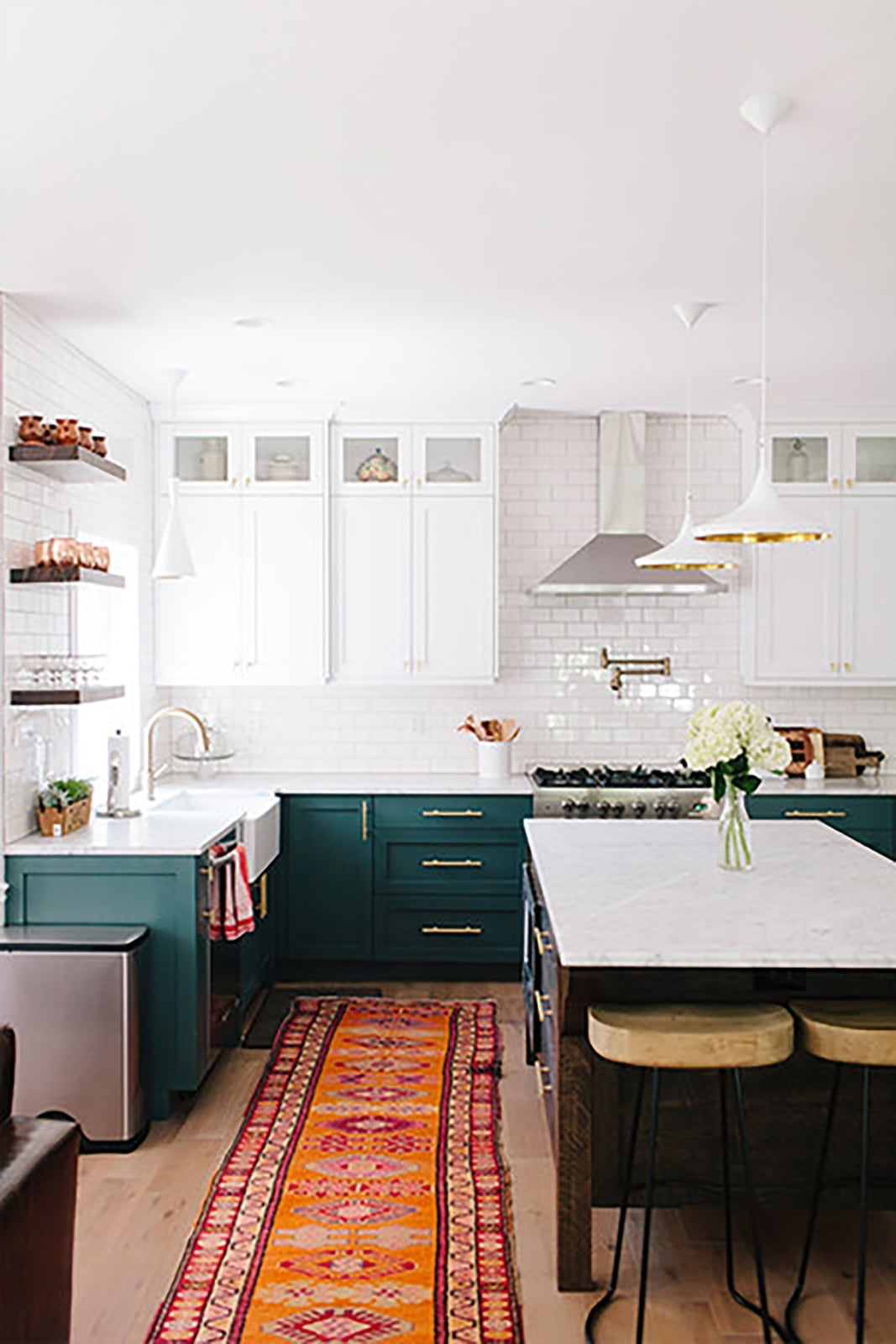
The teal lower cabinets sit directly on the floor, so the color grounds the kitchen, while the white upper cabinets keep the ceiling area open. A marble island with a wood countertop on one side adds two different surfaces in one piece. The pendant lights above the island bring task light right where you need it, and natural light from nearby windows keeps the teal from reading as too dark. The wood tones in the countertop and the metal faucet stop the palette from feeling like just a blue and white stripe.
Dark Green Built-In Cabinet Unit with Brass Hardware
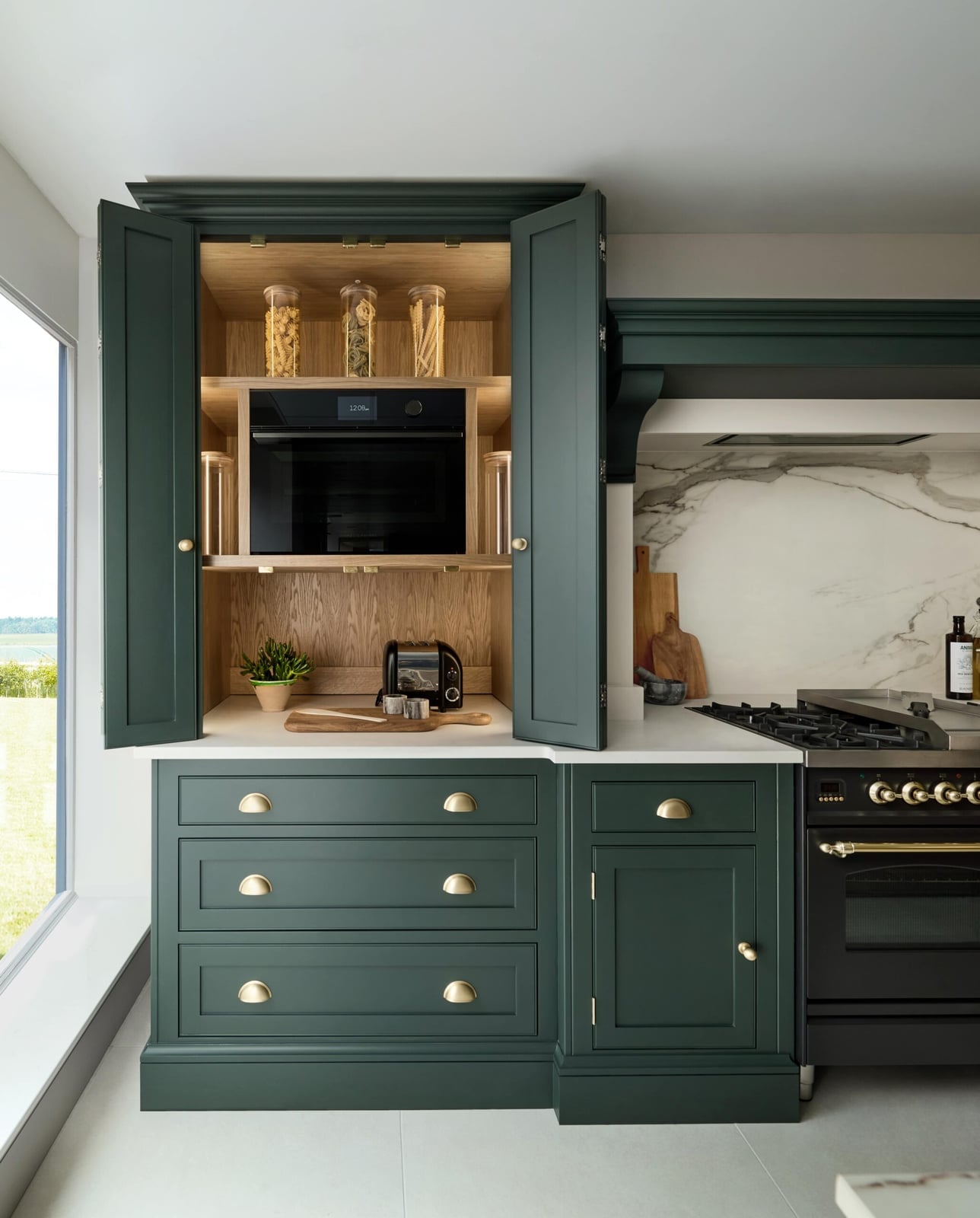
This dark green built-in cabinet unit works because it uses light to stay open rather than closed off. The brass hardware catches ambient and task light, giving each pull and knob a small highlight that breaks up the large dark surface. The marble countertop and backsplash reflect light upward, so the green does not absorb all the brightness in the room. The built-in design integrates the oven and drawers into one continuous line, which makes the storage feel planned rather than added on. For a similar effect, keep the surrounding walls light and let the hardware do the shining.
Blue Lower Cabinets with White Upper Cabinets and Gold Hardware
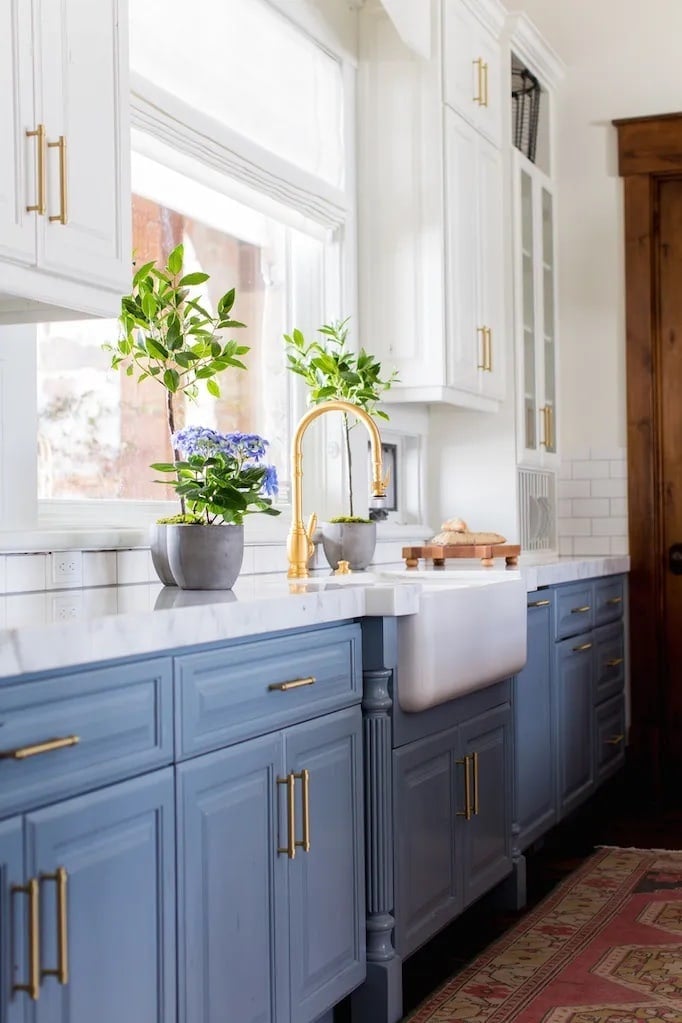
For storage, use the lower cabinets for heavier, less frequently accessed items and the uppers for daily reach. Blue lower cabinets with white upper cabinets follow that logic: the darker color hides the wear of pots and pans, while the white uppers keep everyday dishes easy to spot. Gold hardware on both levels ties the two tones together.
This kitchen has a linear cabinet layout with an island, so the blue continues onto the island base for a cohesive look. Natural light from windows and recessed lighting keep the blue from appearing too dark. The marble countertop adds a light, veined surface that echoes the white uppers. The gold hardware is the detail that makes the blue feel deliberate.
Pink, Grey, and Wood Tone Two-Tone Cabinets with Island
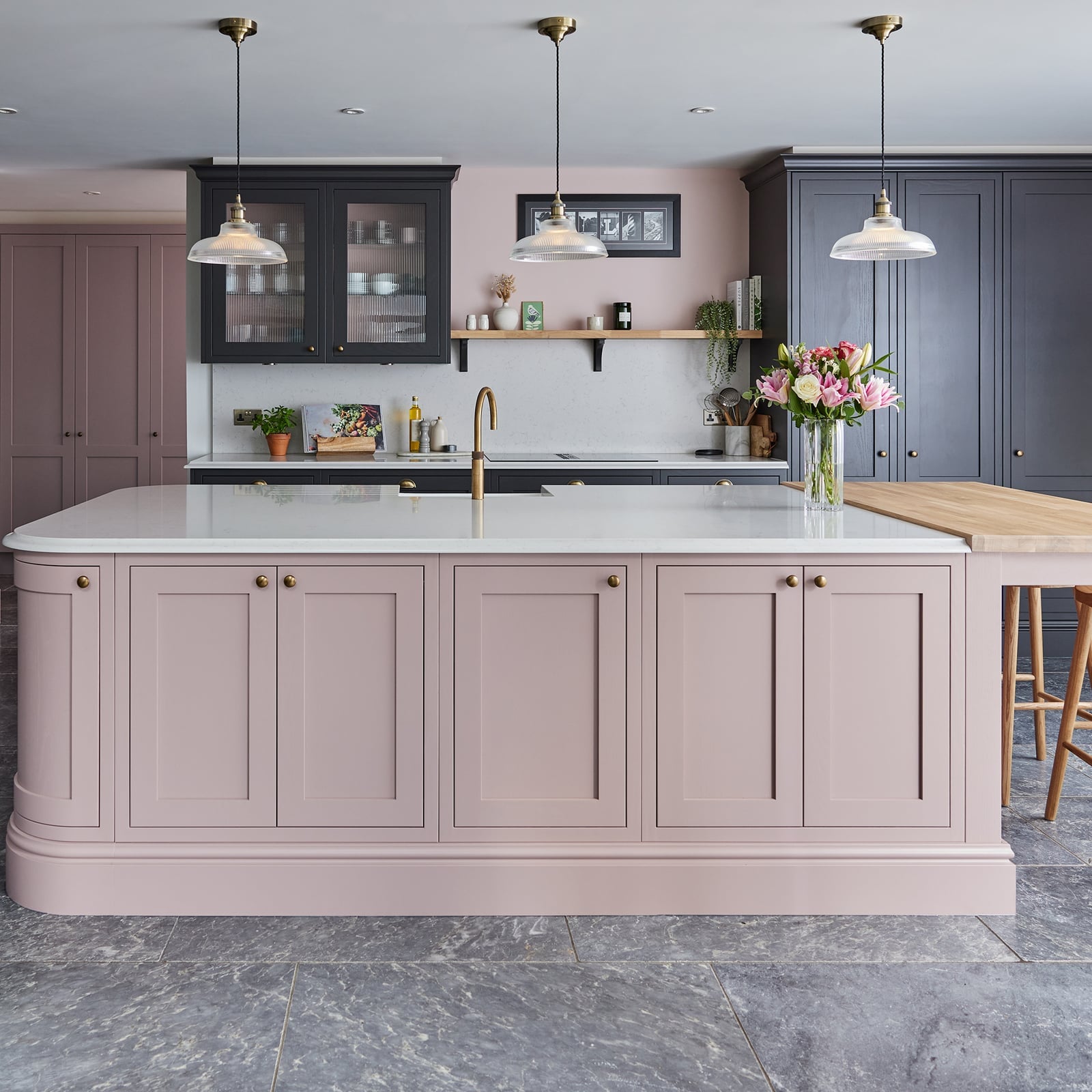
A modern kitchen pairs pink lower cabinets with grey uppers and a wood-toned island for a palette that avoids the expected. The two-tone island cabinets repeat the pink from the perimeter, which keeps the color from feeling like an accent and turns it into a deliberate part of the scheme. Pendant lights with metal shades hang above the island seating while recessed lighting keeps the stone countertops visible. The wood tone on the island base brings warmth without competing for attention. For a renter-safe swap, try peel-and-stick wood film on the island base and temporary vinyl on the cabinet fronts. It is 28 look that proves a pink kitchen does not have to read as sweet.
White and Sage Green Farmhouse Kitchen Cabinets
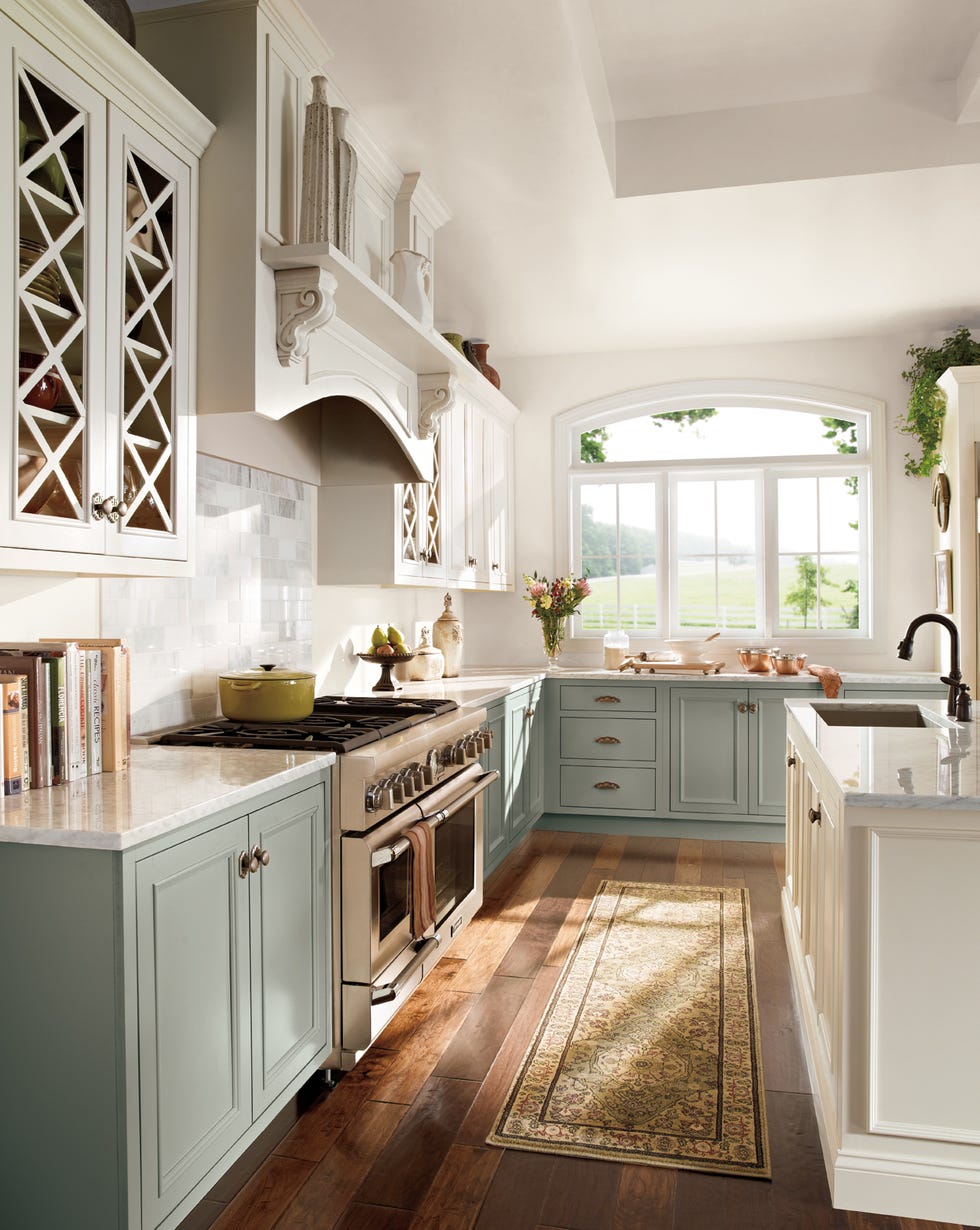
Farmhouse kitchens typically keep upper cabinets light so the room breathes, and this one follows with white uppers above sage green lowers. The sage green acts as a natural earth tone, which lets the wood island and marble countertops sit beside it without clashing. A range cooker with a classic profile anchors the cooking zone, and natural light from a window softens the transition between the two cabinet colors. The style is defined by the ratio of white to green: roughly two-thirds white on top and one-third green below. A subway tile backsplash in a neutral shade breaks the color block without adding pattern. For renters, stick-on wallpaper in a muted sage can mimic the look on lower cabinet fronts without permanent paint.
Contrasting Wood and Grey Cabinets with Marble Countertop
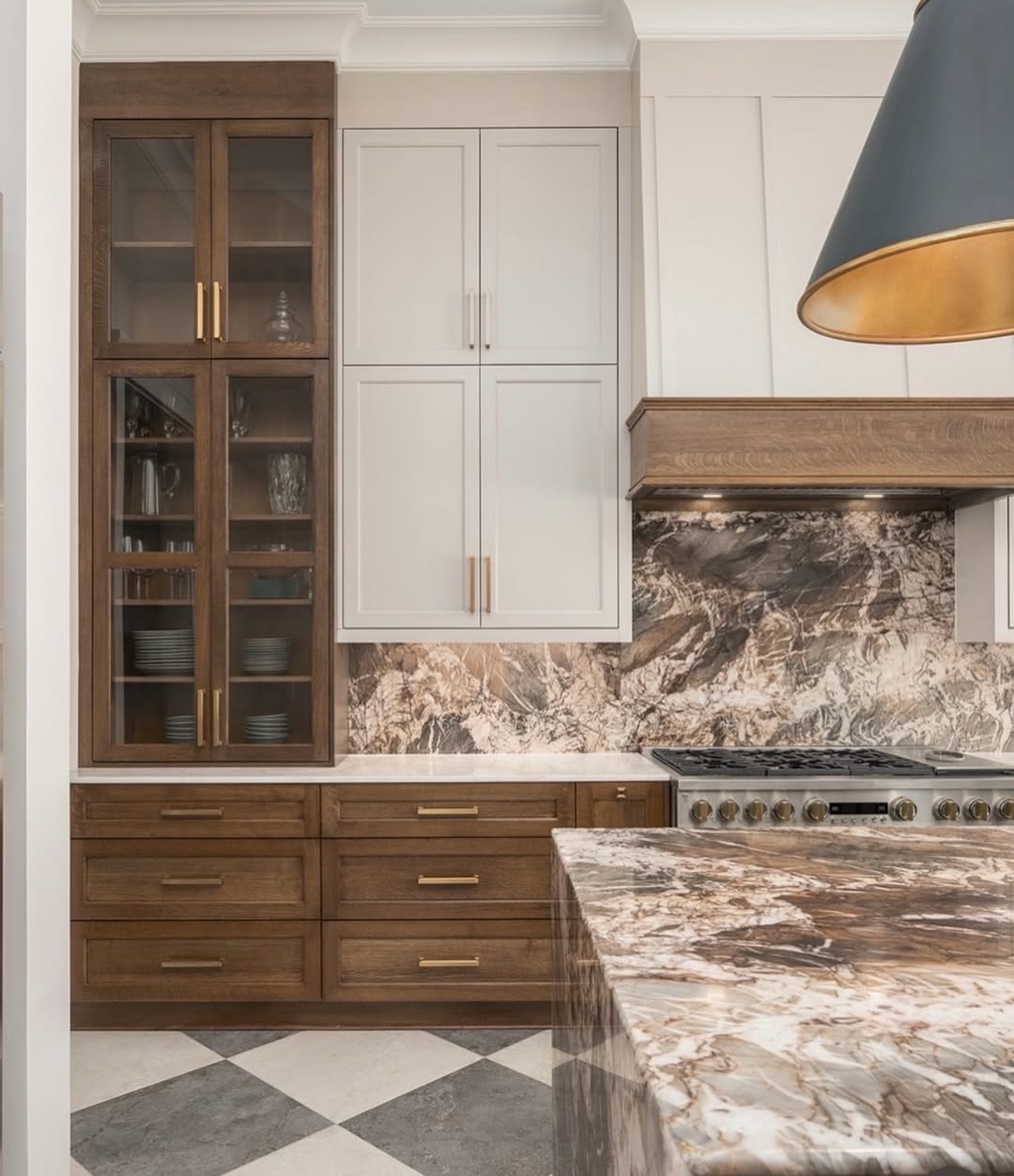
This look sets warm wood cabinetry against cool grey cabinets, which is a close alternative to the usual white-and-wood pairing. The wood cabinets bring a grain pattern that reads as organic, while the grey cabinets offer a matte surface that does not compete. A marble countertop with subtle veining runs across both cabinet colors, tying them together without matching either one exactly. Pendant lights with metal shades hang above the island, and natural light from nearby windows keeps the grey from turning flat.
The material contrast works because the wood has visible grain and the grey is a solid tone. If the wood were a painted finish, the two would blur together. Marble acts as the neutral bridge, and its cool surface keeps the wood from making the room feel too rustic. The takeaway is that a stone countertop in a light tone can unite two very different cabinet materials.
Vibrant Green Island with White Upper Cabinets
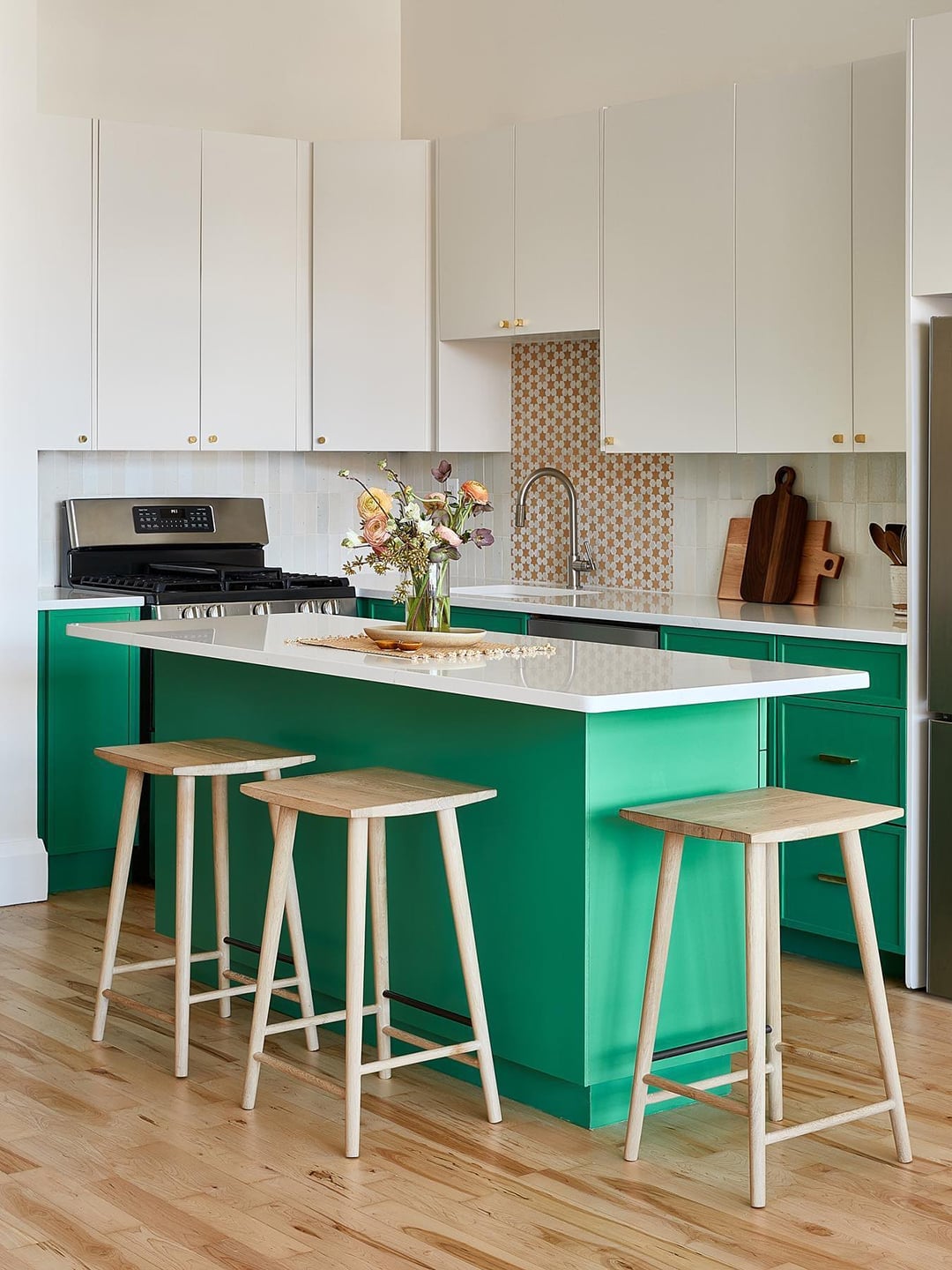
A vibrant green kitchen island sits in the center of this modern kitchen, surrounded by white upper cabinets and a quartz countertop. The green is a saturated, glossy finish that catches natural light from nearby windows. White perimeter cabinets keep the room airy, while the island becomes the clear focal point. Pendant lights with metal shades hang above the island seating. The green paint on the island is a high-gloss finish, which holds up better to wiping than matte paint. For a similar result without a full refinish, use a high-gloss enamel paint on the island base and keep the uppers in a satin white.
Navy Blue Base Cabinets with White Uppers and Marble Countertops
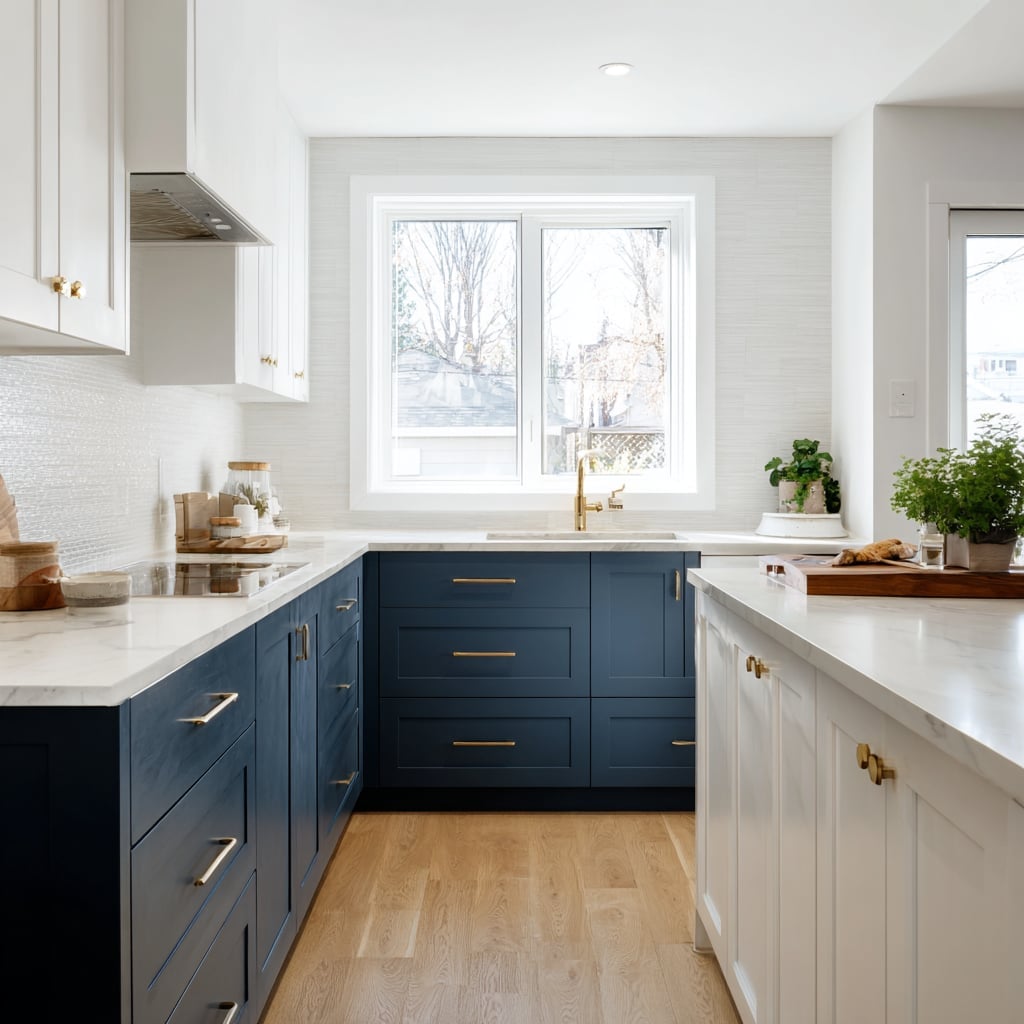
This is a clear application of the dark-bottom, light-top rule. Navy blue base cabinets anchor the u-shaped kitchen, while white upper cabinets open up the space. Marble countertops with soft veining run across both levels, providing a visual link between the two colors. The wood floor adds warmth that prevents the navy from reading as cold. Recessed lighting keeps the countertops visible without casting shadows on the darker lowers. The navy paint is a deep, saturated tone that hides smudges better than a lighter color. For a rental, use removable wallpaper on the base cabinet fronts and keep the uppers as-is.
White Upper Cabinets with Grey Paneled Island and Brass Hardware
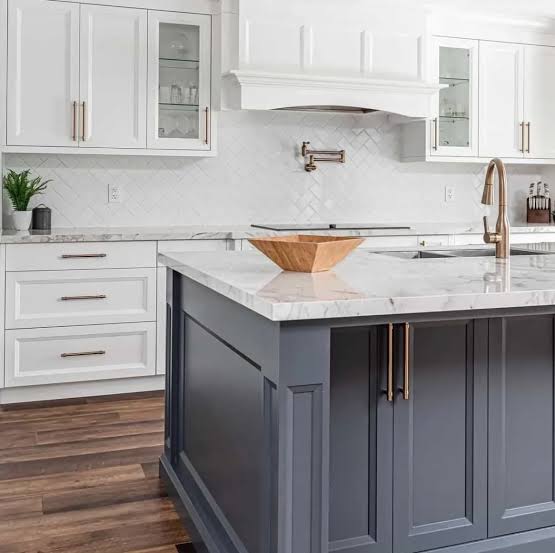
A practical rule for a two-tone kitchen is to let the island carry the bold color while keeping the perimeter light. Here, white upper cabinets and a white countertop keep the room airy, while the grey paneled island anchors the layout. Brass hardware on the island and a brass faucet add warmth against the cool grey. The marble countertop ties the white and grey together without competing. This palette works because the darker island sits in the center, grounding the space without making the room feel heavy. The brass details pick up the overhead light, adding a soft glow to the transitional style.
White and Grey-Blue Cabinets with Wooden Island Countertop
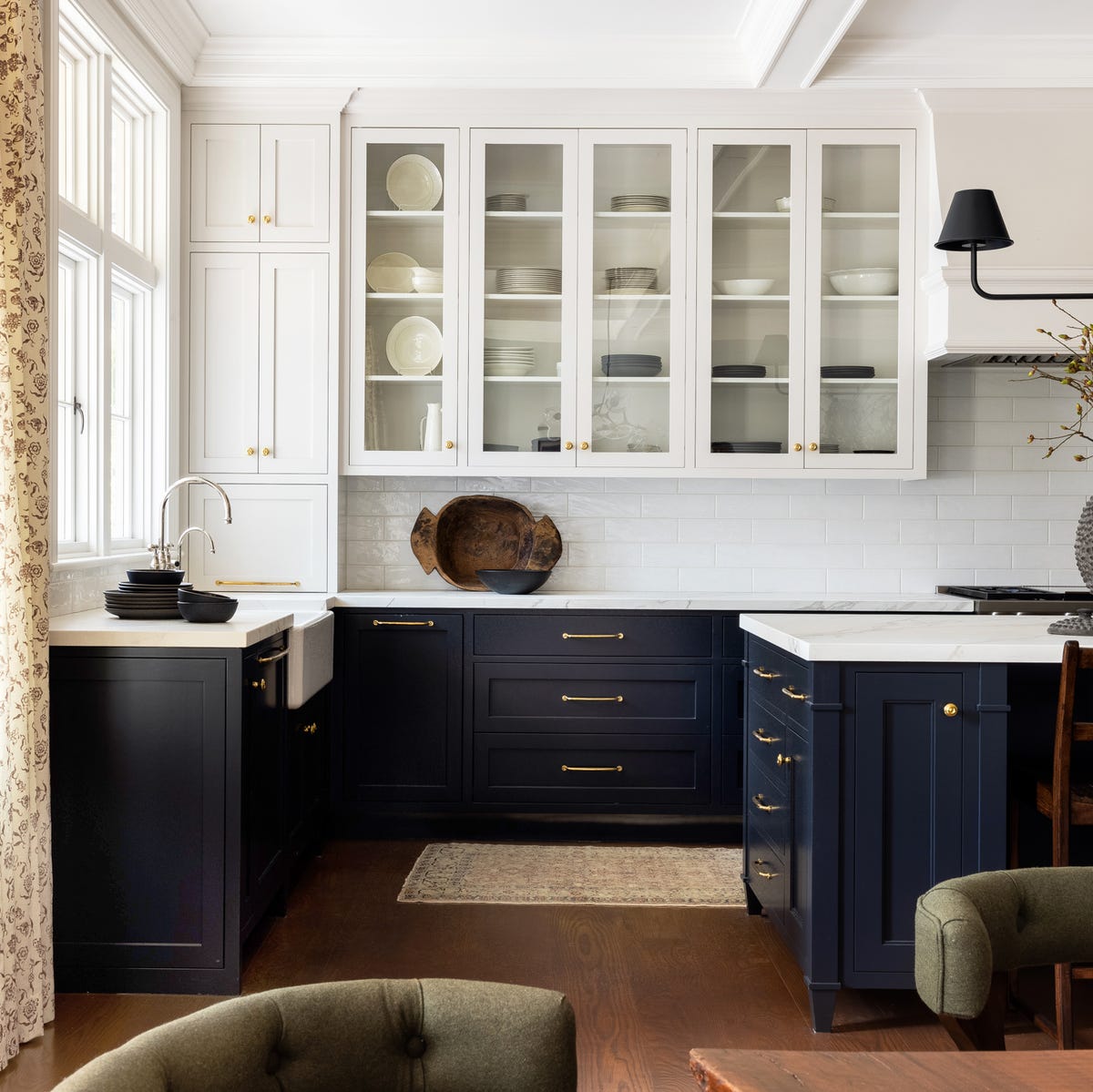
The white and grey-blue cabinets here create a calm, modern palette, with the grey-blue lower cabinets adding depth without darkening the room. A wooden island countertop introduces warmth, balancing the cool stone and marble surfaces. A pendant light above the island and natural light highlight the painted cabinets and wood. The grey-blue tone is neutral enough to work with the white uppers, while the wood countertop breaks up the hard surfaces and adds texture.
White Uppers with Dark Wood Lowers and Herringbone Tile
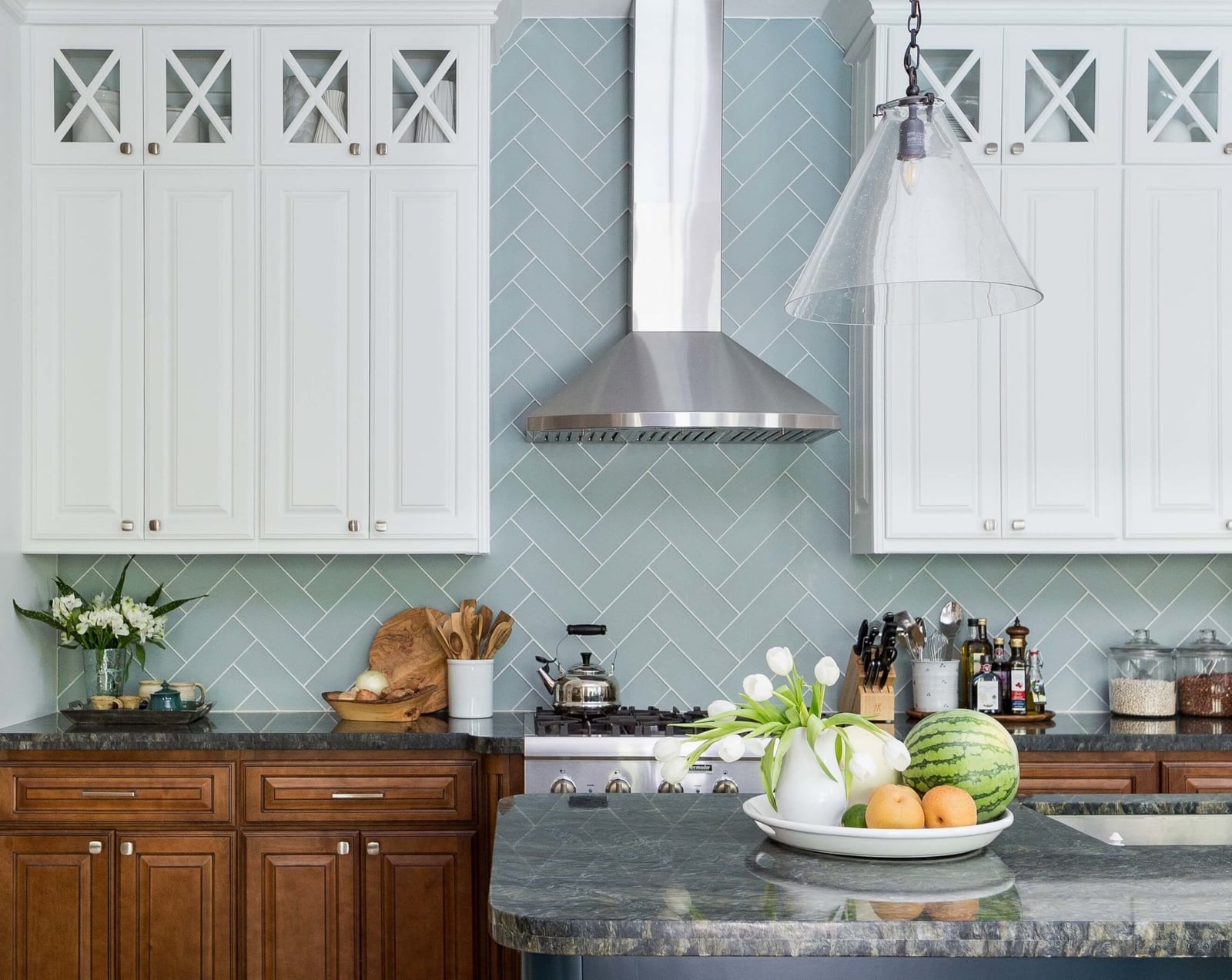
To mix materials, use a light upper cabinet to keep the room open and a dark wood lower cabinet to add weight. Here, white upper cabinets with glass doors feel light, while the dark wood lower cabinets ground the kitchen. The light blue herringbone tile backsplash adds a subtle coastal feel. Pendant lights and natural light highlight the tile pattern. The glass-front uppers also break up the white, letting you display a few pieces without cluttering the look.
Natural Wood Uppers with Green Island Base
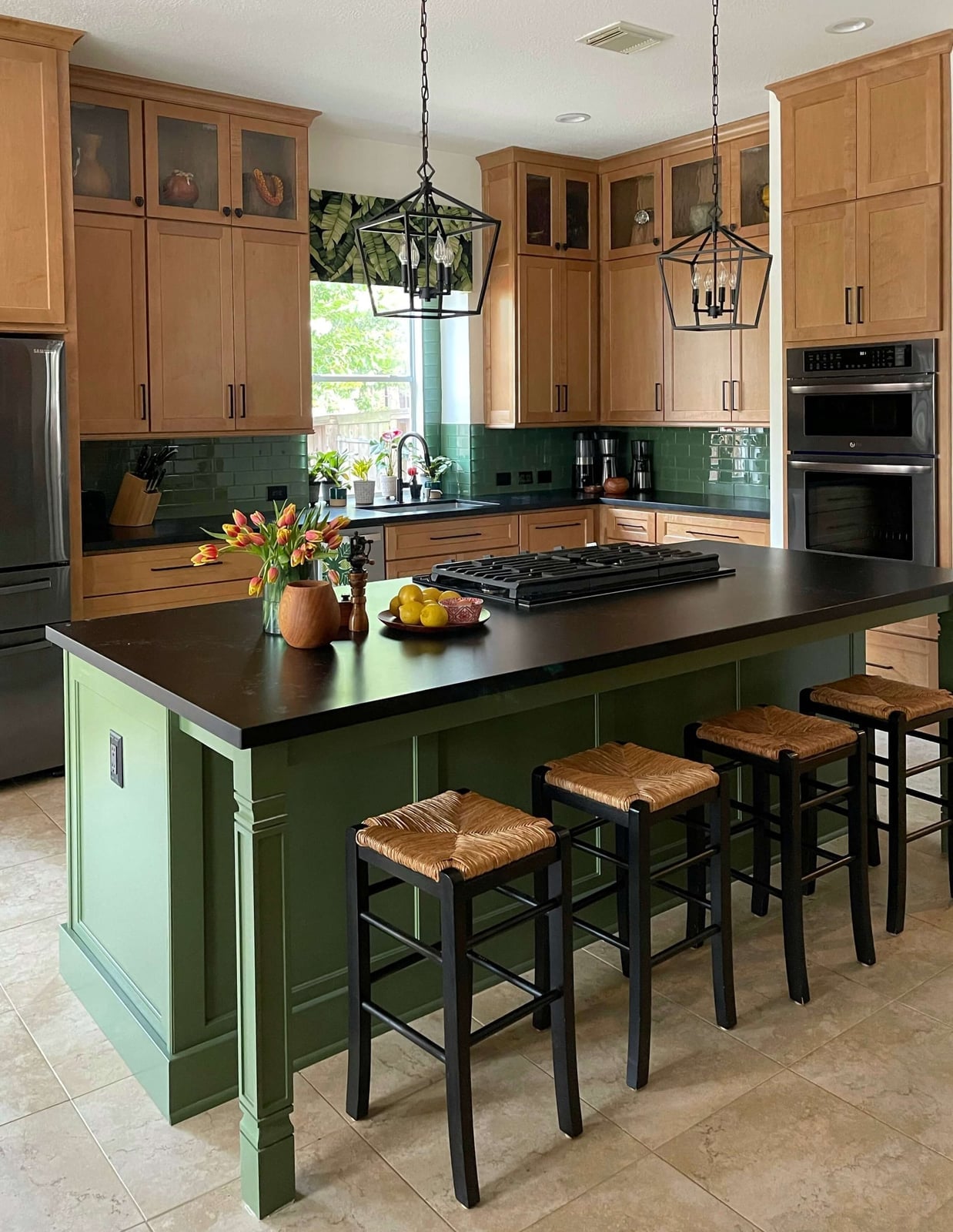
Where a fully painted kitchen can feel flat, this one uses natural wood uppers to keep warmth in the room. The green island base adds a rich color that stands out against the wood, while black stools and a black range tie the darker tones together. The open plan layout lets the island serve as the focal point, with pendant lights hanging above it and natural light coming in from nearby windows. The stone countertop on the island balances the painted wood, and the tile backsplash adds texture without competing. This combination works because the wood uppers keep the room from feeling too cool, while the green island gives it a clear center.
Blue Lower Cabinets with White Upper Cabinets in Farmhouse Style
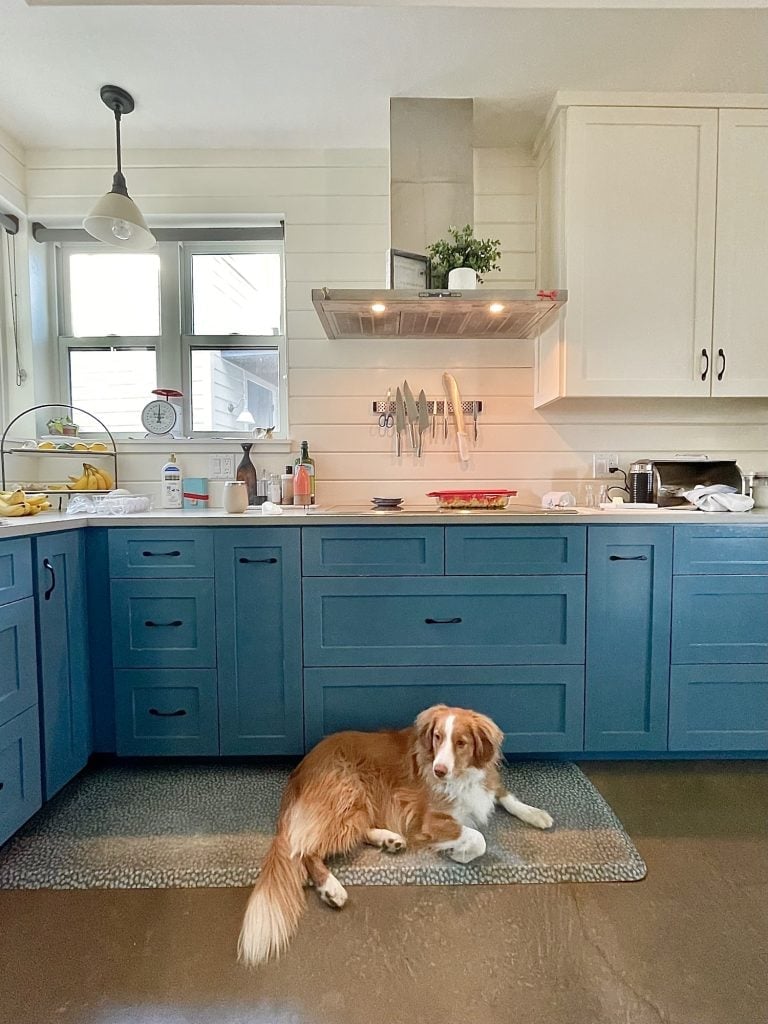
The blue lower cabinets here are a classic farmhouse choice, adding color at eye level while the white upper cabinets keep the room bright. A grey island repeats the blue tone in a softer way, and the white countertop ties the two together. The overhead pendant light and natural light highlight the blue paint, which is deep but not dark. A dog on a rug adds a lived-in feel, but the real trick is the balance: the blue stays on the bottom half, so the kitchen still feels open and airy.
White Upper Cabinets with Navy Blue Lower Cabinets and Island
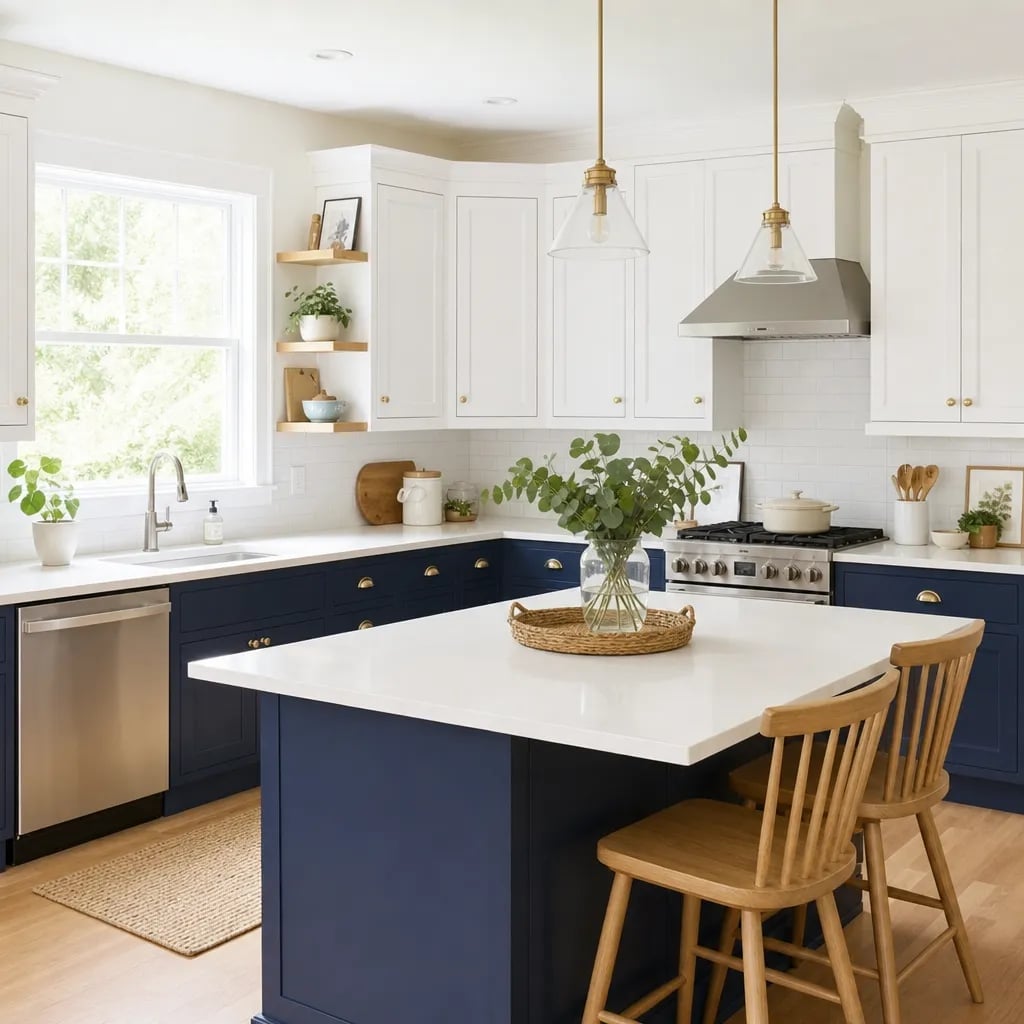
Navy blue on the lower cabinets and island is a practical way to anchor a kitchen without darkening the whole room. The white uppers keep the space feeling open and bright, while the wood island top and wooden stools add warmth that keeps the navy from feeling too cold. This palette works because the contrast is clear but not jarring. The dark color stays below eye level, so the room reads as balanced rather than top-heavy. A good principle for any two tone scheme is to let the darker color live on the lower half or on the island, where it grounds the design without shrinking the visual space.
Warm Wood Island with Green Perimeter Cabinets and Cream Uppers
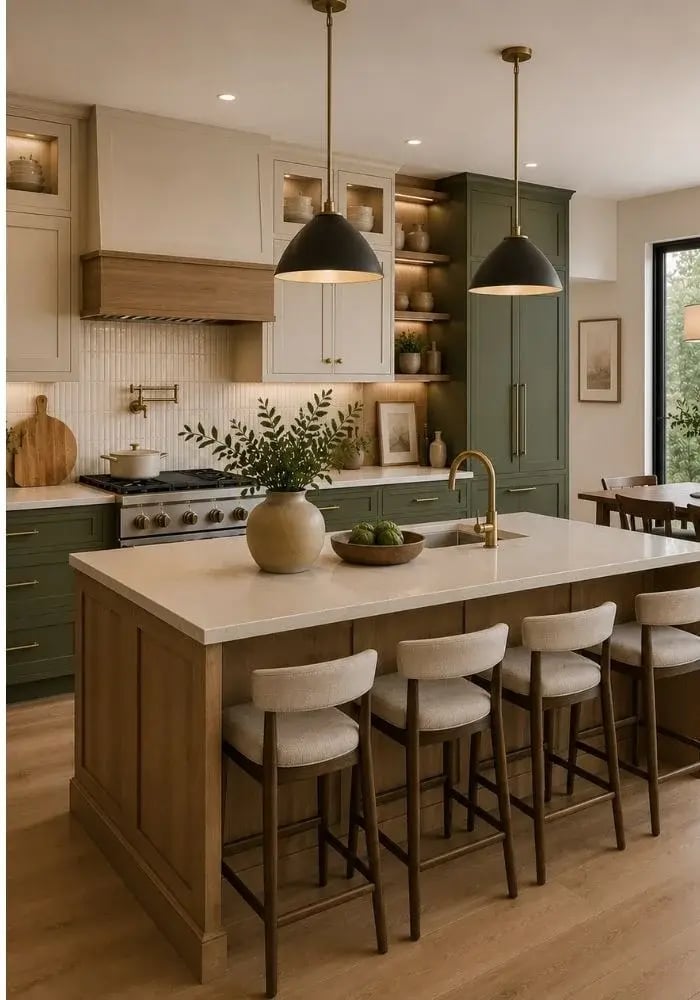
A fully painted kitchen can feel one-note, but adding a warm wood island breaks the monotony without needing a full renovation. Here, the perimeter cabinets are green with cream uppers, and the island is a rich wood tone that brings in natural texture. The cream uppers soften the green, keeping the palette balanced. For a renter-friendly version, consider a peel-and-stick wood veneer on an existing island base. It adds the same warmth without permanent changes.
The layered lighting helps too. Pendant lights over the island highlight the wood finish, while under-cabinet task lights keep the cream uppers from casting shadows. The brass hardware on the green cabinets ties the warm wood and cool green together, creating a cohesive look that relies on three distinct materials.
Dark Grey Lower Cabinets with White Uppers and Brass Accents
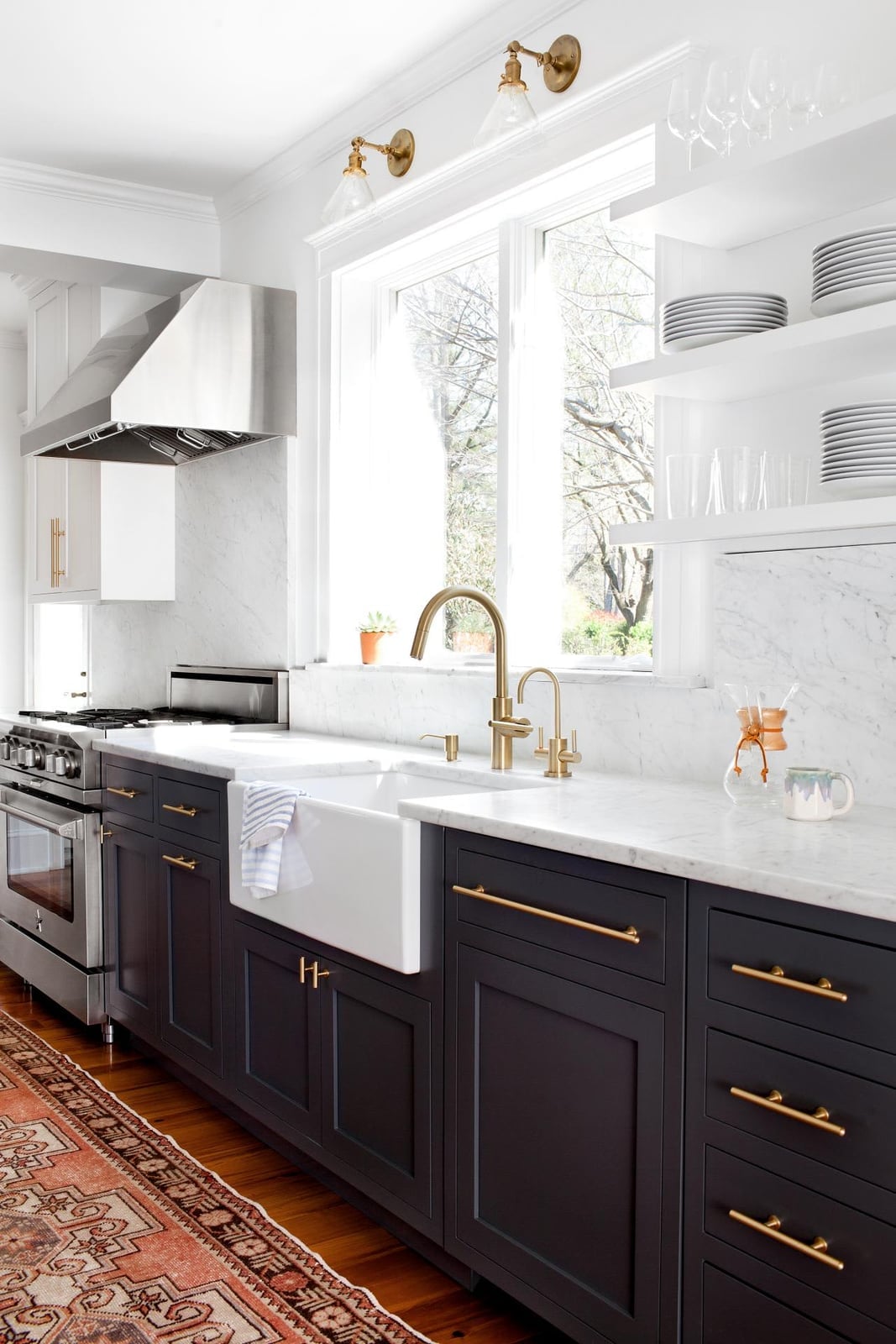
Dark grey lower cabinets paired with white uppers create a transitional kitchen that feels current without chasing trends. The grey acts as a neutral anchor, similar to navy but softer, so it pairs easily with a white marble countertop and a farmhouse sink. Brass hardware and a brass faucet add the warmth that a grey-and-white palette needs, preventing the room from reading as purely cool-toned. The trick is to keep the upper cabinets white and the hardware consistent, brass on every pull and faucet unifies the two tones into one deliberate design.
Final Thoughts
The best two-tone kitchen cabinets strike a clear visual balance. Darker tones on lower cabinets or an island anchor the room, while lighter uppers keep it airy. Wood grain adds warmth against painted finishes, and hardware like brass or black knobs ties the two colors together. When planning your own split, think about the natural light in your space and how much contrast you want between the shades. A simple ratio of one dominant color to an accent keeps the look intentional. With the right pair, your storage becomes the focal point without overwhelming the room.