
If you’re dreaming of a bathroom that feels like it stepped out of a period drama, you’re in the right place. This guide covers 36 Victorian bathroom ideas for 2027, focusing on the whole room rather than a single showpiece. You’ll find practical advice on layout, palettes, materials, lighting, and storage, all grounded in what actually shows up in real interiors.
Whether you’re renovating or just refreshing a rental, these ideas help you capture that layered, lived-in Victorian character without guesswork. Expect clear, useful takeaways you can apply to your own space.
Luxurious Victorian Bathroom Layout
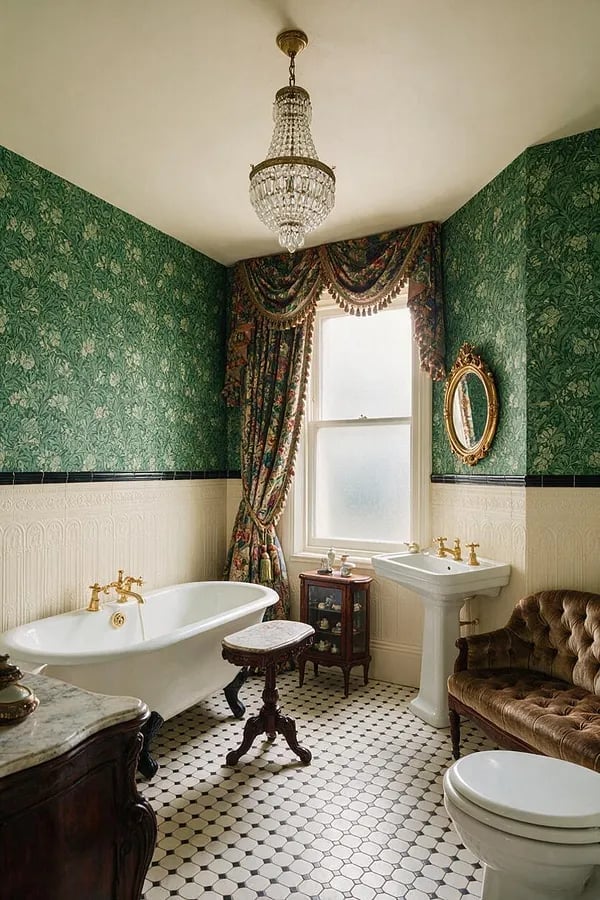
A clawfoot tub, a velvet armchair, and a pedestal sink share a roomy footprint without crowding each other, which is the whole trick to a Victorian bathroom that lives like a proper room rather than a wet closet. The crystal chandelier hangs over the tub as the anchor, with the seating area pulled to one side so the layout reads as three distinct zones. When the floor plan allows, keeping the tub central and everything else on the perimeter gives the space the generous, unhurried rhythm that makes a Victorian bathroom feel like a destination.
Victorian Pedestal Sink Palette
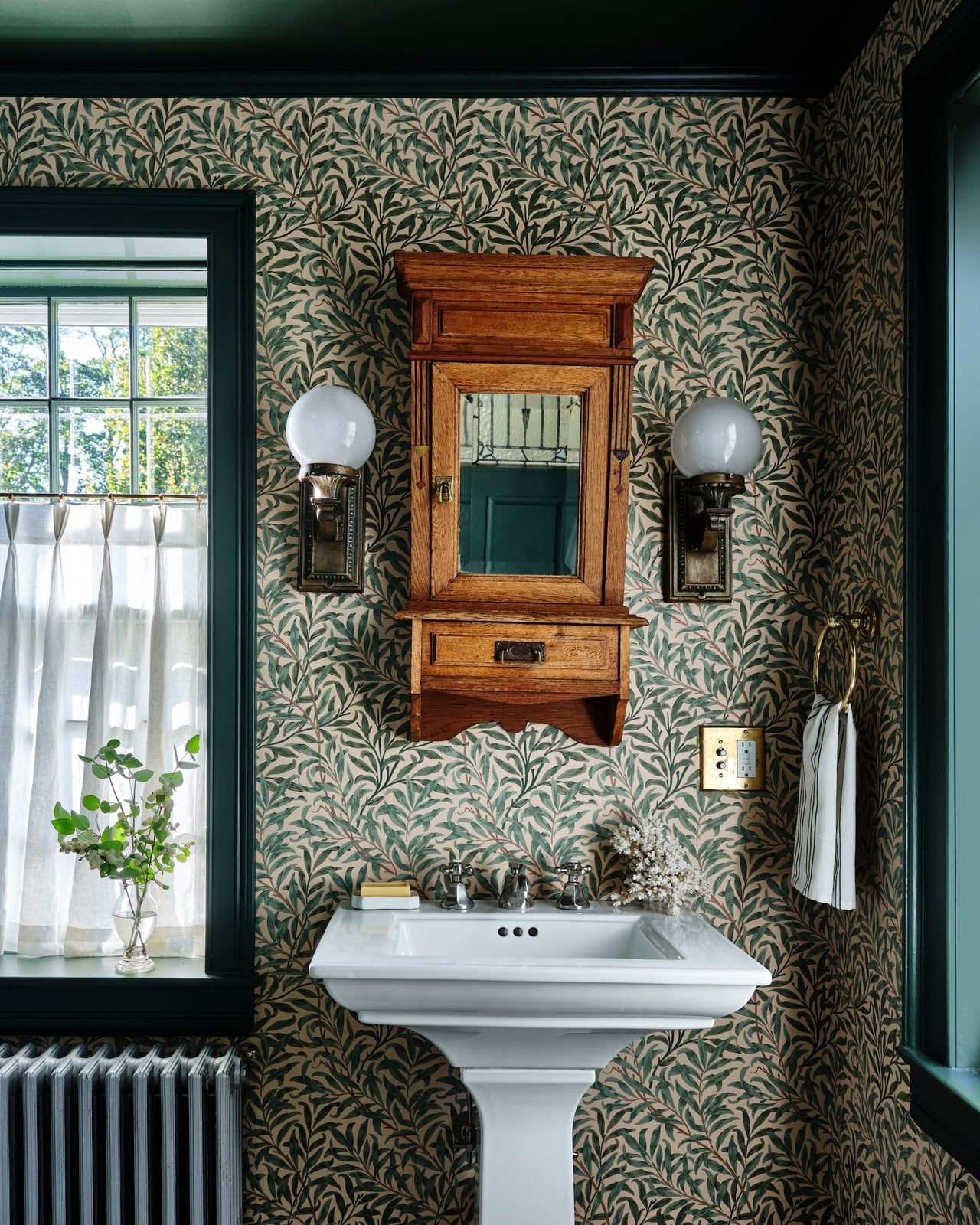
The pedestal sink sits against a wall of botanical wallpaper, and the palette stays restrained so the pattern gets full credit. Green leaves and beige ground read like garden tones, while the wood of the medicine cabinet and the warm metal of the globe sconces add depth without competing. A compact Victorian bathroom benefits from this kind of controlled palette: one busy wall, one neutral sink, and daylight to tie it together. The wallpaper provides the visual interest, so the sink stays simple and the room avoids visual clutter.
Victorian Bathroom Materials
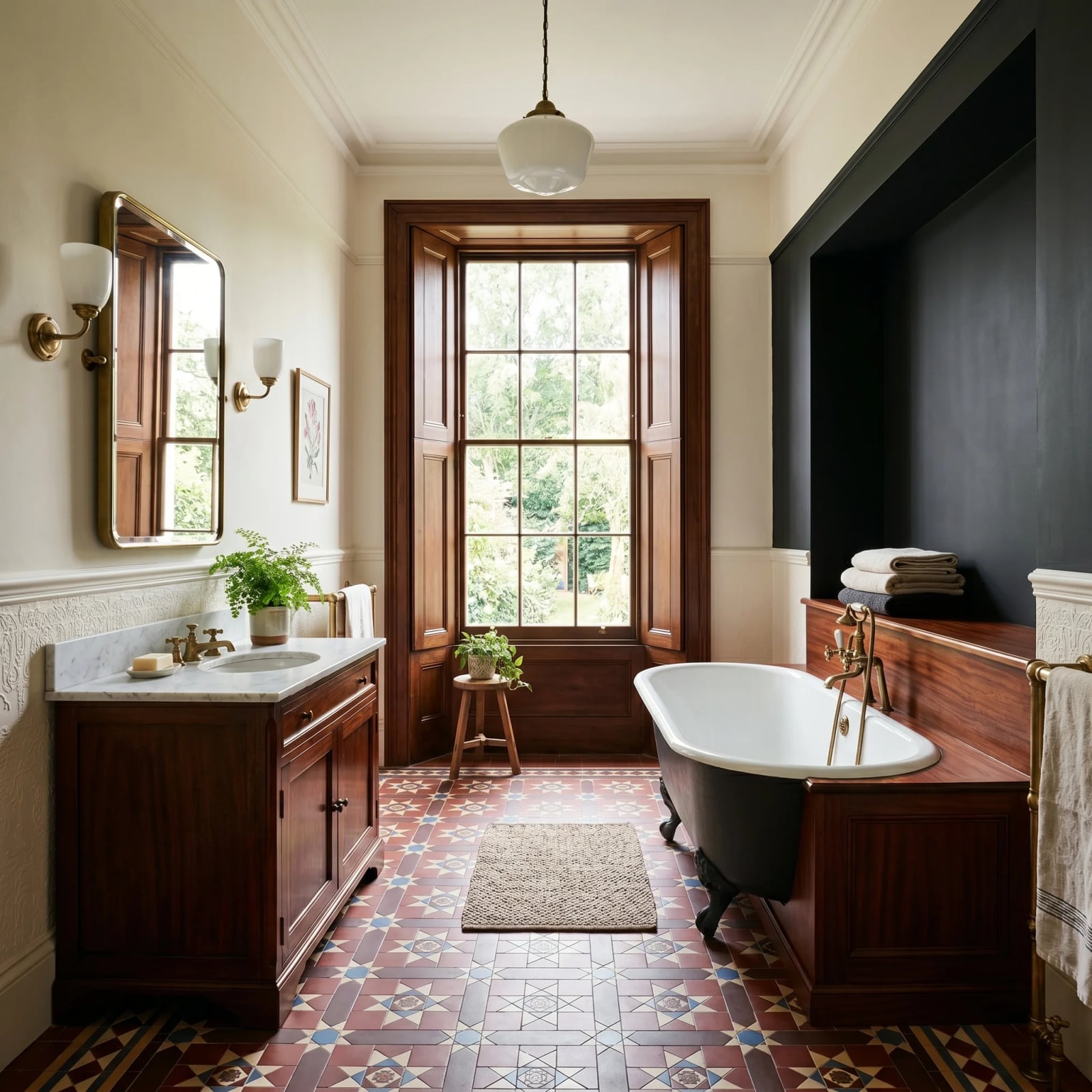
Can you mix dark wood, marble, and patterned tile in one Victorian bathroom without the room feeling like a sample board? Yes, when each material gets its own surface. The geometric floor tiles run wall to wall, the dark wood vanity stands on its own against one wall, and the freestanding tub keeps the center clear. The cream and black of the floor tiles echo the tub finish, while the red undertone in the wood adds warmth. A large wooden window frames the natural light, and brass fixtures on the vanity and sconces pick up the warmer notes in the tile. The trick is letting each material breathe by giving it a dedicated zone rather than layering them on the same surface.
Victorian Bathroom Lighting
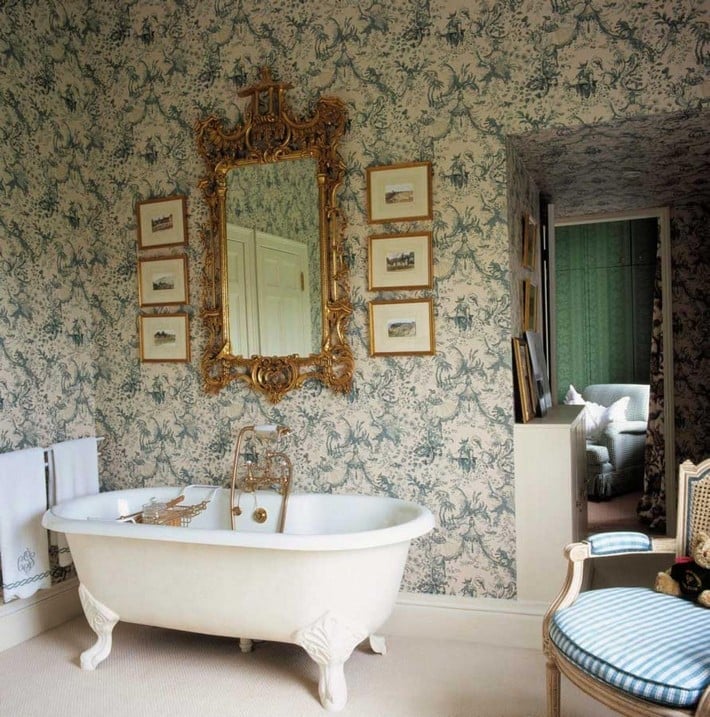
A clawfoot tub centered in the room, a highly ornate gold mirror above a console, and an antique chair pulled to the side: the lighting here falls into two camps. Natural light from the doorway does the daytime work, and ambient light from the hallway or a nearby fixture softens the edges at night. For a roomy Victorian bathroom, the mirror does double duty by bouncing whatever light exists back into the space. The wallpaper in blue and gold reads differently in morning versus evening light, which gives the room a changeable mood without changing a thing.
Victorian Bathroom Storage
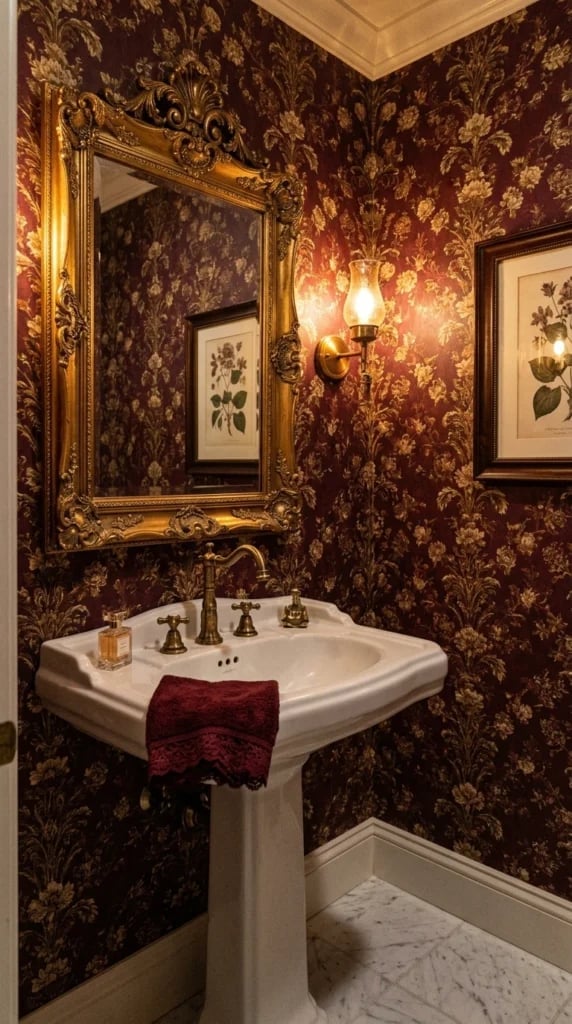
The practical rule for a compact Victorian bathroom is that the storage should live on the wall, not the floor. A pedestal sink leaves zero room for a cabinet underneath, so the ornate gold mirror above it becomes the visual anchor while a wall sconce provides the light. Burgundy and gold wallpaper wraps the room in a warm, enclosed feeling, and the mirror expands it again. For a Victorian powder room, a mirrored medicine cabinet or a wall-mounted shelf above the sink keeps the floor clear and the period feel intact. Plaster walls and brass fixtures hold up to humidity better than painted drywall, so the room stays practical without losing the ornate character.
Budget Swap: Victorian Bathroom Wallpaper
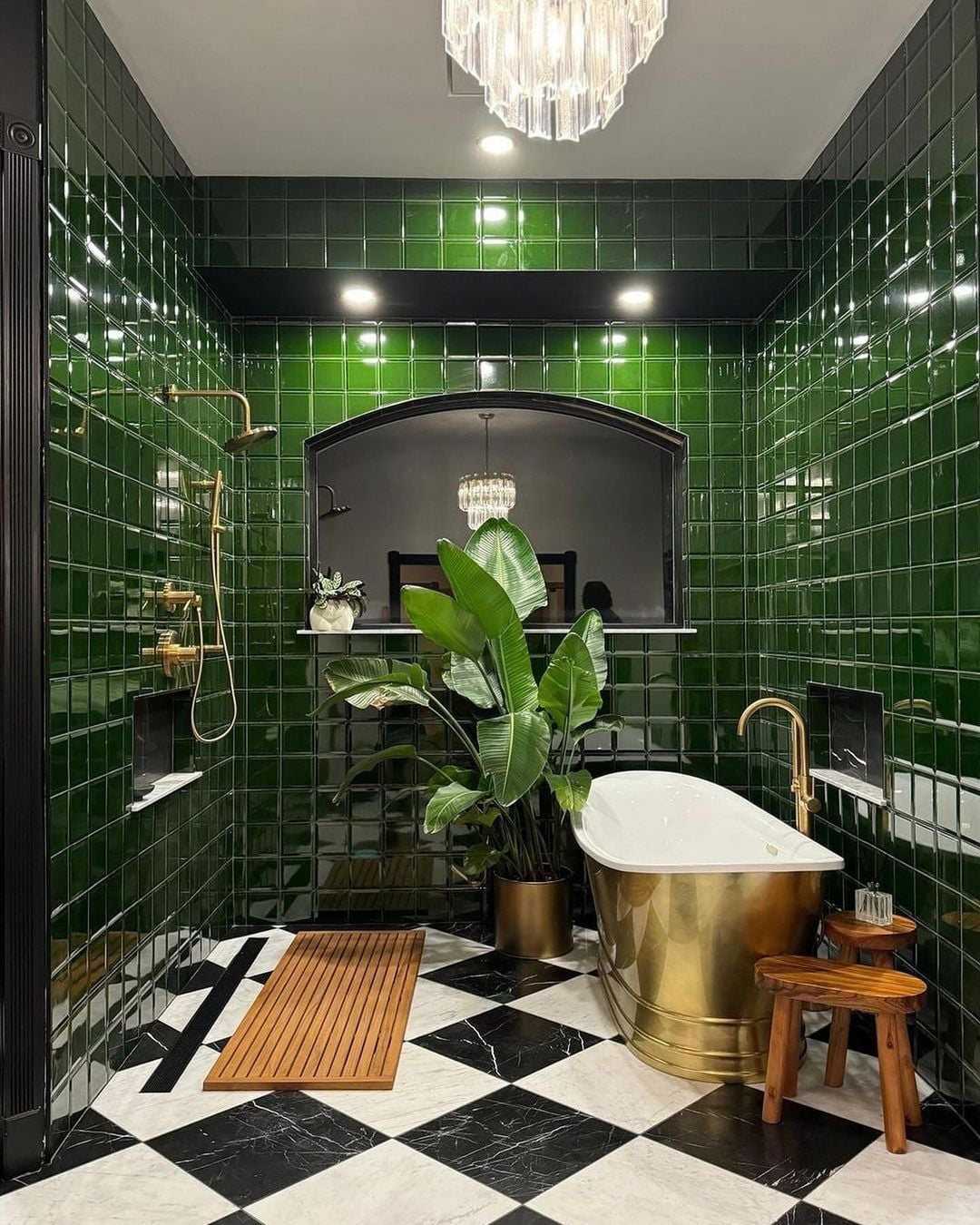
Emerald green tiles on the walls would cost a pretty penny and take weeks to install. A more practical route is to keep that deep jewel tone with wallpaper instead. The room still gets that saturated Victorian feel, with the same glossy tile used only as a backsplash or behind the tub. The gold freestanding tub and brass fixtures do the heavy work of adding polish. A chandelier overhead and recessed ceiling lights keep the space bright without competing with the green. The checkered floor ties the look together. The budget swap here is material: tile where water hits, wallpaper everywhere else. It cuts labor time and makes a future color change much simpler.
Renter-Friendly Victorian Bathroom Touches
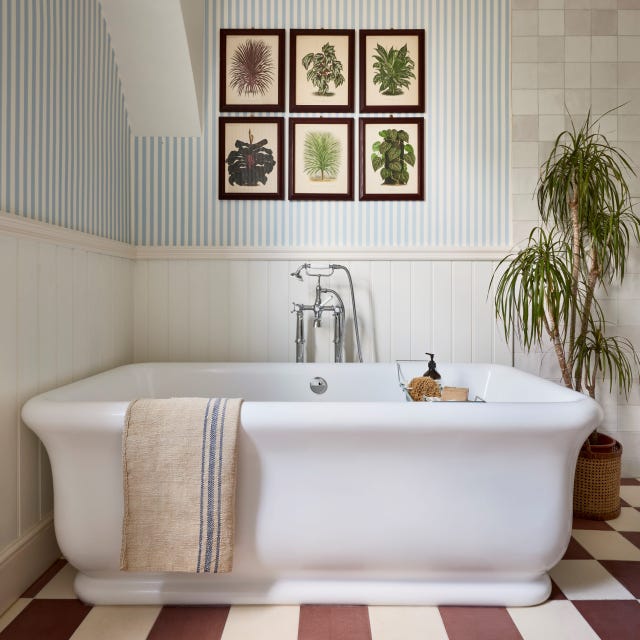
A gallery wall of framed botanical prints brings Victorian character without touching the painted walls or tile floor. The blue and white stripes in the prints pick up the room’s palette, and the green plants add life. This is a look that travels with you. No wallpaper to remove, no paint to repaint. The bathtub stays centered, the room stays roomy, and the botanical theme reads as intentional rather than accidental.
Styling Variation: Victorian Bathroom Seating
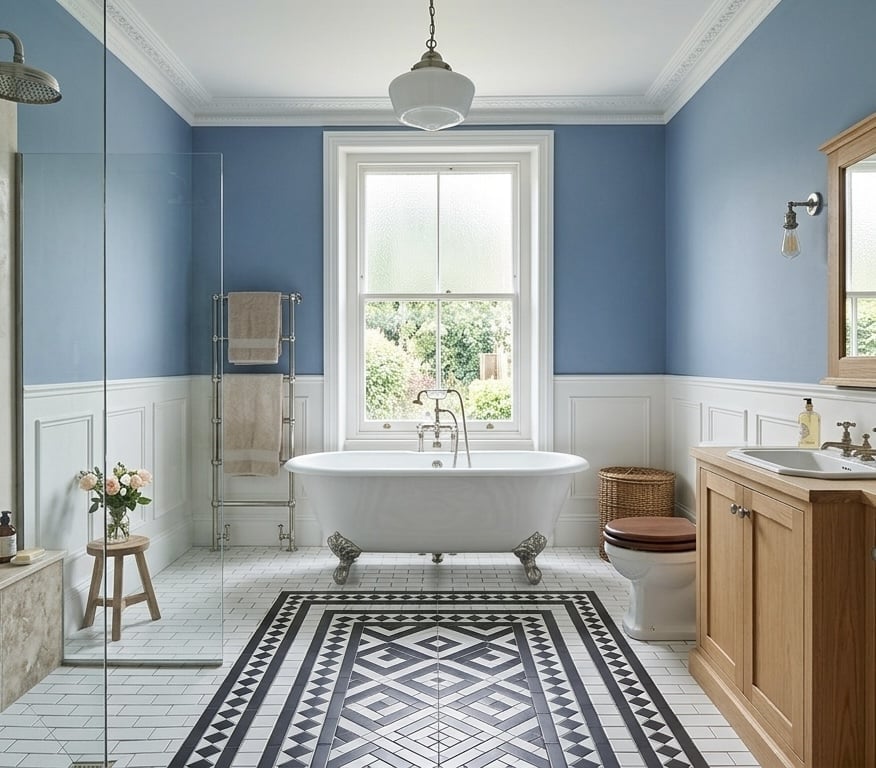
This room uses a clawfoot tub as the anchor, but the real trick is the seating. A wood vanity on the right and a shower enclosure on the left balance the layout, leaving the center open. The blue and white palette is crisp, with the geometric floor tile pattern adding texture underfoot. Adding a small upholstered chair or a wooden stool near the tub gives you a spot to set a towel or sit while you dry off. It also breaks up the tile and paneling with a softer material. The natural light from the window and the overhead light keep the space feeling open.
Durability of Victorian Bathroom Materials
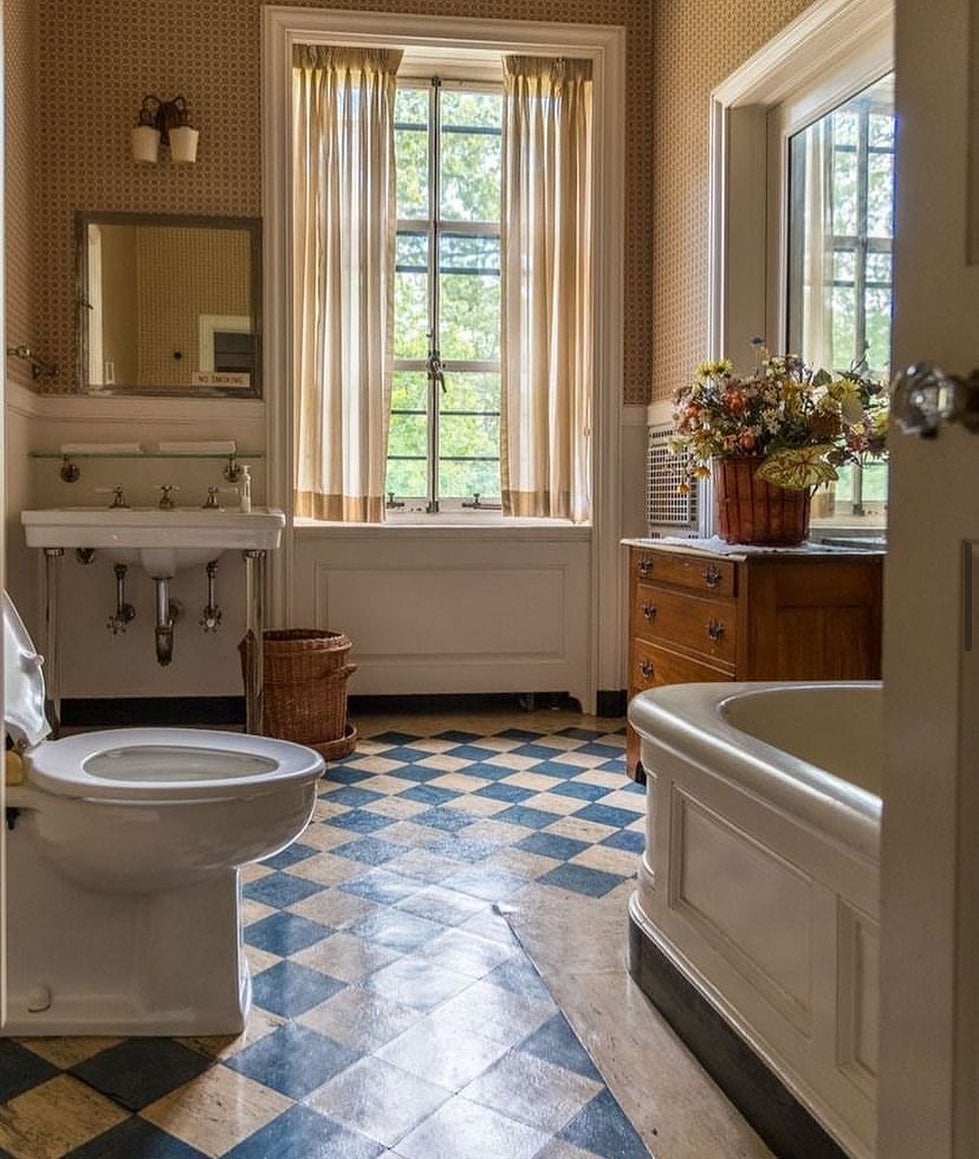
Does checkerboard flooring hold up in a bathroom? It does, as long as the tile is glazed ceramic or porcelain. The cream and blue squares in this room create a vintage feel that hides daily wear better than a solid color. The clawfoot tub is cast iron with a porcelain finish, which resists chips and stains for decades. The wooden dresser and wicker basket add storage but need sealed surfaces or a coat of polyurethane to handle steam. Wall sconces near the mirror provide task light without the fixture itself sitting in a splash zone. The key is matching the material to its location: tile on the floor, ceramic around the sink, wood and wicker kept dry.
Scale and Proportion in Victorian Bathroom Design
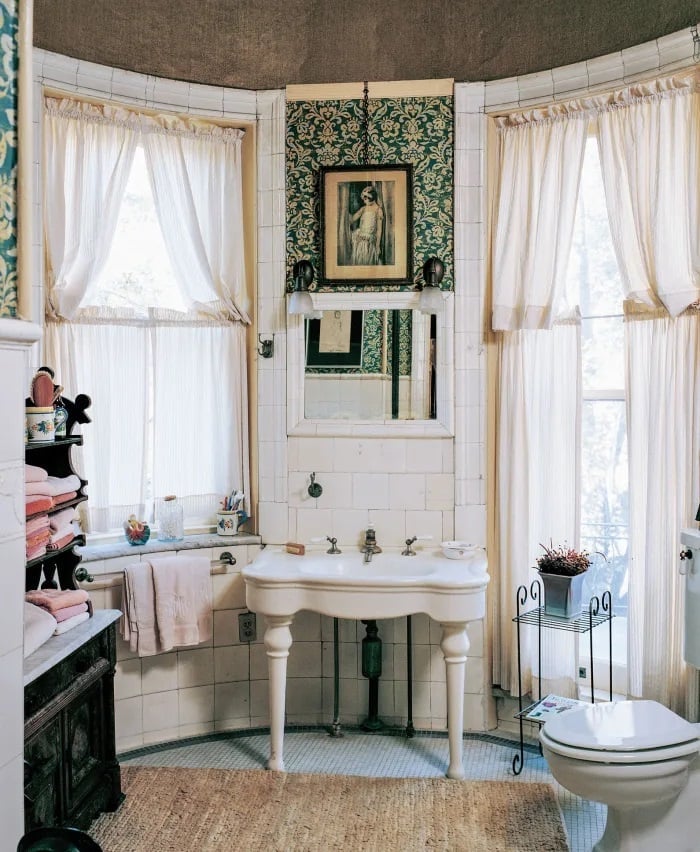
A compact bathroom needs a pedestal sink instead of a bulky vanity. The green patterned wallpaper draws the eye up, making the ceiling feel taller. The ruffled curtains are soft and full, but they stop above the sill so they do not crowd the small corner. A dark wood cabinet and a slim shelving unit keep essentials off the floor. The balance here is about leaving breathing room around each piece. The sink and toilet are tucked to one side, and the shelving fills the gap without touching either fixture.
Luxurious Victorian Bathroom Palette
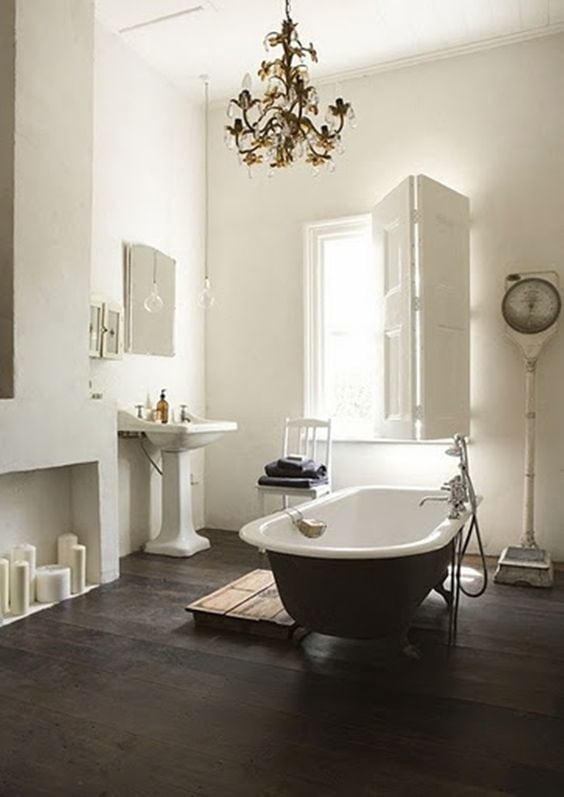
A roomy Victorian bathroom with a dark wood floor and a clawfoot bathtub becomes a study in contrast when you keep the palette tight and let the textures do the work. White porcelain and a pedestal sink stay clean against the dark floor, while brass fixtures and an ornate chandelier add the warmth. A vintage scale is the kind of unplanned detail that makes the room feel lived in rather than staged. The principle here is contrast: one dark, one light, one metal. That is enough. When every surface tries to be the focal point, the room starts to feel busy. Pick two finishes and commit.
Victorian Bathroom Materials: Velvet and Brass
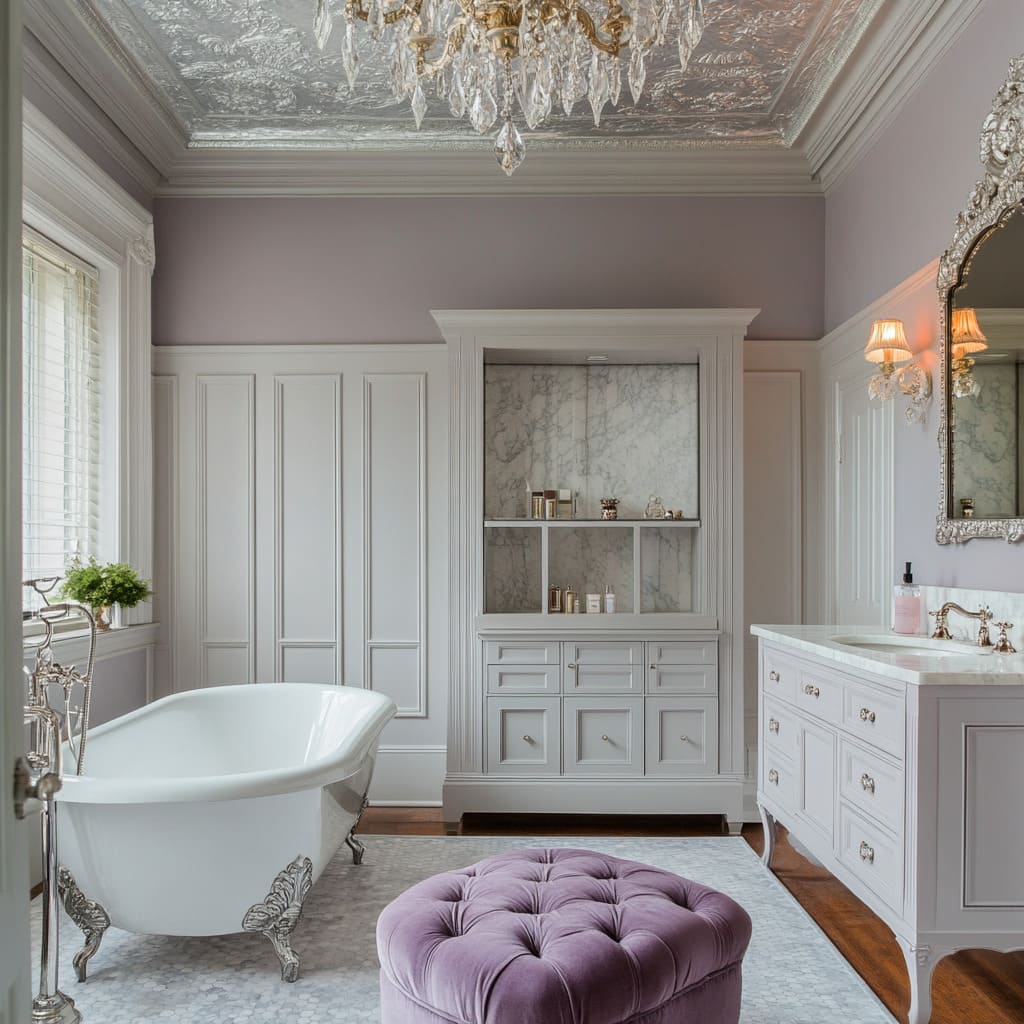
You could pair brass with marble and call it a day, but this roomy Victorian bathroom adds velvet and crystal to the mix, which changes the feel entirely. A freestanding clawfoot tub and a large vanity cabinet anchor the space, while a velvet ottoman and an ornate mirror bring in softness and reflection. The palette of lavender, grey, white, and gold keeps the look cohesive.
The practical rule is that velvet in a bathroom works only if the room has good ventilation and the fabric is placed away from direct splash zones. A crystal chandelier and wall sconces provide the light, and the marble surfaces keep the finish consistent. The mix of hard and soft materials gives the room a layered feel without needing more pieces.
Victorian Bathroom Lighting: Chandelier Focus
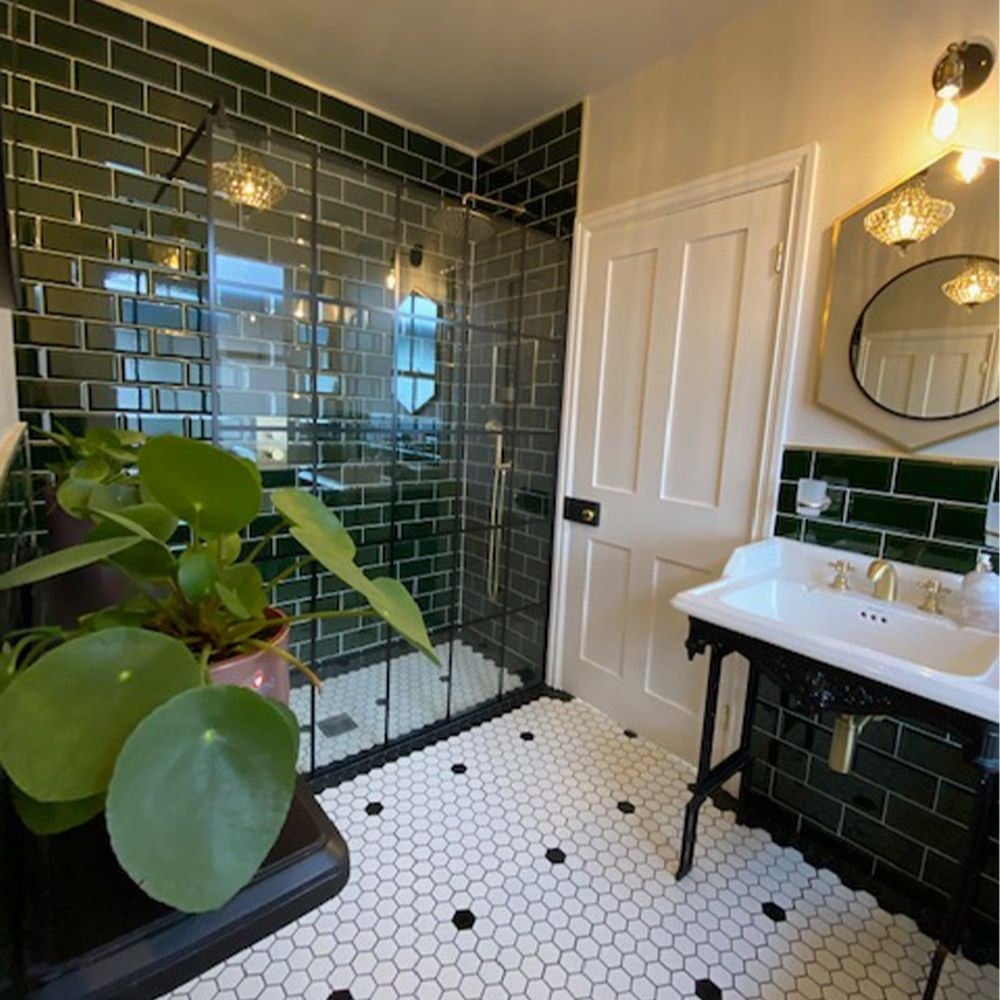
A compact Victorian-inspired bathroom with dark green subway tile and a hex tile floor uses natural light and wall sconces to keep the space from feeling closed in. The dark green looks rich when the light hits it directly, and the glass in the shower enclosure helps bounce that light around. Dark tile needs reflective surfaces nearby: a glossy finish, a glass panel, or a mirror. Without those, the room can feel smaller than it is.
Victorian Bathroom Layout: Zoned Areas
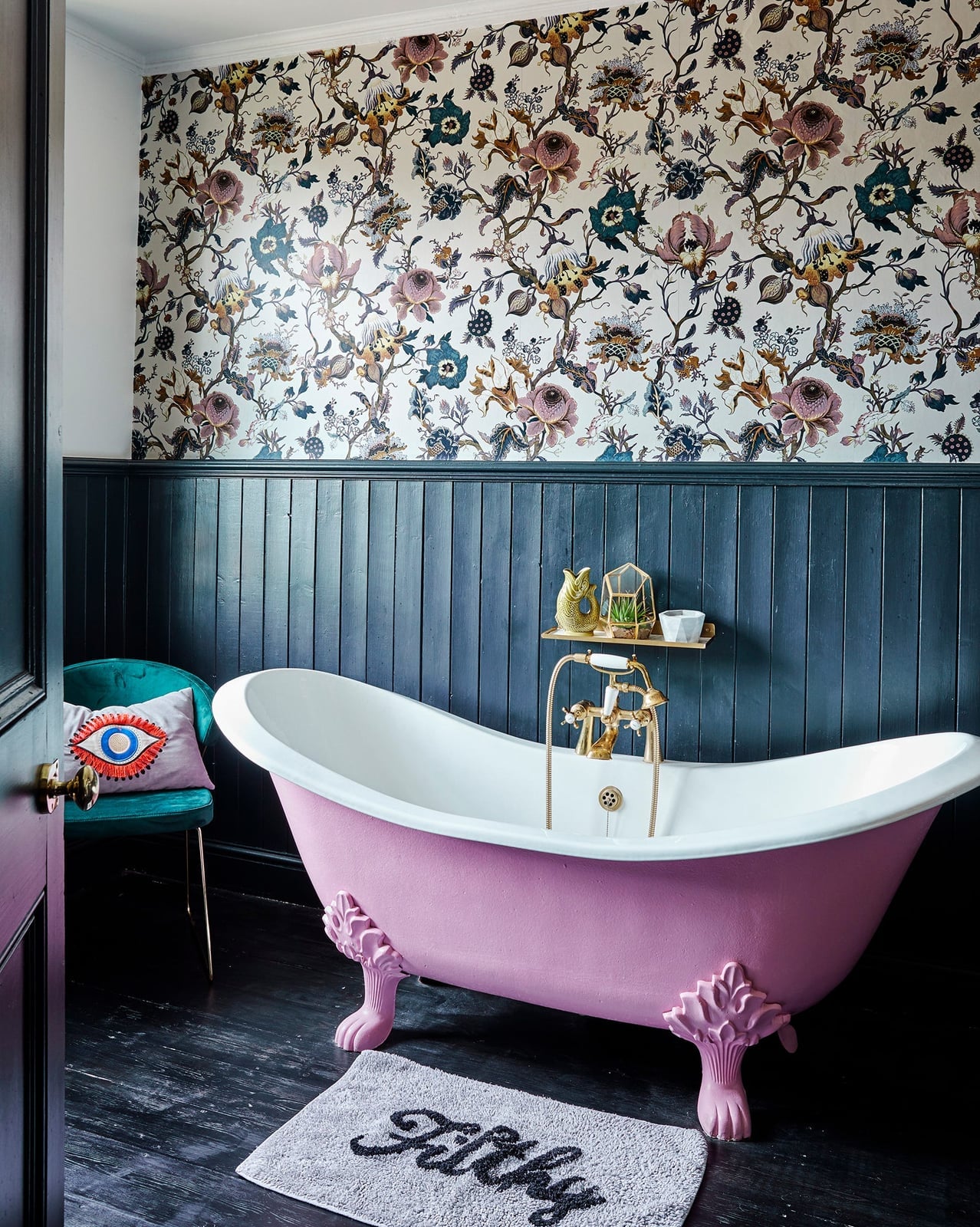
This roomy Victorian bathroom with a pink clawfoot tub and floral wallpaper shows how to zone a space without walls. The tub sits centered, the teal chair sits to the side, and the wood paneling and brass fixtures tie the two areas together. The window light hits the tub directly, while the chair stays in the ambient light near the wall. A room with a clear path between zones feels larger than a room where furniture crowds the edges. Keep the center open and let each piece have its own pocket of light.
Victorian Bathroom Size Feel: Roomy
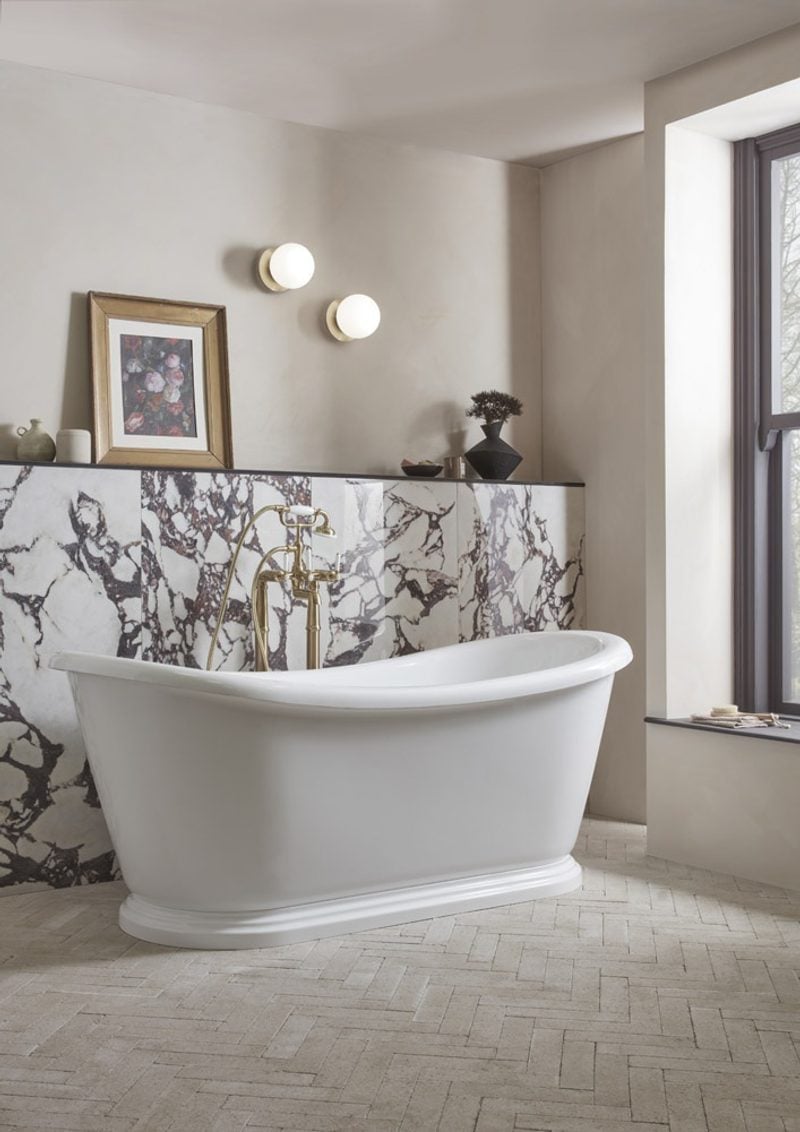
A roomy Victorian bathroom with a cream and marble palette and a centered clawfoot tub proves that scale matters more than square footage. The marble accent wall and brass fixtures are substantial without being oversized, and the wall sconces frame the tub without crowding it. A single large element, like a freestanding tub, needs breathing room around it to look planned.
When the tub is centered and the walls are kept simple, the eye travels around the room without stopping at one busy corner. The windows help, but the real trick is leaving space between the tub and the walls. A room that feels roomy is often just a room that knows where to stop.
Victorian Bathroom Standout: Crystal Chandelier
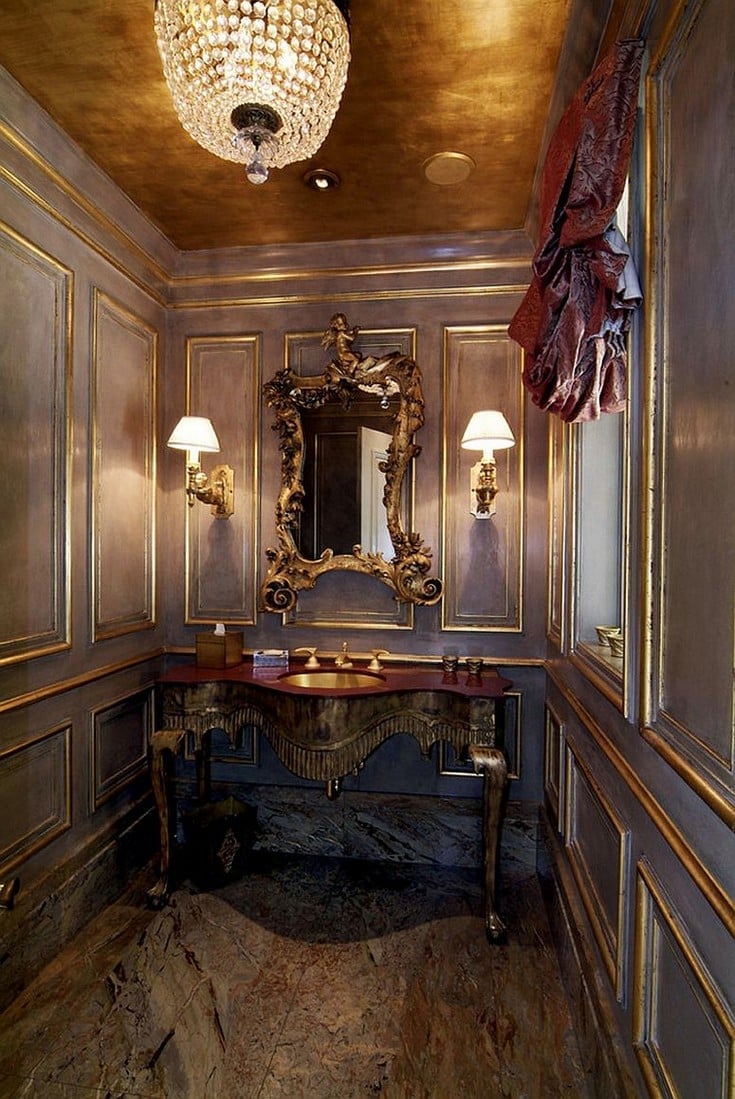
A crystal chandelier does not get lost in a compact Victorian powder room with a highly ornate gold console vanity. The chandelier hangs low enough to catch the eye, while wall sconces and draped curtains soften the grey, gold, and red palette. Wood and marble keep the metal from reading as too cold. Let the vanity stay the focal point and treat the chandelier as the finishing layer. The room feels balanced because the lighting works in layers, not as a single bright source.
Victorian Bathroom Hero Element: Pedestal Sink
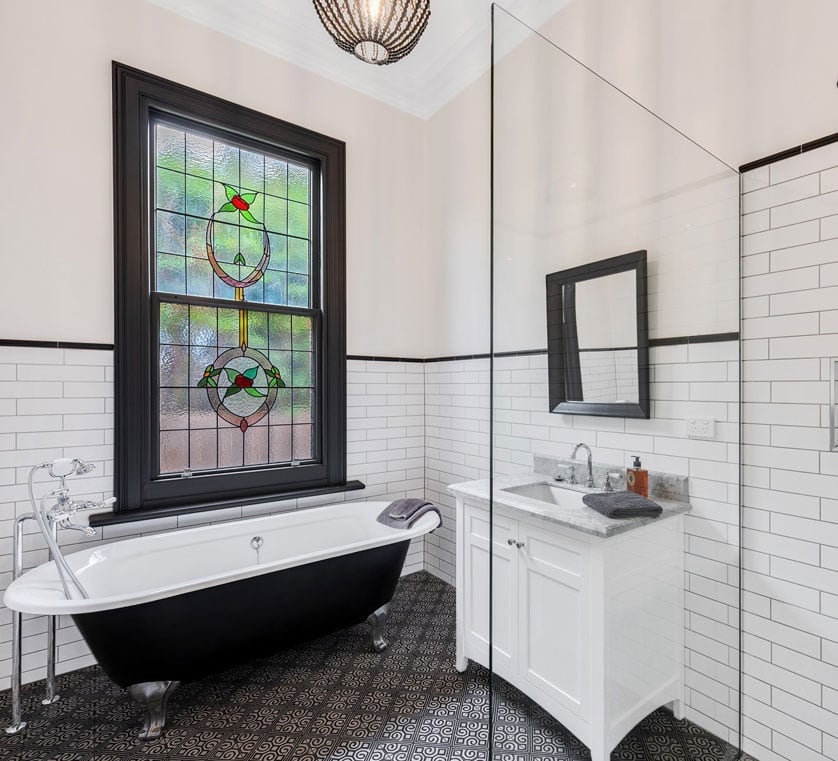
To keep a roomy Victorian bathroom from feeling crowded, anchor the layout around one bold element, like a black clawfoot tub with a stained glass window above it. The tub sits in the corner, the vanity on the right, and the shower enclosure completes the arrangement. Subway tile, patterned tile, and marble carry the black, white, and grey palette, while a chandelier and natural light add warmth. When the tub is the hero, keep the surrounding surfaces simple.
Victorian Bathroom Palette: Natural Tones
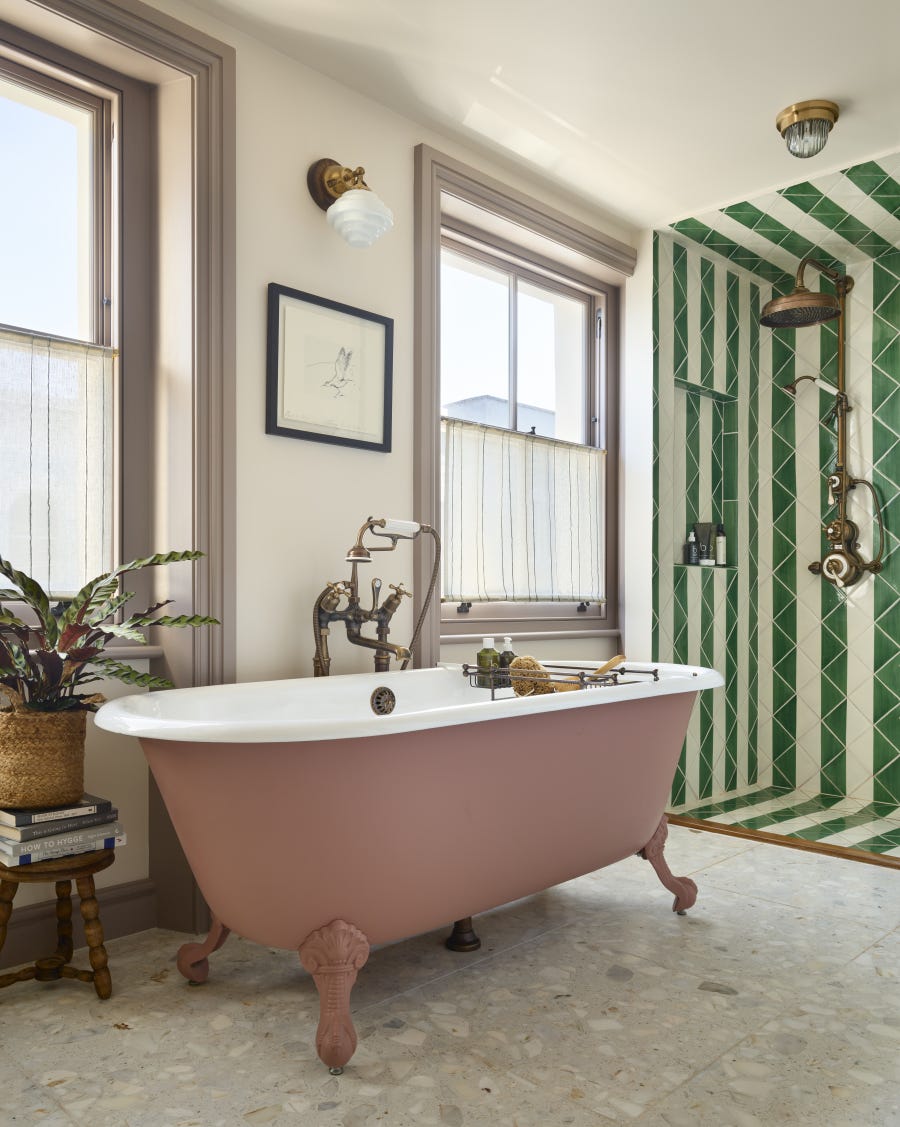
A powder room with white subway tile and grey fixtures can feel crisp, but a Victorian bathroom with a vibrant pink clawfoot bathtub takes the palette in a warmer direction. The pink tub pairs with patterned shower tiles, a wooden stool, and windows that let in natural light. Green and beige accents ground the pink, so the room feels balanced. The room is roomy enough for the tub and shower area to share the same visual weight. If you want a softer take, swap the pink for a dusty rose and let the wood tones carry the contrast.
Victorian Bathroom Materials: Wood and Porcelain
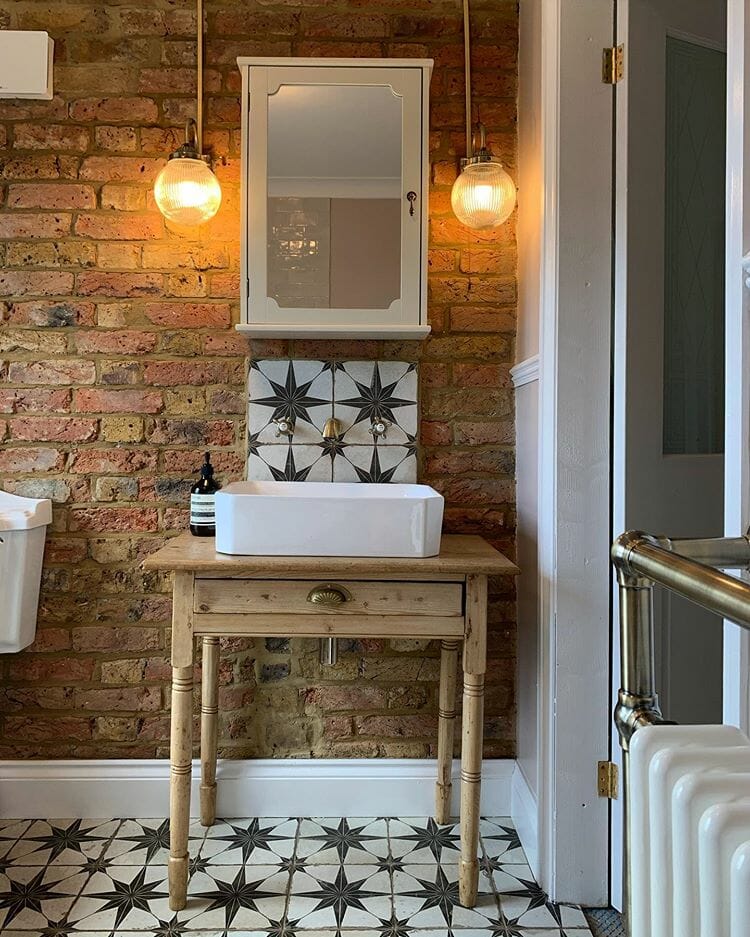
A vessel sink set on a wooden table vanity against an exposed brick wall is a study in contrast. The brick red and wood tones warm the space, while the white porcelain sink and black metal fixtures add a clean edge. Star pattern tiles on the floor tie the eclectic look together. Warm artificial light from pendant lamps softens the rough brick texture. This kind of setup suits a compact bathroom where you want the materials to do the talking. Keep the wall simple so the brick stays the standout.
Victorian Bathroom Lighting: Sconces and Natural Light
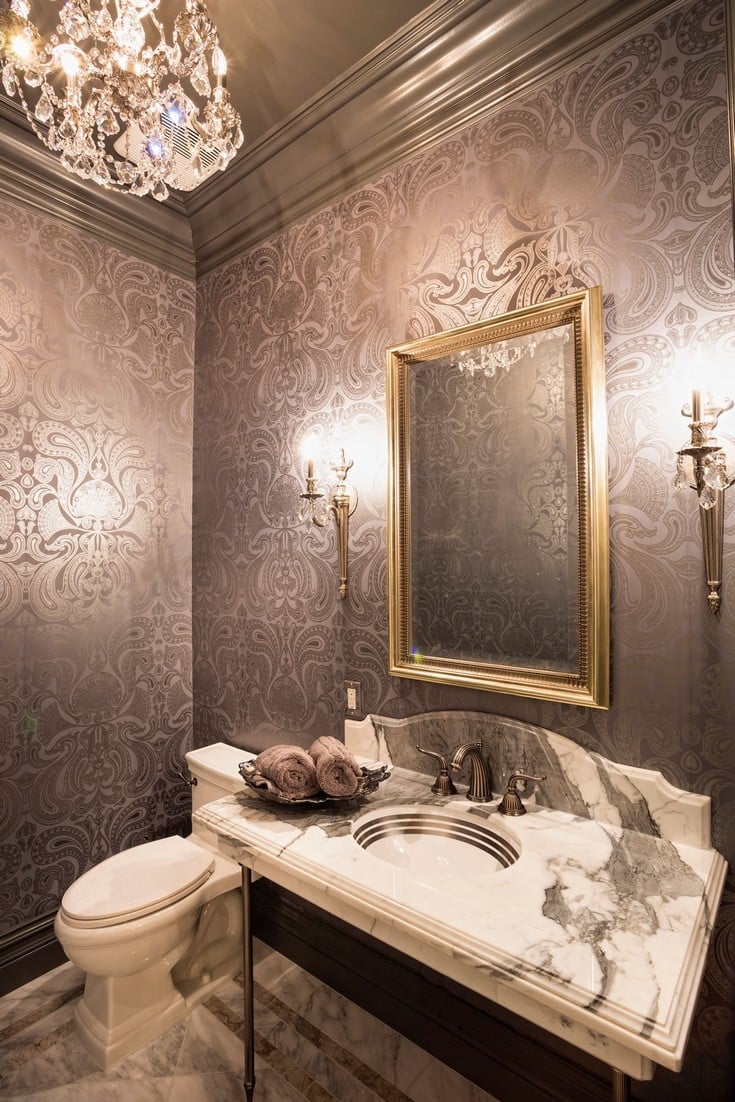
A clear one-line assessment: layered lighting makes a compact Victorian bathroom feel larger than it is. The ornate gold mirror frame reflects light from the crystal chandelier and the wall sconces, while the marble vanity and metallic wallpaper add a subtle sheen. The silver and grey palette stays cool, and the brass fixtures bring in warmth. With the vanity centered and the toilet to the side, the lighting draws the eye upward. This setup suits a powder room where you want a touch of drama without overwhelming the space.
Victorian Bathroom Layout: Centered Sink
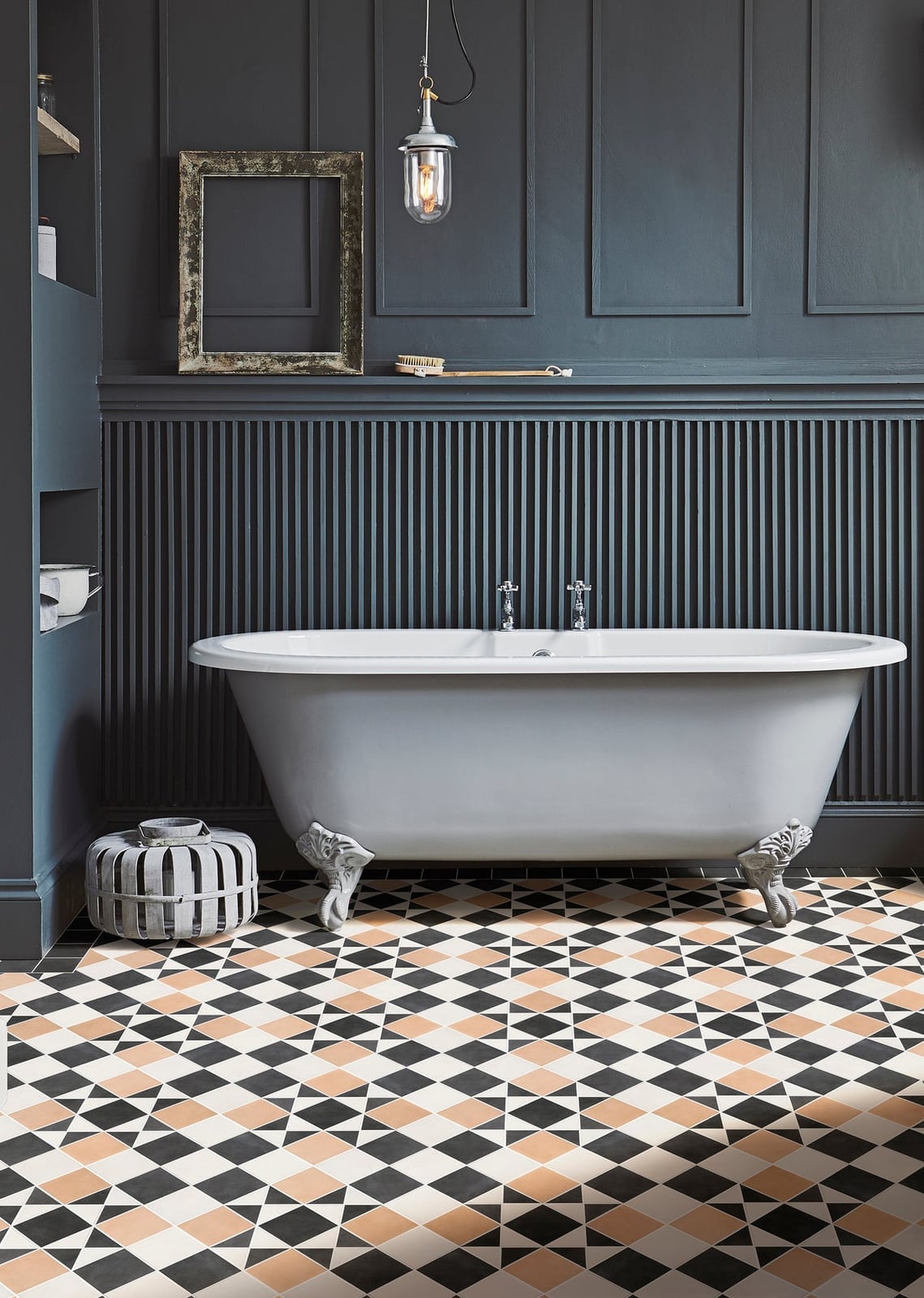
A centered layout works best when the floor plan allows the main fixture to anchor the space without blocking traffic. In a roomy Victorian bathroom, placing the clawfoot tub in the middle of the room creates a natural focal point, especially when the geometric floor tile pattern radiates outward from it. The dark blue walls and cream trim frame the tub without competing, while the wood paneling adds a traditional backdrop. The overhead pendant light and wall sconce provide ambient illumination that keeps the whole layout visible, not shadowy. This setup suits a room where you want the tub to read as the hero and the rest of the space to support it quietly.
Victorian Bathroom Size Feel: Compact
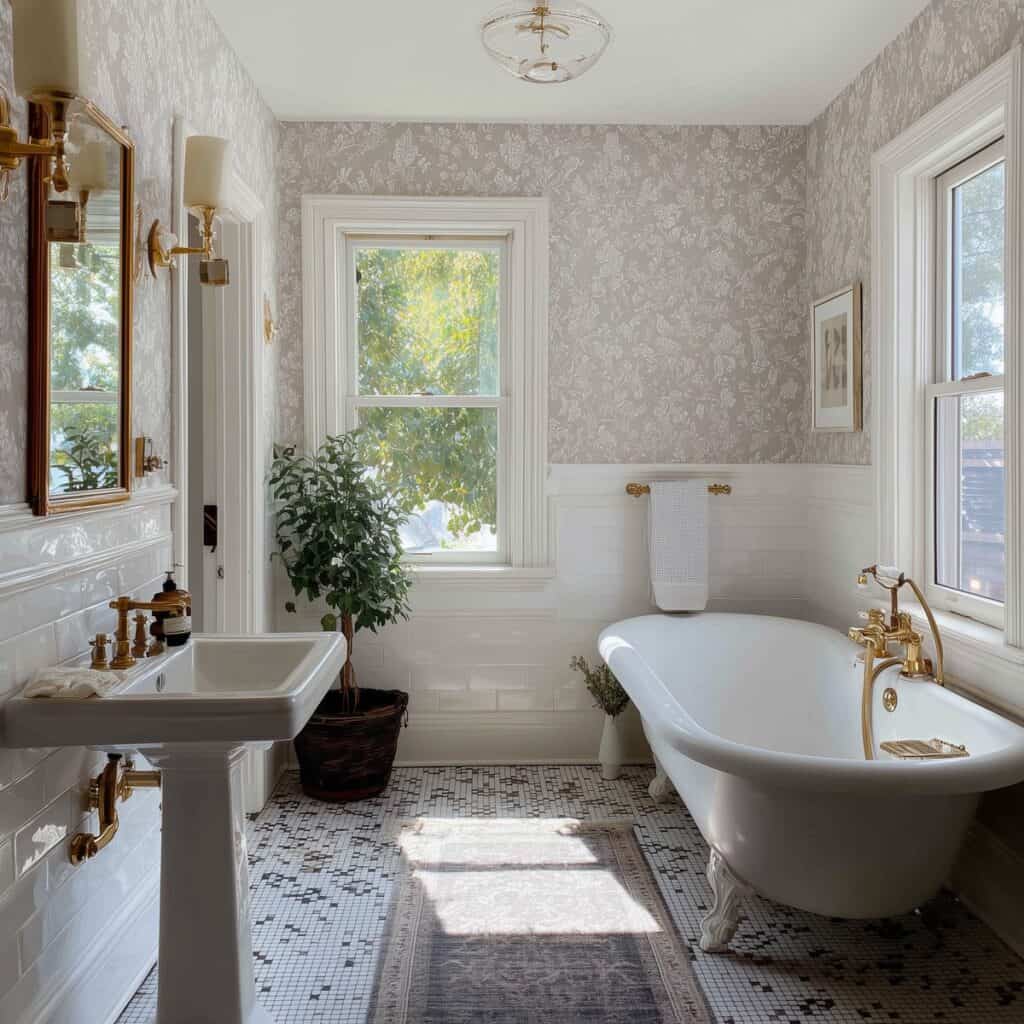
A Modern Victorian bathroom with light grey walls and white porcelain fixtures feels more spacious than its square footage suggests. The gold fixtures on the pedestal sink reflect the daylight from the window, while the wall sconces add a warm glow that prevents a clinical atmosphere. A potted plant introduces green without breaking the clean palette. This palette works because the grey and white base lets the brass accents stand out as the defining detail, and the stone flooring grounds the look without adding visual clutter.
Victorian Bathroom Framing: Medium Shot
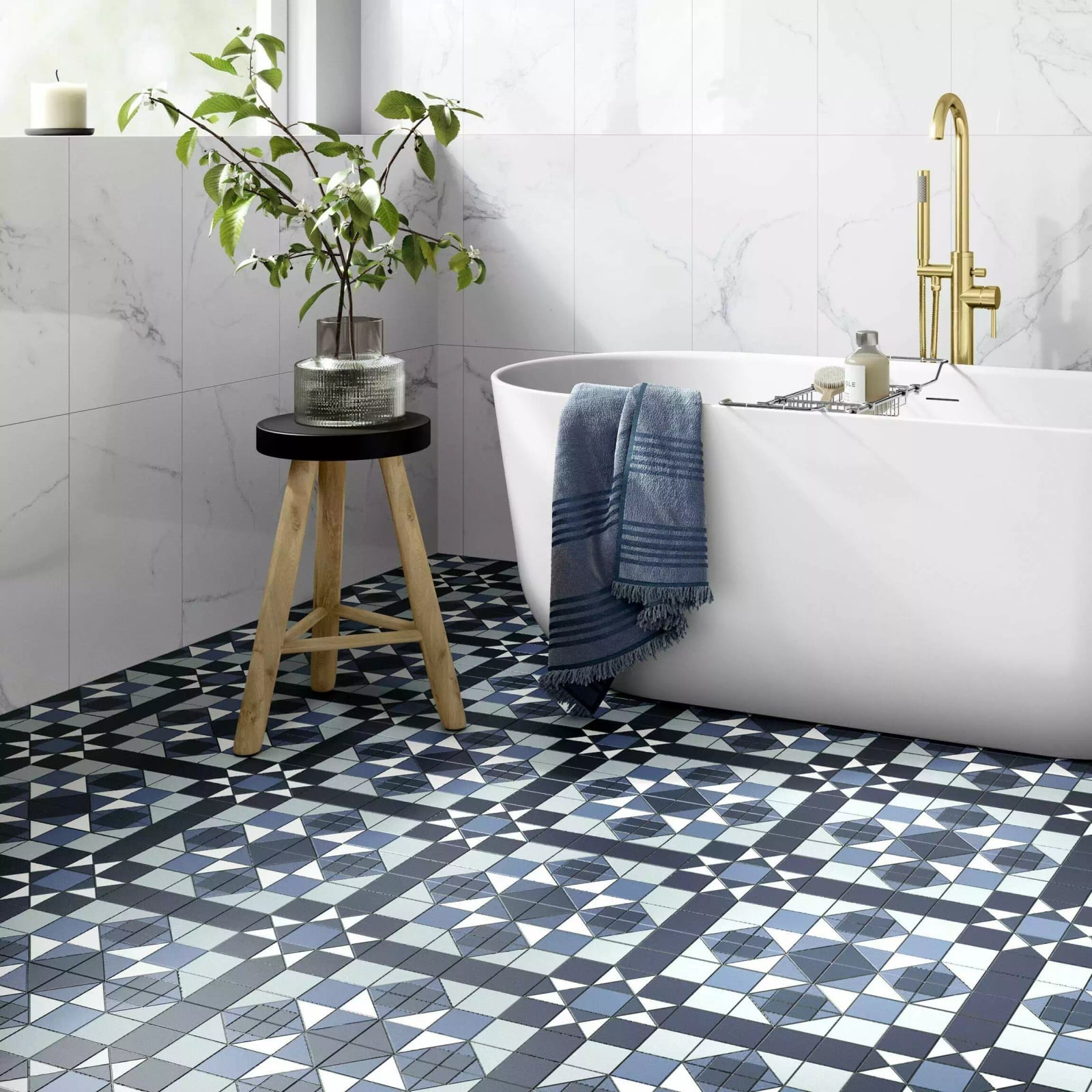
Let the floor pattern lead the eye in a medium-shot view. In this Victorian bathroom, the geometric patterned floor tiles in blue, white, grey, and black create a strong base that draws attention across the room. The freestanding tub and wooden stool sit on the tile without blocking the pattern, and the natural light keeps the ceramic and marble finishes looking crisp. The brass and glass accents add a lighter note that balances the dark floor. This composition works because the floor does the heavy visual work while the fixtures stay simple.
Victorian Bathroom Standout: Botanical Wallpaper
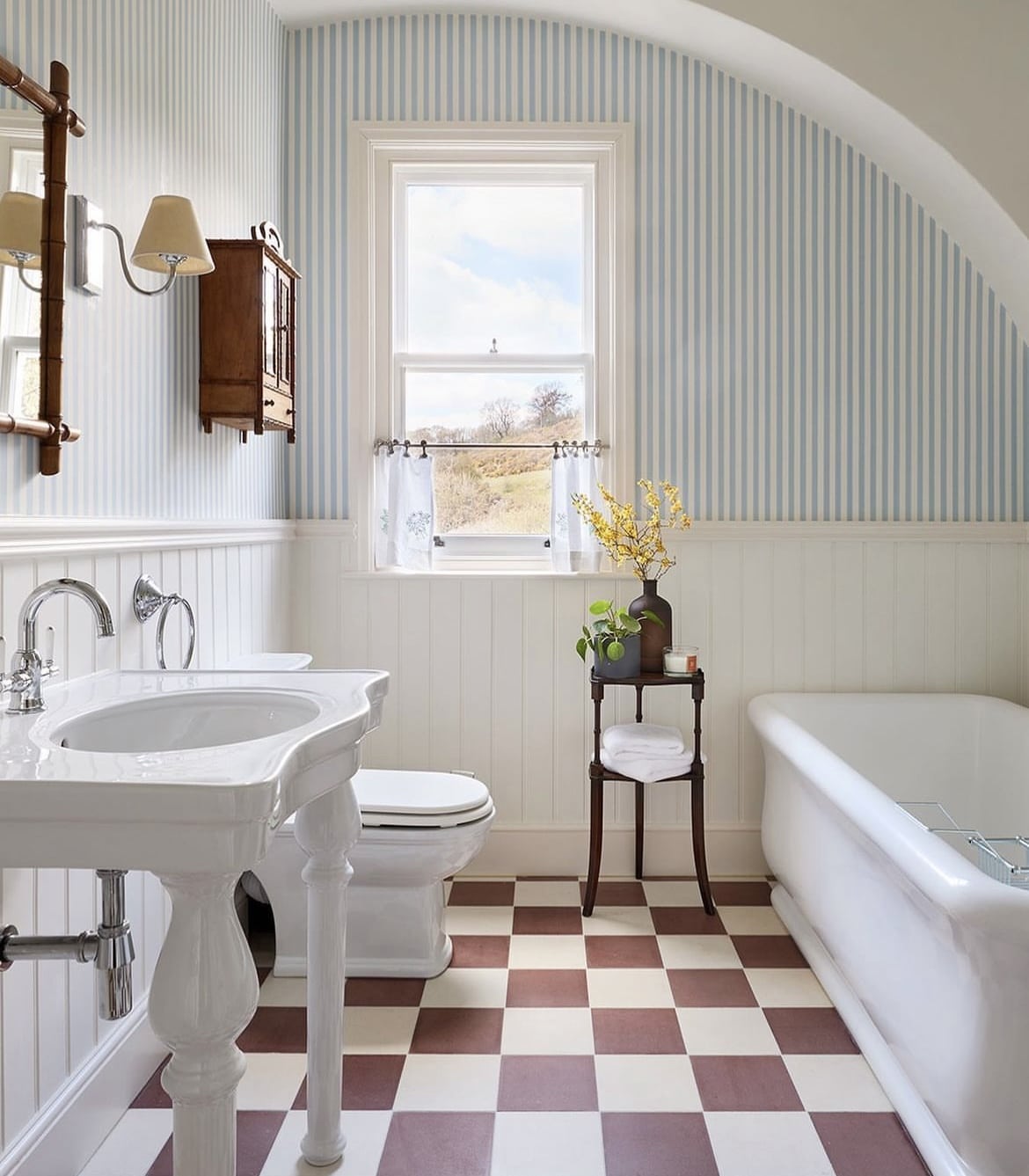
Striped wallpaper in blue and white can feel formal, but in this Victorian bathroom it comes across as fresh. The clawfoot tub and pedestal sink keep the layout traditional, while the beadboard and wood floor add texture that softens the vertical lines of the wallpaper. The wall sconce casts light across the stripes, which prevents the pattern from looking too busy. What breaks the formality is the wooden cabinet with its natural grain. It adds a casual element that stops the room from feeling like a period replica. To recreate it, look for a strong wallpaper and pair it with at least one piece of furniture that has visible wood grain.
Spacious Victorian Bathroom Layout
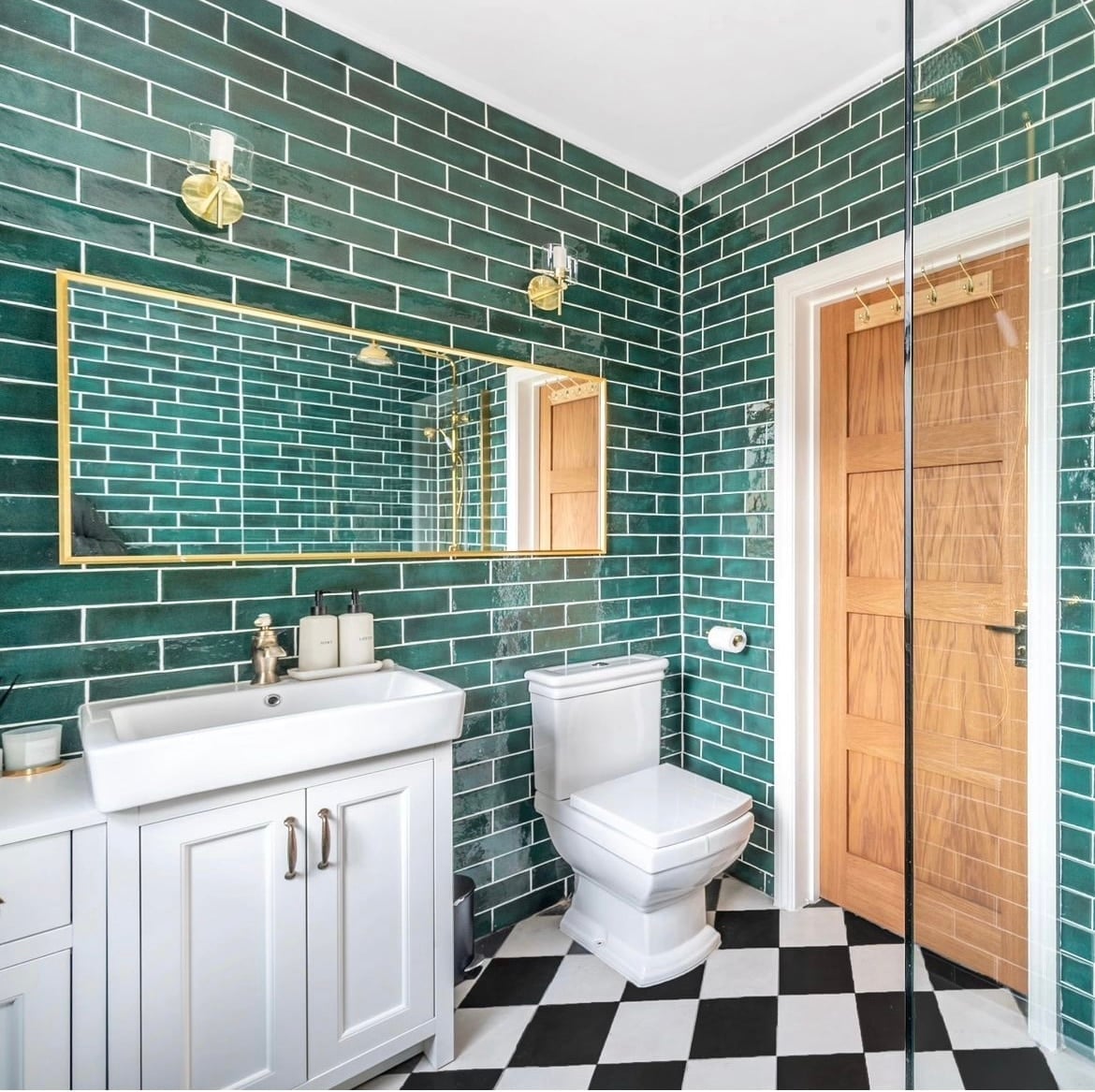
The emerald green subway tile walls in this Victorian-inspired bathroom create a rich backdrop that makes the compact space feel intentional rather than cramped. The white porcelain vanity and toilet keep the palette from going dark, while the gold mirror and wall sconces add light-reflecting surfaces. The wood elements introduce warmth without taking up floor area. This layout works because the tile color provides the personality, and the white fixtures give the eye a place to rest. For a compact bathroom, a single saturated wall finish can replace the need for multiple decorative pieces.
Victorian Bathroom Palette: Wood and Cream
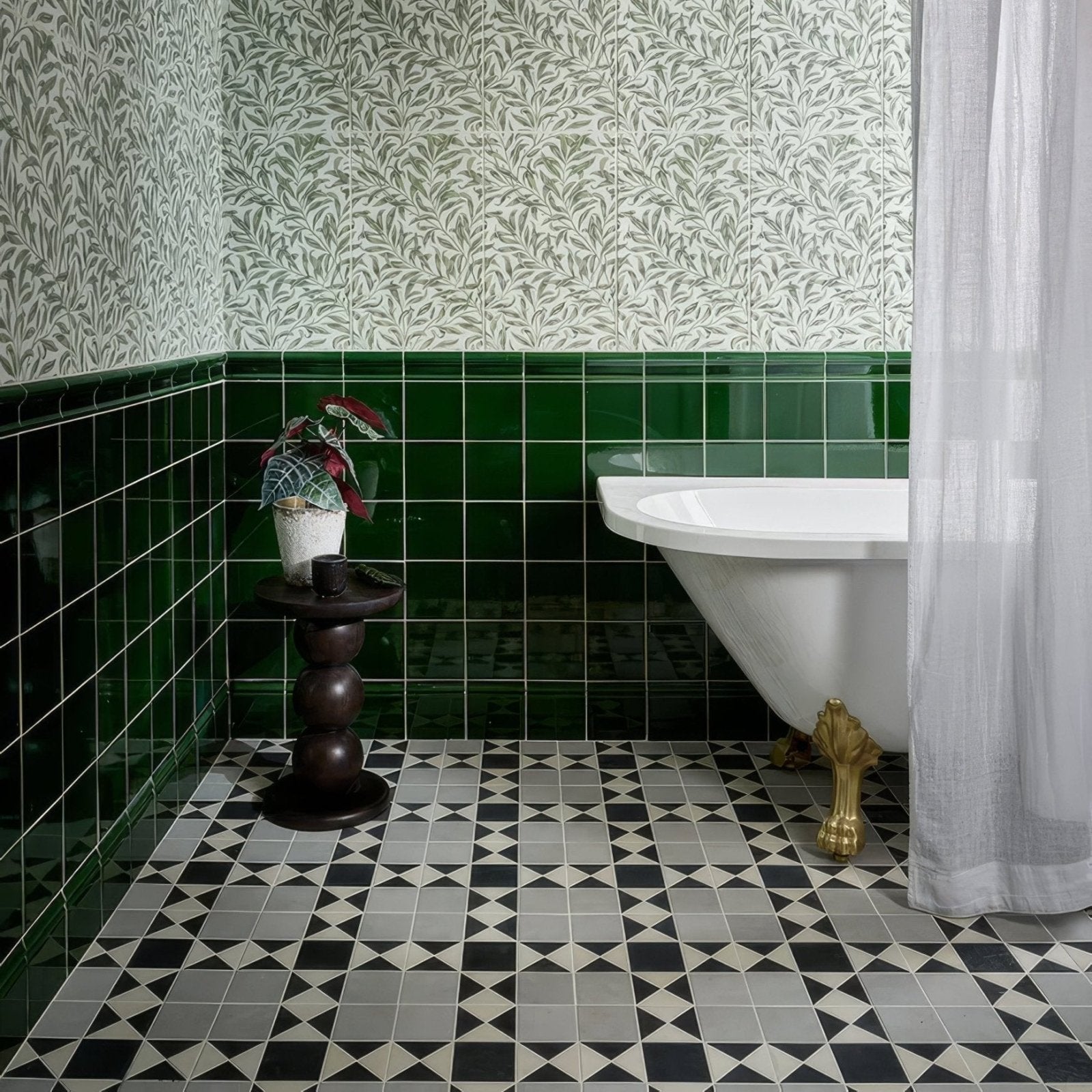
The palette here uses green walls and an encaustic tile floor that mixes black, grey, and white, with a clawfoot tub in the corner. Cream comes through the porcelain of the tub and the white in the patterned floor, so the room keeps a light base even with a deep wall color. The wood shows up in the window trim and any natural-finish furniture, which keeps the green from leaning too cold. A practical rule for this kind of palette is to let one neutral material, like the white tile or the wood trim, sit between the saturated wall color and the busy floor pattern. That way the room feels layered rather than cluttered.
Victorian Bathroom Materials: Wood, Tile, and Marble
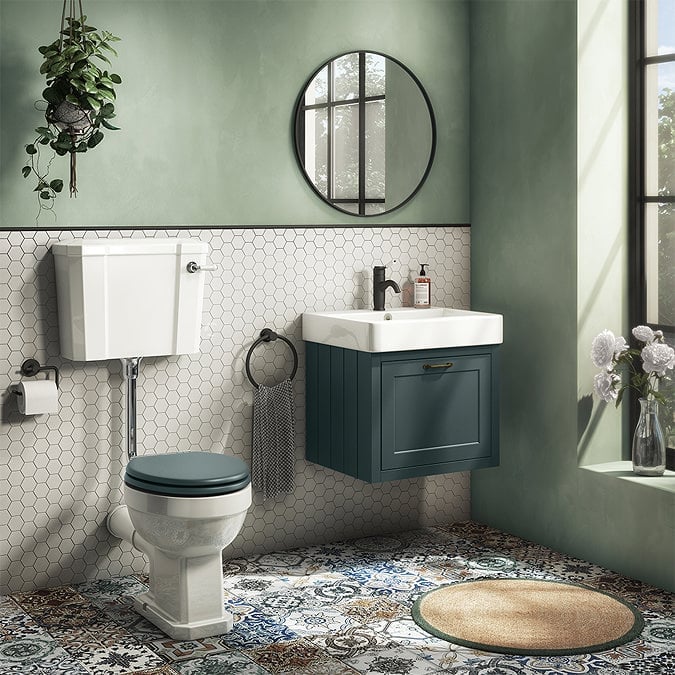
A practical rule for mixing wood, tile, and marble in a compact Victorian bathroom is to let the floor pattern anchor the room and keep the wall materials simpler. Here the hexagonal wall tiles are a clean white, the floor uses a patterned tile that adds visual weight, and the vanity and window trim bring in wood. The high-level toilet and wall-hung vanity are both porcelain, which keeps the fixture group feeling light against the busier floor. Gold accents on the vanity hardware and the mirror frame tie the metal to the warm wood tone.
For a renter-friendly version, a wall-hung vanity can be swapped for a pedestal sink, and a patterned floor tile can be a large washable rug with a geometric print. The high-level toilet is a period detail, but if the existing toilet is standard, a wooden toilet seat and a pull-chain handle add a similar look without replacing the fixture.
Victorian Bathroom Lighting: Layered Illumination
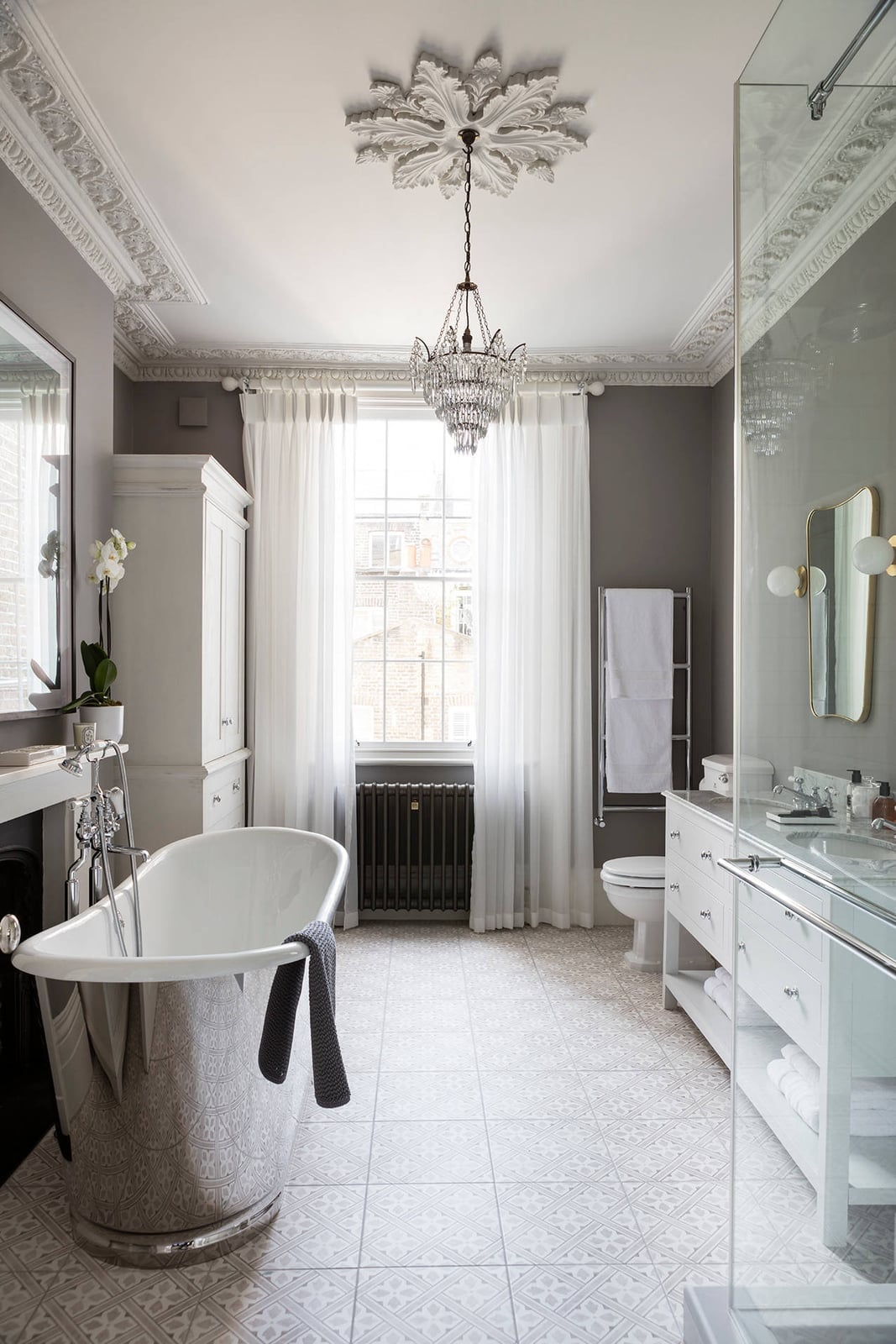
A crystal chandelier hangs from an ornate ceiling medallion, wall sconces flank the marble vanity, and a large window adds natural light. That makes three light sources at different heights, which is the core of layered illumination. For a styling variation, if the room has no ceiling fixture, a pair of swing-arm sconces on either side of the mirror and a floor lamp near the tub give the same layered effect. The key is to avoid relying on one overhead fixture alone, because a single source creates harsh shadows in a room with a freestanding tub and dark corners.
Victorian Bathroom Size Feel: Roomy With Freestanding Bathtub
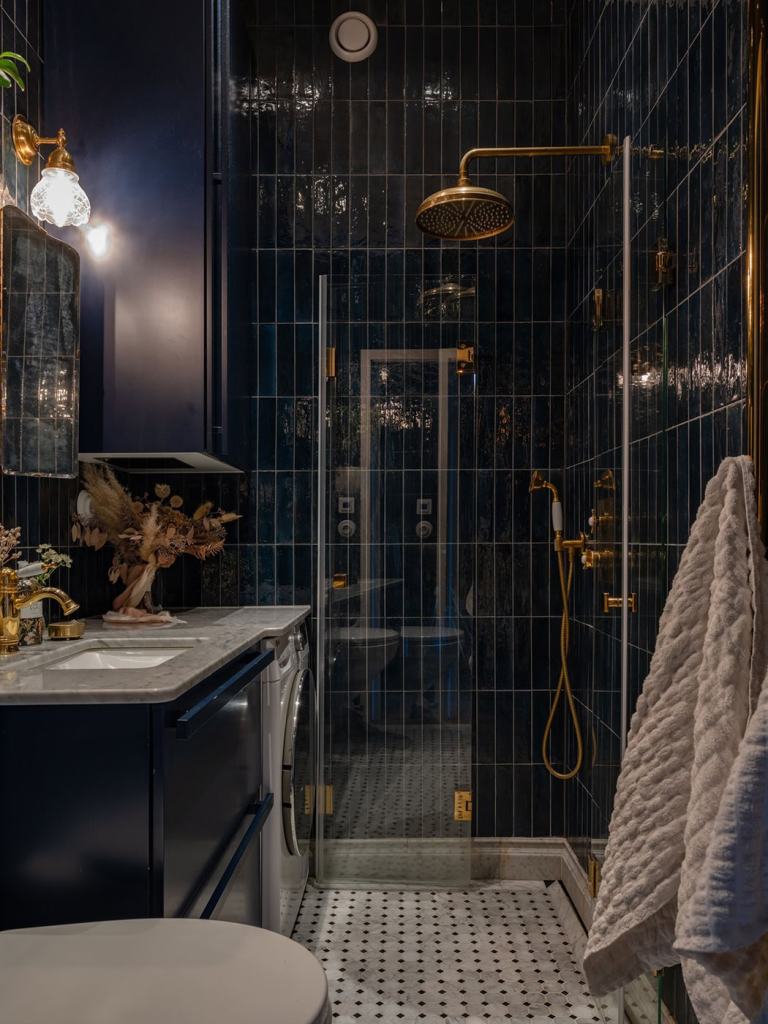
A black freestanding tub sits in the center, with a brass shower fixture to one side and green subway tile covering the shower wall. The patterned floor tile runs wall to wall, so the dark tub becomes a clear focal point. The white ceiling and natural light from the window prevent the room from feeling closed in despite the deep green and black palette. A dark finish on a freestanding tub shows water spots and dust more readily than a white or silver one, so a squeegee and a microfiber cloth become part of the weekly routine.
Victorian Bathroom Standout: Ornate Floor Tiles
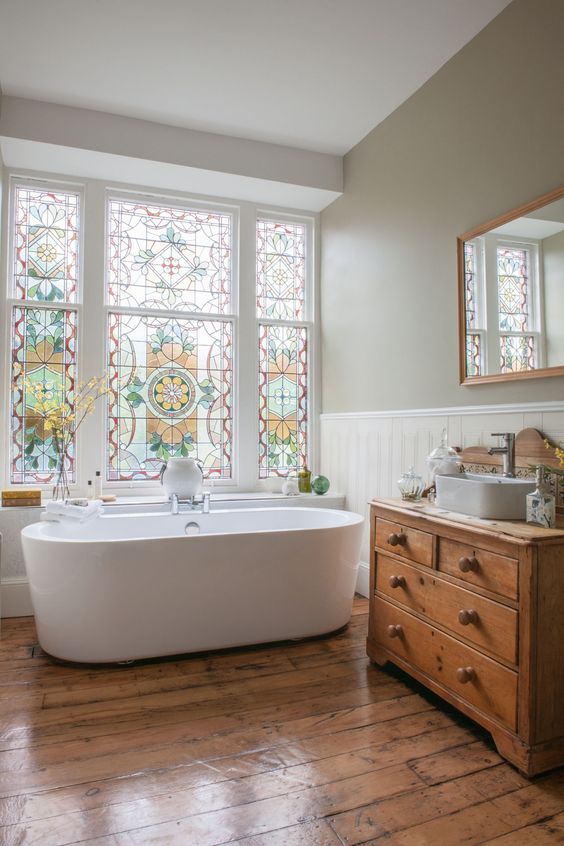
Vibrant stained glass windows might seem like the obvious hero in this room, but the ornate floor tiles compete for attention because they cover a large surface area. The freestanding tub and the wooden dresser used as a vanity are both neutral in color, so the floor and the windows split the visual weight. Against a close alternative where the floor is plain wood or white tile, the stained glass would dominate. Here the two elements balance each other.
For scale, the floor pattern works because the room is roomy enough to handle a busy surface underfoot. In a compact Victorian bathroom, a patterned floor can shrink the space, so a better move is to limit the pattern to a small border or a rug. The wooden dresser adds storage without competing with the floor, and its natural wood tone softens the mix of colored glass and porcelain.
Elegant Victorian Bathroom Hero Element: Clawfoot Tub
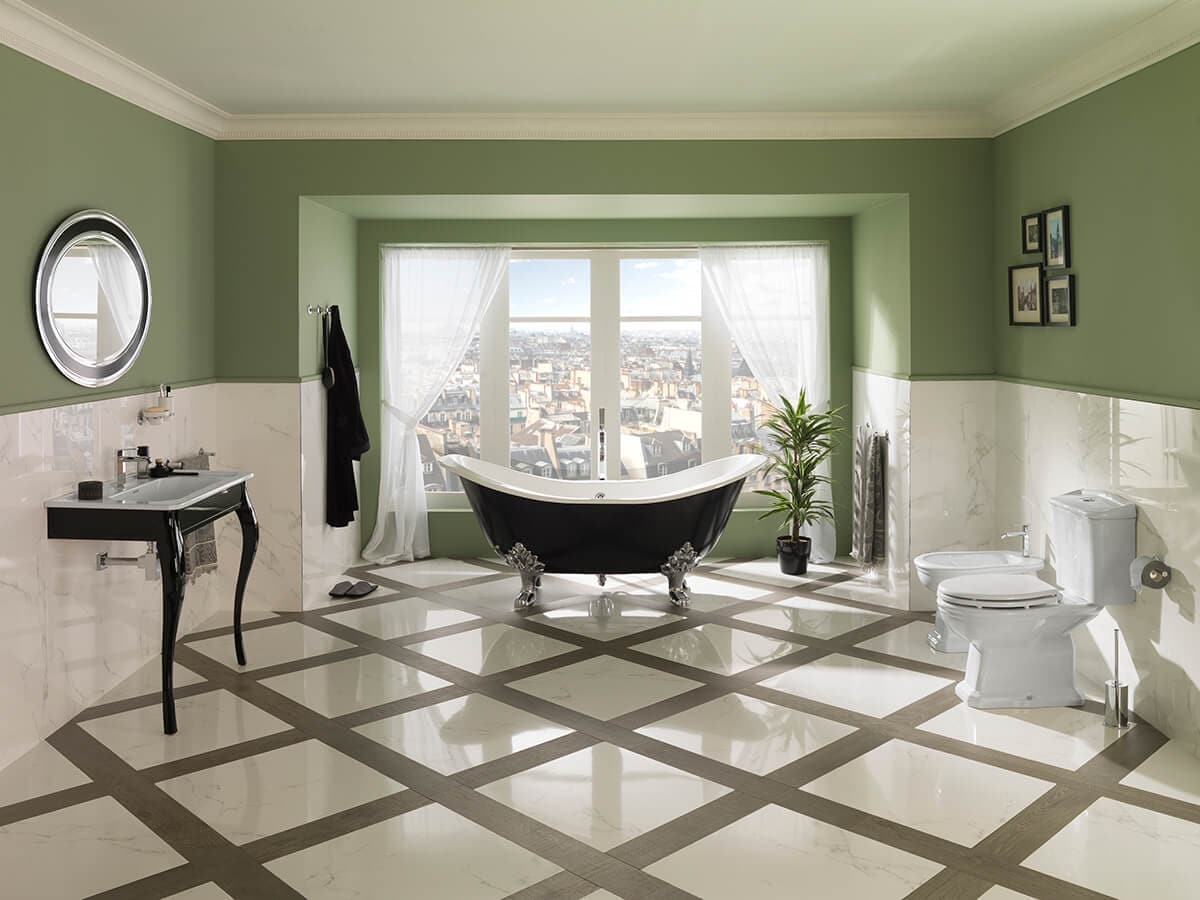
A sage green clawfoot tub becomes the natural center of this bathroom by sitting on marble tile in a room painted white. The palette stays calm so the tub stands out without competition. Wood floors add warmth underfoot while painted walls keep the space feeling open rather than heavy. A window with a city view brings in natural light that reads as generous. For a similar effect in your own space, let one large piece set the tone and keep everything else simple around it.
Victorian Bathroom Palette: Blue and White
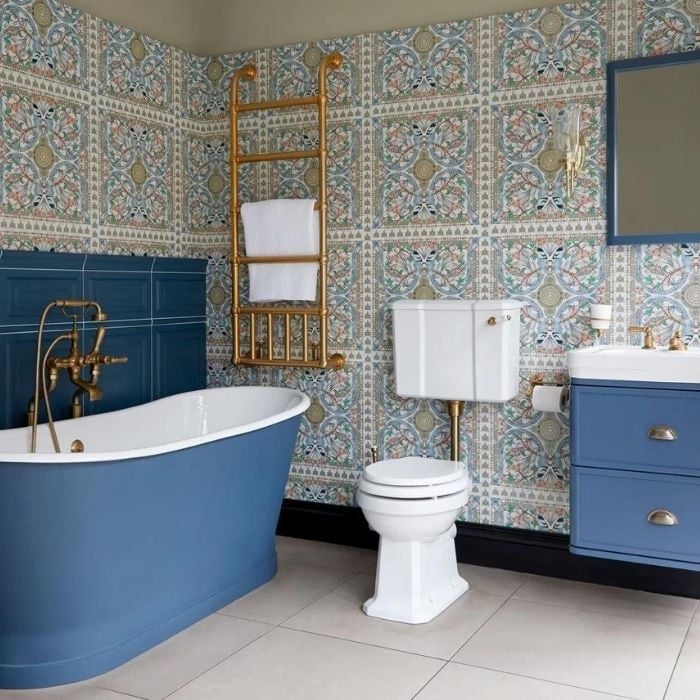
A Victorian bathroom palette of blue and white feels crisp and confident. A blue freestanding bathtub and matching vanity anchor the room while brass fixtures add a warm metallic note. White tile and porcelain prevent the space from feeling dark despite the strong blue. Wall sconces provide soft light that balances the cool tones. The multi-colored floor tile adds visual interest without pulling attention from the blue clawfoot tub. This palette works because blue covers roughly a third of the visible surfaces while white fills the rest, creating a balanced ratio.
Victorian Bathroom Materials: Porcelain and Brass
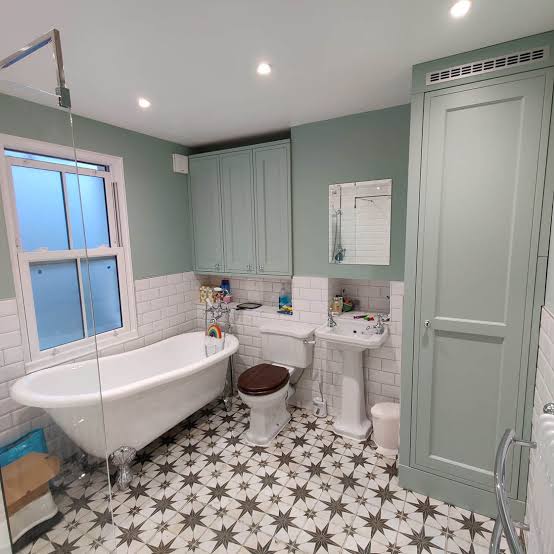
Porcelain and brass make a natural pair in a Victorian bathroom. Porcelain holds up to moisture and cleans easily while brass develops a patina over time. Sage green cabinetry introduces a warm color that mediates between the cool white of the porcelain and the warm brown of the wood floor. A clawfoot tub centered in the room draws the eye first. The tall cabinet provides vertical storage that balances the horizontal lines of the tub and sink. The sink and toilet sit to the side, leaving the tub as the clear focal point. This arrangement suits a roomy space where traffic flows around the tub rather than through it.
Victorian Bathroom Lighting: Ambient and Natural
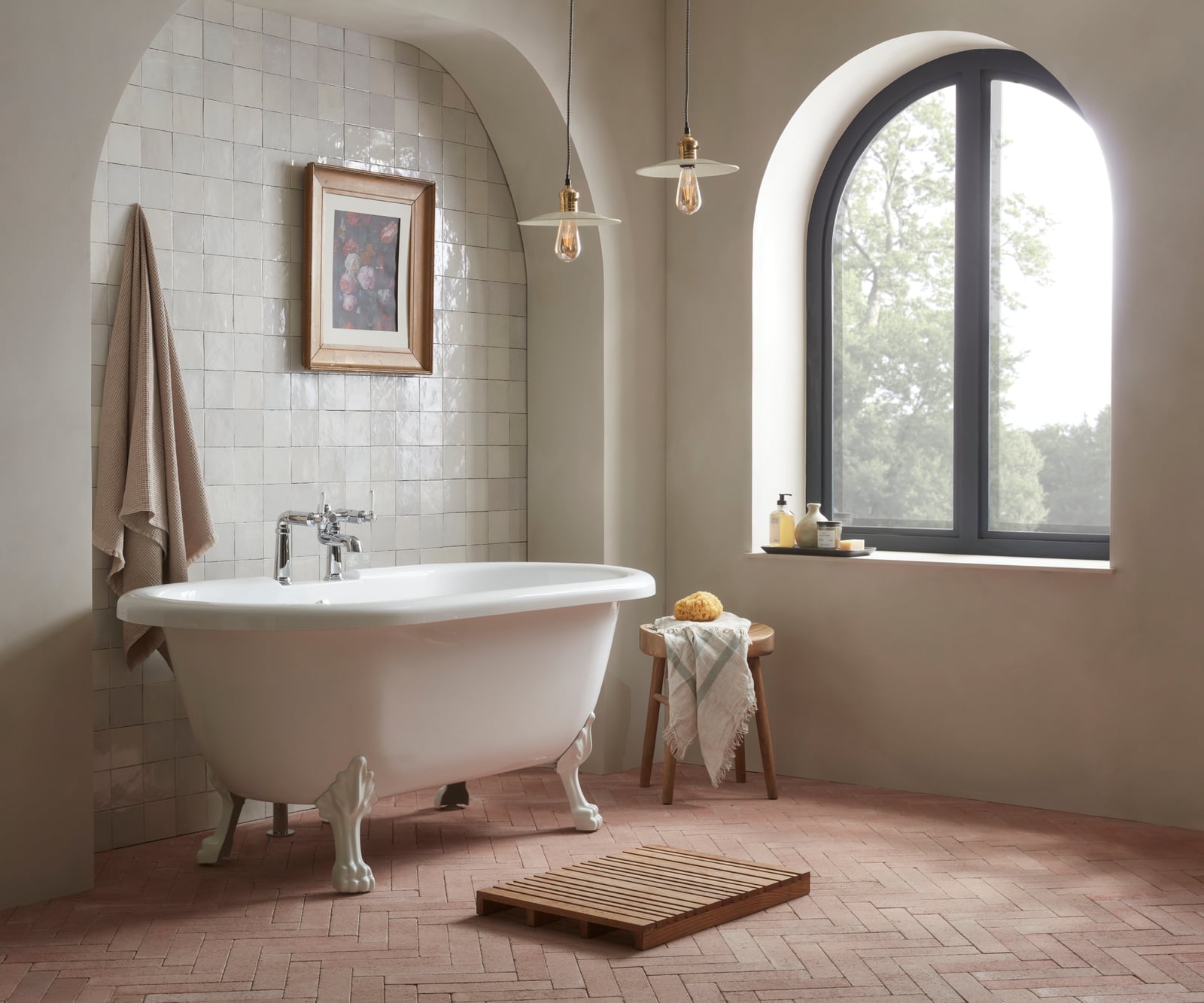
A large arched window floods this Victorian bathroom with natural light that changes throughout the day. The brick tile floor absorbs some of that light, keeping the room from feeling washed out. A white clawfoot tub sits in the open layout near the window. A wooden stool adds a natural texture that breaks up the hard surfaces. This amount of natural light means you can rely less on artificial sources during the day. For rooms without a window this size, adding a skylight or increasing the wattage of overhead fixtures can close the gap.
Victorian Bathroom Layout: Centered Tub
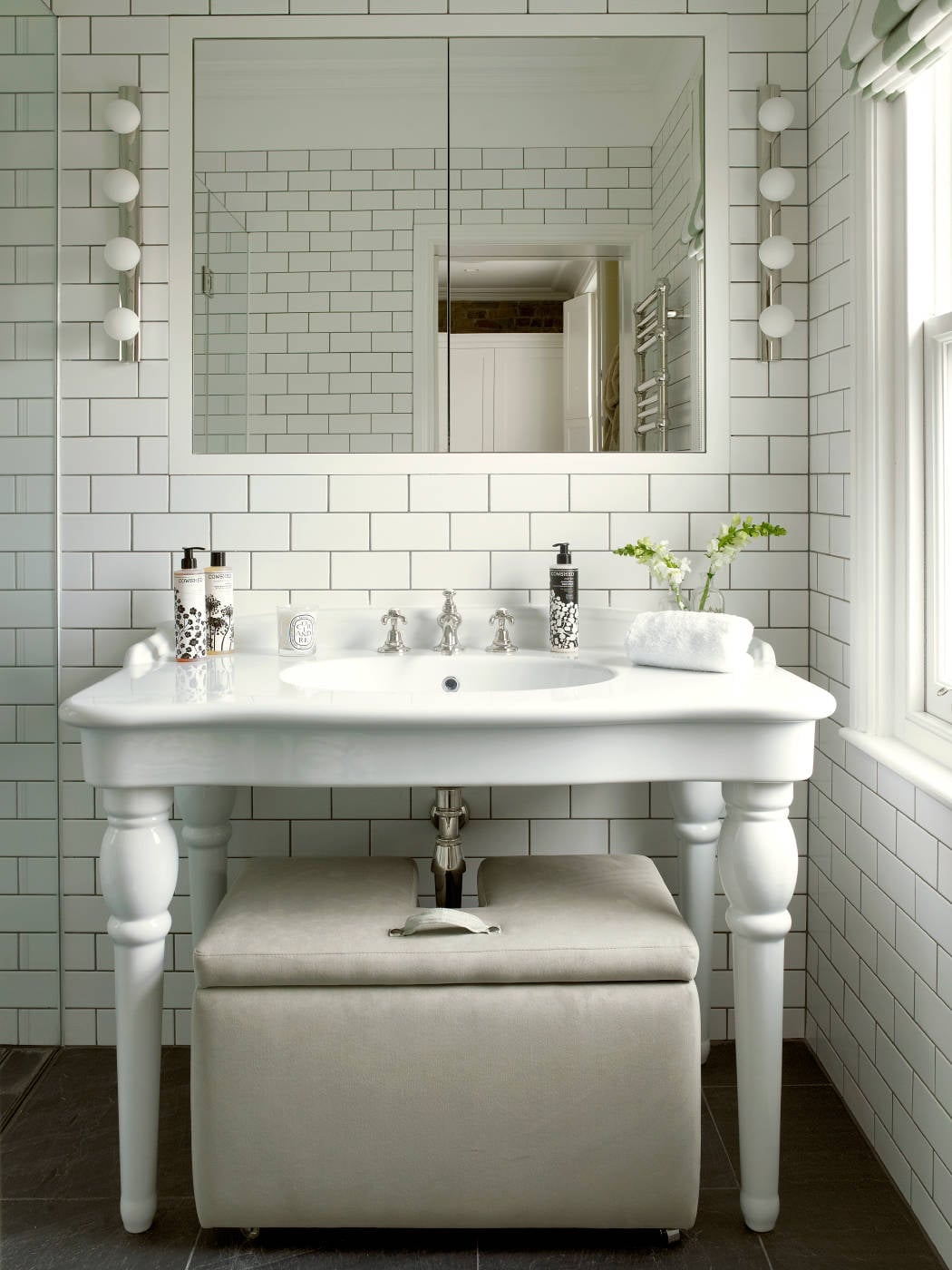
A centered tub works best when the room has enough square footage to let traffic move around it. In a compact bathroom, a console sink against the wall is a smarter layout choice. A white porcelain sink with metal legs keeps the floor visible, which helps the room feel larger. Wall lights on either side of a mirrored cabinet provide task lighting for grooming without taking up counter space. Subway tile on the walls adds texture without overwhelming the small footprint. This layout prioritizes function by keeping the walking path clear and the visual weight low.
Victorian Bathroom Size Feel: Roomy With Cast Iron
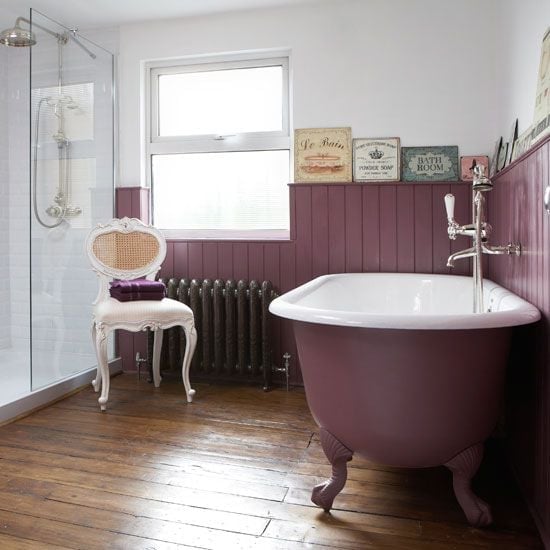
A plum-colored clawfoot bathtub could easily overwhelm a small bathroom, but in a roomy layout the dark tone adds depth without feeling heavy. The cast iron tub anchors one corner, while an ornate chair and a cast iron radiator fill the opposite side without crowding the center. The natural light keeps the plum from going flat, and the wood in the floor and chair warms the palette. The dark grey of the radiator and metal fixtures balances the purple so the room does not feel sweet. The palette here is plum, white, wood, and dark grey, a combination that works because the white comes through the ceiling and window trim to give the eye a place to rest. For anyone nervous about a bold color on a large fixture, this layout proves that a roomy footprint and a restrained supporting palette let the bathtub stand out without apology.
Final Thoughts
Victorian style in a bathroom comes down to contrast: dark against light, ornate against plain, old against new. The photos here show that you don’t need every authentic detail to get the feel. Pick one anchor element, whether it’s a clawfoot tub or a geometric floor, and build the palette around it. Keep the materials honest, the lighting layered, and the clutter low. That balance, between period richness and modern function, is what makes these rooms live well, not just look old.