
Wood kitchen cabinets bring warmth and texture to the heart of your home, offering a natural foundation that pairs with almost any style. Whether you prefer light oak or rich walnut, the right wood cabinetry sets the tone for how the kitchen lives and works.
This roundup of 35 kitchens shows how different wood tones, finishes, and layouts create spaces that feel both practical and inviting. From galley layouts to open-plan designs, each idea focuses on the cabinets themselves and how they shape the room around them.
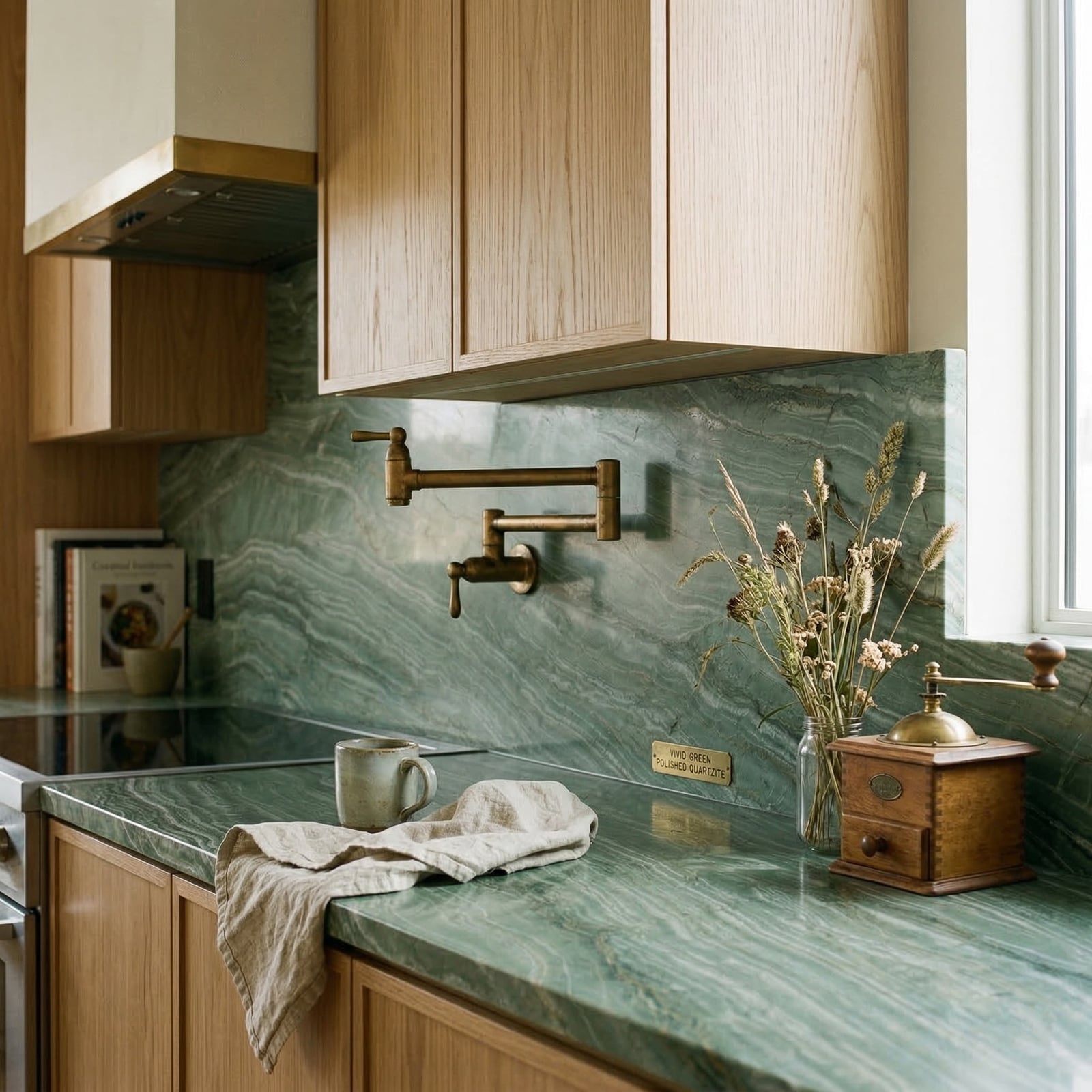
Light Wood Cabinets with a Striking Green Marble Countertop
A green marble countertop has a way of claiming the spotlight, even when paired with light wood cabinets that already bring plenty of warmth. The pale wood keeps the look grounded, letting that veined stone read as the main event rather than a surprise. Brass fixtures add a subtle gleam without competing for attention. It is a materials-first approach: the wood provides a calm backdrop, the marble delivers the character, and the metal accents tie them together. For a similar balance, choose a countertop with visible movement and let everything else stay quiet.
Modern Kitchen with Fluted Wood Island Base and Light Wood Cabinets
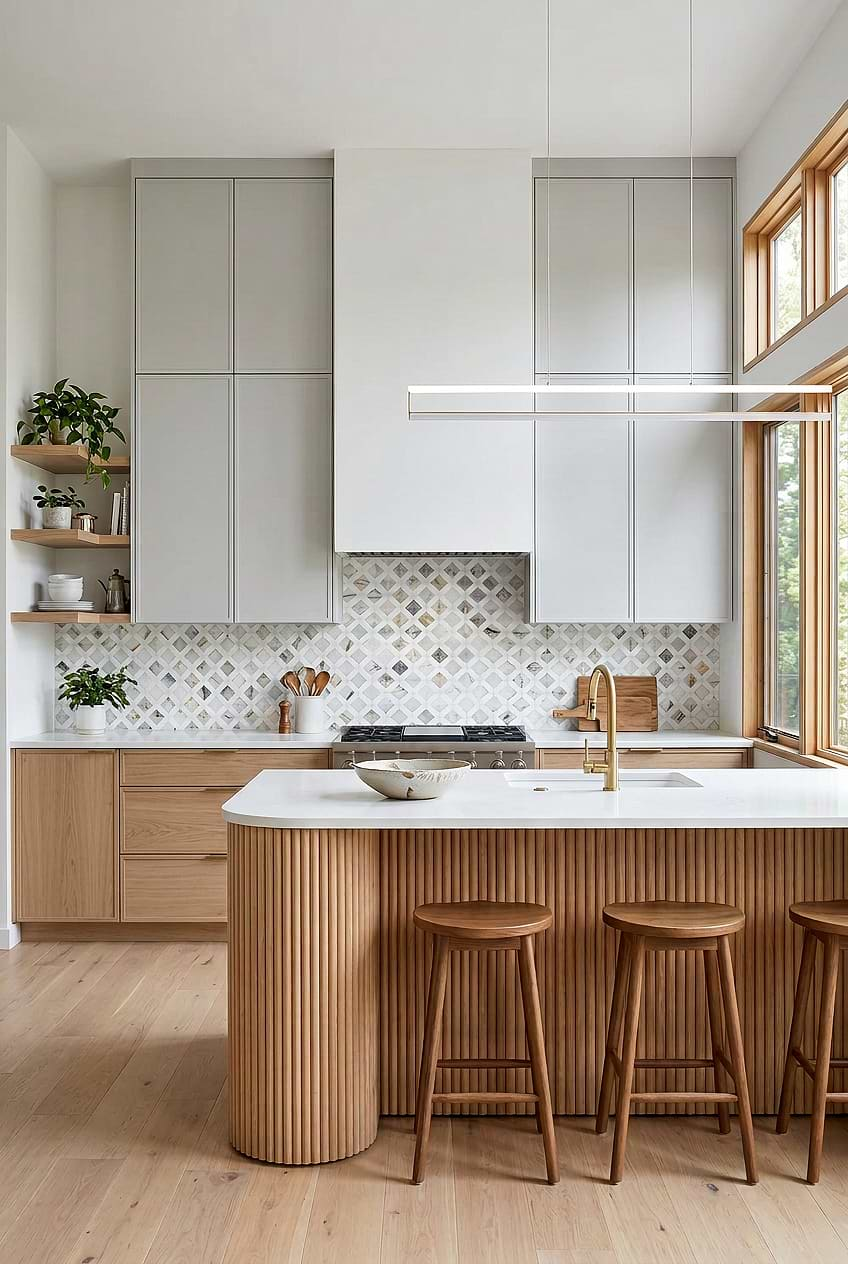
A fluted wood island base introduces texture without adding color, which keeps the palette clean while giving the eye something to follow. The light wood cabinets above stay flat and simple, so the fluting reads as a deliberate accent rather than a busy surface. White marble on the countertops and a gray tile backsplash reinforce the neutral foundation. A linear pendant light hangs low over the island, pulling the vertical lines of the fluting into the rest of the room. The trick is restraint: one textured element, one smooth counterpart, and a palette that lets both do their job.
Warm Wood Cabinetry with a Large Marble-Topped Island and Wood Ceiling
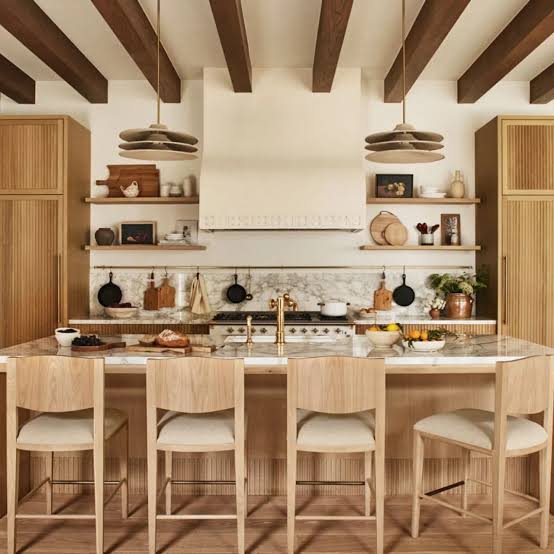
Can a kitchen have too much wood? This one tests the idea with warm cabinetry, a marble-topped island, and a ceiling clad in layered wood beams. The answer depends on contrast. The marble island breaks up the wood at counter height, while white walls and black metal pendant lights add visual pauses above and below. The beams extend the warmth upward without making the room feel boxed in, because the eye has somewhere lighter to land.
The marble does not fight the wood. It sits on top of the island like a clean slate, reflecting natural light from nearby windows. The pendants hang at a height that keeps the beams visible without crowding them. If you are considering a wood ceiling, pair it with at least one large surface in a contrasting material, like stone or quartz, to keep the room from feeling too uniform.
Light Wood Cabinets with Vertical Slat Detailing and Open Shelving
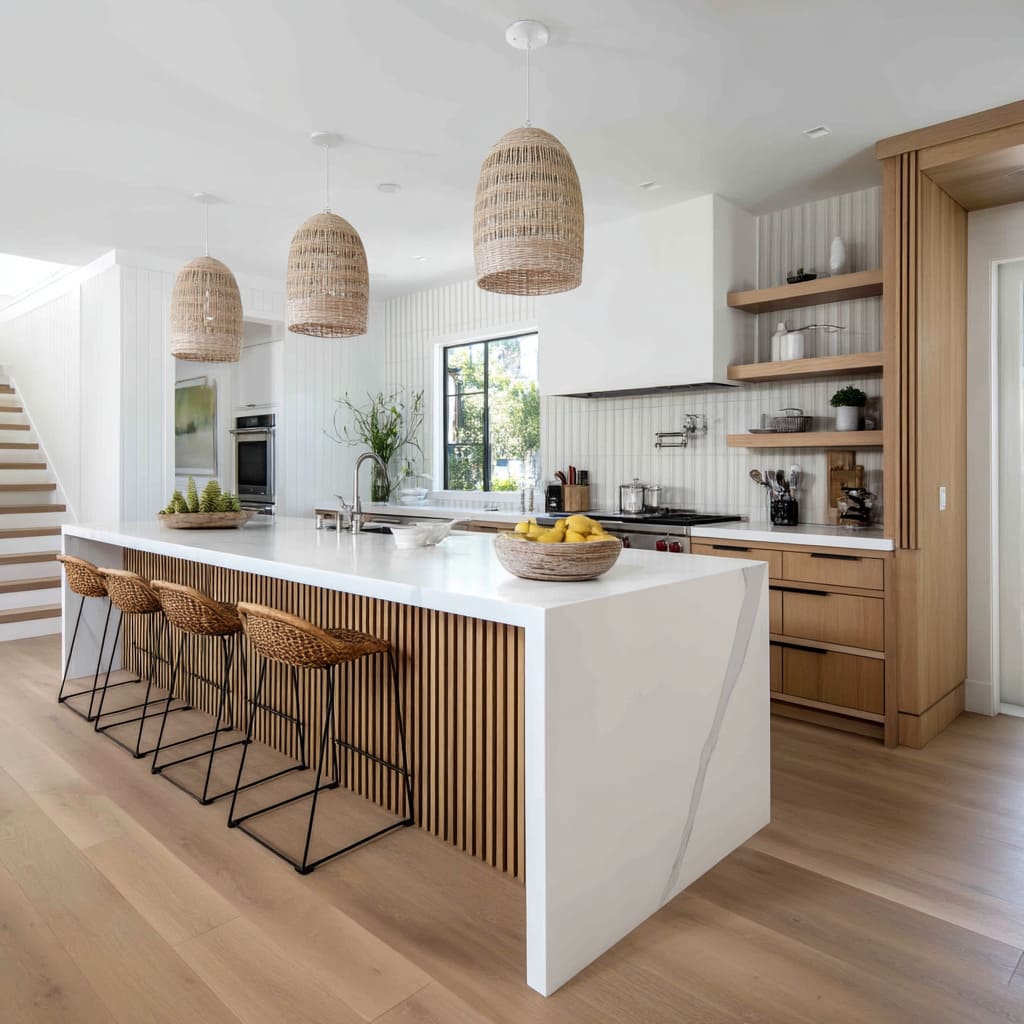
Vertical slat detailing on the cabinets draws the eye upward, which makes the ceiling feel higher and the kitchen more spacious. The slats are subtle enough to blend with the light wood finish but distinct enough to add rhythm across the cabinetry. Open shelving above the counter breaks up the solid run of wood, offering a spot for everyday dishes or a few plants. A quartz countertop keeps the surface practical for prep, while metal bar stools and a tile backsplash introduce slight shifts in texture. The storage lesson: closed cabinets with vertical detail give you visual height, and open shelves give you breathing room.
Modern Rustic Kitchen with Light Wood Cabinets and Stone Countertops
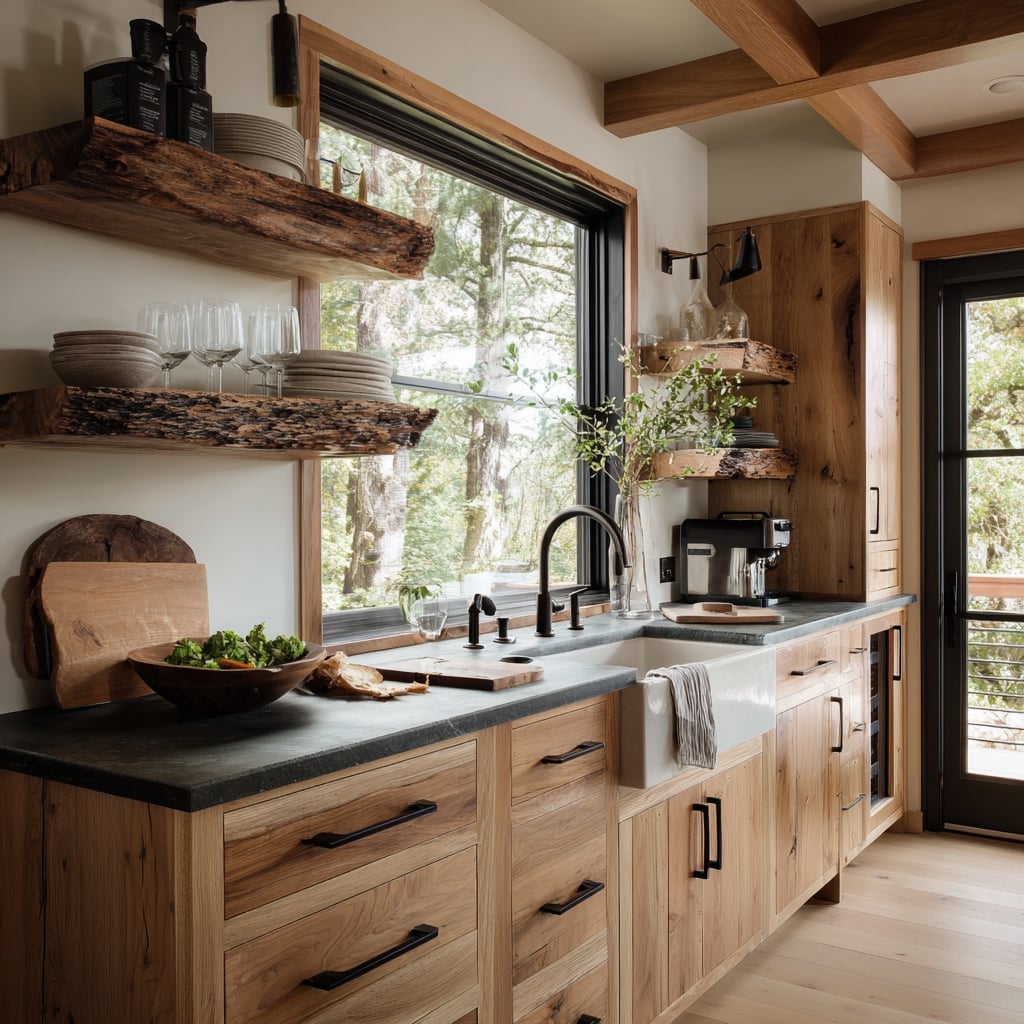
A practical rule for blending modern and rustic is to let the materials set the tone. Light wood cabinets bring the warmth of a farmhouse kitchen, while stone countertops add the polish of a contemporary space. The wood grain stays visible but not heavy, so the room feels relaxed rather than rough. Gray stone keeps the palette neutral and works with overhead lighting to keep the counters bright for food prep. An island with the same stone top extends the work surface and anchors the layout. The balance works because neither material tries to outdo the other: the wood feels lived-in, the stone feels clean, and together they define the modern rustic look.
Farmhouse Kitchen with Light Wood Cabinets and Brass Pendant Lights
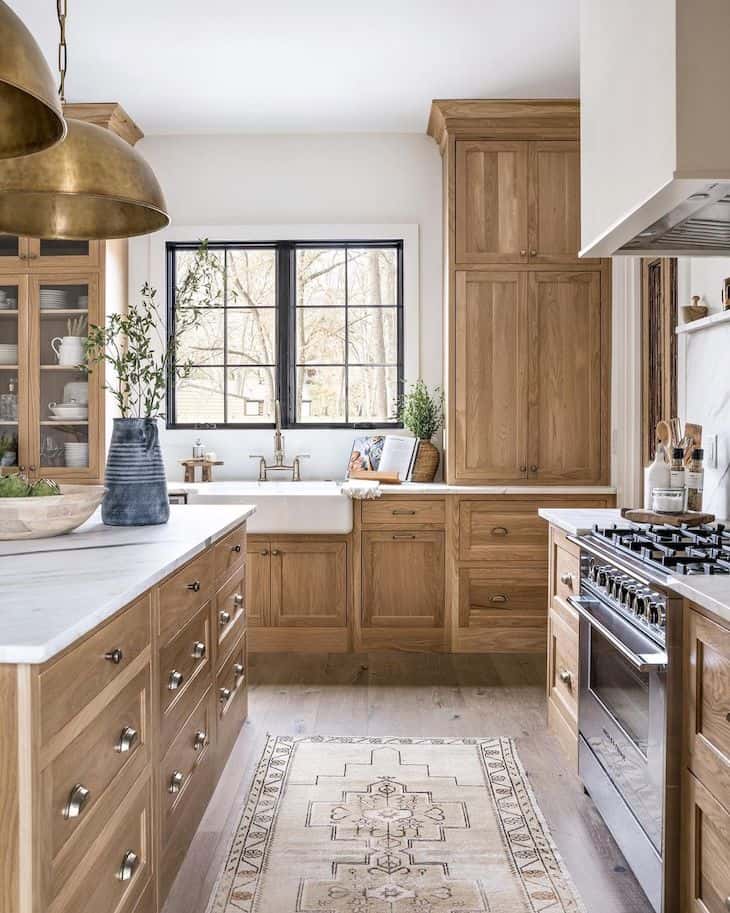
If you think farmhouse means all white shaker cabinets, this kitchen offers a different starting point. The light wood cabinets bring warmth that white alone can’t match, especially when paired with a marble countertop and a classic tile backsplash. Three brass pendant lights hang above the island, adding a soft glow that changes through the day. The brass pulls on the cabinets tie the look together without competing with the wood grain. The element here is the wood cabinetry, and the room stays simple around it: a white farmhouse sink, a built-in range, and an island that doubles as prep space. The brass lights are the one detail that breaks the all-wood palette, and they keep the kitchen from feeling too rustic.
Modern Kitchen with a Mix of Light Wood and Blue Glass-Front Cabinets
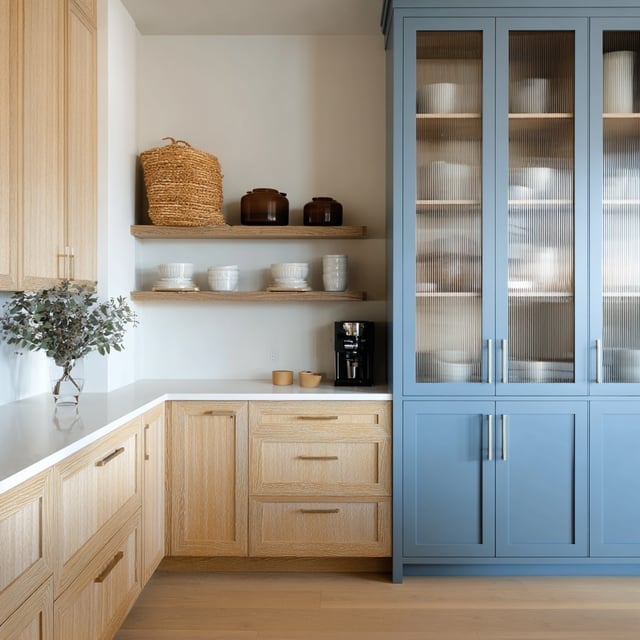
The mix of light wood lowers and blue glass-front uppers creates a two-tone palette that feels intentional. The blue acts as a cool accent against the warm wood, and the glass fronts let you see what is inside, which means you will want to keep those shelves tidy. White quartz countertops give the room a clean landing point. If you rent, you can borrow this palette with peel-and-stick film on the glass and a coat of removable paint on the uppers, leaving the wood lowers untouched.
Modern Kitchen with Light Wood Cabinets and Brass Hardware
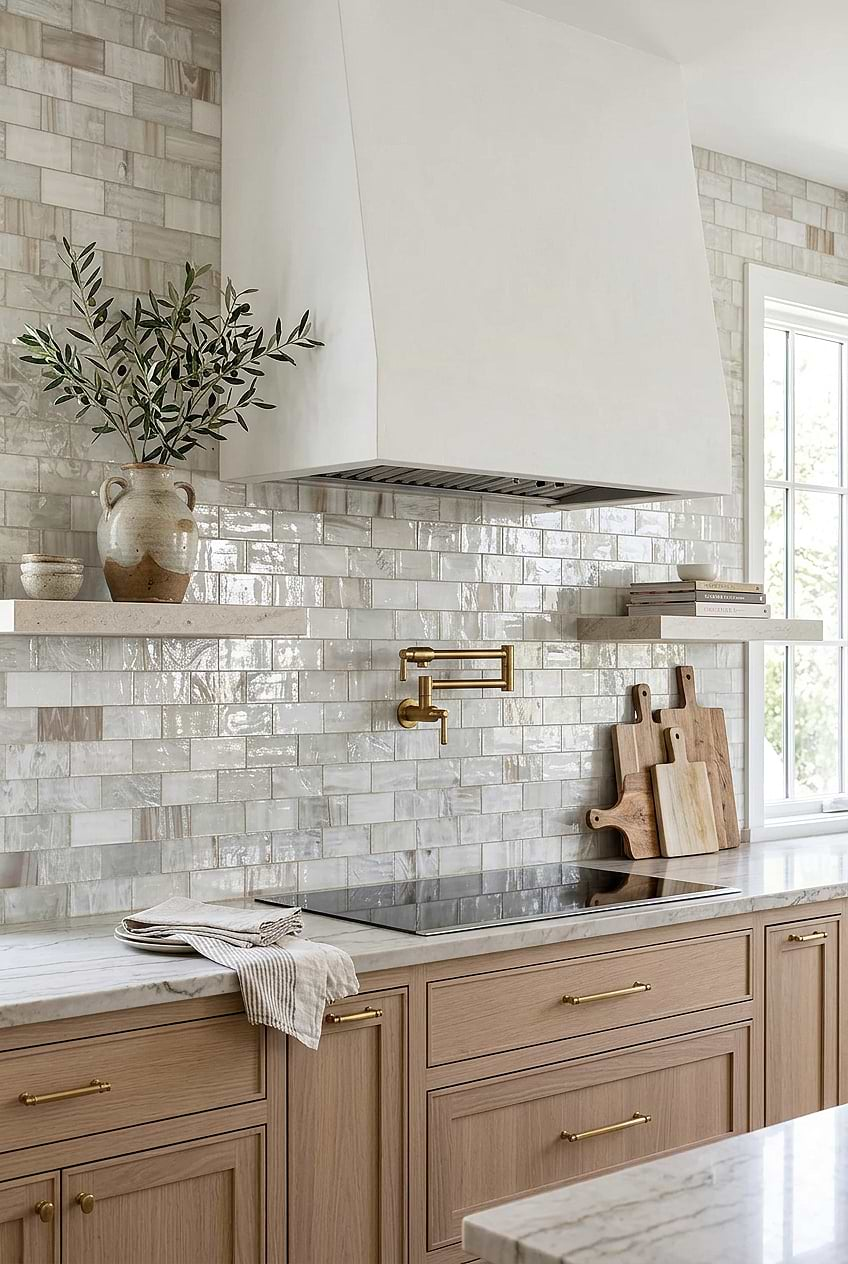
Light wood cabinets with brass hardware is a pairing that works because the metal adds weight to the warm wood. The brass pulls reflect overhead fixtures and natural daylight, creating small highlights against the flat cabinet fronts. A marble countertop and white subway tile backsplash keep the backdrop neutral, so the cabinets and hardware stay the main event. The ratio of wood to metal matters here: the brass acts as an accent, not a dominant note, and the room feels modern without feeling cold.
Galley Kitchen with Light Wood Glass-Front Cabinets and Quartz
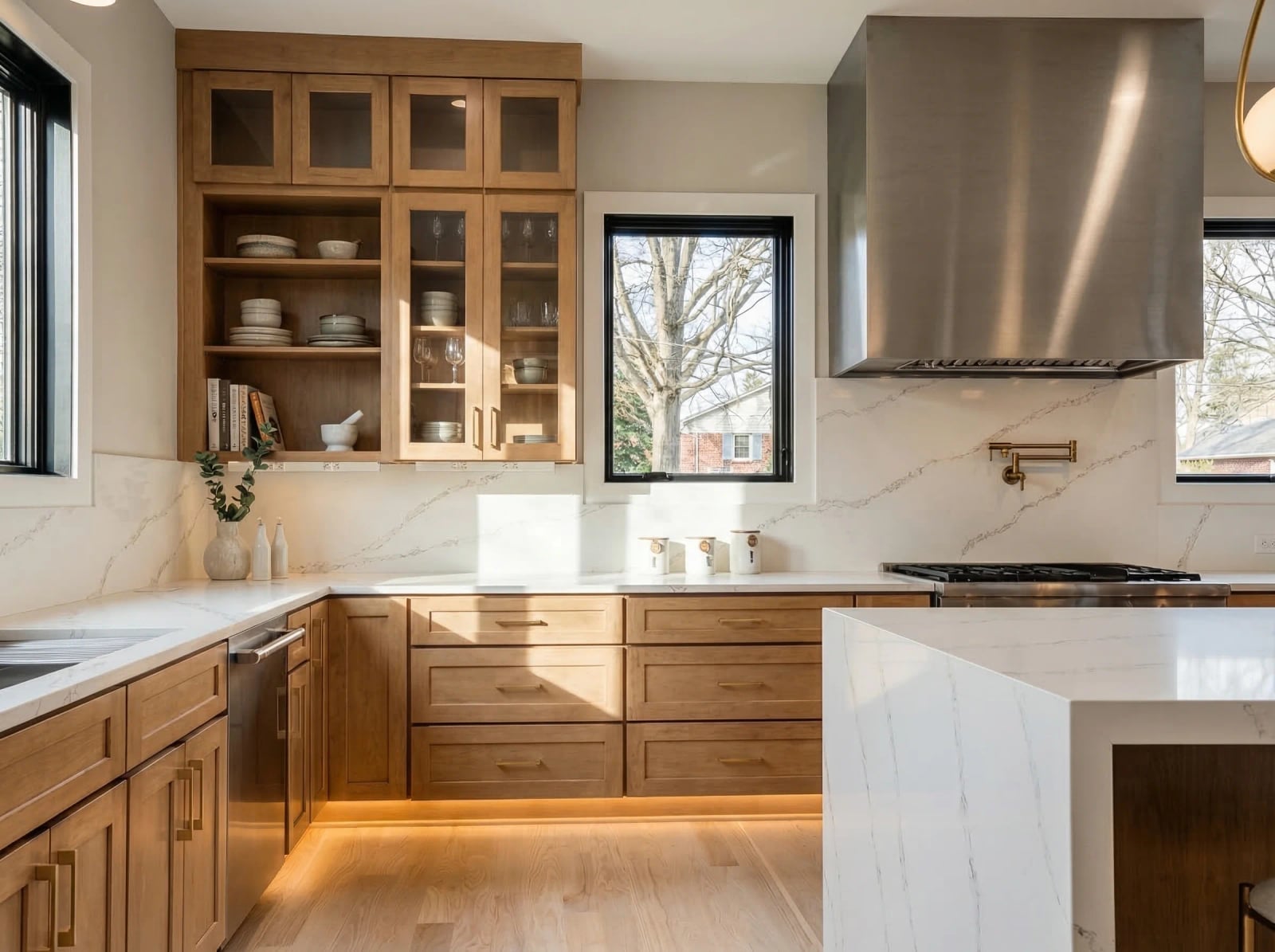
Can glass-front cabinets work in a galley layout without looking cluttered? This kitchen suggests yes, as long as the cabinets stay light and the countertops stay solid. The light wood cabinets with glass fronts let the quartz countertops take center stage, and the stainless steel range hood adds a sleek vertical line. Under cabinet lighting is a smart addition here: it illuminates the countertops without competing with the natural light. The glass fronts mean you need to edit what goes inside, but that constraint can actually help you maintain a clean look in a galley space. The island gives you extra prep room without blocking the flow.
Compact Modern Kitchen with Dark Wood Cabinets and Marble Backsplash
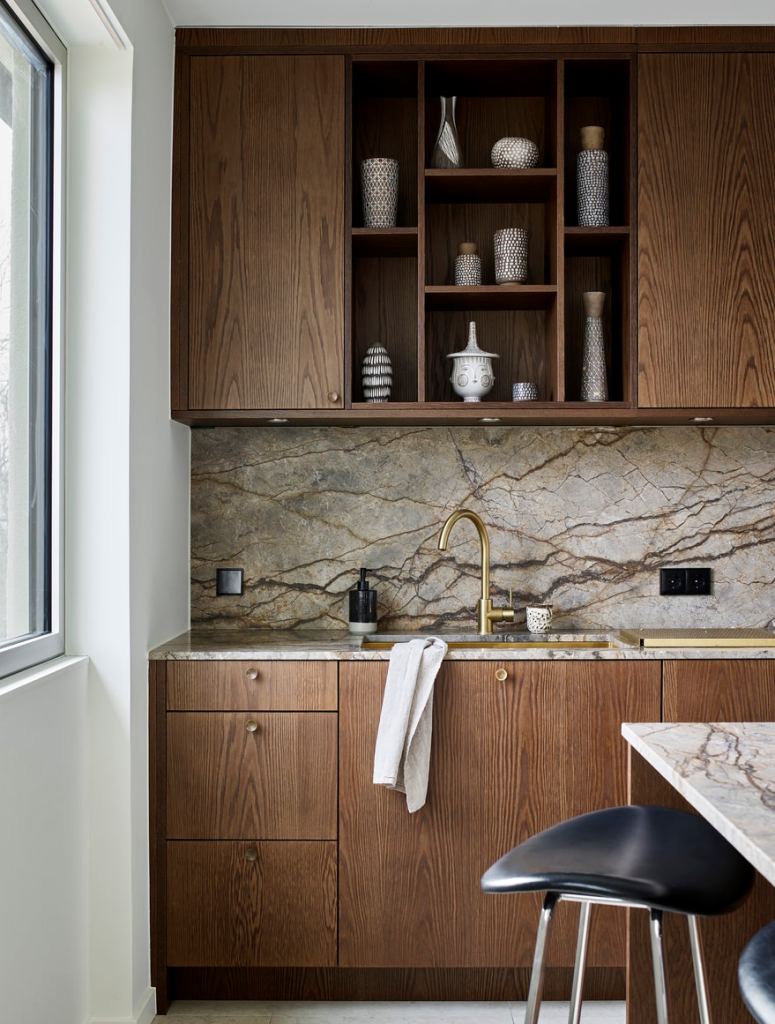
A compact corner kitchen uses dark wood cabinets to anchor the room, and the marble backsplash becomes the visual counterweight. The dark wood adds depth without making the space feel smaller, because the marble reflects the ambient and task lighting. The sink sits in the corner, which is a smart use of an often awkward spot. The dark palette works best when the countertops and backsplash stay light, and this kitchen follows that rule exactly.
Modern Farmhouse Kitchen with Light Wood Cabinets and Island Seating
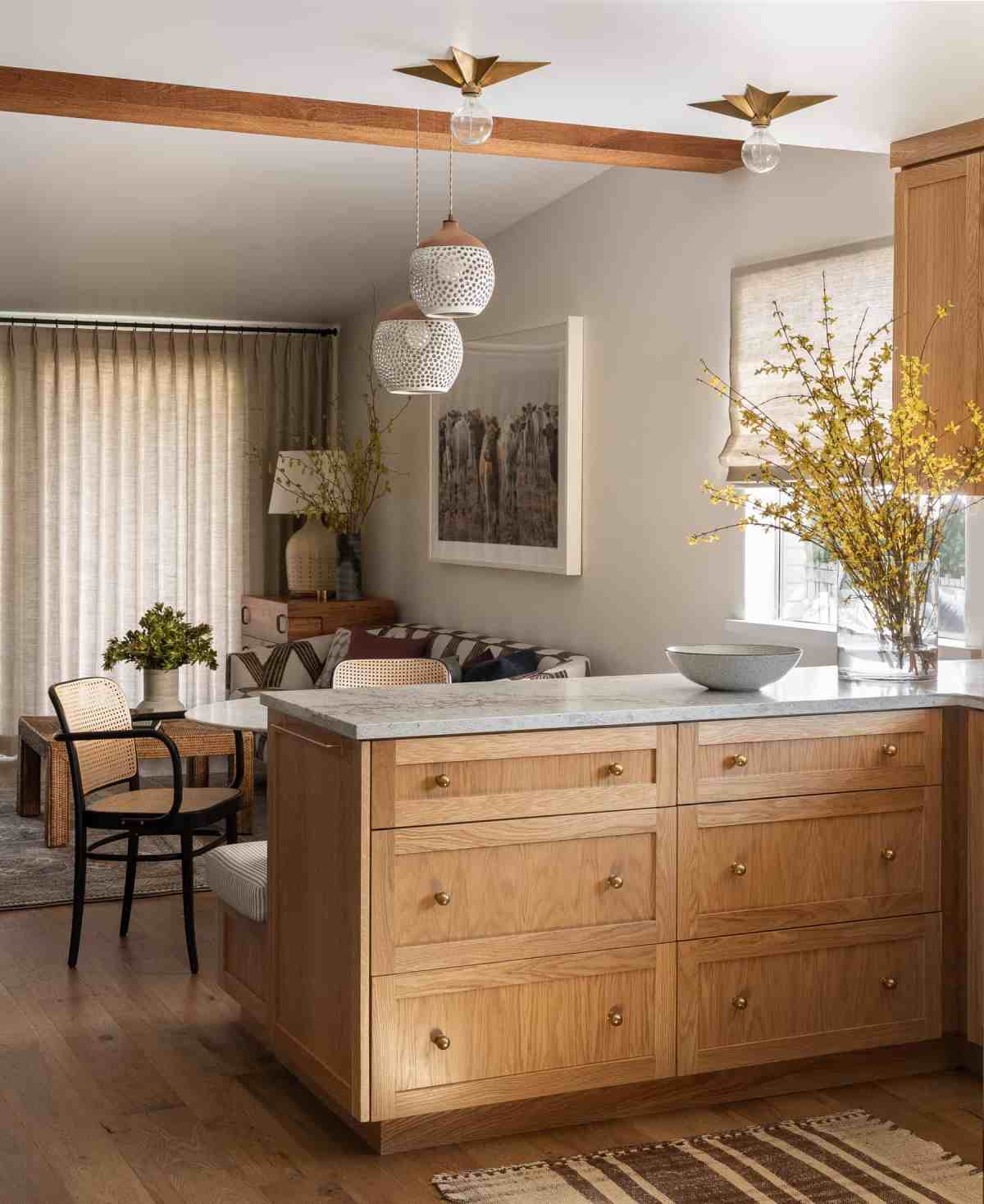
When the island sits between the cooking zone and the living area, keep the walkway behind the stools at least three feet so the room stays easy to move through. The light wood cabinets read as the constant here, with a marble top on the island and rattan chairs that soften the edges. Pendant lights hang low enough to define the seating without blocking the view across the counter. An open layout like this works because the cabinet color stays consistent, so the eye moves from the range to the sink to the table without a hard stop. If you are planning a similar setup, match the island finish to the perimeter cabinets and let the seating carry the contrast.
Modern Kitchen with Light Wood Cabinets and Textured Terracotta Tile
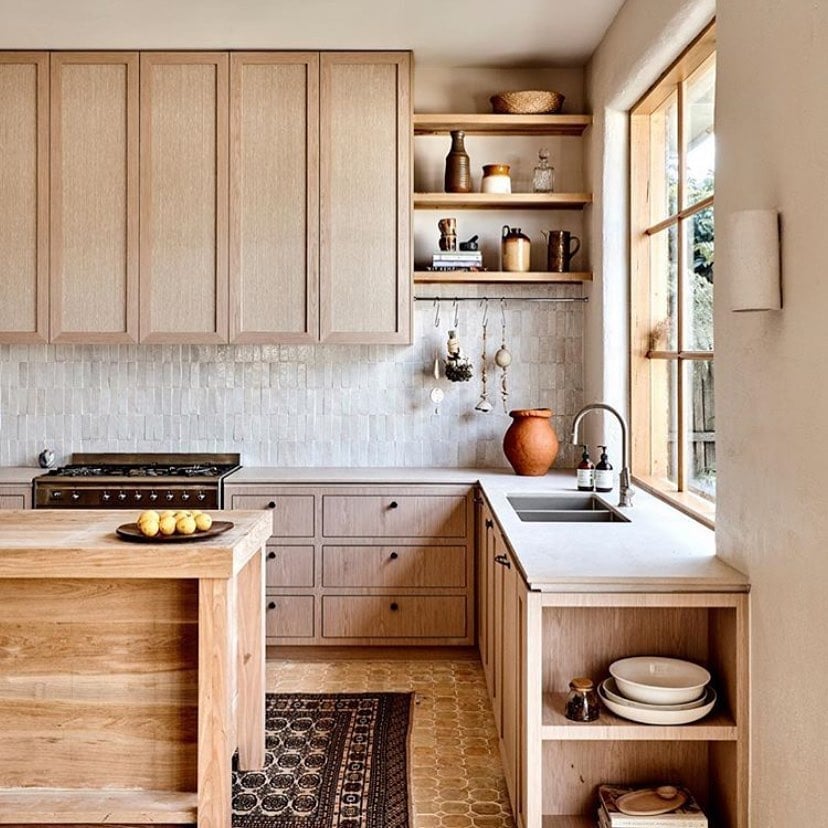
Most kitchens with light wood cabinets lean on white or gray for the backsplash, but terracotta tile changes the conversation. The warm clay tone sits close to the wood in temperature, so the two materials agree rather than compete, and the textured surface catches the light in a way a flat tile cannot. The L-shaped perimeter with a central island keeps the wood as the main character, while the terracotta band behind the range and sink adds the color punch. Open shelving on the upper wall breaks up the cabinetry and gives the eye a place to rest. If you want this look, choose a tile with visible surface variation, because that texture is what keeps the wood from feeling flat.
Modern Kitchen with Light Wood Cabinets and Herringbone Wood Floor
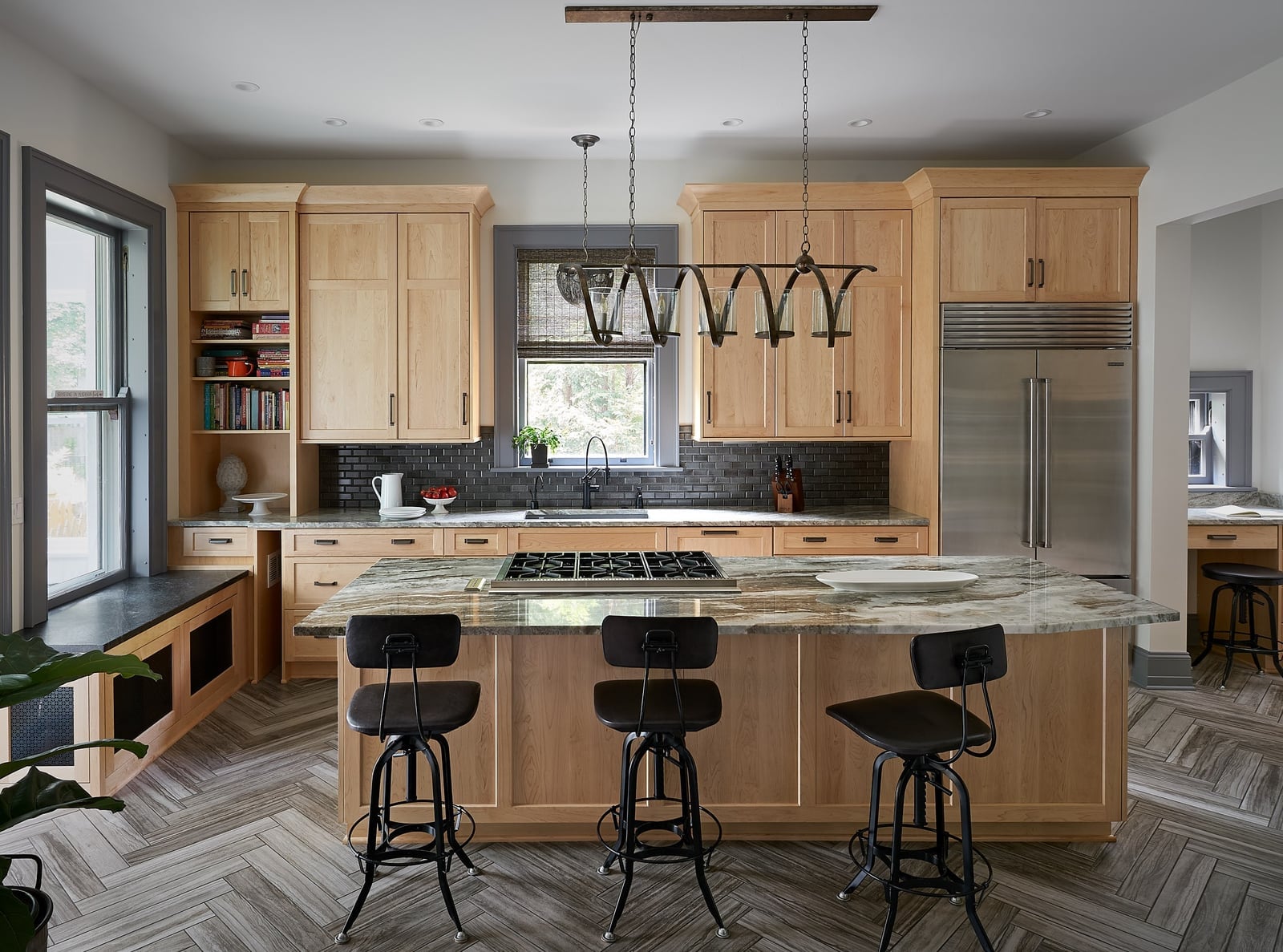
The herringbone floor sets a rhythm that the straight cabinet lines answer, so the room feels composed without being busy. Light wood cabinets keep the walls bright, while the gray and black in the counter and hardware ground the palette. Pendant lights over the island and recessed lights in the ceiling spread the illumination evenly, which matters when the floor pattern is this active. The open plan lets the island act as the anchor, with bar stools tucked under for quick meals. A herringbone pattern works best in a roomy space, because the diagonal lines need room to read clearly.
Modern Kitchen with Extensive Natural Wood Cabinetry and a Tall Pantry
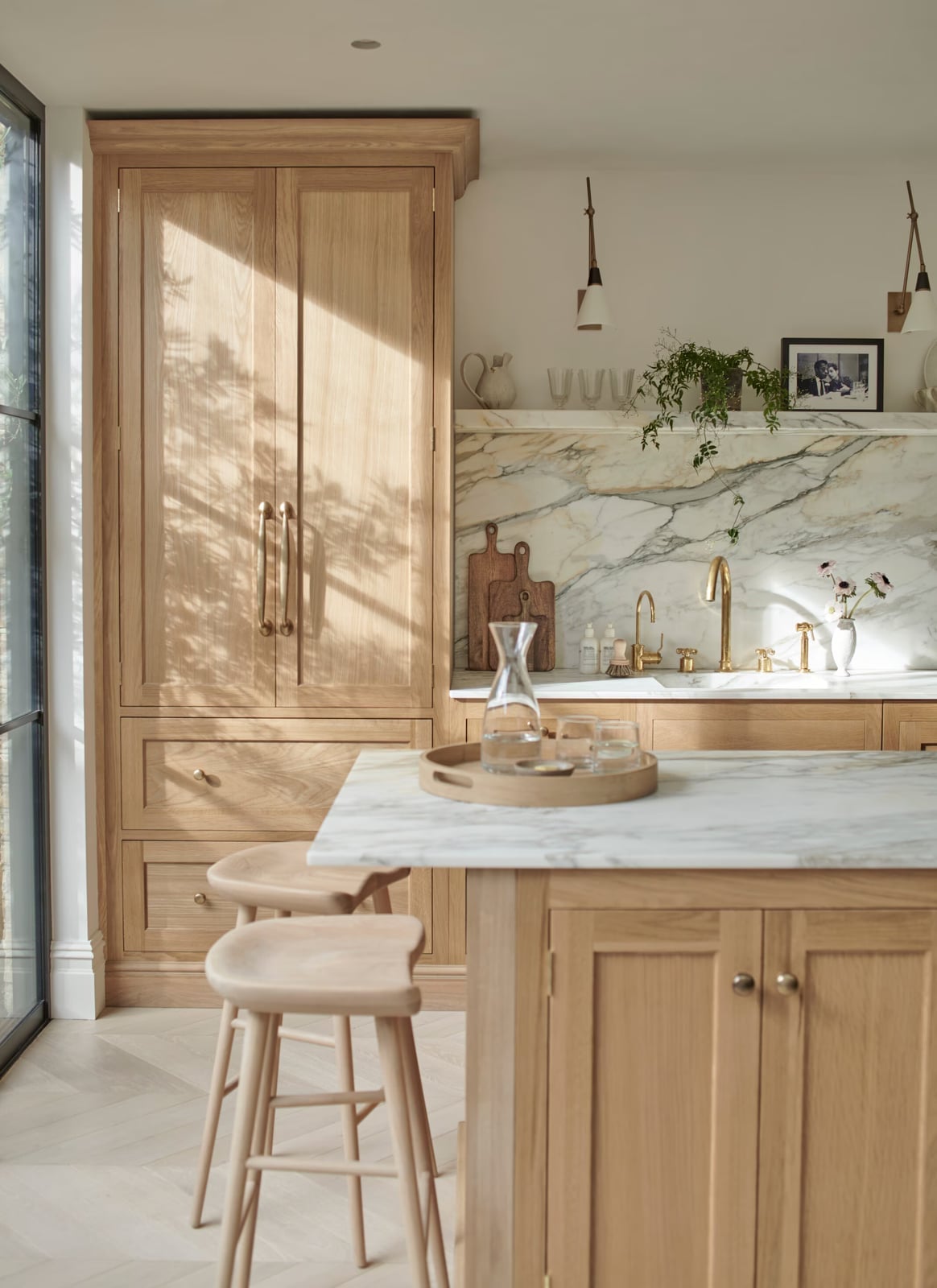
This kitchen commits to wood, and the tall pantry cabinet is the payoff. That floor-to-ceiling piece gives you storage for dry goods, small appliances, and the things you do not want on the counter, all behind a matching door. Pendant lights over the island and natural light keep the wood from feeling heavy, since the warm tone can dominate a room if the lighting is dim. The marble counter and brass hardware break up the expanse of wood with a cooler, brighter note. For a similar setup, plan the pantry height first, because it sets the vertical line that the cabinets follow.
Open-plan Kitchen with Warm Wood Cabinets and a Large Island
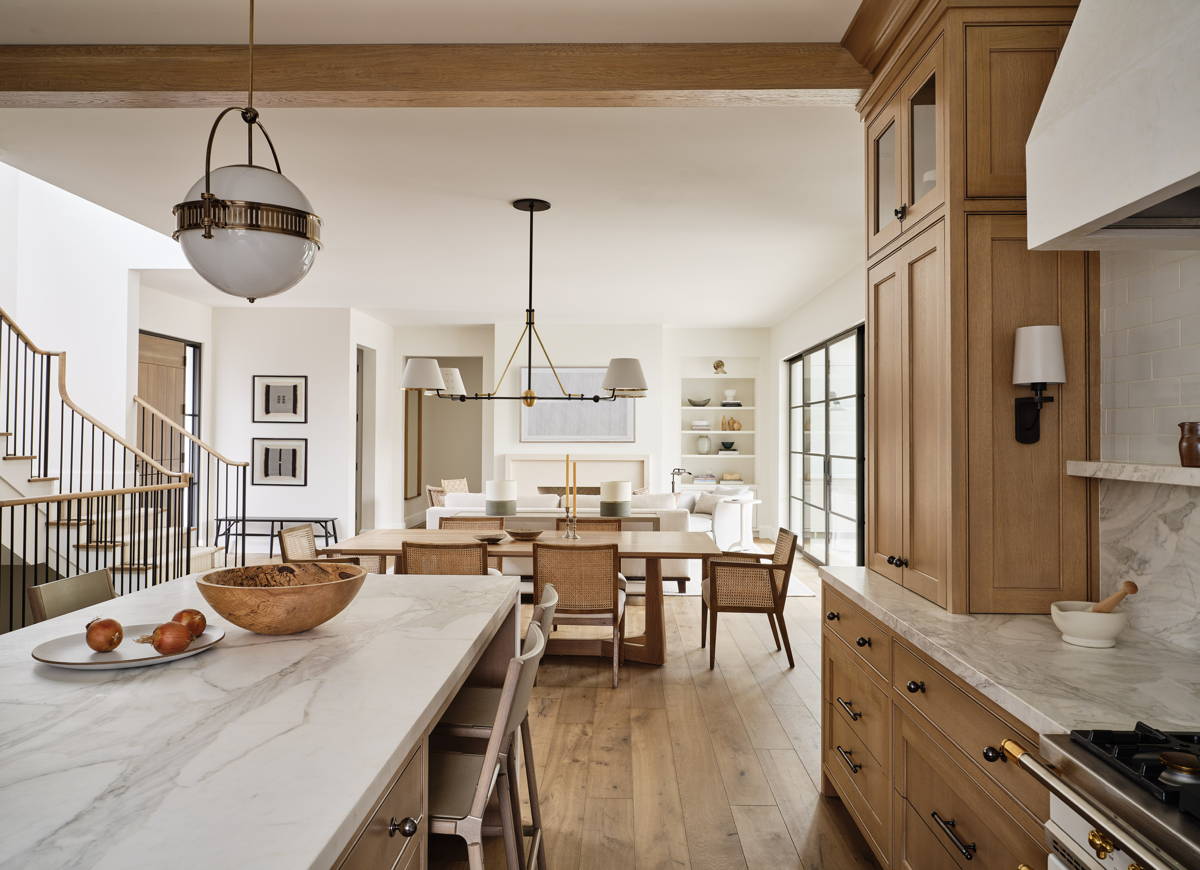
The kitchen cabinets do double duty as the visual anchor for the whole room, so the wood tone has to work from every angle. Warm wood cabinets paired with a marble island top give the cooking zone a grounded feel, while the dining table beyond it in the same sightline keeps the space connected. The island should stay clear of clutter on the side facing the dining area, because that edge becomes part of the living space. Pendant lights hung over the island create a boundary between the kitchen and the table without a wall. The black accents in the hardware and light fixtures add a crisp counterpoint to the warm wood, so the room does not tip into all-brown territory.
Rustic Kitchen with Medium Wood Cabinets and a Farmhouse Sink
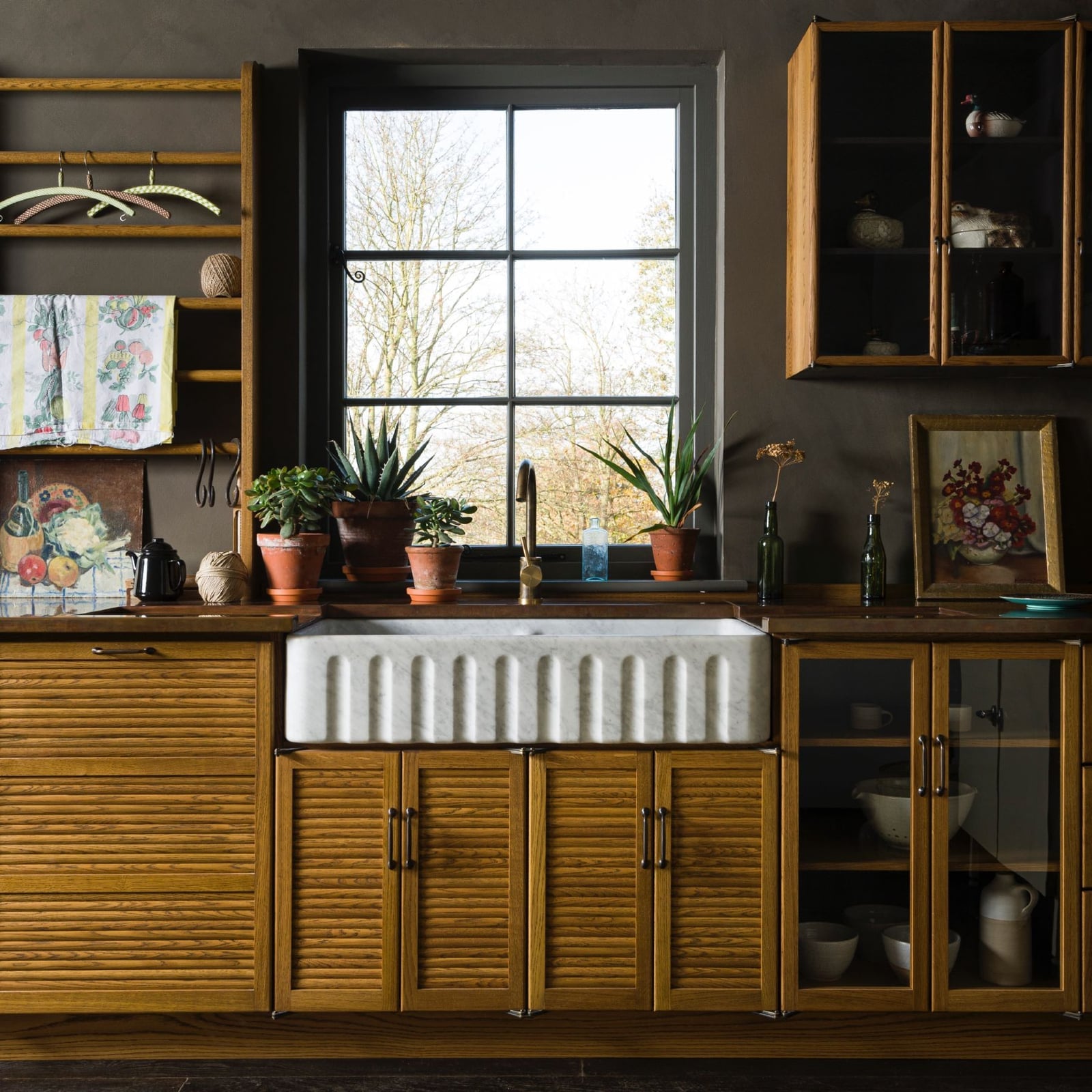
The slatted cabinet doors are the main event here, adding texture without making the kitchen feel busy. The medium wood tone sits between the white walls and the earthy green accents, so it comes across as warm not heavy. A farmhouse sink and brass faucet keep the look classic, while window light keeps the wood grain visible. The key material pairing is wood with ceramic and stone: the sink and countertop provide a cool, smooth contrast to the slatted fronts, which keeps the rustic feel from turning too dark or dense.
Transitional Kitchen with Walnut Wood Cabinets and a Wood-Paneled
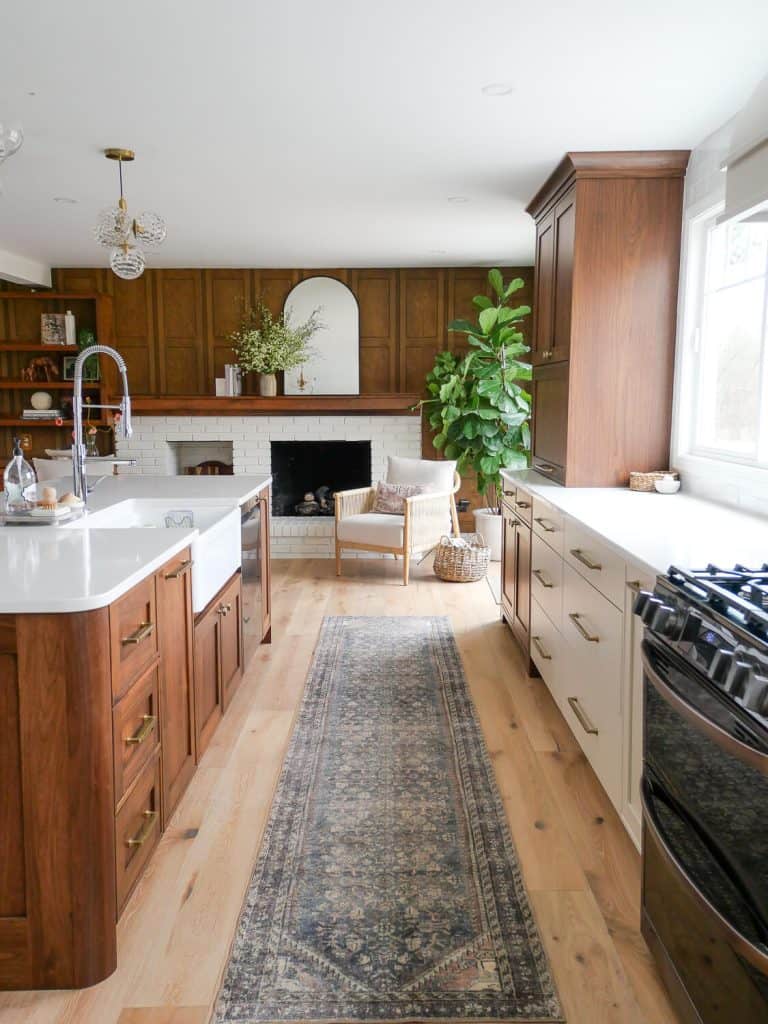
A practical rule for renters is that warm wood tones like walnut can make a kitchen feel finished without permanent changes. Here, the walnut cabinets are paired with a wood-paneled wall that includes a fireplace, which adds architectural interest without requiring construction you cannot reverse. The white marble countertops and blue accents keep the palette from feeling too brown, and the overhead fixtures provide task light that is easy to swap. For a rental, you can introduce walnut through freestanding pieces like a movable island or open shelving units, then echo the look with peel-and-stick paneling on one wall. The room still feels transitional because the mix of wood, marble, and tile avoids a purely rustic or purely modern label.
Rustic Modern Kitchen with Reclaimed Wood Cabinets and Open Shelving
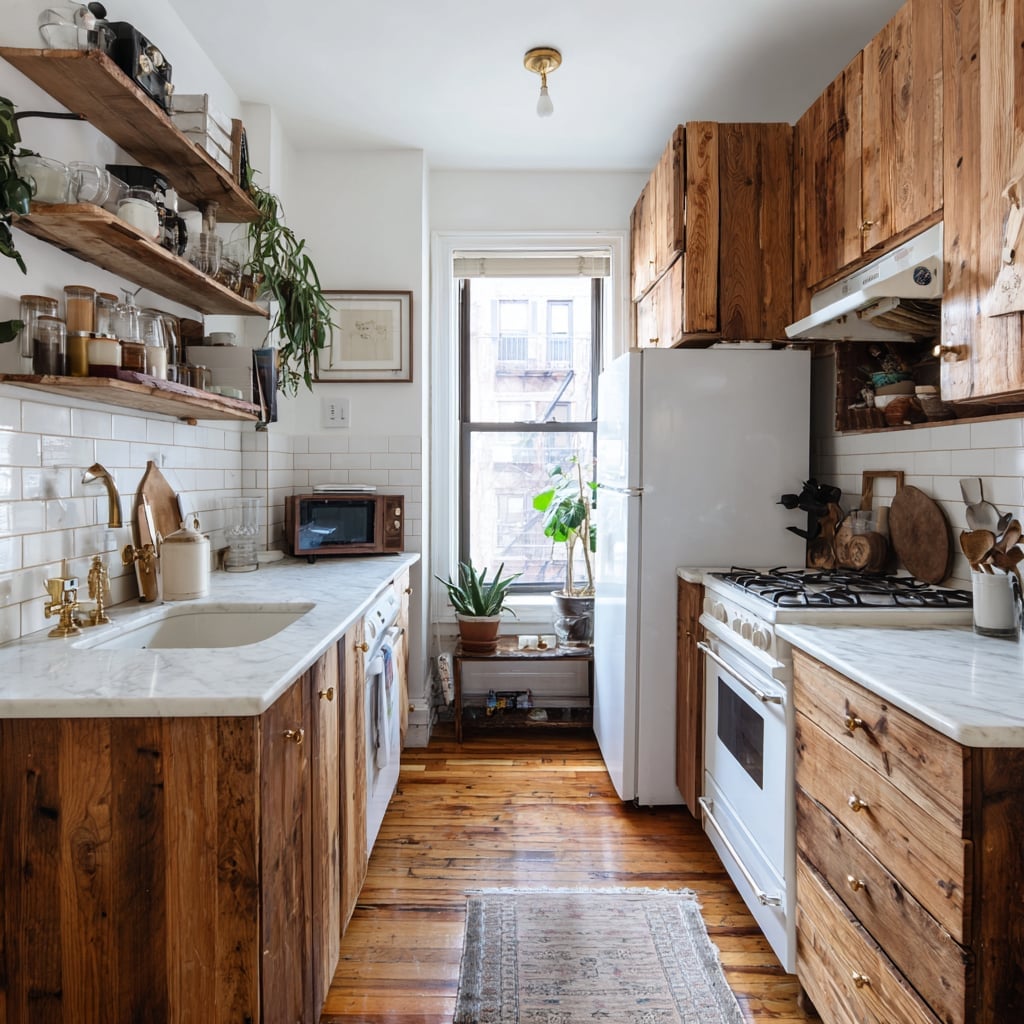
This kitchen takes the reclaimed wood cabinet look and pairs it with a white subway tile backsplash, which stops the room from reading as a cabin. The wood cabinets have visible grain and variation, so they bring the rustic element, while the tile and open shelving keep the feel clean and current. The compact layout uses the open shelving above the counter to break up the wood visually and add storage without closing off the wall.
The alternative to this approach would be to use reclaimed wood only on an accent wall or a single cabinet run and keep the rest of the cabinets painted. That would give a similar mix of rustic and modern but with less wood overall. Here, the designers committed to the wood as the primary material and used the white tile and gray stone countertop as the counterbalance. The result is a kitchen that feels warm but not dark, and textured but not cluttered.
Spacious Modern Kitchen with Light Wood Cabinets and Integrated
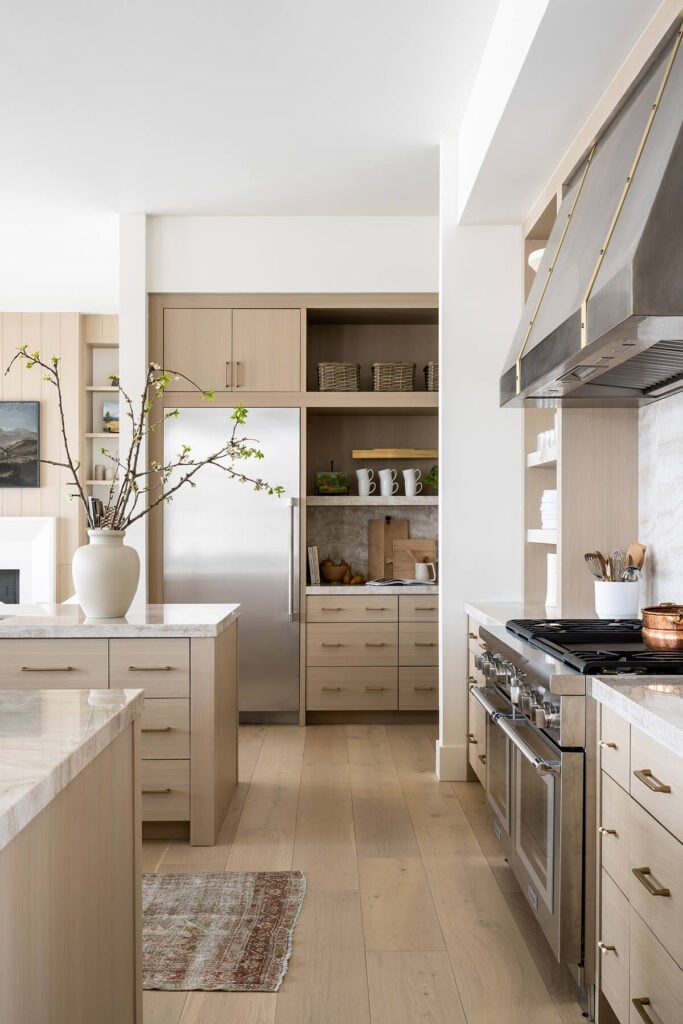
The light wood cabinetry runs continuously along the walls, and the integrated appliances disappear into the same finish, which makes the kitchen feel larger than it already is. The marble countertops add a cool, polished surface that contrasts with the matte wood. The storage principle here is that when cabinets match the walls in tone and the appliances blend in, the eye reads the room as one clean shape rather than a collection of boxes. That means you can get away with more cabinet space without it feeling crowded. The open plan layout benefits from this approach because the cabinetry does not compete with the adjacent living area.
Modern Kitchen with Dark Wood Cabinets and Prominent Grain Detail
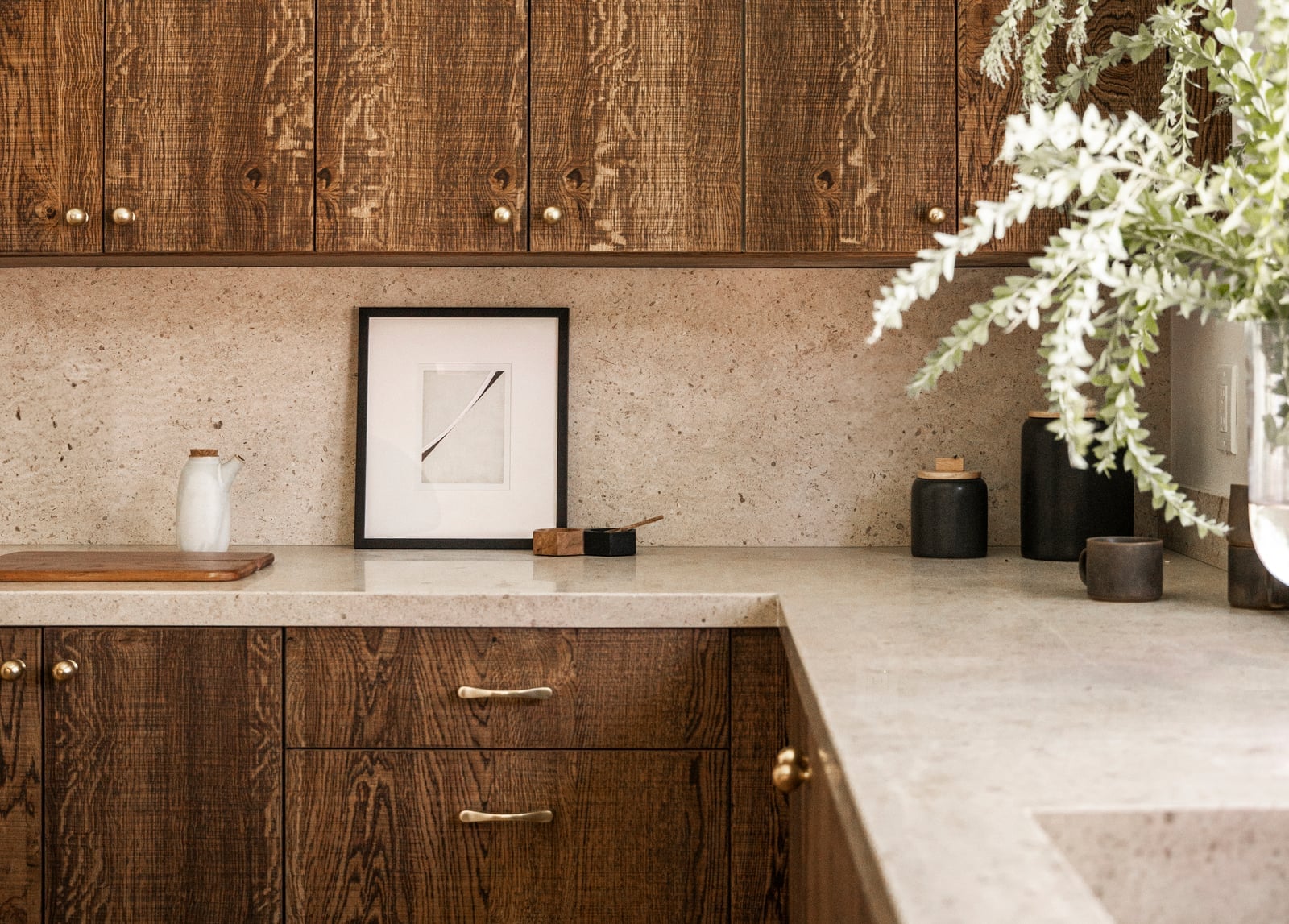
This kitchen proves that dark wood cabinets work best when the grain is the focal point. The grain is visible and varied, so the cabinets look like a natural material instead of a flat dark surface. The beige walls and white stone countertop keep the space from feeling too heavy, and the metal hardware adds a precise, modern touch. The corner layout uses the dark cabinets to define the cooking zone without overwhelming the space. Dark wood needs breathing room, so lighter walls and countertops balance the visual weight. The grain detail gives the cabinets a tactile quality that a solid dark paint would not offer.
Modern Kitchen with Extensive Light Wood Cabinetry and a Neutral
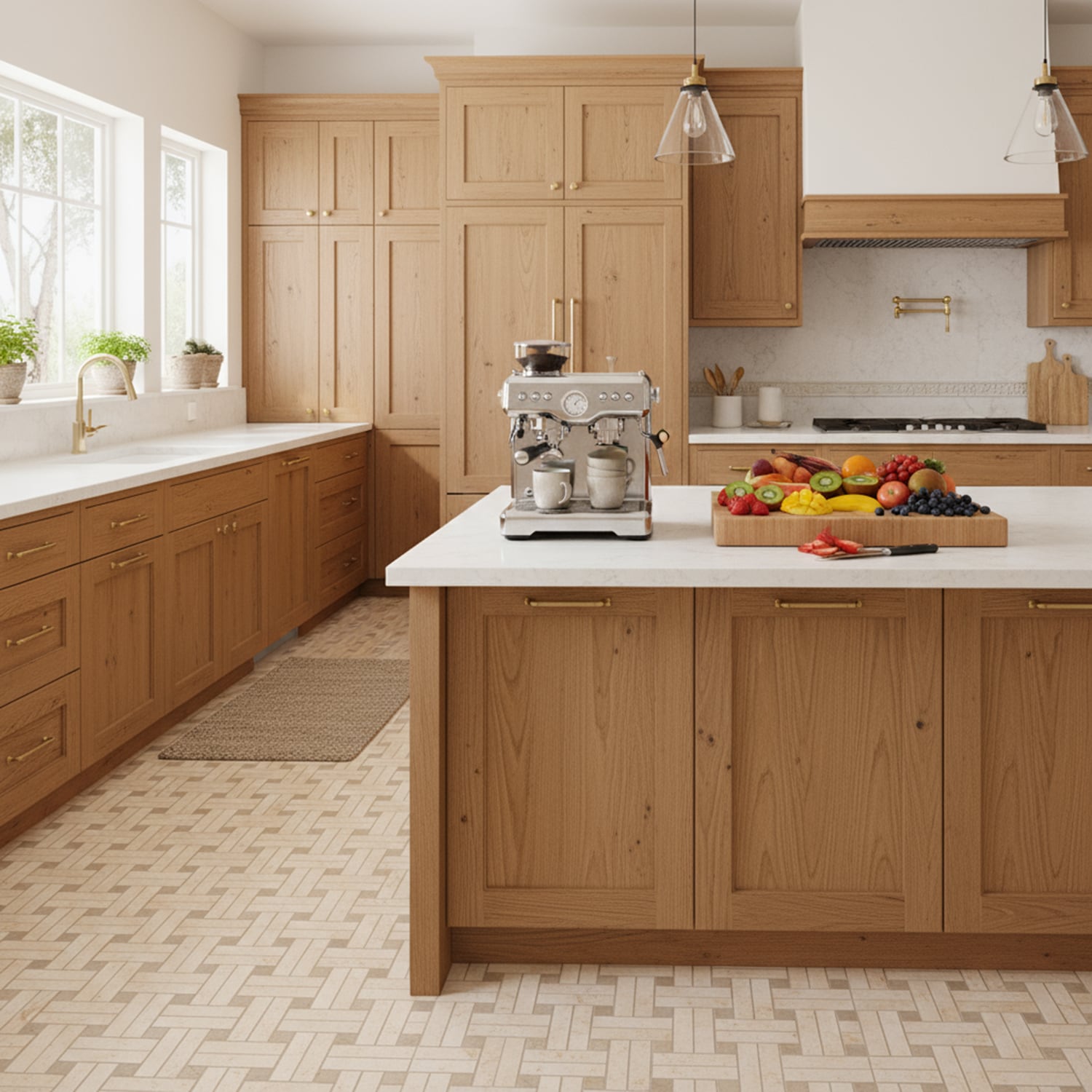
A neutral palette works best when you let one material set the tone. In this kitchen, extensive light wood cabinets cover the walls and frame the range hood, turning a simple layout into a statement. The white countertops and beige tile backsplash stay quiet, so the wood becomes the focal point. The open plan keeps the room feeling spacious, while the pendant lights add warmth alongside the natural light. When the cabinets are the main feature, keep the other finishes restrained. That way the wood grain provides the texture, and the room avoids feeling busy.
Modern Kitchen with Light Oak Cabinetry and a Large Marble Island
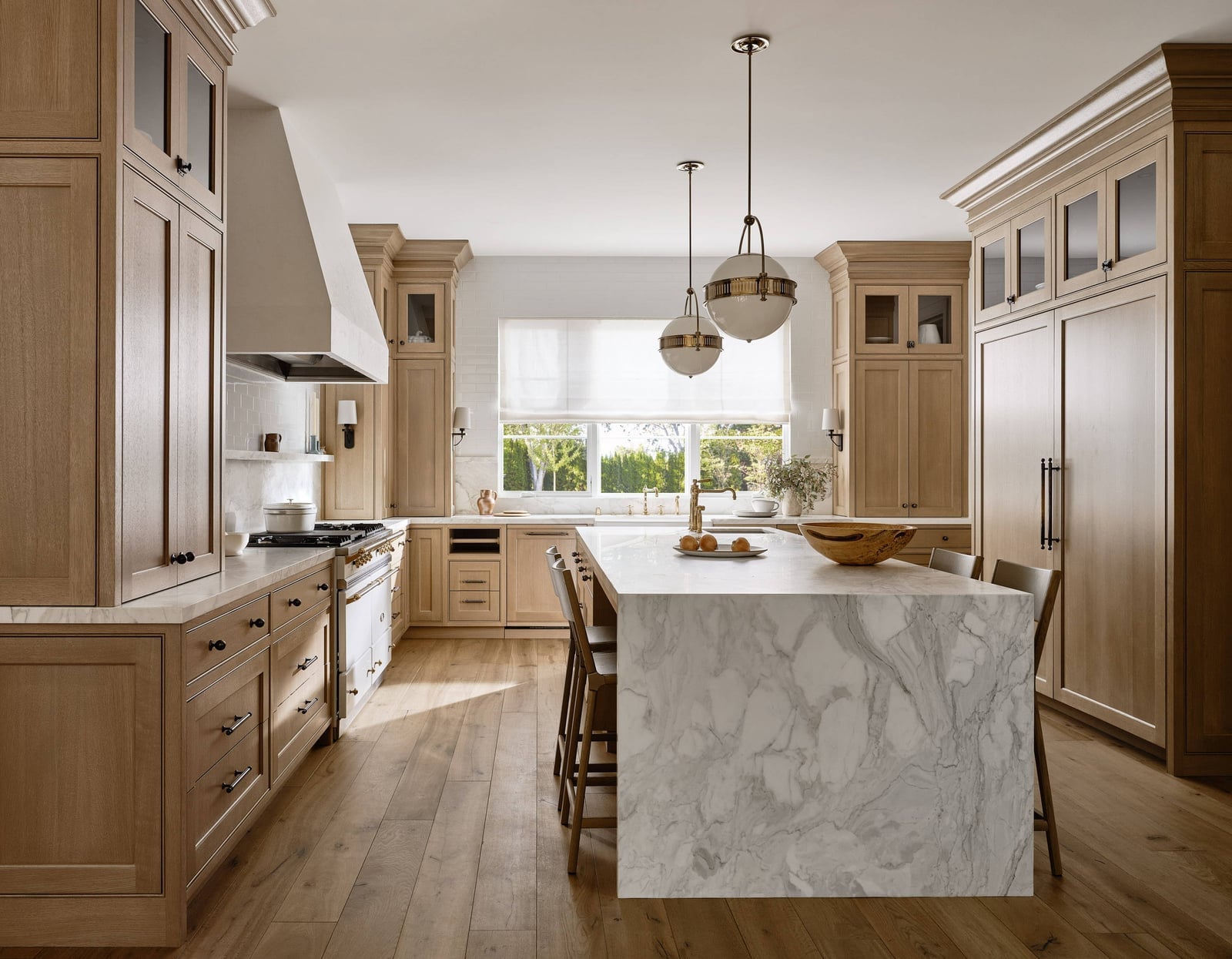
A large marble island can anchor an open kitchen without making the wood cabinets feel secondary. The light oak cabinetry here stays warm and clean-lined, while the marble island provides a cool, polished counterpoint. The wood flooring bridges the two, keeping the palette cohesive. Pendant lights hang above the island, drawing the eye to the marble surface without pulling focus from the cabinets. The result is a balanced kitchen where the wood and stone each have a role to play.
Traditional Kitchen with Wooden Cabinets and a Plate Rack
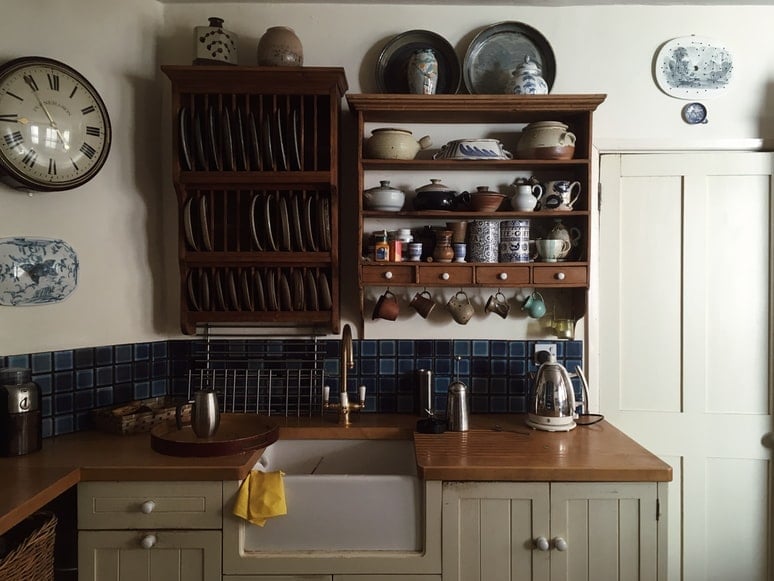
A plate rack is a practical storage solution that also adds character to a traditional kitchen. Mounted on the wall, it keeps everyday dishes within reach and frees up cabinet space for less frequently used items. The wooden cabinets here are painted a soft cream, while the plate rack and open shelving show off blue and white ceramics. A farmhouse sink continues the classic feel. For renters, a wall-mounted plate rack is a renter-safe swap that doesn’t require permanent changes to the cabinetry. Just make sure it’s securely anchored to the wall.
Modern Rustic Kitchen with Integrated Appliances in Vertical Wood
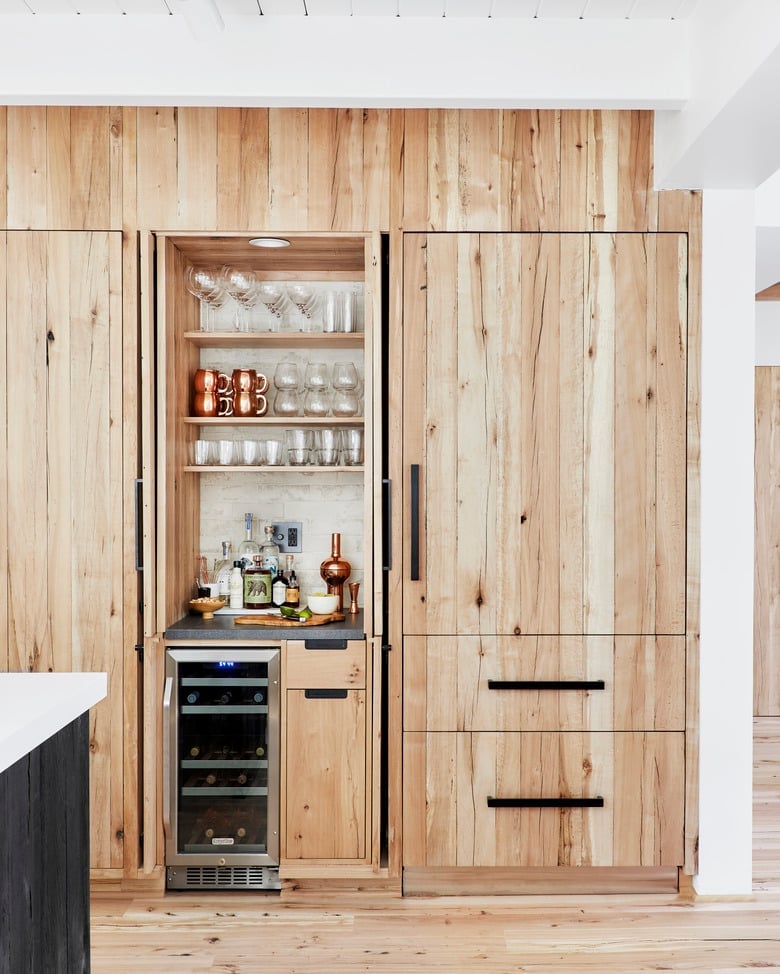
Integrated appliances are a smart choice for a compact kitchen, but they don’t have to disappear entirely. In this modern rustic design, the refrigerator and wine fridge are set into a wall of vertical wood paneling. The paneling continues across the full wall, so the appliances blend in rather than sticking out. Open shelving above adds storage without breaking the clean line. The key is to match the paneling finish to the rest of the wood in the room. A consistent tone keeps the wall from looking like a patchwork.
Modern Kitchen with Light Wood Cabinets and a Central Island
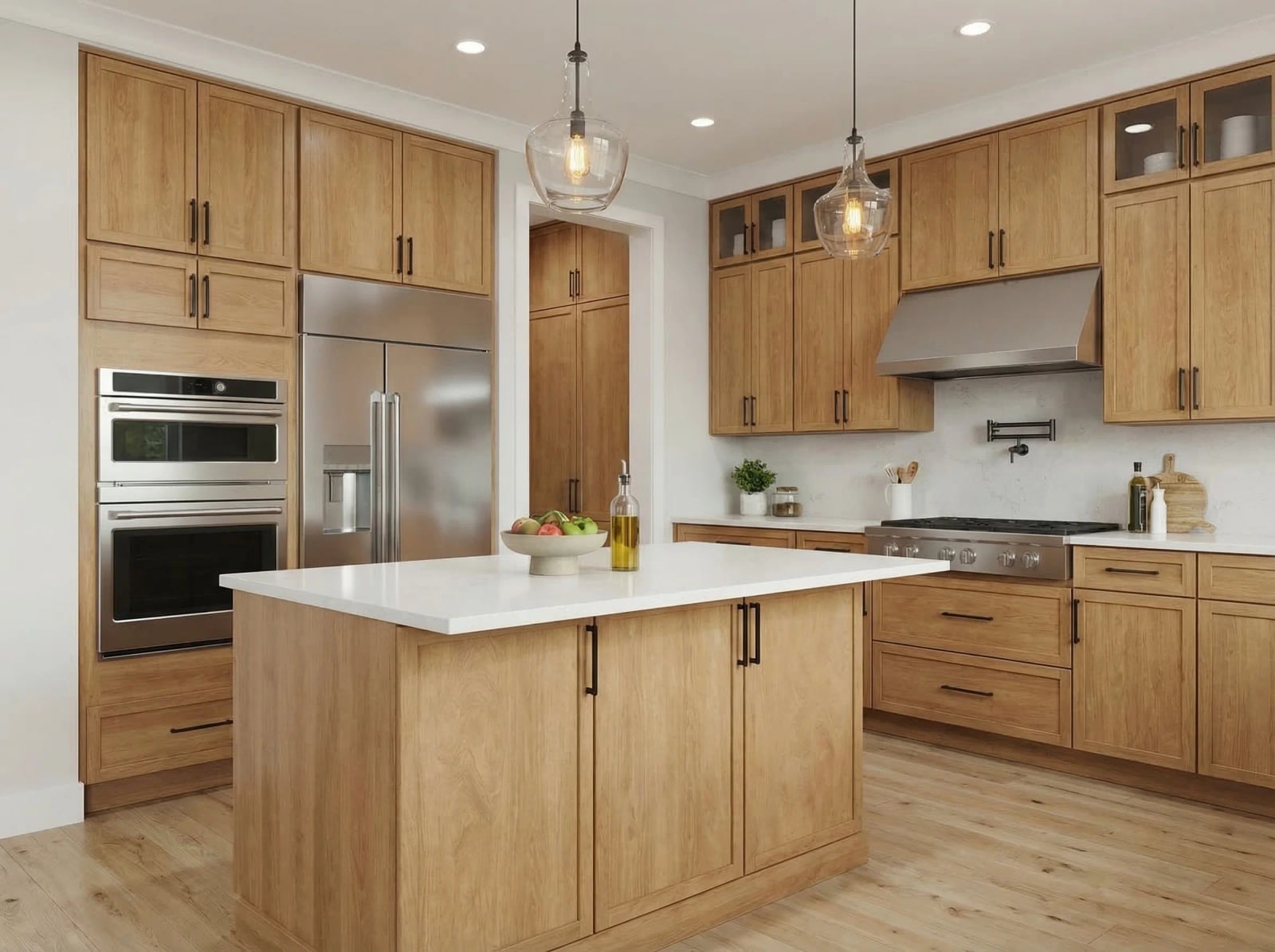
Glass pendant lights are a natural fit for a kitchen with light wood cabinets. The transparent shades let the light pass through without blocking the view, so the cabinets stay visible. In this modern kitchen, the pendants hang above a central island, providing task lighting for prep and dining. The U-shaped perimeter keeps the work triangle efficient, while the island offers extra counter space. Recessed lights in the ceiling add general illumination, and natural light fills in the rest.
Japandi Kitchen with Dark Wood Glass-Front Cabinets and Woven Backing
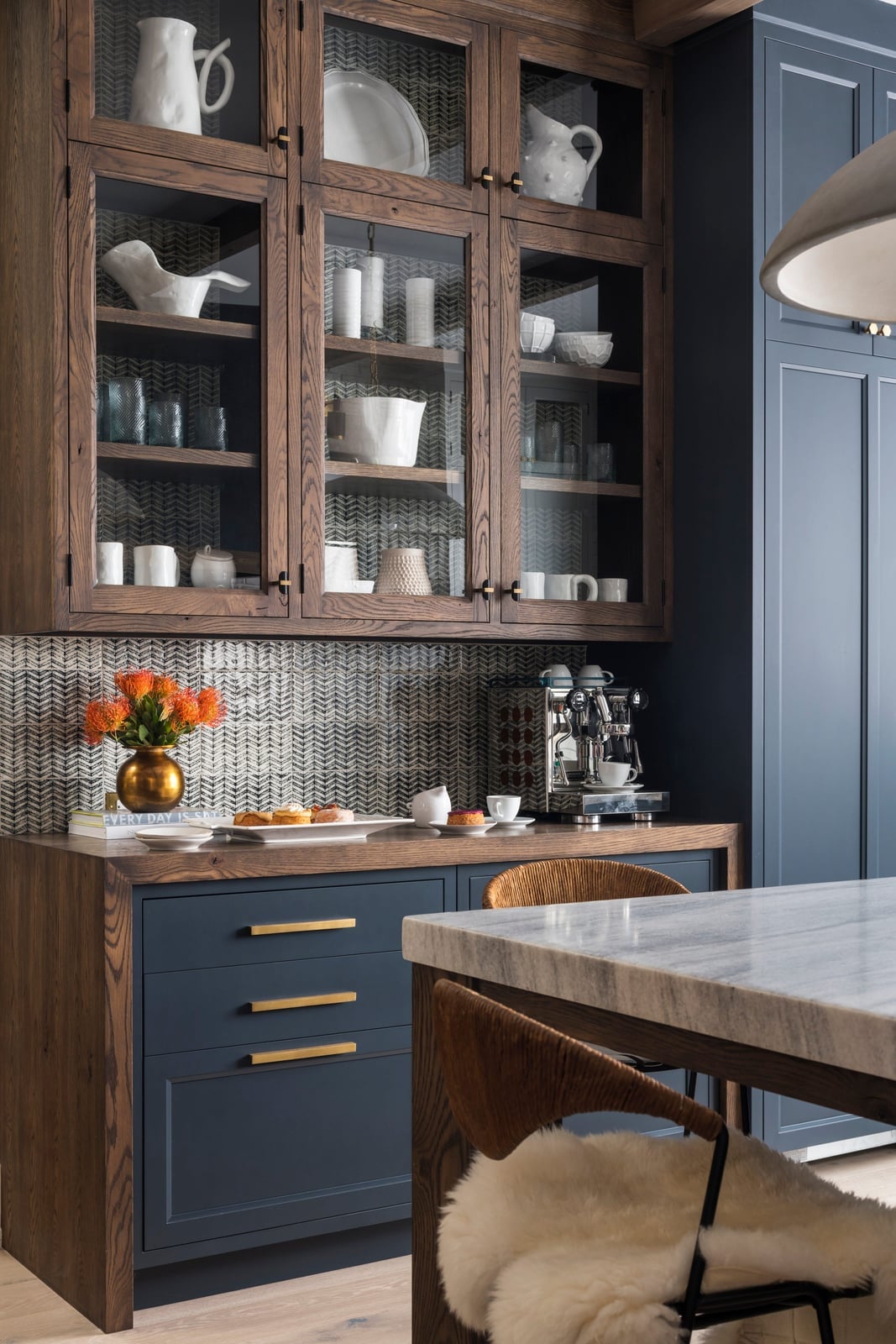
The dark wood glass-front cabinets anchor this kitchen with a moody weight that the woven backing softens. Japandi style leans on that contrast: the cabinet fronts feel solid and grounded, while the woven texture adds a handcrafted note you can see through the glass. A navy blue island and white marble countertop keep the palette from reading as too heavy. The light plays across the glass, so the cabinets shift between reflective and opaque depending on the time of day. It is a smart setup for anyone who wants dark wood cabinets without the space feeling closed in.
Farmhouse Kitchen with White Cabinetry and a Tall Wood Hutch
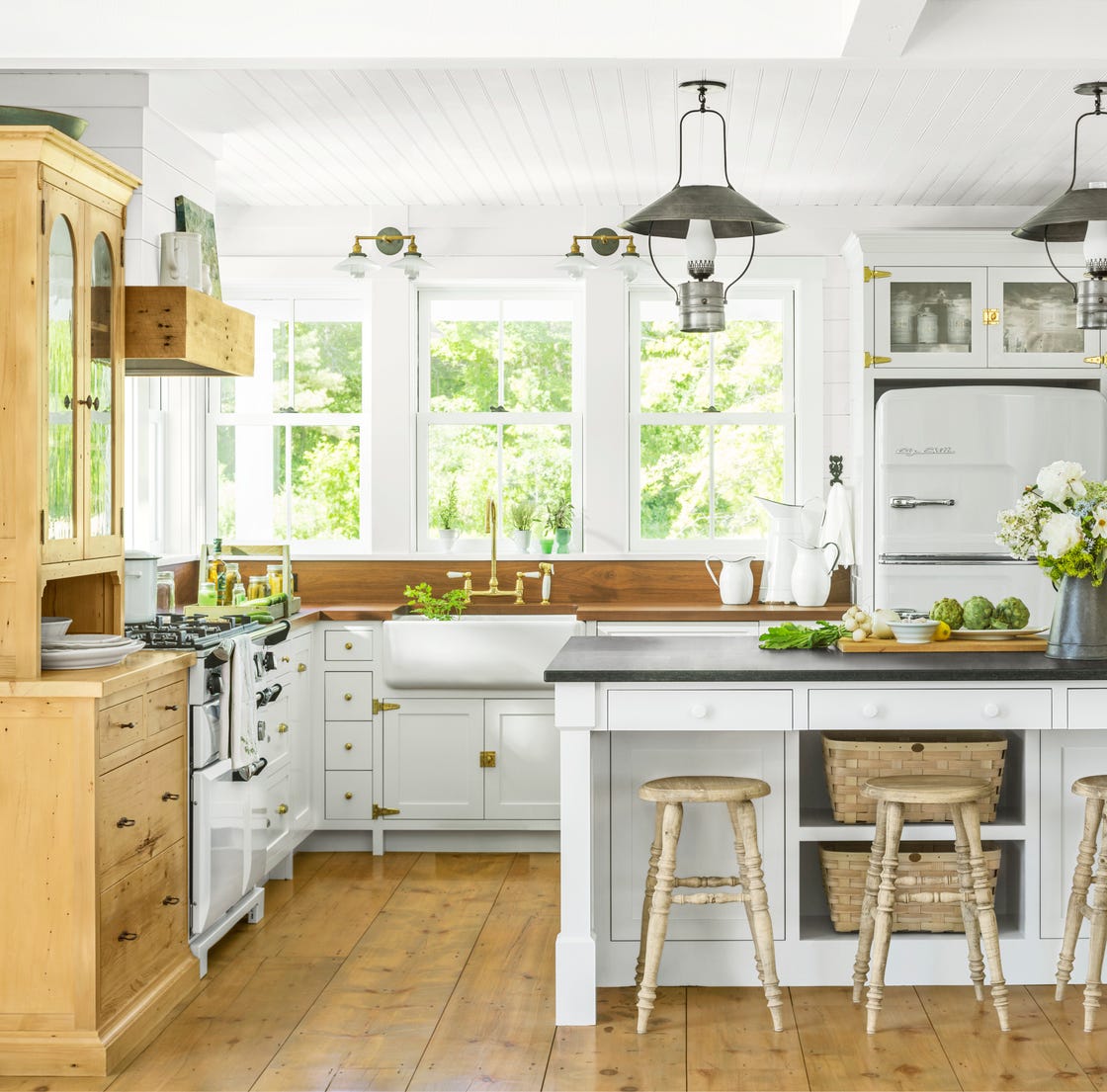
A practical rule for renters is to look for freestanding storage that does not require drilling into walls or cabinets. The tall wood hutch in this farmhouse kitchen proves the point: it adds a full height of storage for dishes and cookware without any permanent installation. The white perimeter cabinets keep the room bright, while the hutch introduces a warm wood tone that breaks up all the white. Its open upper shelves and enclosed lower section give you a place for both display and everyday items. A renter can take the hutch to the next place, making it a flexible storage solution rather than a built-in commitment.
The farmhouse sink and black range fit the style, but the hutch is the piece that does the heavy organizational work. It sits against the wall with room on either side, so it never blocks the flow between the island and the perimeter. For a renter, that kind of standalone storage is a smarter choice than custom cabinetry that stays with the house.
Farmhouse Kitchen with a Substantial Wood Island and Ornate Detailing
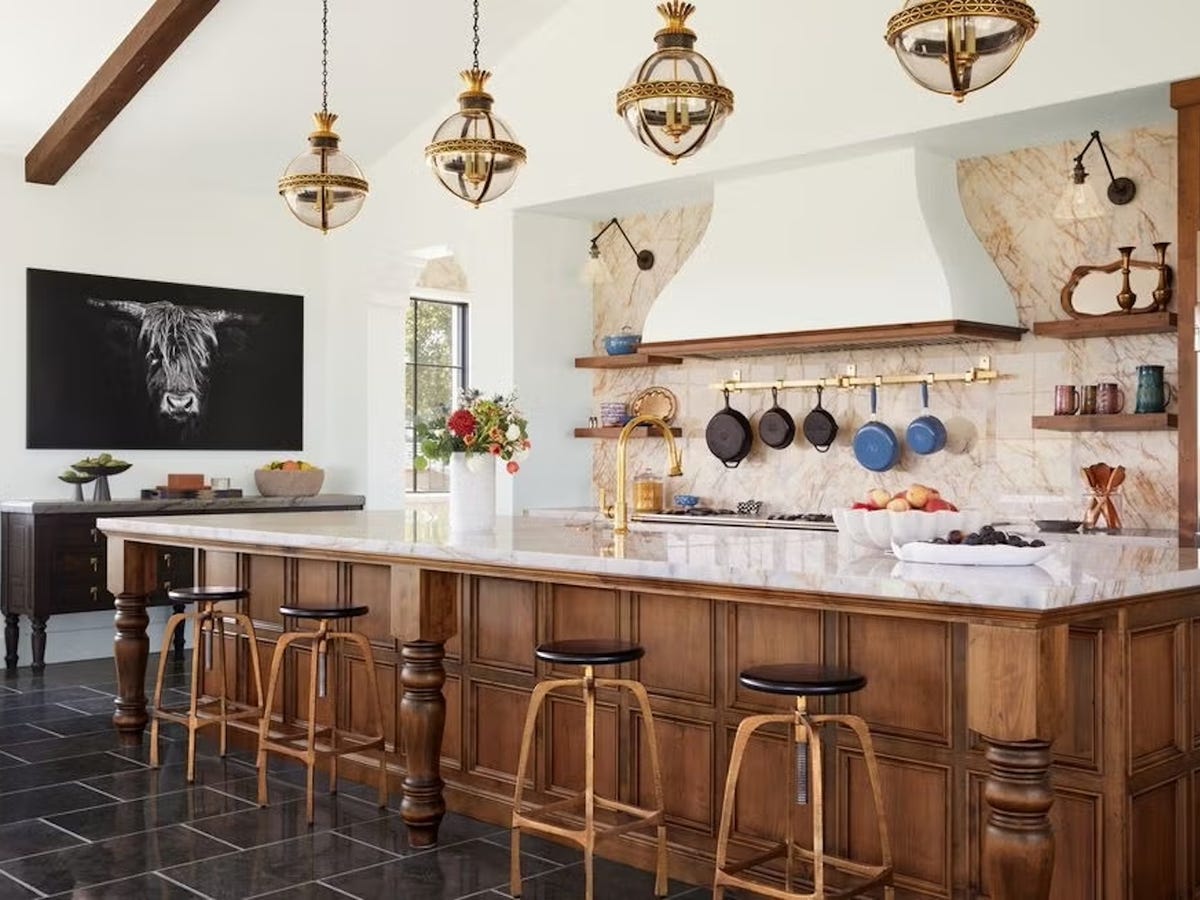
The wood island base in this farmhouse kitchen is carved with a repeating scalloped pattern that gives the piece a furniture-like quality. It is paired with a white marble countertop and black bar stools, so the ornate detailing stands out rather than competing with other elements. The perimeter cabinets stay simple and painted white, which lets the island read as the main event. A set of metal pendant lights and wall sconces add a little shine without pulling focus from the woodwork.
Transitional Kitchen with Light Wood Cabinets and White Quartz
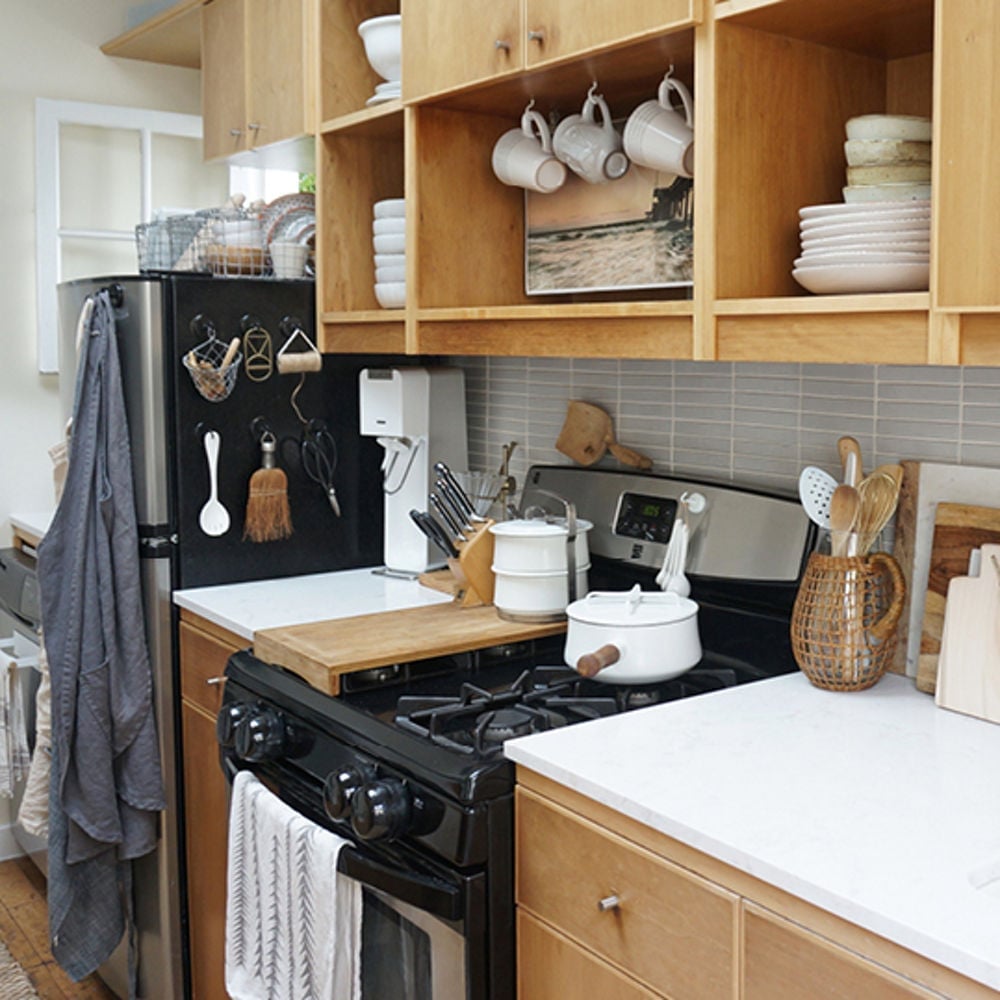
The light wood cabinets here have a clean horizontal grain that runs across flat-front doors, giving the perimeter a calm and orderly feel. White quartz countertops continue that quiet look while offering a surface that resists staining and scratching better than marble. The island repeats the same quartz top but adds a darker wood base for a bit of contrast. Overhead recessed lights keep the illumination even, so the warm wood tone does not get washed out by a single bright fixture. It is a practical combination for a kitchen that needs to handle daily cooking without the cabinets or counters showing every mark.
Modern Farmhouse Kitchen with Warm Wood Cabinets and Brass Pendant
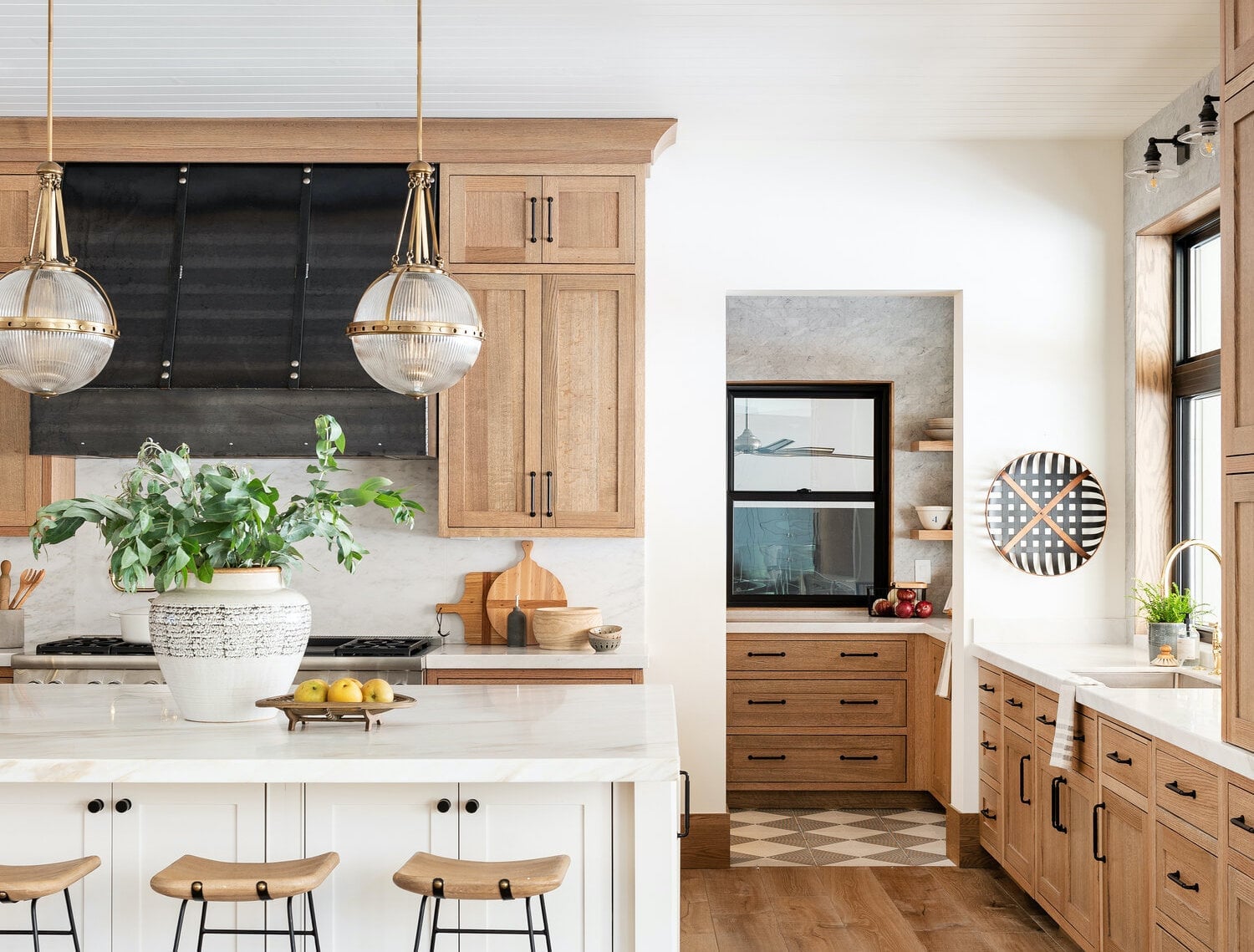
Where a traditional farmhouse kitchen might use black or wrought iron fixtures, this version swaps in brass pendant lights for a warmer glow. The warm wood cabinets have a pronounced grain that reads as natural and slightly rustic, but the brass pendants pull the look toward something more polished. Three pendants hang in a row above the island, spaced evenly so the light covers the full countertop without leaving dark spots. The white marble backsplash and countertop keep the palette light, letting the wood cabinets and brass hardware carry the warmth.
The scale of the pendants matters here. They are large enough to be visible from across the room but not so big that they block the view of the cabinets behind them. The warm wood cabinets and brass pendant lights work together because both have a slightly aged finish that keeps the kitchen from looking too new or too precious. It is a modern farmhouse look that leans on material quality rather than decorative extras.
Modern Kitchen with Light Wood Cabinets, Close-Up Take
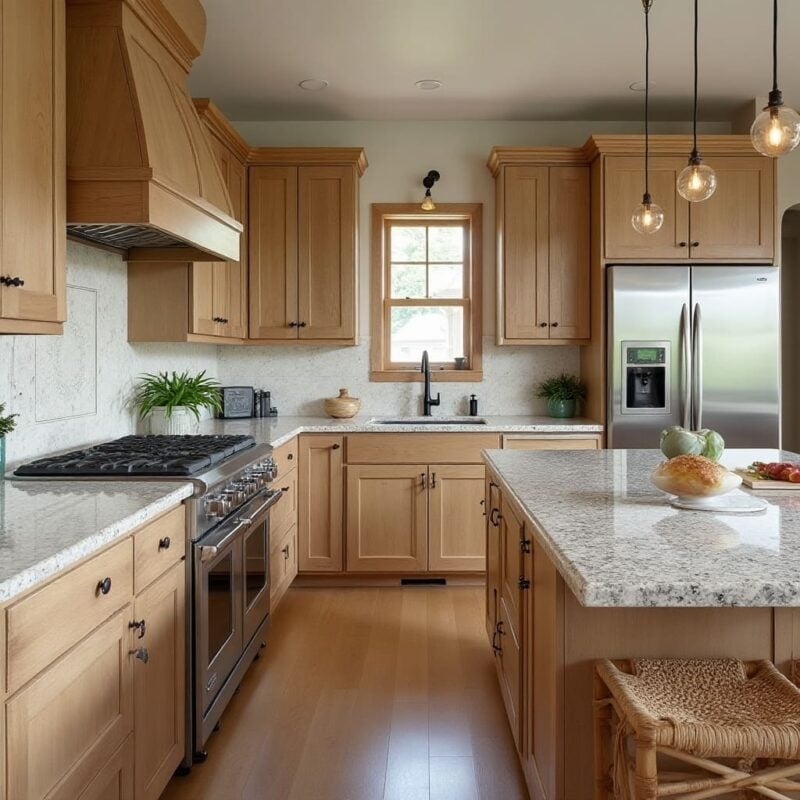
The light wood cabinets run the length of a galley layout, so the island with its granite top becomes the natural pivot point between cooking and gathering. The wood is warm enough to soften the gray and white palette, while the granite adds a speckled surface that does not compete with the cabinet grain. Three bar stools line up along the island, giving the kitchen a spot to sit without blocking the path to the range and refrigerator. Pendant lights hang above the island, and natural light from a window keeps the wood from feeling too uniform.
Modern Kitchen with Dark Wood Cabinets and Geometric, Close-Up Take
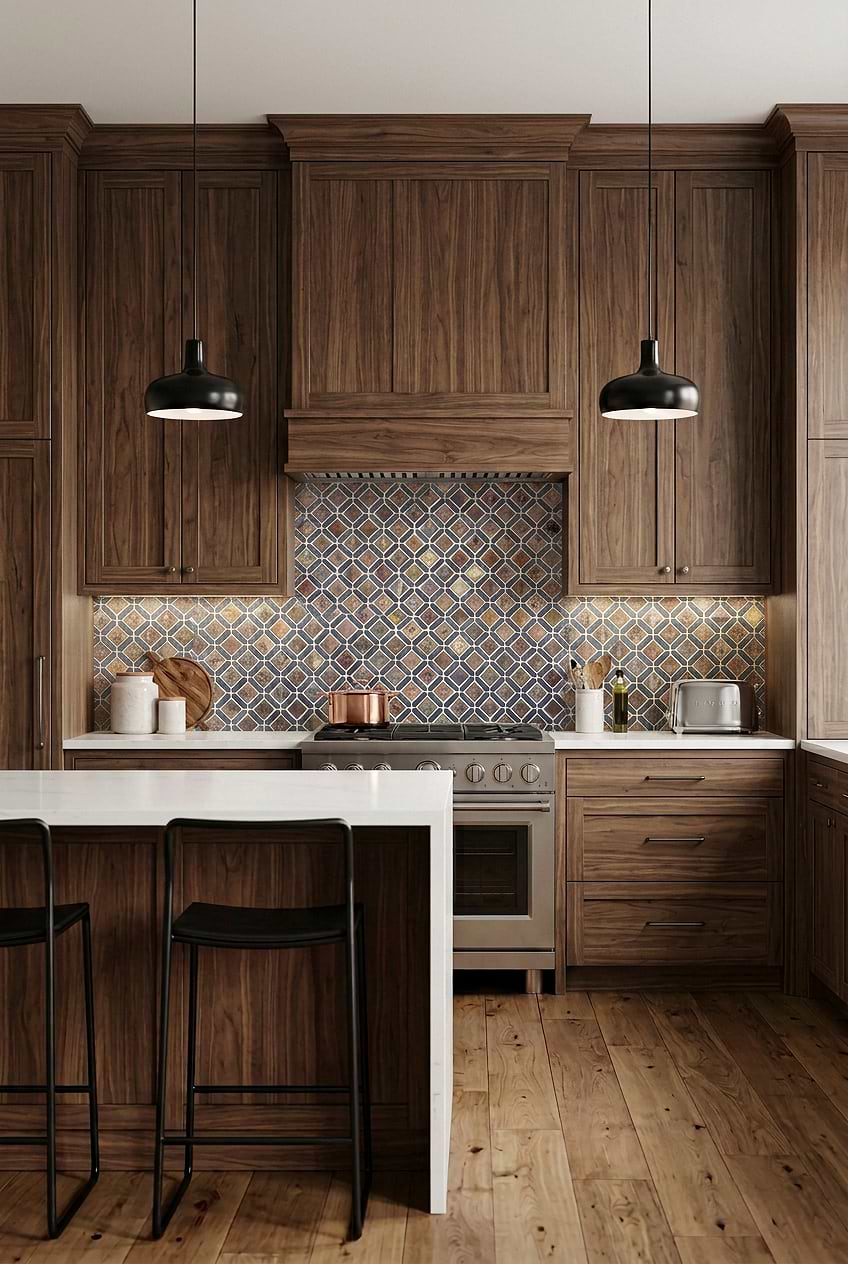
The dark wood cabinets set a serious tone, and the geometric mosaic backsplash prevents the space from feeling too heavy. The backsplash tiles mix several colors, so they form a pattern instead of a single hue, and the white quartz countertop provides a clean line between the two. Overhead pendant lights and under-cabinet lighting both hit the tile, which makes the geometry more visible at night. The island in the foreground repeats the dark wood of the perimeter cabinets, so the backsplash stays the only patterned surface in the room.
Traditional Kitchen with Medium Wood Cabinets, Close-Up Take
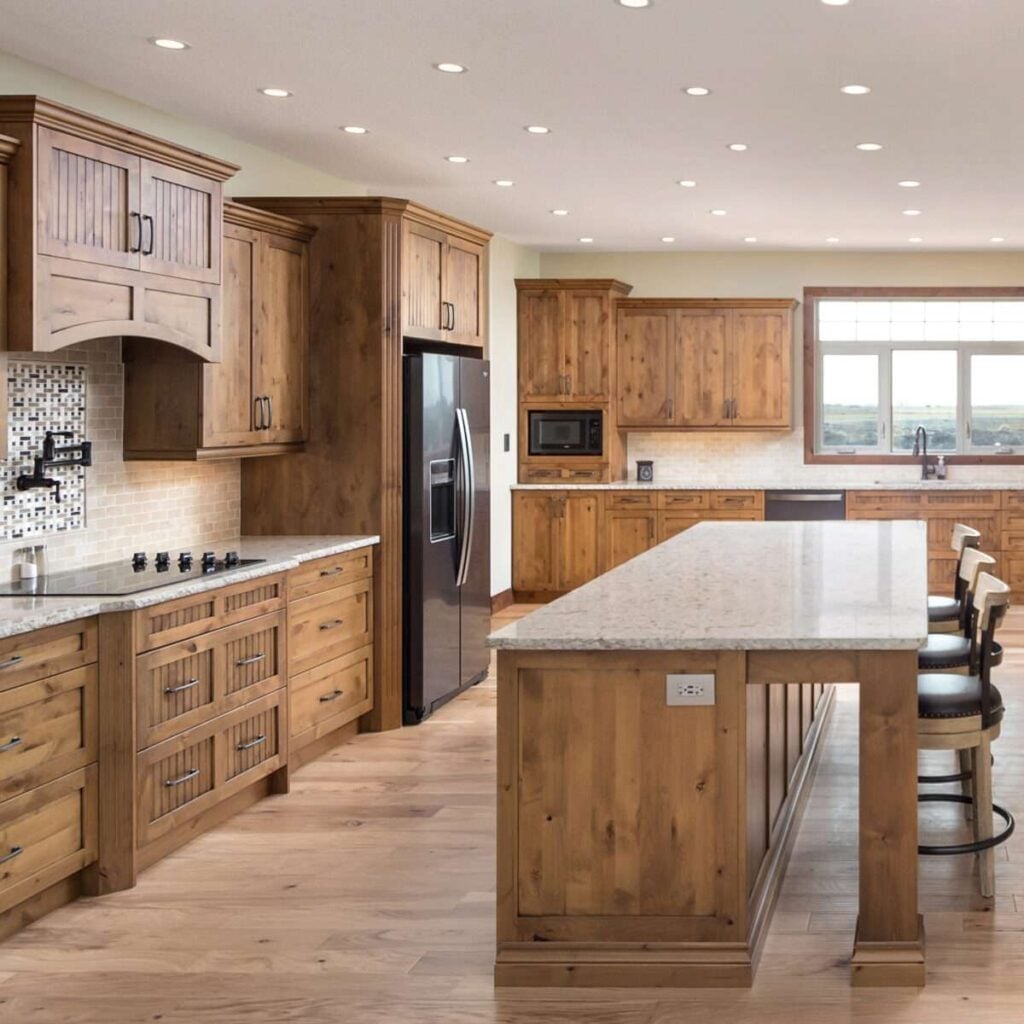
A traditional kitchen often leans on painted cabinetry, but this one stays with medium wood cabinets that bring out the grain without going too dark. The wood is warm enough to feel inviting, and the large island in the center repeats that same finish, so the whole layout looks like one cohesive piece.
The island is substantial enough to hold a granite top and still leave room for seating on one side. Cream walls and a tile backsplash keep the background quiet, while black hardware and light fixtures add contrast. Overhead lights and natural light hit the island surface, which helps the wood appear lighter than it might in a darker room. The L-shaped perimeter means the island does not block the path between the refrigerator and range.
Modern Kitchen with Light Wood Cabinets and Sage, Everyday Version
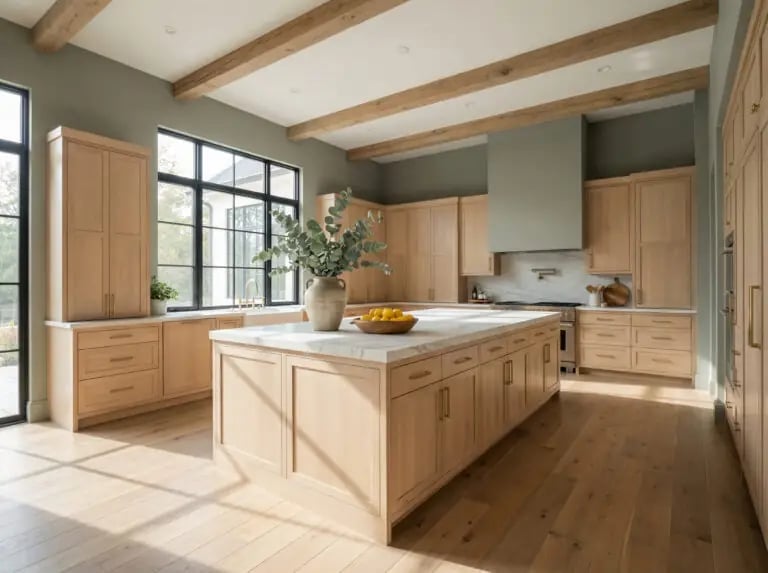
The light wood cabinets and sage green accents share a similar level of saturation, so the green looks like a natural extension of the wood. The large island repeats the light wood finish across a broad surface, and the marble countertop on it adds a cool, polished layer. White walls and a stone backsplash keep the background quiet, while recessed lighting and natural light make the sage green appear as a soft shadow. This palette works because the green and the wood are close in warmth, which means neither one fights for attention.
Cozy Cottage-Style Kitchen with Wood Cabinets and Open, Close-Up Take
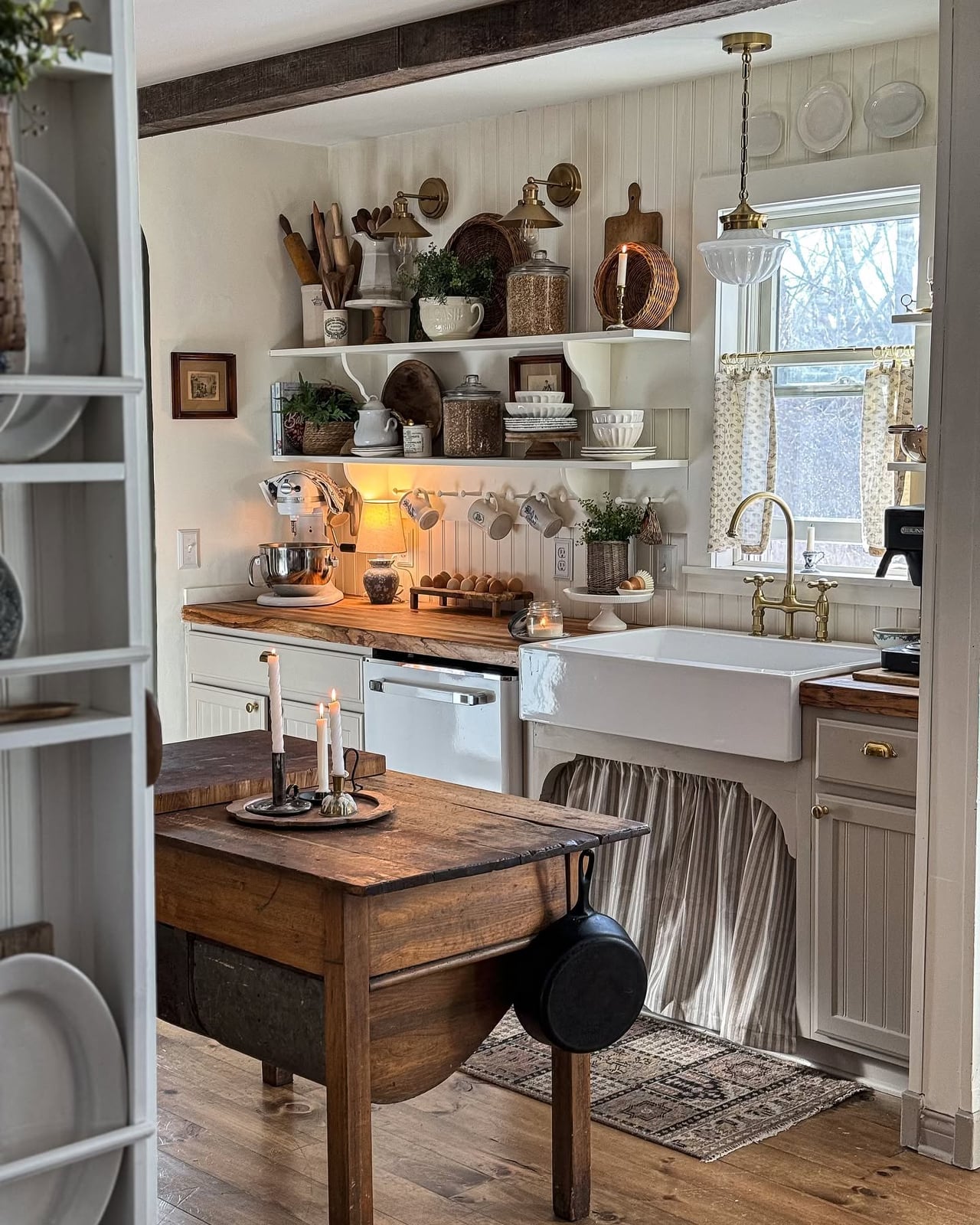
Open shelving in a cottage kitchen does more than store dishes: it turns everyday items into decor. The wood cabinets here have a warm, medium tone that pairs well with the cream beadboard walls and the muted patterns on the dishware stacked on the shelves. A farmhouse sink anchors the galley layout, and a small wooden table nearby offers extra surface for prep or a quick meal. Wall sconces and a single pendant light provide warm illumination that makes the open shelves feel curated rather than cluttered. The trick to keeping this look functional is to group items by size and color, so the shelves read as intentional storage rather than a catch-all.
Final Thoughts
Wood kitchen cabinets prove that natural materials don’t have to feel rustic or old-fashioned. Across these 35 kitchens, the common thread is how wood adapts to its surroundings: light oak keeps a room airy, walnut adds depth, and reclaimed boards bring character. The practical takeaway is simple. Let the wood dictate the palette rather than fighting it. Neutral counters, simple hardware, and consistent undertones let the cabinetry lead. A quick wipe with a damp cloth handles daily upkeep. For deeper cleaning, use a mild wood cleaner and avoid soaking the grain. Check your climate before choosing a wood species; some do better in humid kitchens than others. And remember, the best wood cabinet is the one that makes you want to cook in that room every day.