
Wood tile bridges the line between natural warmth and real-world durability. It gives you the grain of hardwood without the worry of water damage, scratches, or constant refinishing. Across 36 setups, you will see how this material adapts to bathrooms, kitchens, patios, and living spaces.
Some photos show herringbone patterns, others use wide planks or textured finishes. The takeaway is that wood tile works wherever real wood would struggle. This article walks through each installation so you can spot the details that matter for your own project.
Herringbone Wood Tile Floor in a Modern Bathroom
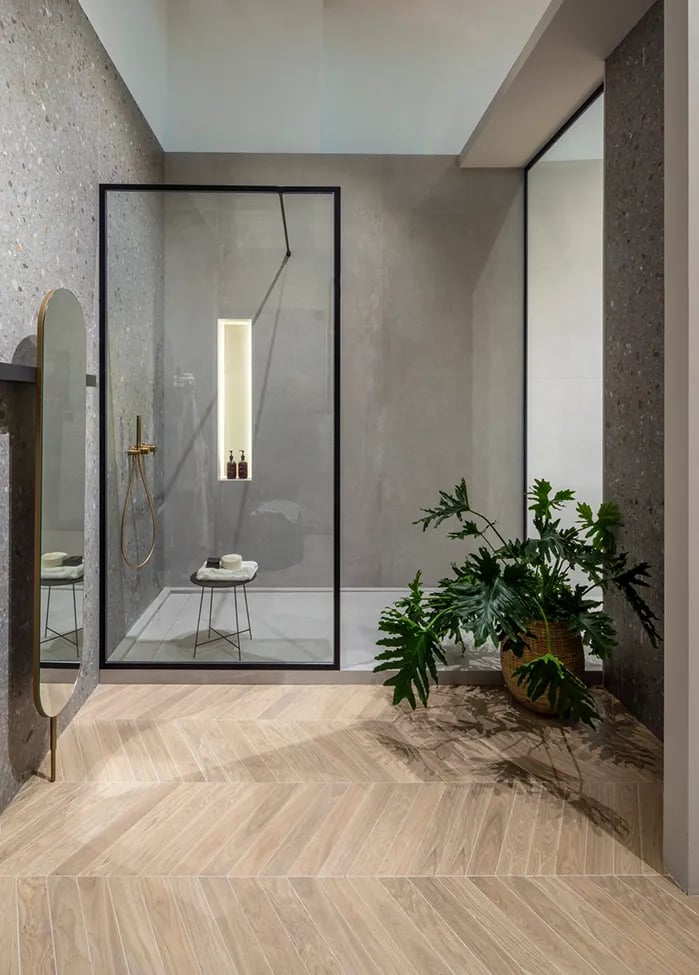
A herringbone wood tile floor turns a bathroom into something more deliberate. The chevron pattern pulls the eye across the room, so the walk-in shower, vanity and mirror feel connected rather than separate. Grey and beige wood tones keep the palette calm, while the glass shower enclosure and metal fixtures add a crisp edge. Natural light from a window and recessed ceiling lights make the pattern read clearly without glare. The layout works because the floor is the hero: everything else stays simple so the herringbone can do its job.
Wood Tile Flooring in a Spa-Like Bathroom
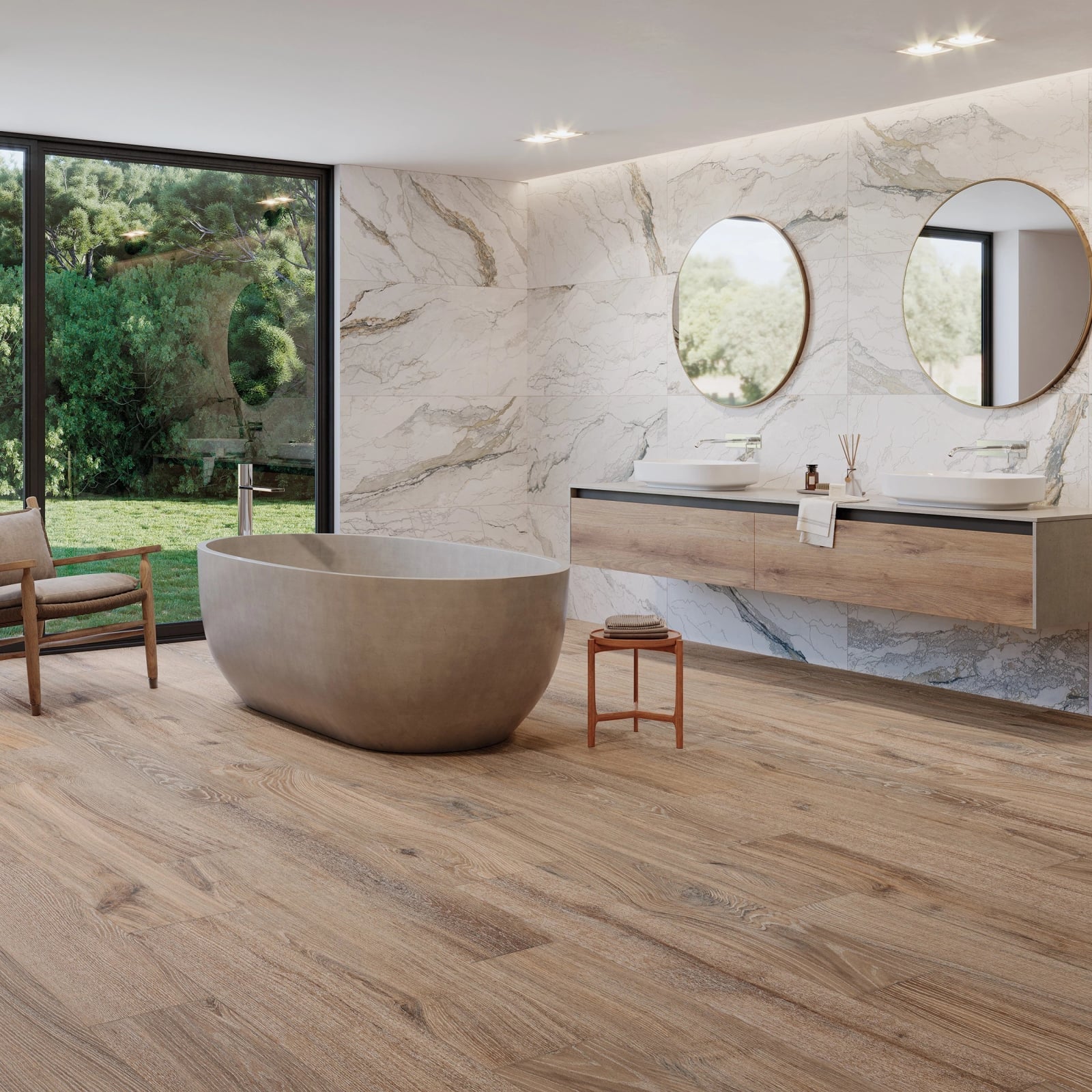
This is a materials lesson in contrast. Light wood tile flooring runs underfoot, while marble covers the walls and a freestanding tub sits as the centerpiece. The wood brings warmth; the marble keeps it cool and clean. A wood stool and natural stone accents bridge the two, so nothing feels abrupt. Recessed ceiling lights and natural daylight from a window land evenly on both surfaces, which is key when mixing polished and matte finishes. The trick is letting the wood tile be the soft note in a room of hard surfaces. It keeps the spa feeling grounded rather than clinical.
Expansive Wood Look Tile Patio Floor
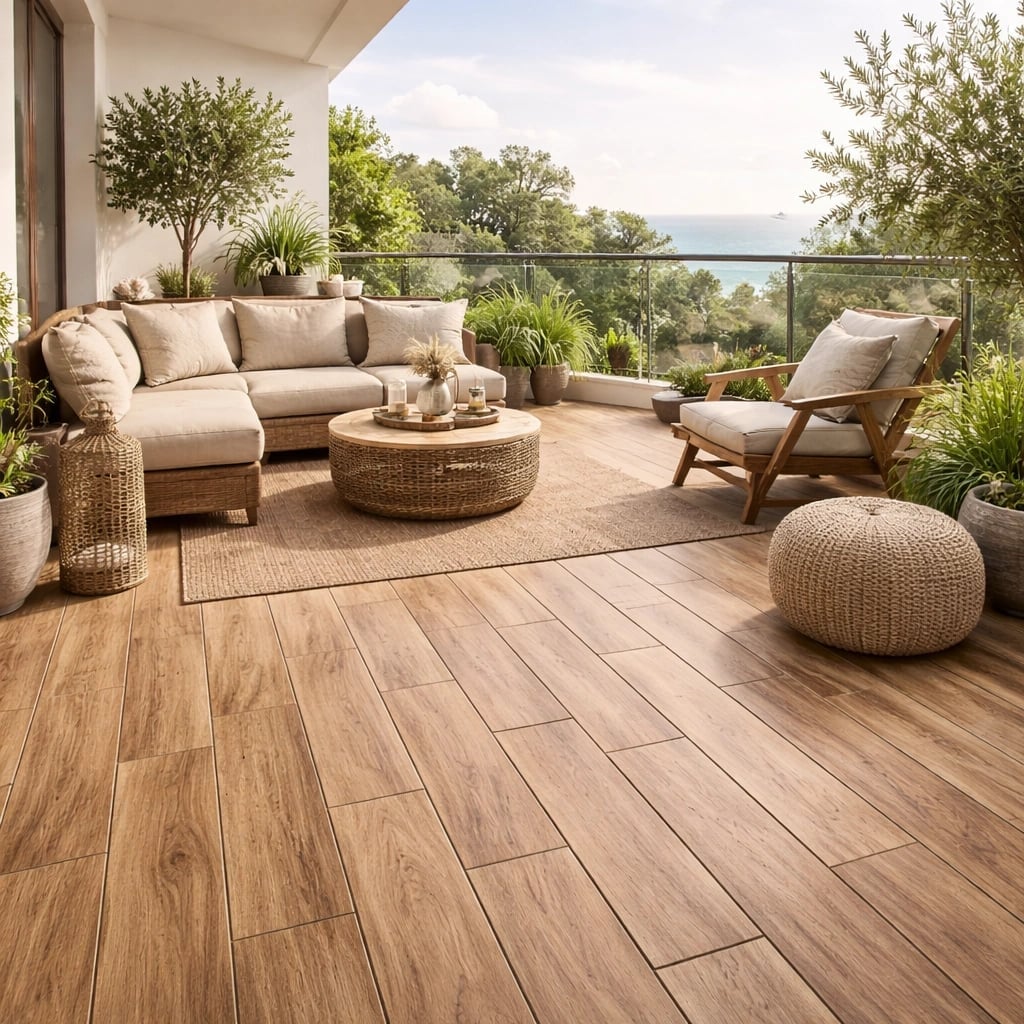
Can outdoor tile actually feel like a room? This patio makes a case for yes. The wood look tile floor runs wide and uninterrupted, turning the space into an outdoor living area rather than a leftover slab. A sectional sofa, coffee table and armchair sit on top, while rattan and fabric soften the hard surfaces. The tile reads like wood but handles sun and rain without warping or splintering.
A modern boho palette of beige, brown and green keeps things relaxed. The plants help: they break up the straight lines of the tile and add a layer that reads as organic rather than arranged. Check your USDA zone before committing to any outdoor plants, but the tile itself works anywhere. The key is letting the floor set the foundation and then layering everything else loosely on top.
Wood Tile Floor in an Open-Plan Kitchen and Living Area
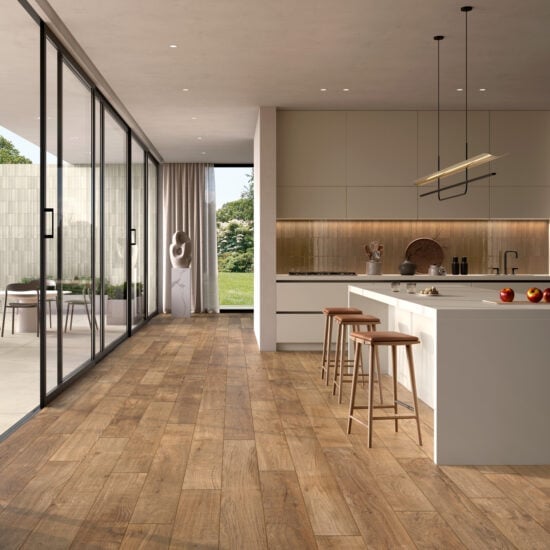
An open plan lives or dies by its floor. Here, a continuous wood tile floor runs under the kitchen island, stools and sofa, tying the cooking zone to the seating area without a visual break. Neutral wood tones and white keep the palette quiet, while the stone countertop and metal pendant lights add texture at eye level. Natural daylight from windows hits the tile evenly, which helps the space feel larger than it is. The layout works because the floor does not compete with the furniture: it just holds everything together.
Textured Wood-Look Tile Floor in a Modern Bathroom, Indoor
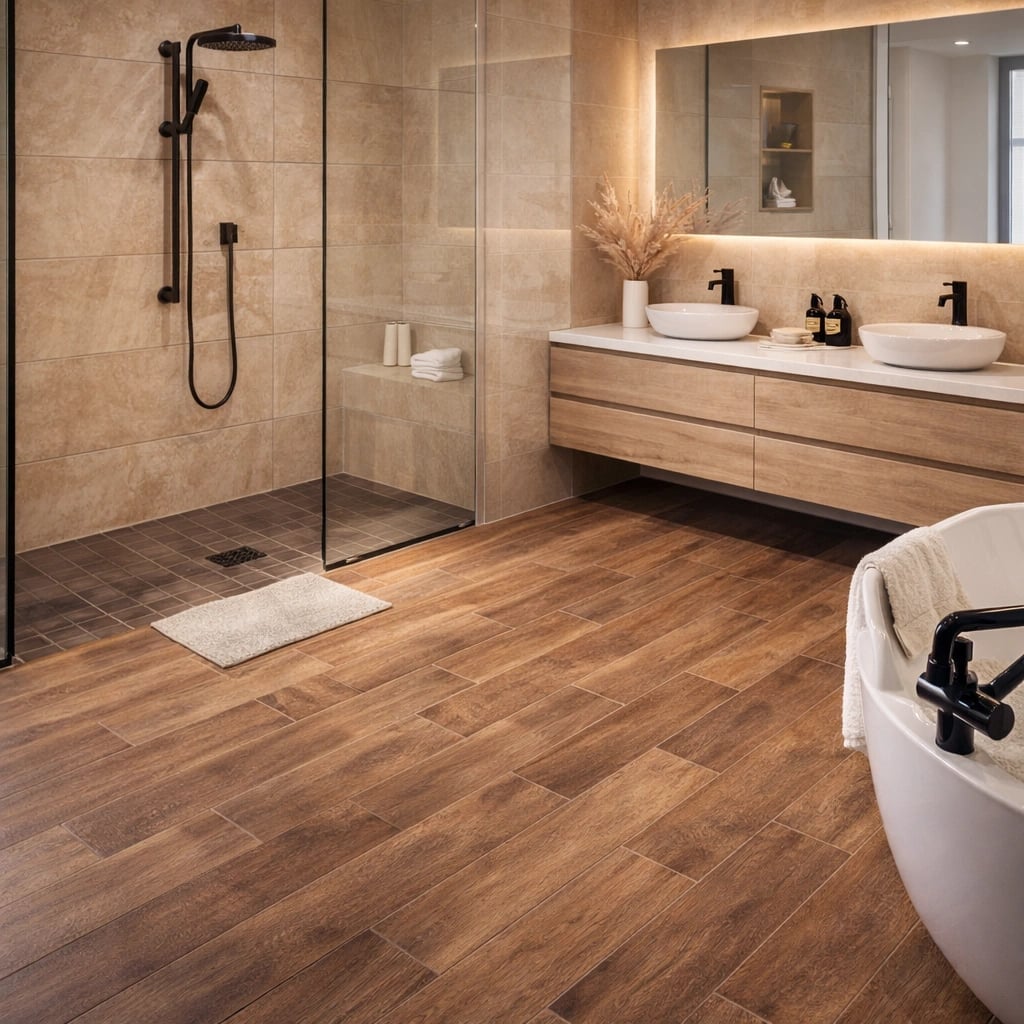
A practical rule for textured tile: let it be the only busy surface. This modern spa bathroom uses a richly textured wood look tile on the floor, then keeps the walls in smooth stone tile and marble. The contrast stops the room from feeling flat without adding visual noise. A freestanding tub, vanity and shower sit in a spacious layout, and ambient lighting with vanity lights keeps shadows soft. The texture adds grip underfoot, which matters in a bathroom, but it also catches light differently than a flat tile. That small shift in reflection is what makes the room feel finished rather than just tiled.
Wood-Look Tile Accent Wall in a Compact Bathroom With Modern Rustic
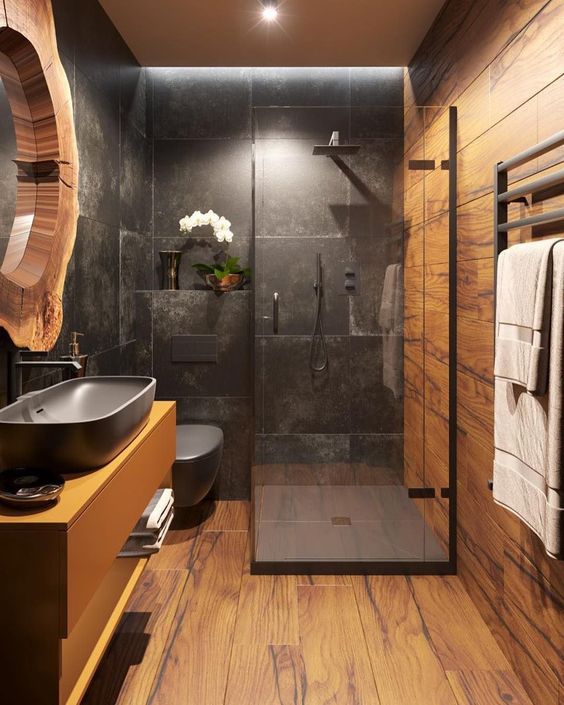
A wood-look tile accent wall costs less than full wood paneling and skips the moisture worries. In a compact bathroom, a single wall of dark grey wood-look tile behind a vanity and sink adds texture without making the room feel smaller. The rest of the space stays in smooth surfaces and glass, so the tile reads as a deliberate focal point. Keep the vanity and hardware in black or dark metal to tie into the tile’s darker notes. A wall-mounted sink or floating vanity helps the floor stay visible, which keeps the bathroom from feeling crowded. The spotlight above the accent wall draws attention to the grain and variation in the tile, so the pattern does the decorating for you.
Wood-Look Tile Shower and Floor Border in a Bathroom, Natural Light
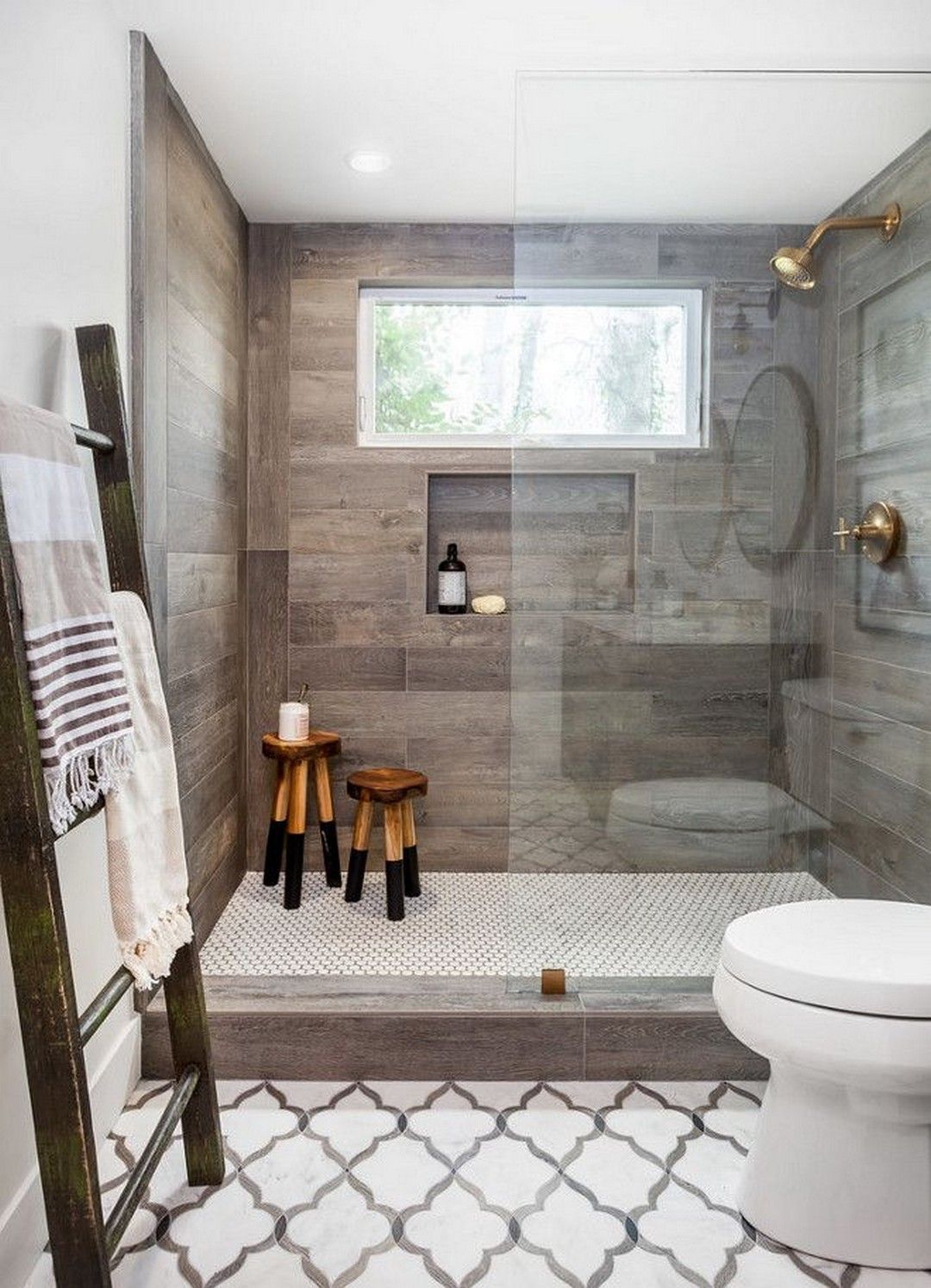
A border of wood-look tile around the shower floor creates a clean transition between the wood tones and the white marble tile inside the shower. The grey wood-look planks run along the floor outside the glass enclosure, then a narrow strip of marble separates them from the shower floor. The brass fixtures and vanity stools add warmth that matches the wood tones, while the white marble keeps the palette from going too dark. Natural light hits the mix of tile patterns, so the contrast looks deliberate.
Herringbone Wood Look Tile Floor in a Modern, Everyday Version
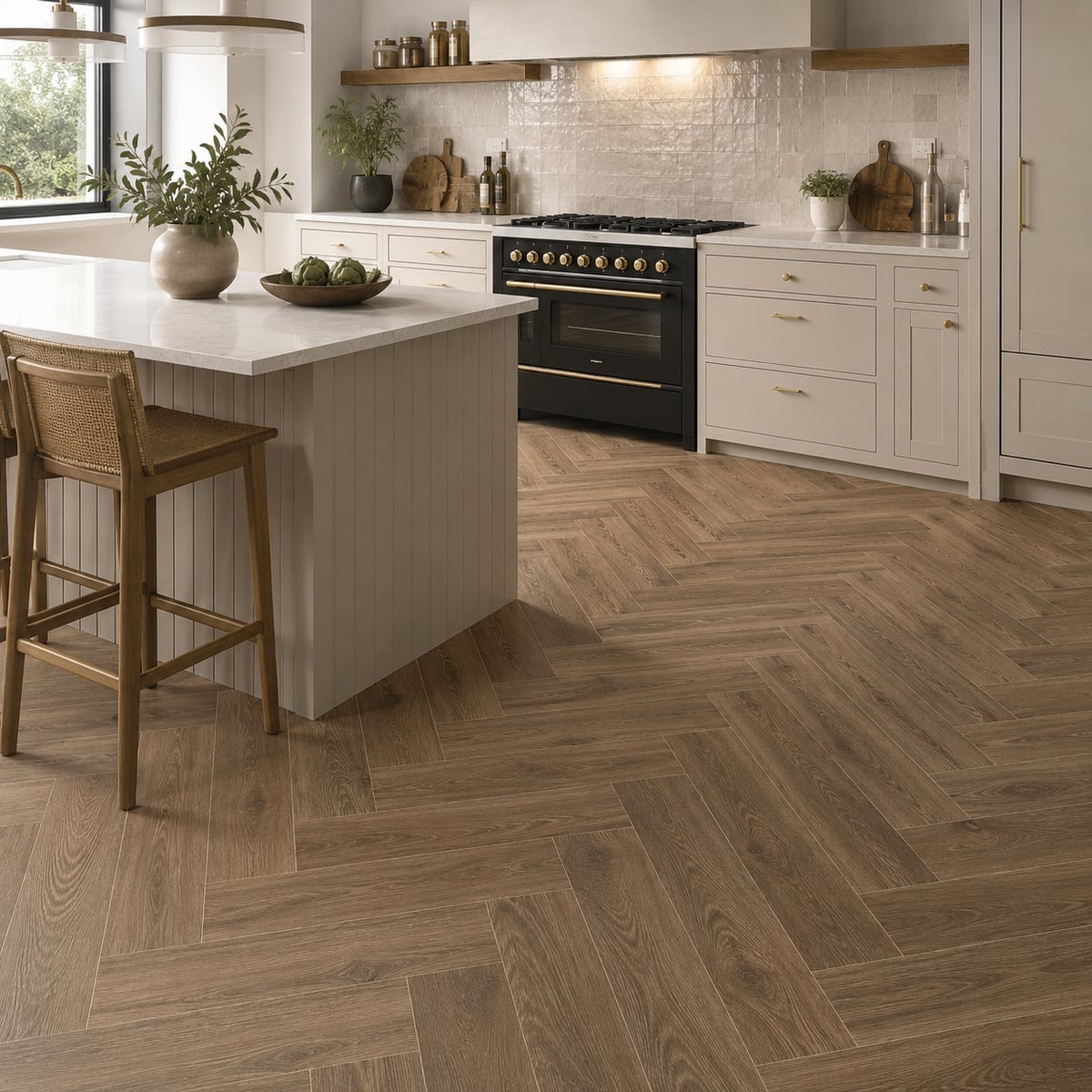
A herringbone wood look tile floor anchors a modern farmhouse kitchen with pattern that feels classic, not busy. The cream cabinetry and marble countertops keep the palette light, so the V-shaped tile layout in warm wood tones becomes the room’s main texture. The kitchen island sits in the center, with the herringbone running under it and around the range cooker in a continuous flow. Pendant lights above the island cast light that catches the angled edges of the tile, emphasizing the grain. The layout principle is that a strong floor pattern works best when the upper half of the room stays clean and uncluttered, letting the herringbone do the talking.
Light Wood-Look Tile Floor in a Modern Bathroom, Everyday Version
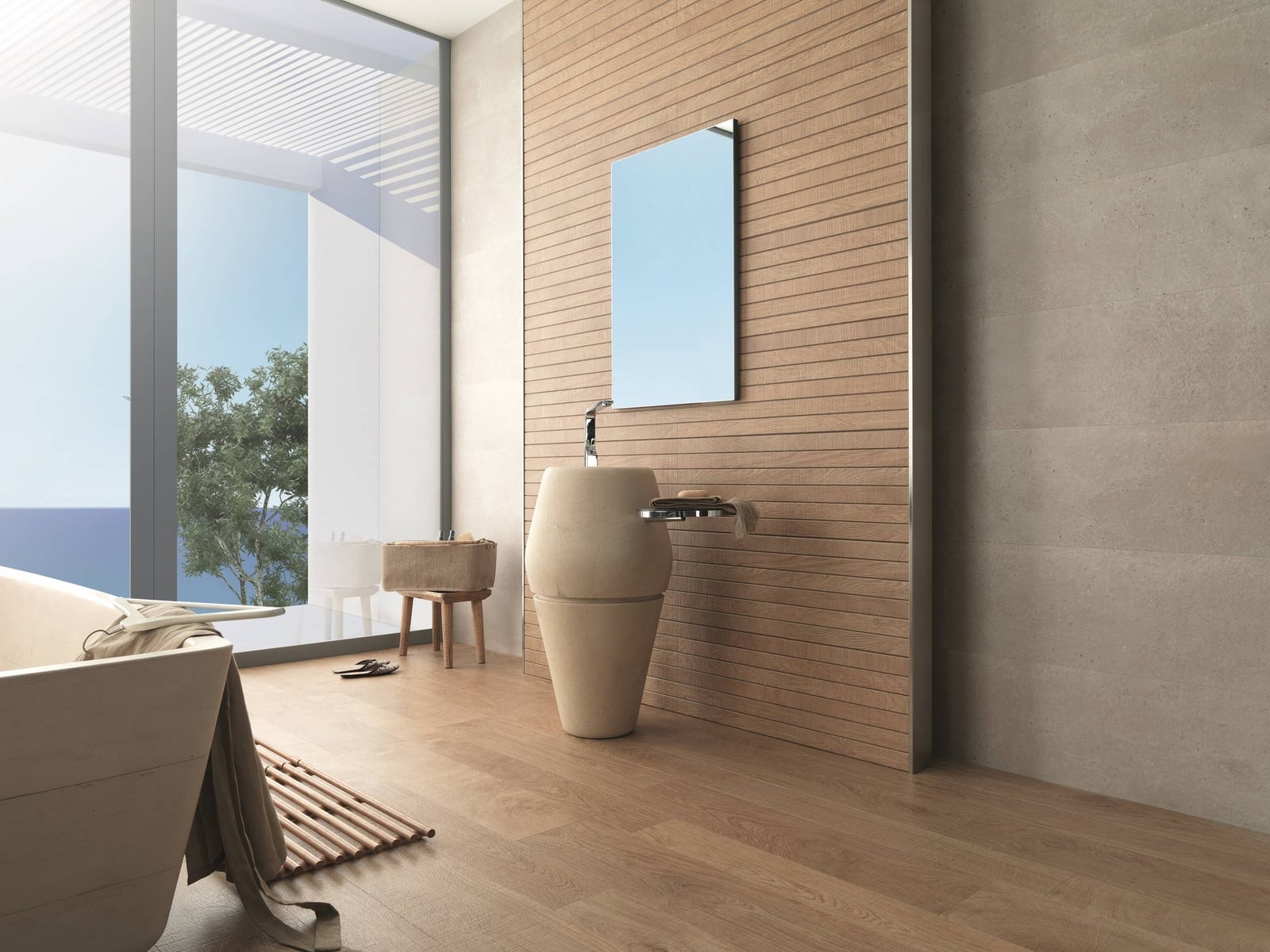
Can a bathroom floor handle water and still feel warm? A light wood-look tile floor does exactly that, bringing the look of natural wood to a space where moisture is a daily fact. The pale beige and grey planks run under a freestanding white tub and a pedestal sink, while stone and concrete surfaces around the room keep the palette grounded. Sunlight hits the tile and softens the planks. The practical principle here is palette: when the floor is the warmest element, the rest of the room should stay in cool neutrals. White walls and grey stone let the light wood tile carry the warmth without competing. Recessed lighting adds a second light source that prevents shadows from making the floor look darker than it is.
Herringbone Wood Look Tile Floor in a Modern, Softer Variation
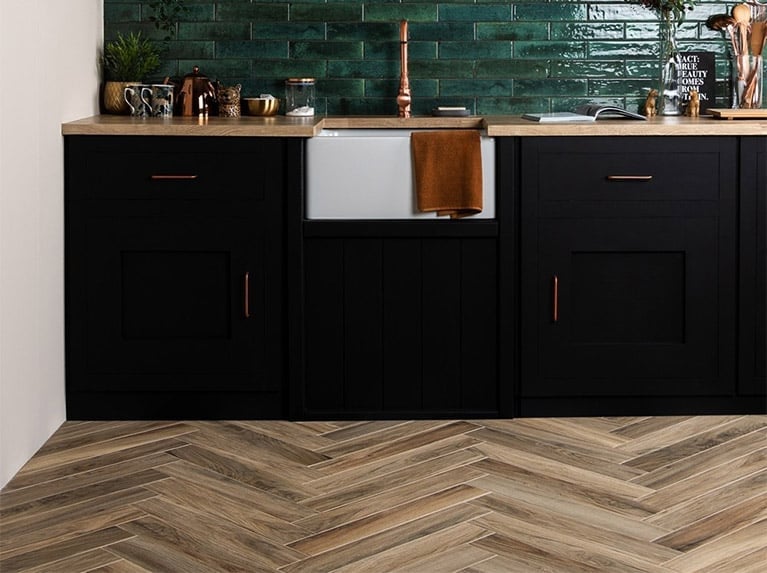
A herringbone wood look tile floor in a compact kitchen adds pattern without adding clutter, especially when the counter and cabinets stay simple. The angled planks in warm wood tones run under a black sink and a copper faucet, with a ceramic backsplash that picks up the same neutral family. The materials lesson is about scale: a small kitchen benefits from a tight herringbone layout because the smaller V shapes make the floor feel more detailed without overwhelming the room. The black and copper fixtures break up the wood tones, so the floor keeps a supporting role in the design.
Wood Look Tile Floor in a Modern Living Room
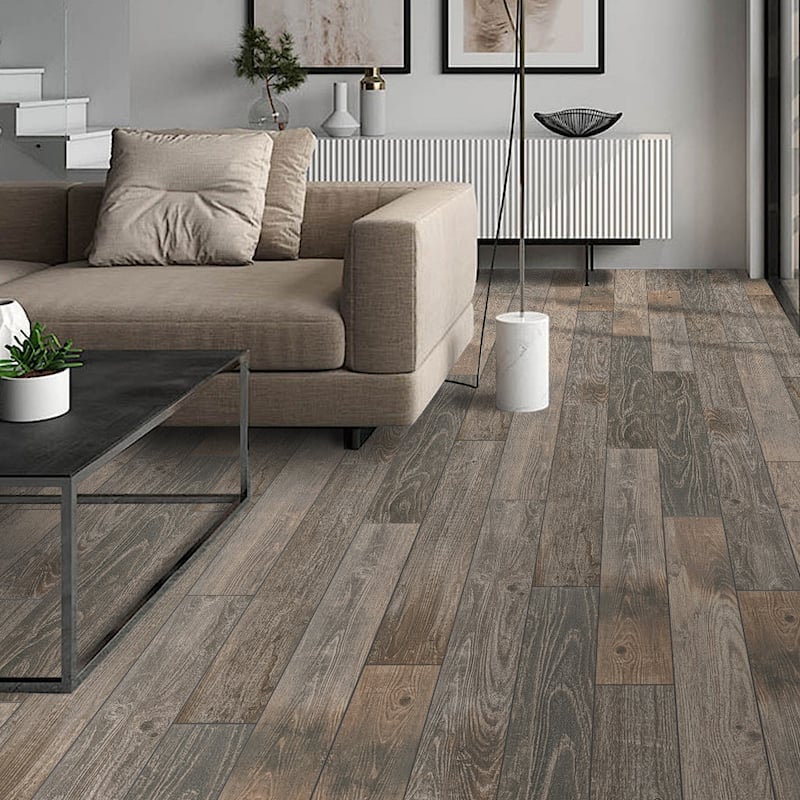
The rule for a wood look tile floor in a modern living room is to let it set the pace for the furniture layout. This room uses the warm brown and grey tones of the tile as its anchor, then places a neutral sofa, a low coffee table, and a slim console table in a way that feels intentional without being rigid. The natural light from sliding doors lands on the tile first, so the floor becomes the quiet foundation everything else sits on. A floor lamp adds ambient light in the evening, keeping the whole space even. The tile draws the eye across the room and makes the open plan feel connected rather than cluttered.
Continuous Wood Tile Flooring in an Open-Plan Space
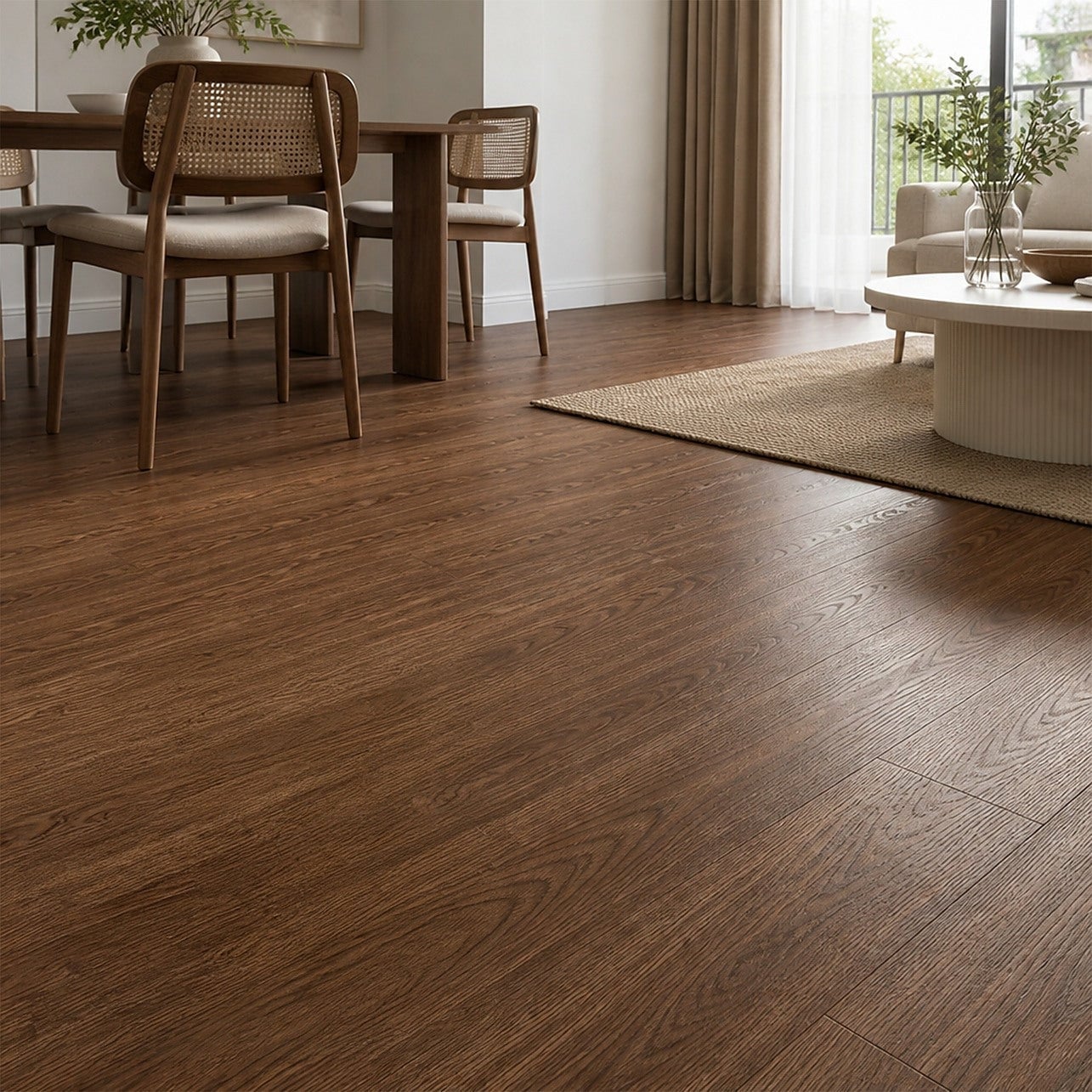
The alternative to a single rug is a continuous wood tile floor that runs from the living room into the dining area without a break. Here the same warm brown and beige tile carries a sofa and coffee table on one side and a full dining set on the other, and the floor becomes the visual thread that ties the two together. The natural daylight from windows on both ends of the space bounces off the tile and makes the whole area feel brighter.
The brown and cream family appears in linen upholstery and wood furniture that match the tile’s tone. For an open plan, a continuous floor is the layout trick that makes the square footage work harder.
Wood Tile Pavers for a Modern Outdoor Patio
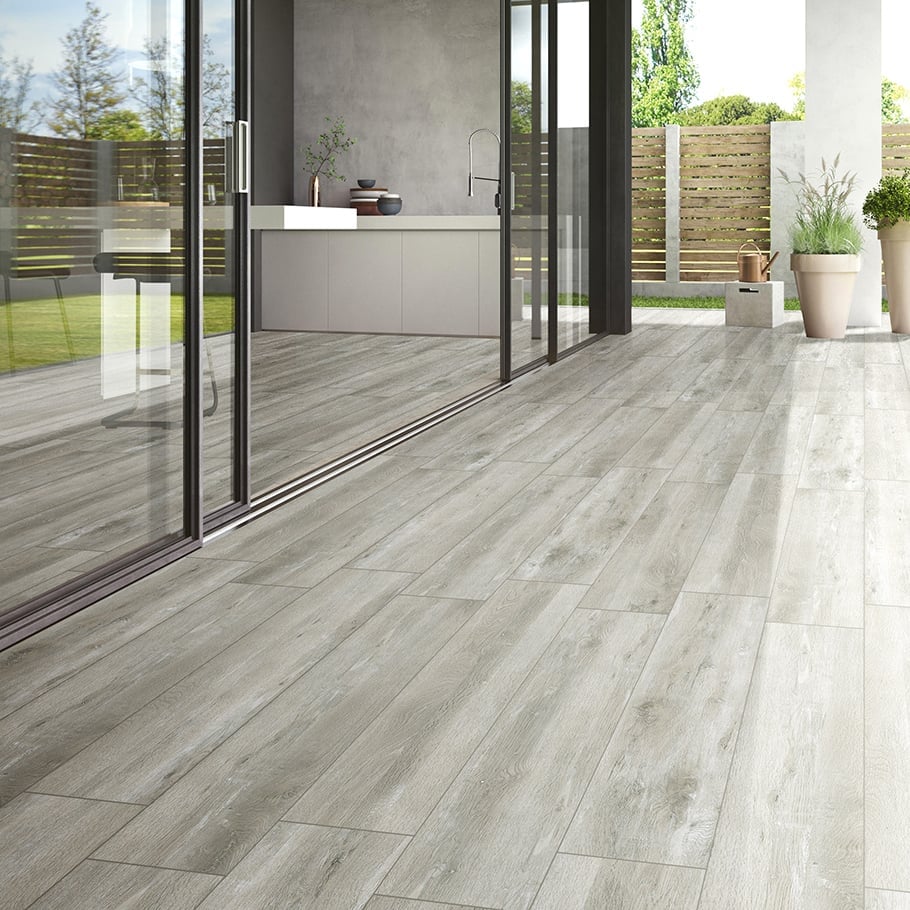
Wood tile pavers on a patio bring a warm, natural look to an outdoor area that concrete alone cannot match. Here the grey and wood-toned tiles stretch from the sliding doors to the edge of the patio, framed by a wood fence and green planters. The pavers sit flush with the concrete border, so the transition between hardscape and tile is clean. Outdoor seating arranged on top looks grounded rather than floating. The material holds up to weather better than real wood, which makes it a practical pick for a roomy patio that sees all four seasons.
Herringbone Wood Tile Floor in a Modern Farmhouse Bedroom, Indoor
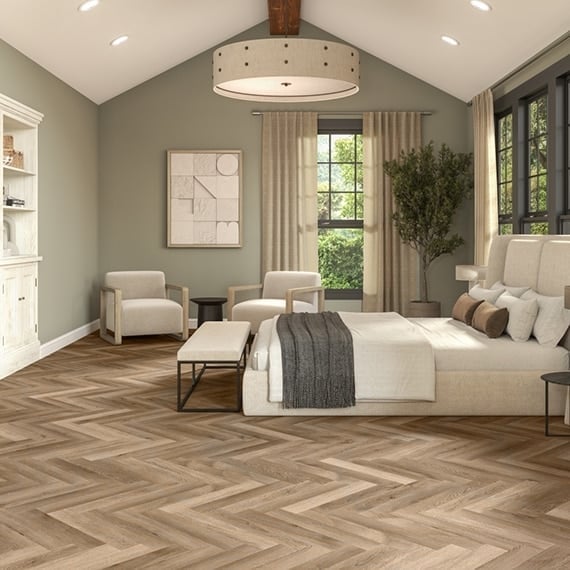
This bedroom makes its case for herringbone wood tile as a floor that adds pattern without adding clutter. The neutral wood tones and the angled layout of the tiles give the room a sense of movement that directs the eye toward the bed and the armchair by the bookcase. Natural daylight from the window lands on the herringbone lines, and the overhead light picks up the same texture at night. The palette stays soft with green and wood accents that match the floor’s warmth. For a modern farmhouse bedroom, the herringbone pattern is the one detail that keeps the room from feeling flat.
Unified Wood Look Tile Floor in an Open-Concept Bedroom and Bathroom
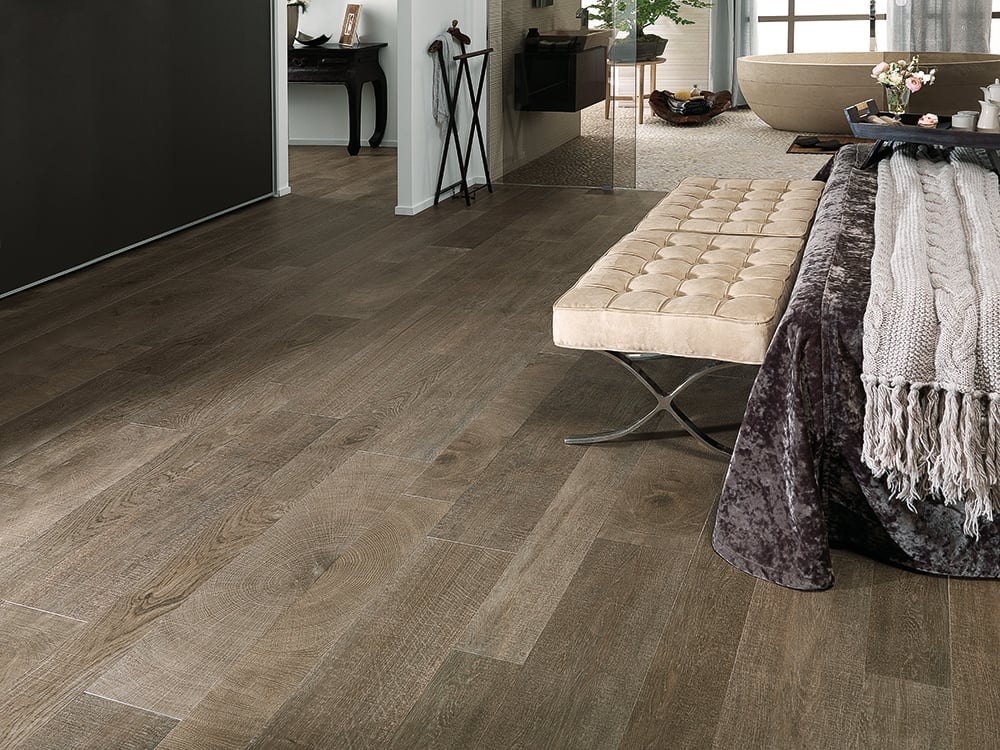
Using the same wood look tile floor in both zones of an open-concept bedroom and bathroom makes the space feel continuous. Here the neutral brown and beige tile starts under the bed and bench in the bedroom and runs without a break into the bathroom area with the bathtub and vanity. The unified floor prevents a chopped up look.
The palette stays neutral throughout, with fabric and metal accents that match the tile’s warmth. Natural light from the bedroom window reaches the bathroom, and ambient light near the vanity keeps the tile looking consistent at night. For a transitional layout that connects two different functions, a single tile floor is the storage-free solution that ties everything together.
Herringbone Wood-Look Tile Flooring in a Modern, Bolder Variation
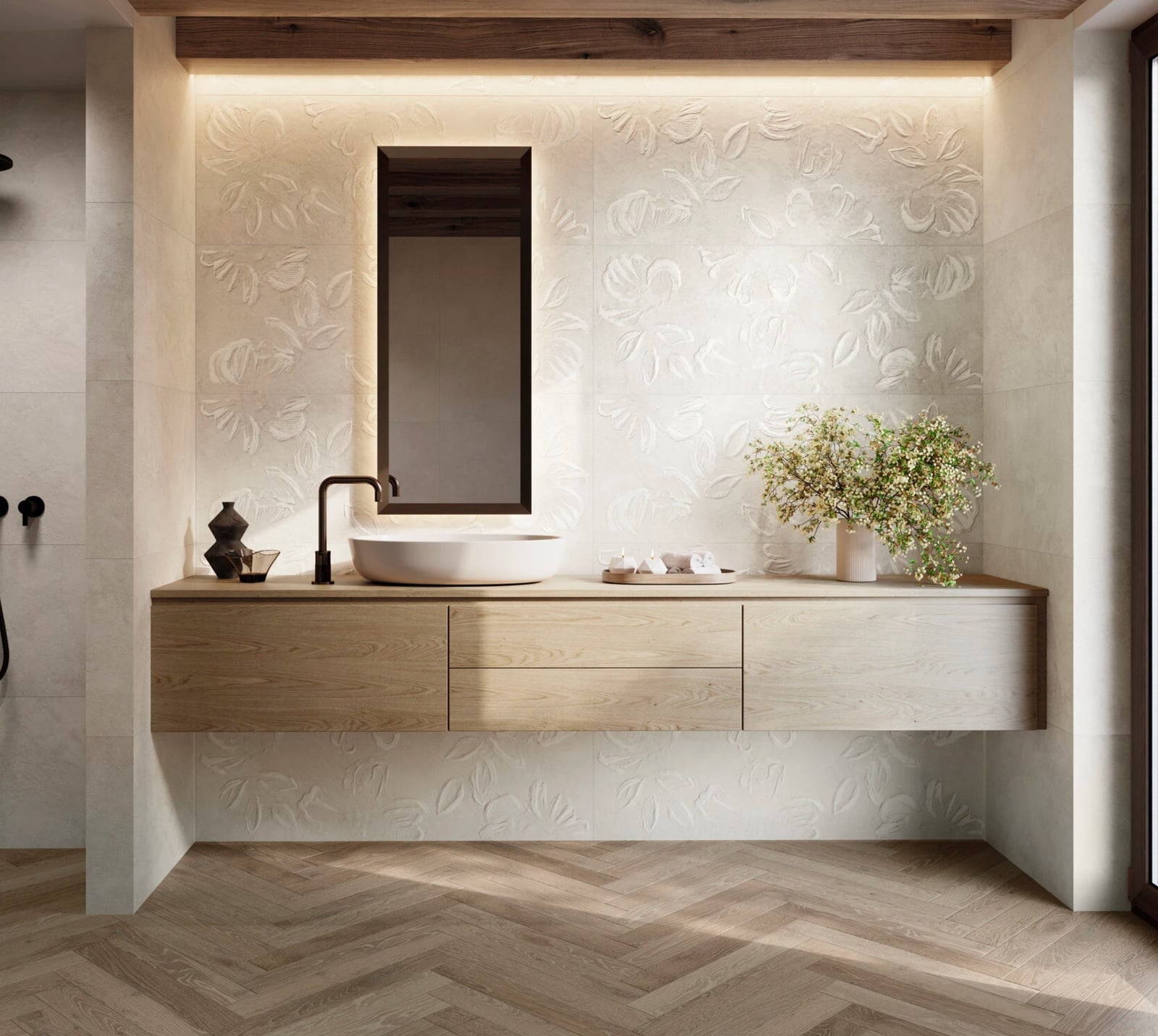
A herringbone wood-look tile floor pairs well with an embossed floral wall tile when both stay in the same neutral family. The wood-toned planks run under a floating vanity and a vessel sink, while off-white floral tiles on the wall add texture without adding color. The budget swap is material: embossed ceramic tile costs less than carved stone or custom paneling, and the herringbone layout on the floor gives the room a custom feel without a custom price tag. Ambient and task lighting keep both surfaces visible, so the floral detail does not get lost against the patterned floor.
Wood Composite Deck Tiles, Light Grey
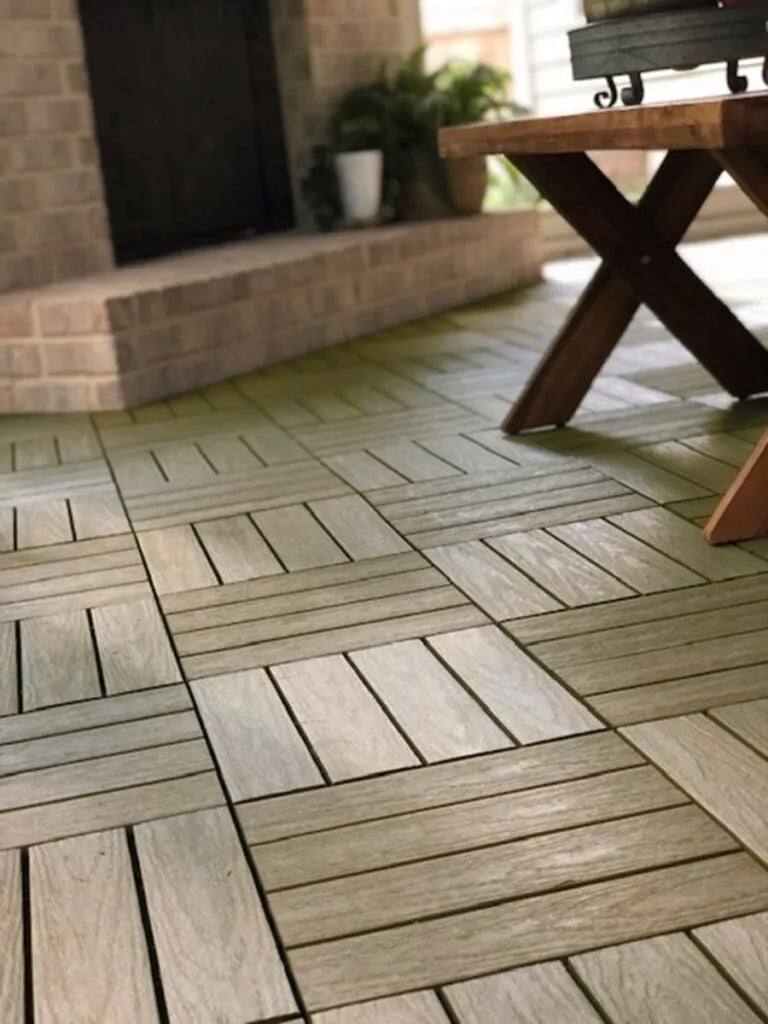
A practical rule for deck tiles is that they should sit flush with the surface beneath, so the transition from indoors to outdoors reads as one continuous plane. Here the grid of light grey and brown wood composite tiles covers the deck, with a table base and chairs arranged on top. The modern palette keeps the space calm, and the tile pattern adds just enough structure to define the seating zone without needing a rug. Natural daylight hits the surface evenly, which helps the composite material blend into the outdoor setting. For a deck that gets full sun, check your USDA zone to make sure the tile is rated for your climate before you commit.
Wood Look Tile Accent Wall and Floor in a Modern, Everyday Version
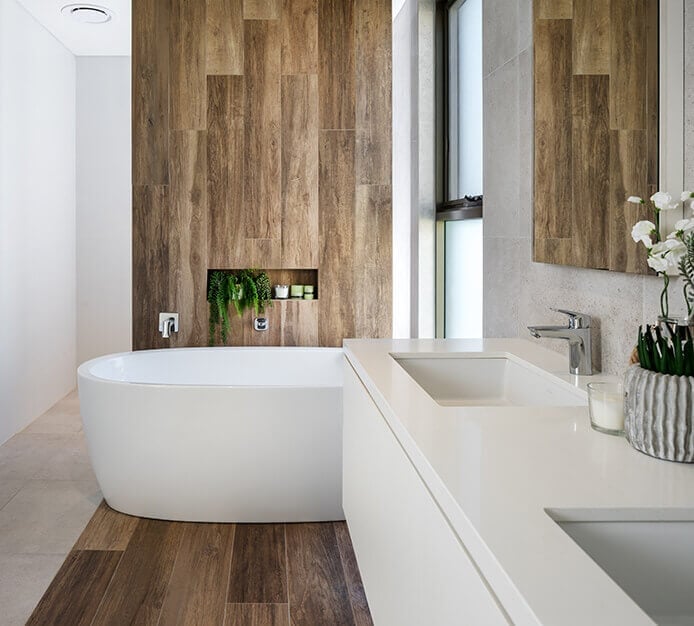
A wood look tile accent wall can feel like a strong move in a bathroom, but pairing it with the same tile on the floor makes the choice deliberate. The neutral brown and grey planks wrap from the floor up a wall behind the bathtub, while the vanity and shower sit on the continuous tile. Recessed lights and natural light keep the room from feeling dark.
The wall acts as the visual anchor and the floor carries it through, so the room feels roomy and cohesive without needing a second accent. To recreate it, look for a wood look tile in brown and grey tones. Ask your tech for: a layout that wraps the tile from floor to accent wall.
Wood Tile Floor in a Modern Dining Room, Natural Light
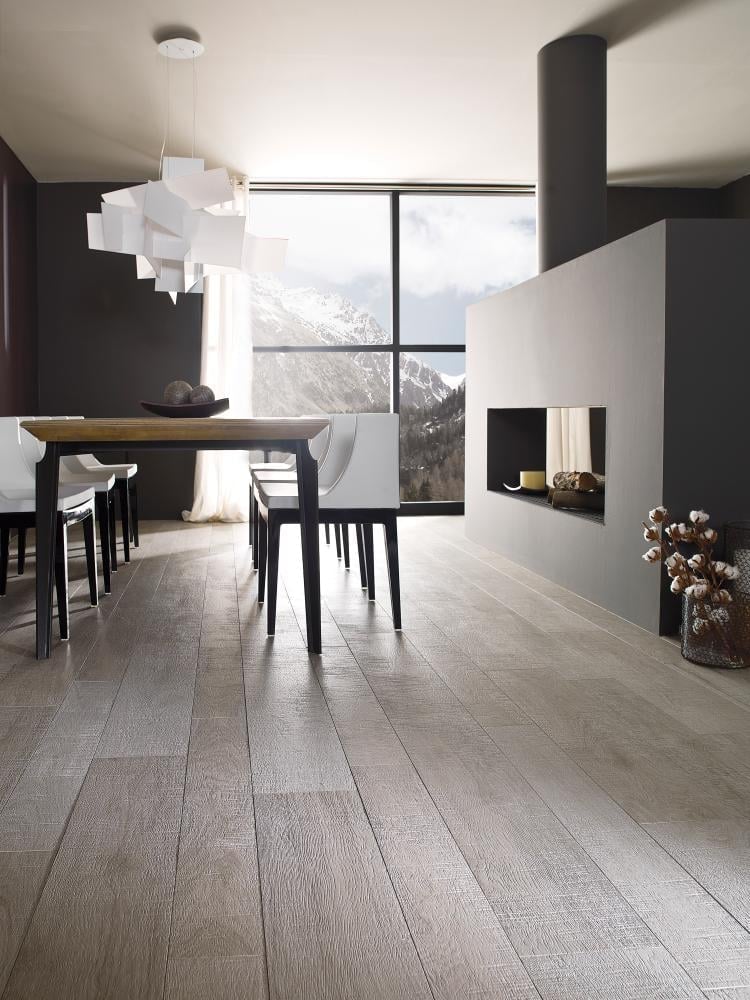
The wood tile floor in this dining room runs under the table and chairs toward a fireplace, which gives the layout a natural focal point even when the table is empty. Grey and white walls keep the palette restrained, while the wood tones in the tile bring warmth to the metal and fabric furniture. A pendant light hangs above the table, but the floor stays visible enough to anchor the whole arrangement without competing.
Continuous Wood Look Tile Floor in a Modern Open-Plan, Close-Up Take
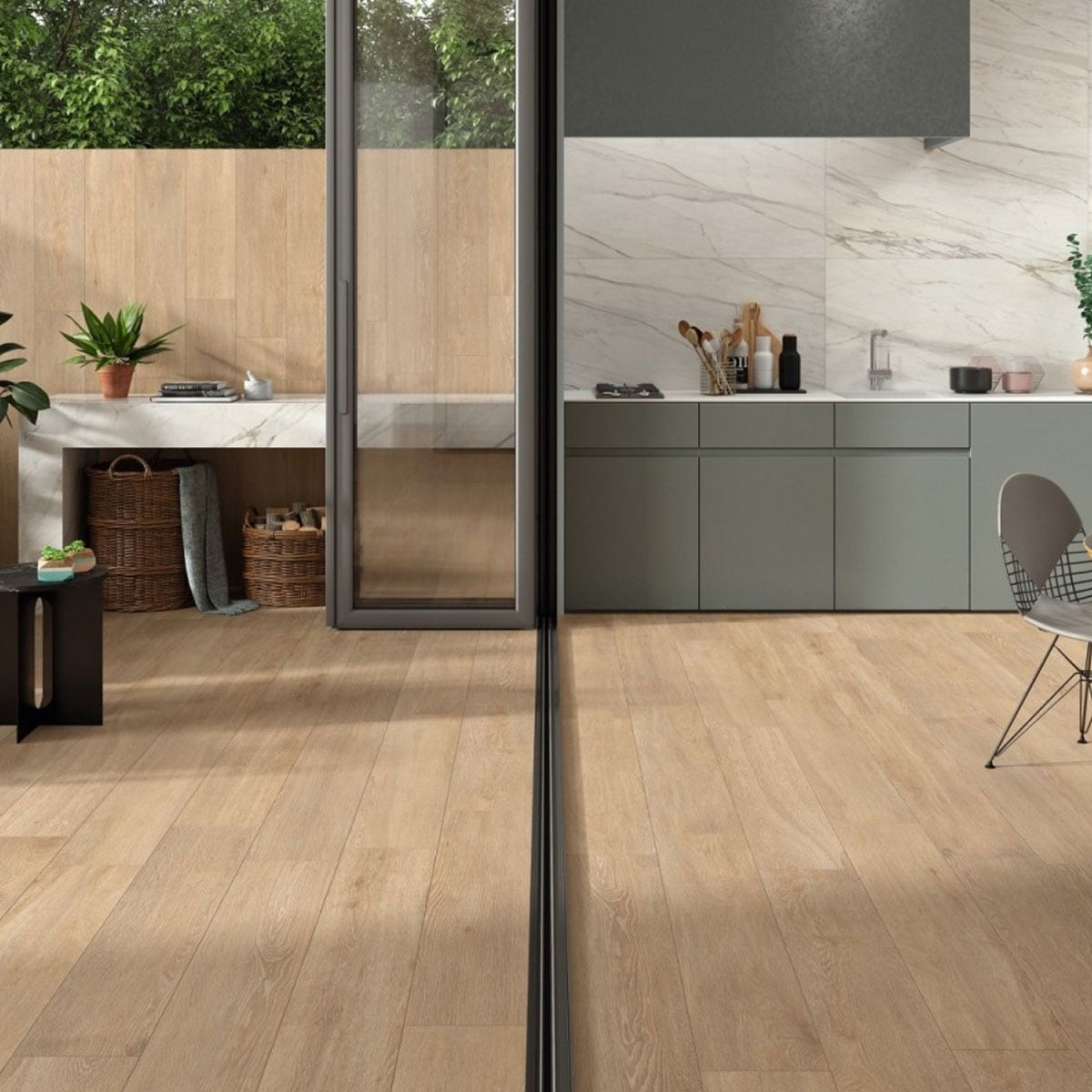
A continuous wood look tile floor is the one surface that can hold an open plan together. Here the same light wood tone planks run from the kitchen cabinetry and island into the living area, with chairs and a sofa sitting directly on the tile. The warm wood against grey and white walls keeps the palette quiet, so the floor acts as a neutral base. Marble counters and metal hardware add contrast without breaking the visual line. Natural light from windows and overhead fixtures hits the planks evenly, which helps the room feel wider than its actual footprint. The trick is to avoid rugs that cut the floor into zones; let the continuous surface do the connecting.
Light Wood Look Tile Floor in a Spacious Modern Living Room
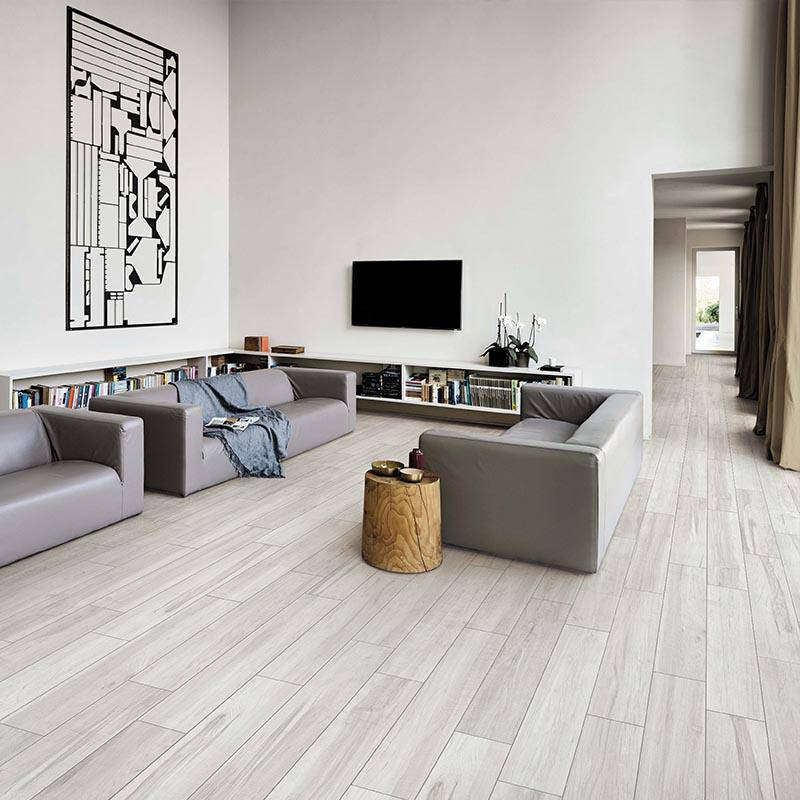
A light wood look tile floor pairs well with a restrained palette. In this modern living room, the neutral grey and white sofas and console let the floor carry the warmth without competing. Large windows hit the pale planks evenly, which keeps the open plan feeling airy. The metal legs on the coffee table add a clean line that breaks up all that soft texture, so the room does not go flat. Match the undertone of your tile to the wall color. If your floor has a warm beige cast, a cool white wall will fight it. Here the grey walls and white trim coordinate because the floor sits in that same neutral family. The result is a roomy space that feels grounded but never heavy.
Dark Wood Look Tile Floor in a Modern Living Room, Indoor
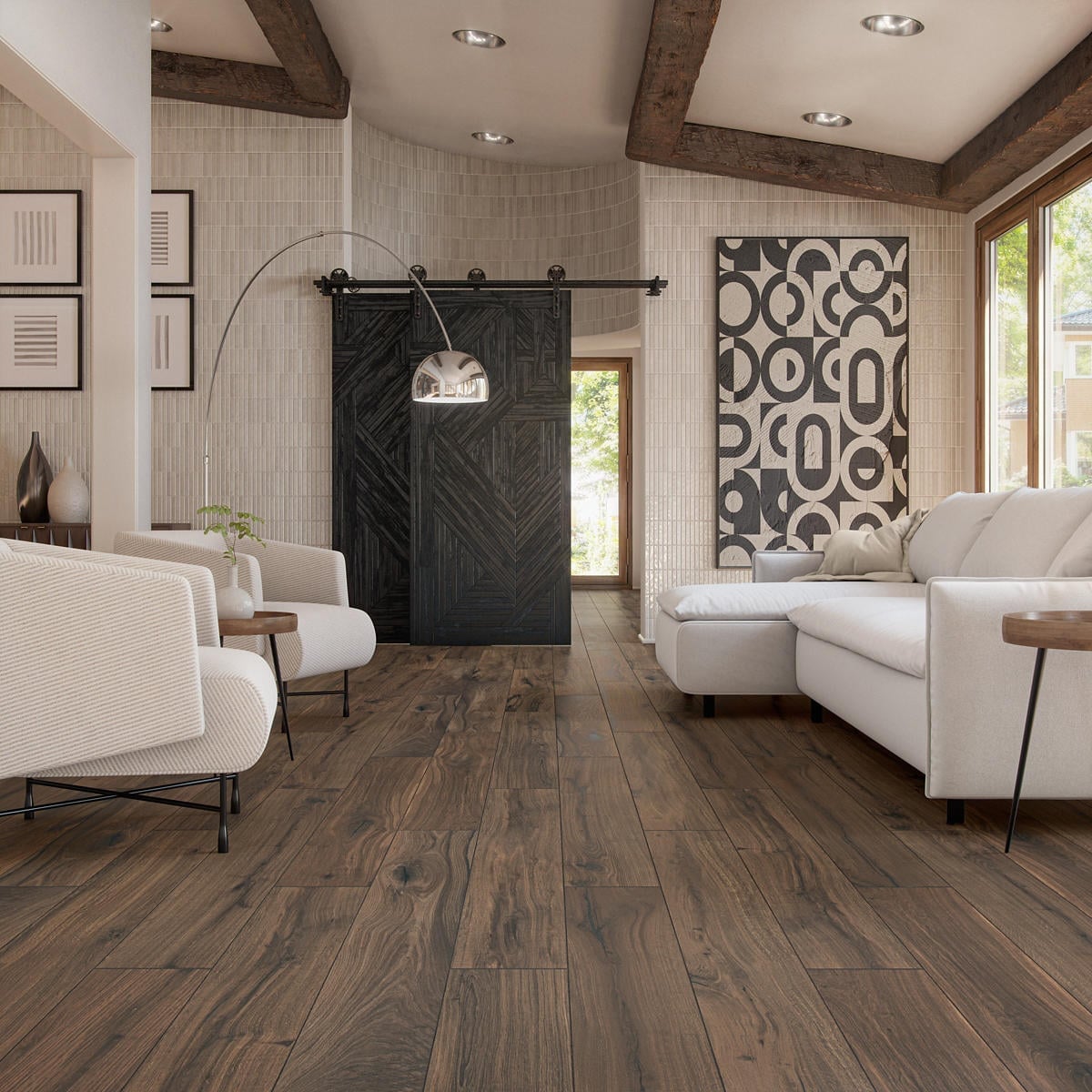
A dark wood look tile floor anchors the living room without making it feel smaller. The deep brown planks contrast with the white walls and beige upholstery, so the room stays bright even with a heavy floor. A large sliding door lets in natural light that hits the dark surface and keeps it from reading as a cave. The metal and fabric furniture sit lighter against it, which gives the layout a clear hierarchy: the floor grounds, the furnishings float.
Blue Wood Look Tile Floor in a Coastal Modern Living Room
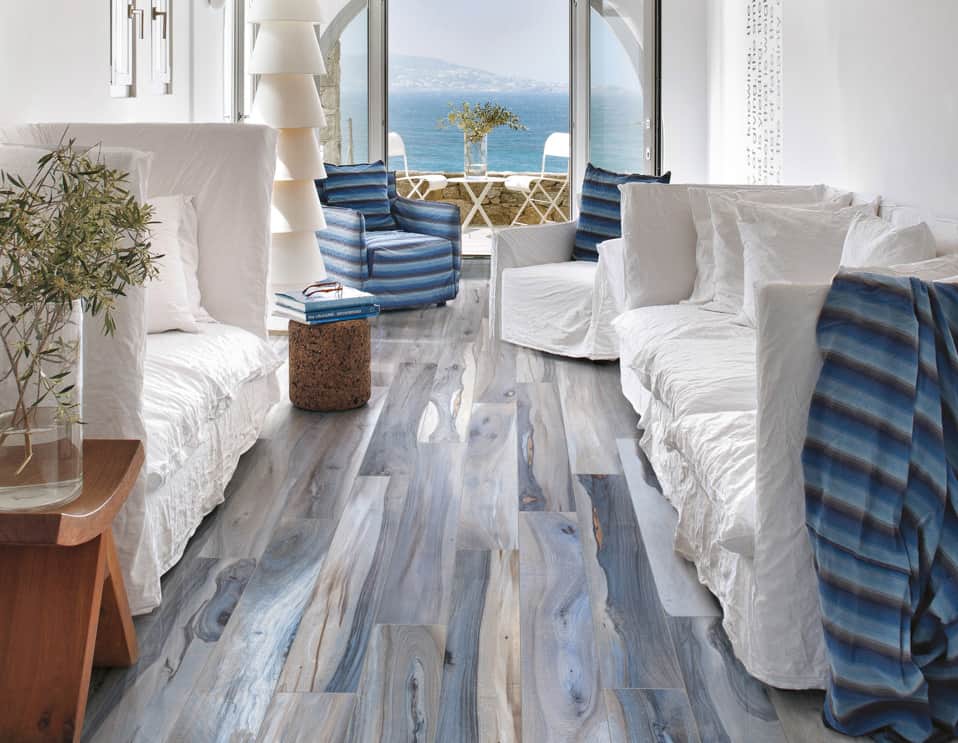
A blue wood look tile floor anchors a coastal modern living room when the rest of the palette stays complementary but not matching. In this room, the blue planks sit under white sofas and beige linen chairs, so the cool tone becomes a clear foundation. Windows keep the blue from going flat, while the ottoman and soft fabrics add warmth that balances the cool floor. Let the floor be the only blue in the room. If you added blue pillows or a blue rug on top of blue tile, the effect would blur. Here the tile carries the color alone, and everything else supports it.
Herringbone Wood Tile Floor in a Modern Open-Plan Space, Light Brown
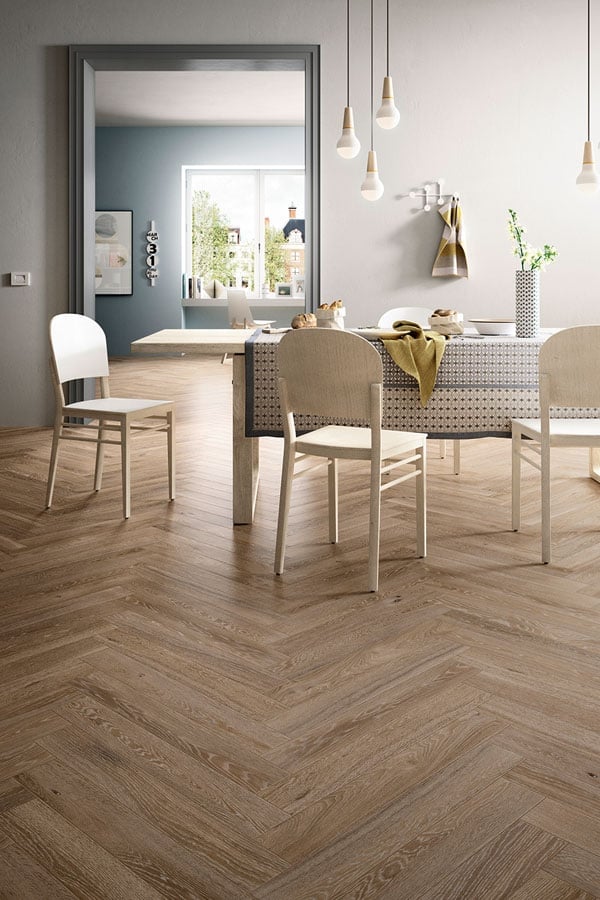
A herringbone wood tile floor can feel busy in an open plan, but this one does not because the pattern stays light brown against white and beige furniture. The dining table and chairs sit on one side, the sofa and coffee table on the other, and the continuous herringbone runs under both zones without separating them. The natural daylight from the windows hits the angled planks differently throughout the day, which adds movement that a straight lay would miss.
A practical rule for this layout: keep the furniture legs visible. If you covered the herringbone with a large rug, you would lose the very pattern you paid for. Here the dining chairs and coffee table sit on bare tile, so the chevron lines stay readable. The linen upholstery and wood tabletop echo the floor’s warm tone, which ties the two zones together without needing a rug.
Light Grey Wood Look Tile Floor in a Modern Bedroom
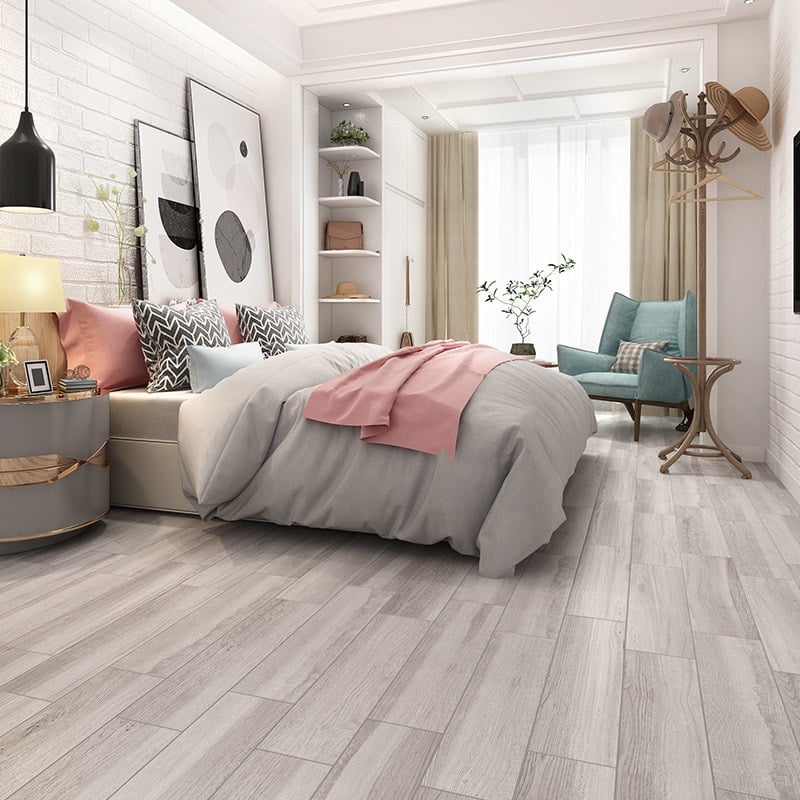
The light grey wood look tile floor in this bedroom does not compete with the bed or the closet because it stays in the same neutral family as the walls. The grey planks read as a soft base under the white bedding and metal nightstand, which lets the furniture stand out without the floor shouting for attention. A practical rule for this palette: keep the wall and floor tones within one step of each other. If the floor were grey and the walls warm beige, the room would feel cut in half.
Wood-Look Tile Flooring on an Outdoor Patio With Modern Bohemian
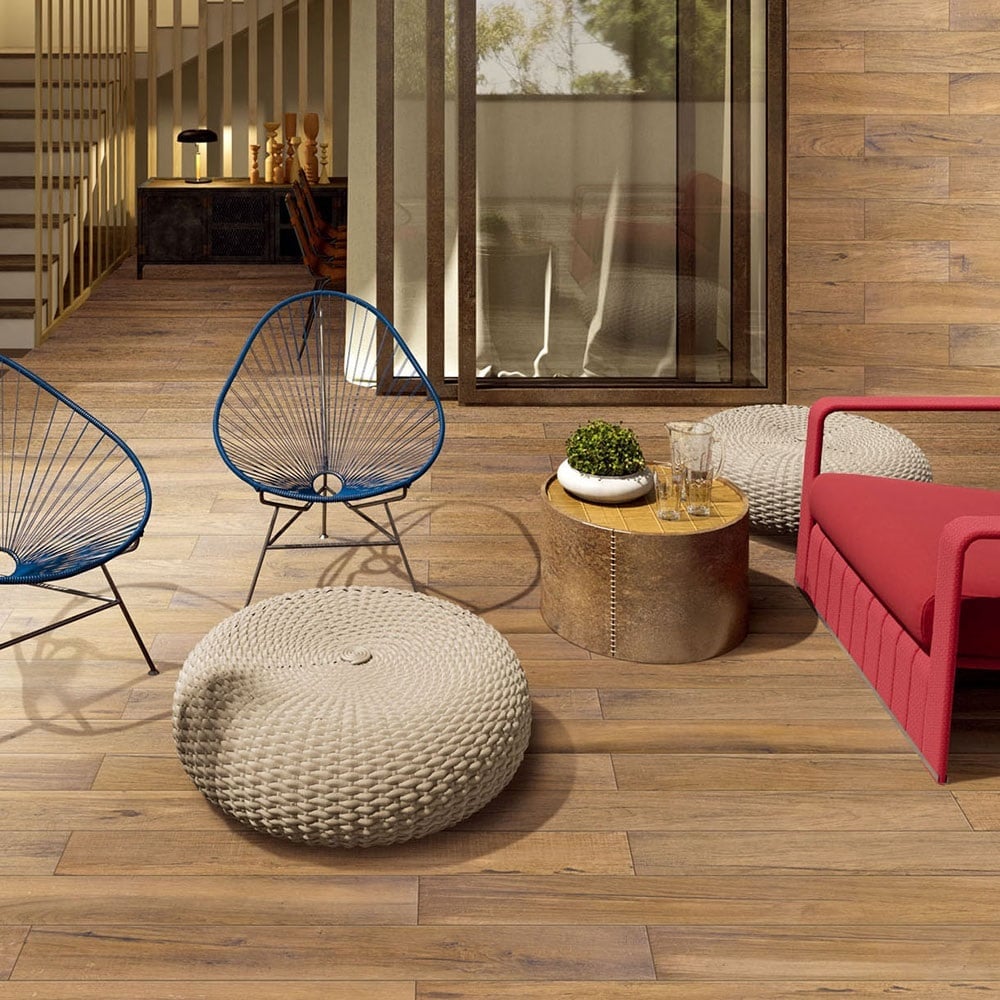
Wood decking brings warmth to a patio, but it warps and fades over time. Wood-look tile flooring gives you the same natural feel without the seasonal headaches. Here warm wood tone planks cover the patio floor under a seating area with Acapulco chairs in red and blue, a pouf and a sofa. The tile reads as a solid foundation that grounds the rattan and metal furniture, while the modern bohemian style comes from the mix of textures, not the floor itself. Natural daylight hits the planks evenly, so the surface stays cool underfoot even in direct sun. Check your USDA zone before choosing tile for outdoor use, since freeze-thaw cycles can affect some grades.
Wood Tile Accent Wall and Floor in a Modern Bedroom, Close-Up Take
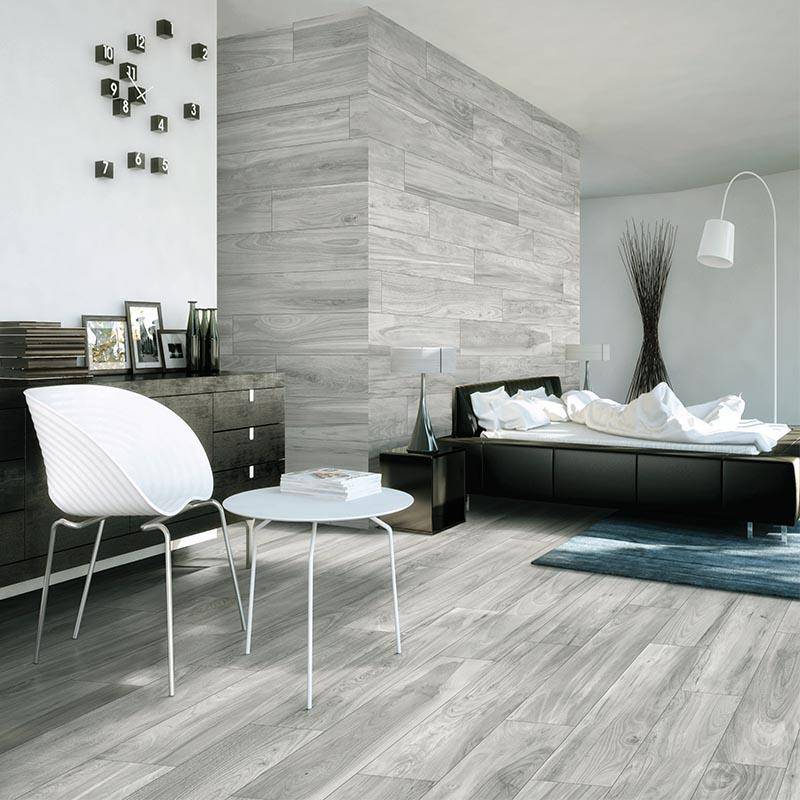
Use a wood tile accent wall and floor in a bedroom to add texture without permanent changes. The grey and wood tone planks wrap from the floor up one wall behind the bed, creating a continuous surface that functions as a built-in headboard. A chair and side table in metal and fabric sit on the tile, balancing the weight of the wood tones. Natural daylight and artificial lamps soften the look, so the wood tones warm the grey and white palette without dominating it. The wall and floor share the same plank width and direction, which makes the room feel longer than it actually is. If you cannot install tile in a rental, a large peel-and-stick wood-look wall panel on a single wall mimics the same effect.
Herringbone Wood Tile Floor Detail With Rustic Modern
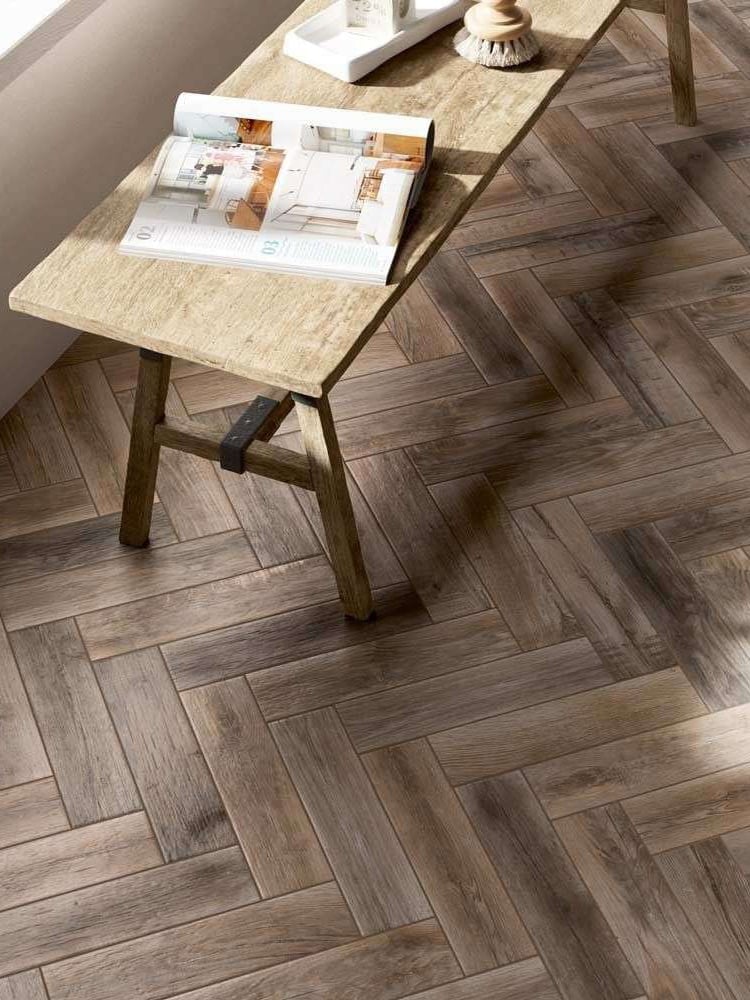
A herringbone pattern changes how a floor reads. The angled planks in brown and grey catch natural daylight differently at each turn, so the surface has movement without needing a rug or a pattern on the wall. A wooden bench and a magazine sit on the tile, but the floor stays the main event. The layout principle is that a strong pattern needs space to breathe, so keep the pieces on top simple and low. A bench or a single stool is enough. Anything taller or more ornate would pull focus from the tile work.
Distressed Whitewashed Wood Look Tile Floor, Close-Up Take
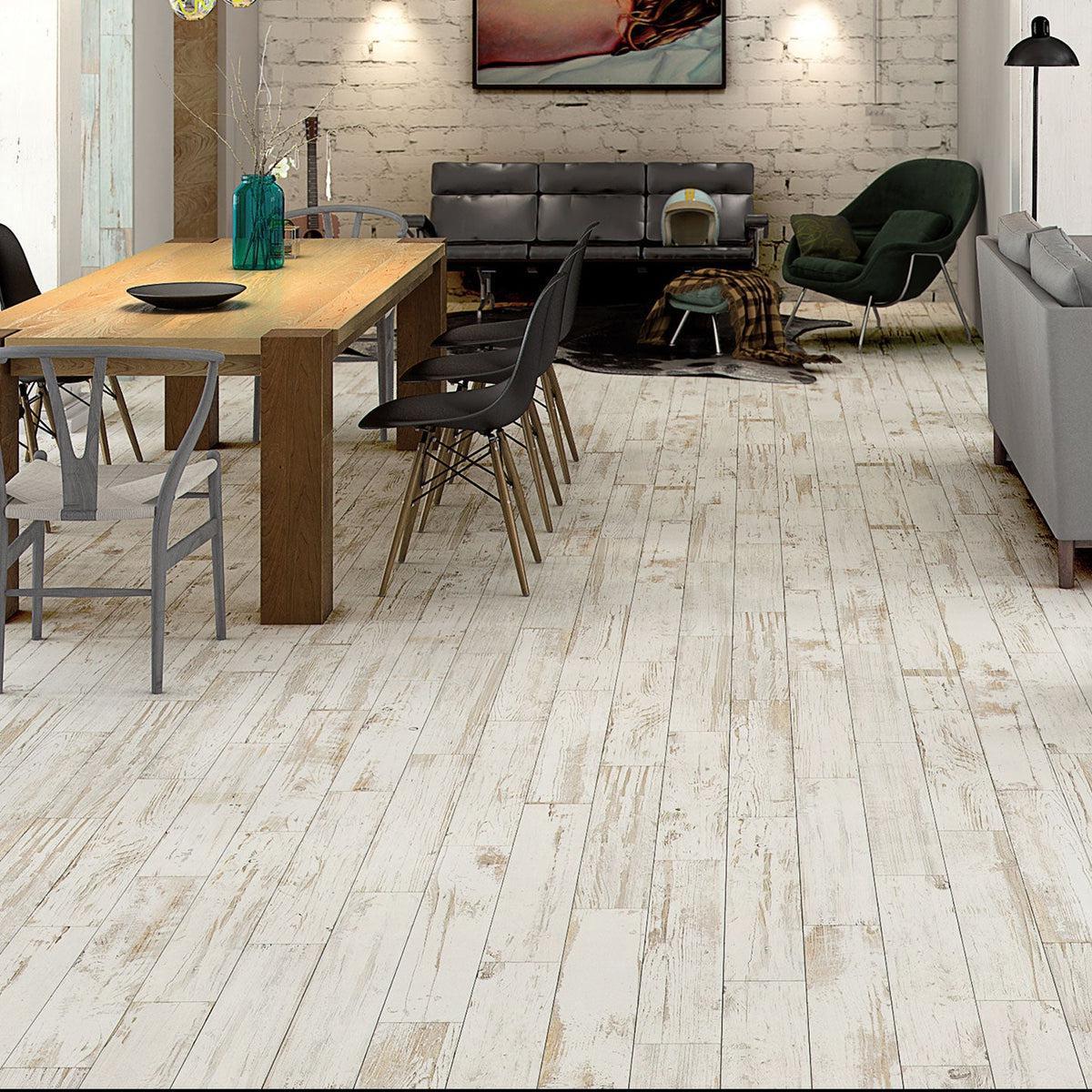
A distressed whitewashed wood look tile floor in a living and dining area brings texture without the upkeep of real wood. The light beige and brown planks run under a dining table, chairs, a sofa and an armchair, with the whitewashed finish reflecting overhead lights and natural light to keep the space feeling roomy. The distressed surface hides the everyday scuffs that come with furniture legs and foot traffic. The materials lesson here is that a brick accent wall and leather upholstery add warmth alongside the tile, so the floor does not have to carry the whole rustic note by itself.
Shabby Chic Bathroom Vanity Area with Subway, Office-Safe Version
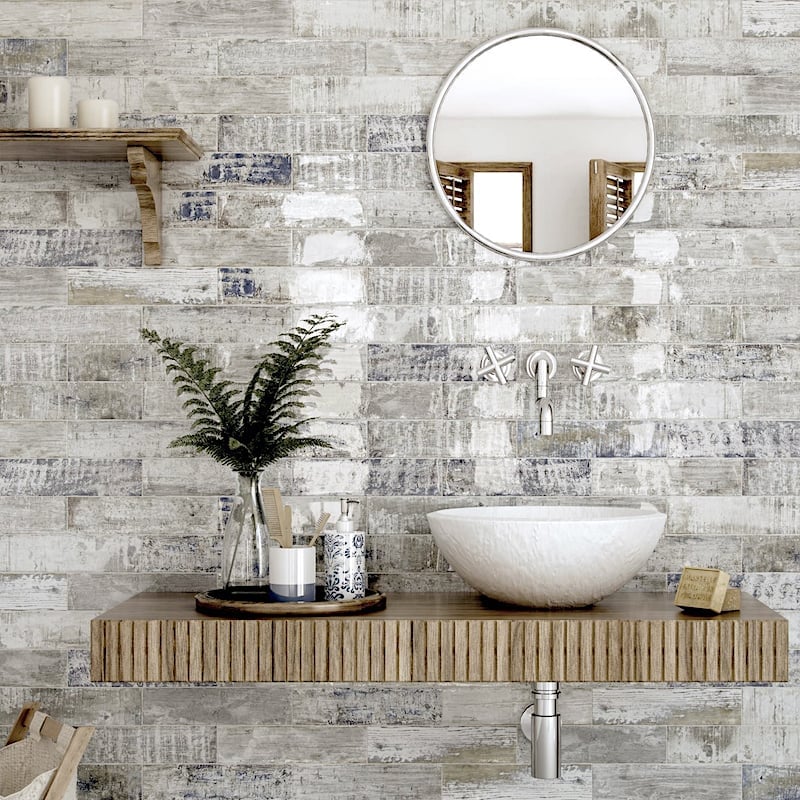
Subway tile in a shabby chic bathroom could lean too clean and clinical, but this one does not because the palette brings in blue and grey alongside the white. The subway tile wall sits behind a sink and a wooden shelf, with a mirror above and ambient light softening the whole scene. The trick is that the tile stays in a classic brick layout while the vanity and shelf bring the aged, relaxed character. A compact bathroom benefits from this mix of crisp tile and weathered wood because the contrast adds depth without needing extra square footage. The scale stays modest, so the tile wall does not overwhelm the small room.
Wood Look Tile Walls and Floor in a Contemporary Bathroom
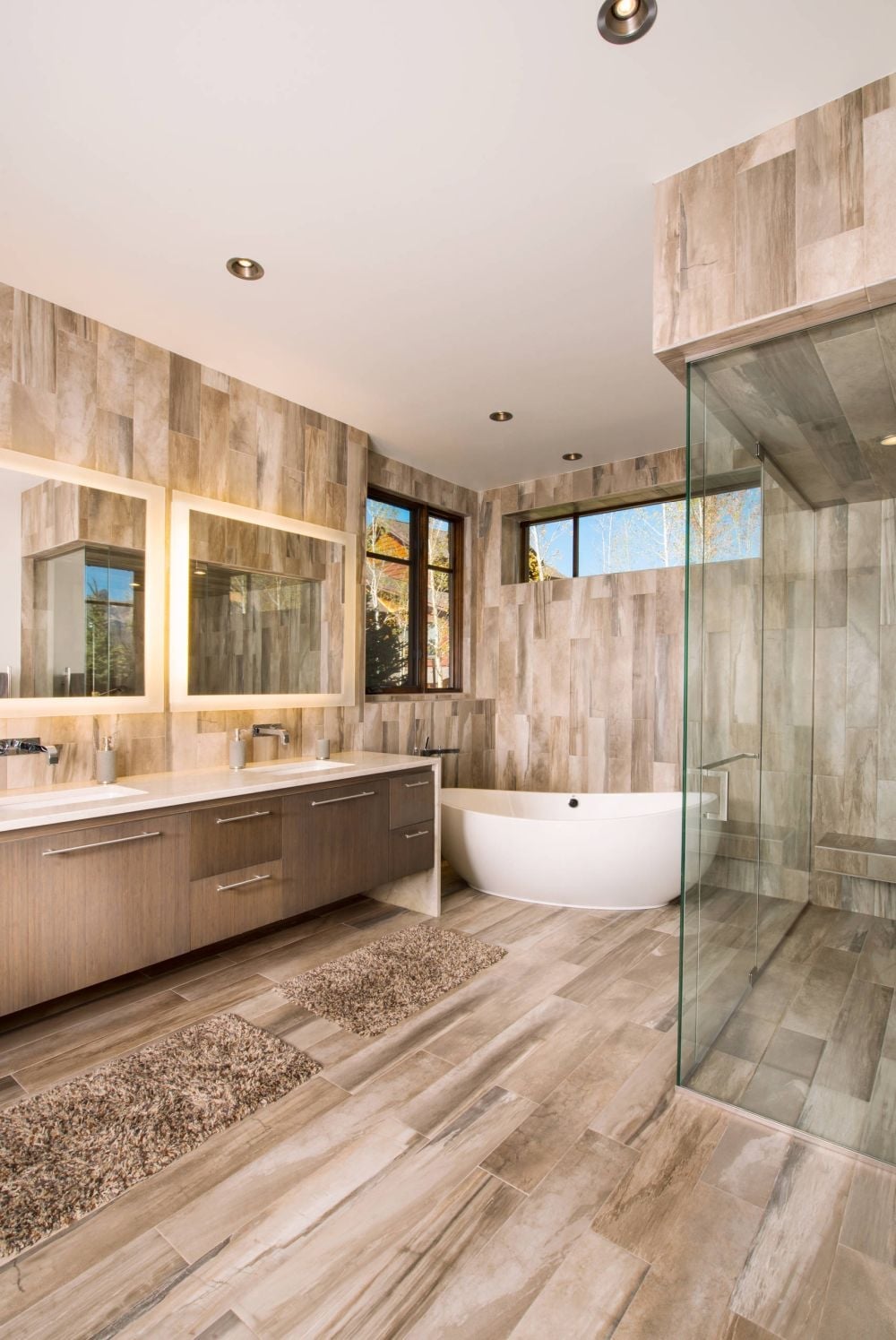
A bathroom where the same wood look tile runs from floor to wall reads as one continuous surface, a trick that makes a roomy space feel even more intentional. The beige and brown planks wrap around a freestanding tub and a glass shower, with recessed lights and vanity lights keeping the palette clean. The principle here is about scale: covering both planes in the same tile removes the visual break between wall and floor, so the eye travels without interruption. For a renter-safe version, a large format peel-and-stick tile in a wood look can mimic the effect without a full install.
Warm Wood Look Tile Floor in a Modern Spa Bathroom
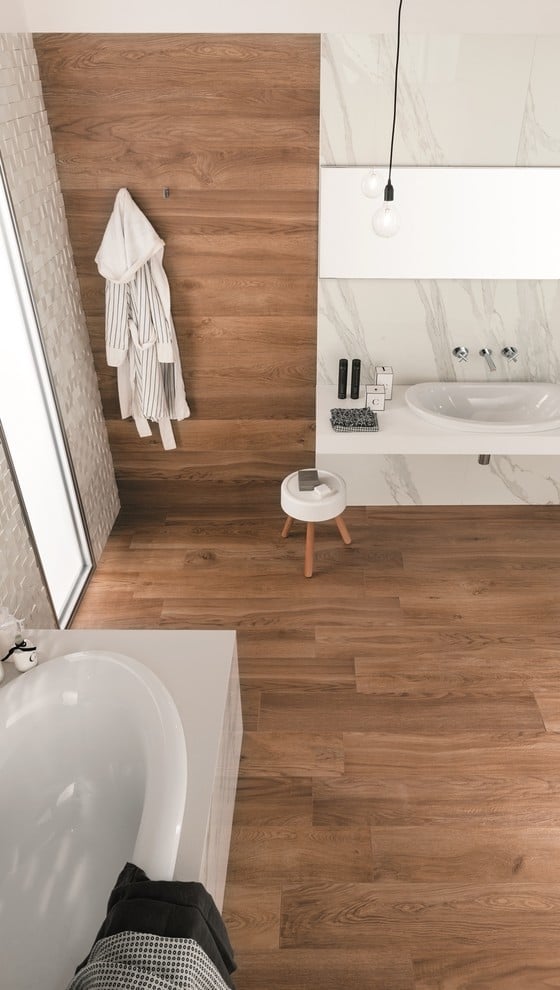
This modern spa bathroom gets its calm from a warm wood look tile floor that grounds the white marble and ceramic surfaces. The tile brings in a natural, organic note that keeps the room from reading as too clinical, even with a freestanding tub and a clean glass shower. Natural light from a window and a single pendant light soften the wood tones further. The palette works because the warm brown sits between the cool white of the walls and the grey veining in the marble, creating a balanced trio. What breaks the look would be a cool grey grout instead of a warm one, so match the grout to the tile’s undertone.
Light Wood Look Tile Floor on an Outdoor Patio for Dining
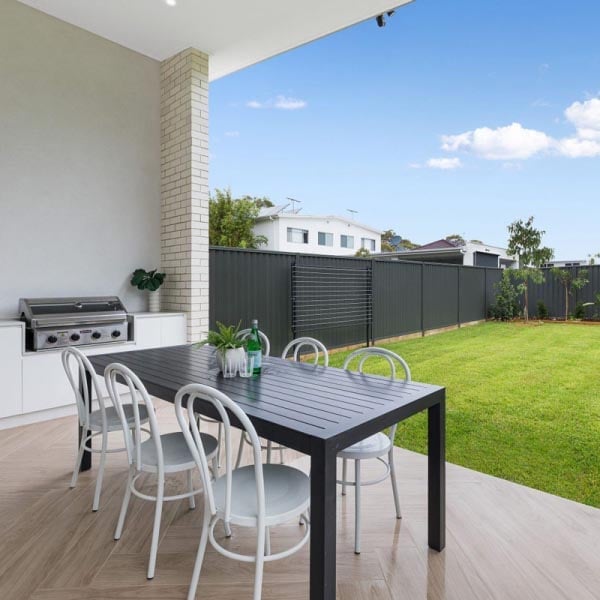
Wood decking is the obvious choice for an outdoor patio, but it warps, fades and needs yearly sealing. A light wood look tile floor skips those headaches while keeping the warm, natural feel. This modern patio pairs the tile with a metal dining table, chairs and an outdoor kitchen, all set in bright daylight. The tile is neutral enough to let the green landscaping and grey stone countertops take the lead.
The practical edge is that tile handles rain, sun and foot traffic without the upkeep of real wood. The light tone also reflects heat rather than absorbing it, which matters for barefoot summer dinners. Check your USDA zone for freeze-thaw ratings on the tile before buying, and choose a textured finish so wet feet do not slip.
Geometric Wood Tile Pattern Floor
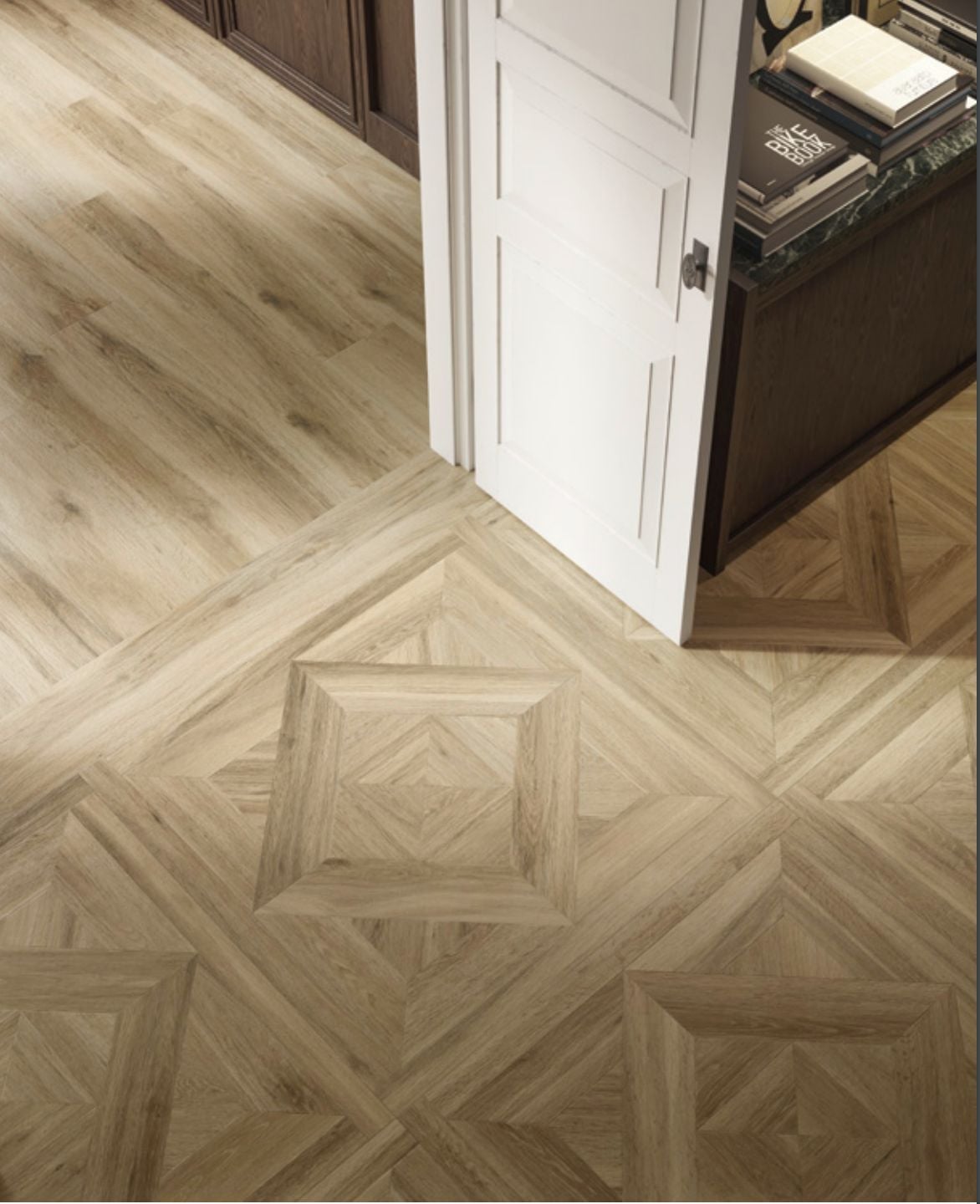
A geometric wood tile pattern turns a compact floor into a focal point without adding color. The layout here uses light and dark brown planks arranged in a parquet style, catching natural light to emphasize the alternating tones. The design principle is that a busy pattern works best in a small, contained area where it can shine without competing with furniture or wall art. In a larger room, the same pattern might feel overwhelming, so keep it to an entryway or a powder room where the floor is the main event.
Multi-Colored Distressed Wood Look Tile Floor in a Dining Area
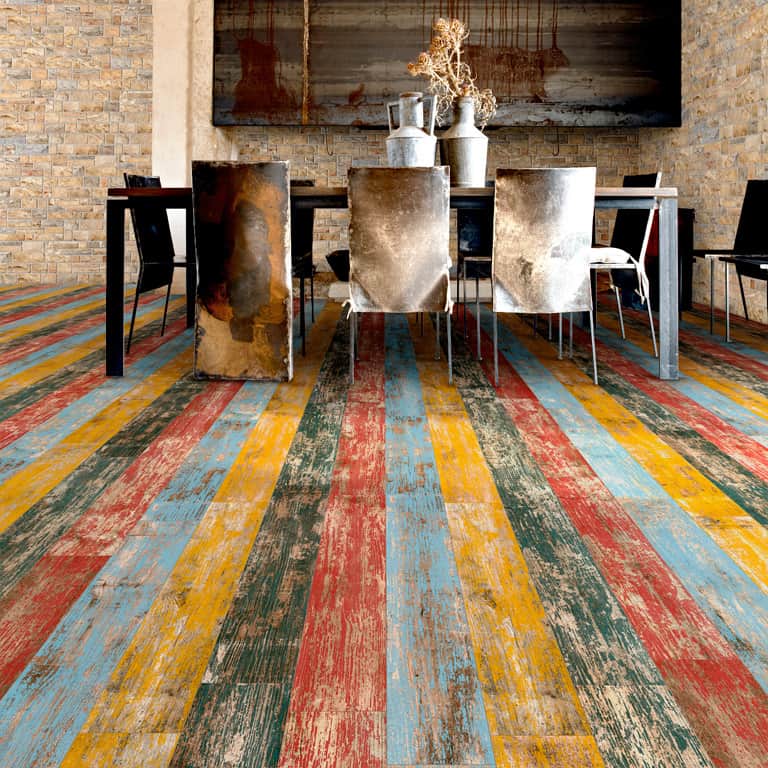
A multi-colored distressed wood look tile floor brings an eclectic energy to a dining area, mixing beige, brown and warmer ochre tones in a single surface. The distressed finish adds texture that hides everyday scuffs from chairs and foot traffic. An overhead fixture and a window keep the varied colors from feeling muddy. Let the floor be the statement and keep the dining table and chairs simple, here a metal and stone set that does not compete. To break the look, add a patterned rug on top, which would clash with the tile’s own pattern rather than complement it.
Herringbone Wood Look Tile Floor Detail with Stool, Indoor
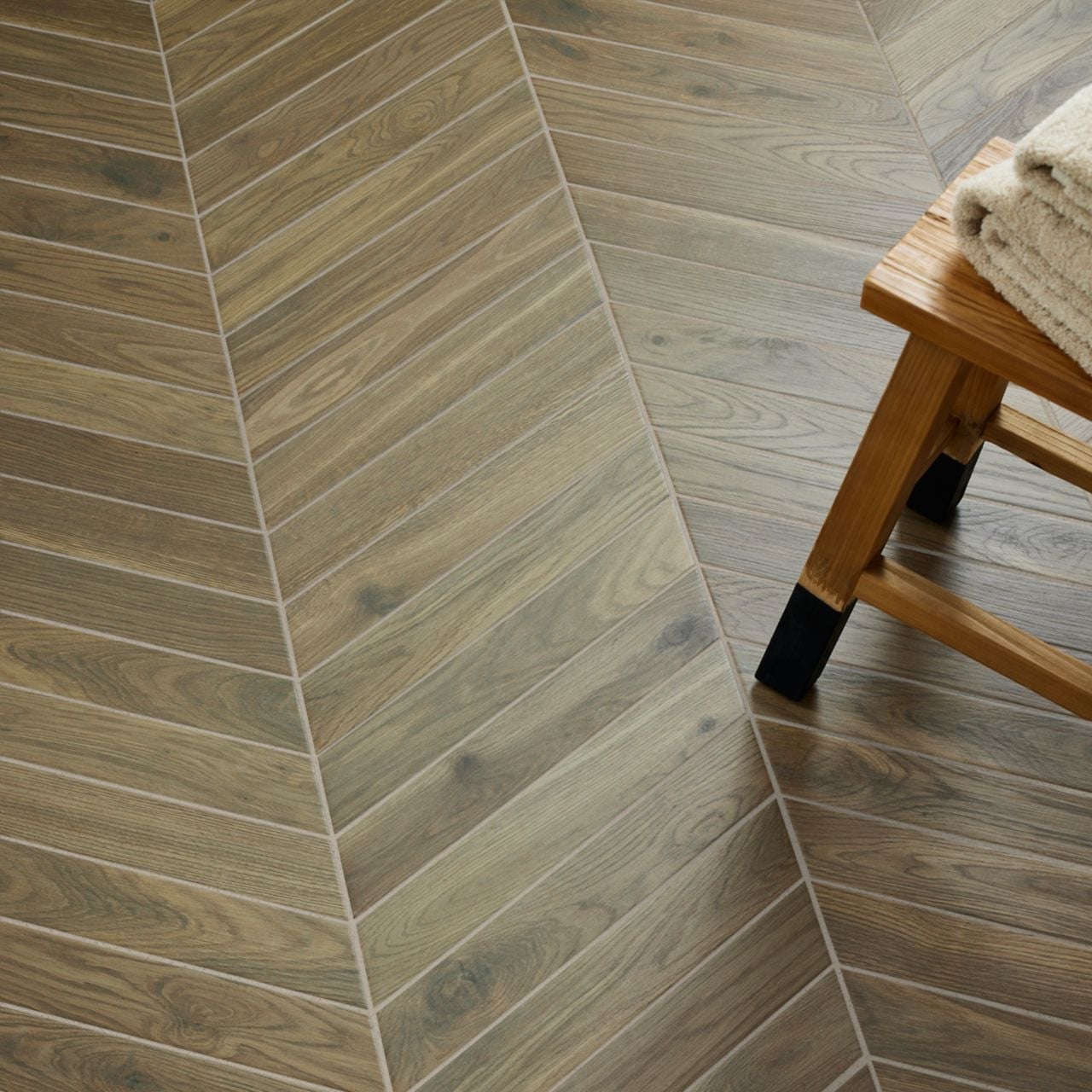
A herringbone wood look tile floor detail like this one keeps the surrounding pieces simple. The brown and beige planks run in a classic V pattern, with soft natural light hitting the angled edges to emphasize the texture. A single wooden stool sits on the tile, letting the pattern carry the visual weight without needing a rug or additional furniture to anchor the space. A strong floor pattern can act as the layout’s organizer, so a room with a herringbone tile floor can often skip a rug entirely and still feel complete.
The trick to making this work is to keep the furniture minimal and the palette restrained. The wooden stool matches the warm brown tones in the tile, so the whole composition looks cohesive. If you add a second piece, choose something with clean lines in a neutral finish, a metal side table or a simple bench. The herringbone pattern itself provides enough movement, so anything ornate or brightly colored would compete rather than complement.
Final Thoughts
Wood tile works where real wood cannot, bathrooms, basements, and outdoor patios included. The trick is matching the plank size and pattern to your room’s scale. Herringbone adds energy to a small floor, while long straight planks open up a narrow space. For upkeep, sweep regularly and use a damp mop with a neutral cleaner. Check your climate for outdoor tile’s freeze-thaw rating. With the right installation, wood-look tile gives you the grain without the grain.