A Zen garden is less about planting and more about pause. With 24 ideas for 2027, this guide walks through the outdoor spaces that use gravel, moss, stone, and water to create calm.
Whether you have a small yard or a wide stretch of land, the goal stays the same: a garden that asks for little and gives back quiet. You will see how raking patterns, rock placement, and simple paths shape the whole feel of the space, plus practical notes on upkeep and layout that work for real homes.
Modern Japanese Zen Garden with Stark White Gravel
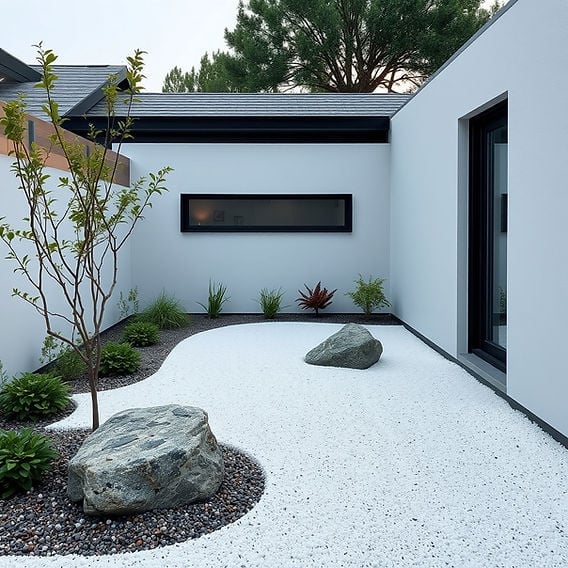
A modern Japanese zen garden trades the expected beige or gray gravel for a stark white version that looks like clean snow even in full sun. The white gravel forms a curved bed that sweeps around a few large stones and minimal planting, with concrete edging keeping the border crisp. This palette of white, grey, and green lets the rocks act as anchor points, not decoration. In bright daylight the expanse feels open, not empty, because the contrast between the bright ground and the dark stone gives the eye a clear place to rest.
Single Rock Focal Point in Meticulously Raked Gravel
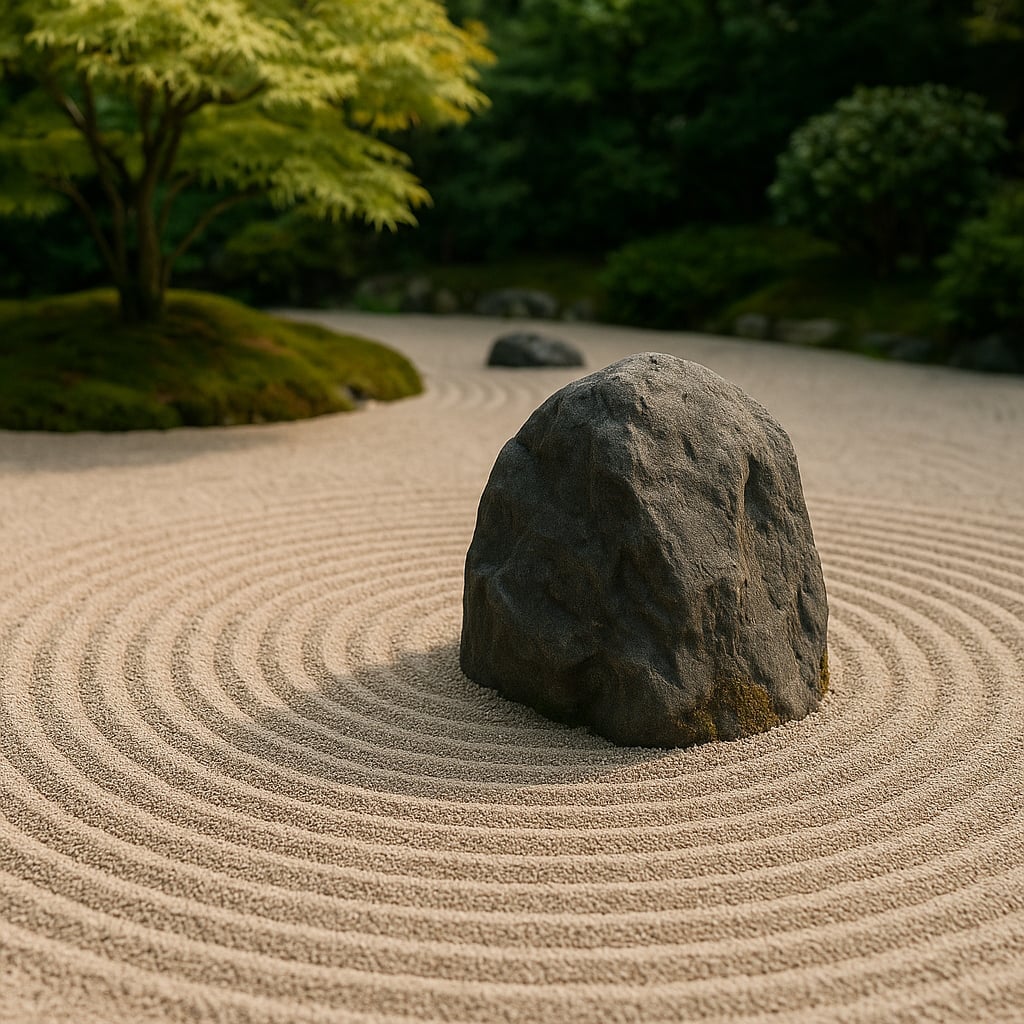
A single rock does the work here. Set in a bed of beige gravel, the stone anchors the whole composition while concentric circles radiate outward from its base. The raked lines pull your eye to the rock and hold it there, so nothing else competes for attention. A sculpted tree behind the rock adds height without clutter. This kind of single-focal-point layout works for small yards where a cluster of boulders would feel crowded. The rock itself becomes the destination, and the raked gravel becomes the quiet space around it.
Expansive Zen Garden with Traditional Japanese Architecture
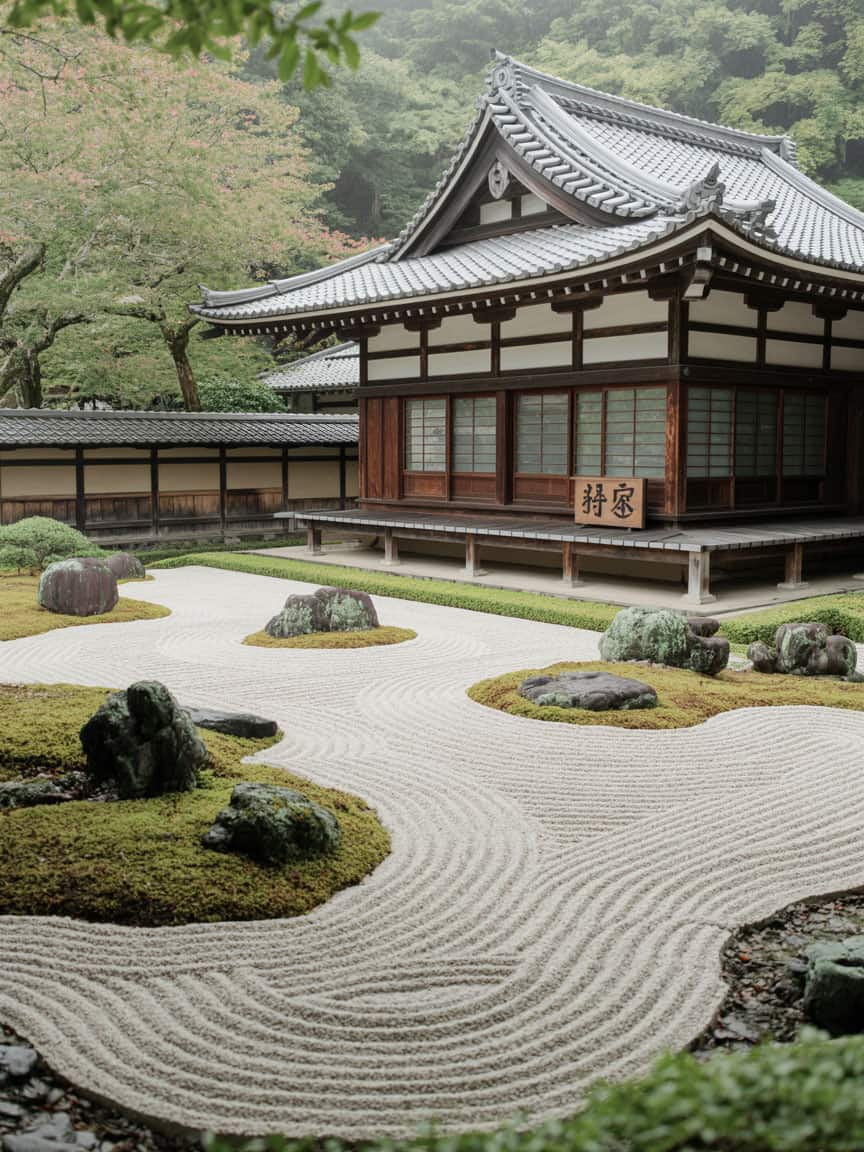
How do you make a large garden feel intentional rather than sprawling? The answer is in the architecture. A traditional Japanese building sits at the edge of the space, its wooden facade and tiled roof giving the garden a clear boundary and a reason to exist. From the building, the eye moves across sweeping raked gravel patterns that stretch toward clusters of moss and rock.
The scale of the raked area matters here. Wide, uninterrupted bands of gravel create a sense of calm that a patchwork of smaller beds cannot match. Moss softens the edges where gravel meets stone, and the low tile roof line keeps the building from dominating the view. The garden and the structure share the same quiet tone, so neither one fights for attention.
Flowing Curves of Moss and Raked Gravel
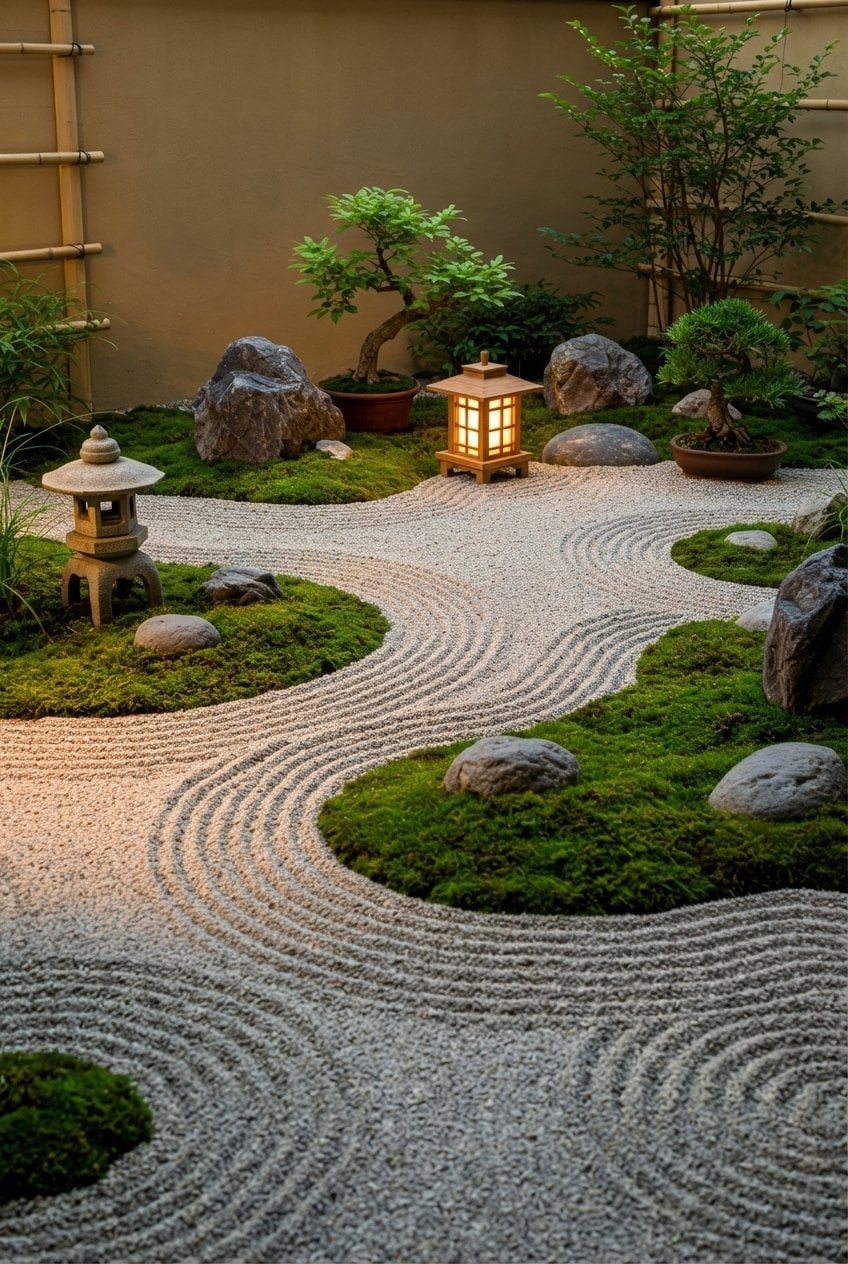
Moss mounds rise like small islands from a sea of raked beige gravel, their soft green curves breaking up the straight lines you expect from a zen garden. The flowing layout pairs these moss forms with a stone lantern and a few bonsai trees, so the garden reads as a landscape in miniature. Soft ambient light makes the moss look velvety and the gravel read as water. The contrast between the two textures is what gives the garden its rhythm: smooth moss against sharp gravel, organic curves against raked lines.
Large Moss-Covered Rocks on Raked Gravel Paths
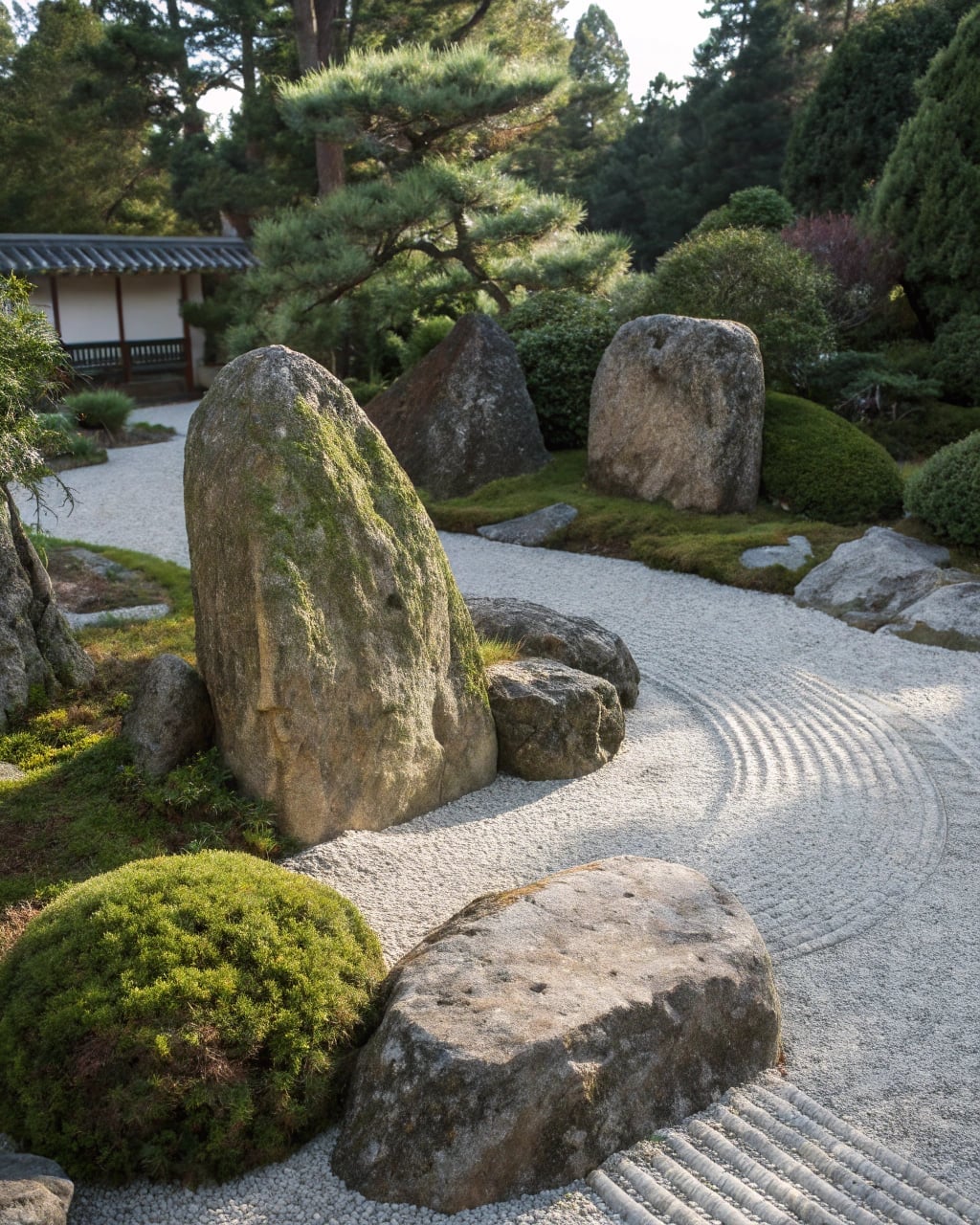
In a zen garden with large rocks, give each boulder enough room to breathe. Here, moss-covered stones sit at intervals along winding gravel paths, their dark grey surfaces softened by green patches. The gravel paths curve around the rocks so the garden rewards a slow walk. Sculpted trees frame the view without blocking it. The moss on the rocks ties the stone to the ground visually and adds a living texture that changes with the seasons. In a dry climate, you would water the moss by hand or choose a drought-tolerant ground cover instead.
Zen Garden Elements with Natural Stone
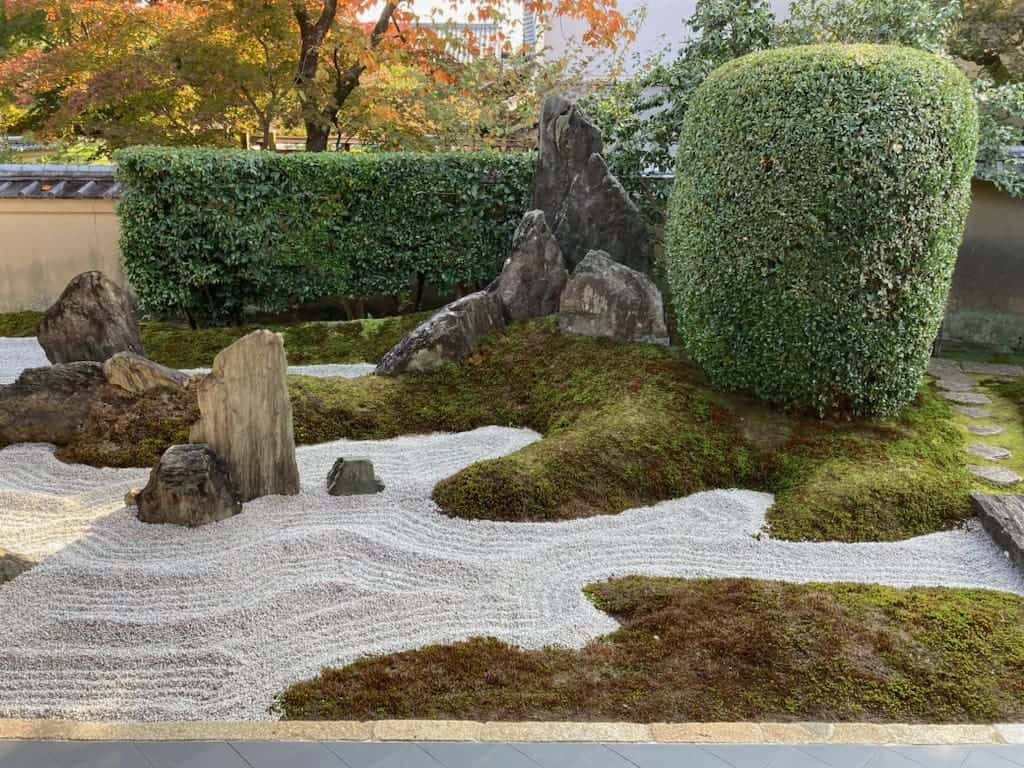
You could spend a small fortune on a custom stone installation, or you could let the materials you already have do the work. A zen garden built with natural stone elements leans into the raw texture of unpolished rock, irregular gravel, and patches of moss. The palette stays muted, with grays and browns dominating, so the eye rests on the contrast between smooth stones and rough gravel. This approach suits a garden that feels grounded rather than fussy. The layout works best when the stones are clustered in odd numbers, a principle borrowed from traditional Japanese design that creates a sense of natural asymmetry. Moss softens the edges where stone meets gravel, adding a living, green note to the otherwise neutral scene. For a renter, this is a low-commitment way to introduce structure to a garden bed without digging or pouring concrete.
Circular Raked Gravel Patterns at Sunset
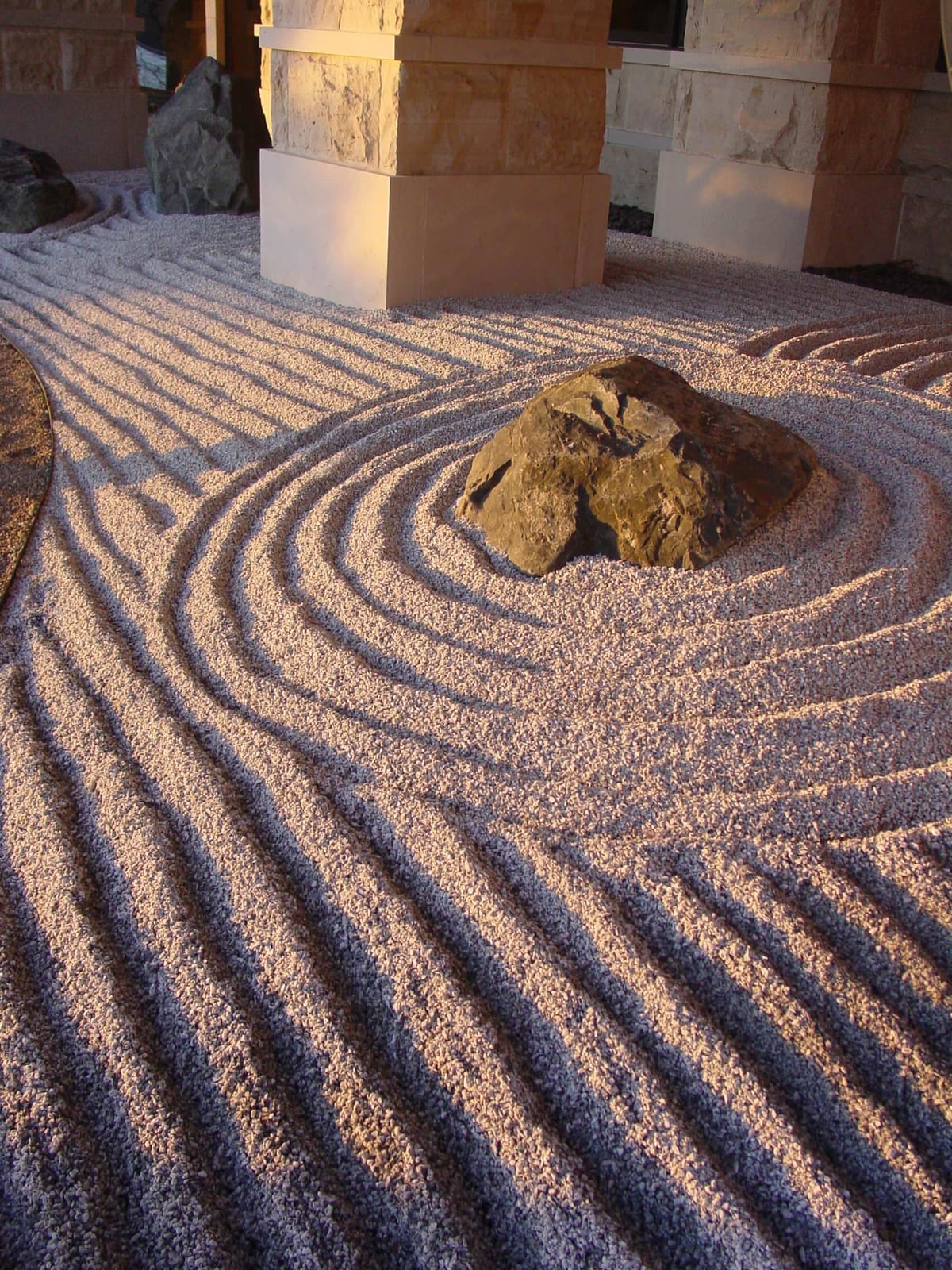
The raked gravel forms concentric circles around a single large rock, and the warm sunset light turns the gray stones a soft beige and the gravel a dusty brown. Two stone pillars flank the scene, their straight lines a deliberate contrast to the curved patterns on the ground. This setup is fully renter-friendly: gravel sits on a base layer, no permanent changes needed. If you want a similar effect, rake the gravel in arcs that radiate from a focal point, and let the sun do the rest of the work.
Japanese Zen Garden with Koi Pond and Stone Lantern
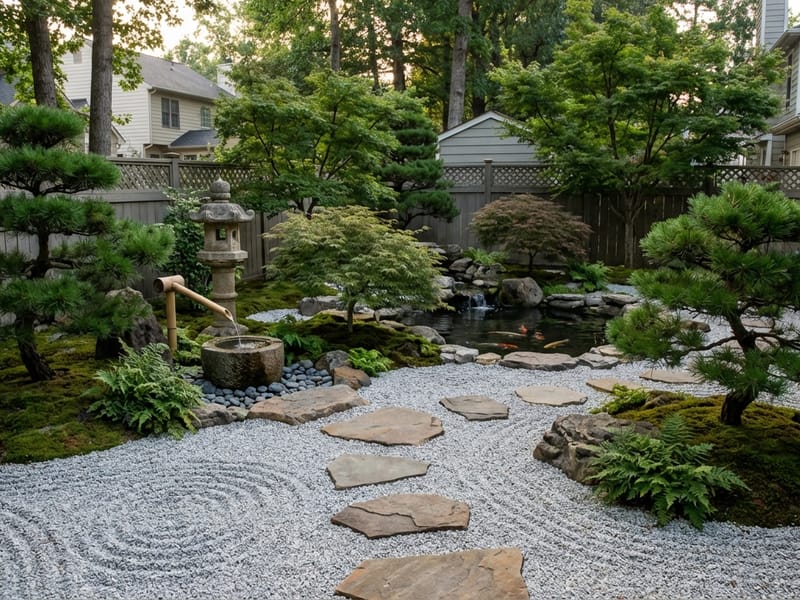
This is the full package. A koi pond anchors one side of the garden, its dark water reflecting the soft daylight, while a stone lantern and a water basin sit near a winding path of stepping stones. The raked gravel covers the open ground, its parallel lines interrupted only by the moss and the occasional flat stone. The palette stays cool with grays and greens, and the brown wood of the path adds warmth. The layout divides the space into distinct zones: water, stone, gravel, and planting. A stone lantern is the hero element here, drawing the eye. Place a single lantern at a turning point in the path, so it becomes a destination.
Serene Zen Garden Water Feature with Artificial Lighting
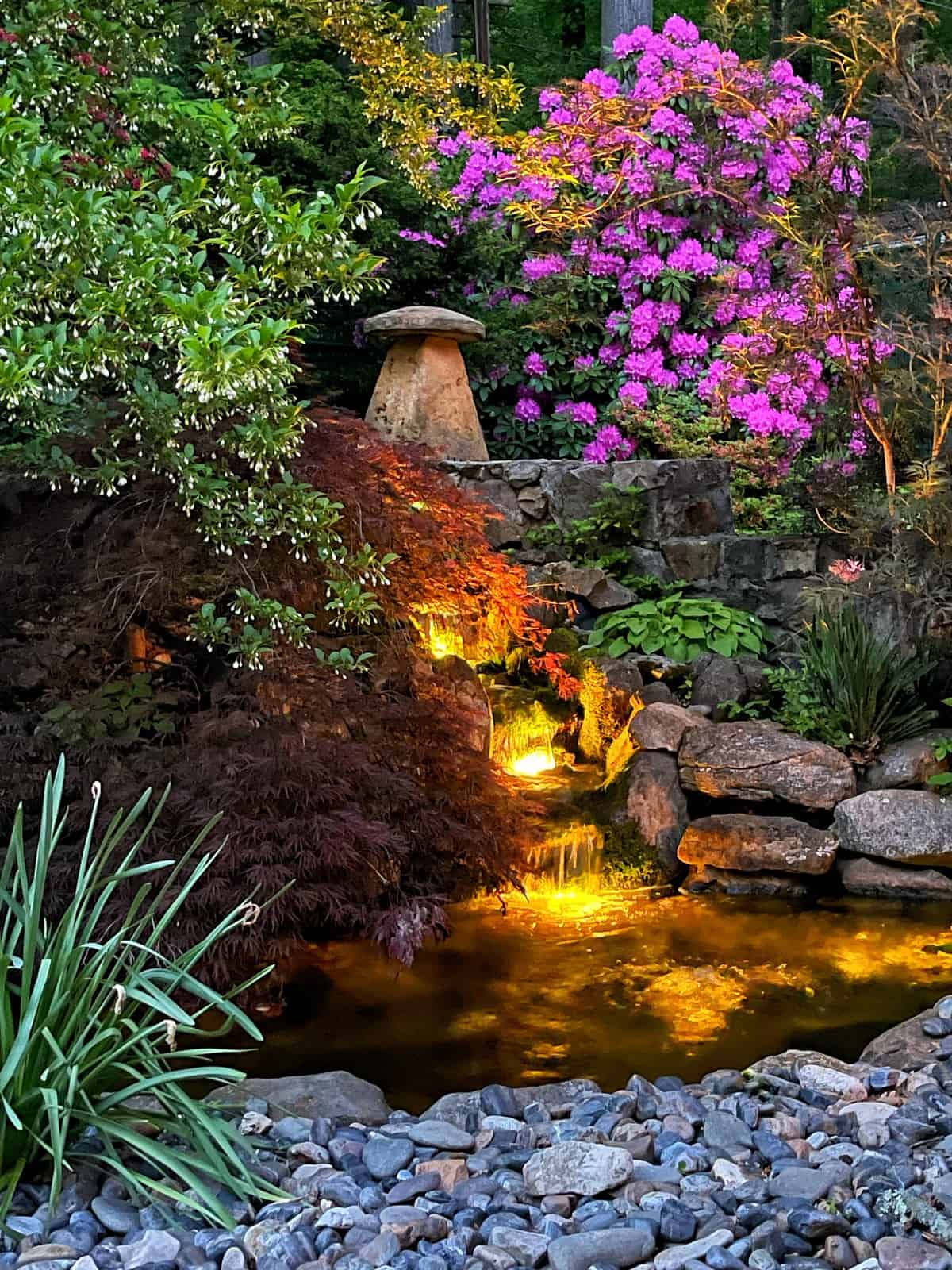
Can artificial light make a water feature feel more natural than daylight does? In a zen garden, the answer depends on placement. This setup uses a tiered waterfall built from stacked rocks, with plants tucked into the crevices and a stone lantern nearby. The evening light is warm and directed, hitting the falling water so it glows rather than glares. The palette shifts from daytime greens and grays to a mix of green, purple, and stone tones after dark. For durability, a water feature like this needs a recirculating pump rated for outdoor use and a liner that can handle freeze-thaw cycles if you live in a colder climate. The stone construction holds up well over time, but the pump and lighting connections should be accessible for maintenance. Check your local climate before adding a pond or waterfall, since freezing can damage both the pump and the stonework.
Winding Stepping Stone Path Through White Gravel
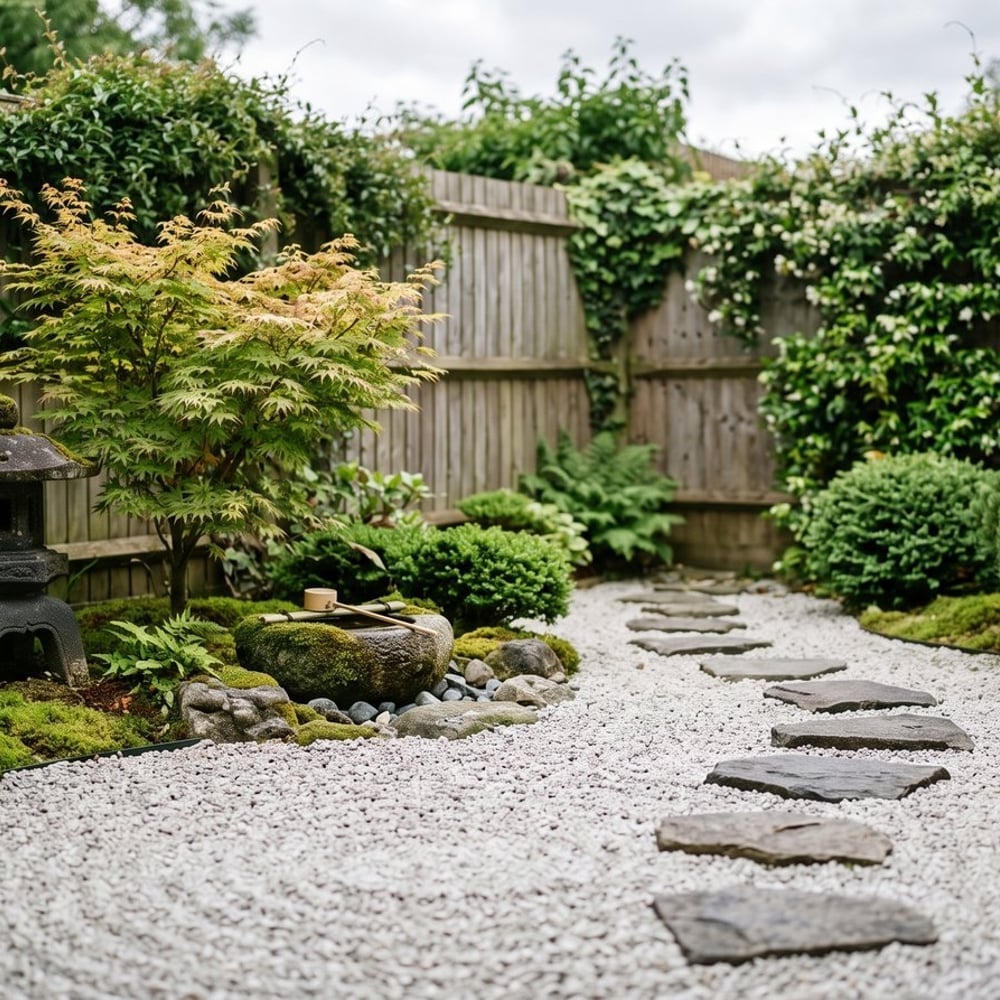
The path curves through a bed of white gravel, each stone set at a slight angle so the route feels discovered rather than planned. A bamboo accent sits near the turn, and moss fills the gaps between the stones. The overcast light softens the grays and greens, making the gravel appear bright without glare. A winding path slows the walker down, encouraging a measured pace through the garden. For a path that looks deliberate, space the stones at a natural stride length and let the curve follow the existing contours of the ground.
Wooden Bridge Over a Small Pond in a Japanese Garden
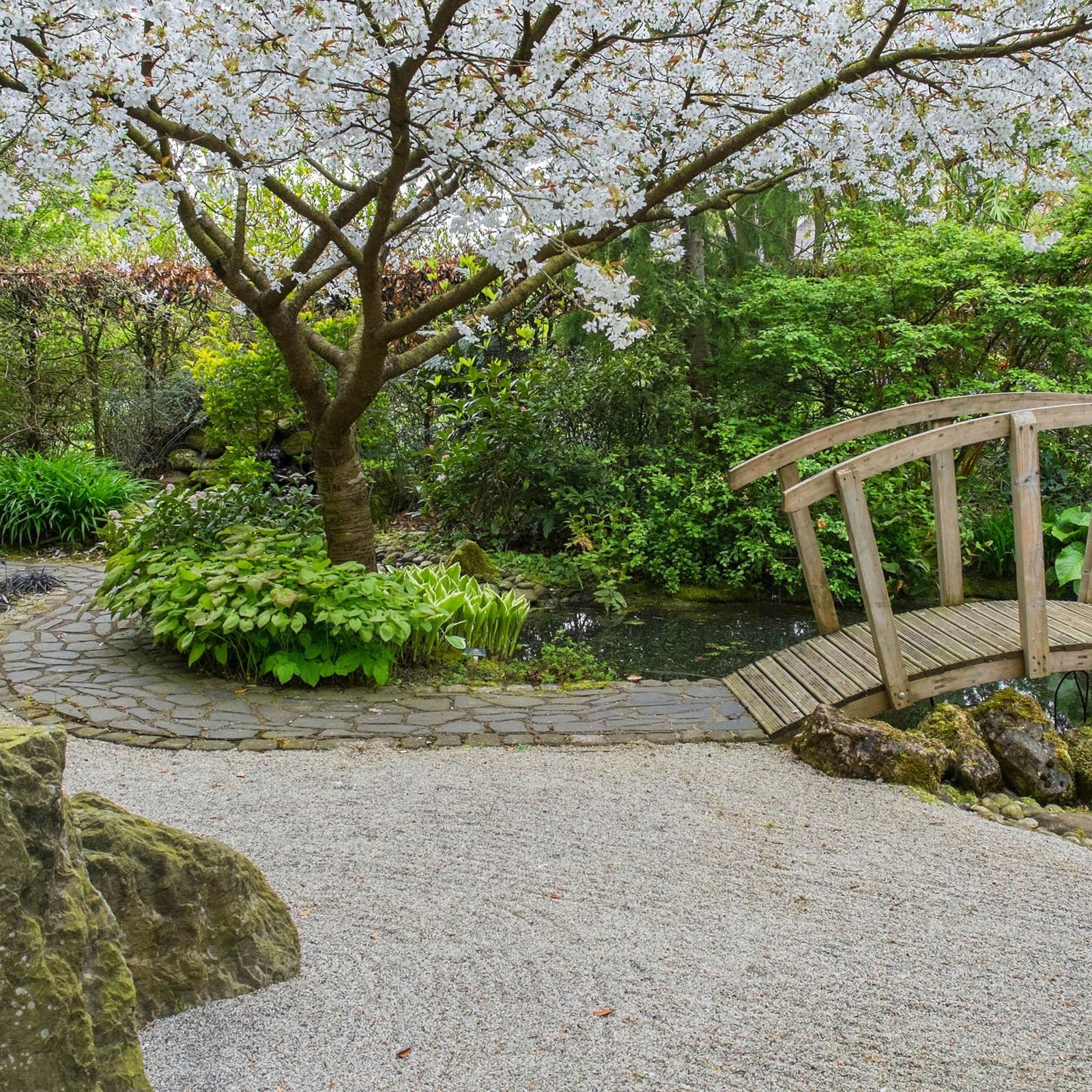
A wooden bridge over a pond draws the eye when a winding stone path leads toward it. The path makes the water feature feel like a destination, not an interruption. Overcast daylight softens the grey stones, brown wood, and green foliage so the garden appears as one calm scene. The bridge is the standout element, but the surrounding layout does the real work. Keep the path simple and the planting loose. Let the bridge sit low over the water so it stays connected to the ground plane. That way the garden feels like a walk, not a display.
Minimalist Zen Garden with Mature Pine Tree
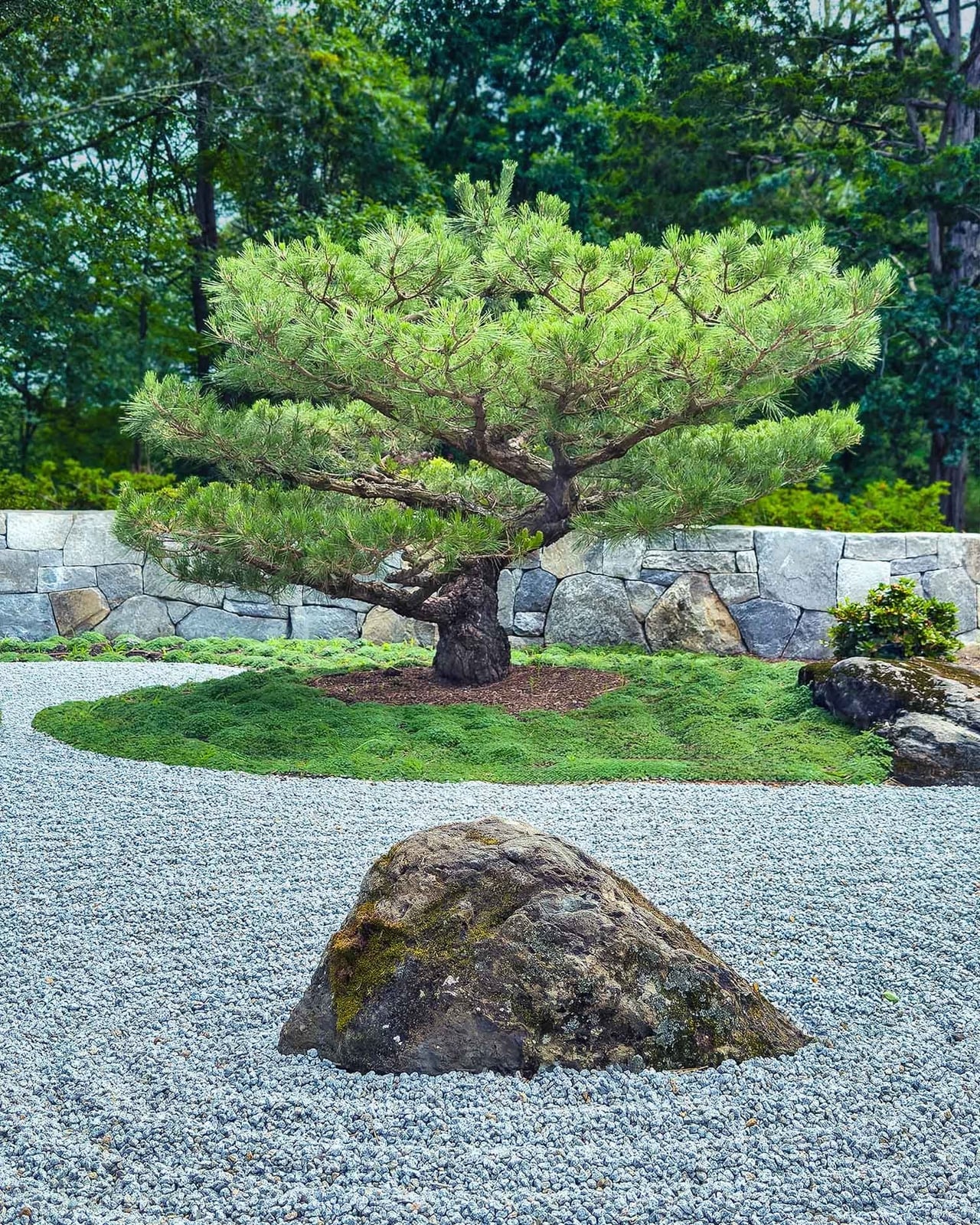
A minimalist rock garden can feel stark without a vertical anchor. That is where a mature pine tree earns its place. The tree rises above the raked gravel and the clustered rocks, adding height without clutter. The grey stone and green moss keep the palette tight, so nothing competes with the pine’s silhouette.
Scale is the trick here. The tree needs to be large enough to balance the open gravel area, but the rocks around its base should stay low and irregular. Long, uninterrupted lines away from the trunk keep the eye moving outward. The whole arrangement is one composition, not a tree sitting in a gravel pit.
Compact Zen Garden with Bamboo Screen and Deck
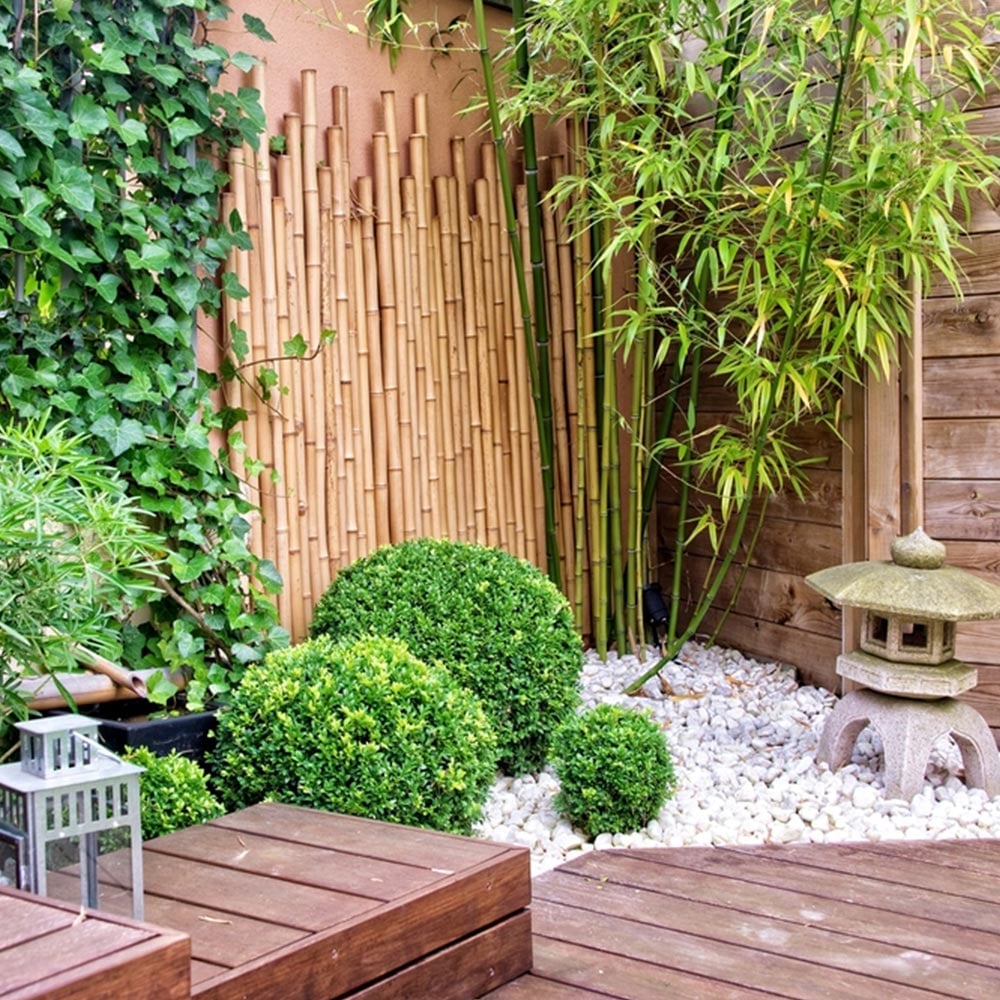
A bamboo screen does double duty in a compact garden: it marks the boundary and becomes the backdrop. The vertical lines of the bamboo contrast with the low, horizontal deck, while the stone lantern and potted plants add weight at ground level. The subtle accent light catches the bamboo texture without washing out the gravel. In a small space, every material has to earn its place. Bamboo, wood, stone, and gravel each bring a different surface, so the garden feels layered even when the footprint is tight.
Lush Bamboo Grove and Gravel Pathway
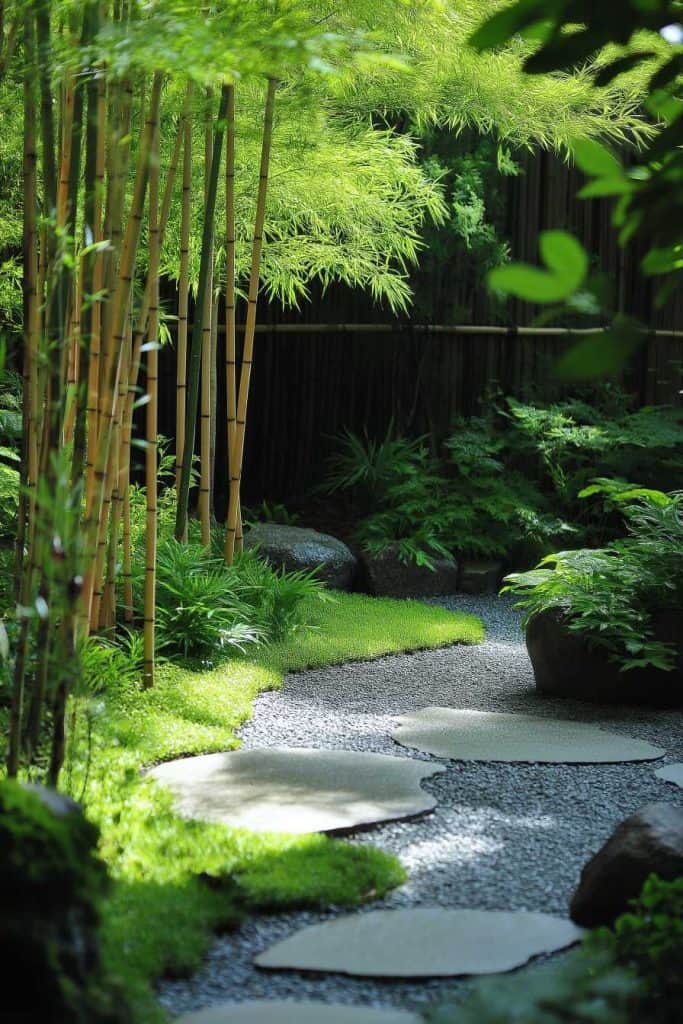
This garden leans into density. The bamboo stalks rise tall and close together, filtering the daylight into a dappled pattern across the gravel path. The mossy ground cover softens the edges where the bamboo meets the stone, so the transition feels organic. The stepping stones break up the gravel and give the path a clear rhythm. When the planting is this lush, the path needs to stay simple. Let the gravel be a neutral floor and the bamboo the main event. The light moving through the stalks does the rest.
Japanese Garden with Stone Lantern and Bamboo Accents
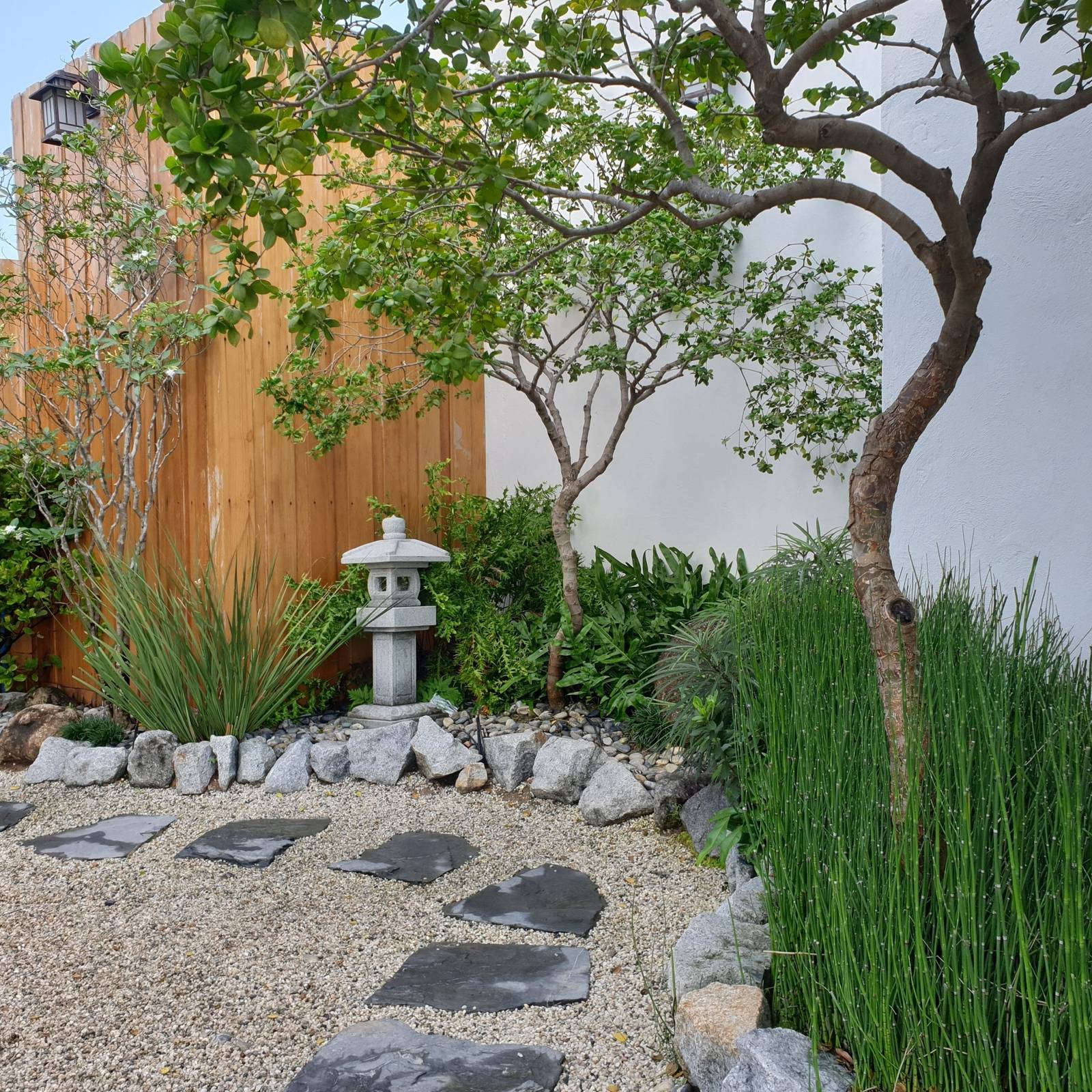
A stone lantern works best when it is placed where the path naturally bends. That way it reads as a pause point, not a decoration set in the middle of the walkway. The bright daylight makes the grey stone and beige gravel read clearly against the layered green planting. The bamboo accents add vertical interest without blocking the view of the lantern.
Storage in a garden like this is about where you keep the tools that maintain it. A slim gap behind the bamboo or a low bench near the path can hold a rake and pruning shears without breaking the visual line. Keep the storage within arm’s reach of the gravel area so upkeep does not require a trek across the yard. The garden stays calm because the tools stay out of sight.
Atmospheric Zen Garden with Buddha Statue at Night
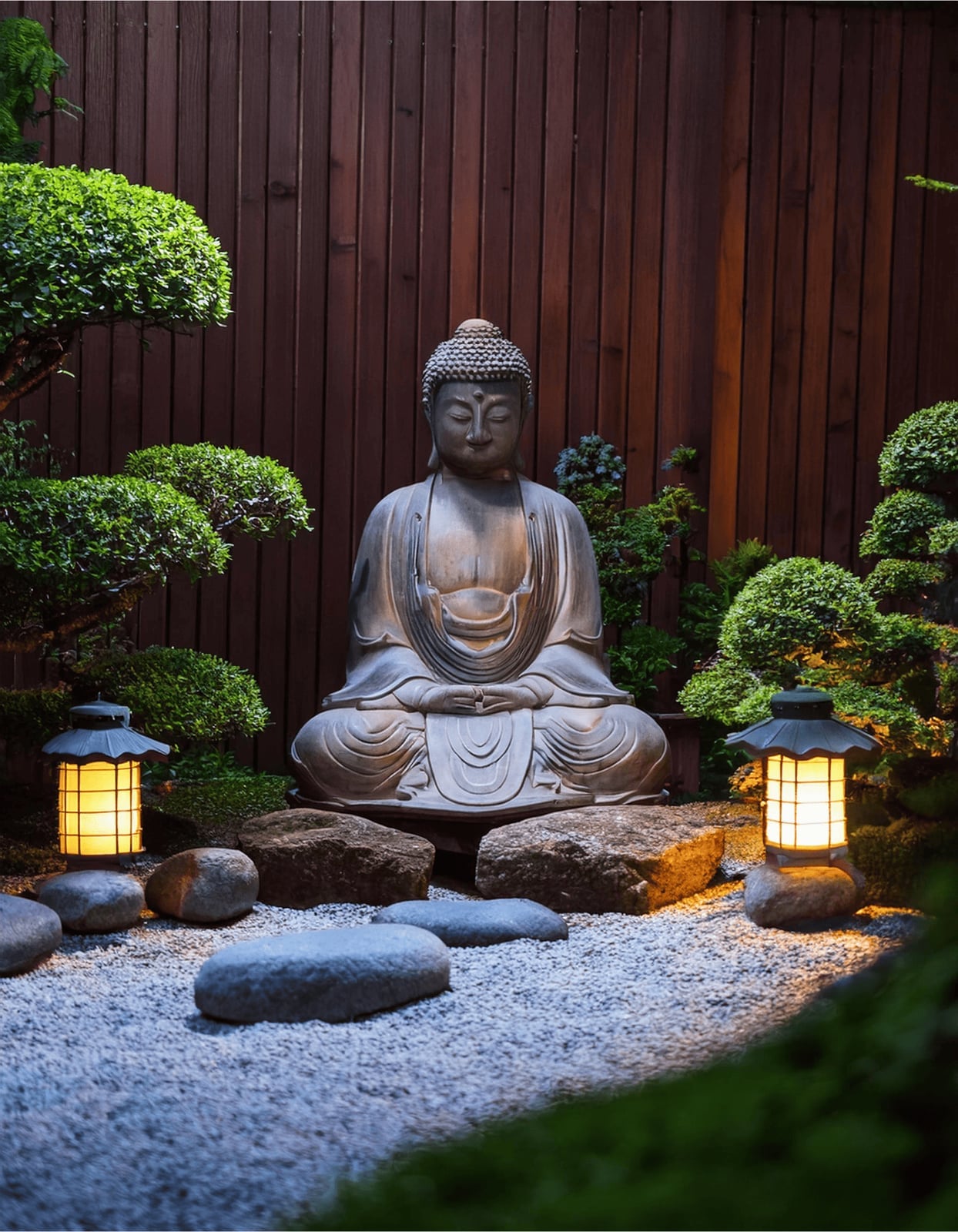
Evening artificial light turns a stone Buddha statue into the focal point of this garden. The figure sits centered on raked gravel, surrounded by rocks, a bonsai, and low lanterns. Warm light on the statue contrasts with the cool grey and green palette. A room mode approach means the whole space stays simple so the hero element commands attention. The layout keeps the statue central and the planting around it minimal, letting the gravel and wood tones support without competing.
Precise Geometric Layout of Rocks in Raked Gravel
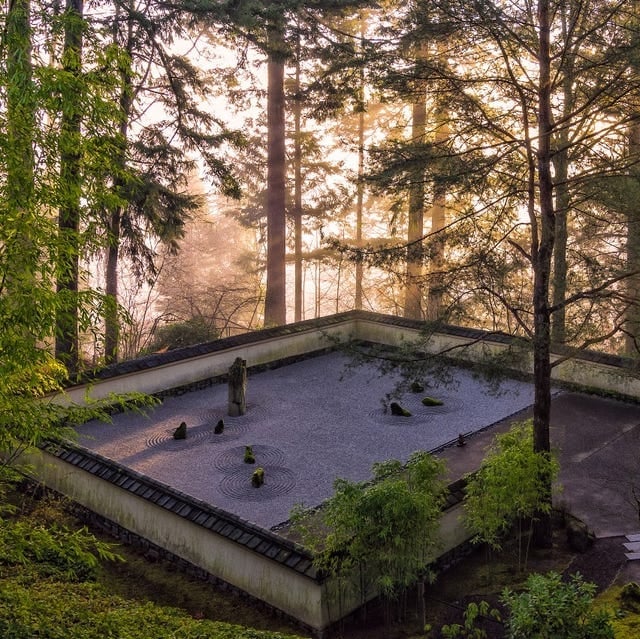
In a zen garden, place rocks in a clear geometric arrangement before raking the gravel. This design uses large stones set in a deliberate pattern across an open space, with minimalist planting and soft misty daylight softening the edges. The layout works because the gravel patterns echo the lines between the rocks. For renters, a similar effect is possible with a shallow tray and small pebbles, no permanent changes to the yard. Just set the stones, rake the surface, and adjust the spacing until the arrangement looks planned.
Minimalist Zen Garden with Patterned Gravel and Moss
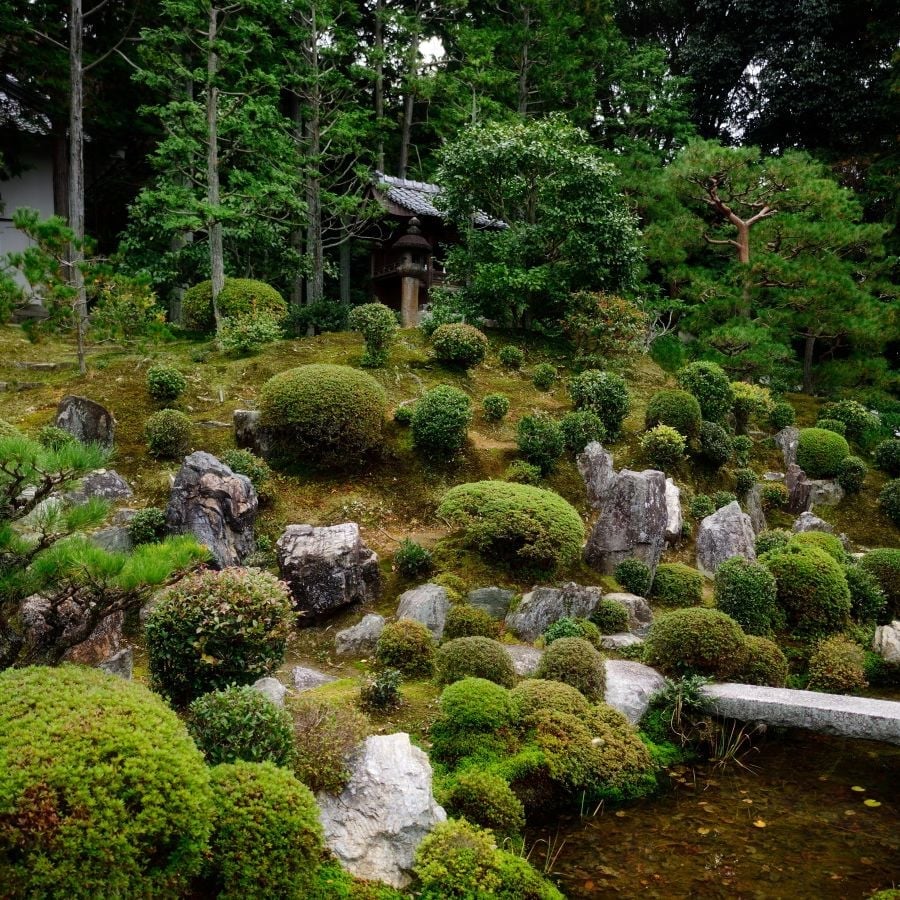
Where a gravel-only garden can feel stark, this version adds mossy ground cover for a softer contrast. The palette stays in greens, greys, and natural stone, with large rocks set into the patterned gravel. Moss grows between the stones and along the edges, breaking up the hard lines without adding clutter. The wood elements tie the look together.
Material choice matters here: gravel holds the raked pattern, moss introduces living texture, and stone anchors the composition. The compact scale means the details stay visible. Keep the gravel pattern simple so the moss works as a deliberate accent, not a filler.
Curved Raked Gravel with Stone Accents
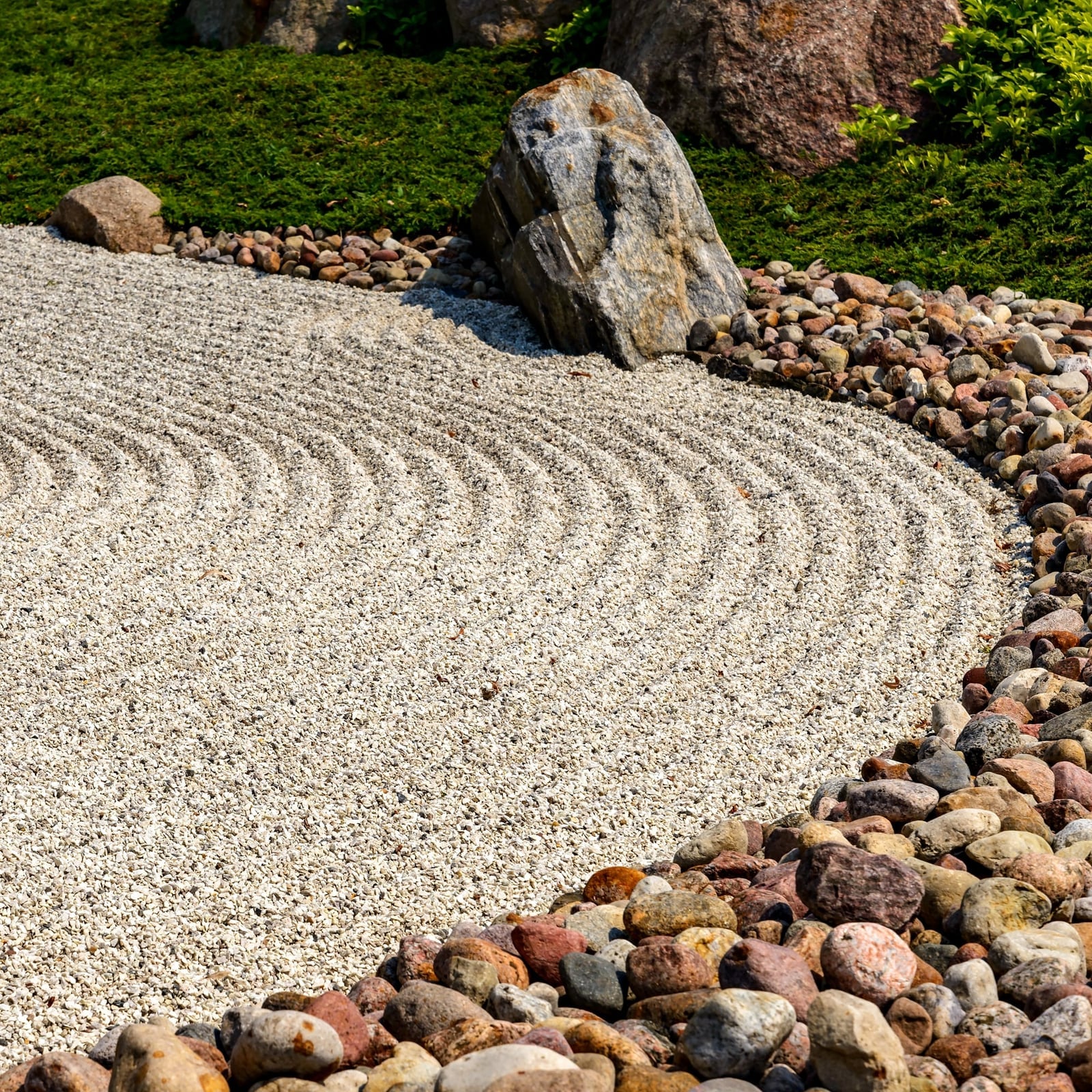
A single large rock anchors this garden while curved rake lines flow outward in concentric arcs. The beige and grey gravel contrasts with green moss patches, and the curves soften the stone’s mass. The layout relies on the rock as the starting point for every line. A room mode reading shows how the open space lets the pattern breathe. The stone accent works because it sits off-center, creating a natural tension that the curves resolve.
Organic Arrangement of Rocks in Rippling Gravel
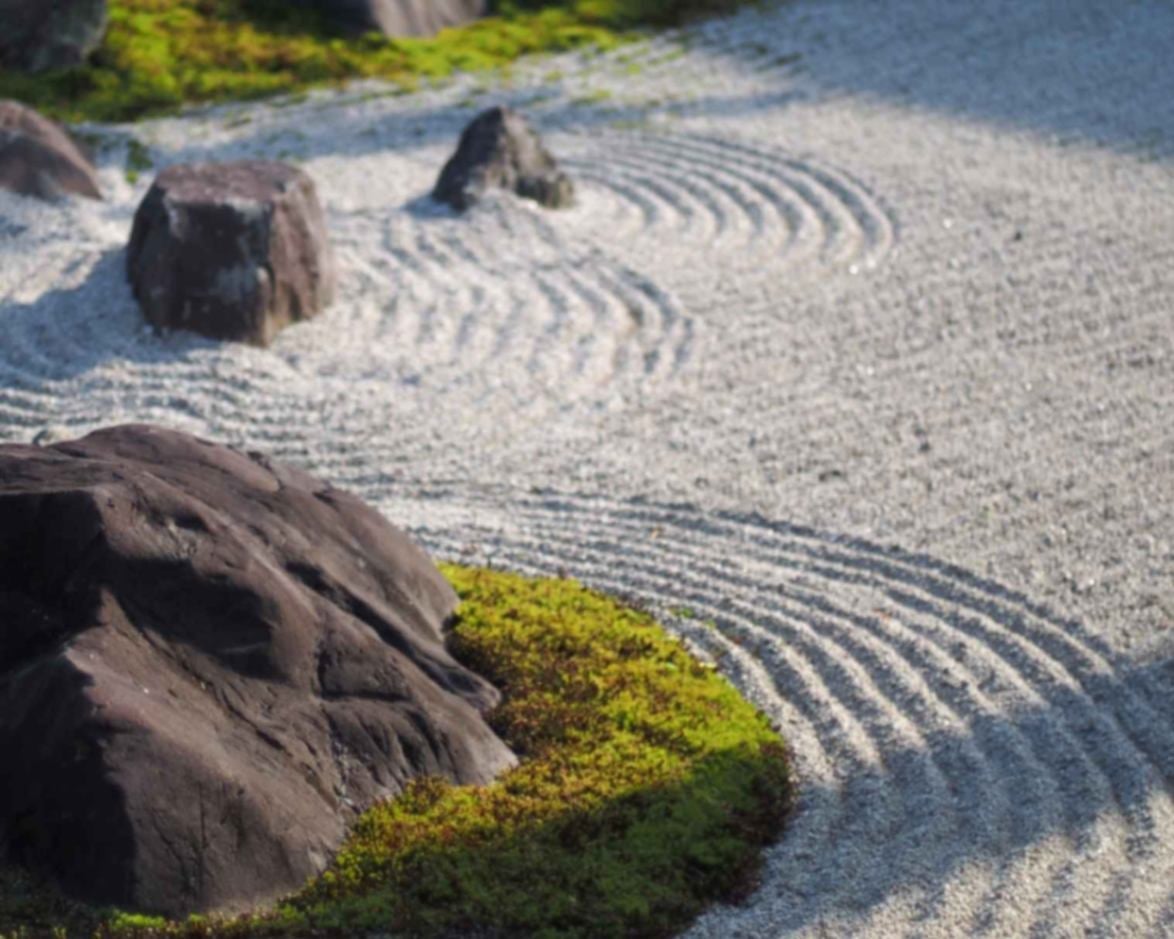
This garden does not force symmetry. Large dark rocks sit in an organic cluster, and the gravel is raked in rippling lines that flow around them like water. Moss patches add soft green breaks against the white and grey stone. The hero element is the contrast between the static rocks and the moving lines of gravel. The arrangement reads as natural because the rocks vary in size and spacing. Keep the grouping tight so the ripples have a clear path to follow.
Moss-Covered Stone Lantern in Japanese Garden
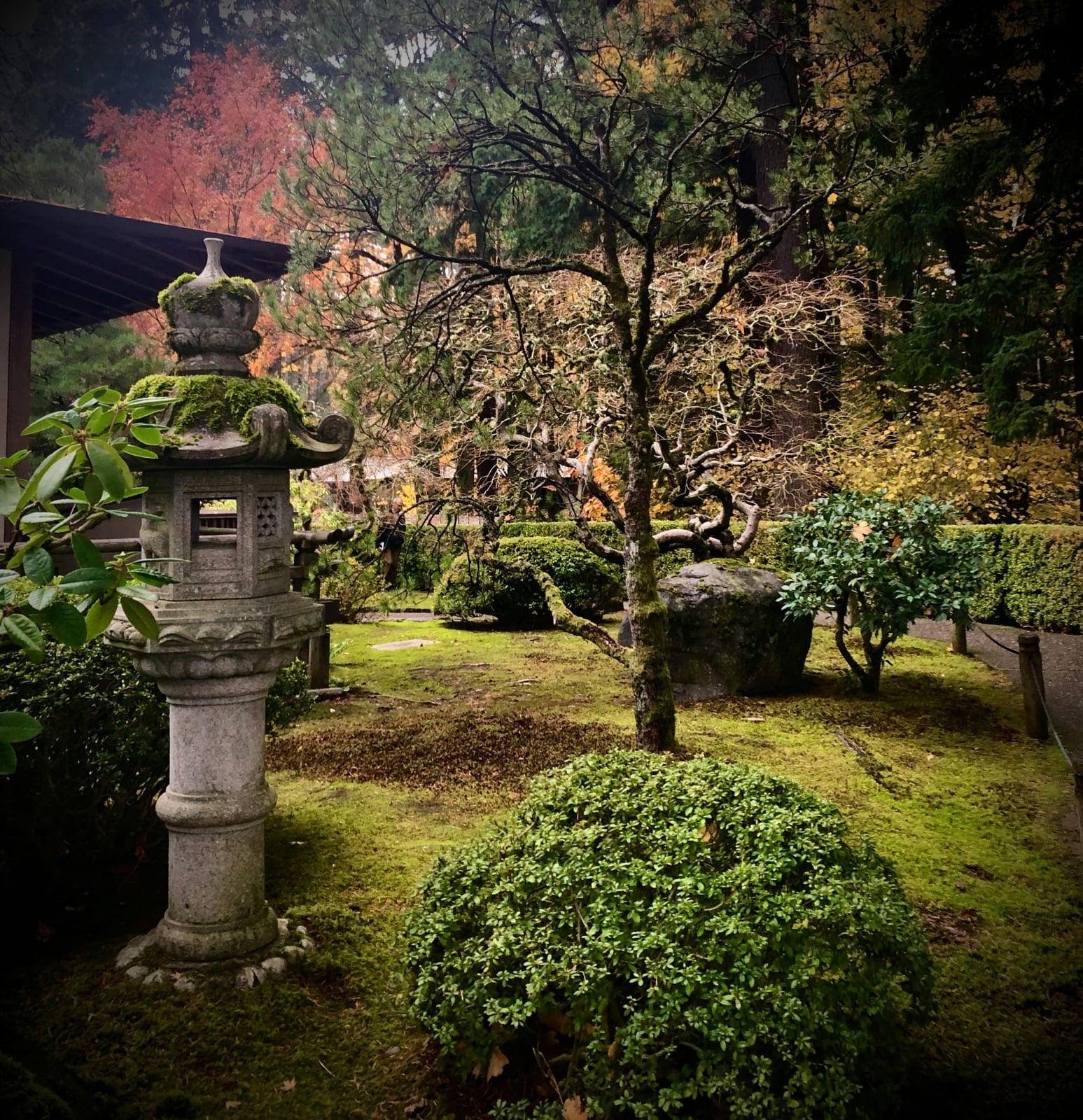
To place a stone lantern, anchor it along a winding path instead of centering it in the open. The moss creeping over the lantern and the surrounding ground cover soften the hard edges of the stone, so the whole vignette looks like one aged piece of the garden rather than a new ornament. Trees frame the lantern from behind, giving it a backdrop that changes with the seasons.
The gravel underfoot keeps the path defined while the mossy ground cover on either side blurs the line between walkway and planting. That contrast between smooth raked stone and rough green growth is what makes the lantern feel settled into its spot. If you are working with a smaller yard, choose a lantern with a simpler profile so the moss and the path carry more of the visual weight.
Indoor Miniature Zen Garden with Raked Sand
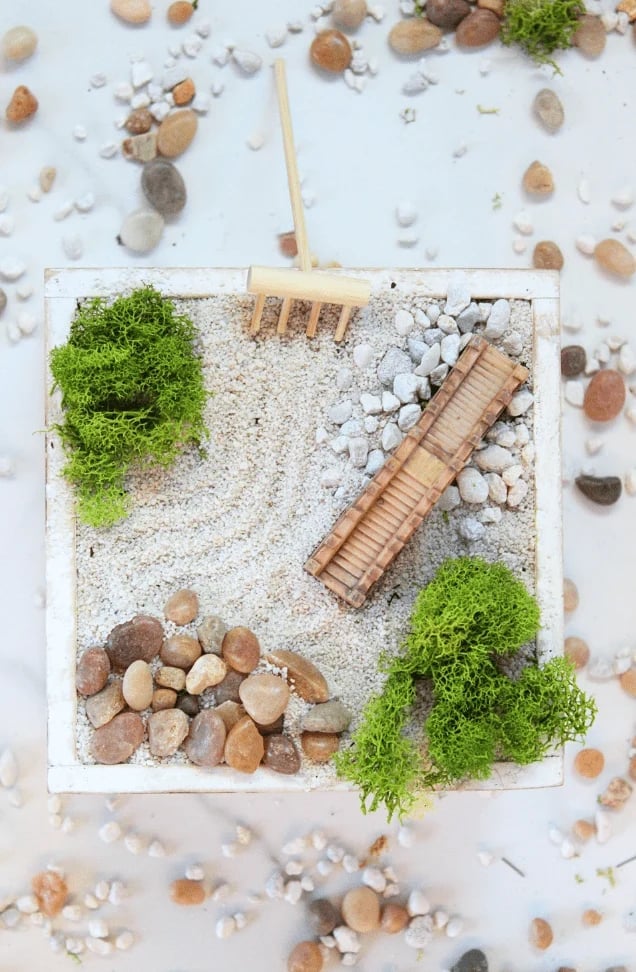
A miniature zen garden on a tabletop is a renter-safe swap for a full outdoor version, because the whole design fits inside a wooden box with sand raked into tidy patterns. The bamboo bridge arches over the sand, and small moss mounds break up the flat surface so the eye has somewhere to rest. Natural light from a nearby window shows off the pale sand and the green moss, while overhead light keeps the scene readable in the evening. The compact size means you can move it from a desk to a shelf without any permanent changes to your space, which is the whole point if you cannot dig up the yard.
Traditional Japanese Garden with Ornate Stone Lantern
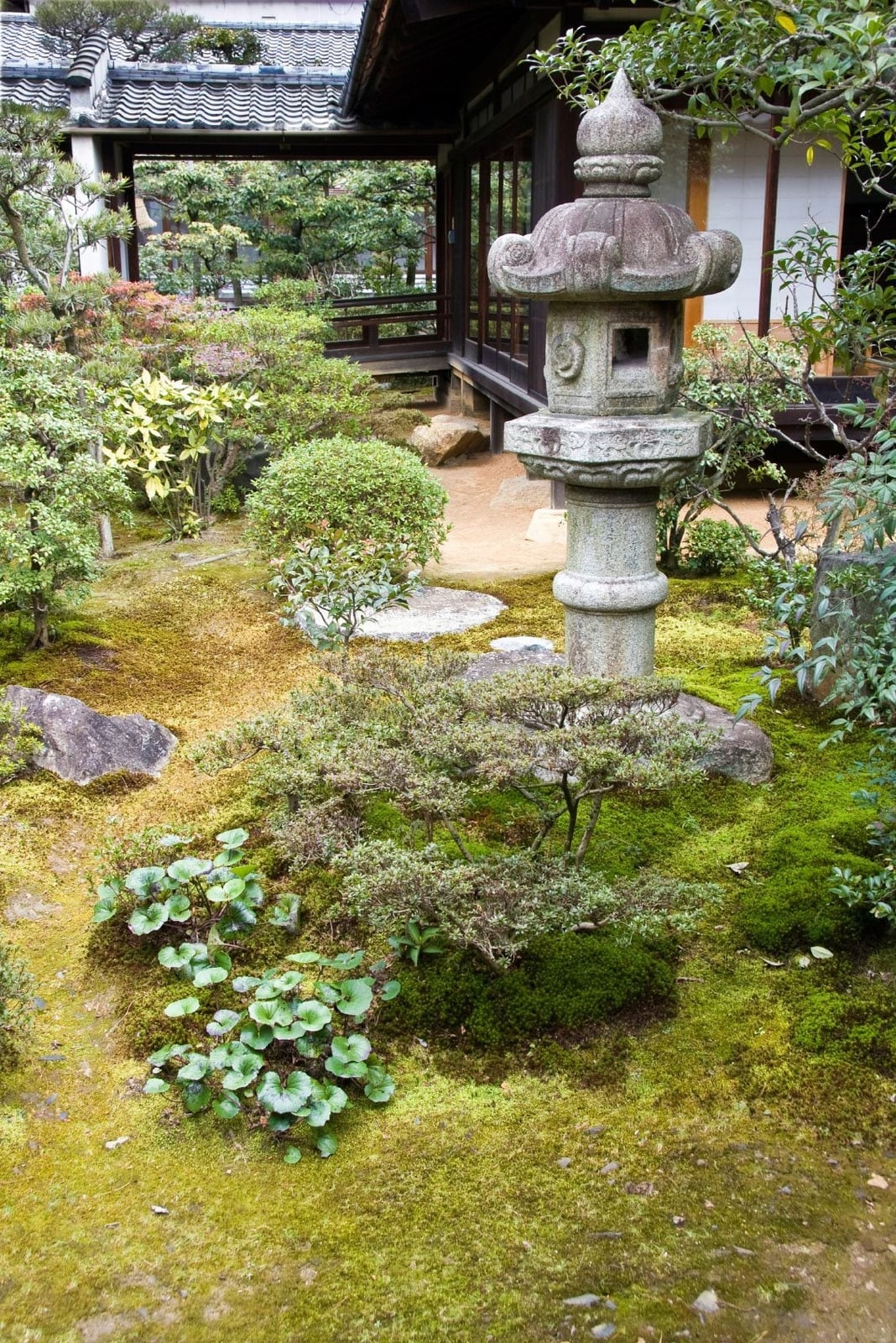
The ornate stone lantern stands as the clear focal point in this traditional Japanese garden, with its carved details drawing the eye even from a distance. Bonsai trees and rocks are layered around it so the planting builds depth rather than competing with the lantern, and the moss and gravel keep the ground quiet. The soft daylight picks out the texture of the stone, which is what makes an ornate piece feel intentional rather than busy. If you are adding a similar lantern to your own garden, set it where it can be seen from a main path or a seating area, and keep the surrounding plants lower than the lantern so it does not get swallowed by the greenery.
Dramatic Rock Formations in a Zen Garden
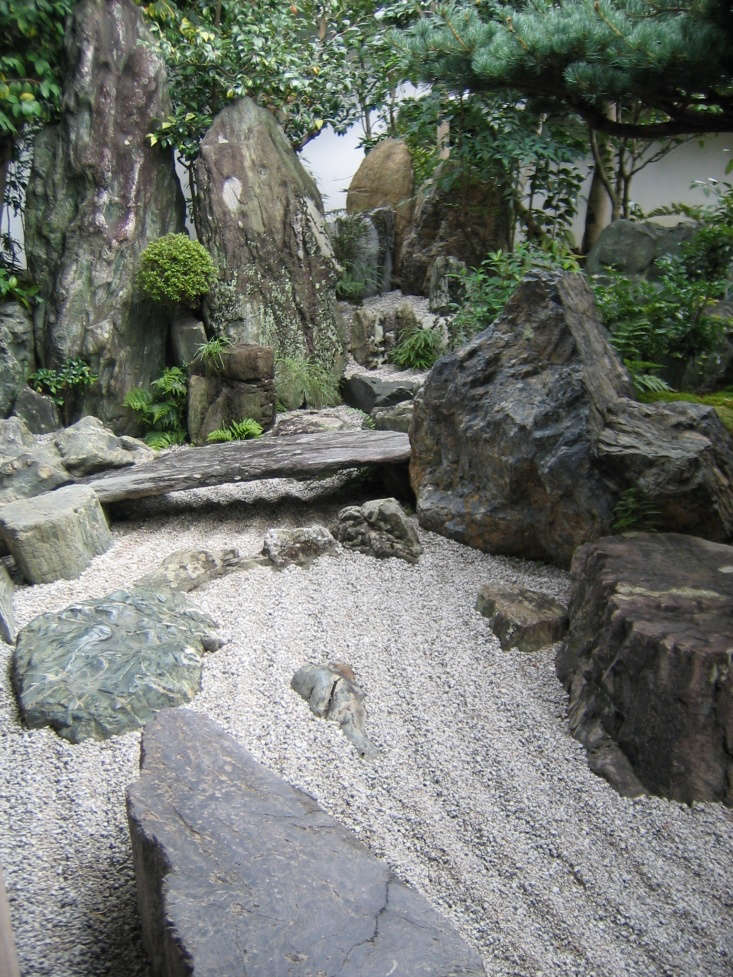
Against a flat expanse of raked gravel, large boulders become the main event, and this garden leans into that contrast by letting the rocks rise naturally while the paths flow around them. The soft daylight keeps the scene from feeling harsh, so the grey stone and the greens of the small trees sit comfortably together. The gravel is raked in flowing lines that lead the eye from one boulder to the next, which makes the space feel larger than it is.
What sets this apart from a simpler rock garden is the scale of the formations, they are big enough to anchor the whole layout. To recreate it, look for three or four medium rocks grouped in a cluster with gravel raked in a curve around them. That gives the eye a clear path without the weight of a full boulder arrangement.
Final Thoughts
The common thread across these 24 Zen gardens is restraint. Whether it’s a single rock in raked gravel or a full composition with a koi pond, the goal is the same: create a space that slows you down. Start with the layout and a few key stones, then let the gravel and moss fill in the rest. Raking is the main upkeep, and a steel rake is your best tool. Check your local climate for moss and bamboo viability. A good Zen garden doesn’t need much water or trimming, just a quiet corner and a willingness to let the design breathe.