
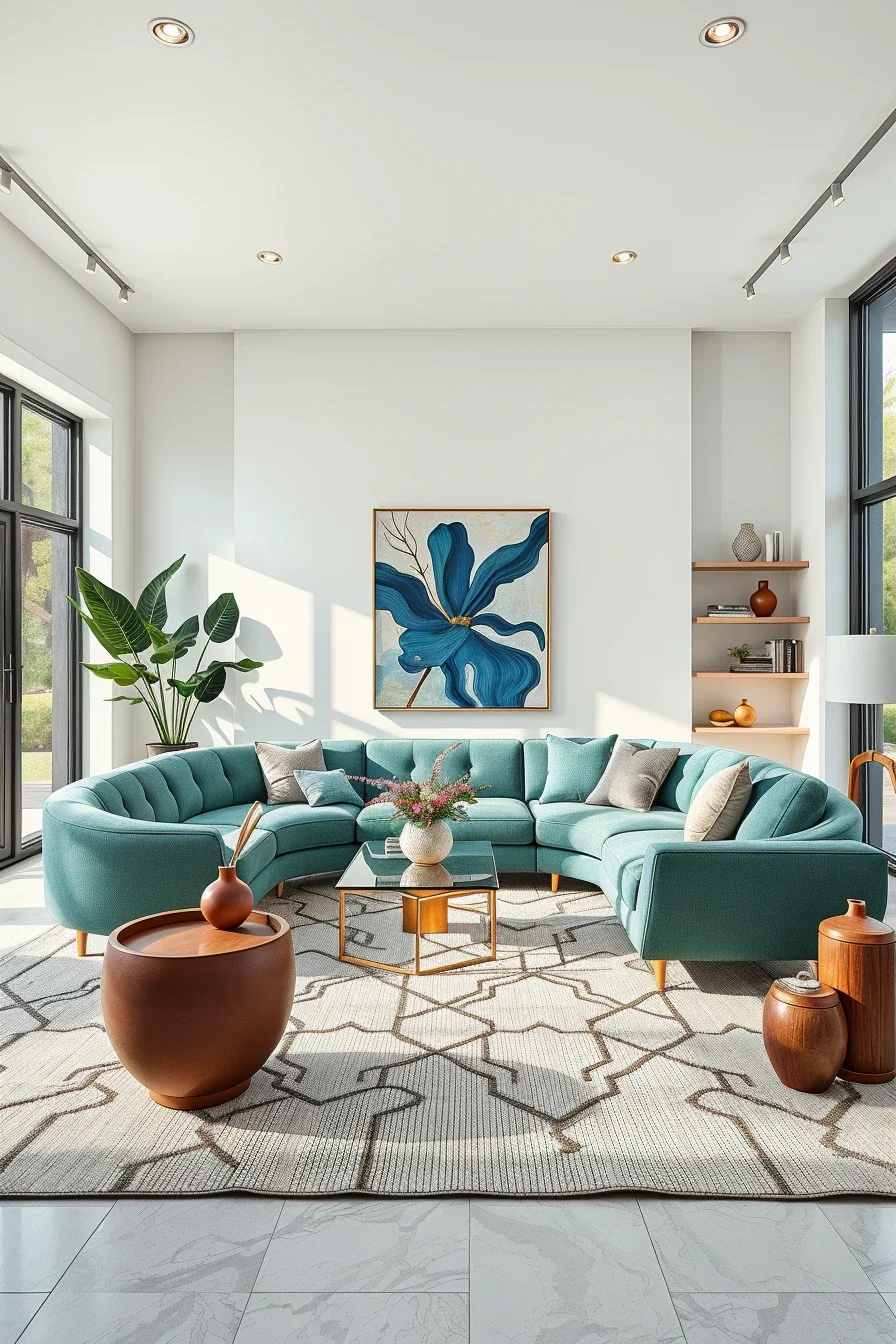
Green living home decor is all about creating interiors that feel fresh, welcoming, and connected to nature. From soft sage accents to rich emerald statement pieces, green brings depth, balance, and timeless elegance to every room. Whether you love modern minimalism or layered contemporary spaces, this versatile color works beautifully with a wide range of materials and finishes. Thoughtfully chosen furniture, lighting, textures, and decorative details can transform an ordinary living room into a stylish retreat. In this article, you’ll discover inspiring green living home decor ideas that combine comfort, creativity, and modern design trends. These unique spaces will help you bring a calming, sophisticated, and effortlessly beautiful atmosphere into your home.
Green Living Home Decor That Blends Nature And Modern Style
Whenever I design a space inspired by green living home decor, I begin by thinking about balance between nature and contemporary comfort. I like to create interiors where soft green tones meet clean architectural lines, allowing the room to feel fresh without becoming overwhelming. Large windows, subtle wall colors, and layered natural textures help connect the indoors with the surrounding landscape. This combination creates an inviting atmosphere that feels relaxing from morning until evening while maintaining a polished modern appearance.
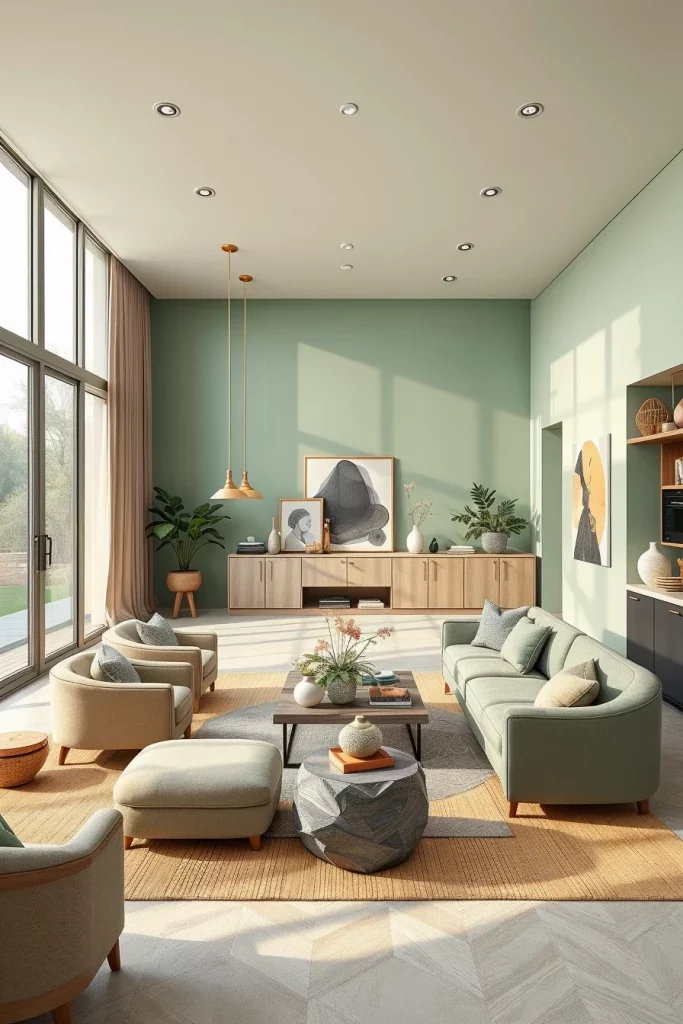
I usually choose a comfortable modular sofa in muted green fabric, paired with light neutral armchairs that prevent the palette from becoming too heavy. A stone coffee table, linen curtains, woven rugs, ceramic accessories, and minimalist shelving provide visual texture without creating clutter. I also include warm wood accents through side tables or shelving because they soften the cooler green shades while keeping the room elegant. Soft indirect lighting highlights every texture and makes the space feel comfortable throughout the day.
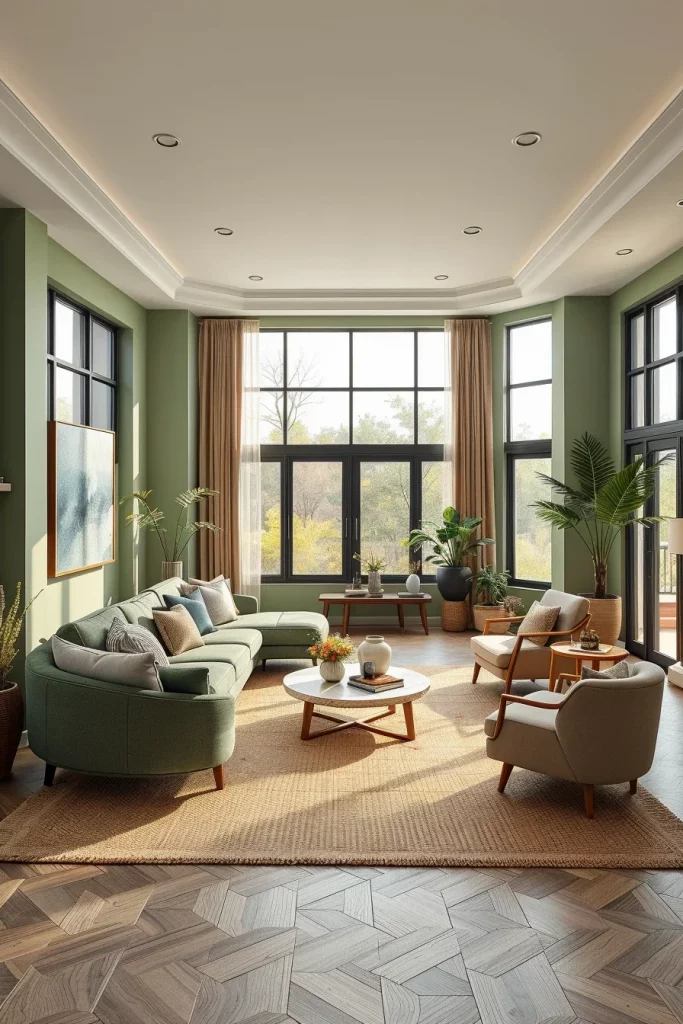
In my experience, respected publications such as Architectural Digest frequently emphasize that successful interiors rely on layering textures instead of relying solely on color. I completely agree with this approach because combining natural fabrics, subtle finishes, and carefully selected decorative objects creates depth that paint alone cannot achieve. I find that this philosophy produces rooms that remain attractive for years instead of following short-lived trends.
To complete this type of room, I would add oversized artwork inspired by natural landscapes, handcrafted ceramic vases, concealed storage solutions, and a few sculptural decorative pieces. These finishing touches help the room feel personalized while preserving the clean and organized atmosphere that defines modern green interiors.
Modern Green Living Home Decor With Organic Textures And Clean Lines
When I want an interior to feel modern yet welcoming, I focus on combining streamlined furniture with rich organic textures. Instead of relying on excessive decoration, I allow every material to contribute to the overall composition. Soft sage-green walls, smooth plaster finishes, and uncluttered layouts make the room feel open, while textured fabrics introduce warmth and visual interest. The result is an elegant interior that feels calm without appearing minimal to the point of feeling empty.
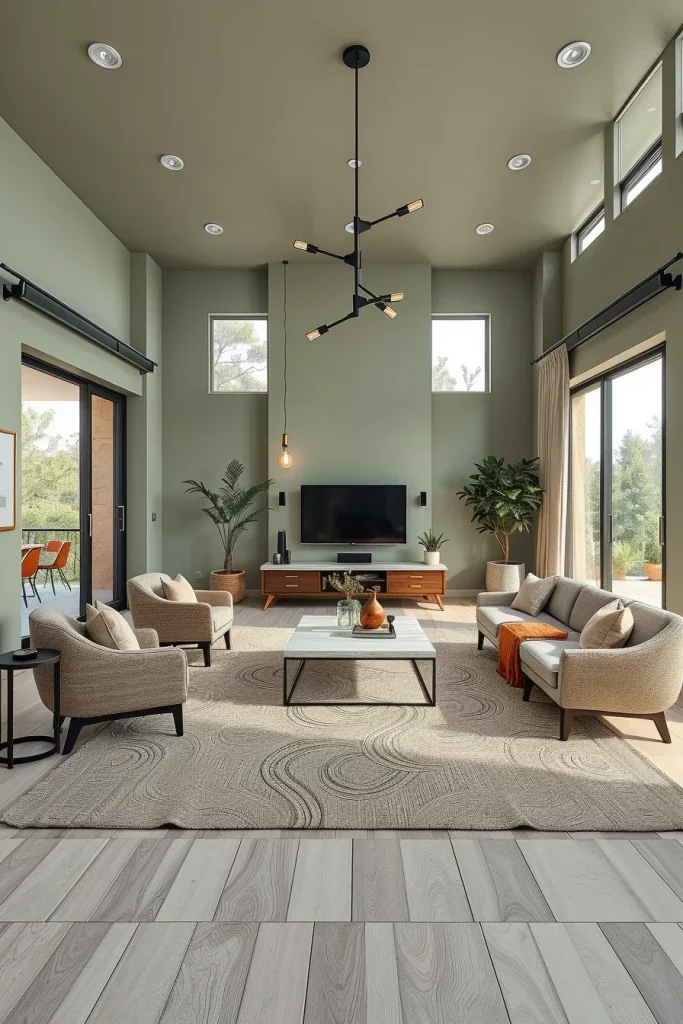
I like selecting low-profile sofas with clean silhouettes, boucle accent chairs, travertine coffee tables, and floating media consoles that visually expand the room. Linen cushions, wool throws, ribbed ceramic lamps, and oversized area rugs create comfortable layers throughout the space. I often include black metal lighting fixtures because they provide subtle contrast against the softer green palette without dominating the overall design.
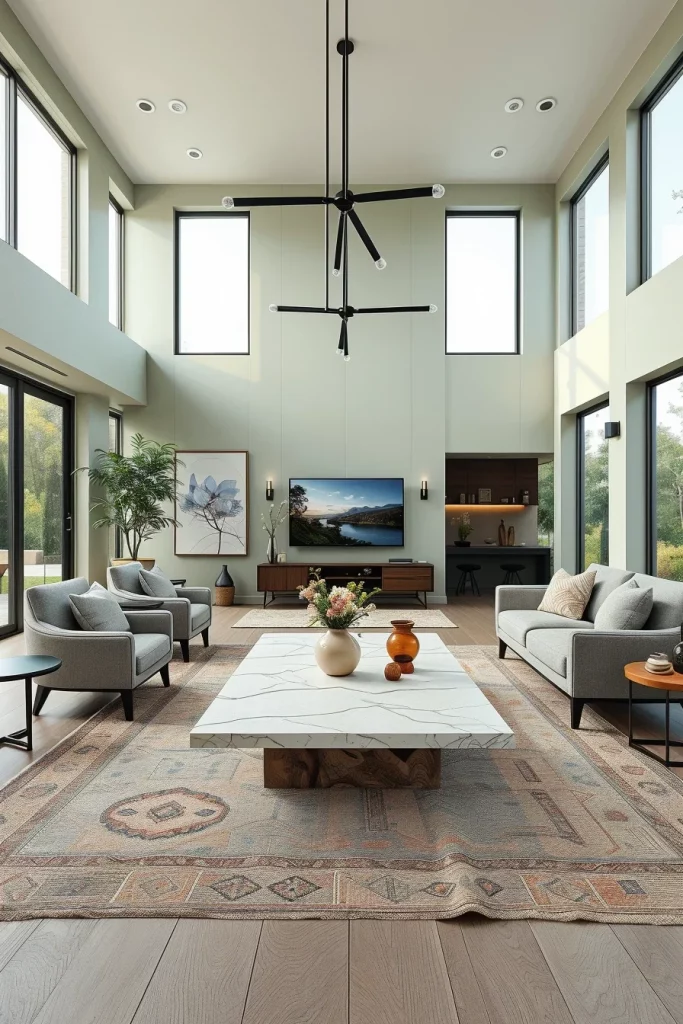
From my perspective, designers featured by Elle Decor often recommend mixing smooth and textured surfaces to create interiors that feel sophisticated rather than flat. I have found this advice especially valuable when working with green palettes because the variety of textures allows every shade to appear richer and more dynamic under changing natural light.
If anything should be added to this room, I would recommend incorporating discreet built-in storage, larger windows where possible, and dimmable layered lighting. These additions improve both functionality and ambiance while maintaining the refined simplicity of the design.
Sage Green Living Room Inspiration For A Calm And Cozy Atmosphere
Sage green remains one of my favorite shades because it instantly creates a peaceful environment without making the room feel cold. I often use it as the primary wall color since it reflects natural light beautifully and pairs well with both contemporary and transitional interiors. Combined with soft neutral flooring and generous daylight, sage green transforms an ordinary living room into a calming retreat suitable for everyday relaxation and entertaining.
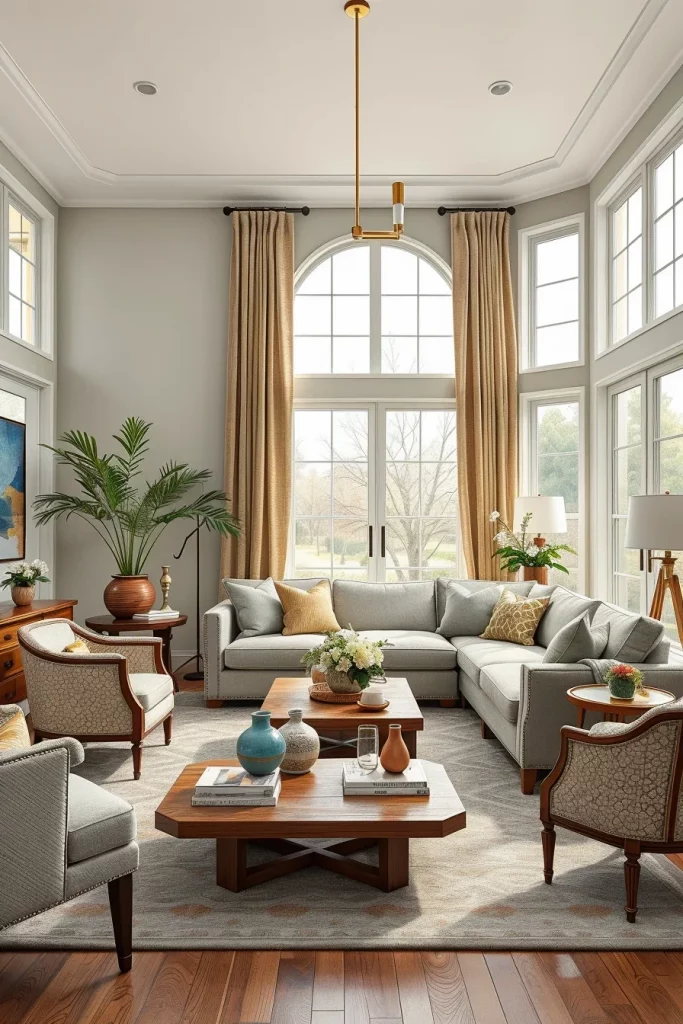
For furniture, I usually select a generously sized cream sectional sofa with sage accent pillows, rounded oak coffee tables, upholstered accent chairs, and simple built-in shelving. Linen drapery, textured area rugs, oversized floor lamps, and matte ceramic accessories help create visual warmth throughout the room. I also enjoy incorporating subtle brass details through cabinet handles or lighting because they introduce understated elegance without competing with the green palette.
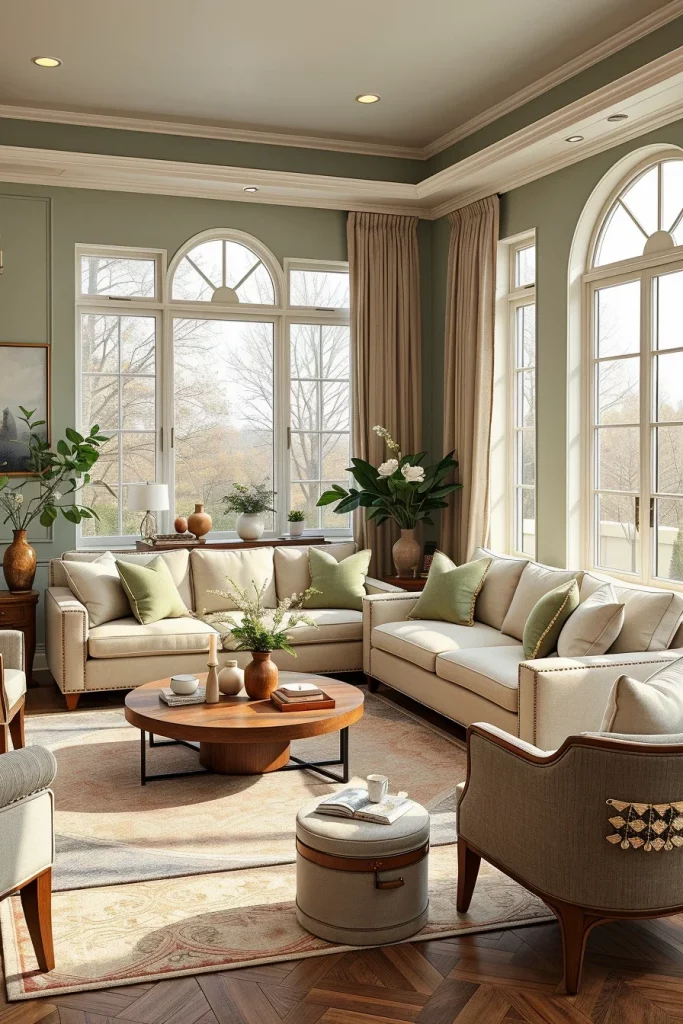
Personally, I appreciate advice shared by House Beautiful, which often encourages decorating with calming colors that promote comfort rather than visual excess. I have found that sage green performs exceptionally well because it complements a wide range of materials and allows decorative accents to evolve over time without requiring a complete redesign.
To strengthen this design even further, I would introduce layered lighting at different heights, decorative books, sculptural objects, and a carefully chosen statement mirror that reflects daylight and makes the room appear larger.
Emerald Green Accent Walls That Create A Sophisticated Interior
Whenever I want to introduce dramatic elegance without overwhelming an entire room, I choose an emerald green accent wall. This deeper shade immediately establishes a refined focal point while allowing the remaining walls to stay light and balanced. I particularly enjoy using emerald green behind a fireplace, entertainment center, or built-in shelving because it naturally highlights architectural features and creates impressive visual depth.
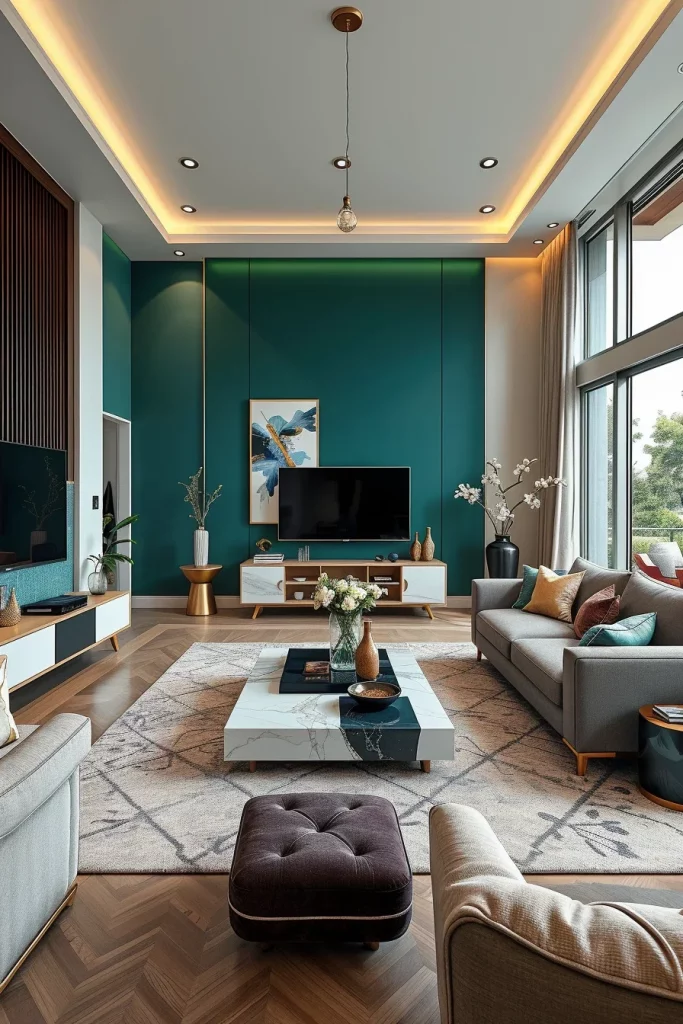
I usually pair the accent wall with neutral seating, marble or stone coffee tables, contemporary shelving, sleek media units, and soft textured upholstery. Velvet cushions, metallic lighting fixtures, smoked glass accessories, and abstract artwork complement the richness of emerald green while maintaining a sophisticated atmosphere. I also keep decorative accessories relatively restrained so the wall remains the primary visual feature.
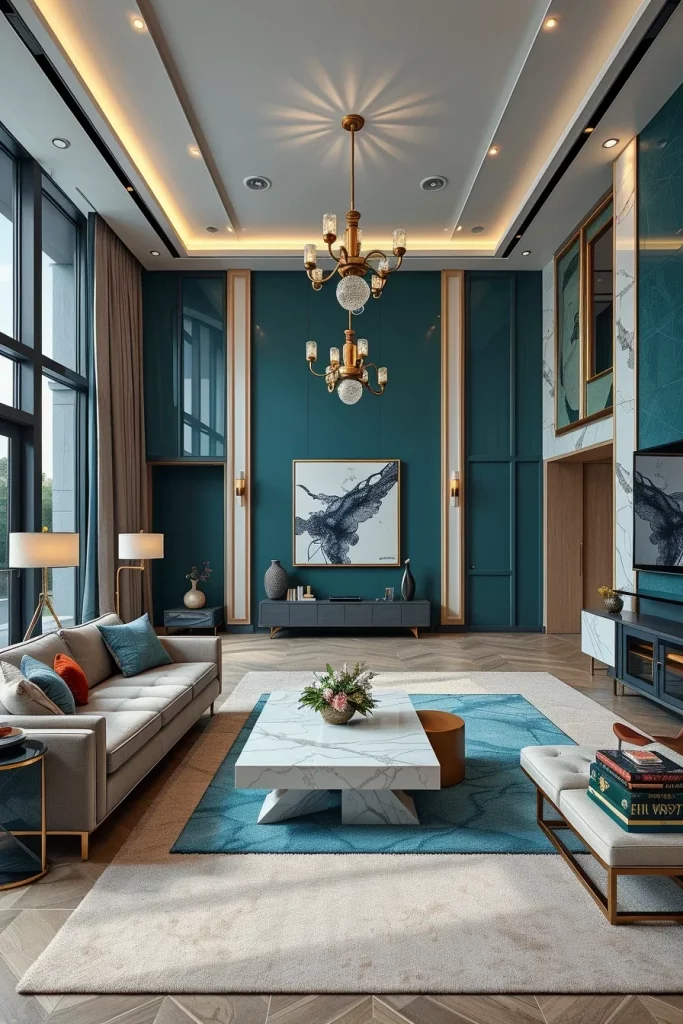
In my own projects, I have noticed that deeper colors become far more successful when natural daylight is abundant. Interior designers frequently recommend balancing saturated wall colors with lighter furnishings, and I completely agree because this approach prevents the room from feeling enclosed while allowing the accent wall to shine.
I would complete this interior with concealed LED accent lighting, oversized decorative objects, and carefully selected artwork featuring subtle green details that visually connect with the statement wall.
Olive Green Color Palettes For Timeless Home Decor
Olive green has always impressed me because it combines warmth, sophistication, and remarkable versatility. I enjoy using this shade throughout living spaces because it complements contemporary architecture while feeling comfortably lived-in. Whether paired with light neutrals or darker accents, olive green creates an inviting atmosphere that remains stylish through changing design trends. The result is an interior that feels mature, balanced, and naturally elegant.
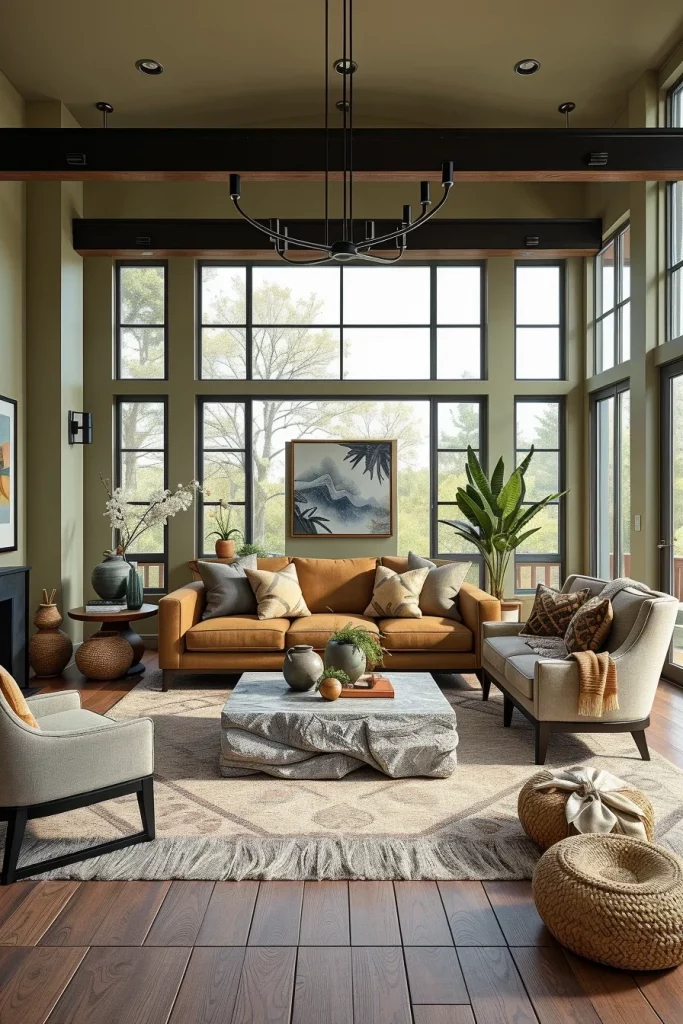
For this palette, I often choose upholstered olive sofas, light beige accent chairs, natural stone coffee tables, textured area rugs, simple shelving, and understated cabinetry. Linen curtains, woven baskets, ceramic table lamps, matte black lighting, and soft neutral accessories create subtle contrast while preserving the harmonious color scheme. Every furnishing contributes to a relaxed yet polished environment that functions beautifully for both daily living and entertaining guests.
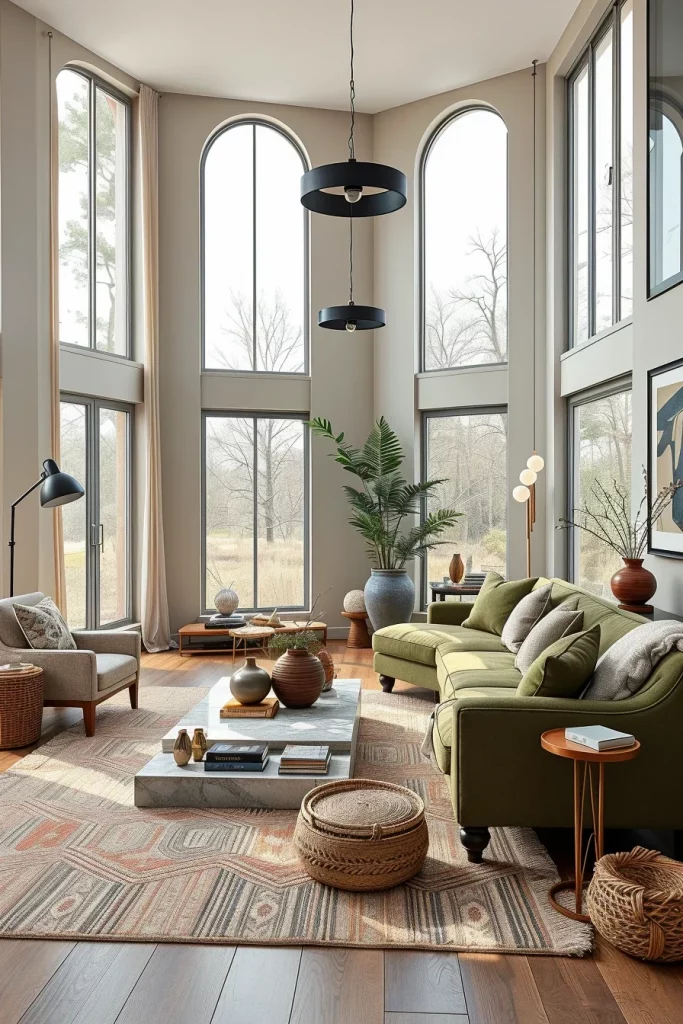
I appreciate how many experienced designers recommend building a room around timeless foundational colors before introducing decorative accents. I have followed this principle repeatedly, and olive green consistently proves to be one of the easiest shades to update season after season without requiring major renovations.
To enrich this interior further, I would add layered artwork, decorative trays, textured poufs, concealed storage furniture, and larger area rugs that visually connect every seating element into one cohesive composition.
Forest Green Furniture That Becomes The Centerpiece Of The Room
Whenever I want a living room to feel bold yet timeless, I start with a statement piece in forest green. A deep green sofa or a pair of oversized lounge chairs instantly anchors the space while adding richness that lighter colors cannot achieve. I like balancing this dramatic shade with soft neutral walls, generous natural light, and clean architectural details so the furniture becomes the visual centerpiece without overwhelming the room. This approach creates a sophisticated interior that feels welcoming every day.
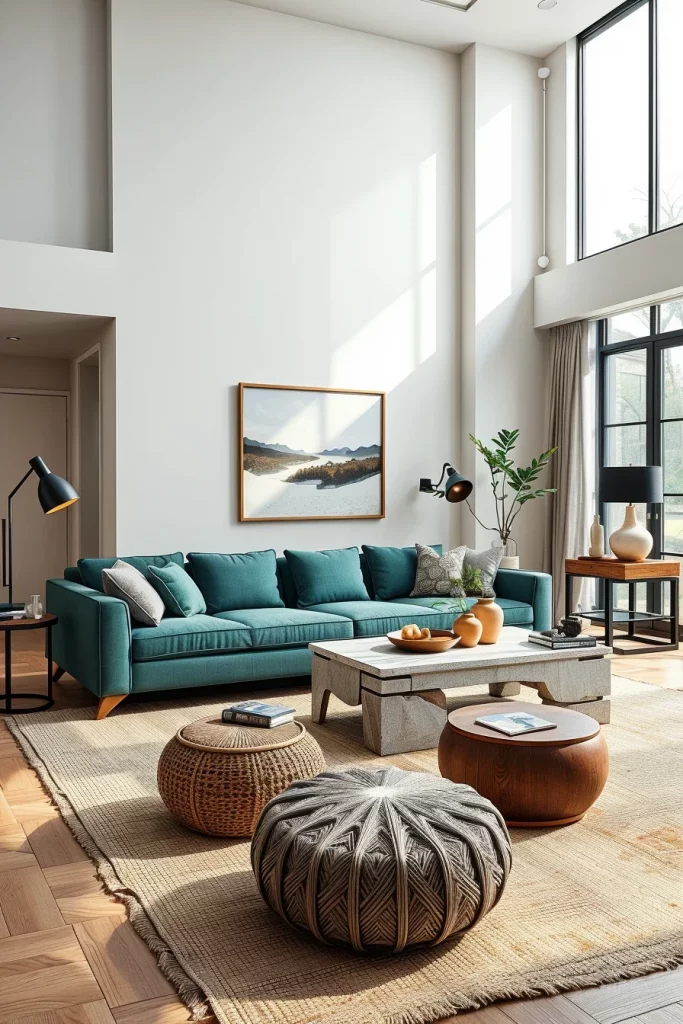
I usually pair forest green upholstery with a light stone coffee table, slim wood side tables, textured boucle ottomans, and minimalist shelving that keeps the room visually open. Linen curtains soften the overall composition, while matte black floor lamps and ceramic accessories add subtle contrast. A large woven rug defines the seating area, and carefully selected decorative objects complete the room without distracting from the statement furniture.
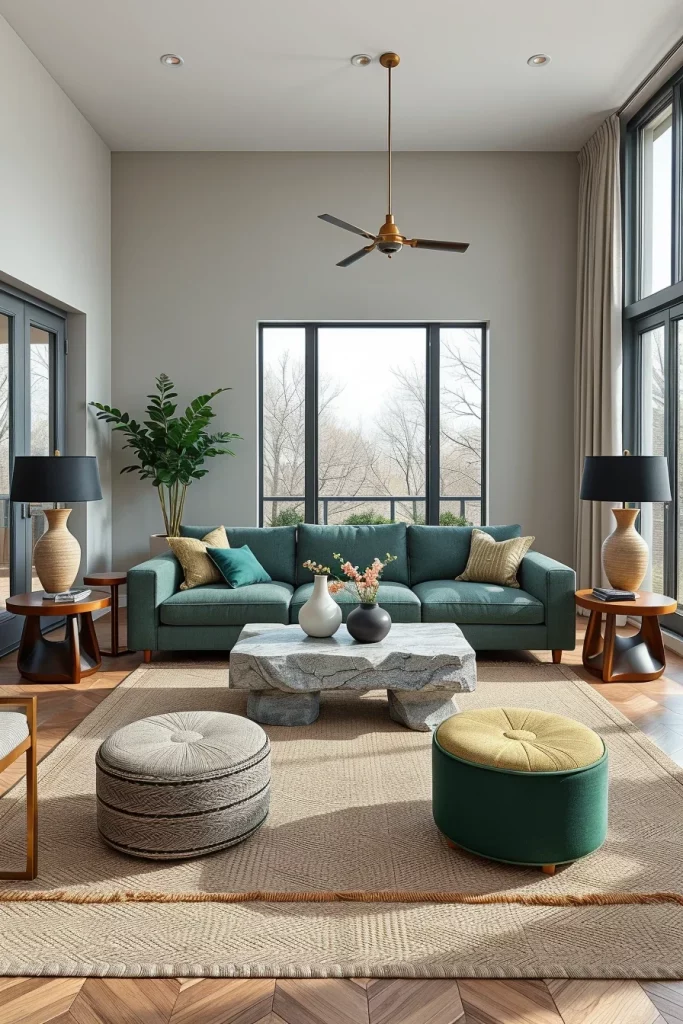
From my experience, creating contrast is the key to making darker furniture feel elegant rather than heavy. Many professional interior designers recommend surrounding bold furniture with lighter finishes, and I have consistently found that this creates a balanced environment that feels both luxurious and practical. Forest green remains one of the easiest colors to style because it complements both warm and cool neutral palettes.
To make this room even more complete, I would include a large statement mirror to reflect natural light, hidden storage within the media console, and layered ambient lighting that highlights the texture of the upholstery during the evening.
Botanical-Inspired Green Living Spaces With Contemporary Appeal
I enjoy creating botanical-inspired interiors because they celebrate nature without appearing overly themed. Instead of filling every corner with greenery, I prefer using botanical patterns, organic materials, and earthy green shades to establish a refined atmosphere. The result feels fresh, contemporary, and connected to nature while remaining suitable for modern lifestyles. Soft daylight and uncluttered layouts help reinforce this peaceful environment.
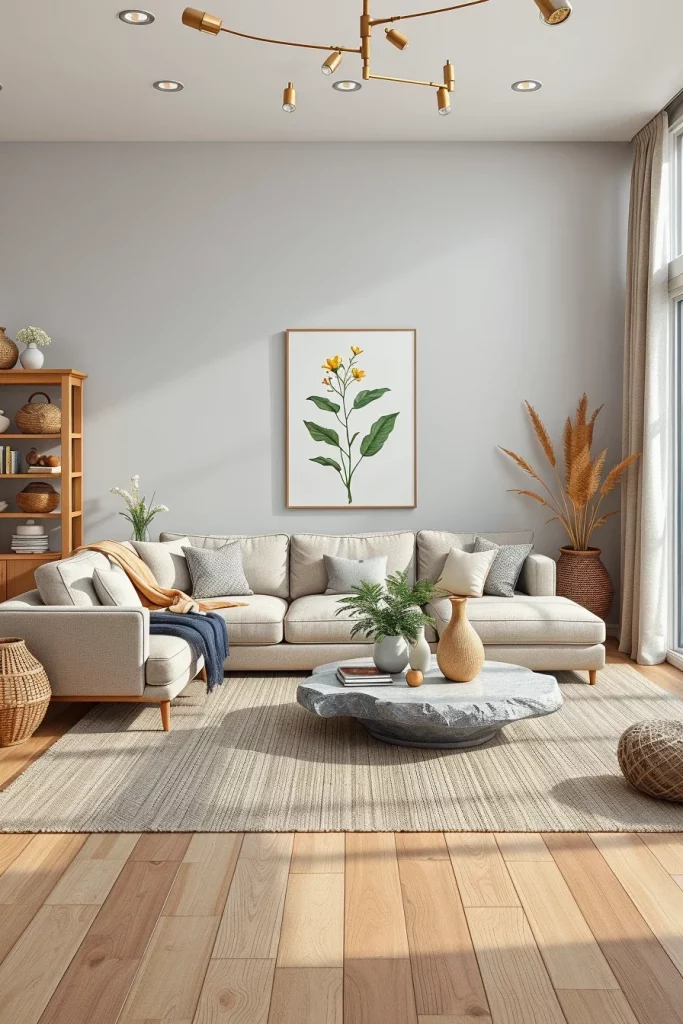
For furniture, I often select a comfortable neutral sectional, rounded accent chairs, light wood shelving, and a sculptural coffee table with natural stone finishes. Botanical artwork, textured cushions, woven baskets, ceramic vases, and subtle leaf-inspired decorative accessories introduce visual interest without overwhelming the room. Soft linen curtains filter daylight beautifully, while layered rugs add warmth and texture beneath the seating arrangement.
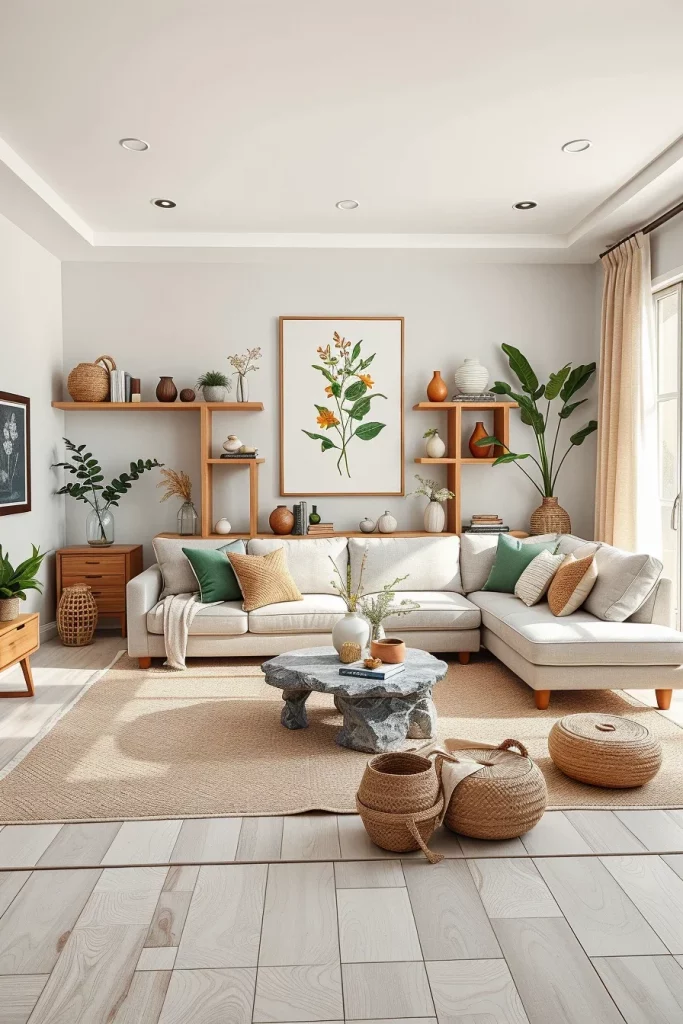
I appreciate that many respected designers encourage bringing natural inspiration indoors through materials, patterns, and color instead of relying only on decorative plants. I have found that this approach produces interiors that remain elegant throughout every season and require less maintenance while still delivering the calming feeling associated with nature.
If I wanted to elevate this design further, I would introduce textured wall panels, handcrafted decorative bowls, oversized framed botanical artwork, and integrated shelving that keeps decorative accessories organized while preserving the clean contemporary appearance.
Green And White Living Room Designs With Fresh Contrast
One of my favorite combinations for contemporary interiors is green and white because it creates an atmosphere that feels bright, balanced, and effortlessly sophisticated. White walls maximize natural light, while green furnishings and decorative accents introduce warmth and personality. This pairing works equally well in compact apartments and spacious homes because it visually enlarges the room while maintaining a welcoming character.
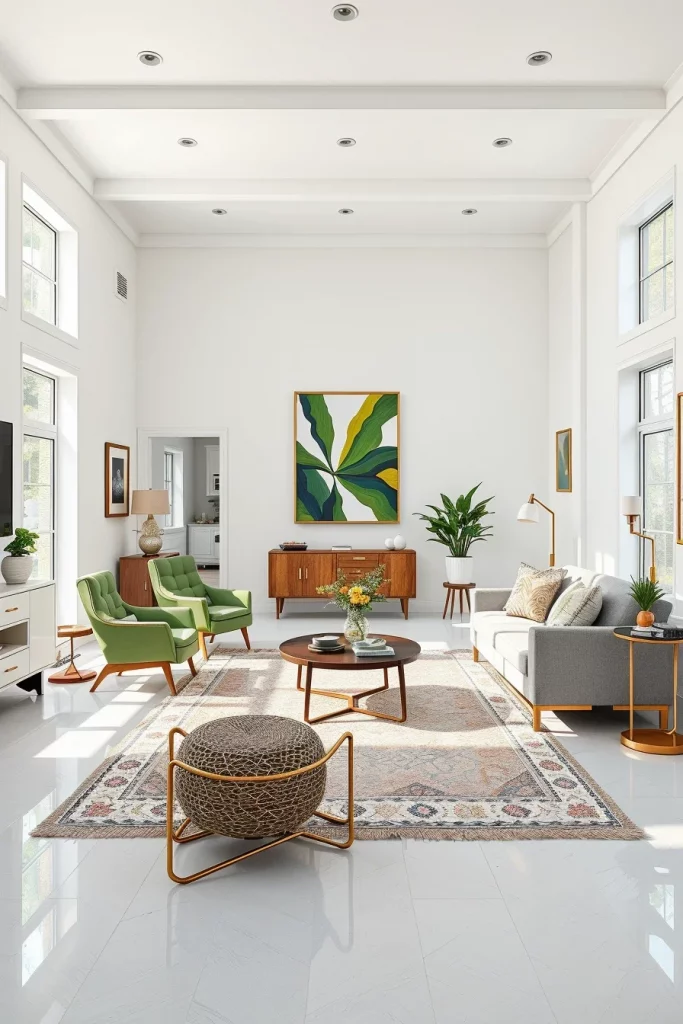
I usually combine crisp white sofas or walls with green accent chairs, upholstered ottomans, contemporary coffee tables, and clean-lined storage cabinets. Textured rugs, linen drapery, ceramic table lamps, and abstract artwork featuring green tones help unify the palette. I also enjoy incorporating subtle brass details through lighting fixtures and decorative accessories because they add warmth without disrupting the clean color scheme.
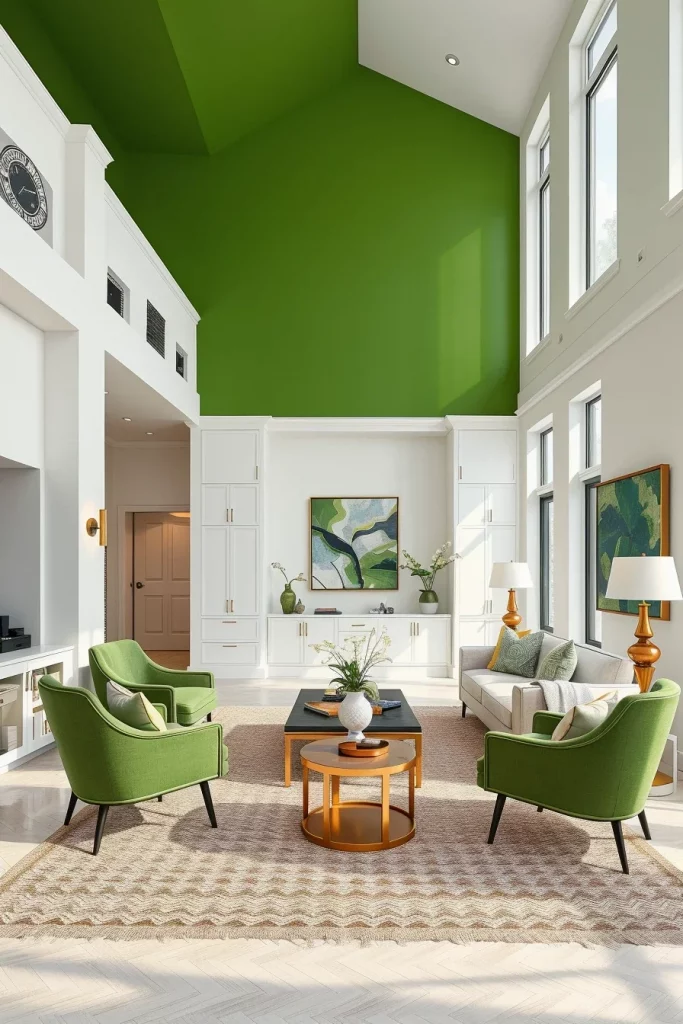
Personally, I have found that limiting the number of accent colors allows green and white to remain the primary focus of the room. Design experts often emphasize consistency throughout an interior, and I completely agree because repeating the same color palette across furniture, textiles, and artwork creates a cohesive and professionally designed appearance.
To complete this space, I would add a large textured area rug, layered lighting at multiple heights, decorative books, and custom shelving that provides both display space and concealed storage.
Layering Multiple Shades Of Green For A Designer Look
Using several shades of green within the same interior is one of my favorite ways to create depth and sophistication. Instead of relying on a single color, I combine sage, olive, forest, and emerald tones throughout the room. This layered approach adds dimension while maintaining harmony because every shade belongs to the same color family. The result is an interior that feels professionally designed and visually engaging from every angle.
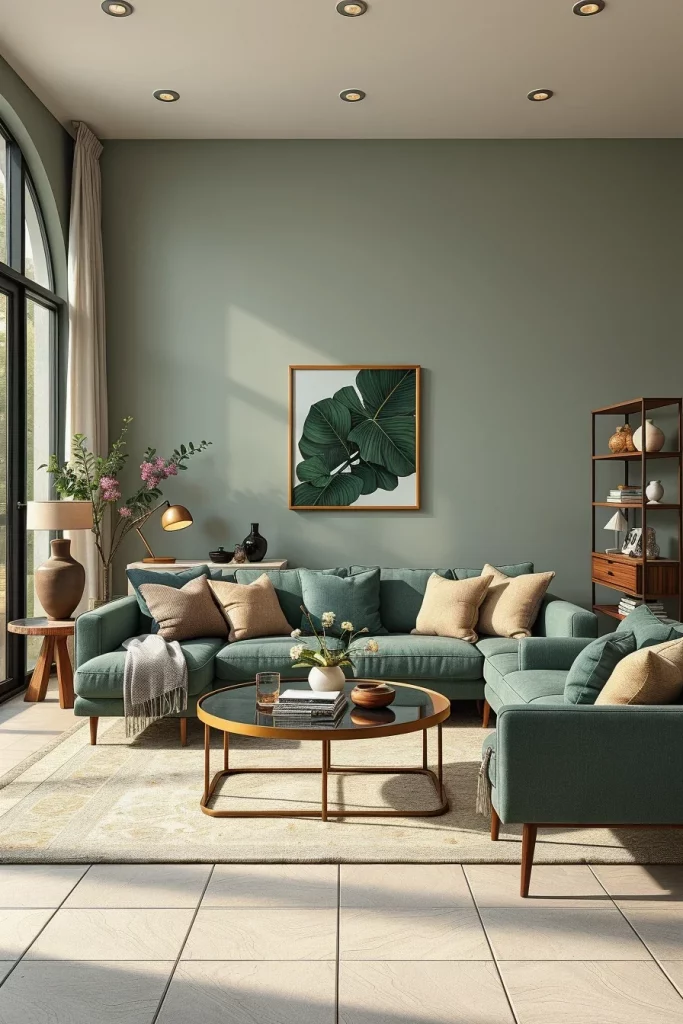
I typically begin with lighter green walls before introducing medium-toned upholstery and deeper accent pieces. Cushions, throws, area rugs, decorative ceramics, artwork, and upholstered benches each contribute a slightly different shade of green. Neutral flooring and simple furniture silhouettes allow the layered palette to remain the visual highlight without making the room appear busy or cluttered.
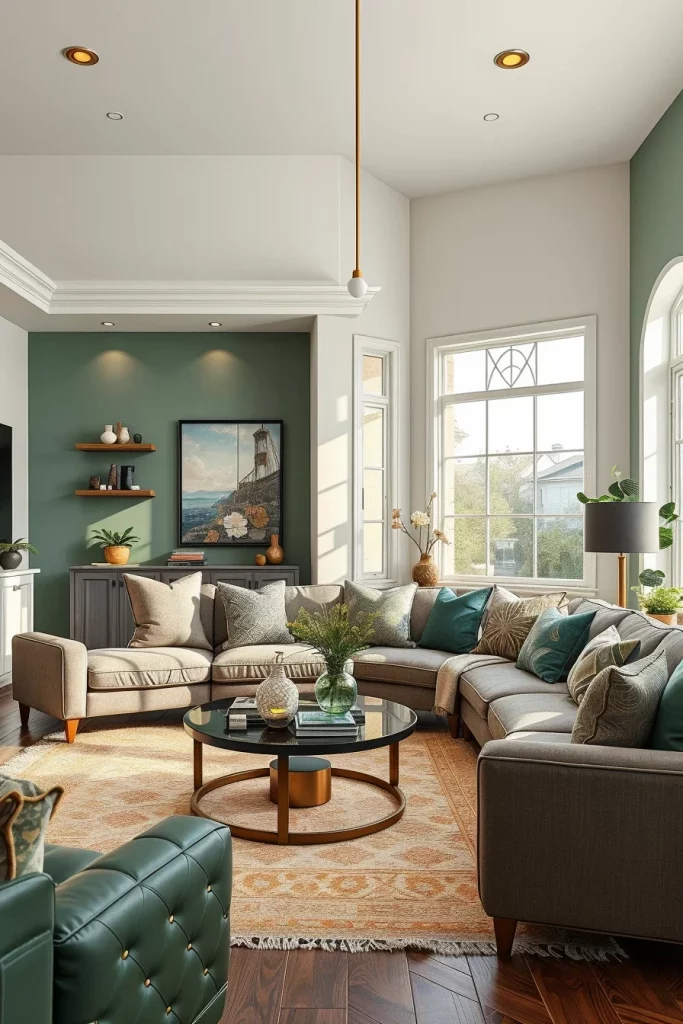
In my experience, successful layering depends more on variation in tone than on adding additional colors. Many professional designers recommend repeating colors throughout different materials and textures, and I have consistently found that this creates continuity while preventing the room from feeling flat or repetitive.
To enhance this concept even further, I would include textured wall finishes, subtle metallic accents, integrated shelving with decorative styling, and carefully positioned lighting that reveals the richness of every green shade throughout the day.
Minimalist Green Living Home Decor With Elegant Simplicity
Minimalist interiors become far more inviting when green is introduced thoughtfully. Rather than relying on excessive decoration, I prefer using restrained color, open space, and carefully selected furniture to establish a peaceful environment. Soft green walls, simple architectural lines, and uncluttered layouts create a home that feels calm, functional, and refined without sacrificing warmth or personality.
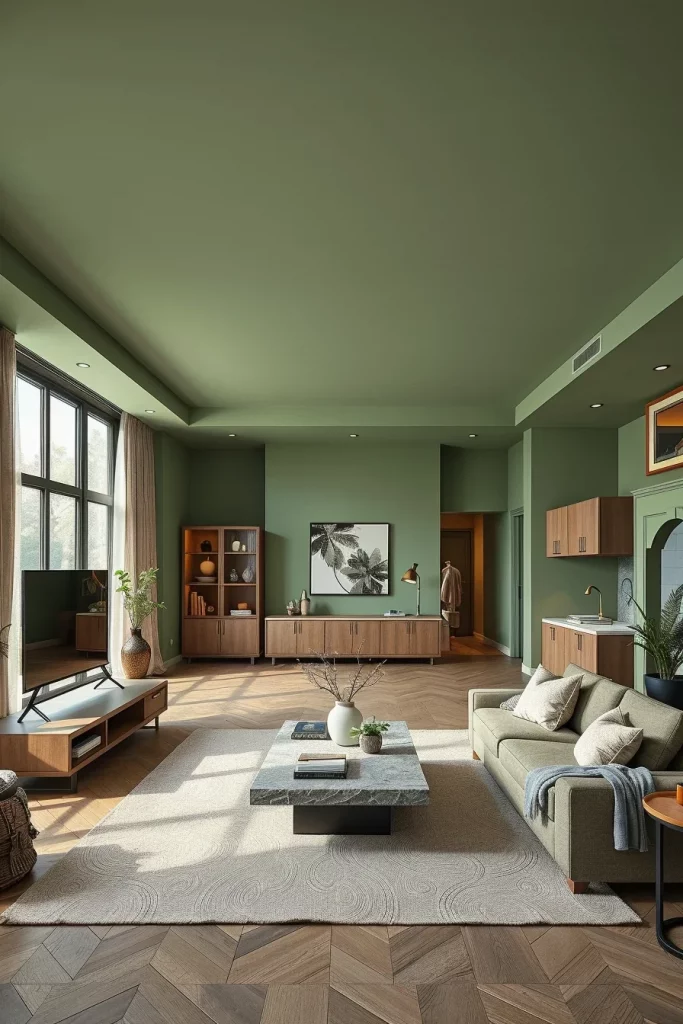
I generally choose a low-profile sofa, streamlined armchairs, floating cabinetry, and a simple stone coffee table with clean geometric forms. Linen textiles, understated ceramic accessories, concealed storage, and minimalist lighting maintain the room’s quiet elegance. Every piece serves a purpose while contributing to a harmonious composition that feels spacious and comfortable for everyday living.
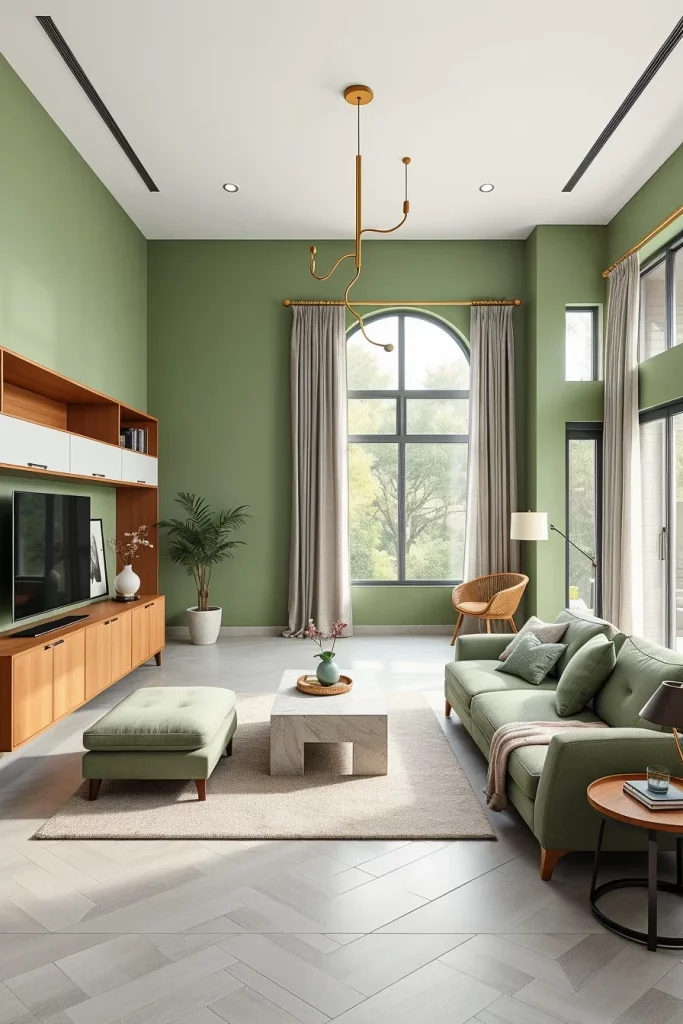
I appreciate the philosophy that every furnishing should earn its place within a minimalist interior. Rather than filling a room with unnecessary decoration, I prefer investing in well-made furniture and timeless materials that remain beautiful for many years. This approach creates interiors that are easy to maintain while still feeling welcoming and complete.
To perfect this minimalist space, I would incorporate subtle architectural lighting, oversized artwork with soft green tones, hidden storage solutions, and carefully chosen decorative objects that reinforce the natural, contemporary aesthetic without introducing visual clutter.
Contemporary Green Living Rooms With Sculptural Furniture
When I design a contemporary green living room, I start by treating green as the foundation instead of simply an accent color. Rich sage, olive, or muted moss walls create a calming backdrop that immediately establishes character while allowing sculptural furniture to become the visual centerpiece. This combination creates a space that feels sophisticated without becoming overly formal. I find that balancing soft architectural lines with bold furniture silhouettes gives the room movement while maintaining comfort for everyday living.
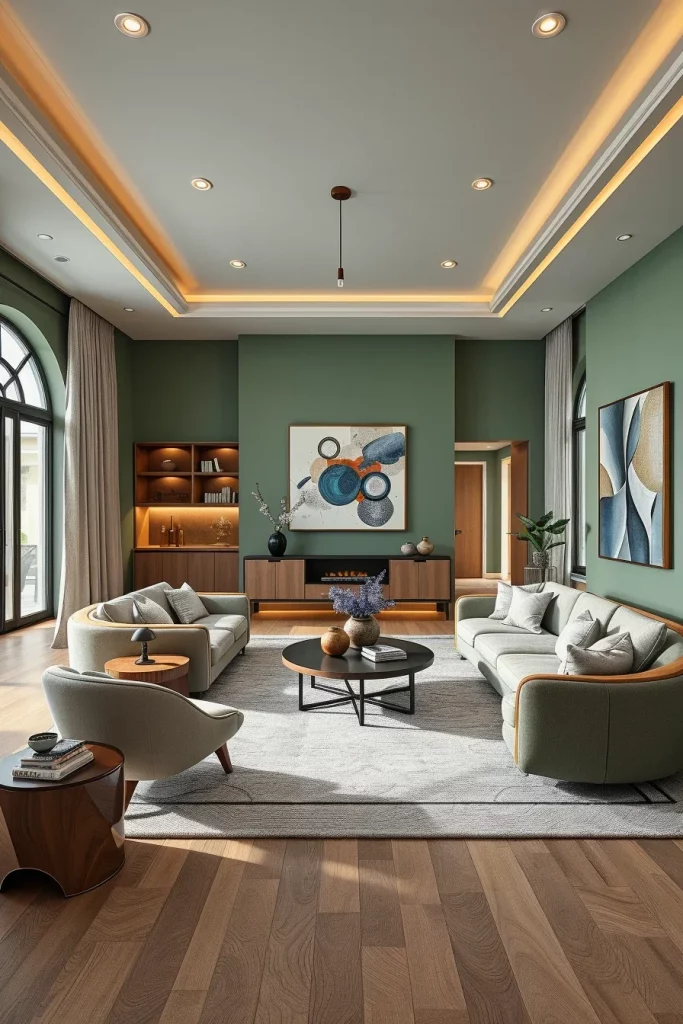
I usually choose a curved sofa, rounded lounge chairs, and a sculptural coffee table with smooth organic forms to reinforce the contemporary aesthetic. A textured area rug softens the floor, while oversized artwork in subtle earth tones keeps the room visually balanced. Built-in cabinetry in matching green tones helps maintain visual continuity, and carefully selected lighting emphasizes the flowing shapes of every furniture piece. I also like adding ceramic vases, stone accessories, and simple linen curtains to introduce natural texture without creating clutter.
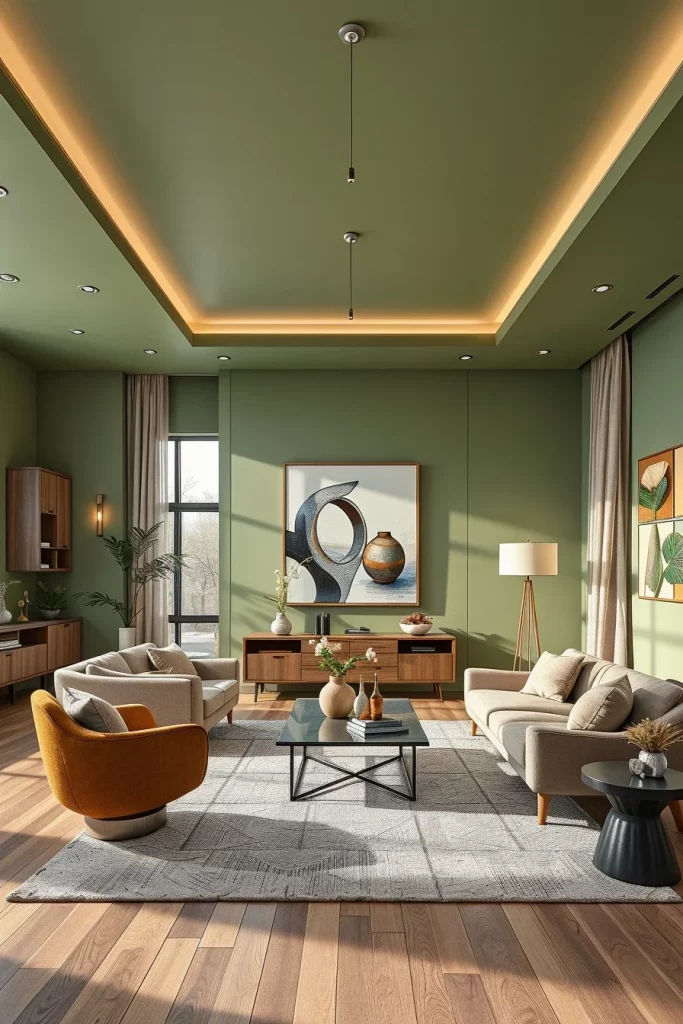
From my experience, respected publications like Architectural Digest often emphasize that sculptural furniture should function as artwork while remaining comfortable enough for daily use. I completely agree with that philosophy because every statement piece should enhance both appearance and practicality. Rather than filling the room with numerous decorative items, I prefer allowing a few beautifully designed pieces to command attention naturally.
To complete this design, I recommend incorporating subtle layered lighting with recessed ceiling fixtures, floor lamps, and concealed LED shelving lights. These additions highlight the curved furniture during the evening while making the green palette appear warmer and more inviting throughout the day.
Dark Green Interiors That Feel Rich And Inviting
Dark green interiors create a surprisingly cozy atmosphere when balanced correctly. I often use deep forest green or emerald tones on walls because they immediately establish depth and elegance without making the room feel heavy. The key is combining these darker colors with generous natural light and carefully selected materials that reflect just enough brightness. This approach results in green living home decor that feels luxurious yet approachable.
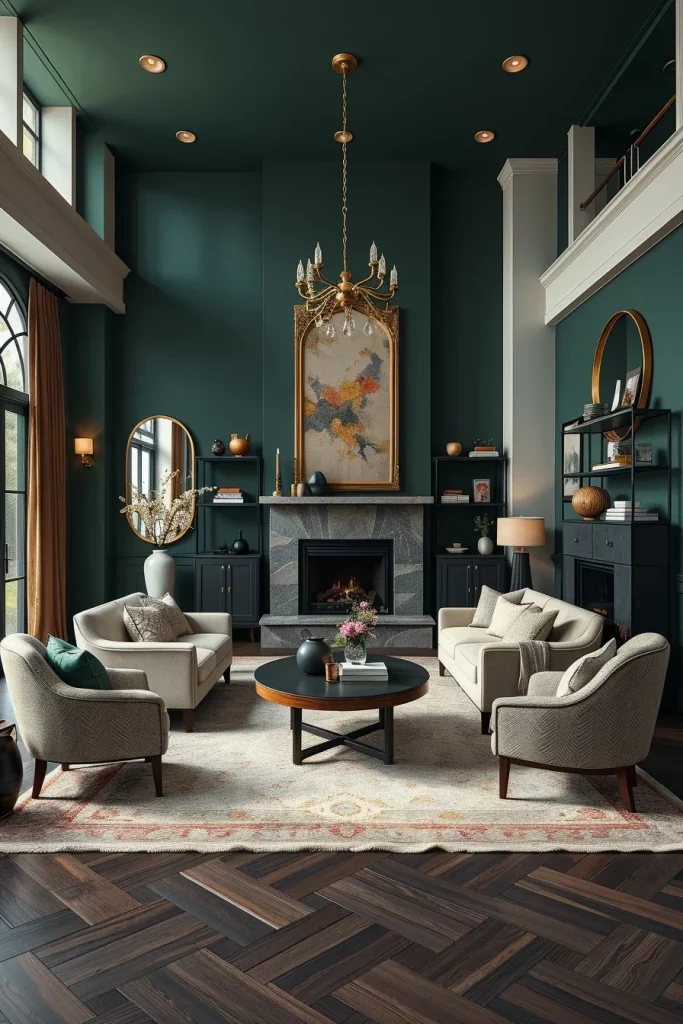
Furniture plays an important role in preventing dark interiors from becoming visually overwhelming. I prefer cream upholstered sofas, walnut coffee tables, matte black shelving, and textured boucle accent chairs to soften the darker backdrop. Layered fabrics including woven throws, oversized cushions, and subtle patterned rugs introduce warmth while maintaining a refined appearance. Decorative glass objects and carefully placed mirrors also help distribute light throughout the room.
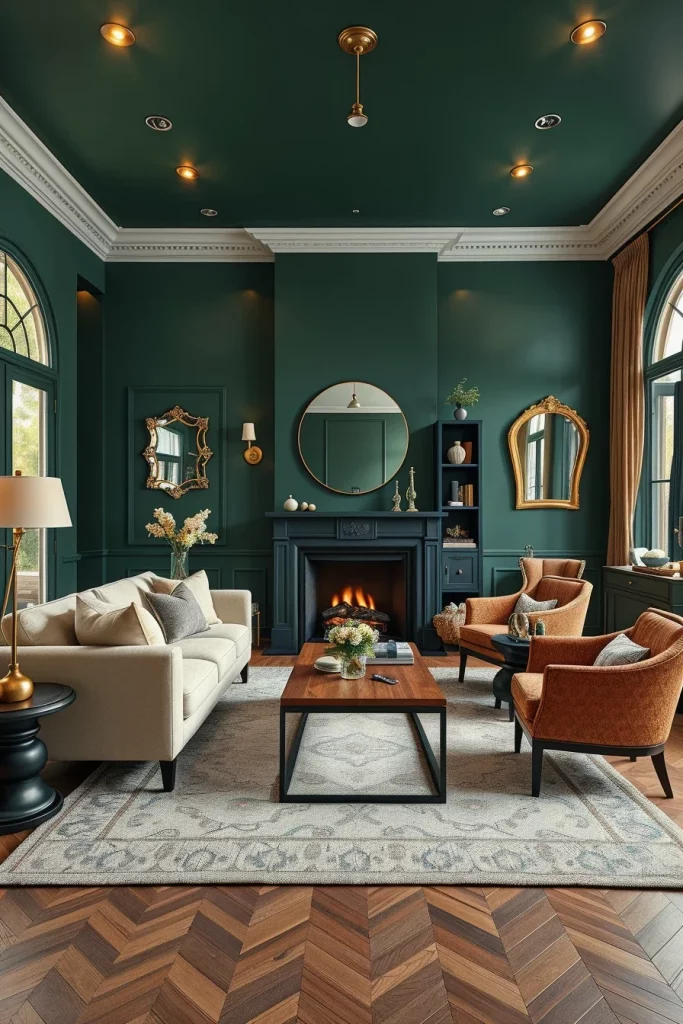
Many American interior designers recommend limiting the number of competing colors in darker interiors, and I have consistently found this advice valuable. Instead of introducing numerous accent colors, I focus on texture, natural materials, and varied finishes. This keeps the room visually interesting while allowing the green walls to remain the defining feature.
I also suggest adding large indoor trees, oversized artwork with neutral tones, and warm ambient lighting to complete the composition. These details prevent dark green interiors from feeling enclosed while reinforcing the relaxing atmosphere.
Soft Mint Green Decor For Bright And Airy Spaces
Soft mint green creates one of the brightest and most refreshing interiors I enjoy designing. Unlike darker shades, mint reflects natural light exceptionally well, making even compact living rooms appear noticeably larger. I often recommend this palette for homeowners who want an uplifting environment without relying entirely on white walls. The result feels clean, welcoming, and effortlessly elegant.
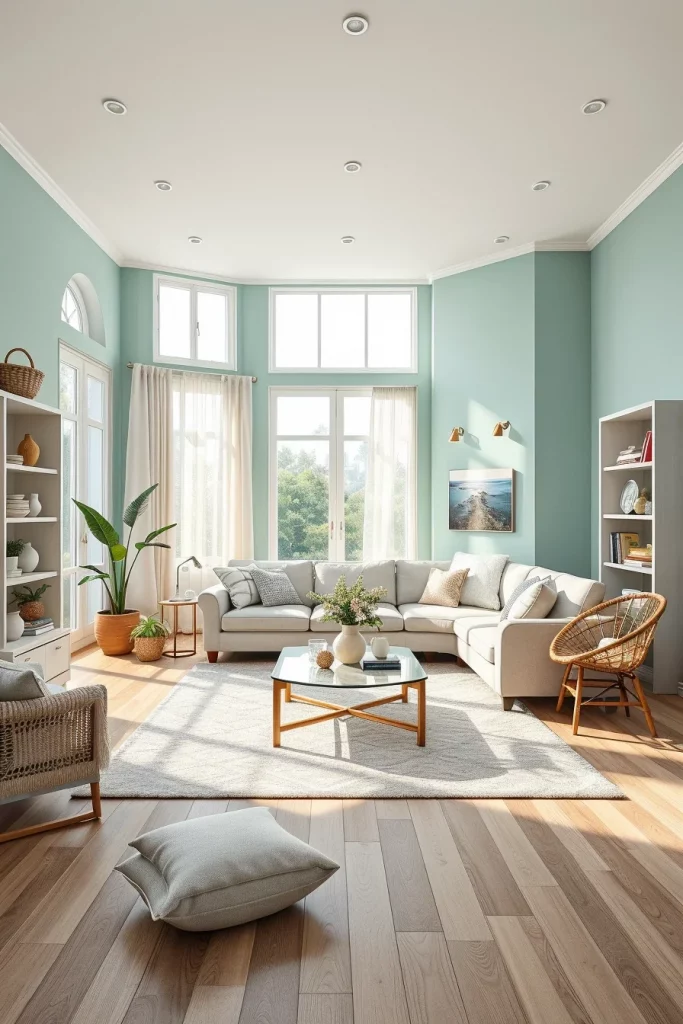
I usually combine mint walls with ivory sectionals, pale oak furniture, white shelving, and minimalist décor. Glass coffee tables help preserve openness, while boucle chairs and woven baskets introduce gentle texture without overwhelming the room. Sheer curtains maximize daylight, and subtle metallic accents add just enough sophistication to maintain a contemporary appearance. Fresh greenery further enhances the harmonious color palette.
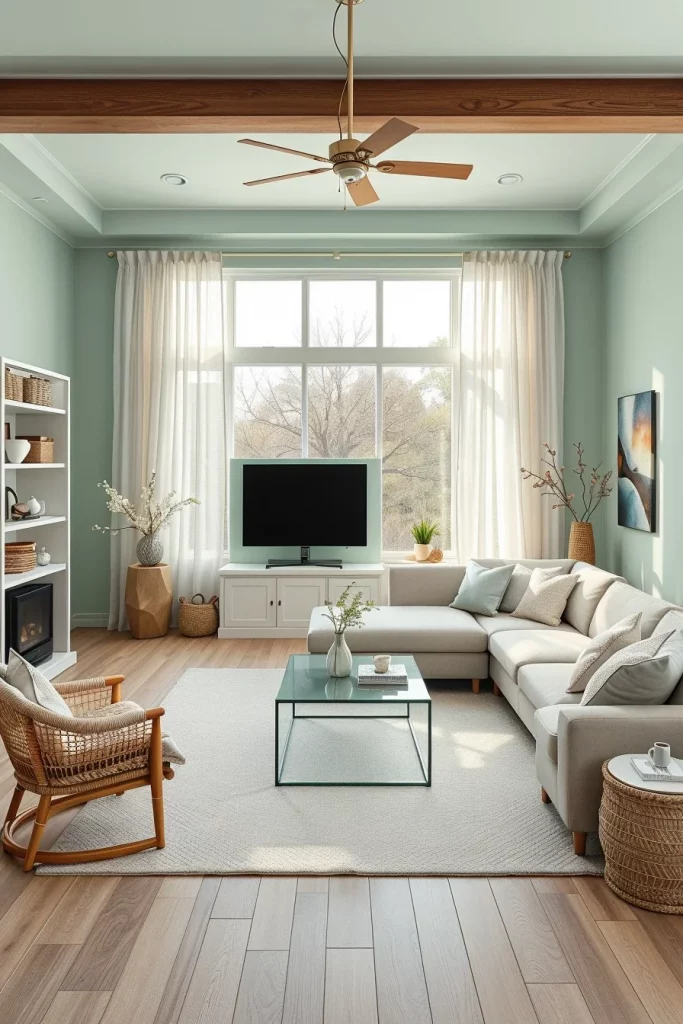
I appreciate recommendations from designers featured in House Beautiful who encourage layering soft textures instead of adding excessive decoration. Following this approach allows mint interiors to remain visually calm while still feeling personalized. In my own projects, I always prioritize quality materials over an abundance of accessories because the simplicity itself becomes the design statement.
For an even more functional space, I recommend incorporating hidden storage, integrated media cabinets, and adjustable lighting that transitions easily from daytime brightness to evening relaxation.
Earthy Green Living Homes With Natural Stone Accents
One of my favorite ways to create a grounded atmosphere is by combining earthy green tones with authentic natural stone. Olive, eucalyptus, and muted moss shades pair beautifully with limestone, travertine, slate, and textured marble surfaces. Together they create interiors that feel connected to nature while remaining distinctly contemporary. I often recommend this approach for homeowners seeking lasting style rather than short-lived trends.
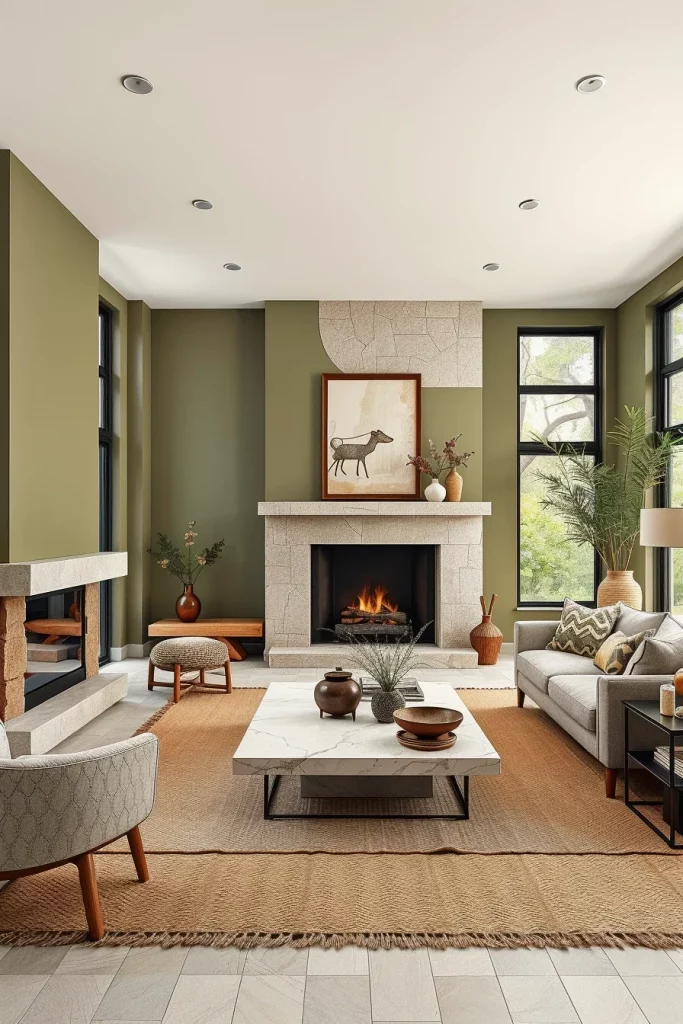
Stone fireplaces, feature walls, and oversized coffee tables introduce visual weight that complements soft green walls perfectly. Upholstered seating in warm neutral fabrics balances the harder stone textures, while solid wood side tables, woven rugs, and ceramic accessories complete the organic composition. Black-framed windows and understated metal lighting provide modern contrast without disrupting the natural color palette.
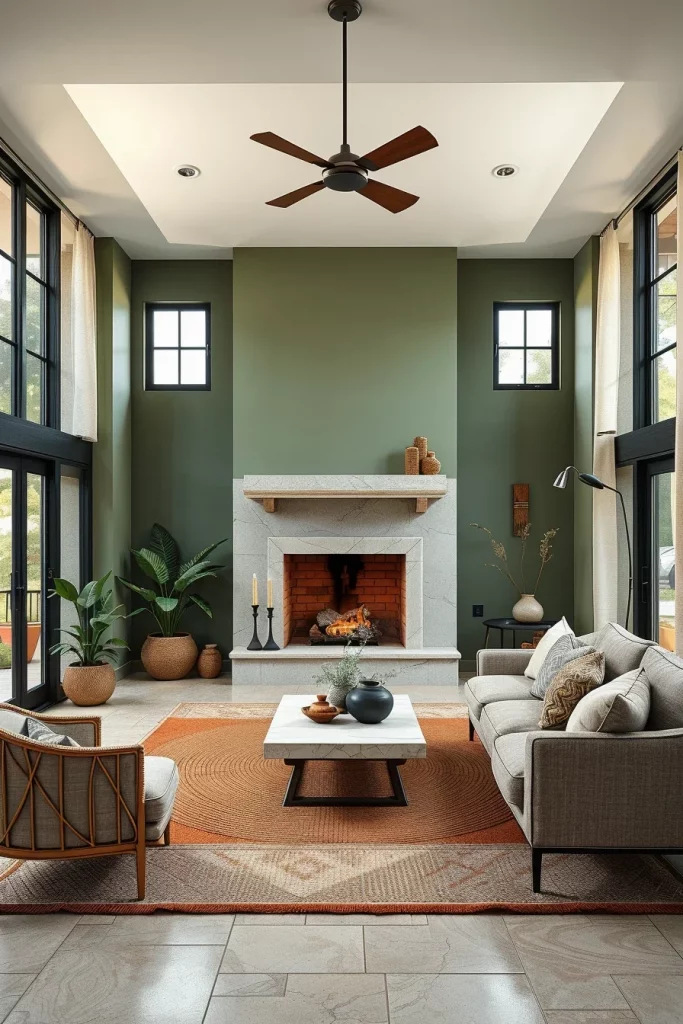
Many professional designers emphasize combining authentic materials instead of synthetic imitations whenever possible, and I fully support that recommendation. Genuine stone develops unique character over time, making every room feel individual and timeless. I believe these natural imperfections add authenticity that manufactured materials rarely achieve.
I also recommend incorporating oversized windows, textured plaster finishes, and carefully selected indoor greenery to strengthen the connection between the interior and the surrounding landscape.
Green Home Decor Featuring Curved Sofas And Rounded Furniture
Rounded furniture transforms a green living room into a space that immediately feels softer and more welcoming. I often use curved sofas as the focal point because they naturally encourage conversation while creating better visual flow throughout the room. Combined with soft sage or olive walls, these flowing shapes establish interiors that feel both elegant and comfortable. This is one of the most creative and stylish approaches for homeowners looking for unique yet practical living spaces.
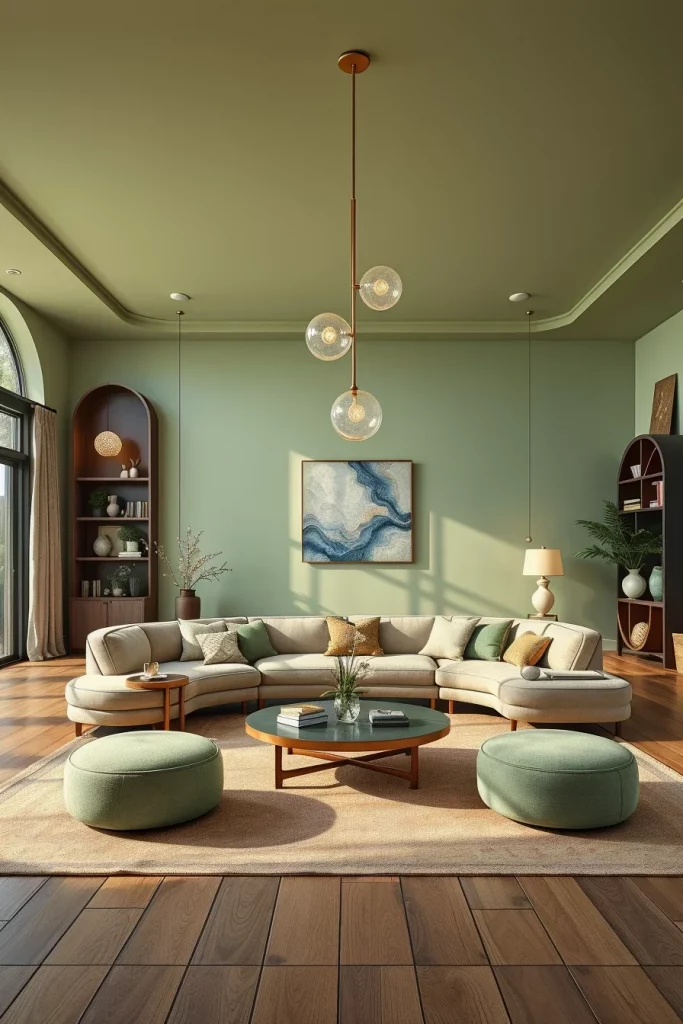
Beyond the sofa, I like introducing circular coffee tables, oval side tables, rounded ottomans, arched shelving, and spherical lighting fixtures. Together these elements remove the harshness created by excessive straight lines while maintaining excellent functionality. Soft textured fabrics, subtle wall molding, oversized rugs, and carefully selected artwork reinforce the gentle character of the room without making it appear overly decorative.
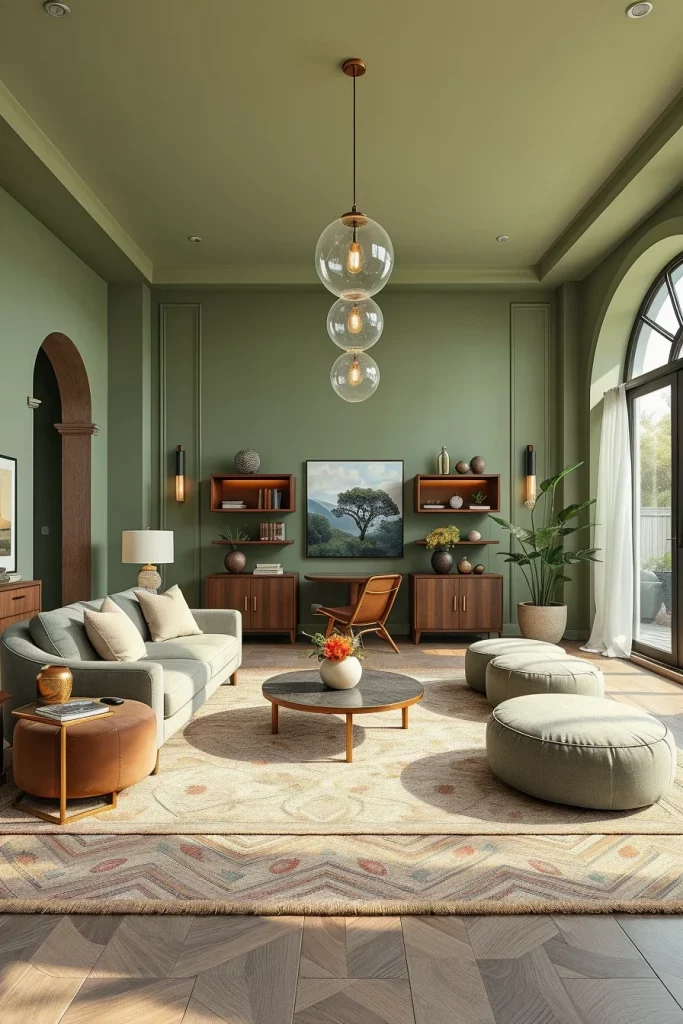
Personally, I find that rounded interiors remain visually appealing for many years because they prioritize comfort as much as aesthetics. Several contemporary interior designers have noted that organic forms help create more inviting living environments, and my own experience supports that conclusion. Clients often describe these spaces as feeling naturally relaxing from the moment they enter.
To finish this design, I would include concealed storage, layered lighting, and a few handcrafted decorative objects that reinforce the room’s organic personality while avoiding unnecessary visual clutter.
Statement Green Built-In Shelving For Stylish Storage
Built-in shelving painted in green instantly gives a living room a custom appearance while solving everyday storage challenges. I like using the shelving as an architectural feature instead of treating it as simple cabinetry. Deep olive, muted eucalyptus, or sophisticated sage finishes create depth and help books, ceramics, and artwork stand out without overwhelming the room. This approach keeps the space organized while contributing to the overall design rather than competing with it.
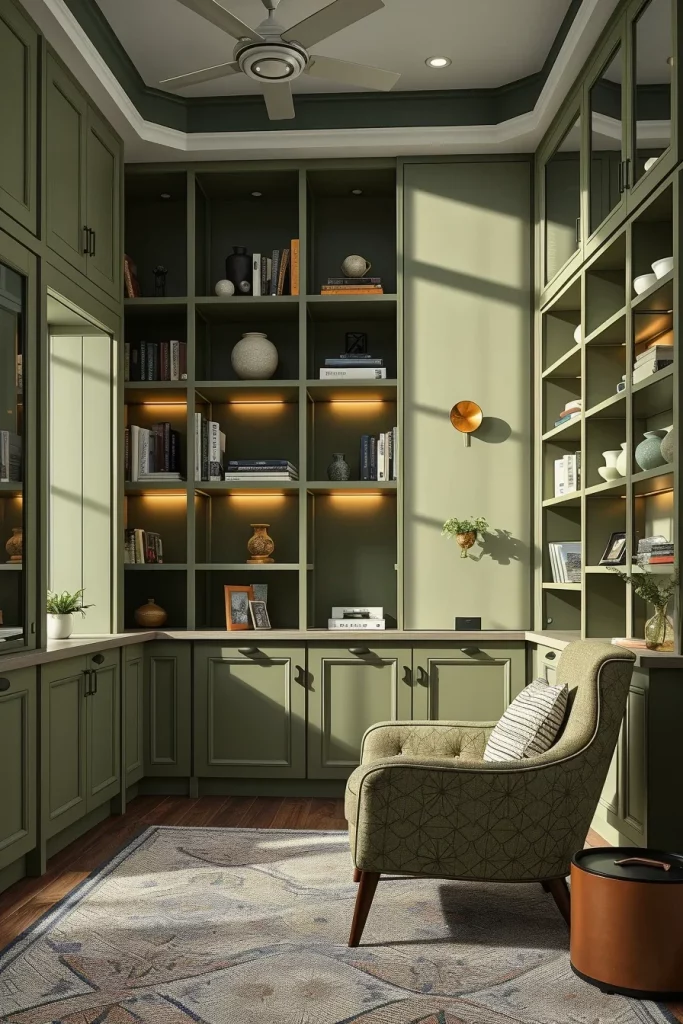
I usually design the shelving from floor to ceiling to maximize storage and create a seamless look. Open shelves display carefully selected books, sculptural objects, framed artwork, and handcrafted pottery, while lower cabinets conceal electronics, games, and seasonal items. Integrated LED lighting highlights decorative displays during the evening, and matte black or brushed brass hardware introduces subtle contrast. A comfortable reading chair positioned beside the shelving transforms this area into a cozy corner without requiring additional furniture.
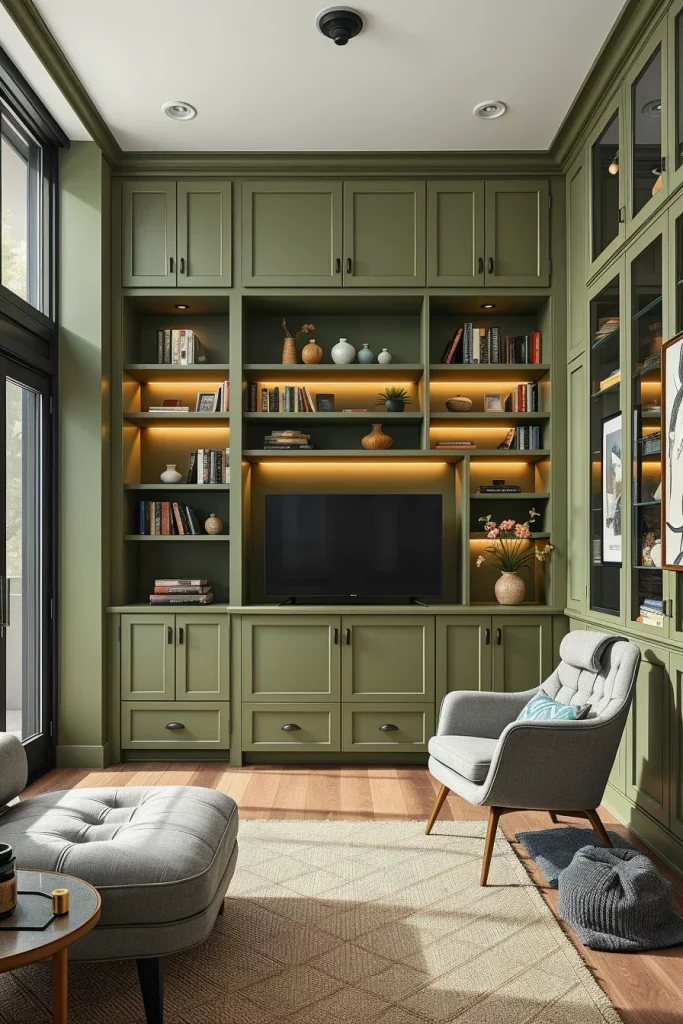
I have found that the most successful built-in storage feels curated rather than crowded. Designers frequently recommend leaving empty space between decorative objects so that each item can be appreciated individually. I follow the same principle because thoughtful styling creates a calmer atmosphere than filling every shelf from edge to edge.
To make this feature even more practical, I recommend adding concealed cable management, adjustable shelving heights, and integrated display niches for larger artwork or statement sculptures. These additions ensure that the shelving remains functional as storage needs evolve over time.
Green Living Rooms With Floor-To-Ceiling Windows And Natural Light
Natural light has an incredible effect on green interiors, and floor-to-ceiling windows allow every shade to reveal its full character throughout the day. I often recommend this design because daylight changes the appearance of green walls from morning to evening, creating a living space that constantly feels fresh. Large windows also strengthen the connection between the home and the surrounding landscape, making the interior feel more expansive.
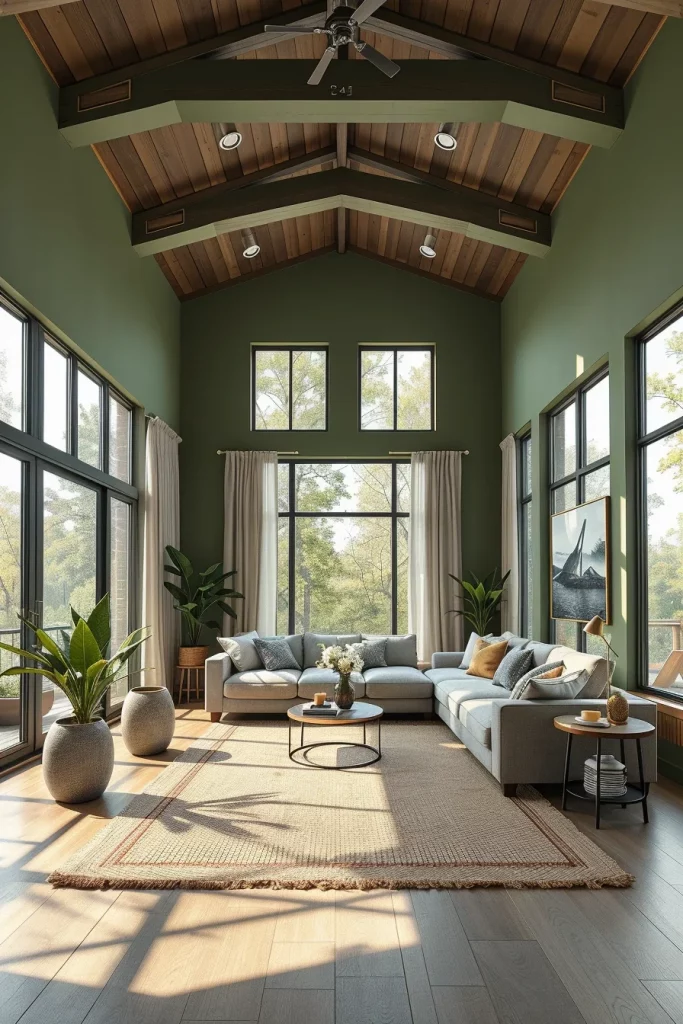
I prefer arranging furniture to take full advantage of the outdoor views. A generous sectional sofa faces the windows, while accent chairs create additional seating without blocking natural light. Low-profile coffee tables preserve open sightlines, and lightweight linen curtains soften the sunlight without hiding the view. Stone planters, simple decorative objects, and natural fiber rugs complement the green palette while maintaining a clean contemporary look.
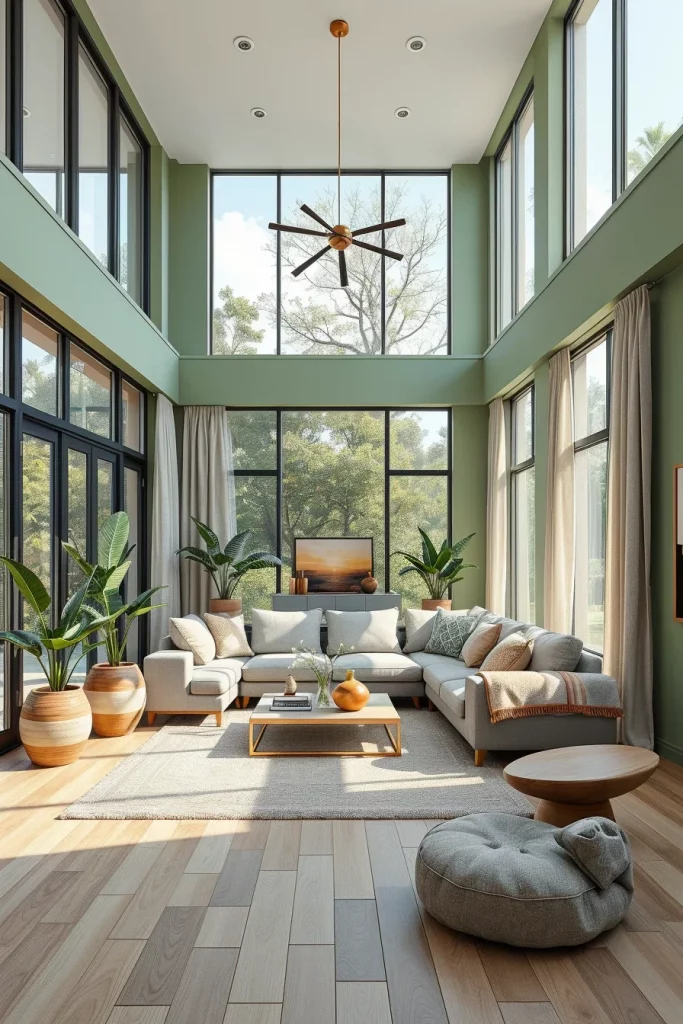
Many interior designers encourage homeowners to prioritize daylight before selecting artificial lighting, and I believe this is excellent advice. A room filled with natural light requires fewer decorative elements because the changing daylight itself becomes part of the design. I always try to preserve openness by avoiding oversized furniture that interrupts the visual flow.
I would also include automated window treatments, energy-efficient glazing, and comfortable seating positioned for both conversation and outdoor views. These details make the room enjoyable throughout every season while improving energy efficiency.
Modern Fireplace Designs In Green Living Spaces
A modern fireplace introduces warmth, balance, and a natural focal point within a green living room. I enjoy combining clean-lined fireplaces with green walls because the contrast between firelight and cool natural colors creates an inviting atmosphere throughout the year. Whether the fireplace uses stone, plaster, or large-format porcelain, it should feel integrated into the architecture rather than added as an afterthought.
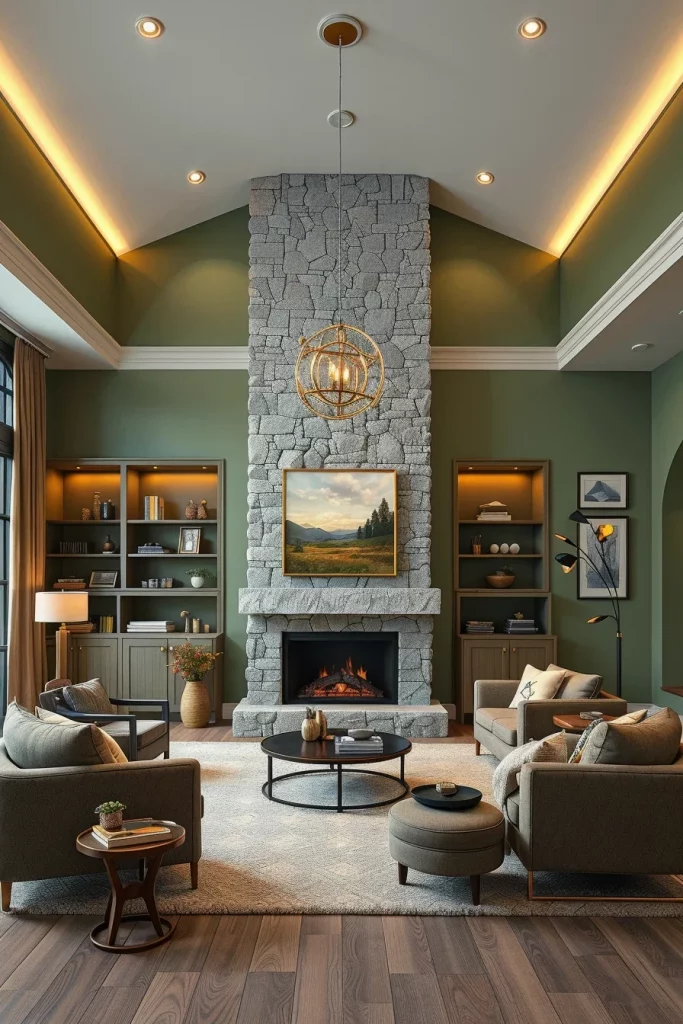
I typically pair the fireplace with built-in shelving, floating cabinets, and a comfortable seating arrangement that encourages conversation. A large area rug anchors the furniture, while carefully positioned floor lamps and recessed lighting maintain visual balance after sunset. Decorative accessories remain intentionally limited so the fireplace and surrounding materials receive the attention they deserve. I often include textured artwork above the mantel instead of a television to create a more residential atmosphere.
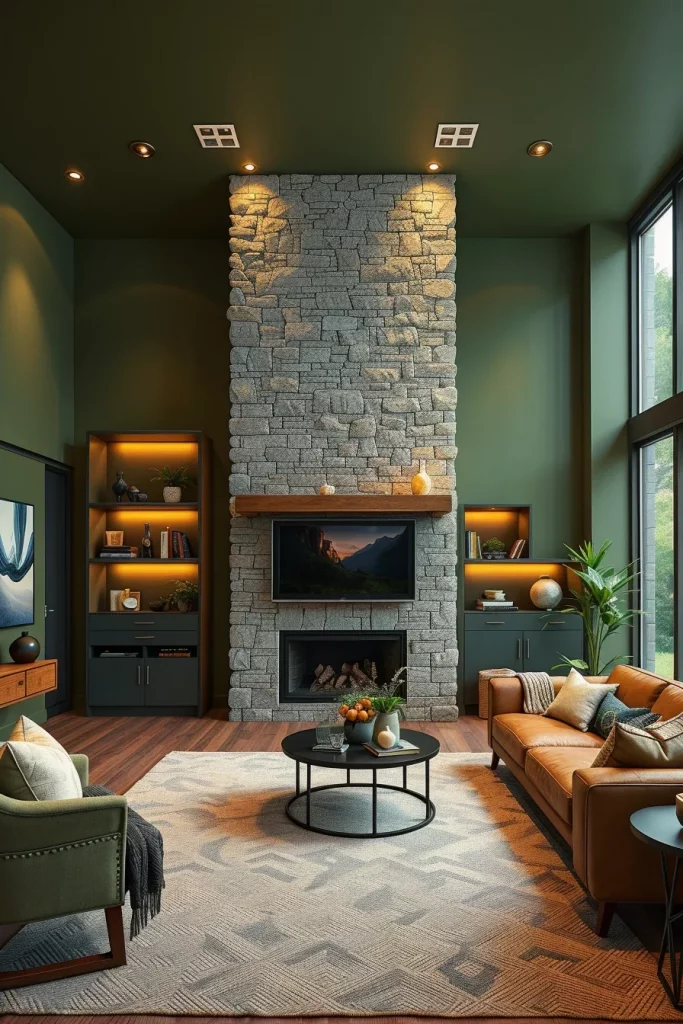
In my experience, timeless fireplace designs avoid excessive ornamentation. Many contemporary designers emphasize proportion, material quality, and simplicity over unnecessary decoration. I agree with this philosophy because restrained designs remain visually appealing for many years while adapting easily to future furniture changes.
For added comfort, I recommend incorporating concealed firewood storage where appropriate, heat-resistant stone surfaces, and integrated seating nearby to transform the fireplace into a natural gathering place.
Green Home Decor With Layered Lighting For A Warm Ambiance
Lighting determines how every shade of green appears, which is why I always design multiple layers instead of relying on a single ceiling fixture. Layered lighting allows the room to transition effortlessly from bright daytime activities to relaxing evenings. Soft green walls become warmer under carefully selected lighting, creating a comfortable environment that feels welcoming regardless of the season.
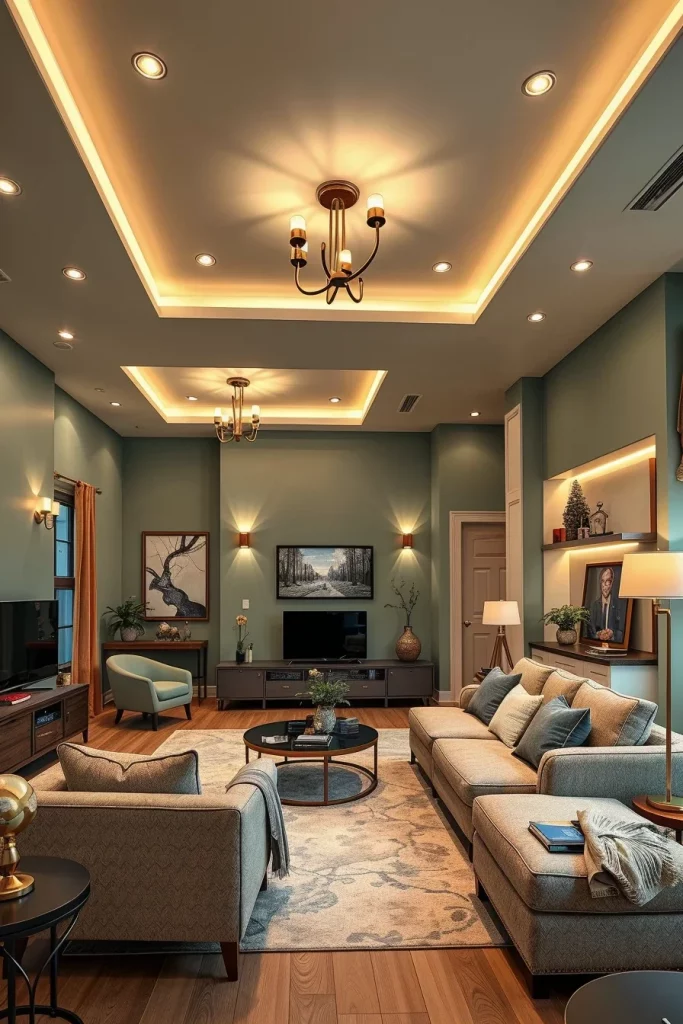
I combine recessed ceiling lights for general illumination, elegant pendant fixtures above seating areas, wall sconces for subtle architectural emphasis, and table lamps for intimate evening light. LED strips integrated into shelving and cabinetry provide additional depth while highlighting decorative objects. Fabric lampshades, smoked glass fixtures, and dimmable controls give the homeowner complete flexibility throughout the day.
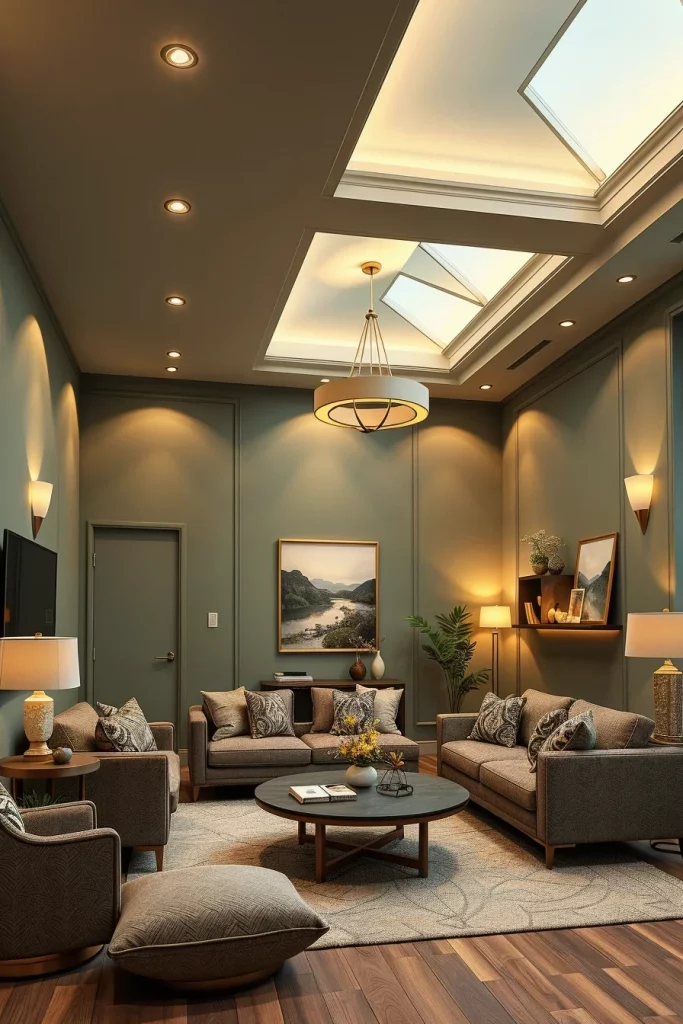
From my perspective, thoughtful lighting deserves the same attention as furniture selection. Interior design publications consistently emphasize that lighting shapes mood as much as color or layout, and I have found this to be true in every successful project. Proper lighting makes premium materials appear even richer while ensuring the room remains comfortable for everyday living.
To complete this concept, I recommend installing smart lighting controls with programmable scenes, allowing the atmosphere to change instantly for reading, entertaining, or quiet evenings at home.
Elegant Green Interiors Enhanced With Brass And Matte Black Details
One of my favorite ways to elevate green interiors is by combining rich green tones with carefully balanced brass and matte black accents. These contrasting finishes add sophistication without overwhelming the calming color palette. I often choose muted green walls because they allow metallic details to stand out gracefully while maintaining a refined, contemporary atmosphere.
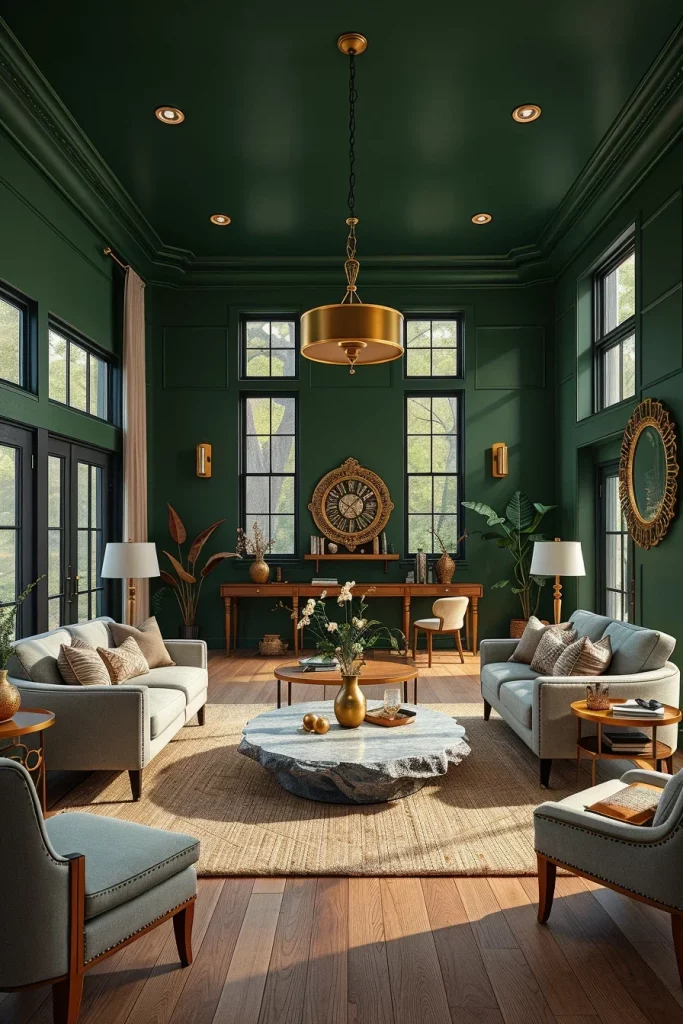
I like using matte black window frames, shelving brackets, lighting fixtures, and furniture legs to introduce crisp definition throughout the room. Brass appears through cabinet handles, coffee table frames, pendant lights, mirrors, and decorative accessories, adding warmth that complements the green surroundings. Upholstered seating in soft neutral fabrics, textured rugs, and stone side tables complete the composition while preserving visual harmony.
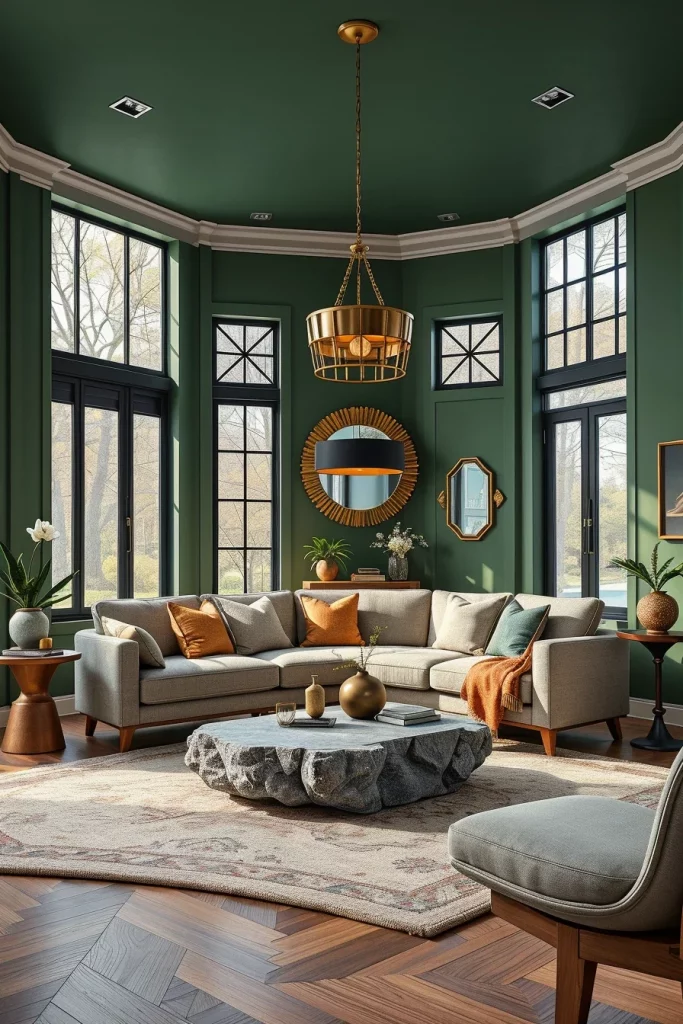
Personally, I believe restraint is essential when combining contrasting finishes. Rather than distributing brass and black evenly everywhere, I prefer repeating each finish intentionally to create rhythm throughout the room. This approach results in an interior that feels balanced, cohesive, and effortlessly sophisticated instead of overly decorated.
I would finish this design by incorporating custom artwork, oversized mirrors that reflect natural light, and carefully selected handcrafted accessories that reinforce the room’s elegant personality while maintaining its functional everyday comfort.
Creative Ceiling Designs That Complement Green Living Rooms
When I design a green living room, I always look upward before making any furniture decisions because the ceiling can dramatically influence how the entire room feels. A layered ceiling with subtle architectural detailing, recessed lighting, and soft curves creates a sophisticated backdrop for green walls or green furnishings without making the room feel overwhelming. I like combining matte white ceilings with natural-inspired geometric details that visually expand the room while maintaining a calm atmosphere. This approach works especially well in green living home decor because it enhances natural light and gives every green shade additional depth.
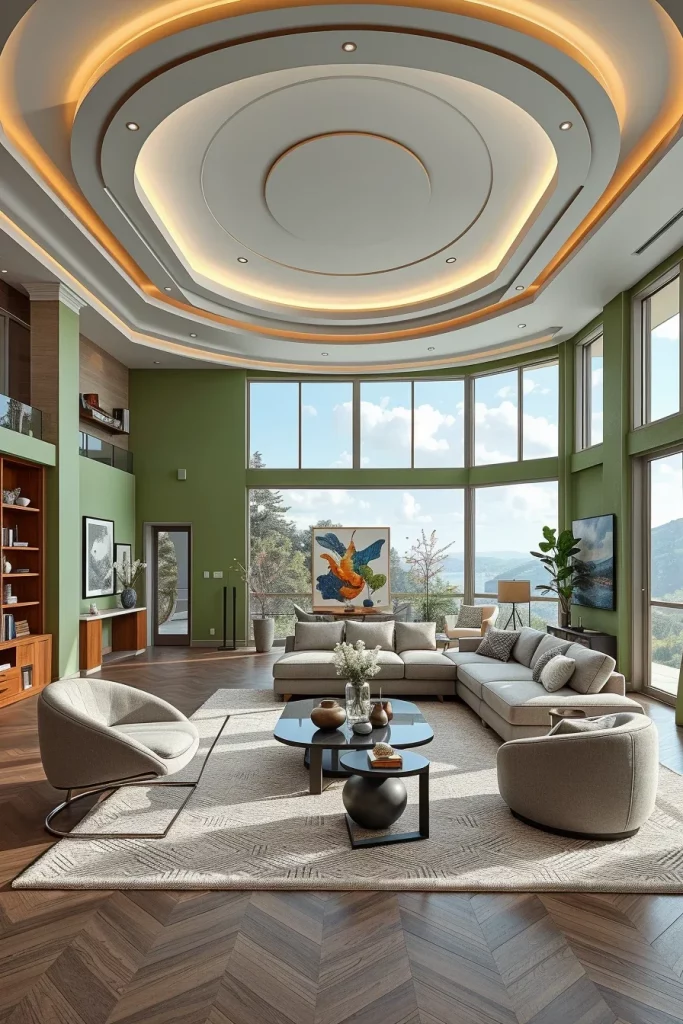
For furniture, I prefer a generously sized sectional sofa in a neutral fabric, paired with rounded accent chairs, a sculptural coffee table, and built-in shelving that blends into the walls. Linear LED lighting recessed into the ceiling highlights the architectural details while providing flexible illumination throughout the day. Large windows dressed with lightweight curtains allow sunlight to reflect from the ceiling, making every surface appear brighter and more balanced. Decorative ceramics, textured rugs, and carefully selected artwork complete the composition without competing with the ceiling design.
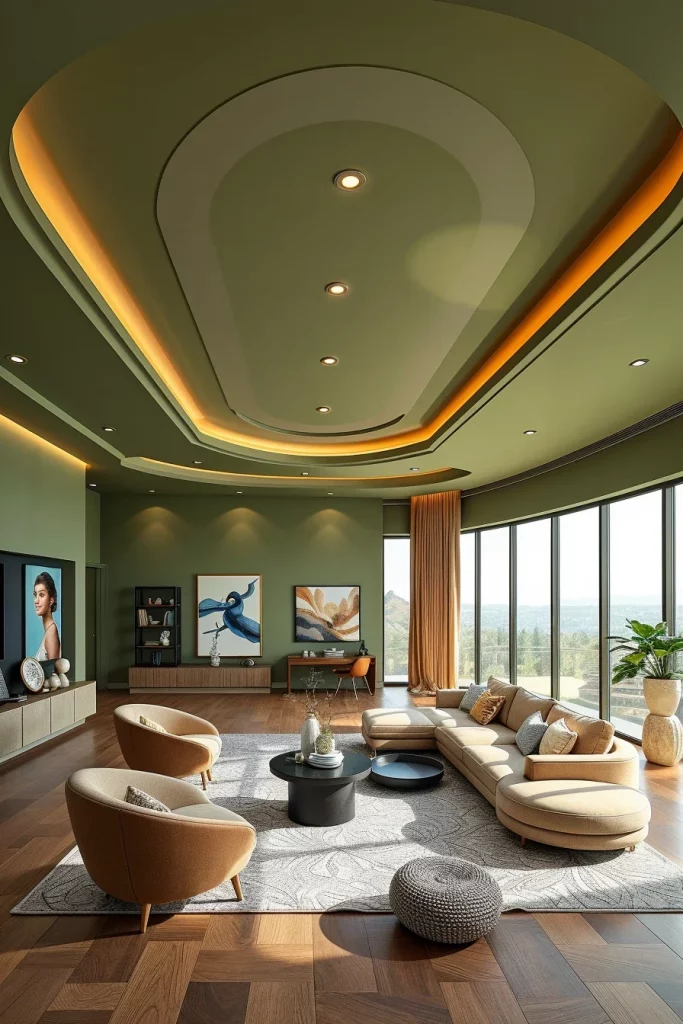
I often follow recommendations shared by Architectural Digest, which frequently emphasizes layering light sources instead of relying on one central fixture. In my experience, combining indirect ceiling lighting with floor lamps and table lamps creates a welcoming atmosphere that feels both elegant and practical. This strategy allows the ceiling to become a subtle design feature instead of simply a structural necessity.
To complete this space, I would also include discreet smart lighting controls, acoustic ceiling panels hidden within the decorative elements, and ceiling-integrated air vents that preserve the clean architectural appearance while improving everyday comfort.
Artistic Wall Panels And Textured Surfaces In Green Interiors
One of my favorite ways to make a green living room feel distinctive is by introducing textured wall treatments that add depth without excessive decoration. Three-dimensional wall panels, limewash finishes, fluted surfaces, or textured plaster create visual movement while maintaining a calm color palette. Instead of relying solely on paint, I prefer mixing different textures in complementary green tones to create interiors that immediately feel custom-designed. This is one of the easiest ways to achieve creative and stylish interiors without overcrowding the room.
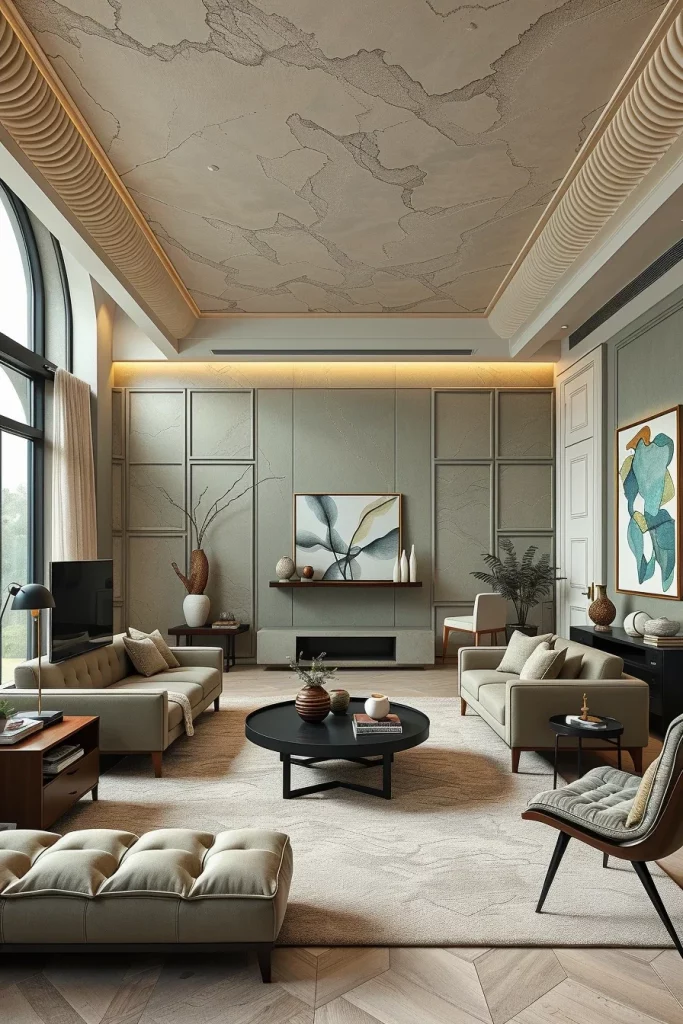
I usually pair textured walls with simple furniture that allows the architectural details to become the focal point. A comfortable modular sofa, oval coffee table, floating media cabinet, upholstered lounge chair, and minimalist shelving provide balance against the expressive wall finishes. Soft textiles in beige, cream, and muted olive prevent the space from feeling too monochromatic while adding warmth and comfort.
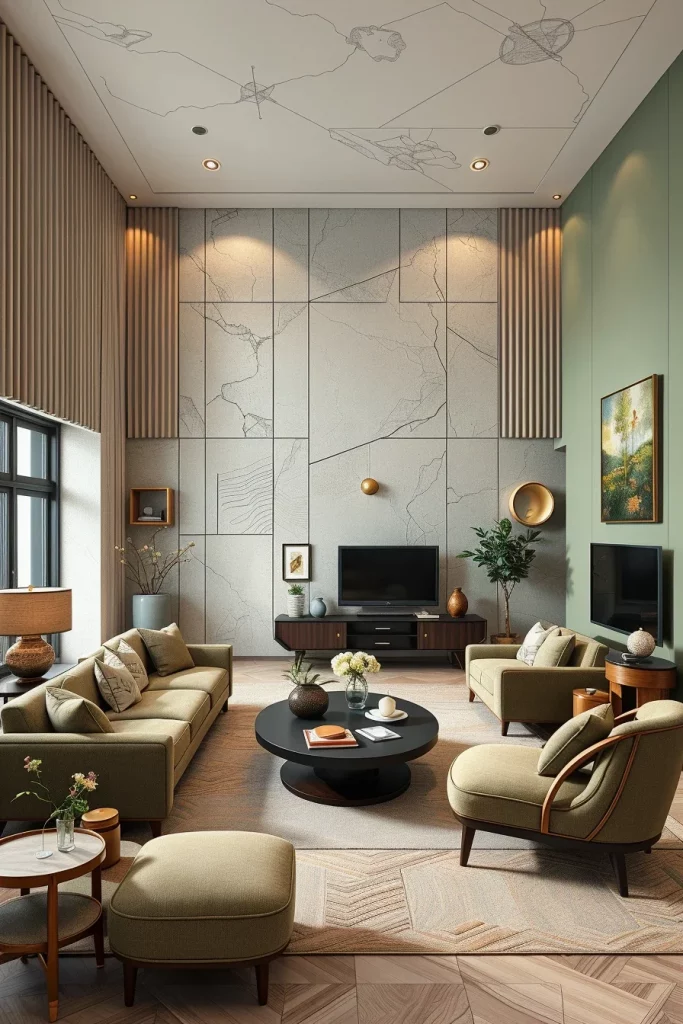
Personally, I appreciate the advice often shared by Elle Decor designers, who recommend creating contrast through texture rather than introducing excessive color variations. I have found that combining smooth upholstery with textured walls produces interiors that remain visually interesting for years instead of following short-lived trends.
If I wanted to elevate this room even further, I would incorporate concealed wall lighting, oversized contemporary artwork, and decorative niches that emphasize the texture while providing functional display space for curated accessories.
Monochromatic Green Living Rooms With Luxurious Depth
Designing an entire living room around varying shades of green may sound challenging, but I have found that layering multiple tones creates remarkable sophistication when done thoughtfully. Instead of using one flat shade, I combine sage, moss, olive, forest, and muted emerald throughout the room while balancing them with neutral architectural elements. This monochromatic approach creates unique green living homes that feel elegant rather than repetitive, especially when different finishes reflect light in subtle ways.
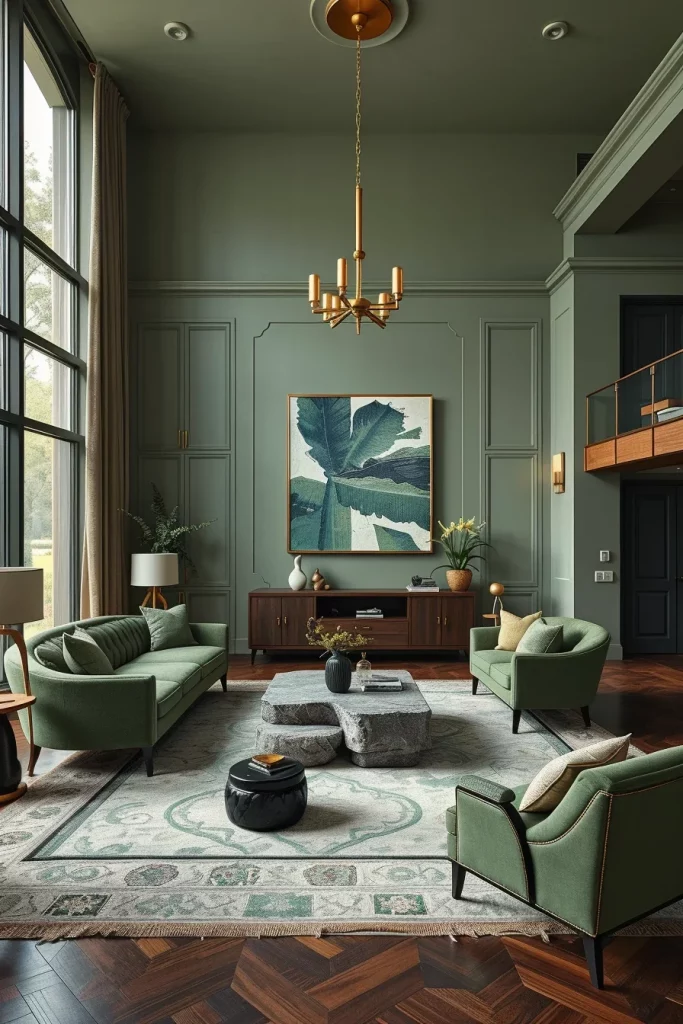
The furniture plays a crucial role in maintaining visual balance. I prefer an oversized curved sofa upholstered in soft green fabric, complemented by darker accent chairs, stone coffee tables, built-in cabinetry, and oversized area rugs with understated patterns. Metallic lighting fixtures in brushed brass or matte black introduce gentle contrast while maintaining the room’s refined atmosphere. Decorative cushions, sculptural vases, and oversized mirrors prevent the monochromatic palette from becoming visually flat.
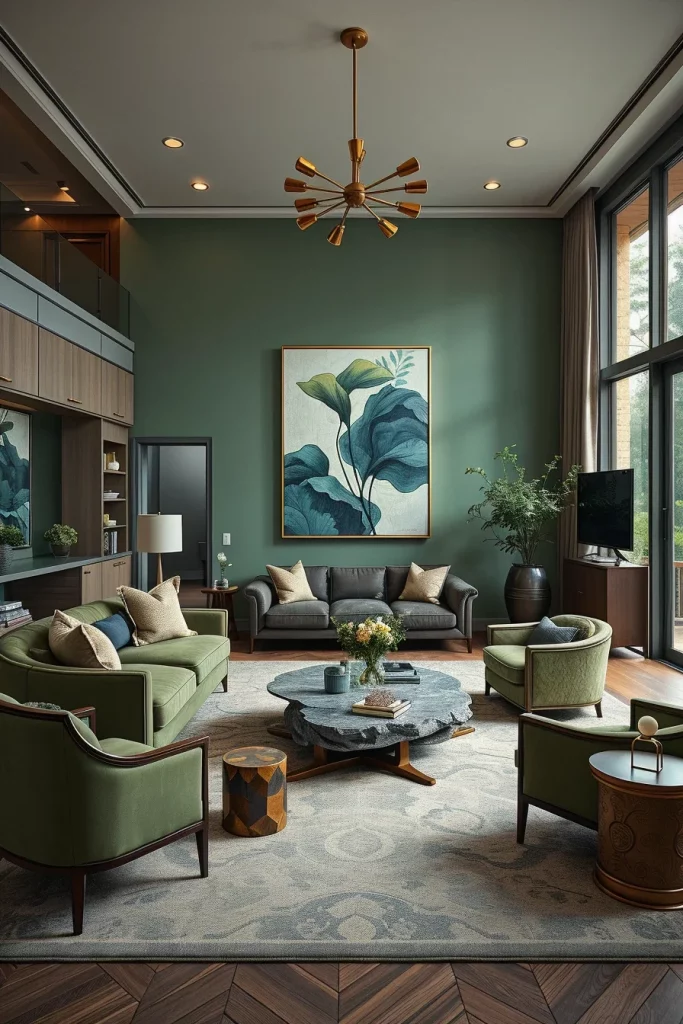
In my own projects, I always remind clients that monochromatic spaces depend more on texture than color variation. Designers featured in House Beautiful often recommend combining matte, woven, polished, and upholstered finishes within the same color family, and I completely agree because this creates depth that photographs beautifully while remaining comfortable to live in.
The finishing touches I would add include integrated bookshelves, large framed abstract artwork, layered window treatments, and subtle decorative lighting that enhances every shade of green during both daytime and evening hours.
Green Living Home Decor Inspired By Scandinavian Simplicity
Scandinavian-inspired interiors demonstrate that simplicity never has to feel empty. When I combine soft green accents with clean architectural lines, generous natural light, and carefully selected furnishings, the result is a room that feels peaceful from the moment someone enters. This approach to green living home decor focuses on functionality while creating an inviting environment that supports everyday living without unnecessary visual distractions.
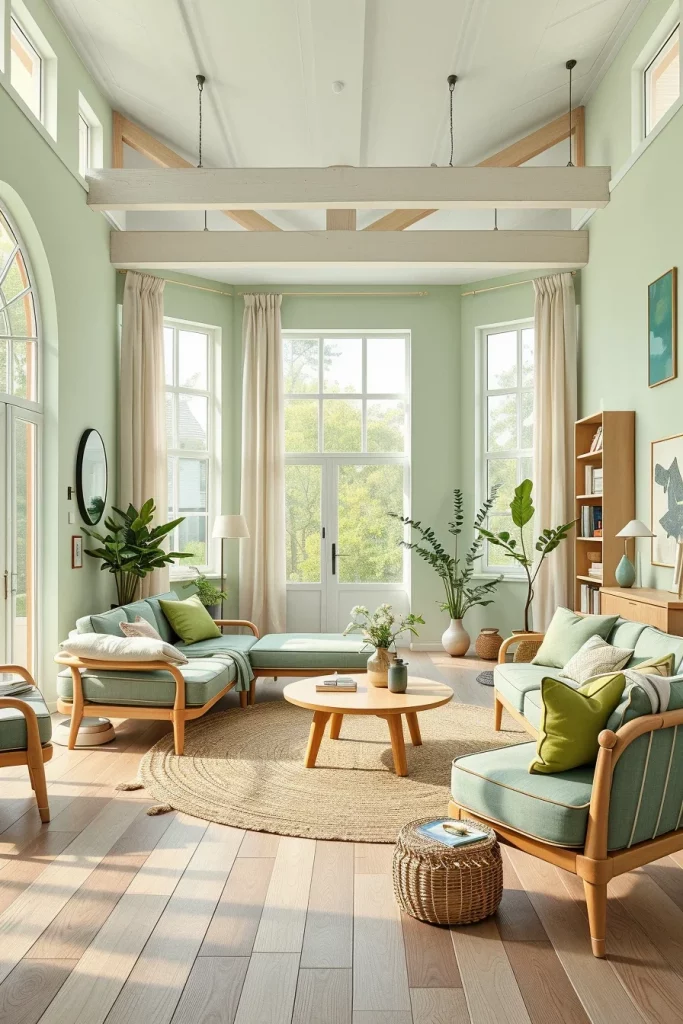
I usually furnish these spaces with low-profile sofas, light-toned wooden coffee tables, minimalist storage cabinets, woven area rugs, comfortable reading chairs, and understated lighting fixtures. The green palette appears through upholstered furniture, decorative cushions, wall colors, artwork, and carefully chosen accessories instead of dominating every surface. Open shelving allows decorative objects to breathe while maintaining the airy atmosphere associated with Scandinavian interiors.
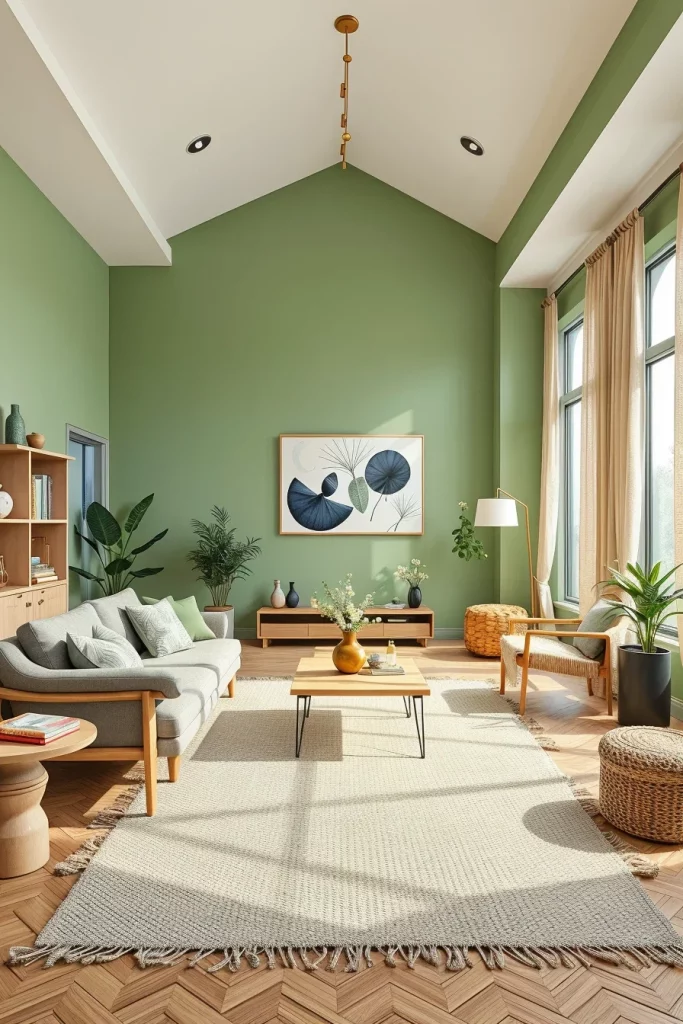
I appreciate that Scandinavian designers consistently prioritize quality over quantity. Following this philosophy has helped me create interiors that remain timeless despite changing design trends. Rather than filling every corner, I carefully edit each decorative element so that every piece contributes both beauty and functionality.
If I were completing this room today, I would introduce additional layered lighting, hidden storage solutions, oversized windows whenever possible, and natural woven textures that reinforce the relaxed Scandinavian atmosphere while complementing the green palette.
Japandi Green Living Spaces With Balanced Minimalism
Japandi interiors beautifully combine Japanese restraint with Scandinavian warmth, creating spaces that feel calming and exceptionally practical. I enjoy using muted green tones throughout these rooms because they reinforce the connection with nature while preserving the minimalist philosophy. The result is one of the most modern, unusual, and harmonious approaches to contemporary living room design, offering both visual simplicity and everyday comfort.
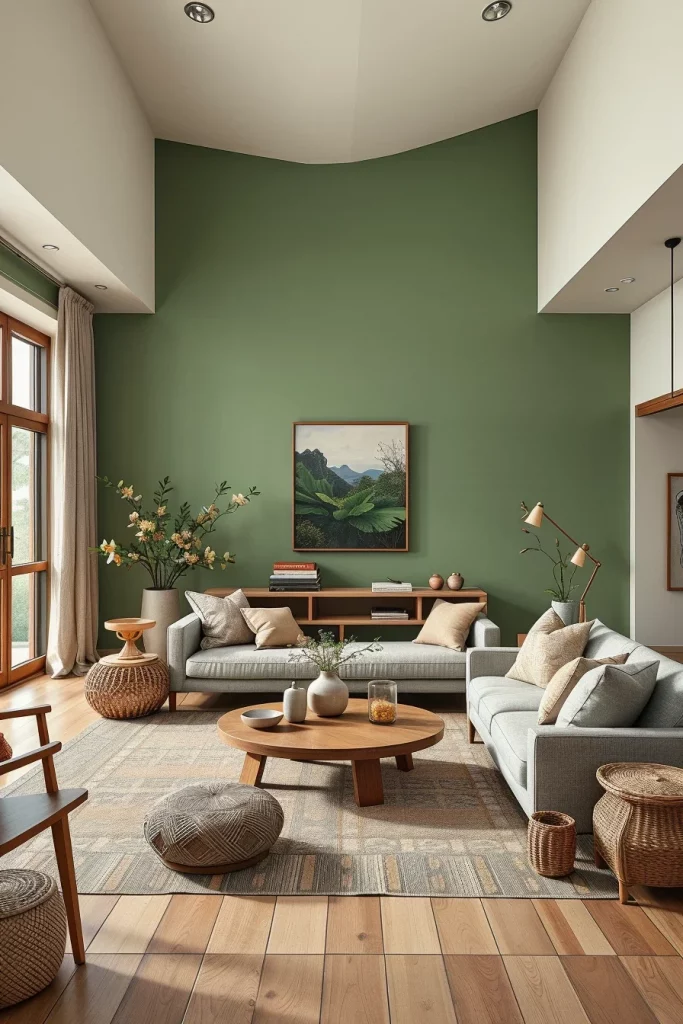
For furnishings, I prefer low-profile sofas, streamlined wooden sideboards, rounded coffee tables, minimalist shelving, upholstered accent chairs, and handcrafted decorative accessories. Every furniture piece should have a purpose while contributing to the room’s overall composition. Soft linen curtains, textured ceramics, woven baskets, and subtle lighting complete the interior without introducing unnecessary complexity. I intentionally leave generous open floor space to enhance the peaceful atmosphere.
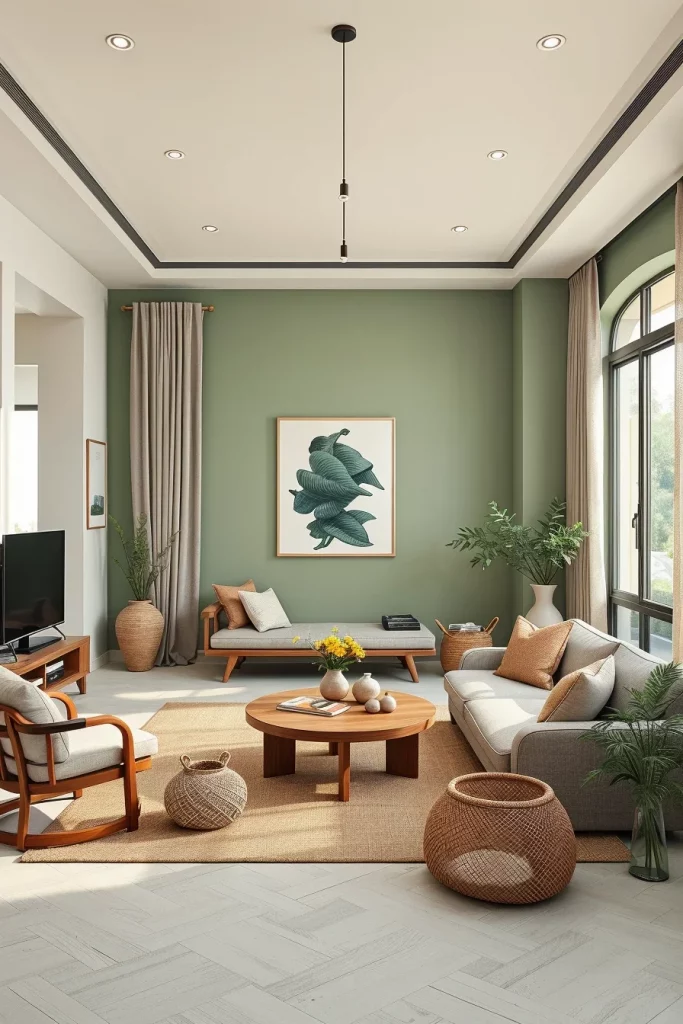
Personally, I have found that restraint often produces the most memorable interiors. Many designers featured in Dwell encourage homeowners to focus on craftsmanship and thoughtful proportions instead of excessive decoration. I share that perspective because carefully selected furniture always creates a stronger visual impact than filling a room with too many decorative objects.
To make this space even more functional, I would incorporate concealed storage, integrated ambient lighting, architectural niches, and a carefully balanced mix of matte and natural textures that preserve the calming character of Japandi design while supporting comfortable daily living.
Modern Open-Concept Green Living Homes With Seamless Flow
I believe that an open-concept layout allows green tones to shine because the color can flow naturally from one area to another without visual interruptions. Instead of treating the living room as an isolated space, I like connecting it with the dining area and kitchen through a consistent palette of soft greens, warm neutrals, and refined finishes. This creates one of the most practical approaches to green living home decor, making the entire home feel larger, brighter, and more cohesive. Thoughtfully placed architectural elements such as partial dividers, ceiling transitions, or built-in shelving help define each zone while preserving the openness of the layout.
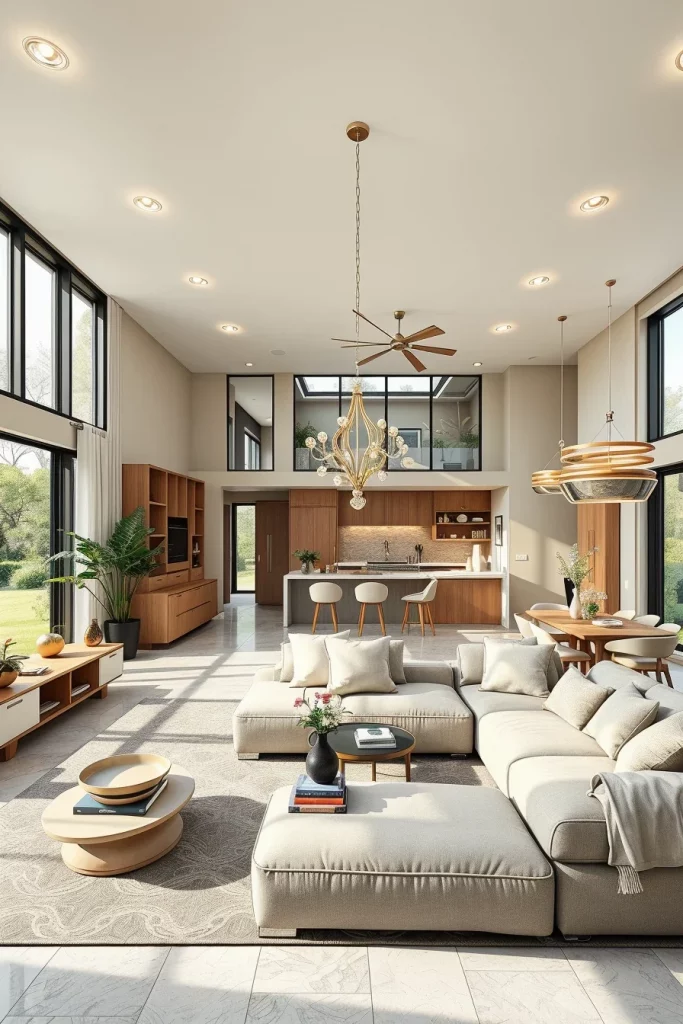
When furnishing an open-plan space, I prefer a large modular sofa positioned to define the living area, accompanied by comfortable swivel chairs, a sculptural coffee table, a generous area rug, and built-in cabinetry that visually connects to the kitchen. A dining table with upholstered chairs creates a smooth transition between functional zones, while pendant lighting and recessed ceiling lights establish different moods without disrupting the overall design. Decorative accessories remain minimal so that the architecture and green palette become the focal points.
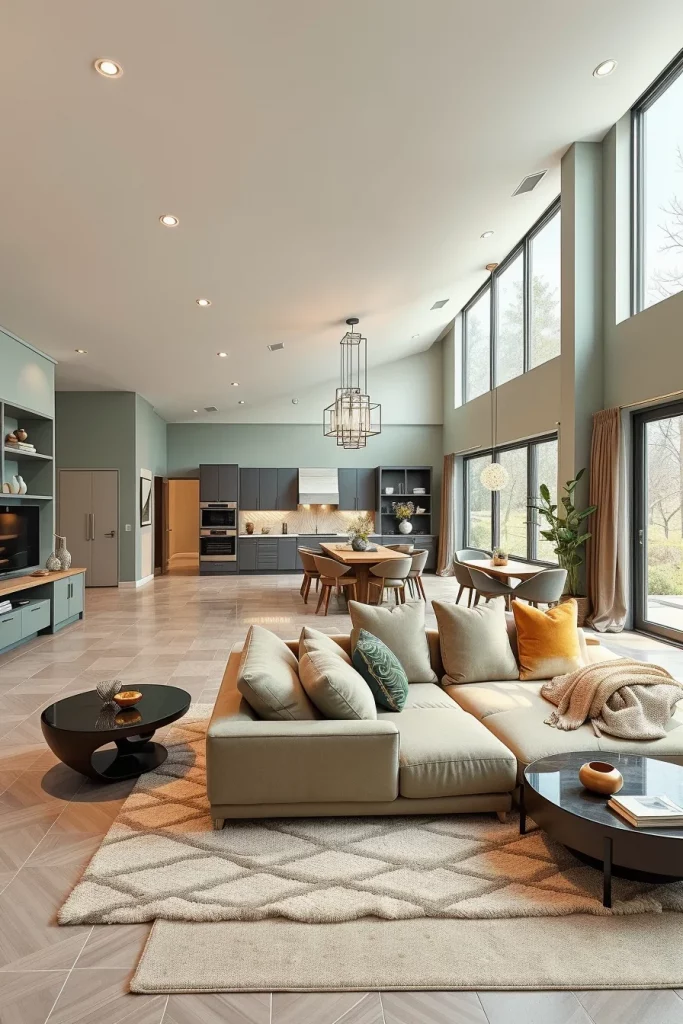
From my experience, open-concept homes work best when every material feels intentional. Better Homes & Gardens has often highlighted the importance of repeating finishes throughout connected spaces to maintain visual harmony, and I completely agree. Repeating similar textures and colors makes the home feel thoughtfully designed instead of pieced together over time.
To complete this layout, I would add concealed storage, integrated smart lighting, oversized mirrors that reflect natural light, and a few sculptural decorative accents that strengthen the connection between each living area.
Bold Green Statement Pieces That Transform Everyday Interiors
Sometimes a single dramatic furniture piece completely changes the personality of a room. I enjoy designing interiors where one bold green element immediately captures attention while the surrounding decor remains calm and balanced. A deep emerald curved sofa, an oversized upholstered lounge chair, or a custom green media wall can become the centerpiece of the room without overwhelming the overall composition. This approach creates creative, stylish, and unique green living homes that remain elegant for many years.
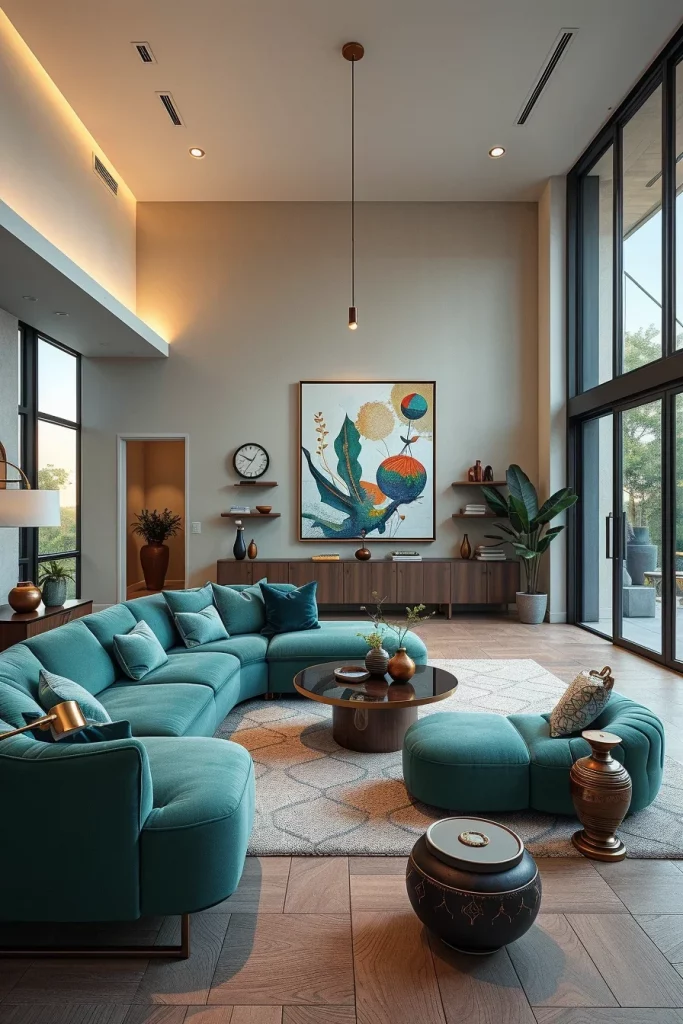
I typically balance statement furniture with neutral flooring, soft wall colors, modern lighting, and simple architectural details. Sculptural coffee tables, sleek sideboards, textured rugs, oversized mirrors, and carefully selected decorative objects support the focal point rather than competing with it. Layered lighting ensures that the green centerpiece looks equally beautiful during bright afternoons and cozy evenings.
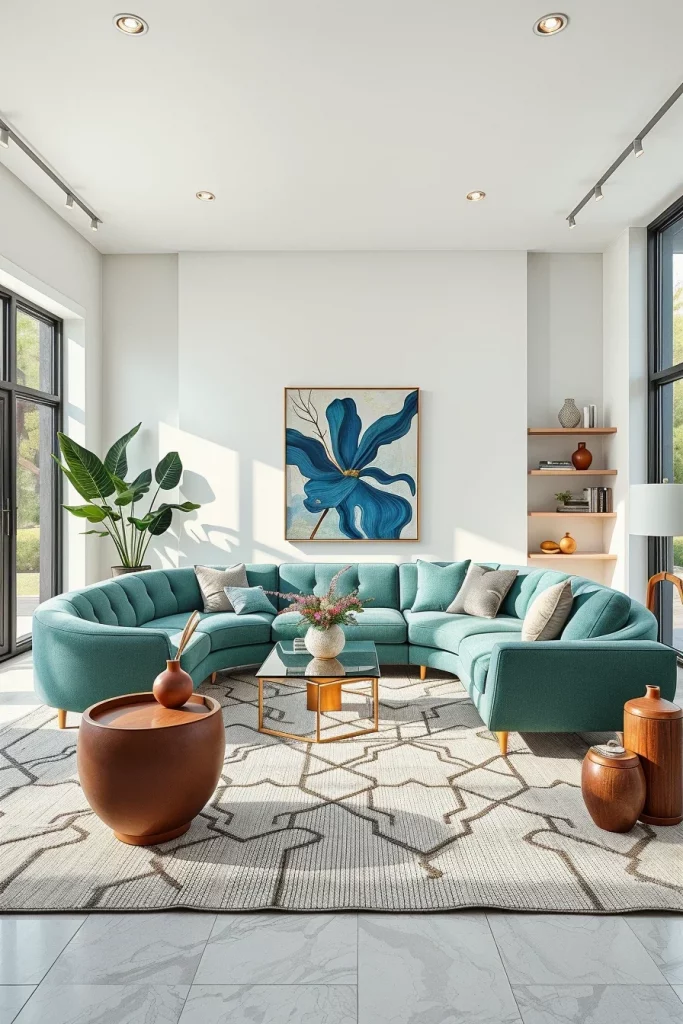
Personally, I have found that confidence is essential when introducing statement pieces. Interior designers featured in Architectural Digest often recommend allowing one exceptional object to become the visual anchor of the room instead of filling the space with multiple competing focal points. I follow the same principle because it creates interiors that feel curated rather than cluttered.
To strengthen this design, I would include subtle metallic accents, oversized abstract artwork, integrated shelving, and carefully chosen textiles that echo the statement piece without repeating the exact same shade of green throughout the room.
Mixing Green With Warm Neutral Tones For Harmonious Living Spaces
One of my favorite color combinations pairs green with warm neutrals because it creates interiors that feel balanced throughout every season. Soft shades of olive, sage, eucalyptus, or moss become even more inviting when surrounded by creamy whites, warm beige, taupe, sand, and soft caramel accents. This combination allows green living home decor to feel sophisticated without becoming overly bold, making it suitable for both compact apartments and spacious family homes.
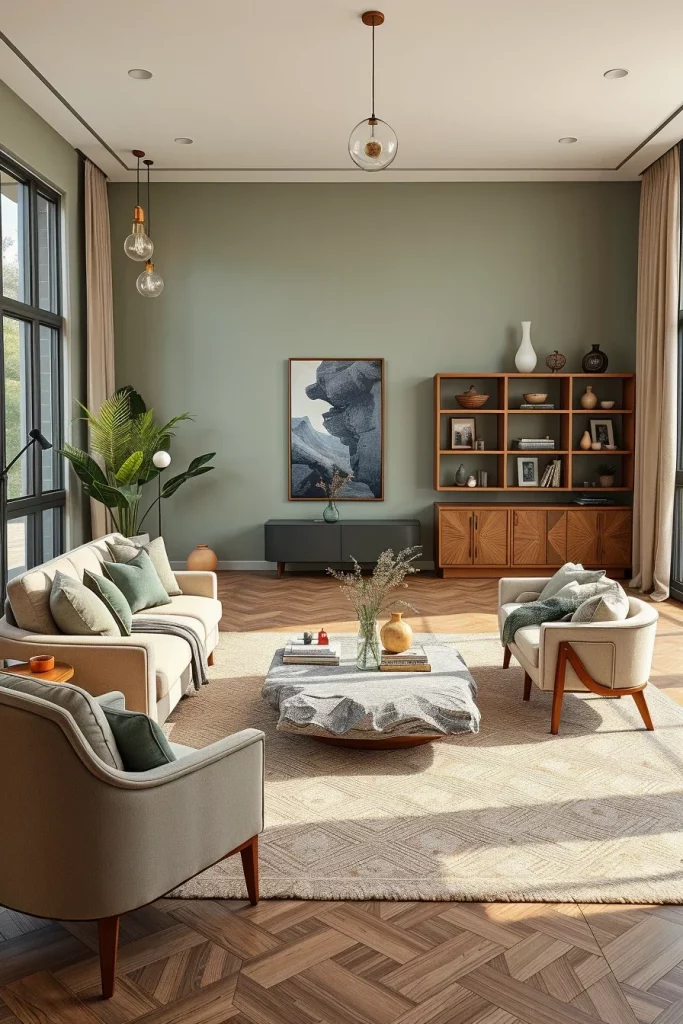
For furnishings, I usually choose a neutral upholstered sofa enhanced with green accent cushions, complemented by comfortable armchairs, textured area rugs, stone coffee tables, minimalist shelving, and elegant side tables. Warm-toned curtains soften the daylight, while decorative ceramics, woven baskets, and contemporary artwork introduce additional layers of texture. The result is an interior that feels welcoming from morning until night.
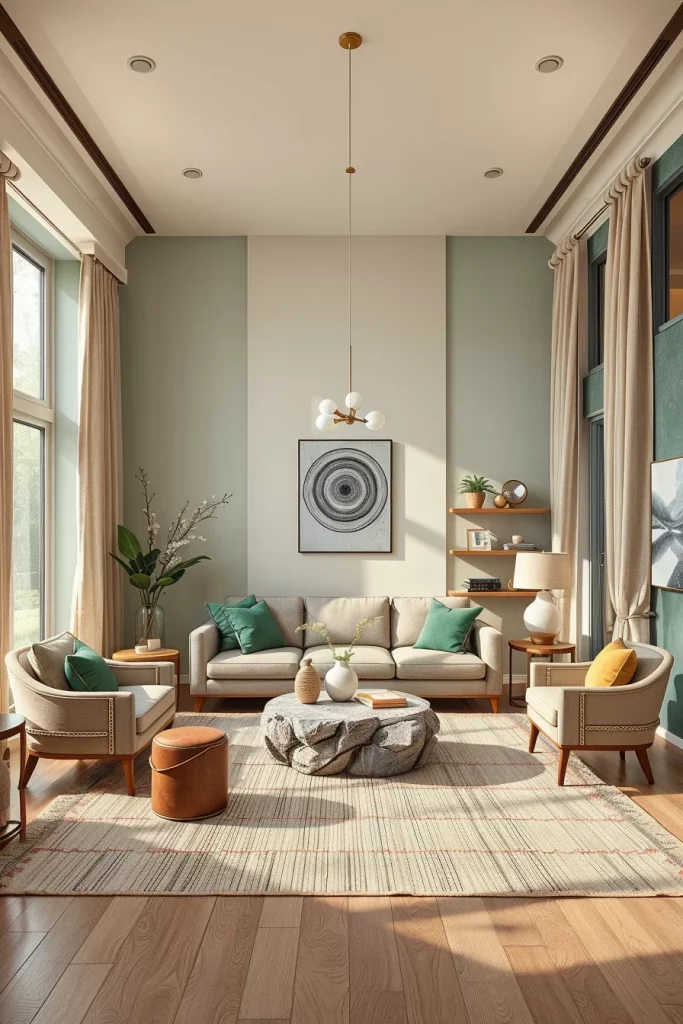
In my own projects, I consistently notice that balanced color palettes remain appealing longer than trend-driven combinations. Designers from House Beautiful frequently recommend using neutral tones as a foundation before introducing richer colors, and I have found this advice particularly valuable when designing living spaces intended for everyday use.
If I wanted to refine this room further, I would add layered lighting, custom built-in storage, large framed artwork, and a carefully selected mix of natural-inspired textures that create additional warmth without making the room feel visually heavy.
Seasonal Green Living Home Decor Ideas That Stay Stylish Year-Round
I appreciate interiors that evolve naturally throughout the year without requiring a complete redesign every season. A timeless green foundation makes this easy because furniture, wall colors, and architectural finishes remain consistent while smaller decorative elements change with the seasons. This creates modern and highly functional interiors that always feel fresh while avoiding unnecessary renovations or excessive spending.
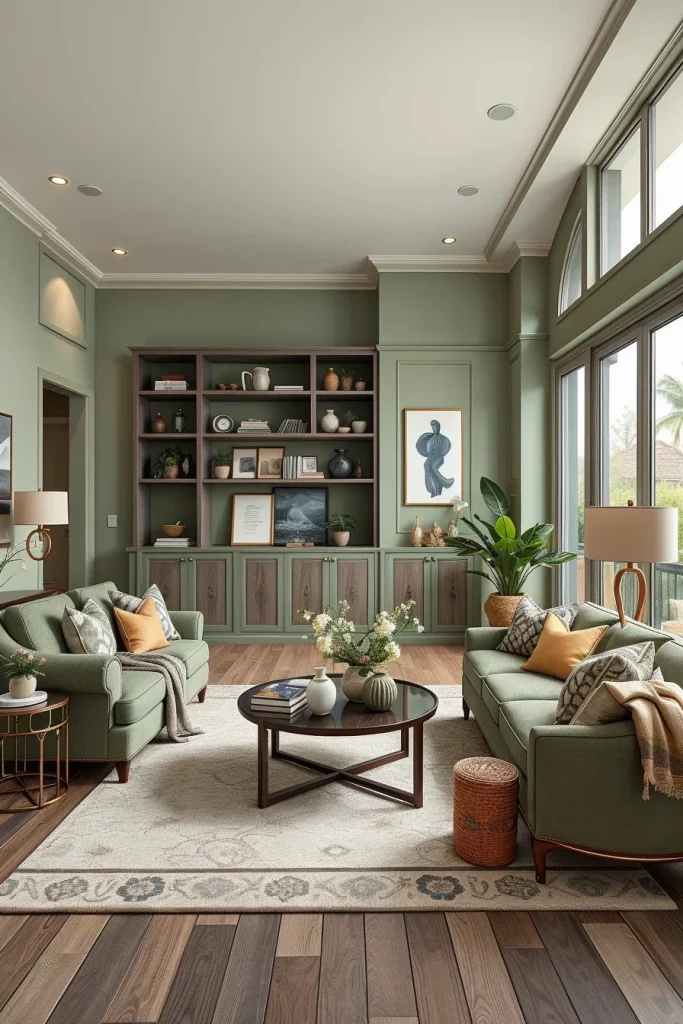
My preferred approach begins with permanent furniture in versatile colors, including a comfortable sofa, timeless coffee table, built-in shelving, elegant storage cabinets, and quality lighting. Seasonal updates come through cushions, throws, artwork, decorative bowls, candles, and carefully selected accessories in complementary tones. During warmer months I choose lighter textiles, while cooler seasons call for richer fabrics and layered textures that create additional comfort.
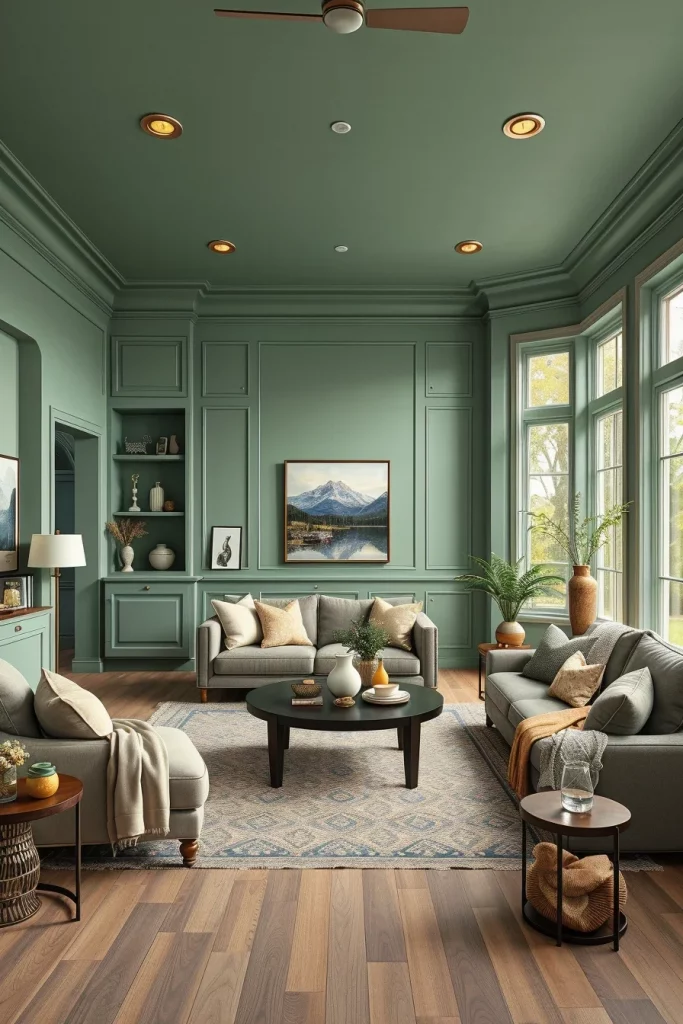
Personally, I enjoy refreshing interiors gradually instead of replacing major furniture pieces. Many professional designers recommend investing in quality foundational furnishings while allowing decorative accessories to introduce seasonal personality. I believe this creates more sustainable interiors that remain visually interesting throughout the year.
To make this concept even more practical, I would incorporate flexible shelving, hidden storage for seasonal accessories, adjustable lighting systems, and interchangeable artwork that can easily refresh the room without altering its overall character.
Designing A Unique Green Living Home That Reflects Your Personal Style
The most memorable interiors are always those that reflect the people who live in them. While design trends offer inspiration, I believe the most successful green living home decor comes from combining timeless principles with personal preferences. Whether you prefer subtle sage tones, dramatic emerald accents, sculptural furniture, or minimalist architecture, every decision should contribute to a home that feels authentic rather than copied from a catalog.
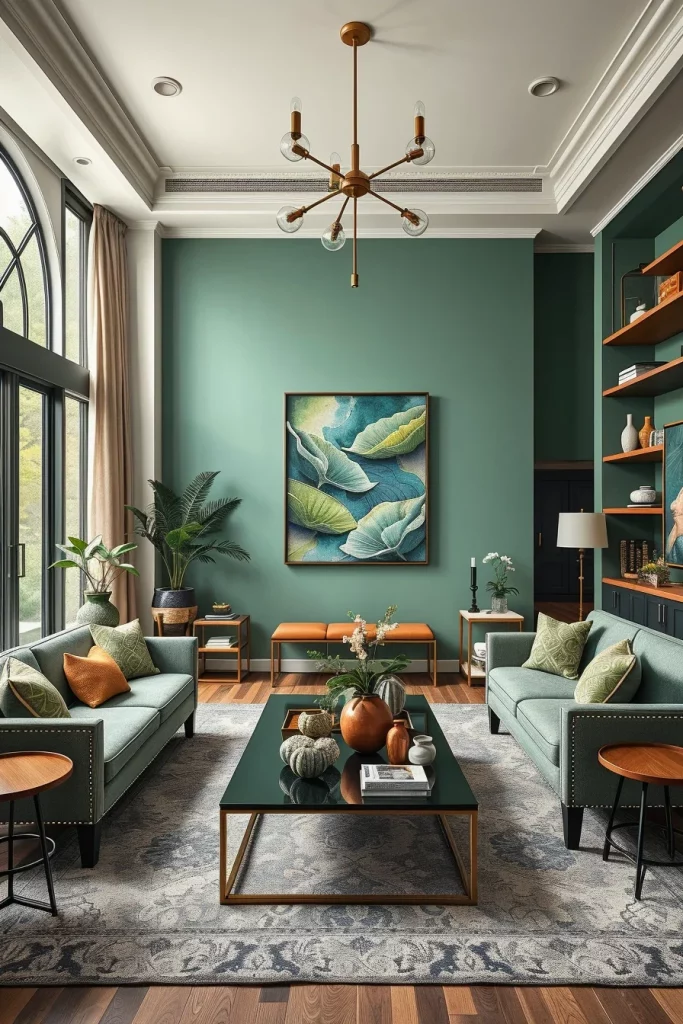
I like building these interiors around furniture that supports everyday living, including comfortable seating, functional storage, statement lighting, versatile coffee tables, and carefully selected decorative accessories. Personal artwork, meaningful objects, curated books, handcrafted ceramics, and textured textiles help transform a beautiful room into a welcoming home. Every item should contribute to both function and personality.
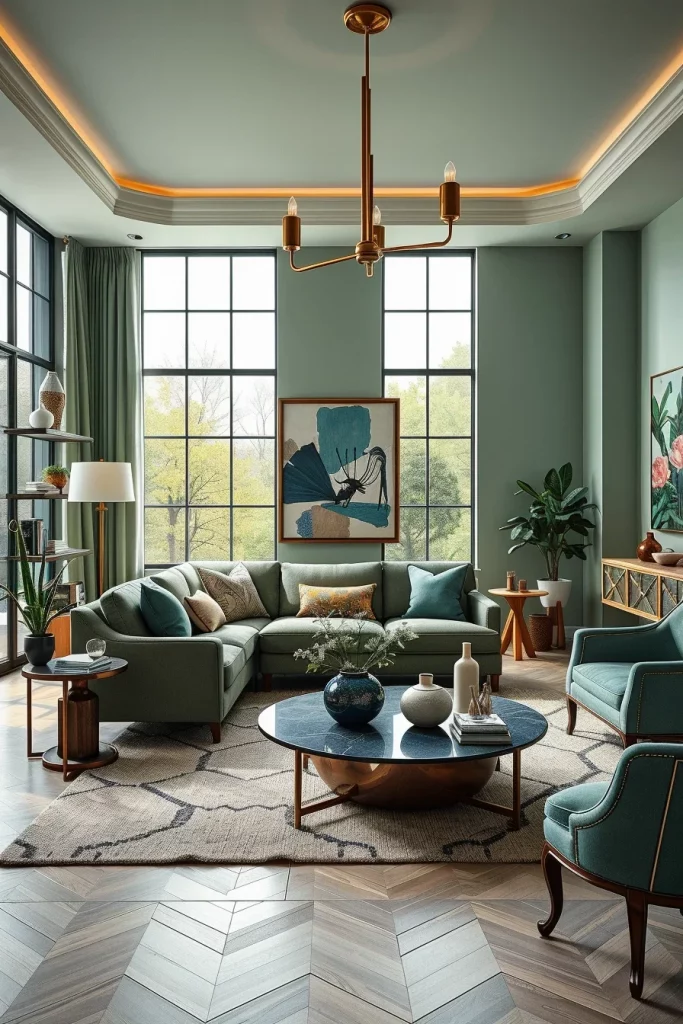
Throughout my experience, I have learned that the best interiors evolve naturally instead of being completed all at once. Designers featured by Elle Decor often encourage homeowners to collect meaningful pieces over time rather than rushing to fill every empty space. I have found this approach creates homes with genuine character that continue improving for years.
To complete a truly personalized living room, I would include custom storage solutions, layered lighting, flexible seating arrangements, oversized mirrors, and architectural details that support both everyday comfort and long-term adaptability.
Green living home decor offers endless opportunities to create a home that feels stylish, comfortable, and inspired by nature. Whether you prefer soft, subtle shades or bold statement designs, green adds warmth, character, and timeless appeal to any living space. Use these ideas as inspiration to design a home that reflects your personality while creating a relaxing and inviting atmosphere you’ll enjoy every day.