
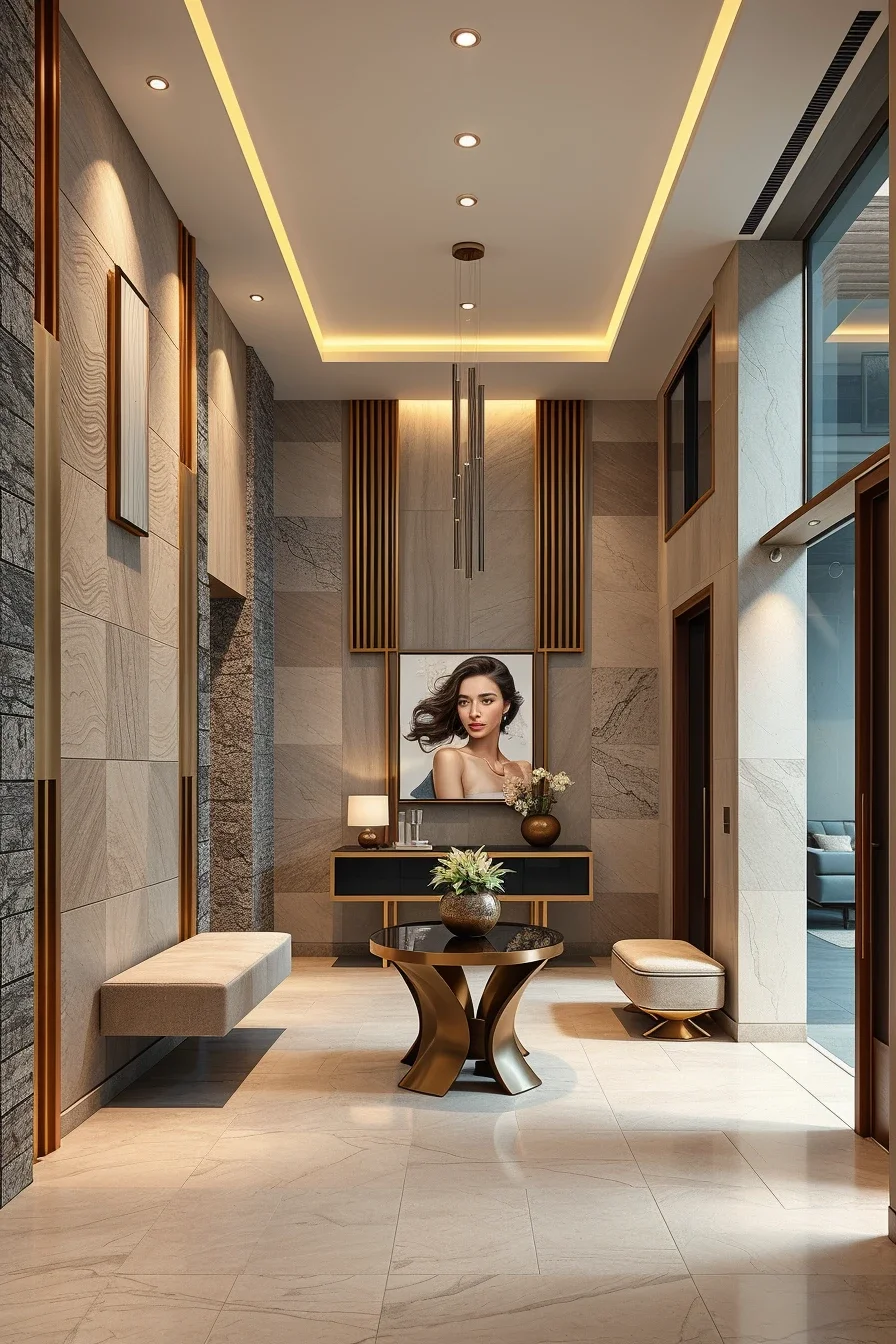
The hallway is the first space guests see, making it the perfect place to showcase your personal style. Stylish hallway wall decor can instantly transform a plain entryway into a memorable and inviting space. From sculptural installations and oversized artwork to creative mirrors and textured finishes, there are countless ways to make hallway walls stand out. Thoughtfully chosen decor can also add depth, character, and visual interest to even the narrowest hallways. Whether you prefer modern minimalism or bold artistic statements, unique wall designs can elevate the entire look of your home. In this article, you’ll discover inspiring hallway wall decor ideas that combine creativity, function, and sophisticated style.
Sculptural Wall Panels That Turn Hallways Into Art Galleries
I often recommend sculptural wall panels when homeowners want their hallway to feel more like an art gallery than a transitional space. These three-dimensional installations instantly add depth, texture, and personality while maintaining a refined aesthetic. In modern interiors, oversized sculptural panels in plaster, resin, or carved composite materials create a dramatic focal point without overwhelming the corridor. This is one of my favorite hallway wall decor ideas stylish enough for both minimalist and contemporary homes.
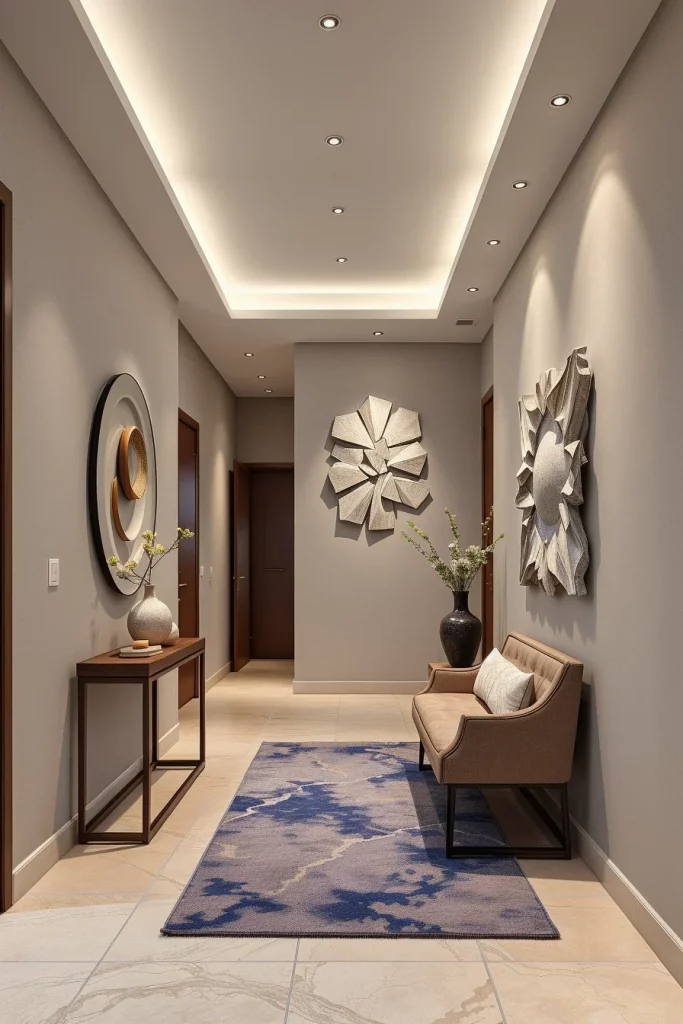
I like pairing sculptural panels with a streamlined console table, discreet wall sconces, and a slim upholstered bench. Keeping furniture simple allows the artwork to remain the star of the space. Recessed ceiling lights directed toward the panels emphasize shadows and texture, making the installation appear even more dynamic. A narrow runner also helps visually anchor the hallway.
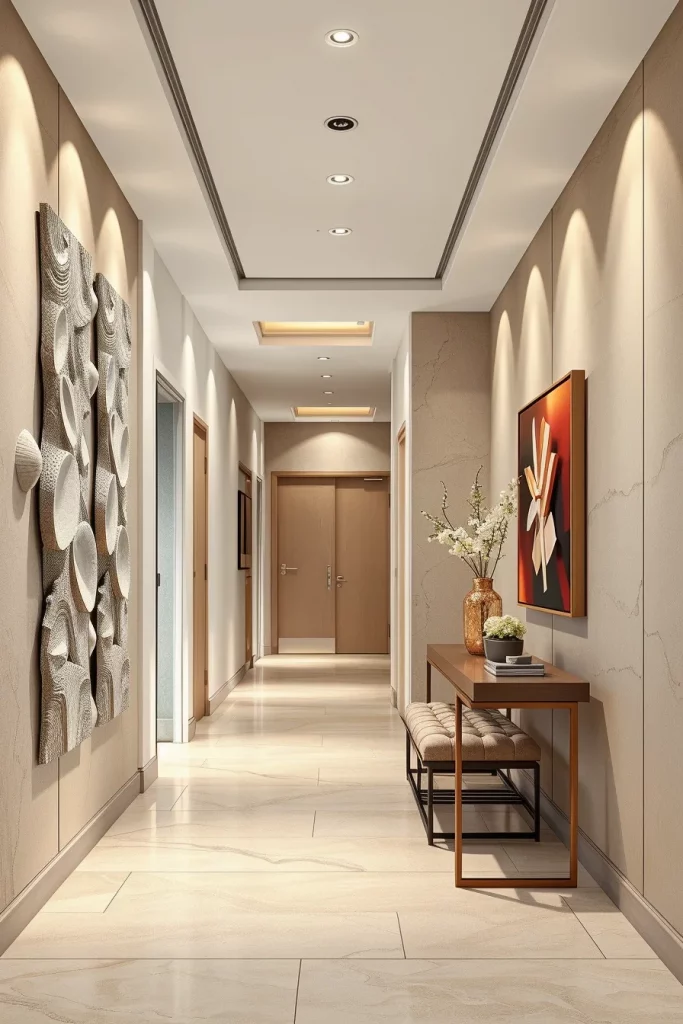
In my experience, professional designers frequently emphasize layering light with texture. Publications such as Architectural Digest often highlight how directional lighting dramatically enhances textured surfaces. I have found that installing dimmable lighting allows the hallway atmosphere to change throughout the day.
To complete this look, I would add subtle decorative accessories such as ceramic vases or a small sculptural object on the console table. These details reinforce the gallery-inspired atmosphere without cluttering the hallway.
Oversized Abstract Murals For A Bold Hallway Statement
An oversized abstract mural is one of the most artistic and creative ways to transform an ordinary hallway wall. I love using large-scale painted compositions because they create instant visual impact and can make narrow hallways appear significantly larger. Soft neutral palettes provide sophistication, while bold color combinations establish a strong contemporary identity.
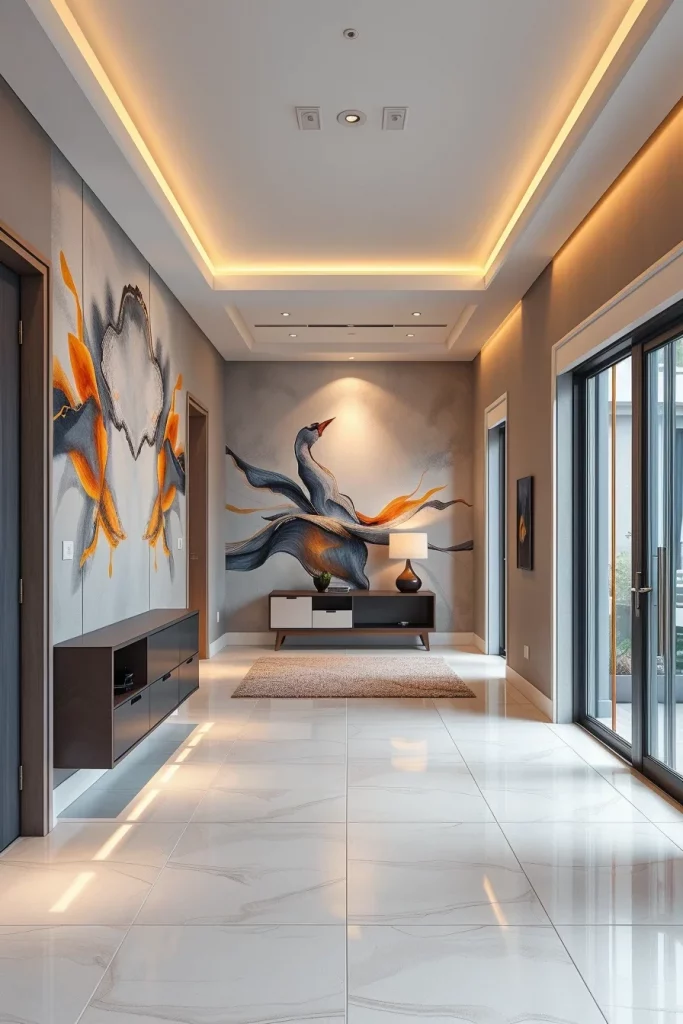
I usually complement a mural with minimal furnishings, such as a floating console, concealed storage cabinets, and sleek pendant lighting. Since the mural already commands attention, I prefer avoiding excessive decorative pieces. Clean-lined furnishings ensure the space remains balanced and visually calm.
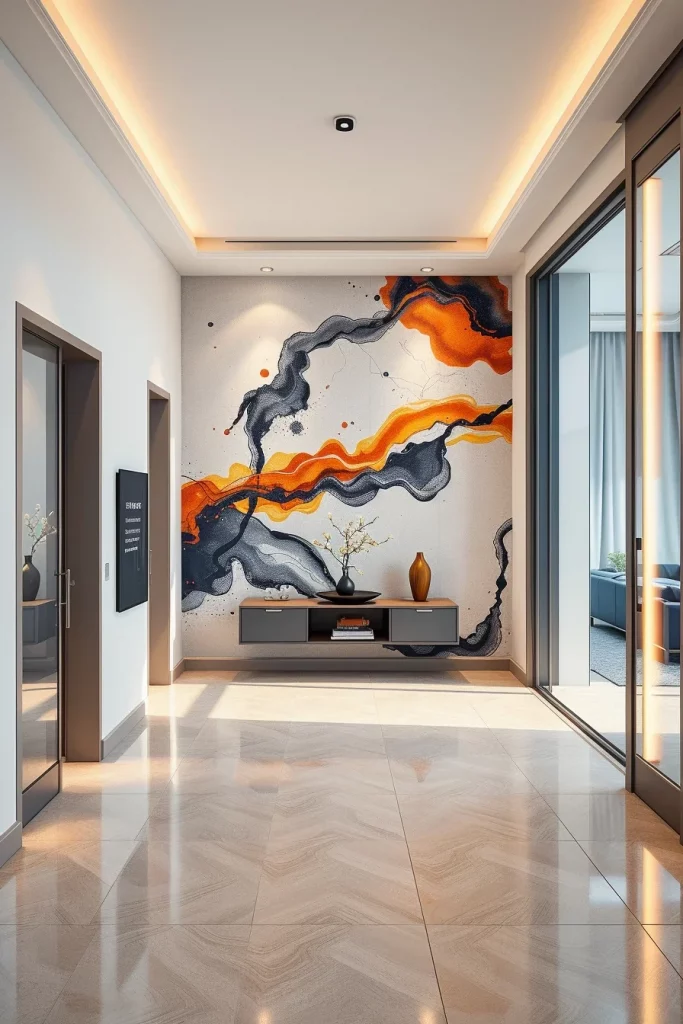
Personally, I have seen abstract murals completely redefine otherwise forgotten corridors. Interior designers featured in Elle Decor often recommend oversized artwork in transitional spaces because it creates continuity throughout the home. I agree, especially in open-concept interiors where hallways connect multiple rooms.
I would also include integrated LED lighting along the ceiling or floor to softly illuminate the mural during evening hours. This additional lighting enhances the depth and richness of the artwork.
Curved Wall Installations That Add Movement And Flow
Curved wall installations introduce softness and movement into hallways dominated by straight architectural lines. I particularly appreciate this stylish approach because curved forms naturally guide the eye through the space while creating a calming atmosphere. Sculpted wood alternatives, plaster arches, and flowing wall features bring an elegant sense of motion.
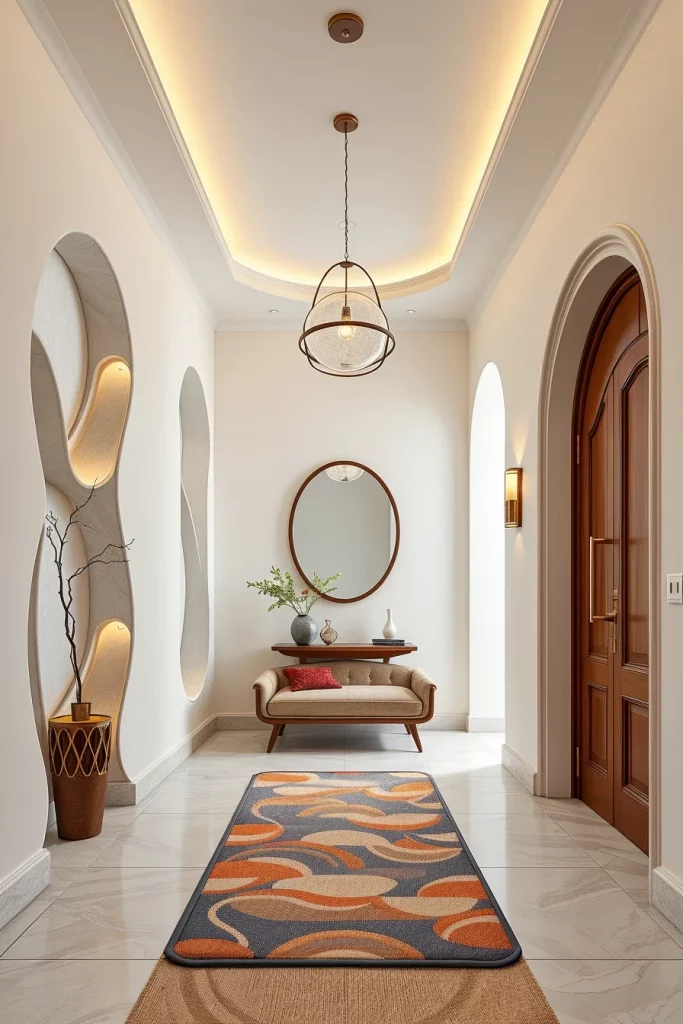
For furnishings, I recommend rounded benches, oval mirrors, and softly curved lighting fixtures. Repeating curved silhouettes throughout the hallway creates harmony and prevents the installation from feeling disconnected from the rest of the interior. Textured rugs with subtle organic patterns also reinforce this aesthetic beautifully.
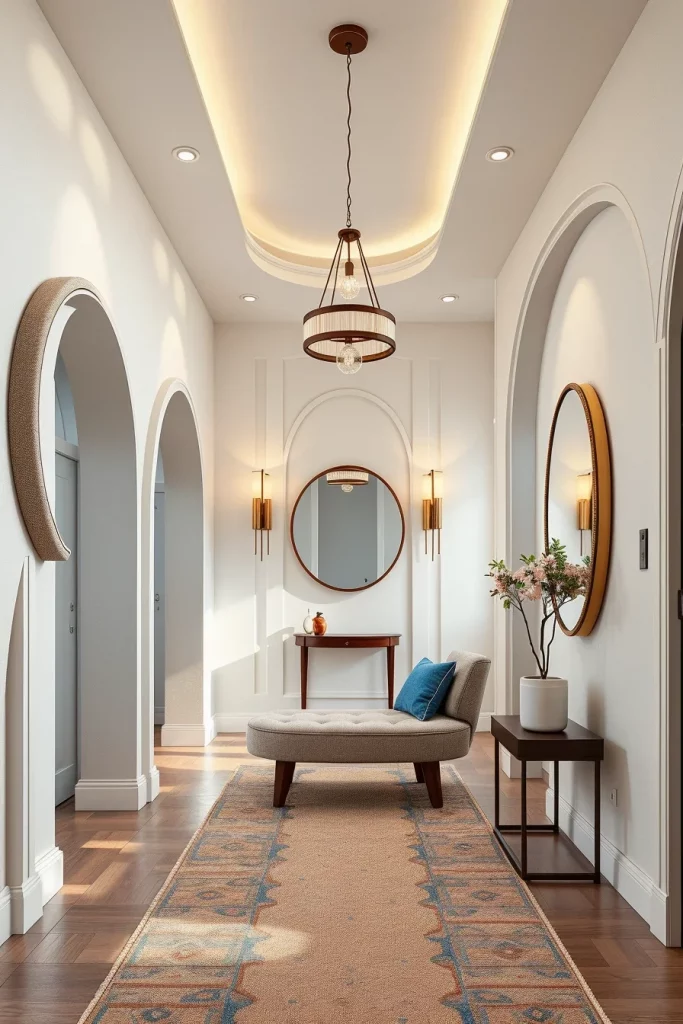
From my perspective, curved designs are becoming increasingly prominent in contemporary interiors because they make spaces feel more welcoming. I have incorporated curved wall elements into several projects and consistently noticed that they soften long, narrow hallways effectively.
Additional accent lighting installed behind or above curved elements can further emphasize their sculptural qualities and create a sophisticated layered effect.
Layered Geometric Wall Art For Contemporary Hallways
Layered geometric compositions offer a highly unique and contemporary solution for hallway walls. I enjoy combining overlapping metal shapes, framed geometric prints, and dimensional wall pieces to create a visually engaging arrangement. This approach works particularly well in modern homes where architectural simplicity benefits from additional visual interest.
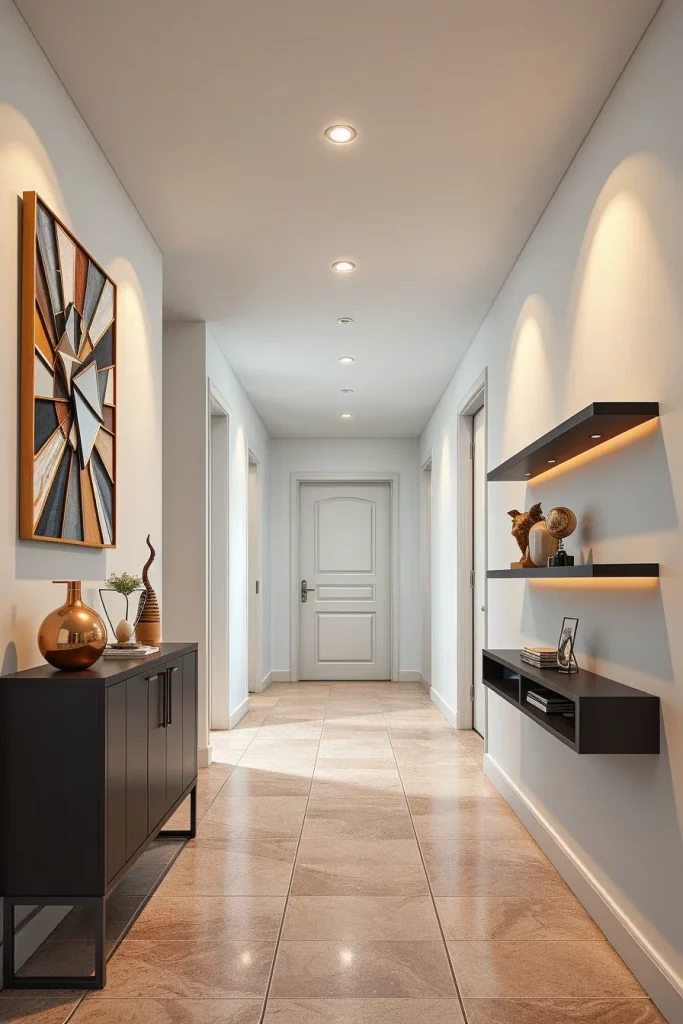
I often pair geometric wall art with slim storage cabinets, floating shelves, and understated seating. Matte finishes in black, bronze, ivory, or warm gray maintain a sophisticated appearance. Strategic lighting ensures each layer casts subtle shadows, emphasizing the multidimensional effect.
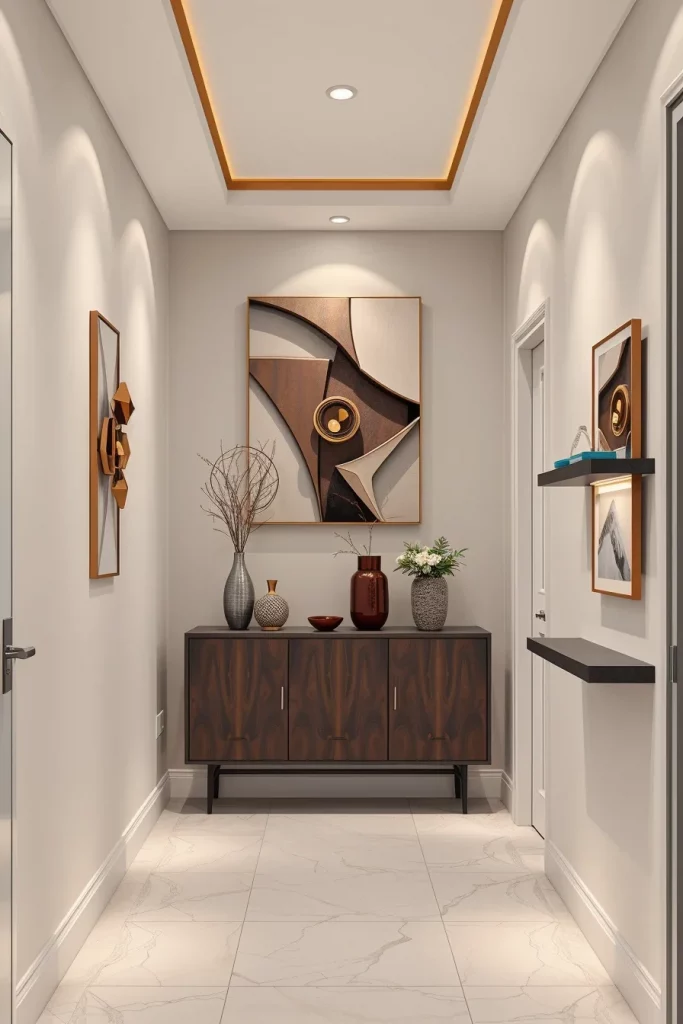
In my experience, geometric arrangements provide excellent flexibility because homeowners can easily update individual pieces over time. Many interior publications recommend mixing materials such as metal, glass, and textured finishes to achieve a richer composition, and I fully support this approach.
I would also include a carefully selected runner or statement light fixture to further strengthen the hallway’s contemporary identity.
Gallery-Style Picture Walls With Unexpected Layouts
A gallery wall remains one of the most unusual yet highly personal hallway decorating solutions, especially when arranged in unexpected layouts. Rather than using traditional symmetrical grids, I prefer asymmetrical compositions that combine artwork, photography, sketches, and sculptural objects. This method instantly gives the hallway character and individuality.
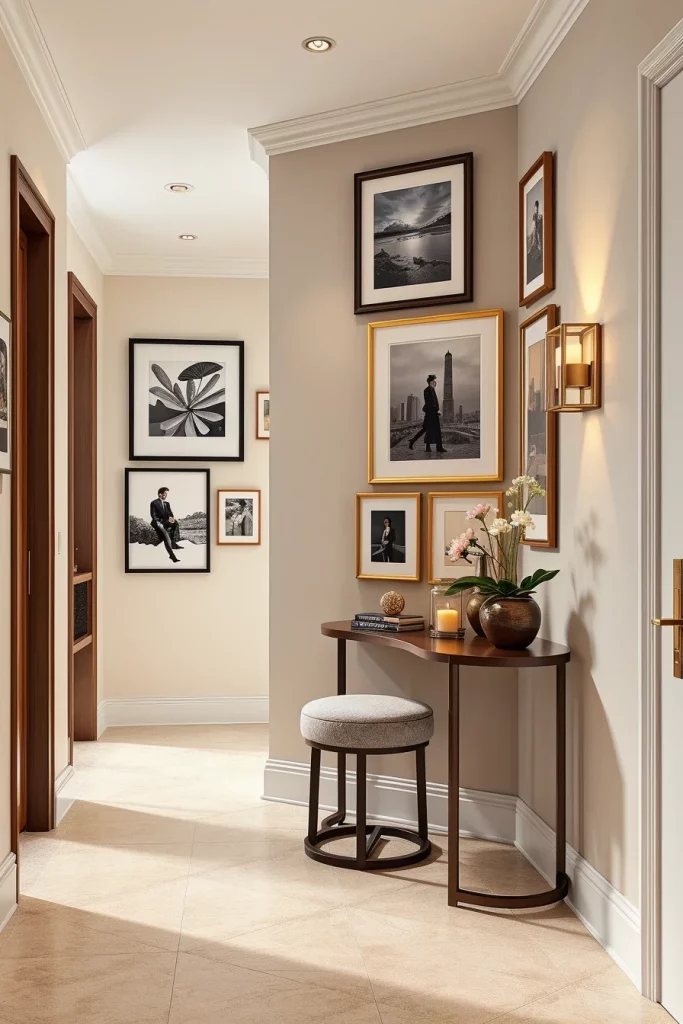
I usually mix frame sizes, finishes, and orientations while maintaining a consistent color palette. Incorporating a slim console table, accent chair, or decorative stool beneath the gallery wall helps ground the arrangement visually. Accent lighting positioned above the display further enhances the curated appearance.
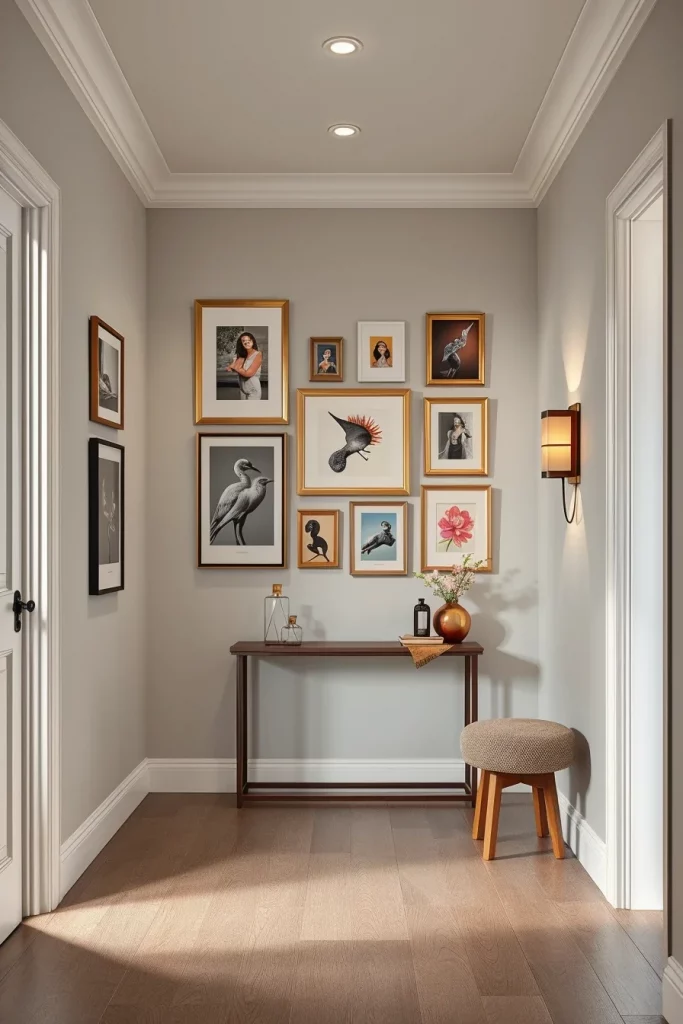
Personally, I believe gallery walls tell a home’s story better than almost any other decorative feature. Designers featured in House Beautiful frequently encourage mixing personal photographs with collected artwork to create authenticity. I have found that this approach results in hallways that feel welcoming rather than overly styled.
To make the arrangement even more compelling, I recommend including one oversized statement piece among smaller works to establish a clear focal point.
Floating Artistic Shelves Styled As Functional Sculptures
Floating shelves can become far more than simple storage when they are designed as artistic features. I often use asymmetrical shelving arrangements to introduce both functionality and sculptural beauty into a hallway. These installations work especially well in narrow spaces because they provide visual interest without taking up precious floor area. This approach creates one of the most stylish and practical hallway wall solutions for contemporary homes.
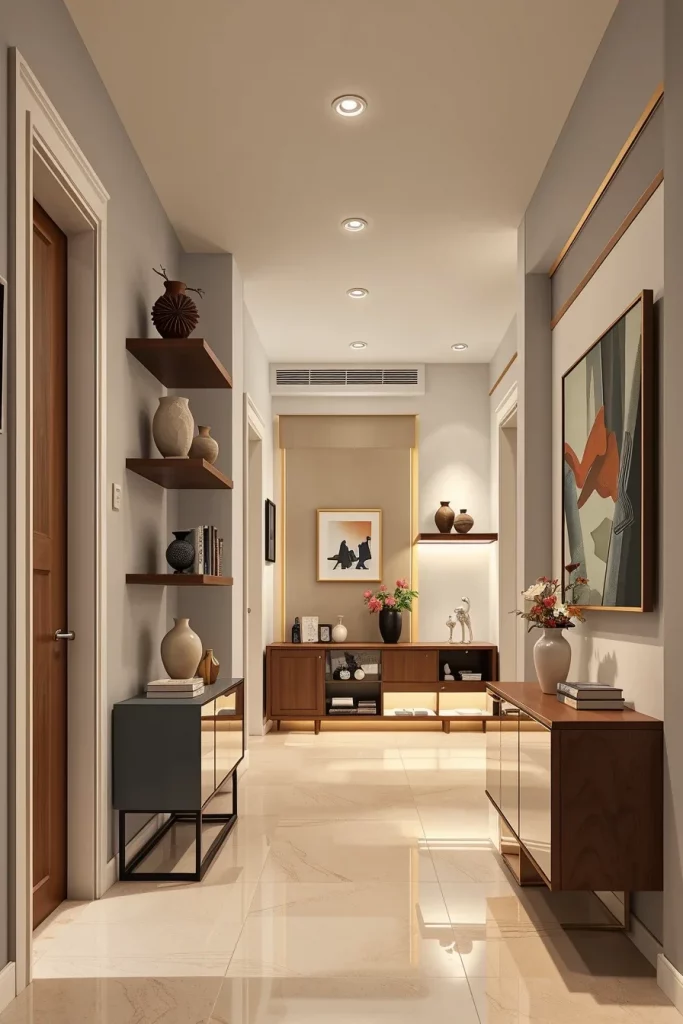
I prefer shelves with curved profiles, geometric silhouettes, or layered compositions that resemble gallery installations. Decorative objects such as ceramic vessels, art books, abstract sculptures, and small framed pieces can be displayed selectively to avoid visual clutter. Below the shelves, a slim console or built-in cabinetry offers additional concealed storage while maintaining a clean appearance.
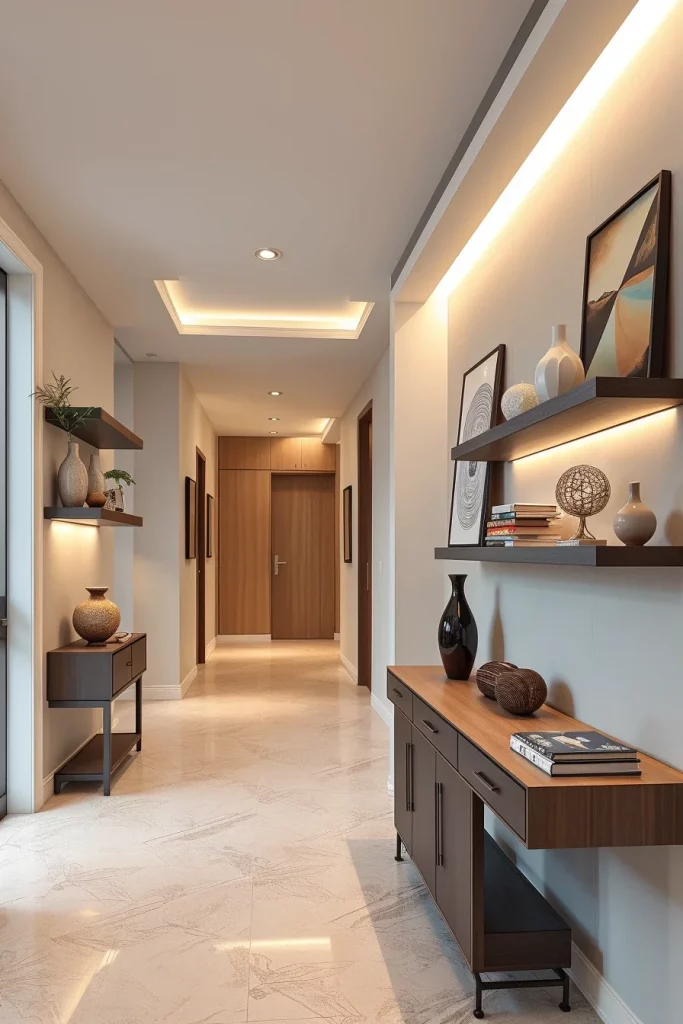
In my experience, the key is restraint. Better Homes & Gardens frequently recommends styling shelves with varying heights and textures while leaving negative space between objects. I follow this principle because overcrowded shelves quickly lose their sculptural quality.
To enhance this arrangement, I would add discreet LED strip lighting beneath the shelves. The illumination highlights displayed objects while adding warmth and depth to the hallway.
Statement Mirrors With Sculptural Frames
Statement mirrors with sculptural frames instantly transform a hallway into a sophisticated and artistic space. I often recommend oversized mirrors because they reflect natural light, visually enlarge narrow hallways, and function as decorative centerpieces. Frames featuring organic forms, abstract shapes, or hand-finished textures introduce personality while maintaining practicality.
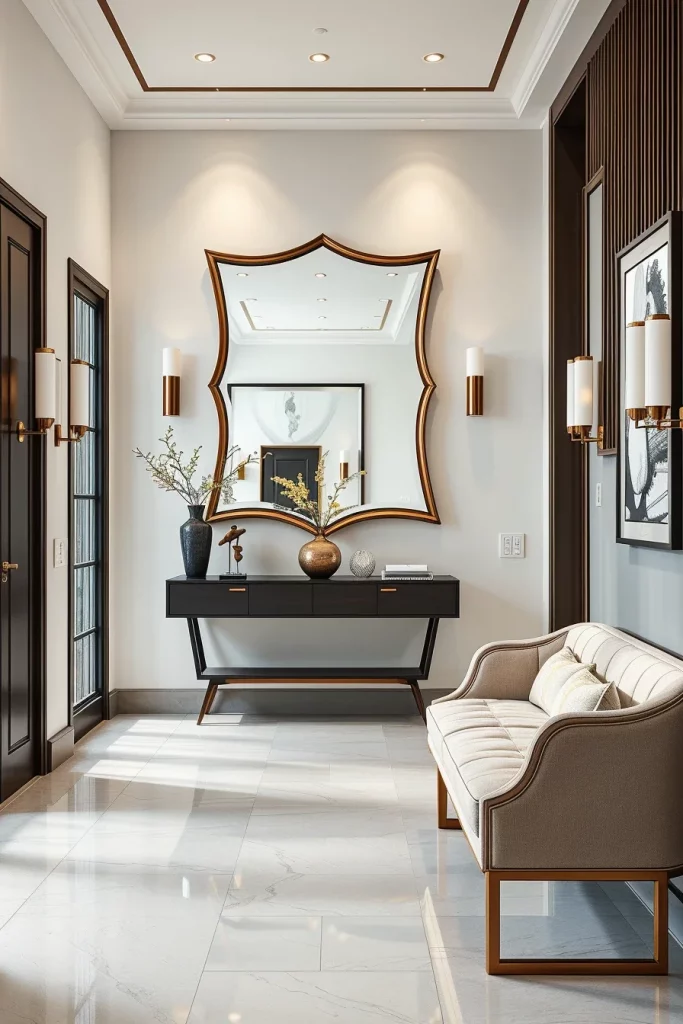
I usually pair statement mirrors with streamlined furnishings such as floating consoles, upholstered benches, or compact storage cabinets. Materials like brushed metal, textured plaster, and carved resin work exceptionally well for sculptural frames. Wall sconces installed on either side of the mirror further enhance both function and aesthetics.
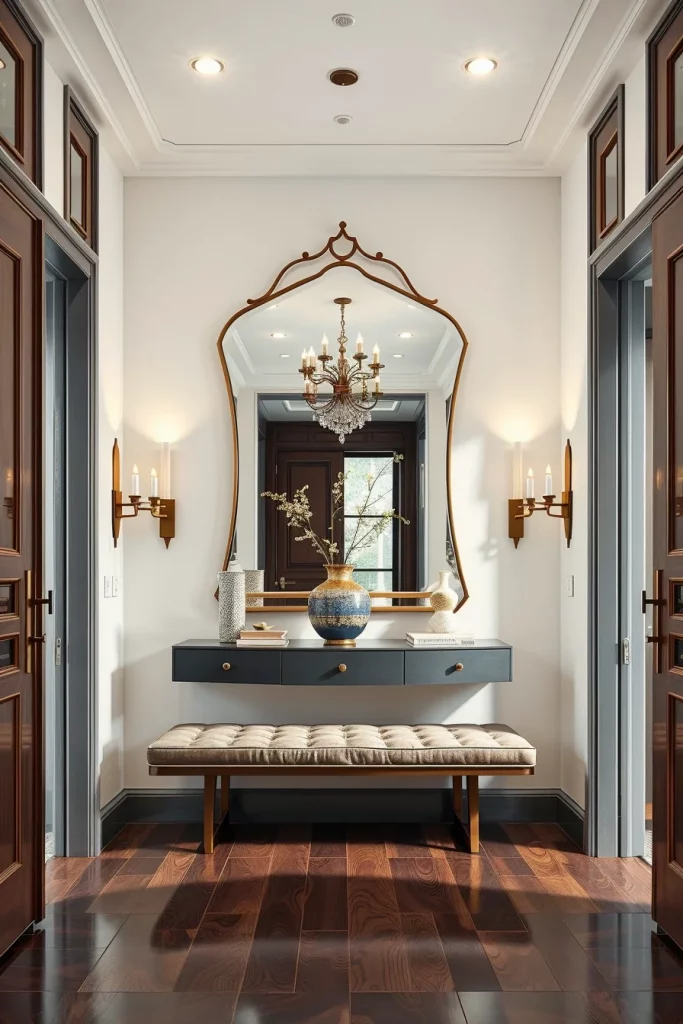
Personally, I believe mirrors are among the most versatile hallway accessories available. Interior designers frequently note in publications such as House Beautiful that mirrors significantly improve brightness in transitional spaces. I have repeatedly used them to make compact hallways feel more spacious and inviting.
For a finished look, I recommend incorporating a decorative tray, fresh branches, or a sculptural vase on the console beneath the mirror.
Textured Plaster Accent Walls With Artistic Character
Textured plaster walls provide subtle sophistication while adding significant visual depth to a hallway. I appreciate this unique approach because handcrafted textures create movement and dimension without relying on additional artwork. Soft organic finishes ranging from smooth troweled surfaces to expressive relief textures bring warmth and authenticity to contemporary interiors.
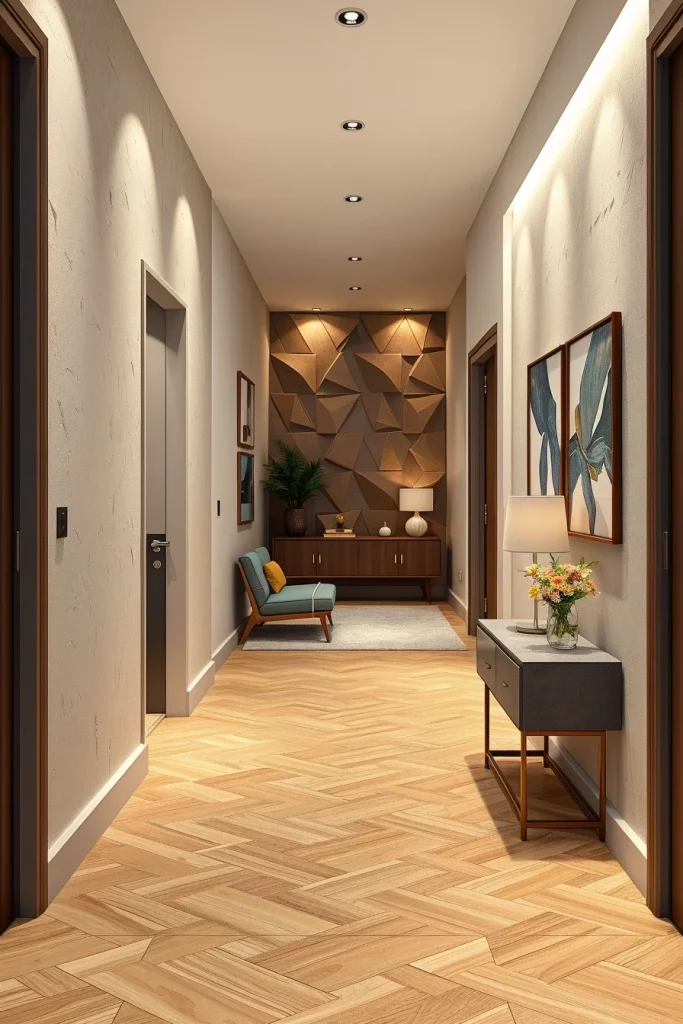
I often combine plaster accent walls with minimalist furnishings, concealed storage, and understated lighting fixtures. Since textured walls already contribute substantial visual interest, simple furniture ensures balance throughout the space. Warm-toned flooring and natural textiles complement plaster surfaces particularly well.
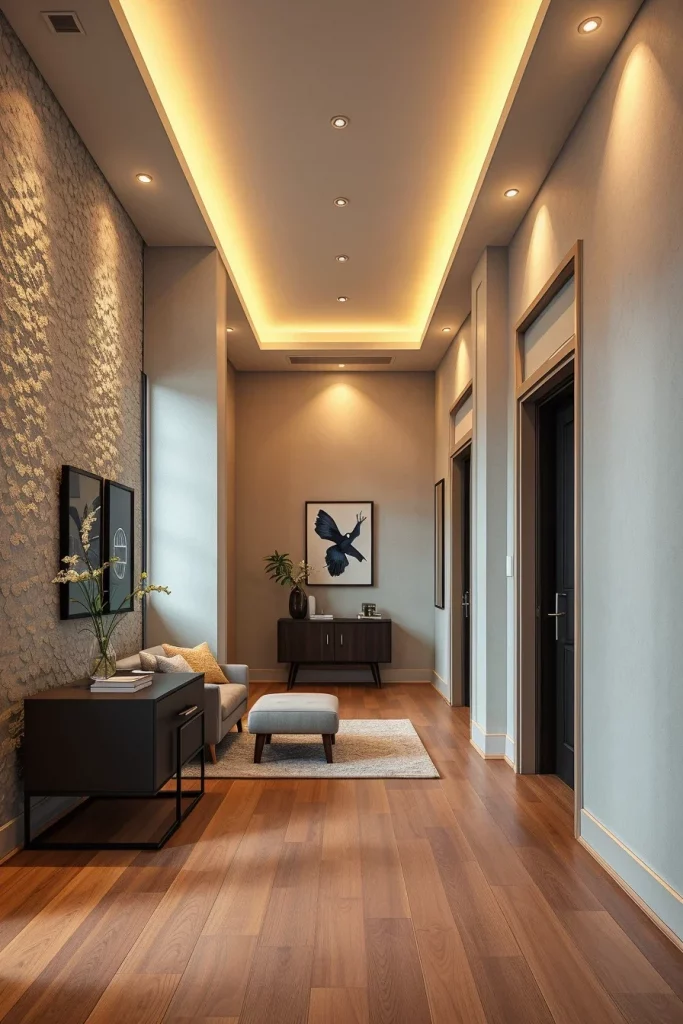
From my perspective, handcrafted finishes age beautifully and add timeless character to a home. Architectural Digest has highlighted textured plaster as an increasingly popular finish due to its ability to introduce artisanal qualities into modern interiors. I have found that these surfaces create especially inviting hallways.
I would also consider installing directional wall lighting to emphasize the plaster’s texture and reveal subtle shadow variations throughout the day.
Handcrafted Ceramic Wall Installations For Unique Appeal
Handcrafted ceramic wall installations offer a highly creative and deeply personal way to decorate hallway walls. I enjoy using collections of individually crafted ceramic pieces because they introduce texture, craftsmanship, and artistic expression. Whether arranged symmetrically or organically, ceramic installations create a distinctive focal point unlike conventional artwork.
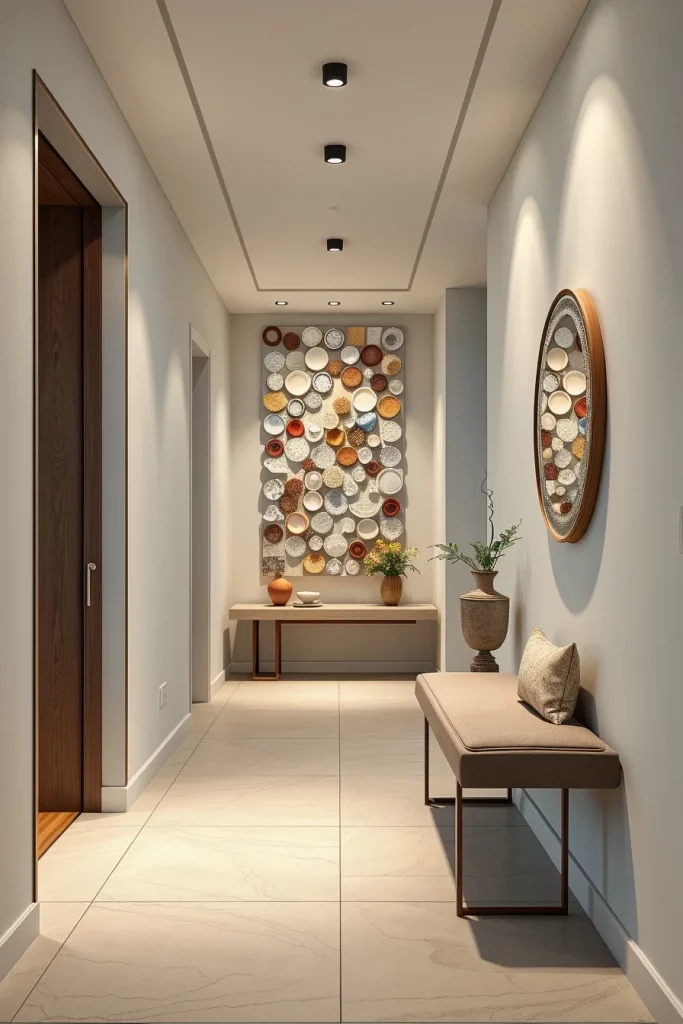
I generally select ceramics featuring varied shapes, finishes, and dimensions to achieve a layered appearance. Complementary furnishings may include a minimalist bench, a floating console, and soft accent lighting. Neutral color palettes allow the handcrafted pieces to remain the visual centerpiece while maintaining an elegant atmosphere.
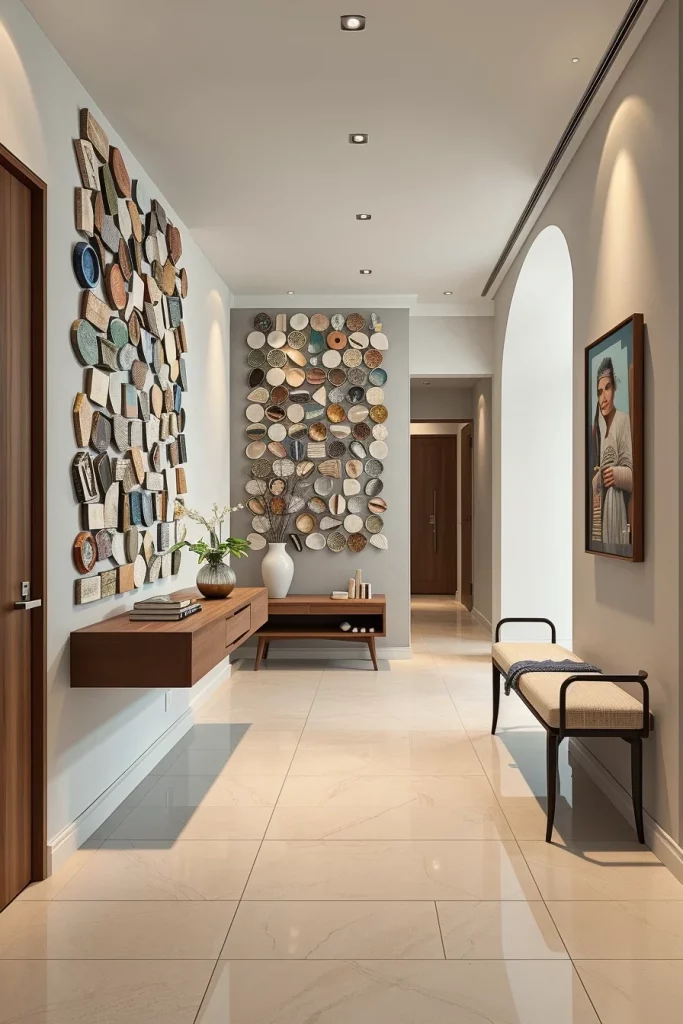
Personally, I appreciate the authenticity that handmade elements bring to interiors. Many respected designers advocate incorporating artisanal objects into modern homes because they create emotional connection and individuality. I have found ceramic installations particularly effective in hallways lacking architectural detail.
To complete this concept, I recommend adding subtle spotlighting aimed directly at the ceramic arrangement to highlight its texture and handcrafted qualities.
Metal Wall Sculptures That Elevate Narrow Hallways
Metal wall sculptures introduce drama, texture, and sophistication to narrow hallways without occupying valuable floor space. I often recommend abstract metal compositions because they provide strong visual impact while maintaining an open feeling. Depending on the finish, these sculptures can appear refined, contemporary, or boldly expressive.
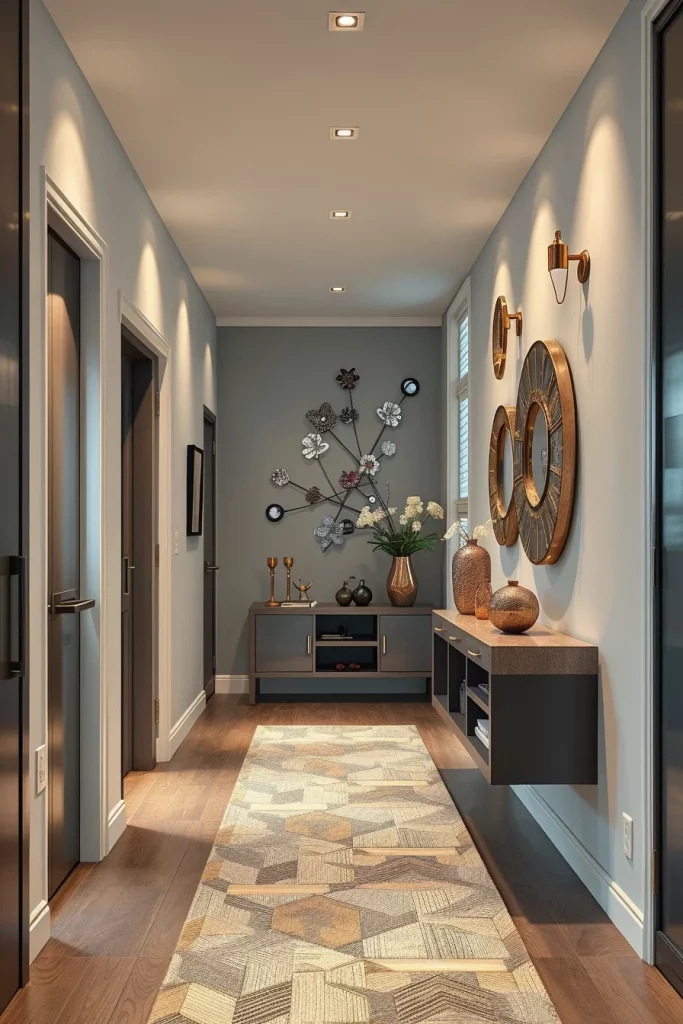
I typically combine metal artwork with clean-lined furnishings such as floating consoles, integrated storage, and simple seating. Finishes including matte black, brushed brass, bronze, and antique silver complement most modern interiors. Layered lighting, especially wall washers and recessed fixtures, accentuates the dimensional quality of metal surfaces.
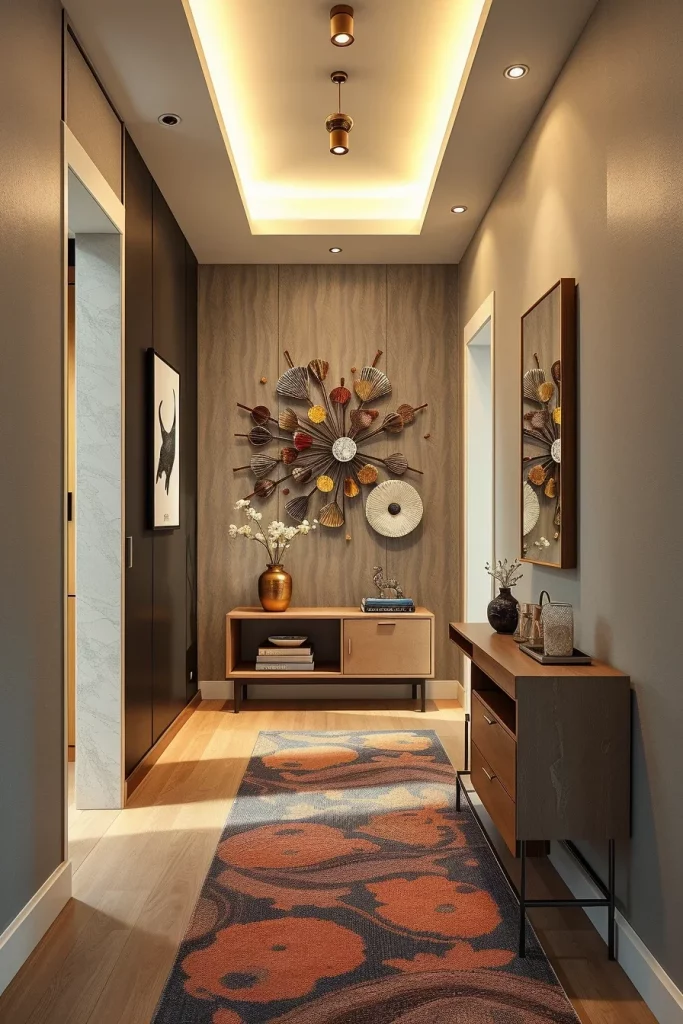
In my experience, metal sculptures work exceptionally well in hallways because they reflect light and create subtle movement as people walk through the space. Designers regularly use metallic accents to introduce contrast and sophistication, and I have consistently achieved excellent results with this strategy.
I would add a textured runner and carefully selected decorative accessories nearby to soften the metallic elements and create a more balanced composition.
Modern Wall Niches Designed As Decorative Features
I often recommend decorative wall niches when homeowners want a hallway that feels sophisticated and architecturally refined. Built-in niches instantly add depth to flat walls and create a more dynamic visual experience. In modern interiors, asymmetrical niches with integrated lighting can turn a simple hallway into a gallery-like space. This is one of my favorite creative and stylish approaches because it combines storage, display, and design in one feature.
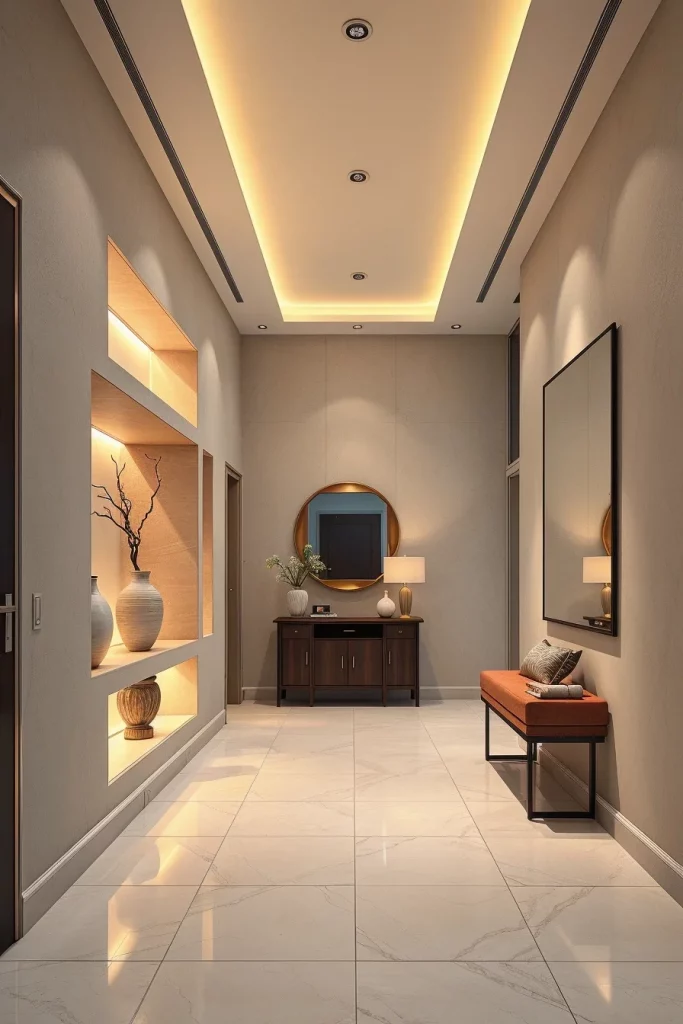
For this design, I usually include recessed niches finished in plaster or textured stone, concealed LED lighting, and carefully selected decor objects. Sculptural ceramics, abstract vases, small art pieces, and curated books work particularly well inside niches. A slim console table, an upholstered bench, and a large mirror nearby help balance the architectural elements while maintaining functionality in the hallway.
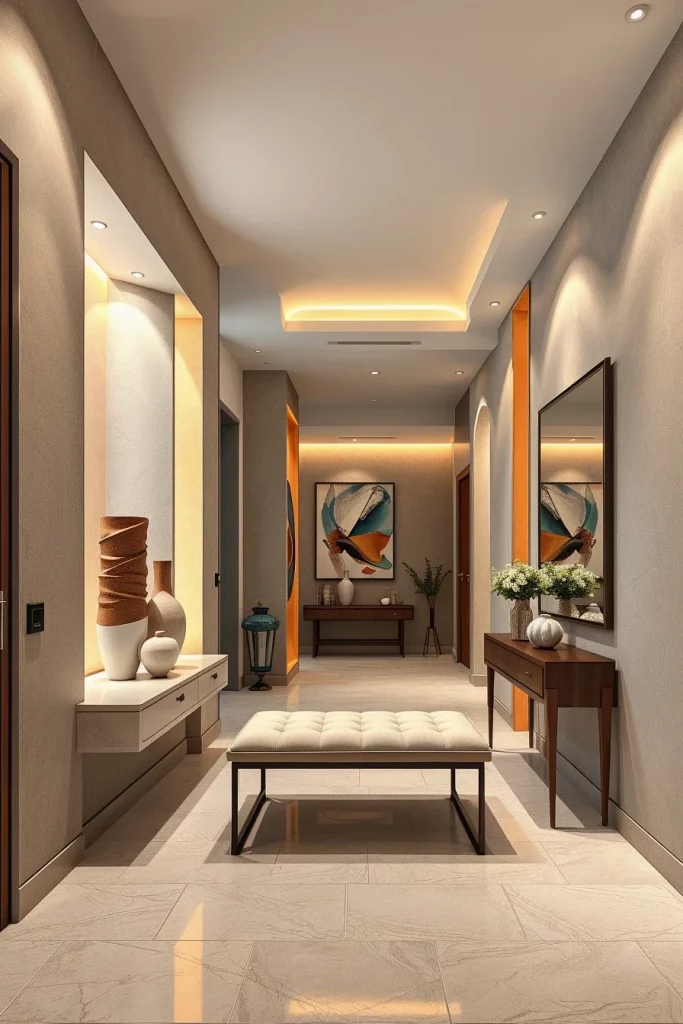
From my experience, designers frequently emphasize the importance of restraint when styling niches. Publications such as Architectural Digest often suggest displaying only a few meaningful objects rather than overcrowding shelves. I personally follow this principle because minimal styling allows each decorative piece to stand out.
To complete this look, I would also add dimmable lighting controls. Adjustable illumination allows the niches to create different moods throughout the day and enhances the overall atmosphere of the hallway.
Three-Dimensional Wall Art That Creates Depth And Drama
Three-dimensional wall art is one of the most artistic and unusual solutions for hallway decor. I love using layered wall installations because they immediately introduce movement and texture into narrow spaces. Oversized sculptural panels or geometric compositions create visual interest while making even compact hallways feel more expansive.
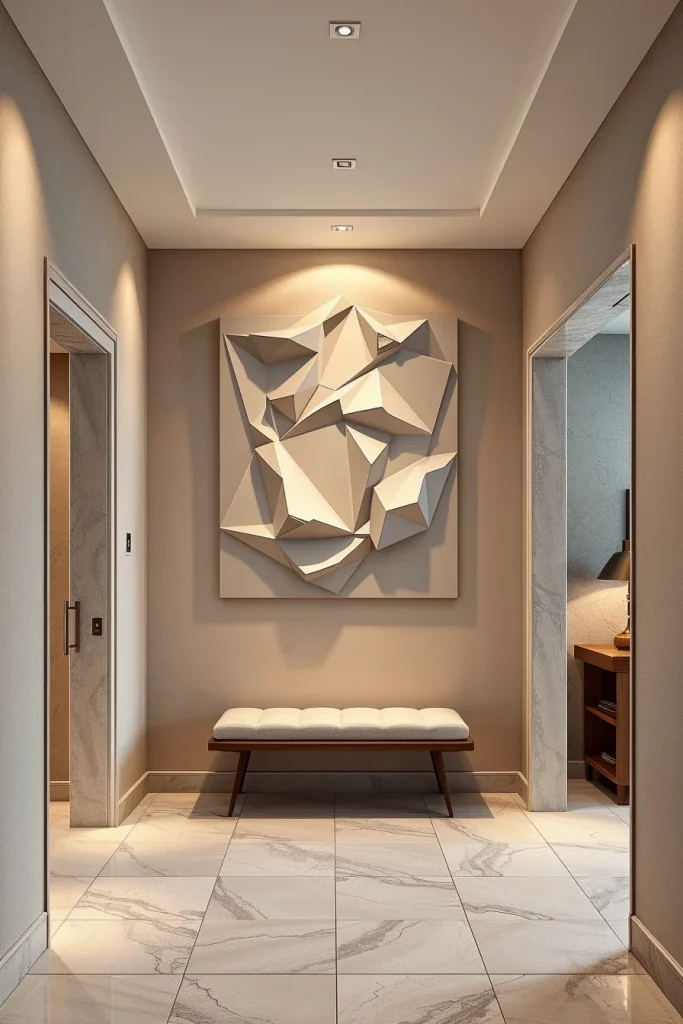
When designing this type of interior, I usually select large-scale relief artwork made from plaster, resin, metal, or composite materials. Clean-lined benches, hidden storage cabinets, and subtle ceiling lighting complement the wall installation without competing for attention. Neutral flooring and minimal furnishings allow the sculptural artwork to remain the focal point.
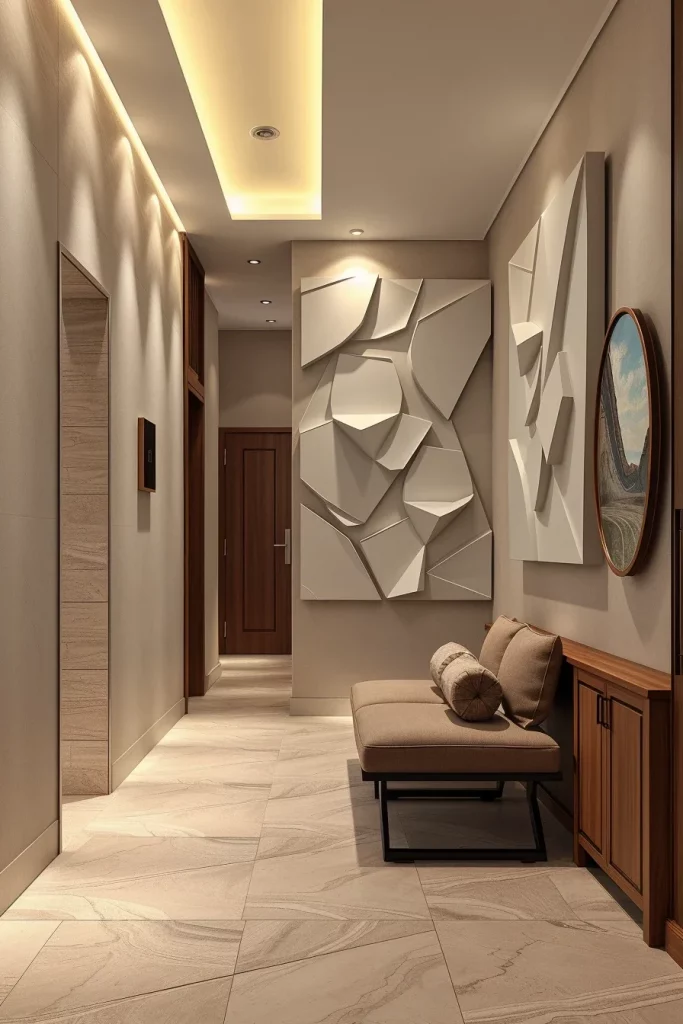
Personally, I have found that three-dimensional art works best when illuminated from multiple angles. Interior designers featured in Elle Decor often recommend accent lighting to emphasize texture and shadow, and I completely agree with this approach. Proper lighting transforms the artwork throughout the day and creates an ever-changing visual experience.
I would also consider adding a narrow runner rug with subtle texture. It introduces warmth and softness while supporting the sophisticated character of the hallway.
Minimalist Hallway Walls With Large-Scale Artwork
Minimalist hallways can feel exceptionally elegant when a single oversized artwork dominates the wall. I often suggest this approach to clients who prefer a calm yet impactful aesthetic. A large painting or abstract composition introduces personality without overwhelming the space, making it one of the most stylish and unique hallway wall solutions.
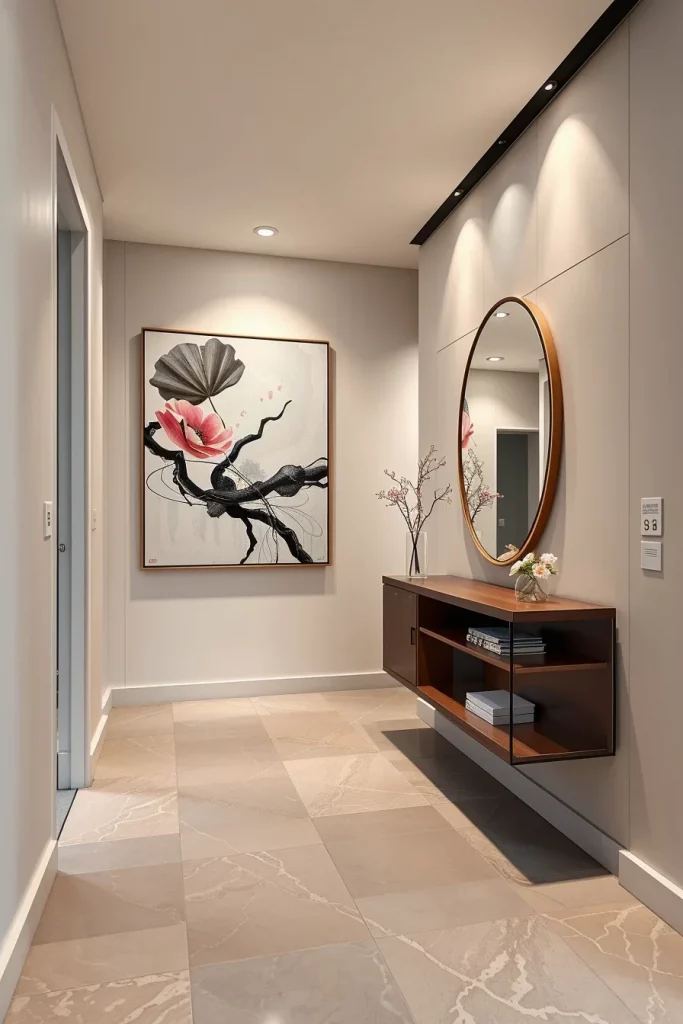
For this design, I prefer smooth walls painted in soft neutral tones paired with one dramatic artwork positioned at eye level. A sleek floating console, concealed storage, and understated decorative accessories help preserve the minimalist aesthetic. Materials such as natural stone flooring, matte finishes, and frameless mirrors reinforce the contemporary atmosphere.
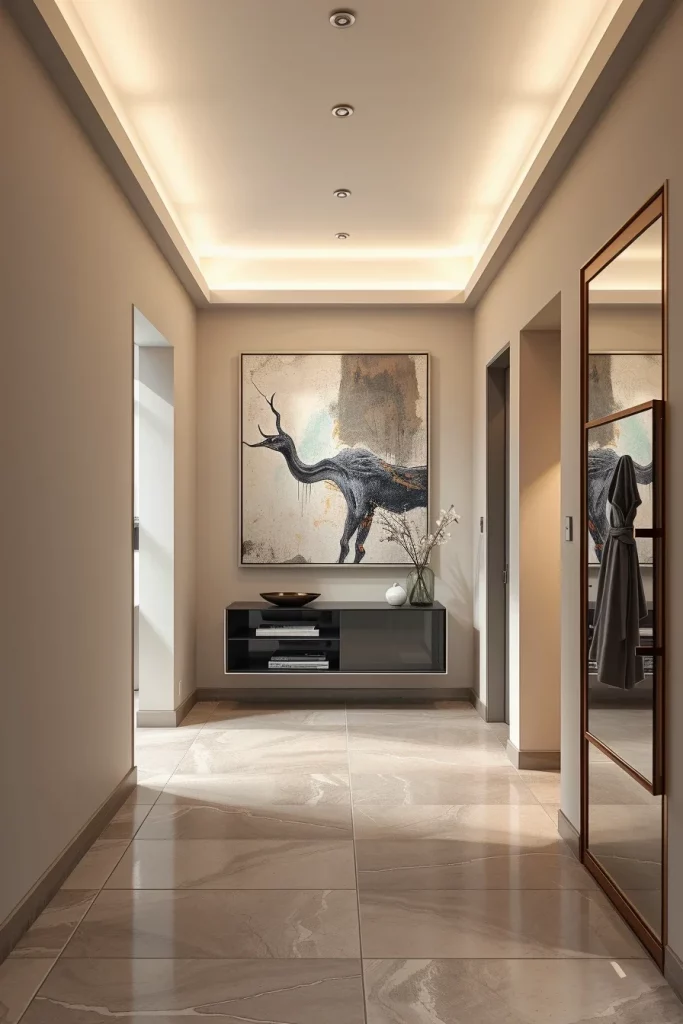
In my own projects, I have noticed that scale is critical. The artwork should feel intentionally oversized relative to the hallway dimensions. According to many American interior designers, larger pieces often create a stronger visual impact than multiple smaller frames, especially in transitional spaces like hallways.
To enrich the composition, I would include discreet picture lighting above the artwork. This subtle addition highlights colors and textures while elevating the gallery-inspired appearance.
Artistic Wall Lighting That Doubles As Decor
Decorative lighting fixtures can function as both illumination and wall art. I frequently use sculptural sconces and artistic light installations to transform ordinary hallways into visually compelling spaces. This idea is particularly effective for homeowners seeking sculptural and creative decor without adding additional accessories.
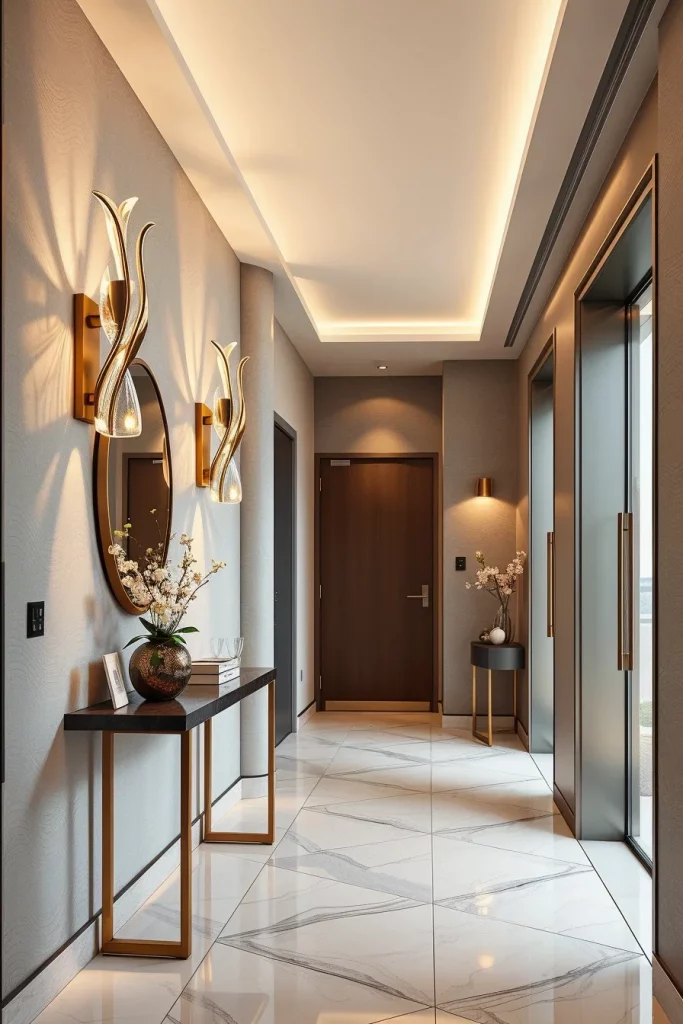
I typically incorporate statement wall sconces with organic or geometric forms, integrated LED fixtures, or illuminated art panels. A contemporary console table, textured wall finishes, and minimal furnishings help maintain visual balance. Metallic finishes such as brushed brass or matte black often enhance the sophisticated character of the design.
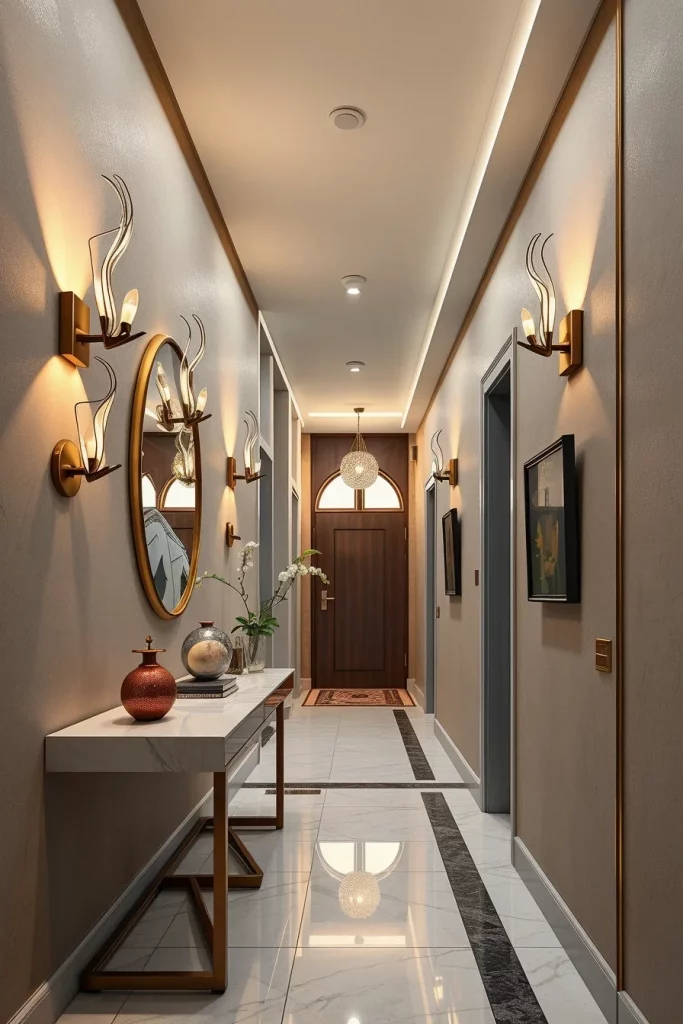
From my perspective, lighting should always be layered. Many professional designers recommend combining ambient, accent, and decorative lighting for hallways, and I have consistently found this strategy successful. Layered lighting not only improves functionality but also creates a welcoming atmosphere.
I would also add a discreet ceiling lighting system to complement the wall fixtures and ensure even illumination throughout the entire hallway.
Floor-To-Ceiling Accent Walls With Architectural Details
Floor-to-ceiling accent walls featuring architectural details can dramatically elevate a hallway interior. I often recommend full-height paneling, textured surfaces, or custom millwork because these elements create a sense of permanence and refinement. This approach feels especially stylish, artistic, and highly personalized.
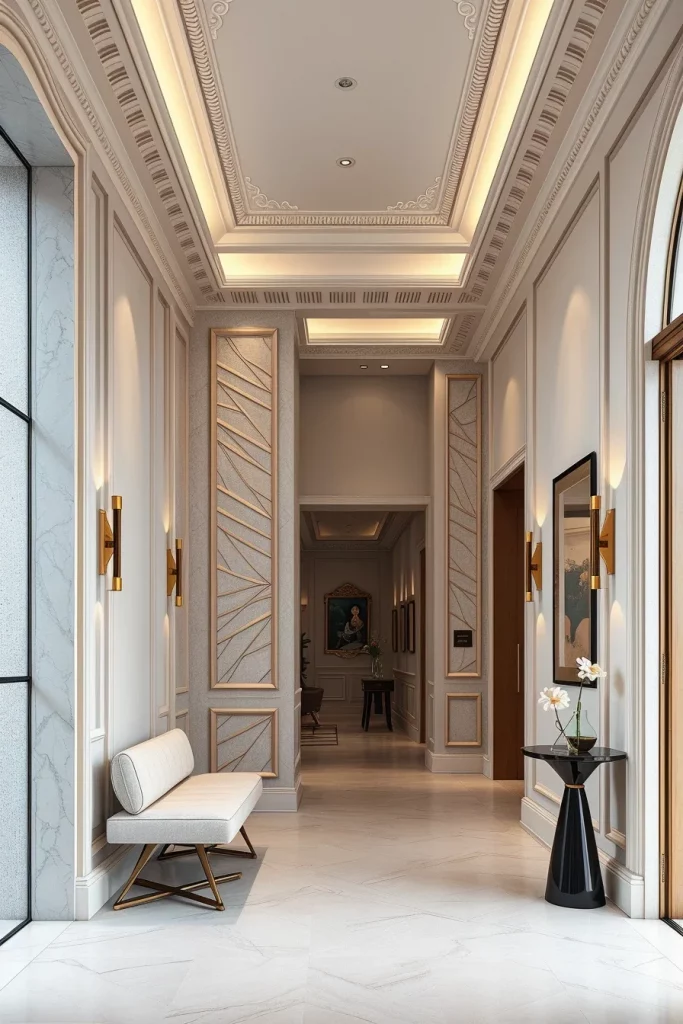
In these interiors, I usually incorporate decorative panel molding, textured plaster finishes, fluted surfaces, or stone cladding. A minimalist bench, sculptural side table, and carefully selected accessories help complete the composition. Soft integrated lighting enhances shadows and emphasizes the architectural details.
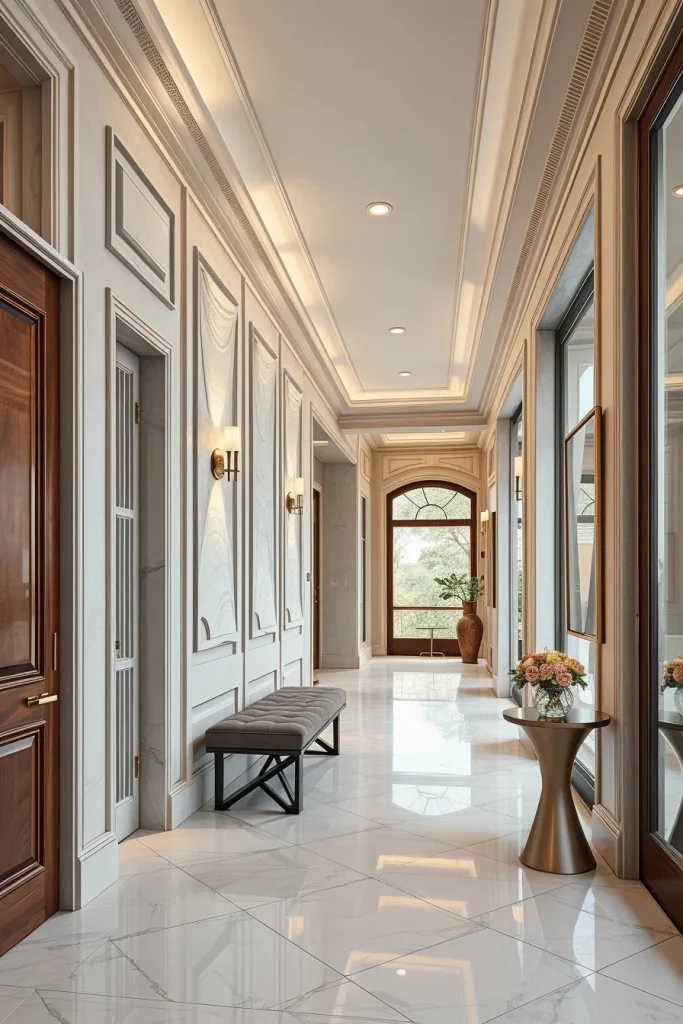
Personally, I appreciate how architectural walls add dimension without relying on excessive decoration. House Beautiful frequently highlights architectural detailing as an effective way to create luxury and character in transitional spaces, and I find this advice particularly valuable for hallways.
To make the design even more functional, I would integrate concealed storage elements within the architectural wall whenever possible.
Organic-Shaped Wall Decor Inspired By Nature Forms
I often turn to organic-shaped wall decor when I want a hallway to feel softer and more inviting. Flowing silhouettes inspired by stones, waves, and natural contours bring a sense of movement that instantly makes the space feel more refined. This is one of the most artistic and unique approaches because it breaks away from rigid lines and introduces a more sculptural quality to the hallway.
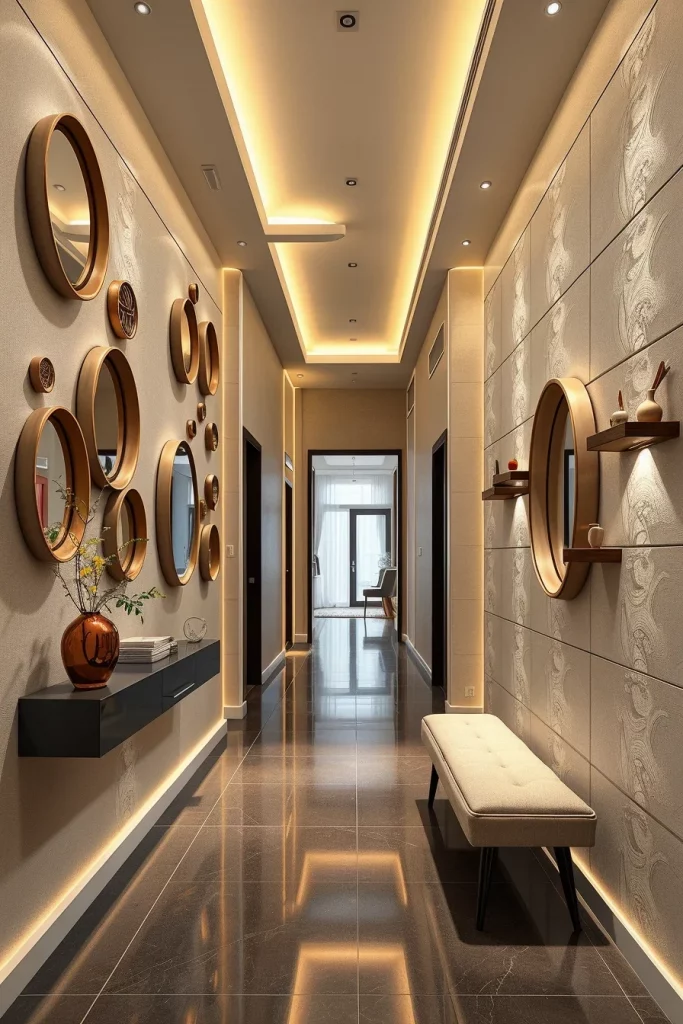
For this design, I usually incorporate irregular mirrors, curved wall sculptures, rounded decorative panels, and asymmetrical shelving. A curved bench, soft-textured runner, and subtle ambient lighting complement these forms beautifully. Finishes such as plaster, matte ceramic, and natural stone textures enhance the organic appearance while maintaining a modern aesthetic.
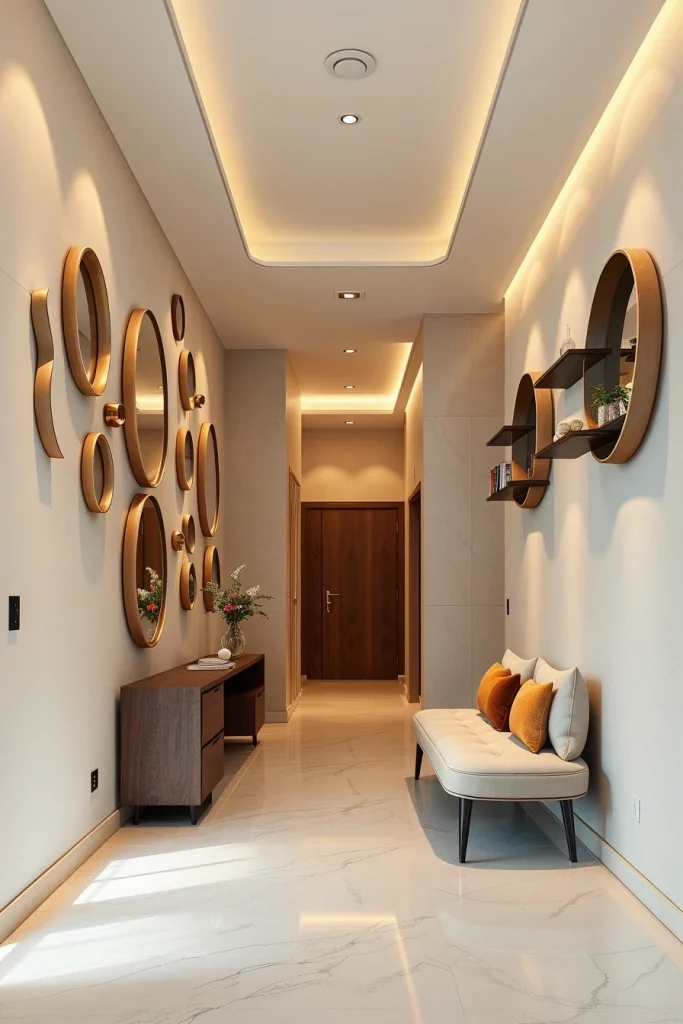
In my experience, organic shapes work especially well in narrow hallways because they visually soften long, straight walls. Many designers featured in Domino magazine recommend mixing curved forms with minimalist furnishings to create balance, and I have consistently found this advice useful in real projects.
To complete the composition, I would add concealed LED strip lighting behind selected decorative elements. This subtle glow enhances the sculptural forms and creates an elegant atmosphere during the evening.
Contemporary Hallway Walls Featuring Mixed Materials
Combining multiple materials on hallway walls is a highly creative and stylish way to introduce texture and visual depth. I often recommend this solution to homeowners who want their hallway to feel custom-designed. The contrast between different finishes creates an instantly sophisticated look while adding dimension to otherwise plain walls.
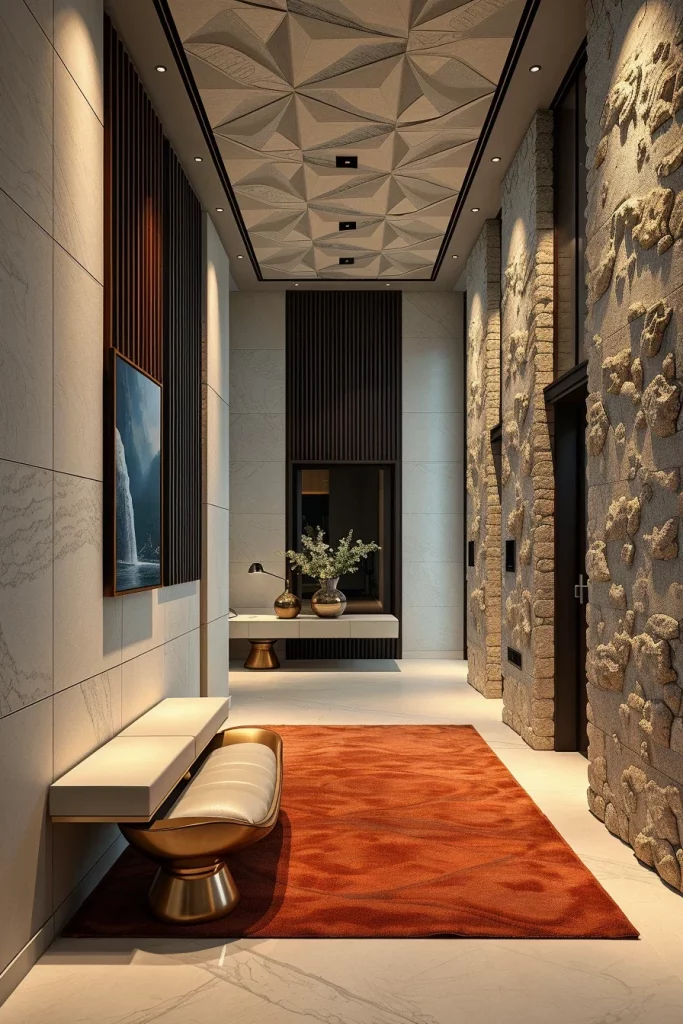
In these interiors, I like pairing fluted panels with textured plaster, stone cladding with smooth painted surfaces, or metal accents with wood-inspired finishes. A floating console table, sculptural seating, and contemporary decorative accessories complete the design. Integrated lighting between materials further emphasizes their unique textures and creates a layered effect.
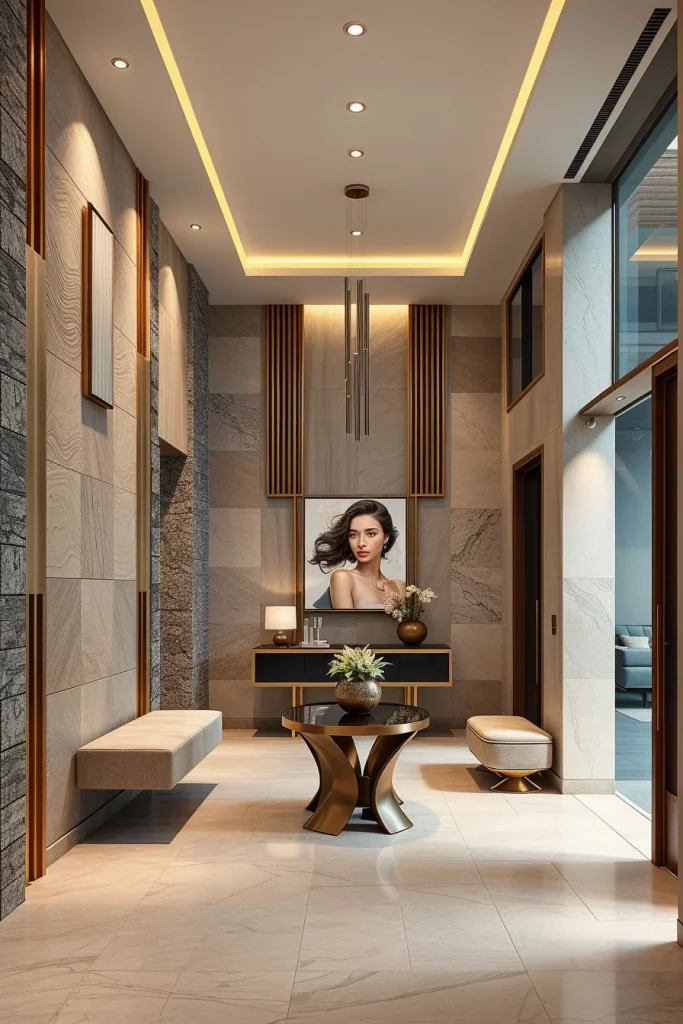
Personally, I have found that limiting the palette to two or three materials prevents the space from feeling visually overwhelming. Professional interior designers frequently emphasize consistency in color tones when mixing materials, and I fully agree with this approach.
I would also incorporate a large statement mirror within the composition. Reflective surfaces help unify the various textures while visually expanding the hallway.
Carved Wall Designs That Bring Sculptural Elegance
Carved wall treatments offer an exceptionally sculptural and unusual alternative to traditional hallway decor. I love using carved surfaces because they transform the wall itself into a work of art. Whether geometric or abstract, carved designs create texture, shadow, and depth without requiring additional decorative accessories.
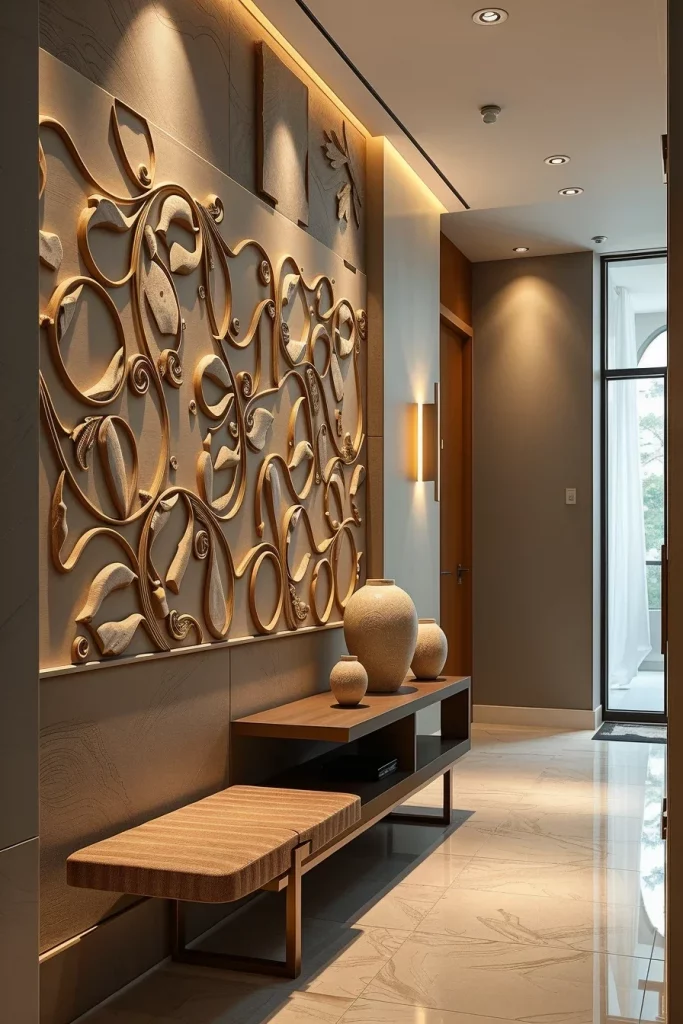
For this style, I typically choose carved plaster panels, custom relief installations, or CNC-cut decorative surfaces extending across an entire wall. Minimal furniture, such as a sleek bench or floating console, ensures that the carved feature remains the focal point. Warm accent lighting positioned along the ceiling or floor enhances the intricate details and emphasizes the craftsmanship.
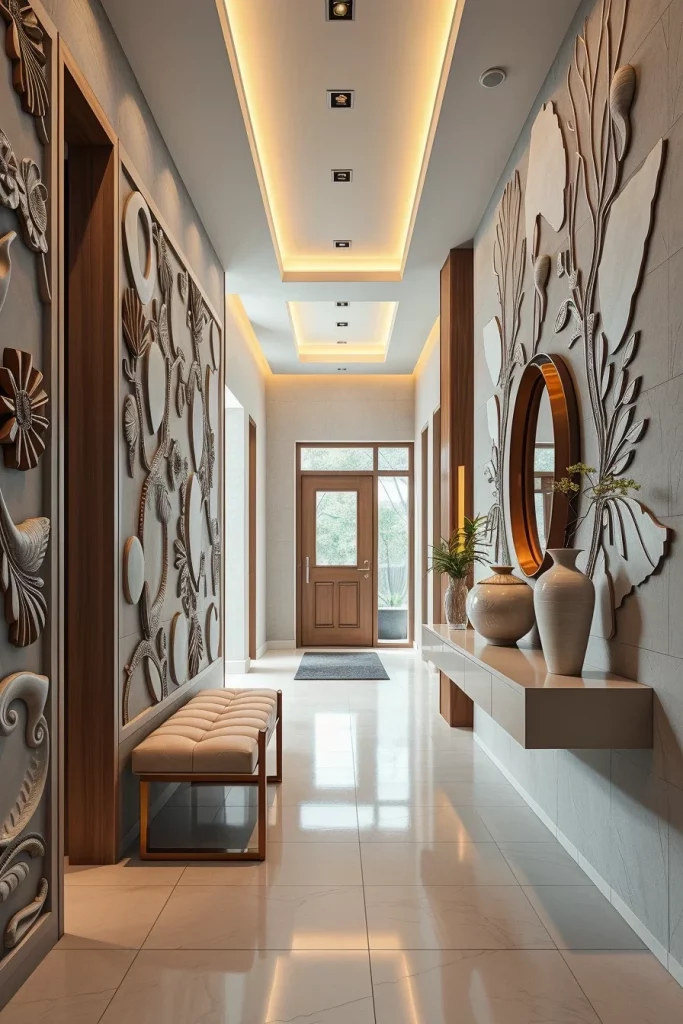
From my perspective, carved walls are most successful when paired with restrained furnishings and a neutral palette. Architectural Digest often showcases interiors where sculptural surfaces become the primary decorative statement, and I have adopted this principle in many hallway projects.
To enrich the overall design, I would include a carefully selected sculptural object or oversized ceramic piece nearby to echo the artistic qualities of the carved wall.
Creative Wall Molding Arrangements For Stylish Interiors
Decorative wall molding is no longer limited to traditional interiors. Today, I frequently use creative molding layouts to create highly stylish and contemporary hallways. Unexpected geometric patterns, oversized frames, and asymmetrical arrangements give walls architectural character while maintaining a clean, modern appearance.
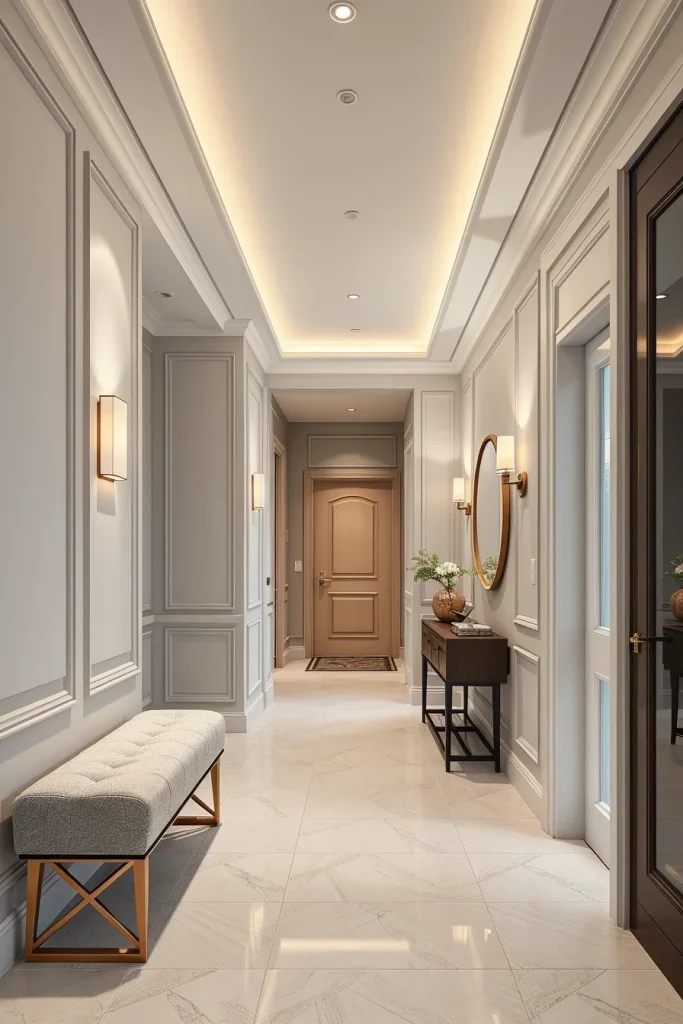
I often combine custom molding patterns with monochromatic paint finishes to emphasize form rather than color. A slim console, modern artwork, upholstered seating, and discreet lighting complete the interior without competing with the wall details. Large-format flooring and simple accessories help maintain visual harmony throughout the hallway.
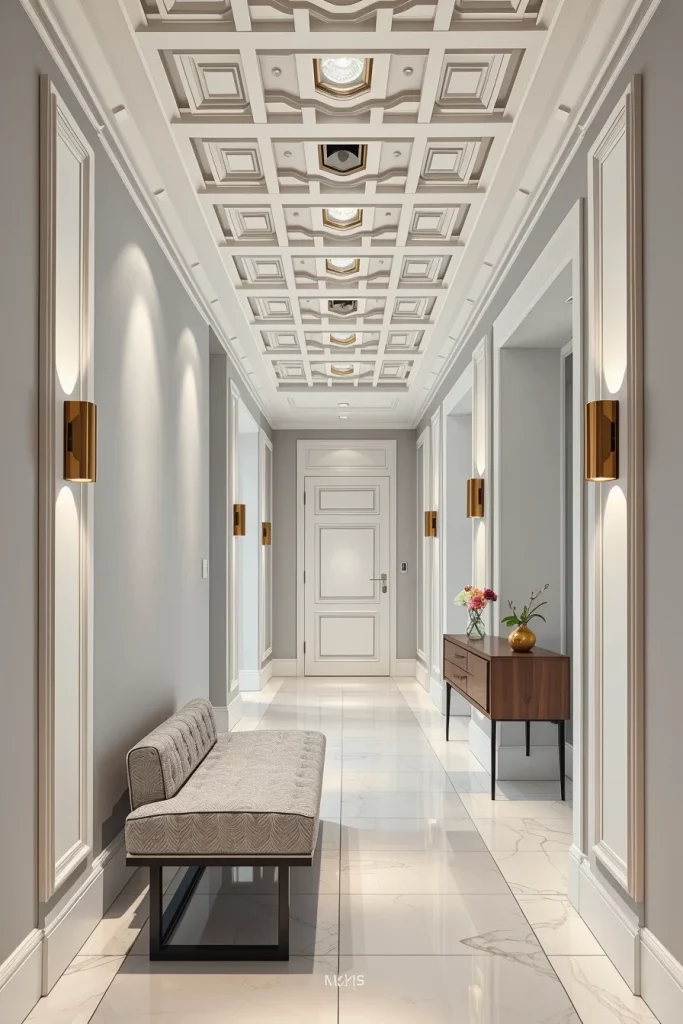
In my own work, I have noticed that oversized molding patterns tend to make hallways appear larger and more sophisticated. Many American designers recommend using tone-on-tone finishes for contemporary molding designs, and I find this technique particularly effective because it highlights texture without overwhelming the space.
I would also consider integrating concealed storage within the lower portion of the wall design, especially in family homes where practicality is just as important as aesthetics.
Artistic Wall Grids For Displaying Curated Collections
Wall grids offer one of the most creative and artistic solutions for displaying personal collections in the hallway. Rather than hanging individual frames randomly, I prefer creating structured compositions that feel intentional and visually balanced. This approach transforms the hallway into a curated gallery while showcasing meaningful objects and artwork.
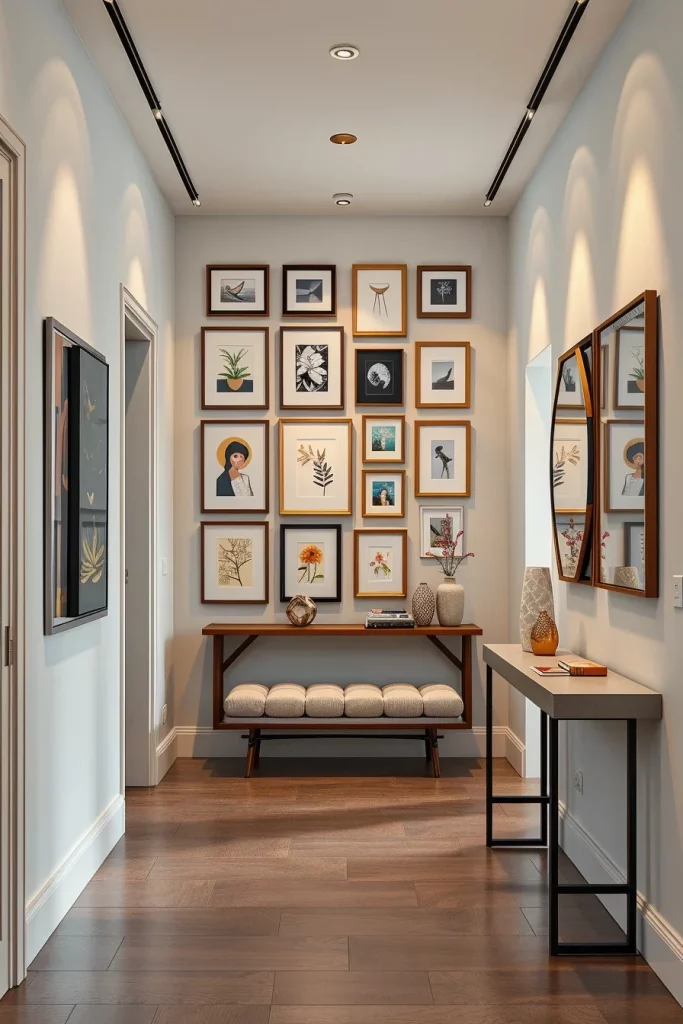
For this concept, I usually incorporate metal or wood-inspired grid systems displaying framed art, photographs, sculptural objects, and decorative accessories. A minimalist bench, slim console table, and focused gallery lighting enhance the exhibition-like atmosphere. Consistent frame finishes help maintain cohesion, even when displaying diverse pieces.
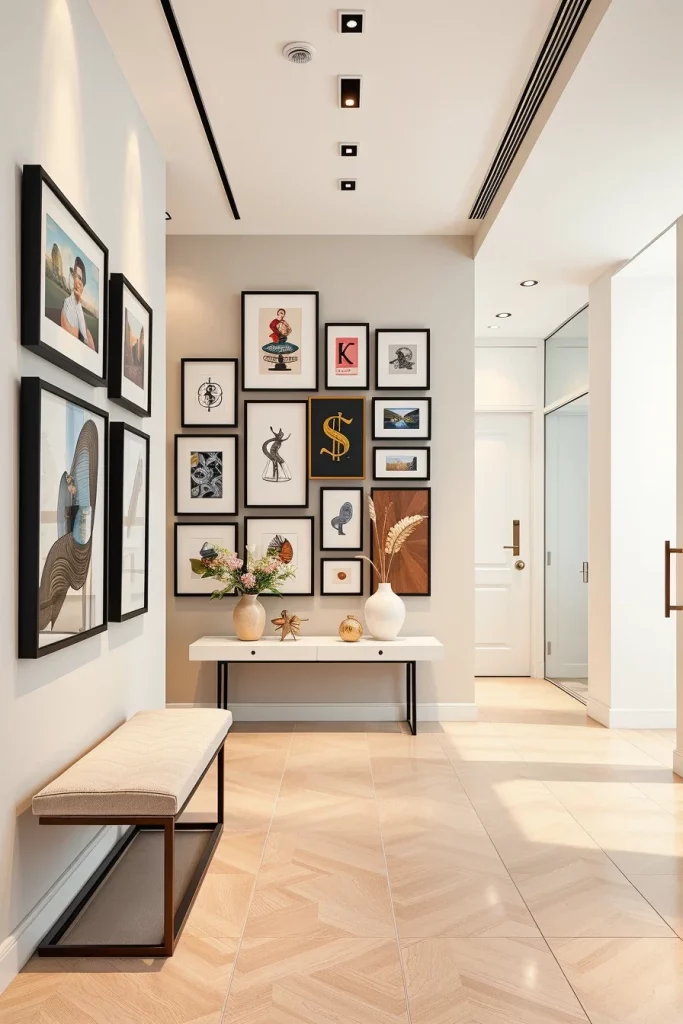
Personally, I enjoy using wall grids because they can evolve over time. Homeowners can easily update the display with new artwork, travel memories, or seasonal pieces without redesigning the entire hallway. Interior stylists frequently recommend maintaining a consistent spacing between displayed objects, and I have found this guideline essential for achieving a polished appearance.
To make the arrangement even more dynamic, I would introduce one oversized statement piece within the grid composition to create a strong focal point and add visual variety.
Illuminated Wall Installations For A Gallery-Inspired Look
I often recommend illuminated wall installations when homeowners want their hallway to feel like a private art gallery. Integrated LED lighting can dramatically enhance artwork, sculptural panels, or decorative wall niches while also improving functionality in narrow corridors. Soft indirect lighting creates depth and instantly elevates even simple architectural details. This approach works particularly well in contemporary interiors where clean lines and subtle luxury are desired.
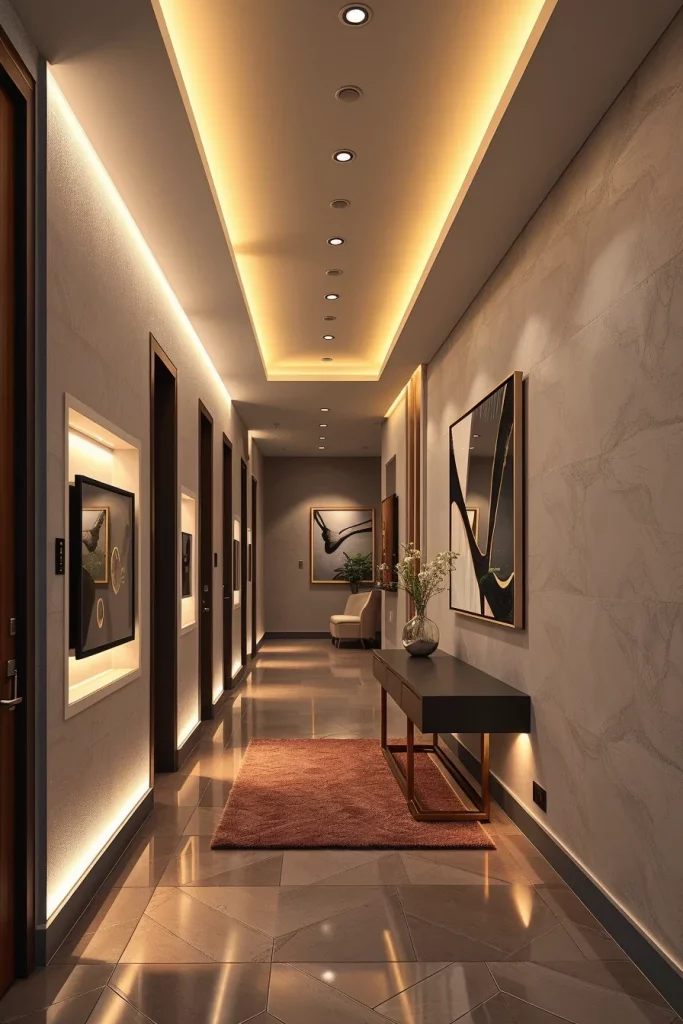
In my experience, recessed LED strips, wall-mounted light sculptures, floating shelves with integrated lighting, and oversized framed artwork create a balanced composition. I like combining illuminated niches with textured plaster walls because the light highlights every surface variation. A slim console table beneath the installation provides practical storage while maintaining the gallery aesthetic. Large mirrors can also reflect the lighting, making the hallway appear significantly larger.
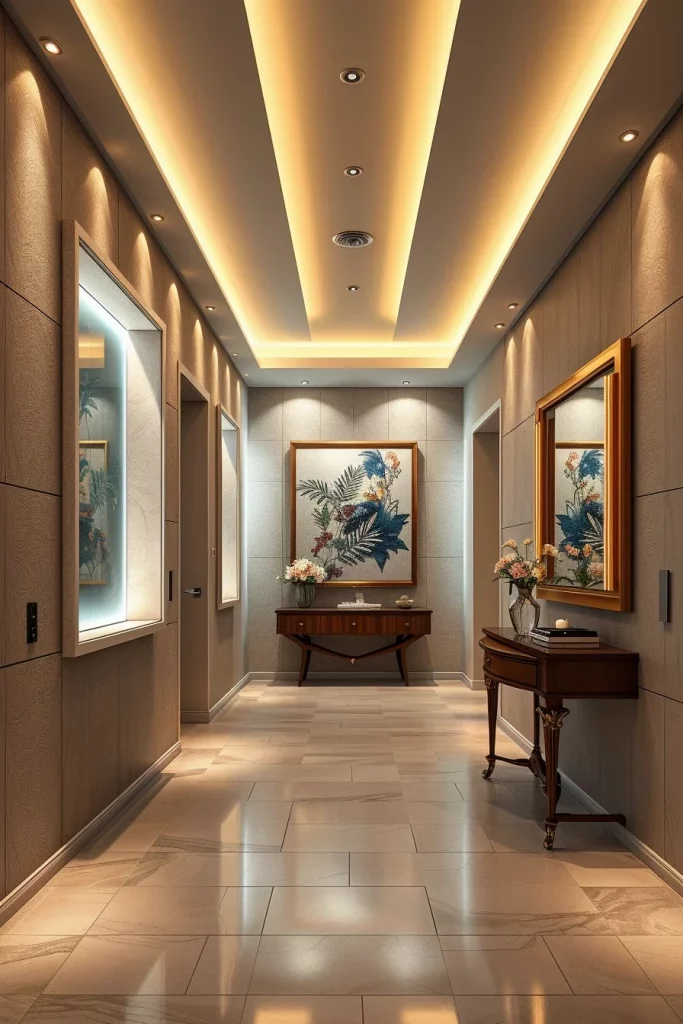
I have noticed that many interior designers featured by Architectural Digest frequently emphasize layered lighting rather than relying on a single overhead fixture. I agree completely because layered lighting allows the hallway to feel welcoming throughout the day. Personally, I prefer warm white lighting around 2700K-3000K for a sophisticated residential atmosphere.
I would also add dimmable controls to this design. Being able to adjust brightness allows the hallway to transition effortlessly from functional daytime use to a dramatic evening ambiance.
Monochromatic Hallway Walls With Striking Texture
A monochromatic palette does not have to feel plain. I often use textured finishes to create stylish hallways that remain visually interesting without introducing multiple colors. Limewash finishes, Venetian plaster, ribbed wall panels, and textured paint techniques can transform simple monochromatic walls into sculptural surfaces. The result feels calm yet highly refined.
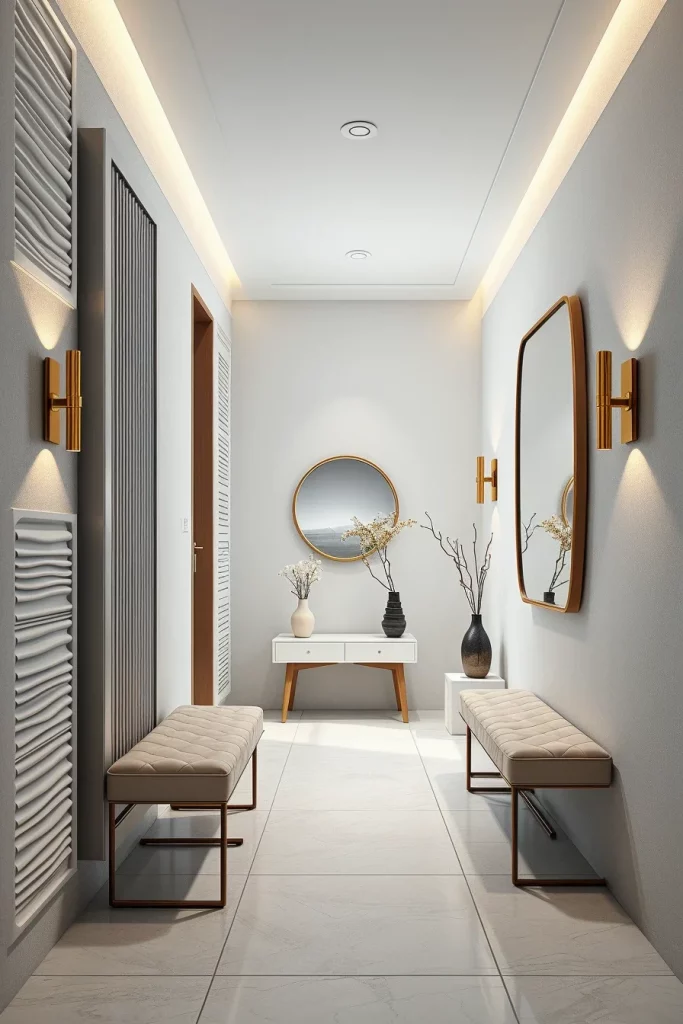
When designing these interiors, I typically pair textured walls with minimalist furnishings. A sleek bench, concealed storage cabinetry, black metal accents, and simple wall sconces help maintain visual harmony. I find that oversized mirrors work exceptionally well because they reflect light across textured surfaces and emphasize depth. Neutral flooring in stone or wide-plank oak further enhances the sophisticated appearance.
Personally, I appreciate monochromatic hallways because they age gracefully and adapt easily to changing decor preferences. Designers from Elle Decor often highlight texture as an essential ingredient in minimalist interiors, and my own projects consistently confirm this principle. Texture introduces warmth and complexity without overwhelming the space.
To complete this look, I recommend incorporating subtle decorative accessories such as ceramic vessels or sculptural objects placed on a console table. These details reinforce the artistic character of the hallway.
Sculpted Stone And Faux Stone Wall Features
Sculpted stone walls immediately create a memorable first impression. I often suggest natural stone or high-quality faux stone panels for homeowners seeking unique and architectural hallway decor. Whether arranged as a full accent wall or framed feature section, sculptural stone surfaces introduce timeless character and remarkable visual texture.
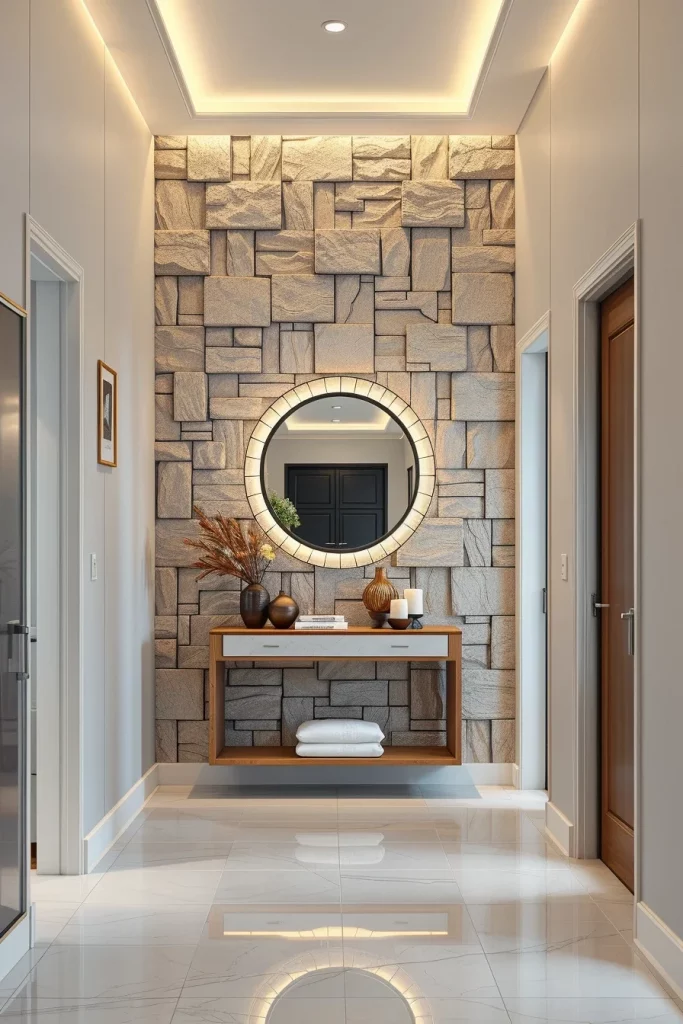
I prefer combining stone walls with streamlined furniture to avoid visual competition. A floating console, concealed shoe storage, contemporary pendant lighting, and a large circular mirror complement the strong material presence. Integrated LED uplighting is especially effective because it accentuates every contour and shadow within the stone surface. Minimal decorative accessories keep attention focused on the wall itself.
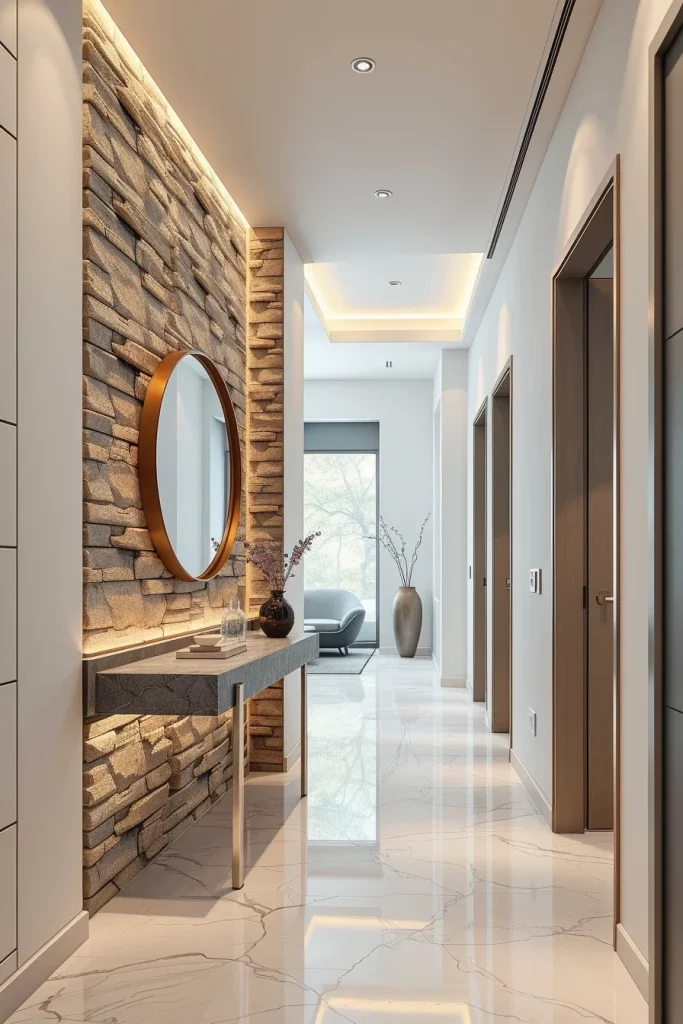
From my perspective, faux stone products have improved tremendously in recent years. Many premium options convincingly replicate natural materials while remaining lighter and easier to install. According to numerous professional designers, material authenticity is important, but quality execution matters even more. I fully agree with this philosophy.
I would also consider adding a sculptural bench or artistic ceramic pieces nearby. These elements strengthen the curated appearance and prevent the hallway from feeling overly architectural.
Unexpected Ceiling-To-Wall Designs That Redefine The Space
One of my favorite creative hallway ideas involves extending decorative treatments seamlessly from the ceiling onto the walls. Continuous wood slats, sculptural moldings, textured plaster, or bold geometric patterns can blur architectural boundaries and create an immersive experience. This design strategy is particularly effective in long hallways that need stronger visual identity.
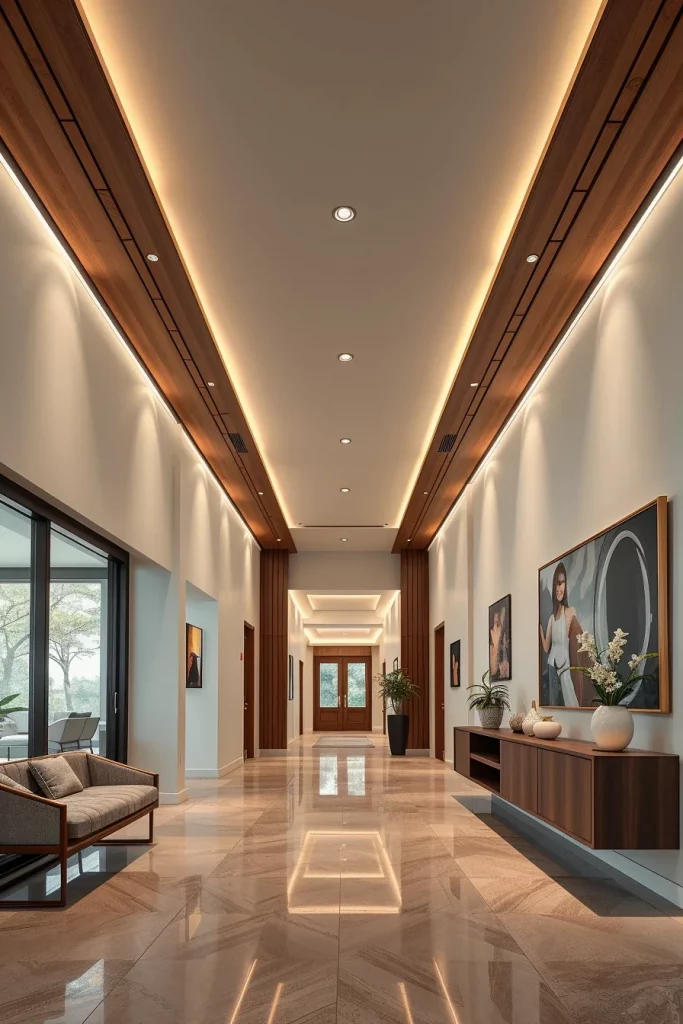
I typically incorporate linear lighting, concealed storage, floating consoles, and minimalist seating to complement these dramatic surfaces. Ceiling-to-wall continuity naturally draws the eye through the hallway, making the space appear longer and more dynamic. I often favor soft neutral tones to ensure the architectural treatment remains elegant rather than overwhelming.
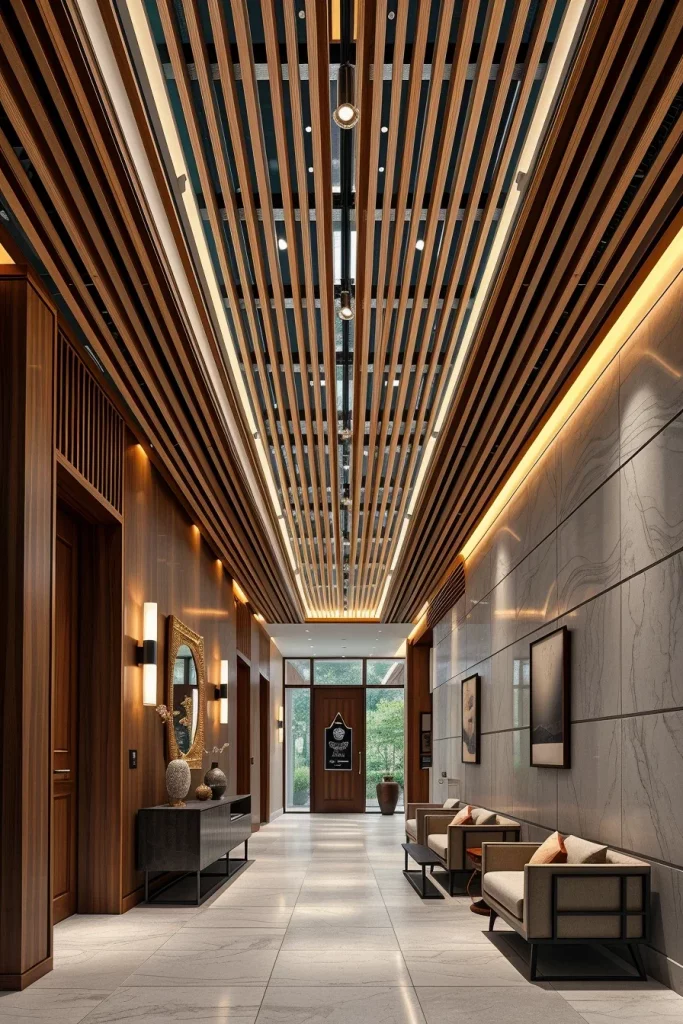
In my own projects, this approach consistently receives enthusiastic responses because it feels unexpected and highly customized. Many contemporary luxury residences now utilize continuous architectural detailing to create cohesive interiors. I find that maintaining restraint with additional decor helps preserve the sophistication of the concept.
To enhance practicality, I recommend integrating hidden storage solutions within the wall treatment itself whenever possible. This preserves the clean aesthetic while maximizing functionality.
Asymmetrical Wall Compositions For Modern Hallways
Asymmetrical compositions introduce energy and personality into hallway design. Instead of arranging artwork and decor symmetrically, I often create intentionally irregular layouts using framed art, mirrors, sculptural objects, and floating shelves. These artistic arrangements feel contemporary and allow homeowners to showcase their individuality.
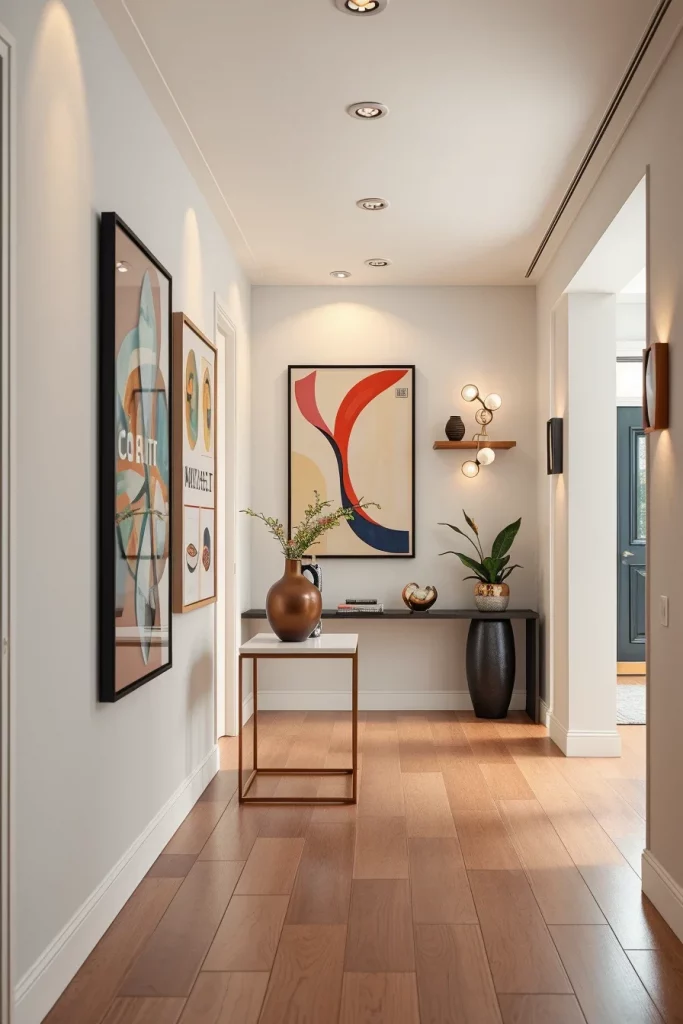
When planning asymmetrical displays, I carefully balance scale, color, and negative space. I usually combine abstract artwork, sculptural wall pieces, floating shelves, and decorative objects of varying sizes. A streamlined console table beneath the arrangement grounds the composition while providing everyday functionality. Proper lighting remains essential for highlighting each element.
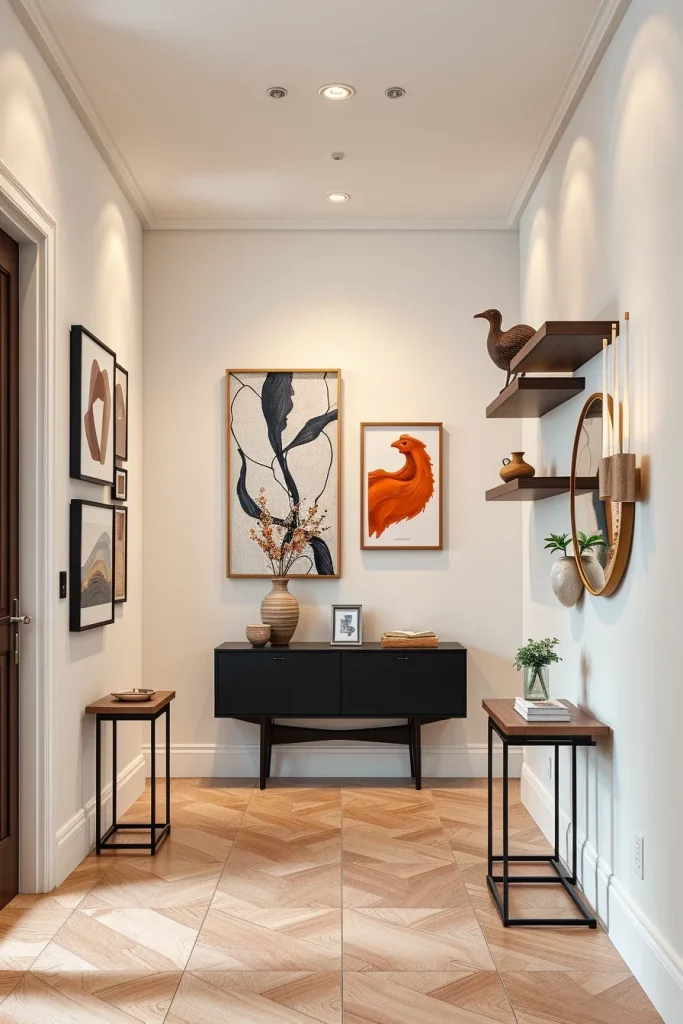
Personally, I enjoy asymmetrical designs because they evolve naturally over time. New artwork, travel souvenirs, or personal collections can easily be incorporated without disrupting the overall aesthetic. Interior stylists frequently recommend starting with one large focal piece and building outward, and I have found this strategy extremely effective.
I would also add subtle accent lighting or picture lights to emphasize individual pieces and create a curated gallery atmosphere.
Artistic Wall Dividers That Enhance Open Entryways
Open entryways often benefit from subtle separation, and I find that artistic wall dividers are one of the most elegant solutions. Instead of constructing full walls, decorative dividers define the hallway while preserving natural light and visual openness. Sculptural screens, slatted partitions, metal installations, and geometric panels can establish distinct zones without making the space feel enclosed.
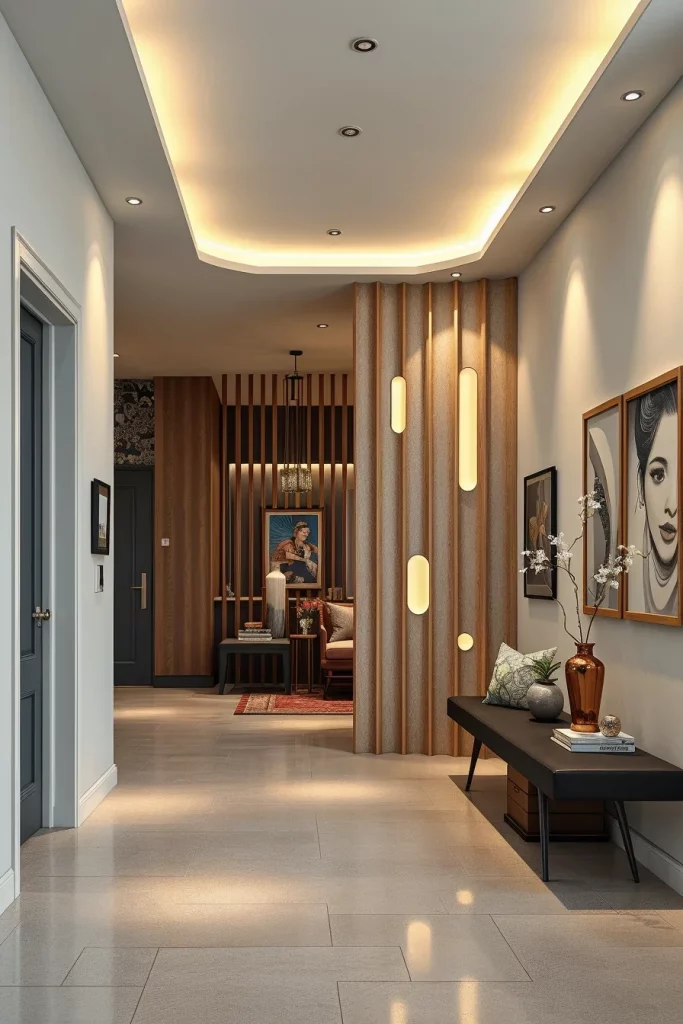
When designing these spaces, I typically select dividers that complement the overall architectural style of the home. Vertical slat partitions, laser-cut metal screens, and open shelving units are among my preferred choices because they combine beauty with practicality. I often integrate a slim bench, decorative lighting, and carefully selected accessories nearby to create a welcoming transition area. Materials such as metal, glass, and textured finishes contribute to a sophisticated appearance.
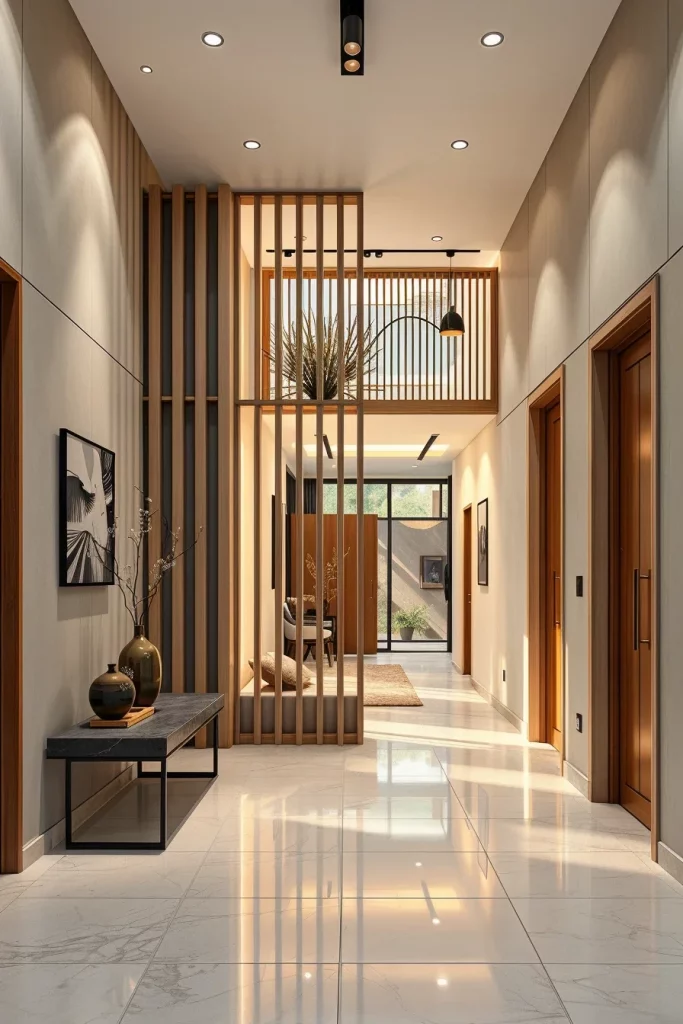
Personally, I appreciate decorative dividers because they allow homeowners to introduce a highly creative design element without sacrificing functionality. Many contemporary interior designers advocate for semi-open partitions in modern homes because they improve spatial flow while maintaining a sense of structure. In my experience, this approach works exceptionally well in open-plan layouts.
I would also include integrated lighting within or around the divider. This additional layer of illumination enhances the sculptural qualities of the installation and creates a dramatic evening atmosphere.
Personalized Hallway Gallery Walls With Creative Themes
A personalized gallery wall transforms a hallway into a meaningful and deeply unique space. Rather than displaying random artwork, I recommend developing a cohesive theme based on travel memories, family photography, abstract art, architecture, or black-and-white imagery. A themed gallery creates visual consistency while allowing homeowners to tell their personal story.
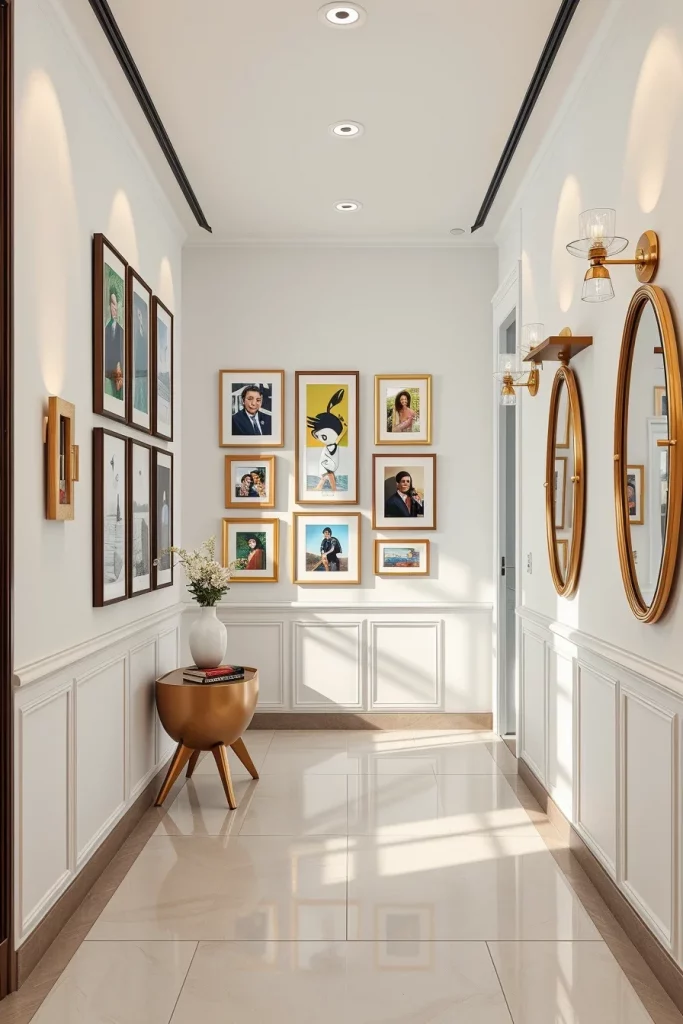
I usually begin with one oversized focal piece and build around it using frames of varying dimensions. Mixing photographs, artwork, sculptural wall objects, and decorative mirrors creates an engaging layered composition. I also like incorporating floating ledges because they make it easy to rotate artwork and refresh the display over time. Consistent framing materials help unify the arrangement.
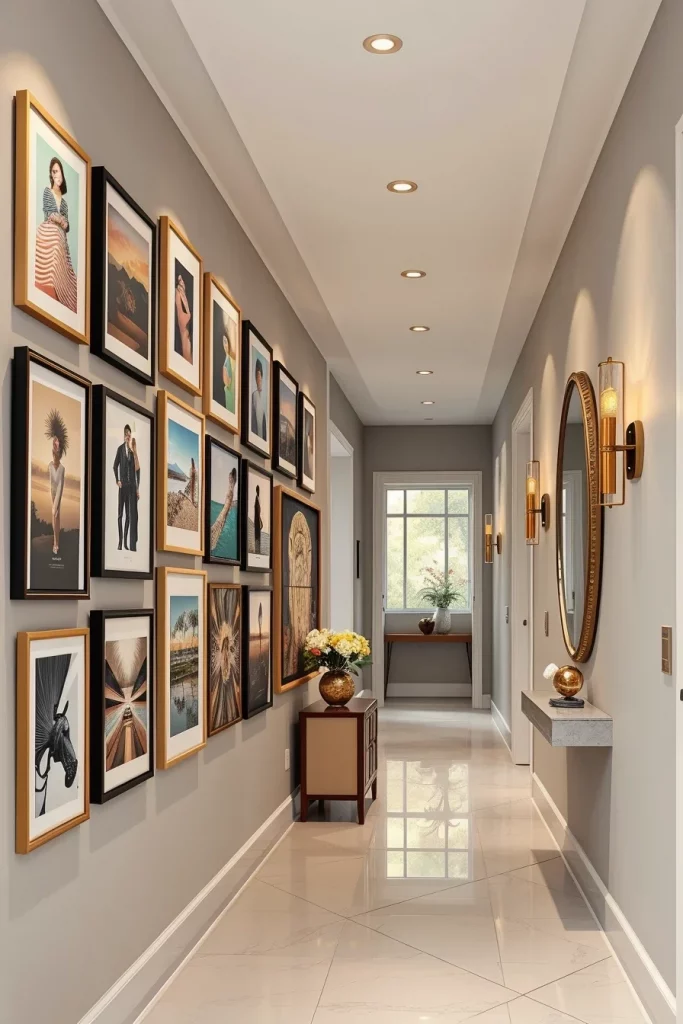
From my experience, gallery walls are most successful when they reflect the homeowner’s personality rather than current trends alone. Designers frequently recommend planning the layout on the floor before installation, and I always follow this advice. It allows me to refine spacing and proportions before committing to wall placement.
I would suggest adding subtle picture lighting or directional wall sconces to emphasize important pieces and elevate the gallery-like atmosphere.
Statement Color Blocking Techniques For Stylish Hallway Walls
Color blocking is one of the most stylish ways to introduce personality into a hallway. Strategic use of contrasting or tonal colors can define architectural features, highlight artwork, and visually alter proportions. I often use geometric color blocks to make narrow hallways appear wider or to create a striking focal point at the end of a corridor.
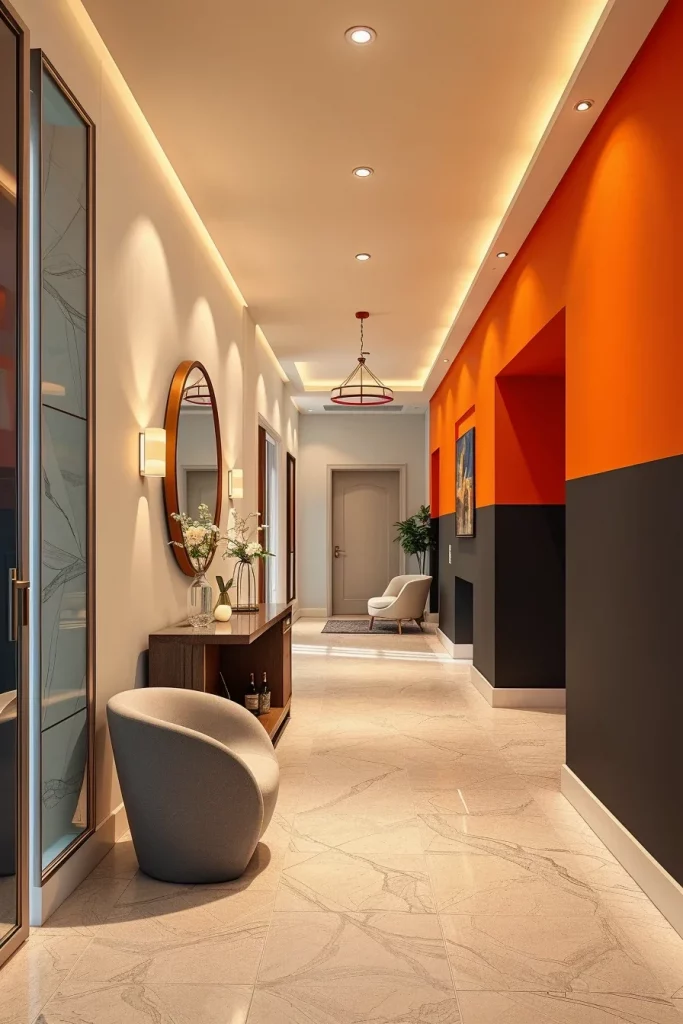
In my projects, I prefer pairing color-blocked walls with streamlined furnishings to maintain balance. Minimalist console tables, sculptural seating, oversized mirrors, and contemporary lighting fixtures work particularly well in these settings. I often select earthy neutrals, deep charcoal, muted terracotta, or rich greens to achieve a sophisticated look. Clean lines and restrained accessories ensure the walls remain the star of the design.
Personally, I believe color blocking offers tremendous flexibility because it can be tailored to virtually any interior style. Publications such as House Beautiful frequently showcase bold painted architectural details as an affordable way to transform interiors. I have found that even simple painted arches or geometric shapes can dramatically elevate a hallway.
To complete this design, I recommend incorporating decorative accents that subtly echo the chosen wall colors, creating a cohesive and polished appearance.
Museum-Inspired Hallway Decor With Curated Art Displays
A museum-inspired hallway creates an atmosphere of refinement and intentionality. I approach these interiors as curated experiences where every object serves a purpose. Carefully selected artwork, generous spacing, and professional-style lighting contribute to an environment that feels sophisticated yet welcoming. This approach is ideal for homeowners who appreciate fine art and timeless design.
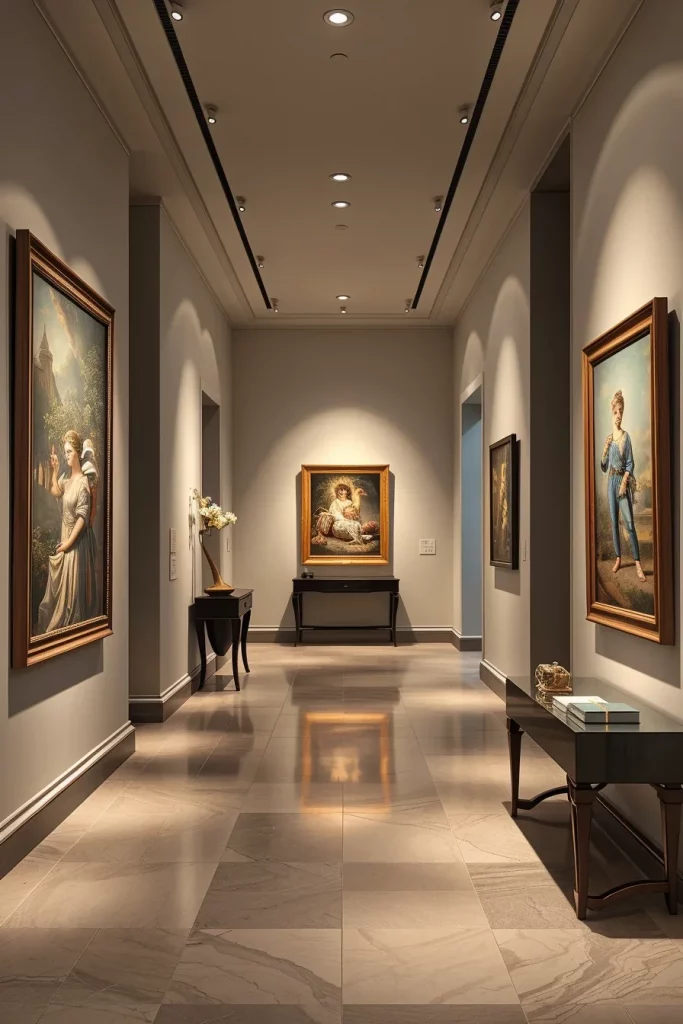
I typically use large-scale artwork, sculptural pieces, elegant display pedestals, and museum-style picture lighting. Neutral wall colors allow the collection to command attention, while streamlined furnishings ensure visual clarity. A floating console or narrow bench can provide functionality without disrupting the gallery aesthetic. Symmetry and thoughtful spacing are essential elements in achieving this look.
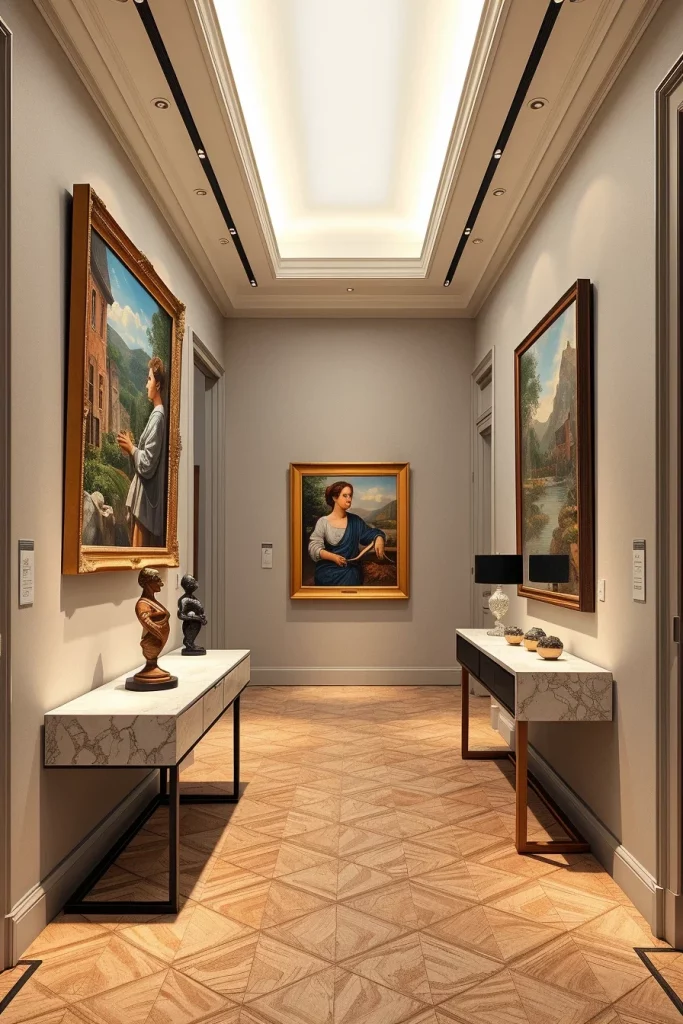
I have learned that restraint is often the key to successful museum-inspired interiors. Rather than filling every wall surface, I prefer displaying fewer but more impactful pieces. Many professional curators emphasize the importance of negative space, and I strongly agree. Empty space allows individual artworks to breathe and receive proper attention.
I would also consider incorporating descriptive plaques or small labels for particularly meaningful pieces. This detail reinforces the curated experience and adds a highly personal touch.
One-Of-A-Kind Handmade Wall Decor Ideas For Hallways
Handmade decor introduces authenticity and character that mass-produced accessories often cannot replicate. I frequently recommend handcrafted ceramic installations, woven fiber art, carved panels, or bespoke metal sculptures for homeowners seeking unusual and truly one-of-a-kind hallway walls. These pieces instantly create conversation and establish a highly personalized environment.
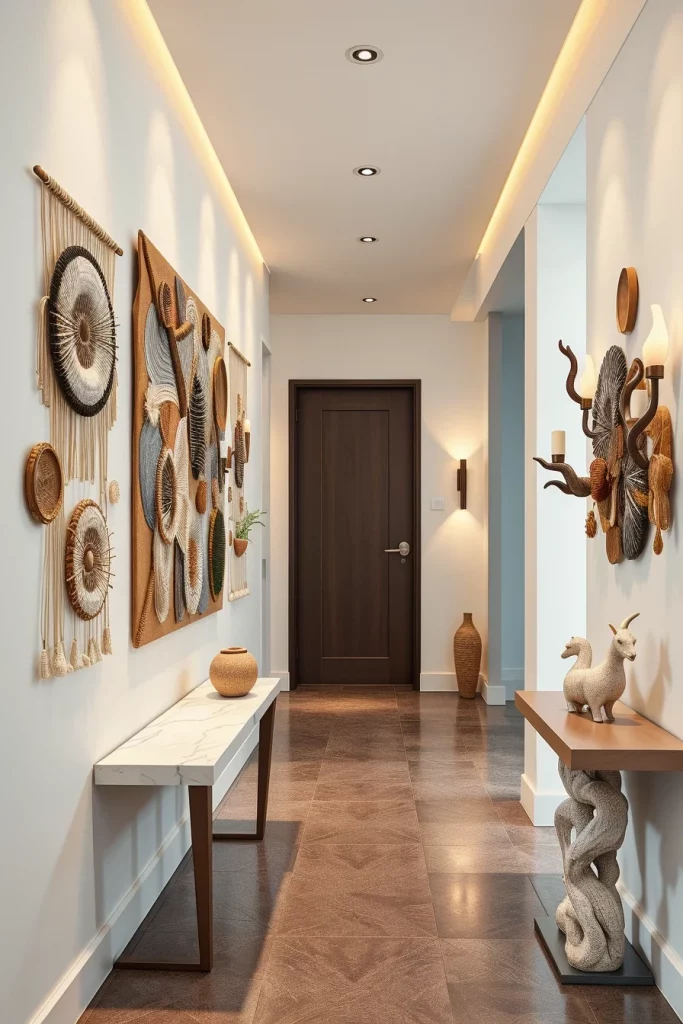
When selecting handmade decor, I pay close attention to scale and material compatibility. Large woven panels, ceramic compositions, artisanal mirrors, and handcrafted wood sculptures can become stunning focal points. I often pair these pieces with simple furniture such as a minimalist console, upholstered bench, or sculptural lighting fixture to maintain visual balance. The contrast between handcrafted textures and clean architectural lines is particularly compelling.
Personally, I value handmade elements because they bring warmth and individuality into contemporary interiors. Many respected designers encourage mixing artisanal pieces with modern furnishings to create spaces that feel collected rather than staged. In my own work, these combinations consistently produce the most memorable results.
I would also incorporate natural materials such as linen textiles, stone accessories, or handcrafted ceramic vessels nearby to reinforce the artisanal atmosphere.
Stylish hallway wall decor can transform an overlooked passage into one of the most striking spaces in your home. Whether you choose sculptural pieces, artistic lighting, statement mirrors, or textured finishes, the right decor adds personality and visual impact. By mixing creativity with thoughtful design, you can create a hallway that feels both welcoming and unforgettable. Use these inspiring ideas to turn your hallway walls into a true reflection of your style.