
Small living rooms can feel surprisingly spacious when every piece of furniture is positioned with purpose. I’ve found that the right layout can make a compact room feel more comfortable, functional, and visually balanced without adding unnecessary pieces. From streamlined sofas and clever coffee table arrangements to vertical storage and mirrors, small spaces offer plenty of opportunities for smart design. In this collection, I’m exploring a range of living room furniture layouts that show how different styles can work beautifully within limited square footage. I’ll also point out the practical details that help each arrangement maintain open circulation while still feeling inviting and complete. If you’re looking for inspiration to make the most of a small living room, these ideas offer plenty of realistic ways to rethink your space.
Neutral Sofa Nook With Built-In Shelving
The first living room uses a compact neutral sofa positioned directly beside a tall built-in shelving unit and a large window. The sofa is layered with oversized beige cushions plus two patterned accent pillows in mustard, gray, and black. A round coffee table sits in front, while the built-in shelves provide a place for books, small objects, and decorative pieces. A patterned Roman shade covers the upper portion of the window, keeping the seating area visually connected to the natural light.
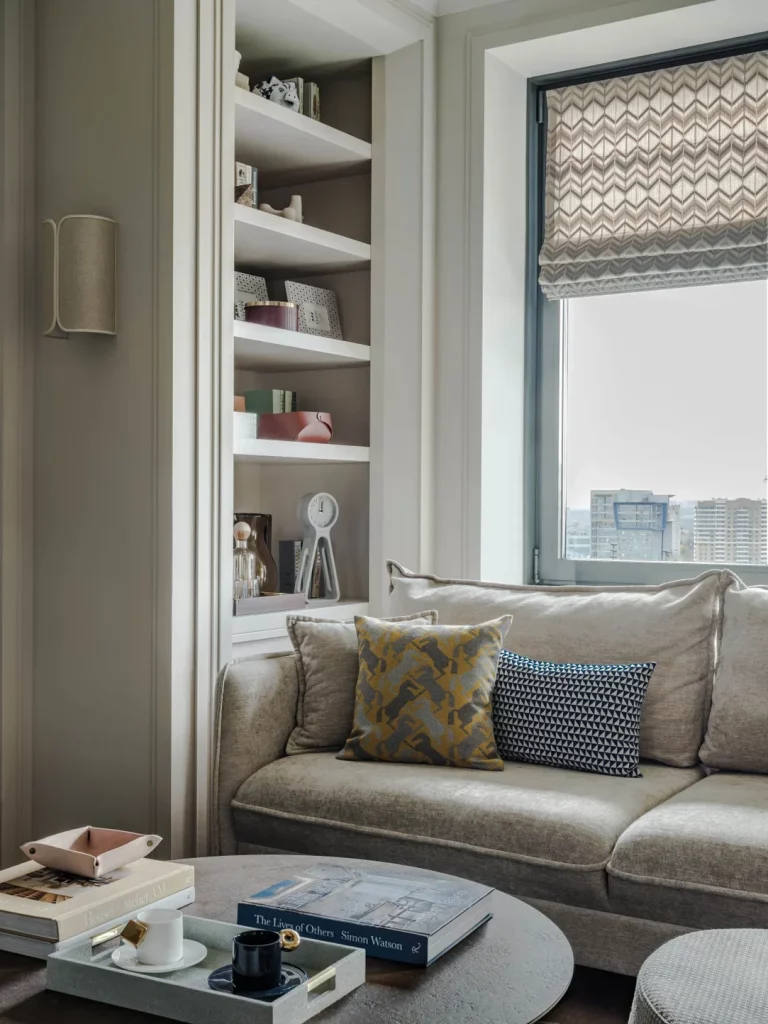
I like how efficiently this arrangement uses the wall beside the sofa instead of taking up additional floor area with freestanding storage. The round coffee table also softens the otherwise linear arrangement and gives the seating area a clear center without creating sharp corners around the sofa. Because the furniture stays relatively close to the walls, the central walking area remains visually open.
From my perspective, this is a particularly useful approach when every square foot needs to work. I would keep a small-space sofa fairly streamlined, then use vertical shelving for storage and display. The neutral upholstery creates a calm base, while the patterned pillows bring enough contrast to keep the room from looking flat.
Compact Two-Seat Sofa With Floating Display Shelf
Here, a small upholstered sofa sits against a warm beige wall, with two large seat cushions and several soft neutral pillows. Above it, a single floating shelf holds a small black lamp, a gold-toned vessel, artwork, and a few decorative objects. A tall floor lamp stands to the right of the sofa, while the surrounding furniture is kept to a minimum.
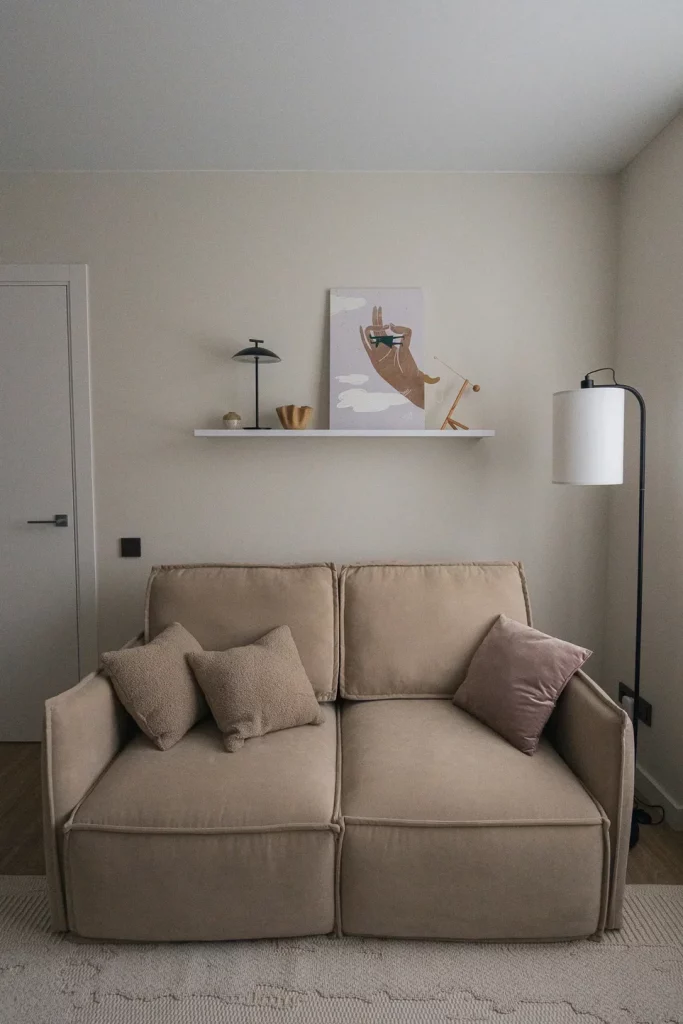
The simplicity of this layout is its biggest strength. Rather than filling the wall with multiple shelves or cabinets, the single floating shelf provides visual interest without adding bulk. The floor lamp occupies the narrow space beside the sofa vertically, leaving the floor itself largely clear. I find this kind of restraint especially effective in a small room because the seating remains the obvious focal point.
I would use this arrangement when I want a living room to feel calm and uncluttered. Keeping the display shelf shallow and visually light helps maintain that feeling, while a compact sofa with separate cushions still provides a comfortable place to sit. The neutral palette also makes the room feel cohesive from floor to ceiling.
Window-Facing Sofa With Round Coffee Table
This living room places a neutral sofa directly in front of a large window, with a round coffee table centered in front of it and a single upholstered chair angled nearby. Matching patterned pillows sit along the sofa, while a tall indoor palm-like plant occupies the area beside the window. A blue patterned rug anchors the seating arrangement, and a large cylindrical pendant light hangs over the room.
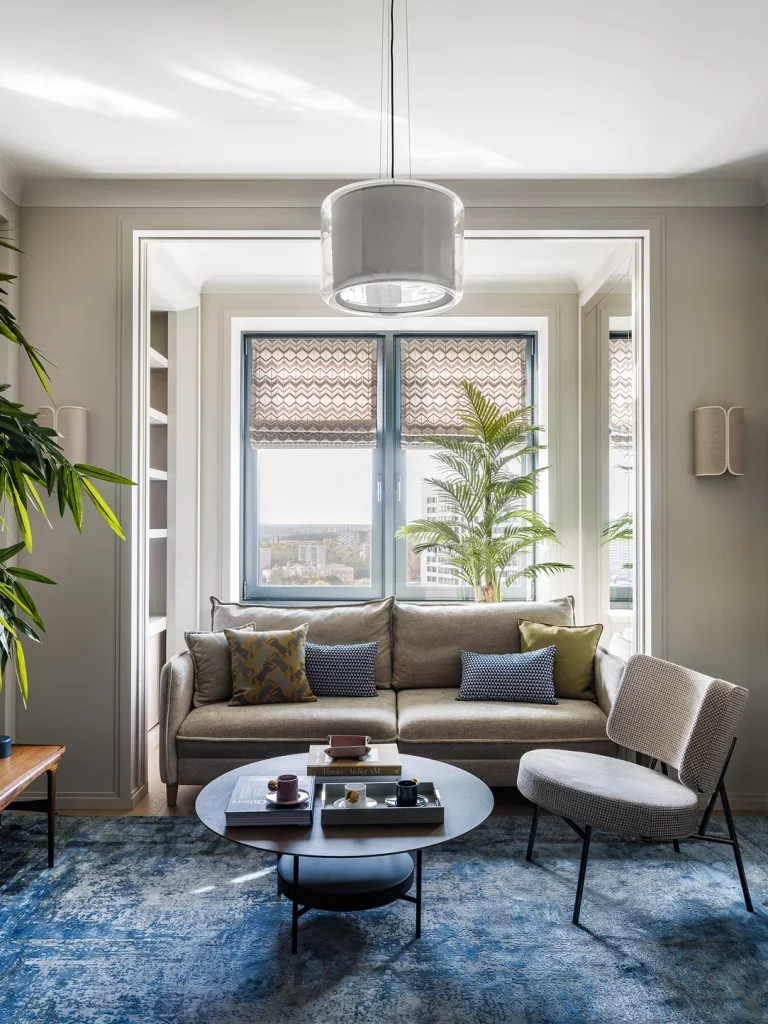
I particularly like the way the round coffee table creates a natural connection between the sofa and chair. Instead of forcing every piece into a straight line, the seating forms a relaxed conversation area around the table. The rug visually gathers the furniture together, while the open space around the arrangement prevents the room from feeling packed.
For a small living room, I would consider this a strong example of defining one purposeful seating zone. The table is large enough to serve the sofa and chair but remains rounded, so movement around it feels easier. The large window also becomes part of the composition rather than something the furniture competes with.
Blue Sofa With A Slim Desk And Bright Accent Chair
The fourth room combines a deep blue sofa with a narrow desk positioned along the wall beside it. A vivid yellow chair sits at the desk, creating a striking contrast against the blue upholstery. The wall behind the sofa is decorated with simple rectangular molding, while a yellow throw and a small patterned pillow repeat the brighter accent color. Dark wood flooring adds another layer of contrast beneath the seating.
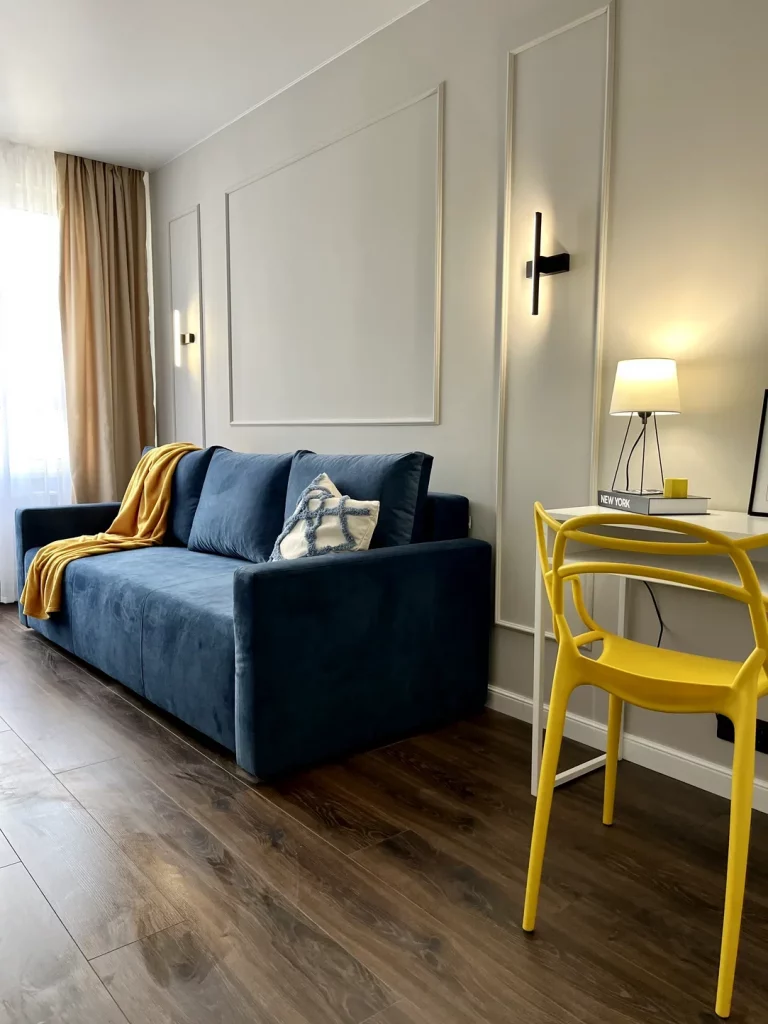
This arrangement shows how a small living room can combine lounging and working without needing a separate office area. The desk stays close to the wall and occupies a relatively narrow footprint, while the chair can be pulled forward when needed. The sofa remains the largest piece, but the yellow chair gives the opposite side of the room a clear visual purpose.
I would borrow the idea of using one compact work surface rather than trying to build a full workstation into a small living area. The strong blue and yellow combination also demonstrates how color can help define different zones. Keeping the furniture silhouettes simple allows the bold palette to remain controlled rather than overwhelming.
Teal Media Wall With Integrated Storage
This layout centers the television within a custom-looking wood and gray storage unit against a deep teal wall. The cabinet includes a tall closed section on one side, open shelving on the other, and three lower drawers beneath the television. Small decorative objects and headphones occupy the shelves, while a potted tree stands to the right. The flooring is warm-toned wood, with a large light rug extending across the foreground.
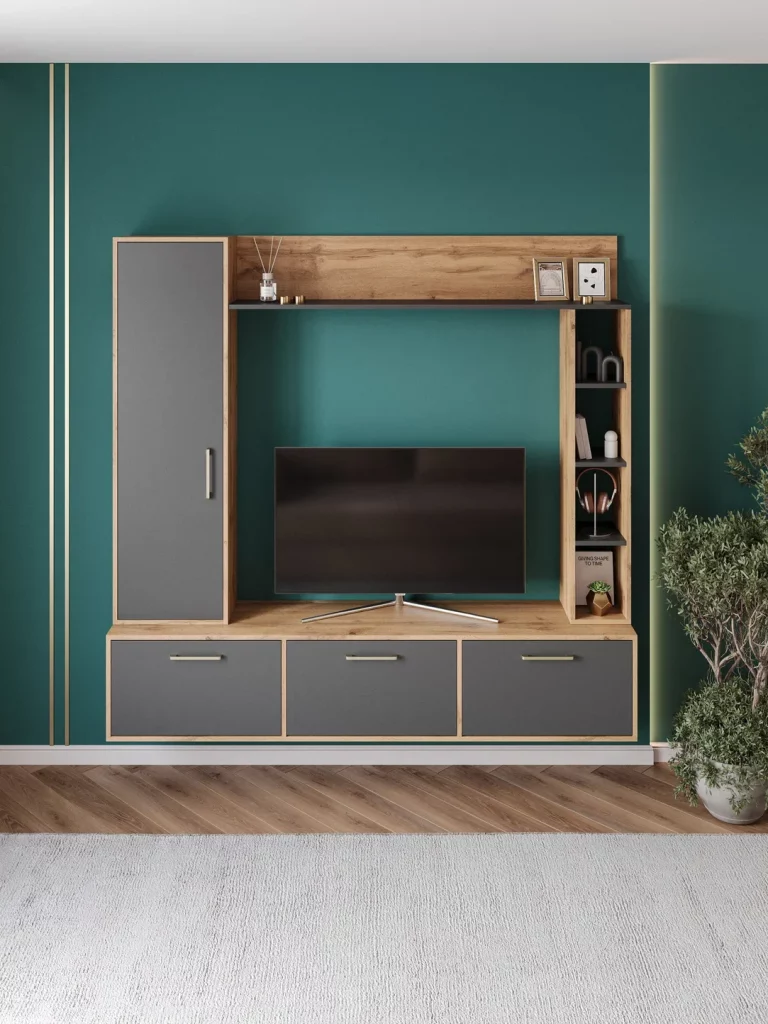
For a small space, I find this type of furniture especially effective because one wall performs several functions at once. The television, storage, display shelving, and drawers are consolidated into a single composition instead of being scattered throughout the room. That leaves more usable floor area and creates a strong visual anchor without requiring several separate pieces of furniture.
If I were recreating this idea, I would think vertically first. A tall cabinet can use wall height while keeping everyday storage organized below. I also like the combination of open and closed sections shown here because it balances display space with areas where less attractive items can remain hidden.
Statement Red Sofa With Art-Filled Wall
A vivid red sofa dominates this compact seating area, immediately creating a strong focal point against the pale wall behind it. Above the sofa are a framed floral still-life painting and two smaller round framed artworks with ornate frames. A slim black floor lamp stands beside the sofa, while a light textured throw is draped across one side. Dark woven wall pieces frame the edges of the composition.
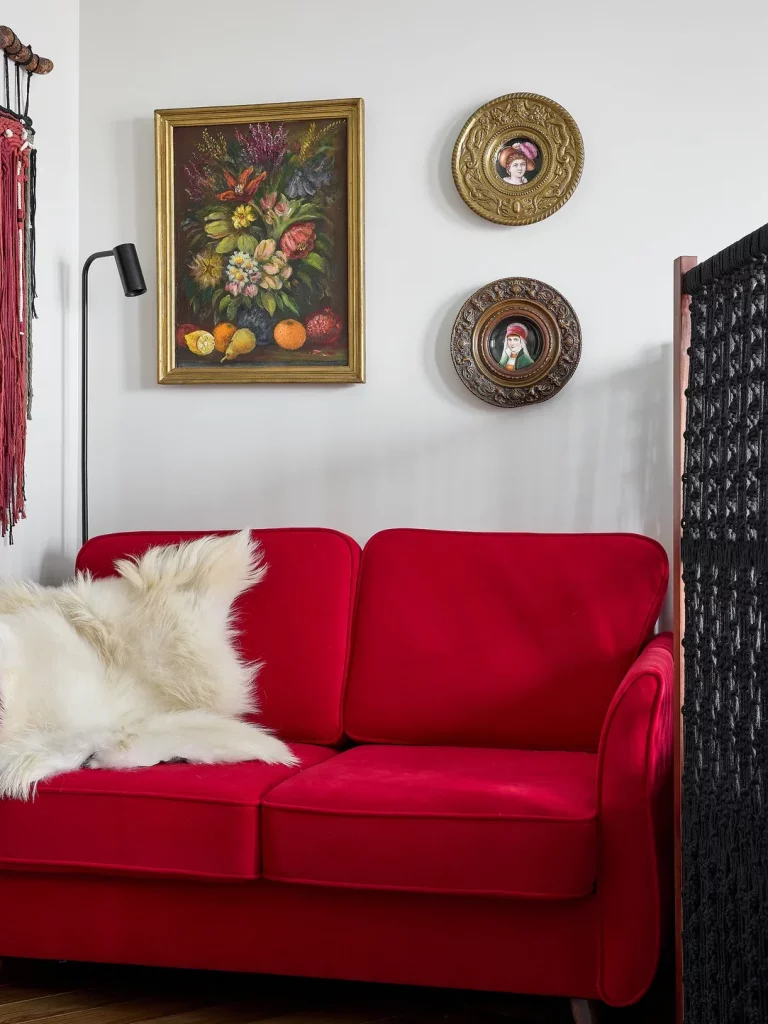
The furniture arrangement is intentionally simple, with the sofa doing most of the visual work. Because there is no bulky coffee table or collection of additional seating in front of it, the red upholstery has room to stand out. I like how the wall art adds another layer of personality without requiring more floor space.
In a small living room, I would consider this a reminder that one strong furniture piece can sometimes be more effective than several smaller ones. The artwork is arranged above the sofa rather than consuming valuable floor area, and the narrow floor lamp adds lighting without requiring a large side table. The result feels expressive while keeping the basic layout straightforward.
Blue Rug And Artwork Define A Compact Sitting Area
This neutral living room combines a light sofa with a round coffee table, a slim wood console, and a large blue patterned rug. A substantial blue-toned artwork hangs above the console, while a tall potted plant fills the corner beside it. A small blue desk lamp, decorative vessels, and stacked books sit on the console, creating a layered arrangement behind the seating.
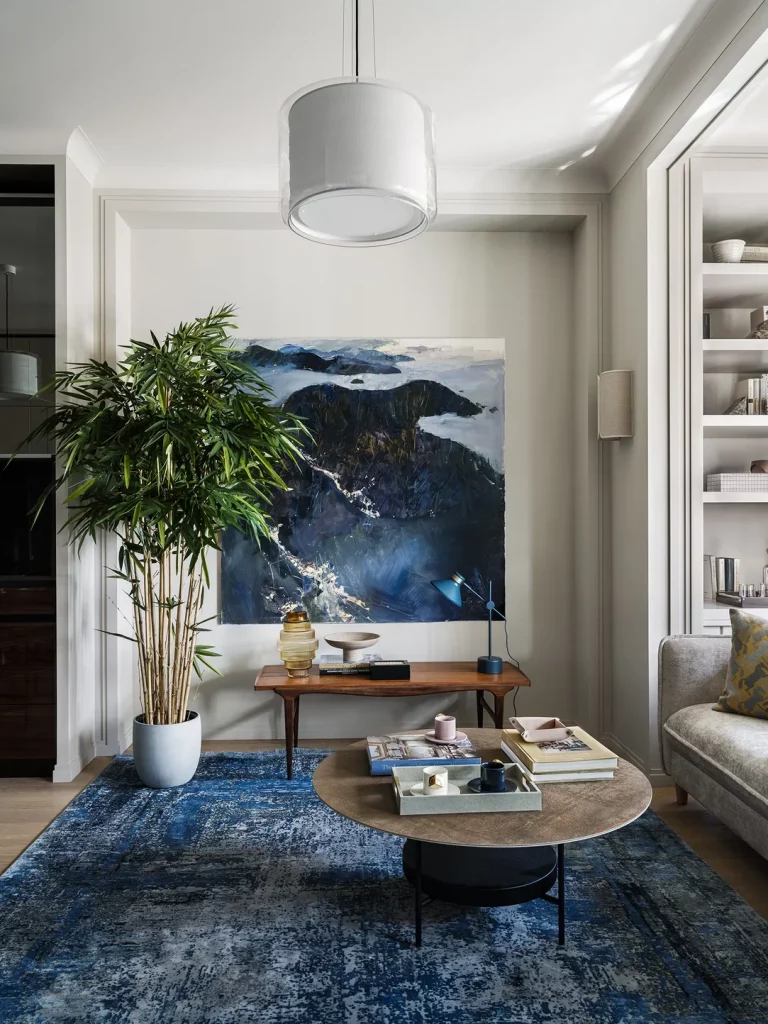
The rug is especially important here because it visually connects the separate furniture pieces. The sofa, coffee table, and console could otherwise feel like individual objects, but the blue rug gives the entire arrangement a defined footprint. The round coffee table also keeps the center of the room visually soft and makes the seating feel more conversational.
I like using one large piece of art and one strong rug when a small room needs character without lots of small accessories. In this arrangement, the artwork echoes the rug and gives the wall behind the sofa area a clear purpose. The slim console is another useful choice because it adds a surface for storage and styling without competing with the seating.
Curved Seating With Layered Round Tables
This sophisticated living area combines a pale sectional sofa with a curved green accent chair, a black round coffee table, and a smaller round surface nested beside it. Behind the sofa is a large light wood wall panel with a repeated perforated detail along its upper section. The room uses soft gray, cream, black, green, and natural wood tones, with a dark circular rug defining the main seating area.
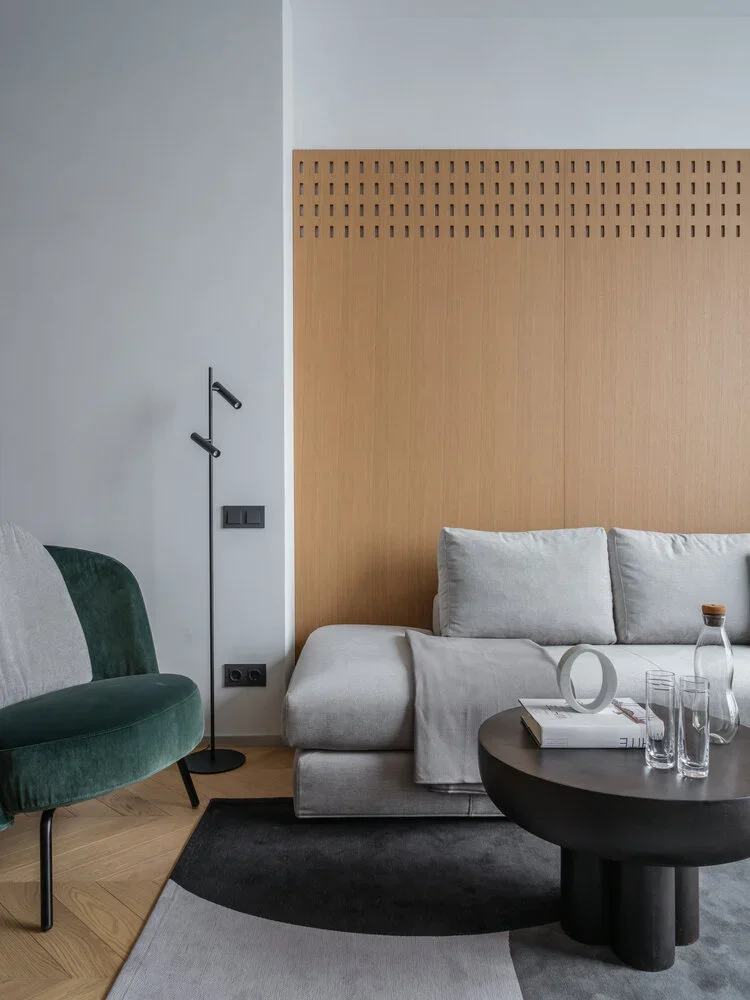
I like the way the rounded furniture shapes work together here. The curved chair, round tables, circular rug, and softened sectional edges create a fluid seating arrangement instead of a collection of rigid rectangular pieces. The furniture remains relatively close together, which makes the room feel intentional and comfortable without requiring a large footprint.
For a small space, I would pay close attention to scale and shape rather than simply counting furniture pieces. A few rounded forms can make a compact arrangement feel easier to move through. The wall panel also adds architectural interest behind the sofa without requiring additional furniture or decoration on the floor.
Compact Sitting Area With Wall-Mounted Storage
This warm, compact room features a small upholstered sofa tucked along the left side, with a floating green two-drawer cabinet mounted on the wall near the center. A small lamp sits on top, and the wall behind the sofa and cabinet is covered with a detailed monochromatic tree mural. Open shelving fills the opposite side, while a pale patterned rug runs through the center of the room.
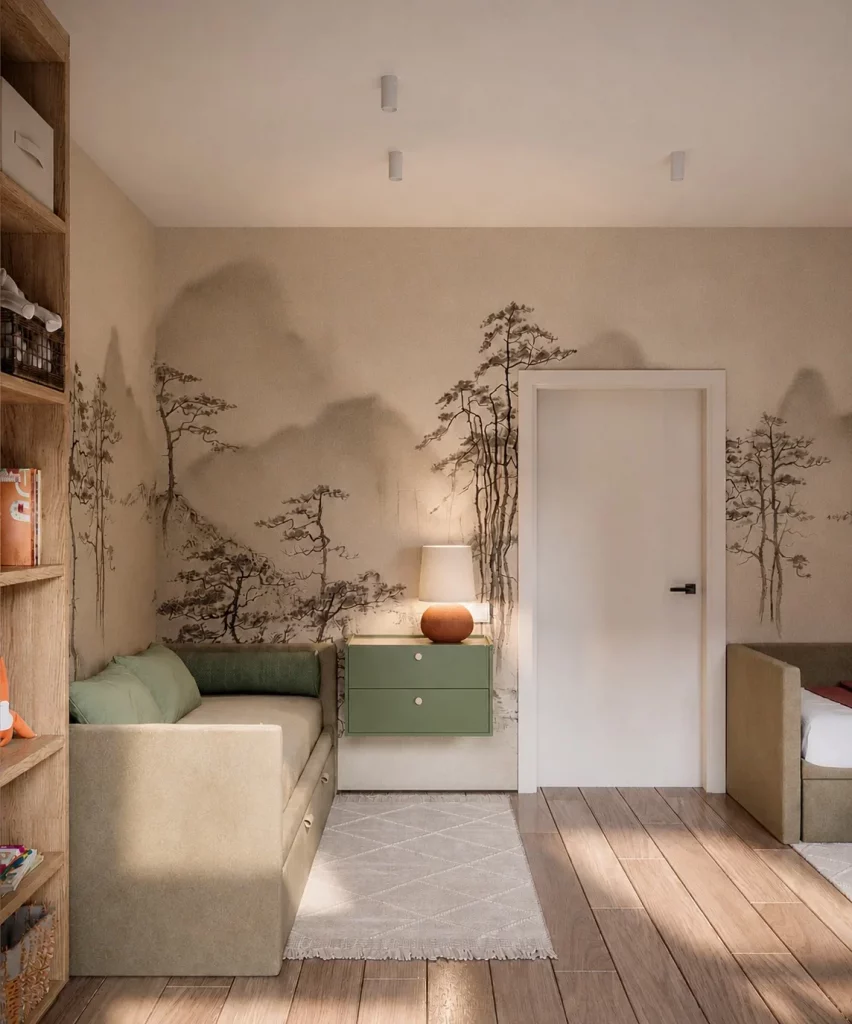
The wall-mounted cabinet is one of the smartest details in this arrangement because it provides storage while keeping the floor beneath it clear. The sofa also fits neatly along the side of the room, leaving a defined central passage. I find the open shelving useful as well because it takes advantage of vertical space instead of adding another large piece of furniture to the floor.
I would use this layout as inspiration for a room where storage is essential but floor space is limited. Wall-mounted furniture can visually lighten a compact room, especially when the main seating already occupies much of the available floor area. The detailed wall treatment gives the room plenty of visual personality, so the furniture can remain relatively simple.
Soft White Sofa Framed By Floor-Length Curtains
The final living room uses a rounded white sofa positioned beside a large window dressed with full-length blush-toned curtains and sheer white panels. Two green pillows provide a subtle accent on the sofa. A slim glass-and-metal side table sits between the seating and window, while a curved floor lamp arches over the sofa. A light patterned rug and pale wood console complete the restrained arrangement.
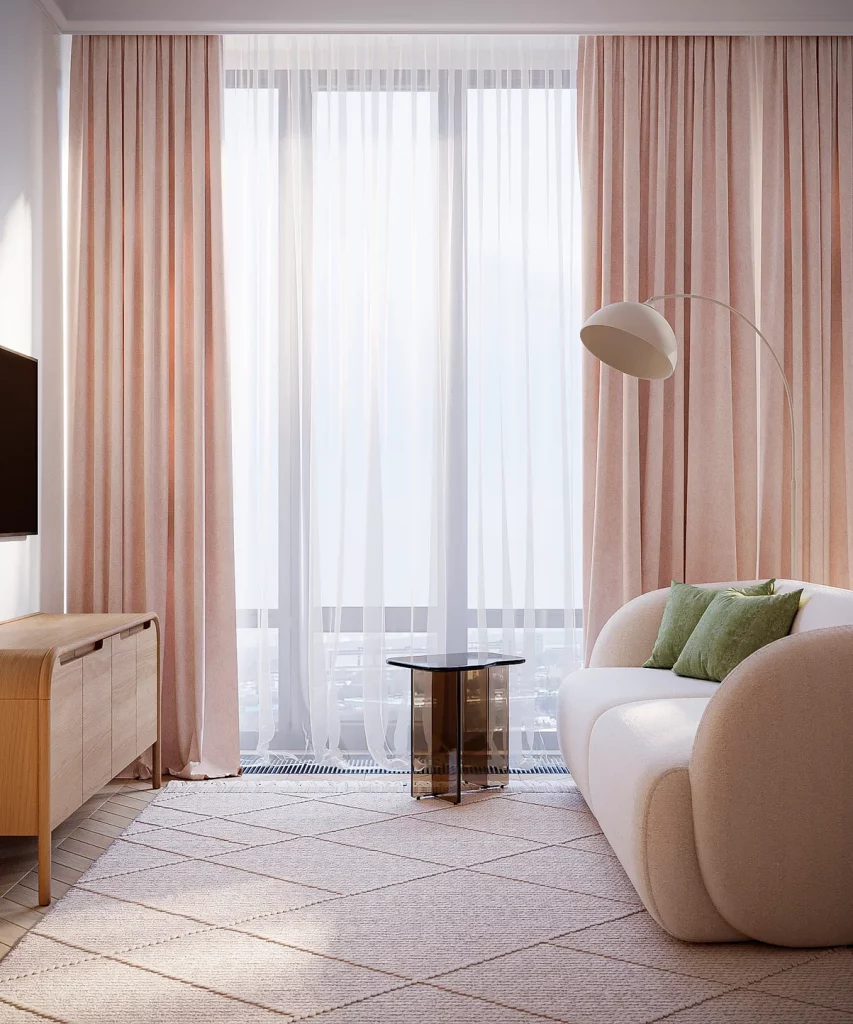
I love how much visual breathing room this layout preserves. The sofa is substantial but rounded, while the small side table occupies very little floor space. The transparent table also keeps the window area visually open, and the tall curtains emphasize the height of the room rather than adding visual weight around the seating.
For a small living room, I would take cues from the balance between softness and openness here. A curved sofa, slim side table, and arched floor lamp create useful functions without introducing many hard corners. The restrained color palette also helps the room feel cohesive, while the green pillows add just enough contrast to keep the space from becoming one-dimensional.
Layered Small Living Room With a Curved Sofa and Central Coffee Table
This living room creates a polished seating zone by placing a large rounded sofa along the right wall and a patterned armchair near the window. I like how the furniture is arranged around a round coffee table, giving the room a clear central point without creating sharp visual barriers. A television sits on a low wood-toned console opposite the sofa, while a large rug combines deep navy and warm brown beneath the seating area. The cream upholstery, pale flooring, black accents, greenery, and expressive artwork create a sophisticated but comfortable atmosphere.
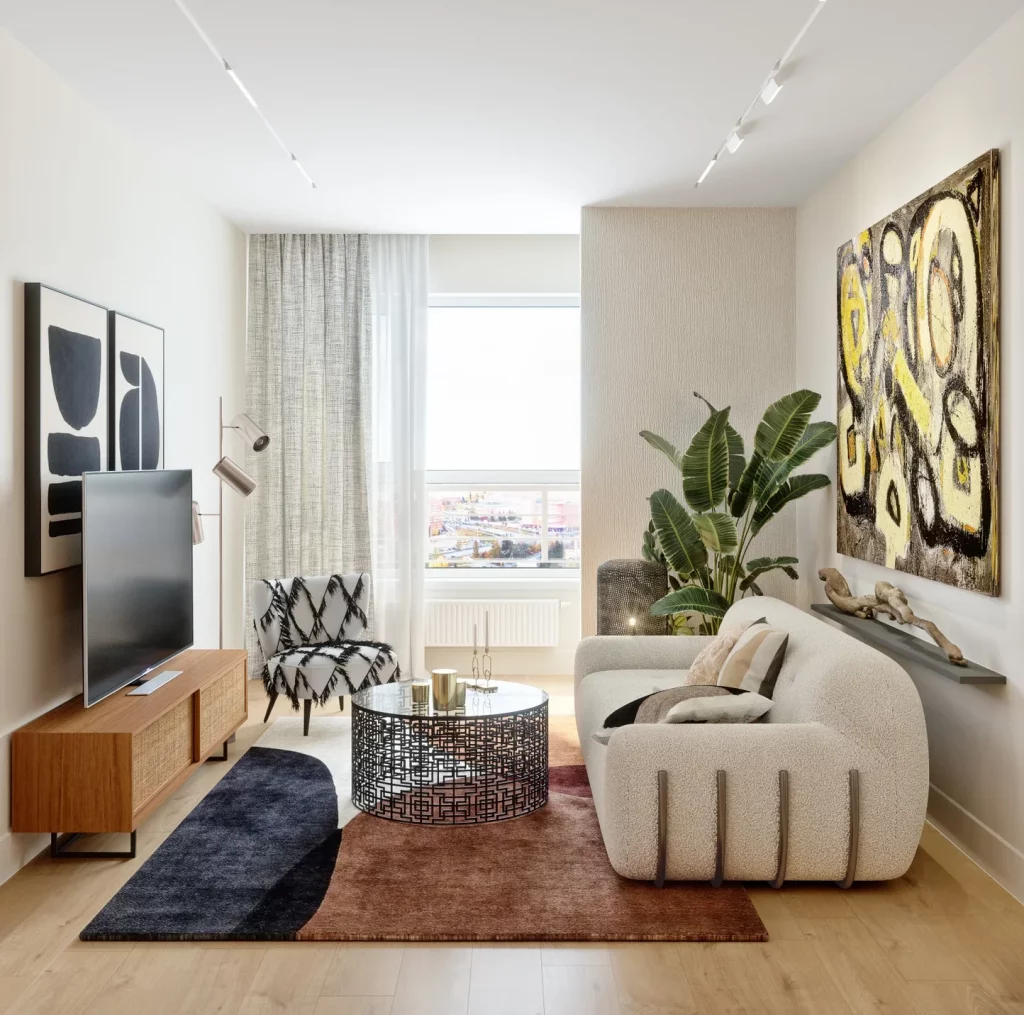
The layout works particularly well because the main furniture pieces are kept close to the walls while the center remains visually organized around the coffee table. The rounded sofa softens the long shape of the room, and the open space around the table helps preserve circulation. I also appreciate the low television console because it provides storage without making the wall feel overloaded. The patterned chair adds a separate seating position without requiring another large piece of furniture.
From my perspective, this is a great example of how a small living room can accommodate several functions without looking crowded. I would start by defining the seating zone with a rug, then choose a coffee table that is easy to move around. The combination of a substantial sofa and a single statement chair feels much more intentional to me than trying to squeeze in several smaller seats. I would also keep the largest visual elements in restrained neutral tones and let artwork, textiles, and one or two darker accents provide contrast.
Elegant White Seating Layout With Decorative Wall Molding
This compact living room uses a white sectional-style sofa with generous cushions and a chaise arrangement that wraps around the seating area. The sofa sits against a pale gray wall decorated with large rectangular decorative moldings, while tall curtains frame a black-trimmed window on the left. A round coffee table with a light top and gold-toned base sits in front of the sofa, accompanied by a lower circular shelf. A large multi-arm chandelier adds an unmistakable focal point overhead, while a projector is mounted near the ceiling.
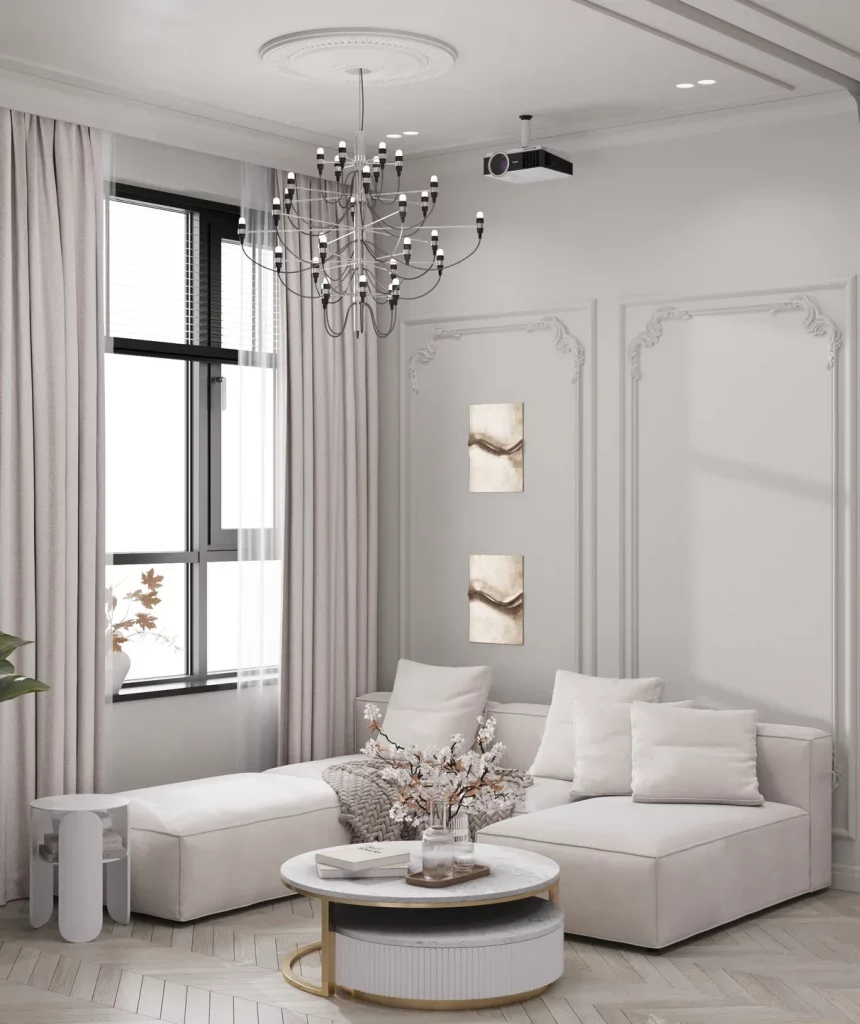
I like the way the seating follows the shape of the room instead of competing with it. The sectional provides plenty of seating while keeping the center relatively open, and the round coffee table makes the circulation around it feel softer. The monochromatic palette also helps the room feel visually spacious. Because the walls, sofa, curtains, and floor stay within a pale range, the decorative molding and chandelier become the strongest architectural details without requiring additional furniture.
For a small room, I would take inspiration from the idea of using one generous seating piece rather than several individual chairs and sofas. In my experience, a sectional can actually make a compact room feel more organized when its shape fits the available walls. I also like the use of a round table here because it avoids adding another strong rectangular shape to a room that already has paneled walls and a rectangular window. If I wanted a similarly calm result, I would keep the furniture palette tight and let one lighting fixture carry the personality.
Compact Sofa Layout Framed by a Large City Window
This living room places a cream sofa directly against the wall beneath a large window, creating a simple and efficient seating arrangement. A slim round black coffee table sits in front of it, while a small dark lamp occupies the corner near the window. On the opposite wall, tall pale doors provide a clean backdrop, and a narrow vertical panel with subtle ribbed detailing adds texture beside them. A framed floral artwork hangs above the sofa, while the black window frame and dark table provide definition against the mostly cream interior.
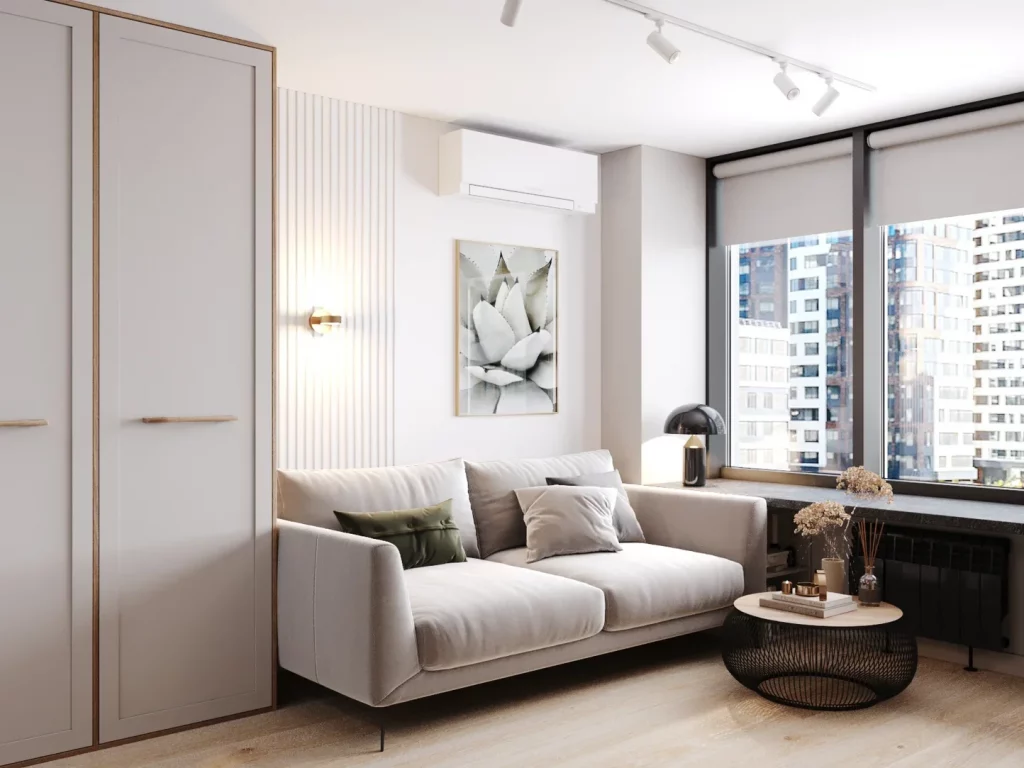
The strongest feature for me is the decision to keep the seating low and straightforward beneath the window rather than filling the room with additional furniture. The sofa has enough width for comfortable seating, but its relatively simple form does not overwhelm the space. The small round table provides a practical surface without taking up much floor area, and the narrow side lighting keeps the corners useful without adding visual bulk. The large window also gives the room a sense of openness.
When I’m looking at a small living room, I always pay attention to whether the furniture blocks the strongest source of natural light. This arrangement demonstrates how keeping the seating profile relatively simple can preserve that openness. I would also consider a small round coffee table when the available floor area is limited because it is easier to navigate around than a large rectangular design. The restrained black-and-cream palette is another detail I would borrow because it gives a compact room definition without making it feel busy.
Minimal Neutral Living Room With a Rounded Sofa and Layered Tables
This soft-toned living room centers on a rounded cream sofa placed against a pale wall beneath a horizontal abstract artwork. Floor-to-ceiling curtains cover the right side of the room, creating a light, textured backdrop. A sculptural floor lamp stands beside the sofa, while a large pale wood-toned coffee table sits in front of it with a smaller black round table alongside. The furniture rests on a large rounded rug, and a simple circular ceiling light echoes the curved forms below.
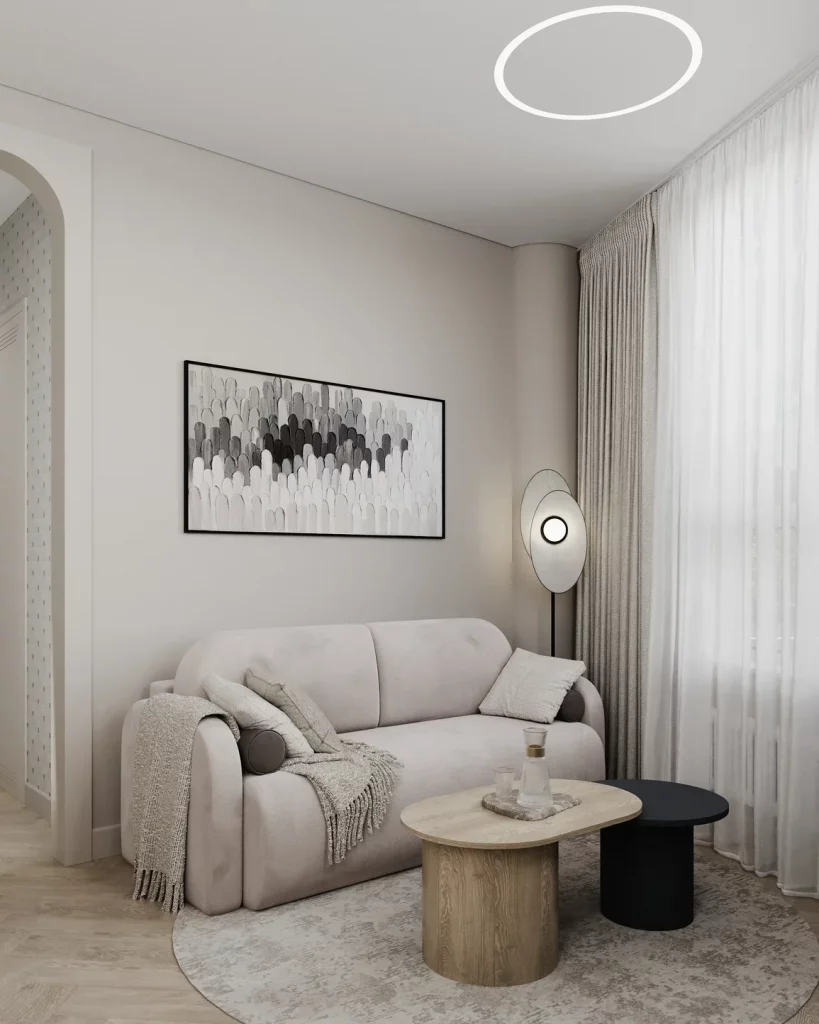
I find the furniture arrangement particularly successful because the room uses repeated curves to soften what could otherwise be a very boxy layout. The sofa, coffee table, smaller side table, rug, and lighting all introduce rounded shapes at different scales. At the same time, the pieces remain close to the walls and within one defined seating zone. The result is comfortable without feeling overloaded, and the layered tables give the room more usable surface area without relying on one oversized table.
This is one of the layouts I would study closely for a small apartment. Instead of trying to make the room appear larger through completely empty floors, the design creates openness by choosing furniture with gentle silhouettes and leaving clear pathways around the seating. I particularly like the smaller black table because it adds contrast while remaining visually light. If I were recreating this feeling, I would also consider a rounded rug because it visually gathers the furniture without emphasizing the rectangular boundaries of the room.
Blush Accent Seating in a Compact Open-Plan Corner
This small living area features a compact cream sofa positioned against a wall with a large blank rectangular panel above it. Four soft blush and pale cushions add subtle color to the seating. The sofa is tucked neatly between a light kitchen counter on the left and a taupe-toned wall on the right, making the arrangement feel naturally integrated into the surrounding space. Pale wood flooring extends across the room, while framed artwork appears along the adjacent wall.
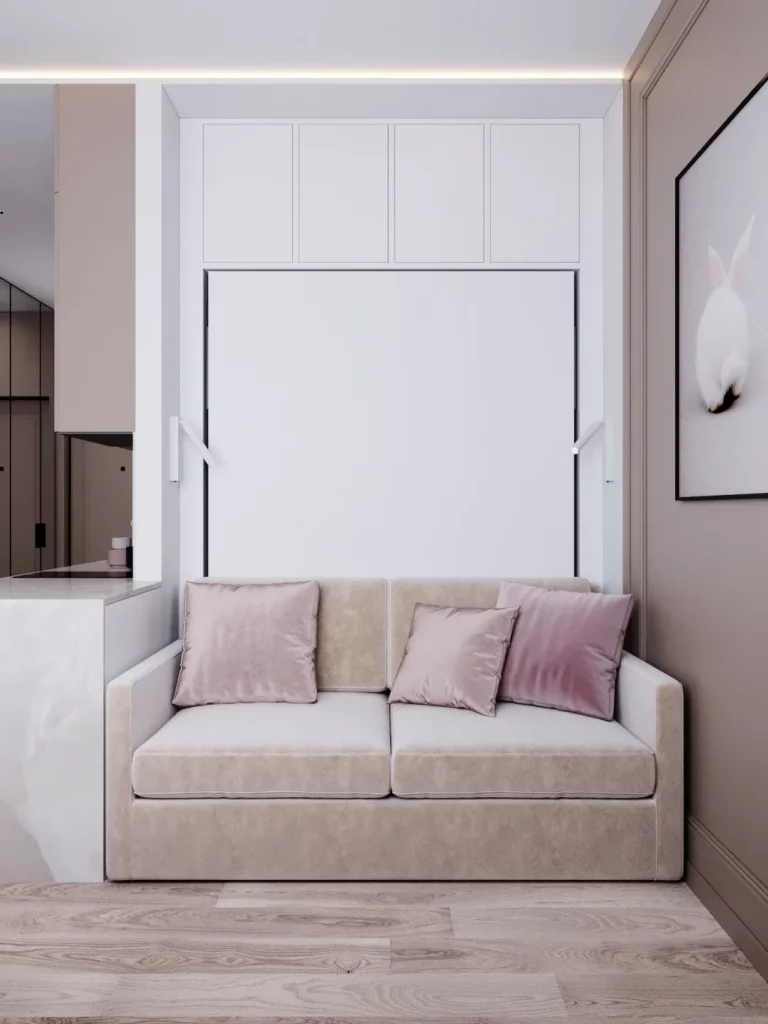
The sofa is the clear center of the room, and I like how its placement takes advantage of a narrow section without trying to force additional seating into it. The compact proportions leave enough floor space in front of the sofa for movement, while the pale upholstery keeps the area visually light. The blush cushions add personality without changing the restrained character of the room. Because the seating sits directly within an open-plan environment, its simple form also allows it to transition easily into the surrounding space.
For a small apartment, I think this is a particularly practical approach. A sofa can define a living zone even when there is no separate living room, and its position can help establish boundaries without adding a physical divider. I would keep the seating proportional to the available wall width and avoid filling the remaining floor with unnecessary pieces. The subtle cushion colors also show how a small amount of contrast can make a neutral sofa feel more personal without creating visual clutter.
Warm Yellow Sofa With a Colorful Geometric Rug
This cozy living room brings much stronger color into the furniture arrangement with a pale yellow sofa placed along the left wall. Several blue cushions provide contrast, while a large rectangular rug beneath the seating area combines yellow, blue, gray, and darker lines in a geometric striped pattern. A glass coffee table with a dark curved base occupies the center, and two framed artworks hang above the sofa. A narrow floor lamp stands between the artwork and the window, while several small potted plants sit on the windowsill.
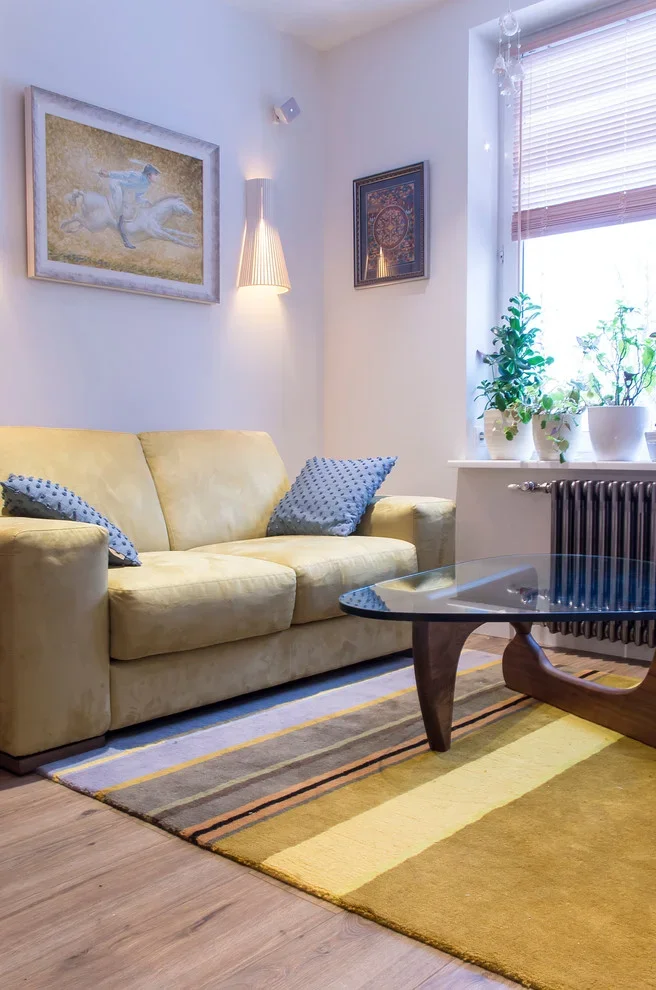
The furniture placement is straightforward, which gives the colors room to do the visual work. The sofa stays close to the wall, the coffee table occupies the center of the rug, and the window provides natural light from the right. I like how the rug extends beyond the sofa and table, visually connecting the individual elements into one seating area. The glass tabletop also helps preserve sightlines through the room, while its curved base echoes the softer shape of the sofa.
I would take inspiration from this layout when working with a small room that needs more personality but cannot accommodate many decorative pieces. A colorful rug can establish the character of the entire seating area without requiring additional furniture. I also appreciate the use of a transparent tabletop because it provides a functional surface while keeping the center of the room visually open. In my experience, that kind of visual lightness can make a compact space feel easier to move through.
Compact Sofa Arrangement With Layered Side Tables
The first living room uses a deep charcoal-purple sofa as the main anchor, positioned directly against a pale wall with two square mirrored artworks above it. Two aqua cushions introduce a cool contrast, while a patterned black-and-white cushion adds another layer of texture. Beside the sofa, two small tables sit at different heights, one in turquoise and one in creamy beige. A slim pink chair is visible at the right, while full-height sheer curtains bring generous daylight into the room.
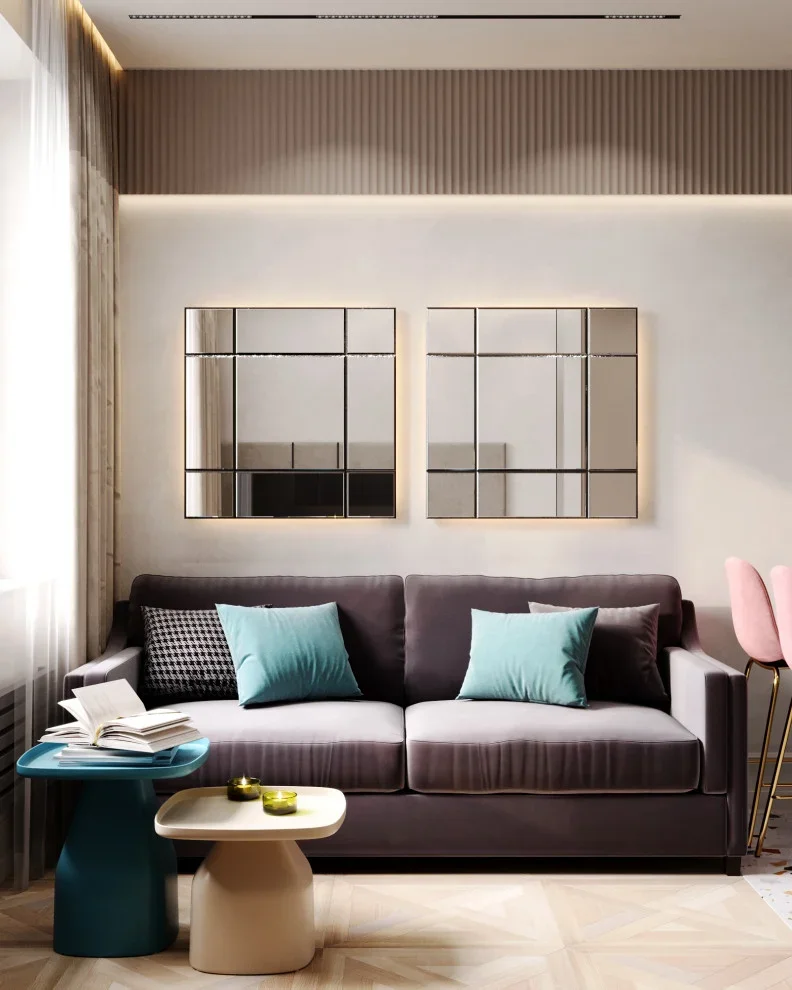
I think this arrangement works particularly well because the sofa occupies the central wall without overwhelming the room. Instead of using one large coffee table, the two compact tables create flexible surfaces while keeping more visible floor area around the seating. The mirrored wall pieces also help reflect light and visually extend the pale wall, which is especially useful in a smaller living room.
When I’m arranging a compact seating area, I like the idea of using several small-scale pieces rather than forcing one oversized table into the center. The different table heights shown here make the arrangement feel more dynamic while remaining practical. The combination of dark upholstery, pale finishes, and aqua accents also gives the room personality without requiring a large amount of decoration.
Neutral Chaise Sectional With A Tucked-In Side Table
This room centers on a generous cream-colored chaise sectional that fills the main seating zone while keeping the furniture concentrated along the wall. A black side table sits neatly beside the arm, topped with a tall white lamp with a slim gold frame. Above the sofa is a large abstract artwork in soft blue, white, and muted metallic tones. In the foreground, a round black-and-white marble-style coffee table occupies the center, with a soft textured rug underneath the seating area.
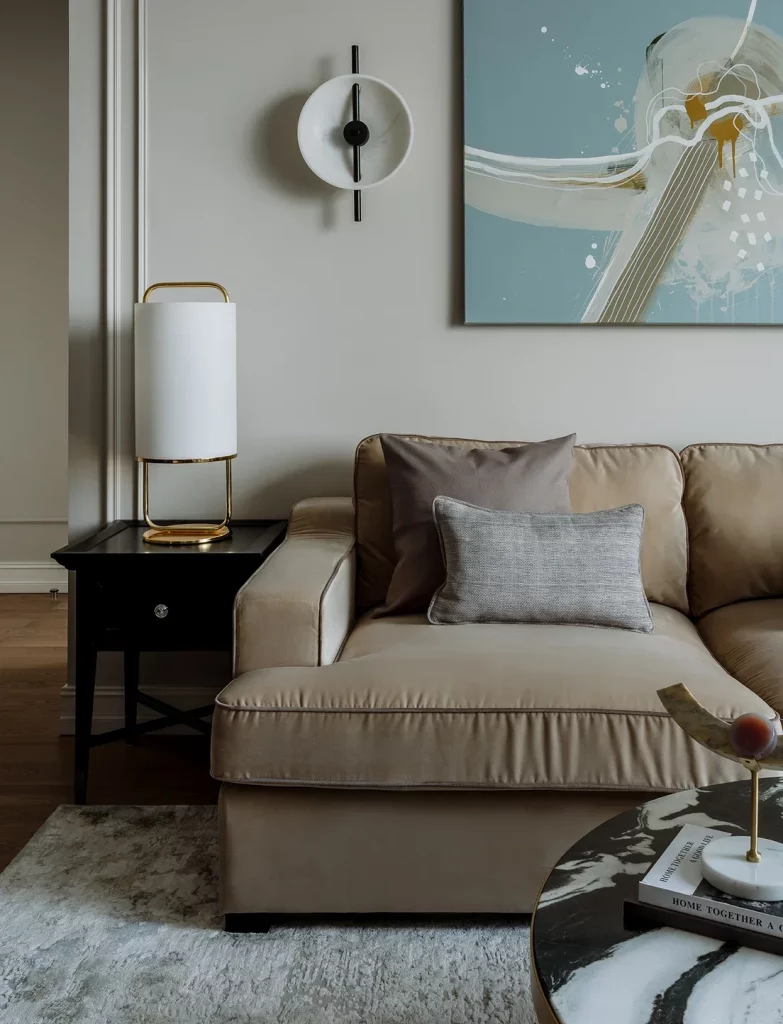
The layout demonstrates how a sectional can work in a small room when its shape is used to define the seating area rather than scattered across the floor. The chaise provides extra lounging space without requiring another chair, while the narrow side table makes use of the limited area beside the sofa. I also like how the coffee table is positioned centrally but remains visually light because of its round shape.
For me, this is a good example of keeping the larger furniture pieces neutral and letting a few contrasting details provide structure. The black table and coffee table frame the pale sectional, while the blue artwork creates a clear visual focus above it. In a small living room, I would take particular inspiration from the idea of concentrating the main furniture on one side and preserving open circulation elsewhere.
Traditional Sofa Layout Framed By Mirrored Wall Panels
The third living room takes a more traditional approach, with a substantial beige and brown sofa positioned against an ornate patterned wall. The sofa has rolled arms, nailhead detailing, and multiple cream and striped cushions. Above it, a large arrangement of mirrored panels creates a strong focal point and reflects the shelving, television, lighting, and curtains visible across the room. Heavy cream curtains frame the window, while the dark wood floor and large brown rug ground the seating area.
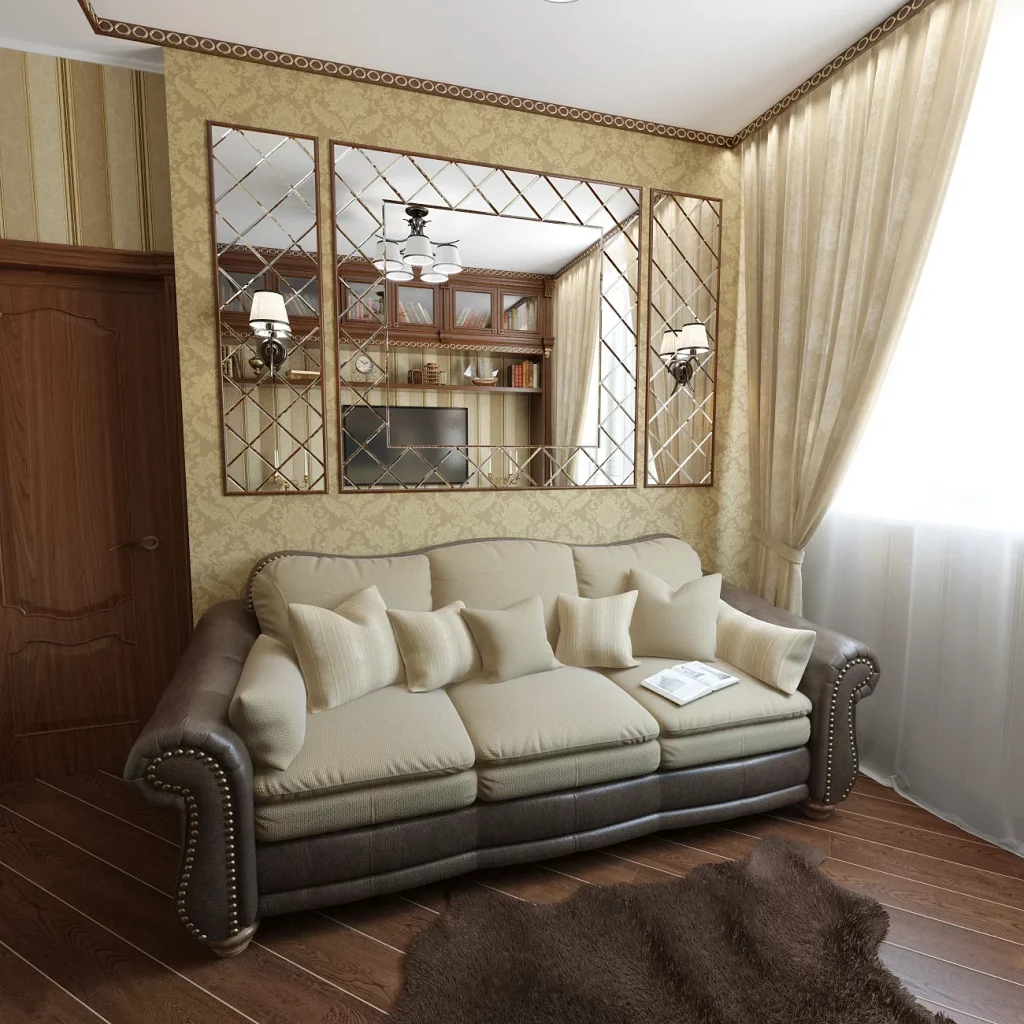
Despite the traditional furniture, the arrangement remains quite focused. The sofa is the dominant seating piece, and the open floor in front of it prevents the room from feeling excessively crowded. The mirrored wall treatment is particularly effective because it adds visual depth to a relatively compact seating zone while repeating the room’s existing architectural and decorative details.
I would borrow the principle of using one strong seating piece rather than filling a small room with several separate chairs. The sofa already provides generous seating, so the surrounding space can remain visually open. The mirrored panels also show how a wall treatment can serve a practical spatial purpose as well as a decorative one by making the room appear deeper.
Small Loveseat With Patterned Wall And Built-In Cooling
A compact cream loveseat sits directly against a pale green patterned wall, creating a simple and intimate seating area. The sofa has rounded arms and a softly curved back, with two white cushions placed on the seats. A dark open shelving unit stands to the left, filled with books and small objects. A wall-mounted air-conditioning unit occupies the upper portion of the wall, while a small pendant-style light fixture and a blue-gray floor surface complete the setting.
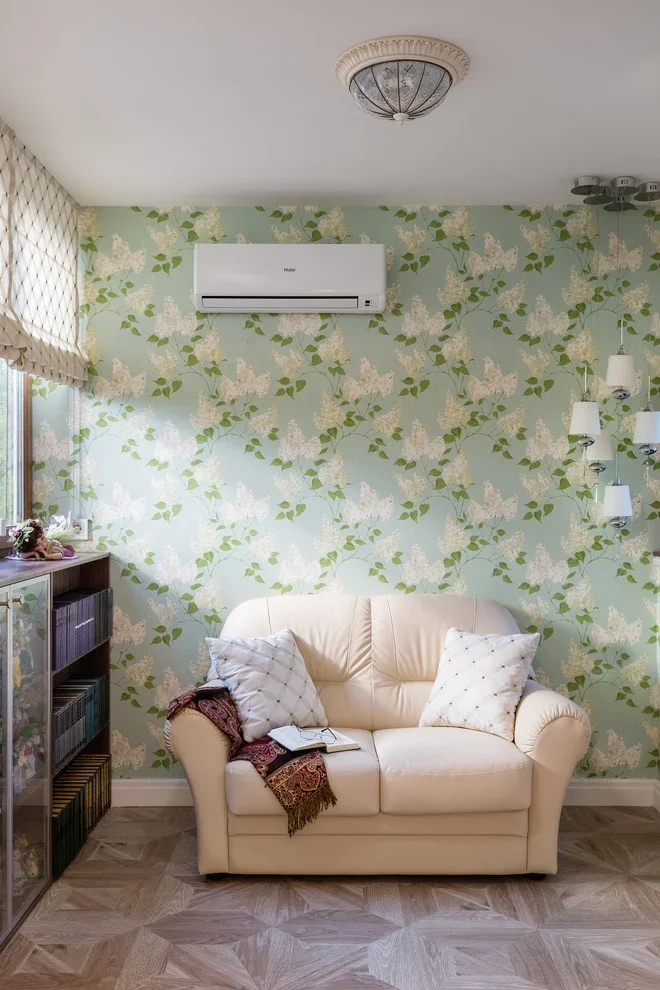
The loveseat is an especially sensible choice for a small living room because it provides comfortable seating without taking up the visual and physical space of a full-size sofa. Placing it against the patterned wall also keeps the center of the room open. The shelving unit uses vertical space rather than expanding outward into the seating area, which is another practical detail I would consider in a compact home.
What stands out to me is how the furniture stays restrained while the wall carries most of the visual interest. I often find that a small room benefits from this kind of balance: one noticeable surface, one compact sofa, and storage concentrated along a single side. The result feels personal and finished without relying on a large collection of furniture.
Sculptural Wall Texture Behind A Streamlined Sofa
This contemporary living area features a low rust-colored sofa made from three connected seating sections, placed against a pale wall with an irregular linear textured treatment. A sculptural gray floor lamp stands to the left, while a folded throw rests across the sofa. A small square coffee table sits in front with a few simple objects on top. To the right, a gray sculptural wall light adds another dimensional detail, and sheer curtains soften the large window.
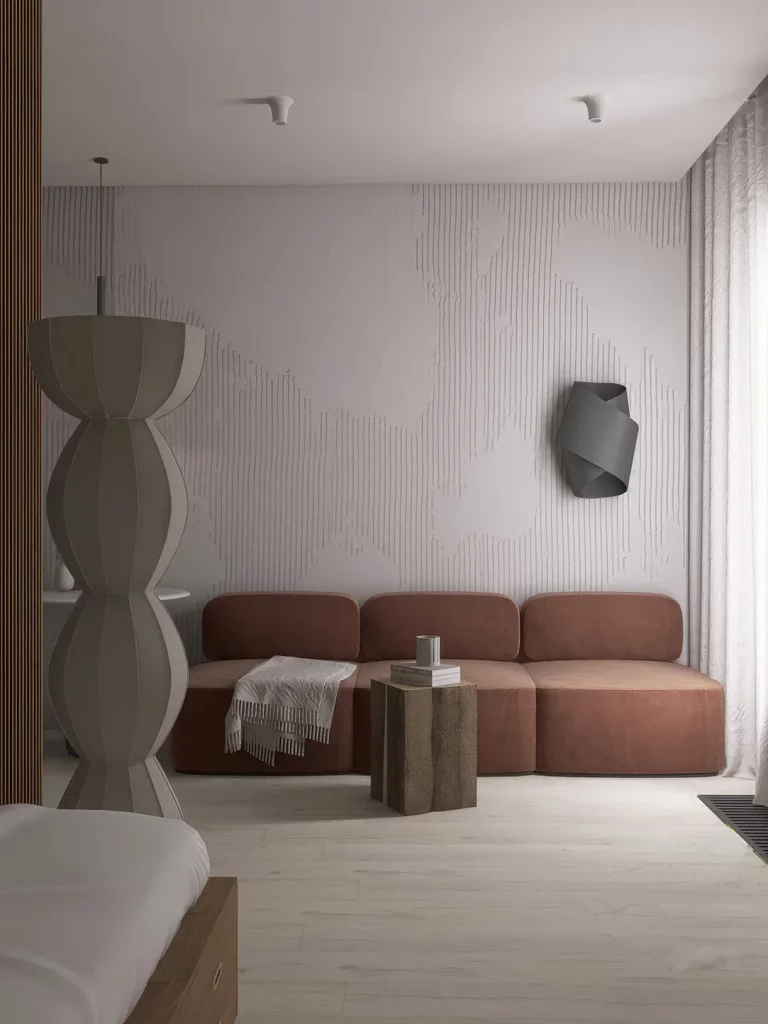
The furniture layout is refreshingly simple. The sofa stays close to the back wall, leaving a generous amount of pale flooring visible in front of it. Instead of adding numerous decorative pieces, the room relies on the textured wall, sculptural lighting, and unusual silhouette of the lamp to create interest. That restraint is useful in a smaller space because the room can have character without becoming visually congested.
I particularly like the lesson this room gives about using vertical surfaces instead of floor space for personality. When square footage is limited, a textured wall and distinctive lighting can accomplish much of the decorative work. I would keep the furniture similarly streamlined and allow one or two sculptural details to become the focus rather than competing with them.
Pink Sofa Layout With A Compact Round Coffee Table
This small living room uses a muted pink sofa as its main focal point, positioned between a narrow display cabinet and a large window. A round white coffee table with a speckled surface sits in front of it, while a dark circular tray or tabletop rests above part of the table. Pink cushions and a dark patterned cushion coordinate with the sofa. Long curtains with simple linear patterns frame the window, and two softly blurred artworks hang above the seating.
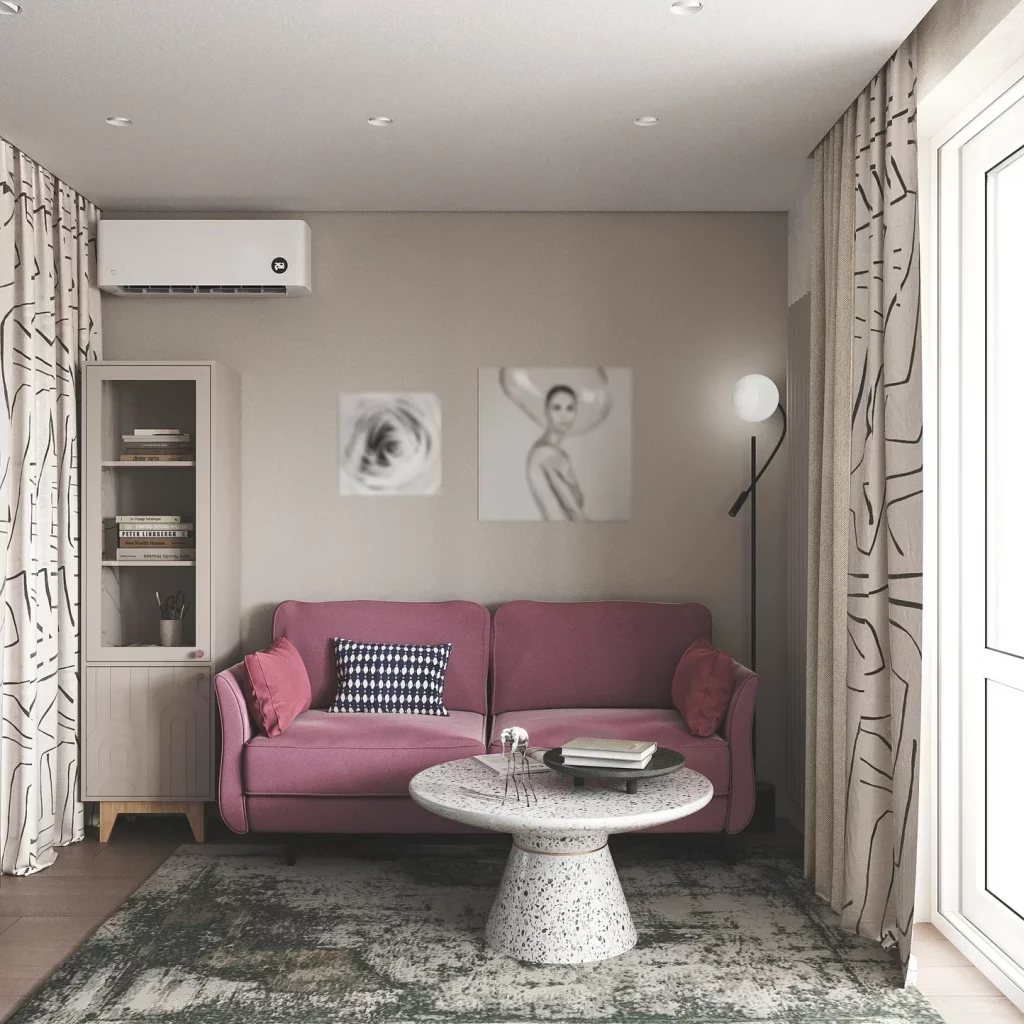
The arrangement works because the sofa is compact and visually defined, while the round coffee table avoids introducing hard corners into the central walking area. The tall cabinet makes efficient use of the wall beside the sofa and provides enclosed and open display storage without requiring another freestanding piece in the center of the room. The large window also keeps the compact space connected to natural light.
For me, the strongest takeaway is the importance of scale. Every major item is relatively contained, from the sofa to the coffee table and cabinet, so nothing competes for too much floor area. The pink upholstery gives the room a confident identity, proving that a small living room does not have to rely exclusively on neutral furniture to feel balanced.
Dark Paneled Living Room With A Focused Gray Sofa
The seventh room has a much moodier character, with dark wood paneling covering the lower portion of the wall behind a soft gray sofa. Above it hangs a framed seascape painting, while a traditional wall sconce provides illumination nearby. A small dark side table with a potted leafy arrangement sits beside the sofa, and a textured gray rug defines the seating area. A substantial wooden table is visible in the foreground, reinforcing the room’s classic character.
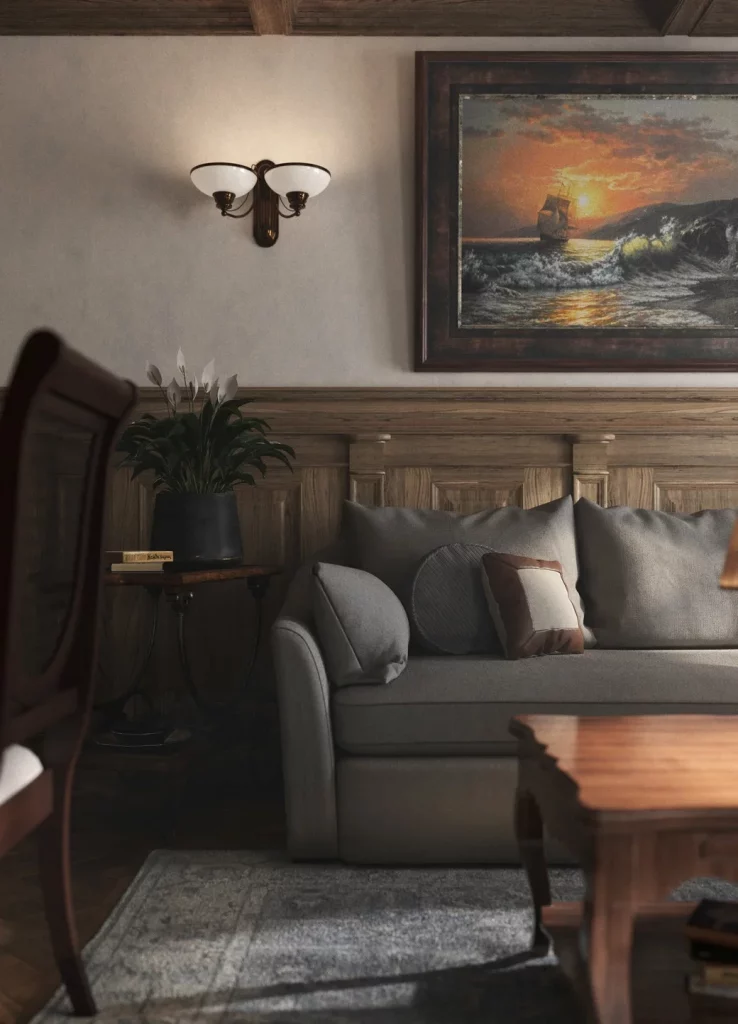
The furniture remains concentrated around the sofa, which keeps the seating zone clearly defined despite the deeper tones and substantial materials. The side table is narrow enough to fit beside the sofa without interrupting the arm, while the rug visually connects the seating and central table. I also like how the wall paneling creates a strong horizontal division without requiring additional furniture against the wall.
This room reminds me that darker interiors can still work in compact spaces when the furniture arrangement is disciplined. Rather than adding multiple seating pieces, the design gives the sofa a clear role and lets the wall finish and artwork provide atmosphere. If I were recreating this approach, I would pay close attention to keeping the main circulation path open so the heavier visual elements do not make the room feel physically smaller.
Modern Sectional With Open Shelving And Full-Height Mirror
A large beige sectional occupies the foreground of this modern living room, with its chaise extending toward the left side. Directly behind it is a tall black-framed shelving unit filled with books and small sculptural objects. Beside the shelving, a large black-framed mirror reflects the adjacent area. A rounded orange chair appears in the background, while a pale round coffee table with a vertically textured base sits in front of the sectional on a large muted rug.
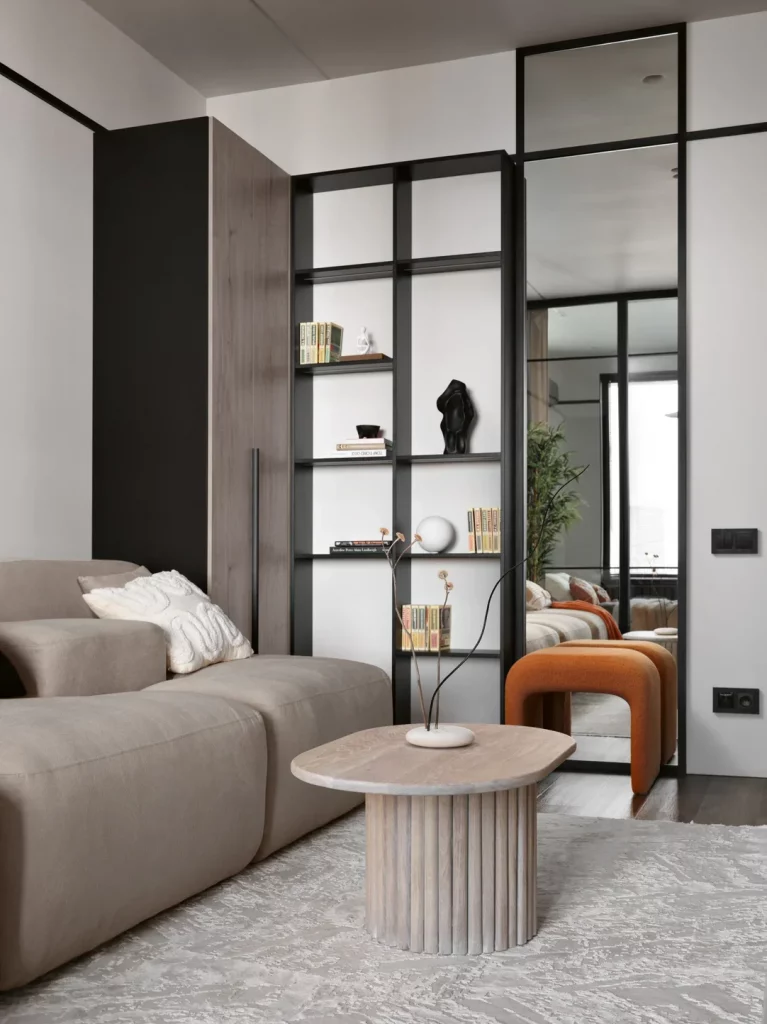
The layout makes excellent use of vertical storage. The shelving unit rises rather than spreads outward, allowing the room to gain useful display space without sacrificing much floor area. The sectional also provides substantial seating in one consolidated piece, while the coffee table is positioned centrally but remains easy to move around because of its rounded shape.
I especially like the way the mirror expands the visual boundaries of the room. In a small living space, a large reflective surface can make a compact arrangement feel more open without adding another physical object. The orange chair is also placed away from the main seating zone, giving the room an additional seat while maintaining a clear separation between the primary furniture pieces.
Compact Reclining Sofa With A Floating Display Shelf
This compact living room centers on a deep beige upholstered sofa with broad arms and generously padded cushions. The sofa sits close to the wall, while a slim floating shelf above it provides space for artwork, a small black lamp, and several decorative objects. A tall floor lamp stands beside the seating near the sheer-curtained window, and a rounded ceramic vessel rests on the floor beside the sofa. The soft beige palette, textured rug, and gentle natural light create a quiet, comfortable atmosphere.
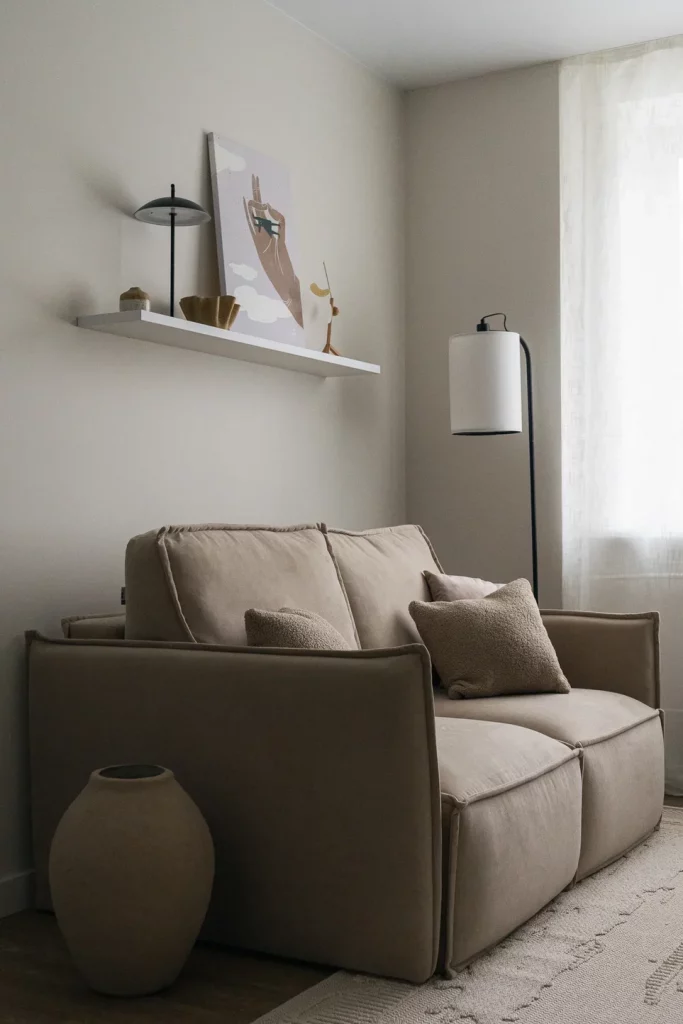
I like how the furniture is concentrated into one clearly defined seating zone without making the room feel overloaded. The sofa provides substantial seating while staying close to the wall, and the floating shelf uses vertical space instead of taking up floor area. The tall lamp also fills the narrow space beside the sofa efficiently, giving the room useful lighting without requiring a bulky side table.
For a small living room, I would take particular inspiration from the combination of a substantial sofa and minimal supporting furniture. When the main seating is comfortable enough to carry the room on its own, there is less need to add multiple chairs or tables. Keeping the decorative elements elevated on a single shelf also helps preserve valuable walking space.
Sectional Sofa Facing A Minimal White Coffee Table
This cheerful small living room features a large L-shaped beige sectional arranged along two walls, creating a generous lounging area. A simple white rectangular coffee table sits directly in front of it, while a low white media cabinet runs along the opposite wall. The room combines a dark reddish wall, pale geometric wall storage, soft gray curtains, and colorful cushions in yellow, pink, and muted multicolor tones. Three circular pendant lights hang in a row overhead, emphasizing the length of the room.
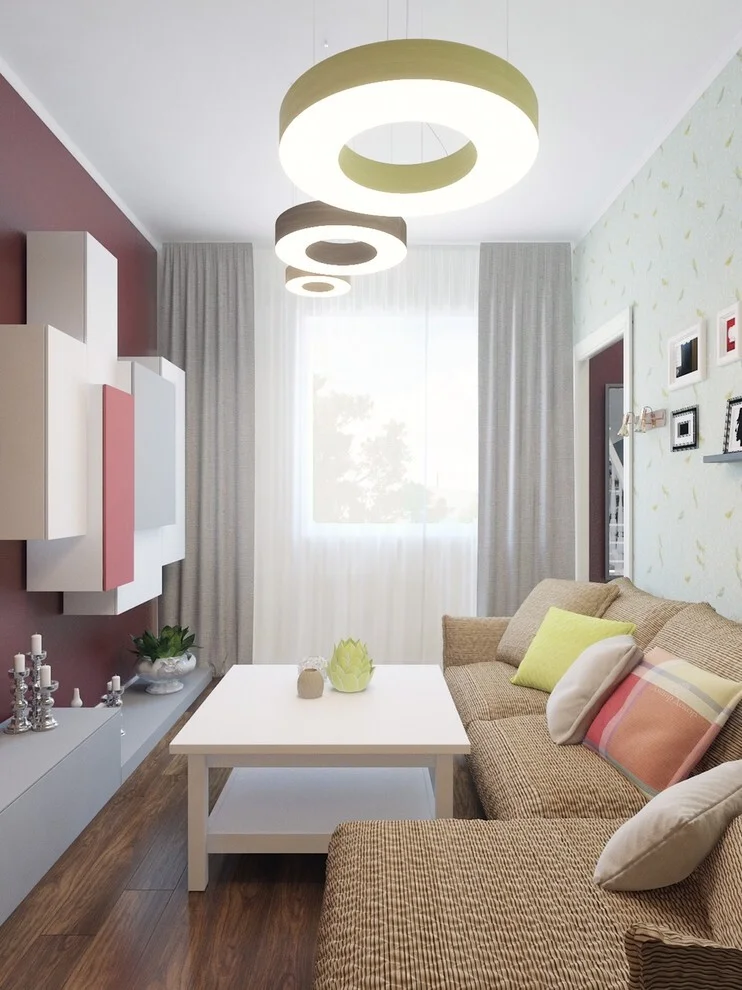
The sectional is particularly effective here because it uses the corner instead of leaving an awkward gap between separate sofas or chairs. The coffee table is positioned centrally and provides a practical surface while maintaining a comfortable distance from the seating. I also like the low media cabinet because it keeps the opposite side visually grounded without competing with the sectional.
When working with a narrow living room, I often find that an L-shaped sofa can be more efficient than several independent pieces. It creates a natural seating boundary and allows the remaining floor area to stay open. In this room, the colorful cushions and lighting add personality while the basic furniture arrangement remains straightforward and functional.
Blue Sofa Framed By A Large Window
This compact living room places a deep blue sofa along the right-hand wall, facing a wall-mounted television and a low wood-and-black media cabinet. A narrow wood coffee table with an open lower shelf sits between the sofa and the television, while a rectangular patterned rug defines the seating area. The large central window is framed by full-length dark gray curtains and sheer panels, and the wall behind the sofa is painted blue to echo the upholstery. Two framed black-and-white artworks add detail above the sofa.
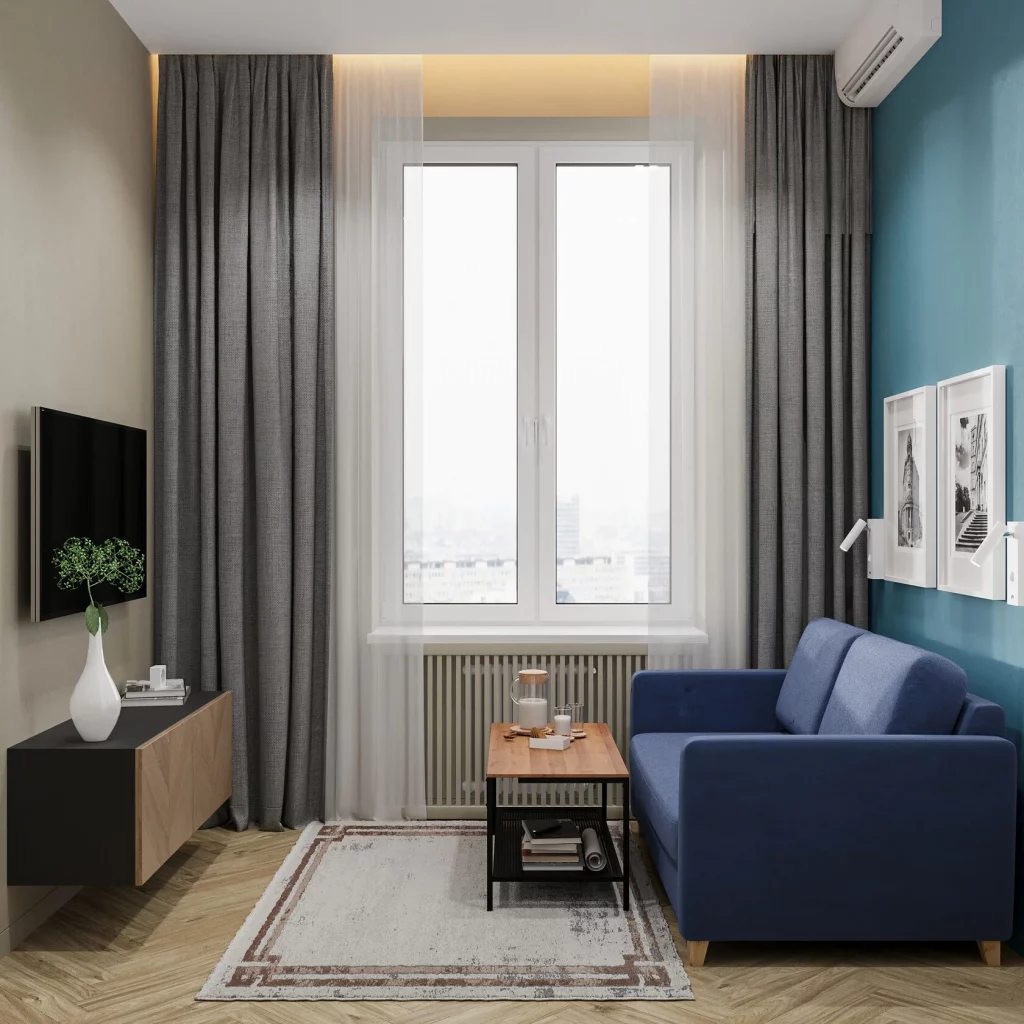
I like the clarity of this layout because every major piece has an obvious role. The sofa faces the television directly, the coffee table sits within easy reach, and the rug visually connects the seating and media area. Because the television is mounted to the wall, the furniture beneath it can remain relatively low, helping preserve a sense of openness.
This is a useful arrangement when a small living room needs to accommodate both everyday relaxation and television viewing. I would keep the coffee table narrow enough to leave a comfortable passage around it and use the wall for the television rather than adding unnecessary depth to the media area. The strong blue color also gives the compact room a defined focal point without requiring additional large decorative pieces.
Small Sofa With Built-In Bookshelves And Window Seating
A compact upholstered sofa is tucked into the corner beneath three long dark wood shelves filled almost entirely with books. The sofa has a light textured fabric and several blue-gray cushions, while a large window beside it brings strong natural light into the room. A woven Roman shade covers the upper portion of the window, and a tall dark wood cabinet occupies the adjoining wall.
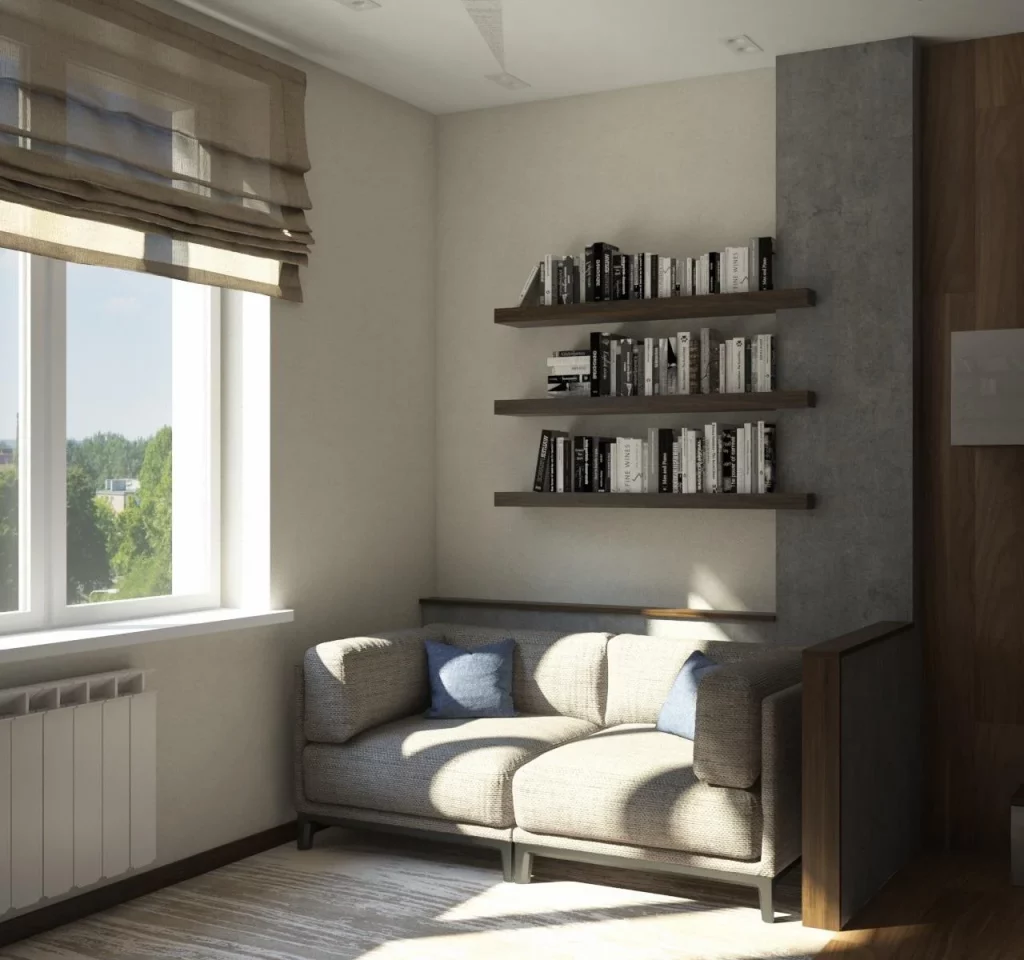
This arrangement makes excellent use of an otherwise narrow corner. The sofa fits neatly beneath the shelving, while the bookshelves provide substantial storage without extending far into the room. I especially like the relationship between the low sofa and the horizontal shelves because it keeps the composition visually balanced while allowing the window to remain unobstructed.
For a small space, I would consider built-in or wall-mounted shelving around a compact sofa when books or collections are important to the homeowner. It keeps storage concentrated in one location instead of scattering cabinets around the room. The generous daylight also makes this corner feel naturally inviting, so the furniture does not need to be visually complicated.
L-Shaped Sofa With A Bold Accent Wall
The final room in this batch features a pale L-shaped sectional positioned beneath a striking black-and-white patterned accent wall. The chaise extends toward the bright window, creating a generous lounging surface without requiring a separate ottoman or chair. A vivid red cushion provides a strong accent against the neutral upholstery, while curved wall shelves occupy the upper section of the patterned wall. Full-length pale yellow curtains frame the window and soften the contrast of the room.
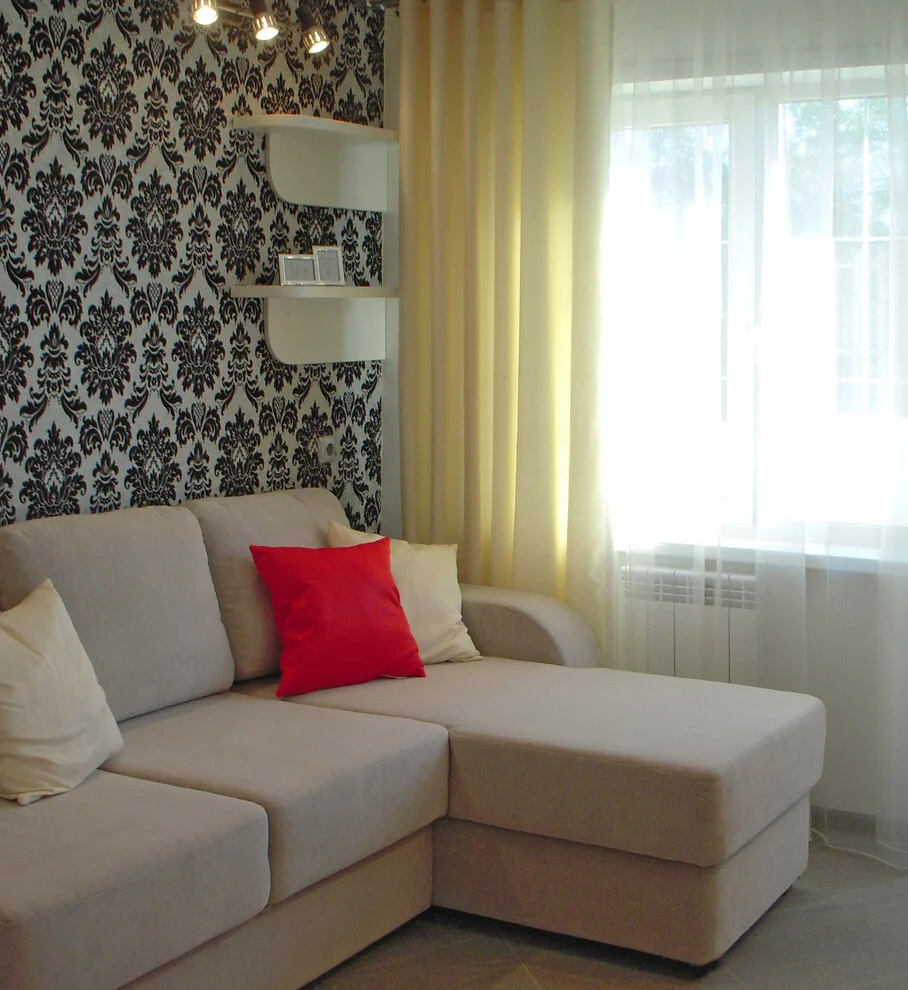
The sectional works particularly well in this compact layout because the chaise creates additional seating and lounging space within the footprint of one piece of furniture. Rather than adding a separate recliner or chair, the extended section provides a place to stretch out while keeping the central floor area relatively open. The wall-mounted shelves also add storage and display space without competing for floor space.
I would use this arrangement when comfort is a priority but the room cannot accommodate several seating pieces. The strongest lesson here is to choose furniture that performs more than one function: the sectional provides both standard seating and a lounging zone, while the wall shelves add visual interest without occupying valuable floor area. The bold patterned wall and single red cushion then do the decorative work, allowing the furniture layout itself to stay practical and uncomplicated.
Built-In Storage Framing A Compact Sofa
This compact living room places a small cream-colored two-seat sofa neatly into a recessed area beneath a wide run of built-in cabinetry. Two muted burgundy cushions add color to the light upholstery, while a narrow black floating shelf above the sofa holds framed artwork and a small glass vase. A black wall-mounted reading light sits to the right, and a large mirror along the opposite side reflects part of the seating. Pale flooring and light walls keep the room feeling open and bright.
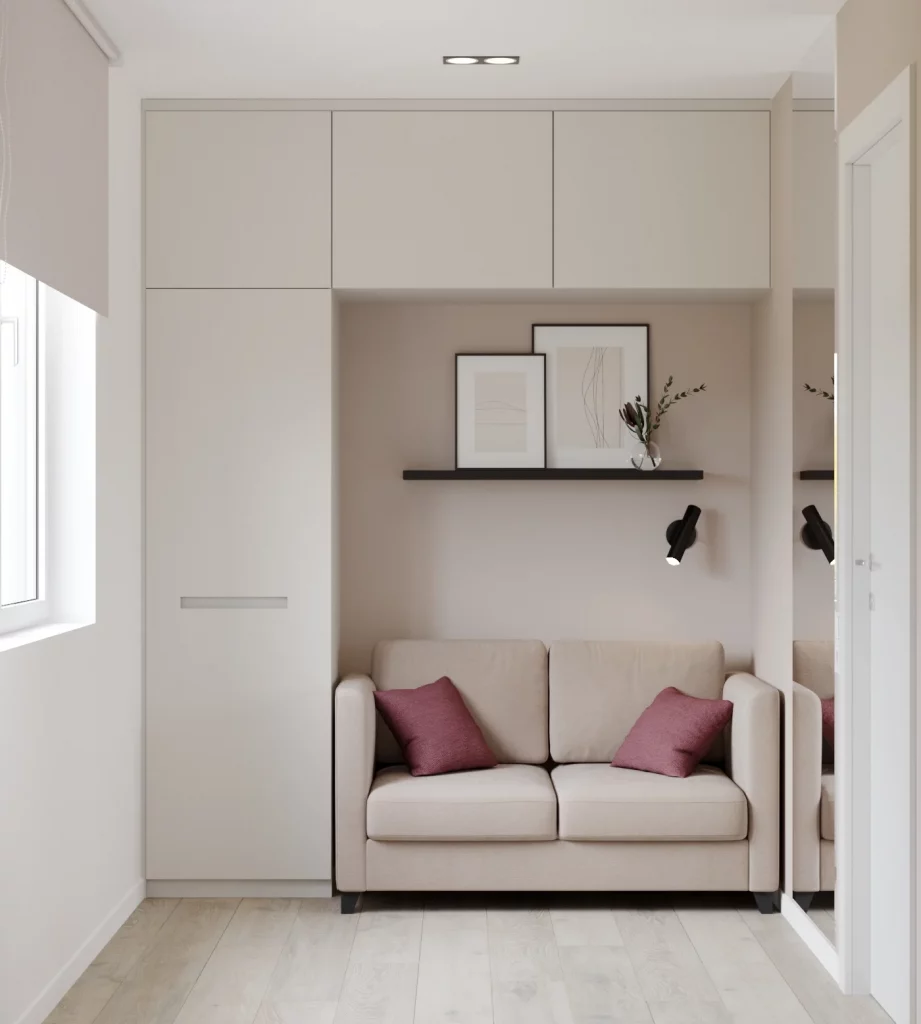
I think this is one of the most efficient layouts for a genuinely small living room because almost everything is concentrated into the wall structure. The sofa fits precisely within the available niche, while the upper cabinets provide substantial concealed storage without extending into the seating area. The mirror is another smart detail because it reflects the room and makes the compact space feel visually deeper.
If I were planning a similar layout, I would pay close attention to the available wall width before choosing the sofa. A piece that fits comfortably into a recessed area can make the entire room feel much more organized. I also like the decision to keep the display shelf narrow and simple, allowing the built-in cabinetry to remain the dominant practical feature.
Gray Sectional With A Bright Patterned Rug
A deep gray L-shaped sectional occupies the corner of this bright living room, with its chaise extending beneath the window. The seating is layered with several patterned and neutral cushions, while a dark throw rests across the corner. A vivid red patterned rug spreads across the floor in front of the sofa, creating a strong visual contrast. Exposed brick appears along the sides of the window, and a large round mirror and crystal-style chandelier add decorative detail.
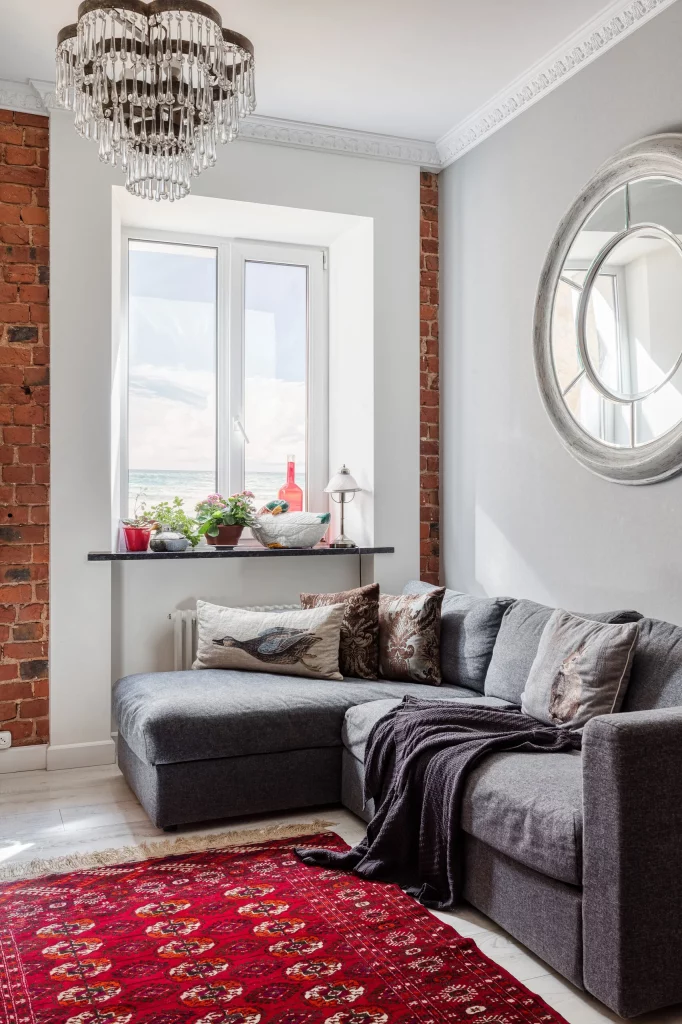
The sectional makes particularly good use of the corner because it creates plenty of seating without requiring another sofa or chair. The chaise gives the room a comfortable lounging position, while the rug visually anchors the entire arrangement. I also like how the window area remains accessible rather than being crowded with additional furniture.
For a small living room, I would consider an L-shaped sofa when the goal is to maximize seating while keeping the number of furniture pieces low. A single sectional can establish the whole seating zone, which makes the room easier to navigate. The bold rug can then provide personality without requiring more tables, chairs, or floor-standing accessories.
Two Lounge Chairs Around A Central Coffee Table
This distinctive room is arranged beneath a dramatically sloped ceiling, with two matching light upholstered lounge chairs facing one another across a rectangular wooden coffee table. Green curtains frame the large window behind them, while additional soft seating is visible along the edges of the room. Several wall-mounted lights follow the angled ceiling, creating a warm glow across the space. The wooden floor and green textiles give the room a relaxed, intimate atmosphere.
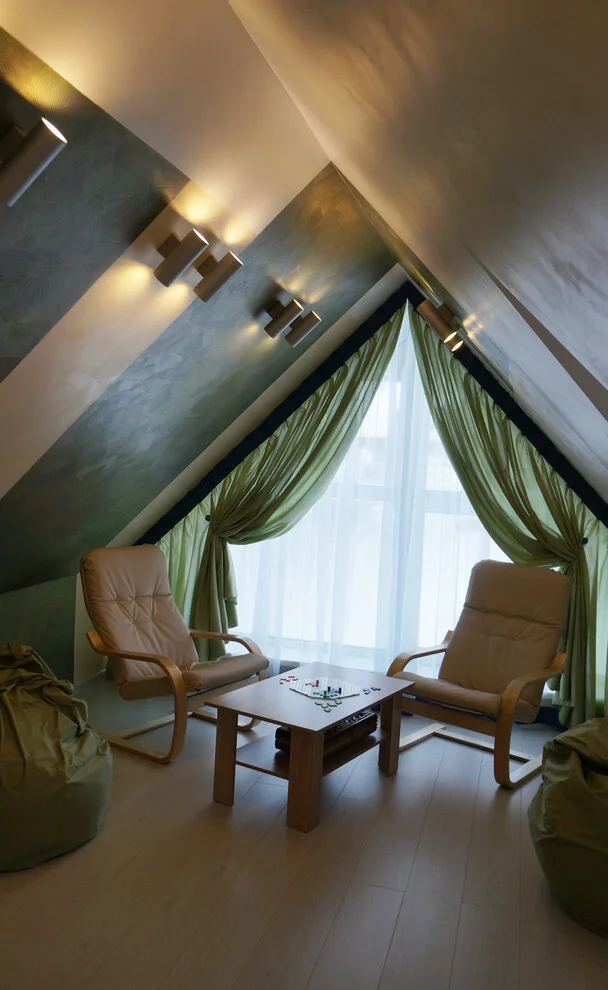
I like this arrangement because it does not rely on a conventional sofa as the center of the room. Two individual chairs create a comfortable conversation area around the coffee table, and the open space between them makes the layout feel deliberate rather than crowded. The table provides a shared surface for the seating while remaining small enough to preserve movement around it.
This is a useful idea for an unusually shaped or narrow living room where a standard sofa might feel too dominant. I would position two comfortable chairs around a compact central table when conversation is more important than television viewing. The matching chairs also give the arrangement symmetry, which helps a small space feel organized.
Blue Sectional With A Slim C-Shaped Side Table
A blue L-shaped sectional fills the main seating zone of this colorful living room, with the chaise extending toward the window. A slim white side table curves around the front edge of the sofa, providing a small surface for books and magazines without occupying much floor space. A multicolored geometric rug sits beneath the seating, while pink curtains, blue upholstery, yellow and patterned cushions, and two small colorful artworks create a lively palette. Above, a sculptural brass chandelier adds another focal point.
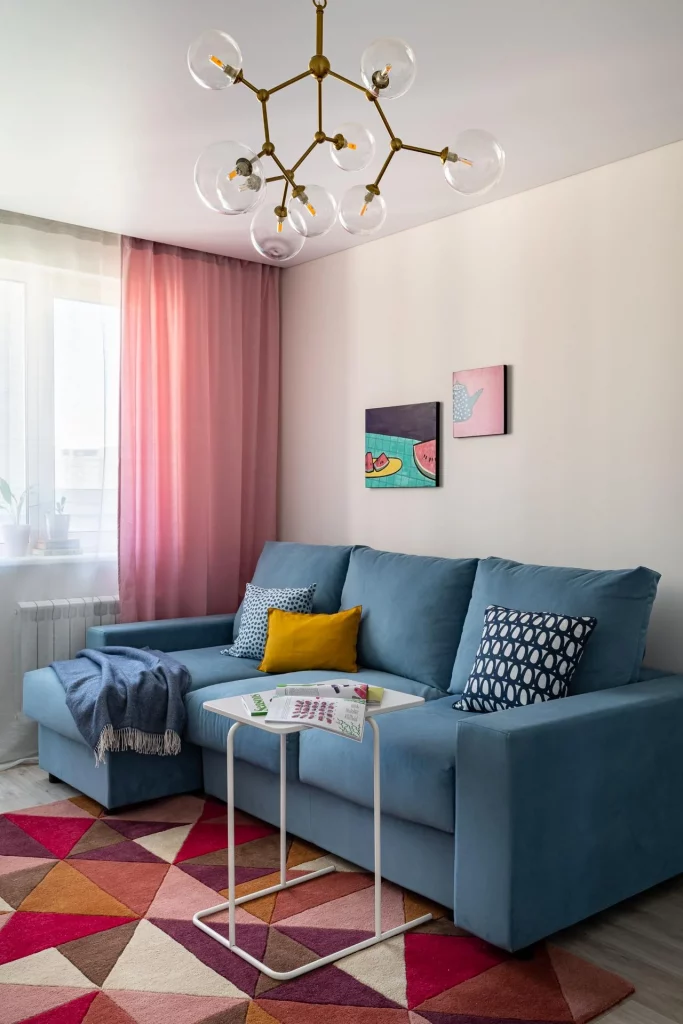
The narrow side table is especially well suited to this arrangement because it provides a useful surface without becoming a bulky coffee table. It can sit close to the sectional while still leaving the central area relatively open. The chaise also makes the sofa perform multiple functions, giving the room both conventional seating and a comfortable place to stretch out.
I would borrow this idea when a small living room needs a table but does not have enough space for a traditional rectangular coffee table. A slim table that tucks around the sofa can be surprisingly practical. The strong colors also show that a compact room does not have to be neutral; keeping the largest furniture piece in one consistent color allows the rug, cushions, curtains, and artwork to provide the visual variety.
Light Sofa Against A Blue Accent Wall
This compact living room features a light upholstered sofa positioned directly against a blue accent wall beneath two framed coastal-style artworks. The sofa is filled with cushions in blue, white, and textured neutral fabrics. A small round rolling side table sits beside the seating, while a patterned pale rug covers much of the floor. A large window with sheer curtains brightens the room, and a white decorative radiator cover runs beneath it.
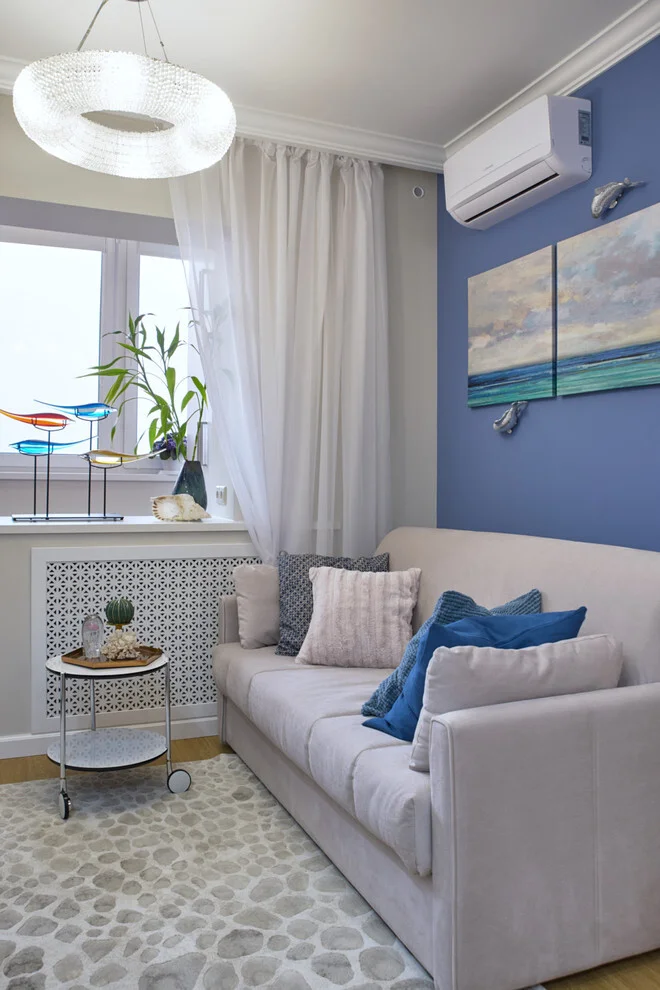
I like how tightly edited this furniture arrangement is. The sofa provides the main seating, while the small wheeled table supplies a convenient surface without permanently occupying a large amount of floor space. The window remains visually open, and the pale rug helps connect the sofa with the rest of the room without making the arrangement feel heavy.
For a small living room, I would consider mobile or very lightweight side tables especially useful because they can be moved whenever the seating arrangement needs to change. The blue wall also gives the sofa a defined backdrop, so there is no need for a large collection of furniture to create a focal point. In my experience, that kind of simplicity often makes a compact room feel much more intentional.
Attic Living Room With a Centered Sofa and Floral Rug
This charming attic living room places a compact cream sofa directly in front of a tall central window, creating a simple and naturally balanced seating arrangement. I like how the steep white paneled ceiling draws the eye upward while the sofa remains the clear focal point below. Pink floral curtains frame the window, and a large pale rug with red rose motifs spreads across the foreground. A small white round side table sits beside the sofa, accompanied by a slender floor lamp, while dark patterned cushions add contrast to the light upholstery.
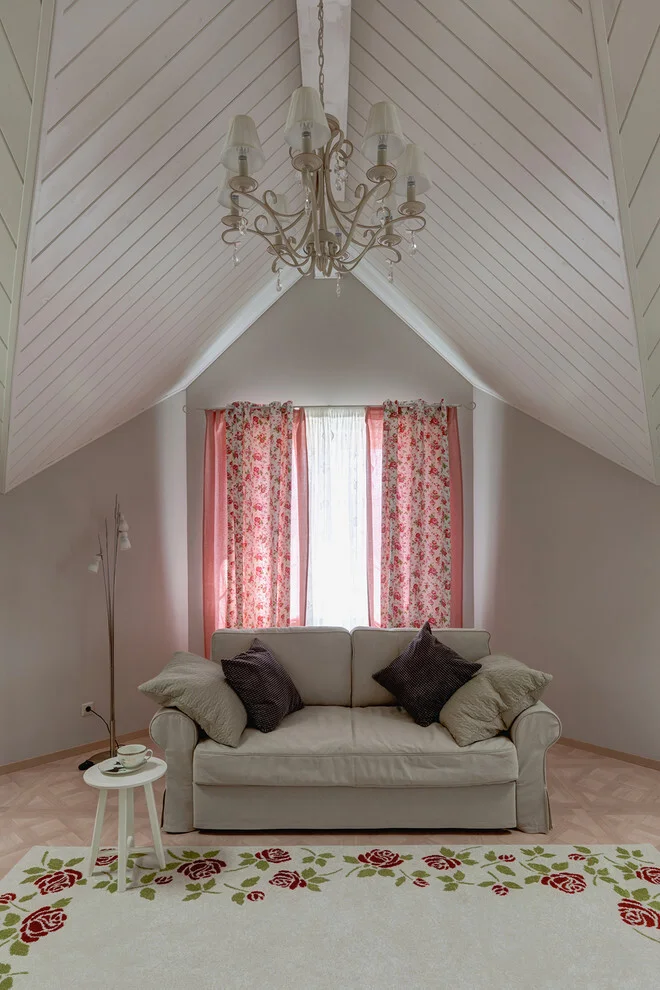
The layout works because the furniture is concentrated in one clearly defined zone without crowding the unusual shape of the room. The sofa fits comfortably beneath the window, leaving the sloped walls unobstructed and allowing the ceiling to remain the strongest architectural feature. The small side table provides a practical surface without taking much floor space, while the large rug visually anchors the seating area. I also appreciate how the floral curtains and rug connect through their red and pink accents.
From my perspective, this is a good example of adapting furniture to an unconventional room rather than trying to make the architecture disappear. In an attic space, I would keep the main seating relatively low and avoid adding bulky pieces beneath the sloping sections of the ceiling. The centered sofa also creates a strong sense of order, which helps the room feel intentional despite its unusual proportions. If I wanted a similar effect, I would let one coordinated textile pattern carry the decorative character and keep the furniture itself simple.
Long Narrow Living Room With Leather Sofa and Brick Accent Wall
This narrow living room combines a brown leather sofa along the left wall with a long white sideboard on the opposite side. At the far end, an exposed brick wall surrounds a small window and creates a strong architectural focal point. A compact desk and upholstered chair occupy the area beside the window, while a round wall mirror and wall sconces decorate the opposite side. Above, exposed wooden ceiling beams frame two rectangular ceiling openings, and a chandelier hangs centrally over the room.
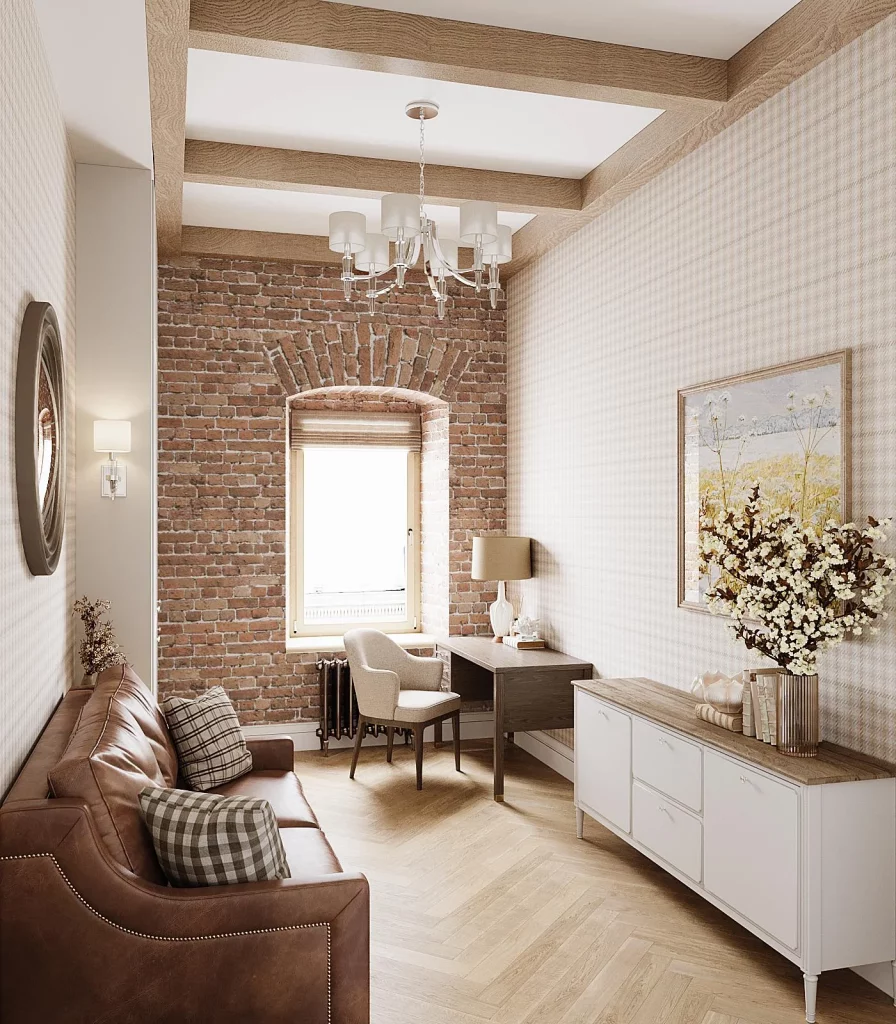
The arrangement makes excellent use of the room’s length by placing the main seating along one wall and keeping the opposite side relatively open. I like how the sideboard provides useful storage without extending too far into the walking area. The small desk and chair at the end create another functional zone without interrupting the main circulation path. Because the furniture follows the long walls, the center remains open and the room feels easier to move through.
I would consider this a particularly useful layout for a narrow apartment living room where width is limited. Rather than placing furniture opposite each other and creating a cramped corridor, I would organize the room along its length and use the far end for a secondary purpose. The brick wall also demonstrates how an existing architectural feature can define the end of a room and reduce the need for additional decorative furniture. Keeping the largest storage piece low is another detail I would borrow because it preserves the sense of visual openness.
Compact Sofa Arrangement With Graphic Artwork and Accent Cabinet
This small living room centers on a light cream two-seat sofa positioned against a warm gray wall. Two large neutral cushions create a soft backdrop, while lime green and yellow patterned pillows introduce brighter accents. Above the sofa hangs a large abstract artwork in black, cream, and beige, and a tall cabinet with a geometric yellow-and-cream pattern stands beside it. A floor lamp rises behind the cabinet, while a narrow recessed shelf provides space for small decorative objects. The pale floor keeps the overall room feeling open.
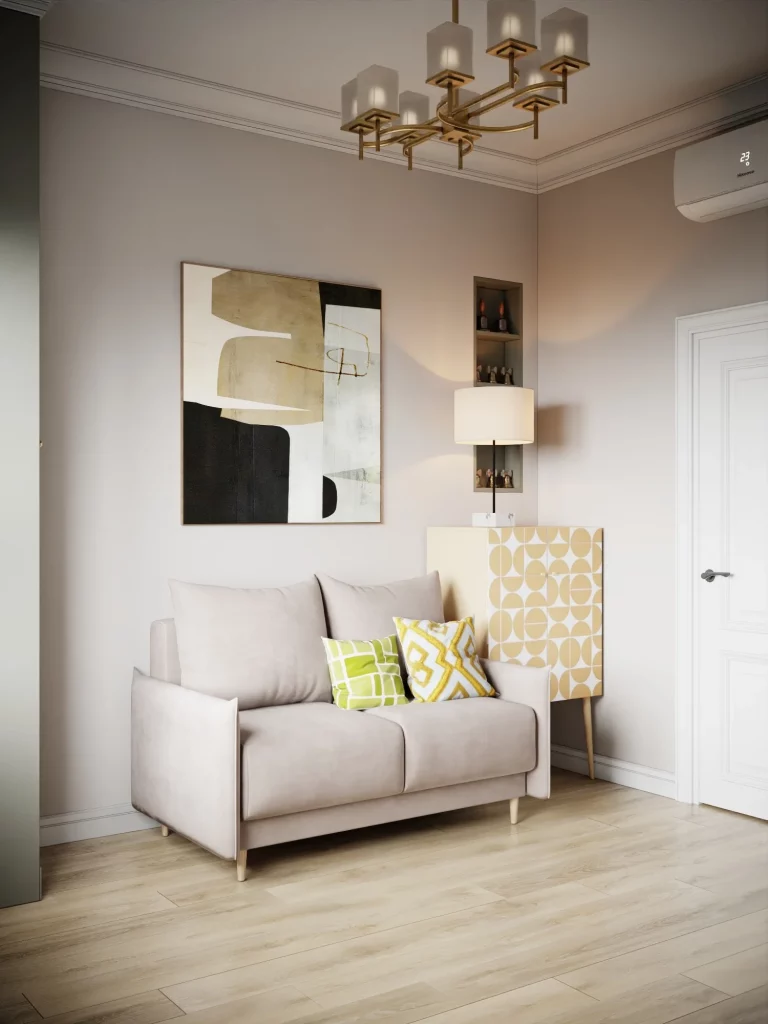
I like how efficiently the furniture is arranged against one wall. The sofa is compact enough to leave generous open floor space in front of it, while the tall cabinet makes use of vertical space rather than spreading storage across the room. The artwork gives the wall a strong focal point, and the cabinet reinforces its geometric character without requiring another large piece of furniture. The bright cushions then provide smaller bursts of color that tie the composition together.
For a small living room, I would take particular inspiration from the scale of the sofa and the decision to use one tall storage piece instead of several low units. A compact sofa can feel perfectly comfortable when it has generous cushions and a carefully chosen position. I also like the way the colorful accessories are concentrated around the seating rather than scattered throughout the room. When floor space is limited, I find that controlling where the strongest colors appear can make the room feel much more organized.
Gray L-Shaped Sofa Maximizing a Compact Seating Zone
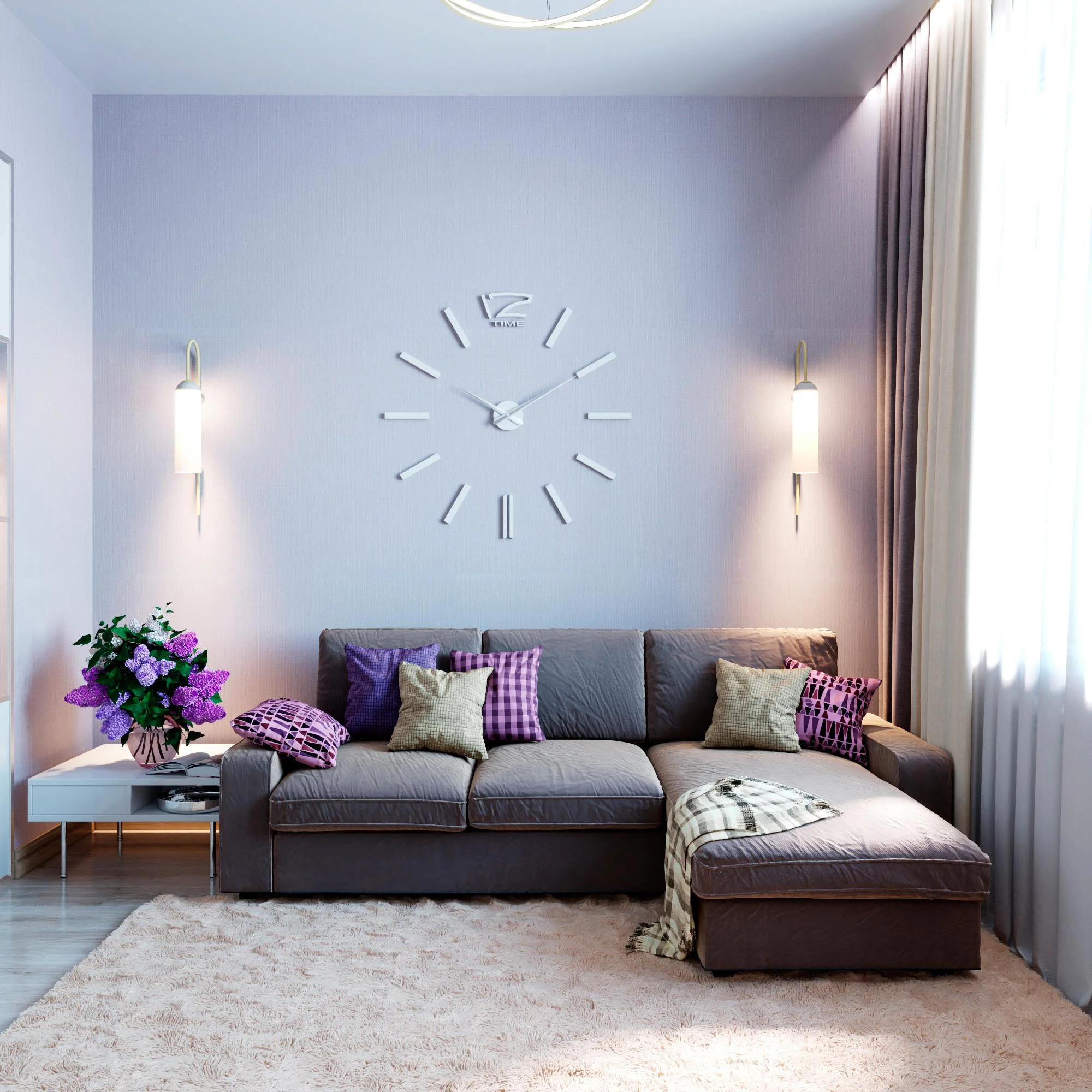
This living room uses a substantial gray L-shaped sectional to occupy the lower portion of the room, with the chaise extending toward the right side. The sofa sits against a pale blue-gray wall beneath a large minimalist wall clock, while two slim wall sconces provide light on either side. A low white side table stands beside the sofa, topped with a vase of purple flowers and a few books. Floor-to-ceiling curtains frame the bright window on the right, and a pale textured rug defines the entire seating area.
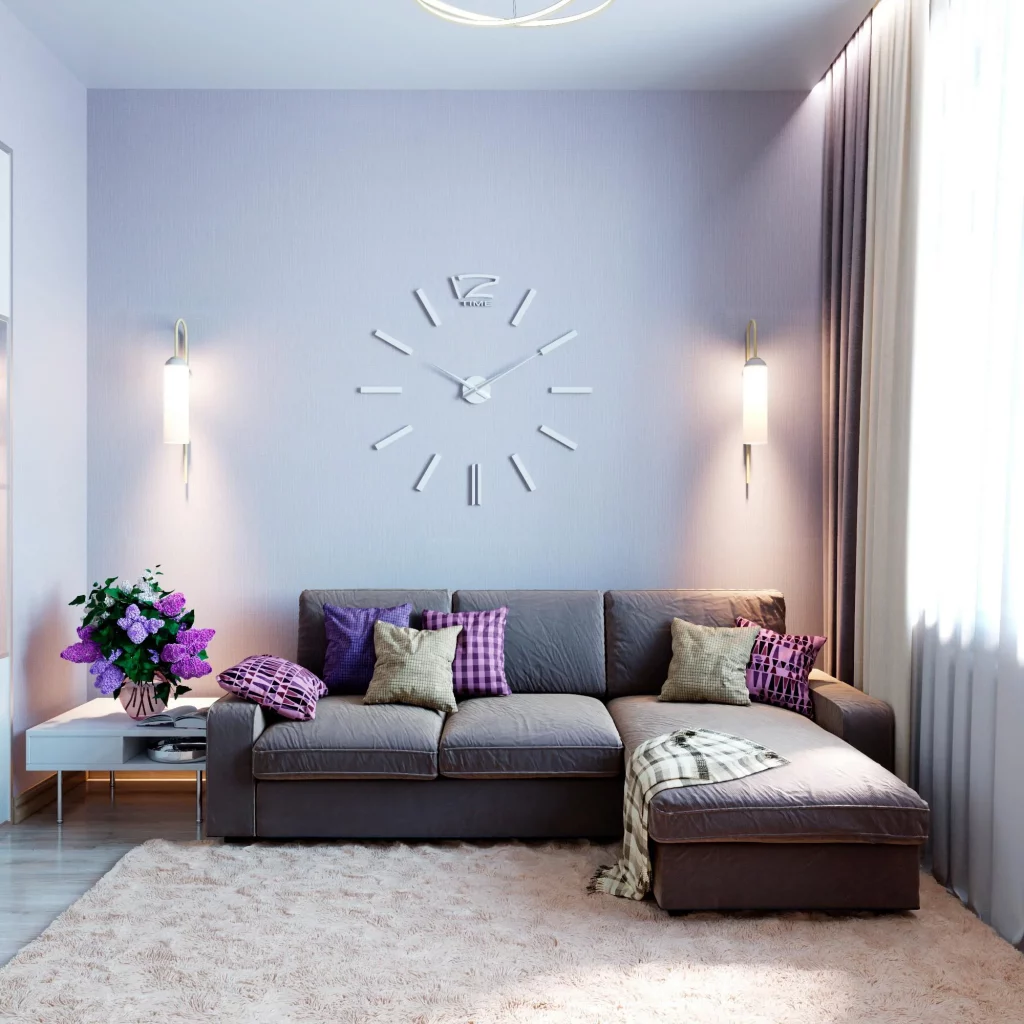
The sectional is an effective choice because it combines several seating positions into one continuous piece of furniture. Instead of needing separate chairs, the L-shape creates a generous lounging area while remaining concentrated against the walls. I also like the way the chaise extends into the room without blocking the main wall behind it. The low side table keeps the area beside the sofa functional, while the large rug visually gathers the sectional and nearby furniture into one cohesive arrangement.
In my experience, an L-shaped sofa can be one of the most useful pieces for a small living room when the room’s proportions allow it. It creates a defined seating zone and can make better use of a corner than separate seating pieces would. I would pay close attention to the chaise length, though, because leaving a comfortable path around its end is essential. Here, the light walls, curtains, and rug balance the darker sofa and help prevent the substantial sectional from visually dominating the entire room.
Small Modern Living Room With Wall-Mounted TV and Open Shelving
This compact modern living room places a light sofa along the lower left side, facing a wall-mounted television on a white textured brick wall. Beneath the television is a long low cabinet combining dark gray and white storage, while a tall open shelving unit occupies the opposite wall. The shelving displays books and a few decorative objects without completely closing off the room. At the back, a sliding wardrobe with alternating light and dark panels uses the available wall space efficiently, while pale flooring keeps the room visually bright.
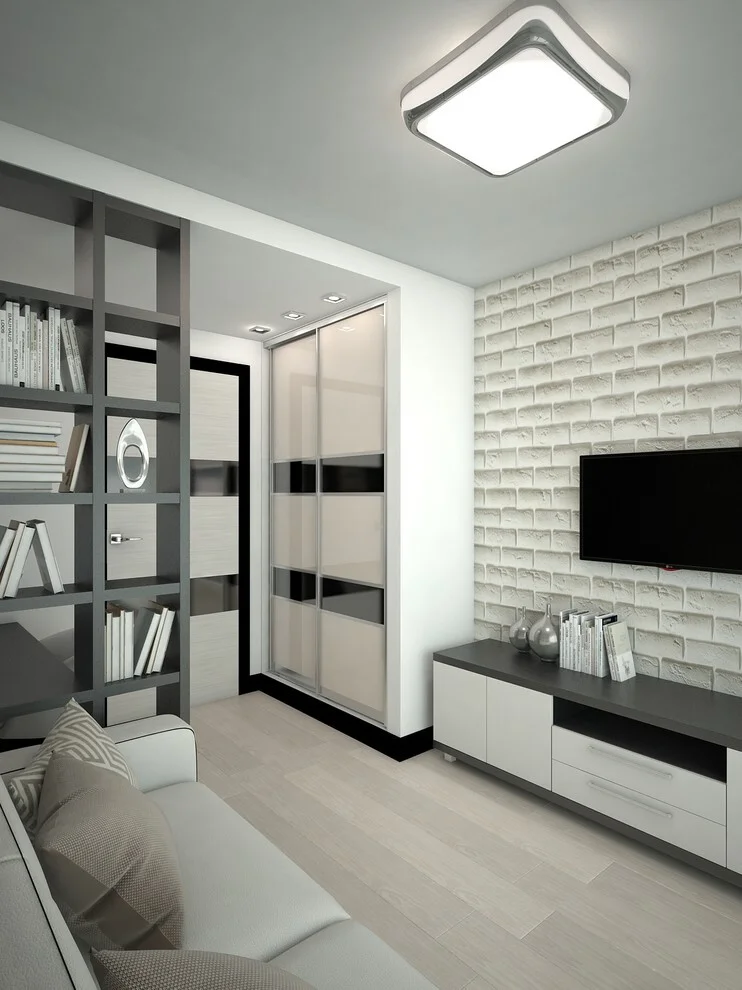
The furniture layout is particularly practical because the main seating faces the television while storage is distributed vertically and horizontally around the room. The low media cabinet provides closed storage without taking much floor space, and the tall shelving unit uses the wall rather than adding another freestanding cabinet. I also like the open passage through the center, which connects the seating area with the storage and wardrobe zones. The mostly white and gray palette creates a clean visual flow despite the number of functional elements.
For a small space, I would borrow the idea of combining different types of storage instead of relying on one large piece. A tall open shelf can hold books and display items, while a low cabinet can conceal everyday belongings and keep the television area visually tidy. The wall-mounted television is another practical choice because it eliminates the need for a bulky television stand. To recreate this type of layout, I would first establish the sofa-to-TV relationship, then build storage around the remaining wall space rather than allowing storage to dictate the entire floor plan.
Arched Window Nook With a Compact Curved Sofa
This intimate sitting area makes the tall arched window the star of the room. A compact curved sofa sits directly beneath it, with two dark blue cushions and a pair of lighter cushions creating a simple contrast. Deep navy curtains frame the window, while pale walls and architectural molding surround the seating nook. Two small round tables are placed in front of the sofa, and a sculptural floor lamp stands to the left. The result feels quiet, symmetrical, and carefully contained.
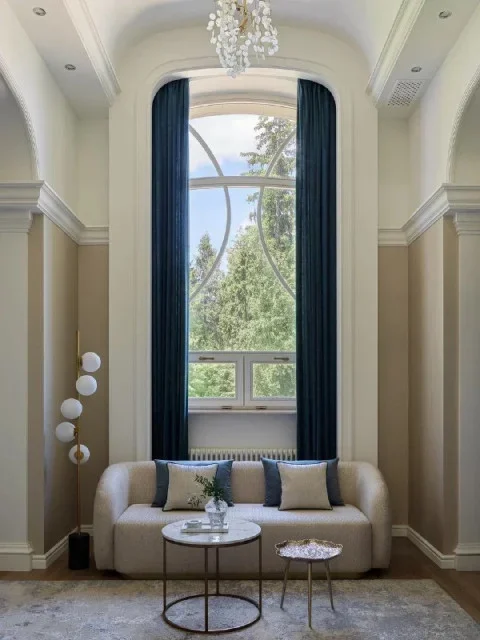
I especially like how little furniture is needed here. The sofa establishes the seating zone, while the two small tables provide flexible surfaces without visually filling the floor. Because the window rises so high, the room already has a strong vertical feature, so keeping the furniture low helps maintain that sense of height. The dark curtains also emphasize the window and create a strong frame around the pale architectural setting.
For me, this is a useful reminder that a small living room does not always need a traditional sofa-and-large-coffee-table combination. A compact sofa paired with petite tables can be enough when the room has a compelling architectural feature. I would use this approach in a narrow living area, especially when a window or alcove naturally creates a defined seating zone. Keeping the furniture concentrated in one area also makes the rest of the room feel more generous.
Cozy Brick-Walled Living Room With a Sofa-Focused Layout
This compact room takes a completely different direction with exposed red brick covering the walls and ceiling area. A light gray sofa is positioned along the lower left wall, decorated with several textured cushions in gray and muted yellow. A wood-toned cabinet occupies the foreground, while another low wood-toned piece appears opposite the sofa. The window sits directly beside the seating area, with horizontal blinds controlling the daylight. A small round wall decoration and a recessed ceiling light add understated detail.
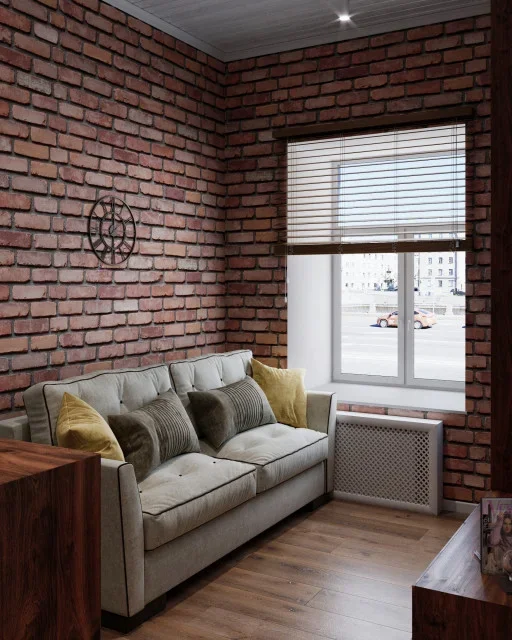
The furniture arrangement is simple, which is exactly what allows the brickwork to remain visually important. The sofa provides the main seating without competing with the strong wall texture, and the low storage pieces keep the furniture profile grounded. I also like the way the window is used as part of the seating composition rather than treated as an obstacle. The warm wood tones and muted cushion colors connect naturally with the brick, creating a cohesive atmosphere.
If I were working with a room that already had such a powerful architectural surface, I would resist adding too many decorative objects. The image shows me that a small space can gain plenty of personality from the walls themselves. I would concentrate on choosing one comfortable sofa, keeping storage low, and using a limited number of cushions to introduce softness. That approach makes the room feel intentional while allowing the brick to remain the dominant feature.
Soft Neutral Sofa With Green Curtains and Botanical Accents
This living room uses a compact cream sofa positioned against a pale wall, with two framed abstract prints hanging above it. A deep green curtain runs beside the tall window, adding the strongest color accent in the room. A large leafy plant sits in a white planter on the left, while a slim floor lamp and a small dark side table occupy the opposite side of the sofa. A light textured rug defines the seating area, and a gray throw is casually draped over one arm.
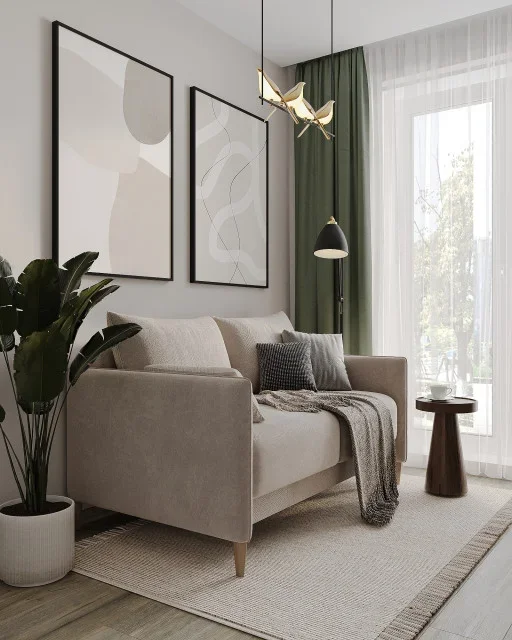
The layout feels especially effective because the furniture remains compact and the surrounding floor area stays open. The sofa has a straightforward silhouette that makes it easy to place against the wall, while the small side table offers a useful surface without creating another bulky visual block. The rug gathers the seating arrangement into one cohesive zone, and the tall curtain and plant add vertical interest without requiring additional furniture.
I would use this arrangement when I wanted a small room to feel calm but not completely plain. The green curtain creates a strong visual anchor, while the neutral sofa and rug keep the overall composition relaxed. I also like the practical combination of a side table and floor lamp because it creates a useful reading or lounging corner without needing a large cabinet. For a compact space, I would prioritize this kind of multifunctional furniture placement over filling empty corners simply because they are available.
Small Living Room With Integrated Storage and a Compact Sofa
This final room uses a compact taupe sofa positioned beneath a wall of white overhead cabinets and open shelving. Behind the sofa, a pale brick-textured wall creates a subtle backdrop, while the cabinetry provides storage above and around the seating area. A dark coffee table with a round top sits in front of the sofa, and several patterned cushions add contrast. The floor is warm wood-toned, while a small portion of another upholstered seat appears at the lower right.
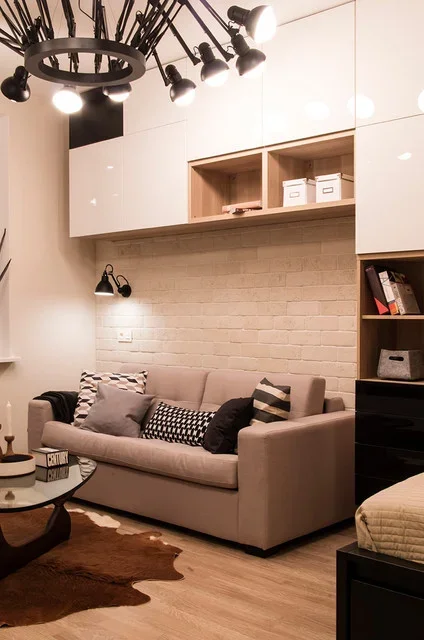
What stands out to me most is how effectively the room uses vertical space. Instead of taking up more floor area with large storage furniture, the cabinetry rises above the sofa and incorporates open shelving for visible items. The sofa remains the central seating piece, leaving a clear zone around the coffee table. The combination of closed white cabinetry, open shelves, and darker lower furniture gives the compact room visual structure without requiring a wide arrangement.
For a small living room, I consider this one of the most practical ideas in the collection. When floor space is limited, using the wall above and around the sofa can provide valuable storage while preserving the main circulation area. I would also keep the storage visually organized, as shown here, so the wall does not become overwhelming. The dark coffee table and cushions provide enough contrast to keep the pale cabinetry and sofa from blending into one flat surface.
Perforated Wood Feature Wall Behind A Compact Sofa
This compact room features a simple beige sofa positioned directly in front of a light wood wall panel decorated with an arrangement of circular openings in different sizes. A dark air-conditioning unit is mounted above the seating zone. Slim black side tables flank the sofa, while a small white cube-shaped table sits nearby. The room combines the warm wood surface with dark walls, pale flooring, and minimal furnishings.
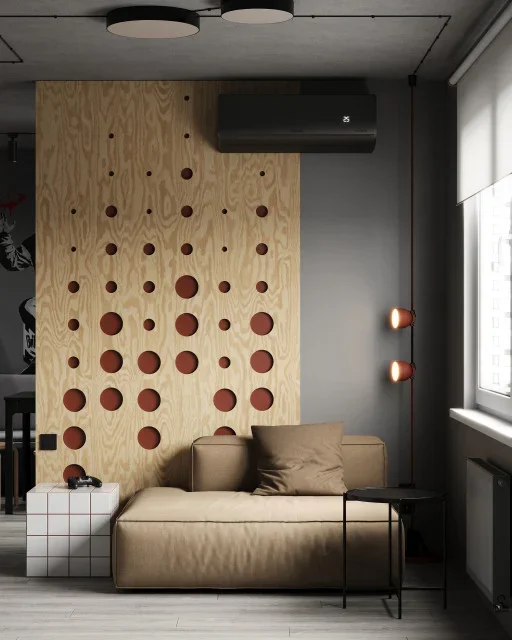
The sofa is kept deliberately close to the feature wall, which leaves the center of the room relatively clear. The narrow side tables provide useful surfaces without adding bulky visual weight, and the small cube table introduces another compact functional element. The perforated wall also gives the room a distinctive identity without requiring artwork or a large decorative installation.
From my perspective, this is a clever approach for anyone who wants a small living room to feel designed rather than simply furnished. A single feature wall can establish the room’s character while the furniture stays uncomplicated. I would follow the same principle by keeping tables and seating appropriately scaled and allowing the wall treatment to remain the dominant visual element.
Bright Blue Loveseat In A Tiny Layered Seating Area
The final room is especially compact, with a bright blue loveseat positioned against a pale wall. Several small framed artworks form a casual gallery arrangement above the sofa, while a blue floor lamp stands to the right. A white throw drapes over the sofa and a red accent cushion adds a small burst of contrast. The floor is covered by a gray-and-white geometric rug, and a small rounded blue table is partially visible in the foreground.
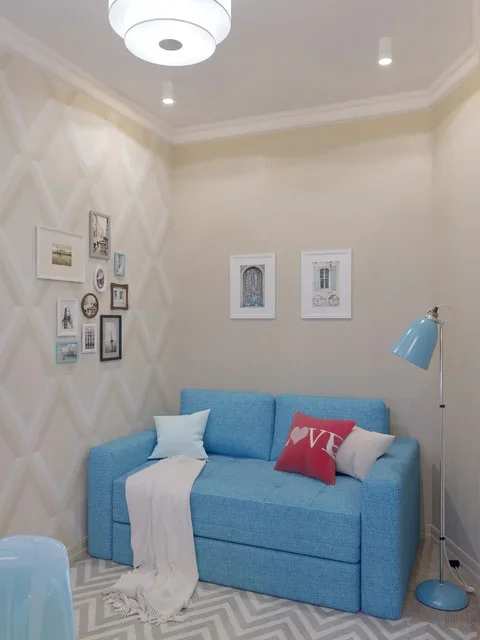
The arrangement demonstrates how a tiny living room can still accommodate color, artwork, lighting, and textiles without appearing completely bare. The loveseat fits neatly along the wall, while the floor lamp uses vertical space instead of demanding room for a larger table lamp. The rug visually defines the seating area and adds pattern beneath the relatively simple furniture.
I would take particular inspiration from the way the room uses color in a controlled way. The blue sofa and lamp create a visual connection, while the red cushion provides contrast without taking over. In a very small living room, I find that repeating one strong color across two or three elements can make the space feel intentional and cohesive, even when there is very little room for additional furniture.
A small living room can feel both stylish and comfortable when the furniture is arranged with intention. The ideas in this collection show how compact sofas, practical tables, smart storage, mirrors, and well-placed accents can make limited space work beautifully. I hope these layouts inspire you to rethink your own room and find an arrangement that feels natural for everyday life. Which living room furniture layout idea is your favorite? Leave a comment and share the one you would most like to recreate.