
Windows can completely transform the atmosphere of a room, influencing everything from natural light to privacy, comfort, and visual balance. Modern window design trends offer plenty of ways to make this functional feature feel like an intentional part of your interior style. From elegant floor-length curtains and tailored Roman shades to playful patterns and beautifully framed views, there is an option for every kind of home. I especially love how the right window treatment can highlight architectural details while adding softness, texture, or a carefully chosen pop of color. In this collection, I’ll explore stylish window ideas that show how different fabrics, shapes, colors, and layouts can work within real interiors. Whether you prefer a dramatic statement or a light and understated look, these examples can inspire a window design that feels both practical and personal.
Charcoal Drapery Framing a Warm Wood Window
I see a sophisticated living room built around a warm wood-framed window with a distinctive curved upper section. A textured gray roller blind covers the upper portion of the glazing, while substantial charcoal curtains extend almost from ceiling to floor on both sides. The dark fabric works beautifully with the black leather sofa, black radiator, black track lighting, and warm wood flooring, while the pale rug and light walls keep the room from feeling too heavy. I find the contrast especially effective because the window remains the central source of daylight while the surrounding textiles add depth.
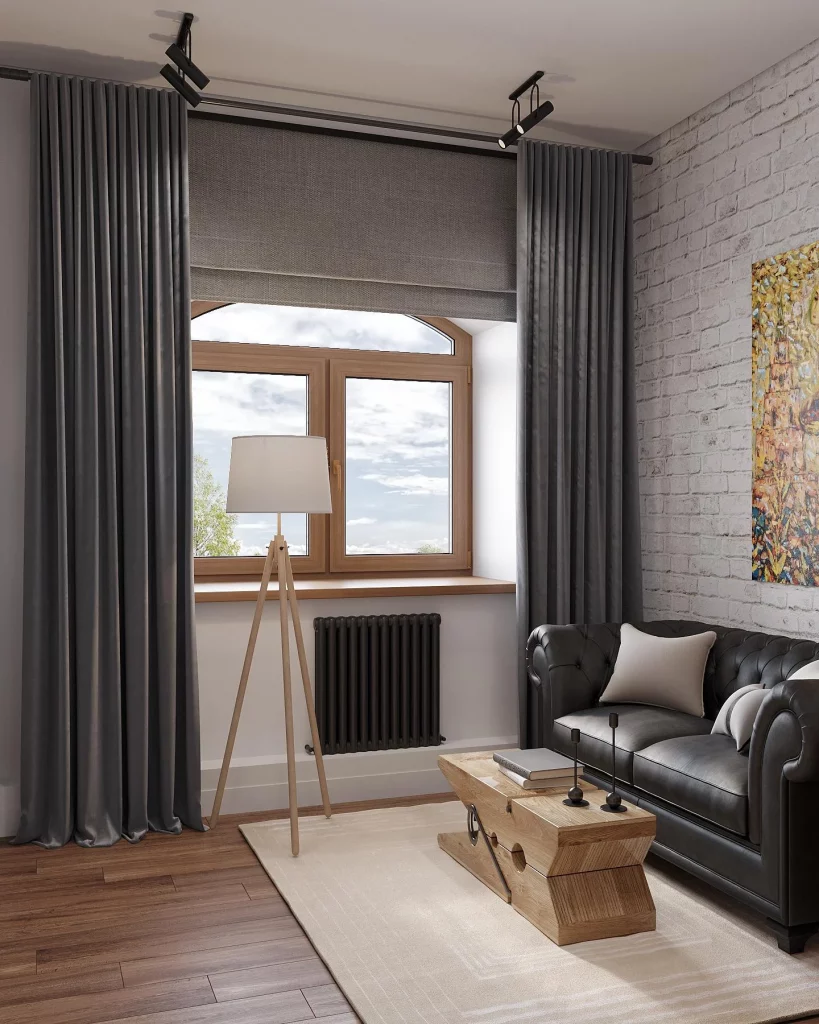
The layered treatment gives the room several practical options for controlling light and privacy. I like the combination of the roller blind with full-length curtains because each element has a clear role: the blind provides coverage across the window itself, while the side panels can be opened or closed according to the desired atmosphere. The curtains also visually frame the unusual window shape instead of competing with it, creating a strong vertical line that complements the height of the room.
From my perspective, this is a good example of how dark window treatments can feel modern rather than gloomy when they are balanced with lighter surfaces and natural wood. I would pay particular attention to curtain length and placement when recreating this look, allowing the panels to fall generously toward the floor as they do here. Keeping the rest of the window area relatively uncluttered also helps preserve the clean, architectural quality of the design.
Playful Floral Roller Shades in a Bright Bedroom
This bedroom takes a completely different approach, using two narrow windows dressed with white roller shades covered in a delicate pink and purple floral pattern. I like how the pattern immediately connects with the colorful bedding, pink storage box, framed artwork, and small decorative details throughout the room. The white walls and bright window areas provide a calm backdrop, allowing the cheerful textiles to bring most of the personality. The two matching shades also create a sense of symmetry above the bed.
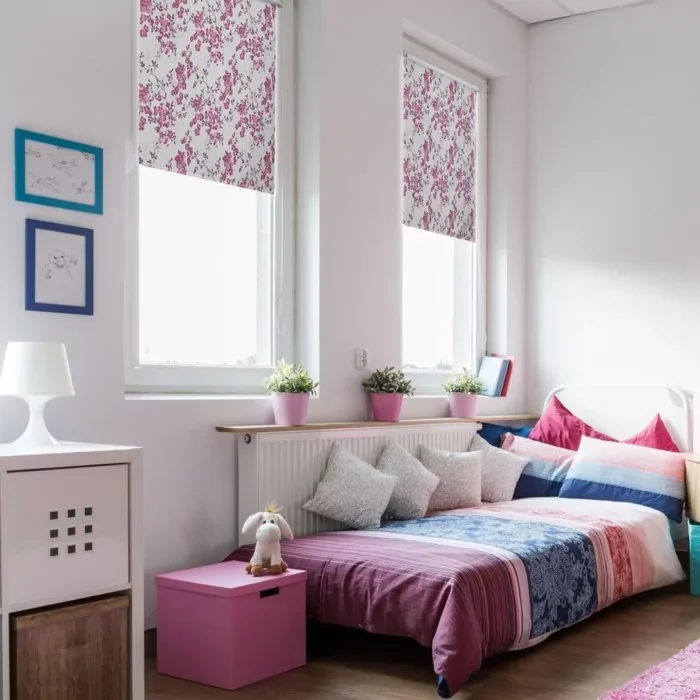
The roller shades are particularly practical here because their compact shape leaves the window areas visually tidy. I think that matters in a bedroom where the bed already occupies a large portion of the room. Rather than adding bulky fabric around the windows, the shades provide pattern without taking up visual space. Their floral design also makes the window treatment feel like part of the overall room styling instead of an isolated functional feature.
When I look at this kind of interior, I am reminded that patterned window coverings do not have to dominate a space. I would choose a motif that repeats at least one or two colors already visible in the room, just as the floral shades echo the pink and purple tones of the bedding. That simple connection can make a colorful room feel coordinated rather than random. For a similar result, I would keep the walls and larger surfaces relatively light and let the window covering provide one of the main decorative accents.
Classic Floral Roman Shade for a Light Dining Area
I see a bright dining space with a rectangular wooden table, four white molded chairs, and a broad window dressed in a beige Roman shade covered with an old-fashioned floral pattern. The shade sits neatly across the upper part of the window, while daylight remains visible beneath it and through the surrounding glass. A green plant on the table and several small plants on the windowsill add natural color, while the white walls, white chairs, and pale cabinetry keep the overall setting airy.
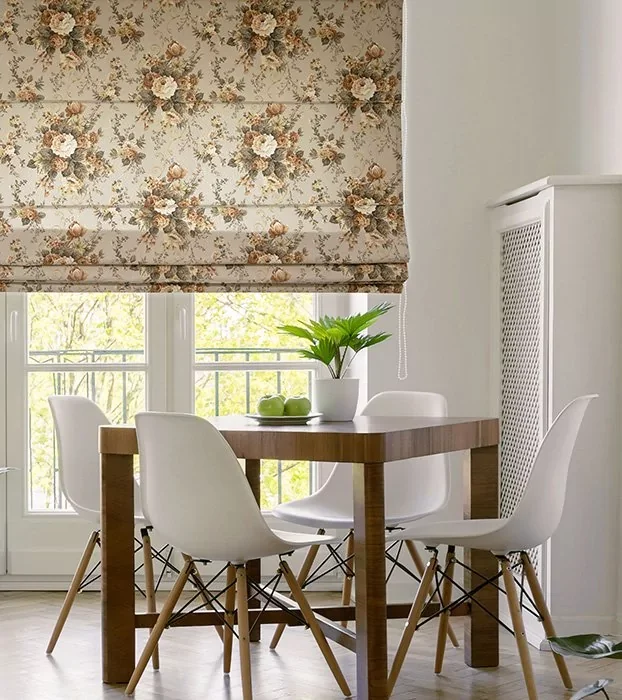
The Roman shade works well because its tailored horizontal folds bring structure to an otherwise simple window without overwhelming the dining area. I particularly like the relationship between the natural wood of the table and the warm floral tones in the fabric. The greenery then bridges the interior with the view outside, making the window feel connected to the dining table rather than simply serving as a backdrop.
For me, this image demonstrates how a traditional-looking floral pattern can still work in a clean, contemporary room. The key is restraint elsewhere. If I wanted to recreate this effect, I would use one patterned window treatment as the main decorative statement and keep the furniture simple, as shown here. A Roman shade is also a useful choice when I want a polished appearance while keeping the fabric close to the window rather than using full curtains.
Floral Panel Curtains Bringing Color to a Minimal Interior
This interior uses the window or glazed opening as a colorful focal point, with tall white panels printed with large flowers and leafy botanical shapes. I notice how the panels extend vertically toward the floor, while a narrow central opening reveals greenery outside. The surrounding room is intentionally restrained, with pale walls, light wood flooring, a round woven rug, a simple wooden cabinet, a potted plant, and framed artwork. The vivid floral treatment therefore becomes the strongest decorative element in the photograph.
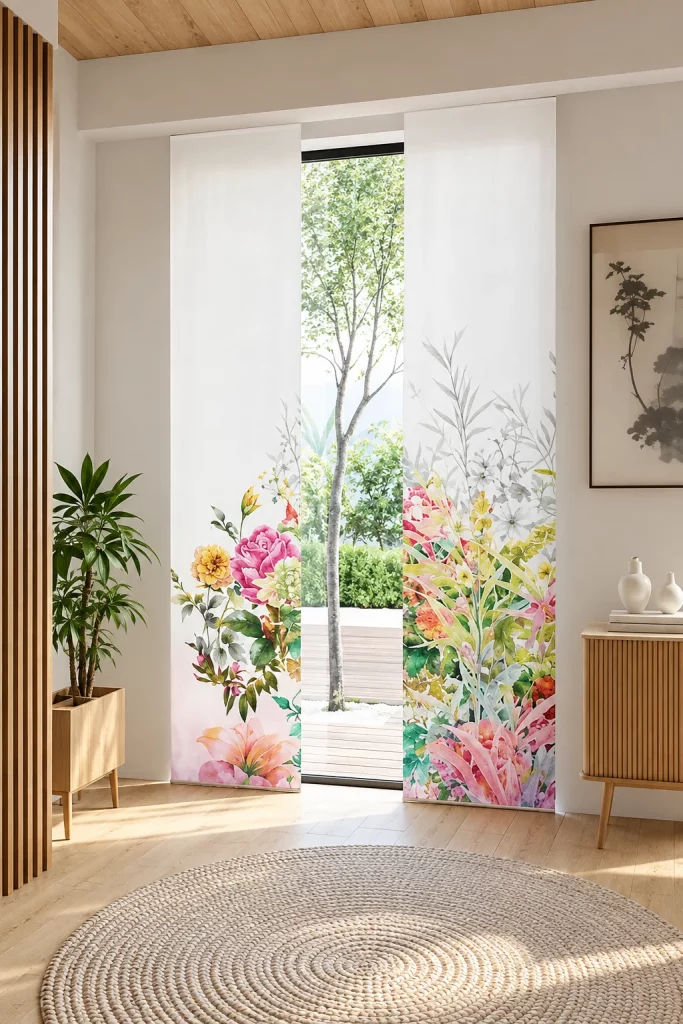
I like the way these panels add visual softness and privacy without filling the entire room with pattern. Their vertical orientation also emphasizes the height of the opening and creates a clear transition between the interior and the garden view beyond it. The pale background of the fabric prevents the flowers from feeling too dense, while the natural wood and woven rug provide a quiet foundation for the brighter colors.
In my experience, a statement window treatment like this works best when the surrounding palette is deliberately simple. I would avoid adding numerous competing patterns and instead allow the botanical fabric to carry the personality of the room. The existing combination of light wood, white surfaces, greenery, and floral color is a useful formula for anyone who wants a lively window treatment while maintaining a modern, uncluttered atmosphere.
Natural Roman Blind Paired With Sculptural Pendant Lights
I see an elegant work area arranged beneath a wide window with a woven-looking beige Roman blind. The shade has a soft, natural texture and covers the upper section of the window, leaving the lower glazing open to a leafy outdoor view. Below it is a long light-wood desk with drawers and brass-colored pulls, paired with a softly upholstered chair. Above the desk hang three groups of slim gold-toned pendant lights, adding a striking vertical detail to the composition.
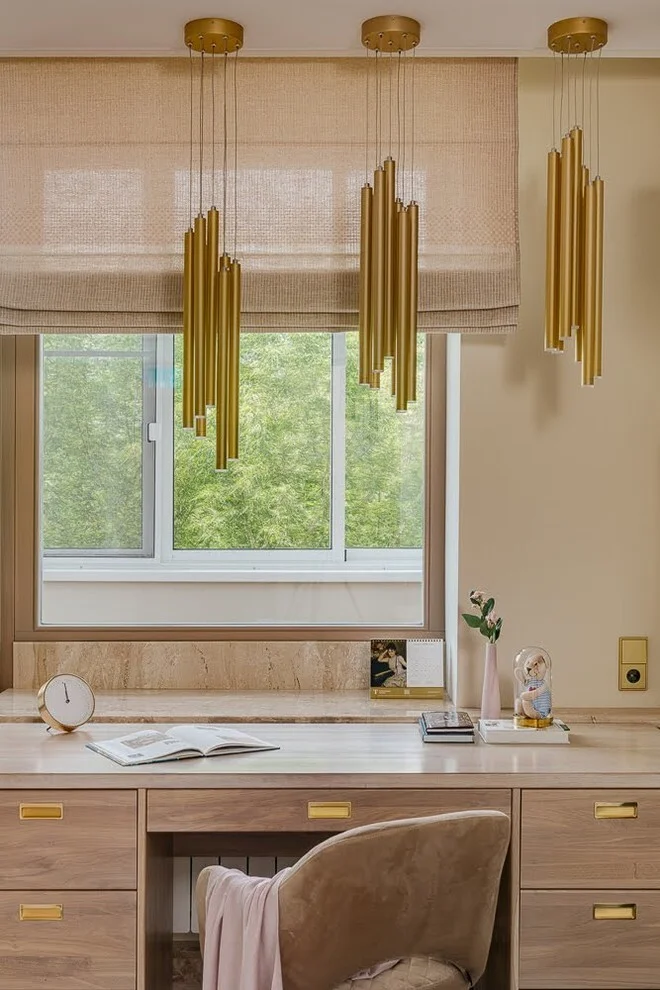
The window treatment works particularly well because its understated texture complements the warm wood and gold finishes without competing with them. I also like how the Roman blind creates a clean horizontal line across the window while the pendant lights introduce the opposite direction through their long, narrow forms. The result feels balanced: the window supplies daylight and a green view, while the blind and lighting provide enough visual structure to make the workspace feel finished.
I would consider this a strong example of using window coverings as part of a larger material palette. Rather than choosing the blind independently, I would look at the wood, upholstery, metal finishes, and even the colors visible outdoors. Here, the neutral fabric feels naturally connected to the desk and warm interior. If I wanted to add a finishing touch, I would keep it subtle and preserve the open area around the window so the greenery outside remains an important part of the composition.
Floor-Length Gray Curtains for a Dramatic Living Room
This living room uses deep gray floor-length curtains to frame a relatively narrow window, creating a strong, dramatic effect. The curtains hang in generous vertical folds from a simple rod and contrast with the pale wall around the window. A soft blue upholstered chair appears at one side, while a dark wooden table with a vase of red branches adds warmth and color. On the opposite side, part of a light upholstered seat and a patterned cushion are visible, giving the room a layered but restrained appearance.
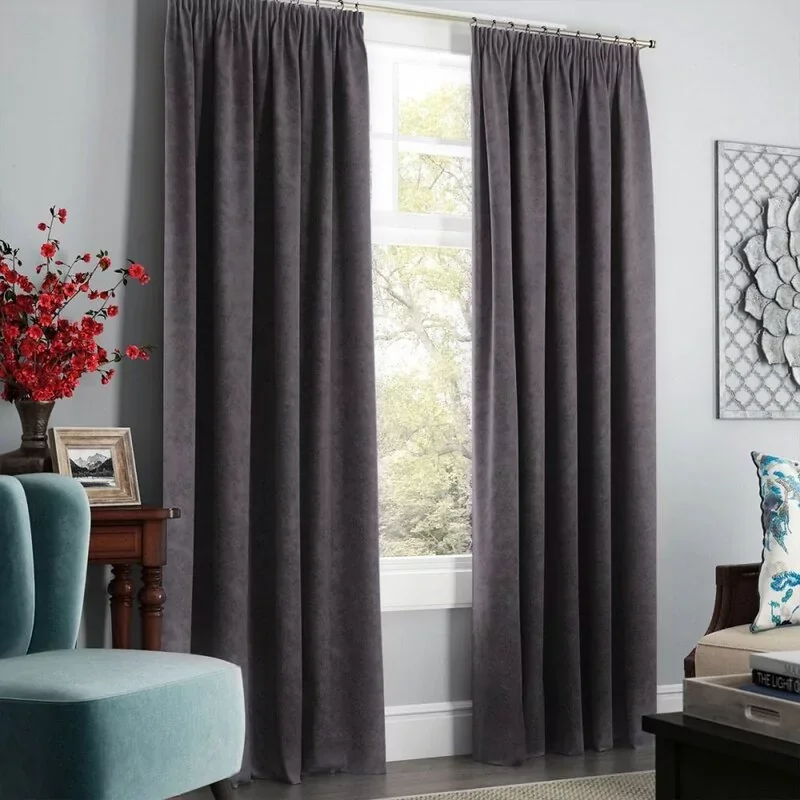
The full-length curtains make the window feel considerably taller and give the room a more grounded appearance. I like that the fabric extends almost all the way to the floor rather than stopping at the sill, because this creates a continuous vertical element. The substantial material also visually balances the darker furniture pieces while the light wall and window opening prevent the composition from becoming overly dark.
When I use this kind of design as inspiration, I think about proportion before anything else. Heavy curtains can be beautiful, but they need enough surrounding light and lighter surfaces to keep the room balanced. Here, the pale wall, daylight through the window, and lighter seating provide that contrast. I would also make sure the curtain panels are wide enough to create the full folds seen in the photograph rather than stretching the fabric flat.
Soft Gray Curtains Framing a Relaxed Reading Corner
I find this room much softer in character, with pale gray curtains arranged around a large window and one panel pulled back with a simple tie. The fabric falls in long, fluid folds and contrasts gently with the white brick wall. A comfortable beige armchair sits beside the window, accompanied by a small round table with flowers and framed photographs. Pink and gray cushions and a folded gray throw add color and texture without disturbing the calm palette.
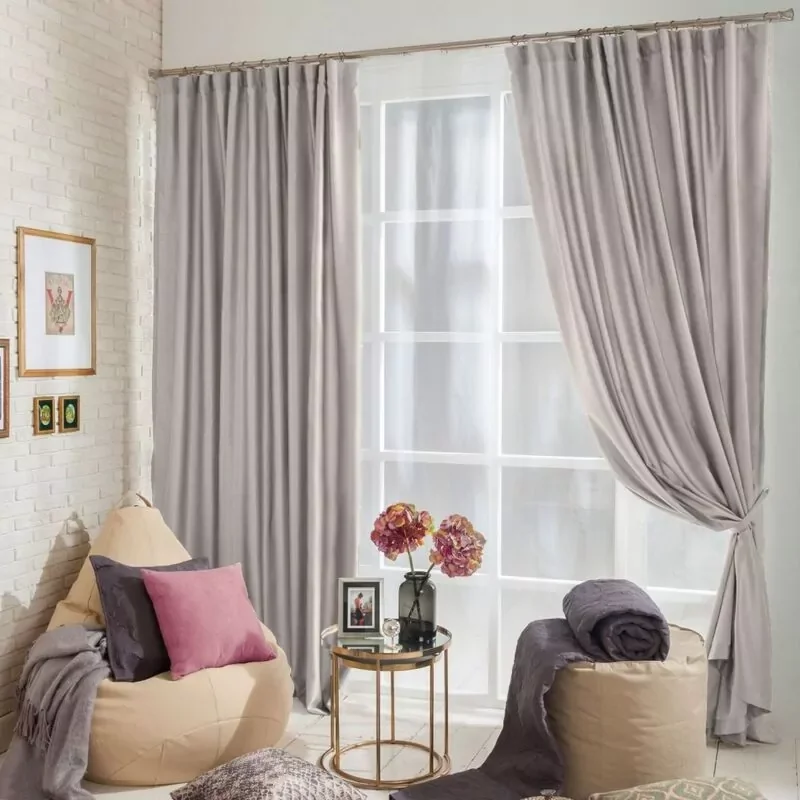
The partially opened curtain is what makes this arrangement especially inviting to me. Instead of treating the curtains only as something to close, the design uses them to frame the window and direct attention toward the daylight. The tied-back panel also creates an asymmetrical shape that feels relaxed, while the remaining fabric keeps the window visually substantial. The result is a cozy corner where the window treatment contributes to the atmosphere even when it is open.
I would use this approach when I wanted a room to feel comfortable rather than formally styled. A muted gray curtain is easy to combine with beige, white, soft pink, and darker gray accents, all of which are already visible here. If I were recreating the look, I would focus on soft fabric with enough fullness to create natural folds and use a simple tieback rather than adding elaborate decorative hardware.
Layered Sheers and Textured Curtains in a Calm Living Space
This bright living room uses a layered window treatment consisting of a central sheer curtain surrounded by pale textured panels. The outer curtains have a subtle checked or gridded pattern and hang from a dark curtain rod, while the sheer fabric allows strong daylight to filter into the room. A white sofa occupies the left side of the space, with a small round wire-style coffee table in front, and a tall leafy plant stands to the right. The light wood flooring and softly patterned rug reinforce the airy feeling.
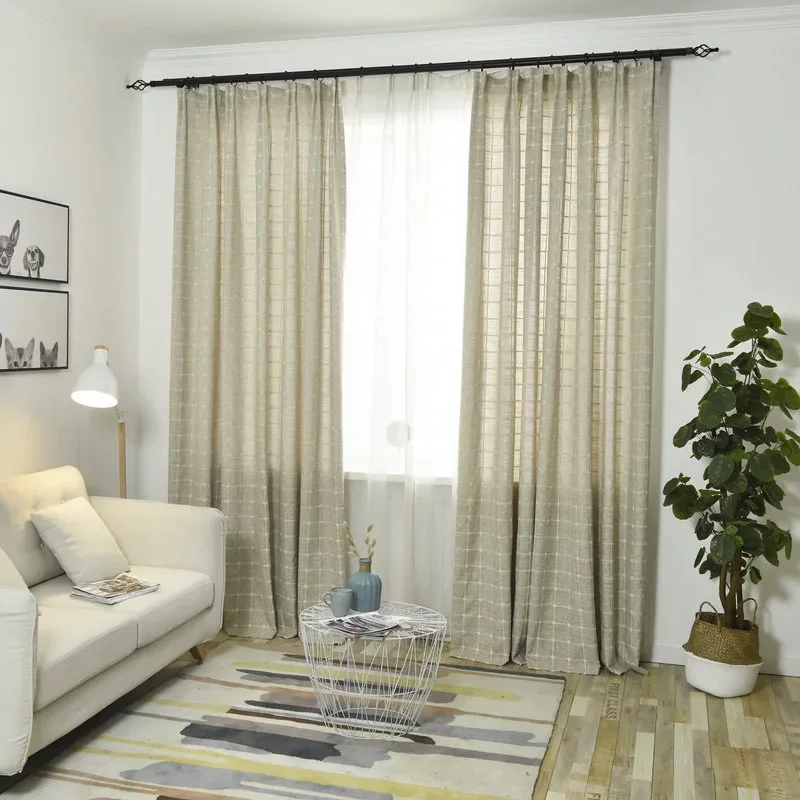
I like this combination because it gives the window several levels of visual and practical softness. The sheer center maintains the bright appearance of the room, while the outer panels provide more coverage when needed. The subtle texture in the curtains adds interest without introducing a strong color contrast, which is particularly effective alongside the white furniture and pale walls.
For me, this is one of the easiest ideas in the collection to adapt to different homes. If a room feels too bare around a large window, combining a translucent inner layer with understated outer curtains can add warmth without making the space feel crowded. I would keep the pattern delicate, as it is here, and allow plenty of natural light to remain visible. The large plant also shows how greenery can complement a softly dressed window without competing with it.
Bold Blue Window Frames With an Open Garden View
This room makes the window itself the standout feature. The tall window has bold blue-painted frames and is opened outward to reveal dense green foliage and yellow flowers outside. Inside, a round dark wooden table sits near the window with a vase of white flowers, accompanied by traditional-style wooden chairs with warm yellow seat cushions. A deep blue sideboard continues the color story along the wall, while framed artwork and a small potted plant add further character.
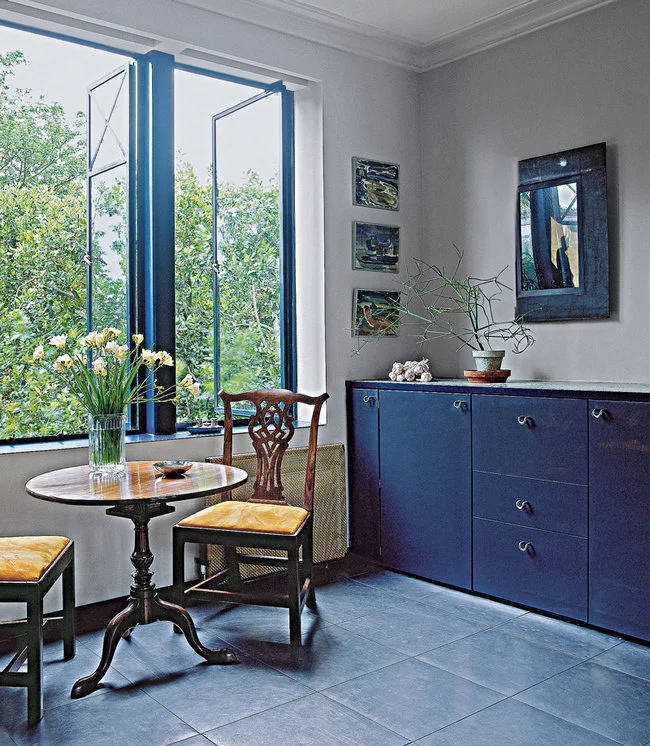
I particularly like how the blue window frames and blue sideboard visually connect even though they occupy different parts of the room. The open windows also make the garden feel like part of the interior composition, giving the room a fresh and naturally colorful backdrop. Because there are no curtains covering the glass, the distinctive frame becomes an architectural and decorative feature in its own right.
This image reminds me that modern window design does not always require elaborate coverings. Sometimes the most effective choice is to emphasize the window’s own proportions, color, and relationship with the outdoors. If I wanted to achieve something similar, I would first consider whether the existing view is attractive enough to become a major feature. When it is, keeping the glass visually open can create a stronger result than adding layers of fabric.
Arched Window Seat With Tailored Roman Shades
The final room showcases a large, distinctive window installation with an arched upper section and several separate panes beneath it. Short beige Roman shades are fitted across the lower windows, leaving the upper sections bright and open. A built-in window seat runs beneath the glazing and is framed by white shelving on both sides. The warm wood floor, cream upholstery, pale walls, and sunlight falling across the floor create a welcoming atmosphere, while a telescope stands in front of the window facing the outdoor view.
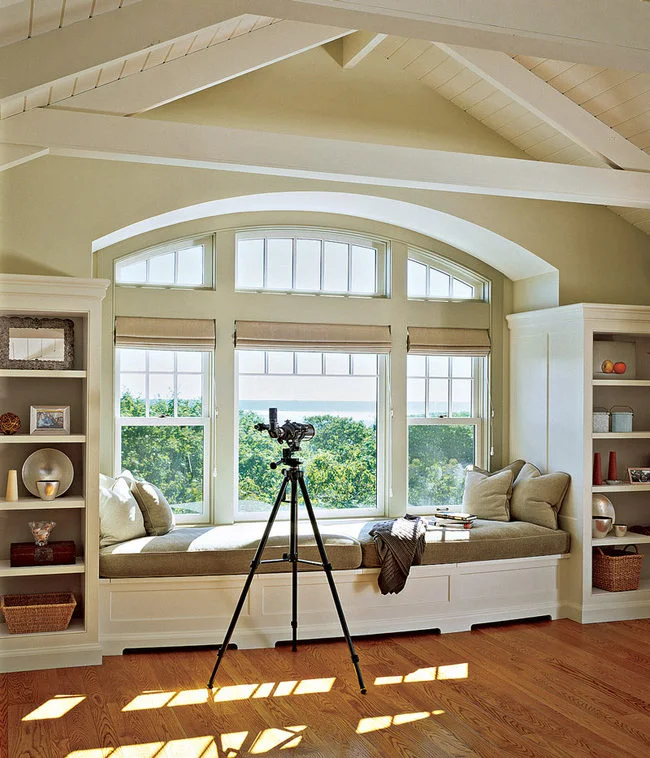
I think the strongest feature here is the way the window treatment respects the architecture instead of hiding it. The Roman shades sit neatly across the lower rectangular sections, while the arched upper glazing remains visible and fills the room with light. The window seat makes excellent use of the space beneath the windows, turning what could otherwise be unused area into a comfortable place to sit and enjoy the view. The surrounding shelves also make the entire window wall feel deliberately designed rather than simply functional.
From my perspective, this is a great reminder to work with unusual window shapes rather than trying to disguise them. If I had a similar architectural feature, I would choose treatments that follow the individual panes and leave distinctive upper sections exposed whenever privacy and light levels allow it. The neutral shades shown here are particularly successful because they provide control without competing with the dramatic geometry of the window.
Floor-to-Ceiling City Window With Rich Eclectic Layers
I see a dramatic living room centered around a very tall black-framed window that stretches almost the full height of the space and divides the city view into strong geometric sections. The warm interior combines richly colored wood-toned wall surfaces, striped accents, deep burgundy and brown textiles, and a striking upholstered armchair with an ottoman. Long curtains in muted purple and brown tones soften one side of the window, while the large glazing keeps the urban construction and blue sky visible as part of the room’s visual composition.
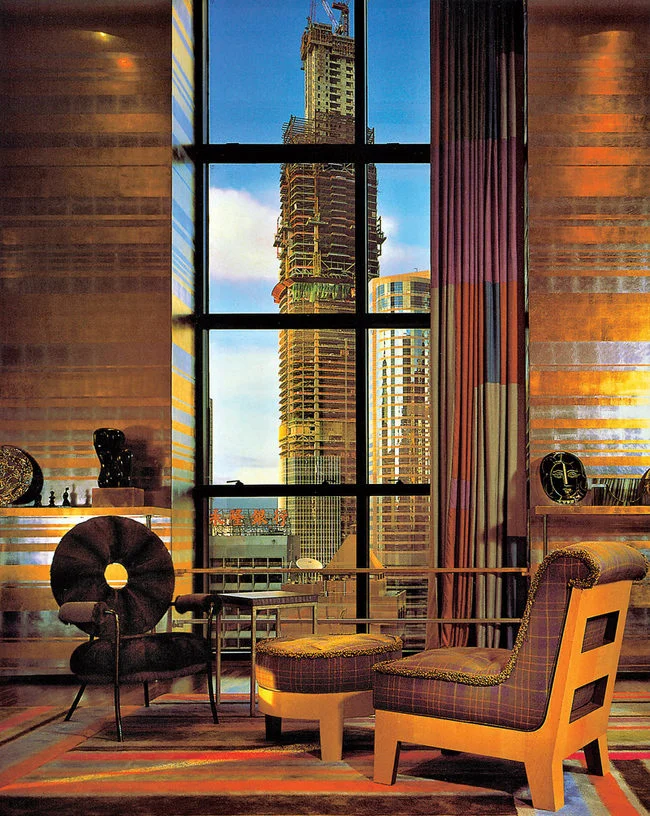
What makes this window arrangement work for me is the contrast between the crisp black framing and the layered, highly tactile interior. The window provides a strong architectural structure, while the curtains prevent such a large opening from feeling overly stark. I also like how the furniture is positioned to face inward and toward the view, making the window feel like an active part of the living space rather than simply a background feature.
When I look at a room like this, I would treat a large window as an architectural focal point instead of trying to hide it. Keeping the surrounding furnishings relatively grounded allows the height of the glazing to remain impressive. If I wanted to recreate this feeling, I would combine substantial full-length curtains with a few carefully selected warm textiles and furniture pieces that echo the darker window framing.
Industrial Black-Framed Windows in a Cozy Loft Living Room
This living room takes a much cleaner modern approach, with a broad wall of black-framed windows and glass doors occupying almost the entire far side of the room. I notice a white-painted brick wall, a dark wood ceiling, a large brown leather sofa, and a plaid upholstered armchair that adds a traditional touch. Beyond the glass, another seating area and an urban brick building are visible, creating a layered connection between the interior and city surroundings.
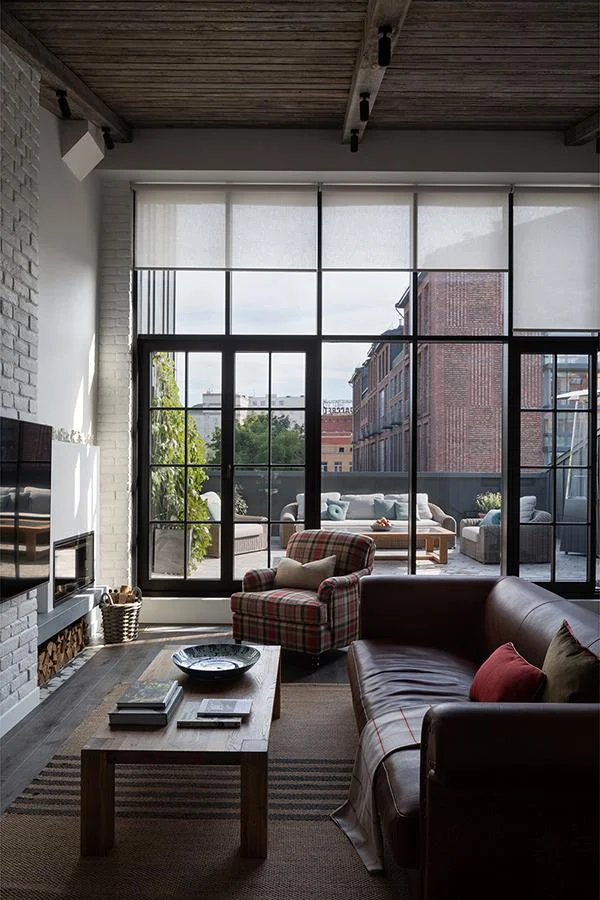
I particularly like the way the black window frames establish a clear visual rhythm without making the room feel cold. Their dark lines repeat the darker furniture and help connect the architecture with the leather sofa and other furnishings. The large panes also bring substantial daylight into the room, while the light roller-style shades at the upper portions of the windows provide a simple way to soften the brightness without blocking the entire view.
For me, this is a good example of how industrial-style windows can become surprisingly comfortable when balanced with softer furniture and warm materials. I would keep the window treatment uncomplicated here because the strong grid of the frames already provides plenty of visual detail. A neutral fabric shade and a few textured upholstered pieces are enough to make the architectural glazing feel inviting rather than overly commercial.
Soft Neutral Living Room Framed by a Forest View
The third room feels exceptionally bright and calm, with a very large window rising behind a pale sectional and filling the space with a view of slender trees. I see light wood beams across the ceiling, soft white and beige seating, floor-length pale curtains, and a contemporary fireplace set into the wall on the right. A delicate sculptural chandelier hangs in front of the window, adding an organic decorative element without overwhelming the simple palette.
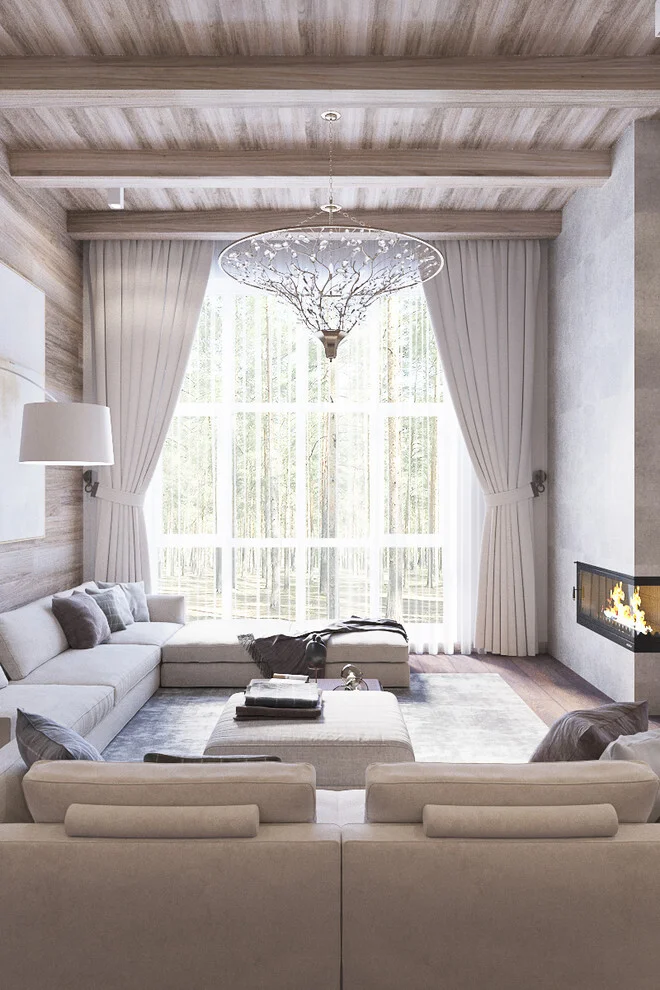
I think the strongest feature here is the restraint. The curtains frame the window rather than compete with it, and their pale color blends naturally with the walls, furniture, and ceiling. The generous seating arrangement also makes the window area feel like the heart of the room, while the fireplace introduces a second focal point and helps the space remain cozy even with so much glass.
If I were recreating this look, I would focus on maintaining a continuous, quiet color palette around the window. Floor-length curtains hung high can emphasize the height of a large opening, while lightweight sheers can preserve the sense of daylight shown here. I would also avoid placing too many decorative objects directly in front of the glazing, because the natural landscape already provides an important visual layer.
Elegant Black Window Frames in a Contemporary Dining Space
Here the windows give a sophisticated dining room an especially open and airy appearance. Several tall black-framed windows wrap around the room, while the walls and ceiling are finished with pale horizontal wood boards. A long organic-shaped wooden dining table is surrounded by sculptural cream upholstered chairs, and a contemporary pendant with multiple glowing glass elements hangs overhead. Light curtains and white Roman shades keep the overall atmosphere soft despite the dark window frames.
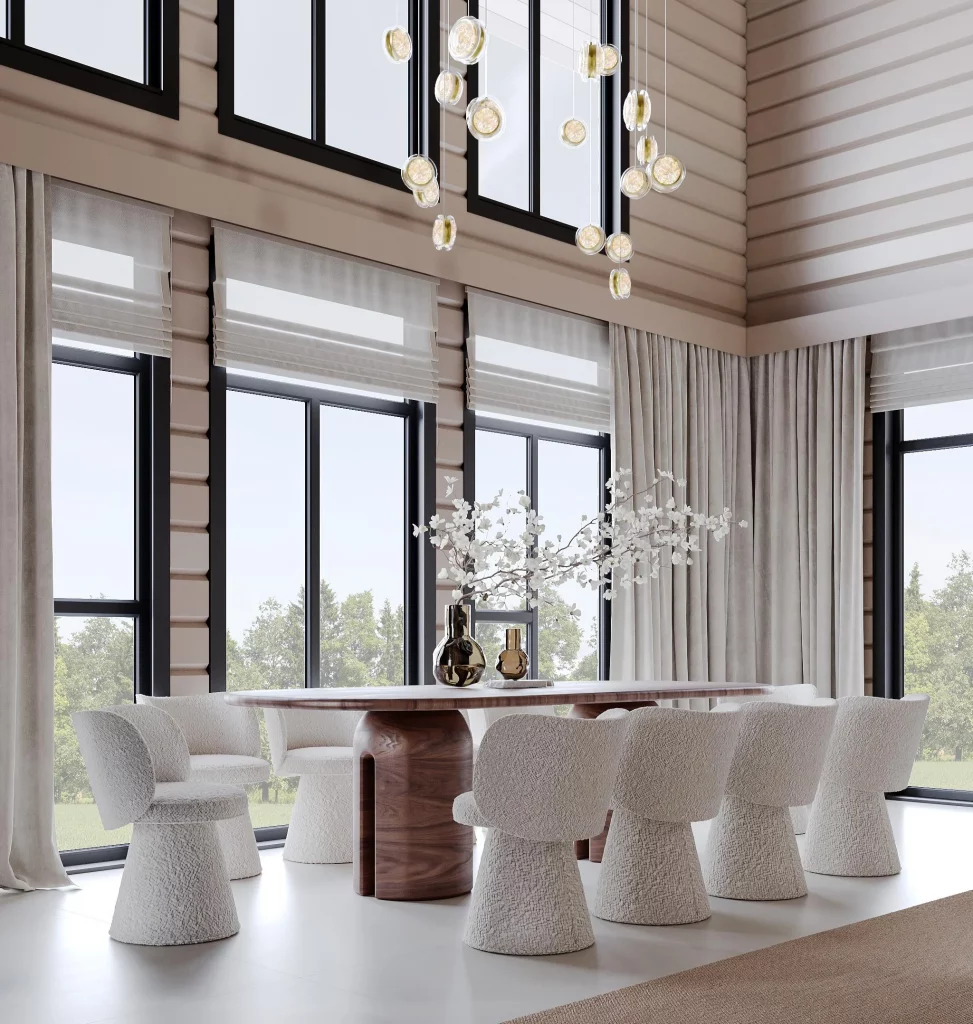
I like the balance between the substantial black frames and the pale furniture. The windows create definition around the room, while the upholstered chairs and warm wood table prevent the composition from becoming too severe. The arrangement also makes practical sense for dining because the surrounding glazing brings the outdoors into view without requiring heavy decoration on the walls.
For my taste, this is a strong example of using contrasting window frames as a deliberate design feature. If the architecture already has dark frames, I would repeat that tone sparingly rather than trying to match every object to it. The combination of Roman shades and long curtains is especially useful because it allows both daylight control and a softer decorative layer while preserving the spacious appearance of the windows.
Waterfront Window Seat With Layered Sheer and Green Curtains
This room makes the view the obvious star. A long, low window seat runs beneath a series of white-framed windows overlooking calm water and tall grasses outside. I see a tray with coffee and pastries resting on the seat, along with books and cushions that turn the area into a comfortable reading or relaxation spot. Transparent white curtains fall from ceiling height, while pale green curtains hang farther to the side beneath exposed dark wooden beams.
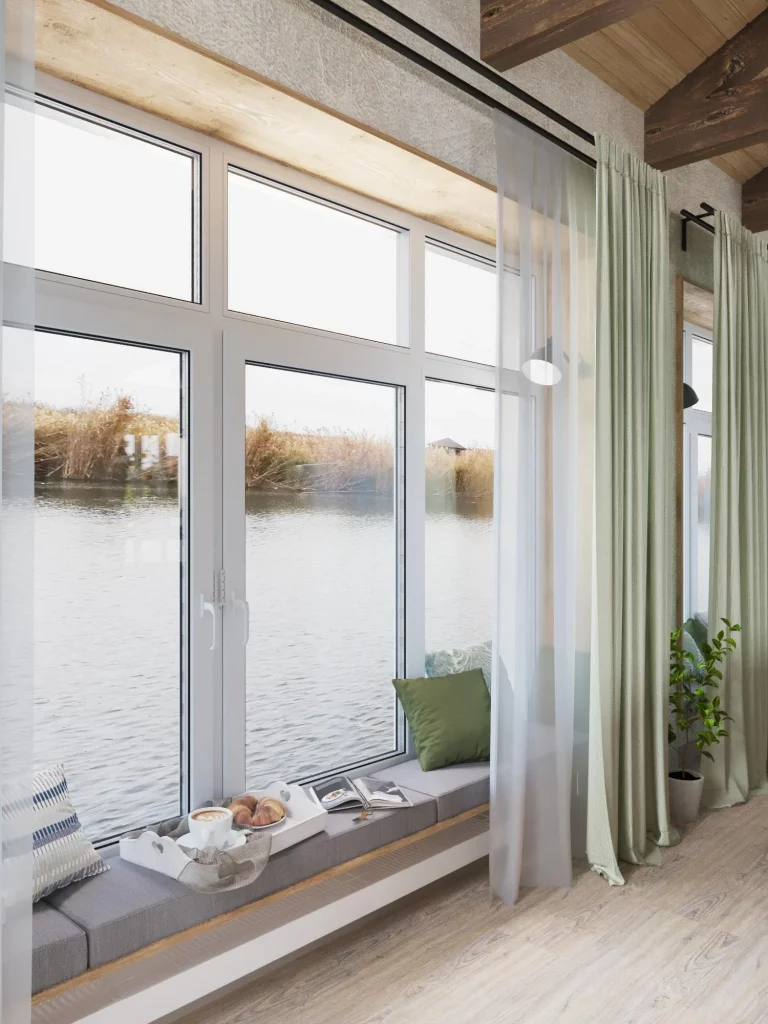
What I love most is how the window has been turned into a functional destination rather than simply an opening. The built-in seat makes excellent use of the space beneath the glazing and creates a place to sit without interrupting the room. The layered curtains are practical too: the sheers filter daylight while the heavier green panels can provide additional privacy and visual softness when needed.
I would use a similar strategy whenever a window has a particularly attractive outdoor view. Instead of filling the area with separate furniture, a built-in or fitted seat can make the architecture feel intentional and useful. I also like the restrained green accent because it relates naturally to the vegetation outside without introducing a distracting amount of color.
Striped Roman Shade Against Warm Wood Kitchen Walls
This kitchen combines modern functionality with a warm cabin-inspired atmosphere. The window has a wooden frame and is dressed with a tailored Roman shade featuring broad beige, cream, and gray stripes. Surrounding it are horizontal natural wood boards, while the cabinetry is a muted olive-beige tone with classic recessed panels and small metal knobs. The countertop remains uncluttered apart from glassware, dishes, a cutting board, and a leafy arrangement.
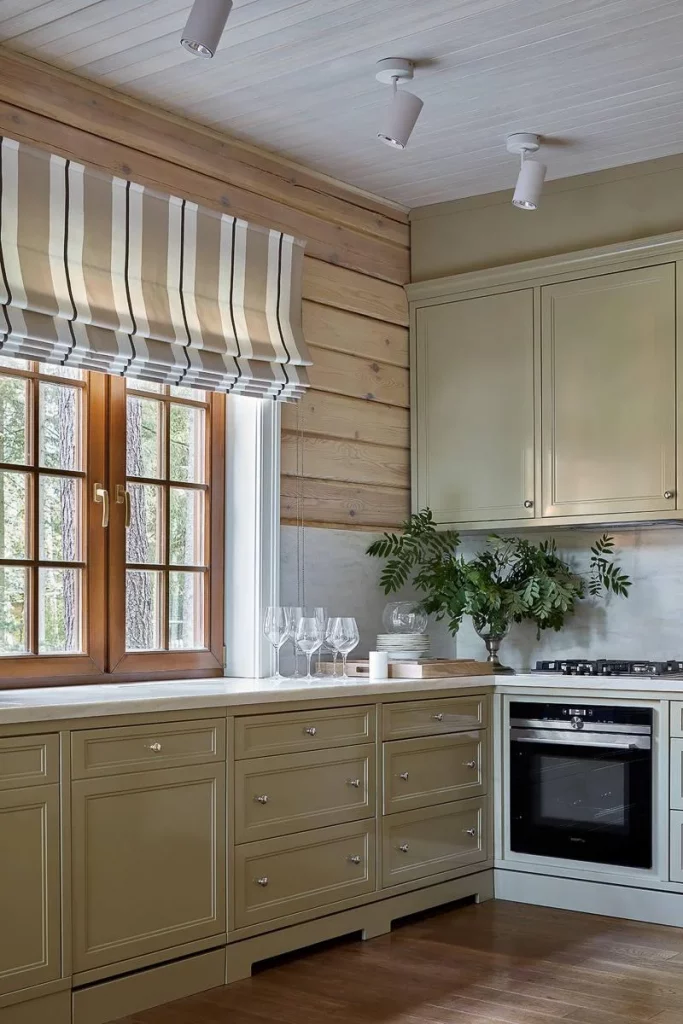
For me, the Roman shade is particularly successful because it introduces pattern without taking over the kitchen. Its horizontal stripes relate naturally to the wall boards, while the subdued colors sit comfortably beside the cabinetry. The shade also offers a practical way to adjust sunlight above the work surface while keeping the window visually neat when it is partially raised.
I would choose a Roman shade like this when I want a kitchen window to have personality without adding bulky fabric around the entire opening. The important detail is the controlled palette: the stripes remain close to the wood and cabinetry colors, so the treatment feels integrated. Keeping the countertop relatively open also allows the window treatment to remain one of the room’s defining decorative details.
Cream Drapery Framing a Rustic Forest-Facing Door
This rustic interior uses a tall glass door and adjacent windows to connect the room directly with a wooded outdoor setting. The surrounding walls are made from pale rounded logs, with a substantial timber beam running overhead. A long cream curtain is gathered to one side of the glass door, while a matching Roman shade appears over the neighboring window. Plants and ceramic vessels sit on the floor nearby, reinforcing the natural atmosphere.
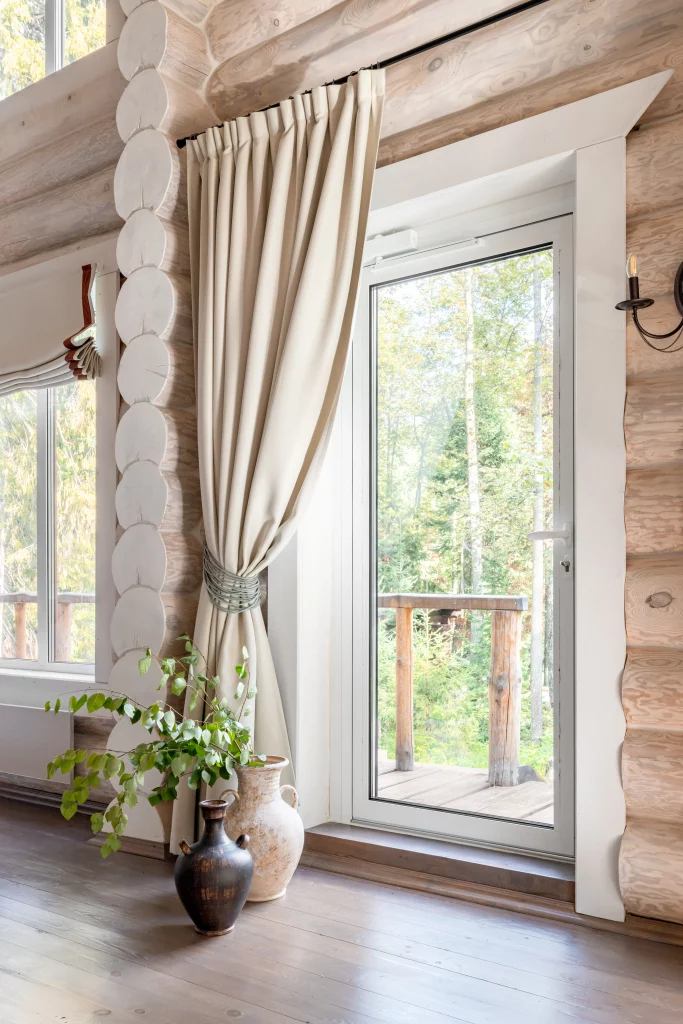
I think the combination of curtains and Roman shades works especially well here because the architecture itself is already visually distinctive. The simple cream fabric softens the pale wood without competing with its texture, while the gathered curtain can be moved aside easily when the door is in use. The arrangement also preserves the strong vertical connection between the interior and the trees outside.
From my perspective, rustic rooms benefit from window treatments that echo their natural materials rather than introducing overly polished details. A warm neutral fabric is enough to add softness and privacy while allowing the timber architecture to remain prominent. I would also keep the curtain hardware visually restrained, as the simple black rod shown here already provides all the definition this setting needs.
Built-In Window Seat With Tailored Roman Shade
This sophisticated neutral interior combines a wide window seat with a large taupe Roman shade that covers the upper portion of the glazing. The seat itself is built into a long wood-fronted cabinet and topped with a thick cream cushion and several matching pillows. To one side, sheer curtains soften another window, while a tall leafy plant and illuminated wood shelving bring warmth and texture into the room.
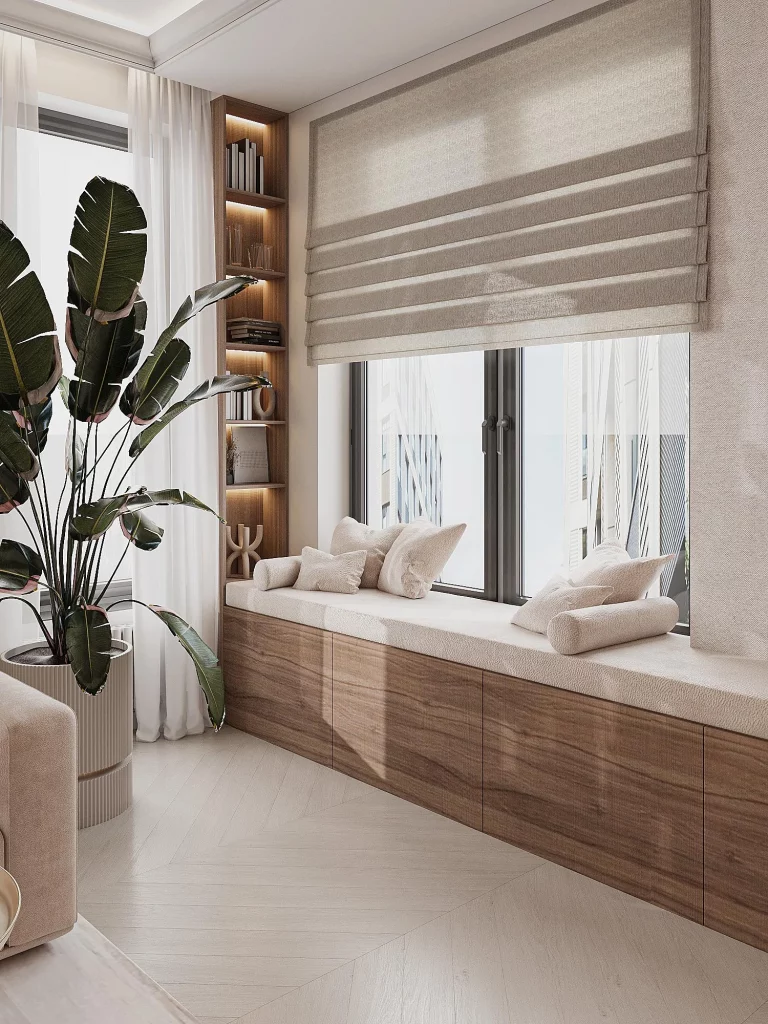
I find this arrangement especially effective because it combines storage, seating, and window treatment in one cohesive composition. The wooden cabinetry gives the window seat a substantial architectural presence, while the upholstered top makes it comfortable enough for relaxing. The Roman shade controls the incoming light without obscuring the entire window, and its neutral fabric blends almost seamlessly with the rest of the room.
For me, this is one of the most useful window trends to borrow when space is limited. A properly designed window seat can provide seating while making use of an otherwise awkward wall area. I would keep the upholstery and shade within a closely related neutral palette, as shown here, because that approach makes the entire installation feel like one custom architectural element rather than several unrelated pieces.
Full-Height Windows and Taupe Curtains in a Wood-Clad Living Room
This spacious living room uses several very tall windows to flood the interior with natural light. The walls and ceiling are covered in warm pale wood, while long taupe curtains extend almost from the upper reaches of the room down to the floor. A large gray sectional with neutral cushions occupies the foreground, and two sculptural chandeliers made from circular dark frames and clear glass spheres hang prominently in the space.
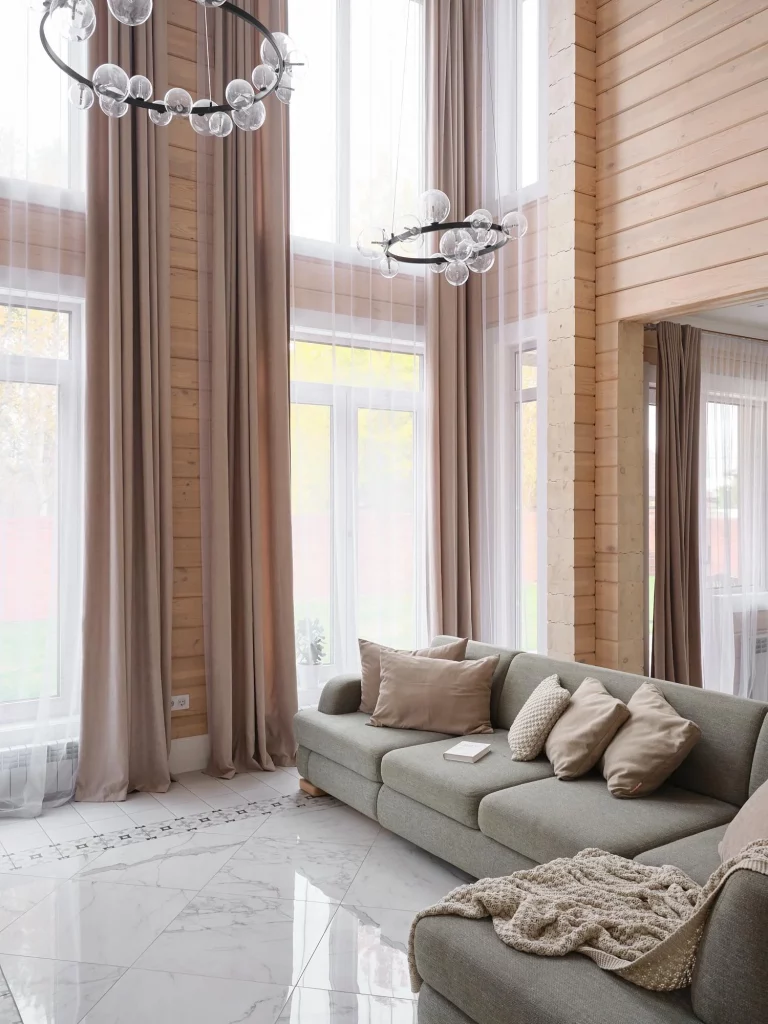
I like how the curtains emphasize the vertical scale of the windows while adding softness to the extensive wood surfaces. The neutral upholstery and curtains create a calm foundation, allowing the timber architecture and unusual lighting fixtures to provide most of the visual character. The generous window height also makes the room feel more connected to the daylight outside, even though the furnishings themselves remain comfortably grounded.
If I were working with similarly tall windows, I would avoid installing short curtains that stop above the floor because they could make the architecture appear visually fragmented. Full-length panels, like those shown here, reinforce the height and create a more finished appearance. I would also consider curtains in a warm neutral tone when the surrounding wood has a natural finish, since that combination feels cohesive without becoming visually heavy.
Colorful Living Room With Layered Roman Shades and Drapery
The final room shows how window treatments can support a much more colorful interior. A central dark-framed window is dressed with two beige Roman shades, while full-length curtains in warm tan frame the opening. In front of it are a vivid orange upholstered chair and a deep teal sofa with green sides, accented by red and patterned cushions. A light rug, natural wood shelving, and decorative glass vessels keep the surrounding areas from becoming too visually intense.
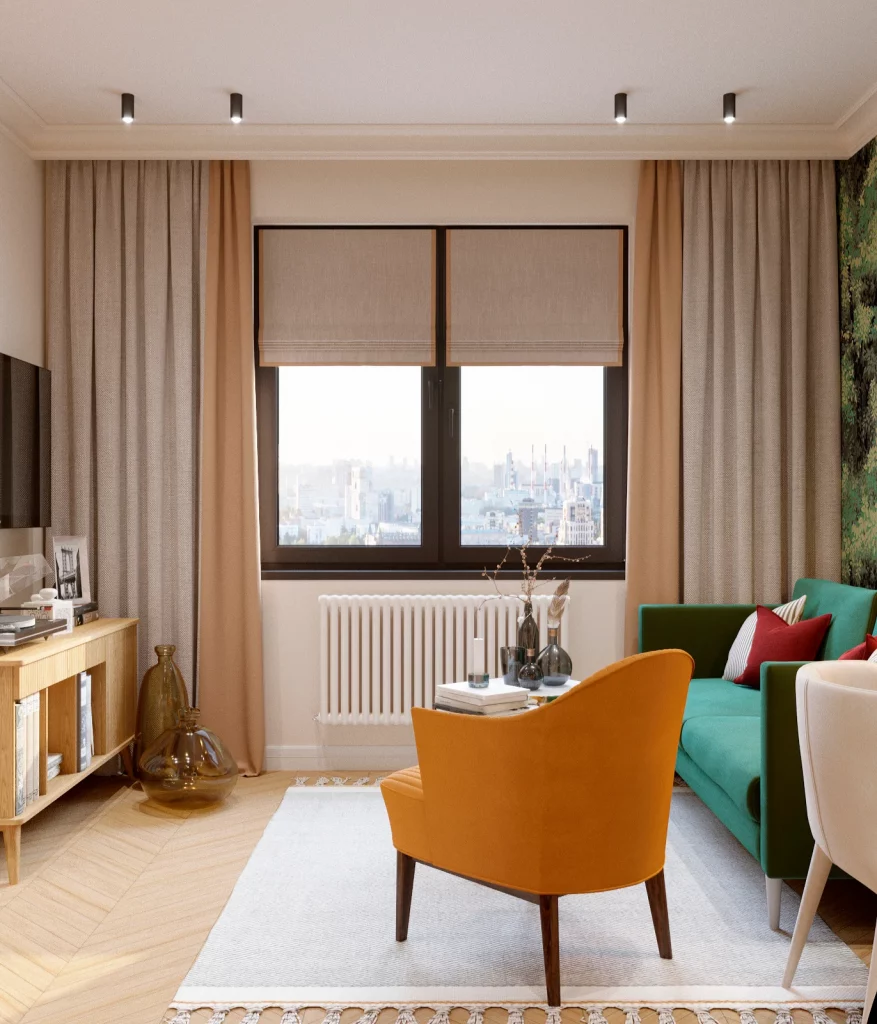
What works particularly well for me is that the window treatment remains relatively quiet while the furniture supplies the stronger color. The beige shades and curtains provide a neutral frame around the window, allowing the orange and teal seating to stand out without making the entire wall feel busy. The shades are also practical because they can be lowered independently to manage daylight while retaining a clean, tailored appearance.
I would use this approach whenever a room already contains several noticeable colors. Instead of introducing another bold pattern at the window, I would choose a fabric close to the wall or flooring tones and let the furniture carry the personality. The result shown here feels expressive but still organized, which is exactly the balance I look for when combining statement furniture with functional window treatments.
Warm Wood-Framed Windows With Layered Neutral Curtains
I see a sophisticated living area centered around a large set of tall, multi-pane wood-framed windows. The rich brown frames contrast beautifully with the pale walls, while sheer white curtains soften the daylight on one side and full-length taupe drapes add depth on the other. In front of the windows, a rust-colored lounge chair, small black tables, a slim floor lamp, and a textured area rug create a comfortable seating corner with a distinctly modern character.
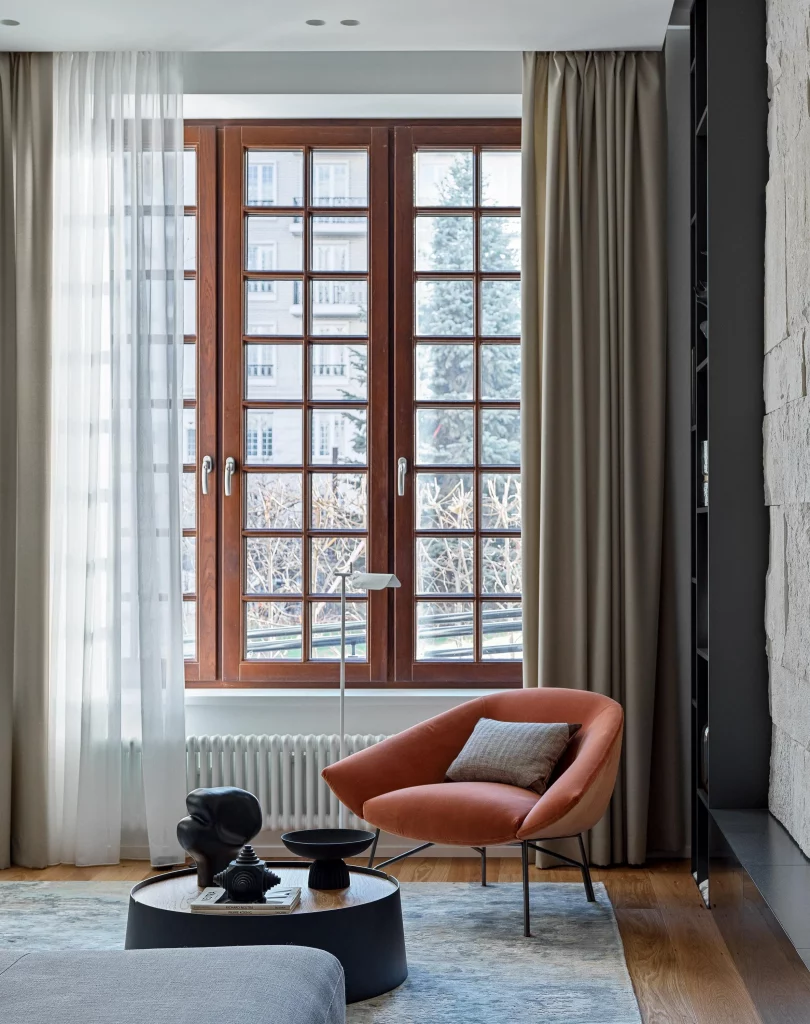
For me, the strongest feature is the combination of transparent and opaque window treatments. The sheer curtains allow daylight to remain bright while reducing the harshness of direct light, whereas the heavier drapes can provide more privacy when needed. I also like how the curtains extend almost from ceiling to floor, emphasizing the impressive vertical proportions of the windows.
This is an approach I would consider when working with large traditional-style windows but wanting the room to feel contemporary. Keeping the curtain colors close to the surrounding neutral palette creates a calm backdrop, while a single warmer furniture piece, such as the rust-colored chair shown here, can introduce personality without competing with the window.
Minimalist Roman Shade Framing an Urban View
I see a bright, modern interior where a large dark-framed window overlooks a dense cityscape. A softly folded gray Roman shade covers the upper portion of the window, leaving the lower glass open to the view. Beside it, a simple transparent chair sits near the broad wooden windowsill, while a white fireplace wall, black-and-white artwork, built-in wooden shelving, and warm wood flooring create a clean but inviting composition.
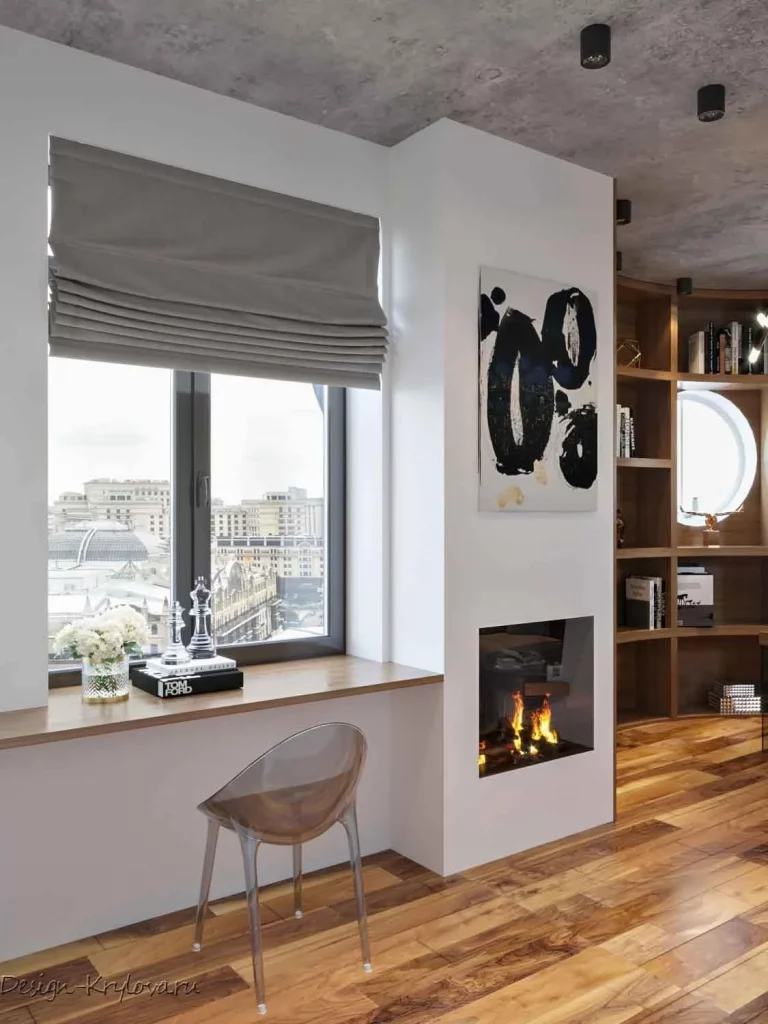
The Roman shade works particularly well here because it controls the amount of light without covering the entire window. I like the restrained gray fabric against the white wall because it adds texture while remaining visually quiet. The wooden sill also becomes a useful styling surface for the small decorative arrangement visible in the photograph.
In my view, this is a strong solution for a room where the view is an important part of the design. Instead of using elaborate curtains that could obscure the glass, a tailored Roman shade keeps the treatment compact and architectural. I would keep the fabric relatively understated in a similar setting so that the city view and the clean geometry of the window remain the main attractions.
Floor-to-Ceiling Windows With a Relaxed Textural Retreat
I see a cozy room combining tall black-framed windows, exposed brick, warm wood flooring, and a slatted wood ceiling. Full-height beige curtains frame one side of the glazing, while a large window and glass door open the room visually toward a green outdoor setting. A woven hanging chair with cushions sits directly beside the glass, complemented by another rounded chair and several plants.
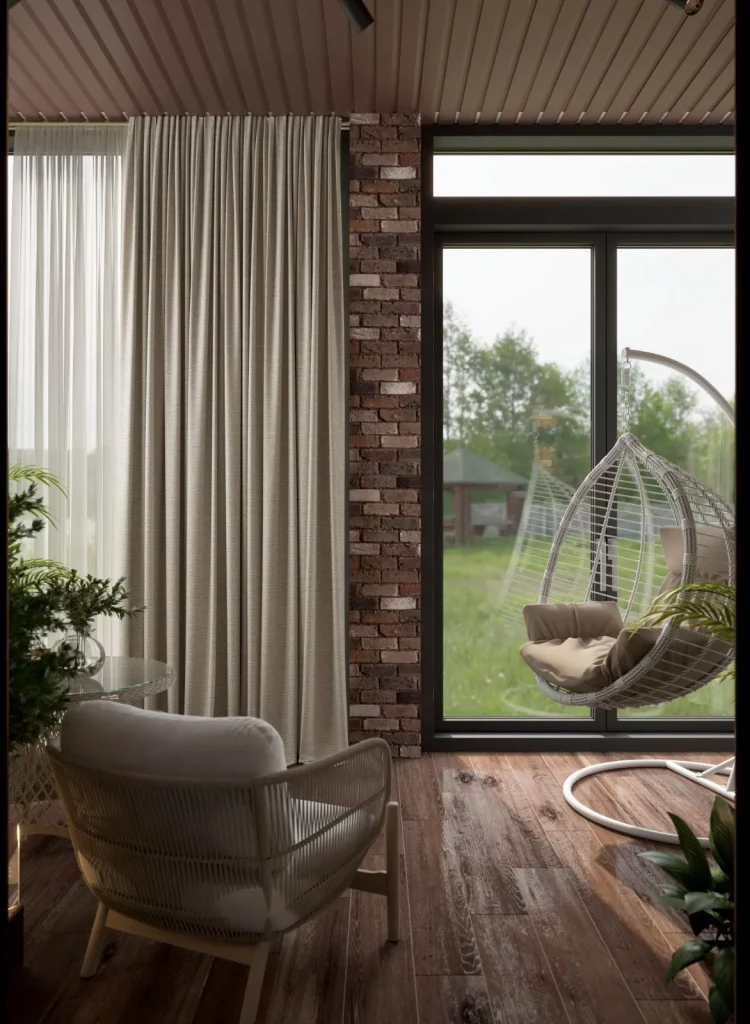
What makes this window arrangement appealing to me is the connection between the interior and the outdoors. The large panes provide an uninterrupted view, while the curtains can be drawn across the side for softness and privacy. The black frames give definition to the extensive glazing, and the surrounding brick and wood keep the space from feeling too stark.
I would use this image as inspiration for a relaxed reading or sitting area where the window itself becomes part of the experience. The hanging chair placed next to the glass demonstrates how furniture can reinforce the purpose of a window rather than simply occupy the remaining floor space. I also like the restrained neutral curtain color because it complements the natural materials already visible throughout the room.
Soft Drapery and Illuminated Feature Wall Around a Modern Window
I see an airy dining area with generous glazing covered by sheer white curtains and full-length light gray drapes. Between the curtains is a softly illuminated decorative wall panel featuring a striking leaf-like relief pattern. A round marble-look table with a dark base sits in front of the windows, surrounded by upholstered chairs, while warm wood flooring and indoor greenery add natural warmth.
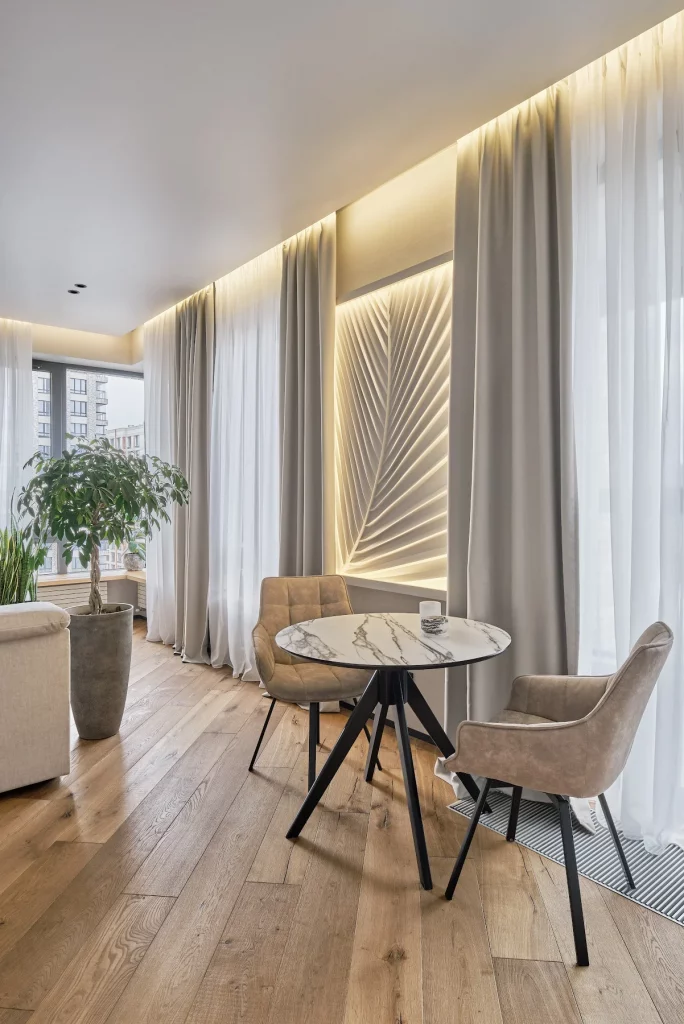
The window treatment feels especially elegant because it combines privacy with a sense of height. The sheer fabric filters the daylight without making the room feel enclosed, while the heavier curtains create vertical lines that visually stretch the walls. I also appreciate how the lighting above and around the window treatments creates a warm glow, making the window wall attractive even when natural daylight fades.
From my perspective, this demonstrates how window design can become part of a larger layered lighting scheme. Rather than treating curtains as an isolated accessory, I would coordinate their height, fabric weight, and color with nearby architectural details. The image also shows why a restrained palette can work so well when texture, lighting, and form provide enough visual interest.
Black-Framed A-Frame Windows With Expansive Glass Doors
I see a dramatic A-frame interior with a warm wood-paneled sloping ceiling and a series of tall, narrow black-framed windows and glass doors. The glazing rises high along the wall and follows the architectural proportions of the space, opening toward a wooden outdoor deck and a snowy landscape. A dark sofa and sculptural woven lounge chair sit in the foreground, creating a simple seating area beside the windows.
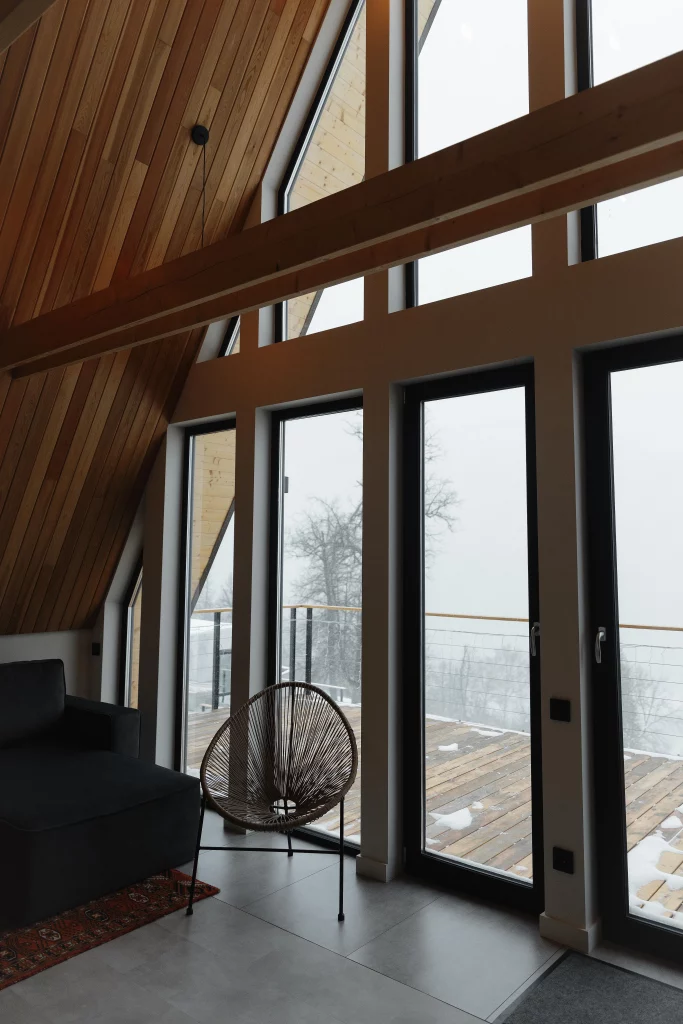
For me, the most successful element is the way the window arrangement follows the shape and rhythm of the architecture. The dark frames provide crisp definition against the neutral walls, while the large amount of glass brings the outside scenery deep into the room. The combination of wood overhead and expansive glazing also creates a strong balance between warmth and openness.
I would take particular inspiration from this design when working with a sloped or cabin-style interior. Instead of trying to hide unusual architectural proportions, I would emphasize them with clearly defined window frames and simple treatments, as shown here. Because the glazing is already visually powerful, the furniture can remain relatively understated and still make the room feel complete.
Classic Dining Room With Striped Roman Shades and Clerestory Glass
I see a bright dining room inside a wood-paneled space with a vaulted ceiling. A large crystal chandelier hangs above a round dining table, while several dark wooden chairs with woven backs and green upholstered seats surround it. Behind the table, multiple wood-framed windows are fitted with striped Roman shades, and a triangular clerestory window above them follows the shape of the vaulted architecture.
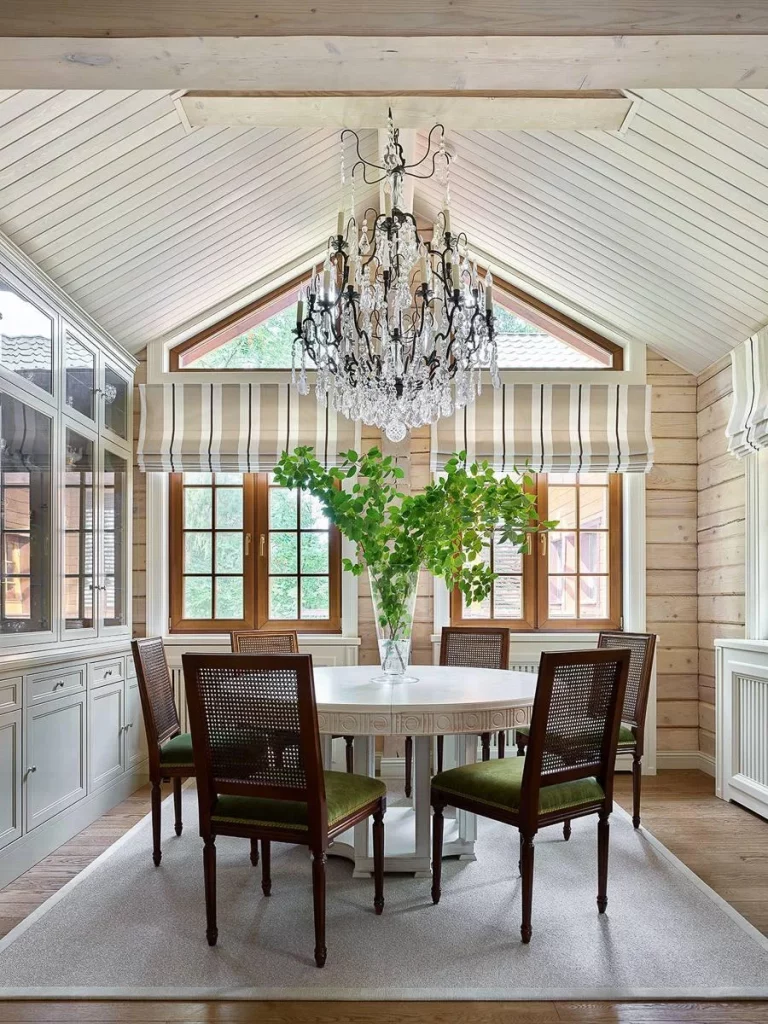
I like how the Roman shades introduce pattern without overwhelming the room. Their horizontal stripes contrast with the vertical window divisions and the angled lines of the ceiling, creating a layered but orderly appearance. The triangular upper window is also left visually prominent, allowing the unusual architectural shape to contribute to the overall design.
In my experience, patterned shades can be particularly effective when the rest of the room has a strong architectural identity but a controlled color palette. Here, the neutral stripes complement the pale wood while allowing the green chair upholstery and greenery on the table to provide richer accents. I would keep the pattern similarly restrained if recreating this look so the window shape remains easy to appreciate.
Dramatic Black Drapery Beside a Contemporary Staircase
I see a striking stairway with warm wood steps and dark metal railings positioned beside a window dressed with a combination of a pale Roman shade and heavy black curtain. The dark curtain hangs from a simple black rod and is gathered to one side, creating a dramatic vertical element. A large black vase with branches sits on the floor nearby, while the window brings daylight into an otherwise darker interior.
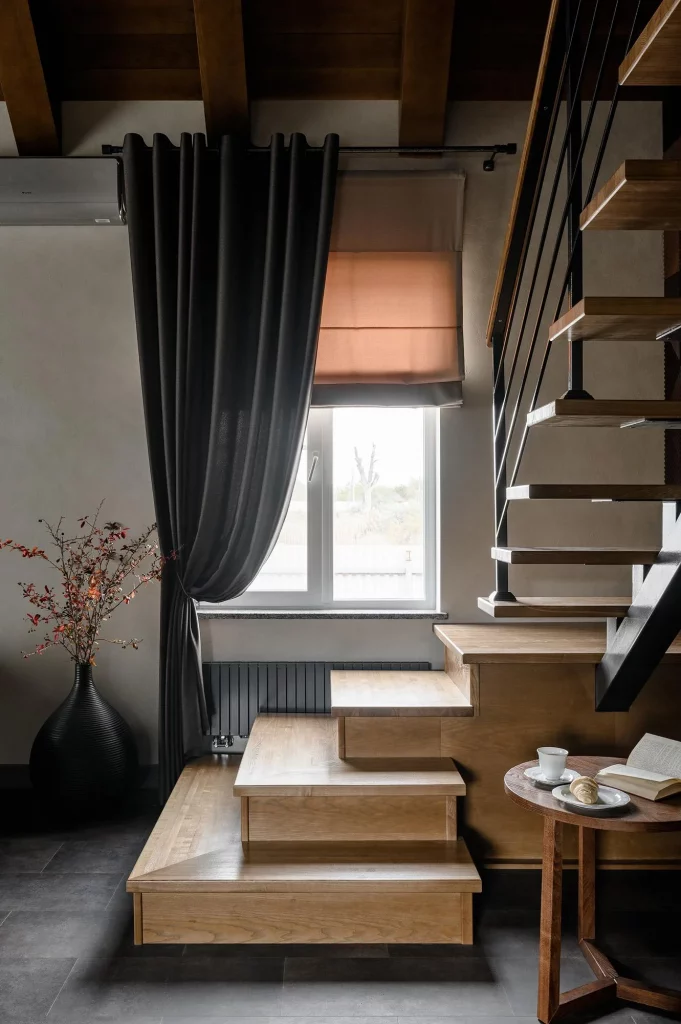
The contrast between the soft window shade and the heavy black drape is what catches my attention. The Roman shade provides a compact treatment directly over the glass, while the long curtain adds softness and visual weight beside the staircase. The arrangement also echoes the black railing and other dark details, helping the window treatment feel integrated rather than randomly added.
I would consider this type of layering when a window sits beside a strong architectural feature such as a staircase. A single curtain can create a sense of height and drama without requiring the entire wall to be covered. The image also reminds me that darker fabrics can work beautifully in smaller transitional spaces when they are balanced by natural daylight from the window.
Built-In Window Seat With a Tailored Gray Roman Shade
I see a calm, contemporary room built around a large white-framed window overlooking a city skyline. A softly gathered gray Roman shade sits above the glass, while the lower portion of the window remains unobstructed. The window is surrounded by pale wood cabinetry and open shelving, with books and simple decorative objects arranged around a broad built-in sill. Cushions turn the sill into a comfortable-looking window seat.
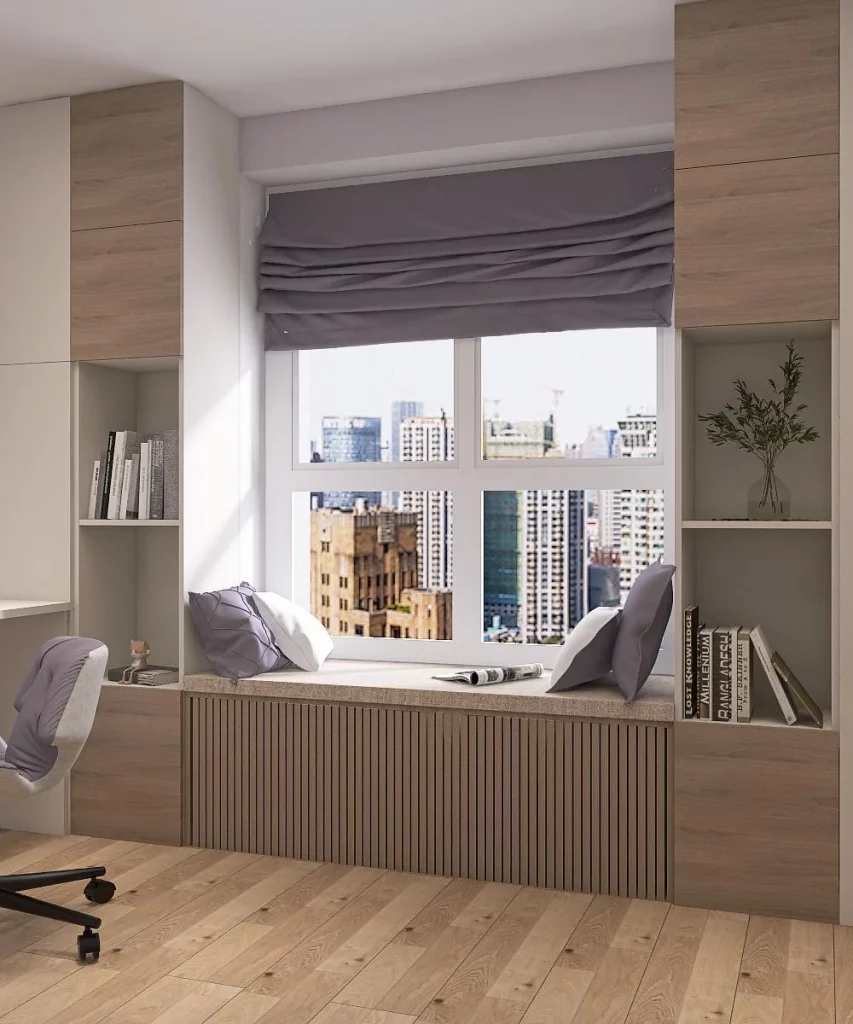
For me, this is one of the clearest examples of combining window design with useful built-in storage. The cabinetry frames the glass symmetrically, while the lower radiator-style panel and broad sill make the window area feel intentionally designed rather than simply fitted into an empty wall. The Roman shade adds a soft layer while taking up very little visual space.
I particularly like this idea for rooms where every part of the wall needs to serve a purpose. Built-in shelves can organize books and small objects, while the window seat creates another place to sit without requiring a separate chair. To achieve a similar effect, I would keep the cabinetry finish and shade color closely related, as the image does, so the entire window wall reads as one cohesive composition.
Elegant Bay Window With Layered Burgundy and Beige Curtains
I see a more traditional dining setting centered around a large bay window. Beige curtains are gathered around the central opening, while deep burgundy patterned drapes frame the outer sides. A round wooden table sits in the middle with upholstered dining chairs around it, and a crystal chandelier hangs above. The pale floor and ceiling create a light backdrop for the richer curtain colors.
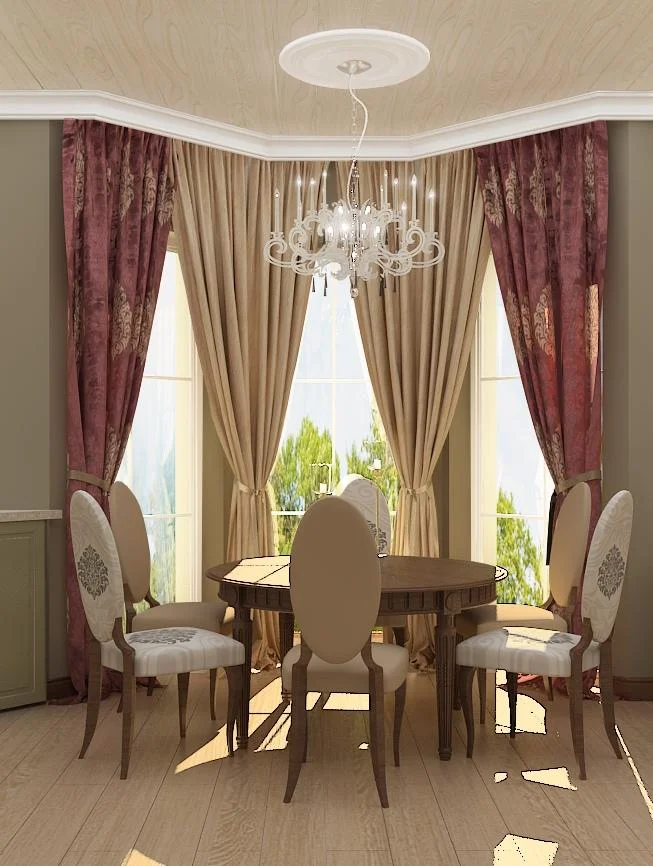
The layered treatment gives this window a formal, decorative character. I like how the beige inner curtains soften the strong daylight while the burgundy outer panels create a frame around the bay shape. The arrangement makes the window feel like a deliberate focal point of the dining room rather than simply a source of daylight.
Although this look is more ornate than some of the other examples, I think its basic principle remains useful for modern homes: use the architecture of the window to determine the curtain arrangement. In a bay window, separate layers can emphasize the depth and curves of the space. I would also make sure the fabric colors relate to other visible furnishings, as the burgundy here helps connect the curtains with the room’s traditional atmosphere.
Colorful Home Office With Coordinated Curtains and Roman Shade
I see a compact home office fitted neatly between built-in storage units. The central window is dressed with a pale Roman shade featuring a subtle striped appearance, while turquoise curtains frame the sides and gather toward the middle. A matching turquoise chair sits beneath the window at a white desk, with bookshelves and louvered cabinet doors surrounding the workspace.
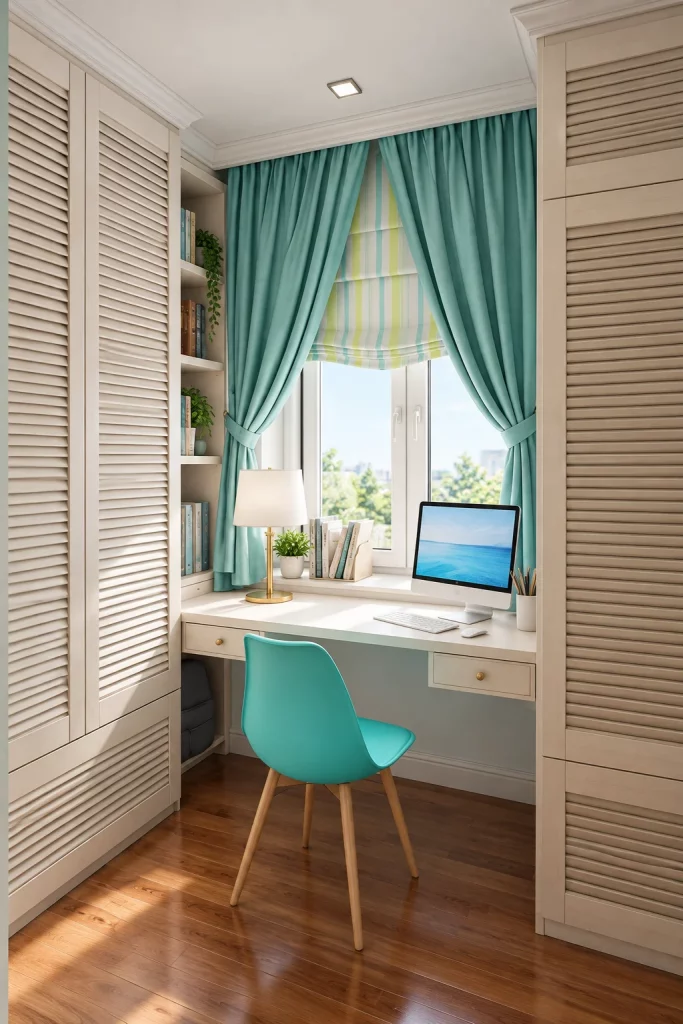
The coordination between the window treatment and the chair is particularly effective to me. The curtains introduce a strong color around the window, while the matching chair repeats that color at desk level and creates a visual connection across the room. At the same time, the Roman shade provides a softer layer directly over the glass without competing with the brighter curtains.
I would take this image as inspiration for anyone who wants a small workspace to feel personal without becoming cluttered. The built-in cabinetry uses the vertical space efficiently, leaving the window as the visual center of the desk area. In my view, repeating one accent color between the window treatment and furniture is a simple way to make a compact room feel intentionally styled.
Tailored Roman Shades Framing a Luxurious Window Seat
I immediately notice how beautifully the large bay-style window is framed by tailored taupe Roman shades with a distinctive scalloped lower edge and dark decorative trim. The window seat runs across the entire opening, creating a comfortable focal point beneath the glass, while soft pink and white cushions add a delicate contrast to the gray upholstery. Three hanging glass pendant lights emphasize the height of the space, and the dark trim around the shades echoes the darker details elsewhere in the room. I especially like how the natural view remains visible through the lower portion of the windows.
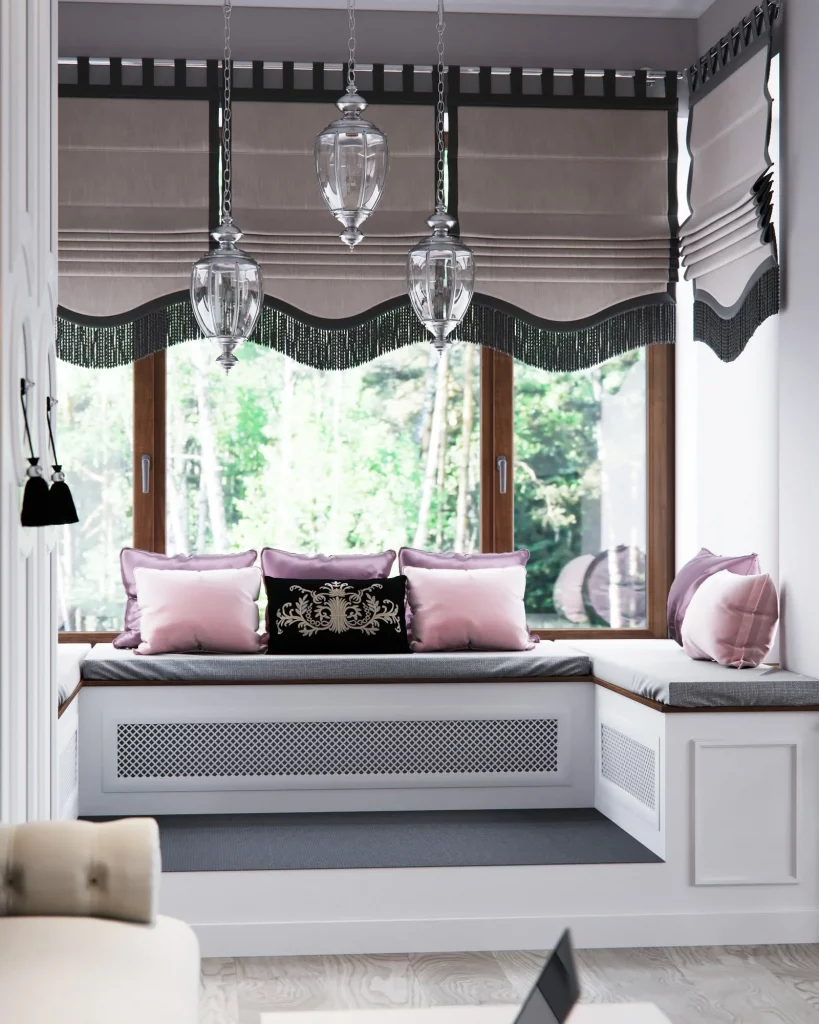
The window treatment works particularly well because it combines softness with structure. The Roman shades give the broad window a polished, symmetrical appearance while also offering a way to reduce the amount of daylight entering the room. The built-in seating makes practical use of the area beneath the windows, and the cushions transform it into a genuine lounging spot rather than leaving the window wall purely decorative. To me, the result feels both elegant and comfortable.
If I wanted to recreate this look, I would pay close attention to proportion. The shades need to relate to the width and height of the windows, while the decorative edging should connect visually with existing darker details rather than competing with them. I also think the built-in seat is an important part of the effect: when a window already has a deep sill or suitable niche, adding tailored cushions can turn an ordinary opening into one of the most inviting features in the room.
Bold Red Roman Shades and Crystal Sparkle in a Dining Space
This dining area takes a completely different approach, using vivid red Roman shades across a series of large windows. The shades introduce a rich block of color against the natural wood walls and ceiling, while two substantial crystal chandeliers add sparkle overhead. A white rectangular dining table sits centrally beneath them, surrounded by upholstered orange-red chairs, including several with colorful patterned backs. I love the way the windows, lighting, seating, and table all contribute to a lively, expressive atmosphere.
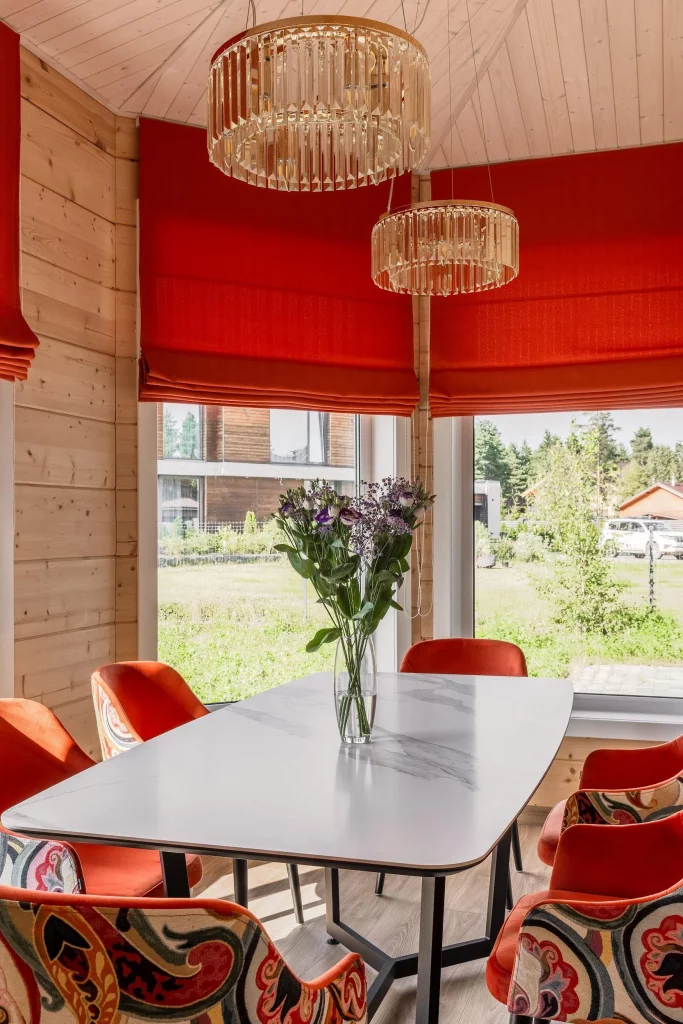
Here, the Roman shades are doing much more than filtering sunlight. Their saturated color becomes an architectural-looking band that visually anchors the upper part of the dining area. Because the table and surrounding surfaces are relatively light, the red treatment immediately establishes a strong focal point without requiring additional wall decoration. The large windows also keep the room connected to the bright outdoor setting, preventing the intense color from making the space feel closed in.
For me, this image is a reminder that window treatments can be the easiest way to introduce personality into a room. If I were recreating it, I would choose a shade color that already feels intentional alongside the furniture rather than treating the windows as an afterthought. The key is balance: a bold shade can work beautifully when the rest of the visible furnishings support the same color family without making every surface equally dramatic.
Playful Layered Curtains for a Colorful Family Space
The third room feels much more playful, with golden-yellow curtains surrounding a central window and brightly patterned side panels covered in small multicolored dots. The window itself looks light and understated, while a patterned fabric treatment creates a decorative frame around it. A built-in shelving unit beneath the window is filled with books and toys, and greenery stretches across the top. A pale green sofa, colorful cushions, and a chair with a multicolored lower border reinforce the cheerful atmosphere.
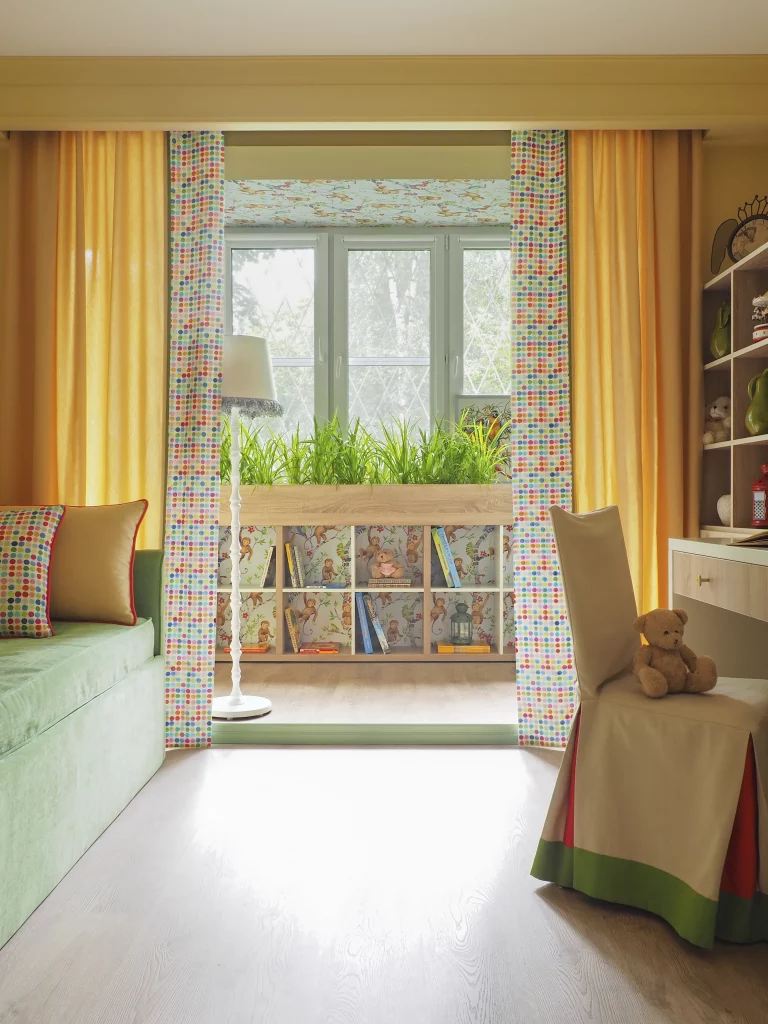
I think the strongest feature here is the way the curtains help visually connect the window to the rest of the room. The colorful dotted panels echo the patterned cushions and other playful details, while the yellow curtains provide a warm surrounding frame. The window therefore feels like part of the room’s overall composition rather than an isolated architectural opening. At the same time, the fabric can be drawn when privacy or softer light is needed.
This is the kind of design I would consider especially useful when decorating a family-oriented space because the window treatment itself can contribute to the room’s personality. I would keep the surrounding furniture relatively simple if using a similarly expressive fabric, allowing the curtain pattern to remain easy to appreciate. I also like the idea of coordinating the window textiles with existing cushions or other visible fabrics, as this creates cohesion without requiring everything to match exactly.
Floor-to-Ceiling Sheer Curtains for a Light-Filled Interior
This interior takes a much quieter approach, with tall white sheer curtains extending almost from ceiling to floor around a narrow black-framed glass door or window. The treatment allows daylight to spread through the room while maintaining a soft, elegant appearance. A pale wood floor, simple cabinetry, a dark tabletop, and a patterned warm-toned rug create a restrained backdrop.
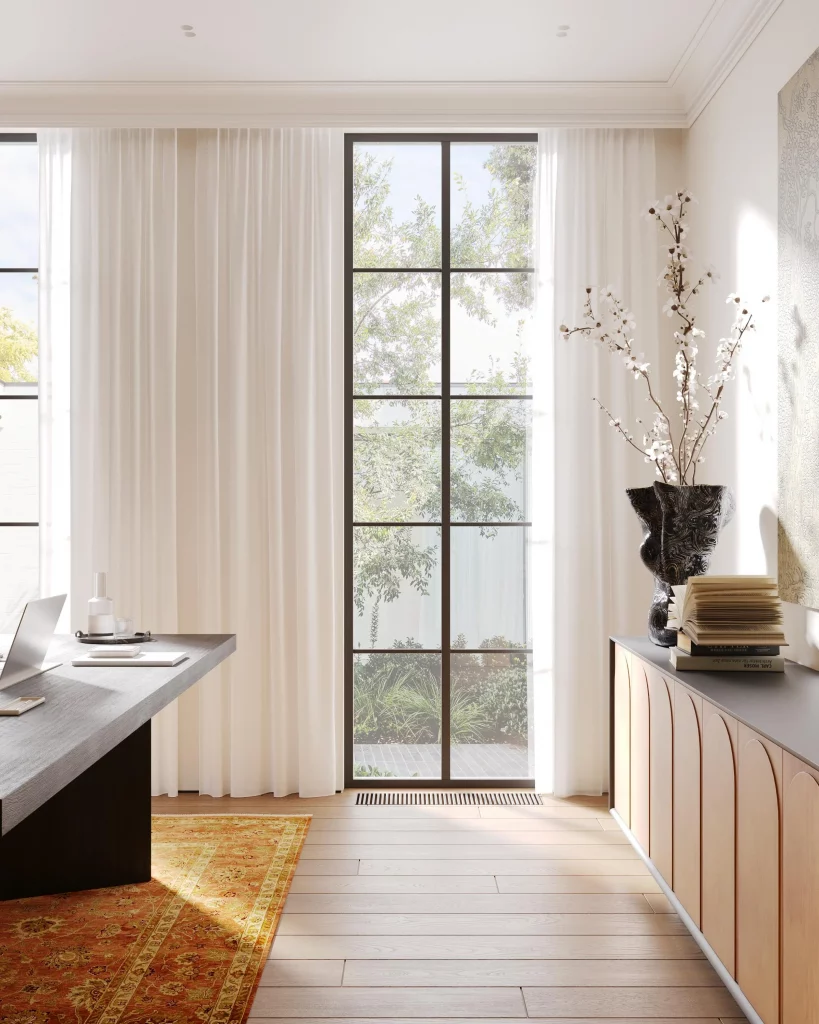
What I find especially effective is the vertical effect created by the full-height curtains. Because the fabric extends upward toward the ceiling, the window area feels taller and more substantial without visually becoming heavy. The sheerness is also important: instead of blocking the daylight and garden view, the curtains diffuse the brightness and soften the strong lines of the black window frame.
I would use this approach when the goal is to make a room feel calm and spacious. Hanging curtains high and allowing them to fall generously toward the floor can create a more finished appearance than treating the glass opening as an isolated rectangle. In a bright room like this one, I would also choose a fabric with enough transparency to preserve the natural light, because that light is one of the most attractive features visible in the photograph.
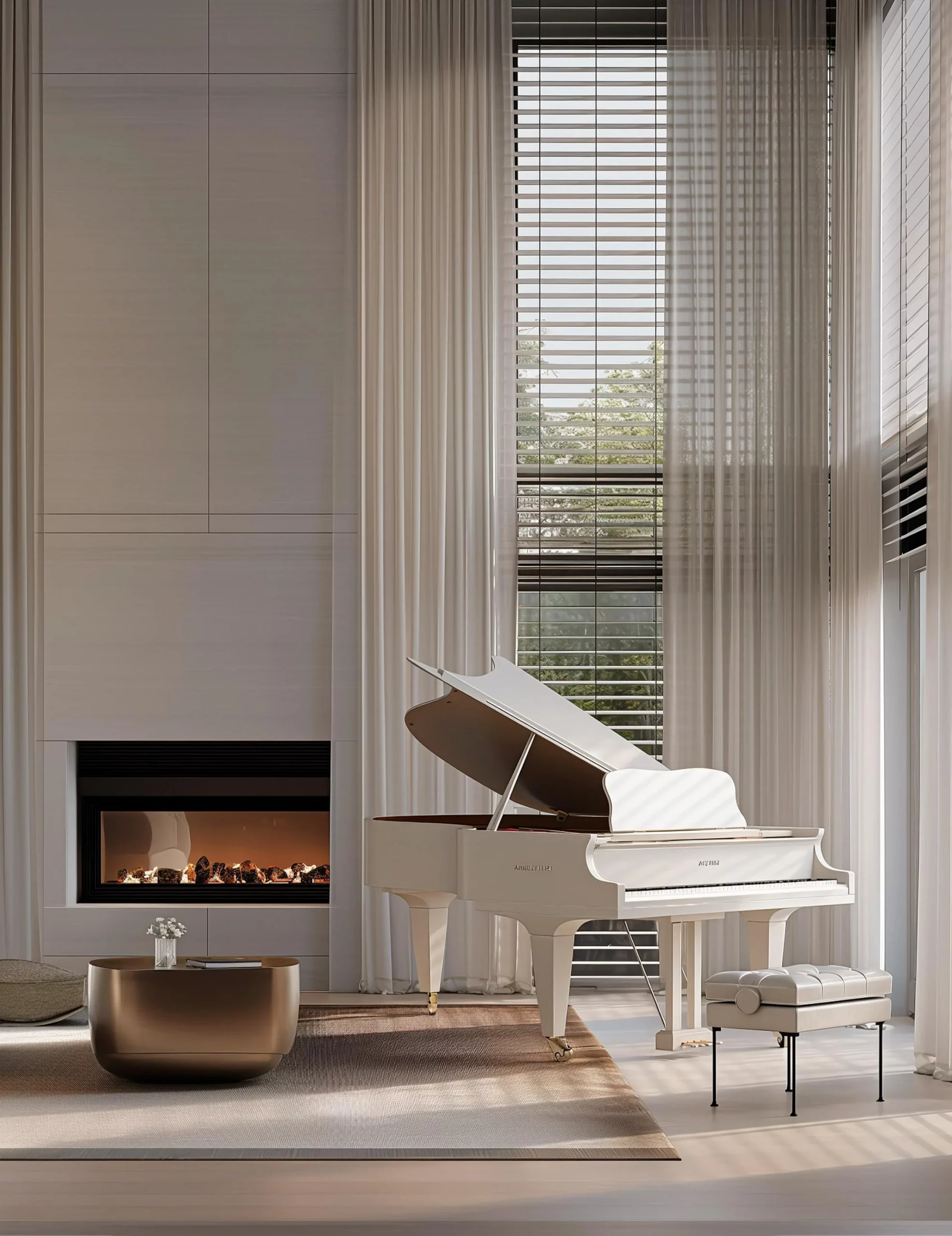
Layered Blinds and Sheers Around a White Grand Piano
The fifth image shows an elegant living room centered around a white grand piano positioned directly beside a tall window. Horizontal blinds cover the glass, while long sheer curtains soften both sides of the opening. The fireplace on the opposite wall, white architectural surfaces, neutral rug, low rounded coffee table, and upholstered piano bench all contribute to a sophisticated monochromatic setting. Sunlight enters through the blinds and creates delicate horizontal shadows across the floor and furnishings.
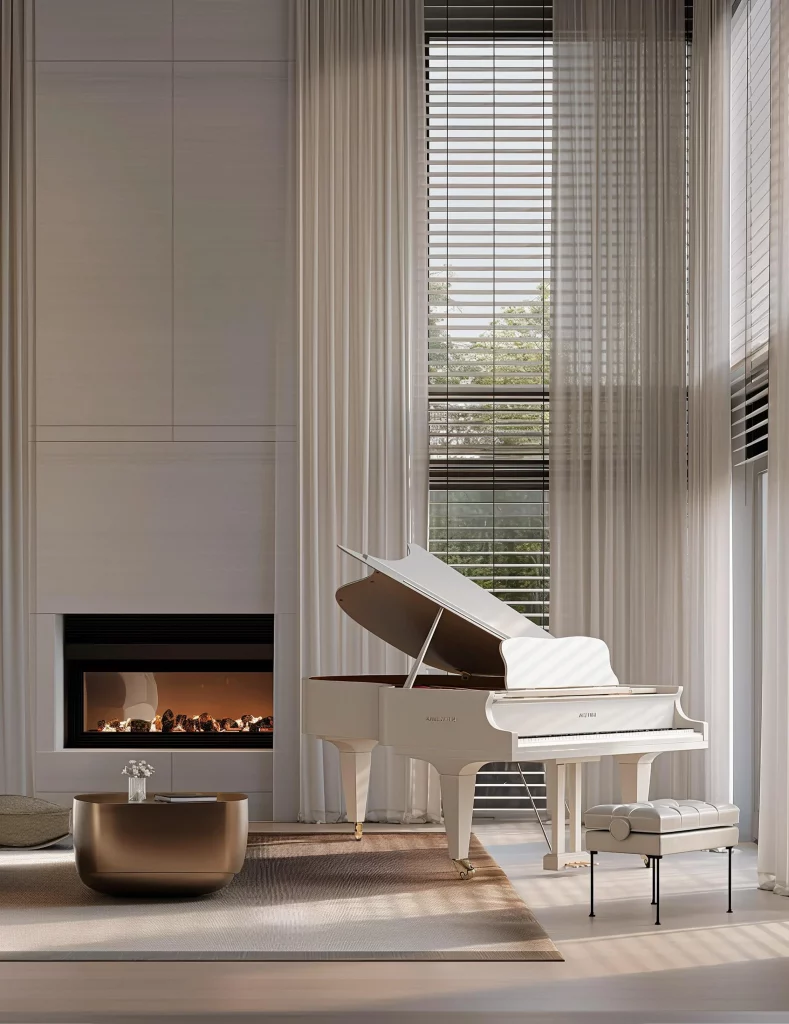
I particularly like the layered window treatment because each element has a distinct visual role. The blinds provide more precise control over light and privacy, while the sheer curtains soften the strong geometry of the tall window. Together they prevent the large glass area from feeling too stark, yet they preserve the room’s clean, refined character. The placement of the piano also makes the window feel like part of a carefully composed music and living area.
When I look at a room like this, I think about how important light control becomes in spaces with large windows and pale furnishings. Too much direct sunlight can make an otherwise serene interior feel harsh, whereas adjustable blinds allow the atmosphere to change throughout the day. I would also keep the curtain fabric visually light in a room with a grand piano, because introducing a heavy treatment could compete with the instrument’s elegant silhouette.
Warm Roman Shades in a Sophisticated Dining Nook
This compact dining area demonstrates how Roman shades can work beautifully in a contemporary apartment setting. Two tall corner windows are dressed in warm taupe shades that stop well above the lower portion of the glass, leaving the outside view open. A round white table stands between three upholstered chairs with curved backs and slim golden-toned legs. The dark wood floor, white textured rug, dark media console, and simple black wall accents create a restrained palette with plenty of warmth.
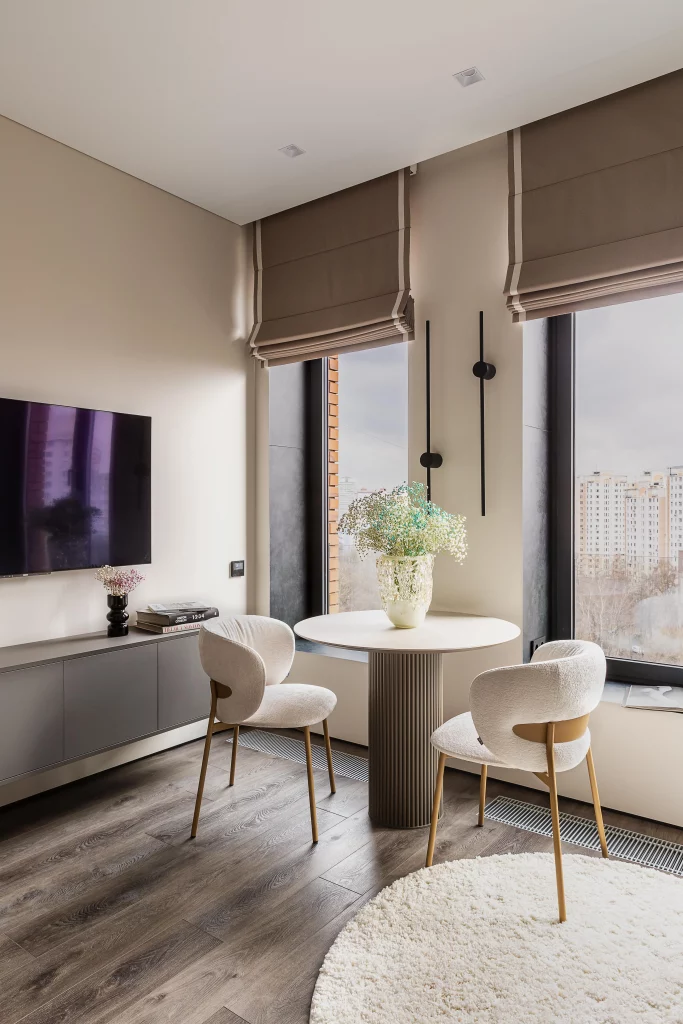
The Roman shades are especially successful here because their neutral color bridges the pale walls and darker flooring. Their clean horizontal folds introduce texture without overwhelming the relatively small dining zone. I also like the way the shades frame the upper sections of the windows while leaving the lower glass unobstructed, so the room still receives daylight and retains the city view.
For me, this is a useful example of choosing window coverings according to both scale and purpose. In a smaller dining area, a bulky treatment could make the space feel crowded, while these compact shades maintain a neat profile. I would also coordinate the shade color with one of the room’s existing neutral tones rather than trying to make the window the dominant feature. The simplicity of the treatment allows the sculptural table base and curved chairs to remain visible focal points.
Minimal Roller Shades for a Relaxed City Window Seat
The seventh image focuses on a tall double window with simple dark roller shades covering the upper sections. Beneath the glass is a wooden window seat topped with a fluffy white covering, a dark cushion, and a brightly patterned multicolored pillow. A blue cup and a small open book or magazine sit nearby, making the space feel genuinely usable. Outside, the window provides an expansive city view beneath a bright blue sky, while a clean-lined white cabinet occupies the left side of the room.
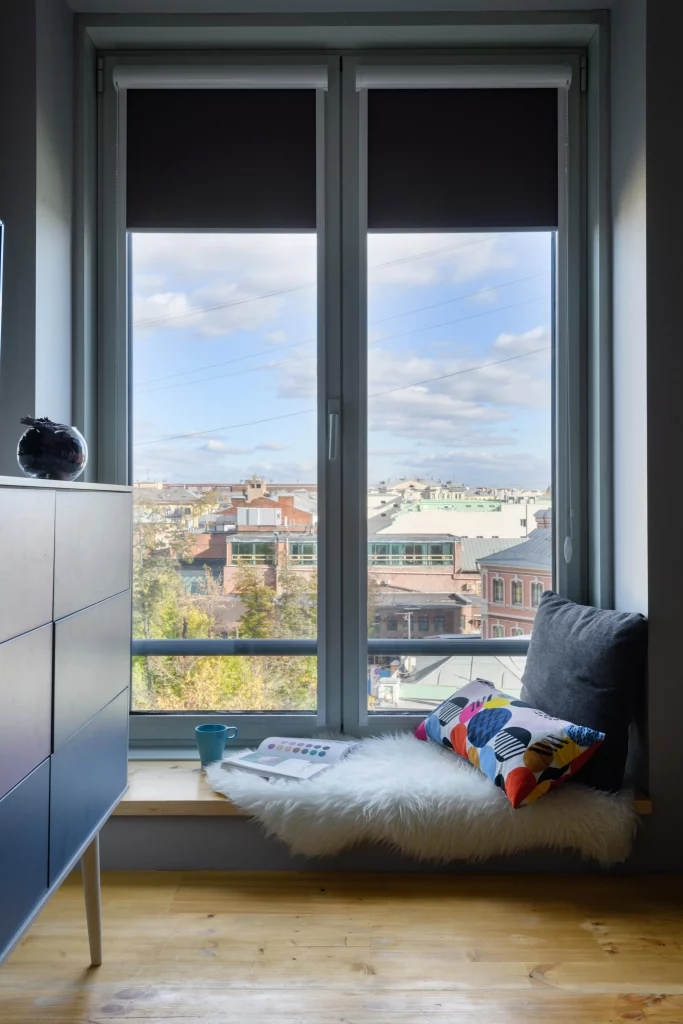
I like how restrained the window treatment is in comparison with the inviting window seat. The dark roller shades provide a strong contrast against the pale window frame and walls, but they do not cover the entire glass area. This leaves the view and daylight as the main attraction. The simplicity also makes sense for a space designed for reading or relaxing, where complicated curtains could interfere with the clean, practical character of the nook.
If I were creating a similar reading corner, I would let the view guide the treatment choice. When a window already offers something visually interesting outside, I would avoid using an overly decorative covering that competes with it. A straightforward roller shade can provide privacy and light control while allowing the seating, cushions, and view to become the more personal elements of the space.
Natural Woven Roman Shades in a Bright Sunroom
This sun-filled room combines large windows with natural-looking woven Roman shades in a soft beige tone. One shade covers a broad section of glass while another treatment is visible at the side, creating a layered look across the window wall. An orange lounge chair and a sculptural white chair sit beside a small dark coffee table, while green plants bring additional natural texture into the space. The pale floor and abundant glazing make the room feel exceptionally open and bright.
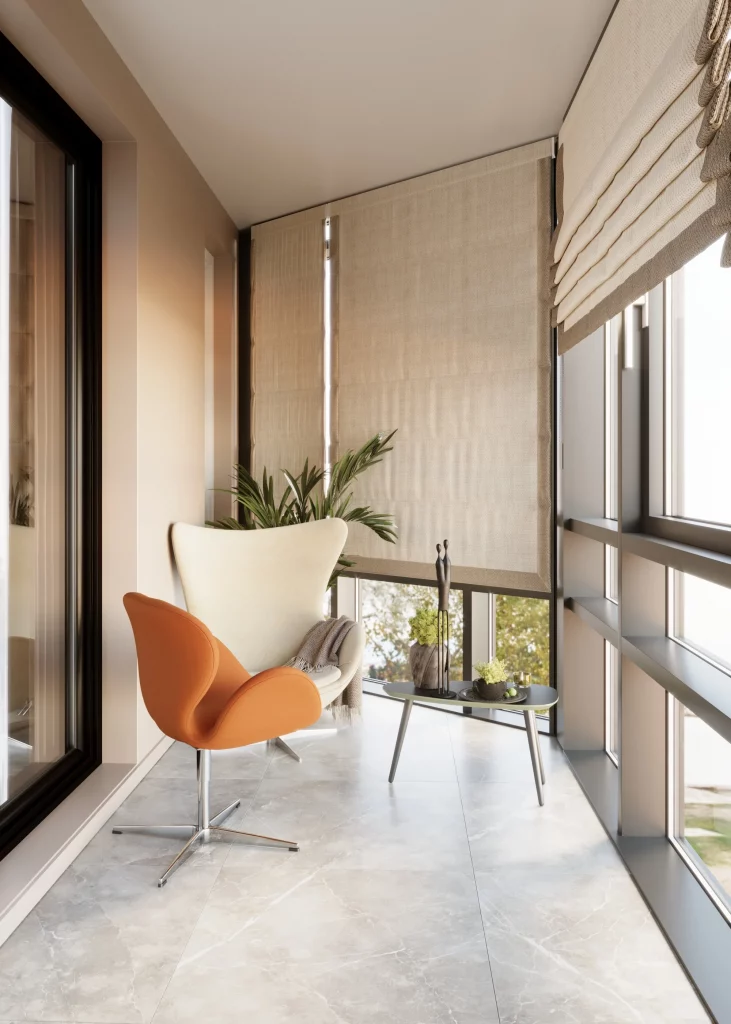
The shades work because they introduce warmth without interrupting the clean architecture of the windows. Their textured appearance contrasts gently with the smooth pale floor and glass, while the neutral color complements the natural greenery. I also like how the shades can be lowered to temper the strong daylight without making the room feel dark or enclosed.
This is an approach I would consider when I want window coverings to feel connected to nature. A softly textured neutral fabric can bring enough visual interest to a minimalist space without introducing another strong color. I would keep the rest of the treatment simple and make sure the shades sit neatly within the window proportions. The orange chair shown here demonstrates how a single stronger accent can provide personality while the window treatment remains understated.
Black Roller Shades Bringing Definition to a Modern Living Room
The ninth image shows a contemporary living room with several tall windows dressed in dark roller shades. The shades create crisp rectangular shapes against the light walls, while a large pale sectional sofa occupies the foreground. A tall leafy plant stands beside the window area, and a modern black linear chandelier hangs above the room. The dark wood floor adds another strong element, creating a balanced contrast between the pale walls and furniture and the darker architectural details.
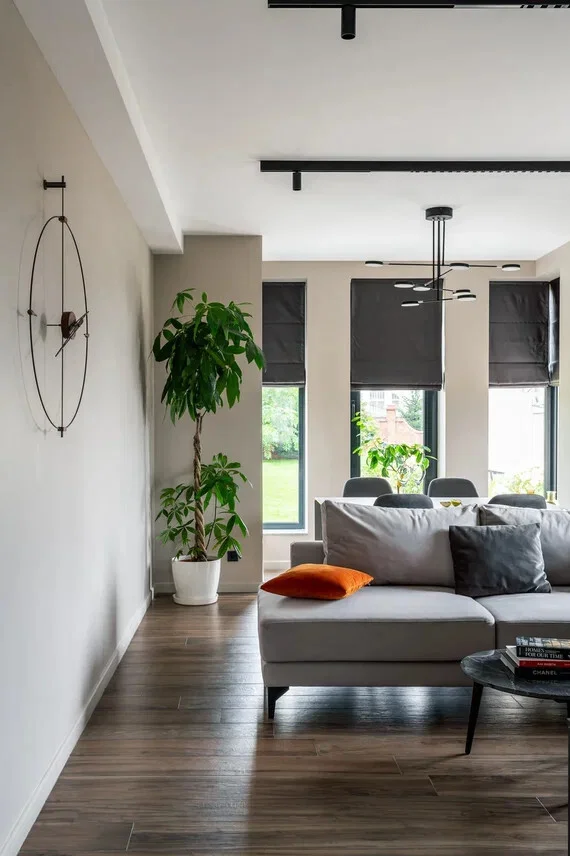
I find the dark shades particularly effective because they visually connect with the other black details in the room. Instead of looking disconnected, the windows become part of the broader palette established by the lighting and darker furnishings. At the same time, the shades have a very clean silhouette, which suits the contemporary furniture and uncomplicated room arrangement.
In a space like this, I would use roller shades when I want functionality without adding visual bulk. They can provide privacy and manage incoming light while maintaining a tidy appearance when raised. I also like the way the plants soften the otherwise straight lines of the shades and furniture. That contrast between crisp geometry and organic greenery is an easy principle to borrow without changing the room’s overall modern character.
Soft White Roman Shade Above a Dedicated Window Desk
The final image presents a peaceful work or reading corner built directly beside a large window. A white textured Roman shade with a subtle raised pattern covers the upper portion of the glass, while a long taupe curtain hangs along the side. A curved white desk follows the window wall, with an open book resting on its surface, and a pale upholstered chair with dark nailhead trim is positioned in front of it. Built-in shelving occupies the adjacent wall, and a brass-toned lamp adds a warm metallic detail.
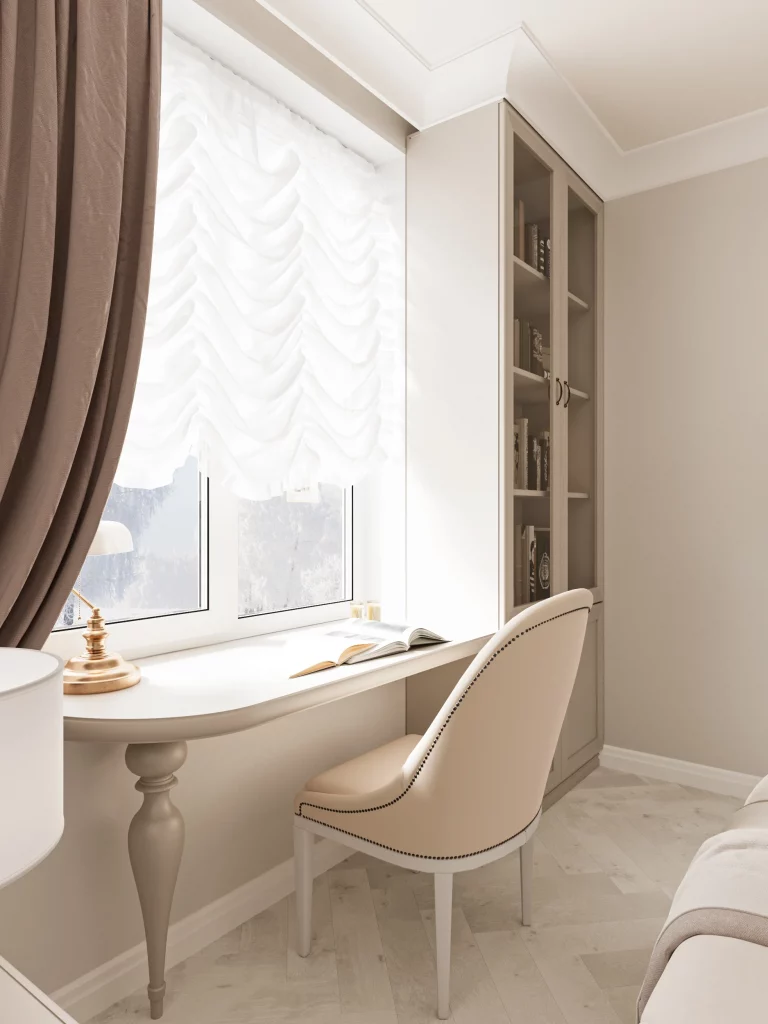
What stands out to me is the combination of privacy, softness, and usable workspace. The Roman shade filters the bright light coming through the window while preserving a luminous atmosphere, and the side curtain adds another layer of texture and control. The desk makes excellent use of the window wall, turning the available natural light into an asset for reading or working. The built-in shelving beside it provides a practical place for books and other items while maintaining the room’s streamlined appearance.
I would take inspiration from this arrangement whenever a window area feels underused. Rather than treating the opening only as a source of daylight, I would consider whether a desk or other functional surface could fit naturally along the wall. The important detail is to preserve comfortable access to the window and choose a treatment that can be adjusted easily. Here, the soft neutral palette and coordinated fabrics keep the work area feeling calm instead of overly office-like.
Modern window design is all about finding the right balance between style, natural light, privacy, and everyday comfort. From dramatic curtains and elegant Roman shades to colorful patterns and striking window frames, these ideas show just how much personality a window can bring to a home. I hope these interiors have inspired you to look at your own windows in a new way and find a treatment that complements your space. Which window design was your favorite? Leave a comment and share the idea you would love to try in your home.