
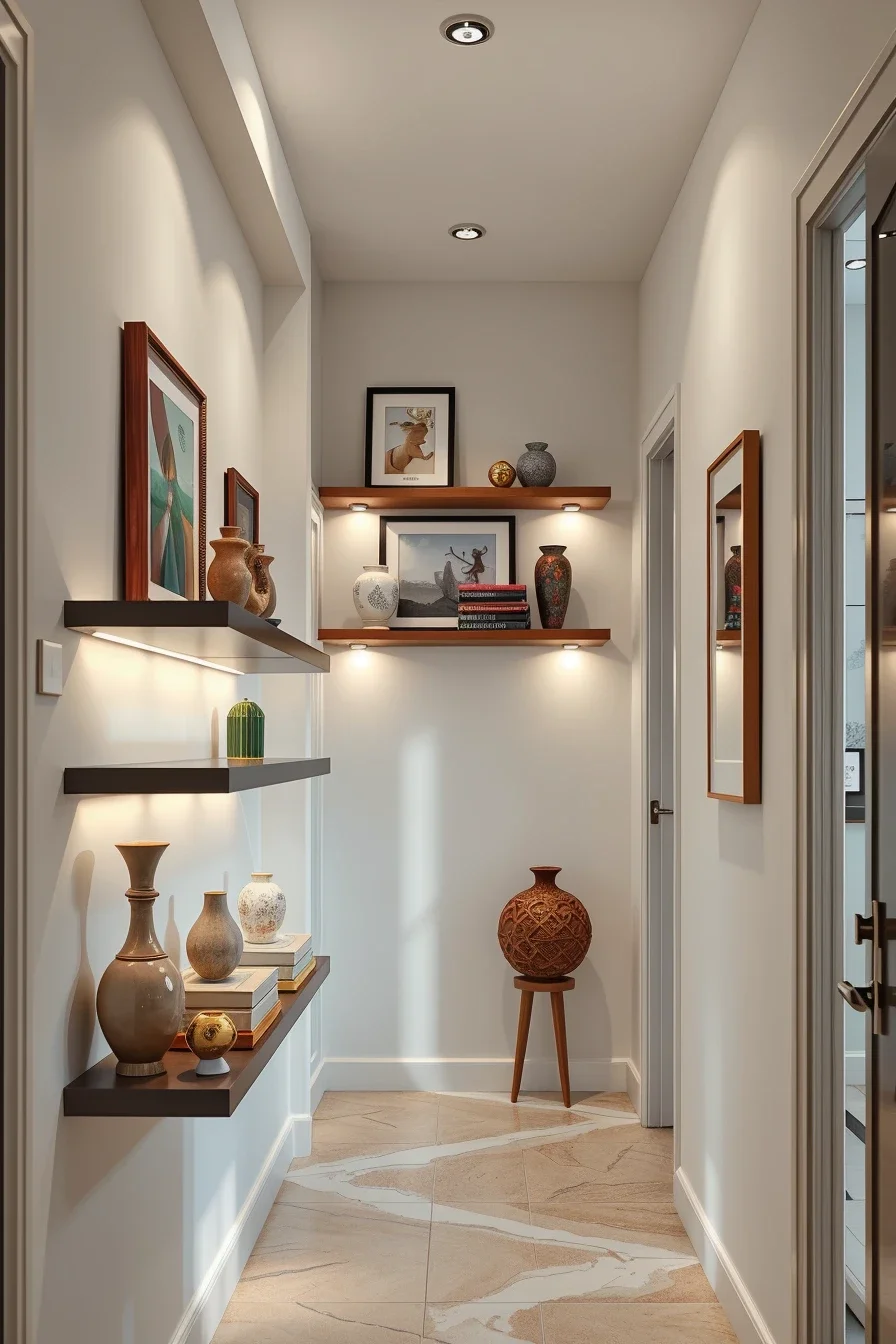
A narrow hallway may seem challenging to decorate, but with the right design choices, it can become one of the most stylish spaces in your home. Thoughtful decor, artistic accents, and creative layouts can visually expand even the slimmest corridor while adding personality and charm. From sculptural furniture and statement lighting to gallery walls and unique textures, there are countless ways to transform a narrow hallway into a stunning focal point. The key is to balance functionality with aesthetics, ensuring the space feels open, inviting, and visually interesting. Whether you prefer modern minimalism or bold artistic details, the right inspiration can completely redefine your hallway. These narrow hallway decorating ideas will help you create a beautiful, memorable passage that makes a lasting first impression.
Sculptural Console Tables For Narrow Hallways
A sculptural console table can instantly elevate a narrow hallway while preserving valuable floor space. I often recommend selecting a slim-profile piece with curved lines, asymmetrical forms, or artistic bases because it creates visual interest without overwhelming the passage. In narrow spaces, every furnishing should be both practical and decorative, and sculptural consoles achieve this balance beautifully. They also establish a welcoming focal point immediately upon entering the home.
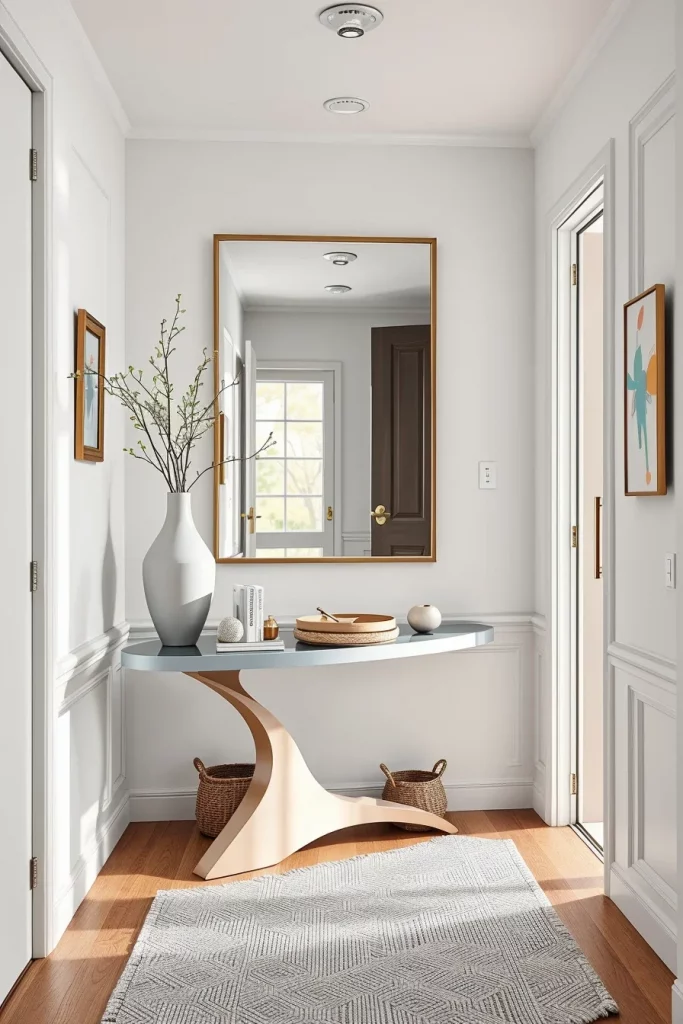
When designing this area, I like to pair the console with a decorative tray for keys, a ceramic vase, and a small stack of design books. A wall-mounted mirror above the table enhances light and visually widens the corridor. Choosing a floating or open-base console helps maintain an airy appearance, making the hallway feel larger than it actually is.
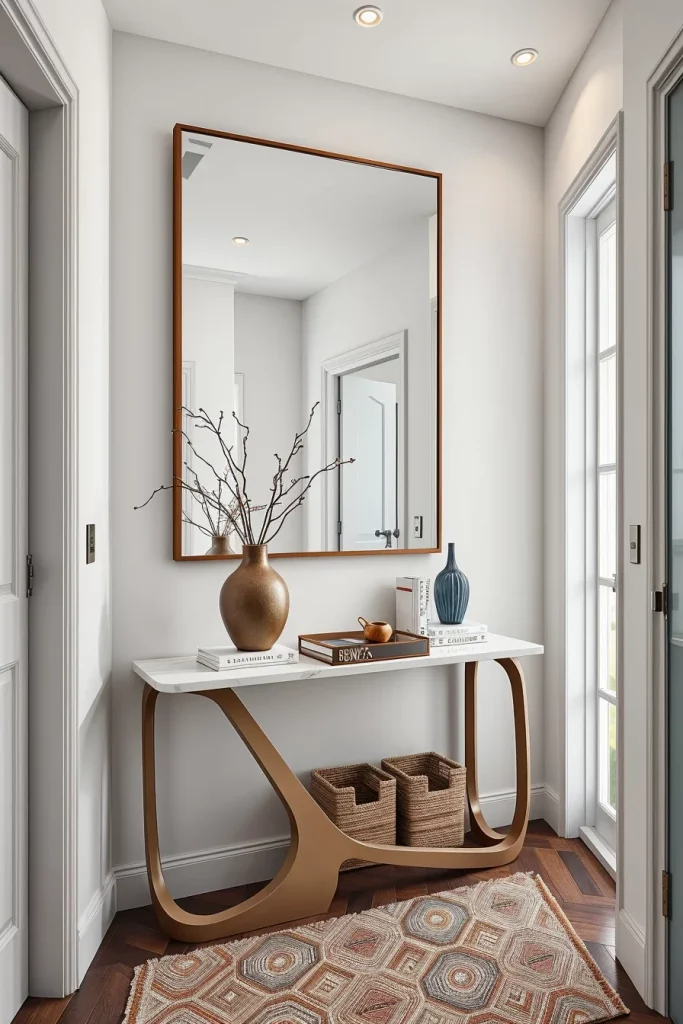
Personally, I have found that sculptural furniture works especially well in minimalist interiors because it introduces personality without adding clutter. Interior designers frequently featured in Architectural Digest recommend investing in one standout piece rather than filling a narrow hallway with multiple small accessories.
To complete this arrangement, I would add a textured runner rug and concealed storage baskets beneath the console if additional organization is needed. These elements improve functionality while maintaining the sophisticated aesthetic.
Statement Mirrors That Expand A Narrow Hallway Visually
Statement mirrors remain one of my favorite narrow hallway decorating ideas inspiration because they solve two common challenges at once: lack of light and limited visual width. Oversized mirrors reflect natural and artificial light throughout the corridor, instantly creating the illusion of a more spacious environment.
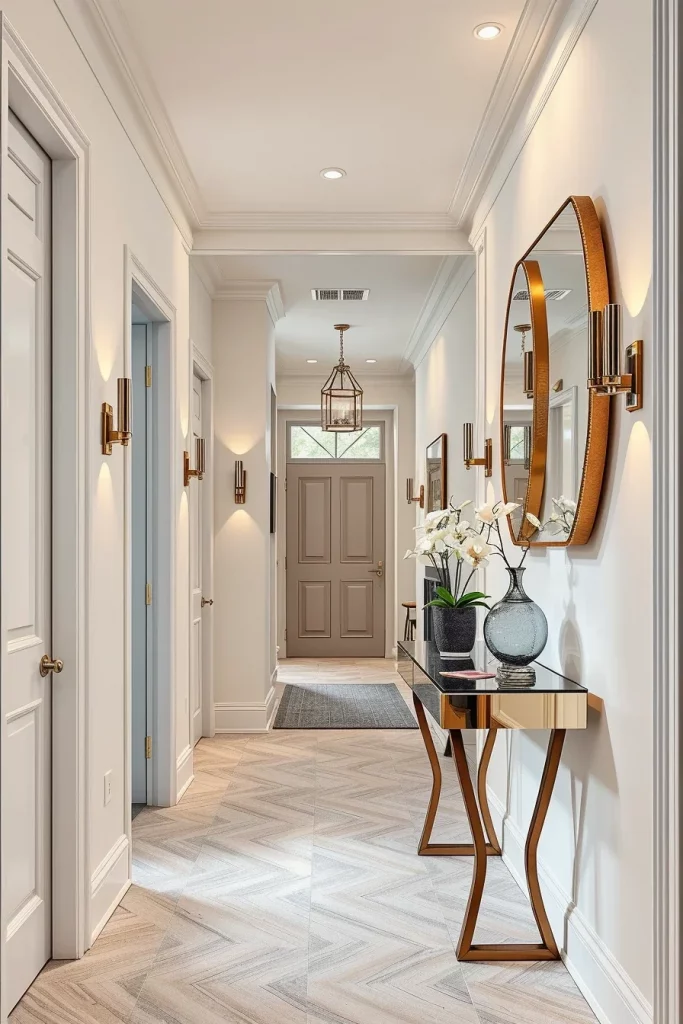
I usually recommend mirrors with distinctive frames, such as arched silhouettes, sculptural metal edging, or geometric designs. Positioning the mirror opposite a light source maximizes brightness. A large mirror paired with subtle wall lighting creates depth and gives even the narrowest hallway an inviting atmosphere.
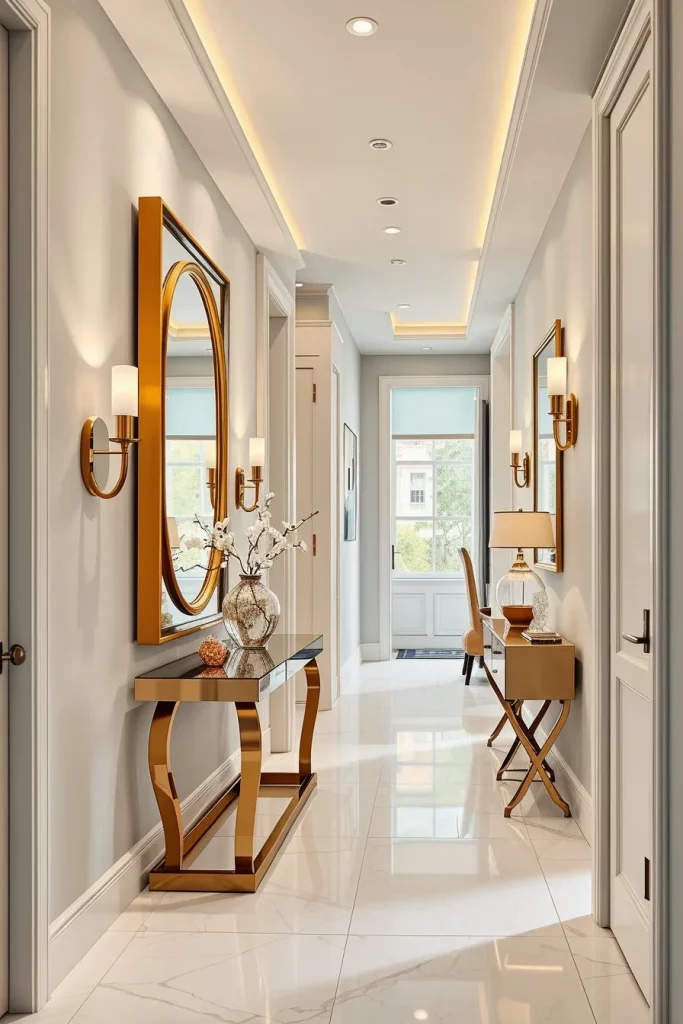
In my experience, oversized mirrors often eliminate the need for excessive wall décor. According to designers featured in House Beautiful, a single dramatic mirror can serve as artwork while improving functionality, making it one of the smartest investments for small transitional spaces.
For additional impact, I suggest incorporating reflective accents nearby, such as metallic accessories or glass décor objects, to amplify light throughout the hallway.
Artistic Wall Panel Designs For Long And Narrow Hallways
Decorative wall panels can completely transform a long hallway by adding architectural character and texture. I often use paneling to break up lengthy walls and create a sense of rhythm throughout the space. Geometric, fluted, or three-dimensional panel designs introduce an unmistakably artistic quality while maintaining a refined appearance.
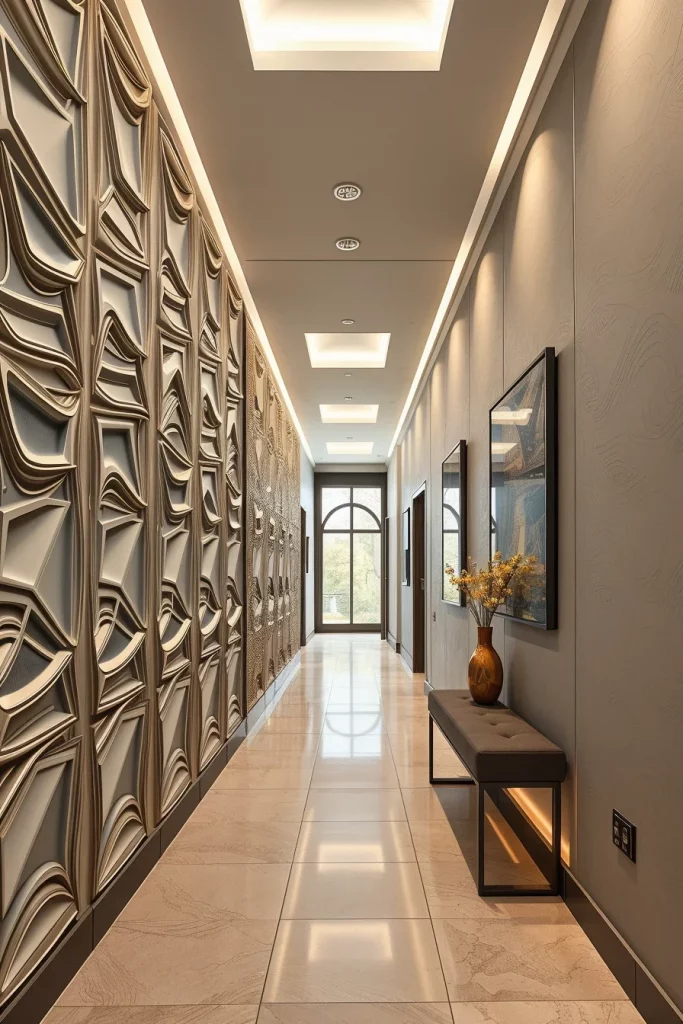
For furniture and décor, I prefer keeping the remaining elements simple so the wall treatment remains the focal point. Slim benches, understated lighting, and carefully selected accessories complement intricate panel designs without competing visually. Neutral color palettes allow shadows and textures to emphasize the dimensional quality of the panels.
Personally, I have noticed that wall paneling makes narrow corridors feel intentionally designed rather than simply functional. Many interior experts featured by Elle Decor recommend using architectural detailing in transitional spaces because it adds lasting sophistication.
If the hallway lacks natural light, integrated LED strips positioned along the panels can highlight their texture and create a dramatic evening ambiance.
Curved Furniture Pieces For Softening A Narrow Hallway
Straight lines dominate many hallways, which can sometimes make the space feel rigid and confined. I like incorporating curved furniture because rounded forms soften the architecture and encourage a smoother visual flow. Even a narrow corridor benefits from gentle silhouettes that reduce the feeling of confinement.
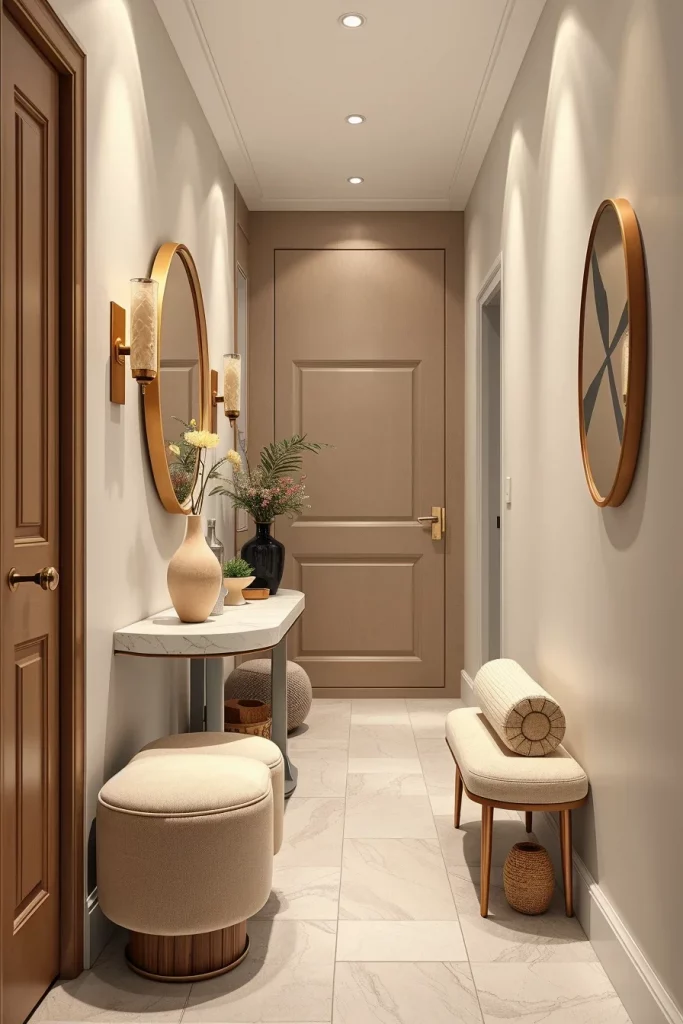
A curved bench, rounded-edge console, or circular accent table introduces softness while remaining practical. I often pair these furnishings with round mirrors or organically shaped decorative accessories to reinforce the cohesive aesthetic. Upholstered seating in soft fabrics also enhances comfort near the entryway.
From my perspective, curved pieces create a more welcoming atmosphere. Designers across numerous contemporary interiors have increasingly embraced organic forms because they make spaces feel more relaxed and approachable.
To further enhance this concept, I would consider adding softly rounded lighting fixtures or an arched doorway treatment if the architecture permits.
Floating Shelves Styled As Gallery Displays
Floating shelves offer storage without sacrificing precious floor space, making them ideal for narrow hallways. I frequently recommend styling these shelves as curated gallery displays featuring framed artwork, ceramics, books, and personal objects. This approach adds character while preserving openness.
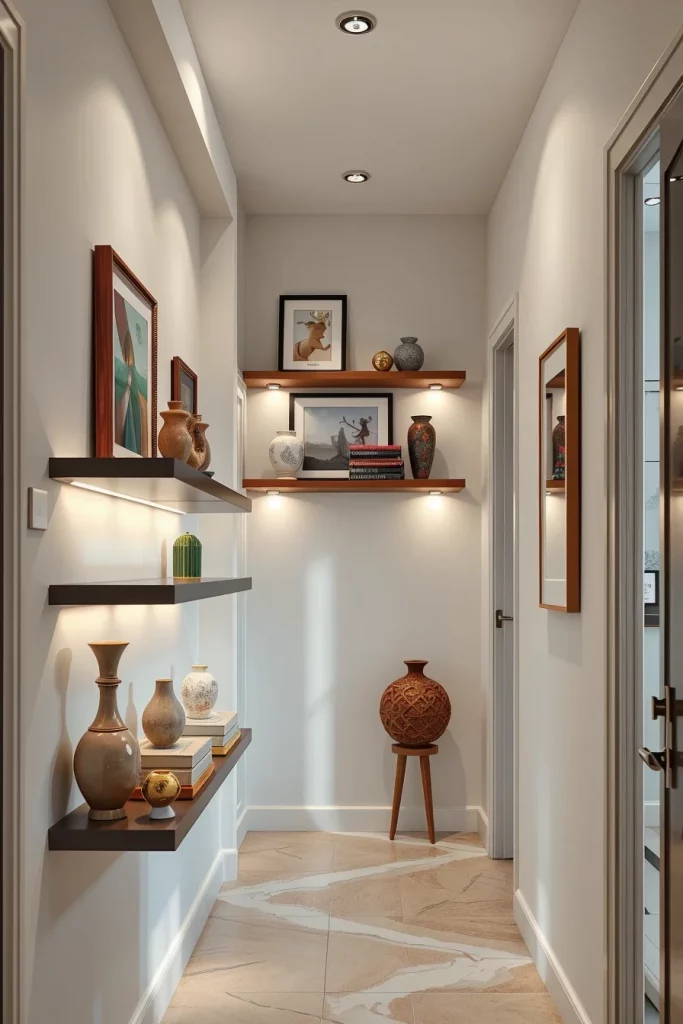
The shelves themselves should remain relatively shallow to maintain comfortable circulation. I prefer arranging décor in varying heights to create visual movement. Small sculptures, monochromatic artwork, and decorative boxes help establish a carefully edited appearance rather than a cluttered display.
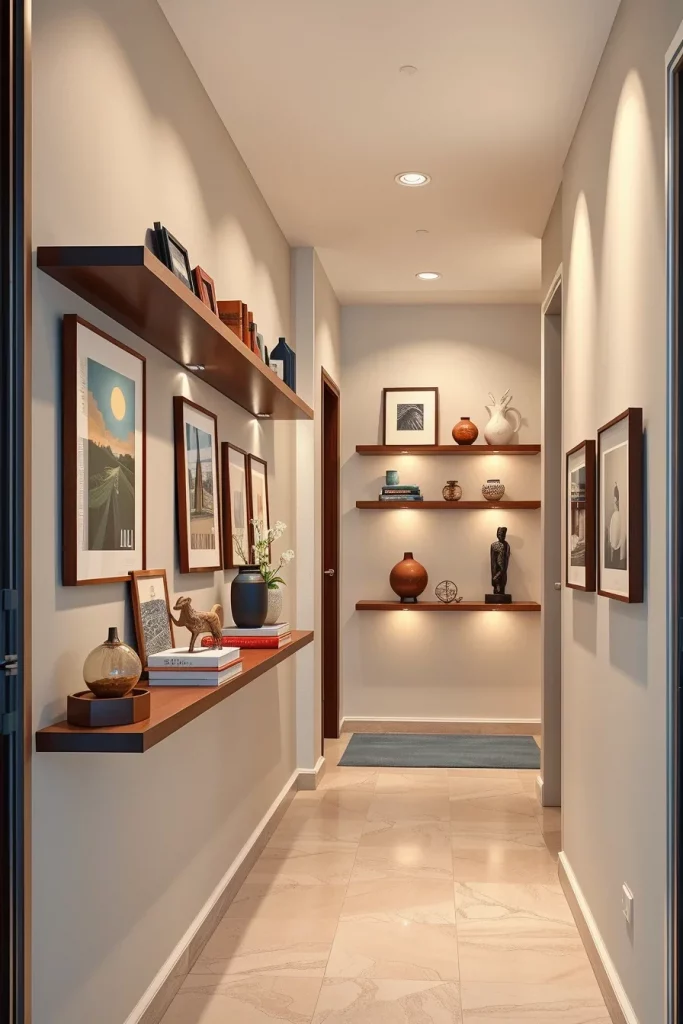
In my own projects, I have found that rotating displayed items seasonally keeps the hallway feeling fresh and engaging. Better Homes & Gardens often highlights the importance of editing decorative collections so that shelves remain visually balanced.
What many hallways still need is layered lighting. Installing picture lights or discreet LED strips above floating shelves can dramatically enhance both functionality and ambiance.
Creative Lighting Fixtures That Transform A Hallway
Lighting can completely redefine how a narrow hallway looks and feels. I often consider lighting to be one of the most powerful creative tools in hallway design because it influences mood, highlights architectural features, and visually enlarges the space. Instead of relying solely on recessed ceiling lights, I prefer introducing statement fixtures that turn an ordinary corridor into a memorable experience.
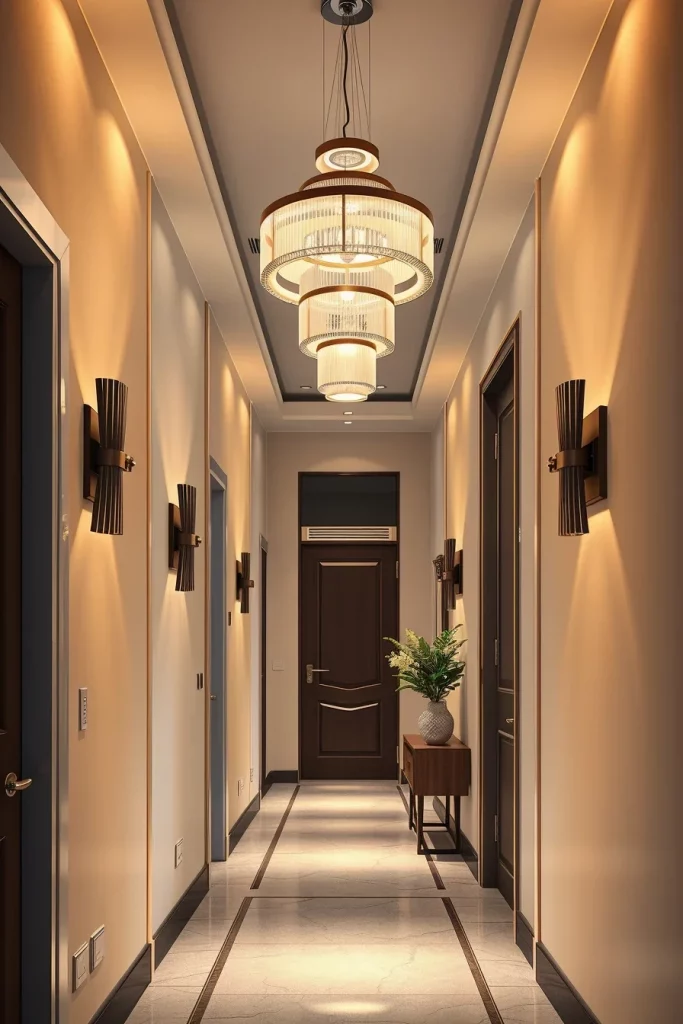
I usually combine several lighting sources to create depth. Sculptural pendants, linear chandeliers, or clustered glass fixtures add personality while ensuring adequate illumination. Wall sconces placed at eye level provide ambient lighting and eliminate harsh shadows. Dimmable fixtures are particularly useful because they allow homeowners to adjust the atmosphere depending on the time of day.
From my experience, layered lighting always makes narrow spaces feel more sophisticated. Designers frequently featured in Veranda magazine suggest using decorative lighting as functional art, especially in transitional spaces that are often overlooked. I have found this advice extremely effective in long hallways.
To complete this design, I would add warm LED bulbs with a color temperature between 2700K and 3000K to create a welcoming ambiance and enhance the overall comfort of the hallway.
Oversized Artwork For A Dramatic Hallway Entrance
Oversized artwork introduces instant impact and gives a narrow hallway a curated, gallery-like atmosphere. I often recommend choosing one large-scale piece rather than multiple smaller frames because a single statement artwork creates visual clarity and prevents the walls from feeling cluttered.
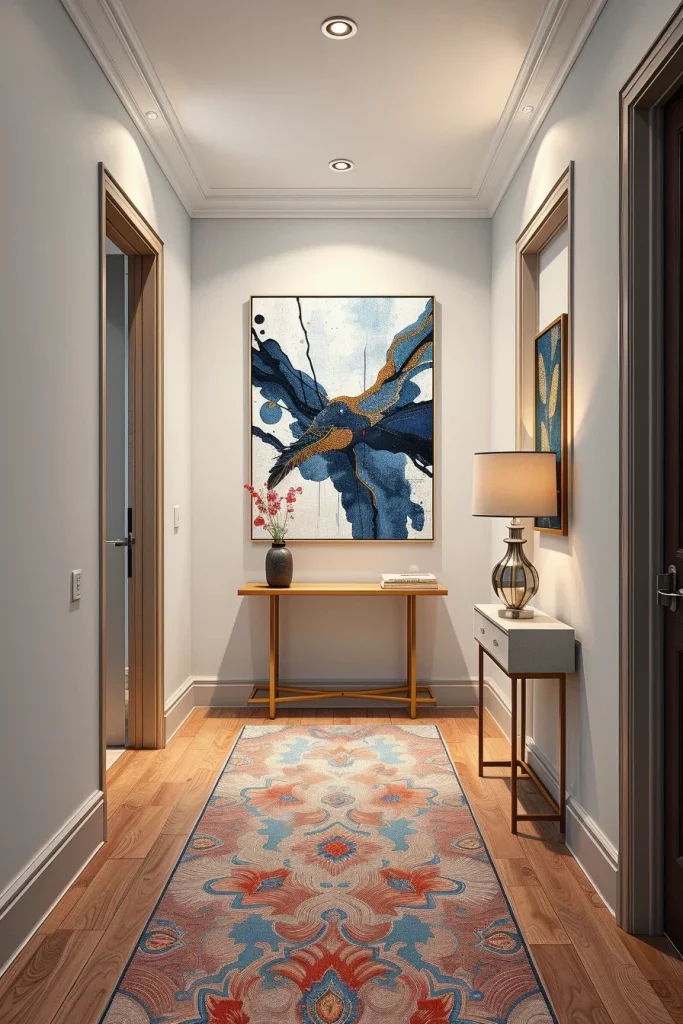
The artwork itself should reflect the home’s overall style while introducing an element of surprise or personality. Abstract paintings, large photographic prints, or textured mixed-media pieces work exceptionally well. I usually pair oversized art with simple furnishings, allowing the piece to remain the undisputed focal point of the corridor.
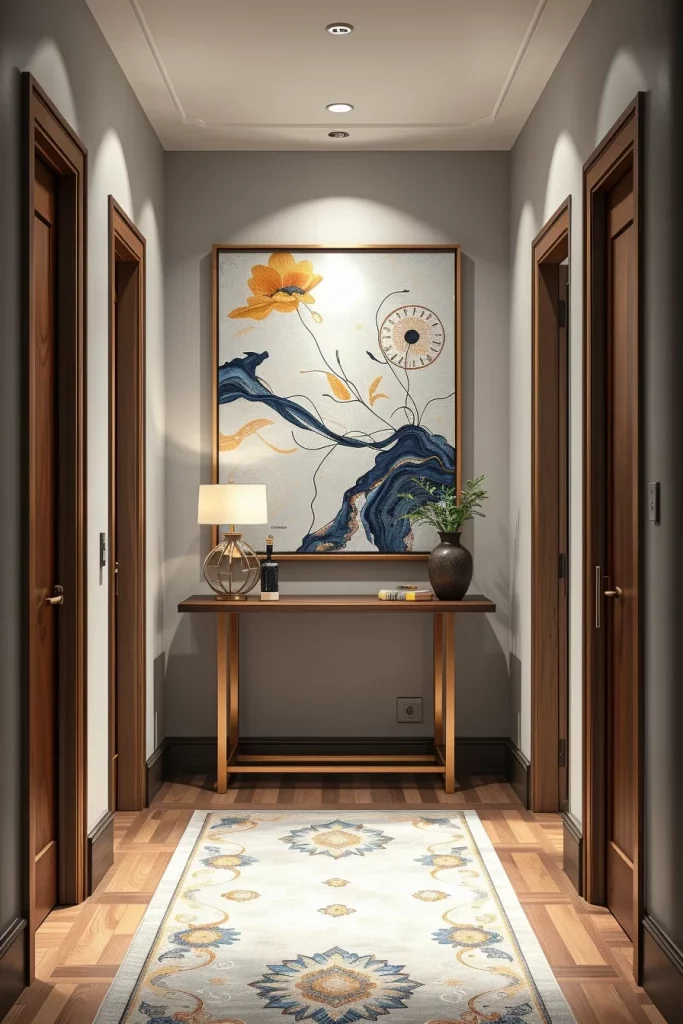
Personally, I have noticed that large artwork can visually shorten excessively long hallways by drawing attention to a specific destination point. Interior stylists from House & Garden often emphasize that scale is essential when decorating narrow spaces, and I completely agree with this approach.
Additional details such as picture lighting or subtle accent illumination can further enhance the artwork while adding depth and sophistication to the entire hallway.
Unique Ceiling Treatments For Narrow Hallway Decorating Ideas
The ceiling is often neglected in hallway design, yet it offers tremendous potential for creating unique and stylish interiors. I frequently encourage homeowners to view the ceiling as a fifth wall that deserves equal design attention. A thoughtfully designed ceiling can instantly transform a plain corridor into a striking architectural feature.
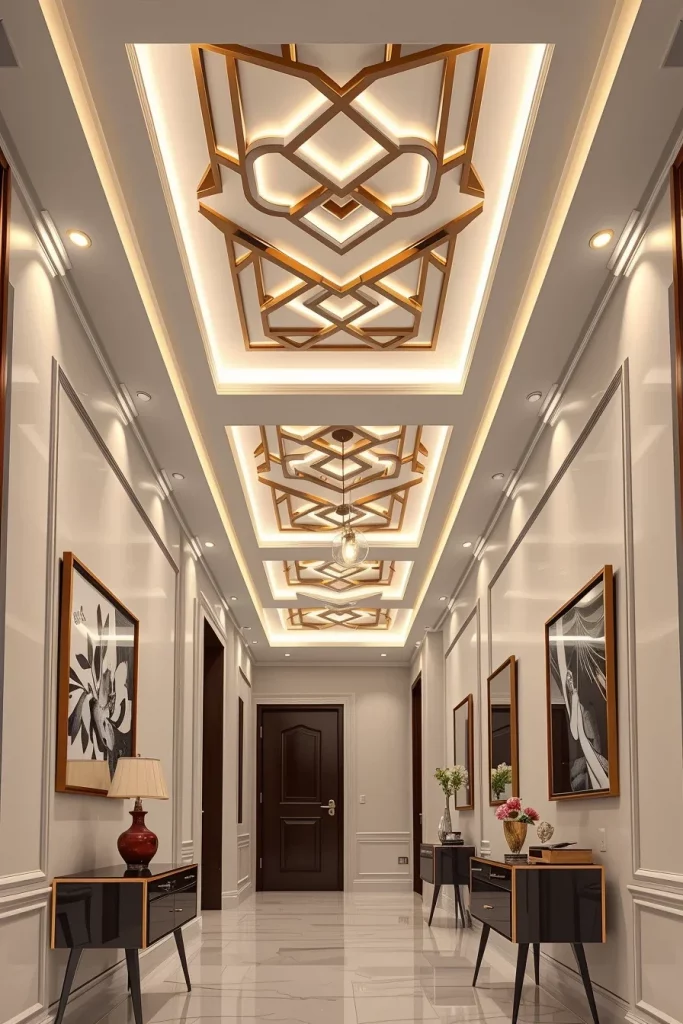
There are numerous ways to enhance a hallway ceiling. Coffered details, decorative molding, painted geometric patterns, wood-look beams, or subtle wallpaper applications can all introduce visual interest. In modern interiors, I particularly appreciate linear LED lighting integrated into ceiling recesses because it emphasizes the hallway’s proportions while maintaining a clean aesthetic.
In my own projects, ceiling treatments often become the element that guests remember most. According to designers highlighted by Architectural Digest, unexpected details overhead create memorable interiors and encourage people to engage more fully with a space.
I would also consider incorporating a skylight or solar tube where possible, as additional natural light significantly improves the overall atmosphere of narrow hallways.
Sculptural Wall Sconces That Double As Art
Wall sconces no longer need to be purely functional. Today, many lighting designs are inherently sculptural and serve as artistic statements in their own right. I often select wall sconces with organic shapes, geometric compositions, or metallic finishes to elevate a narrow hallway while preserving precious floor space.
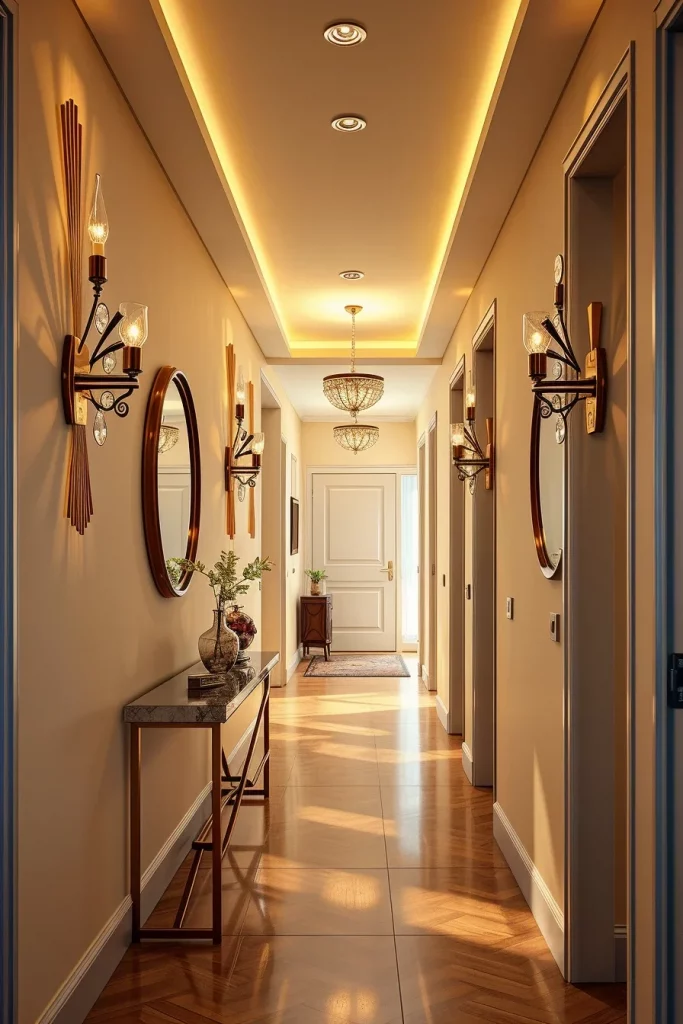
Placement is particularly important in narrow corridors. I generally install sconces symmetrically along the walls to establish rhythm and visual balance. Designs featuring frosted glass, alabaster, or integrated LED technology provide soft, flattering illumination while enhancing the decorative quality of the hallway.
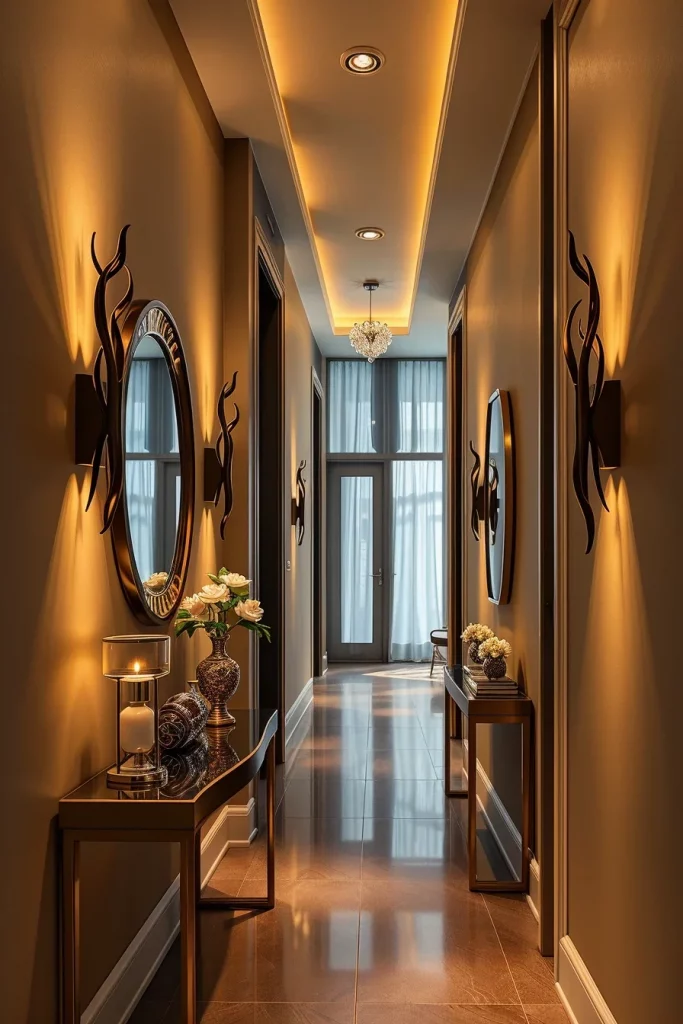
From my perspective, sculptural sconces are one of the easiest ways to introduce an artistic touch without requiring additional wall décor. Elle Decor designers frequently recommend investing in distinctive lighting fixtures because they combine beauty and practicality in smaller spaces.
To make this arrangement even more effective, I would complement the sconces with subtle reflective surfaces, such as mirrors or metallic accents, to maximize light distribution.
Stylish Black And White Narrow Hallway Decorating Inspiration
A black-and-white palette remains one of the most timeless and stylish approaches for narrow hallway decorating. I appreciate this color combination because it creates strong visual contrast while maintaining elegance and versatility. Depending on the chosen balance, the hallway can feel either dramatic or calm.
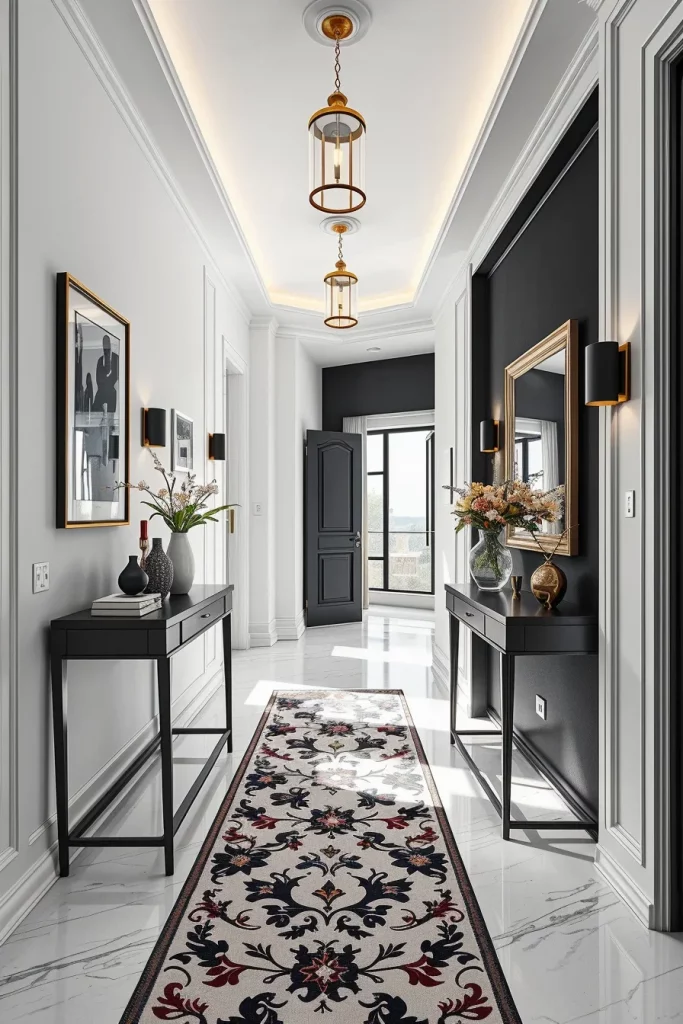
I usually begin with crisp white walls to maximize brightness and then introduce black accents through lighting fixtures, framed artwork, console tables, or patterned runners. Black doors, thin metal details, and monochromatic artwork further reinforce the sophisticated aesthetic. Texture is especially important in monochrome interiors, so I like incorporating fluted surfaces, woven textiles, and matte finishes.
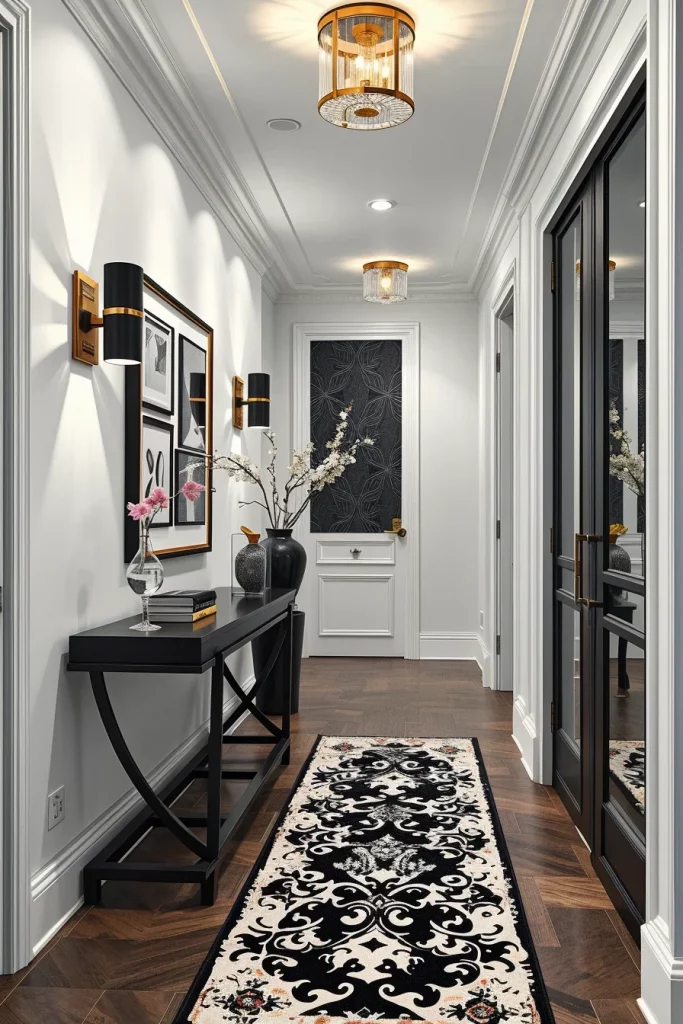
In my experience, black-and-white hallways rarely go out of style. Many designers featured in Better Homes & Gardens recommend layering different textures within monochromatic schemes to prevent the space from feeling flat, and I consistently follow this principle.
To enrich this design further, I would add subtle natural elements such as stone accessories, ceramic décor, or greenery to soften the contrast and create a more welcoming atmosphere.
Floor Tile Patterns That Create Visual Width
When I design a narrow hallway, one of my favorite techniques is to use floor tile patterns that visually expand the space. Large-format tiles laid diagonally, herringbone arrangements, or elongated rectangular tiles installed across the width of the hallway naturally draw the eye outward. This approach creates an optical illusion that makes the corridor appear noticeably wider while maintaining a clean and sophisticated aesthetic.
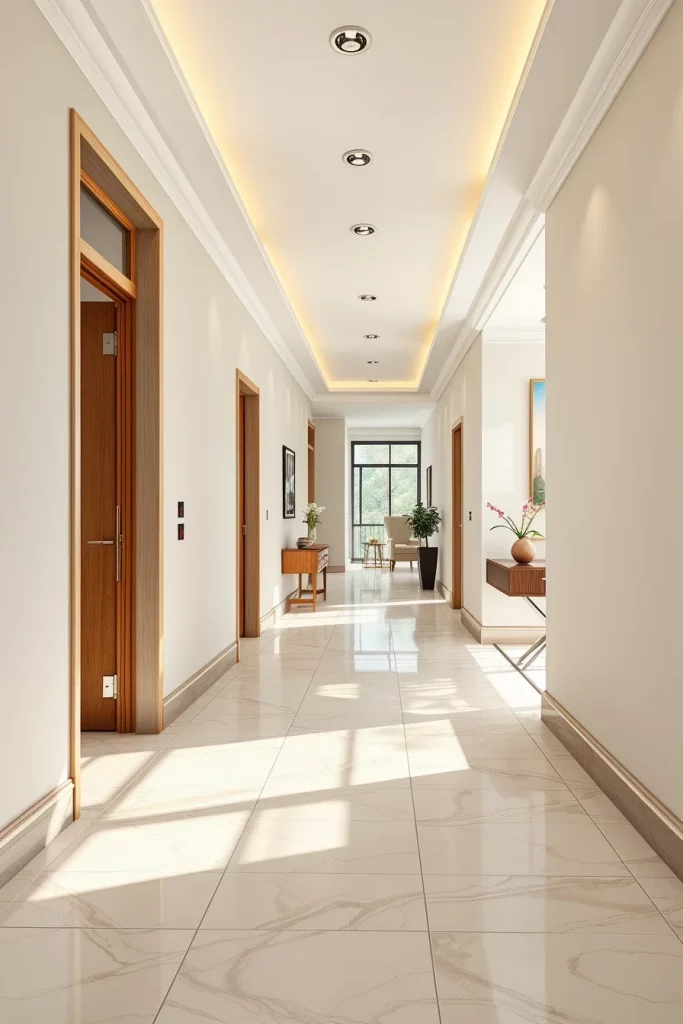
I usually recommend porcelain or ceramic tiles in soft neutral shades because they reflect light effectively and are highly durable in high-traffic areas. Contrasting grout lines can emphasize the pattern, while subtle texture adds depth without overwhelming the room. Slim baseboards, discreet wall lighting, and minimal accessories allow the flooring to remain the focal point.
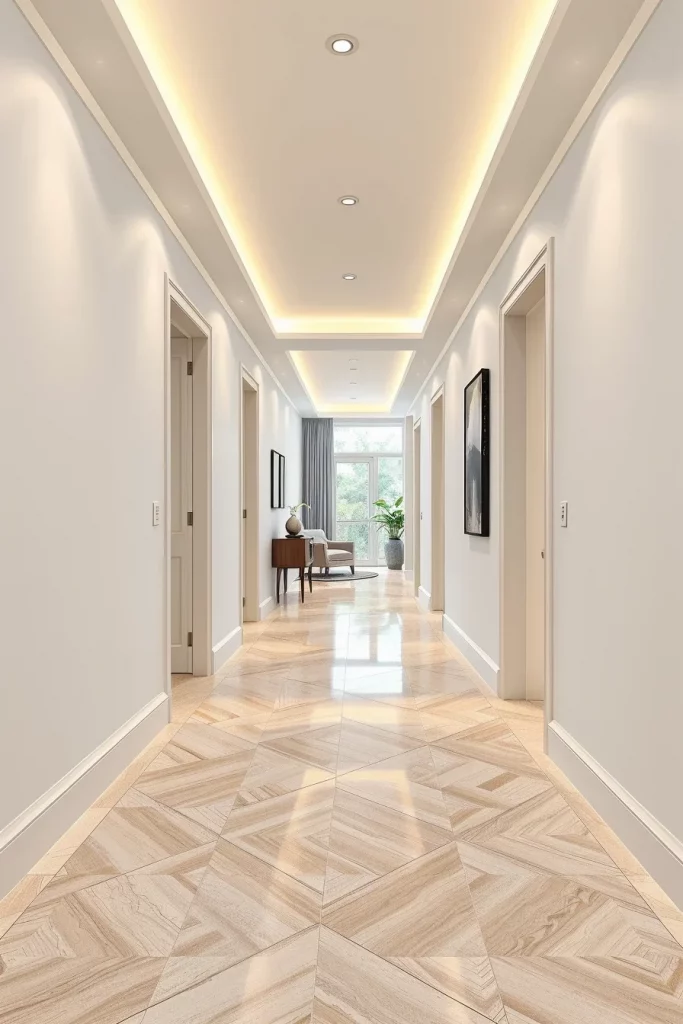
From my experience, designers frequently featured in Architectural Digest suggest that flooring continuity is essential in narrow spaces. I have found that extending the same tile pattern into adjacent rooms creates a seamless flow and prevents the hallway from feeling isolated or confined.
To complete this design, I would add layered lighting, including recessed ceiling fixtures and subtle LED accents along the baseboards to further enhance the sense of openness.
Arched Design Features For An Elegant Hallway Look
Arches introduce softness and architectural interest into a narrow hallway. I often use arched doorways, curved wall recesses, or rounded ceiling transitions to break up rigid lines and add elegance. These architectural details immediately make a slim corridor feel more refined and visually balanced.
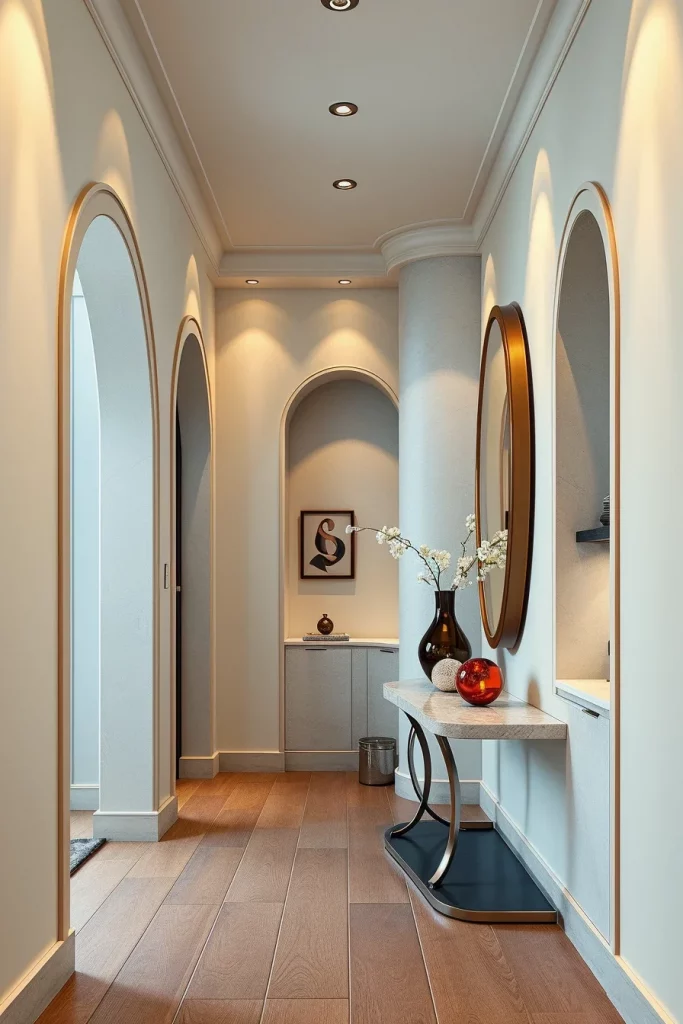
In many projects, I pair arched elements with smooth plaster walls, oversized mirrors with curved frames, and understated decorative objects. Rounded pendant lights, slim console tables with curved edges, and sculptural vases reinforce the organic shapes and contribute to a cohesive design scheme.
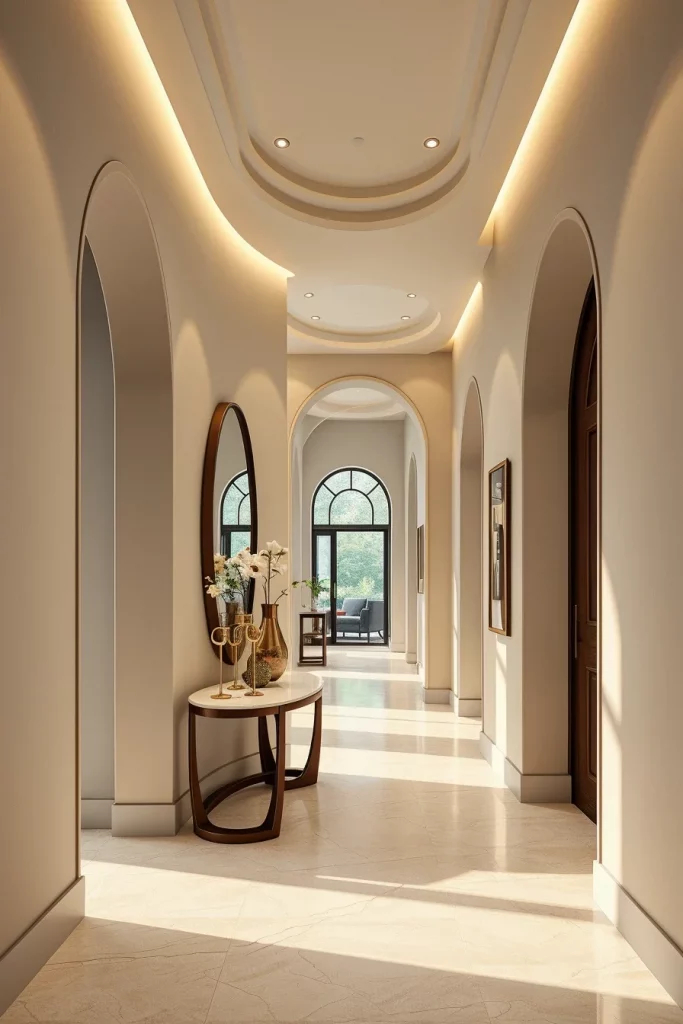
Personally, I believe arches create a timeless look that works equally well in contemporary and transitional interiors. Interior designers such as Joanna Gaines have often highlighted the importance of incorporating curves to soften interiors, and I have consistently seen how effective this approach can be in hallways.
What I would additionally include is subtle uplighting that accentuates the curves during the evening and highlights the architectural character of the space.
Creative Accent Walls With Texture And Dimension
A thoughtfully designed accent wall can completely transform a narrow hallway. I like to introduce texture through fluted wall panels, limewash finishes, sculpted plaster, or dimensional wall coverings. These features add depth and prevent long corridors from appearing monotonous.
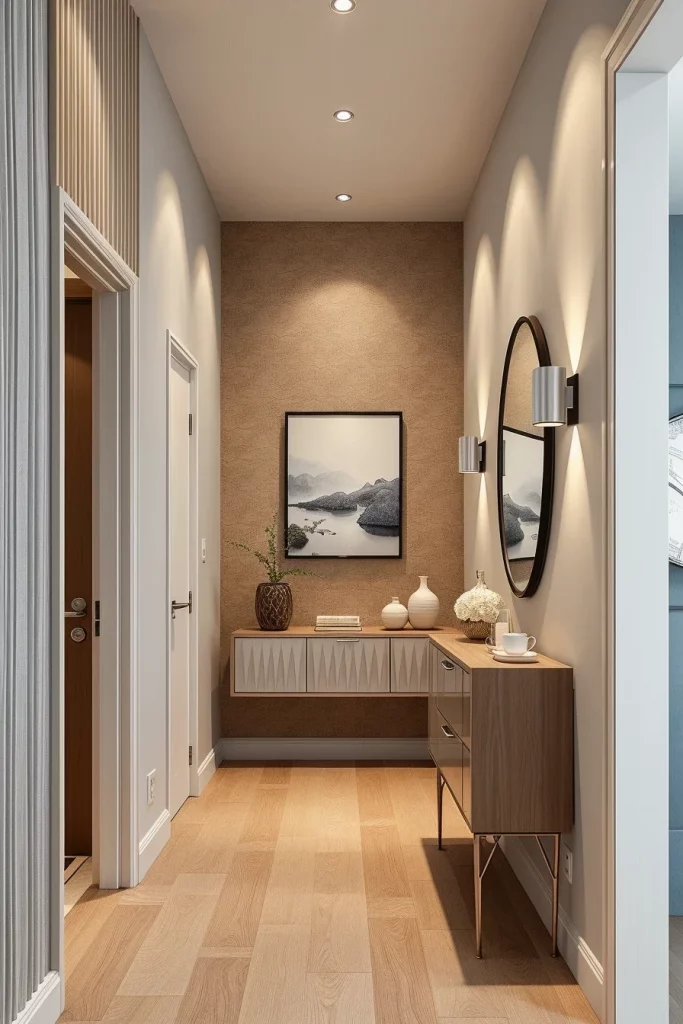
I typically balance textured walls with simple furnishings. A narrow floating console, minimal artwork, and integrated lighting allow the textured surface to stand out without overcrowding the hallway. Soft color palettes maintain visual harmony while still delivering an impactful result.
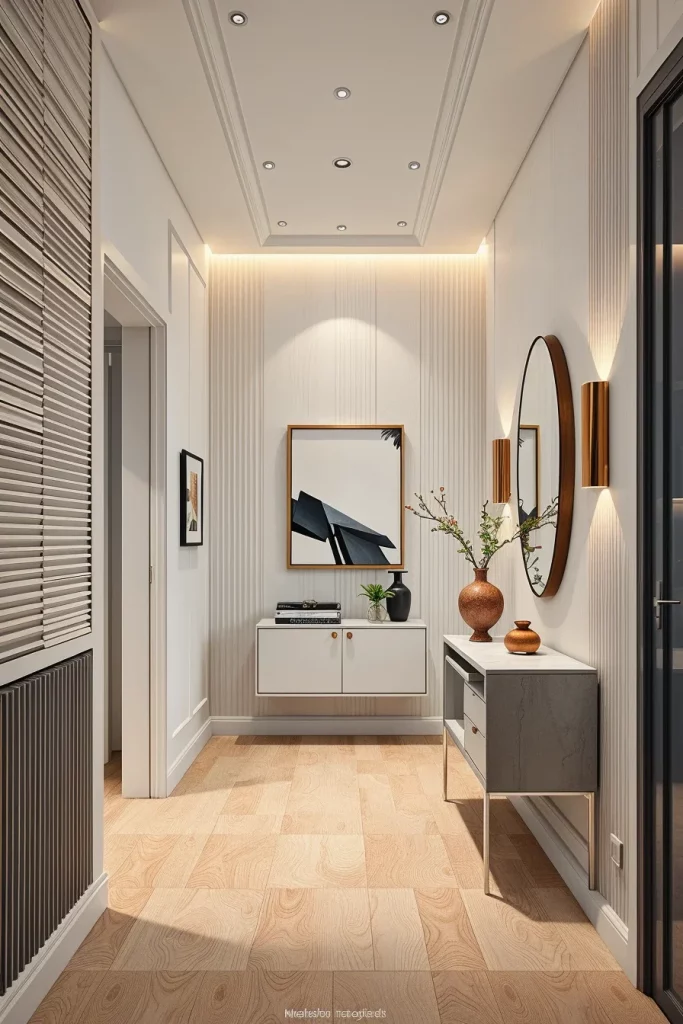
In my own projects, textured walls often become conversation pieces. Many designers featured by Elle Decor recommend adding tactile finishes to compact spaces because they create visual richness without requiring additional furniture. I have found this advice especially valuable in slim hallways.
To enhance the effect, I would incorporate accent lighting directed toward the wall surface to emphasize shadows and highlight the material’s dimensional qualities.
Minimalist Hallway Decor With Artistic Details
Minimalism works exceptionally well in narrow hallways because it minimizes visual clutter while maximizing functionality. However, I always introduce artistic elements to ensure the space feels personal rather than sterile. A restrained palette combined with statement decor creates an elegant and inviting atmosphere.
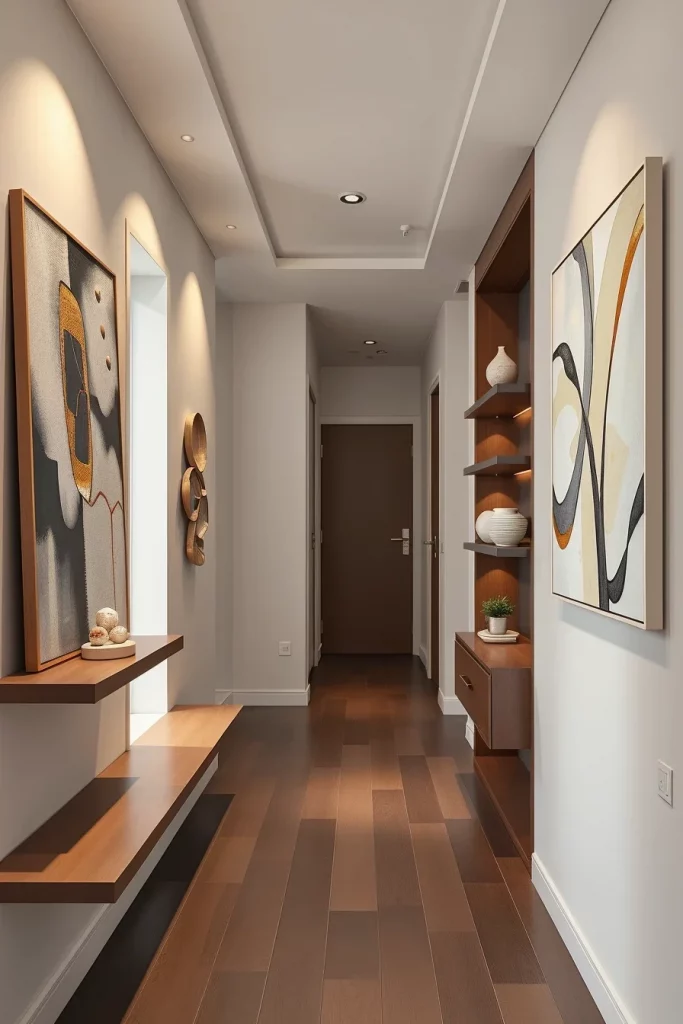
I often include floating shelves, slimline lighting fixtures, abstract sculptures, oversized framed artwork, and concealed storage solutions. Every piece should serve either a functional or decorative purpose. Clean lines, hidden hardware, and carefully selected accessories help preserve a sense of spaciousness.
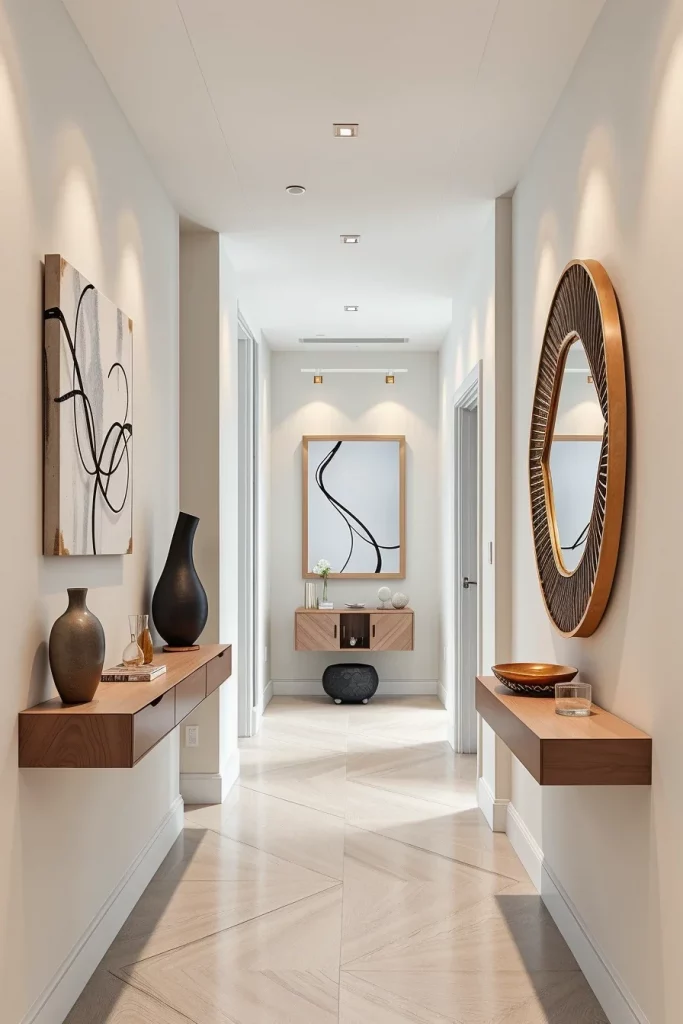
From my perspective, successful minimalist design relies on thoughtful curation rather than emptiness. I often follow the advice shared by designers in House Beautiful, who emphasize choosing fewer but more meaningful decorative pieces. This approach consistently results in interiors that feel calm yet distinctive.
I would also recommend incorporating a single oversized mirror to reflect light and reinforce the hallway’s minimalist aesthetic while visually enlarging the area.
Built-In Niches Styled As Decorative Displays
Built-in niches are among the most practical and stylish solutions for narrow hallways because they utilize wall depth without occupying valuable floor space. I frequently design recessed niches to showcase decorative objects, artwork, or curated collections while adding architectural character.
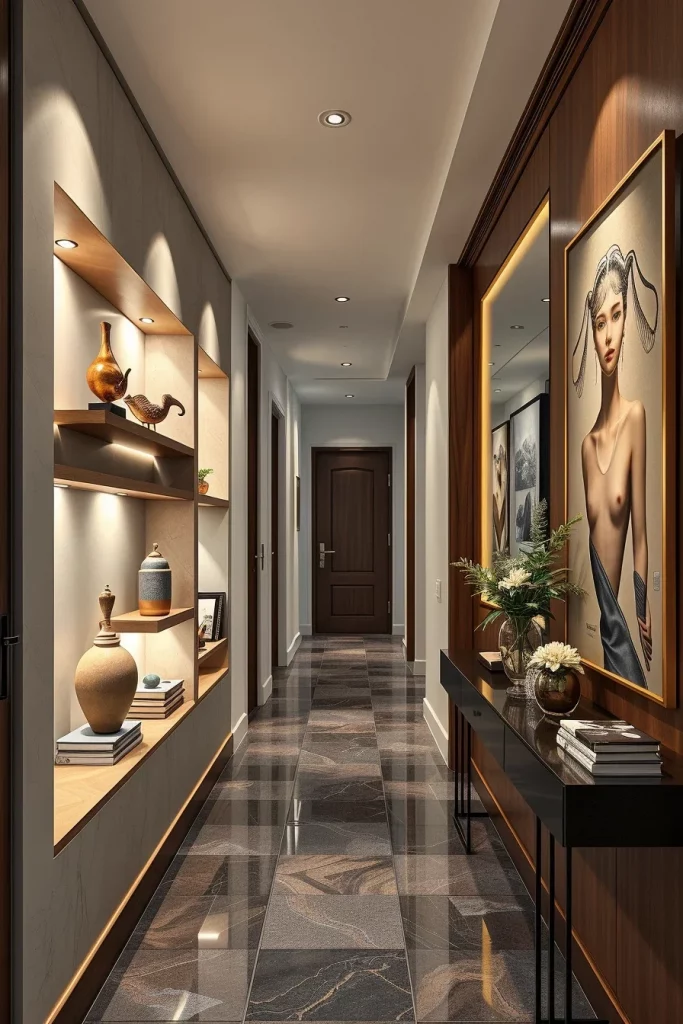
Within these niches, I typically arrange ceramic sculptures, books, decorative bowls, framed photographs, and integrated LED lighting. The displays should feel intentional and balanced rather than overcrowded. Using varied heights and textures creates a gallery-like effect that enhances the hallway’s overall sophistication.
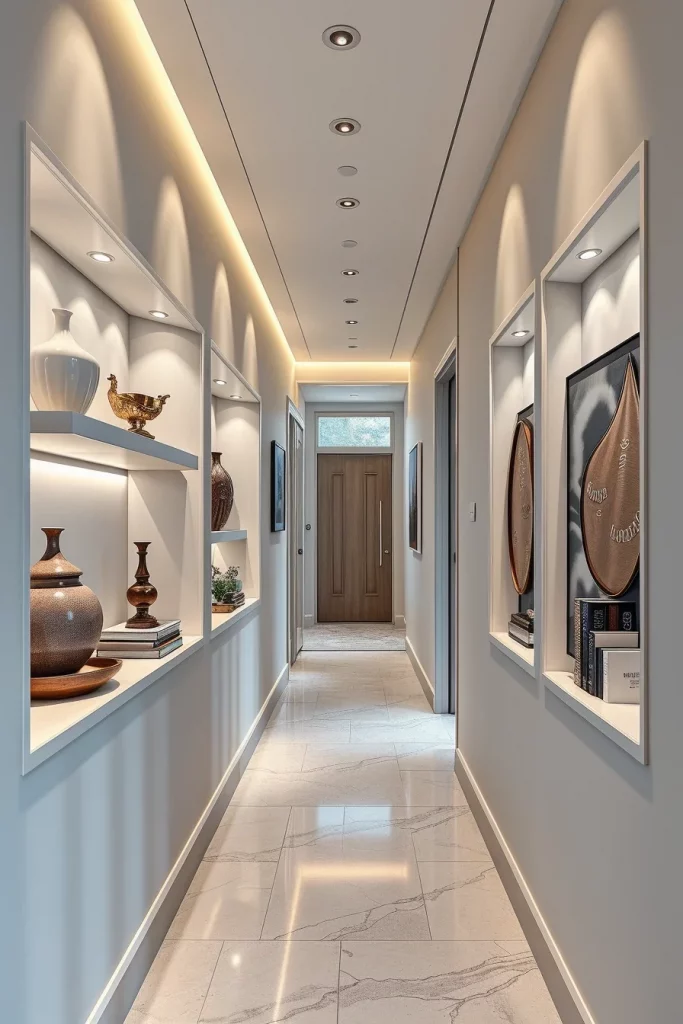
In my experience, built-in displays offer an excellent opportunity to introduce personality into a transitional space. Many contemporary interior designers recommend treating hallway niches as miniature curated exhibitions, and I completely agree with this philosophy.
For an even more polished result, I would include dimmable lighting controls so homeowners can easily adjust the ambiance throughout the day.
Sculptural Seating Ideas For A Slim Hallway
When working with a narrow hallway, I like to incorporate sculptural seating that serves as both a functional element and a piece of art. A carefully selected bench or stool can transform a simple passageway into a thoughtfully designed space. In slim hallways, seating with fluid curves or artistic silhouettes adds visual interest without overwhelming the limited square footage.
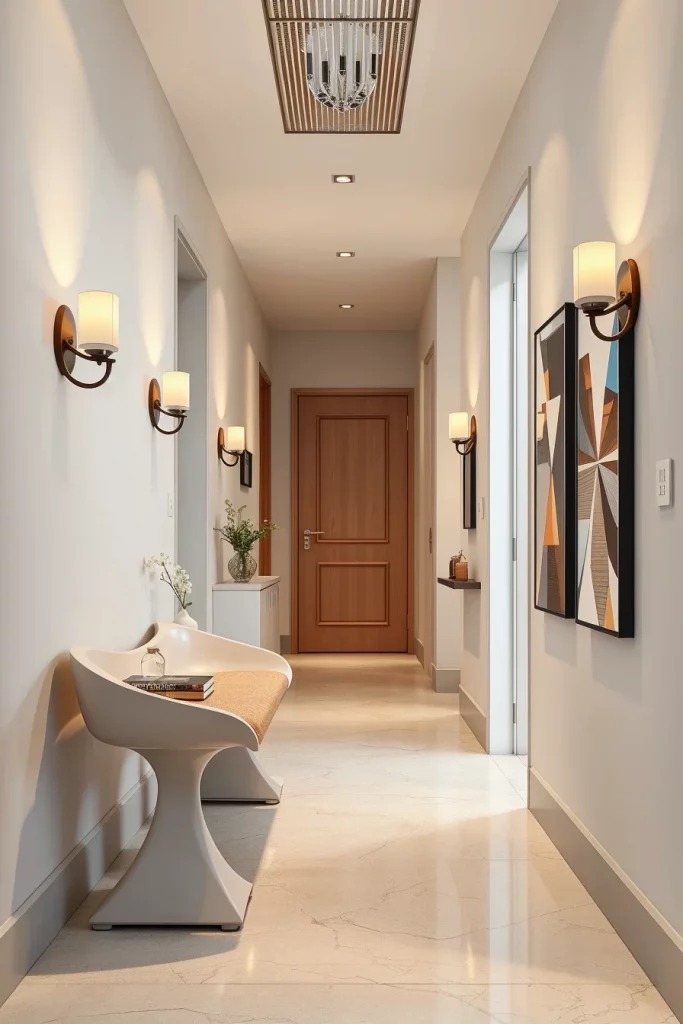
I often choose compact benches with rounded edges, pedestal stools, or statement seating pieces made from stone, boucle upholstery, or sleek metal finishes. Wall-mounted seating can also be an excellent option because it preserves valuable floor space while maintaining an airy appearance. Pairing the seating with a small side table or decorative object helps create a cohesive composition.
In my experience, one remarkable piece is often more effective than multiple smaller accessories. Designers frequently featured in Architectural Digest recommend treating transitional spaces as opportunities for artistic expression, and I have found that a sculptural seat instantly elevates even the simplest hallway.
To complete the arrangement, I would add a wall sconce or focused accent light above the seating to highlight its form and create a welcoming atmosphere.
Modern Hallway Decorating With Geometric Elements
Geometric shapes introduce rhythm and structure to a narrow hallway while maintaining a modern aesthetic. I frequently use geometric patterns to guide the eye along the corridor and create a sense of movement. This approach feels especially effective when aiming for creative and unusual hallway designs.
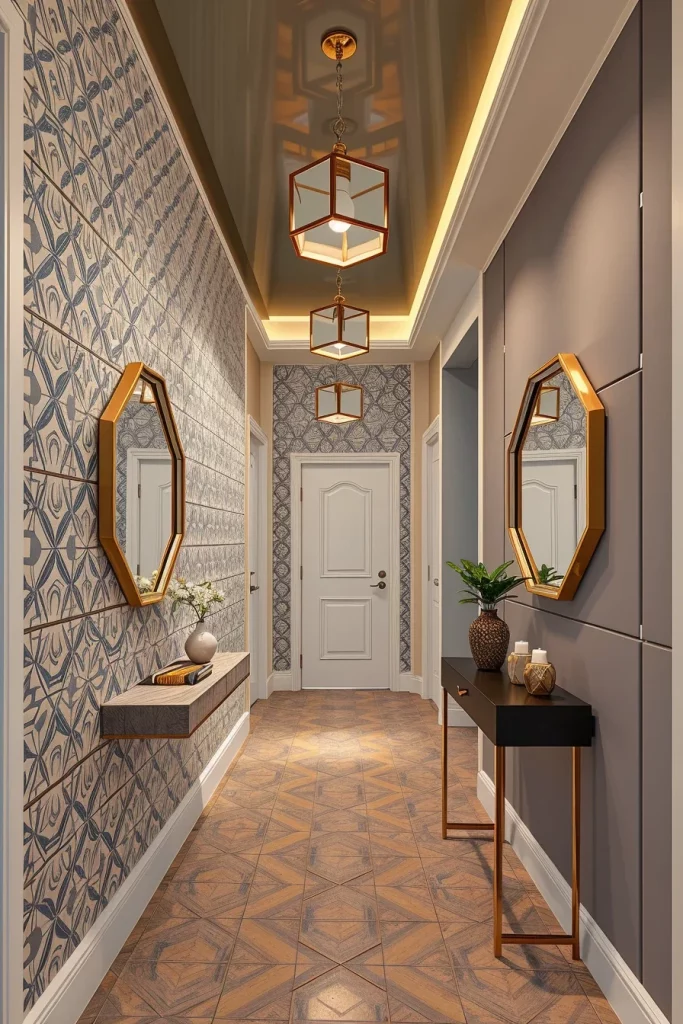
I like incorporating geometric wallpaper, angular lighting fixtures, hexagonal mirrors, and contemporary console tables with architectural lines. Even subtle details, such as geometric floor inlays or patterned wall panels, can add personality without making the hallway appear busy. A restrained color palette helps maintain balance.
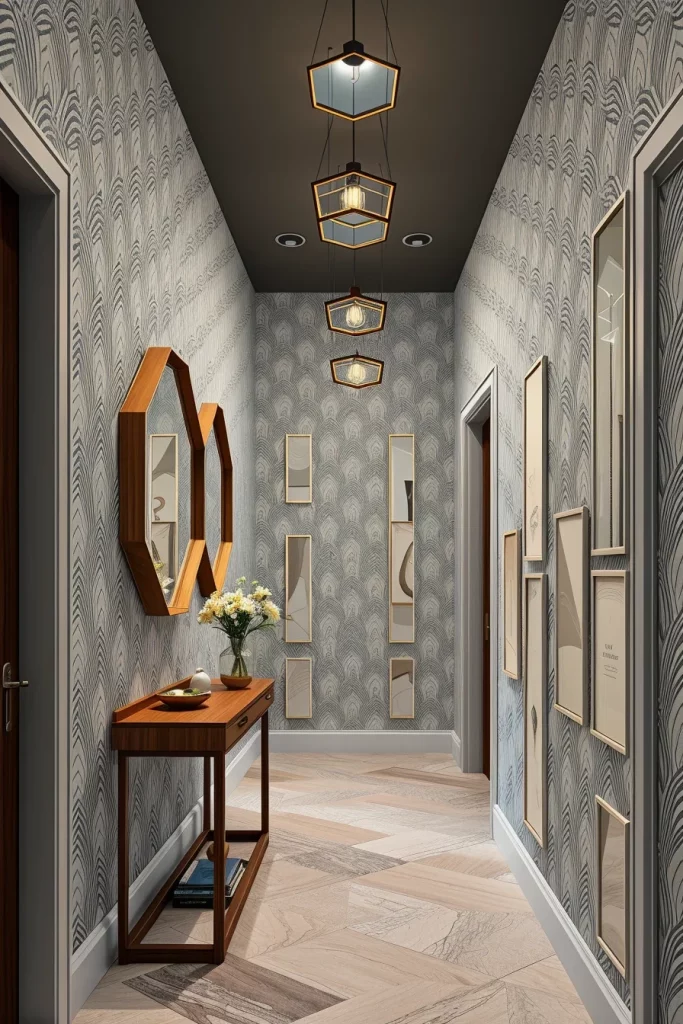
Personally, I find that geometric elements work best when used selectively. Interior designers often advise limiting bold patterns to one or two focal areas, and I agree that this prevents narrow spaces from feeling visually crowded.
I would also introduce indirect LED lighting to emphasize the geometric forms and create additional depth throughout the hallway.
Gallery Wall Arrangements For Narrow Spaces
A gallery wall is one of my favorite ways to personalize a narrow hallway while maximizing vertical space. Long corridors naturally lend themselves to displaying collections of art, photography, or framed prints. A well-planned gallery arrangement can transform an overlooked passage into a highly artistic and memorable feature.
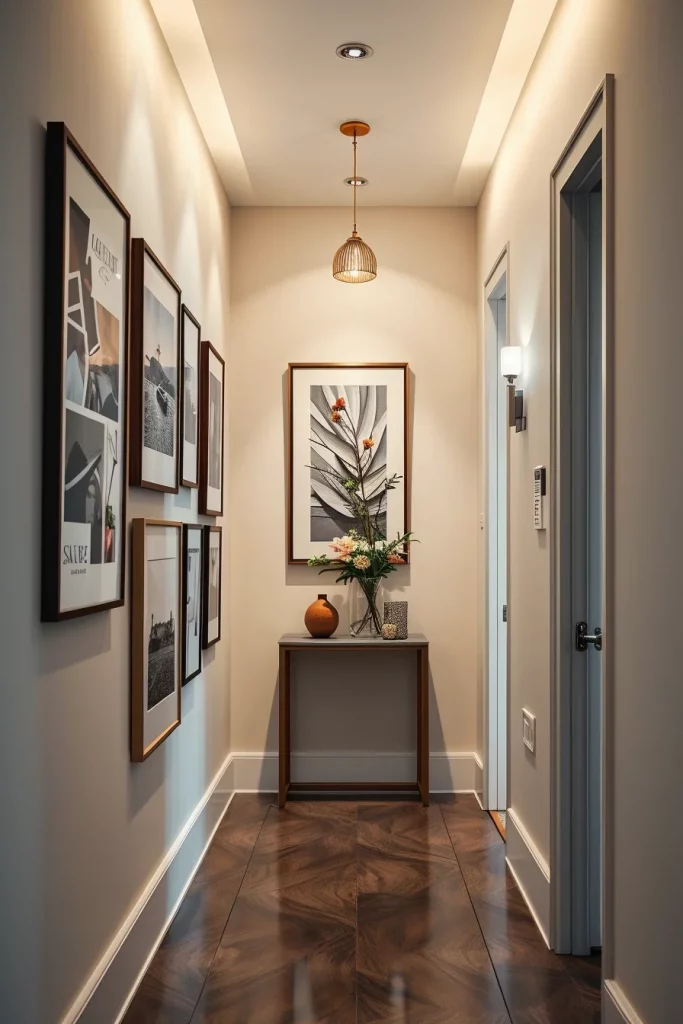
I typically recommend maintaining consistent frame finishes or color palettes to create visual cohesion. Mixing photographs, abstract artwork, sketches, and sculptural wall pieces adds depth while preserving harmony. Proper spacing between frames is essential in narrow hallways because overcrowding can make the space feel smaller.
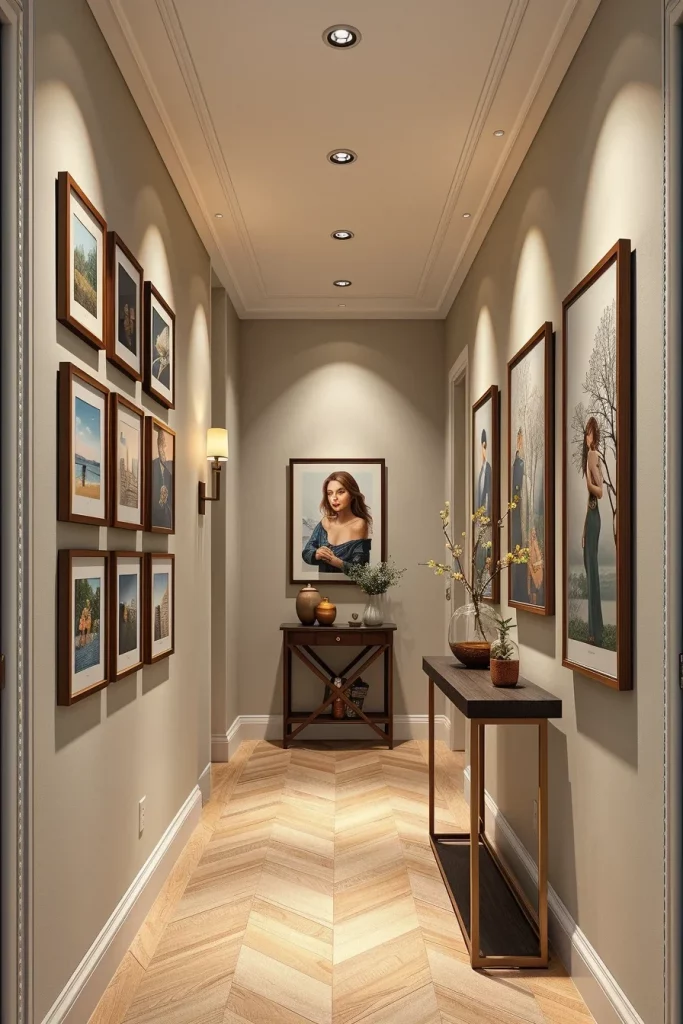
From my perspective, gallery walls tell a story and make a home feel unique. House Beautiful often recommends laying out artwork on the floor before installation, and I regularly use this method to achieve balanced compositions that suit the proportions of the hallway.
For added sophistication, I would install picture lights or directional wall sconces to illuminate the artwork and enhance the gallery effect.
Stylish Runner Rug Ideas For Long Hallways
A runner rug can dramatically improve both the appearance and comfort of a narrow hallway. I frequently use runners to visually elongate the space while introducing softness, texture, and color. The right rug also helps define circulation paths and creates a more inviting atmosphere.
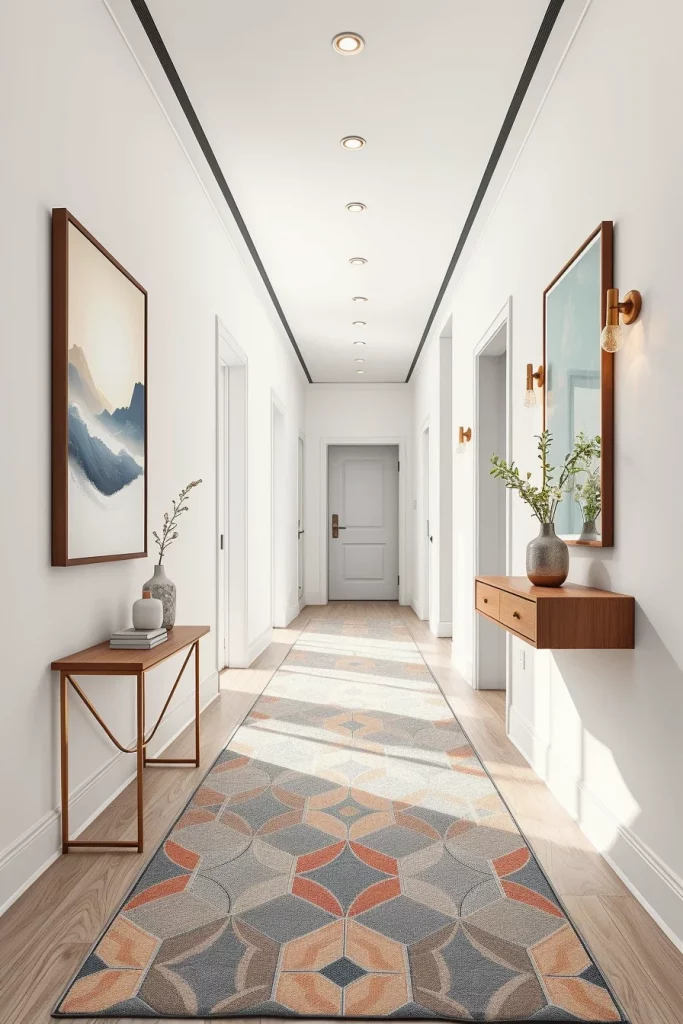
I usually select runners featuring subtle patterns, geometric motifs, or understated textures. Durable materials such as wool blends or performance fibers are ideal for high-traffic areas. A rug should extend along most of the hallway length while leaving a visible border of flooring on each side to maintain proportion.
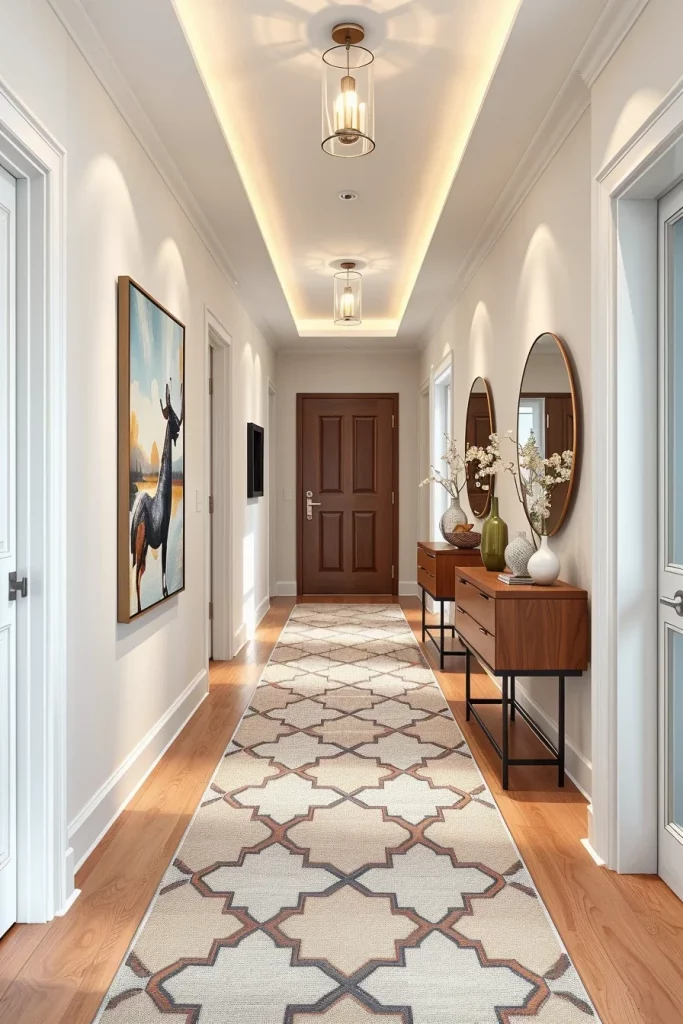
In my experience, layered textures make hallways feel significantly more welcoming. Designers often emphasize the importance of selecting rugs that complement adjacent rooms, and I have found that coordinated materials contribute to a seamless visual flow throughout the home.
To enhance this design further, I would pair the runner with complementary artwork and carefully positioned lighting to reinforce the hallway’s overall style.
Decorative Wall Molding Designs For Narrow Hallways
Decorative wall molding introduces architectural sophistication and can completely redefine a narrow hallway. I often use molding to add dimension, create symmetry, and establish a refined backdrop for contemporary interiors. This is one of my favorite unique narrow hallway decorating ideas because it combines timeless elegance with modern styling.
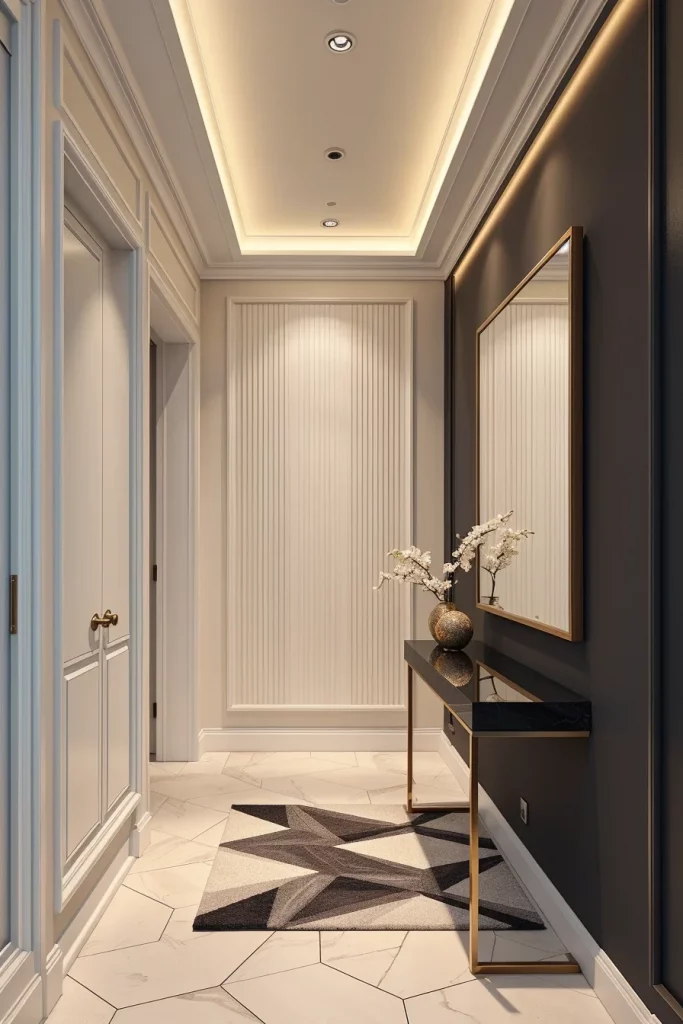
I frequently install picture frame molding, vertical panel molding, or full-height wall trim to emphasize ceiling height and visually expand the corridor. When paired with monochromatic paint colors, molding creates subtle depth while preserving an uncluttered appearance. Slim consoles, mirrors, and minimalist lighting complement these architectural details beautifully.
Personally, I believe molding works exceptionally well because it provides character without sacrificing space. Designers featured in Elle Decor often recommend using vertical elements to make compact rooms feel taller, and I consistently see impressive results when applying this principle in hallways.
For a more customized look, I would add integrated LED strips or accent sconces that highlight the molding details and enhance the hallway during evening hours.
Creative Use Of Metallic Accents In Hallway Decor
I often recommend metallic accents when working with compact corridors because they instantly reflect light and create visual depth. In narrow hallway decorating ideas inspiration, metallic surfaces can make a confined space appear brighter and more sophisticated. Brushed brass, matte black metal, and soft champagne finishes work particularly well in modern interiors without overwhelming the hallway.
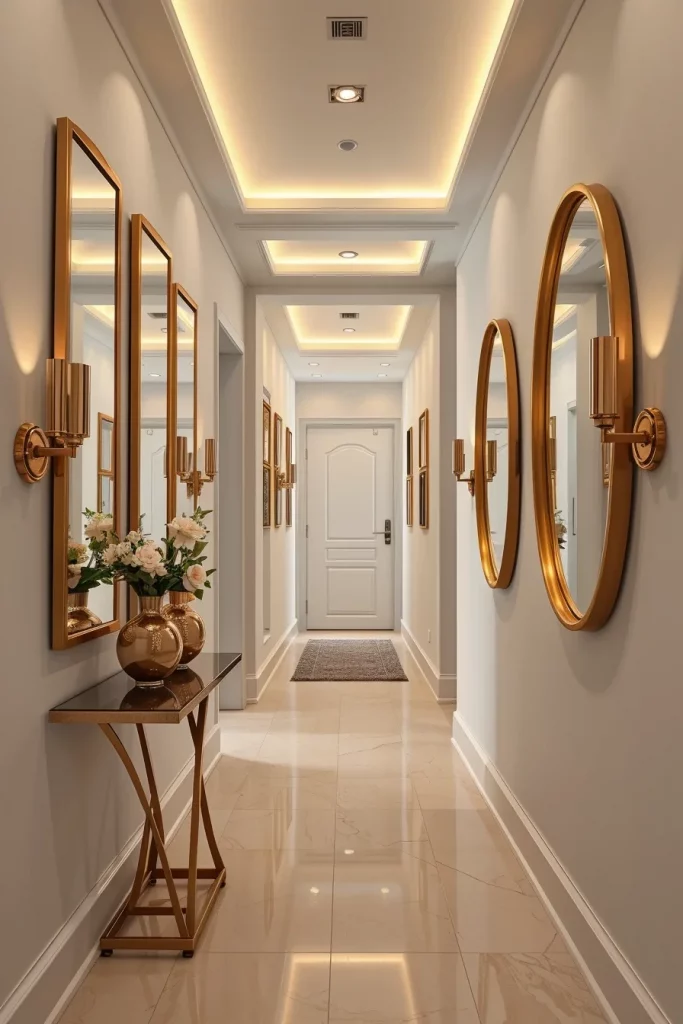
When designing a hallway, I like to include slim metal-framed mirrors, sculptural wall sconces, and narrow console tables with metallic bases. Decorative accessories such as metallic trays, abstract wall art, and sleek coat hooks add refinement while maintaining functionality. A large mirror with a metallic frame is especially useful because it amplifies both natural and artificial light.
From my experience, metallic elements work best when used selectively. Designers frequently featured in Architectural Digest recommend layering reflective finishes rather than covering every surface in metal. I have found that combining warm metallic tones with soft neutral walls creates a balanced and timeless appearance.
I would also add concealed LED lighting to emphasize the reflective surfaces. Proper illumination ensures that metallic details remain elegant rather than visually heavy.
Floating Consoles For A Sleek And Spacious Appearance
Floating furniture is one of my favorite solutions for narrow hallways because it preserves valuable floor space. A floating console creates an airy appearance, allowing the eye to travel uninterrupted along the floor and making the hallway feel considerably wider. This is one of the most stylish and practical design strategies for compact spaces.
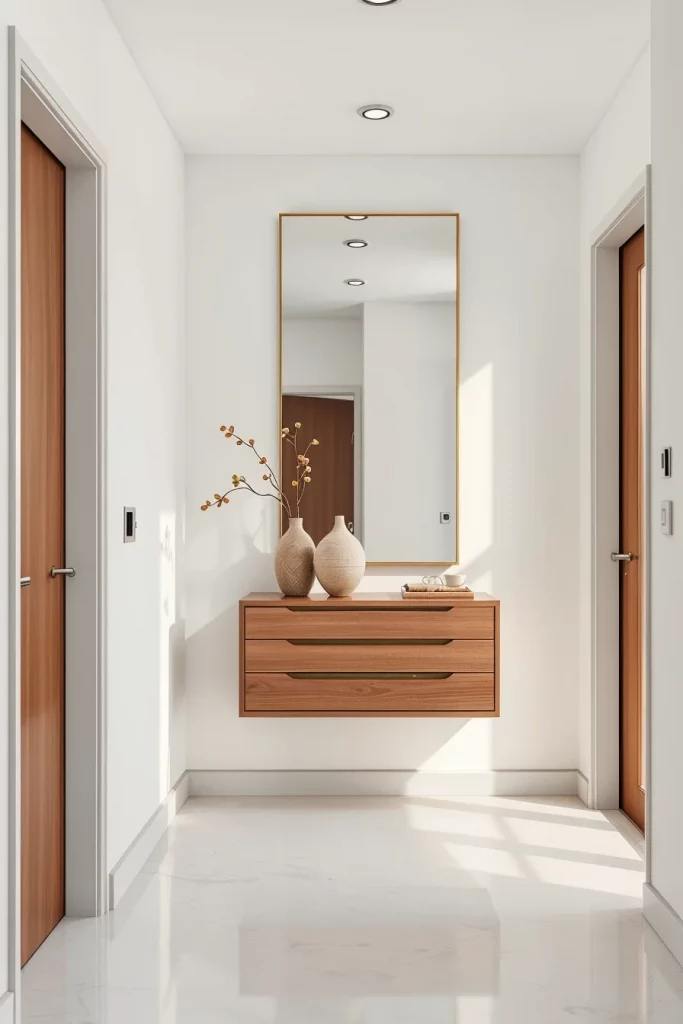
I usually select wall-mounted consoles with clean lines and integrated drawers. These pieces provide storage for keys, mail, and everyday essentials while maintaining a minimalist profile. Above the console, I often install a large mirror or contemporary artwork to create a focal point. Decorative objects such as ceramic vases, sculptural bowls, and discreet table lamps complete the arrangement.
Personally, I have noticed that floating furniture dramatically improves circulation in busy homes. Better Homes & Gardens frequently highlights wall-mounted furnishings as an effective space-saving technique, and I completely agree based on my own projects.
To enhance this design further, I would include hidden charging stations inside the console drawers, ensuring that technology remains organized and out of sight.
Artistic Color Schemes For Narrow Hallway Decorating Ideas
Color plays a critical role in transforming a narrow hallway. I believe that artistic color combinations can completely change how people perceive proportions. Soft neutrals paired with charcoal accents, muted terracotta combined with warm ivory, or monochromatic palettes with tonal variations create visual interest while maintaining openness.
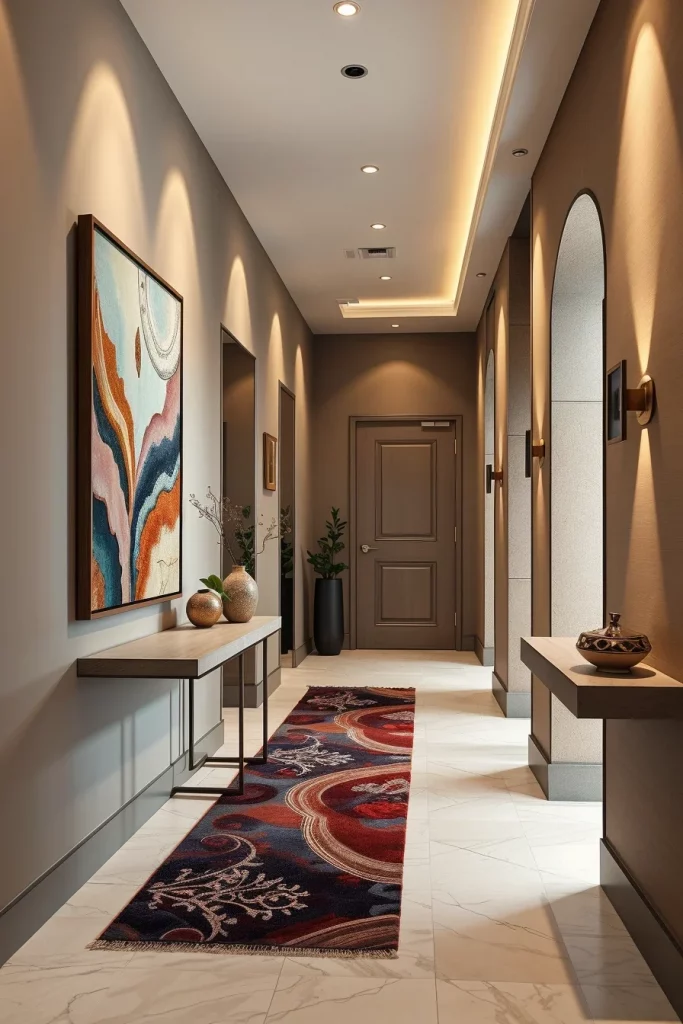
I often incorporate painted ceilings, subtle color blocking, or textured wall finishes to add personality. Slim runners, framed artwork, and decorative accessories should complement the chosen palette rather than compete with it. In contemporary interiors, I prefer pairing understated wall colors with striking artistic details to create an elegant balance.
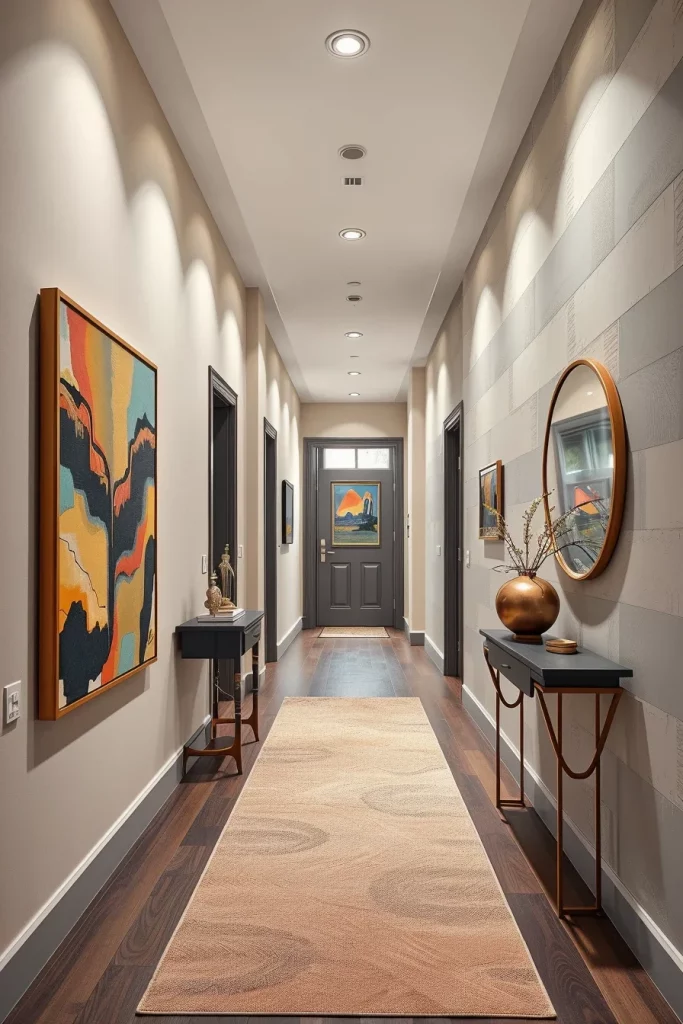
In my experience, layered neutral palettes tend to age gracefully. Designers from Elle Decor often recommend using multiple shades within the same color family, and I have found this approach particularly successful in narrow hallways because it creates depth without visual clutter.
I would also consider introducing dimmable lighting, as color perception changes significantly depending on illumination throughout the day.
Unique Door Designs That Enhance Hallway Style
Doors occupy significant visual space in a hallway, which is why I consider them an essential design element rather than a purely functional feature. Unique door designs can transform an ordinary corridor into a memorable architectural experience. Fluted surfaces, curved profiles, concealed frames, and oversized handles immediately elevate the entire hallway.
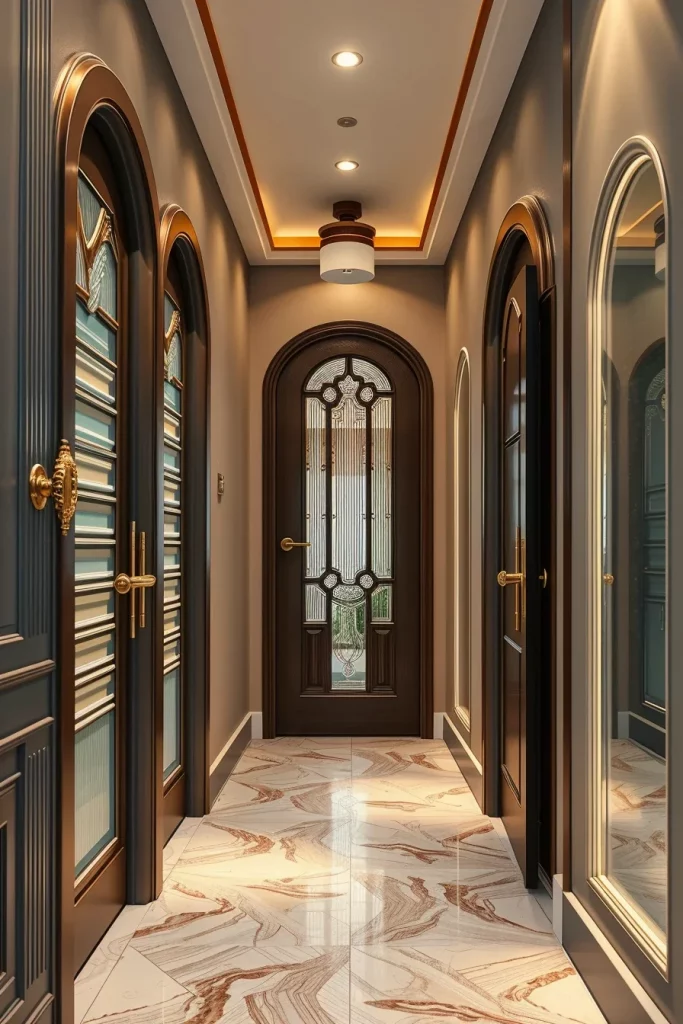
When selecting doors, I often favor flush-panel styles with integrated hardware for a contemporary appearance. Glass inserts, reeded glass panels, or softly arched doorways introduce texture and elegance without compromising spatial flow. Coordinating door finishes with surrounding trim ensures visual cohesion throughout the hallway.
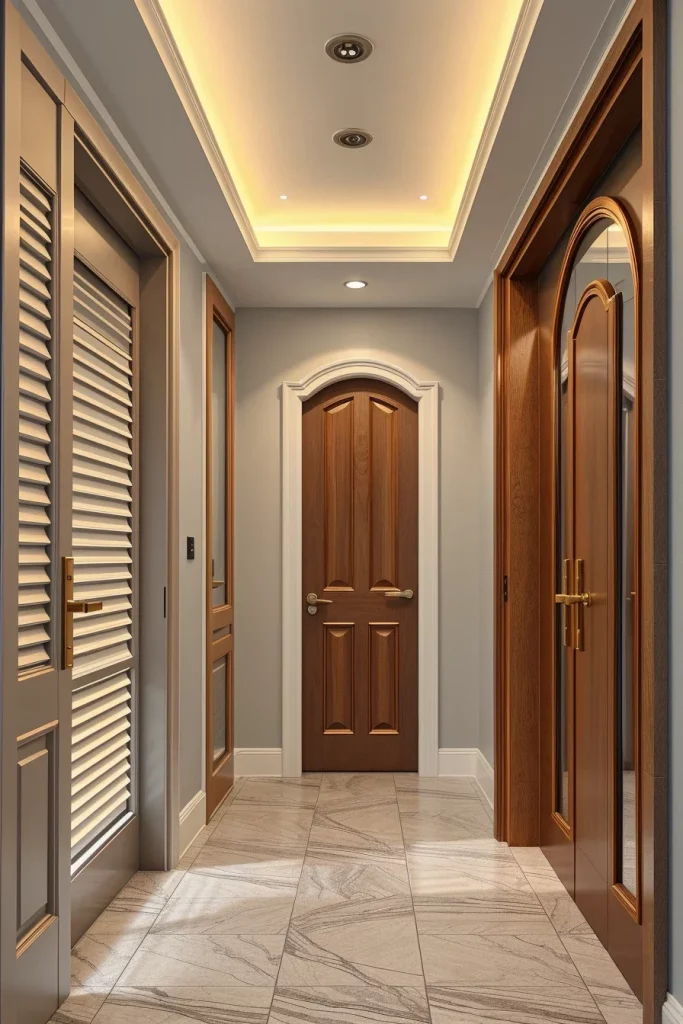
Personally, I appreciate doors that contribute to the overall aesthetic instead of disappearing into the background. Architectural Digest designers frequently emphasize the importance of architectural details, and I have seen how thoughtfully designed doors can become statement features in compact interiors.
For a more customized result, I would add subtle wall lighting beside each doorway to highlight textures and architectural detailing.
Layered Lighting Concepts For Long Hallway Interiors
Lighting is essential in long and narrow hallways because insufficient illumination can make the space feel confined. I always recommend layered lighting strategies that combine ambient, accent, and decorative fixtures. This approach creates dimension and allows different areas of the hallway to feel intentionally designed.
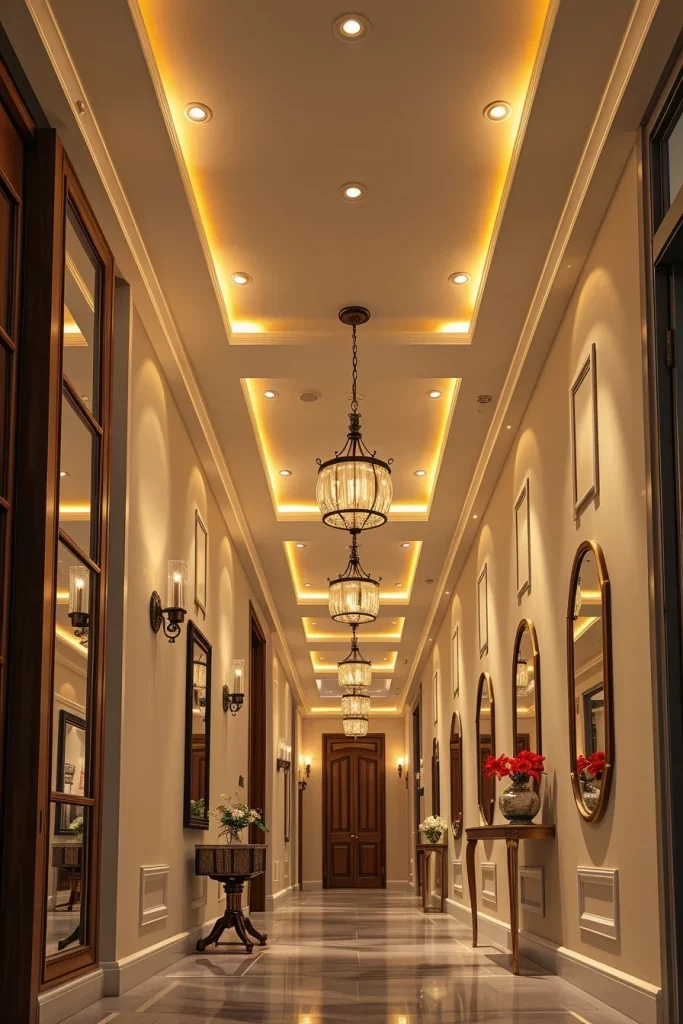
I typically begin with recessed ceiling lights for general illumination. Then I introduce wall sconces, LED strip lighting beneath consoles, and decorative pendant fixtures where ceiling height permits. Mirrors positioned opposite light sources further increase brightness while visually expanding the corridor.
From my experience, relying on a single overhead fixture rarely produces satisfying results. Interior designers featured in House Beautiful consistently advocate layered lighting, and I have found that this strategy significantly improves both functionality and atmosphere.
I would also integrate dimmer switches so the hallway lighting can adapt to different moods and times of day.
Sculptural Decorative Objects For Hallway Styling
Sculptural decor can completely transform a narrow hallway from a transitional zone into a gallery-like experience. I often use sculptural objects to introduce dimension and visual intrigue without occupying excessive floor space. In narrow interiors, every decorative element should feel intentional, and sculptural pieces naturally draw attention while enhancing the architectural character of the hallway.
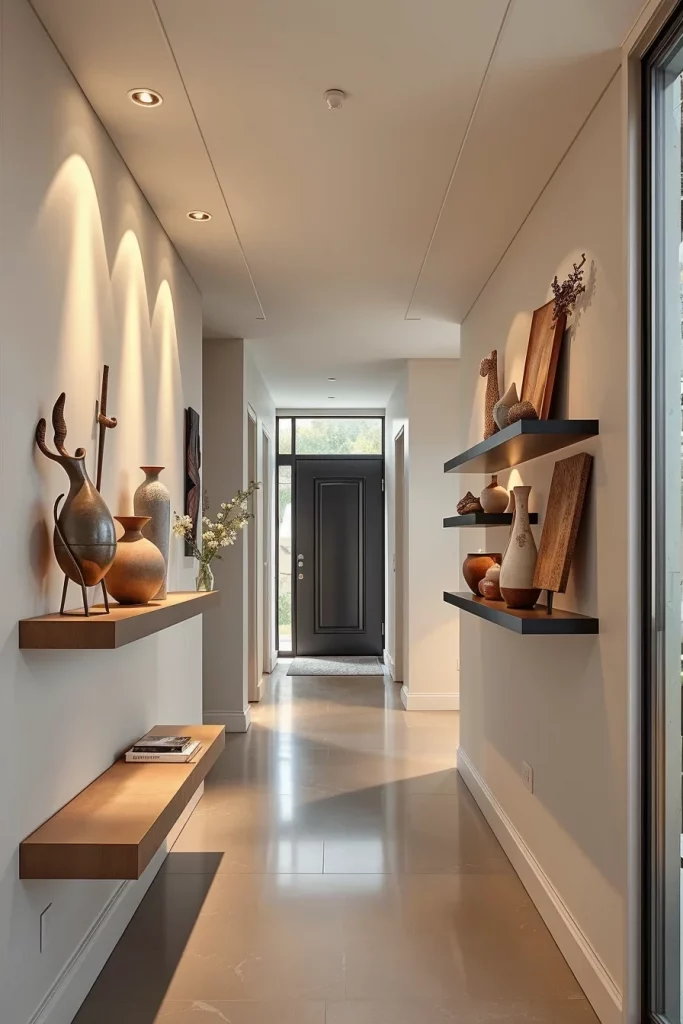
I typically incorporate abstract ceramic vases, freestanding artistic objects, curved wall sculptures, or statement pedestal displays. Slim floating shelves can showcase carefully selected decorative pieces without making the corridor feel crowded. I also like combining organic shapes with clean-lined furniture because the contrast creates a dynamic yet balanced composition.
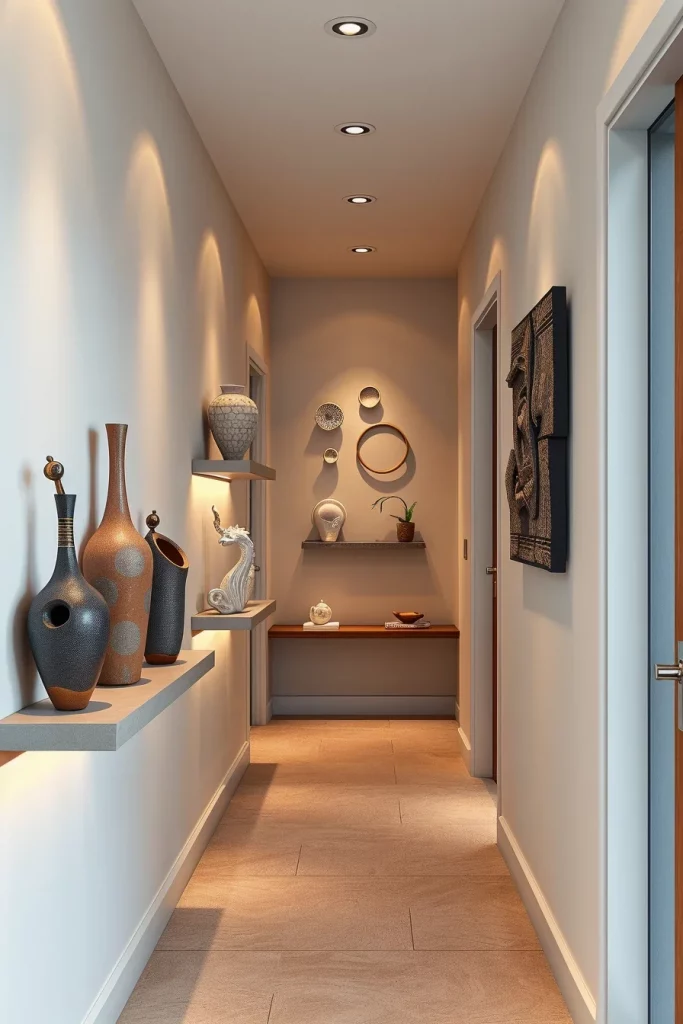
From my experience, fewer decorative objects create a stronger impact. Designers featured in Architectural Digest frequently suggest displaying only a small collection of meaningful pieces, and I agree that restraint often results in a more sophisticated interior.
To complete this look, I would add focused accent lighting directed toward the sculptural objects, allowing their forms and textures to become even more prominent.
Stylish Contemporary Hallway Designs With Curved Details
Curved forms are among the most stylish ways to soften the rigid lines commonly found in narrow hallways. I have noticed that incorporating curves immediately makes a hallway feel more welcoming and visually fluid. Rounded shapes naturally guide movement through the space and reduce the tunnel-like effect often associated with long corridors.
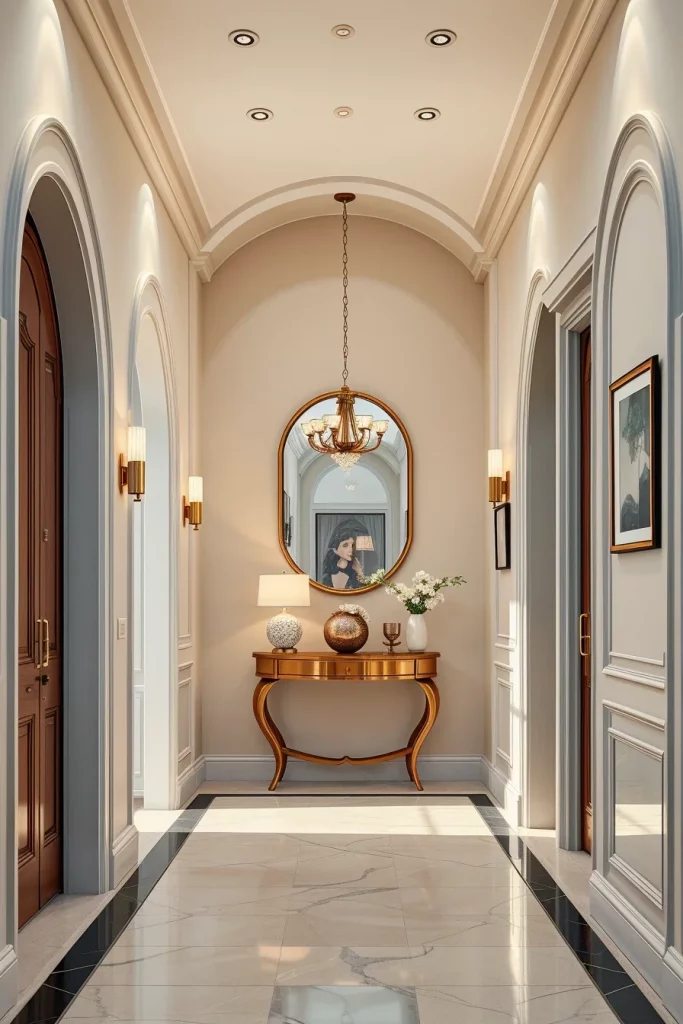
When designing contemporary hallways, I frequently introduce arched mirrors, rounded console tables, curved wall niches, and softly shaped lighting fixtures. Even subtle additions, such as a curved runner or circular decorative accents, can dramatically influence the overall atmosphere. Upholstered benches with rounded edges also provide functionality while maintaining a gentle visual rhythm.
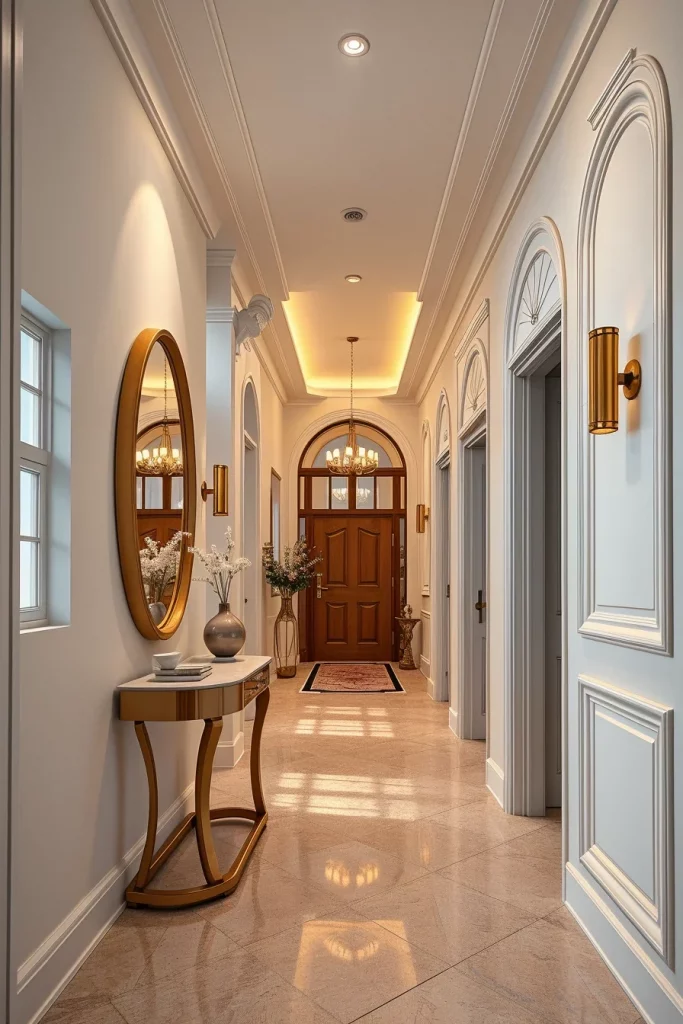
Personally, I find curved elements particularly effective in modern interiors because they create a sense of softness without sacrificing sophistication. Elle Decor has highlighted the growing popularity of curved furniture in recent years, and I have successfully incorporated this trend into many hallway projects.
I would further enhance this concept by using curved architectural details such as arched openings or rounded wall corners whenever renovation is possible.
Creative Storage Solutions That Blend With Decor
Storage is essential in narrow hallways, but I believe it should never compromise aesthetics. Some of the most creative hallway designs seamlessly integrate storage into the overall decor, ensuring that practical necessities remain visually appealing. Built-in solutions are particularly effective because they maximize every available inch.
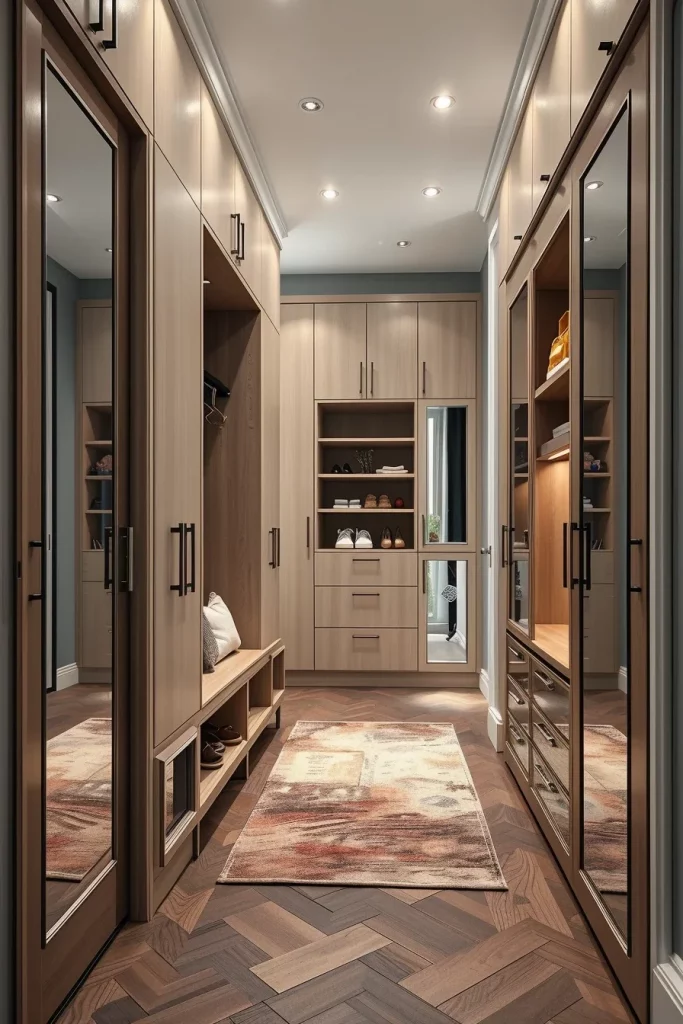
I often specify floor-to-ceiling cabinetry with handleless fronts, recessed niches, concealed shoe storage, and multifunctional benches with hidden compartments. Decorative baskets, integrated coat hooks, and slim shelving systems help organize everyday items while maintaining a cohesive appearance. Mirrored cabinet fronts are another excellent option because they increase both storage capacity and perceived space.
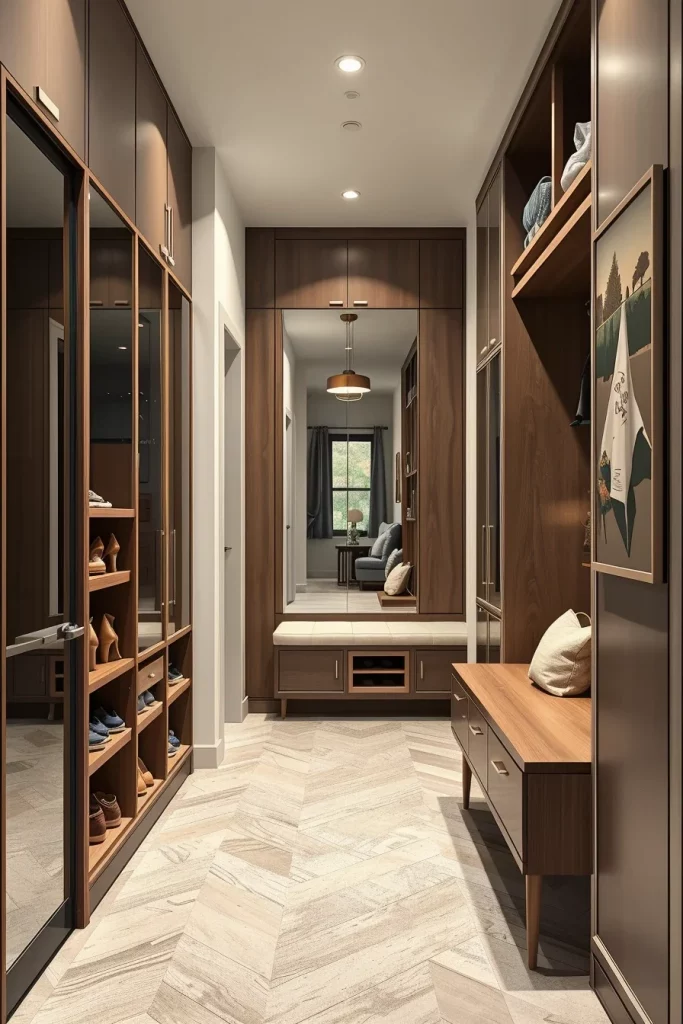
In my experience, custom storage solutions provide the best long-term results. Better Homes & Gardens regularly emphasizes the importance of tailored storage, and I have found that bespoke cabinetry dramatically improves functionality in narrow hallways.
To make the storage area feel less utilitarian, I would incorporate decorative lighting, artwork, or textured finishes that visually connect the cabinetry with the surrounding design.
Luxe-Inspired Decorative Touches For Narrow Hallways
A narrow hallway can still feel refined and elegant when designed thoughtfully. I often incorporate unusual luxe-inspired details that elevate the space without making it appear excessive. Carefully selected materials, finishes, and accessories can introduce a sophisticated atmosphere while preserving openness.
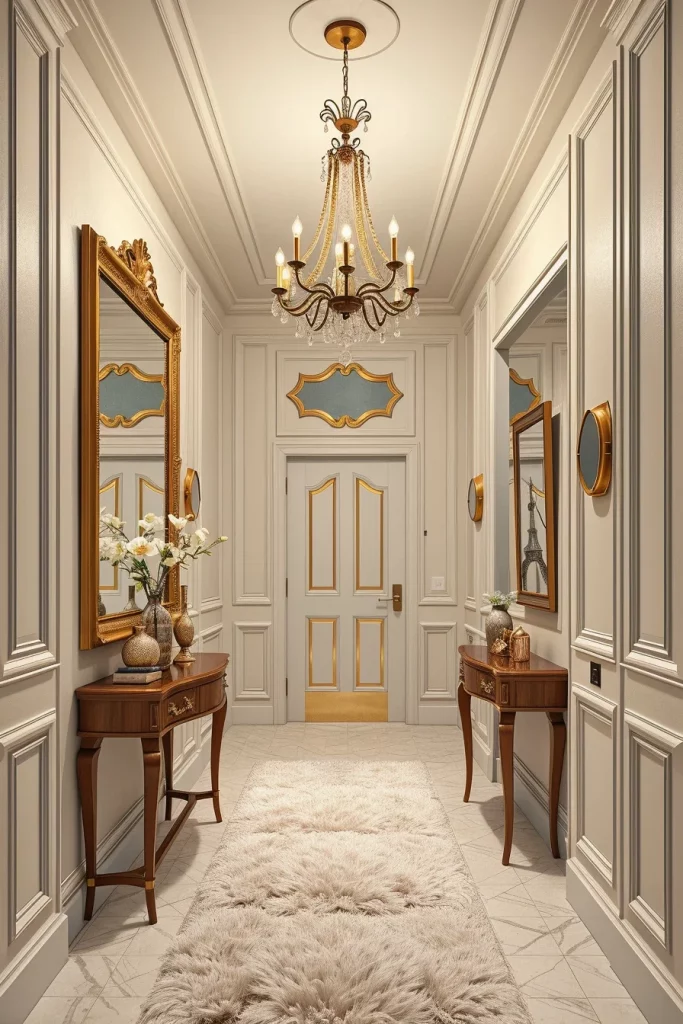
My preferred elements include oversized mirrors, elegant stone surfaces, sophisticated wall paneling, plush runners, and statement lighting fixtures. Decorative accents such as marble trays, sculptural vases, and premium textiles contribute to a polished appearance. I also like using subtle metallic details and layered textures to create depth and visual richness.
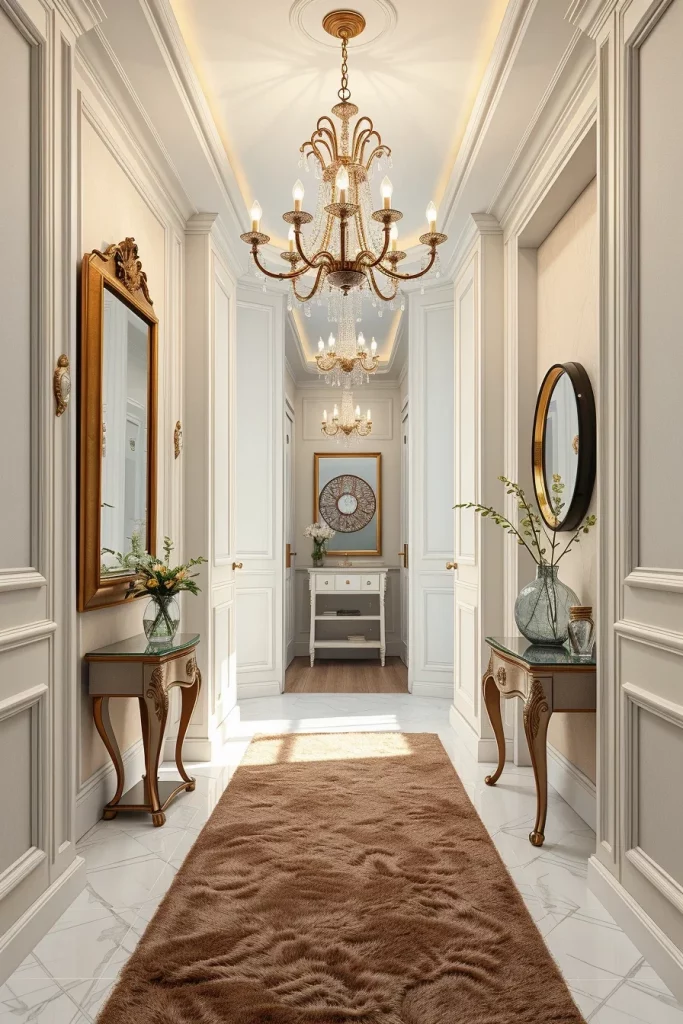
Personally, I believe that luxury in small spaces comes from quality rather than quantity. House Beautiful frequently recommends investing in a few standout elements instead of filling a room with numerous accessories, and I consistently see excellent results using this approach.
I would also include custom millwork or decorative molding to reinforce the refined aesthetic and add architectural interest.
Artistic Entryway Styling Ideas For A Memorable First Impression
The entry hallway establishes the mood for the entire home, which is why I always prioritize creating a unique and memorable first impression. Even in narrow spaces, thoughtful styling can make guests immediately feel welcomed while showcasing the homeowner’s personality.
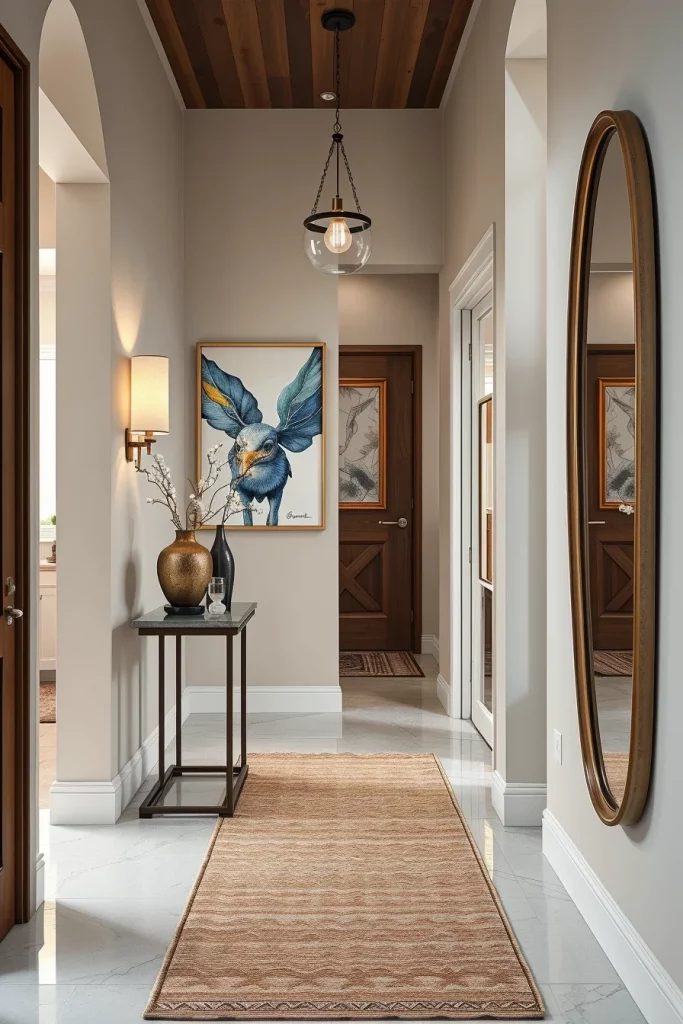
I often begin with a statement mirror or oversized artwork as the focal point. A slim console table paired with decorative lighting, curated accessories, and a textured runner creates an inviting composition. Fresh greenery, sculptural decor, and carefully selected artwork contribute warmth and individuality without overcrowding the space.
From my experience, entryways feel most successful when they balance practicality and aesthetics. Designers from Elle Decor often encourage homeowners to personalize entry spaces with meaningful art and objects, and I strongly support this approach because it creates a more authentic interior.
I would complete the entryway with a discreet tray or decorative bowl for keys and daily essentials, ensuring the space remains organized and functional.
A narrow hallway offers endless opportunities for creativity and style when designed thoughtfully. By incorporating artistic elements, sculptural details, smart layouts, and eye-catching decor, even the smallest hallway can feel spacious and sophisticated. Use these inspiring ideas to transform your hallway into a beautiful transitional space that reflects your personality and enhances the overall look of your home.