Layering rugs is one of those tricks that looks complicated but is really just about starting with a solid base and adding a smaller rug on top. The idea is simple: use a larger neutral rug, usually jute or sisal, to define the space, then top it with a smaller patterned or textured rug to add color and focus.
This article covers 35 different layered rug setups, from modern farmhouse living rooms to boho bedrooms and coastal porches. Each example shows how the base rug and the top rug work together, so you can see what combinations might work in your own home.
Modern Rustic Living Room with Jute and Cream Rugs
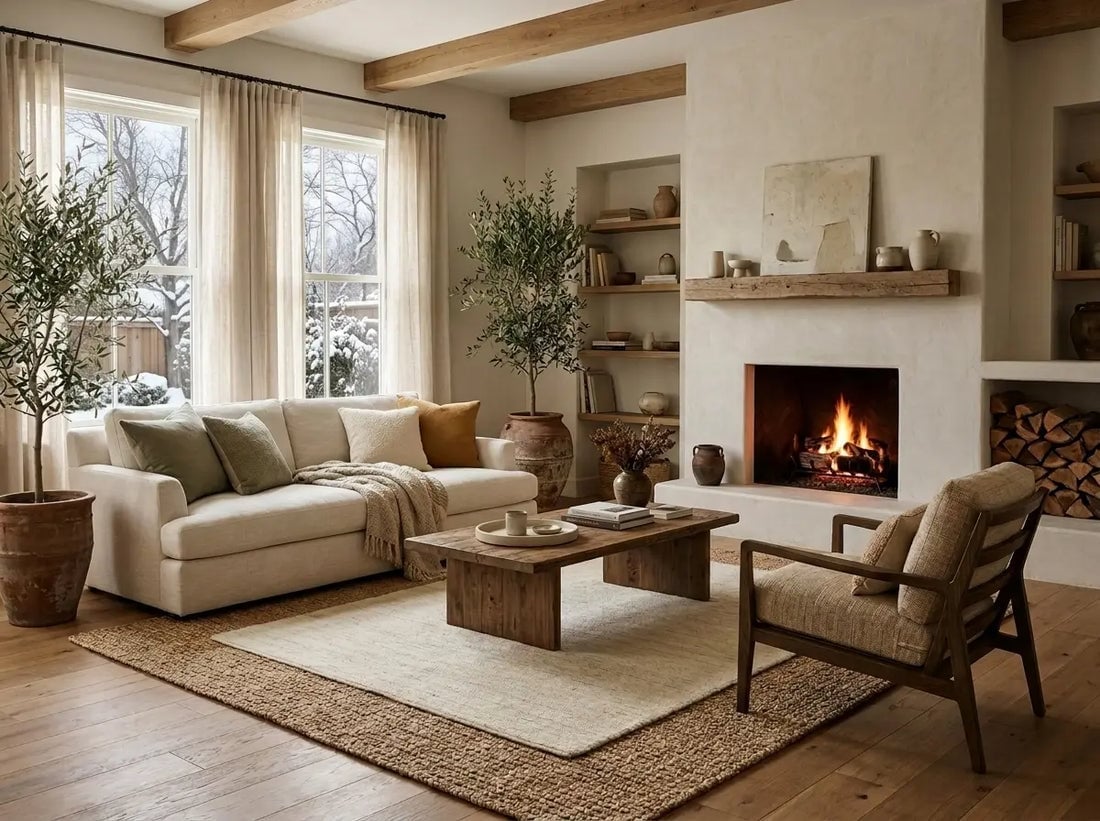
A jute rug the full width of the seating area makes a natural anchor, and the cream rug layered on top of it pulls the sofa and armchair into a defined zone without blocking the fireplace. The textured jute edge that shows around the cream rug adds a rough, organic border that keeps the neutral palette from reading as flat. Wood and plaster finishes in the room echo that same contrast between smooth and coarse, so the rug layer feels like part of the architecture rather than an add-on.
Cowhide Layered Over Jute in a Modern Rustic Setting
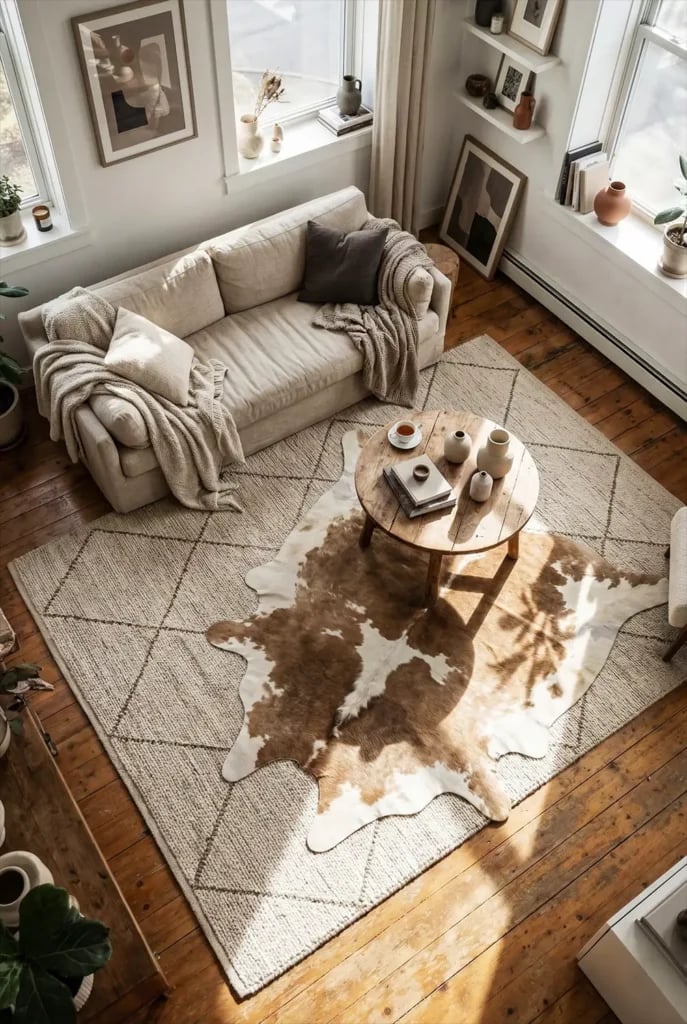
A cowhide rug on top of a jute base is a short move that changes the whole floor. The jute supplies a consistent warm beige field, and the cowhide breaks it with irregular patches of cream and brown that follow the hide’s natural shape. Sunbeams from a nearby window hit the cowhide’s glossy patches and the jute’s matte weave differently, which gives the open plan a subtle floor-level texture shift without adding a single piece of furniture. The wood coffee table and sofa sit on the jute, so the cowhide reads as an accent zone within the larger rug area.
Transitional Living Room with Textured Jute and Neutral Rugs
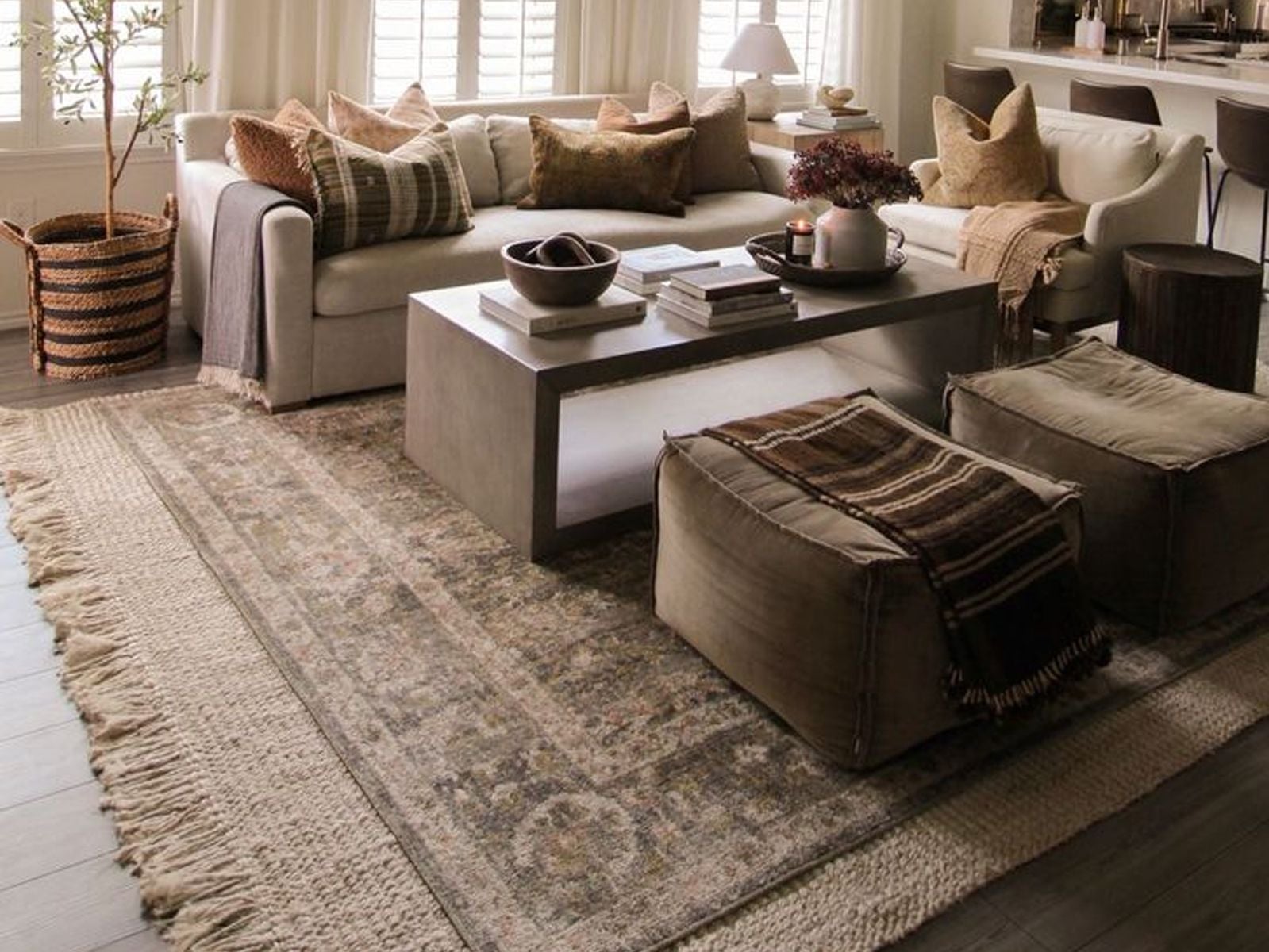
How do you keep a roomy living room from feeling like one big empty floor without blocking the walkways? A large neutral rug laid wall to wall under the seating group sets the footprint, and a second textured rug with a visible fringed edge sits on top to mark the coffee table zone. The base rug extends past the sofa legs, so the layered look reads as intentional layering rather than a rug that is too small.
The fringed edge of the top rug breaks up the smooth expanse of the base rug and adds a tactile detail that contrasts with the concrete floor and linen upholstery. The palette stays within beige, cream, and grey, so the texture does the work instead of pattern.
Eclectic Living Room: Cowhide on Jute for Contrast
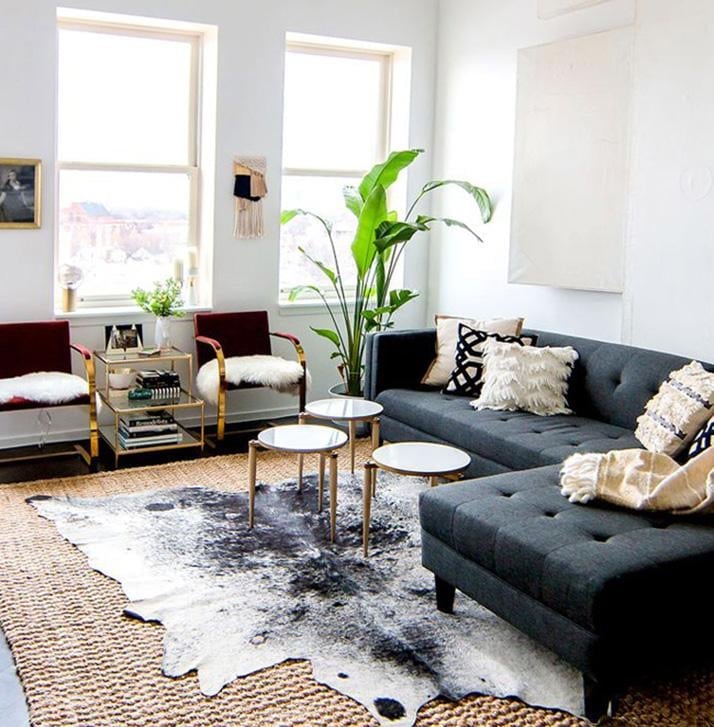
A cowhide rug laid over a jute rug in a compact living room creates a clear center without taking up extra floor space. The jute base extends beyond the black and white cowhide, so the darker, irregular pattern sits inside a lighter beige frame. The sectional sofa and side tables stay on the jute, which keeps the cowhide from competing with the furniture legs. Ambient room light hits the cowhide evenly, so its pattern stays visible without glare.
Modern Boho Patio with Vibrant Plaid Layered Rug
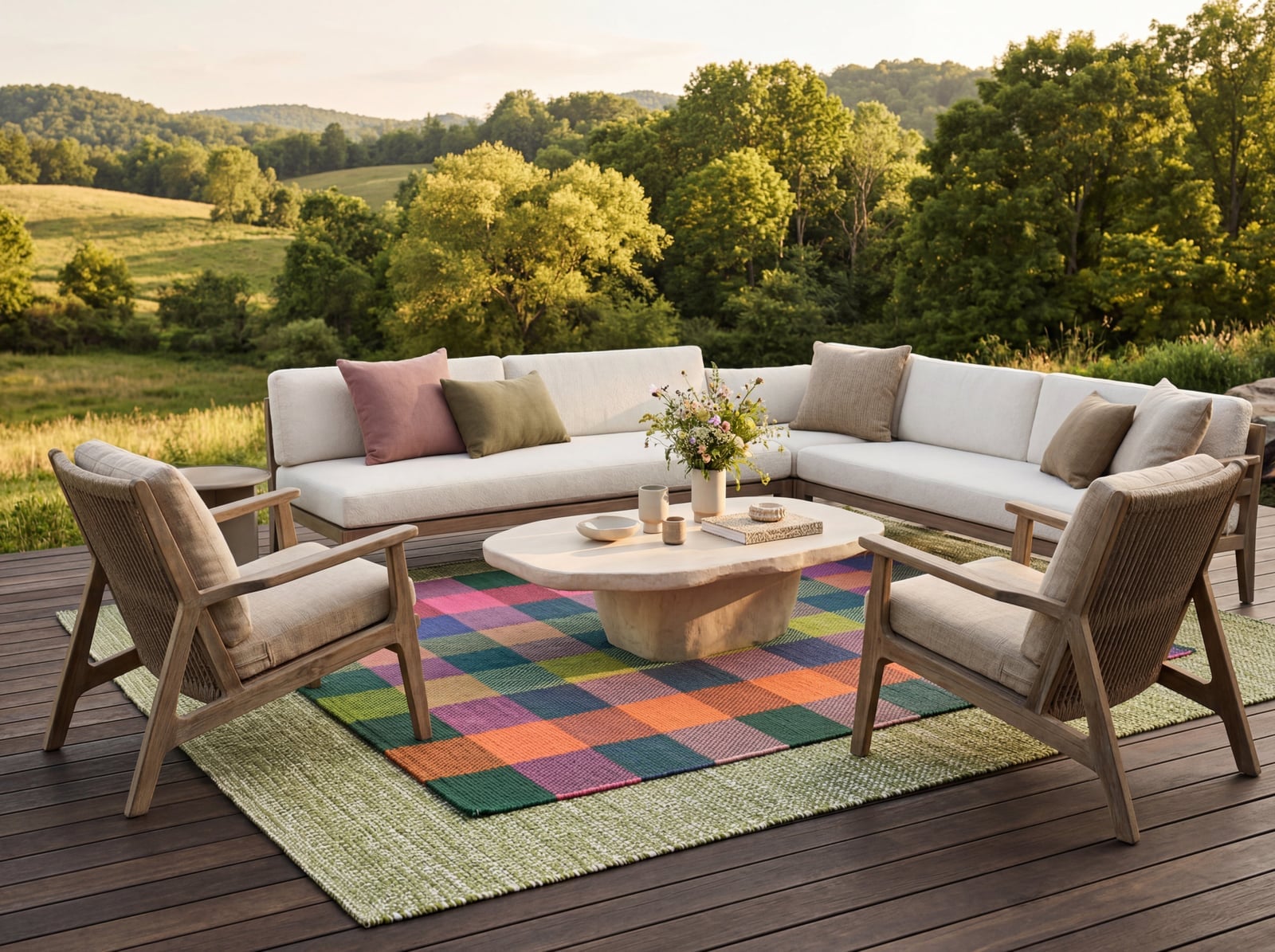
A woven jute rug on a patio handles the weather, and a vibrant plaid rug on top of it brings the color without risking the base layer to direct sun and rain. The jute extends past the plaid rug on all sides, so the seating area feels grounded and the plaid reads as an accent rather than the whole floor. Rattan armchairs and a wood oval coffee table sit on the jute, leaving the plaid rug as a visual landing zone under the sectional sofa. Check your USDA zone before leaving natural fiber rugs outside year-round; in wet climates, a synthetic base rug under a washable top layer lasts longer.
Boho Living Room with Patterned Textile Over Jute
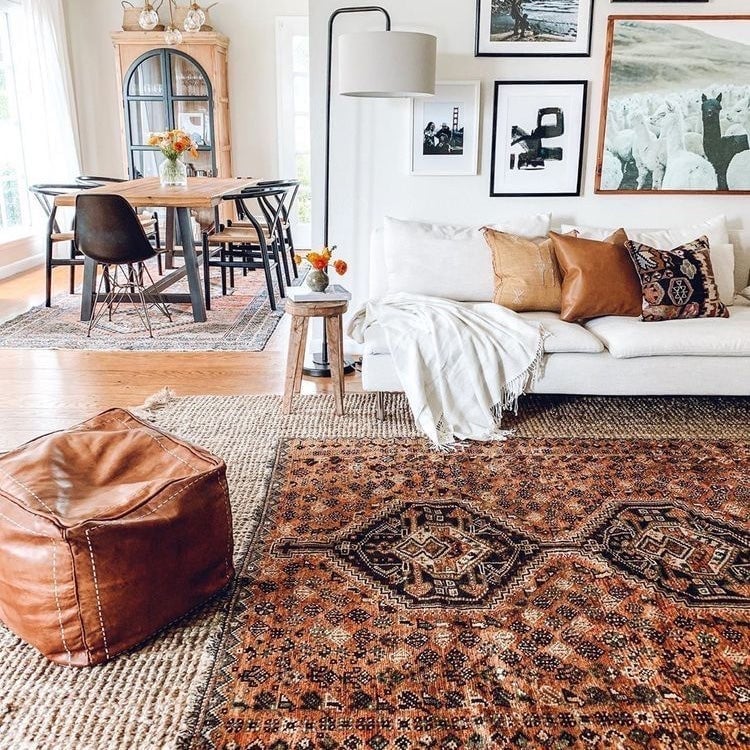
A jute base underfoot is a practical starting point, but swapping it for a flatwoven cotton kilim is a lighter alternative that still adds texture without the weight. Here, a vibrant patterned rug in rust and cream sits over a larger jute layer, anchoring a seating area with a sofa and a pouf. The natural daylight and overhead fixture keep the room feeling open rather than crowded. The palette of earthy tones and rust ties the layered rugs to the dining set nearby, making the whole room feel connected rather than patched together.
Boho Corner Vignette with Round Jute Layered Rug
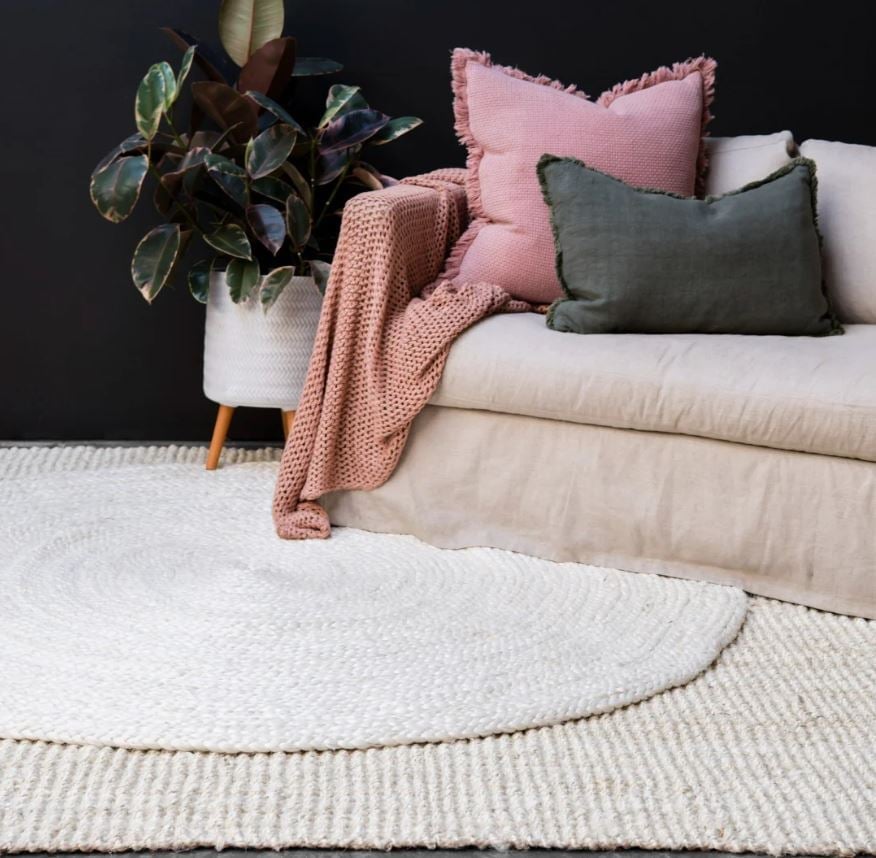
A round jute rug layered over a flat weave base softens the corner of a living room without demanding a full layout rethink. The compact scale keeps the vignette from competing with the sofa and throw pillows nearby. Cream, beige, pink, and green tones in the knit blanket and plant pots echo the rug’s natural texture. Soft ambient light makes the jute’s weave more visible, which is the whole point of a corner setup like this.
Eclectic Boho Living Room with Multiple Layered Rugs
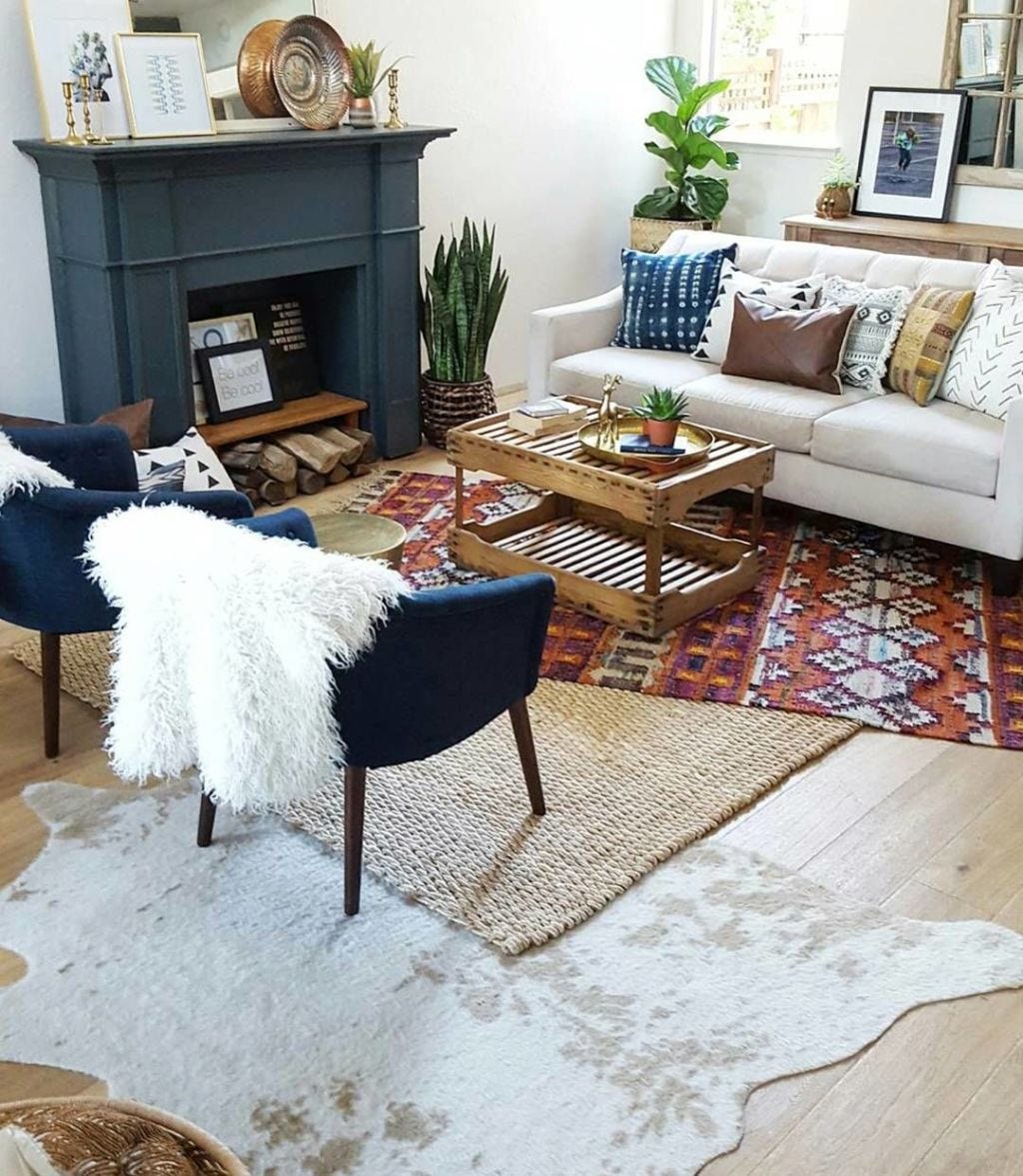
One rug is a foundation; three rugs is a statement. In this roomy living room, a bold geometric patterned rug sits over a jute base, with a smaller cowhide layer adding contrast near the fireplace. The palette of blue, orange, purple, beige, and white keeps the layers from feeling chaotic. The wood coffee table and armchairs break up the pattern visually, so the eye moves between the rugs rather than landing on one busy spot. Natural daylight and overhead light keep the layers readable.
Vibrant Geometric Rug Over Jute Runner in Eclectic Space
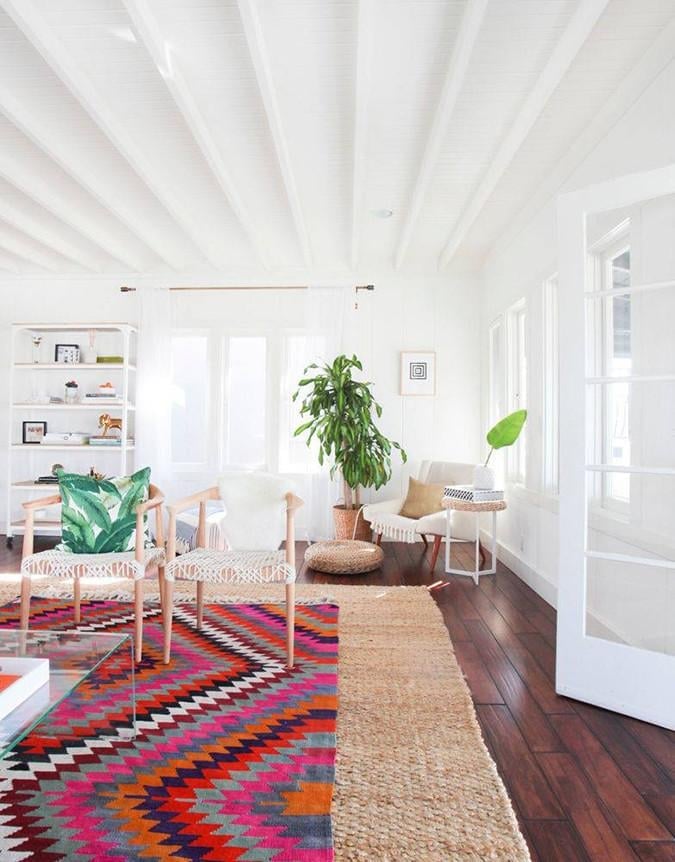
Can a layered rug hold up in a high-traffic open plan without looking worn after a season? A wool geometric rug over a jute runner is a practical answer. The vibrant multi-color pattern in pink, orange, yellow, and green hides daily dust and foot traffic better than a solid tone. The jute runner underneath acts as a protective barrier between the wool and the floor, which matters in an open layout with chairs and a bookshelf nearby. Bright natural daylight keeps the colors from feeling heavy. This setup works because the base rug is neutral and the top rug is dense enough to stay flat.
Eclectic Living Room with Large Red Patterned Rug Over Jute
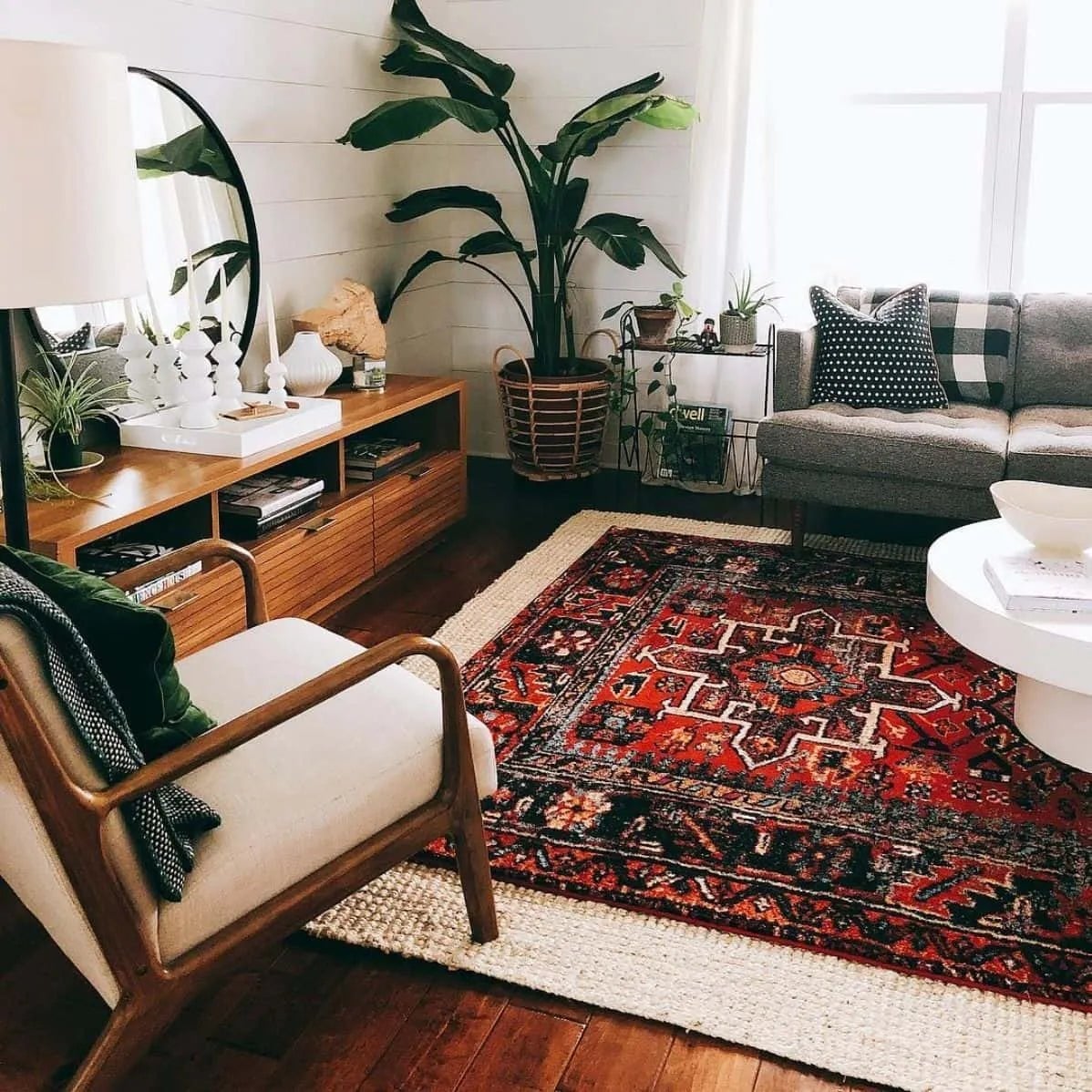
A large red patterned rug in wool layered over a jute base brings warmth to an eclectic living room without relying on wall color. The red, cream, and black palette ties the sofa and armchair together, while the jute peeking out at the edges softens the transition to the wood floor. Natural light from the window and a nearby lamp keep the red from dominating the room. The scale of the top rug matters here: it is large enough to sit under the coffee table and front legs of the seating, so the layer reads as intentional rather than accidental.
Eclectic Living Room: Bold Red Patterned Rug Over Stripes, Indoor
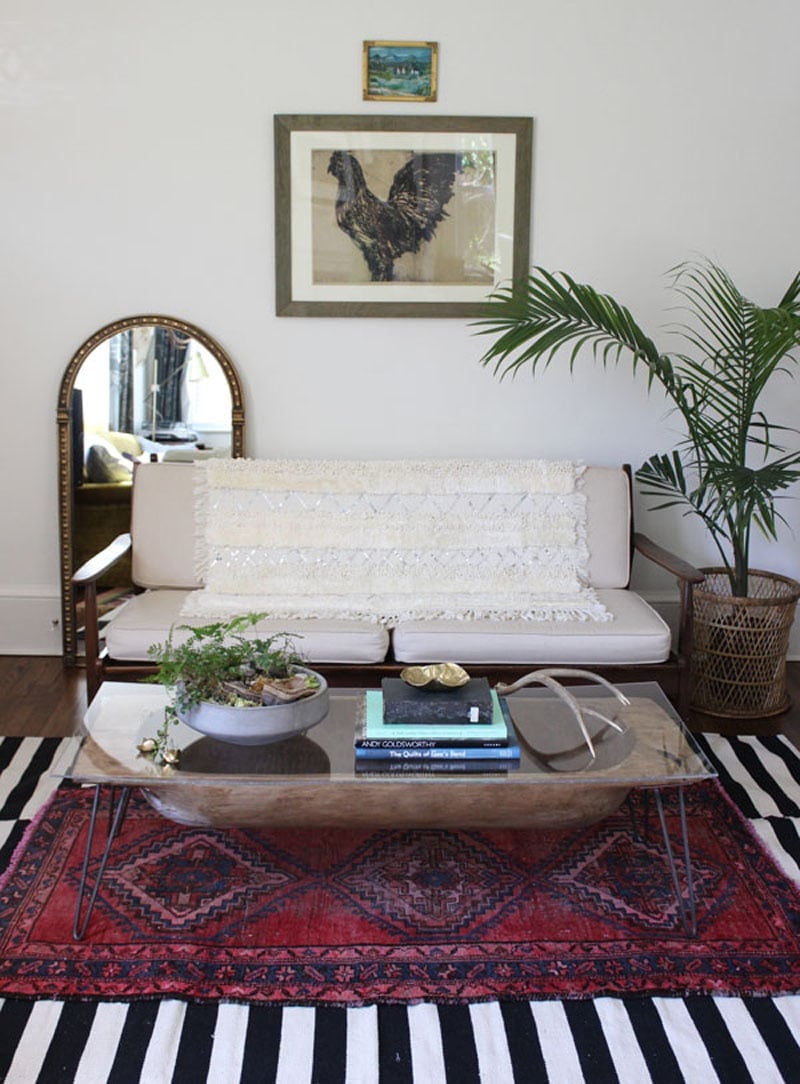
A good rule for layered rugs is to let the bottom rug peek out enough that it reads as a deliberate border. In this eclectic living room, a bold striped rug sits under a smaller patterned one, with the striped border visible along the edges. The palette sticks to red, black, cream, and wood tones, keeping the contrast high without feeling chaotic. Natural light from a window and a couple of lamps keep the wool and jute textures readable. The sofa, armchair, and coffee table sit comfortably over the combination, and the room feels roomy rather than crowded. The striped rug does the work of defining the zone; the patterned layer adds the personality.
Modern Farmhouse Living Room Defining Seating Area with Rugs
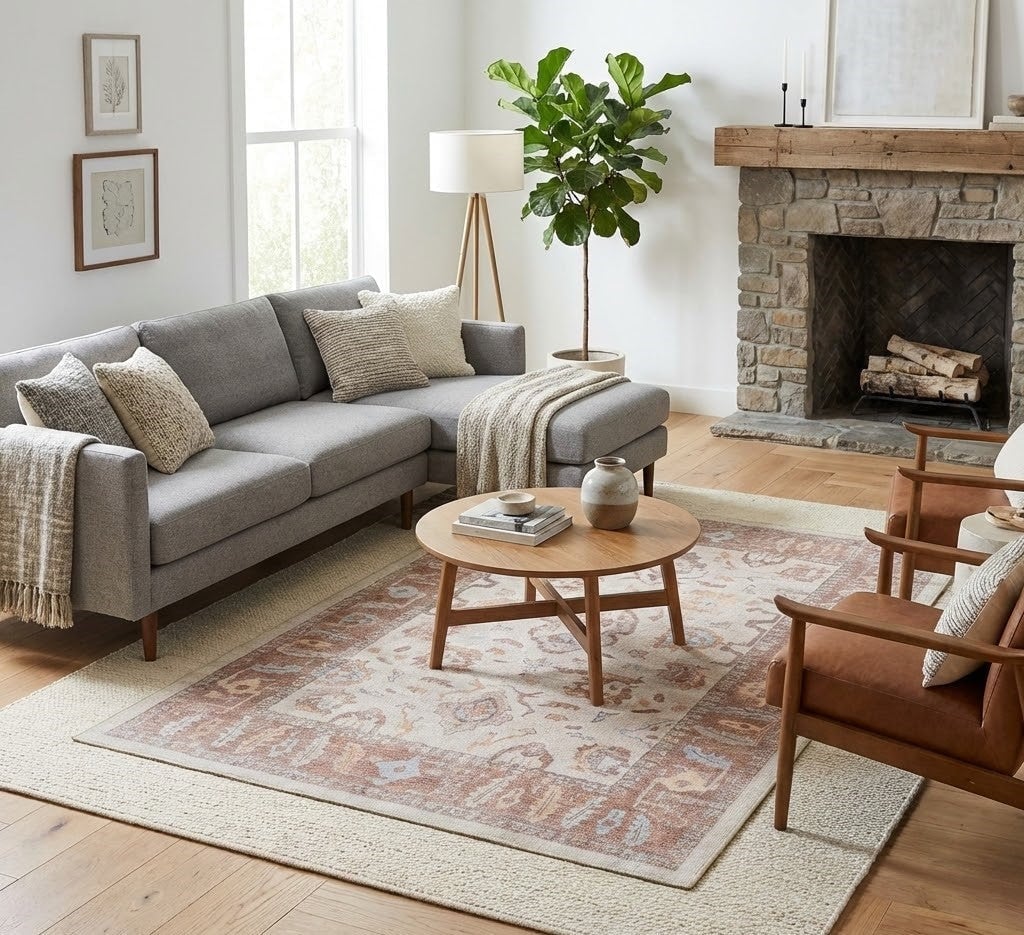
Some layouts rely on furniture alone to mark a zone, but in a modern farmhouse living room, layered rugs can do that job with more warmth. Here, a neutral base rug in cream tones sits under a rust-toned patterned layer, and together they anchor the sectional sofa, coffee table, and armchair. The palette stays quiet enough that the rust reads as an accent rather than a statement. Natural daylight from a window and a floor lamp keep the wool and linen textures visible without washing them out.
The fireplace anchors one end of the room, and the rugs pull the seating area forward so the space feels intentional rather than floating. The key is choosing a base rug large enough to hold the furniture group, then placing the smaller layer where the coffee table sits. That way, the pattern lands where people look most, and the neutral edge keeps the rest of the room grounded.
Boho Bedroom with Patterned Wool Over Jute Rug
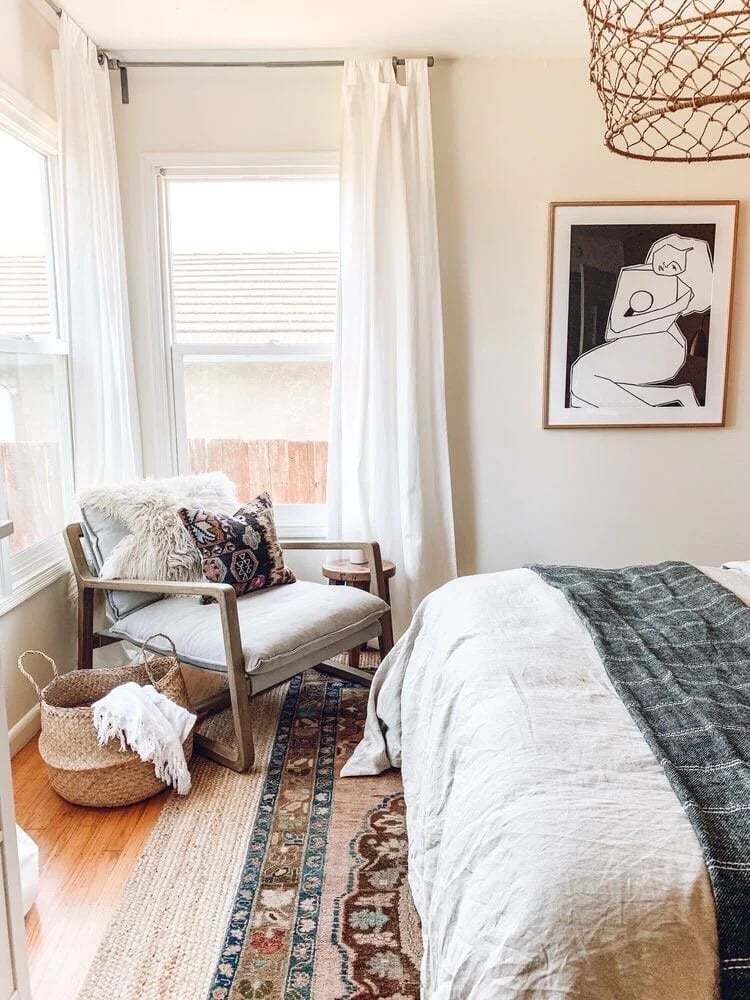
A patterned wool rug over a jute base brings two textures into a compact boho bedroom without crowding it. The jute provides a natural, slightly rough foundation, while the wool layer adds softness and a cream, brown, black, and white pattern. A chair and a woven basket sit near the edge of the layered rugs, and natural daylight from the window keeps the fibers looking honest. The corner view shows how the combination fills the floor without overwhelming the room. The jute anchors the space; the wool gives it somewhere to land.
Traditional Farmhouse Living Room with Intricate Patterned Rug Layer
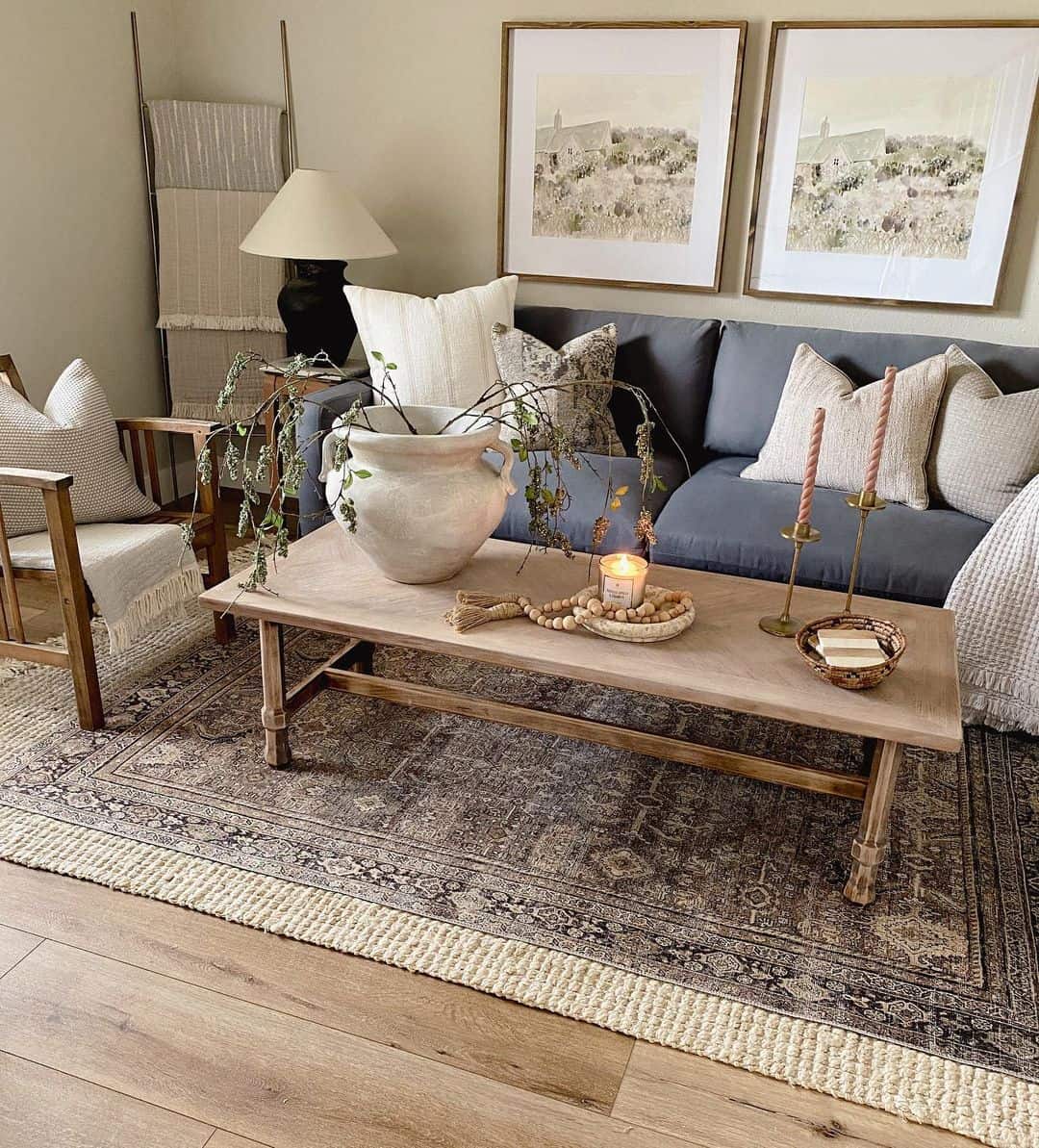
This traditional farmhouse living room uses an intricate patterned rug as the top layer, and the effect is more refined than a single large rug would be. The base rug is neutral and understated, so the navy, grey, beige, and cream pattern on top gets all the attention. A sofa, armchair, and coffee table sit over the combination, and a ladder shelf in the corner adds vertical balance. Ambient room light and a table lamp keep the woven textile details visible without glare. The smaller rug sits centered under the coffee table, which means the pattern stays where people gather rather than spreading across the whole floor. The contrast between the detailed top layer and the plain base keeps the look intentional.
Transitional Bedroom with Cowhide and Woven Textile Layer
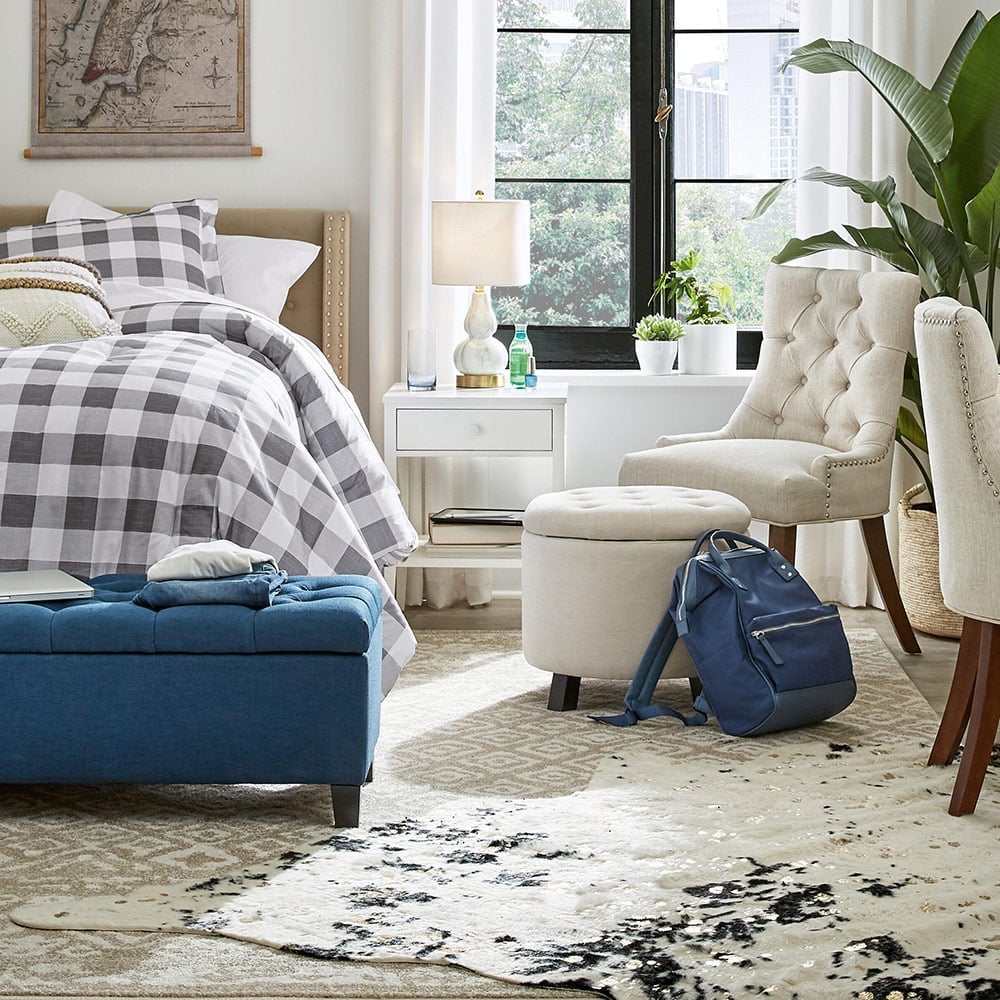
A practical rule for layered rugs in a transitional bedroom is to pair a natural hide with a woven textile base so the contrast feels grounded rather than random. Here, a cowhide rug sits over a neutral woven layer, with the hide’s irregular shape breaking up the straight lines of the room. The palette stays simple: black, white, and neutral tones, which keeps the look calm. Natural daylight from the window lets the cowhide’s natural markings show without competing with the base texture.
The rugs extend under the bed and into the seating area, where a couple of chairs, an ottoman, and a bench complete the zone. The woven layer provides enough grip to keep the cowhide from shifting, which matters in a room where people walk across the rugs daily. The combination works because the hide adds visual weight without adding pattern, and the base rug keeps the floor from feeling bare around the edges.
Coastal Farmhouse Living Room with Jute and White Cowhide
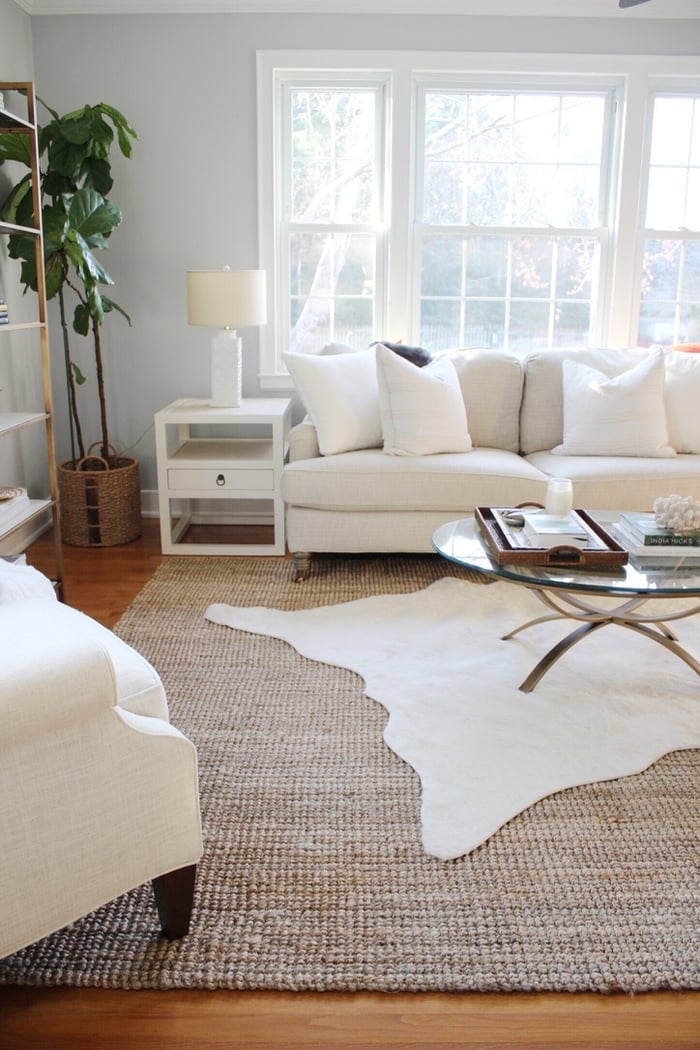
A white cowhide over a natural jute base keeps the coastal farmhouse palette clean without feeling sterile. The layered rugs anchor the seating area while the cowhide’s organic shape breaks up the jute’s straight edges. Wood and linen pieces around the room echo the natural tones, so the layers don’t compete with the furniture. Bright daylight makes the white cowhide read as a soft highlight rather than a heavy contrast.
Bohemian Bedroom with Vibrant Red Patterned Rug Layer
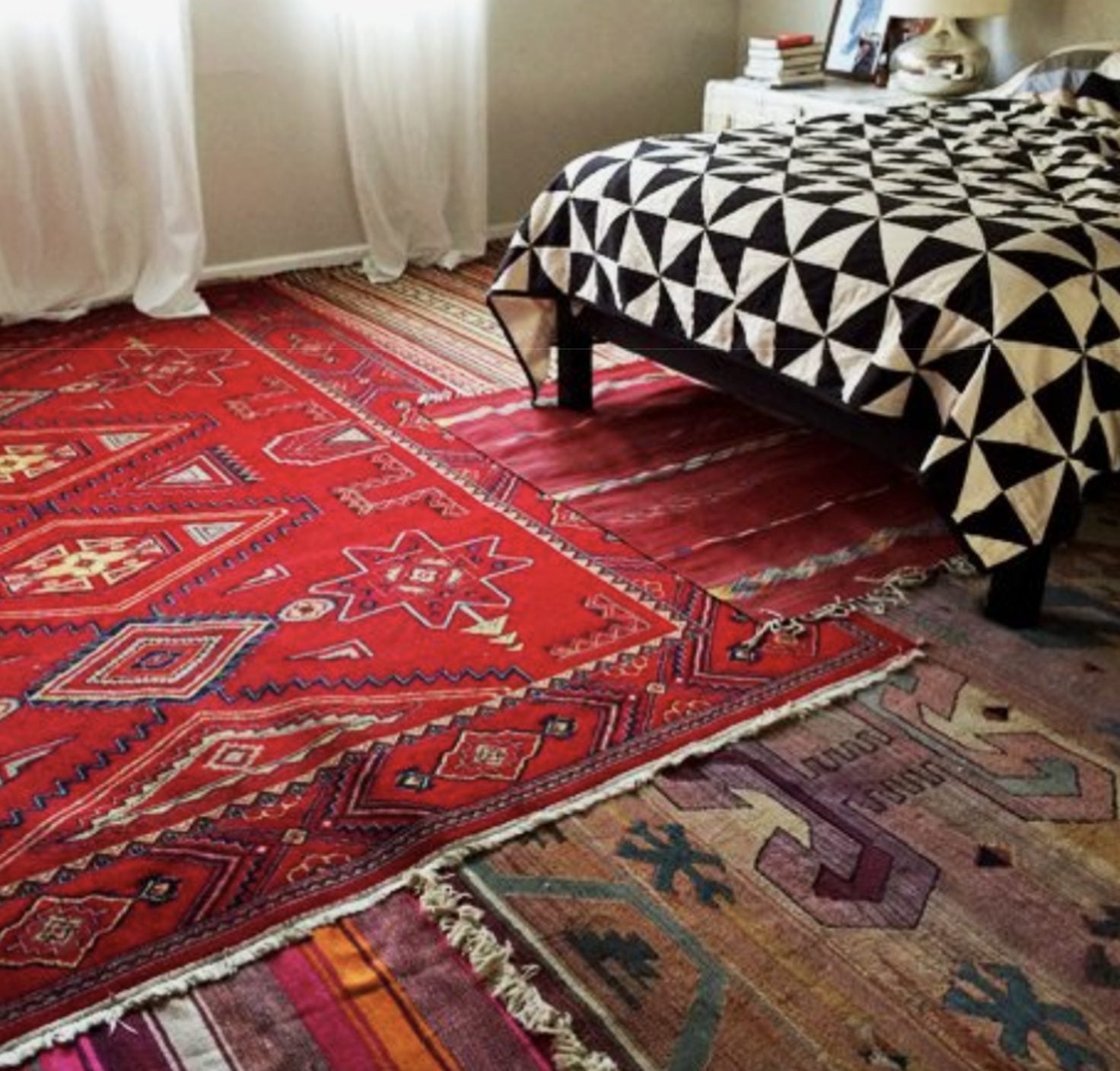
A practical rule for a rental bedroom: layer a vibrant patterned rug over a larger neutral base to add color without committing to a permanent floor change. The red and cream wool rug brings warmth and personality, while the cotton base underneath protects the flooring and defines the space. Earth tones in the bedding and accessories tie the bold layer into the rest of the room. Natural light from the window softens the red, keeping it from overwhelming the room. When you move out, the top rug rolls up and the neutral base stays or goes with you.
Coastal Farmhouse Bedroom: Jute Under Striped Rug
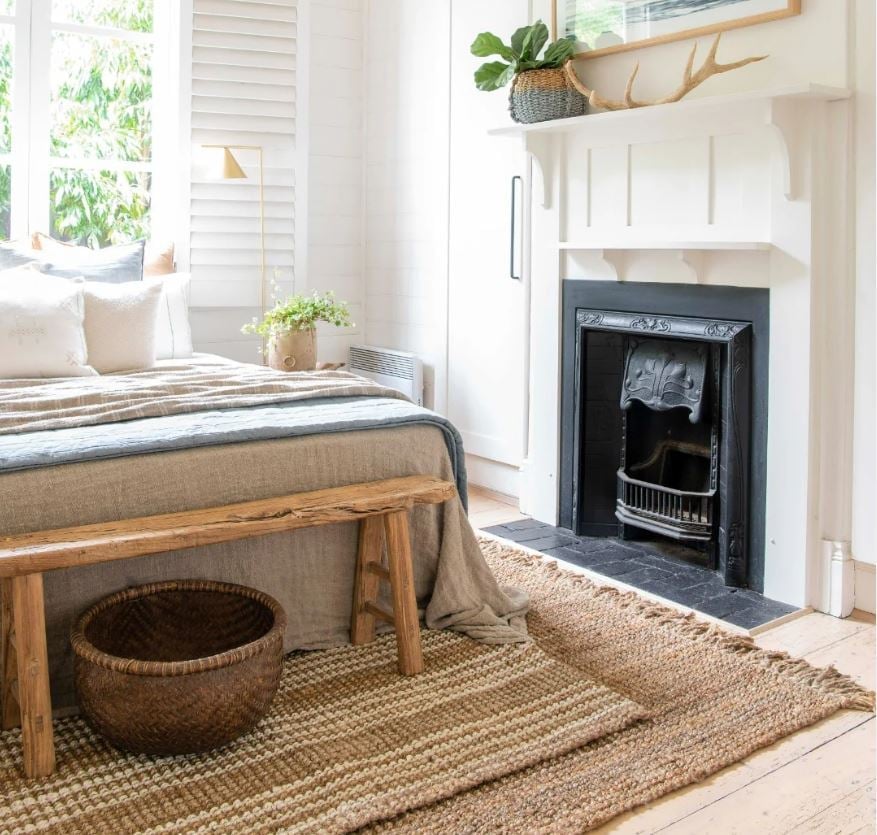
A jute base under a striped rug gives the coastal farmhouse bedroom more texture than a single rug alone would. The jute extends past the striped layer, creating a border that makes the room feel larger and the bed area more defined. A floor lamp and natural daylight balance the neutral and blue tones, keeping the space airy rather than heavy.
The bench at the foot of the bed and the basket in the corner benefit from the jute’s grip, staying put on the textured surface. The striped rug sits centered under the bed, so the jute’s visible edges frame the layout without adding visual clutter. This two-rug setup works well in bedrooms where you want a soft layer underfoot but need the durability of jute in high-traffic zones.
Boho Living Room: Geometric Base with Blue Patterned Layer
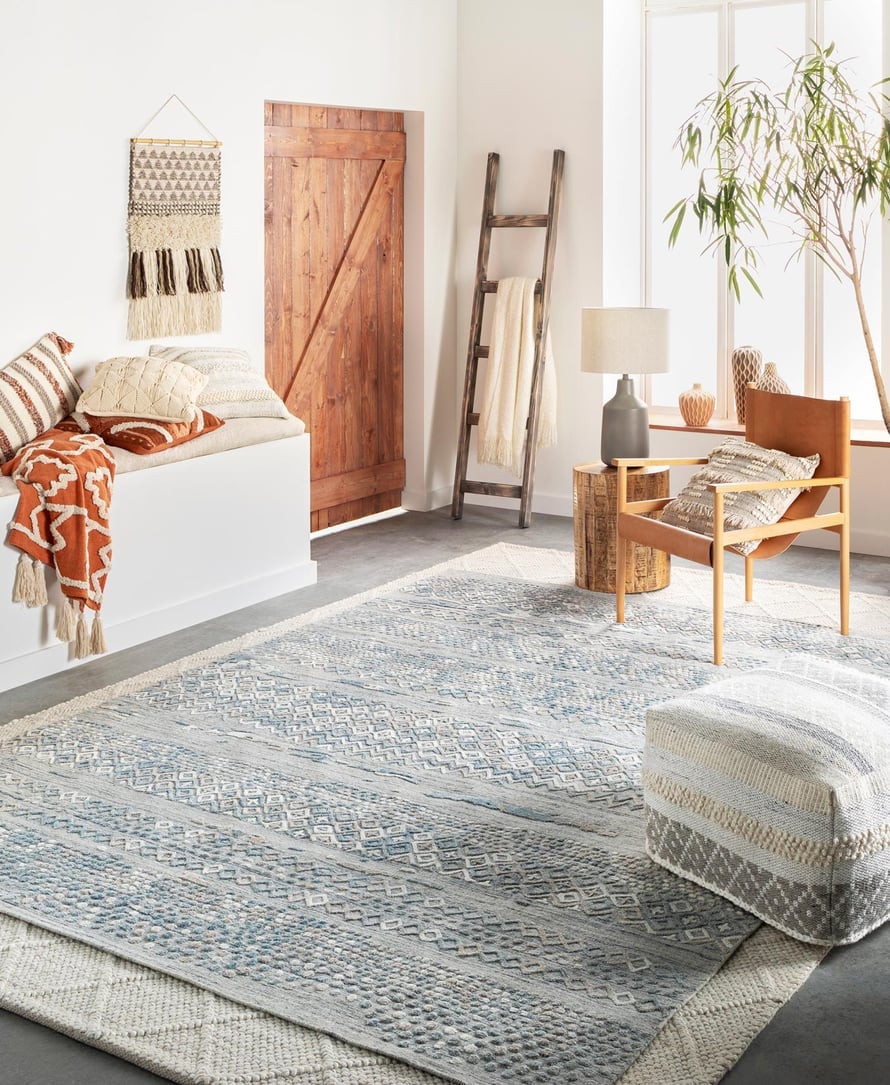
A blue patterned rug layered over a geometric base gives the boho living room two distinct textures without competing patterns. The geometric base stays subtle in grey and cream, letting the blue layer take the visual lead. Natural daylight keeps both rugs looking soft rather than stark. The sofa and ottoman sit partly on the layered area, which helps anchor the arrangement and keeps the rugs from shifting during use.
Boho Living Room with Patterned Rug Over Jute and Natural Daylight
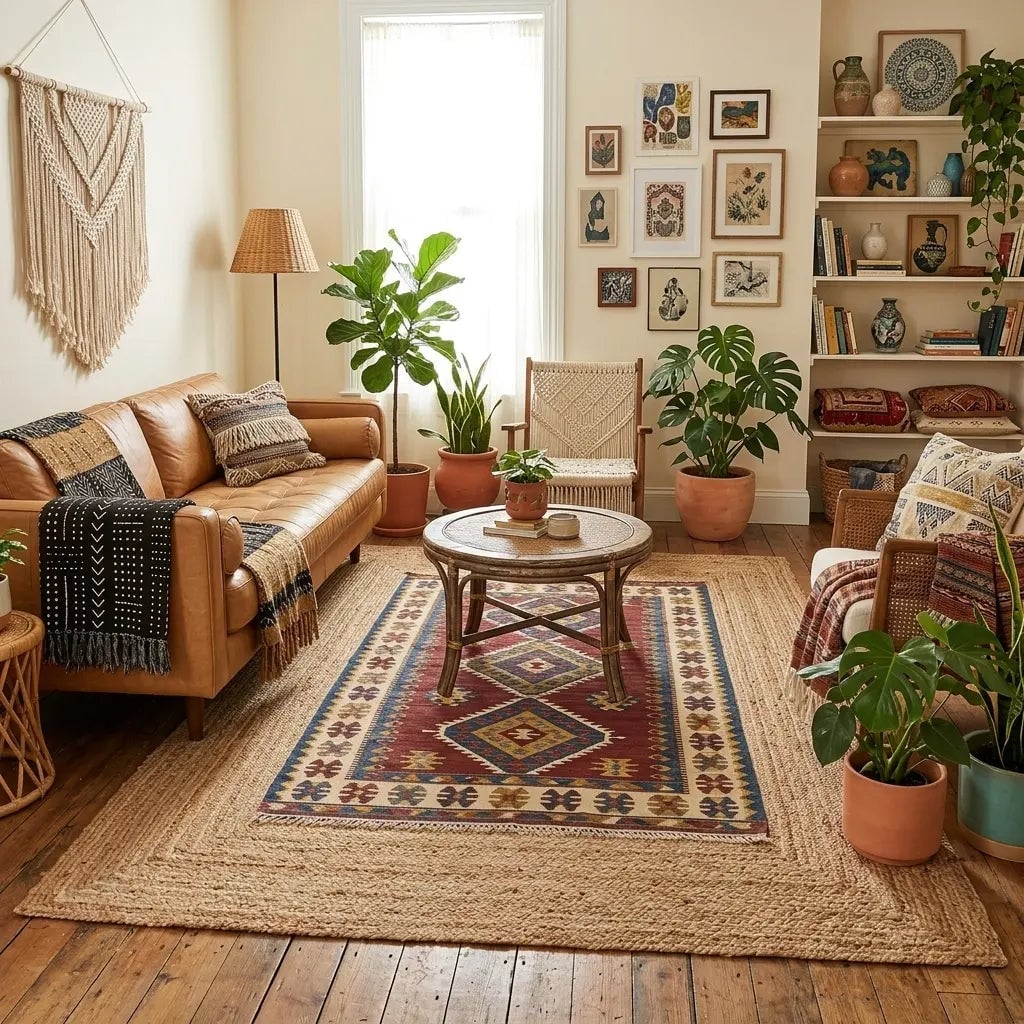
This boho living room shows how a patterned wool rug over jute can bridge warm and cool tones. The jute base in tan grounds the space, while the wool layer in red, blue, and green pulls color from the rattan chair and macrame wall hanging. Natural daylight from the window and a floor lamp keep the layered rugs from feeling heavy, even with the leather sofa nearby. The jute extends beyond the patterned rug, so the room still reads as open rather than crowded. Rattan and wood pieces reinforce the natural fiber theme without competing with the rug layers.
Boho Living Space: Shag Over Jute for Defined Areas
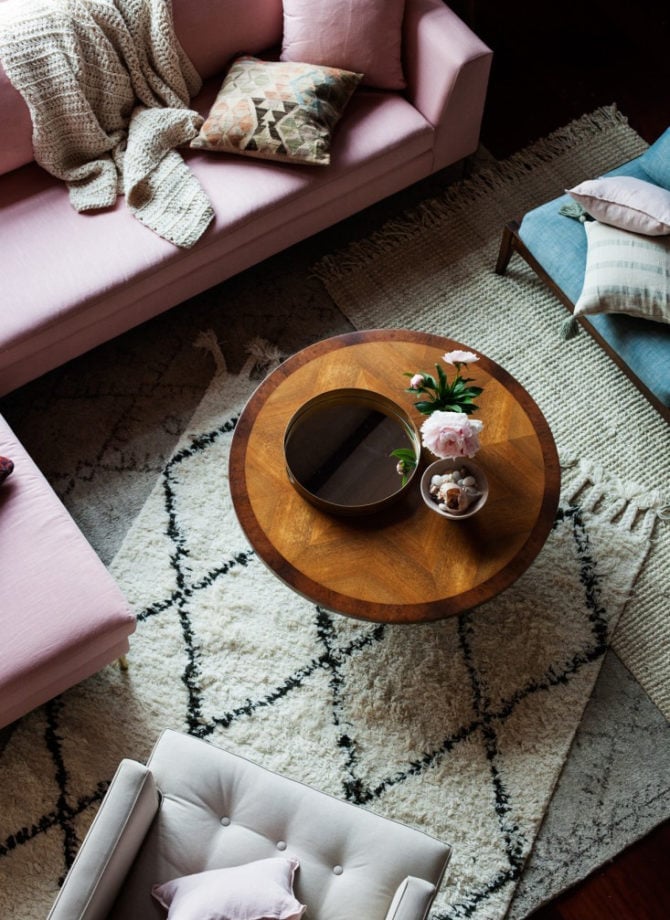
In an open plan room, a large jute rug acts as a neutral base that anchors the whole seating zone without dictating where furniture should go. Layering a shag rug on top then carves out a more intimate conversation area within that larger footprint. The cream, black, pink and blue palette of the shag rug brings in color and softness against the natural jute, while the wood coffee table and metal-framed seating keep the arrangement grounded. The overhead lighting works fine here since the jute base reflects some light and the shag pile adds warmth. For renters, this approach avoids altering the floor while still defining distinct zones in a shared space.
Modern Living Room with Patterned Rug Over Jute Base
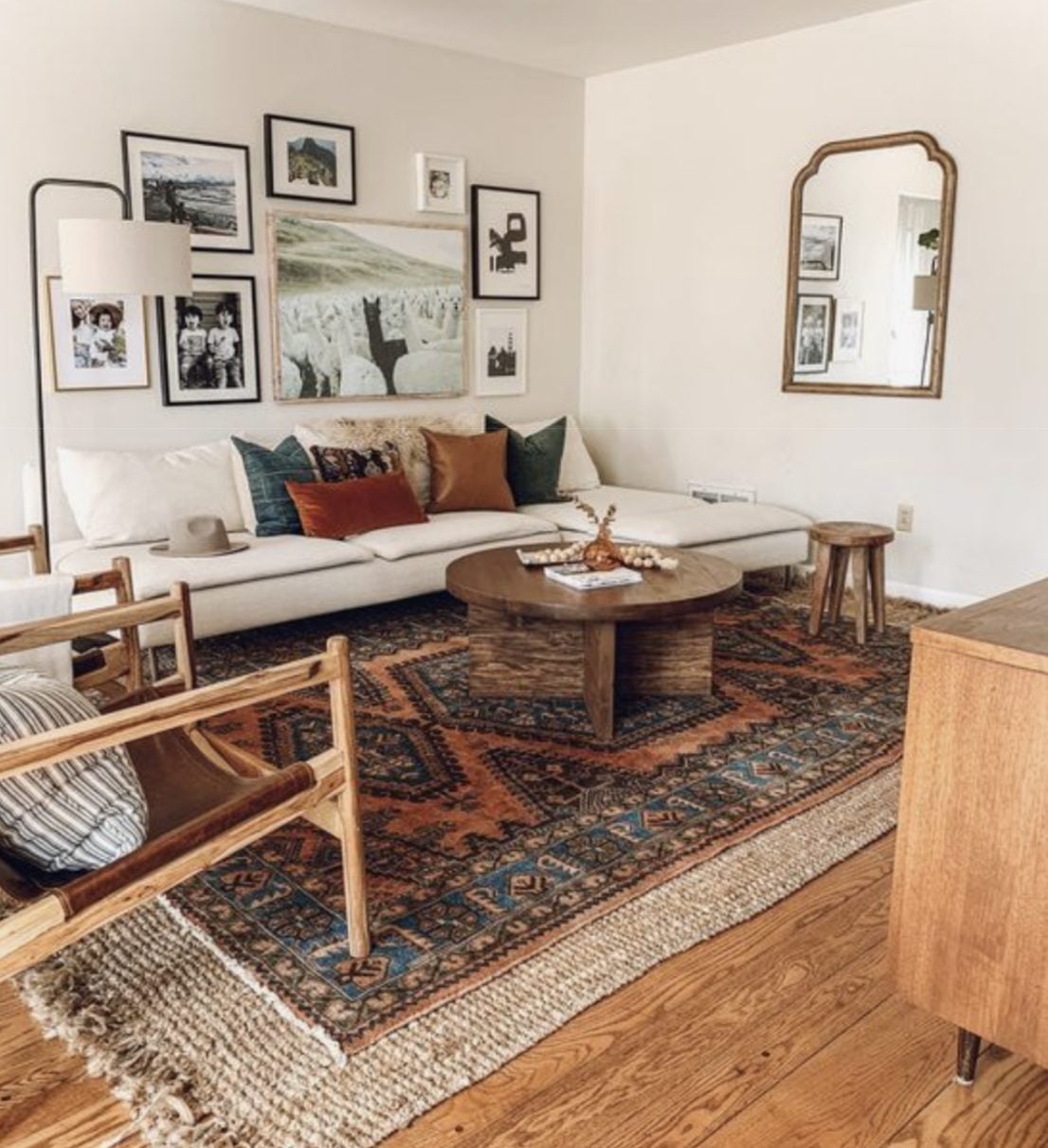
A large patterned rug in orange and blue sits directly on top of a neutral jute base, creating a clear focal point without competing with the room’s other elements. The jute provides texture and a natural tone that keeps the bold pattern from overwhelming the space. A leather chair and wooden coffee table reinforce the mix of materials, while natural daylight balances the warmth of the wool rug. This combination works when the top rug is smaller than the base, leaving a consistent border of jute visible around the edges.
Boho Bedroom with Layered Geometric and Tribal Rugs
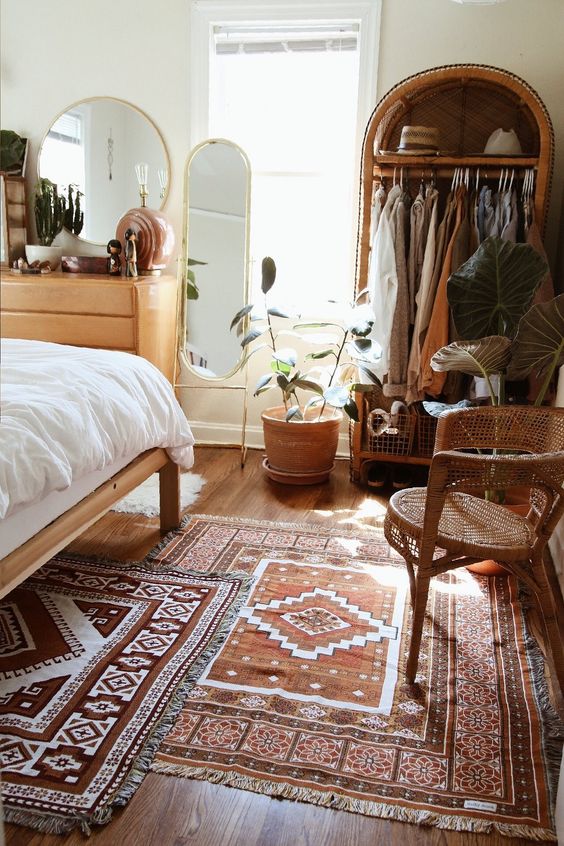
Layering a geometric rug over a tribal rug in a bedroom creates a custom look that feels collected rather than planned. The brown, cream, white and terracotta palette ties together the rattan wardrobe and wood bed frame, so the floor reads as part of the whole room composition rather than an afterthought. Natural daylight keeps the cotton and jute fibers looking soft and breathable. When combining patterns, keep one rug neutral in tone and let the other carry the stronger design, as this balance prevents visual clutter while still adding personality.
Farmhouse Living Room: Neutral Cream Under Distressed Grey
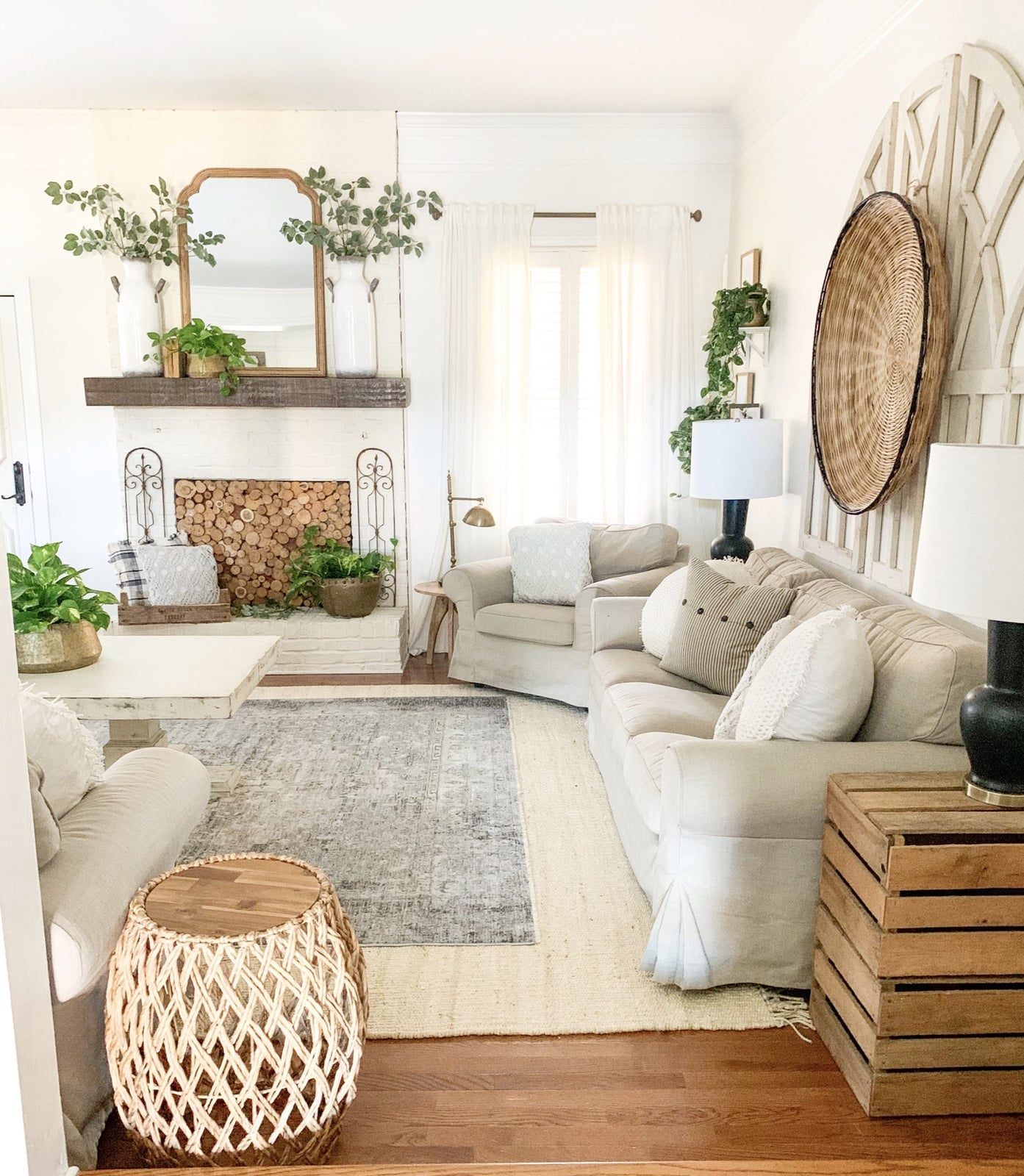
A distressed grey rug might feel too cool on its own, but placing it over a neutral cream jute base warms the palette and adds a layer of texture that changes the whole feel. The cream jute catches natural light from the window and softens the grey, while the lamps add a warm glow that keeps the room inviting. Wood and linen furniture pieces and a wicker accent reinforce the farmhouse style without competing with the rugs. The key is letting the bottom rug extend a few inches past the top one, so the cream border frames the grey layer and makes the combination look deliberate rather than accidental.
Coastal Front Porch with Striped Rug and Welcome Doormat
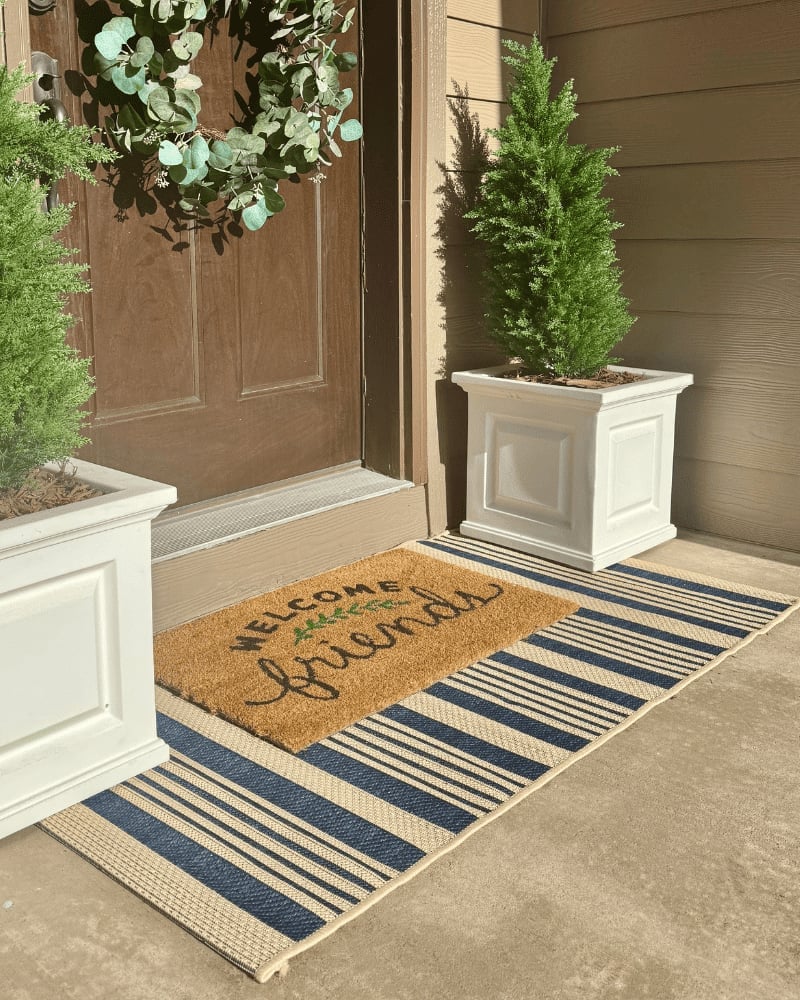
A coir doormat layered on top of a woven striped rug creates a practical entry that catches debris while adding coastal style. The tan and blue stripes of the larger rug set a relaxed tone, while the coir mat handles the heavy foot traffic right at the door. Potted plants and a wreath complete the look without crowding the compact space. For outdoor layers, choose a base rug that can handle sun and moisture, and keep the top mat replaceable since it takes the most wear. Bright daylight shows off the blue tones, so this combination suits a porch that gets good natural light.
Farmhouse Living Room: Subtle Layer Under Coffee Table
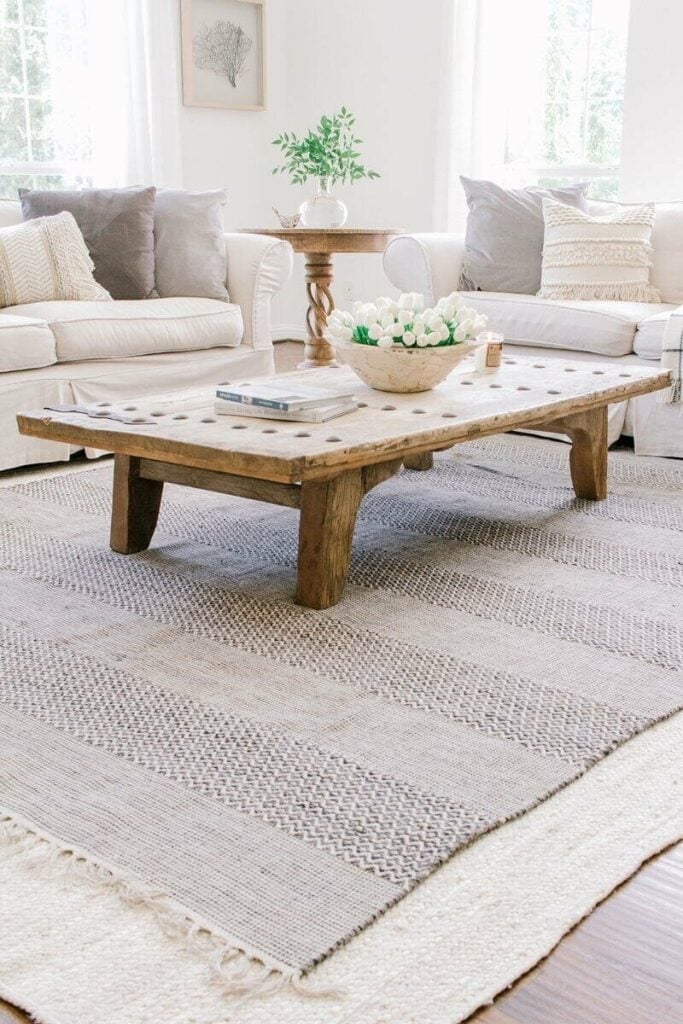
A subtle layer under the coffee table is the quietest way to define a seating area without a bold statement. In this farmhouse living room, two rugs stack beneath the table, with a woven natural fiber base and a textured top rug in neutral grey and white, all softened by natural daylight. The layered rugs for farmhouse coffee table areas work best when the top rug sits slightly smaller than the base, leaving a visible border of texture. This arrangement suits a roomy space where the sofa and table need a grounded center. A simple rule: keep the top rug centered under the table, and let the base rug extend a few inches beyond it on all sides.
Boho Bedroom: Textured Base Under Vibrant Patterned Rug
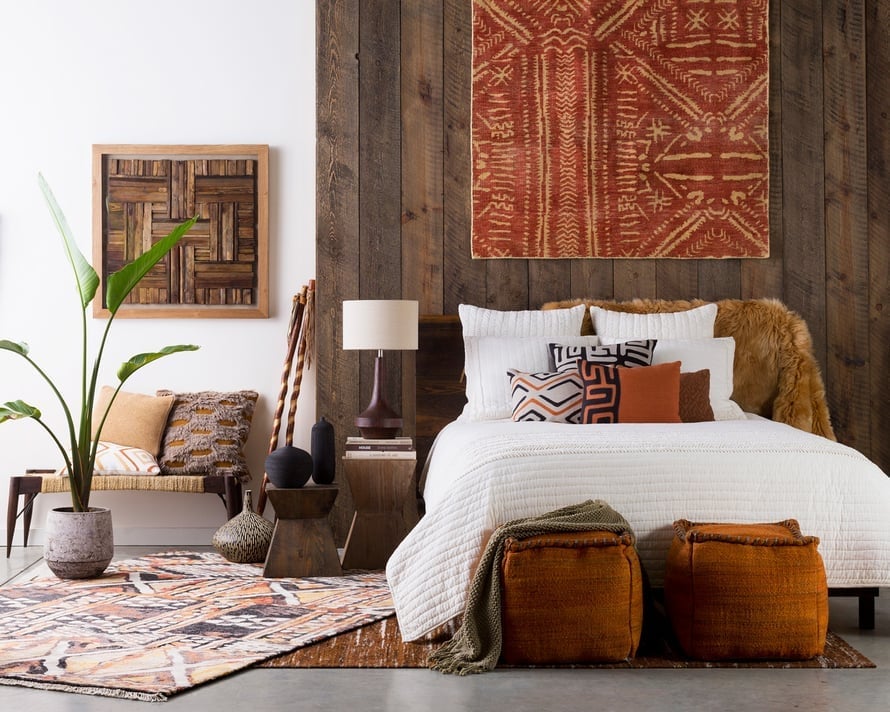
A practical rule for layering in a bedroom is to start with a neutral, textured base and let the top rug carry the color. In this boho bedroom, a textured rug sits under a vibrant patterned one, with earthy orange and cream tones tying the palette together. The room includes a bed, a bench, and ottomans, all grounded by the layered setup, while natural daylight and a lamp keep the space warm. Because the base is plain, the patterned top rug becomes the focal point without competing. For a renter, this approach works well: large textured rugs are often easy to add over existing flooring, and the smaller patterned layer can be swapped out when a change is wanted. Keep the top rug centered under the lower half of the bed, so it anchors the space where your feet land each morning.
Traditional Living Room with Floral and Patterned Rug Layers
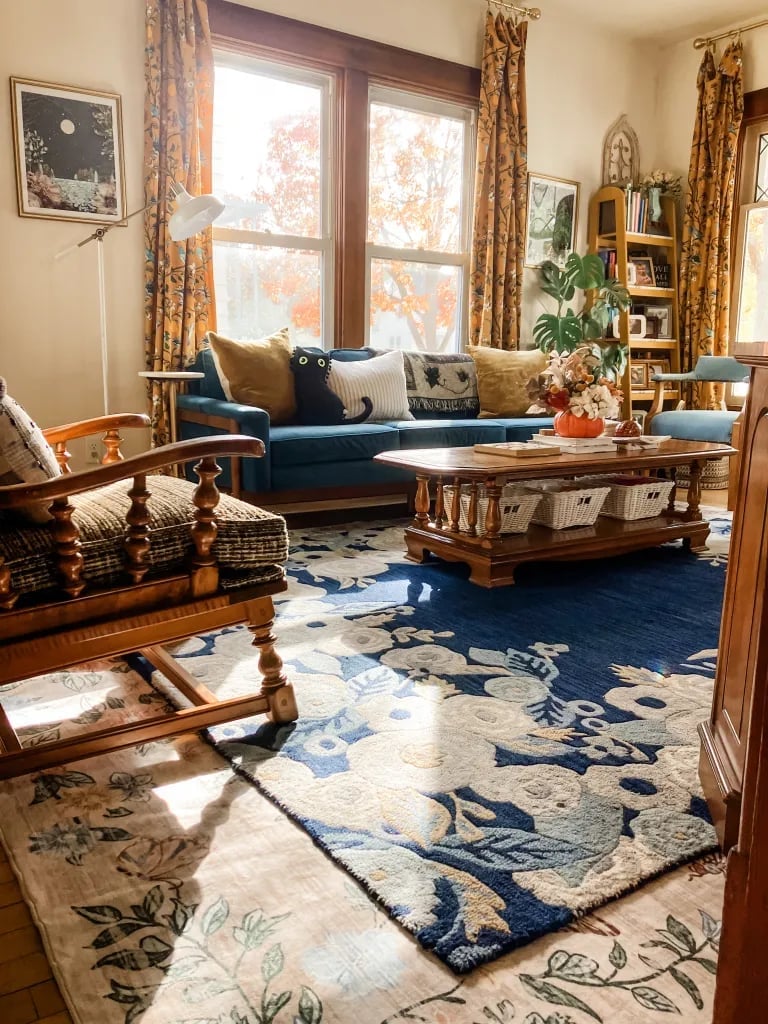
Layering a floral rug under a patterned one brings two distinct motifs into one cohesive ground. In this traditional living room, the floral rug in blue, cream, orange, and green sits beneath a patterned layer, while a blue sofa and wooden rocking chair angle toward each other, with natural daylight and a floor lamp filling the space. A styling variation that holds up: let the larger floral rug define the main seating zone, and place the smaller patterned rug on top, off-center, to create a deliberate offset. This keeps the eye moving without making the floor feel cluttered, and it suits a room where the furniture already carries strong color.
Bohemian Living Area with Multiple Multi-Patterned Rugs
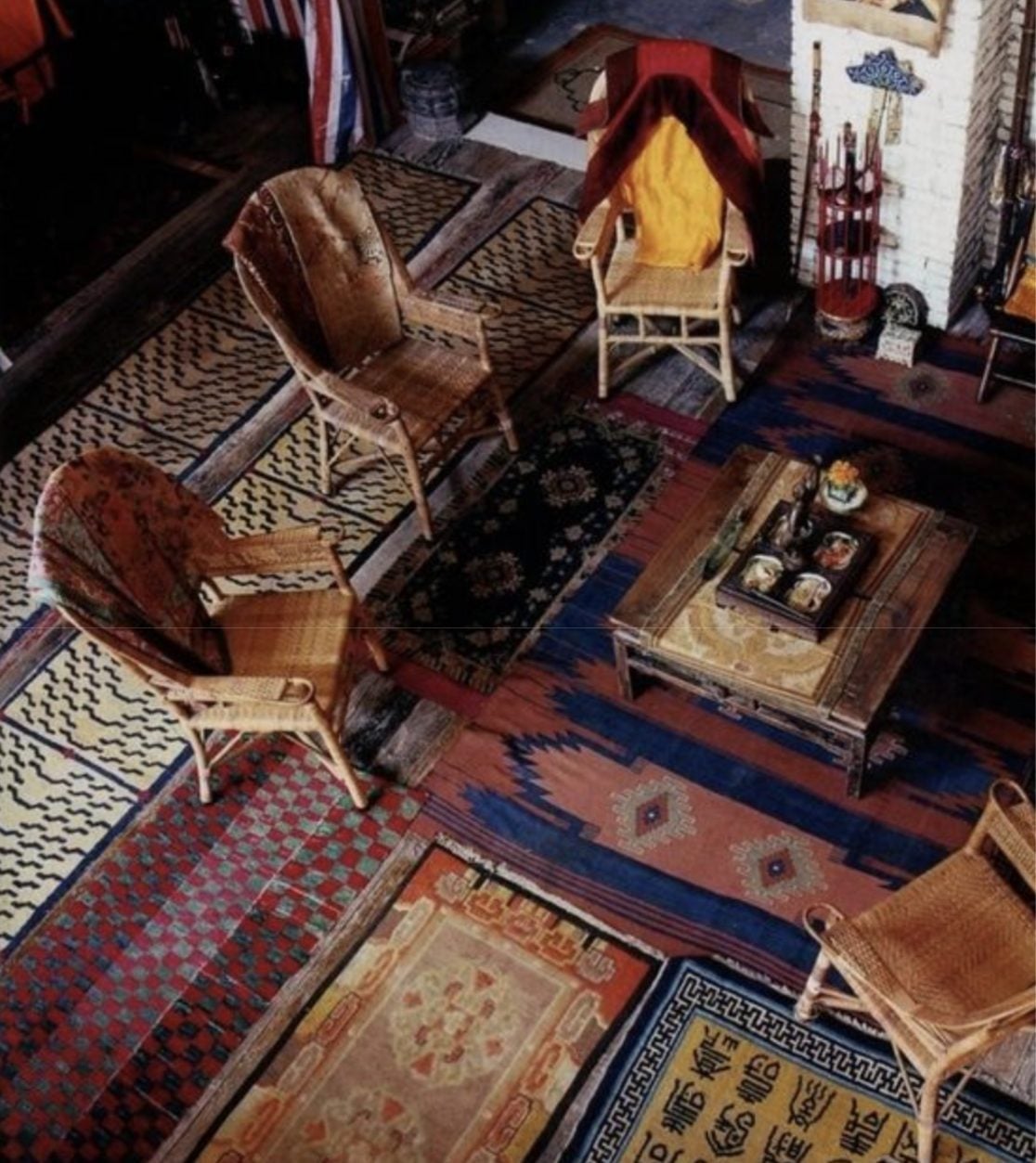
Multiple rugs, each with its own pattern, can read as one intentional floor plan when they share a common color thread. In this open-plan bohemian living area, several multi-patterned rugs in earth tones layer across the space, with wool, rattan, and wood furniture placed above. The overhead wide shot shows how the rugs overlap to create distinct zones within one room, rather than competing. For durability, choose rugs with tight weaves and natural fibers like wool, which hold up under foot traffic and keep their edges neat. A useful principle: keep the largest rug as the base, then let smaller patterned rugs sit at angles, so the overall arrangement feels composed rather than random.
Traditional Living Room: Jute Base with Distressed Pattern
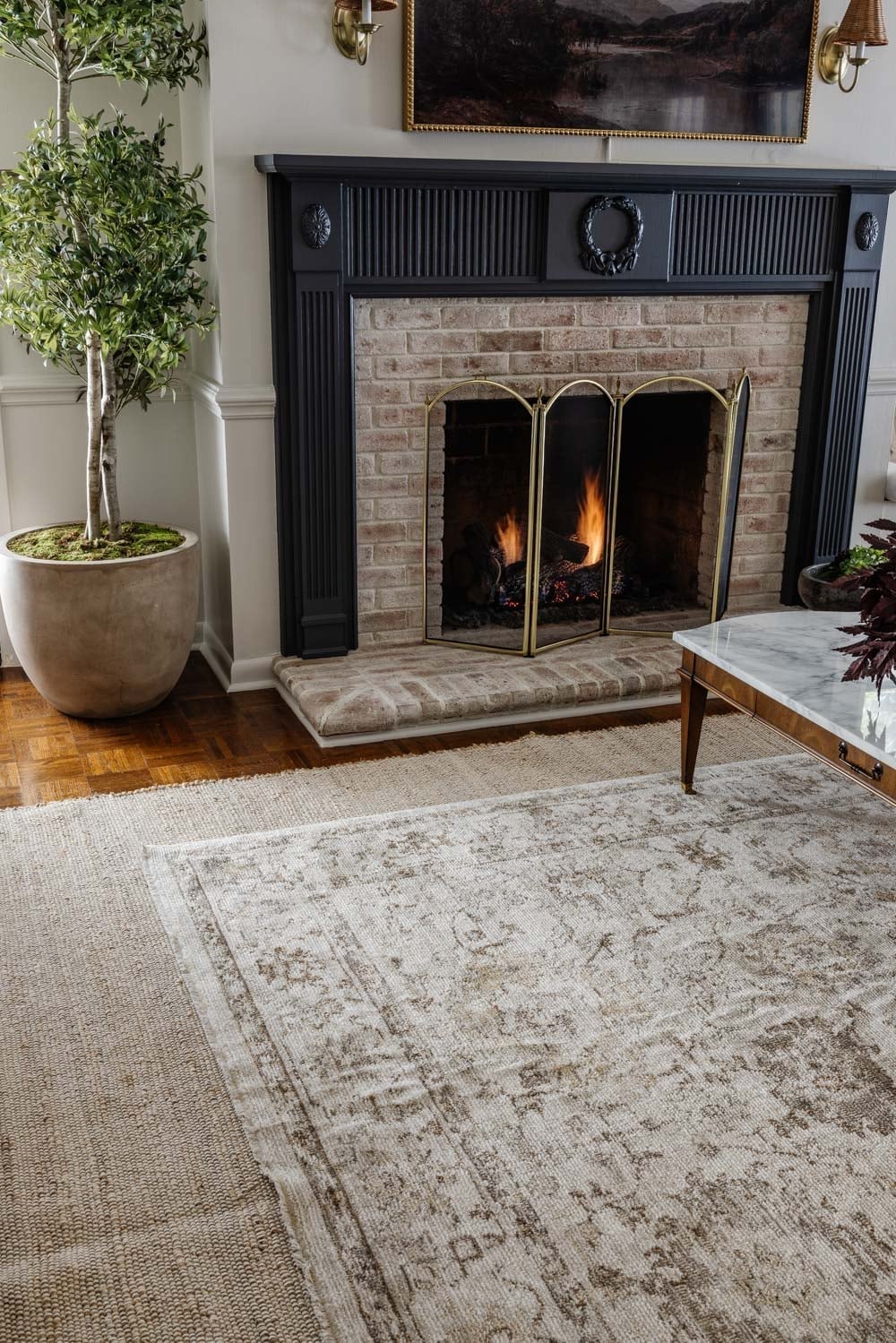
Compared to a single large rug, a jute base with a distressed pattern on top adds depth without changing the room’s footprint. In this traditional living room, the layered rugs sit in front of a fireplace, with cream, beige, and grey tones carrying the palette. The jute base provides a coarse, natural texture, while the distressed rug softens it with a worn, lived-in look. Brick, wood, and marble surfaces in the room echo that mix of rough and refined. A practical scale rule: the jute base should extend at least six inches beyond the edges of the top rug, so the layering reads as intentional. Firelight and ambient lighting pick up the texture differences, making the floor feel layered even in low light.
Modern Living Room with Geometric Rug Over Neutral Base, Indoor
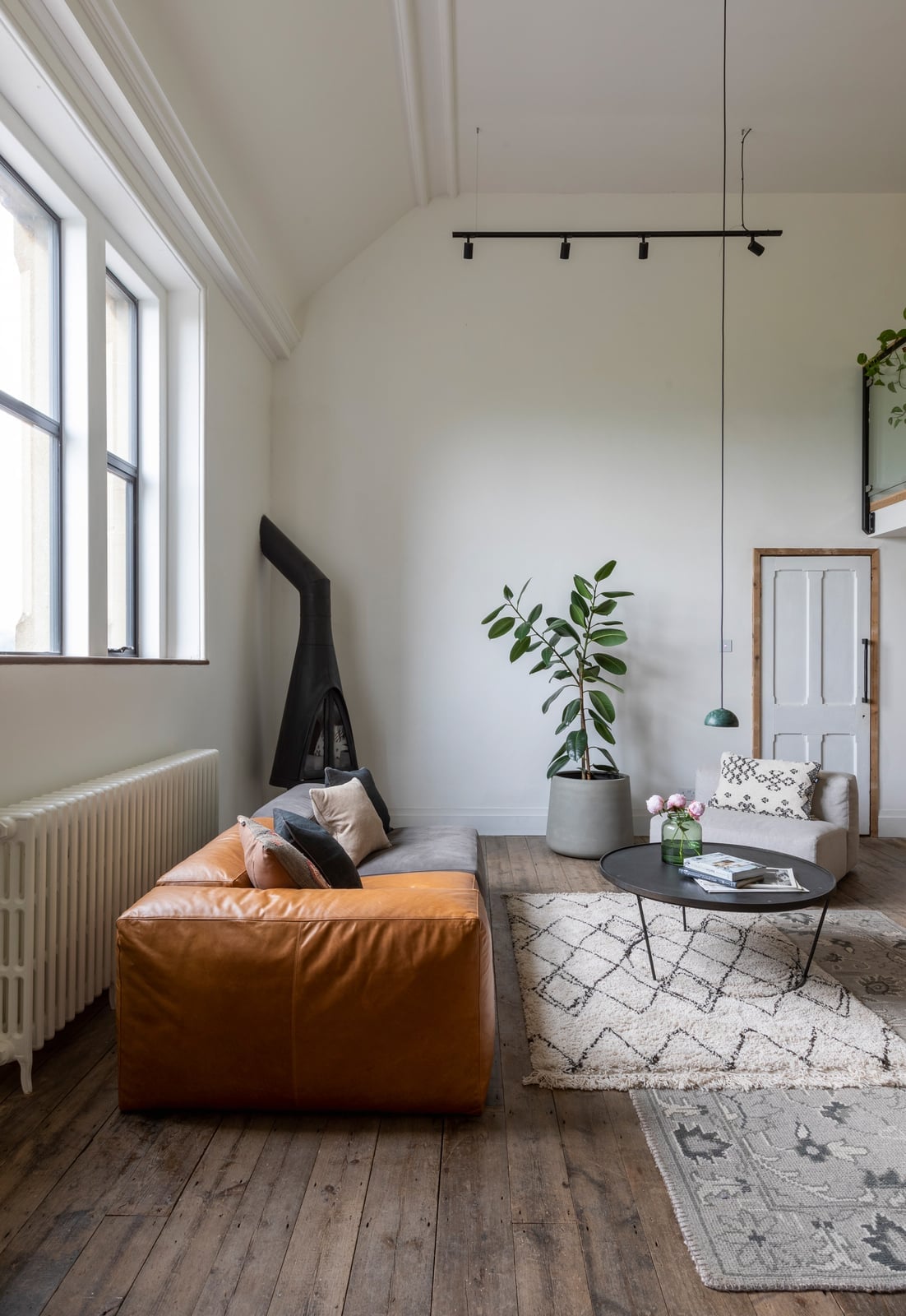
A geometric patterned rug in black and tan sits on a neutral base under the coffee table, anchoring the seating area without covering the whole floor. The white and grey sofa, leather chair, and metal and wood furniture stay quiet so the pattern carries the eye. Track lighting and natural light from the window keep the layered rugs from feeling heavy. The layout works because the top rug is smaller than the base, leaving a border of neutral wool visible on all sides. That border is what makes the layers read as a deliberate composition rather than a pile of floor coverings.
Modern Living Room: Ornate Pattern Over Jute Base, Indoor
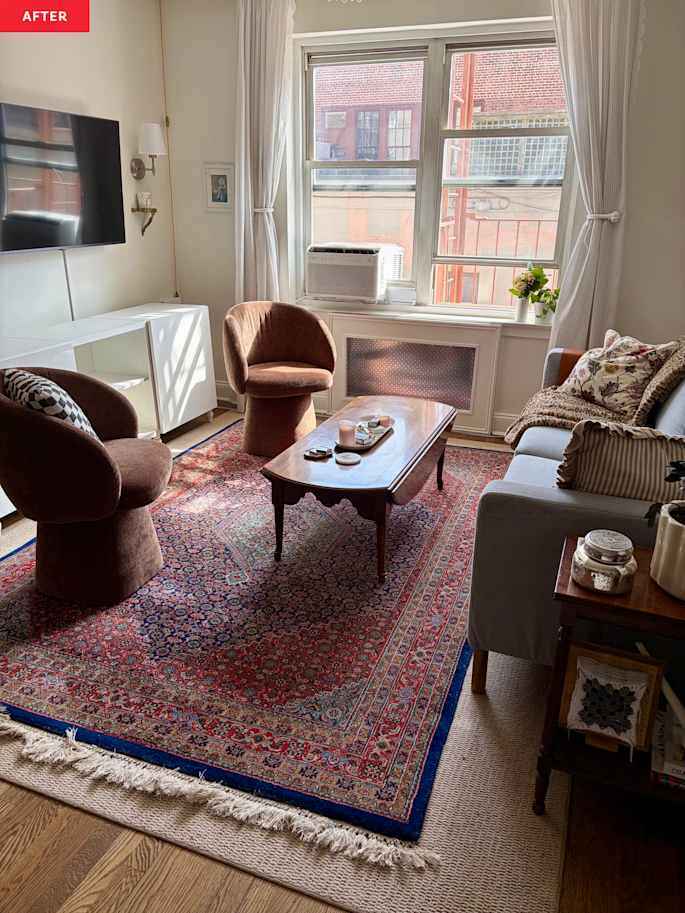
This modern living room proves that an ornate rug can feel current when it sits on a plain jute base. The red and blue pattern adds warmth and history, while the beige and brown jute underneath keeps the palette grounded. The wool top rug is sized to fit within the jute, leaving a consistent border that frames the pattern. The wooden coffee table and fabric sofa in neutral tones let the layered rugs carry the color story. Overhead lighting and natural daylight make the red read as rich rather than overpowering. The trick is restraint: one patterned layer, one textured layer, and everything else in the room stays simple. That balance is what keeps the modern ornate rug over jute from tipping into fussy.
Traditional Living Room with Ornate Rugs and Crystal Chandelier
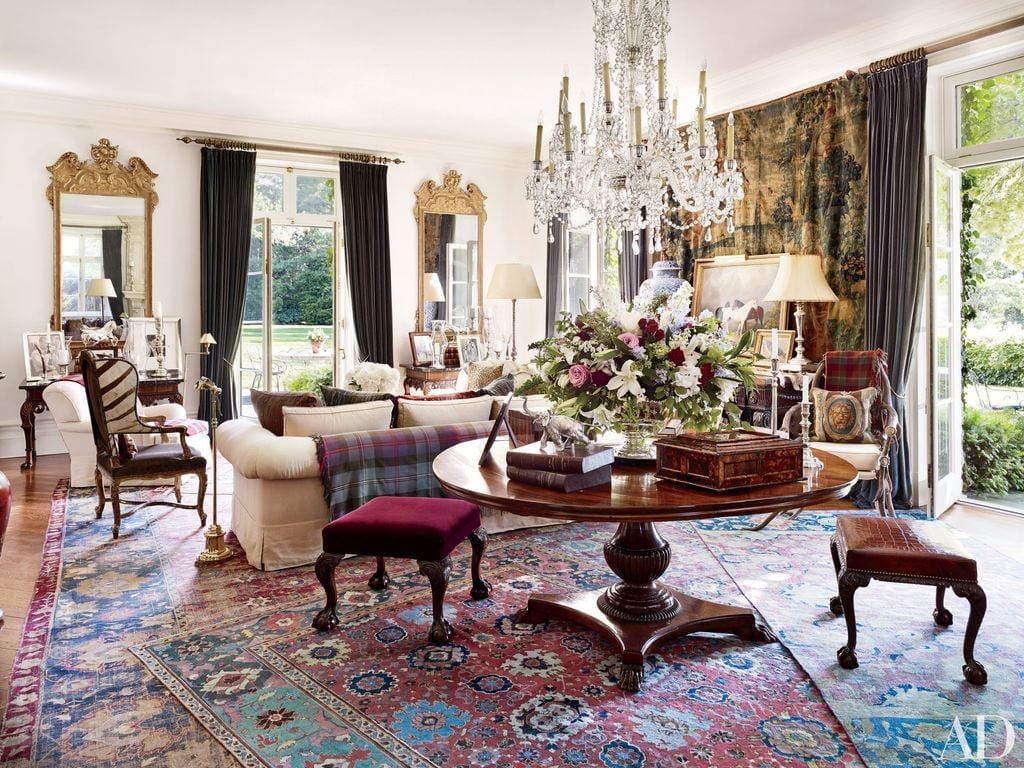
A traditional living room with ornate rugs and a crystal chandelier can feel like a museum, but this one stays inviting because the layers are scaled to the room. The red and blue wool rugs sit under a central seating area, with a round table and sofa arranged so the pattern is visible from every angle. The chandelier draws the eye up, while the rugs anchor the floor, and the cream walls and gold accents tie the two together. The silk and wool textures add depth without competing with the crystal. The key is proportion: the rugs are large enough to define the seating group but leave enough bare floor to let the room breathe. That spacing keeps the ornate layers from overwhelming the space.
Boho Living Room: Sheepskin Over Striped Rug
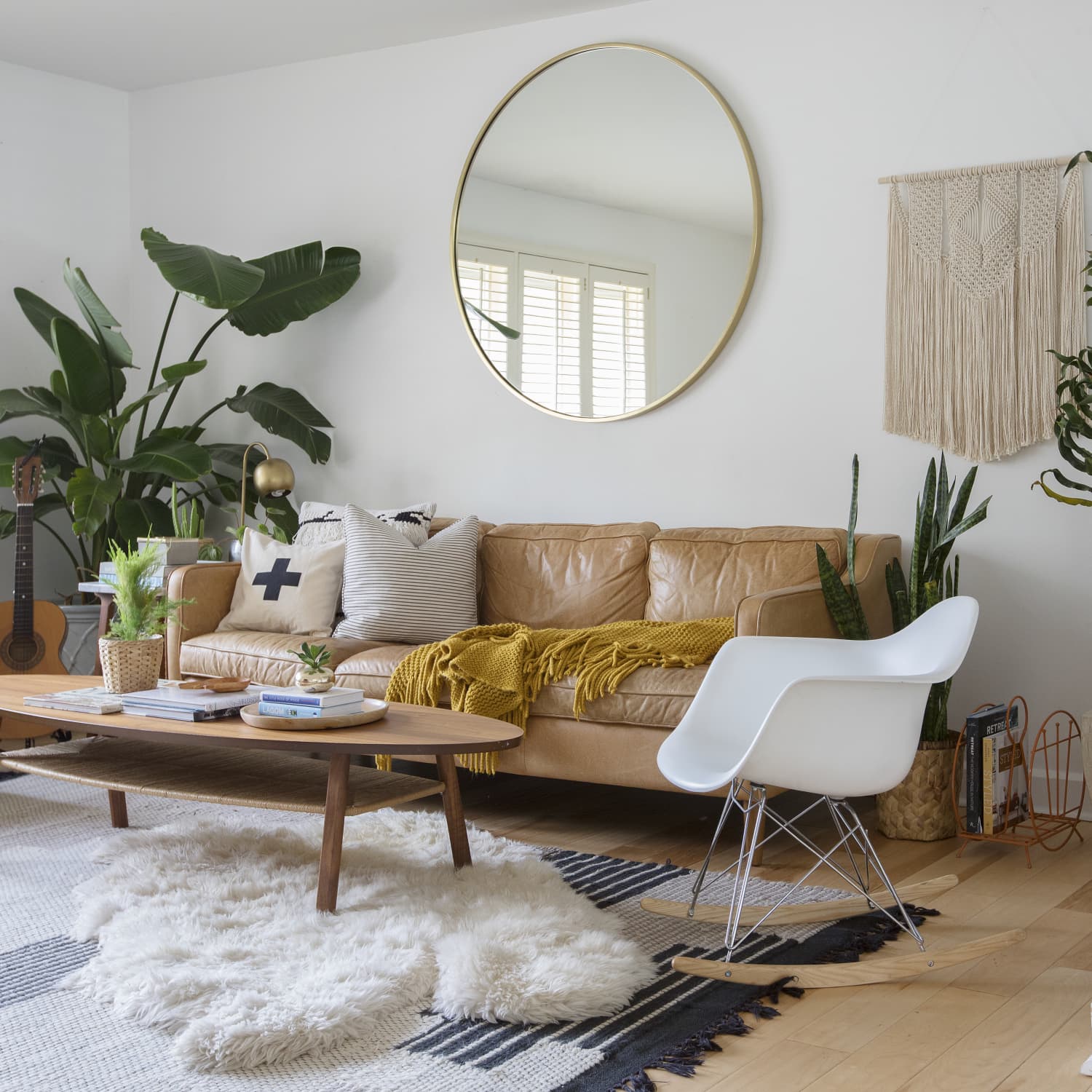
A fluffy sheepskin rug sits on a black and white striped rug in front of a leather sofa, with a wooden coffee table and rocking chair nearby. The contrast between the soft, light sheepskin and the bold stripes is the whole point. Natural daylight from the window and a floor lamp in the corner make the sheepskin glow without washing out the stripes. The macrame details on the wall echo the handcrafted feel of the layered rugs. The layout works because the sheepskin is offset toward the coffee table, so the striped rug still shows on three sides. That offset keeps the layer from looking like an accident and gives the eye a clear path around the room.
Traditional Living Room: Patterned Rug Over Jute with Bold Curtains
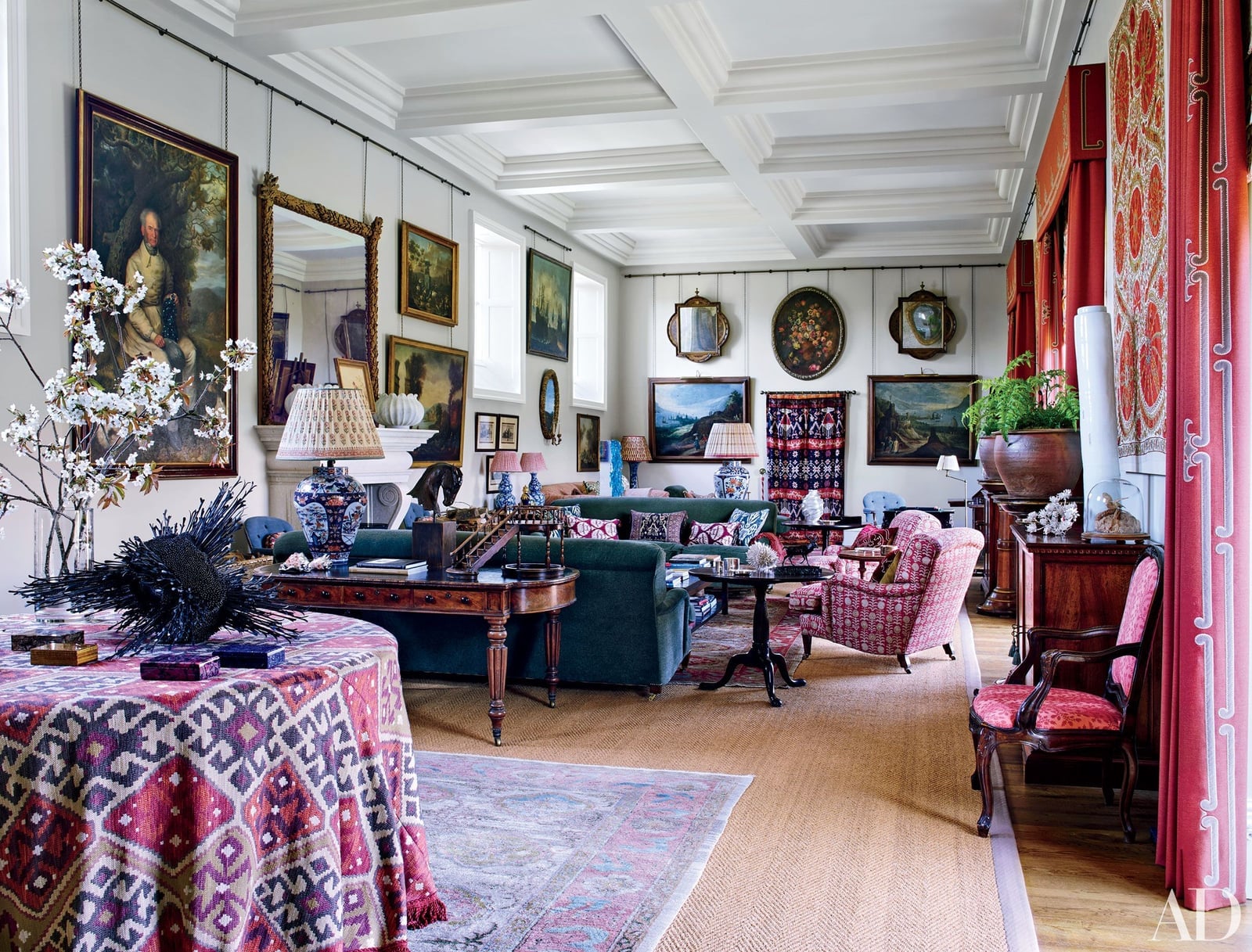
A traditional living room pairs a patterned rug over jute with bold red and pink curtains, and the combination works because the palette is kept tight. The wool rug carries red, pink, and green tones that echo the curtains, while the jute base adds a neutral beige layer underneath. The sofas and armchairs in beige and wood tones let the rugs and curtains share the spotlight. Natural daylight from the windows and lamps in the corners soften the contrast between the patterned layers. The storage-friendly trick here is that the jute base protects the floor and the patterned rug can be swapped out seasonally without changing the room’s bones. That flexibility makes the layered look practical for a room that needs to shift with the calendar.
Final Thoughts
The trick to layering rugs is keeping the base neutral and letting the top rug carry the pattern or texture. Jute and sisal are forgiving, cheap to replace, and give you a foundation to swap out the top layer whenever you want a new look. A rug pad under both layers helps them stay put and protects your floors. Stick to a simple rule: the bottom rug should be bigger by at least a foot on each side.